Work Zones Before Decoration
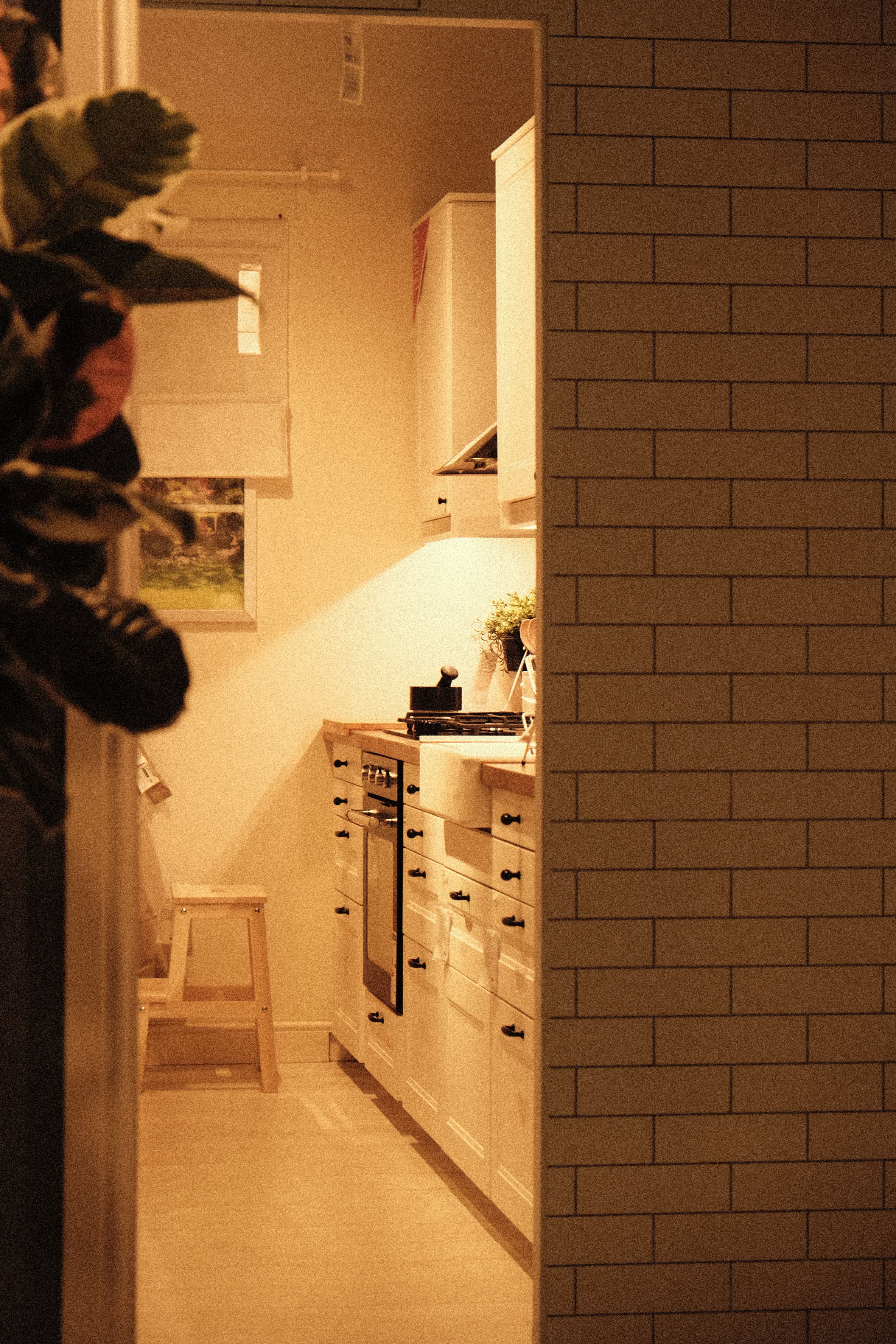
Start by identifying the surfaces that cannot become decorative real estate: the main chopping area, sink surround, space beside the hob, appliance landing zones and any counter used daily for breakfast or coffee. Keep those zones close to their normal state before adding anything seasonal. Christmas often increases cooking, serving and washing-up rather than reducing it, so a display that seems harmless in early December can become frustrating when several dishes are being prepared at once. If the kitchen already struggles with surface pressure, resolve that first with the principles in [kitchen counter organization ideas](/kitchen/kitchen-counter-organization-ideas/) and [kitchen layout ideas](/kitchen/kitchen-layout-ideas/).

One Festive Elevation Instead of Everything
Look for one vertical area that is visible when you enter the kitchen: open shelves, a dresser, a glass-front cabinet, a window or a section of wall away from the cooker. Concentrating ornaments, greenery and seasonal color there creates more impact than distributing small objects across every counter. It also makes cleaning easier and gives the eye a clear focal point. If the room contains several open shelves, decorate one group more fully and leave the others useful rather than giving every shelf the same garland-and-bauble treatment. The display should read as part of the kitchen architecture, not as a collection of Christmas objects looking for empty space.
Compact, Movable Countertop Decor
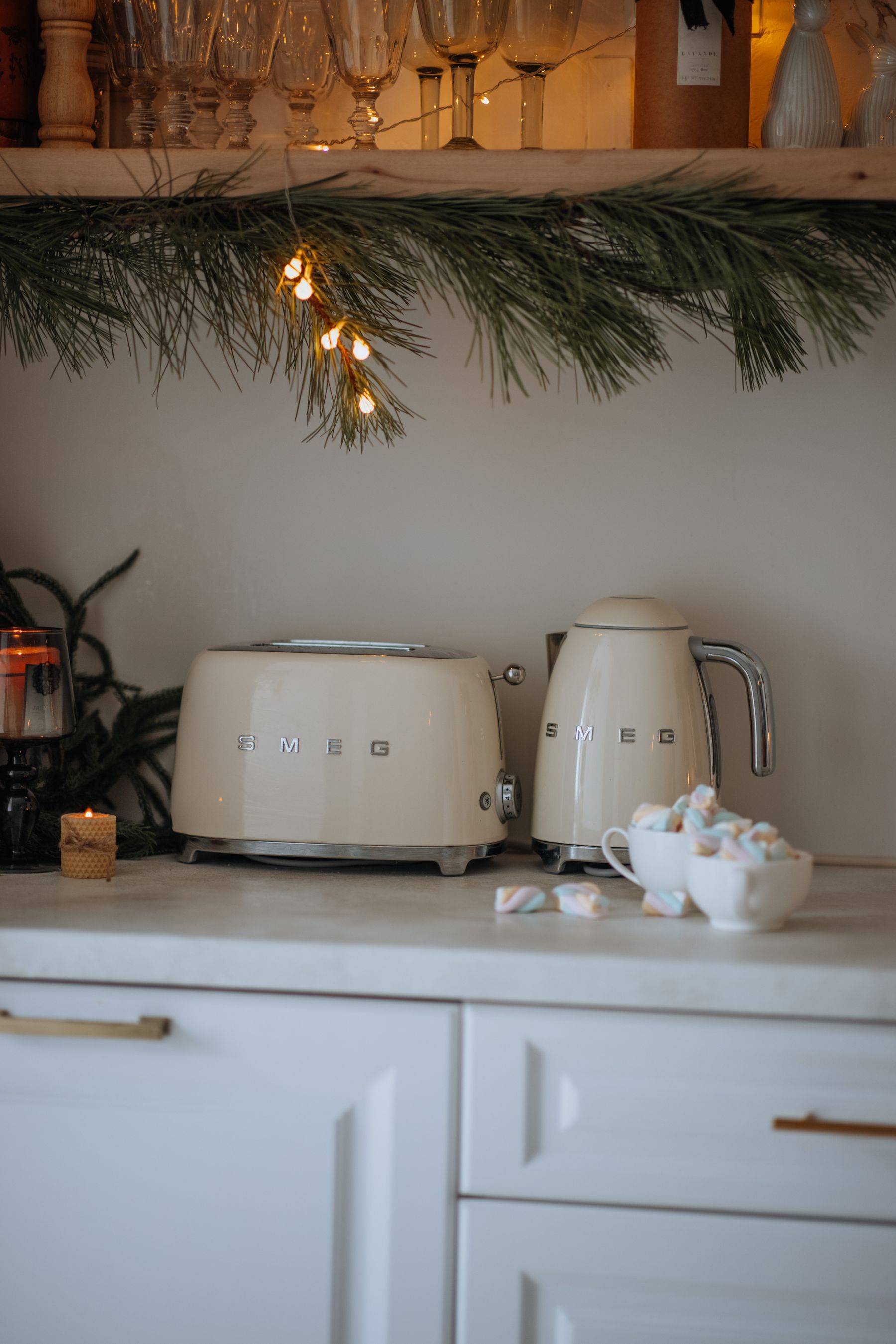
Where a counter has genuine spare capacity, build one compact vignette rather than a line of decorations. A small tray, bowl or board can contain a miniature tree, vessel of greenery or a few ornaments and allow the whole arrangement to move when the counter is needed. Keep switches, sockets, appliance lids and heat-producing equipment accessible, and do not drape greenery or lights over appliances unless the manufacturer explicitly permits it. A decorative object that requires moving every time you use the toaster or coffee machine is not really working in the kitchen.
Style Open Shelves With Kitchenware First
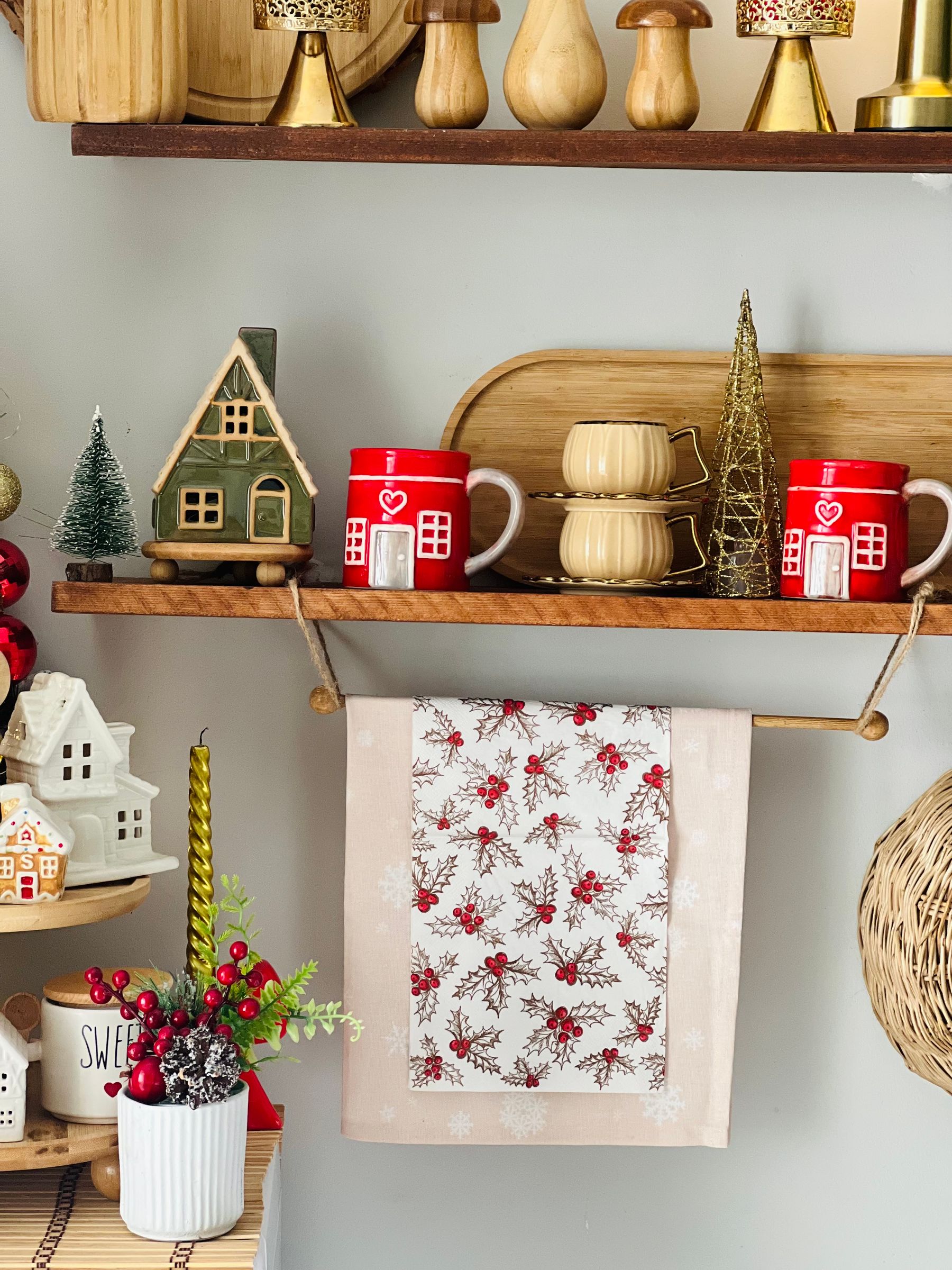
Open shelving already contains shapes, colors and repeated objects, so use that structure instead of clearing it for a separate Christmas display. Group mugs, glasses or small serving pieces that suit the seasonal palette, then add one or two decorative elements such as a miniature house, pinecone or small branch. Keep frequently used items reachable and avoid placing loose foliage where it can shed into food or dishes. Shelves near a hob or sink need even more restraint because grease, steam and splashes make elaborate seasonal styling difficult to maintain. For year-round shelf hierarchy, continue to [kitchen shelving ideas](/kitchen/kitchen-shelving-ideas/).
Let Useful Objects Carry Part of the Christmas Mood
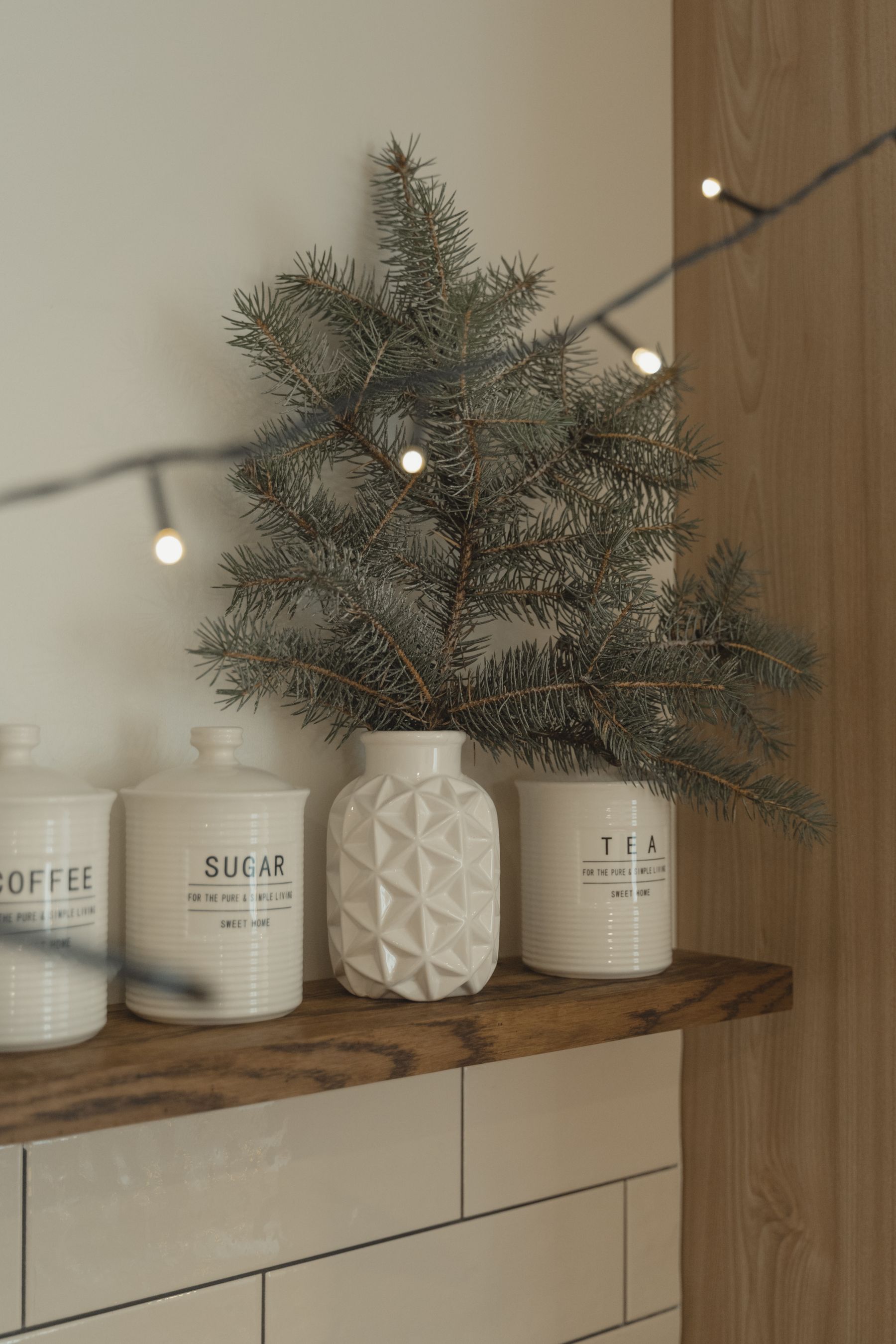
You do not need a separate collection of Christmas objects for every kitchen surface. Ceramic jars, cake stands, wooden boards, linen towels, bowls and serving pieces can become the base of a seasonal composition when their colors and materials already suit the room. Add a branch, ribbon or a few ornaments around—not on top of—the items you still need to open and clean. This approach is especially useful in small kitchens because the seasonal layer shares visual space with objects that already earned their place. Keep food-contact surfaces and storage openings clear of glitter, shedding foliage and other difficult-to-clean materials.
Keep Greenery Away From Heat, Steam and Food Preparation
Garland looks attractive above cabinets, around a doorway or along a dining-side ledge, but the safest location depends on the actual kitchen equipment. Keep natural and artificial greenery, ribbon, paper decorations and other combustible materials away from open flame, hot surfaces, vents and appliance exhaust. Do not assume a cooker hood is a safe shelf for garland; follow the appliance manufacturer's clearances and keep ventilation paths unobstructed. Fresh greenery can dry over time, so monitor its condition and remove it if it becomes brittle. Near food preparation, use arrangements that are easy to clean around and do not shed directly onto worktops.
Add Decorative Light Without Weakening Task Light
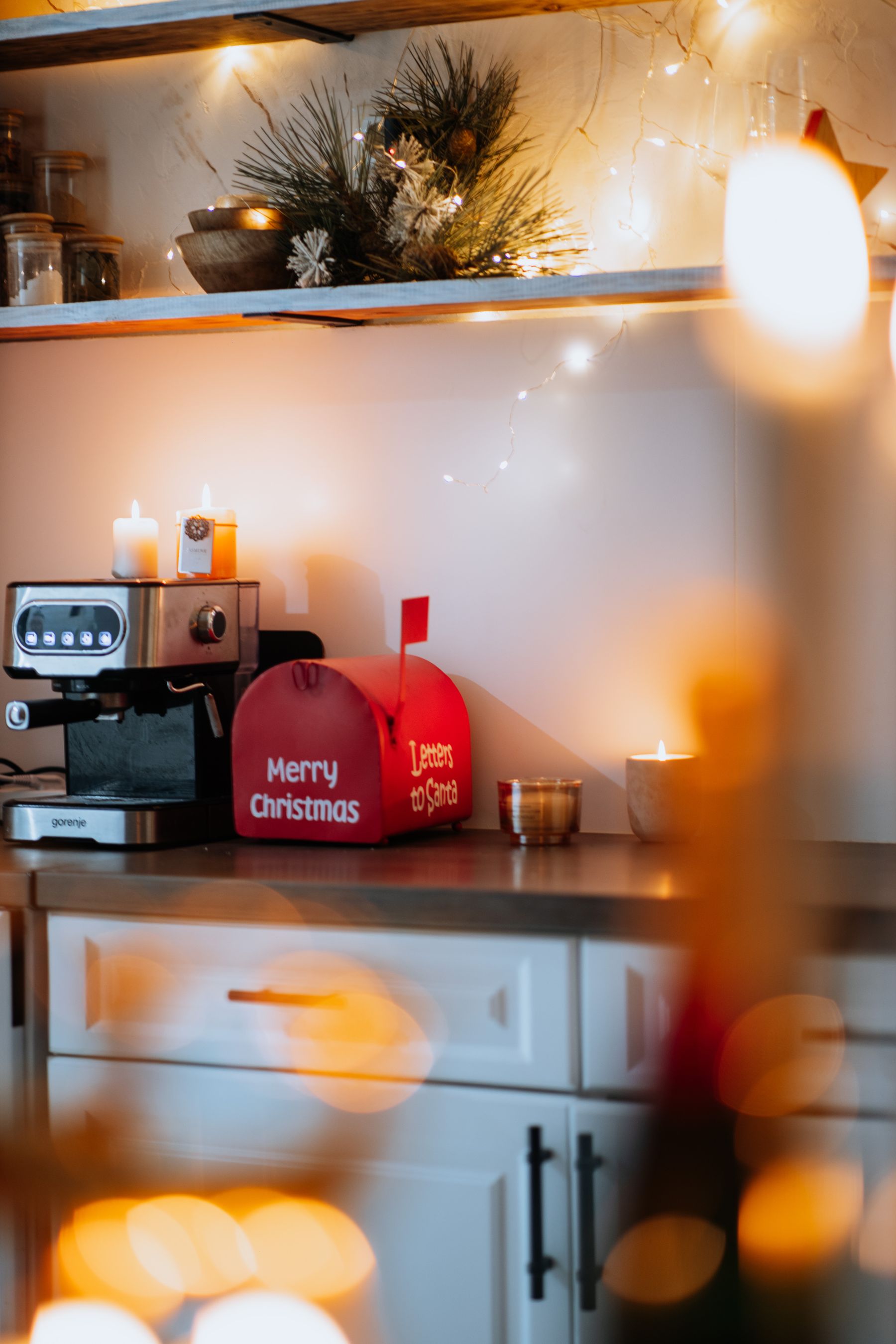
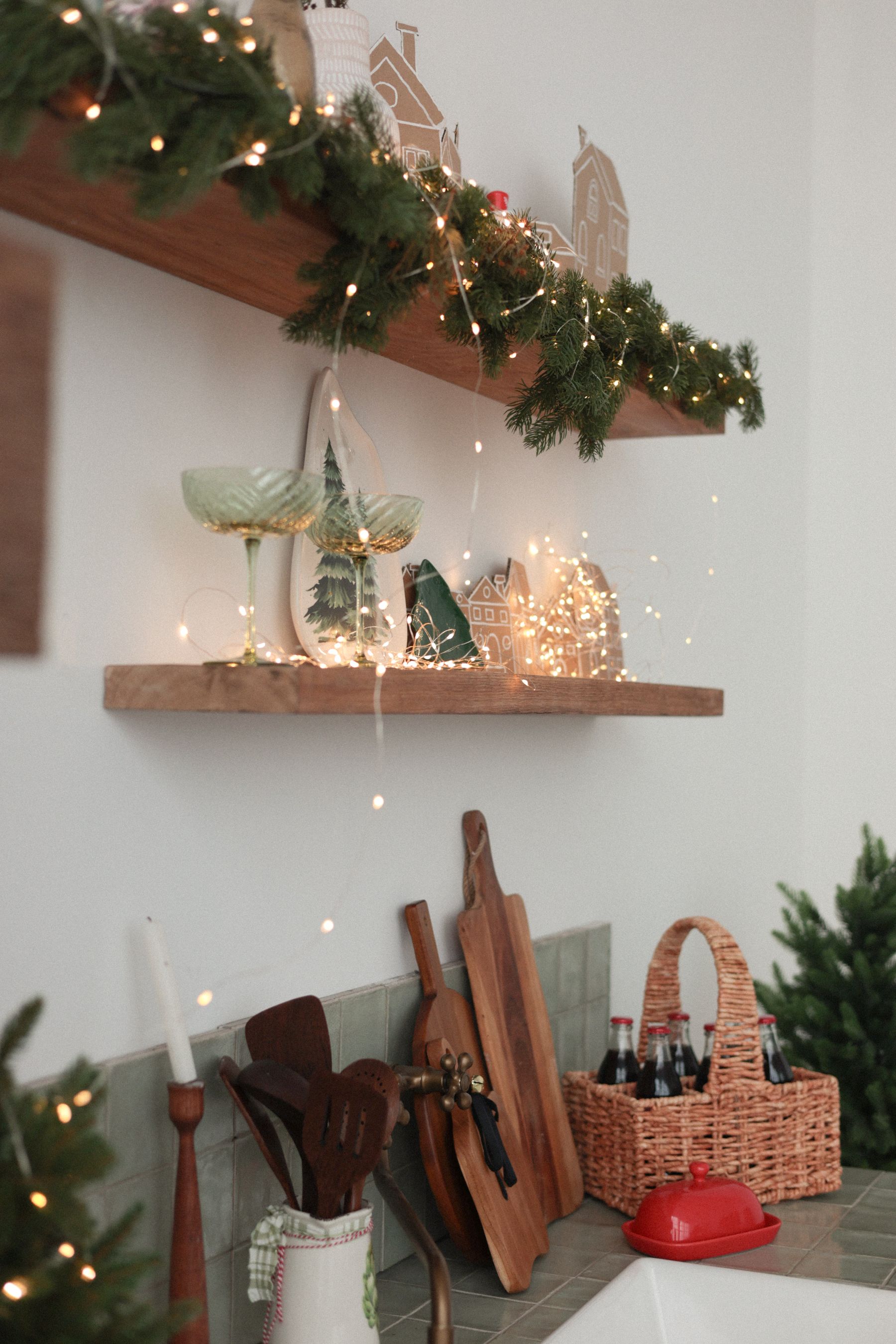
The kitchen needs accurate light at the sink, hob and prep surfaces even when the rest of the house is in a softer holiday mood. Use decorative lights as a background layer on a shelf, window or dining-side display rather than dimming the functional lighting until knives, food and spills are harder to see. Keep cables away from water, hot surfaces and door or drawer movement, and use products in accordance with their indoor-use and electrical instructions. If the kitchen already has good under-cabinet or pendant lighting, the most convincing Christmas effect may come from warming the surrounding room rather than adding strings of light to every cabinet.
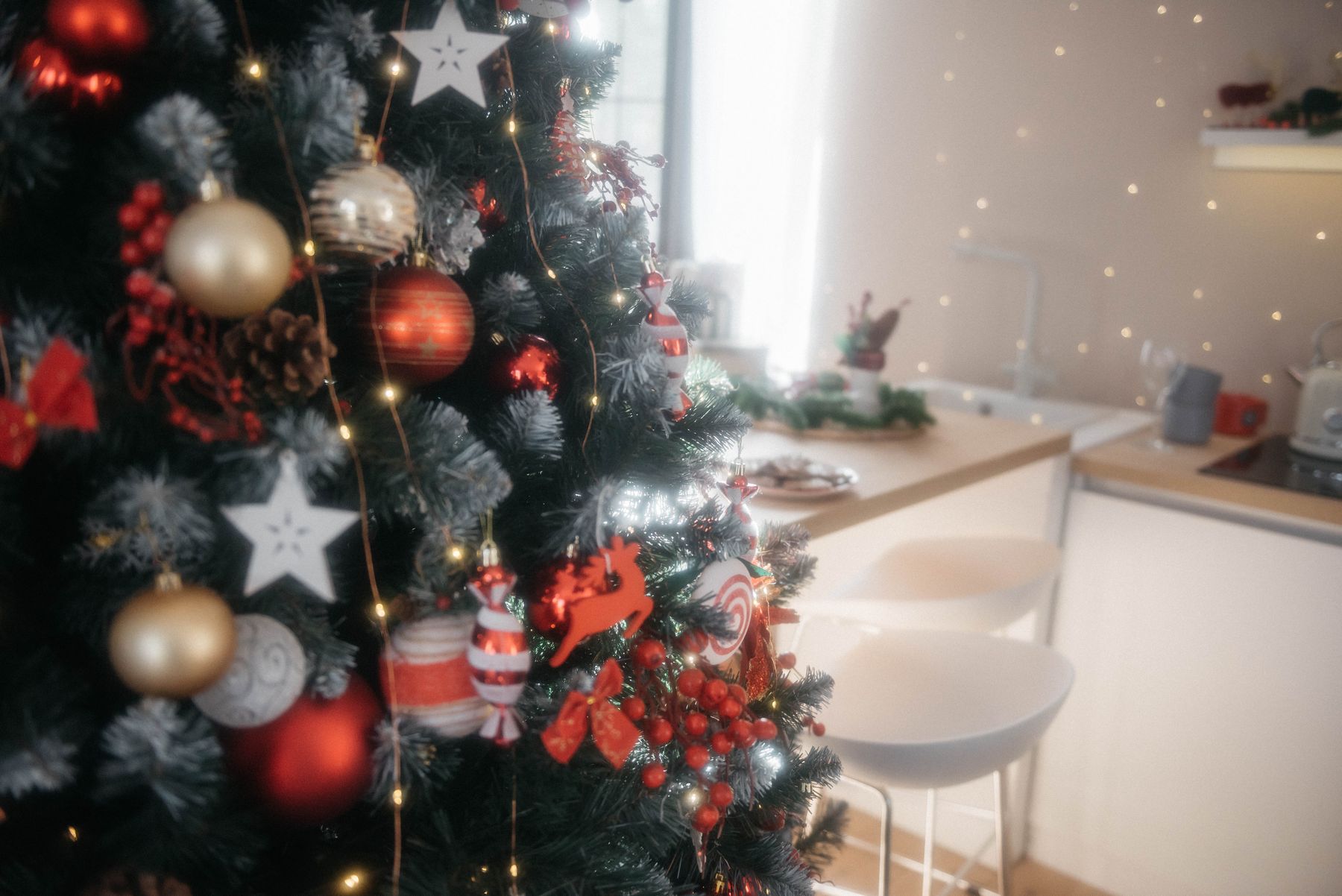
Scale a Kitchen Christmas Tree to the Circulation
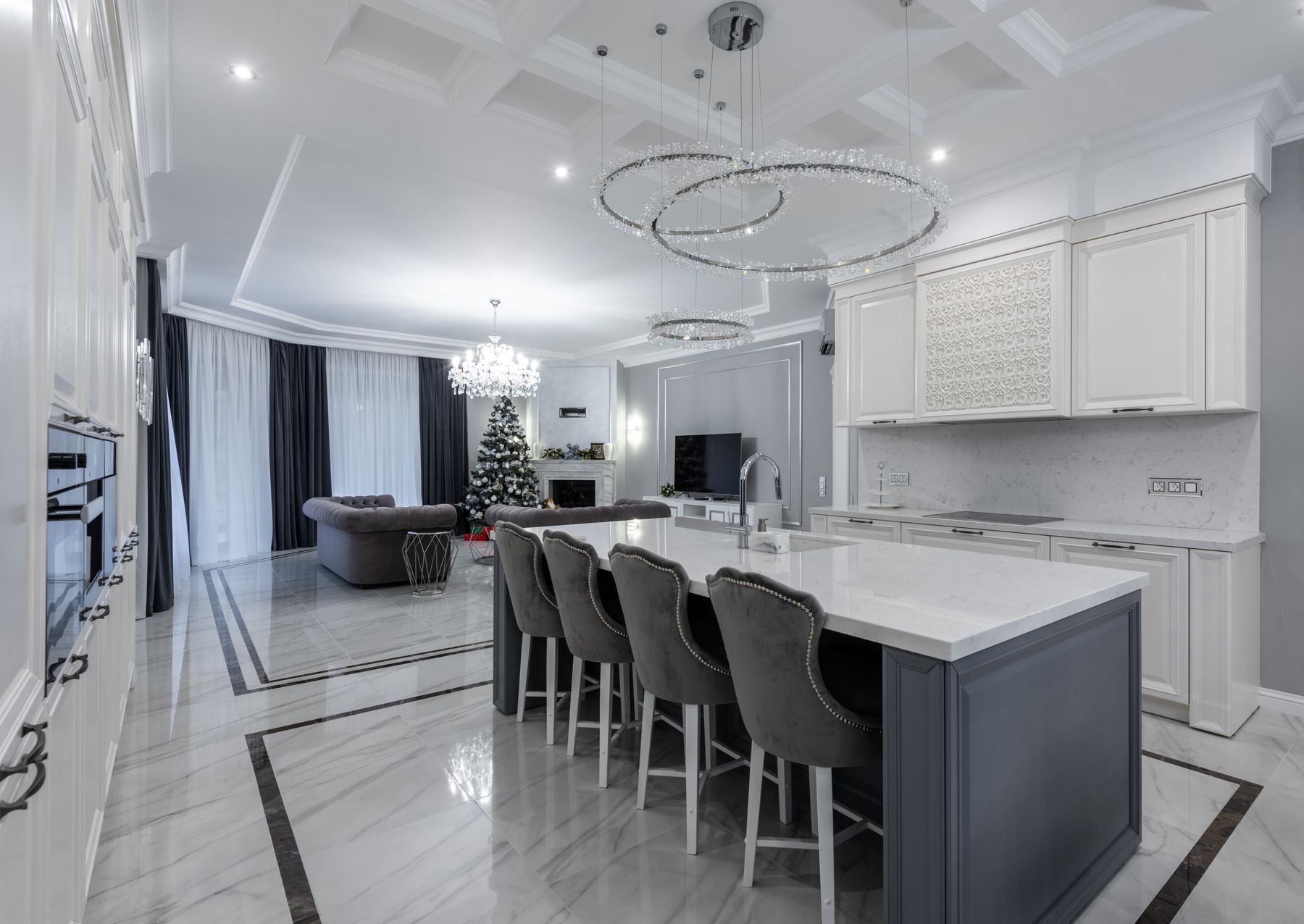
A tree can make an eat-in or open-plan kitchen feel connected to the rest of the house, but it is optional. Treat it like temporary furniture: measure the full branch width, stand or basket and the likely spread of gifts before choosing the position. Keep it out of the route between the refrigerator, sink, cooker and dining area, and away from doors that need to open fully. In a compact kitchen, a tabletop tree or a tree visible from the adjoining room may create enough seasonal presence without taking up floor space. The circulation tests in [small kitchen ideas](/kitchen/small-kitchen-ideas/) are more important than placing a tree where a photograph looks symmetrical.
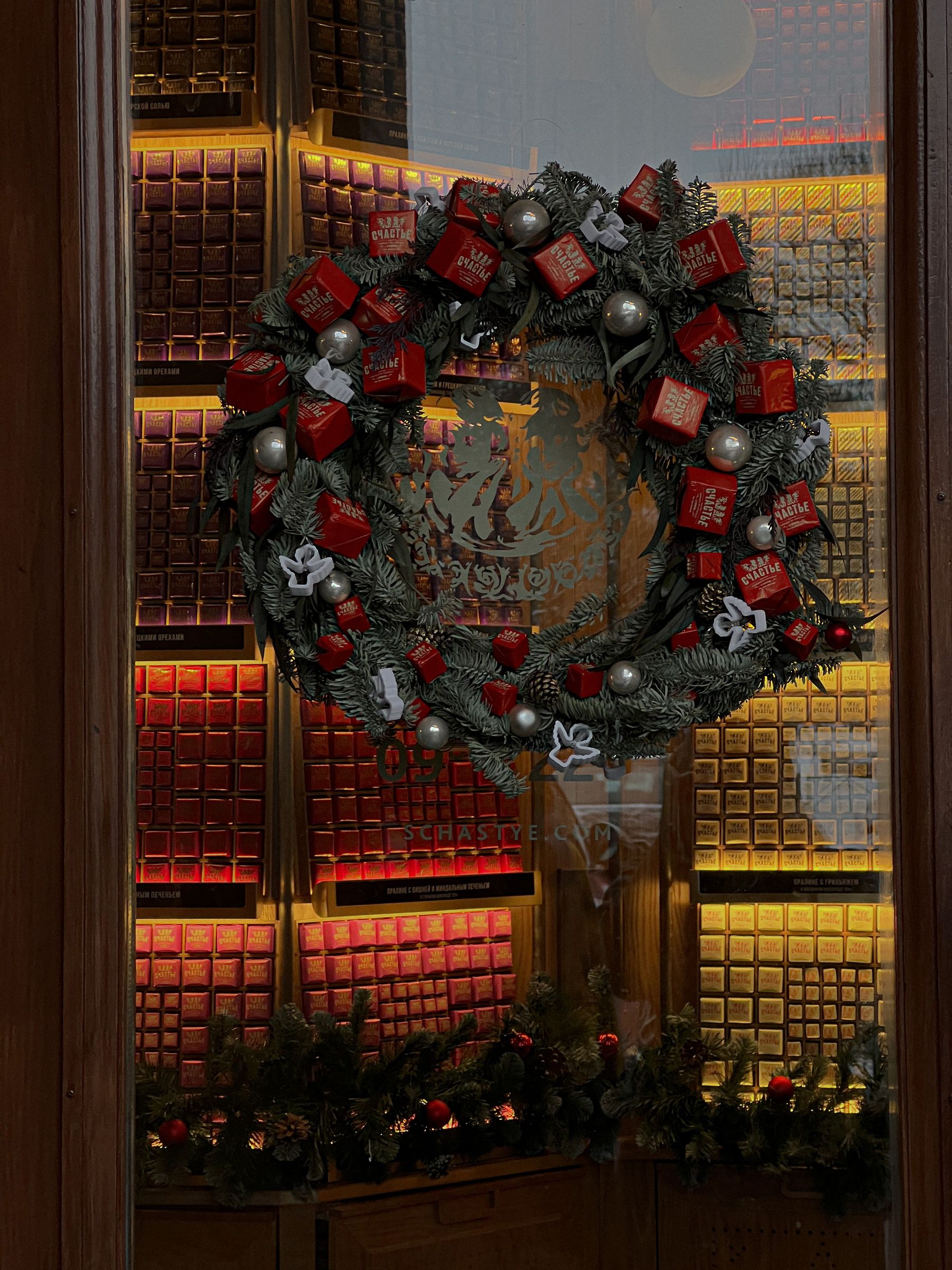
Use Windows and Doors for Decor That Takes Up No Counter Space
A kitchen window or glazed door is valuable because it can carry a wreath, ribbon or simple hanging decoration without using horizontal work space. Keep handles, locks, opening mechanisms and ventilation paths clear, and choose attachment methods appropriate to the surface. Do not cover so much glass that the room loses useful daylight or the view needed to supervise an outdoor area. If a window sits directly above a sink, keep hanging material high enough to avoid splashes and repeated contact. One strong wreath often gives more visual return than several small counter ornaments.
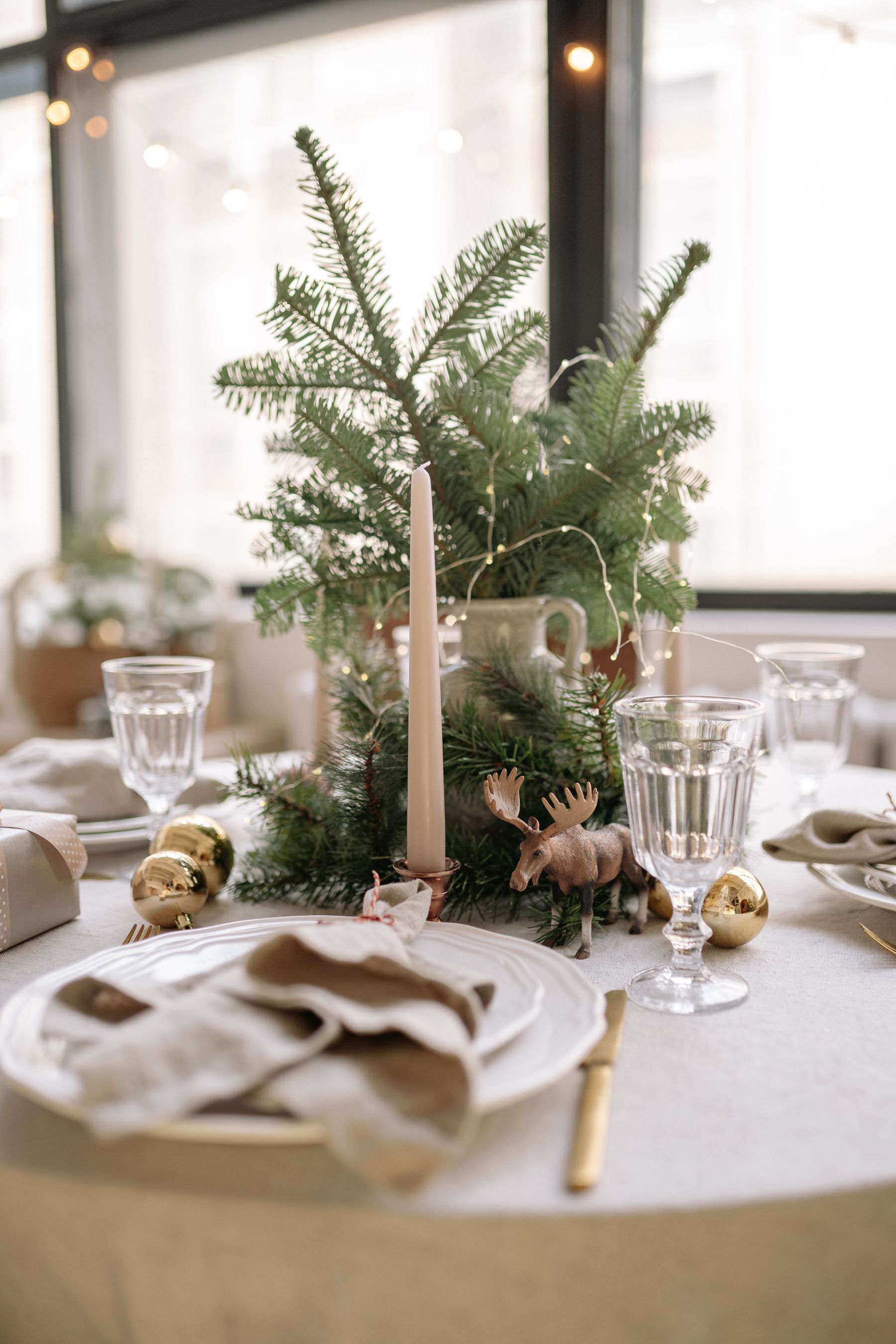
Set the Christmas Table for Eating, Not Just Looking
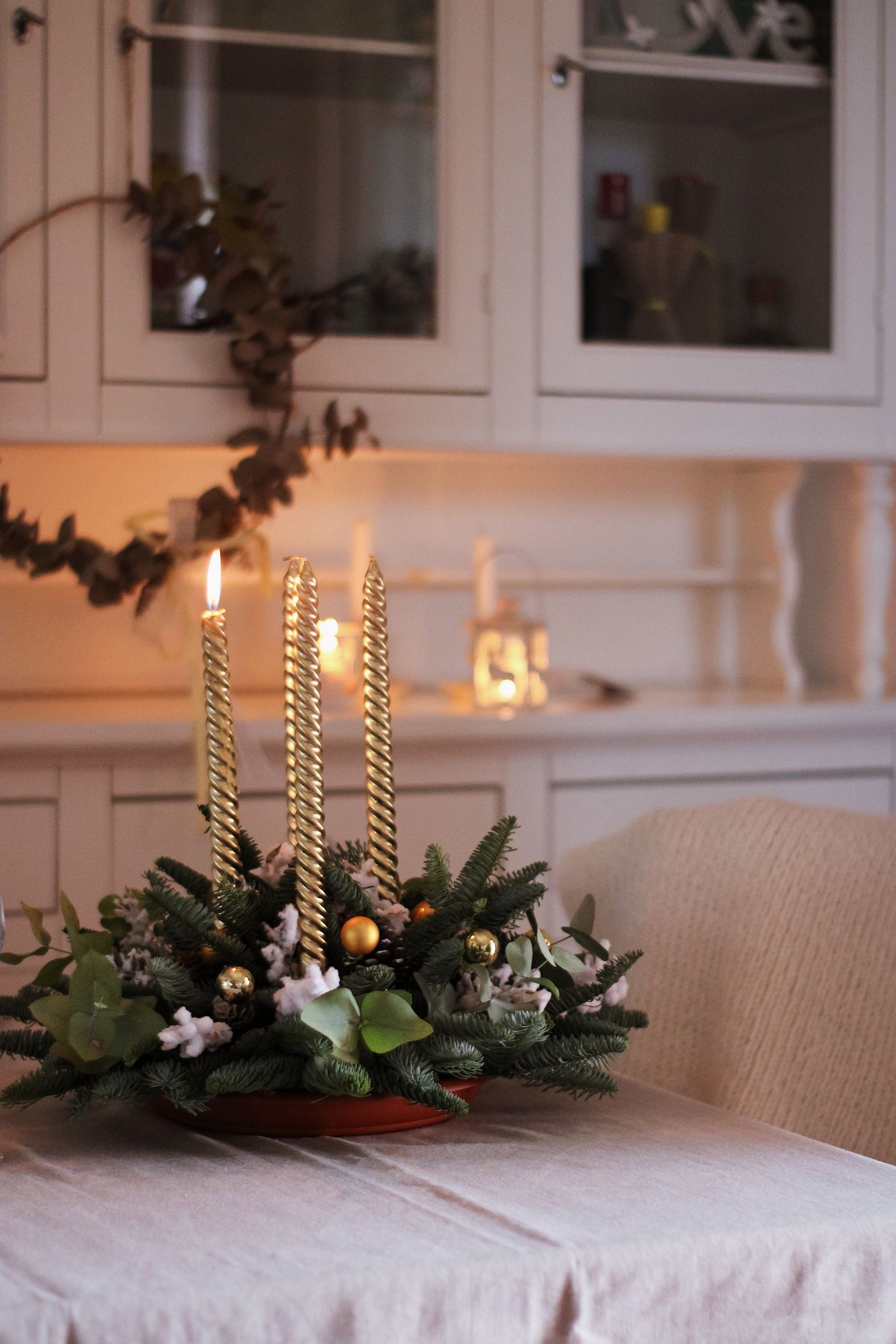
In an eat-in kitchen, the table often becomes the most generous place for seasonal decoration—but it still needs to host food. Keep centerpieces low enough for people to see one another and narrow enough to leave practical place settings and serving space. A tray or contained arrangement can be moved quickly for family meals. Candles need stable holders and appropriate clearance from greenery, napkins and sleeves; flameless options are easier around dense seasonal material or busy family tables. For layouts where the dining area and work zone overlap, [eat-in kitchen ideas](/kitchen/eat-in-kitchen-ideas/) can help keep circulation clear when chairs are occupied.