Wettest Walls Need the Hardest-Working Finish
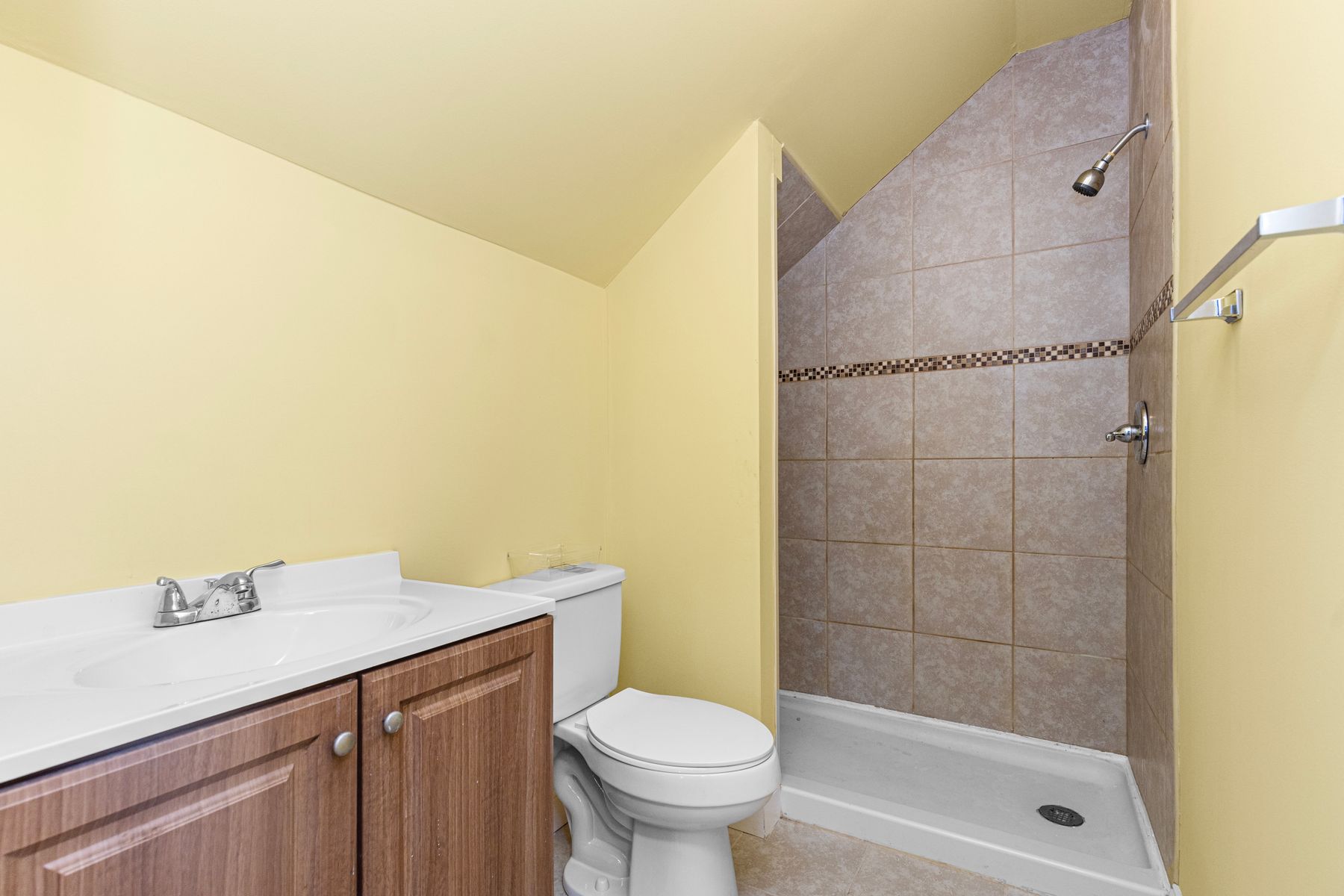
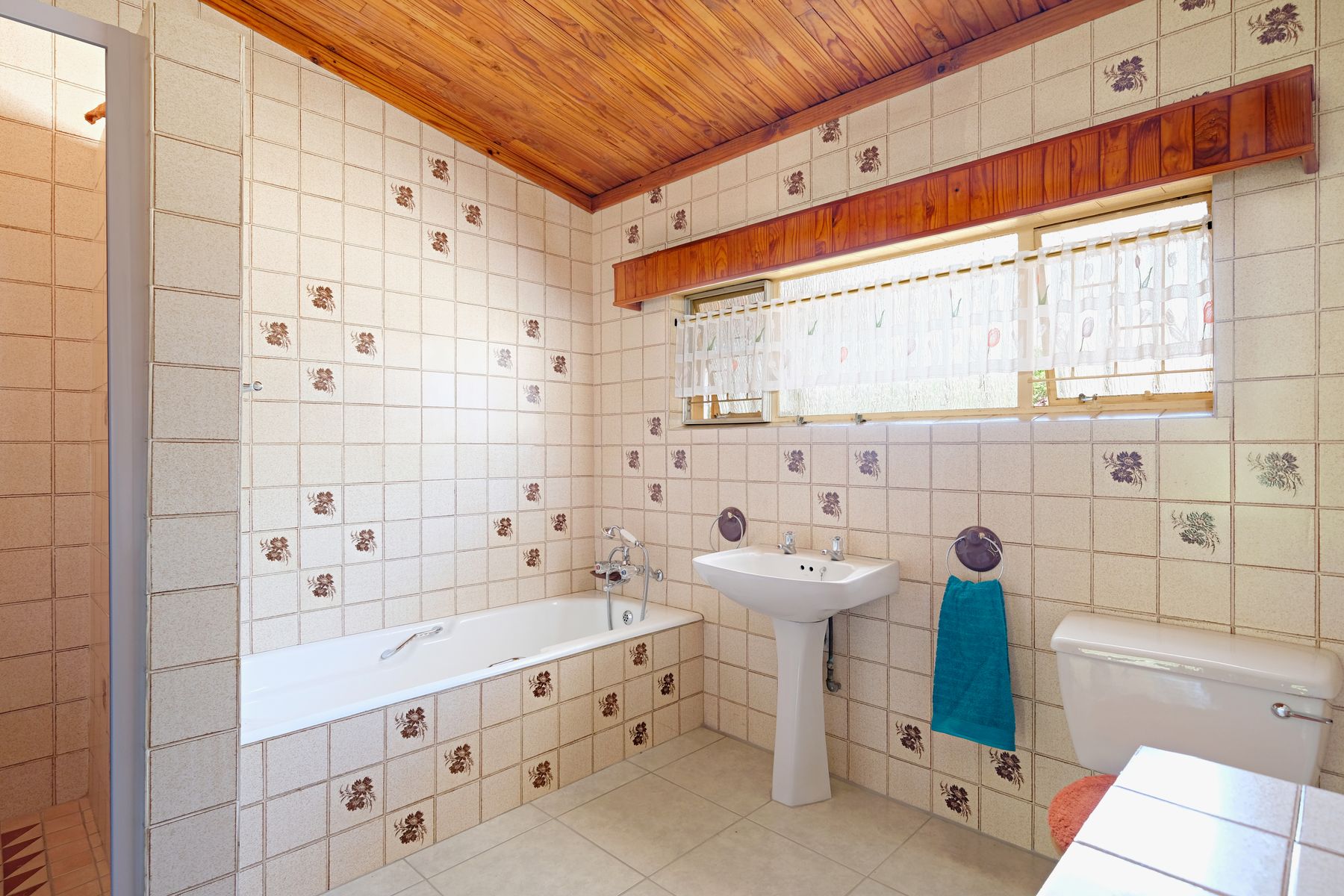
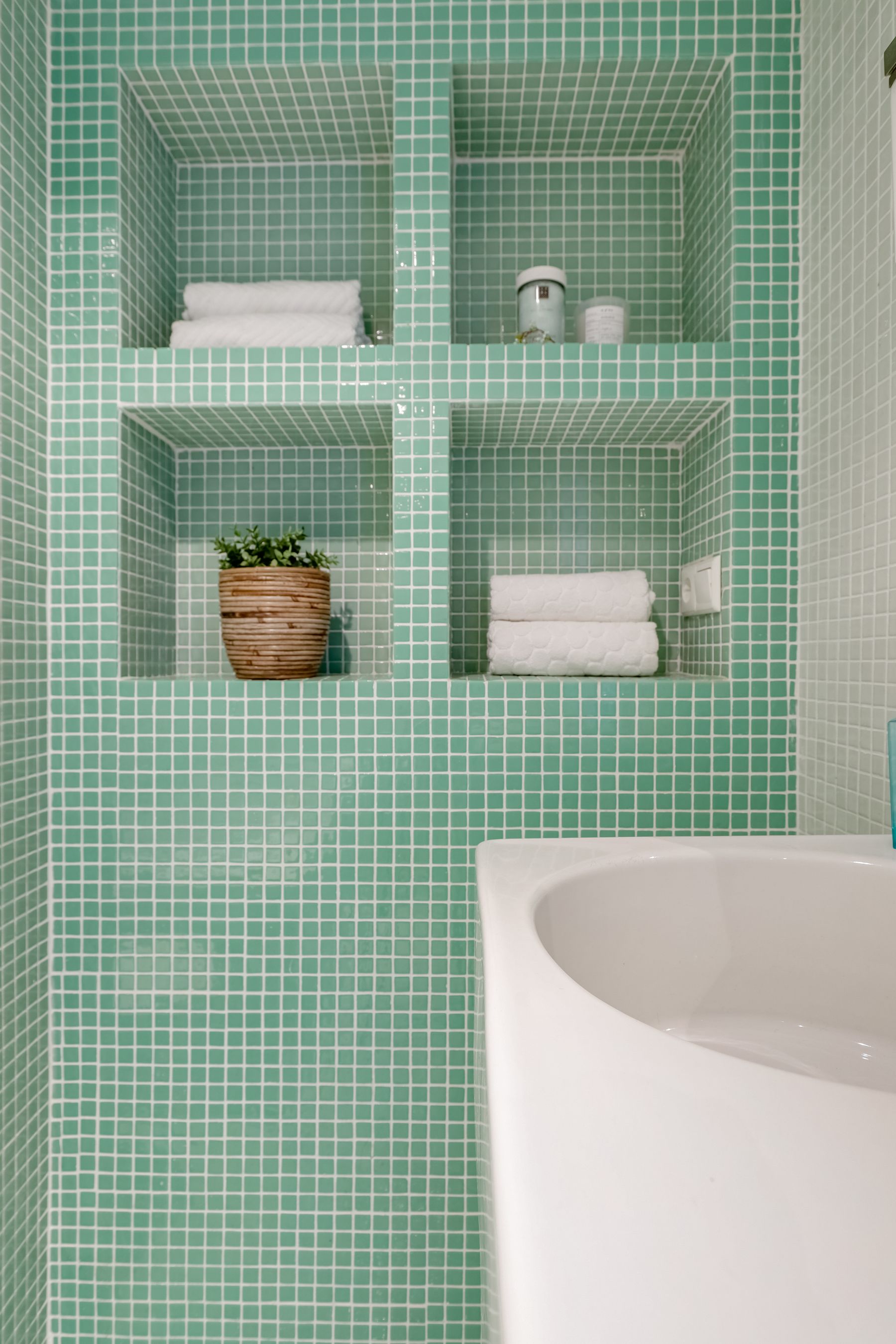
Tile remains one of the most practical wall finishes around showers, tubs and sinks because it tolerates regular cleaning and direct moisture when correctly installed over an appropriate waterproofed system. Use it where performance matters most, then decide whether dry walls need the same material or can use something softer.
Large Stone Planes for Visual Continuity
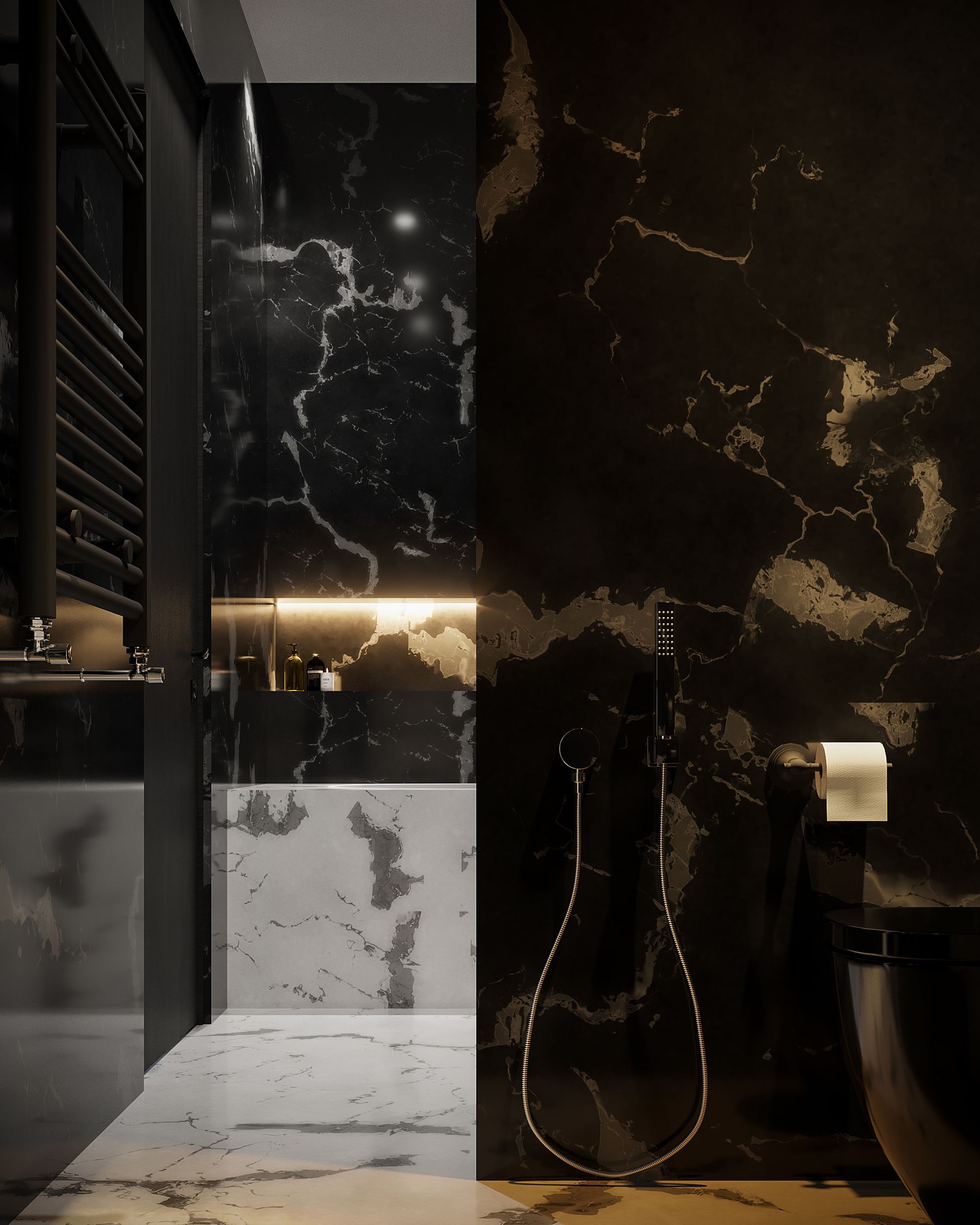
Large stone or marble-look surfaces can make a bathroom wall feel calmer by reducing the number of joints. Veining creates movement without adding another color, but the pattern needs enough uninterrupted area to read well. Natural stone and porcelain have different maintenance and installation requirements, so the material choice should follow the room's conditions.
Where Wallpaper Is Actually Defensible
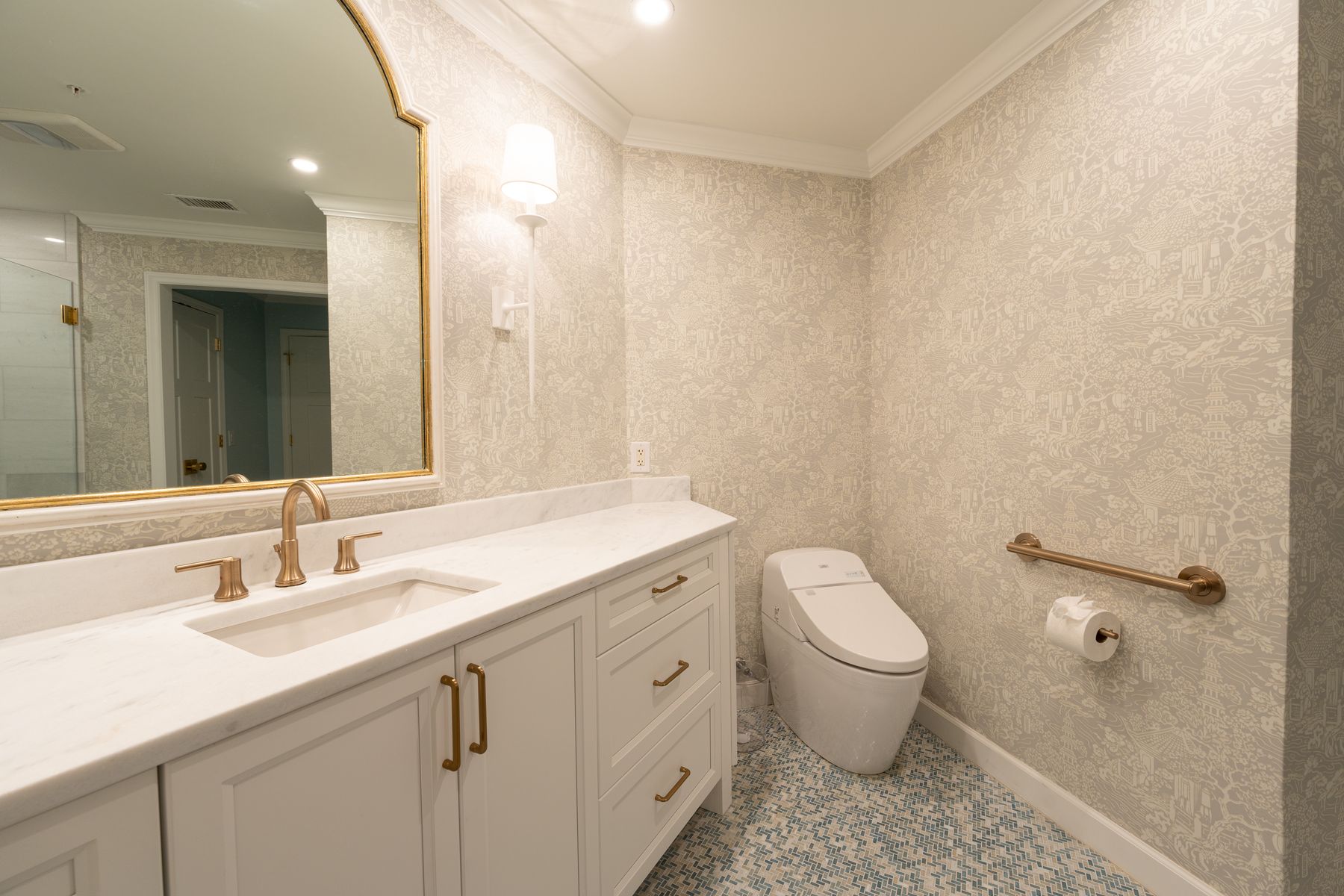
Wallpaper can bring pattern and softness to a bathroom, but it works best on drier upper walls or away from direct spray. Good ventilation and a product suitable for the intended environment matter. Keep the wettest lower zones tiled or otherwise protected so the decorative wall layer remains easier to maintain.
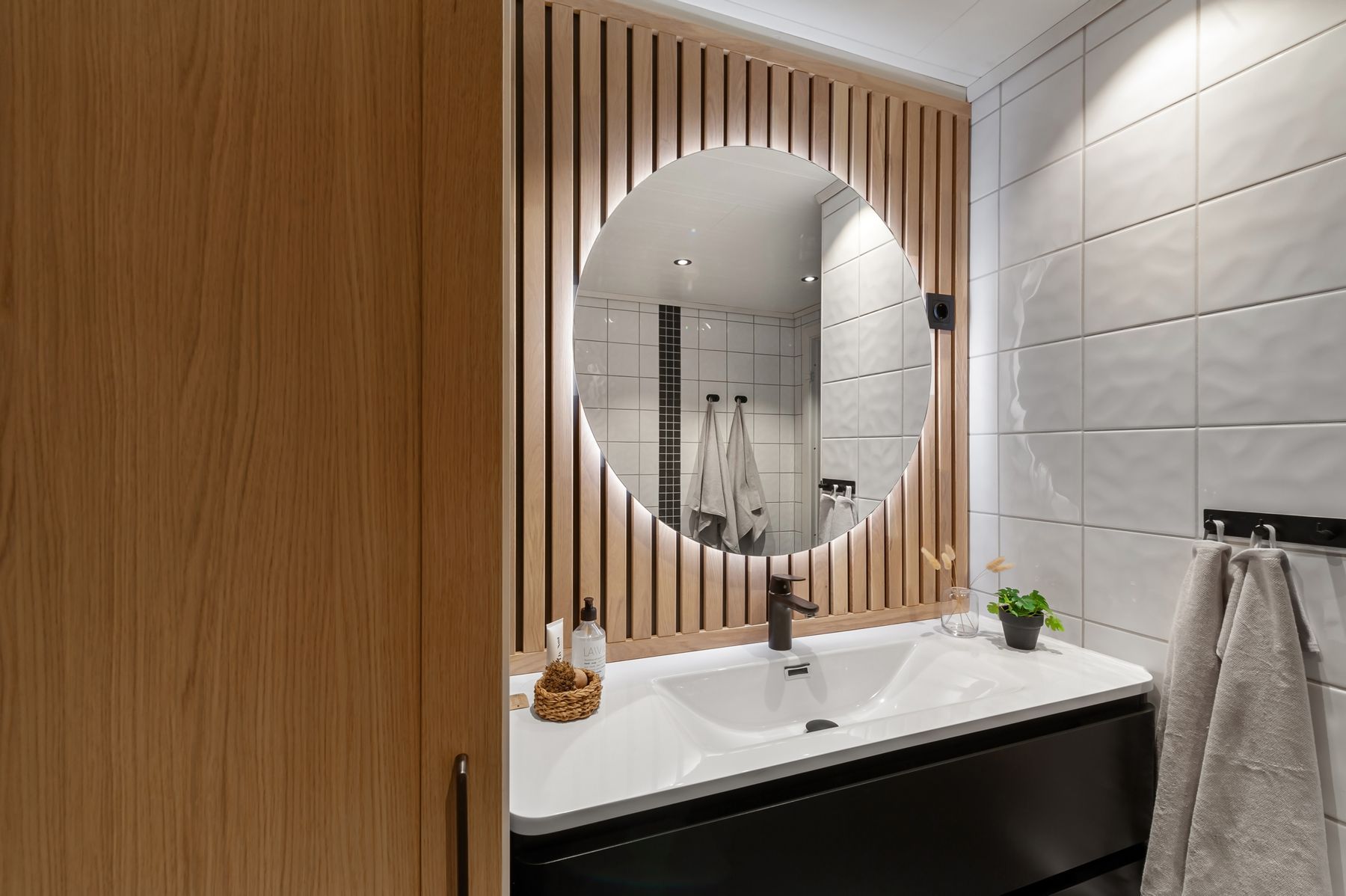
Paneling as a Single Architectural Move
Wood paneling can add warmth and rhythm to a bathroom wall, especially behind a vanity or in another lower-splash area. Keep the amount controlled so the grain remains a deliberate architectural move rather than wrapping every surface. The exact panel product, finish and substrate need to suit the humidity and location.
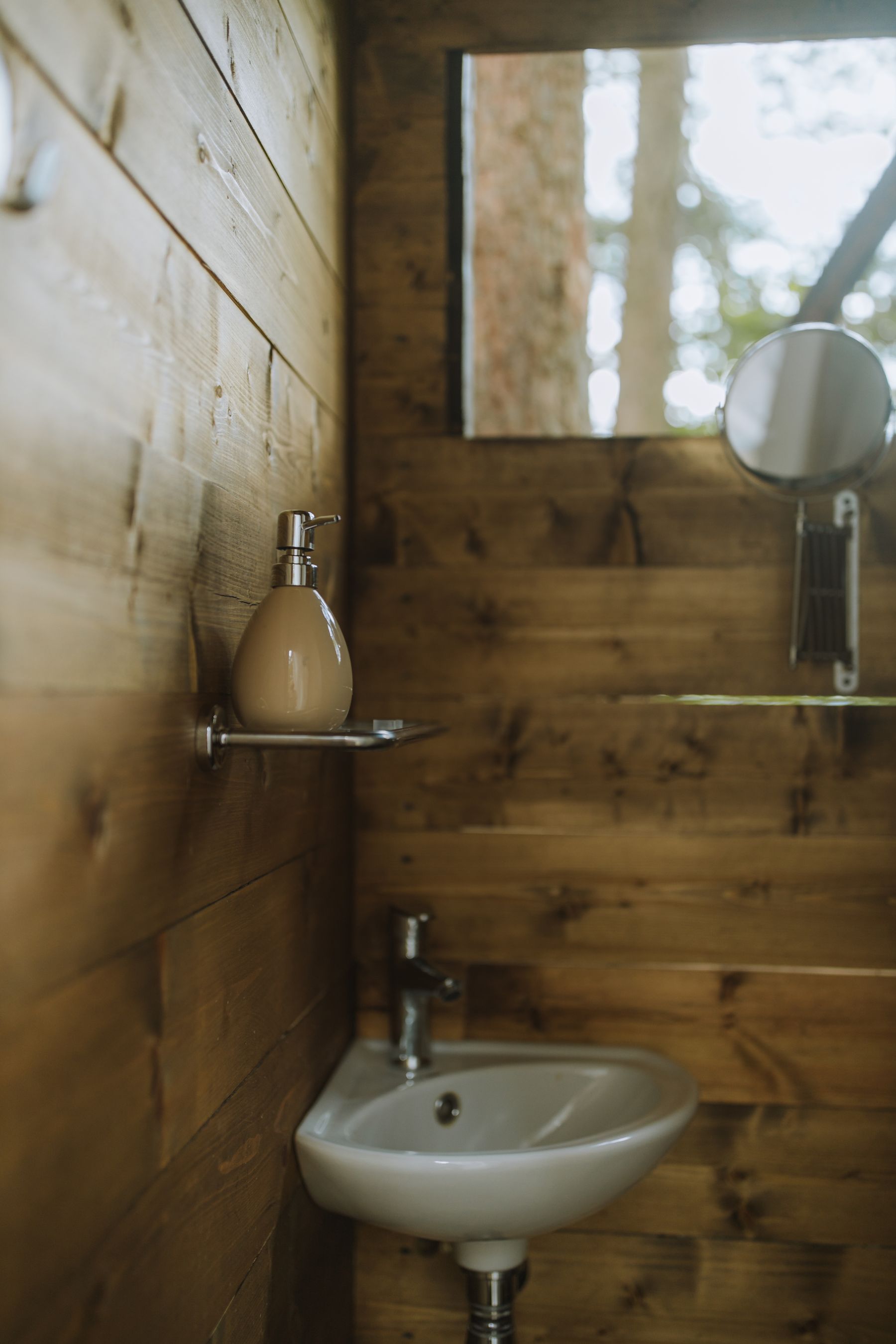
Full Timber Walls Need a Moisture Strategy
A wood-lined bathroom can feel warm and immersive, but it demands much more from ventilation, detailing and material selection than a single vanity or panel. If the visual goal matters more than using real timber, moisture-stable wood-look materials may be the better route. Do not copy dry-room wall details into a wet environment without a suitable system.
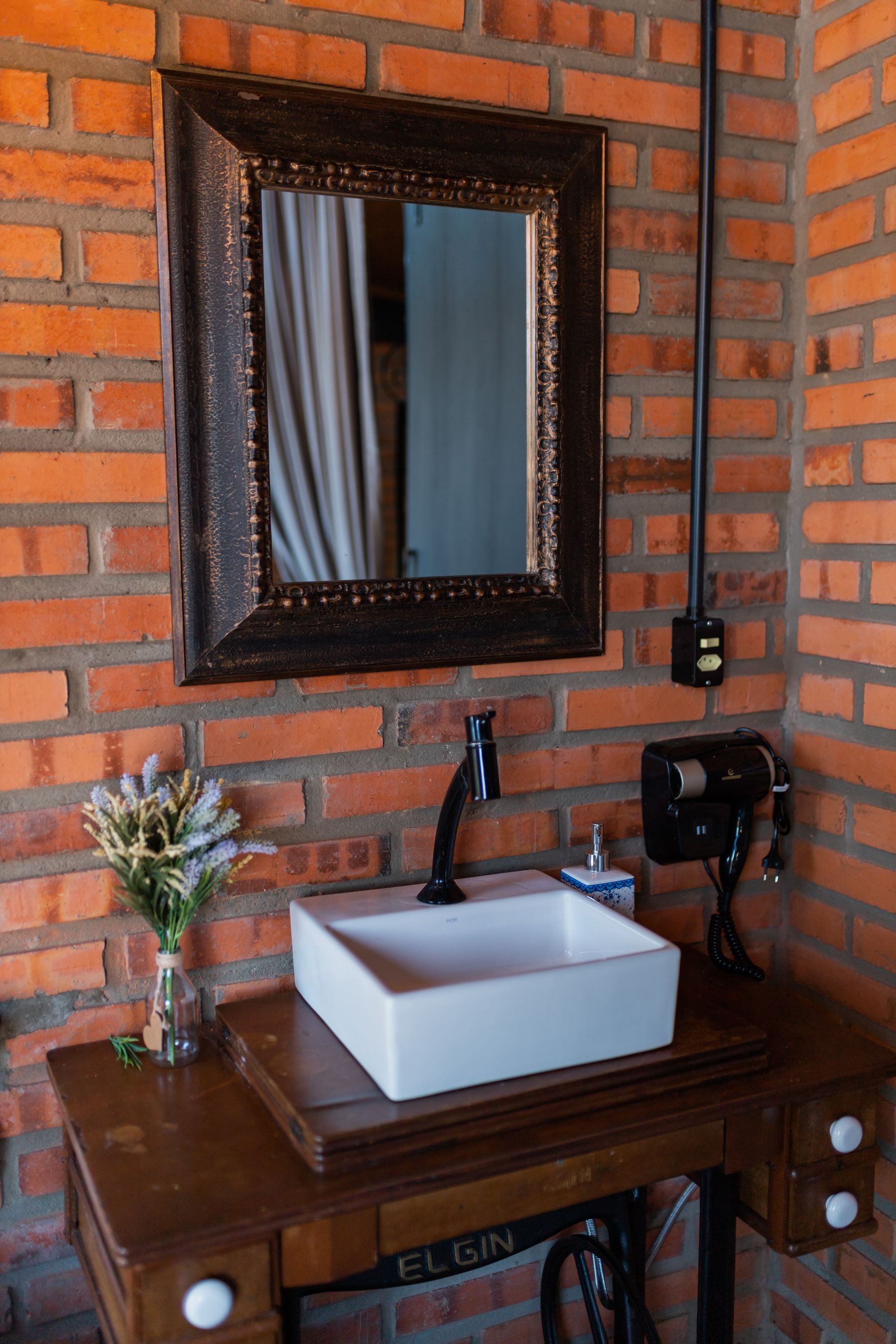
Brick as Character, Not a Wet-Zone Default
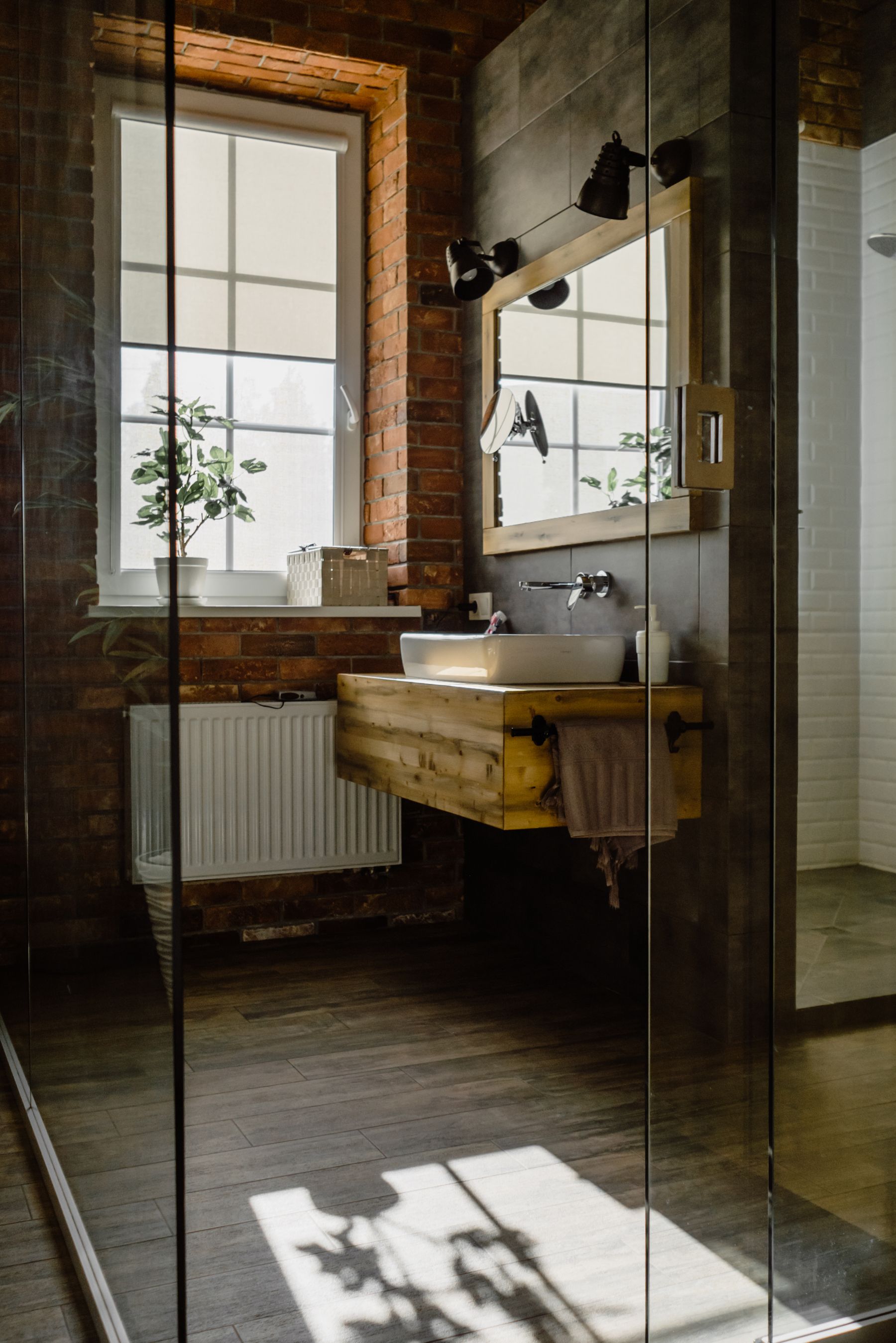
Brick can add industrial or historic character around a vanity or drier wall, but porous masonry is not automatically a suitable direct shower finish. Use it where its texture can be appreciated without creating unnecessary maintenance, and keep direct splash zones protected with an appropriate bathroom system.
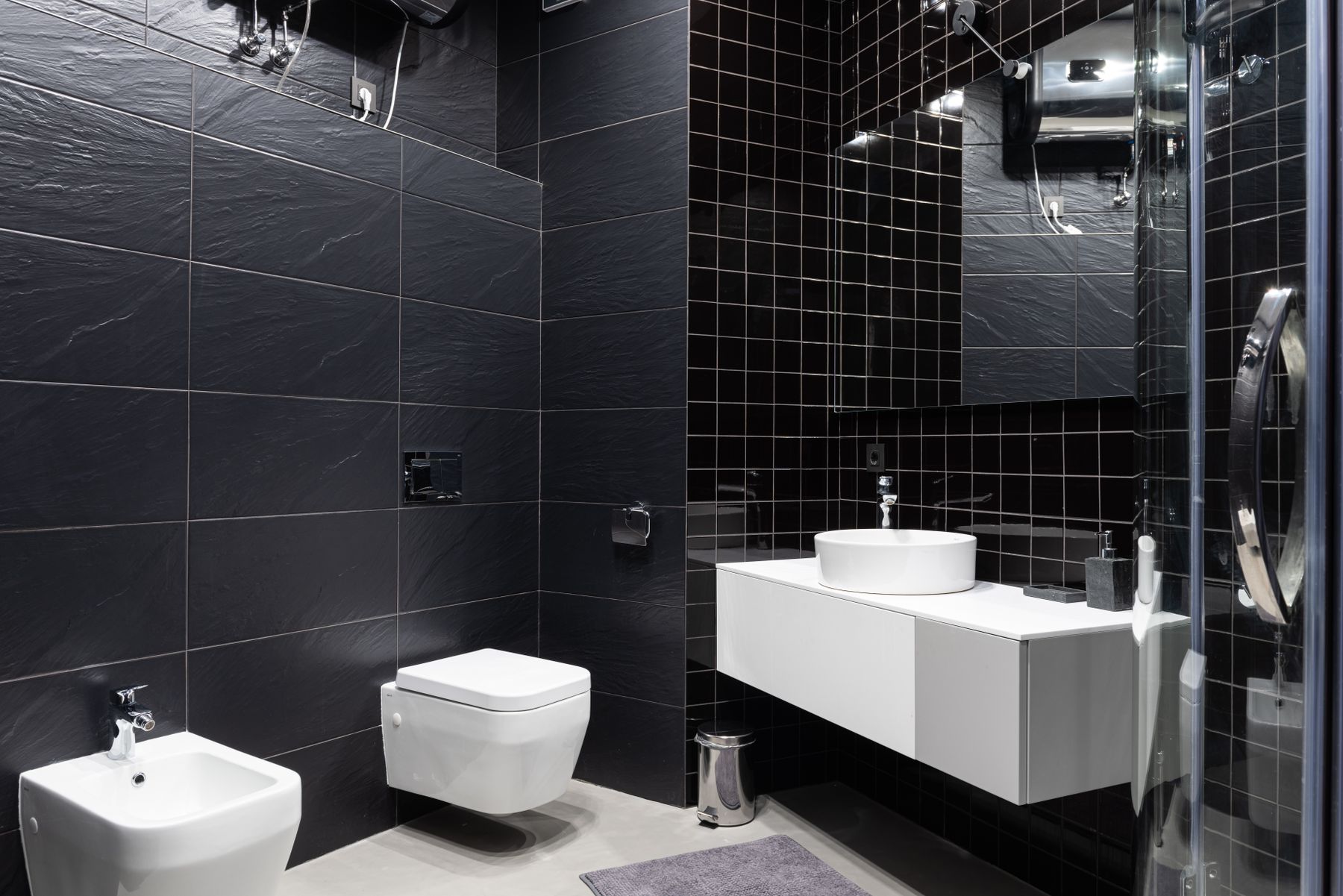
When Dark Tile Makes the Wall More Architectural
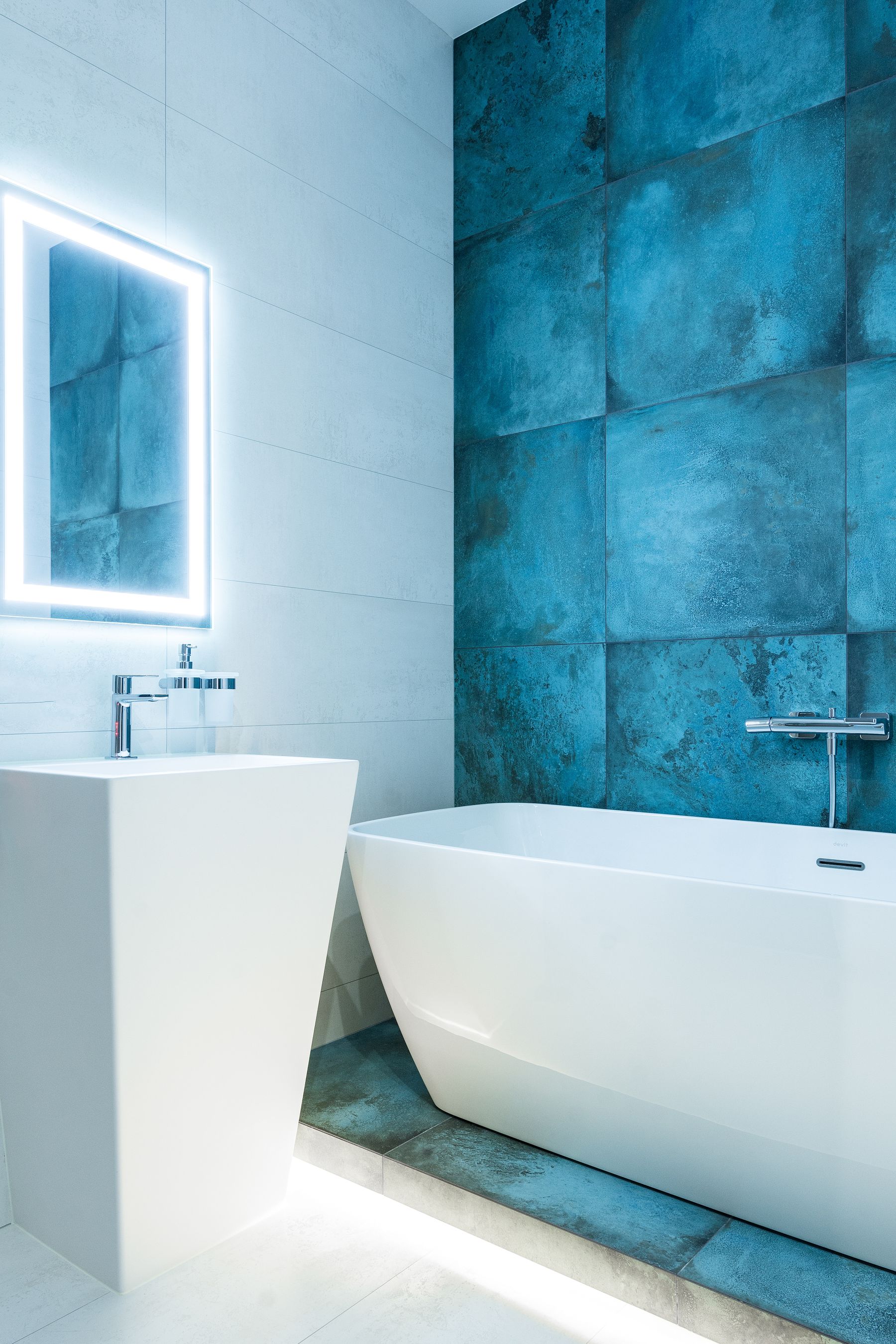
Black or charcoal tile can give a wall more weight and make pale sanitaryware stand out. The darker the surface, the more important lighting, grout contrast and fixture visibility become. Use one dark wall or wet zone before deciding whether the entire room needs the same treatment.
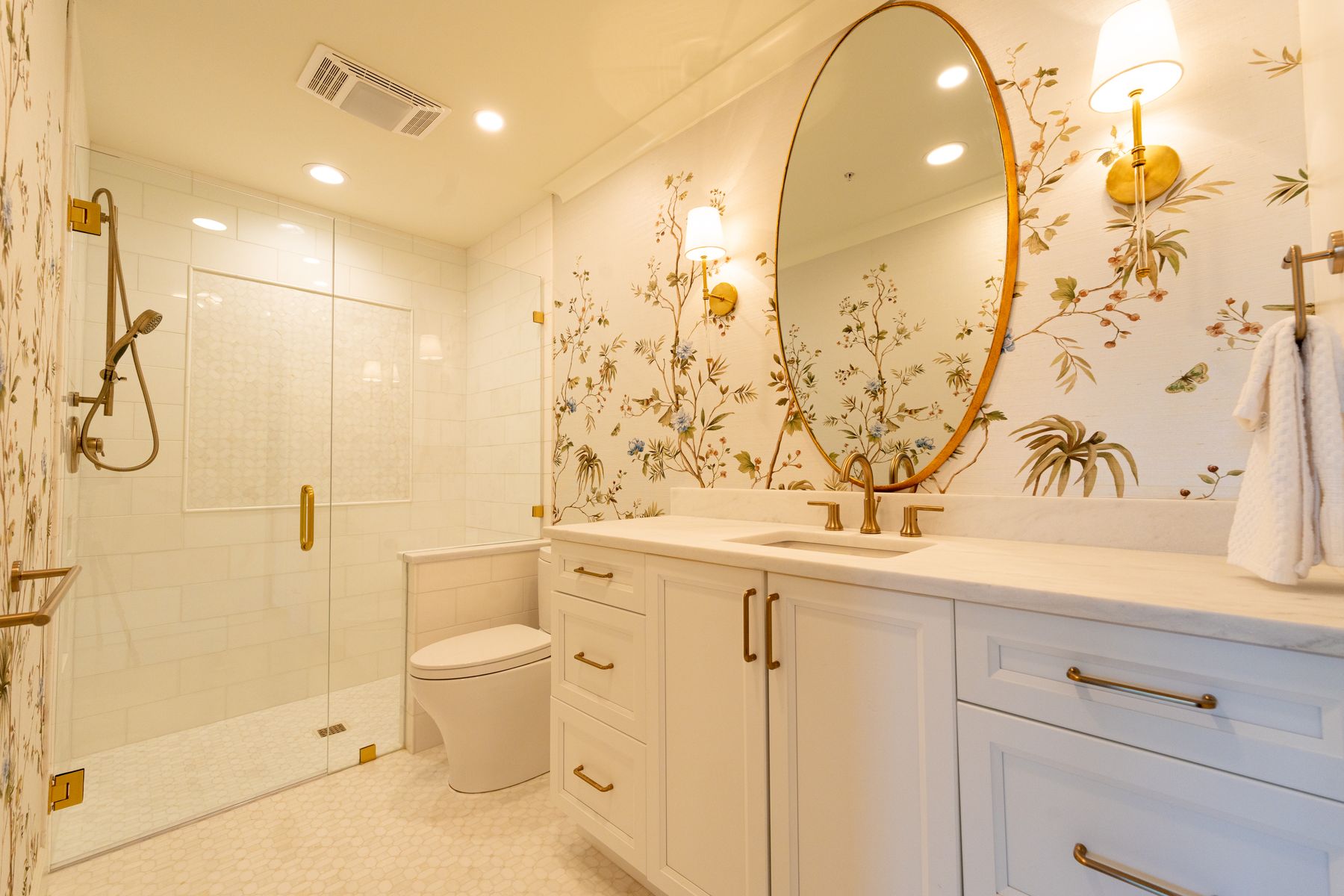
Floral Wallpaper as the Romantic Layer
Floral wallpaper can establish a softer vintage or shabby chic direction without changing permanent tile. Keep the strongest pattern on one wall or upper-wall area and let cabinetry and fixtures stay quieter. In a full bathroom, ventilation and product suitability remain essential.
Paint: The Most Flexible Wall Change
Paint is the easiest way to change the color of a bathroom wall without altering tile or cabinetry. Use a bathroom-suitable finish in drier areas and keep direct splash zones protected. A single painted vanity wall or upper wall can shift the room's mood while remaining comparatively easy to update later.
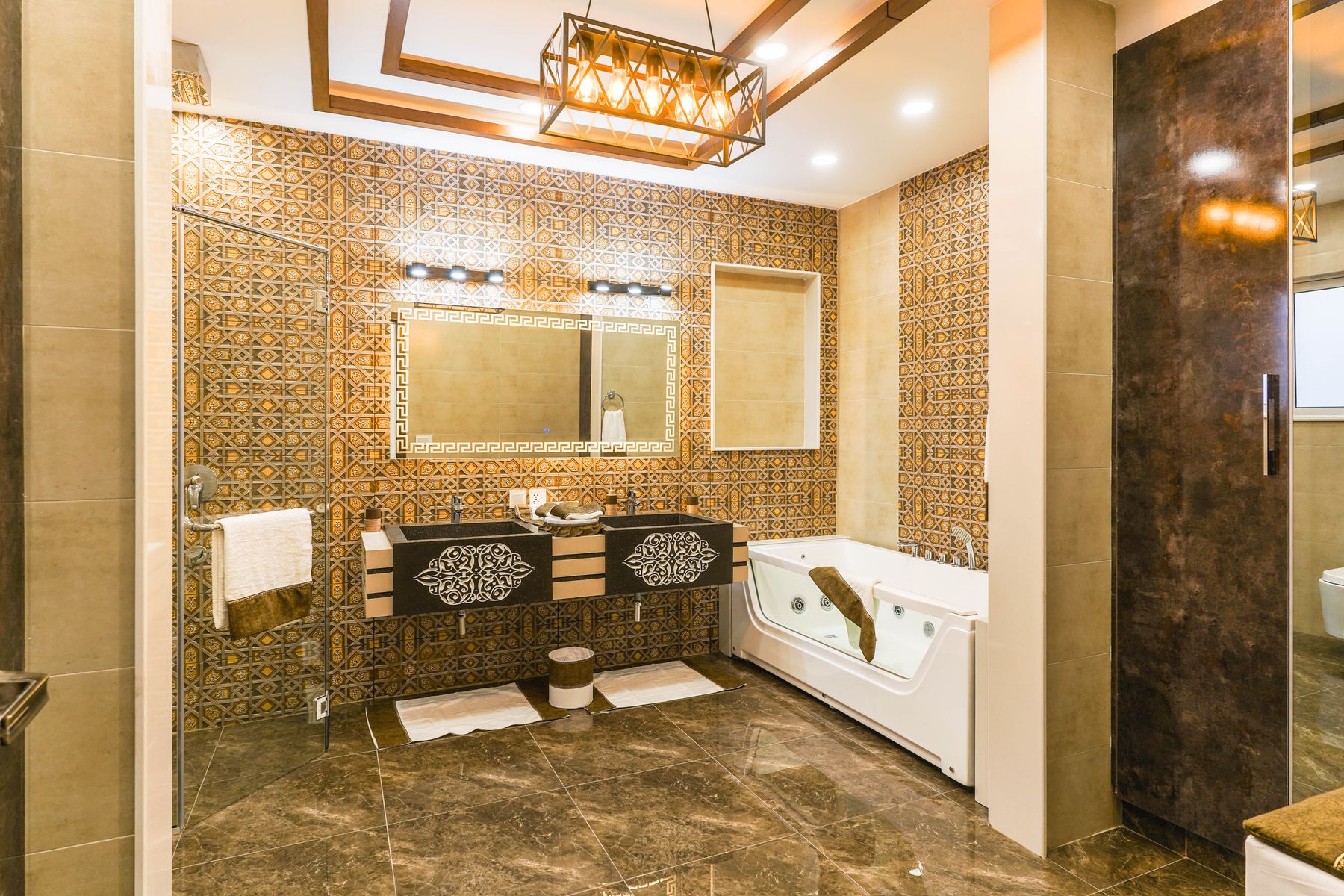
One Focal Wall for Decorative Tile
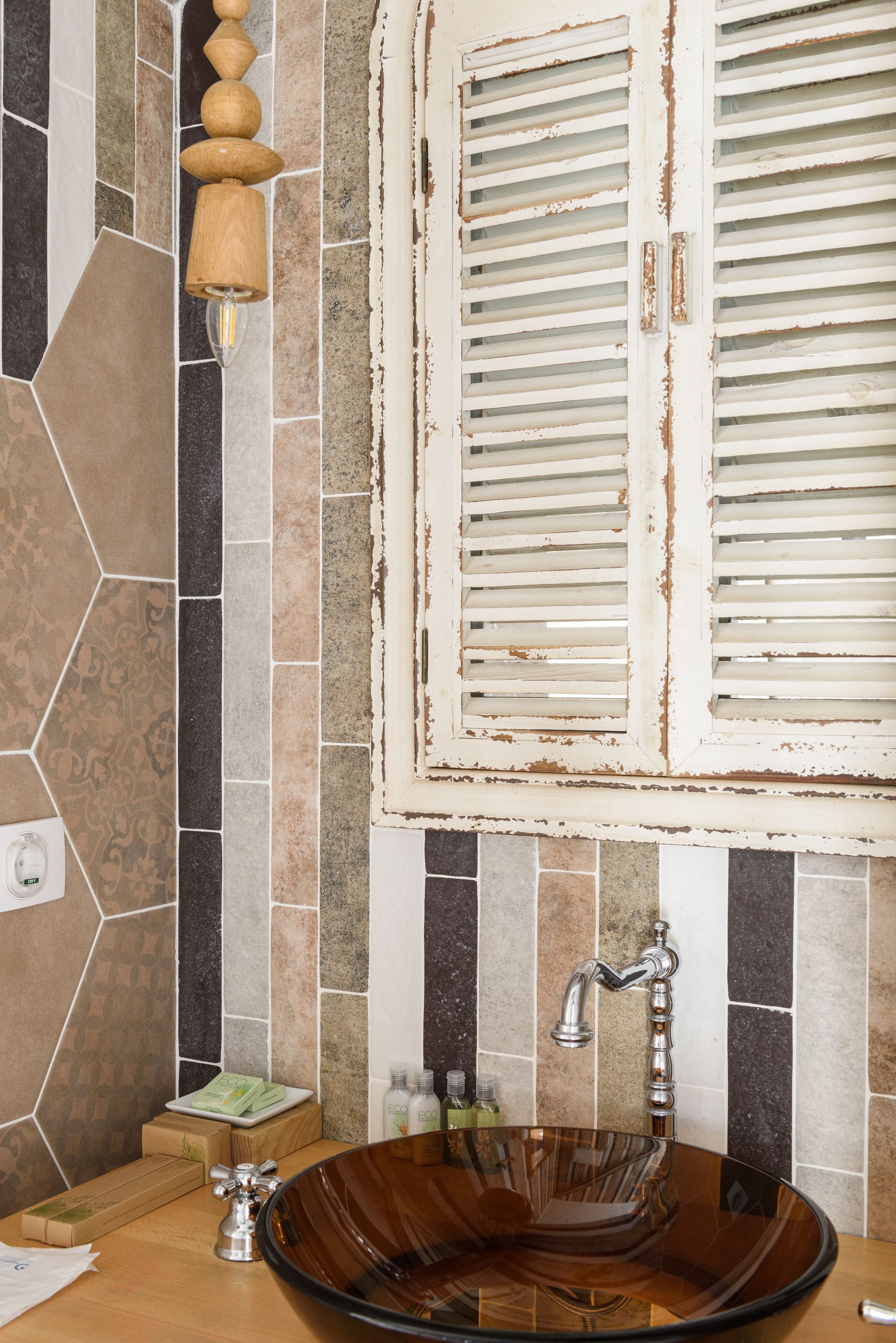
Patterned tile can turn one wall into the main visual feature without requiring elaborate finishes everywhere. Use it behind the vanity, around a bath or on a shower wall where the surface has a clear boundary. Keep adjacent walls more restrained so the pattern remains intentional.