TOPIC

Walls

Wall ideas covering tile, stone, paneling, wallpaper, paint, texture and practical surface planning across bathrooms and other interiors.

TOPICA cross-room discovery path built from the same canonical articles.

EXPLORE BY ROOM

Walls across the home.

Open the most relevant guide for each room in this theme.

MORE GUIDES

Continue the edit.

These articles share this theme but may differ by room, color, space or product focus.

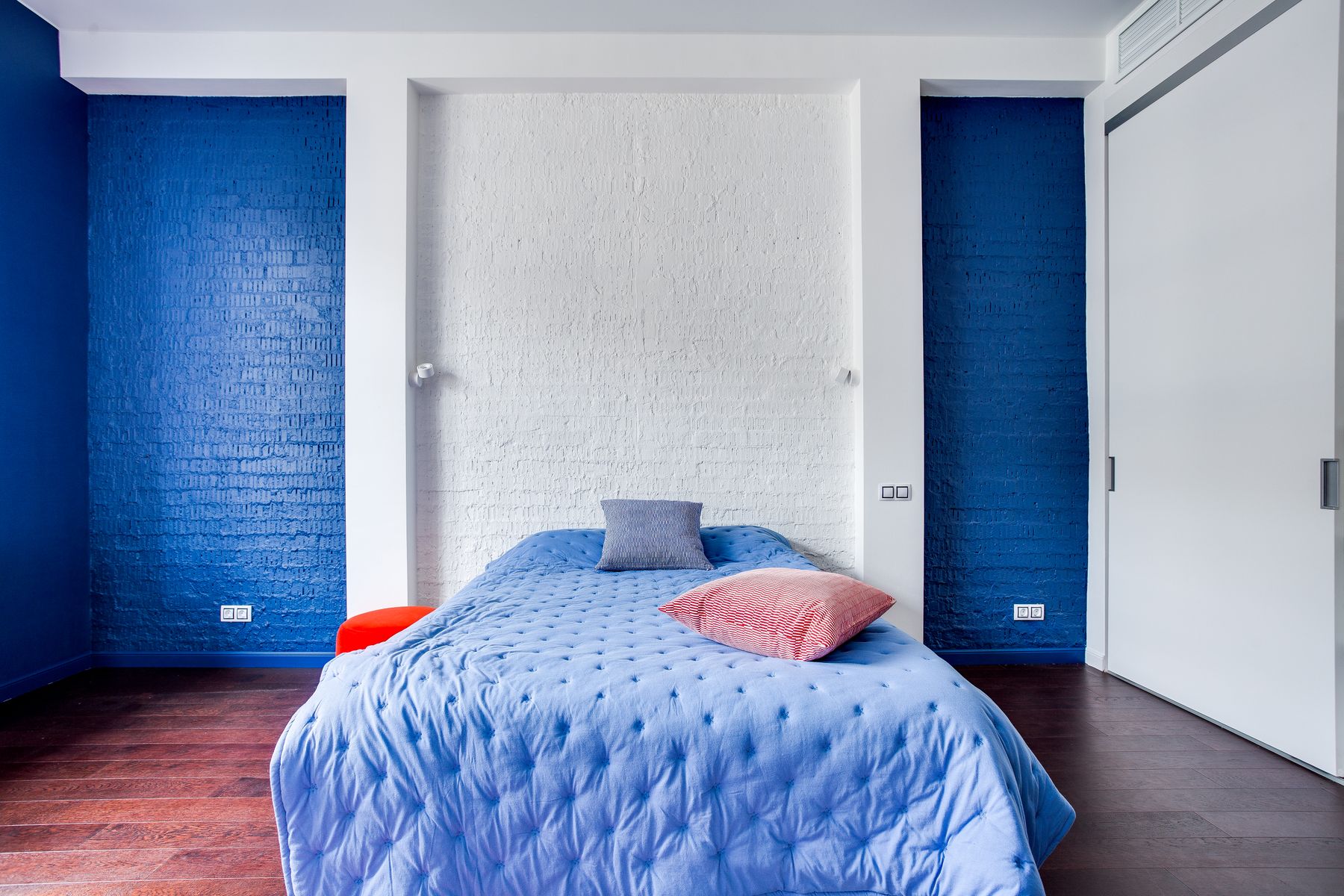
Modern bedroom with navy blue walls, coordinated blue bed and pillows, pale floor and daylight from a large window

Blue Bedroom Ideas

Blue works best in a bedroom when it is assigned a clear sleep-related role. A misty blue can recede into the background, denim can behave like a stable mid-value, cobalt can concentrate energy in one focal area and navy can turn the bed wall or storage into a deep architectural field. The useful questions are how cool the room should feel, which blue still looks like blue after sunset and whether white, timber or metal accidentally push the scheme toward coastal, nautical or overly formal styling.

Explore the guide →
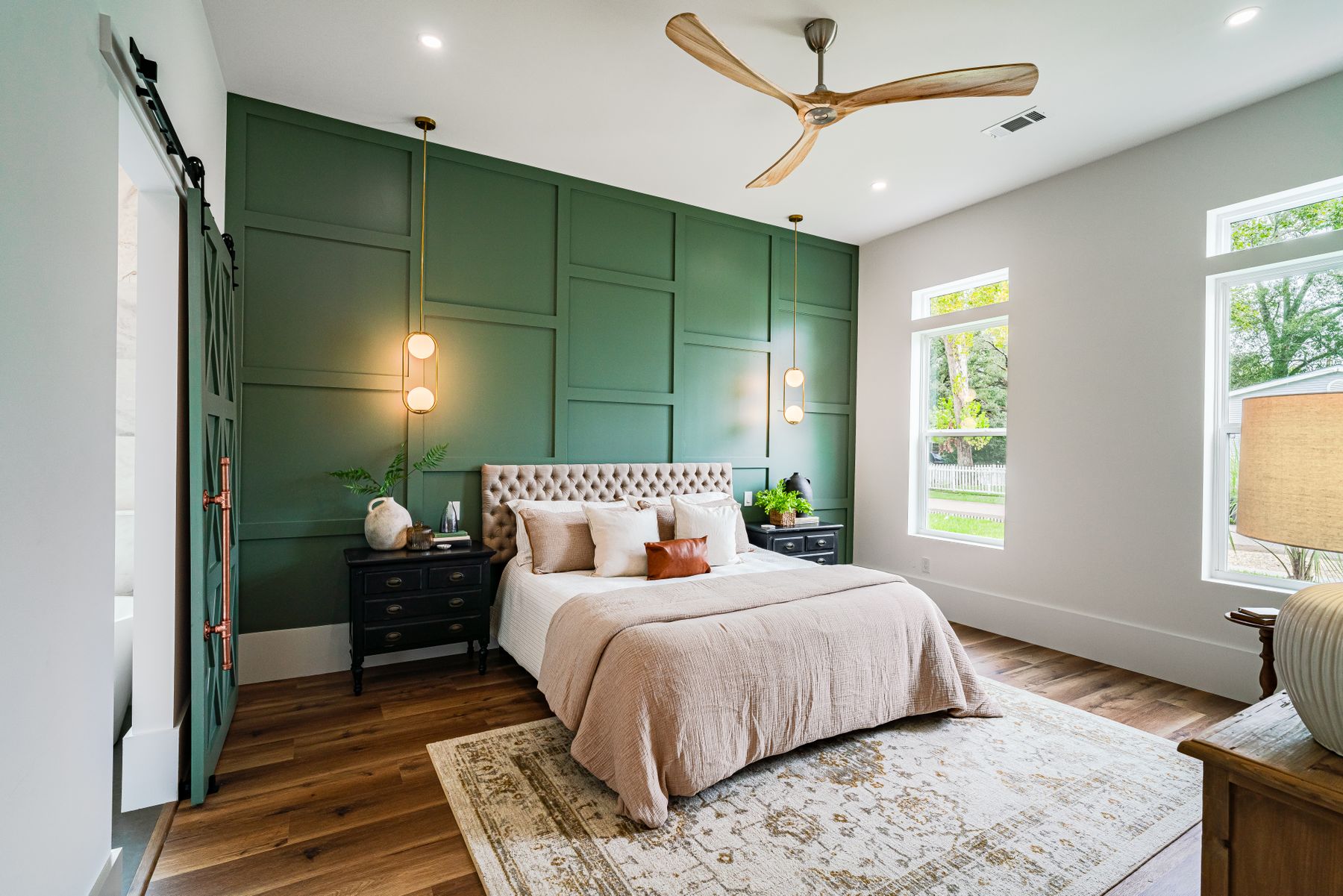
Modern bedroom with a green paneled bed wall, neutral upholstered bed, pale bedding, timber floor and broad natural light

Green Bedroom Ideas

Green bedrooms become distinctive when green is treated as part of a material and living system rather than as a generic restful color. Sage can behave like a mineral neutral, olive can connect strongly to timber and earth tones, emerald can become a jewel field and forest green can cross into near-black at night. The design challenge is to control those relationships—wood temperature, botanical cues, plant viability, daylight and seasonal change—so the room feels grounded rather than themed.

Explore the guide →
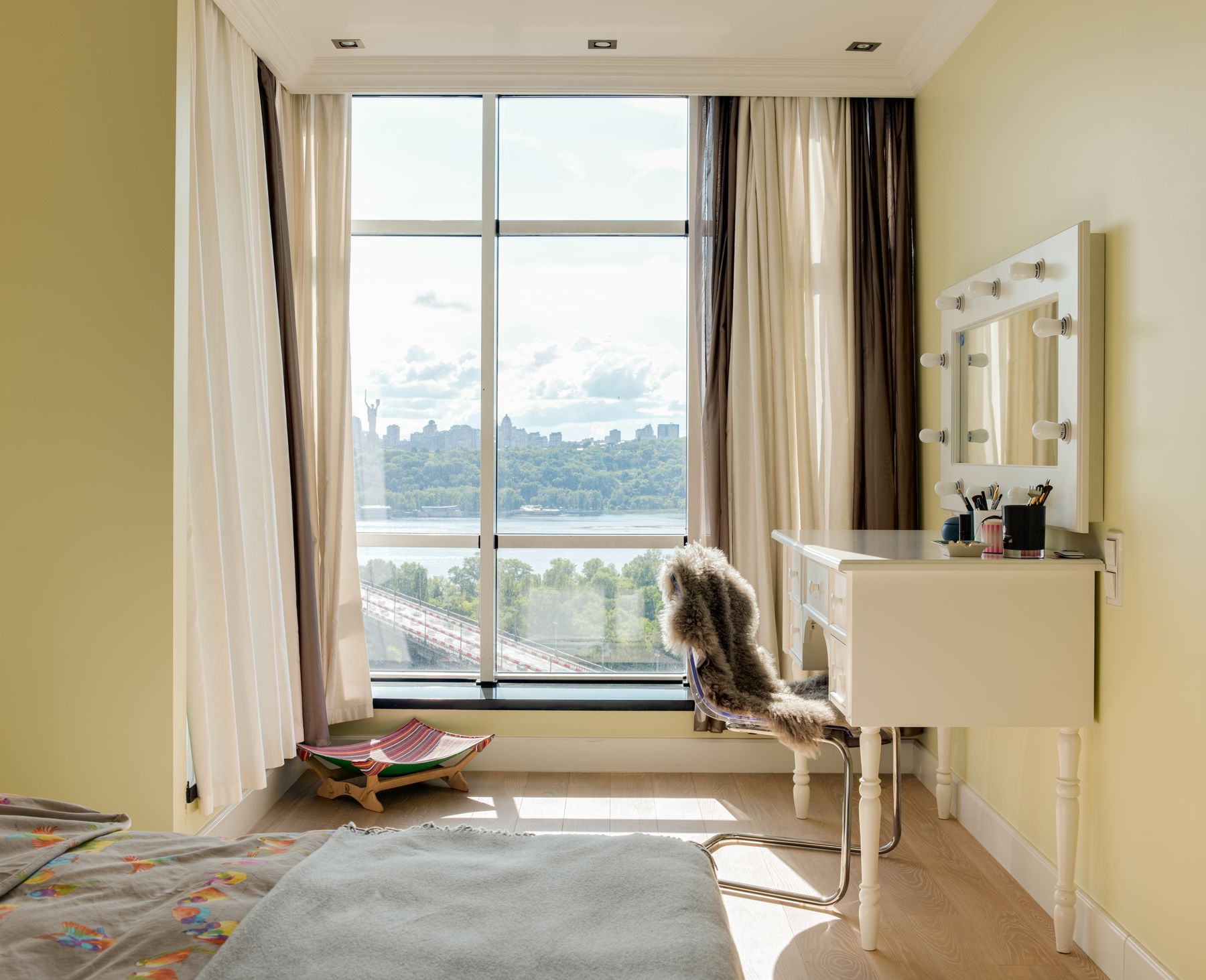
Modern bedroom with warm yellow walls, a pale upholstered bed, white bedding, dressing table and broad city window

Yellow Bedroom Ideas

Yellow in a bedroom is primarily a question of dose and timing. Butter and straw can behave almost like warm neutrals, ochre and mustard act more like mineral earth tones, while canary or sunflower creates a high-energy focal event. Because yellow is strongly affected by both daylight and warm evening lamps, the useful decision is how much yellow the sleep space can carry, which layer should remain reversible and where a cooler or darker counterpoint is needed to let the eye settle.

Explore the guide →
Black and white living room with pale sofa, black lounge chair, dark fireplace, light rug, wood floor and leafy plants

Black and White Living Room Ideas

Black and white living room ideas succeed when contrast is composed as mass, edge, rhythm and light—not sprinkled around the room as matching accessories. The same palette can feel tailored, soft, historic, graphic or relaxed depending on which value dominates, where the dark shapes sit, how pattern is scaled and whether timber, stone, metal or an accent color supplies a middle register. This guide turns monochrome into a practical design method for conversation, television, windows, art, small rooms, open plans, rentals and everyday maintenance while keeping Black Living Room and White Living Room as separate dominant-color destinations.

Explore the guide →
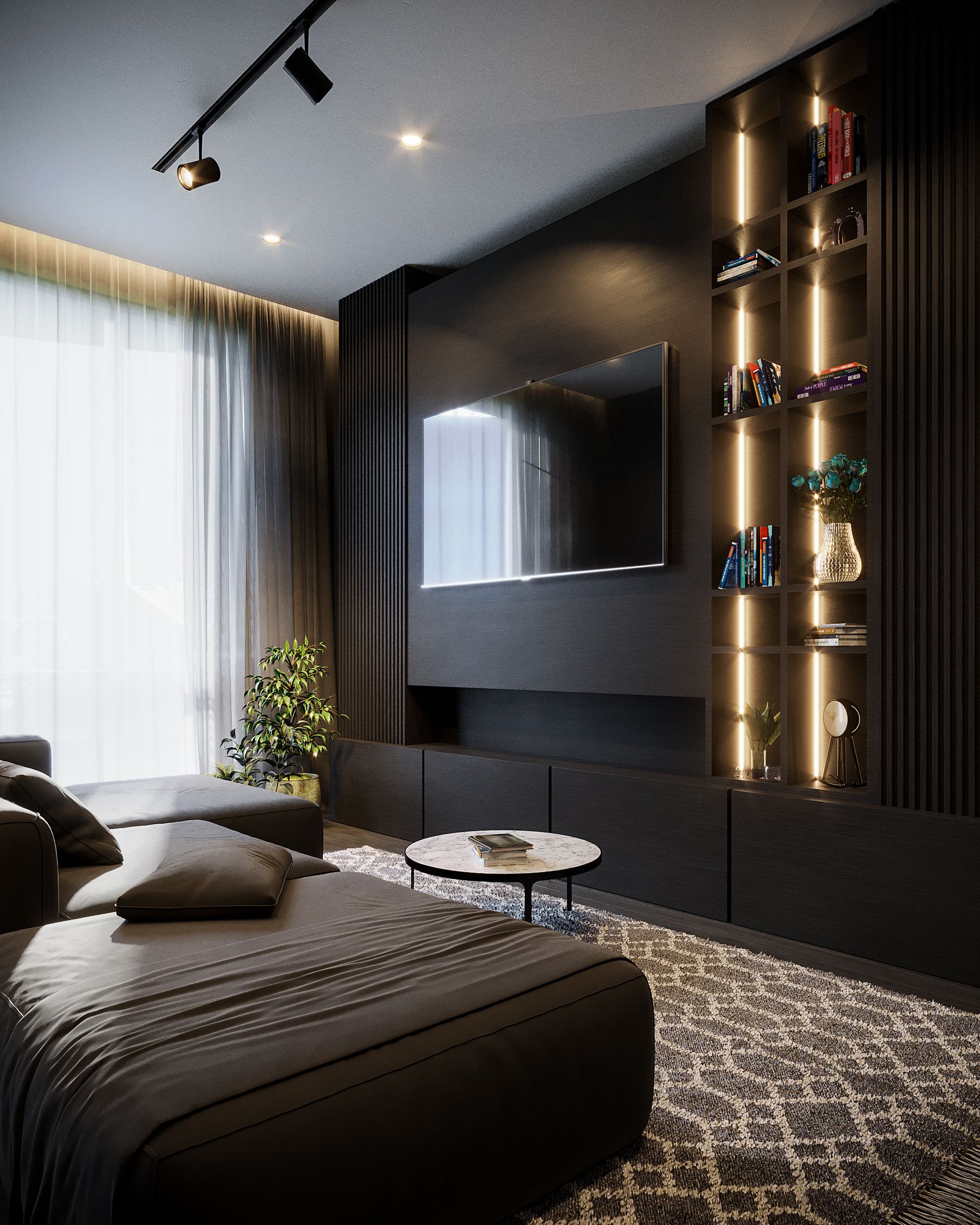
Black living room with a dark paneled media wall, charcoal modular sofa, pale patterned rug, tall sheer-curtained window and warm shelf lighting

Black Living Room Ideas

Black living room ideas work when black is treated as an active spatial material—not a shortcut to drama, masculinity or a Gothic mood. Its undertone changes beside timber and daylight; its sheen decides whether a wall absorbs or throws light; and its position can make a sofa, television, fireplace or doorway either legible or visually disappear. This guide is for rooms where black carries the composition. It explains how to choose the black, decide its architectural extent, reveal edges, build useful evening light, manage a screen, introduce color and keep the finish credible in daily life without turning the room into a black-and-white contrast exercise.

Explore the guide →
Powder blue living room with two white seats, a pale rug, central glazed door, curtains, plant and dark table lamp

Blue Living Room Ideas

Blue living room ideas are often reduced to a shade ladder or quietly pushed toward a coastal theme. The more useful question is what blue should do in a social room. It can visually lengthen a wall, give a large sofa a calm middle value, turn joinery into architecture or make a television less abrupt—but the same blue can also flatten on an overcast day, cool the faces across a conversation group or become sweeter and more decorative than intended. This guide treats blue as spatial equipment. It explains how pale, mid and deep blues change distance and weight, how the window and evening lamps alter them, where cobalt earns its energy, and how timber, rust, pink, stone, art, screens and fireplaces make the palette feel deliberate rather than themed.

Explore the guide →
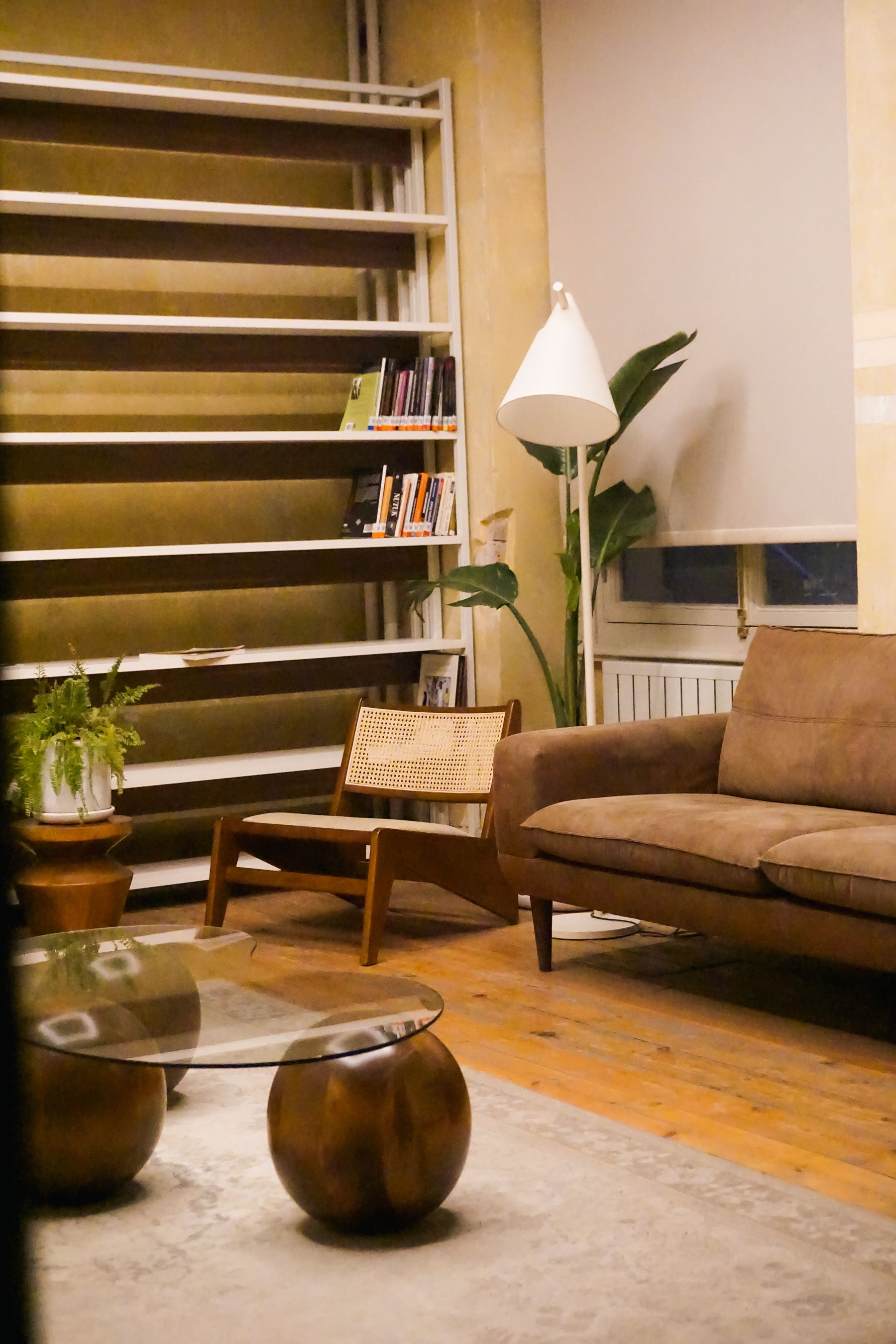
Brown living room with a leather-look sofa, timber floor, wood-and-cane chair, bronze-toned table and pale walls

Brown Living Room Ideas

Brown living room ideas work best when brown is treated as a family of materials, not a single cozy color. Walnut absorbs light differently from cognac leather; chocolate velvet changes with its pile; brick, stone, paint and wool each carry different red, yellow, grey or violet biases. A successful room therefore begins by inventorying where its brown already comes from, choosing one leading source and giving the remaining browns distinct jobs. This guide shows how to separate large brown masses, prevent wood-on-wood blur, pair brown with cooler and brighter colors, protect faces and routes after sunset, and plan for the way timber, leather and textiles age. The result can feel quiet, graphic, contemporary or collected without defaulting to beige neutrality, rustic motifs, mid-century costume or generic coziness.

Explore the guide →
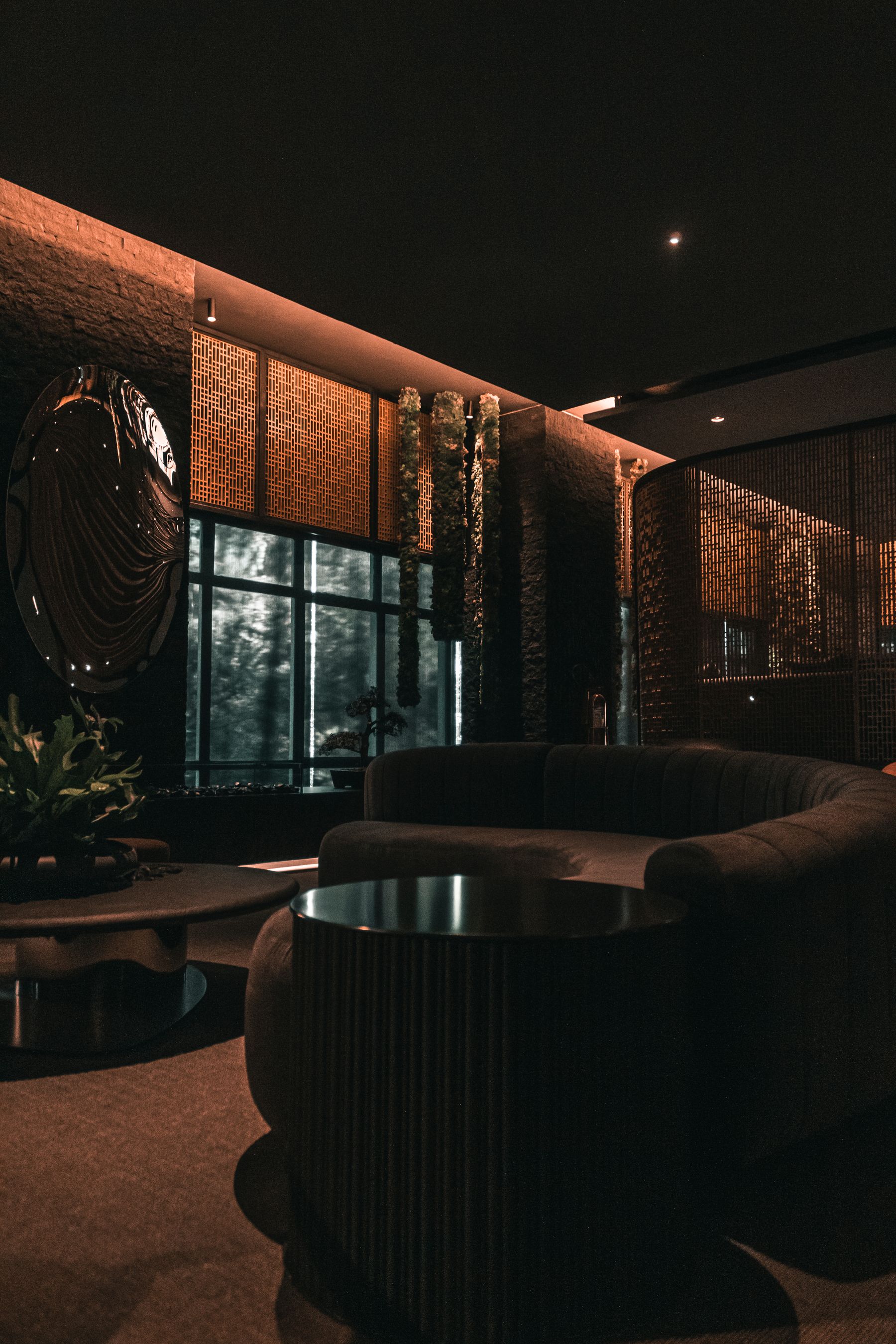
Dark living room with charcoal curved seating, black ceiling, warm timber lattice, amber perimeter lighting and tall windows

Dark Living Room Ideas

Dark living room ideas are not a shortcut to black walls, Gothic drama or generic coziness. A socially useful dark room is a low-luminance composition: several deep color families, a readable middle value, small returns of light and controlled transitions between the bright window, the television, people's faces and adjoining rooms. This guide treats navy, forest, charcoal, espresso, aubergine and black as different kinds of darkness. It shows how to place the deepest field, build brightness bridges, keep dark-on-dark seams legible, choose night-window behavior and create separate conversation and screen hierarchies without bleaching the room with pale contrast.

Explore the guide →
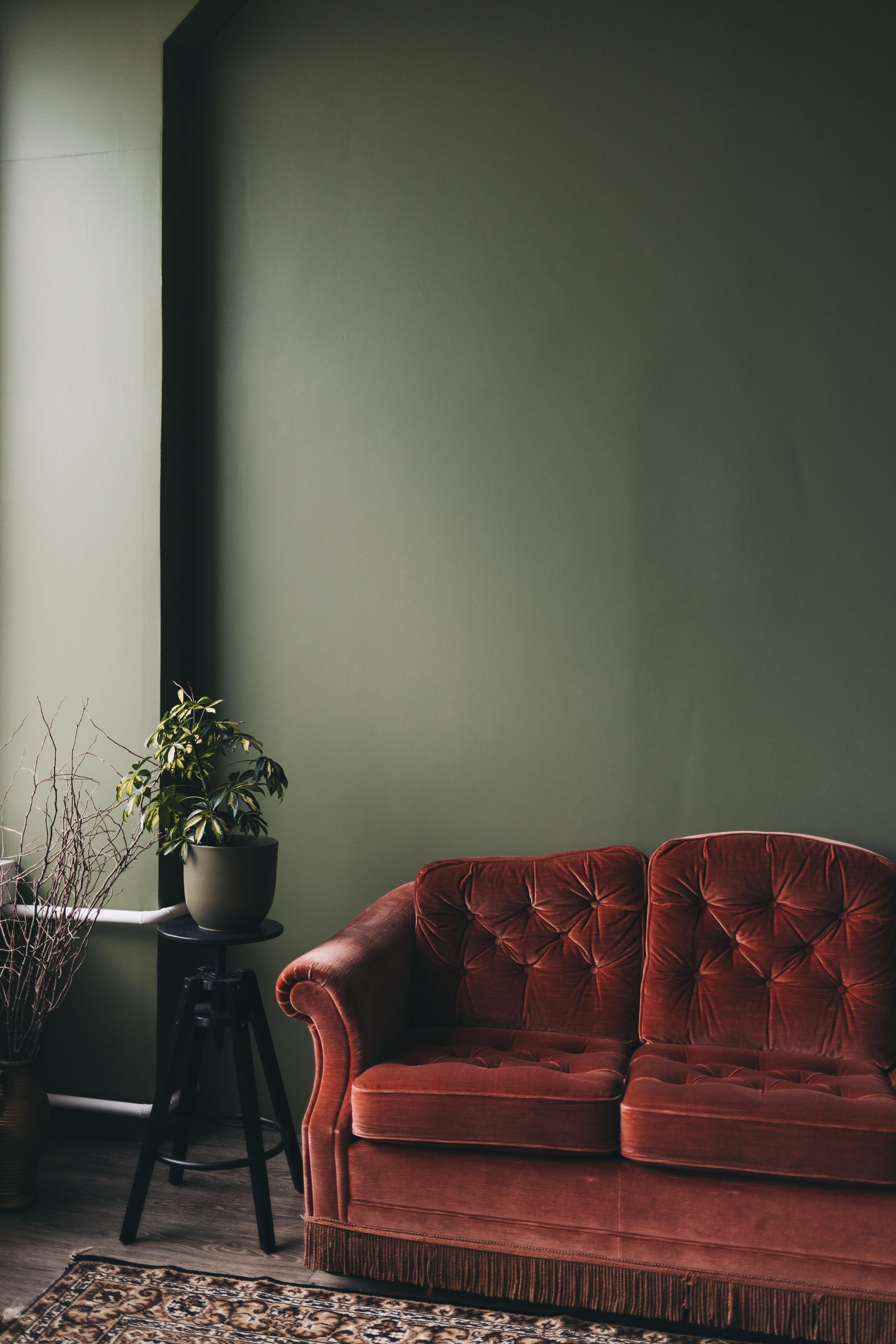
Rust red velvet sofa against a tall muted green wall with a small potted plant and dark wood side table

Green Living Room Ideas

Green living room ideas become convincing when green has a clear role in the room's social life. It can be the enclosing wall color, the largest upholstery volume, a continuation of the garden view or a deliberate counterpoint to it—but asking one green to perform all four jobs usually produces a themed room rather than a composed one. This guide focuses on the decisions peculiar to a living room: how green changes faces and conversation light, where a sofa ends against a green wall, how televisions and fireplaces interrupt the field, when red or blue improves the palette, and how adjoining rooms should meet it. The aim is not a shade catalogue or a botanical checklist; it is a living room whose green still works when the plants, cushions and daylight are stripped away.

Explore the guide →
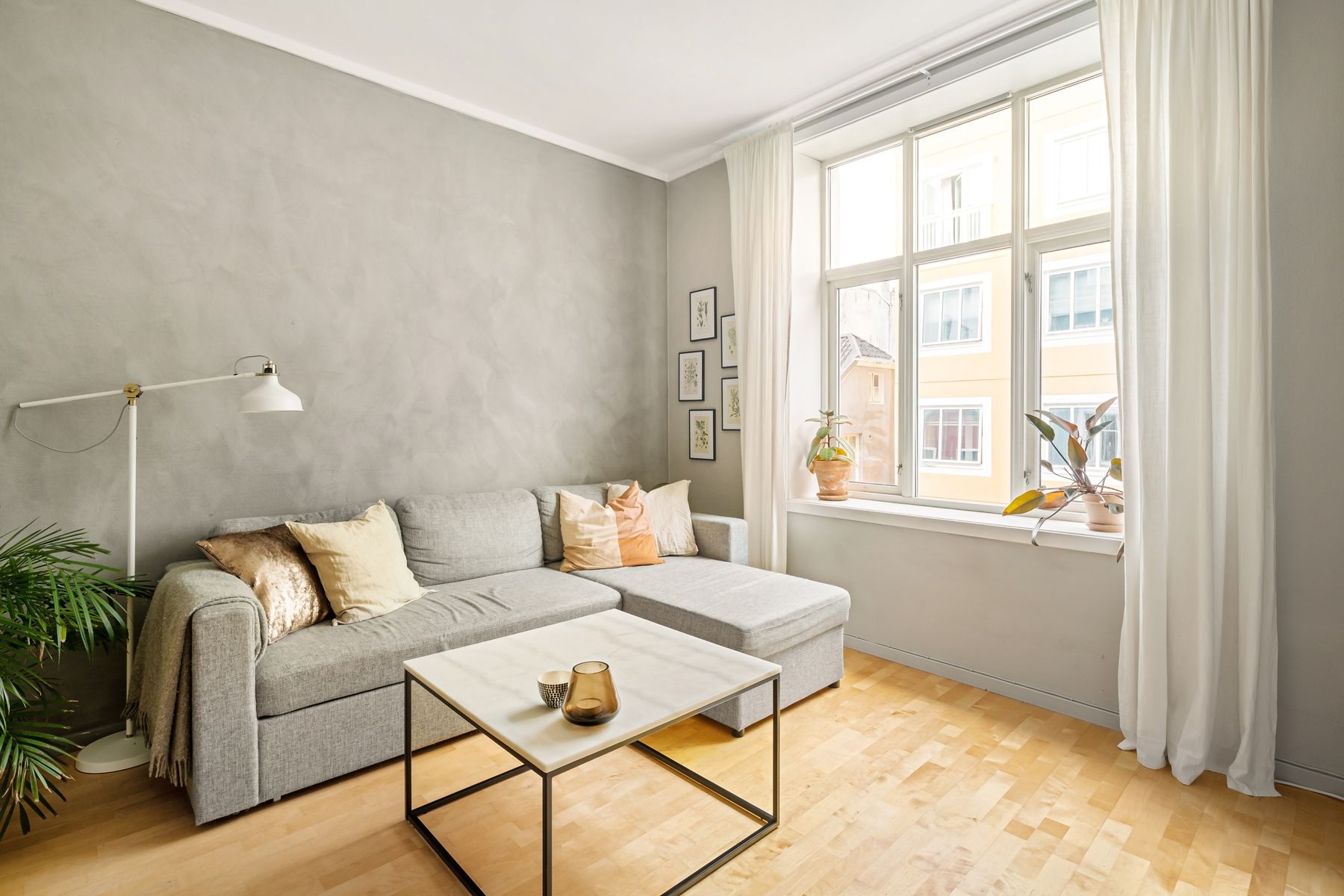
Warm grey living room with a grey sectional, mottled wall, white curtains, pale wood floor and large daylight window

Grey Living Room Ideas

Grey living room ideas fail when grey is treated as an empty backdrop. In a real room it borrows color from the sky, floor, garden, fireplace and lamps, while its value decides whether a sofa reads as an object or dissolves into the wall. That is why the same paint can look calm in one home and blue, mauve, green or simply unfinished in another. This guide starts with diagnosis rather than a shade list. It separates undertone, lightness and surface; explains why builder-grey schemes go flat; shows how to give a grey sofa a specific role; and uses timber, color, stone, metal, trim and evening light to correct the room without disguising the problem with more cushions.

Explore the guide →
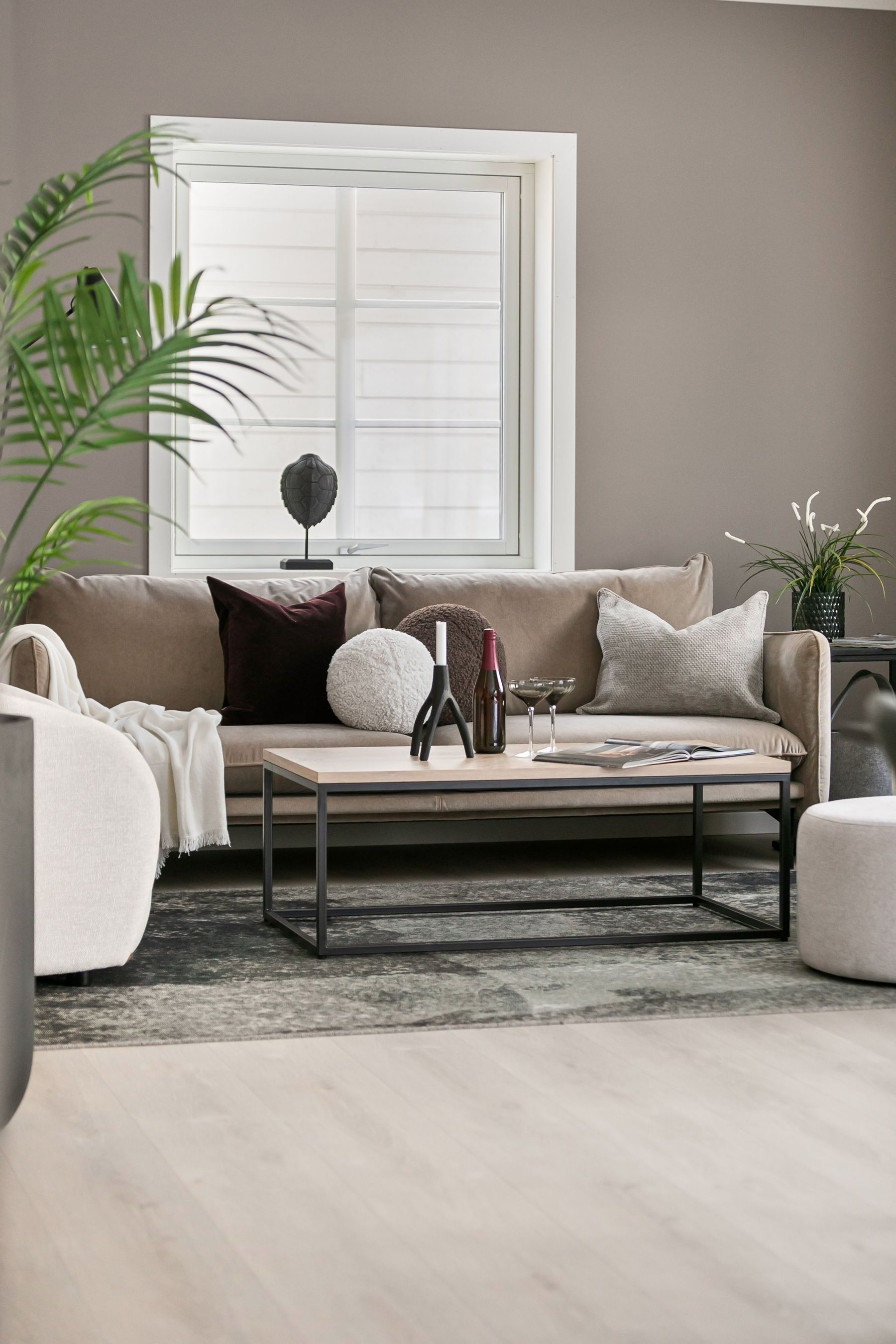
Neutral living room with taupe sofa, off-white chairs, warm grey wall, charcoal rug and dark sculptural accents

Neutral Living Room Ideas

Neutral living room ideas become convincing when neutral is treated as a controlled chromatic range, not the absence of color. A social room has to host skin tones, clothing, books, art, a changing view, a black screen and several kinds of evening light. Matching beige samples cannot do that work. This guide begins by choosing a neutral center and mapping the largest masses, then sets a chroma ceiling, resolves warm-cool relationships and plans the interruptions that make the room feel inhabited. The result can include taupe, cream, stone, mushroom, brown, muted green or blush—and even one saturated event—without turning into a beige wash, a white room, a grey room or minimalist shorthand.

Explore the guide →
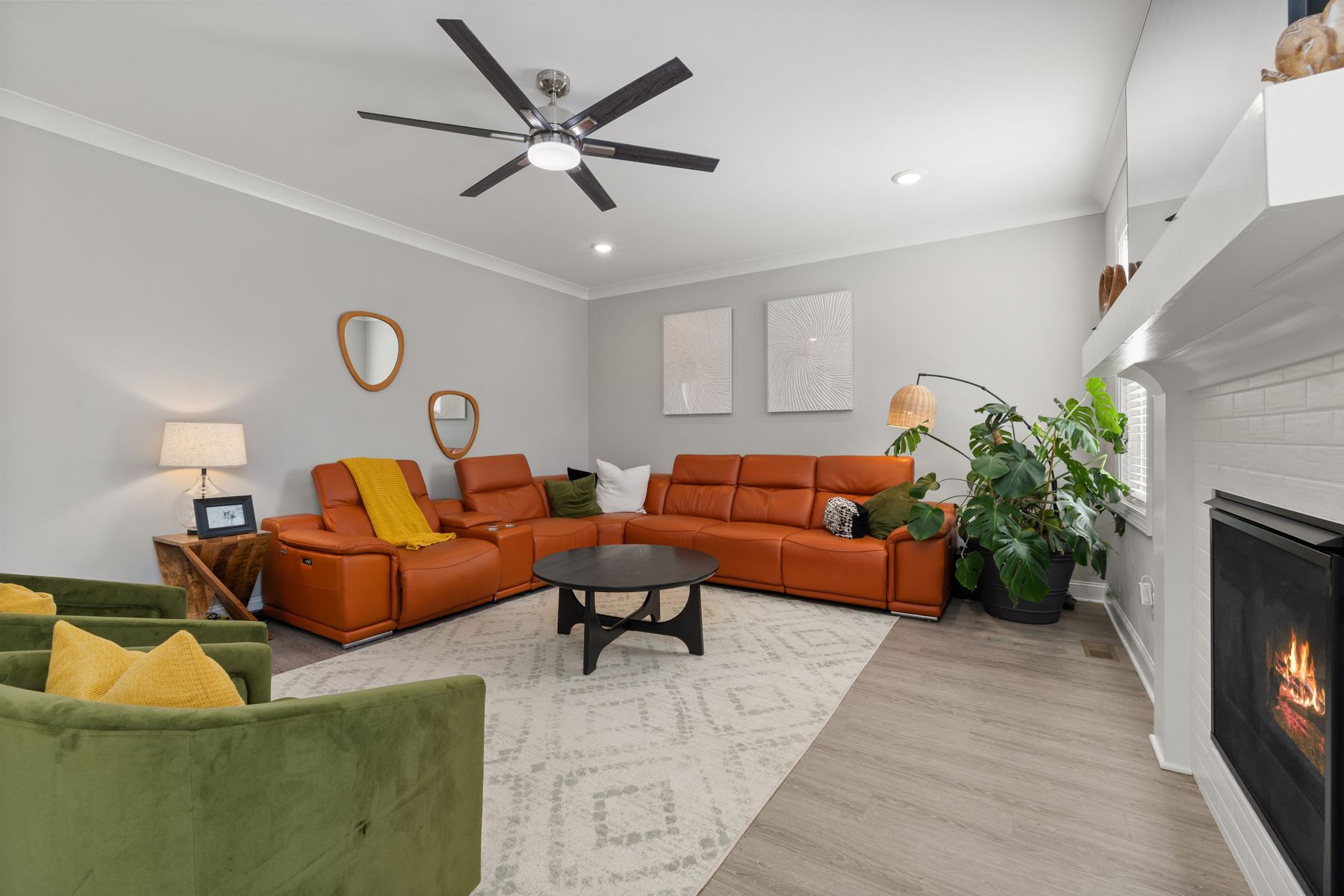
Bright living room with orange leather sofas, green velvet chairs, a pale rug and daylight from a broad window

Orange Living Room Ideas

Orange living room ideas succeed when the color's exposure is designed before its shade is chosen. Orange can occupy a wall like a field, sit in the room as a sofa-sized mass, arrive through fired clay and brick, or work as a small high-energy flash. Those roles are not interchangeable: a burnt-orange sofa reflects color onto faces, terracotta beside honey oak can collapse into one amber block, and late-west light can push a balanced rust toward glare. This guide shows how to select orange's red-yellow direction, control its visual territory, pair it with blue, green, plum and mineral neutrals, distinguish pigment from material, and choose—or deliberately remove—retro and Mediterranean associations. The aim is a room whose orange remains convincing in daylight, lamplight and ordinary use, without relying on pumpkins, clay-pot repetition or decade props.

Explore the guide →
Bright living room with a red velvet sofa, two grey boucle chairs, pale walls, timber and black details

Red Living Room Ideas

Red living room ideas are most successful when red is treated as a director of attention rather than a collection of matching objects. A single red sofa can control a pale room from across the doorway; burgundy walls can form a quiet low-value envelope; a repeated scarlet motif can feel busier than a much larger brick surface. The design problem is therefore not simply how much red to use. It is what red is allowed to interrupt, where the eye should land first and rest next, how the color reflects onto faces and pale materials, and which combinations accidentally signal holidays, flags, restaurants or period sets. This guide builds those decisions into the room—from undertone and conversation distance to timber, brick, art, screens, curtains and open-plan boundaries—so red feels deliberate without depending on generic drama or style shorthand.

Explore the guide →
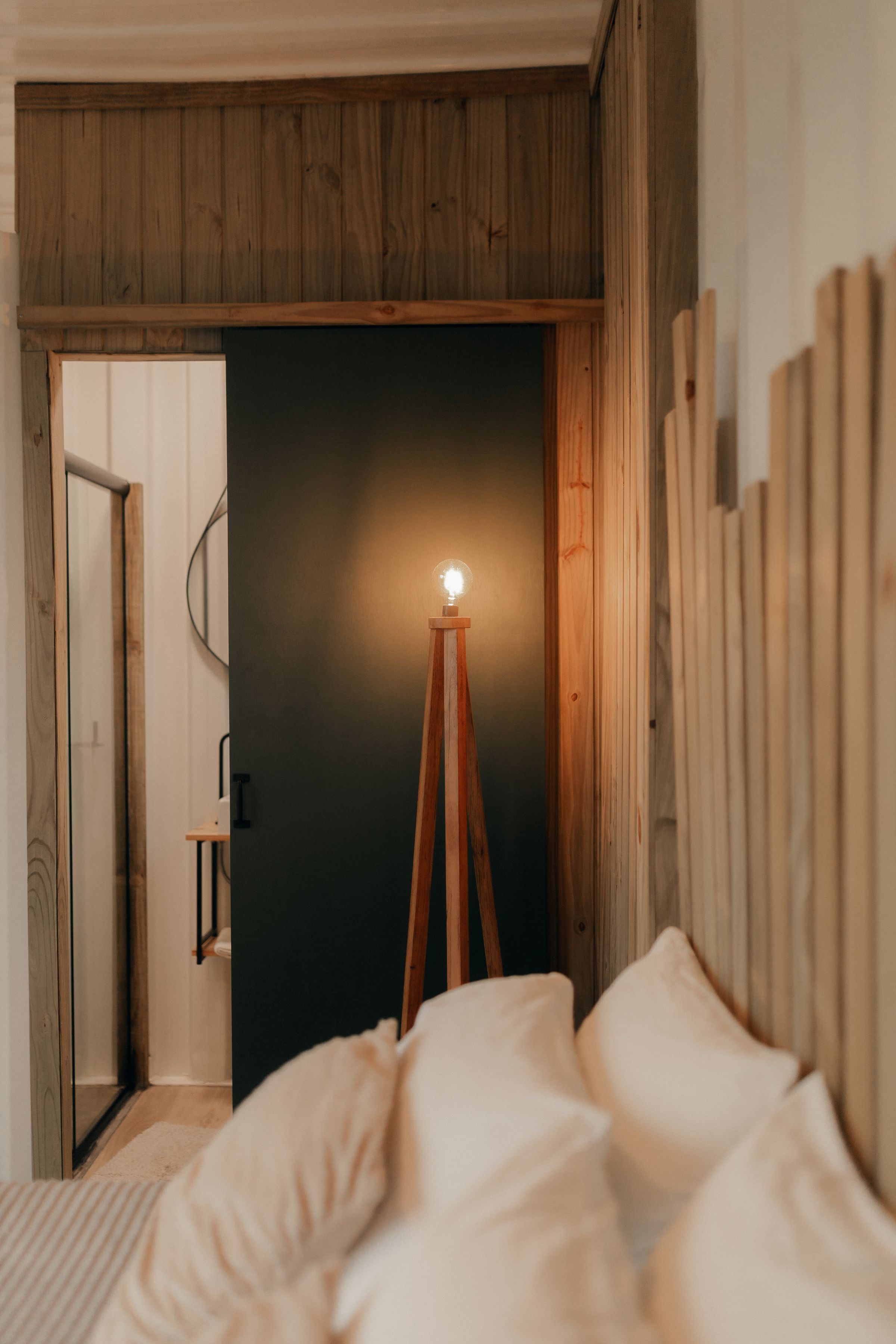
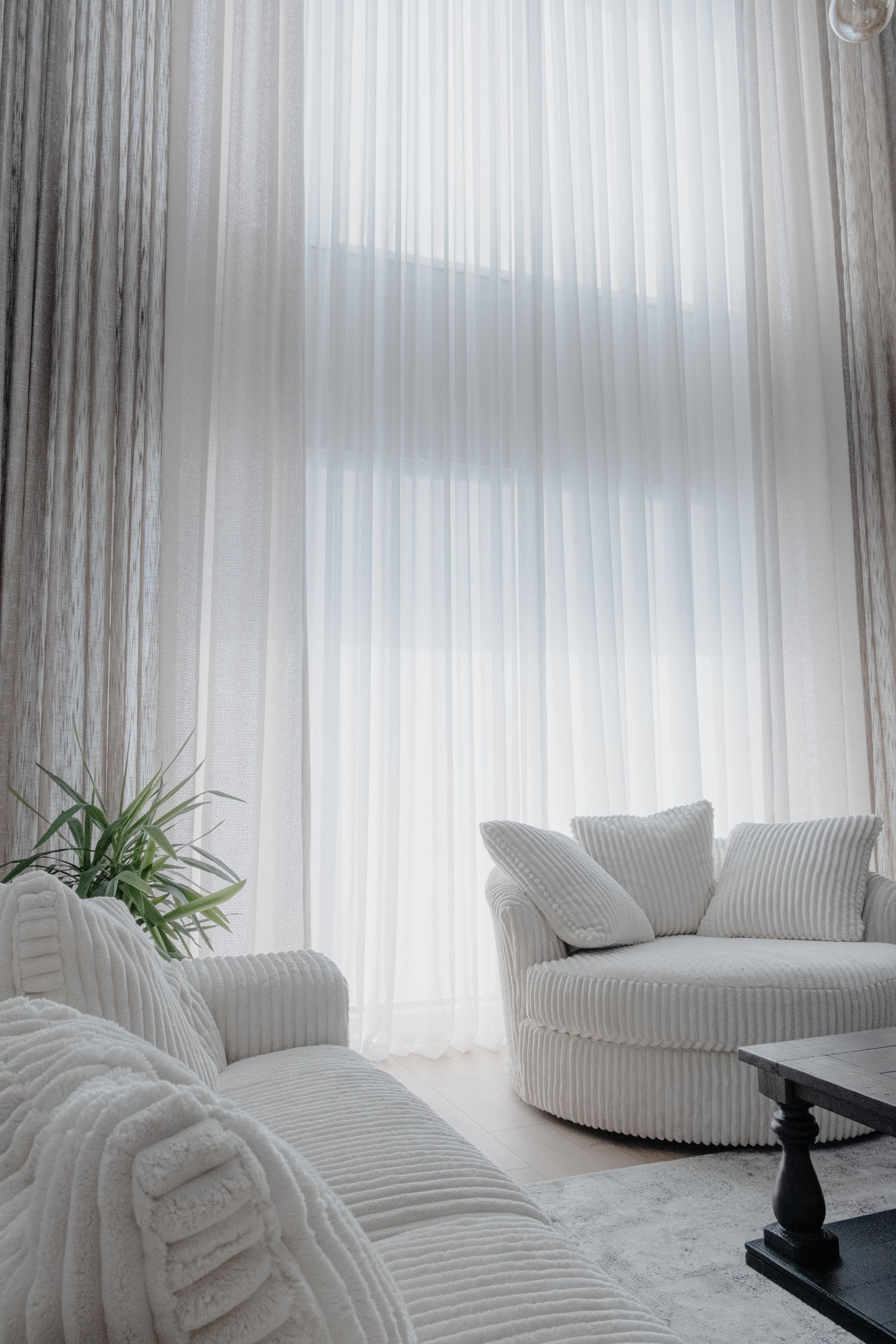
White living room with ribbed pale sofa and rounded chair, tall sheer curtains, a dark wood coffee table and soft side light

White Living Room Ideas

White living room ideas are not a contest to remove the most color. White changes with every reflected surface, loses definition when large pale forms match too closely and can make a television or fireplace opening look harsher than intended. The useful work is to control undertone, shadow, upholstery, focal depth and social layout so the room remains readable in direct sun, cloud and evening light. This guide treats white as an active living-room material—not shorthand for Minimalist, Scandinavian or black-and-white styling—and follows the decisions from shell and seating to art, screens, rentals and everyday wear.

Explore the guide →
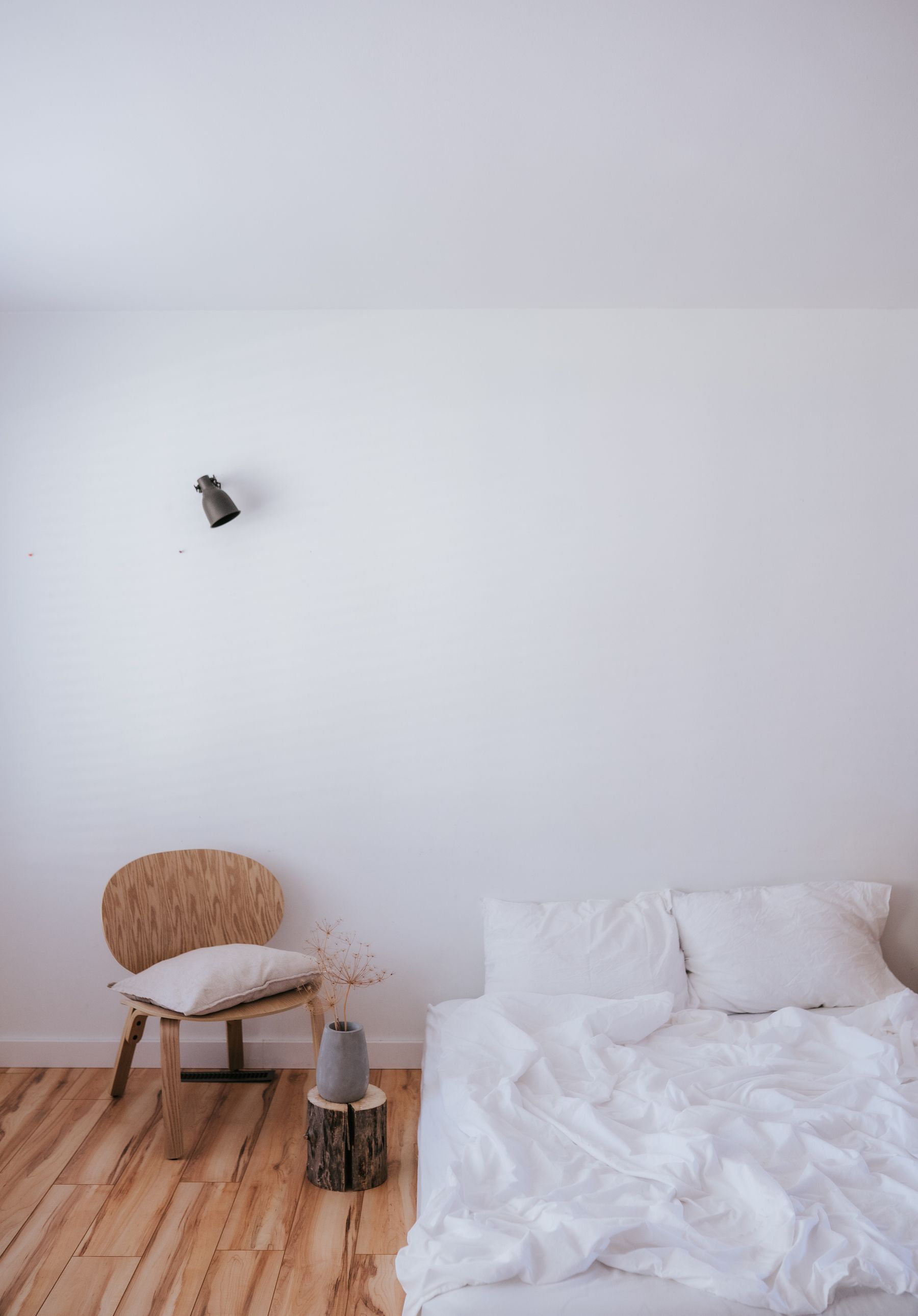
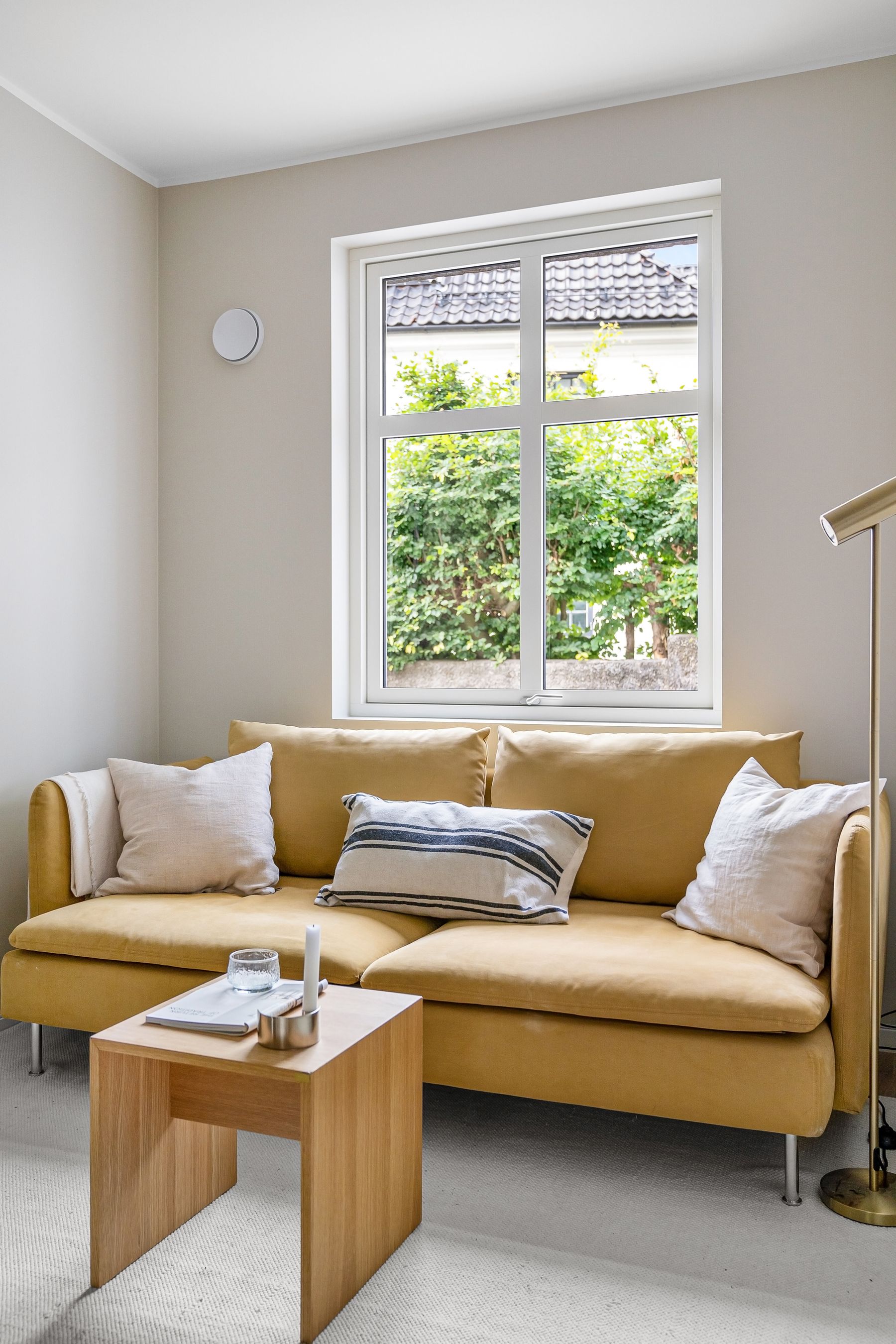
Mustard yellow sofa beneath a large window in a calm neutral living room with pale walls and a light wood table

Yellow Living Room Ideas

Yellow living room ideas are often reduced to a promise of cheerfulness, then diluted with grey or repeated as small sunny accents. Yellow is more demanding—and more useful—than that. It behaves like apparent light: it can make a wall seem sunlit after the sun has moved, turn a sofa into the brightest object in the room, or pull every neighboring white and timber toward gold. This guide begins by assigning yellow a role as field, furniture-scale glow or graphic flare. It then maps daylight, shadow, faces, screens, stone, timber and evening lamps so butter, ochre, mustard and clear yellow remain intentional rather than becoming a permanent golden wash.

Explore the guide →
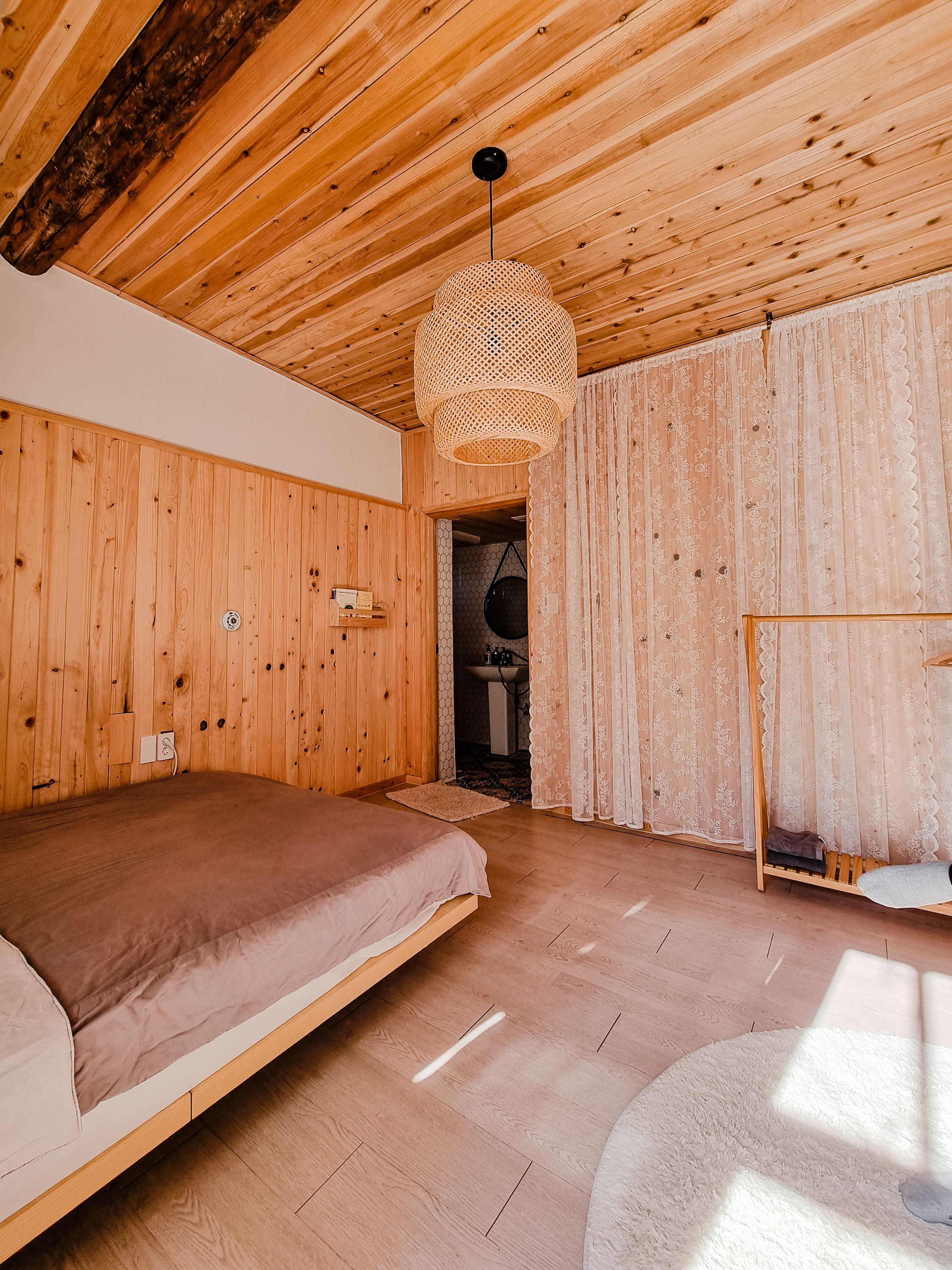
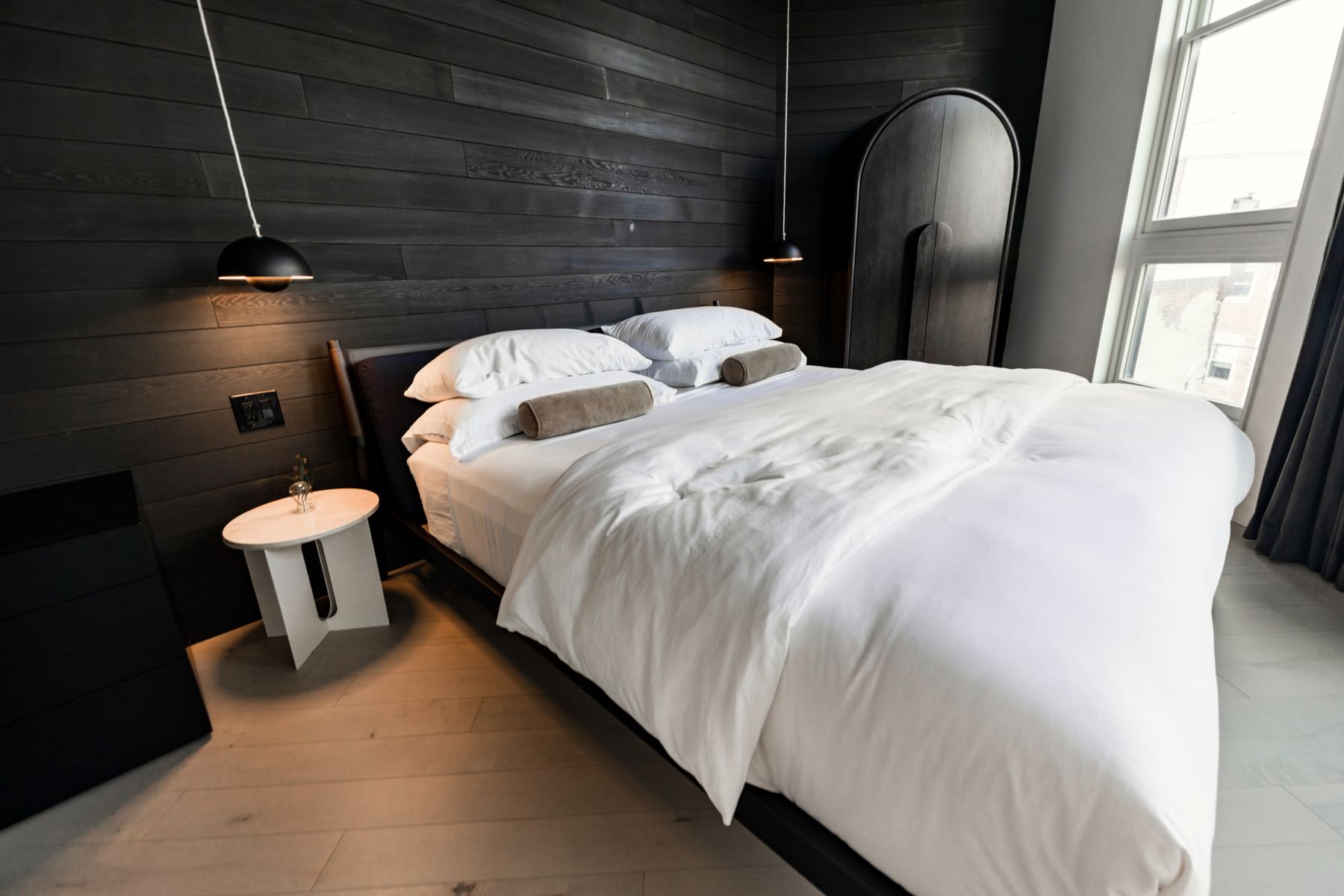
Bedroom wrapped in black vertical wood panels with a pale upholstered bed, white bedding, warm wood sideboard and two dark chairs

Black Bedroom Ideas

Black bedroom ideas work when black is treated as architecture and atmosphere rather than a collection of matching accessories. The color can wrap walls, sharpen a bed silhouette, quiet storage or deepen a ceiling, but it also changes how daylight, dust, texture and nighttime routes behave. This guide covers undertones, paint placement, timber and paneling, beds, bedding, lighting, windows, storage, small and large rooms, rentals, accessibility and maintenance. It keeps the intent distinct from [Black and White Bedroom Ideas](/bedroom/black-and-white-bedroom-ideas/), where equal contrast drives the scheme, and from a future Dark Bedroom guide spanning navy, forest green, brown and charcoal palettes.

Explore the guide →
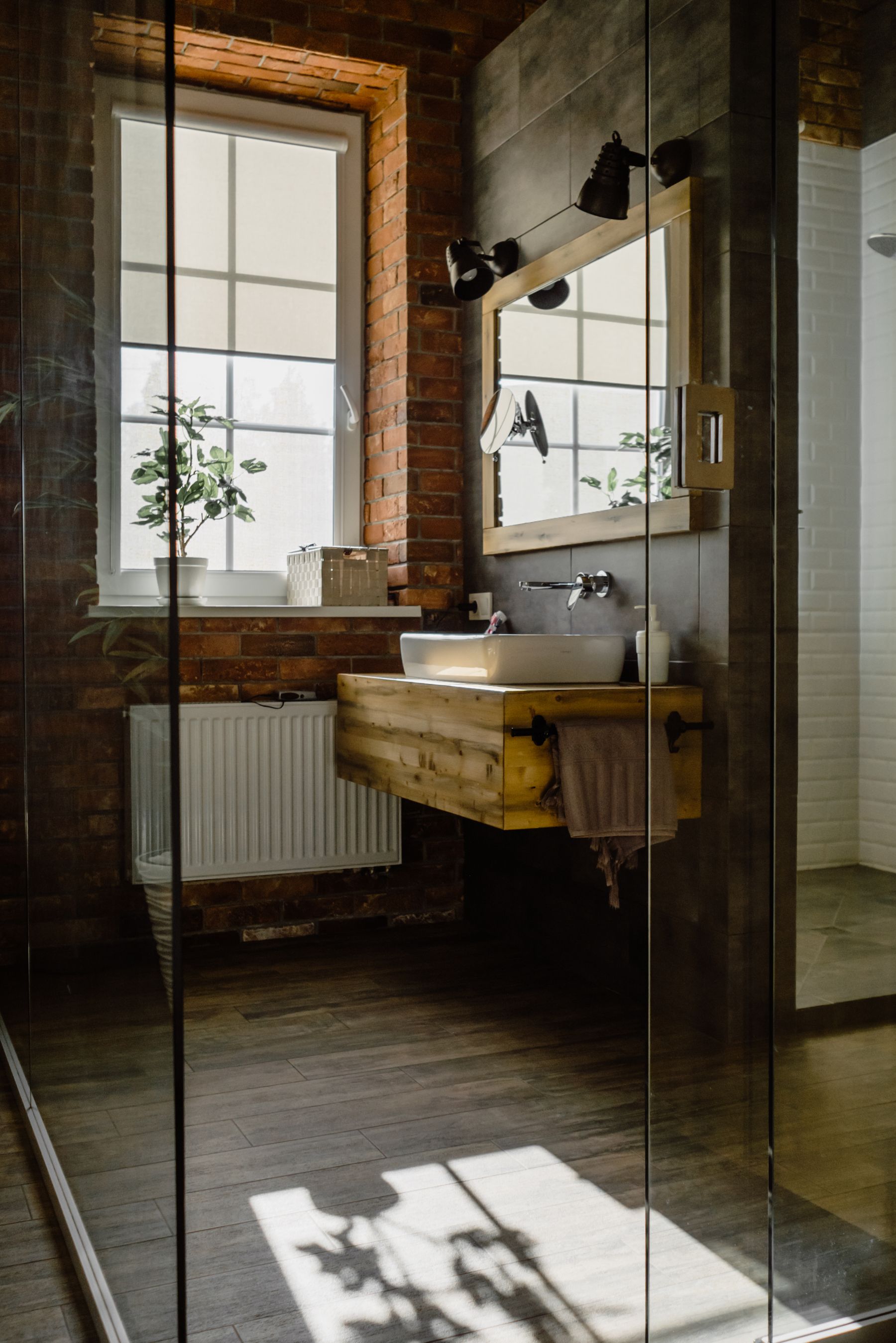
Bedroom with deep forest-green walls, white grid bedding, black metal bed, two windows and warm brass lighting

Dark Bedroom Ideas

Dark bedroom ideas are broader than black paint and more practical than a mood-board label. A successful low-value room may be led by navy, forest green, charcoal, deep brown, aubergine or black, with enough tonal separation for the bed, storage, controls and circulation to remain usable. This guide covers palette choice, sampling, wall scope, ceilings, beds, textiles, materials, daylight, artificial light, windows, flooring, storage, mirrors, small and large rooms, work zones, rentals, accessibility and maintenance. It keeps Dark Bedroom distinct from [Black Bedroom Ideas](/bedroom/black-bedroom-ideas/), where black is the dominant hue, and from Dark Academia, where books, heritage references and scholarly atmosphere define the style.

Explore the guide →
Atmospheric bedroom with a dark envelope, layered bedding and soft ambient light

Moody Bedroom Ideas

Moody bedroom ideas are about atmosphere, not simply darkness. The most convincing rooms direct attention with shadow, softened color, tactile surfaces, selective sheen and low pools of light while keeping the bed, storage, switches and walking routes easy to use. A moody bedroom may be charcoal, forest green, burgundy or midnight blue, but it can also be built from smoked mid-tones and warm neutrals. This guide covers palette, daylight, paint scope, texture, lighting, bed composition, window control, storage, small and large rooms, rentals, accessibility and upkeep. It also separates the intent from [Dark Bedroom Ideas](/bedroom/dark-bedroom-ideas/), which focuses on low-value palettes, and [Dark Academia Bedroom Ideas](/bedroom/dark-academia-bedroom-ideas/), which adds a specific literary narrative.

Explore the guide →
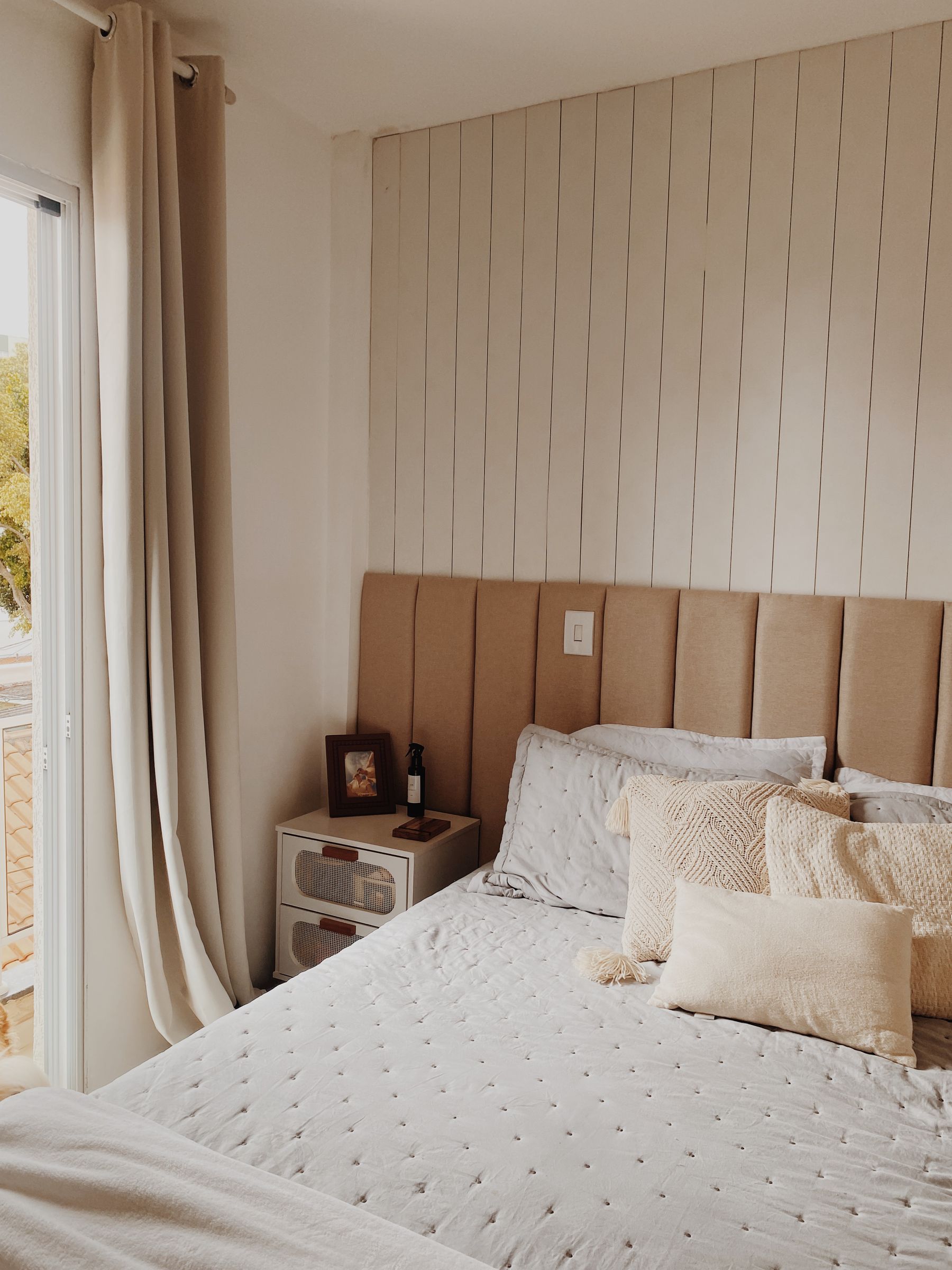
Layered neutral bedroom with beige shiplap wall, cream bedding, tan and oatmeal textiles, timber furniture and black accents

Neutral Bedroom Ideas

Neutral bedroom ideas are not a synonym for white, grey or minimalism. A successful neutral scheme can move through ivory, cream, oatmeal, sand, beige, greige, taupe, mushroom, stone, camel and soft brown, using undertone, value and material to keep the room calm without becoming flat. This guide covers palette structure, daylight, paint sampling, walls, ceilings, beds, bedding, timber, stone, natural fibers, contrast, pattern, lighting, windows, floors, storage, room size, work zones, rentals, accessibility and maintenance. It stays distinct from White Bedroom and Grey Bedroom, where one color family leads, and from Bright Bedroom, which is organized around light performance rather than palette.

Explore the guide →
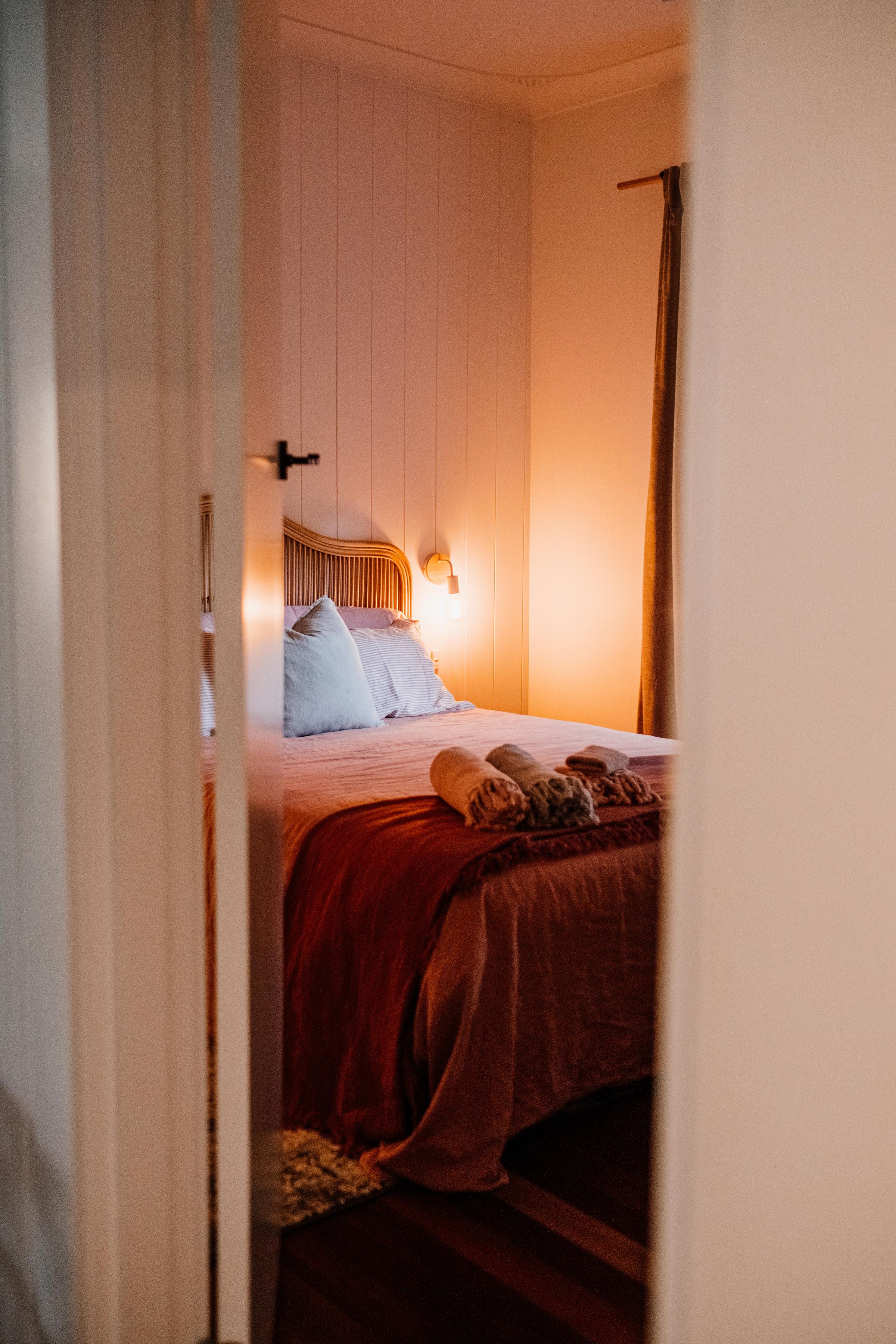
Warm bedroom with vertical timber paneling, a softly lit bed, brown armchair and glowing tripod lamp

Warm Bedroom Ideas

Warm bedroom ideas are about visual temperature: the way undertones, timber, textiles, light color, metals and contrast make a room read as sun-warmed, grounded or enveloping. That is different from physical room temperature and broader than decorating everything in beige. A warm bedroom can be pale, dark, colorful, modern or traditional when its materials and light agree. This guide covers intent, daylight, undertones, warm whites, earth colors, cooler-color balance, timber, bedding, wall finishes, floor, metals, lighting, windows, contrast, small and large rooms, rentals, accessibility, climate and maintenance. It stays distinct from Cozy Bedroom, which centers sensory and functional comfort, and from [Wooden Bedroom Ideas](/bedroom/wooden-bedroom-ideas/), where timber construction and species become the main search intent.

Explore the guide →
Scandinavian-style white bedroom with a white bed and bedding, pale walls, timber floor and warm wooden chair

White Bedroom Ideas

White bedroom ideas succeed when white is treated as a set of real colors and materials, not as an instruction to remove everything else. Clean white, chalk, ivory, cream and softly greyed white change with window direction, flooring, bulbs and reflected outdoor color. This guide covers undertones, sampling, tonal layering, walls, beds, bedding, timber, contrast, lighting, curtains, rugs, storage, small and large rooms, rentals, accessibility and upkeep. The intent stays distinct from [Black and White Bedroom Ideas](/bedroom/black-and-white-bedroom-ideas/), where equal two-color contrast drives the room, and from a future Bright Bedroom guide, which will focus on daylight, reflectance and visual openness in rooms that may use many colors.

Explore the guide →
Wood-lined bedroom with a timber four-poster bed, paneled ceiling, patterned bedding, sheer curtains and a pale rug

Wooden Bedroom Ideas

Wooden bedroom ideas are strongest when timber is treated as a material system rather than shorthand for brown, warm or rustic. A room may use wood in its bed, floor, wardrobes, wall panels or ceiling, but each surface changes grain scale, reflected light, maintenance, acoustics and visual weight. The useful questions are how much wood the room needs, which tones can coexist, where solid timber earns its cost, how veneer and engineered boards should be specified, and how moisture movement, finishes and repairs will be managed. This guide covers those decisions across modern, rustic, Japanese-inspired, small and large bedrooms. For color temperature and atmosphere, see [Warm Bedroom Ideas](/bedroom/warm-bedroom-ideas/); for made-to-measure construction, use [Bespoke Bedroom Ideas](/bedroom/bespoke-bedroom-ideas/).

Explore the guide →
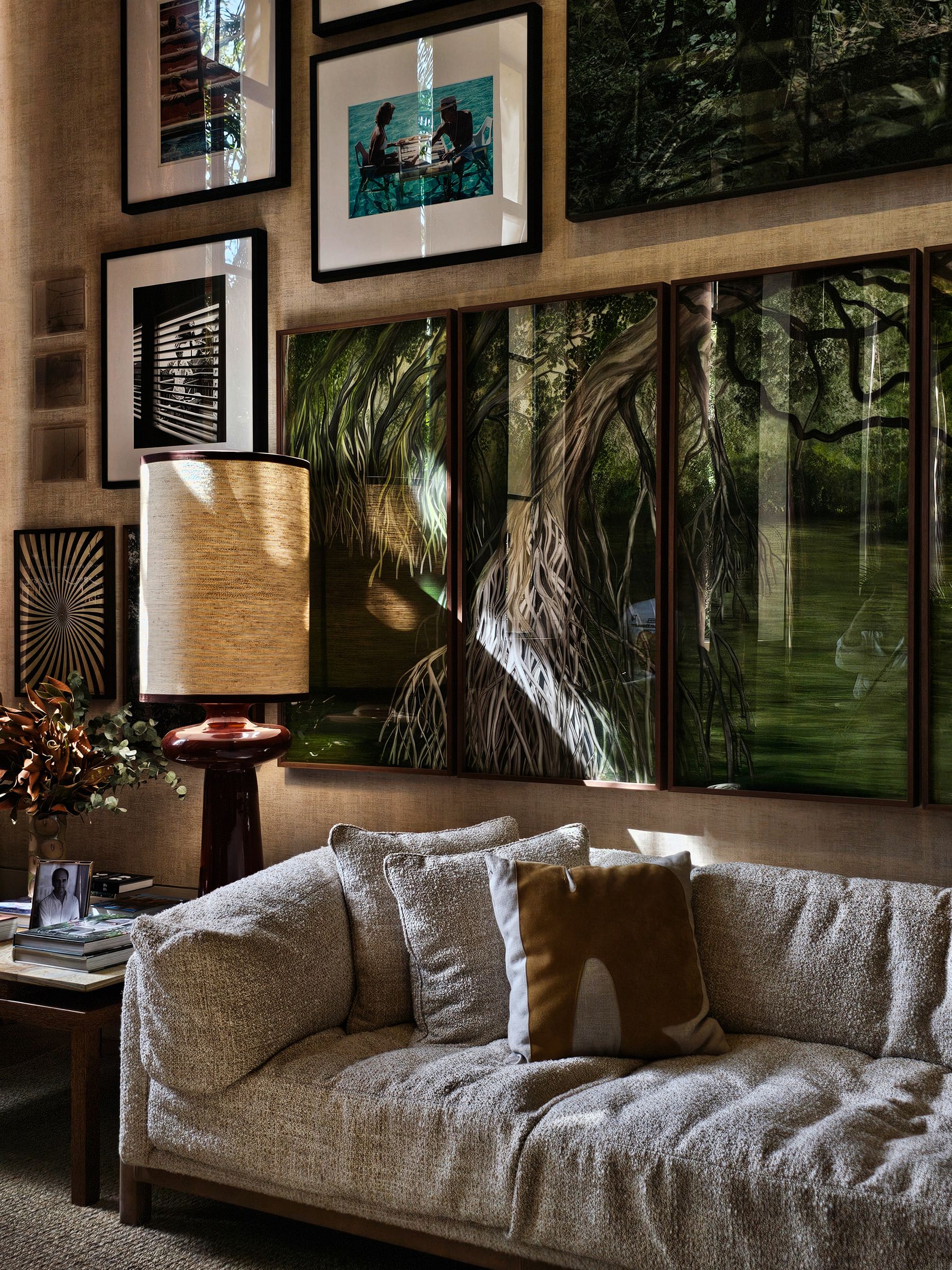
Tall arrangement of framed photographs and nature prints above a textured beige sofa

Living Room Wall Ideas

A living room wall can carry color, texture, art, light, architecture and technology, but it rarely succeeds when every surface competes for attention. Start by assigning each wall a role, then decide whether the room needs a focal composition, a quieter background or practical integration for a television, fireplace, lighting or limited display. This guide covers large art, personal gallery walls, mirrors, paint, limewash, wallpaper, murals, paneling, brick, media walls, rentals, conservation, safe mounting and long-term maintenance. The aim is not to fill blank space; it is to make the walls support how the room is seen and used.

Explore the guide →
Bathroom with brick wall, warm wood and restrained industrial materials

Bathroom Wall Ideas

Not every bathroom wall lives in the same conditions. One may take direct shower spray, another sits behind a basin, and a third may remain almost completely dry. Treating those planes as equal often leads either to unnecessary hard finishes or materials placed where they are difficult to maintain. A better wall strategy assigns each plane a moisture level and visual role first, then chooses tile, stone, paint, paneling, wallpaper, brick or timber accordingly.

Explore the guide →