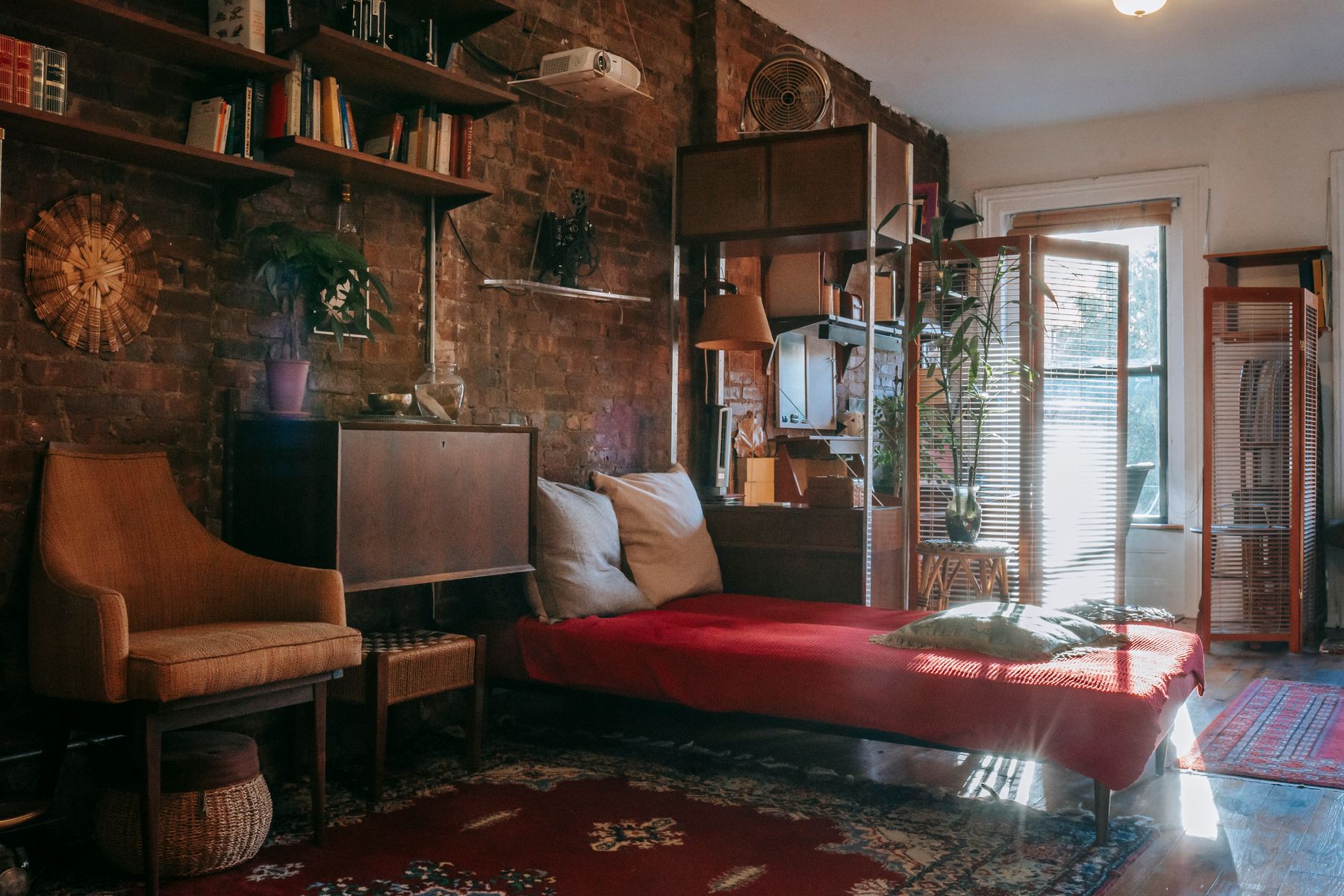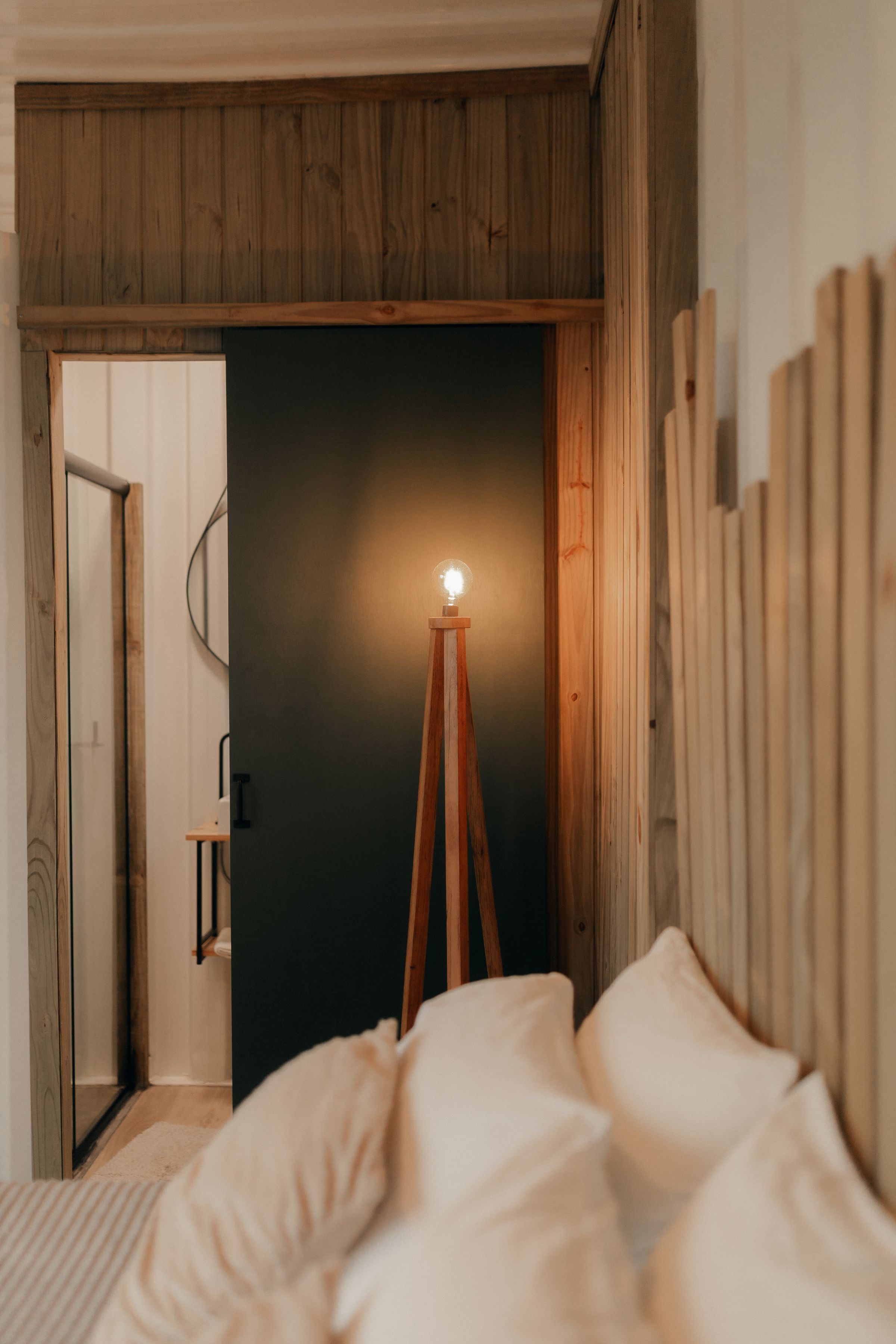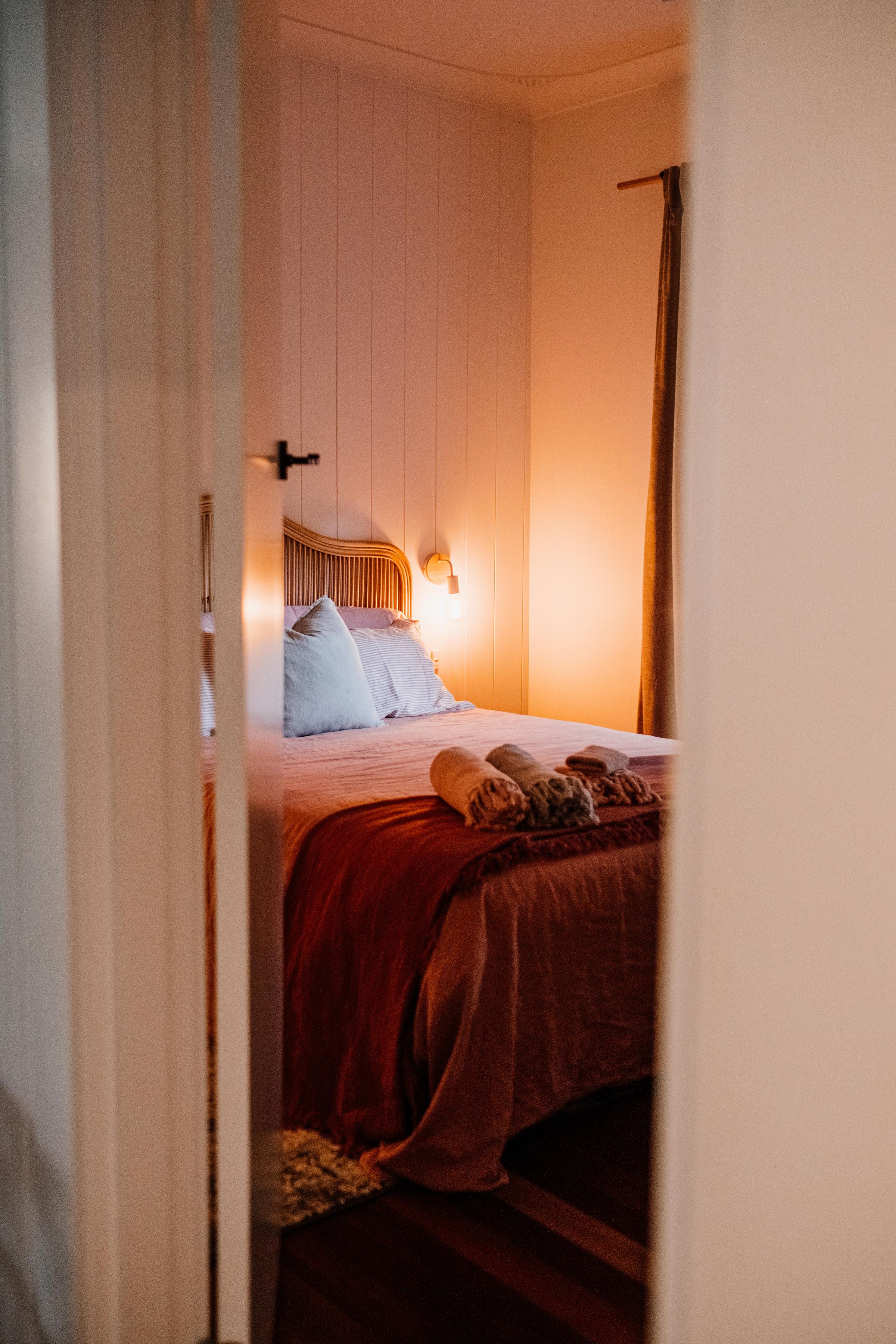

Define the Mood Before Choosing a Paint Color
Write three words for the evening experience and three requirements for daily use. ‘Enveloping, quiet, grounded’ may imply low horizontal light, deep green and wool; ‘cinematic, polished, calm’ may suggest charcoal, glass and precise wall grazing. Then list non-negotiables such as reading, dressing, ventilation and a clear route to the door. This makes the room measurable. If practical softness matters more than drama, compare the sensory planning in [Cozy Bedroom Ideas](/bedroom/cozy-bedroom-ideas/) before fixing the visual direction.

Know the Difference Between Moody, Dark and Dark Academia
A dark bedroom is defined chiefly by low-value color. Dark academia adds a recognizable library-and-study story through books, aged timber and collegiate references. Moody design is broader: it can use mid-tone plaster, plum linen, smoky glass and carefully placed light without becoming either category. Keep the strongest page intent clear. Use [Dark Bedroom Ideas](/bedroom/dark-bedroom-ideas/) for palette-wide low-value decisions and [Dark Academia Bedroom Ideas](/bedroom/dark-academia-bedroom-ideas/) when reading, collections and historical character are central rather than optional accessories.
Audit Daylight, Exposure and the View
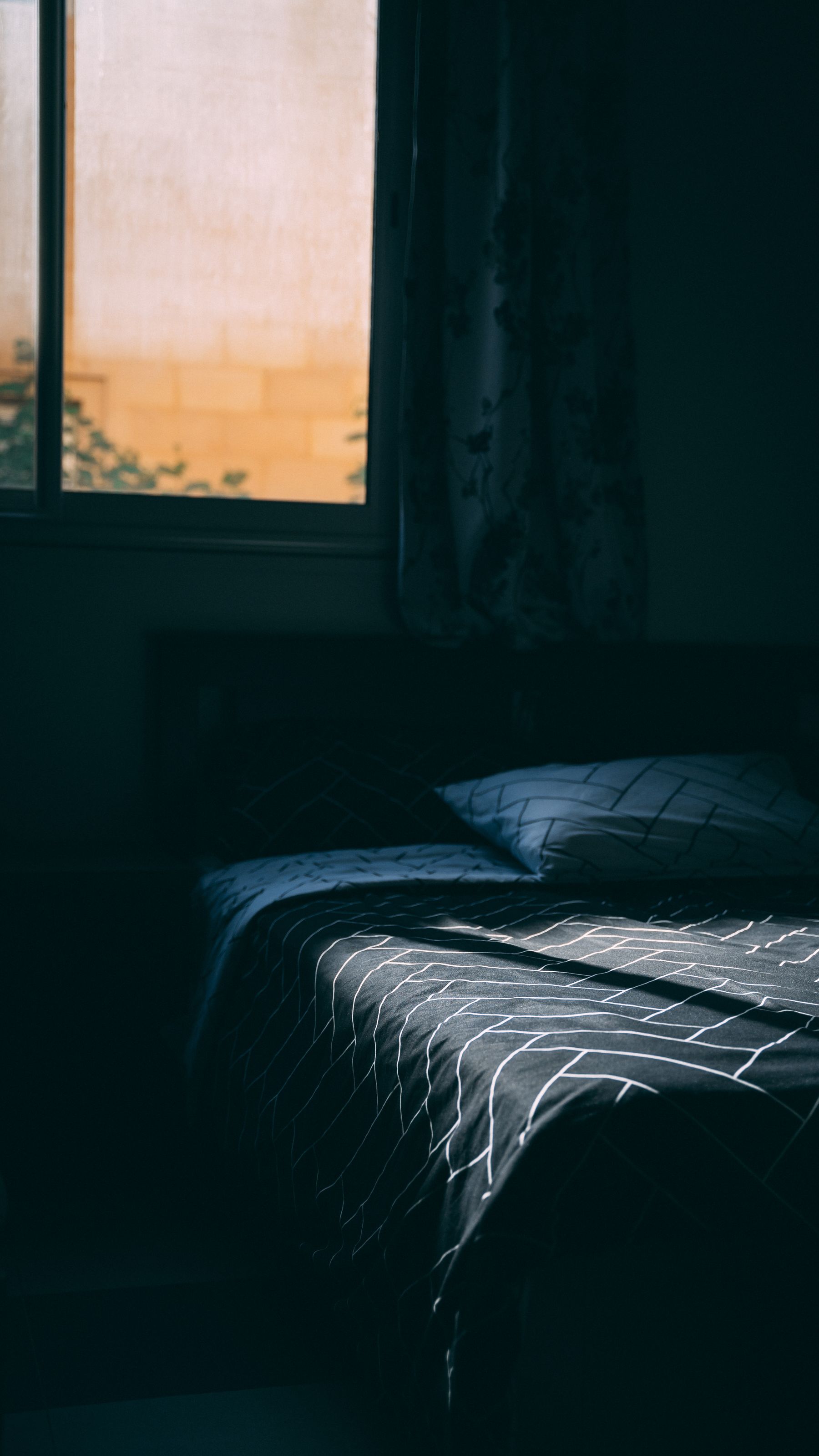
Moody color changes dramatically across the day. A north-facing room may cool green and grey; strong west light can turn burgundy or brown much warmer at sunset. Record the brightest patch, longest shadow and exterior view before choosing paint or curtains. Preserve useful daylight for dressing and cleaning, then control glare near the pillow. The goal is not permanent darkness but an intentional transition from daylight to evening. The window strategy in [Dark Bedroom Ideas](/bedroom/dark-bedroom-ideas/) offers a useful low-value comparison.
A Palette Organized by Undertone, Not Color Name
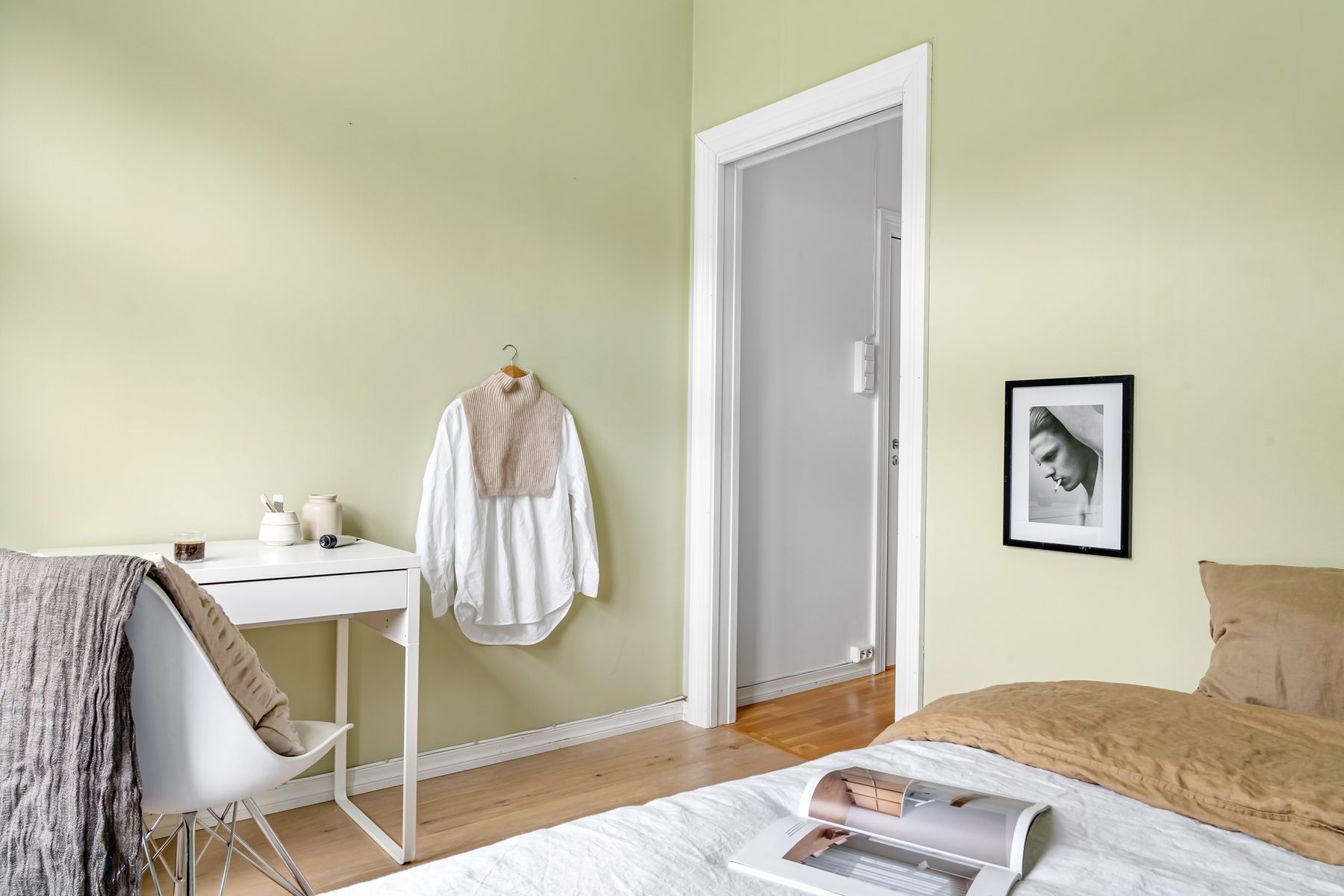
Two colors called charcoal can lean blue, brown, green or violet, and that bias determines which timber, metal and fabric feel coherent. Choose one dominant undertone, one related secondary and one controlled counterpoint. A green-grey wall can connect olive linen and walnut, while a muted rust cushion supplies contrast. This method also prevents the muddy effect caused by mixing several almost-but-not-quite related dark neutrals. For a color-first route, [Green Bedroom Ideas](/bedroom/green-bedroom-ideas/) shows how undertone shifts affect an entire room.
Use Smoked Mid-Tones for an Airier Moody Room
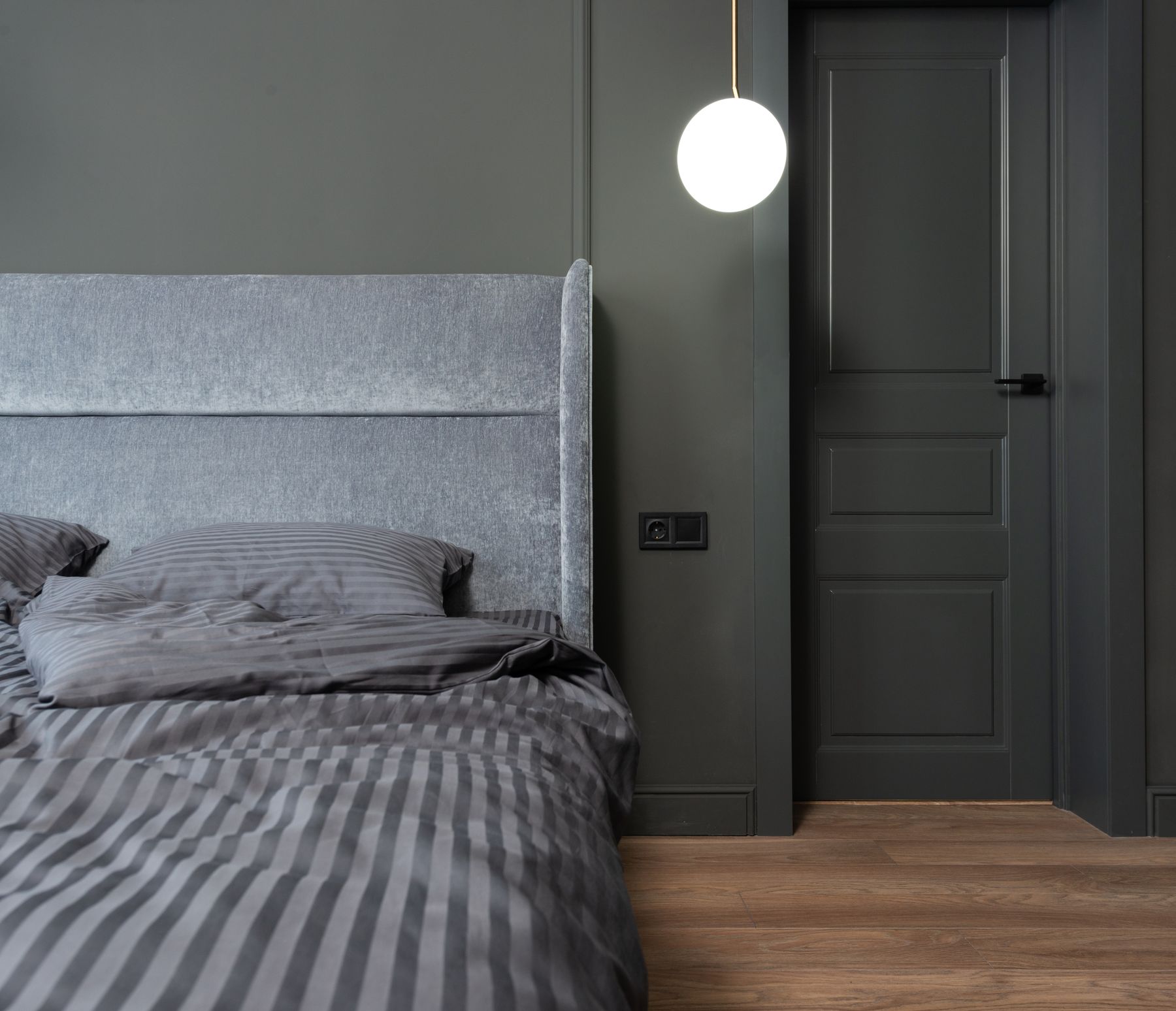
Moody does not mean selecting the darkest chip. Smoked sage, mushroom, clay, petrol blue and softened plum retain enough value for edges and furniture to read while still absorbing harsh light. They work especially well in compact rooms or climates where an all-deep envelope would feel visually heavy. Add one darker plane behind the bed and one pale or reflective release point. [Grey Bedroom Ideas](/bedroom/grey-bedroom-ideas/) is helpful when you need a nuanced neutral range rather than a single dramatic color.
Midnight Blue Carries the Cool Mood
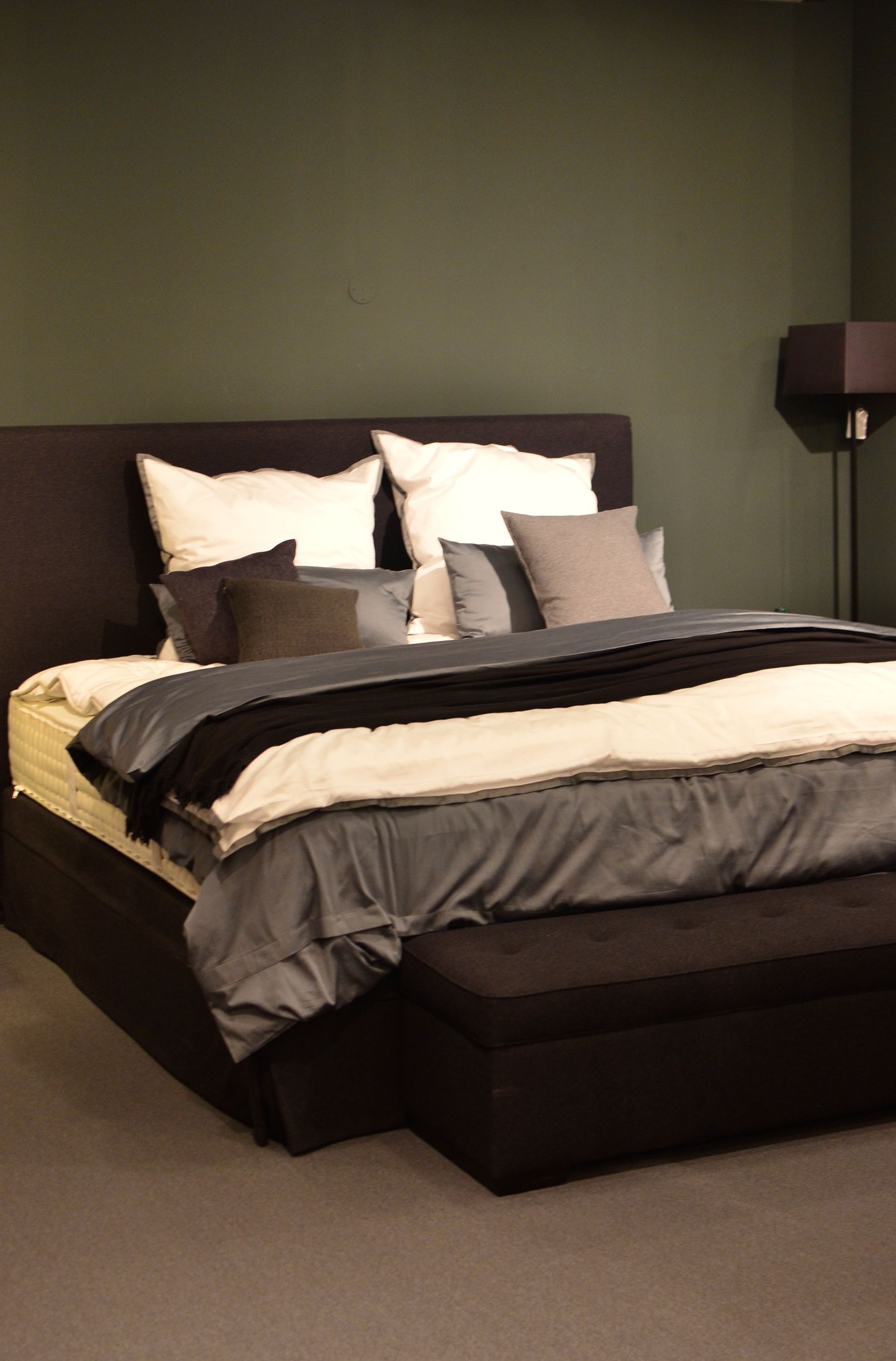
Midnight, ink and petrol blues can feel deep without the severity of black, but their cool bias needs balancing. Pair them with cognac leather, walnut, aged brass or a warmer off-white rather than stark optical white. Repeat blue in two or three different values so the room reads as layered rather than matched. If daylight makes the color look cold, move warmth into the lamps and bed textiles instead of forcing a yellow wall. Explore broader tonal options in [Blue Bedroom Ideas](/bedroom/blue-bedroom-ideas/).
Forest and Olive as Grounded Alternatives
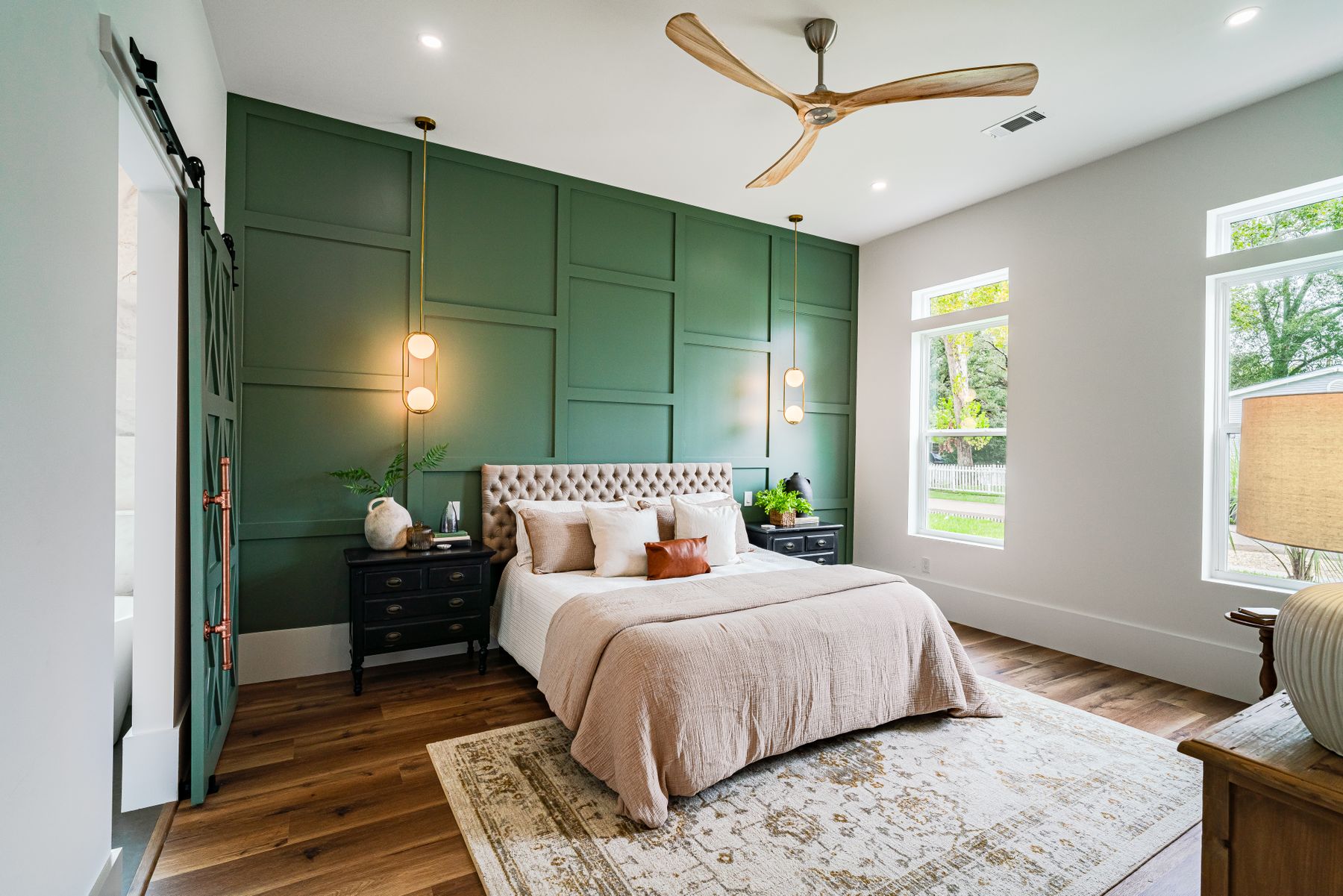
Forest green makes a strong enclosing color, while olive and moss introduce earthiness at a lighter value. Let the green occupy a meaningful plane—usually the bed wall or full envelope—then connect it to timber, flax, wool and dark bronze. Avoid adding many botanical prints merely because the palette is green; material grain and controlled planting are enough. For more complete green schemes, use [Green Bedroom Ideas](/bedroom/green-bedroom-ideas/) and adapt its undertone tests to the room’s evening light.

Introduce Burgundy, Plum or Aubergine Carefully
Red-violet colors make a bedroom feel enveloping because they advance visually, so use them with restraint in small or heavily furnished rooms. Burgundy linen, an aubergine wall or a plum headboard can be enough; balance with tobacco brown, putty, dusty rose or dark timber. Avoid pairing every surface with gold and velvet, which can turn nuance into a theme. The undertone and material coordination in [Warm Bedroom Ideas](/bedroom/warm-bedroom-ideas/) helps prevent these colors from becoming sugary or theatrical.
Chocolate and Tobacco for Earthy Depth
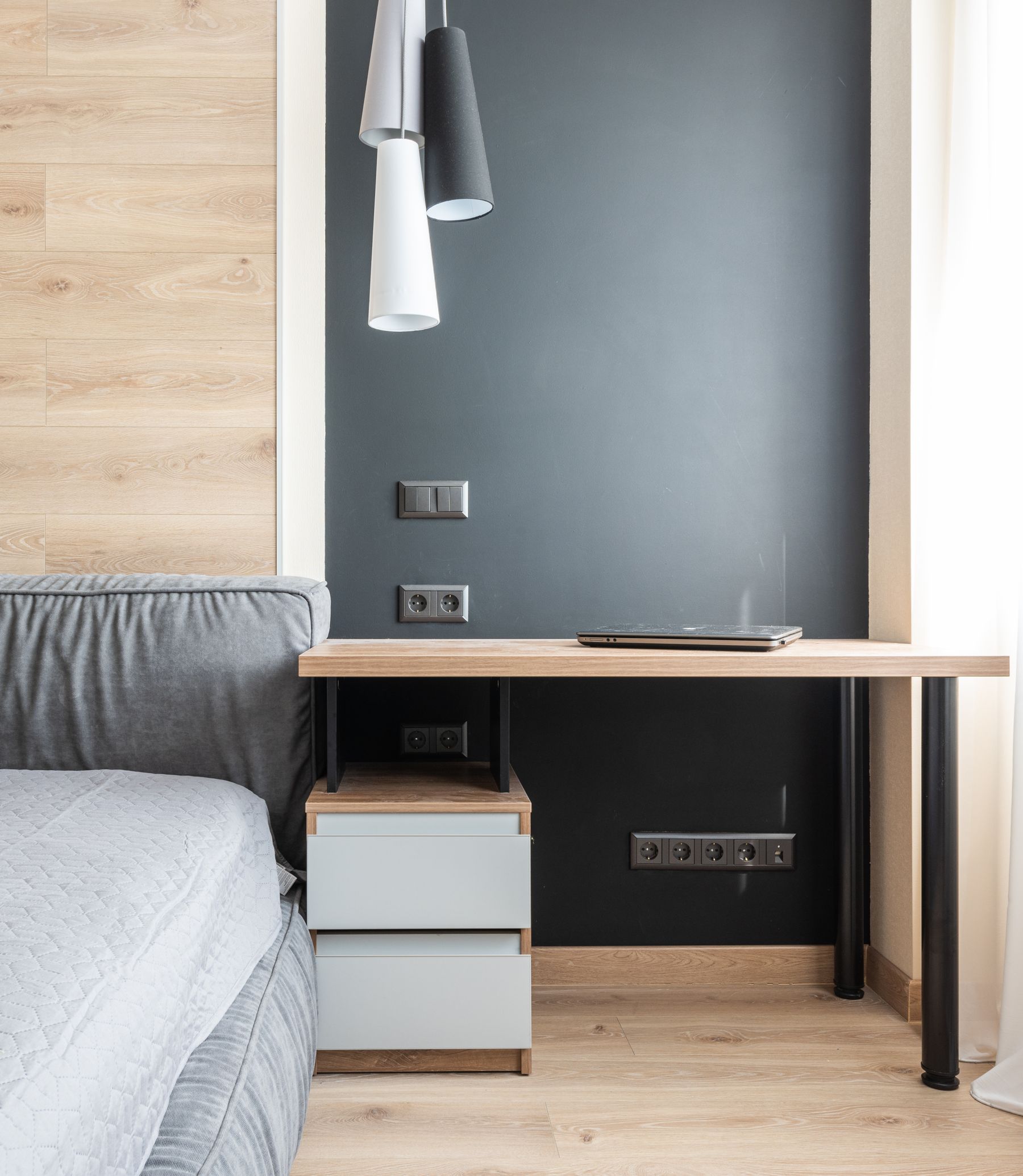
Chocolate, espresso and tobacco browns can make a room feel materially rich rather than overtly colorful. The risk is a flat brown field, so separate surfaces by grain, value and finish: matte brown wall, walnut furniture, oat linen and a darker woven rug. A small cool note such as smoky blue or grey-green keeps the palette from feeling overly warm. Brown also connects naturally to the timber logic in [Warm Bedroom Ideas](/bedroom/warm-bedroom-ideas/) while remaining distinctly more shadow-led.
Charcoal or Black as Structure, Not Default
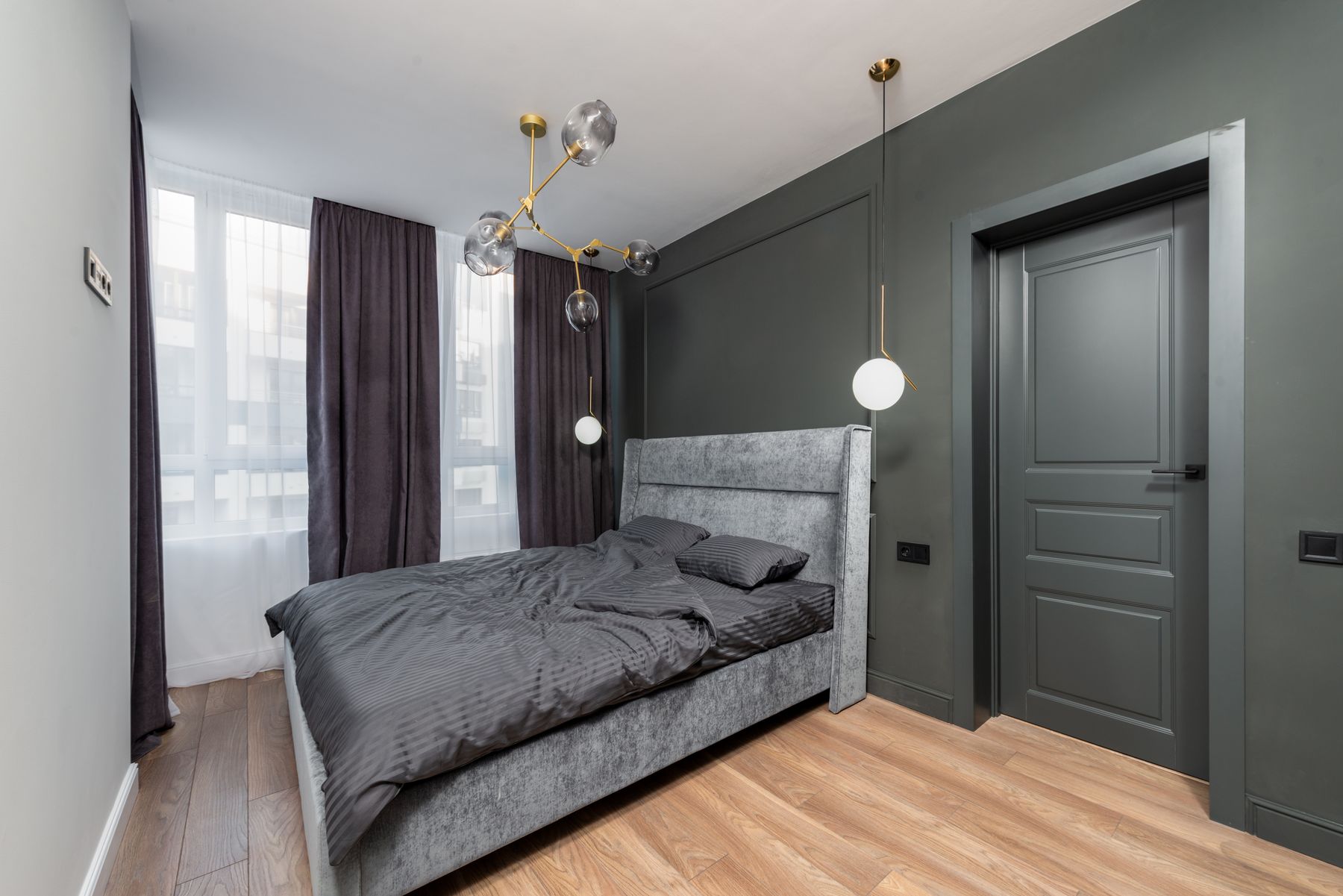
Charcoal and black work best when they define architecture: a paneled bed wall, curtain plane, wardrobe volume or ceiling line. If every object is the same black, edges disappear and dust becomes the dominant texture. Mix charcoal, soft black and grey-brown, then interrupt them with skin-flattering light and one tactile pale layer. For decisions where black itself is the subject, [Black Bedroom Ideas](/bedroom/black-bedroom-ideas/) covers finish, storage and maintenance in greater depth than a general moody scheme requires.
Color-Drench Only When the Architecture Supports It
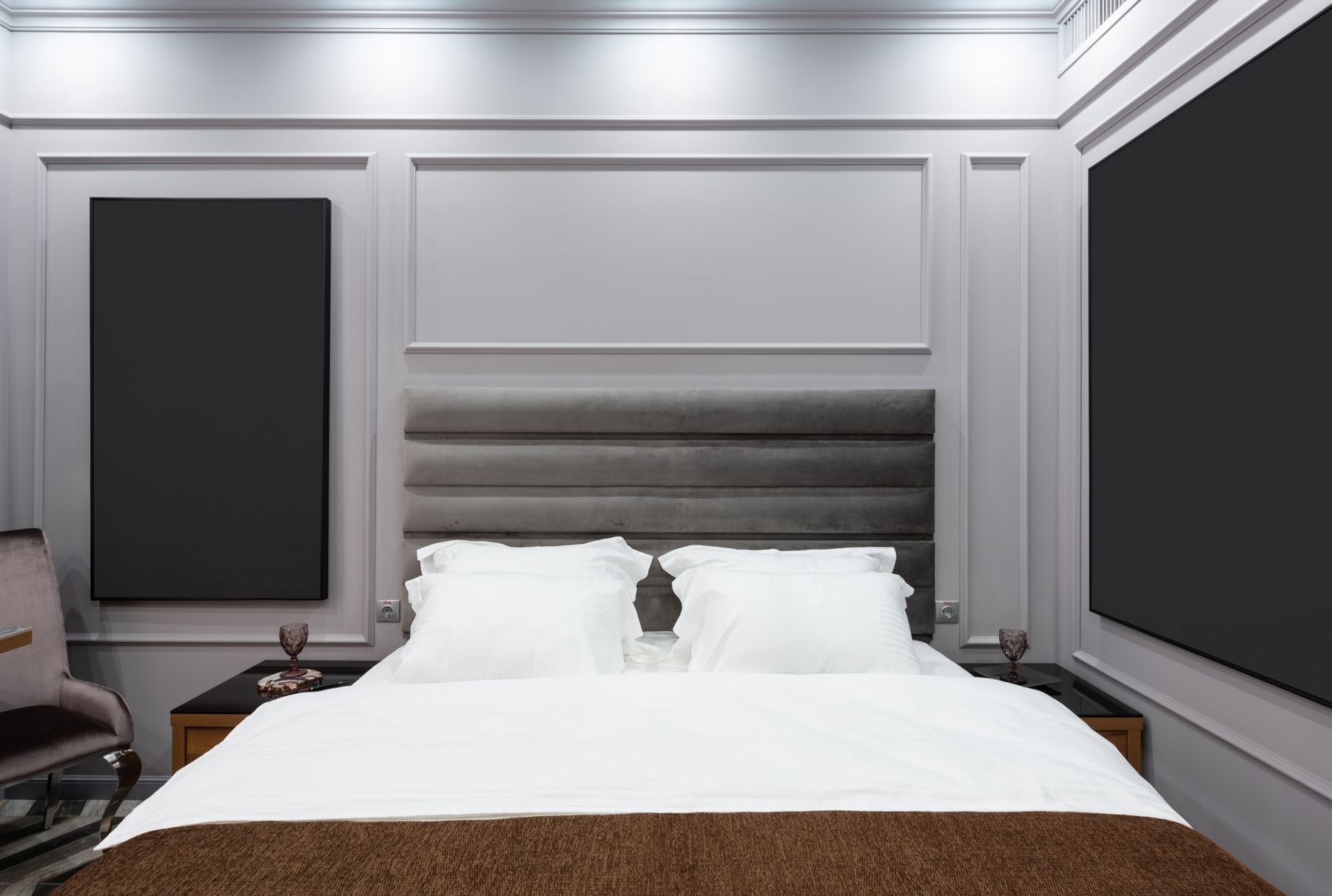
Painting walls, trim and ceiling in one family can blur awkward boundaries and create a convincing envelope, but it also reduces visual cues. Use related values rather than one identical finish: matte walls, slightly stronger trim and a ceiling adjusted for height. Keep doors, handles, switches and the bed edge readable. In a low room, a half-step lighter ceiling often preserves intimacy without compressing the space. This is atmosphere by continuity, not a rule that every surface must vanish.
Add Pale Relief Where the Eye Needs Rest
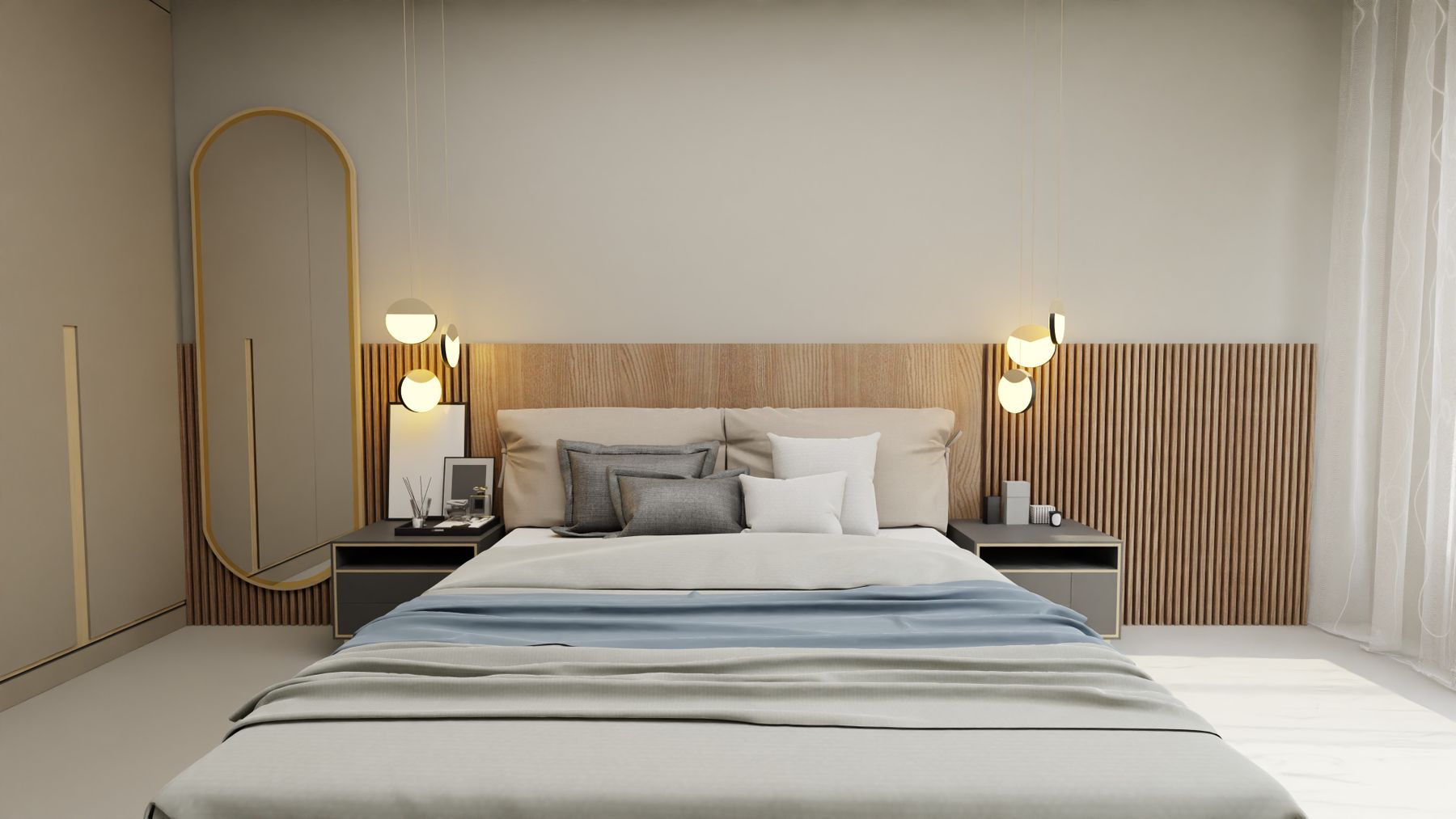
A moody room benefits from one quieter visual pause. Oat bedding, a parchment shade, pale rug or softly lit curtain can reveal depth in surrounding colors without breaking the atmosphere. Place the relief where it supports function—around the bed, dressing zone or door—not as random high-contrast punctuation. Avoid brilliant white unless the palette is intentionally graphic. The tonal discipline in [Neutral Bedroom Ideas](/bedroom/neutral-bedroom-ideas/) shows how subtle value changes can remain interesting without adding visual noise.
Layer Matte, Grain and Soft Pile
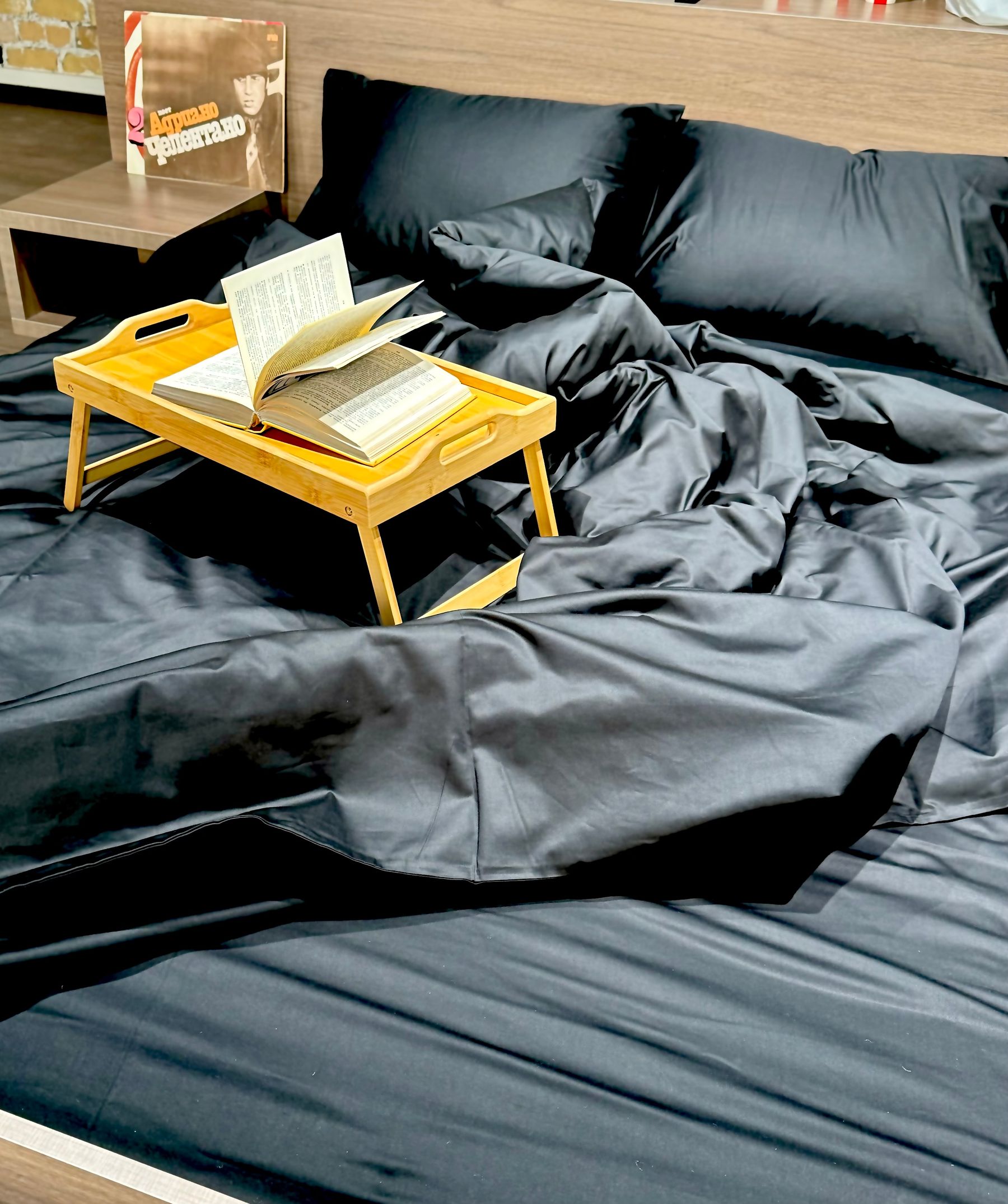
Texture allows nearby dark values to separate. Combine a matte wall, visible wood grain, washed linen, wool and one denser pile rather than repeating smooth synthetic finishes. Keep the deepest pile away from high-dust areas if maintenance is difficult, and remember that velvet changes tone as its nap moves. Texture should be visible because light grazes it, not because the room is overloaded. The bed-first guidance in [Cozy Bedroom Ideas](/bedroom/cozy-bedroom-ideas/) is useful when tactile comfort matters as much as appearance.
Selective Sheen, Not All-Over Shine
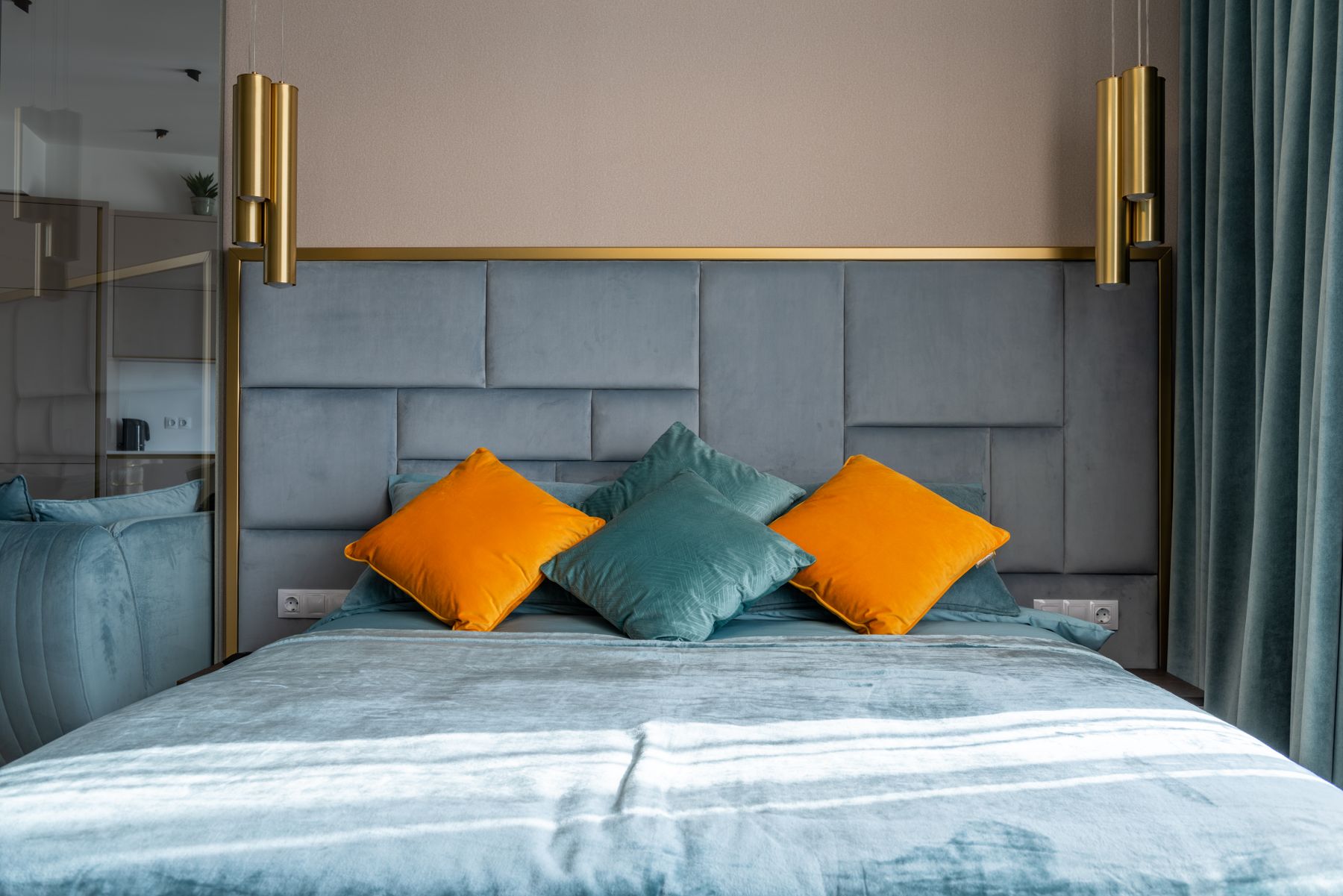
A room made entirely of matte surfaces can look lifeless at night, while too much gloss produces glare. Let most large planes absorb light, then introduce satin timber, brushed metal, smoky glass or a silk-edged cushion where a controlled highlight helps. Reflective pieces should not face the pillow or expose bright bulbs. This restrained contrast suits current interiors too; [Contemporary Bedroom Ideas](/bedroom/contemporary-bedroom-ideas/) offers useful examples of combining tactile softness with a few sharper details.
Shape One Pool of Light at a Time
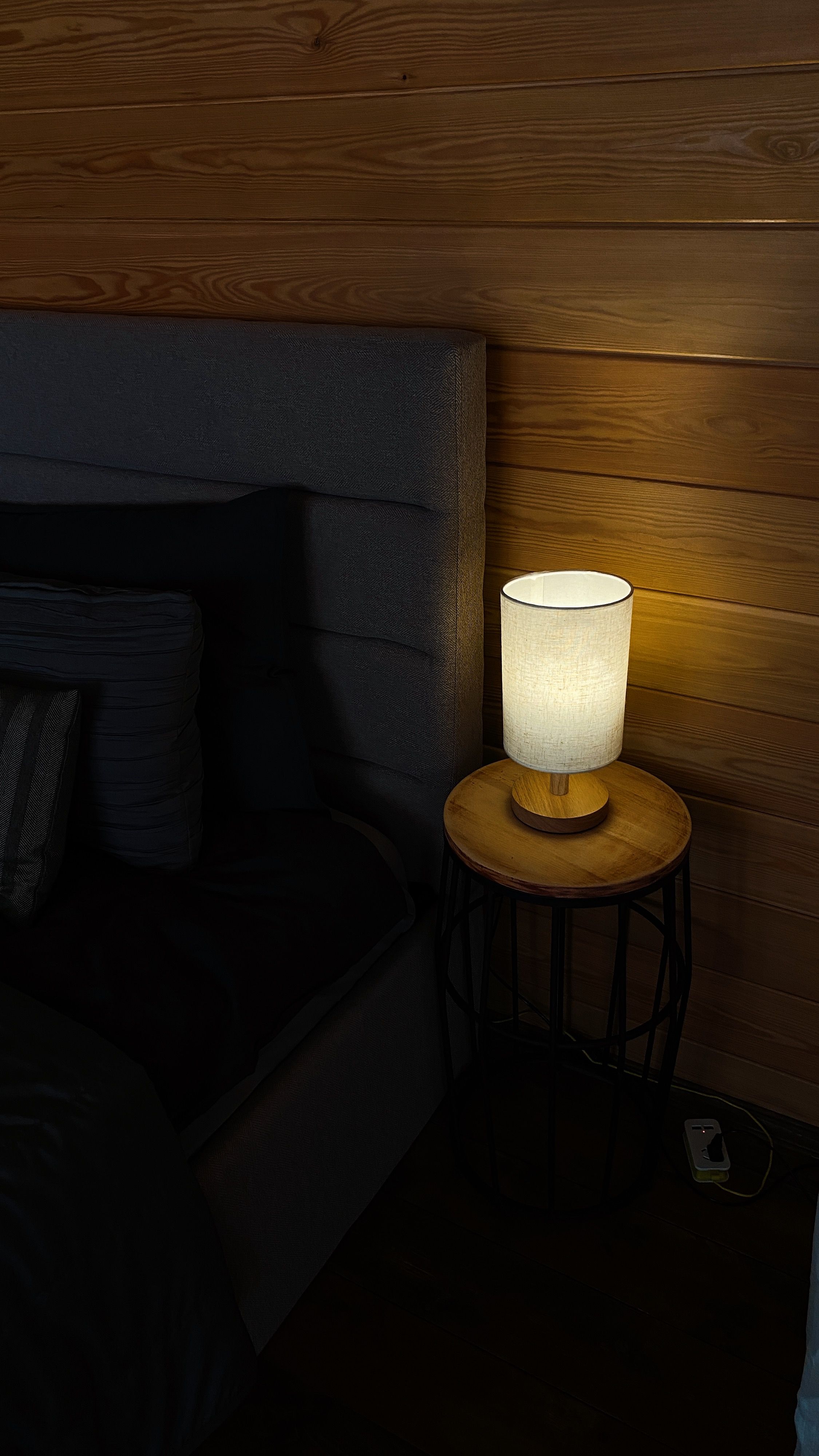
Instead of flattening the bedroom with one bright ceiling fitting, create overlapping zones: a shaded bedside pool, low ambient wash and a focused dressing or wardrobe light. Each should solve a task and fade gently at the edges. The image does not need to be dim everywhere; it needs hierarchy. Use separate controls so cleaning light does not dictate bedtime atmosphere. [Warm Bedroom Ideas](/bedroom/warm-bedroom-ideas/) explains how eye-level sources reinforce material warmth without relying on orange bulbs.
Precise Bedside Reading Light
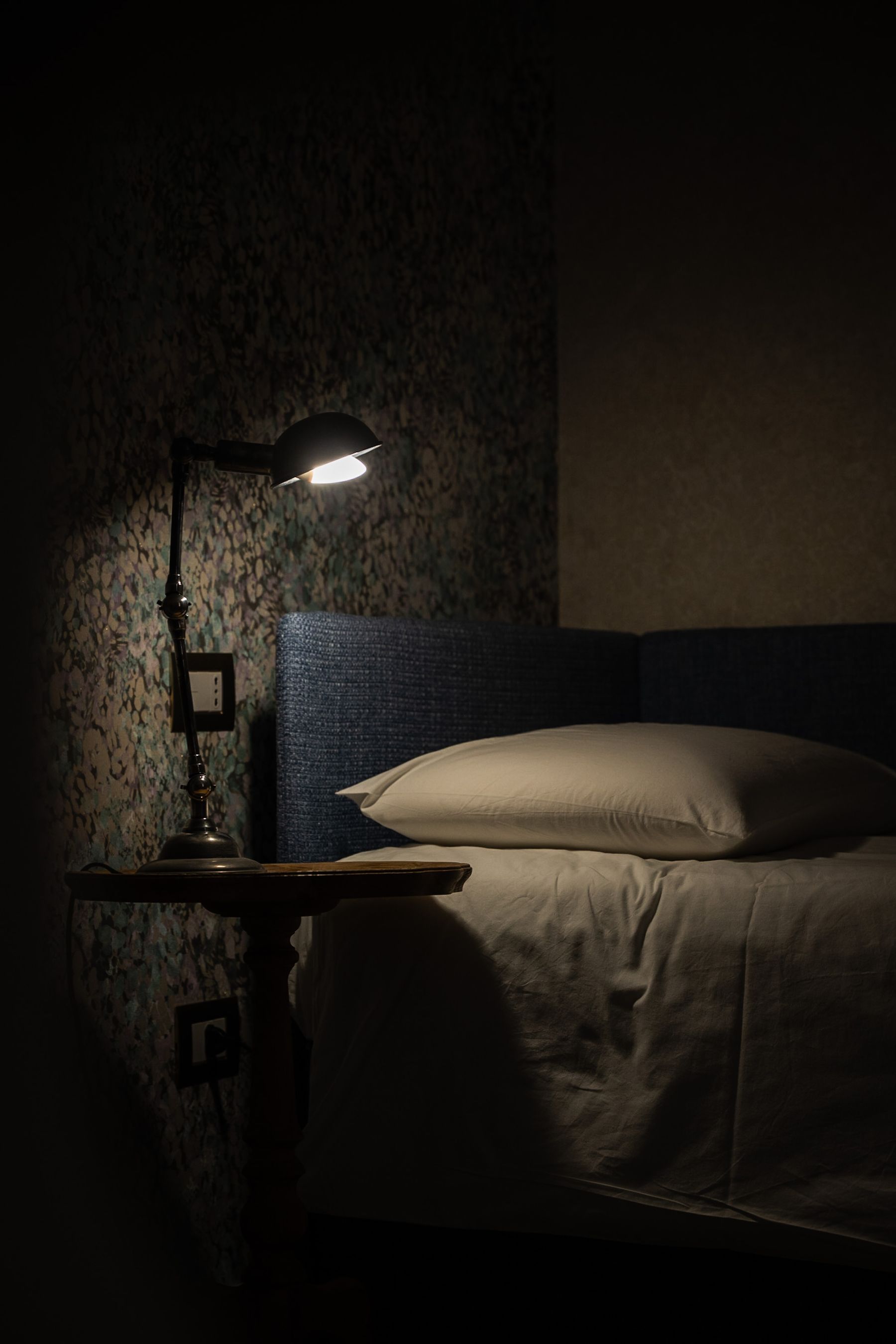
Atmosphere should never make reading difficult. Use an adjustable shade, pendant or wall light that directs illumination over the shoulder and below eye level. Confirm that both sleepers can control their own side and that the beam does not produce glare on a tablet or polished headboard. The rest of the room may remain shadowed, but the page and the route to the door must be clear. This distinction separates intentional mood from simply inadequate lighting.
Use Wall Grazing to Reveal Relief
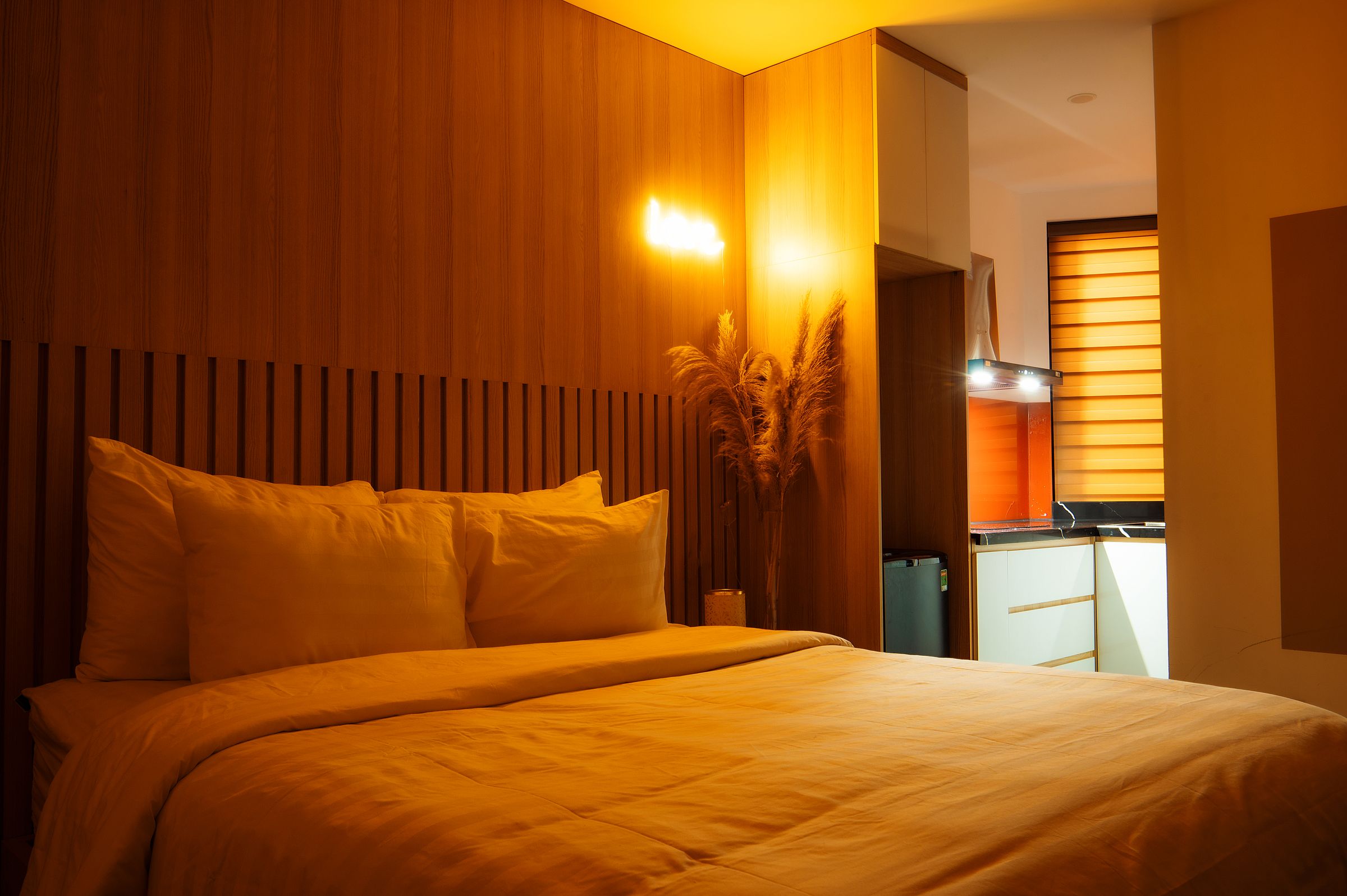
A narrow beam close to plaster, brick, timber or paneling makes surface relief visible and deepens shadow without darkening the whole room. Use it on one architectural plane rather than around every edge. Conceal the source where possible, keep the color rendering high and avoid a strip that creates bright dots in reflection. If the wall is perfectly flat or poorly finished, grazing will reveal defects; a soft wash may be more forgiving and equally atmospheric.
Control Windows Without Sealing the Room
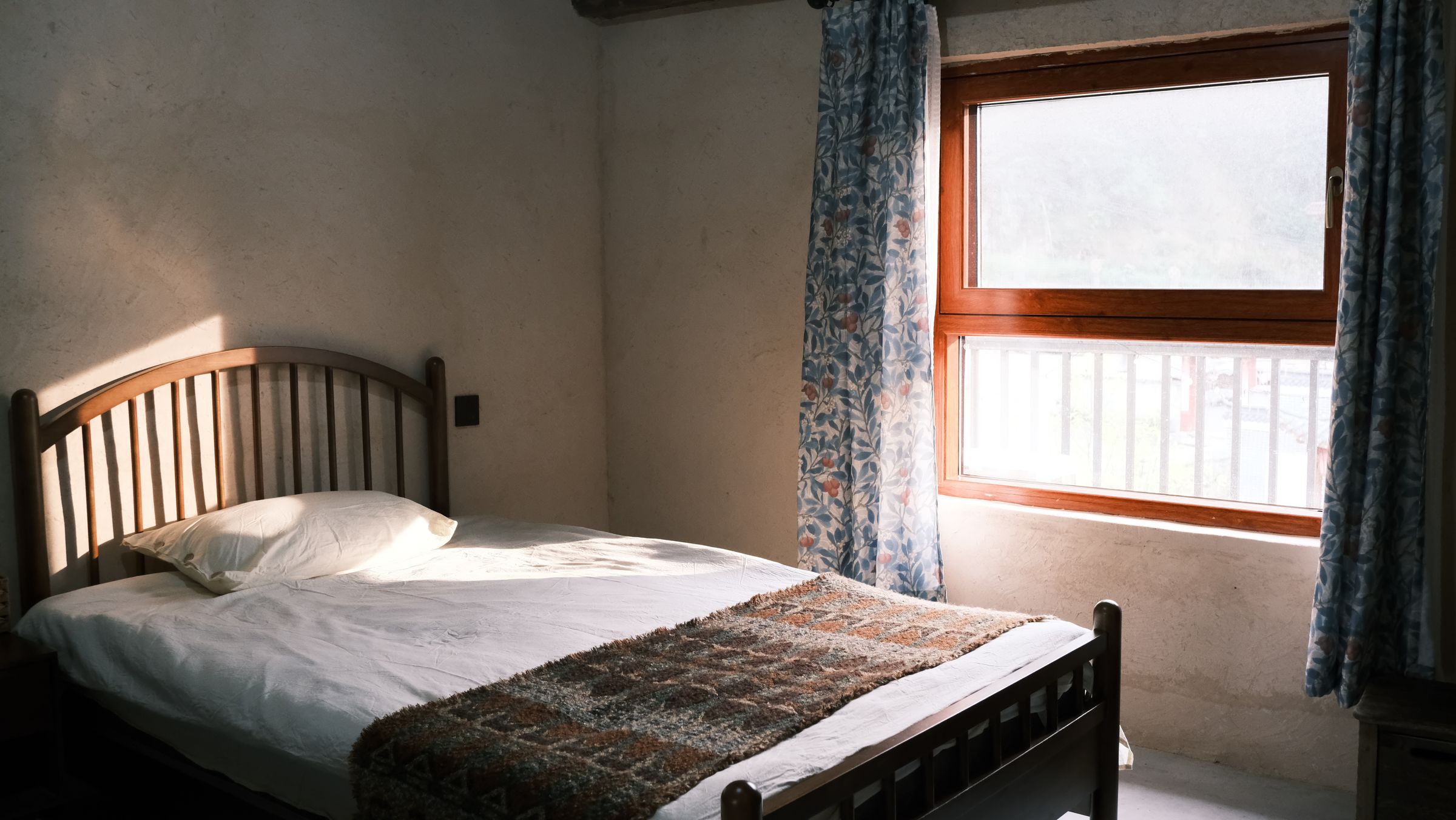
Layer a privacy treatment with a separate blackout layer so daylight, views and sleep can be adjusted independently. Full curtains can soften acoustics and add a deep color field, but they should clear heaters, vents and opening hardware. In warm climates, a heavy visual envelope must not trap heat or block airflow. Use [Cozy Bedroom Ideas](/bedroom/cozy-bedroom-ideas/) for the comfort tradeoffs among privacy, thermal control, ventilation and darkness rather than treating curtains as decoration alone.
The Bed as the Main Tonal Landmark
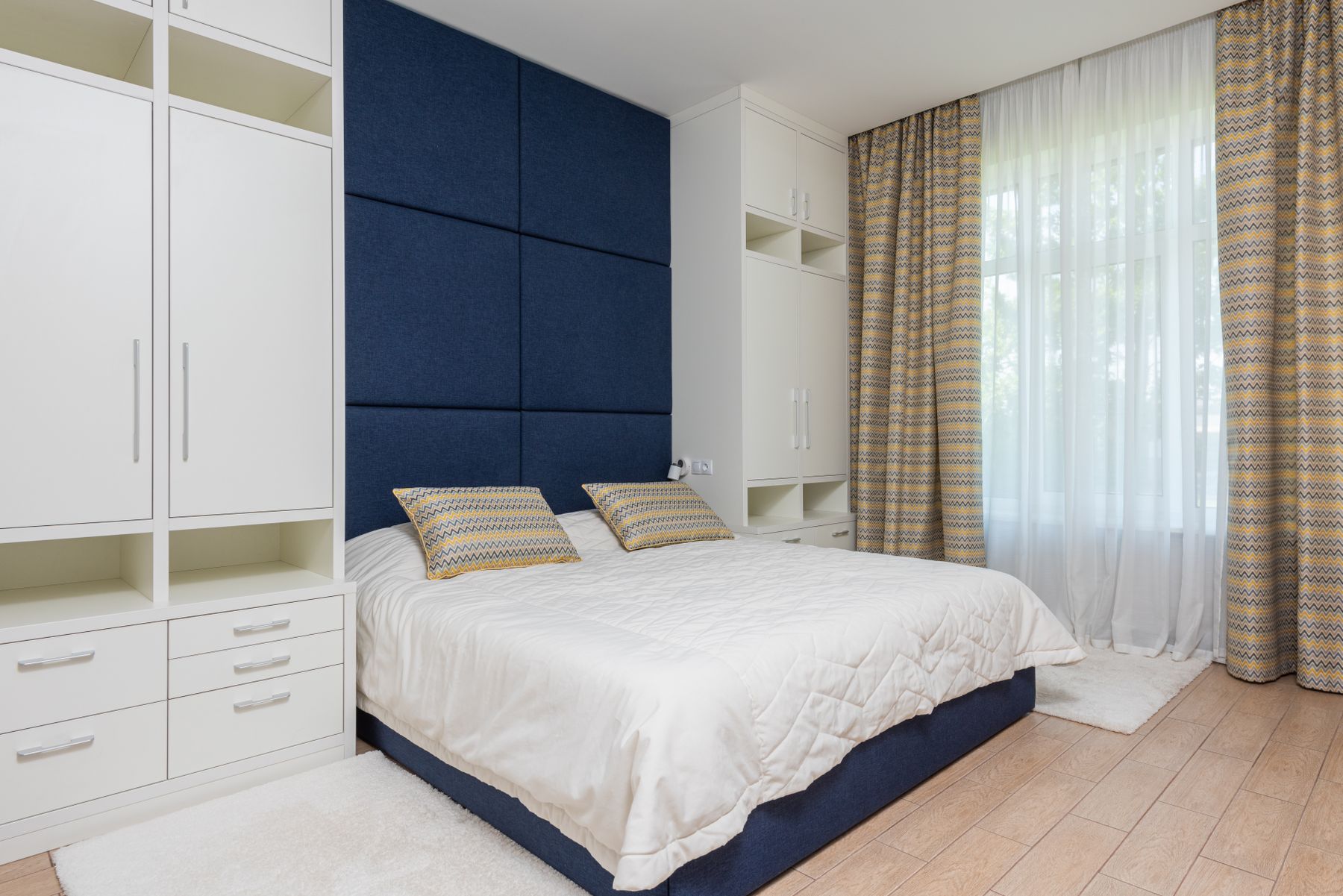
The bed should remain the first readable destination, even when walls and curtains are deep. Separate it from the background with a headboard, lighter bedding, piping or a narrow band of light. In a compact room, one upholstered panel can provide both softness and contrast without extra furniture. In a large room, repeat the bed color once in a bench or rug to connect the zone. Avoid losing the frame, floor edge and nearby route in one continuous dark value.
Bedding Across Values, Weights and Temperatures
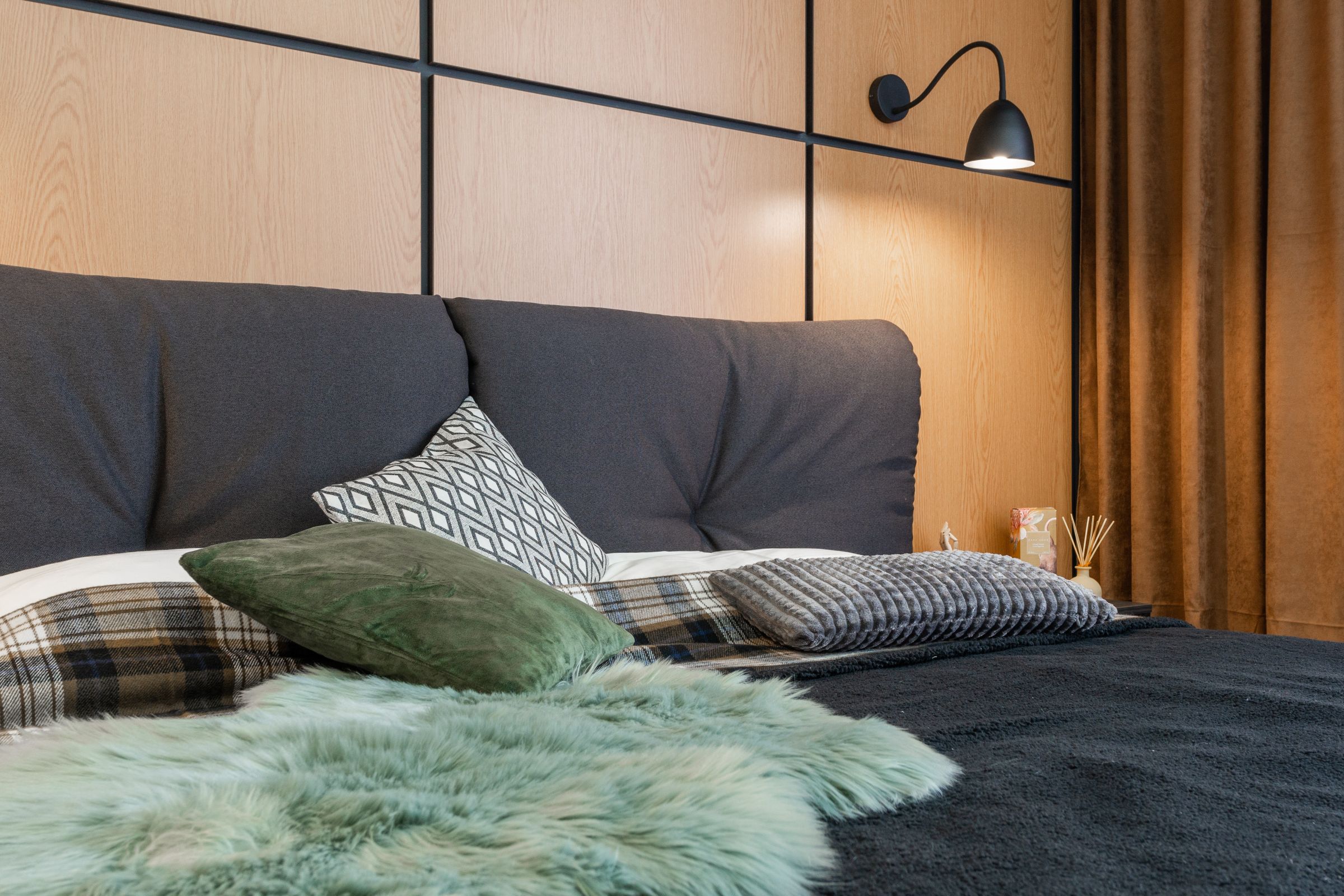
Use two or three values around one color family: deep fitted layer or throw, mid-tone duvet and a lighter sheet edge. Vary weave before adding more cushions, and choose weights appropriate to the climate. A moody bed should remain easy to make, wash and adjust at night. If comfort is the primary decision, follow the thermal and tactile logic in [Cozy Bedroom Ideas](/bedroom/cozy-bedroom-ideas/); if the focus is black textiles, [Black Bedroom Ideas](/bedroom/black-bedroom-ideas/) covers lint and fading.
Pattern as a Low-Contrast Layer
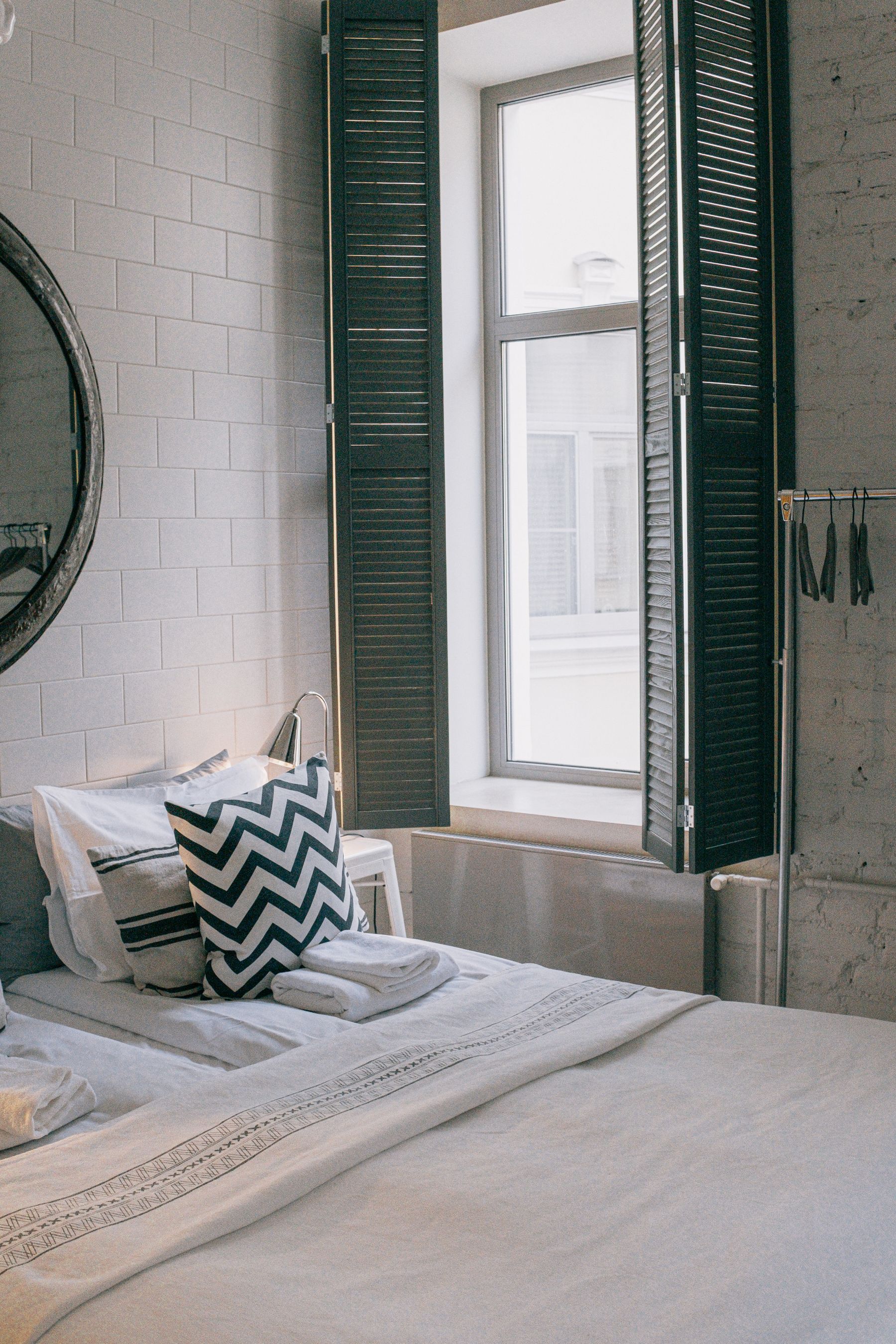
Pattern is most atmospheric when it sits close to the surrounding values: tonal stripe, faded botanical, broken check or abstract weave. Use one primary scale and one much smaller supporting scale, leaving substantial quiet area around them. High-contrast prints can work, but they shift the emphasis from mood to graphic energy. Keep rights-sensitive artwork out of stock imagery and choose original or properly licensed pieces for the real room. Pattern should support the bed, not become unrelated visual noise.
Anchor the Floor Without Losing the Route
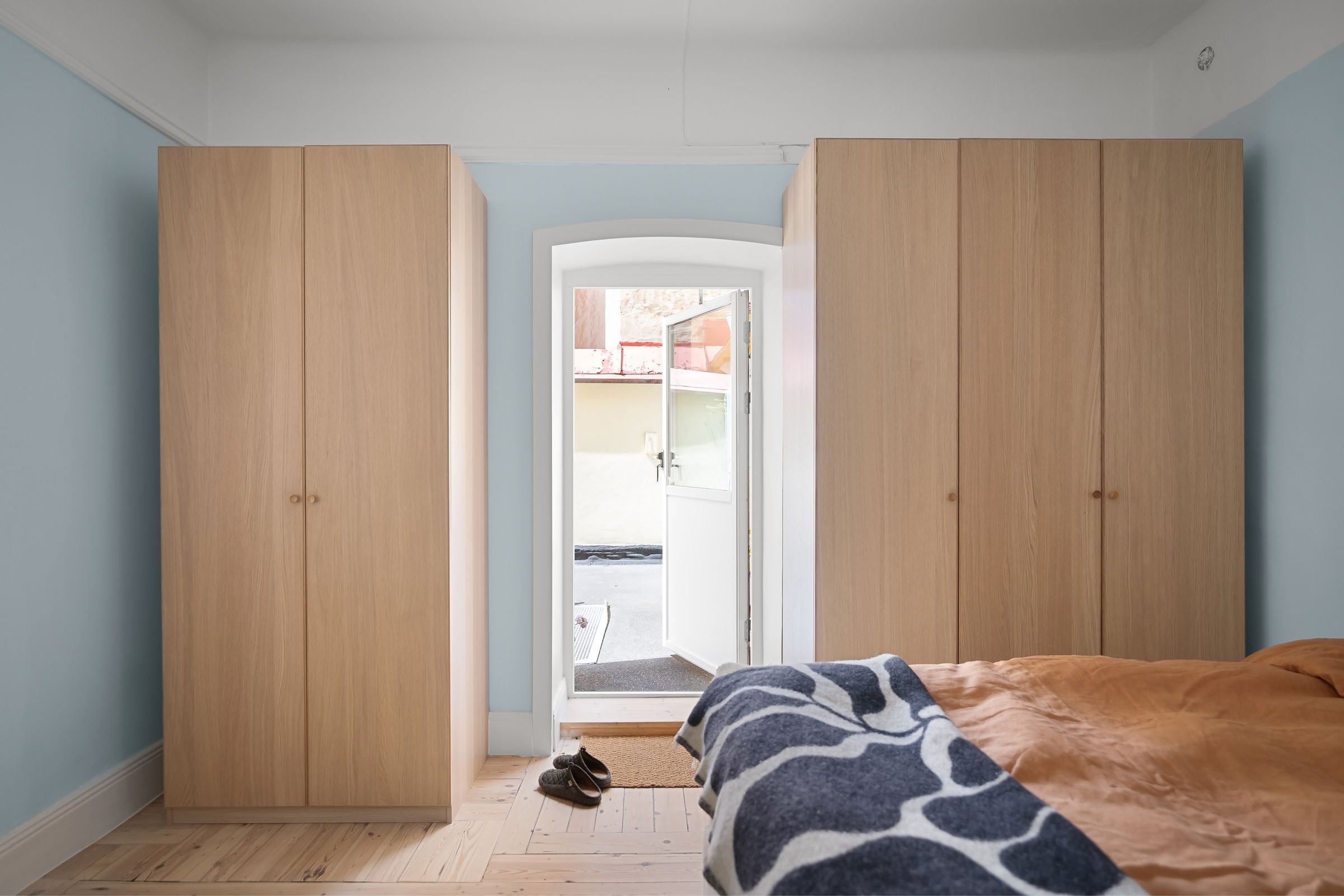
Dark floors intensify enclosure but show lint and can erase the bed perimeter; pale floors release the scheme but may need a deeper rug for grounding. Choose the floor first because it is expensive and difficult to change, then set the rug value to clarify the bed and walking route. Extend the rug far enough for both feet to land comfortably, and use a low, secure edge where people cross at night. Atmosphere should never create a trip hazard.
Design Storage as a Quiet Background
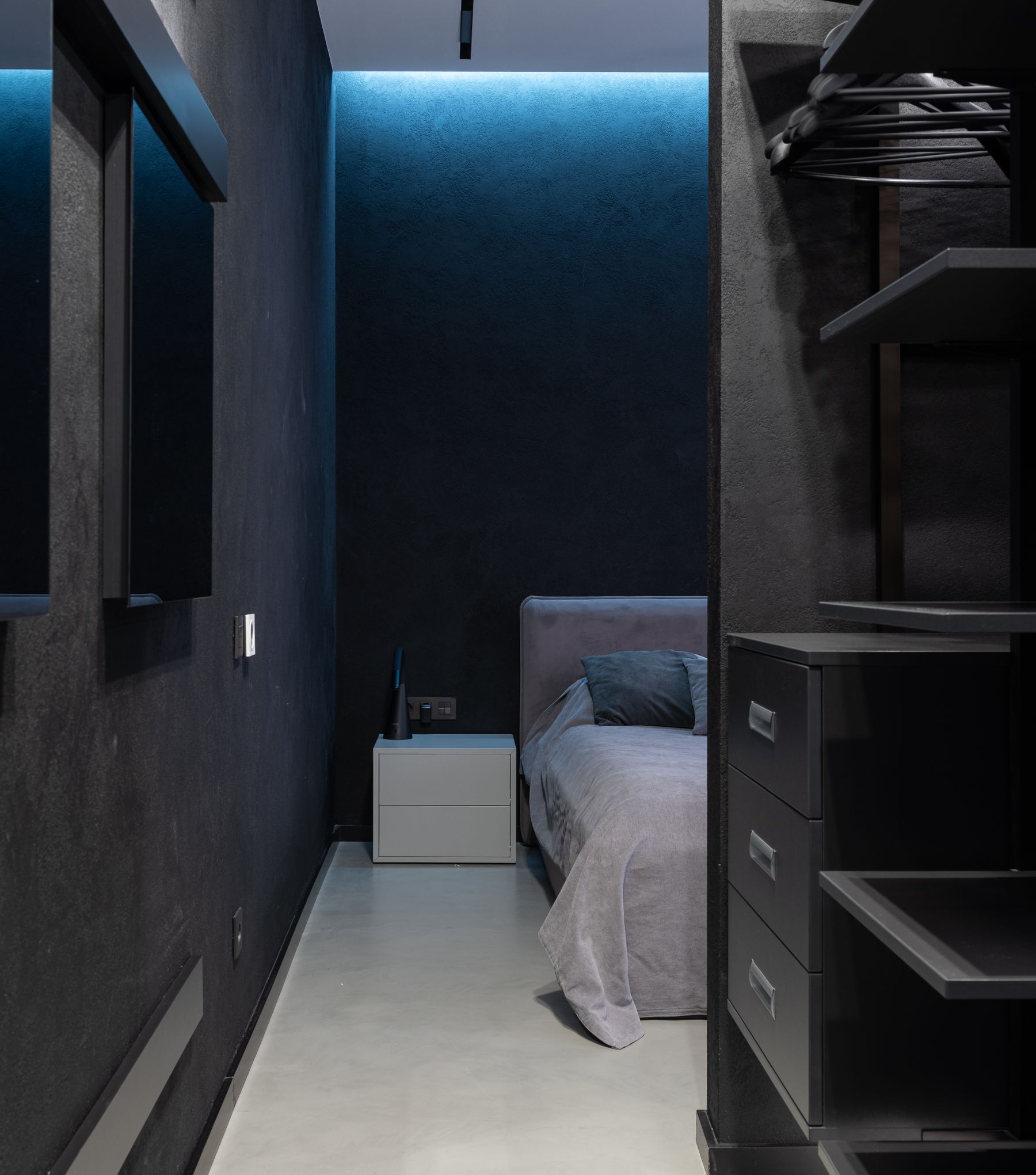
Large wardrobes can either calm a moody room or become an unreadable mass. Match them to the wall when you want visual quiet, then reveal handles, edges and interiors with texture or light. Open storage needs stronger editing because pale clothes and miscellaneous objects break the composition. A sensor light inside the wardrobe is more useful than a decorative strip around it. The storage guidance in [Small Bedroom Ideas](/bedroom/small-bedroom-ideas/) is especially relevant when every door swing and bedside clearance matters.
Edit Mirrors and Reflection
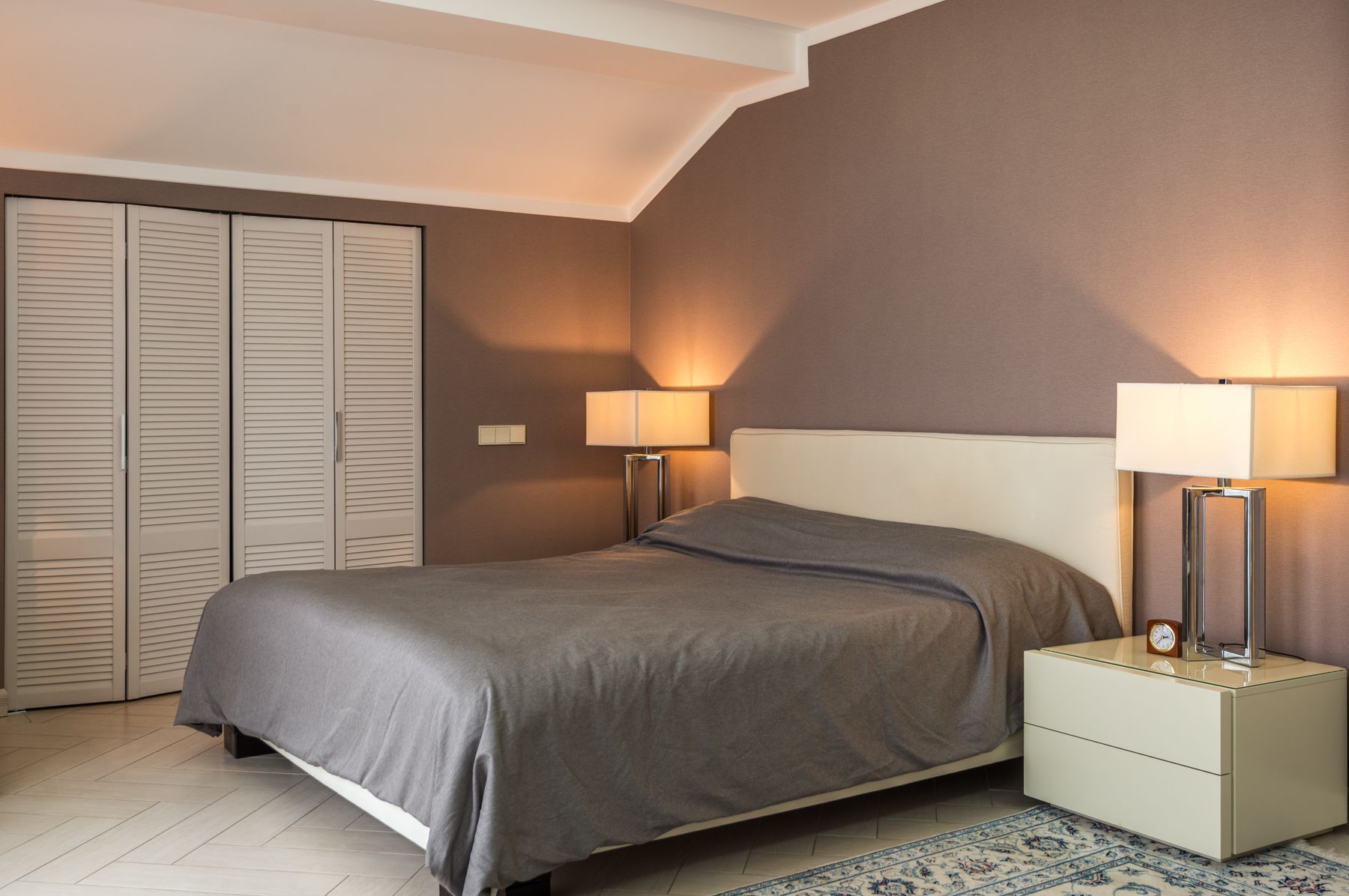
Mirrors can carry a small amount of daylight into a deep room and multiply warm light, but placement matters more than size. Avoid reflecting the bed if that feels distracting, a bare bulb, open storage or exterior security light. Smoked mirror adds atmosphere yet can distort color for dressing, so keep one accurate mirror where needed. Reflection should reveal another designed view, not double clutter. In small rooms, test the sightline from both doorway and pillow before mounting.
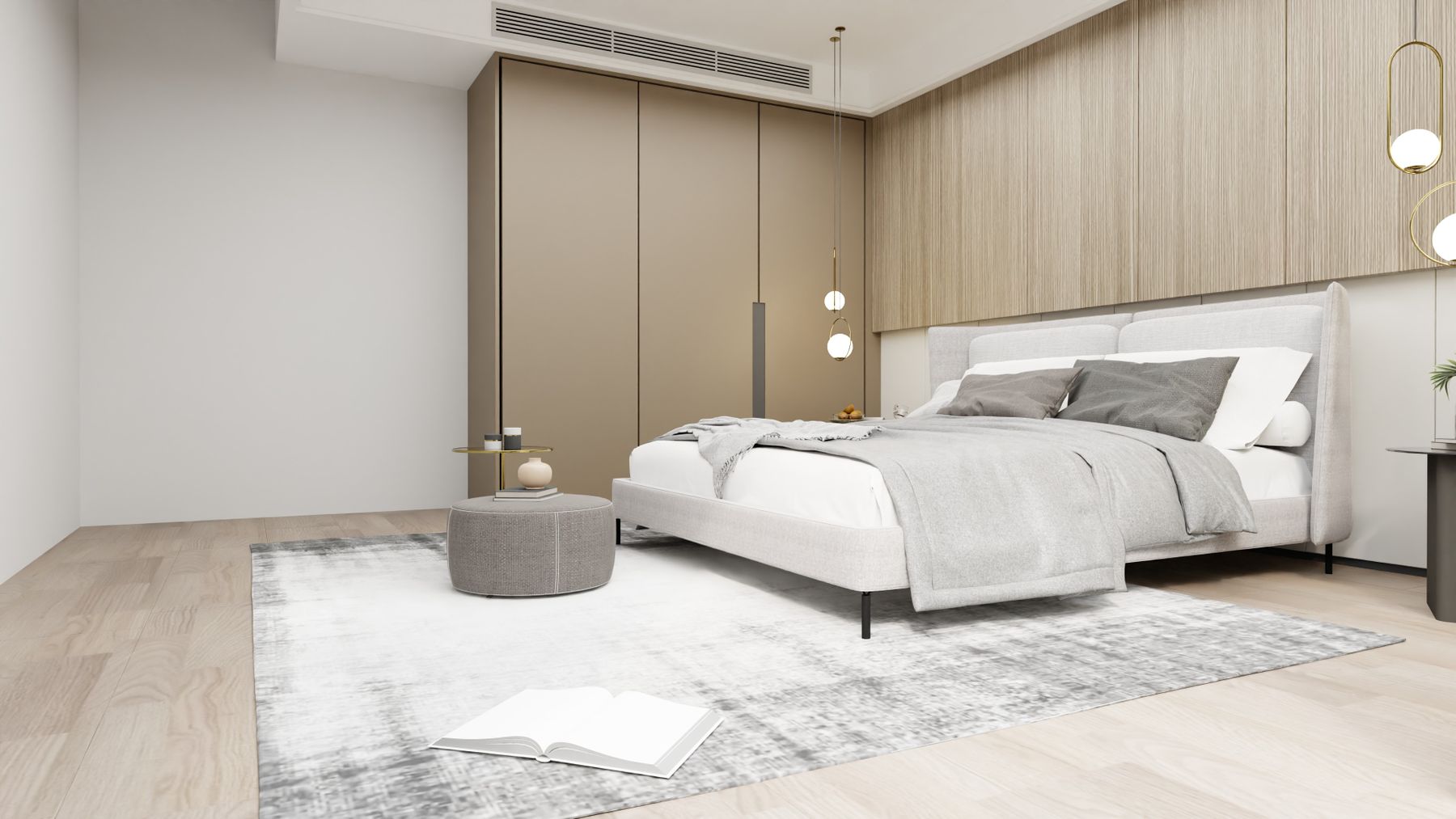
In a Small Moody Bedroom, Legibility Comes First
A small room can handle saturated color when the layout is disciplined. Reduce furniture depth, keep one clear path, mount bedside lights and let storage read as one continuous plane. Preserve the window as a relief point rather than crowding it with tall pieces. A deep ceiling can work if height is adequate; otherwise use a lighter related tone overhead. Consult [Small Bedroom Ideas](/bedroom/small-bedroom-ideas/) for clearance and storage tests, then apply the moody palette without sacrificing those measurements.
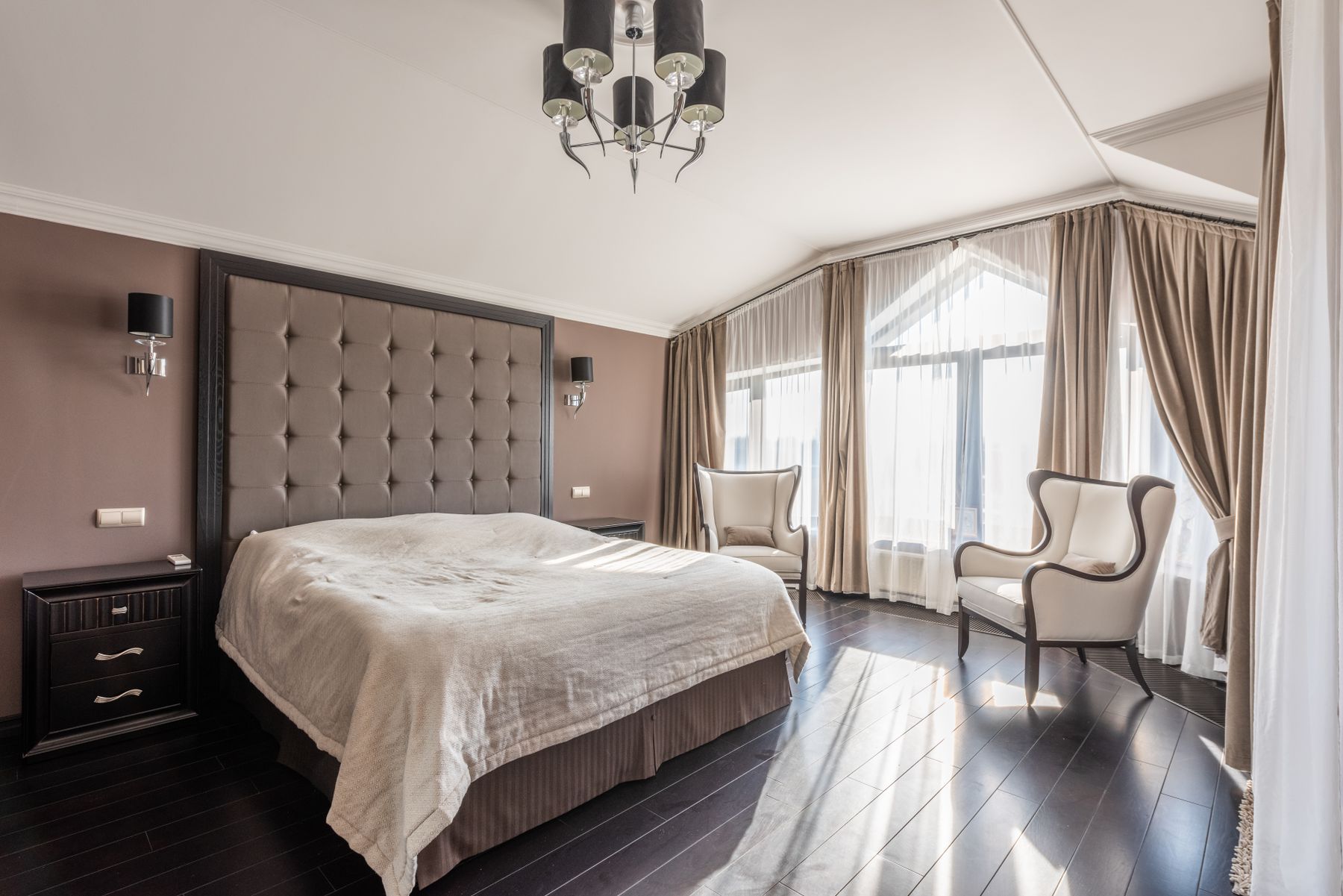
Zone a Large Moody Bedroom
Large bedrooms need more than darker paint to feel intimate. Build two or three connected pools: bed, seating and dressing, each with its own light and rug relationship. Repeat one material or color across the zones, but allow the bed to remain dominant. Avoid filling empty corners with arbitrary chairs. The planning principles in [Large Bedroom Ideas](/bedroom/large-bedroom-ideas/) help determine whether a secondary function earns its space; mood should strengthen that plan rather than disguise an underused area.
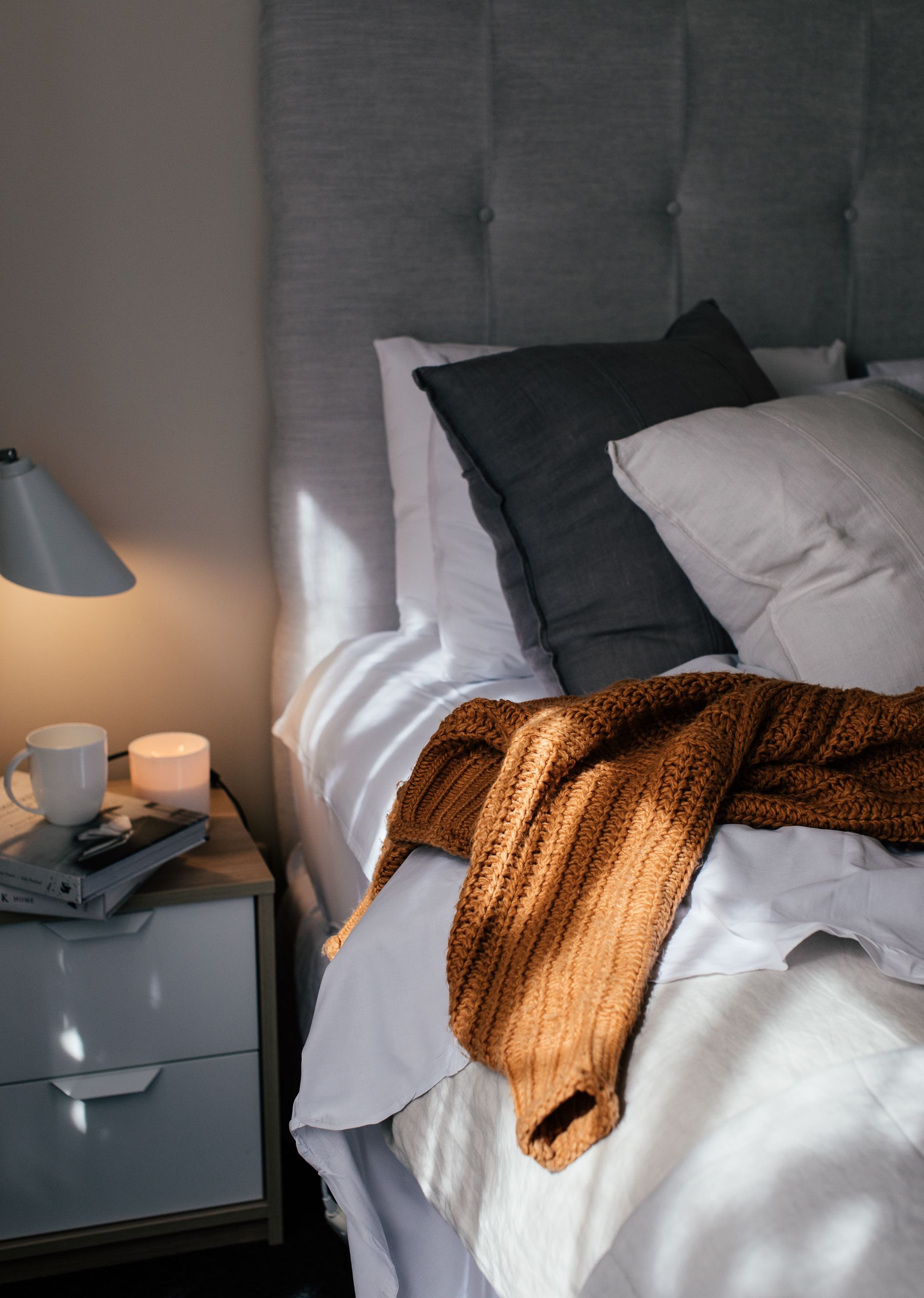
Rental-Friendly Atmosphere Without Permanent Darkness
When painting or wiring is restricted, concentrate mood in removable layers: full curtains on approved hardware, an upholstered headboard, deep bedding, a large rug and plug-in shaded lamps. Use freestanding screens or tall textiles to create a darker background, but never obstruct exits, heaters or ventilation. Keep every adhesive and fastener compatible with the surface and lease. A rental can feel convincingly moody when the light hierarchy and tonal relationships are deliberate, even if the walls stay pale.
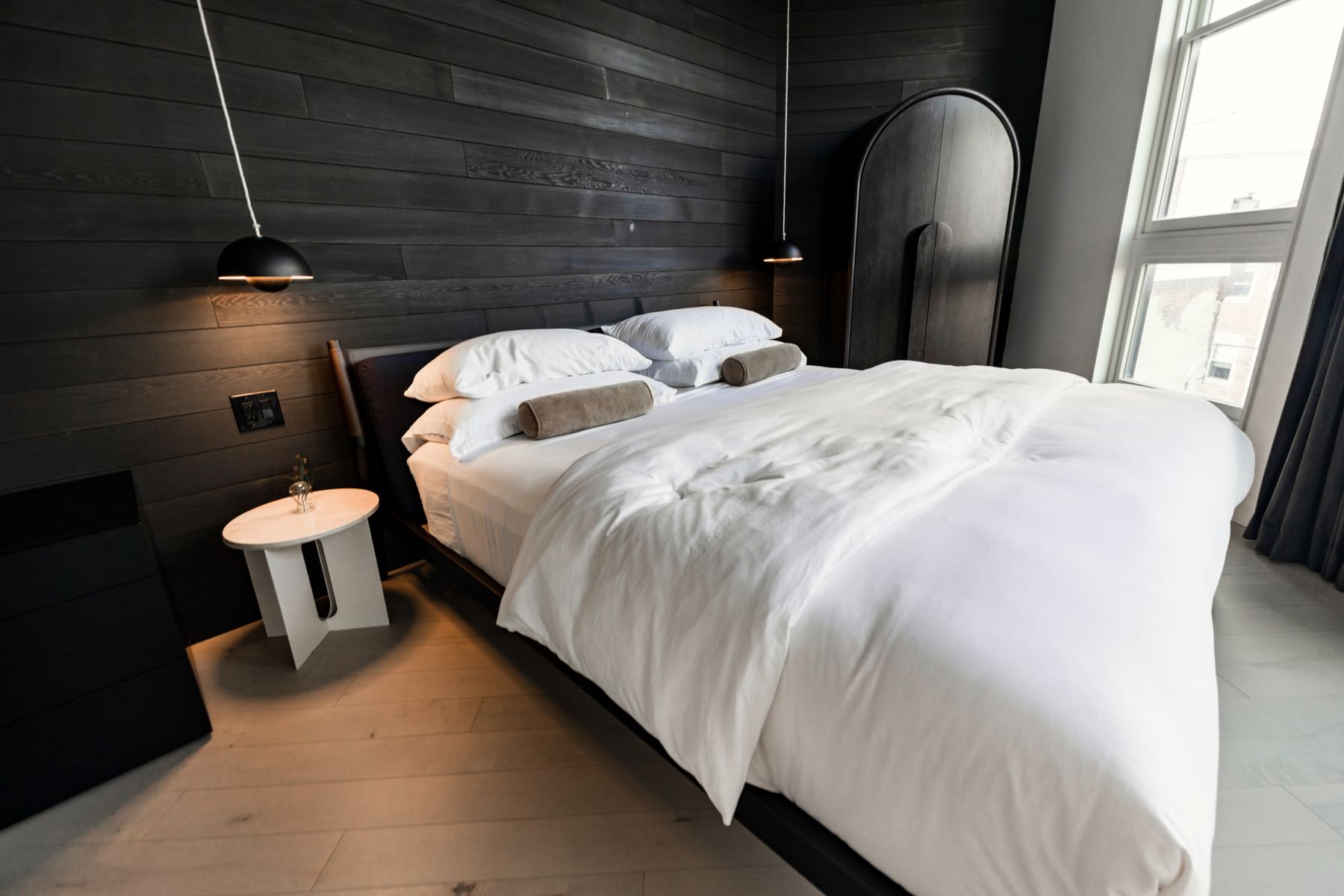
Accessible Contrast Inside the Mood
People with low vision or reduced night vision need stronger value cues at switches, handles, steps and floor edges. Keep these functional points distinct from their backgrounds, place controls consistently and avoid glossy glare. Motion-activated low-level light can support the route without flooding the room, provided it does not trigger across the sleeper’s face. The atmosphere can remain deep elsewhere. Never rely on color difference alone; value, texture and physical placement are more dependable when light levels fall.
Adapt the Mood for Warm Climates
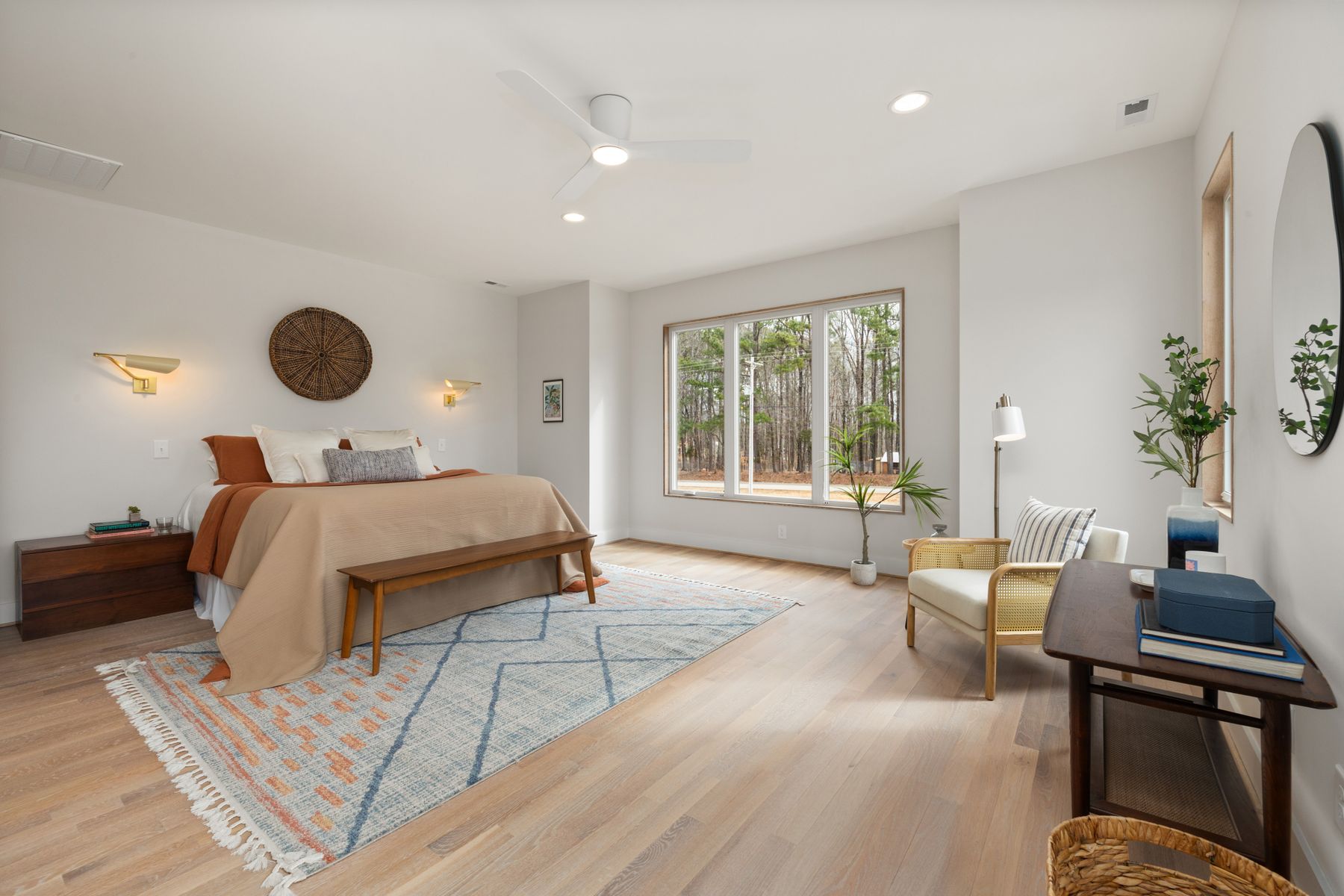
Visual warmth and thermal comfort are different. In a hot room, use deep blue, green-grey or smoky violet with breathable linen, clear airflow and lighter-weight curtains rather than adding thick velvet everywhere. Keep the ceiling fan, vent or operable window unobstructed, and let one pale surface reflect useful daylight. A room can feel atmospheric without feeling stuffy. [Warm Bedroom Ideas](/bedroom/warm-bedroom-ideas/) makes the same distinction from the opposite direction: color temperature should never substitute for actual comfort planning.
Simple Controls for Guests
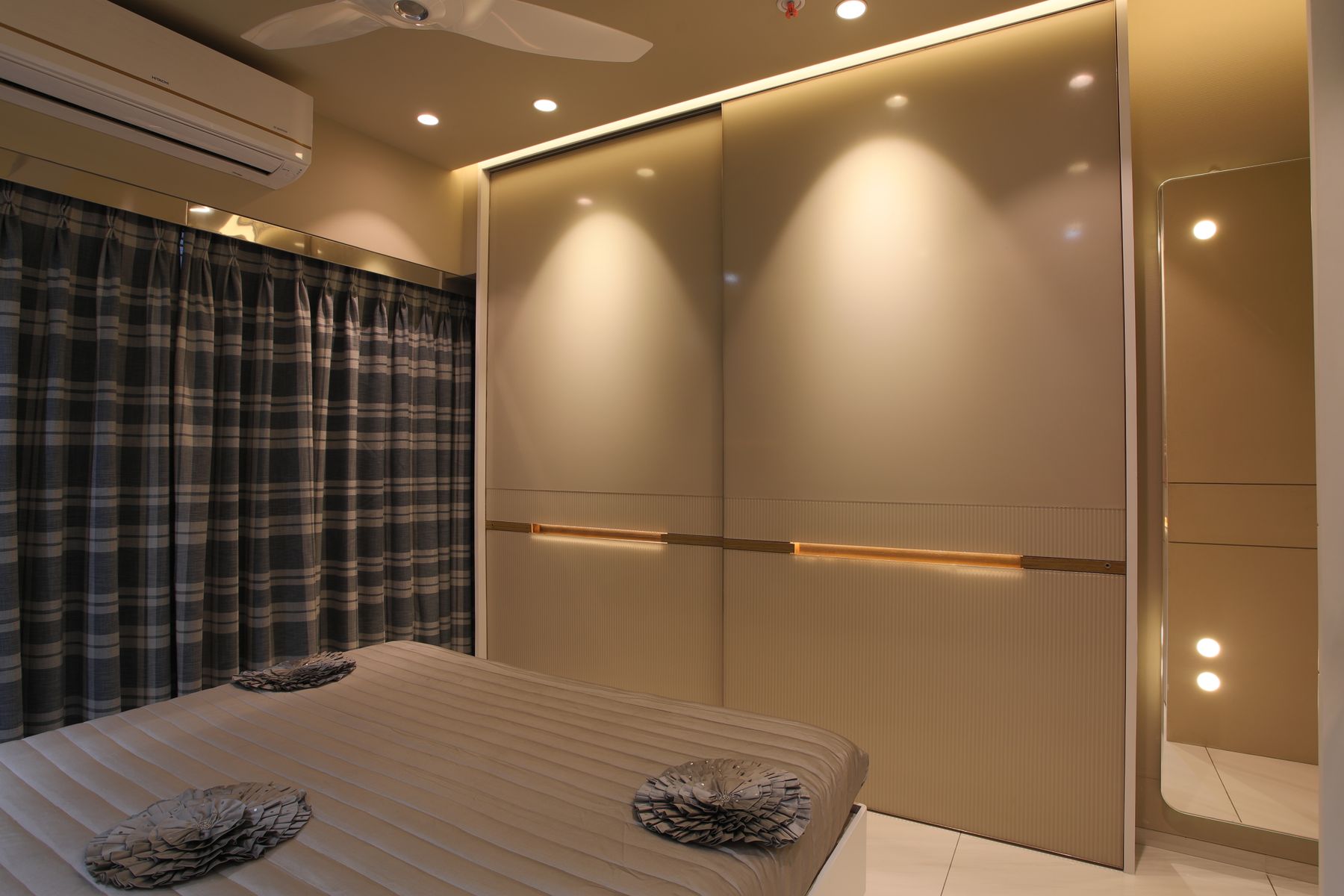
Guests should not have to decode a lighting scene. Provide an obvious entry switch, reachable bedside light, a clear route to the bathroom and intuitive curtain or blind operation. Leave one brighter setting for unpacking and one low setting for sleep. Keep personal collections edited and make storage visibly available. The room may still use deep color and shadow, but its controls should feel generous rather than mysterious. Label unusual controls discreetly and test the room as if arriving after dark with luggage.
Cleaning and Material Maintenance by Surface
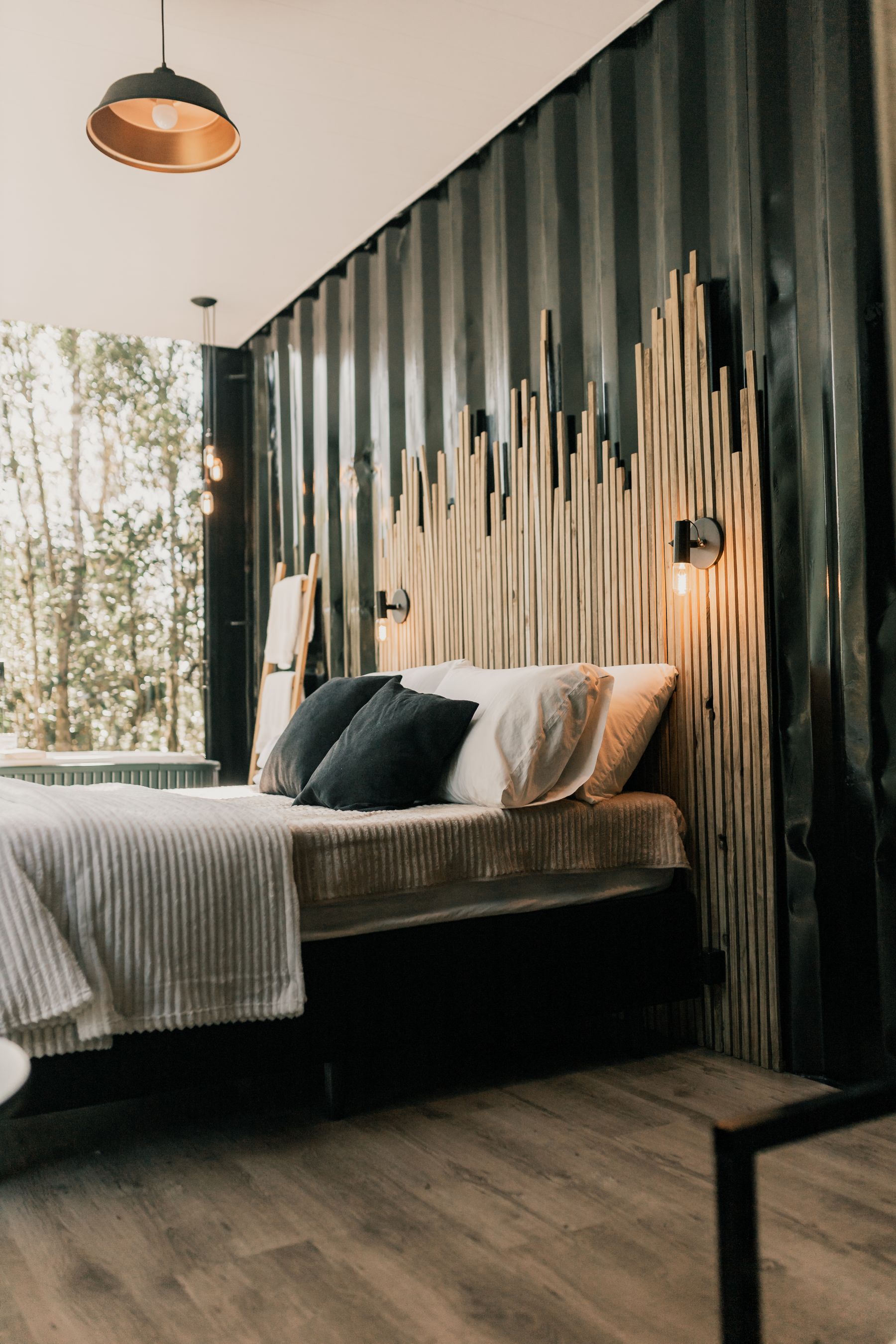
Deep matte paint can burnish where hands touch it, gloss reveals fingerprints and black textiles show lint. Specify washable finishes in circulation zones, handles where doors are touched and removable covers where skin contacts upholstery. Vacuum heavy curtains and textured headboards on a realistic schedule, and keep spare paint for localized repair. Strong daylight will reveal dust and uneven touch-ups, so inspect the room in both sun and lamp light. [Black Bedroom Ideas](/bedroom/black-bedroom-ideas/) includes additional maintenance guidance for near-black surfaces.
Edit the Finished Room at Night
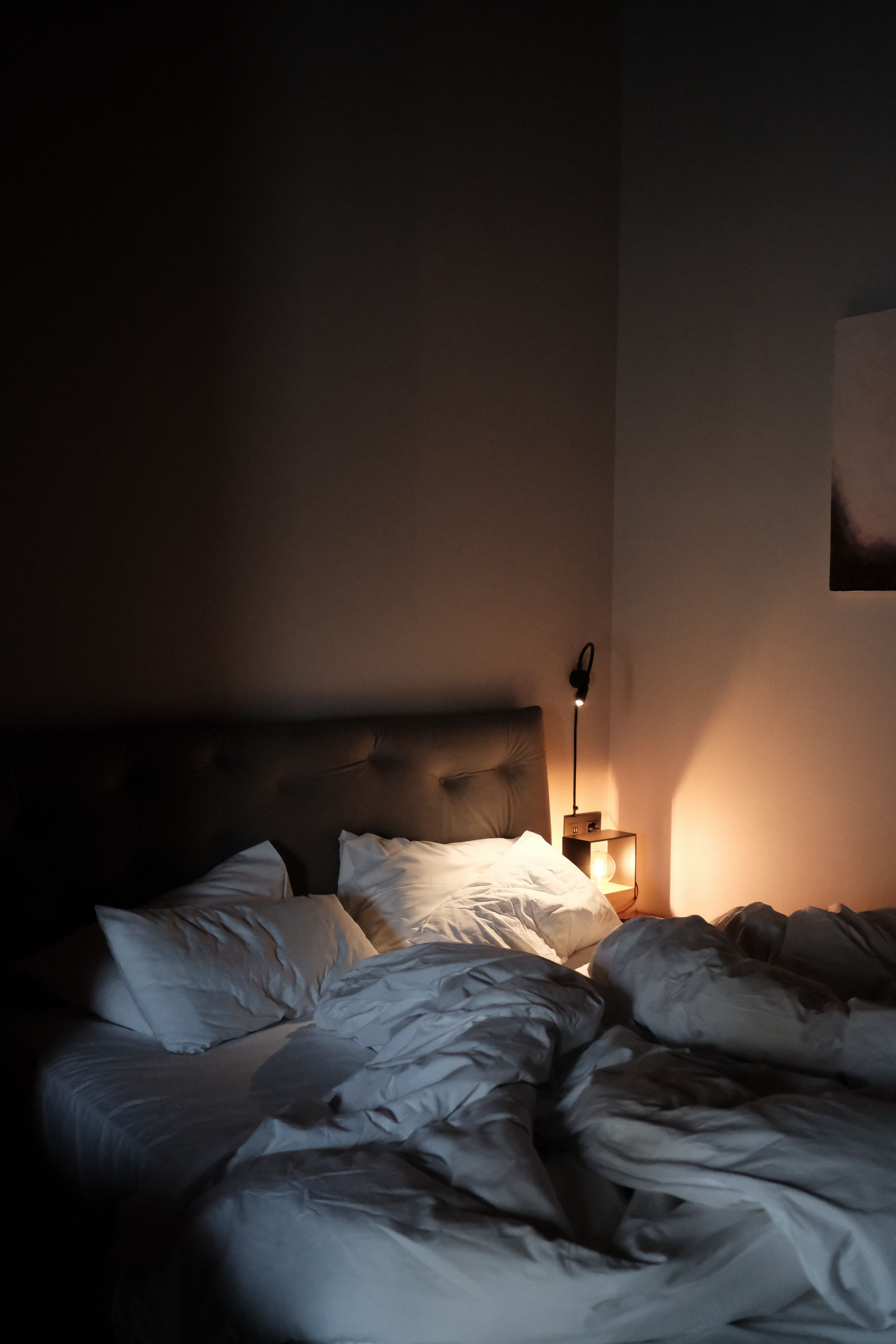
Finish the room after sunset, when its purpose is most visible. Turn on only the settings used before sleep, remove one accessory at a time and check whether depth, route and bed hierarchy improve. Look for bare bulbs, mirror glare, invisible handles and corners that feel accidental rather than quiet. Then repeat the test with the brighter cleaning setting. A successful moody bedroom changes character between modes without losing function; more darkness is not automatically more atmosphere.