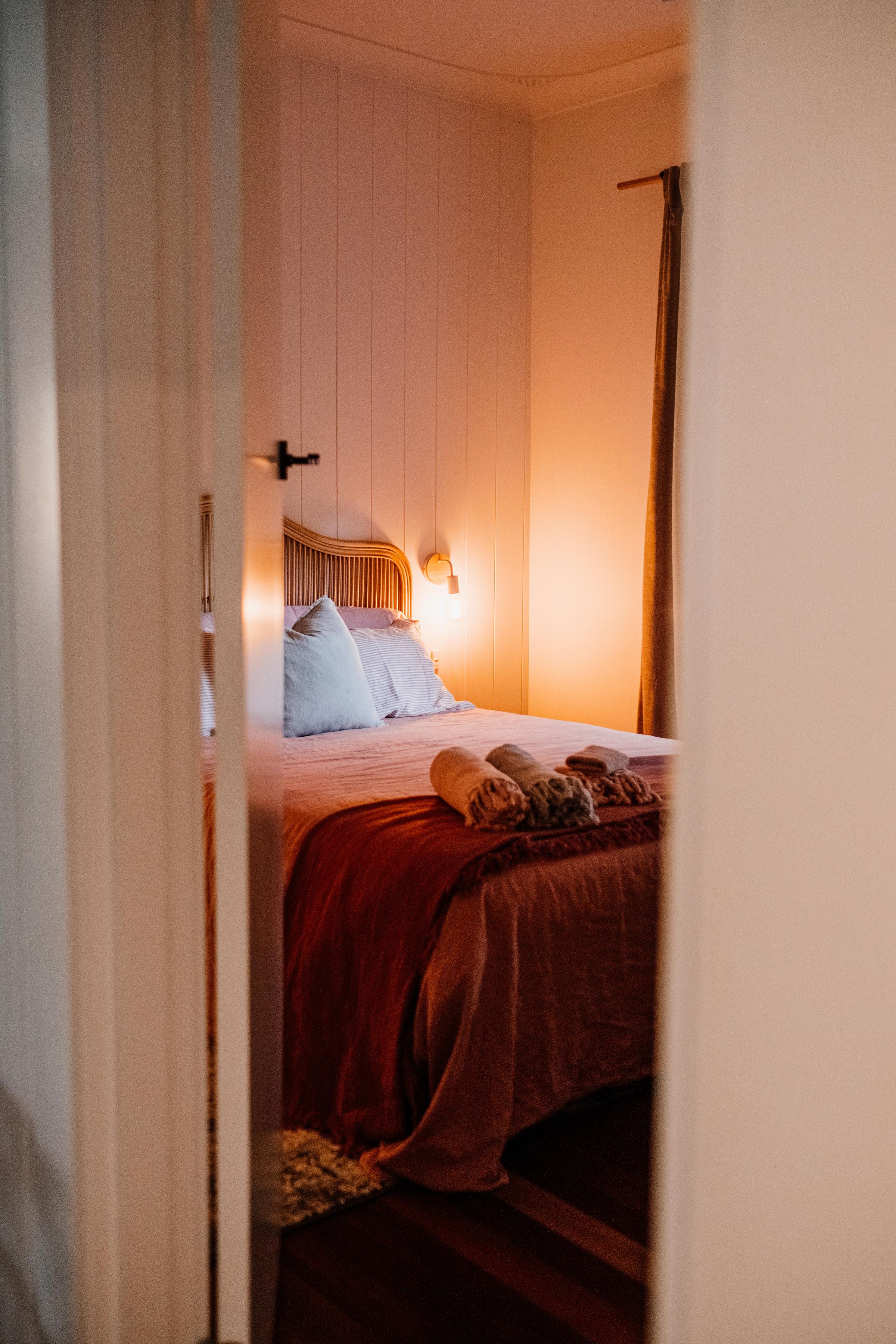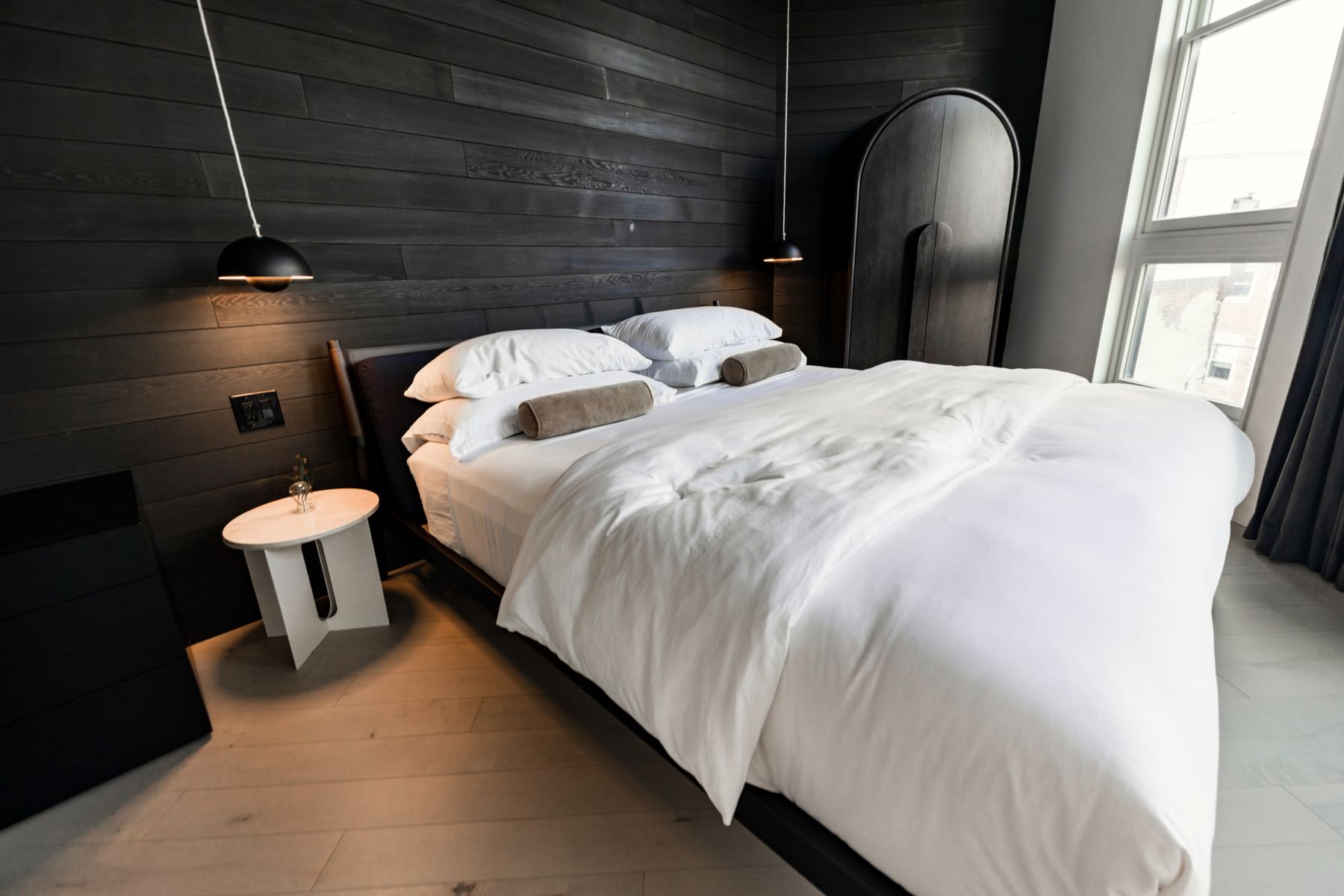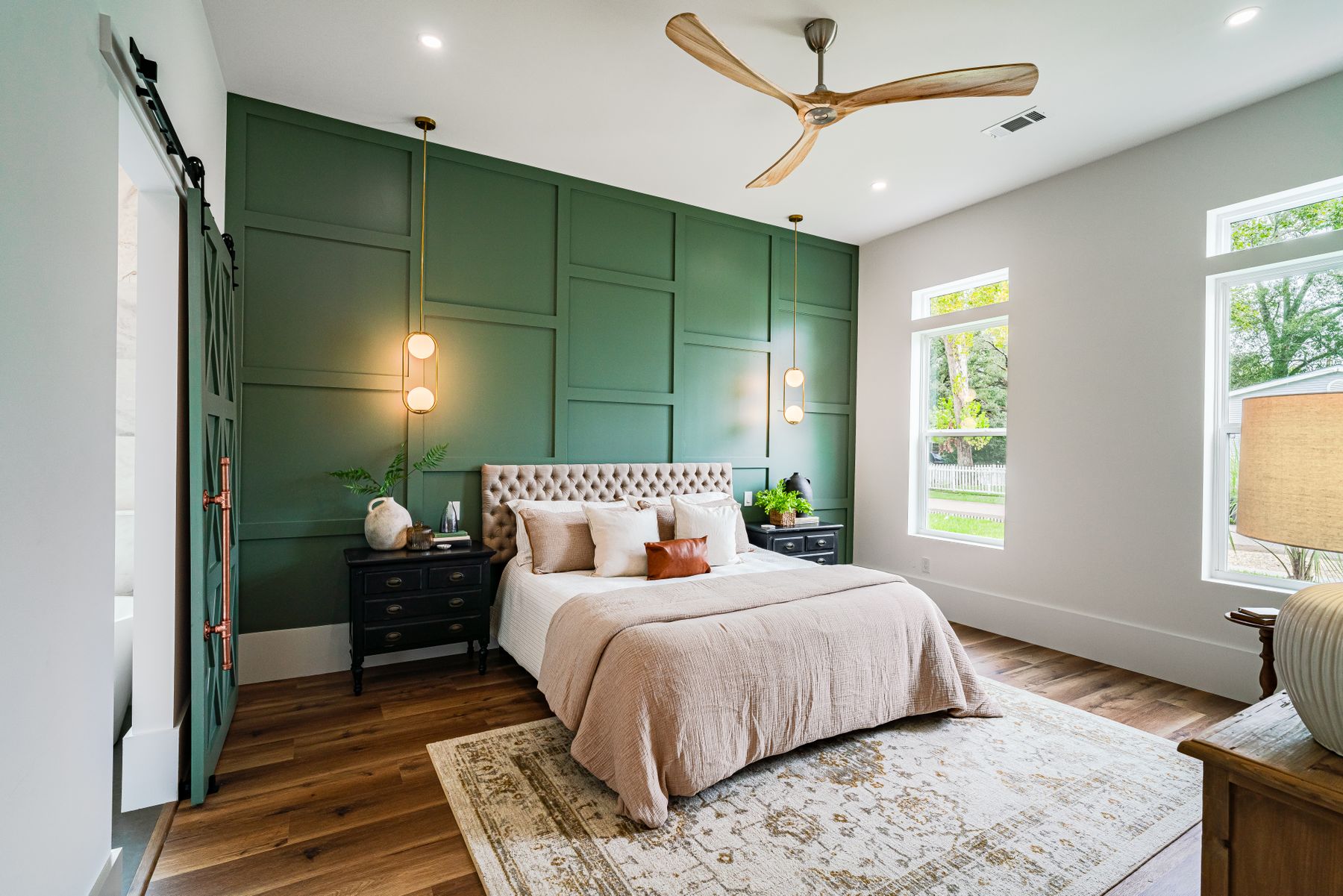
Define Dark by Value, Not by One Color
A Dark Bedroom is led by surfaces and textiles that sit low on the value scale, regardless of whether the hue is blue, green, grey, brown, violet or black. Start by converting reference images and a room photograph to grayscale: the scheme should still show bed, floor, storage and openings as distinct shapes. If black is clearly the main architectural field, [Black Bedroom Ideas](/bedroom/black-bedroom-ideas/) is the narrower destination. Dark here means a multi-hue planning problem, not a basket of vaguely moody accessories.
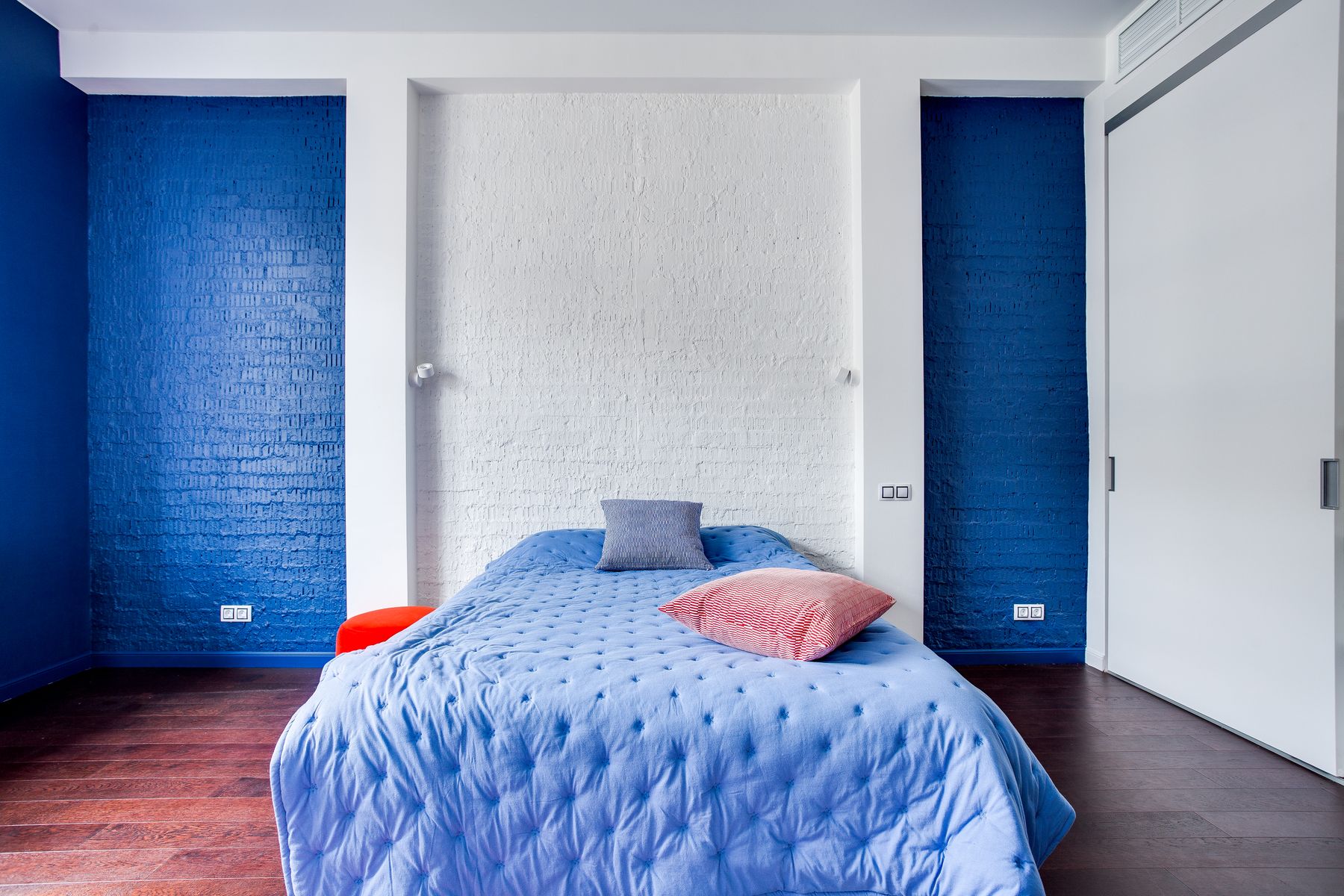
Map the Room's Existing Light and Reflectance
Record window direction, obstructions, seasonal daylight, ceiling height, floor value and every permanent light point before choosing paint. A north-facing room may flatten a cool navy, while late western sun can reveal red in brown or aubergine. Dark paint does not physically shrink a room, but low contrast can make boundaries less obvious. Photograph the empty room at waking time, midday and night without exposure correction, then mark where useful tasks disappear. Those locations need planned contrast or local light, not a lighter scheme everywhere.
Test Deep Color Beside Every Fixed Finish
Deep colors hide undertones on a small chip. Paint movable boards with the exact primer, coat count and finish, then place them behind the bed, beside the floor, near curtains and in the darkest corner. Review them under daylight and every intended bulb. A blue-black can sharpen orange oak; a brown-black may settle it; a green-charcoal may fight a violet carpet. Keep plain white paper nearby to expose bias, but do not judge the final room against stark white unless that contrast will remain.
Navy or Inky Blue as the Envelope
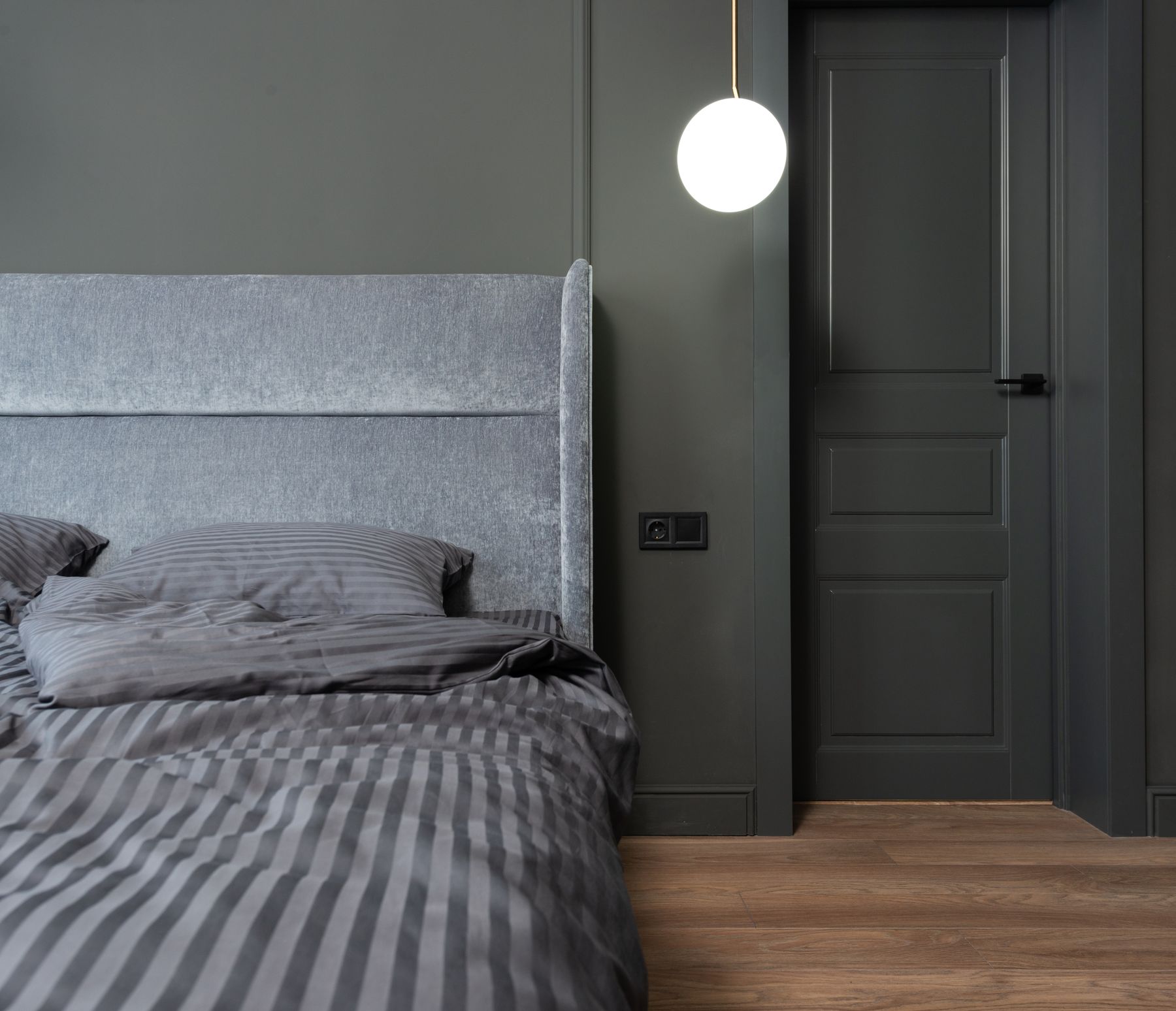
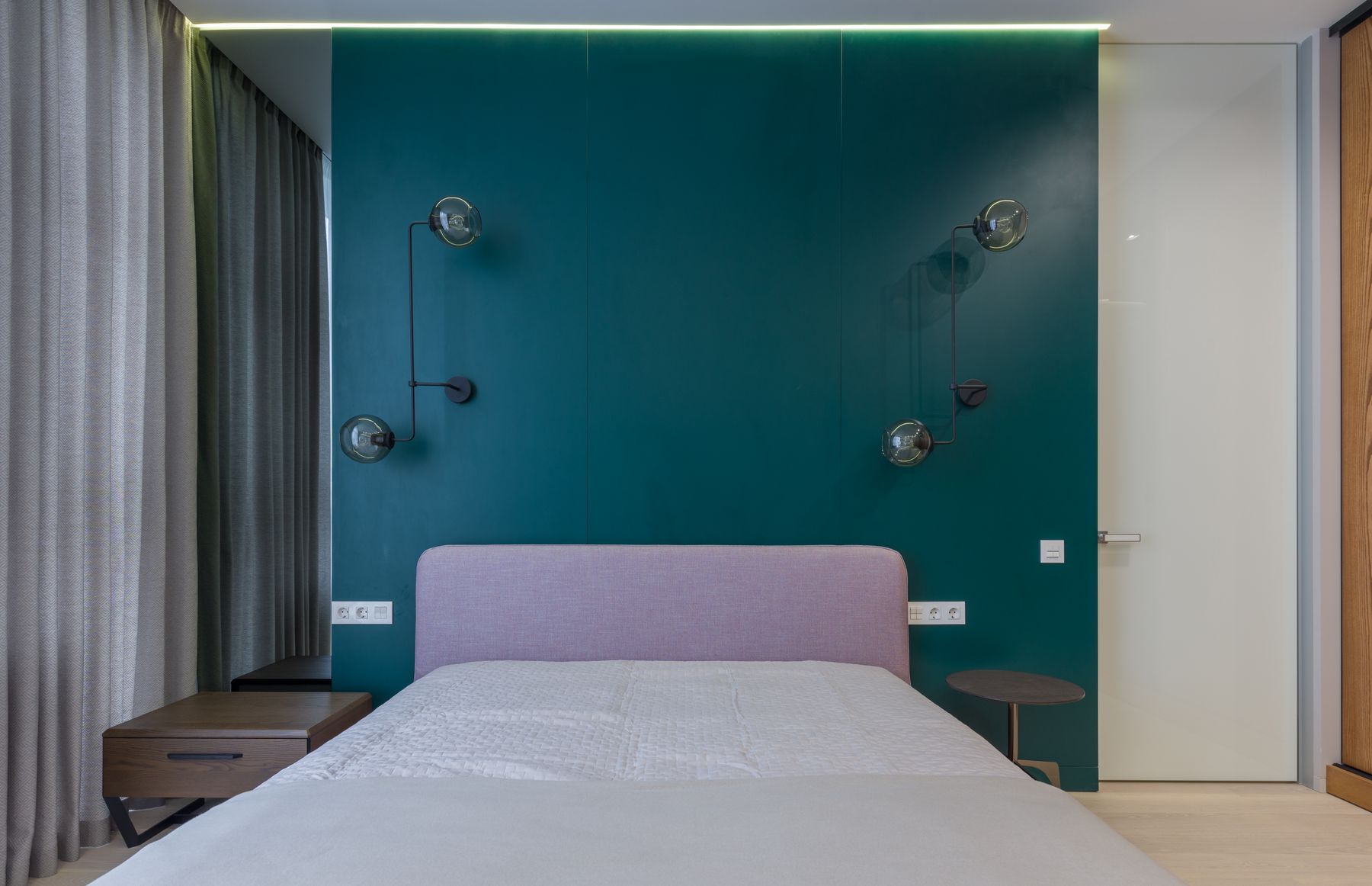
Navy is dark without reading neutral, and it can feel tailored, marine, mineral or contemporary depending on undertone and material. Green-leaning ink works well with warm oak and brass; violet navy can suit cooler stone and grey. Avoid repeating the exact blue across paint, velvet and bedding, because different materials will never match under all light. Use related values instead. [Blue Bedroom Ideas](/bedroom/blue-bedroom-ideas/) covers the full blue spectrum; this section is specifically about blue at the low-value end.

Forest and Ink Green for Natural Depth
Forest, bottle and ink green create depth while retaining a visible chromatic identity. They can bridge garden views and timber, but live foliage is not required and should never be used to disguise weak color planning. Test green beside flooring: yellow oak may intensify olive, while red timber can create a strong complementary relationship. [Green Bedroom Ideas](/bedroom/green-bedroom-ideas/) develops sage, olive and brighter greens; a Dark Bedroom uses the deepest part of that family with deliberate nighttime contrast.
Separate Charcoal From Flat Black
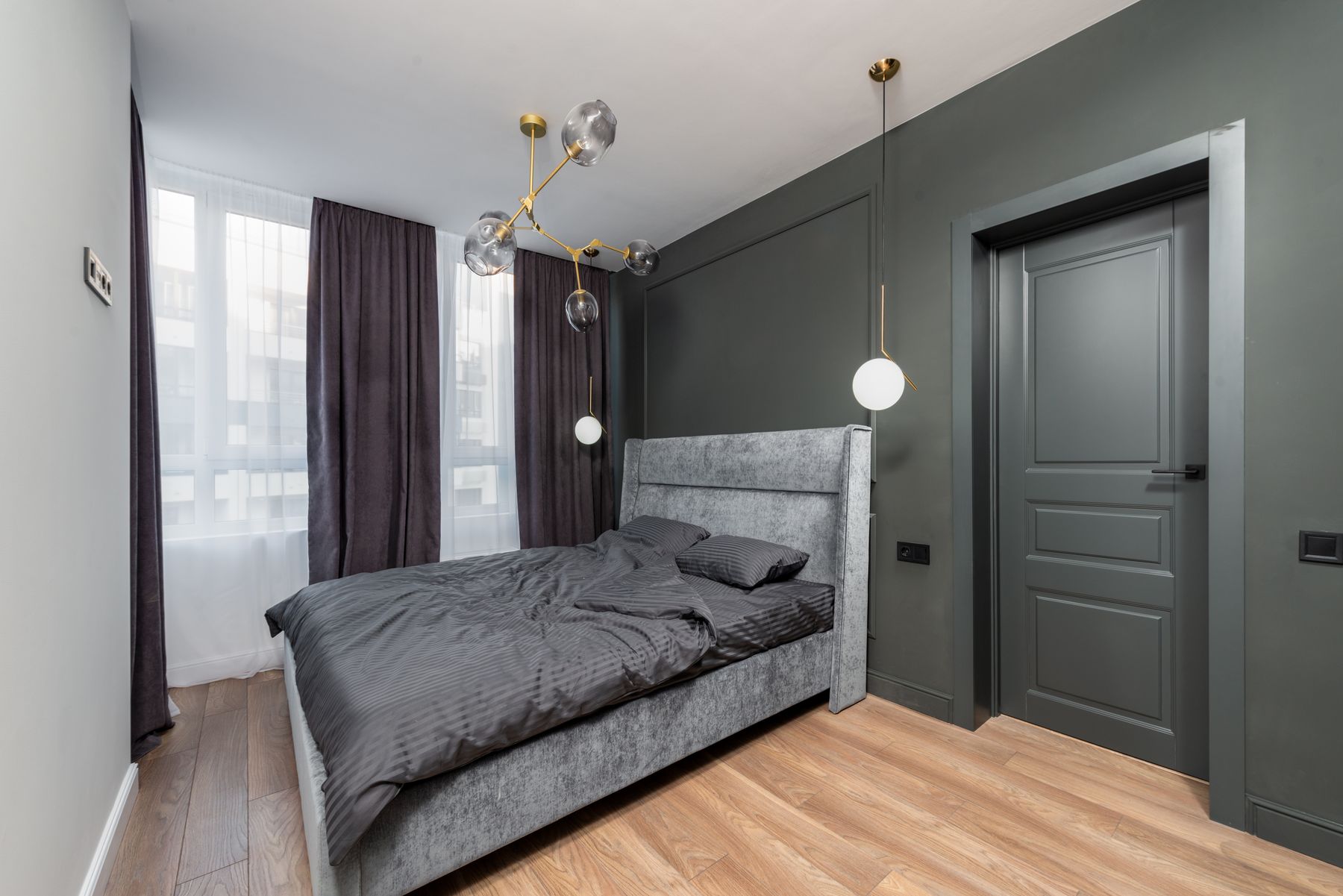
Charcoal carries enough grey to show form and texture more readily than true black, making it useful for large walls, upholstery and cabinetry. It still needs an undertone decision: mineral blue-charcoal, warm soot and green graphite behave differently. Do not call every nearly black surface charcoal to avoid committing to black. [Grey Bedroom Ideas](/bedroom/grey-bedroom-ideas/) is the better destination when the room spans silver through mid-grey; Dark Bedroom begins when low-value fields dominate the experience.
Warm the Palette With Deep Brown and Timber
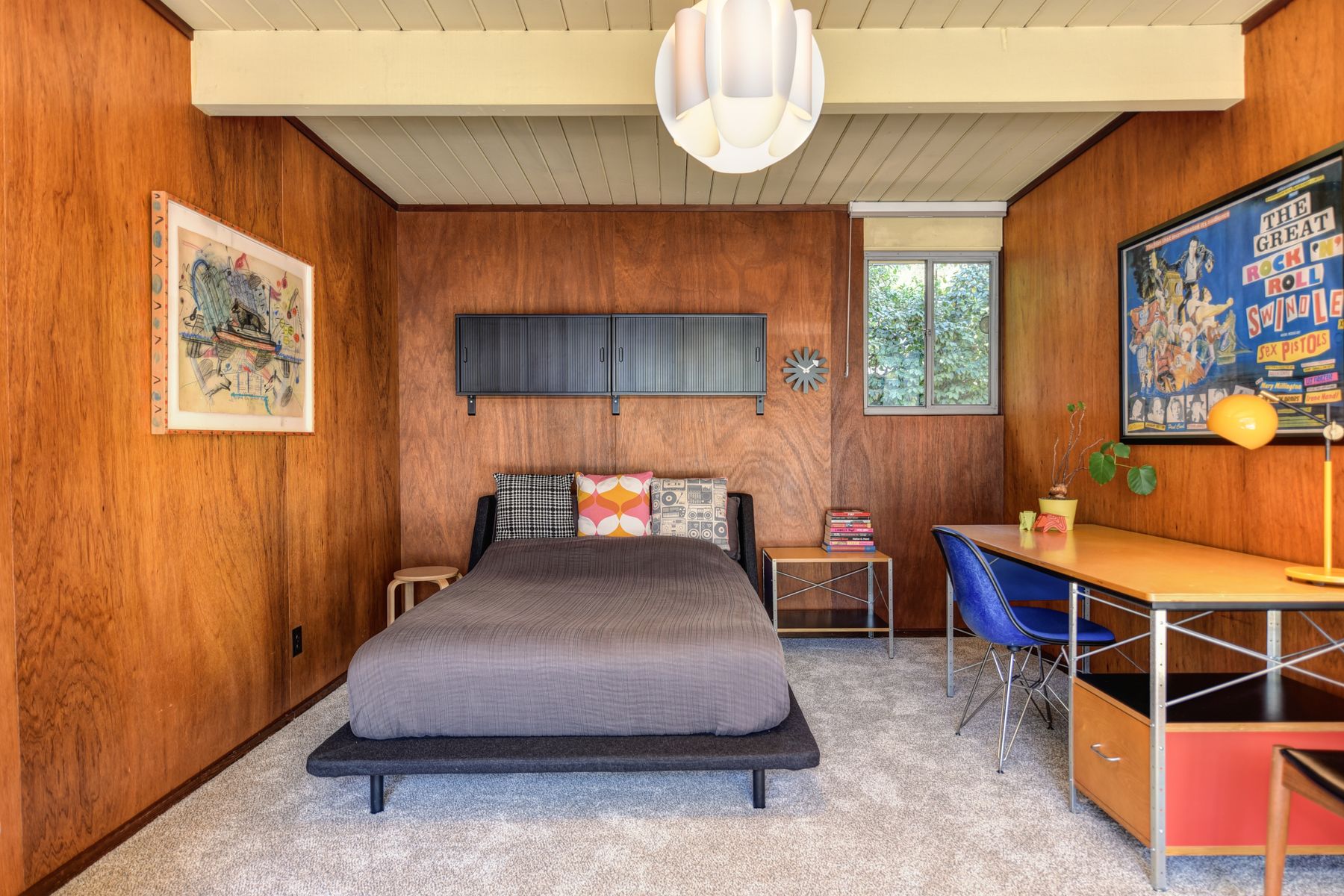
Chocolate, tobacco, espresso and deep timber can create a dark room without coolness. Real wood adds grain and variation; stained veneer and paint need samples because red, orange and grey undertones become stronger across large areas. Avoid combining many unrelated brown woods at the same visual weight. Let one material lead, use a second as a quiet bridge and preserve a pale or muted textile countershape. Ventilate new finishes fully before sleeping in the room and follow the product's curing guidance.
Try Aubergine, Burgundy or Oxblood Carefully
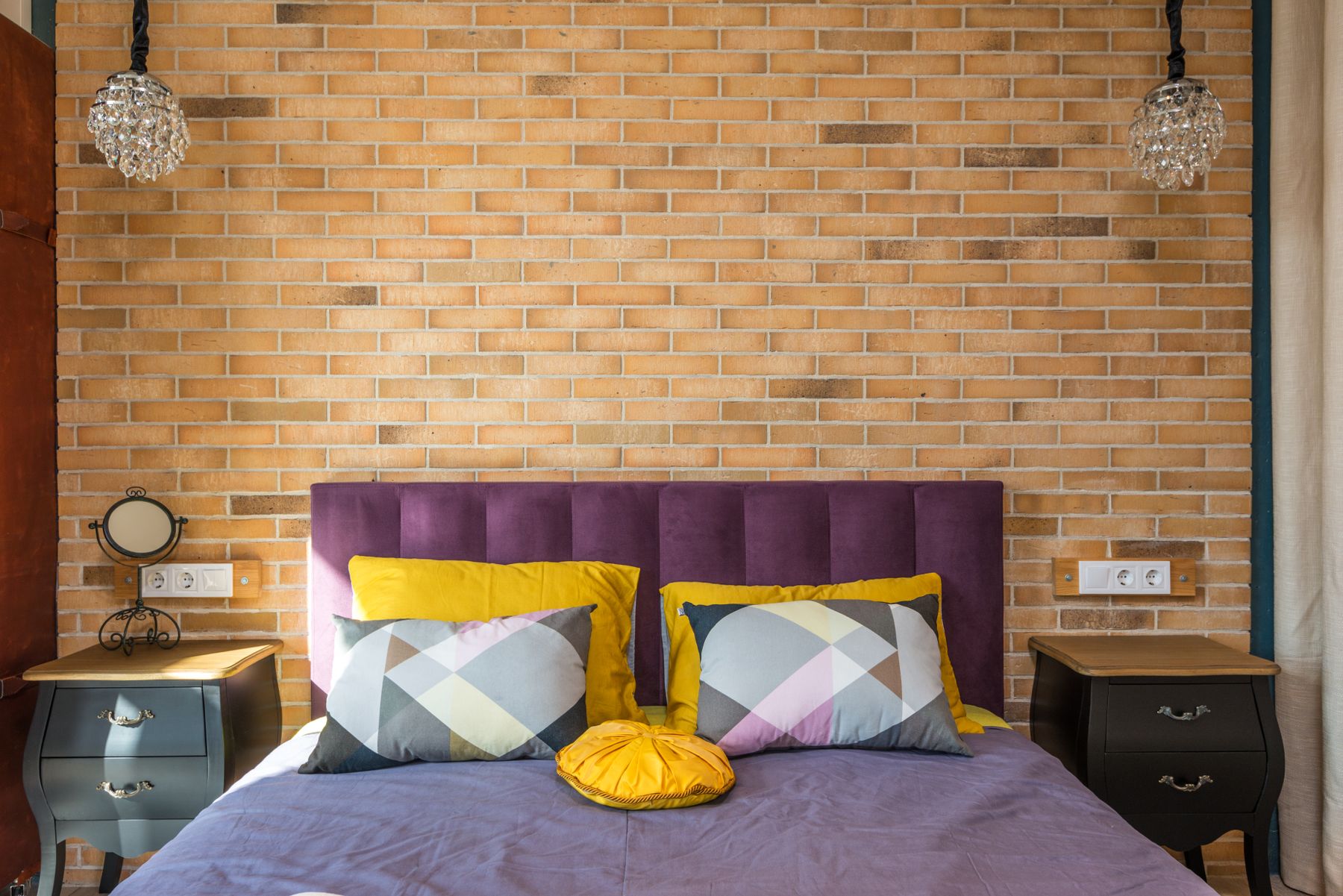
Aubergine and burgundy bring red-violet warmth to a dark bedroom, but they change quickly beside skin tones, timber and warm bulbs. Use broad matte samples and inspect them near the pillow, where reflected color matters most. Clay, muted rose, sand and dark wood can support these hues; clear red accents may make the result feel theatrical. If the paint reads brown by day and purple only under LEDs, decide whether that shift is desirable rather than treating it as a surprise.
Use Black as an Endpoint, Not the Default
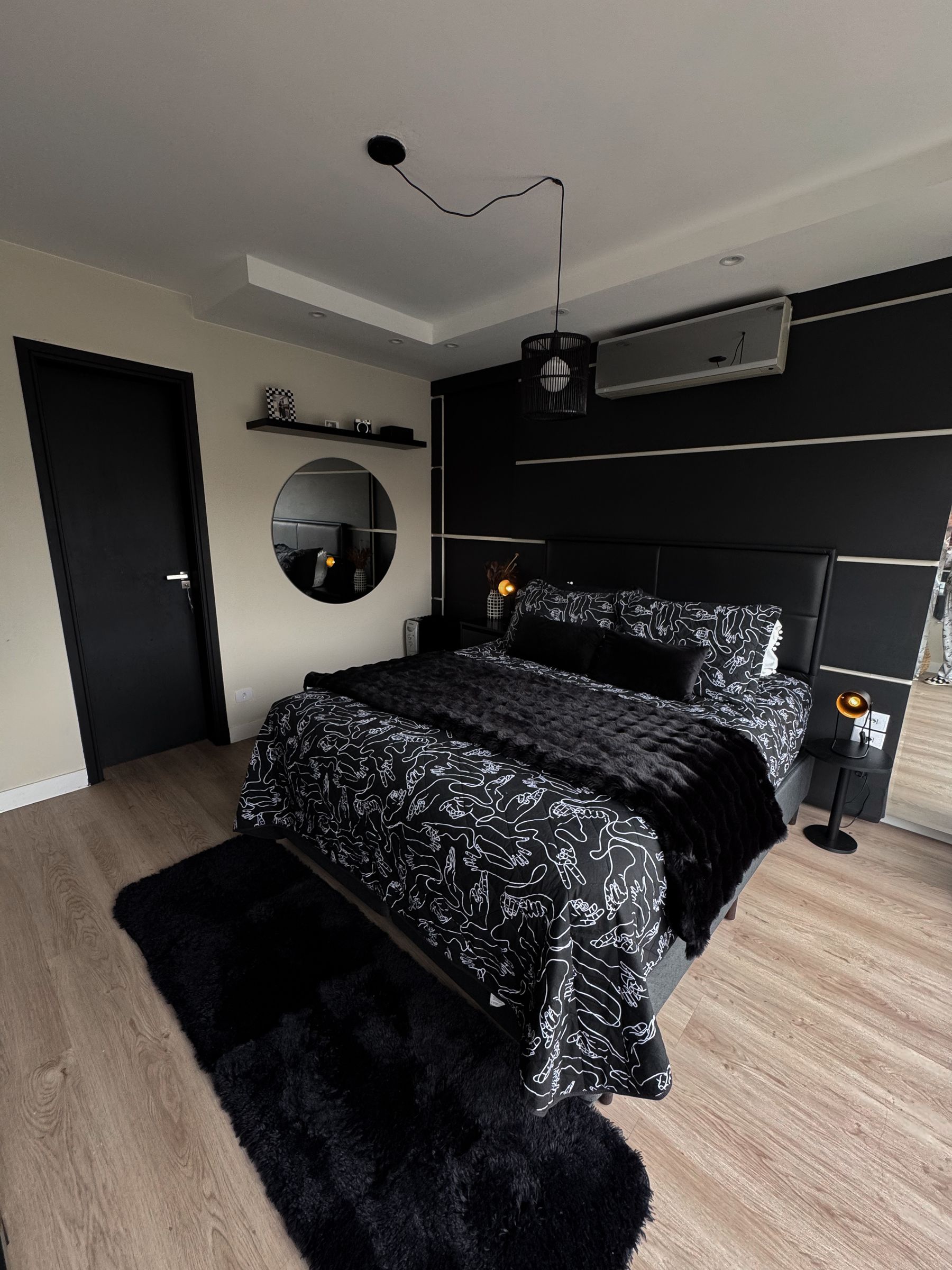
Black is one valid dark hue, but adding it automatically can erase the specific character of navy, green or brown. Use black where an edge, frame or grounded field benefits from maximum depth, then decide whether the room remains multi-hued or has become black-led. A pale bed does not disqualify a dark scheme; it may provide the most useful nighttime countershape. For black undertones, paneling, dust, lint and touch-up behavior, move to the dedicated Black Bedroom guide.
One Dark Plane or a Full Envelope?
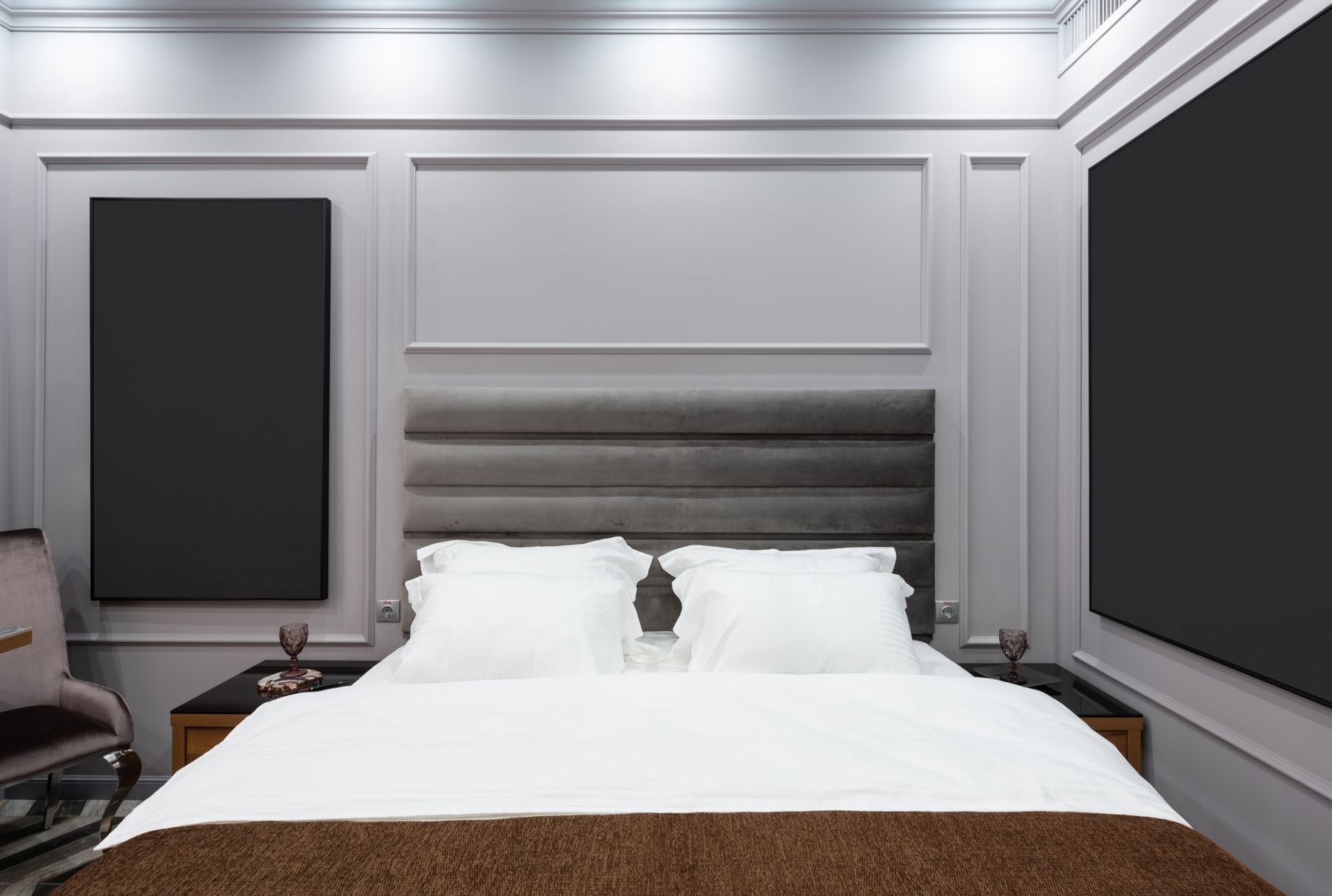
An accent wall can focus the bed when the wall has real architectural reason to lead. Painting only one plane from fear often leaves three unrelated pale boundaries. A full envelope lowers contrast at corners and can feel calmer, but it increases the need for task light, tactile separation and readable controls. Include doors, trim, radiators and built-ins in the decision. [Contemporary Bedroom Ideas](/bedroom/contemporary-bedroom-ideas/) shows how planes and joinery can guide color rather than treating paint as a decorative patch.
Resolve the Ceiling and Trim Together
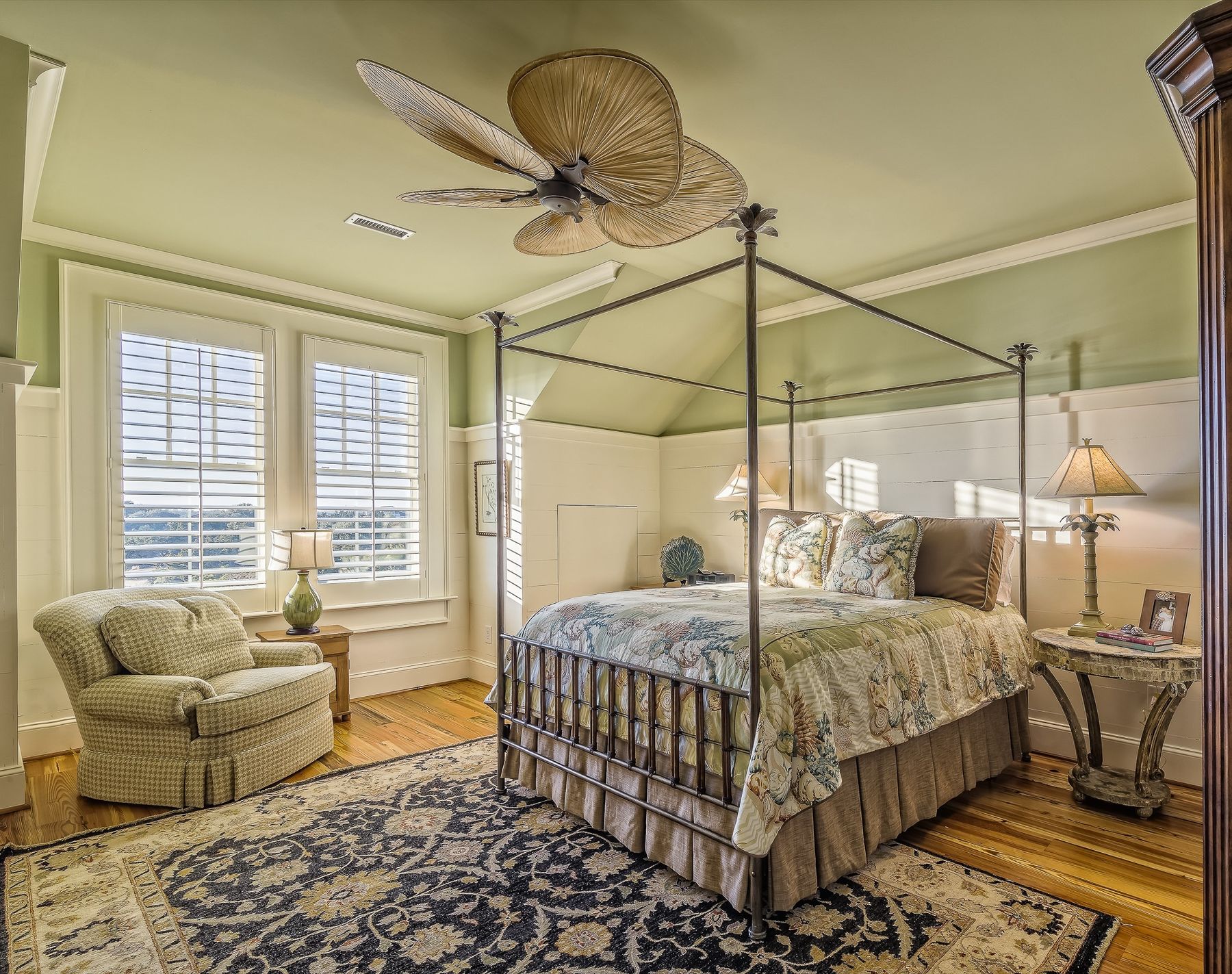
A white ceiling creates a strong cap; a related mid-tone softens it; carrying the wall color overhead creates an envelope. None is universally correct. Check ceiling height, cornice detail, smoke detectors, vents and how curtains meet the top plane. Trim can disappear into the wall or remain a useful edge, but high-gloss dark paint may cause distracting glare. Sample the complete corner junction, not separate wall and trim chips, because the relationship becomes the design.

The Bed as a Readable Dark Anchor
A dark upholstered bed or headboard can carry the room when walls stay lighter, or merge quietly into a full envelope. Test fabric vertically because velvet nap, linen weave and leather sheen change color with direction. Confirm head support, cleaning, abrasion, outlet access and side clearance before choosing by appearance. If bed and wall are close in value, separate them through texture, a slim timber edge or controlled backlight rather than adding a random bright outline.
Layer Bedding in Three Useful Values
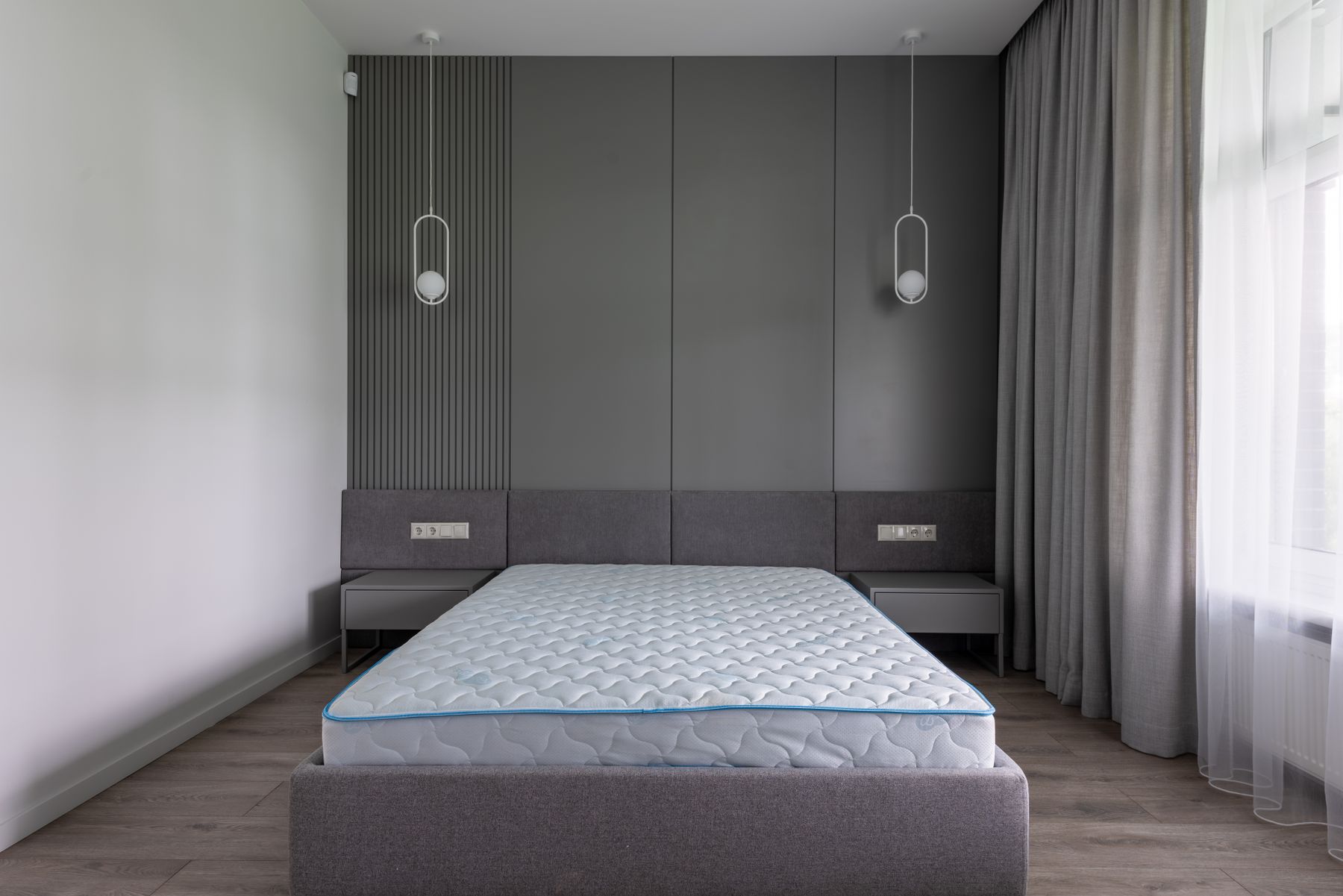
Dark bedding can feel deeply restful, but an exact matched set often becomes one flat mass and shows lint unevenly. Use at least three functional values across sheet, duvet and throw, then vary weave or sheen. Choose for sleep temperature, washing and skin comfort before palette. Pale pillows can help locate the sleep surface; tonal charcoal, navy or brown can keep the room enclosed. The bed should still look coherent when simply made, without a large stack of decorative cushions.
Texture Replaces Decorative Clutter
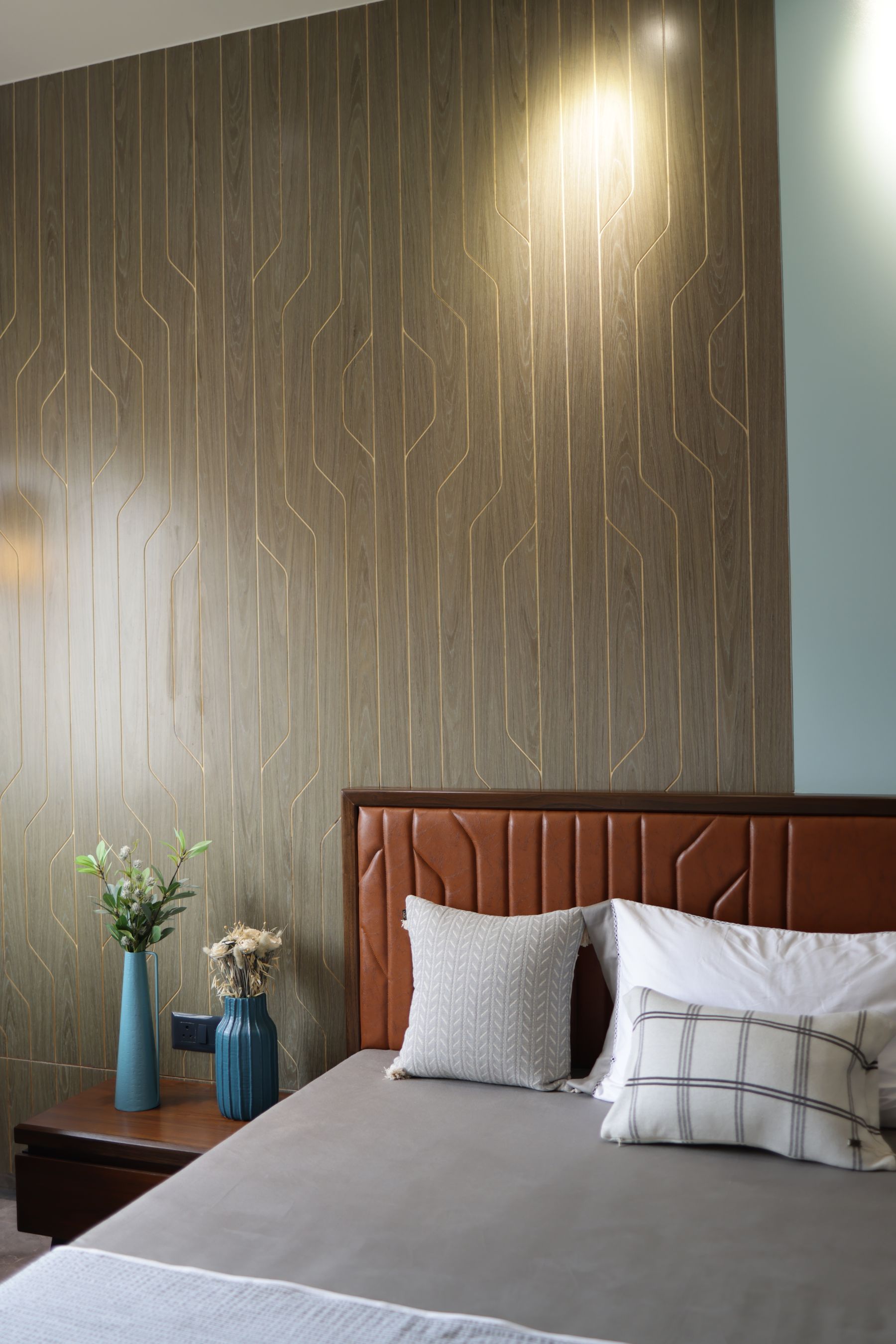
Low-value rooms need texture because color differences compress in dim light. Combine a few purposeful surfaces—matte paint, woven linen, timber grain, wool, plaster or ribbed glass—rather than collecting many tactile objects. Gloss should be strategic: metal and glass can return light, but polished dark cabinetry may show every fingerprint and lamp reflection. Evaluate samples by touch, side light and cleaning method. Texture succeeds when it clarifies planes and comfort, not when it becomes another decorative theme.
Build Night Lighting in Local Layers
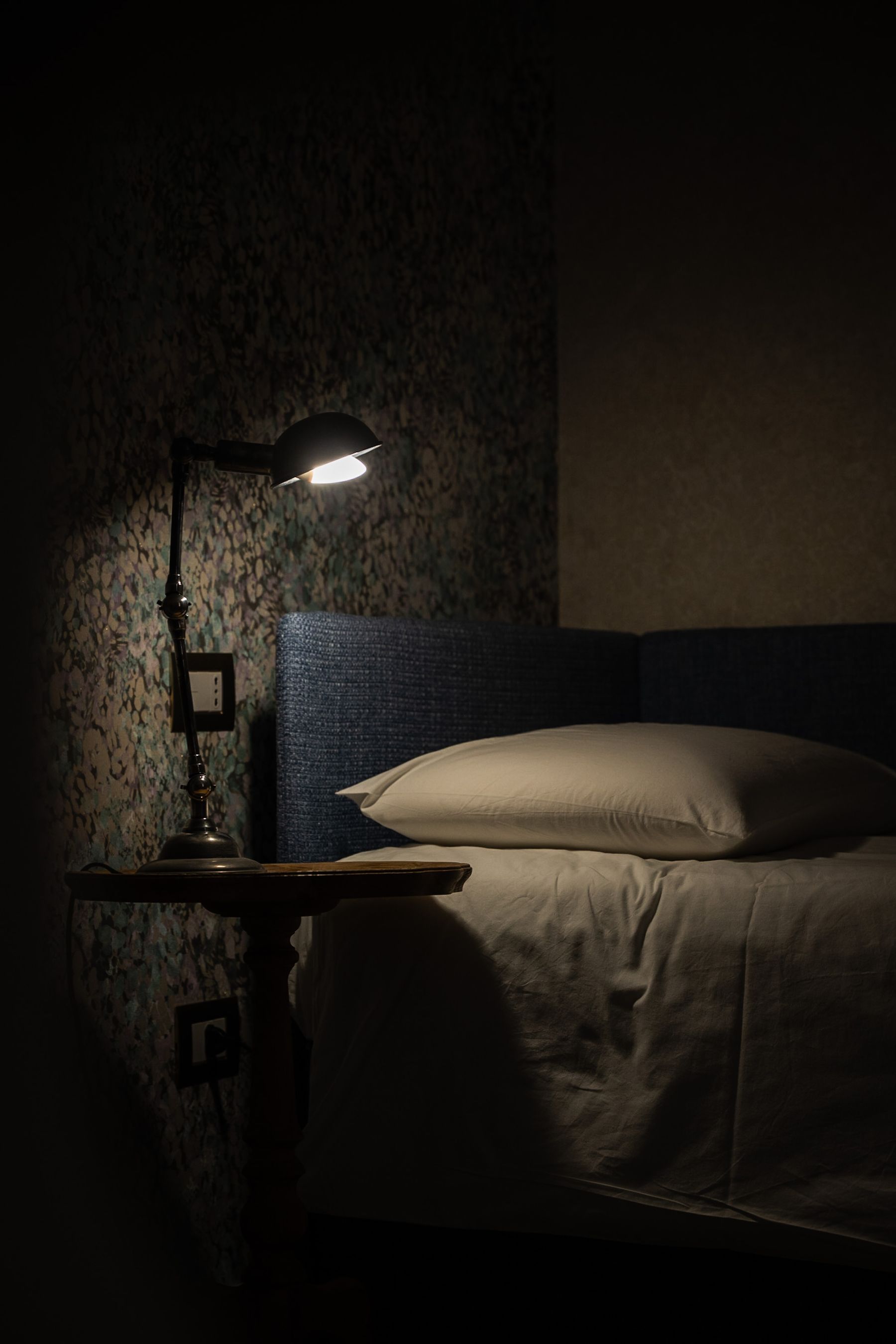
A central ceiling light rarely solves a dark room; it often creates glare and leaves corners unreadable. Plan ambient light for entry, shielded bedside light for reading, task light at dressing or work surfaces and low-level guidance for nighttime movement. Use dimmers where compatible, keep controls reachable and test beam spread before fixing positions. Good color rendering matters because deep green, navy and brown can collapse into the same near-black under poor lamps. [Living Room Lighting Ideas](/living-room/living-room-lighting-ideas/) offers transferable layering principles.
Control Daylight Without Losing Orientation
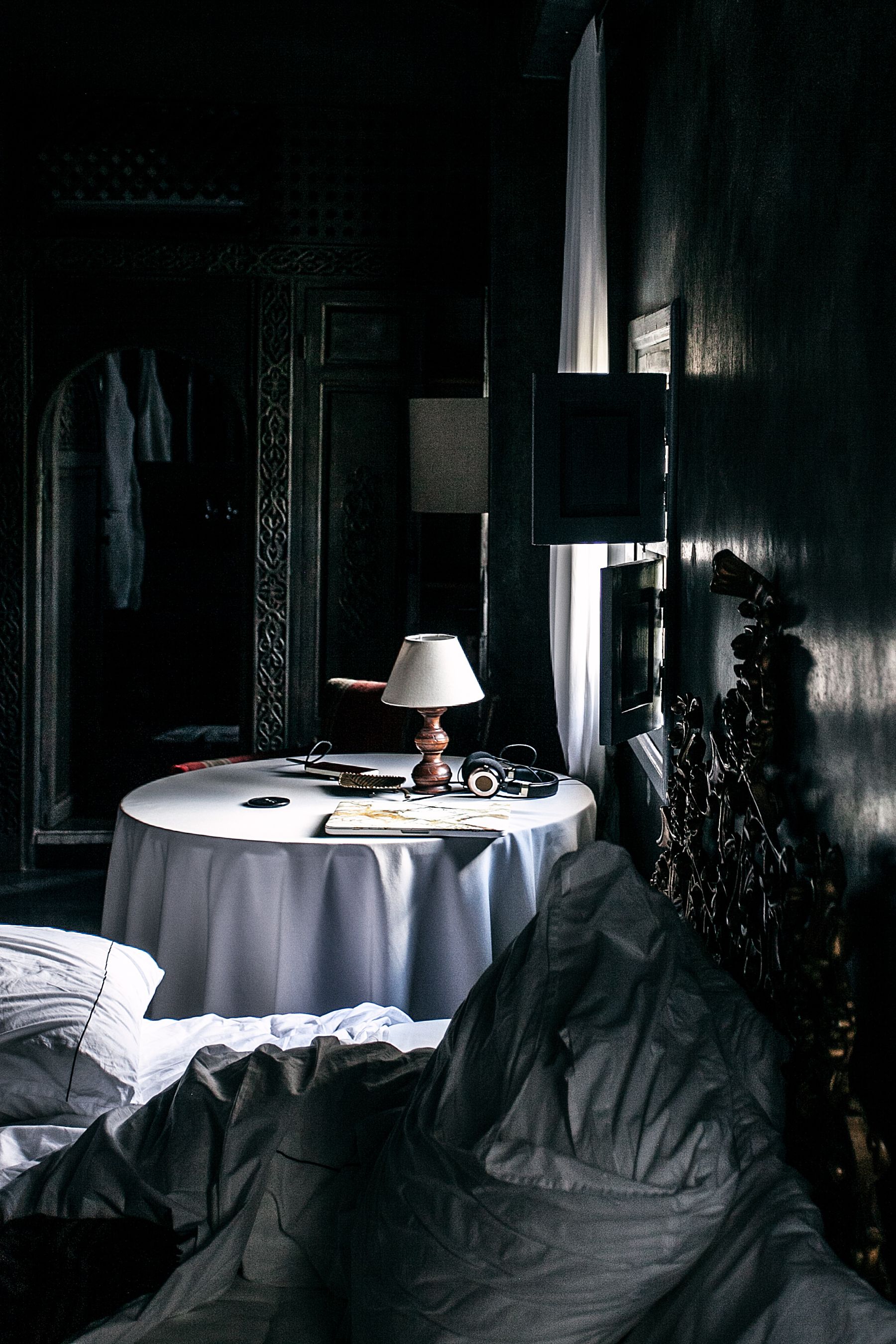
Dark walls can frame daylight beautifully, but a camera may overexpose the window and lift the room, hiding how it behaves in person. Use blinds or layered curtains to control glare and privacy while preserving a useful daytime view. Avoid blocking ventilation or radiators with heavy fabric. If sleep blackout is needed, provide it separately from daytime filtering so the room is not forced into darkness all day. Check how direct sun fades paint, timber and textiles over a season.
Curtain Mass, Stack and Blackout
Dark curtains can extend the envelope, but their folded mass may absorb a surprising amount of window light even when open. Measure stack-back, radiator clearance, sill depth and air movement before selecting color. A blackout lining changes weight and drape; a separate sheer or blind can make daytime privacy more flexible. Match undertone to the walls without chasing an exact dye lot. If fabric and paint are close in value, let weave and fullness distinguish them.

Flooring and Rugs Hold the Value Structure
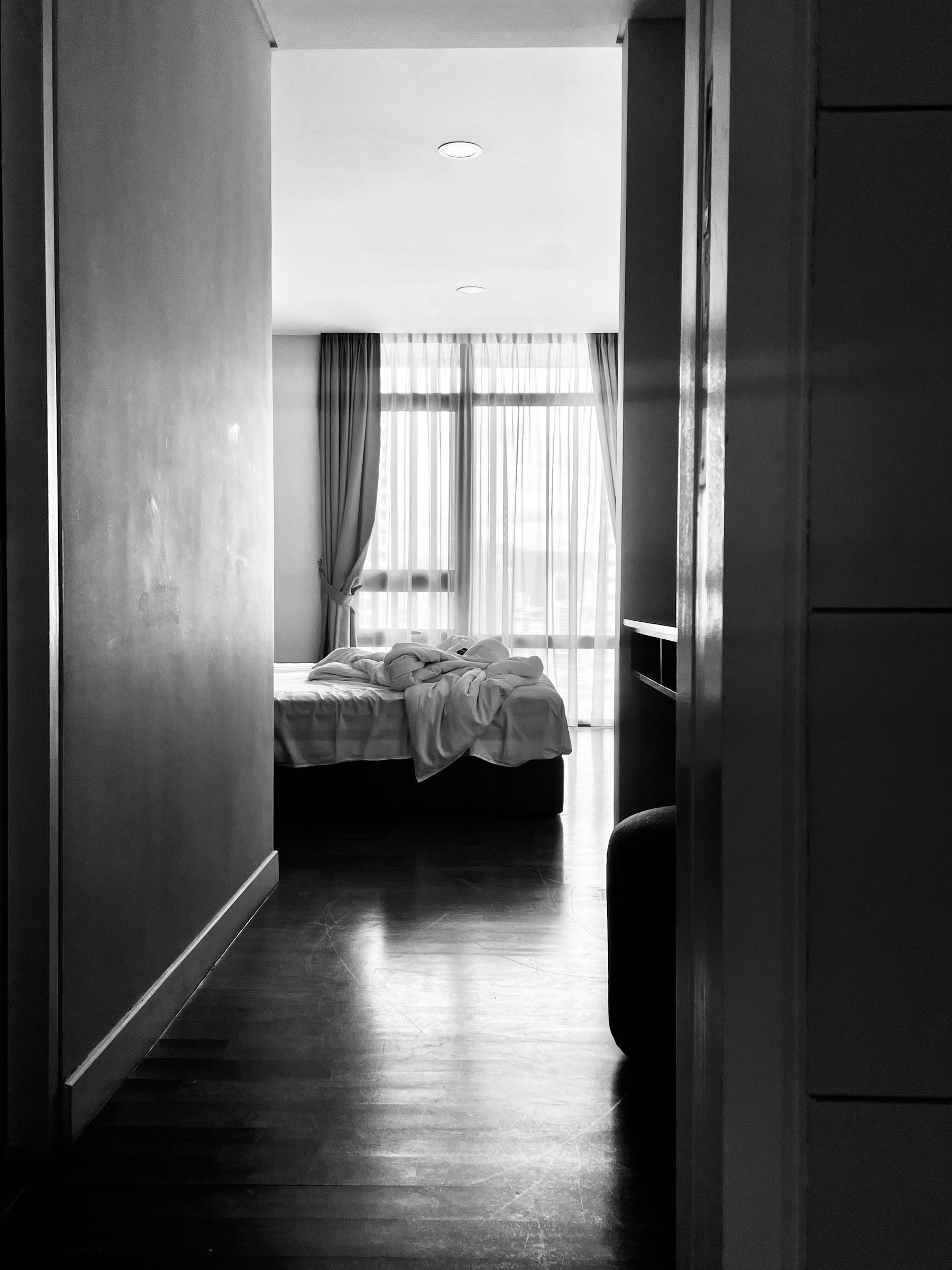
The floor may be the room's largest fixed countershape. Pale carpet can reveal every dark lint fiber; very dark carpet can erase dropped objects and bed edges; warm timber can keep navy or charcoal from feeling cold. Choose a rug by bed clearance, door swing, pile, cleaning and grip before pattern. It should create a stable landing zone, not a trip edge. Repeat one wall or bedding tone lightly in the rug so the floor participates without becoming a matching set.
Integrate Storage Instead of Creating Dark Blocks
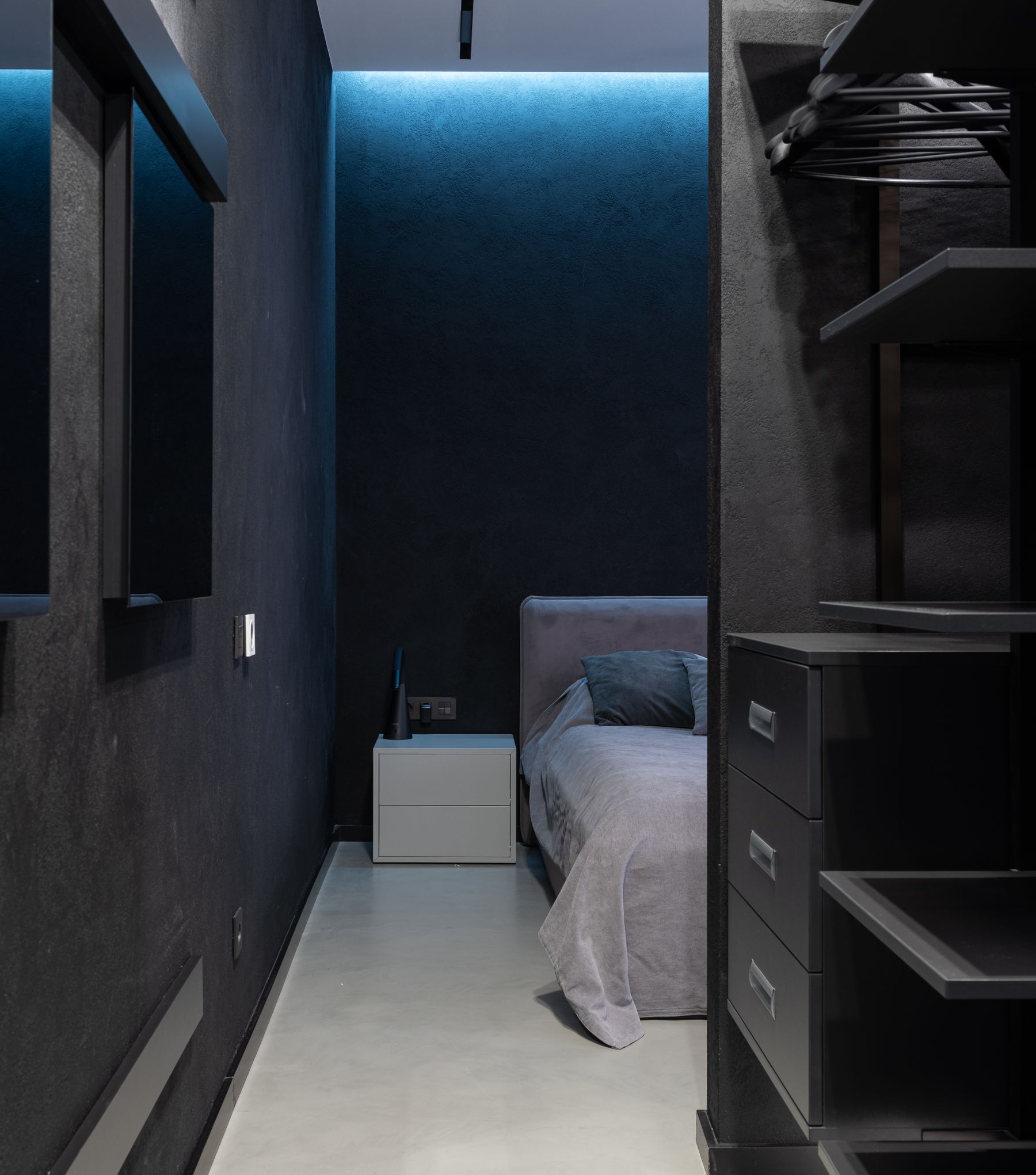
Large dark wardrobes can calm a wall or become an unreadable slab. Align doors with architecture, keep handle contrast and finger-clearance practical, and light deep interiors independently. Open sections should serve charging, books or daily clothing rather than become decorative clutter traps. Matte finishes hide glare but may burnish at touch points; gloss shows fingerprints. [Modular Bedroom Ideas](/bedroom/modular-bedroom-ideas/) is useful when storage must also adapt, move or combine with a desk.
Mirrors as View Tools, Not Brightness Myths
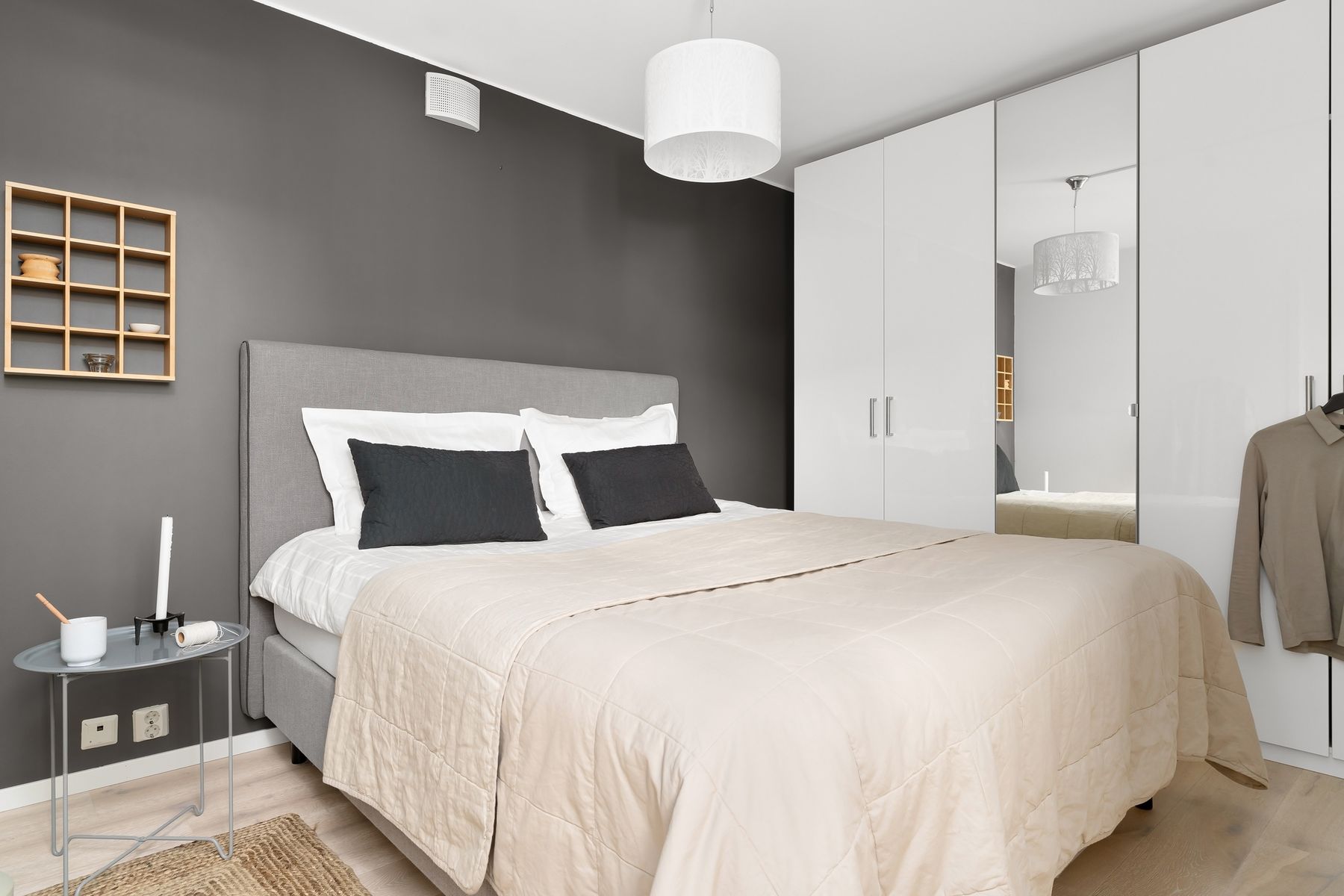
A mirror can extend a sightline and return window or lamp light, but it also duplicates clutter, glare and an unmade bed. Position it for dressing height, safe circulation and a useful reflected view. Large mirrored wardrobes need careful cleaning and can be visually active at night. In a dark room, a smaller framed mirror may provide enough function without breaking the envelope. Avoid placing a bright lamp where its reflection is visible directly from the pillow.
Art and Pattern Without a Style Detour
Art and pattern can add scale and personal meaning, but dark color does not automatically imply Gothic or Dark Academia. Bookshelves, antique study furniture, historical motifs and scholarly objects form a specific style language explored in [Dark Academia Bedroom Ideas](/bedroom/dark-academia-bedroom-ideas/). A Dark Bedroom can remain minimal, contemporary, rustic or classic. Choose one pattern scale related to the bed, limit competing frames and keep culturally or historically specific objects accurate rather than using them as vague atmosphere.
In a Small Dark Bedroom, Precision Matters
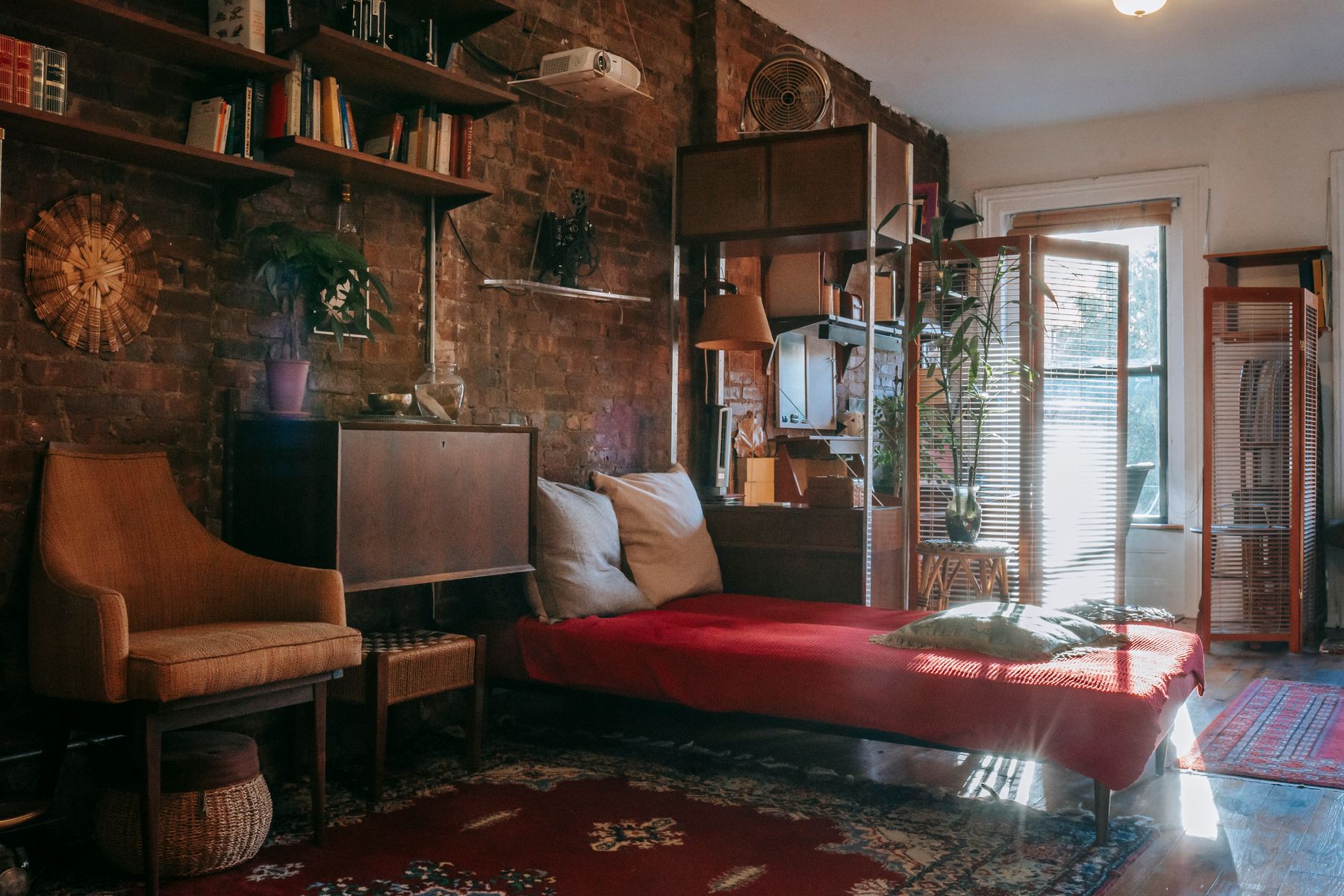
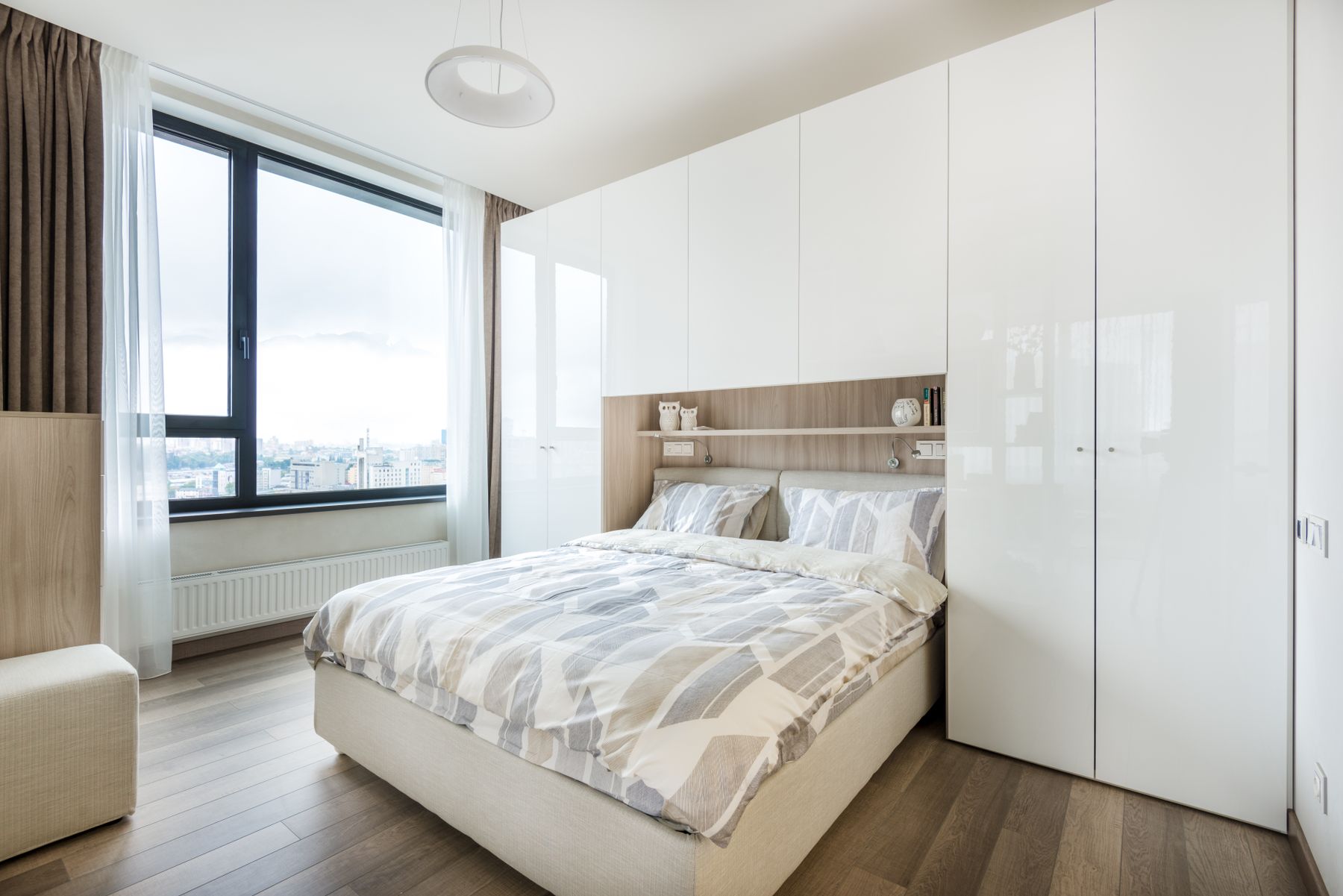
A small bedroom can handle deep color when circulation, storage and light are resolved first. Reduce visual fragmentation by carrying one dark field across awkward returns, then preserve a clear bed edge and door route. Wall-mounted lamps and shallow storage may recover more function than a lighter paint color. [Small Bedroom Ideas](/bedroom/small-bedroom-ideas/) covers clearance and storage in depth; the dark scheme should support that plan rather than become an excuse to ignore measurement.
Zone a Large Dark Bedroom With Light
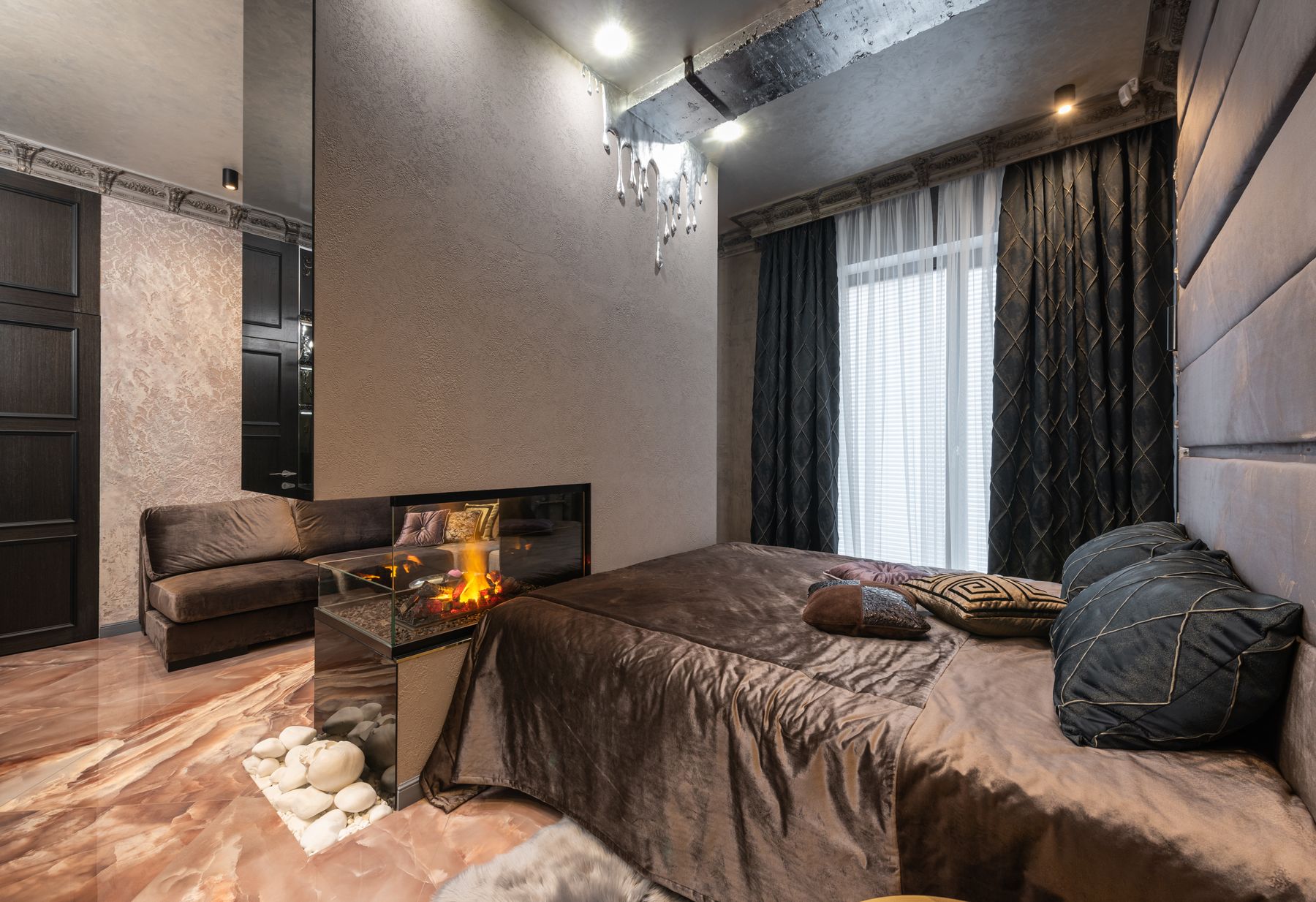
In a large room, painting every surface the same deep color can flatten distance. Give the bed, seating, dressing and circulation distinct light scenes, then connect them through related values or one repeated material. A broad rug or ceiling treatment can define zones without adding walls. [Large Bedroom Ideas](/bedroom/large-bedroom-ideas/) develops proportion and furniture grouping; dark color should strengthen those centers while allowing some planes to recede quietly.
The Closable Dark Bedroom Workspace
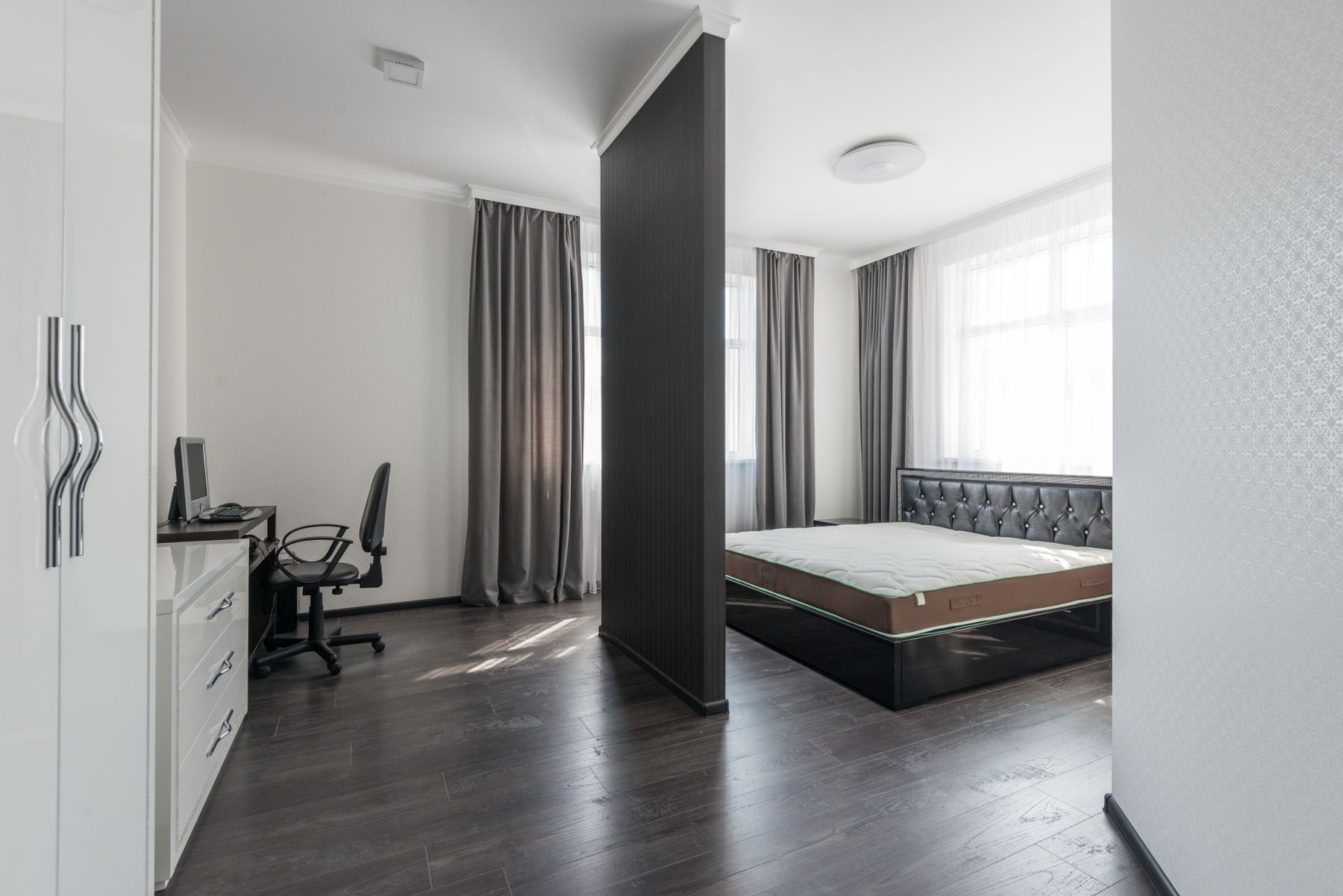
A desk in a dark bedroom needs more than a dramatic lamp. Provide enough surface depth, glare control, high-quality task light, cable management and closed storage for work to disappear at night. A deep wall color can reduce peripheral distraction, but it can also lower document contrast and make video calls uneven. Keep work and bedside circuits separate. If the setup cannot be physically closed, establish a two-minute shutdown routine so unfinished tasks do not dominate the sleep view.
A Reversible Dark Scheme for Rentals
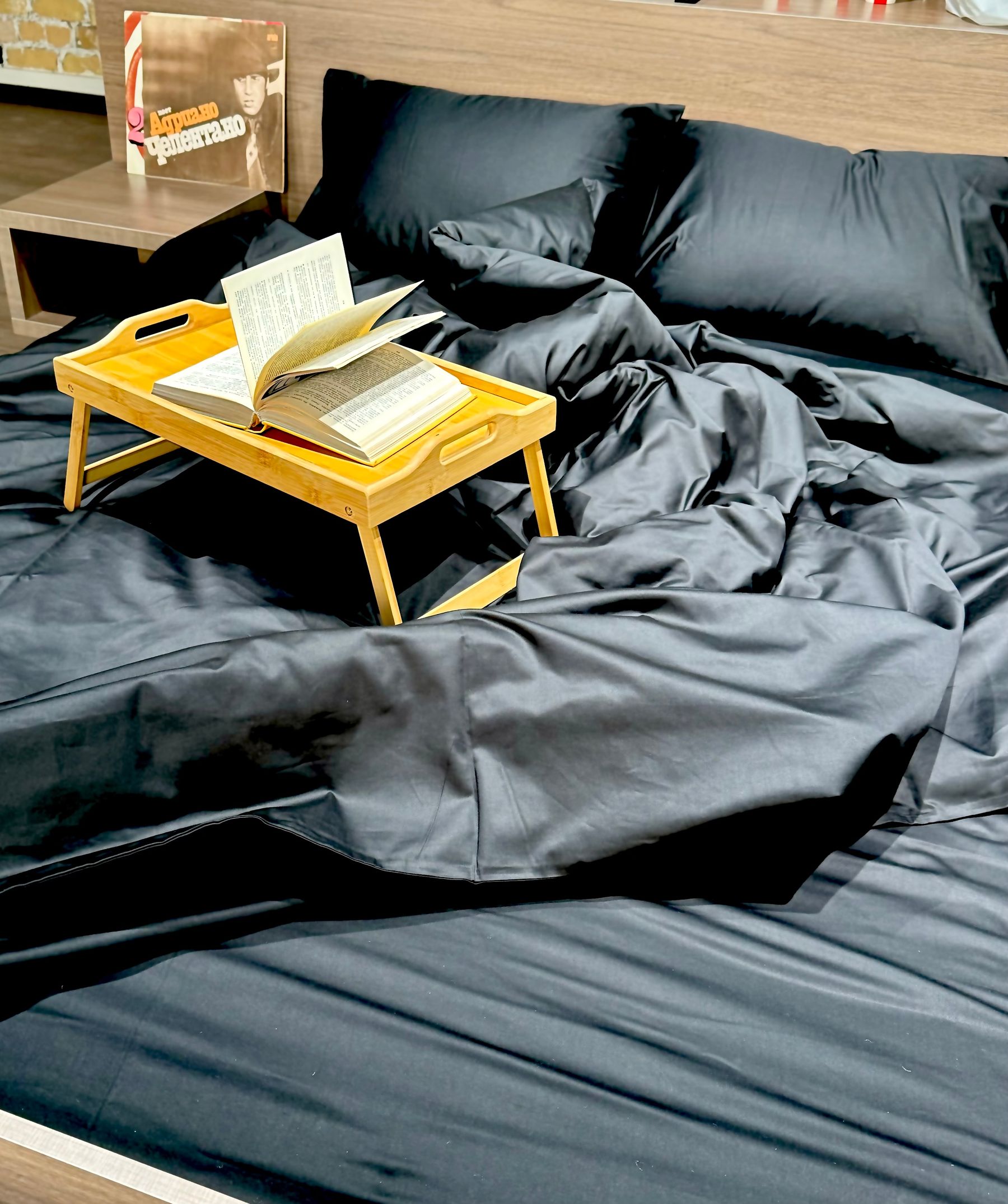
In a rental, begin with the largest reversible field: duvet, curtains, rug, freestanding headboard or removable screen. Obtain written permission before painting, drilling or changing fixtures, and store original hardware. Do not cover damp or damaged walls with panels or peel-and-stick material. One broad dark textile usually reads more intentional than many black accessories. Choose washable, fade-resistant fabrics and plan where bulky dark layers will be stored if the scheme changes seasonally.

Protect Accessibility and Nighttime Legibility
Cocooning should not mean ambiguous. Keep bed edges, handles, switches, steps, bathroom routes and emergency items visible at minimum normal light. Use value contrast where information matters and tactile differences where colors are close. Controls should be reachable from bed, and low-level light should avoid glare into the sleeper's eyes. A blurred grayscale photograph can reveal disappearing boundaries. Accessibility does not require a pale bedroom; it requires predictable routes and deliberately placed contrast.
Maintain Dark Surfaces Without Constant Restyling
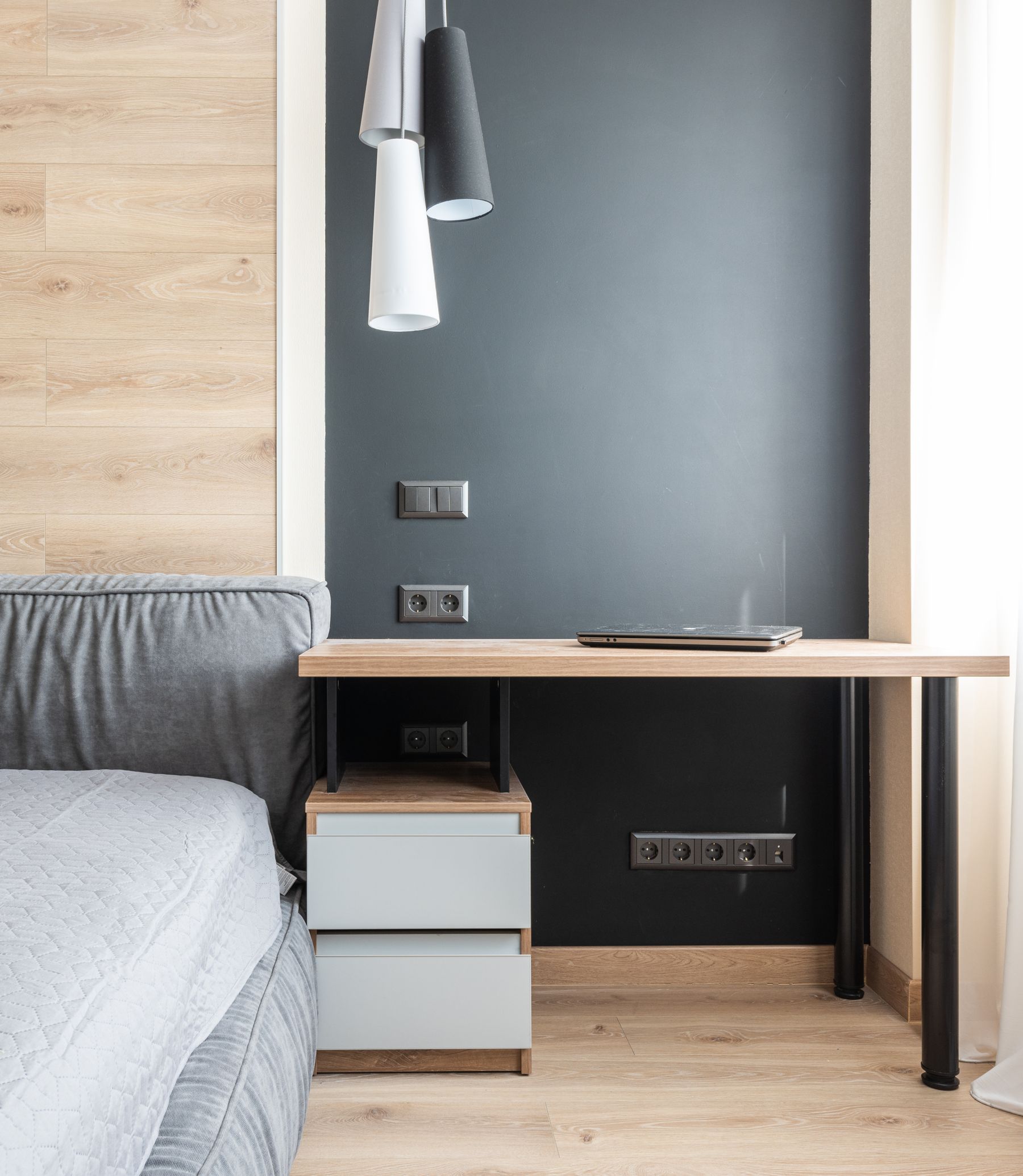
Dark matte paint can show pale dust, filler, scuffs and burnished cleaning marks; glossy cabinetry records fingerprints; black textiles reveal lint. Ask for cleaning guidance, test a discreet patch and record paint brand, color, base, finish and batch. Use washable finishes at handles and desk edges, removable covers on daily upholstery and a lint strategy appropriate to pets and fabrics. A durable room should look convincing between normal cleaning cycles, not only immediately after styling.
Finish With a Full Day-and-Night Audit
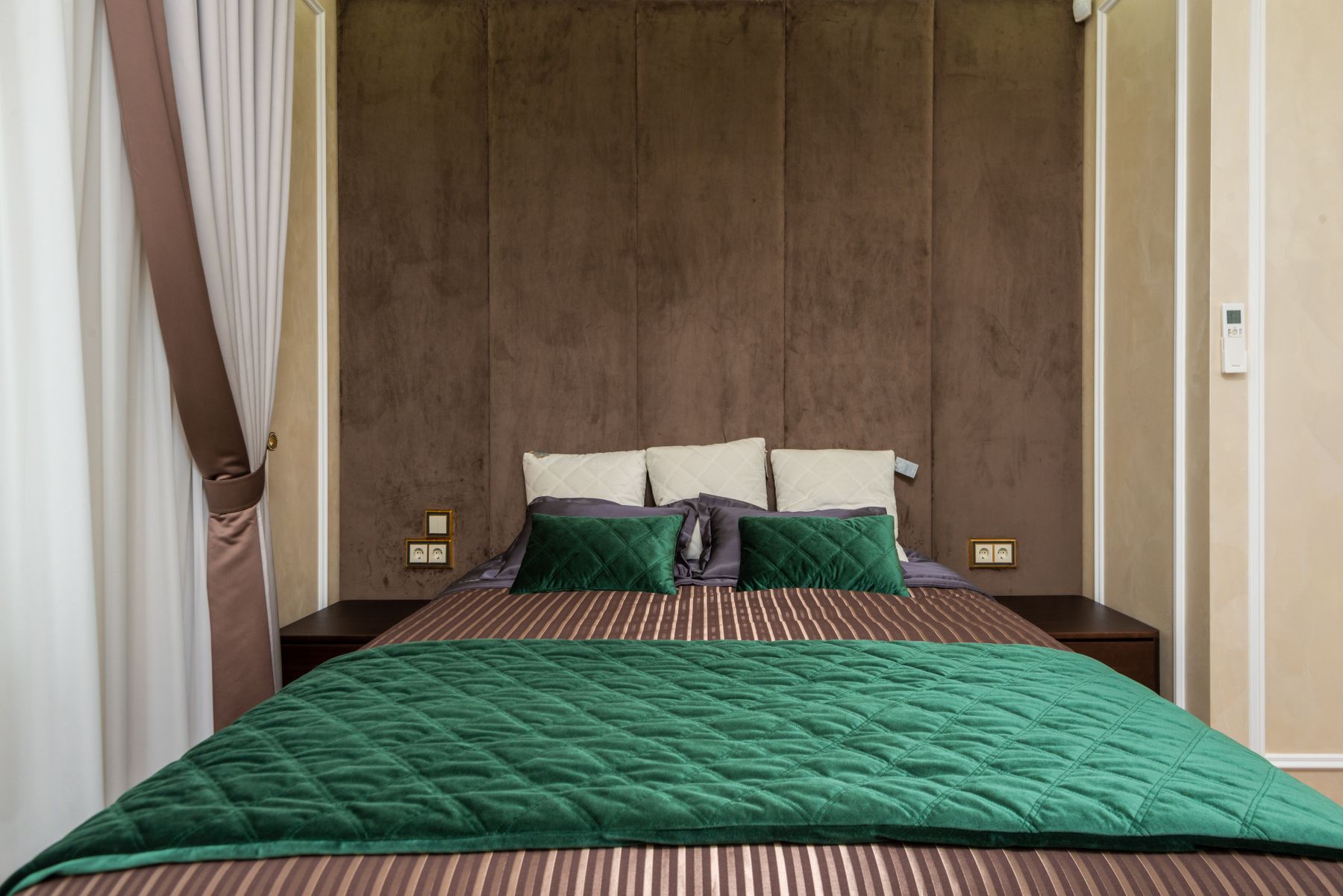
Use the room at waking time, midday, dusk, reading time and full blackout before declaring it finished. Check undertone shifts, glare, curtain transmission, ventilation, temperature, storage visibility and the path to the door. Remove the decorative object doing the least work and repeat the test. A dark bedroom should not depend on one camera exposure, perfect evening light or freshly arranged bedding; it must remain comfortable, legible and recognizably intentional through ordinary seasons and routines.