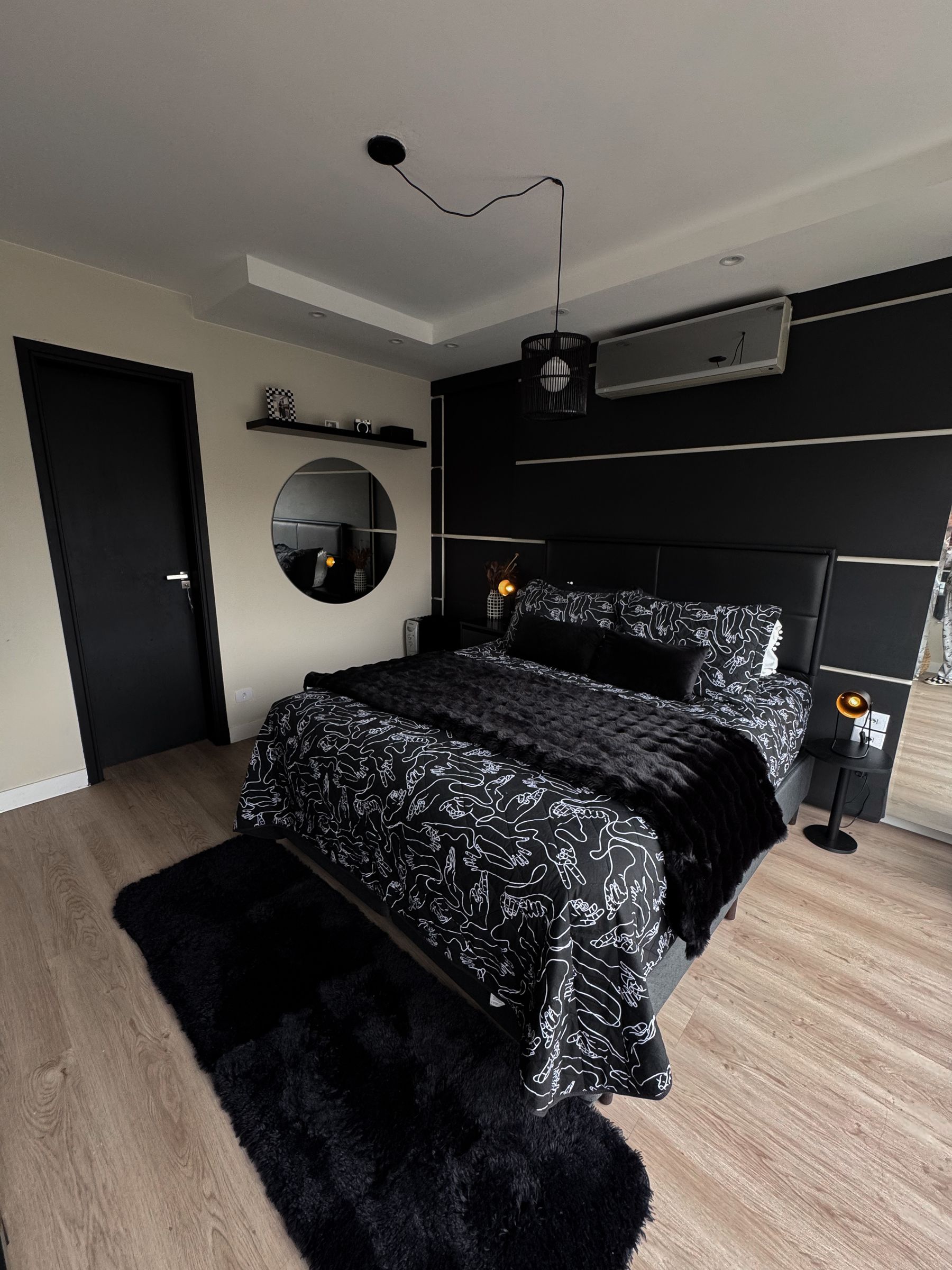
Define Black-Led Before You Decorate
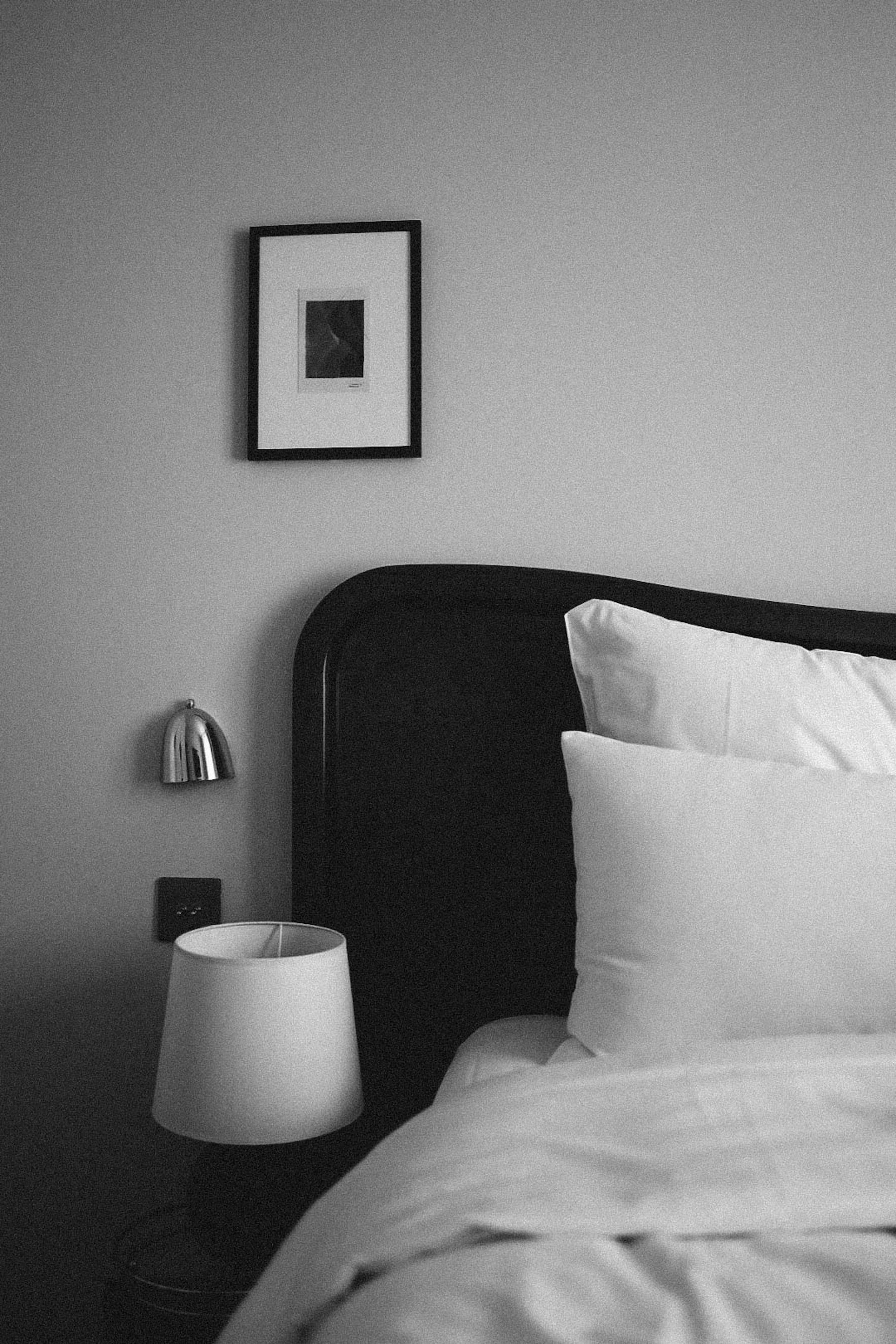
Set the page's distinction in the room itself. A Black Bedroom uses black or near-black as the dominant wall, ceiling, bed, cabinetry or textile field. A [Black and White Bedroom](/bedroom/black-and-white-bedroom-ideas/) deliberately balances two high-contrast endpoints, while a broader Dark Bedroom may be led by navy, green, brown or charcoal. Choose the main black plane first and let the other dark pieces support it. When every lamp, frame and cushion is added simply because it is black, the scheme becomes a shopping theme rather than a coherent room.
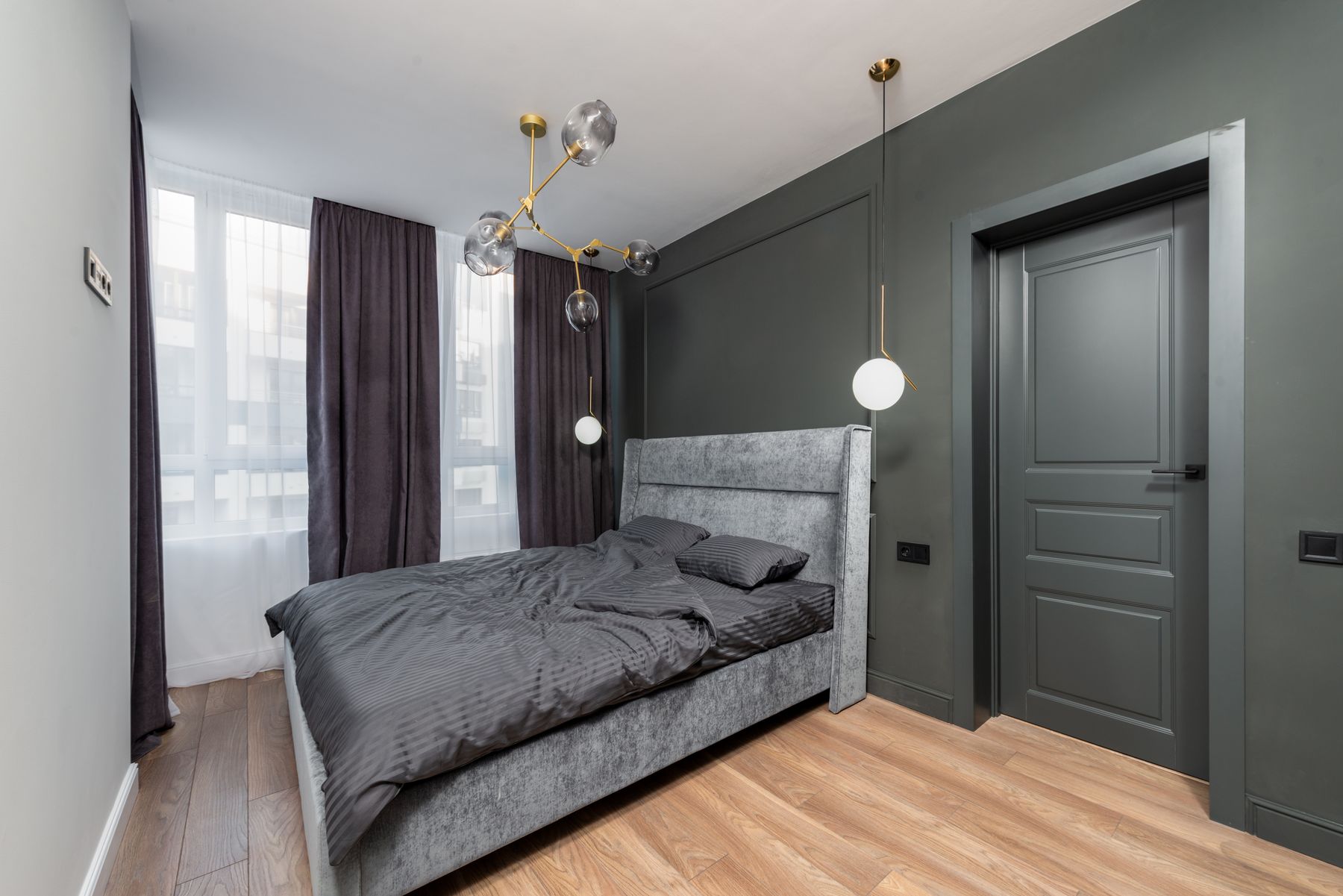
Test Undertones in the Actual Light
Blacks can lean blue, green, brown or violet; their character changes beside timber, carpet and artificial light. Paint broad movable boards with the exact primer and finish, then place them behind the bed, beside the floor and in the darkest corner. Review them at dawn, midday, dusk and under every lamp. A warm black can settle beside walnut, while a cooler ink black may suit concrete or blue-gray fabric. Do not rely on a phone image or one small sample, because automatic exposure lifts shadows and hides undertone conflict.
Choose One Wall or the Full Envelope
An accent wall is useful when it anchors the bed, disguises an awkward recess or protects daylight on the remaining planes. A full envelope can make uneven walls and a low ceiling feel continuous, but it needs stronger planning for window reveals, doors, trim and lighting. Stop halfway only when the transition follows real architecture. Black behind the headboard is not automatically safer than color drenching; a lone dark rectangle can feel flatter and more abrupt than a continuous, carefully lit room. Mock both options in broad photographs before painting.


Color-Drench Trim and Ceiling Deliberately
Painting walls, skirting, doors and ceiling in one black family can erase small interruptions and make the room more cocooning. It also removes familiar white edges that help orientation. Vary sheen for service rather than decoration: durable eggshell on doors and trim, flatter paint on broad walls and a ceiling finish suited to the substrate. Keep hardware, handles, steps and switches perceptible. In rooms with low ceilings, continuity may feel calmer than a bright cap; in rooms with weak light and complex circulation, preserving selected lighter edges may be safer.
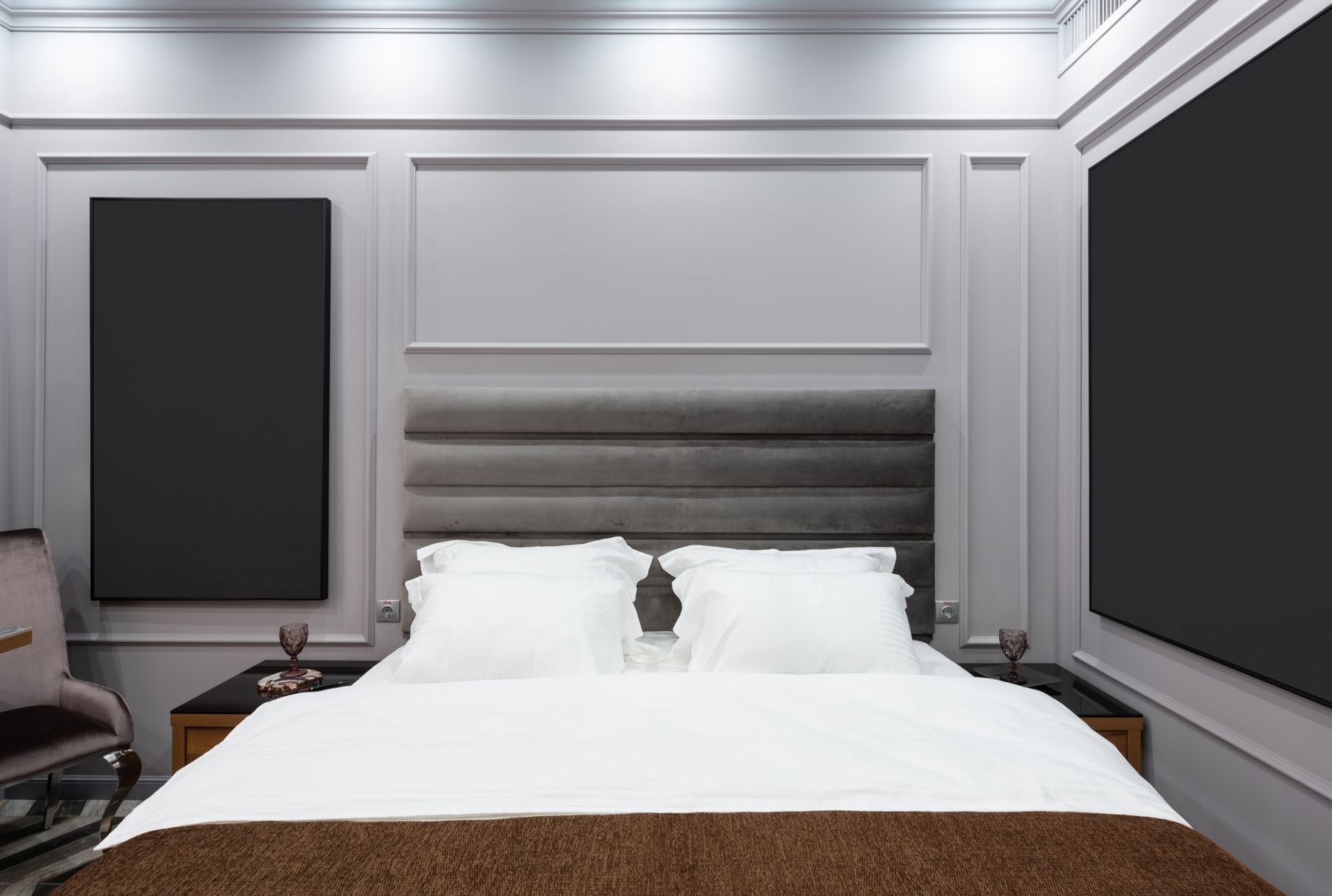
Give Black Walls a Material Surface
Black plaster, stained timber, panel molding, limewash or textile can reveal depth through grain and shadow. Choose one surface language and draw the full elevation around sockets, headboard and corners. Decorative slats are not automatically acoustic and deep grooves collect dust; upholstered walls require safe construction and a plan for cleaning. Diagnose damp or a cold external wall before cladding it. [Contemporary Bedroom Ideas](/bedroom/contemporary-bedroom-ideas/) offers a wider material framework; in a black room, side light and repairability decide whether texture remains convincing.

Use Black Timber Without Losing Its Grain
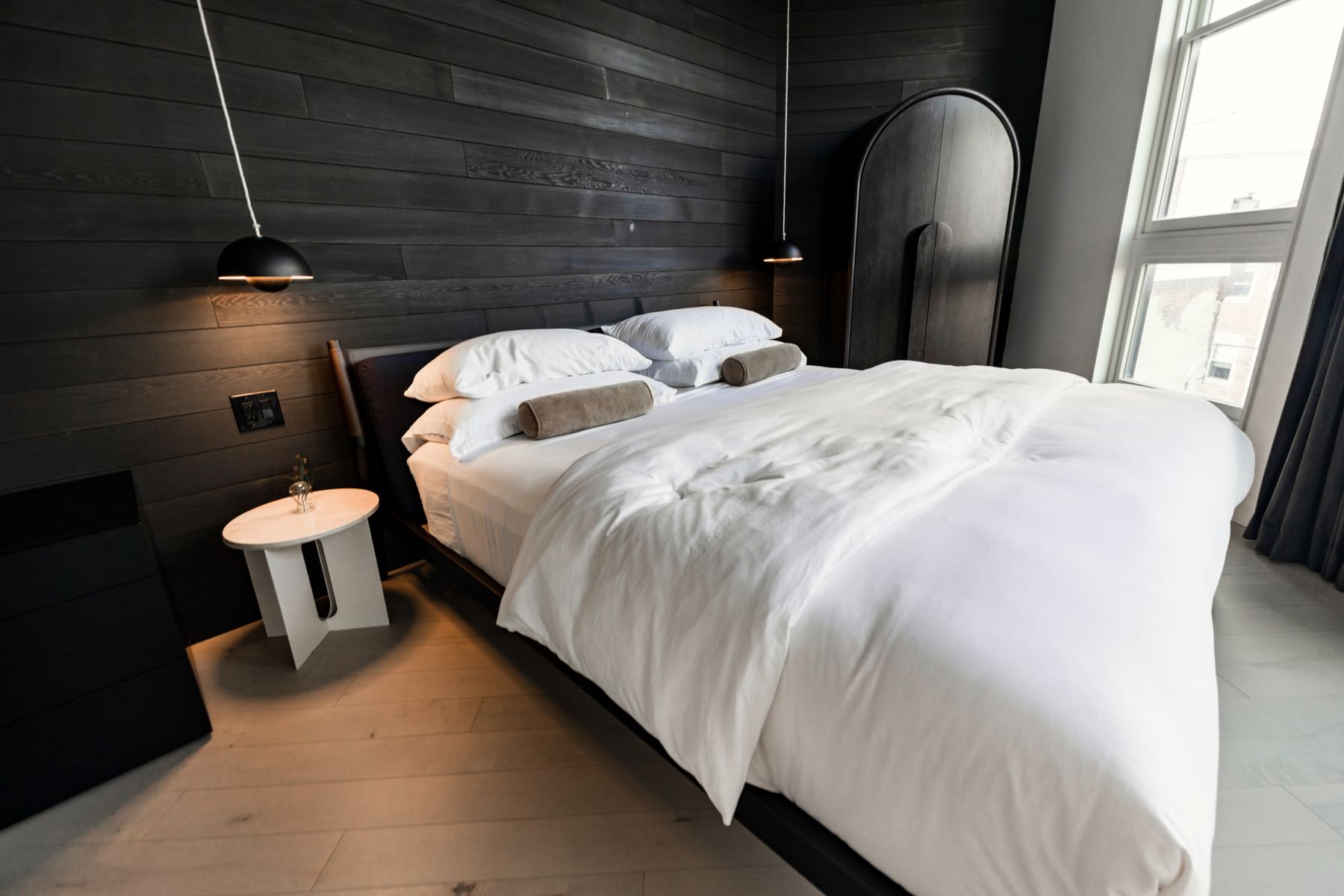
Ebonized, stained or deeply smoked timber can make black feel architectural rather than painted. Request a sample that shows the real grain, board variation, sheen and edge treatment. Confirm the material's fire, moisture and installation requirements, especially behind sockets or on an external wall. Pairing black timber with one warmer wood family can reveal its natural character, but too many unrelated species create a showroom of samples. Use the darker material on the plane that needs weight and let the lighter wood handle touch points or furniture.
The Bed Carries the Main Silhouette
A black upholstered bed, canopy, timber frame or headboard can establish the palette without darkening every wall. Match its width and height to the mattress, bedside reach and room scale. Deep channeling brings shadow but traps dust; metal frames remain visually light but need stable joints; black leather or faux leather shows wear differently from woven fabric. Avoid placing a heavy glass frame directly above the sleeper simply to continue the silhouette. The bed should feel secure and comfortable before it becomes the room's graphic device.
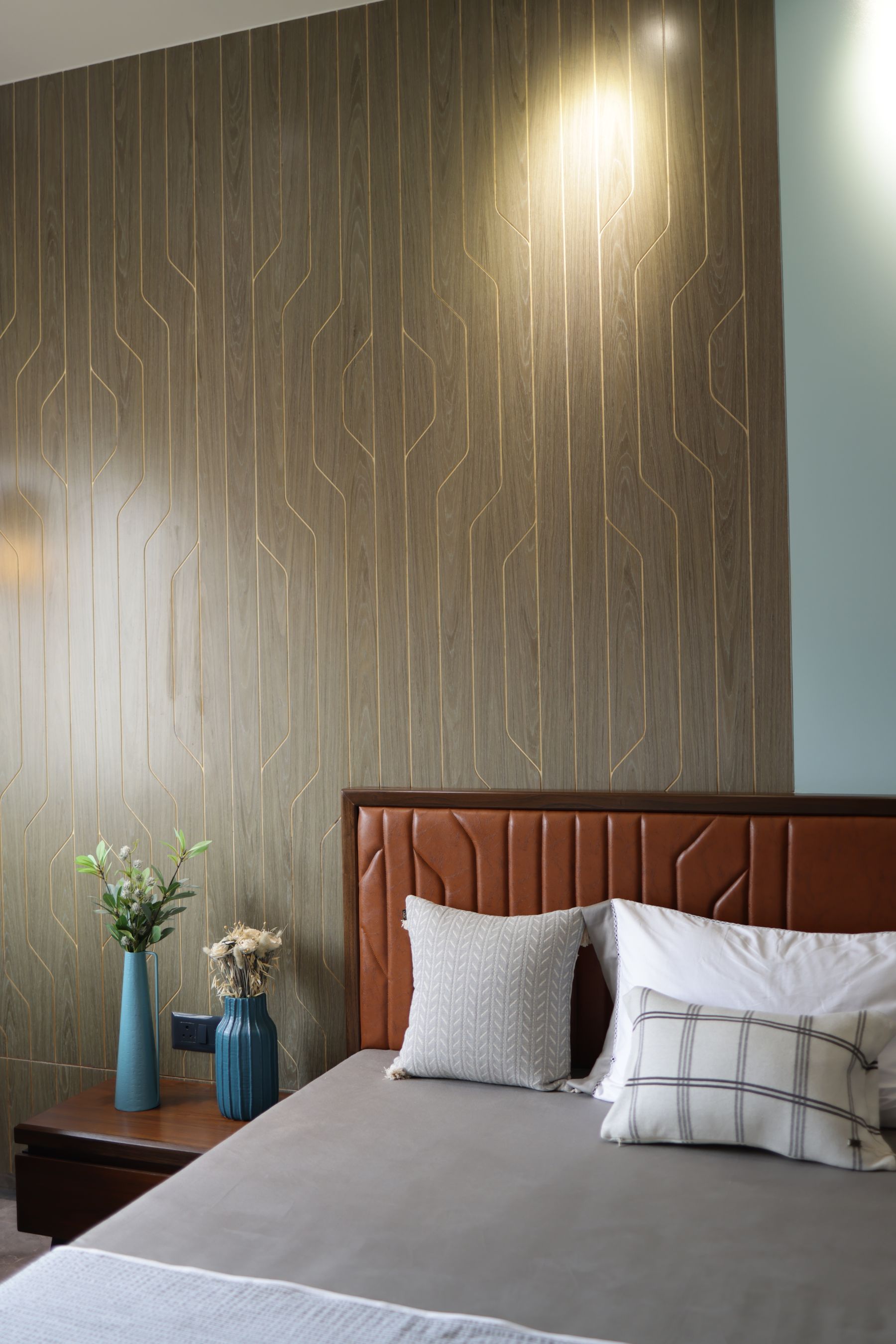
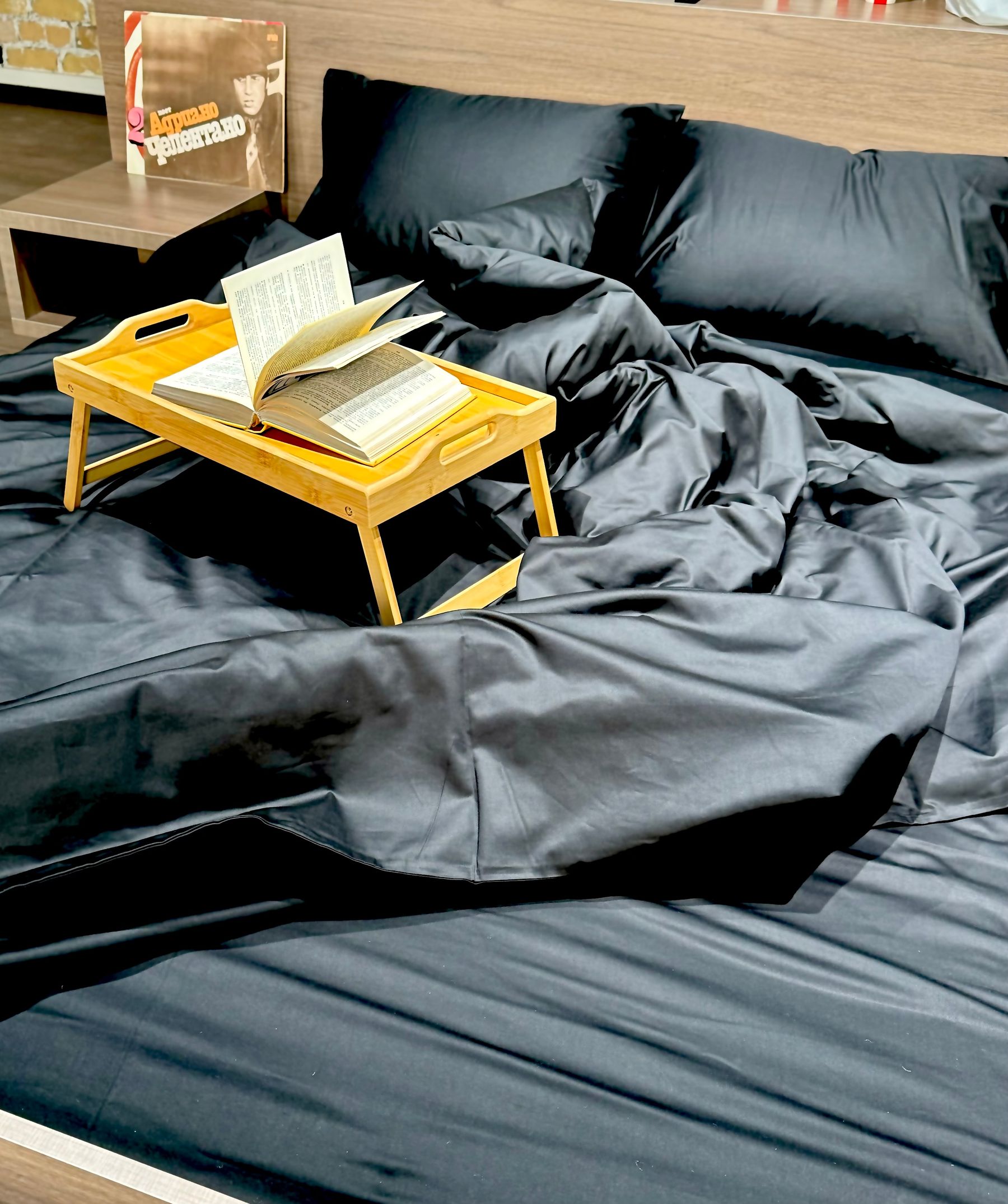
Black Bedding Through Weave
Black bedding is most convincing when temperature and touch lead the selection. Combine breathable sheets, an appropriately weighted duvet or blanket and one tactile top layer; avoid piling on decorative cushions that need nightly relocation. Washed linen softens highlights, cotton sateen reflects more light and velvet holds dust differently. The sleep surface can be black without every layer matching exactly. A small range from soot to charcoal often reads richer and makes individual pieces easier to identify in low light.
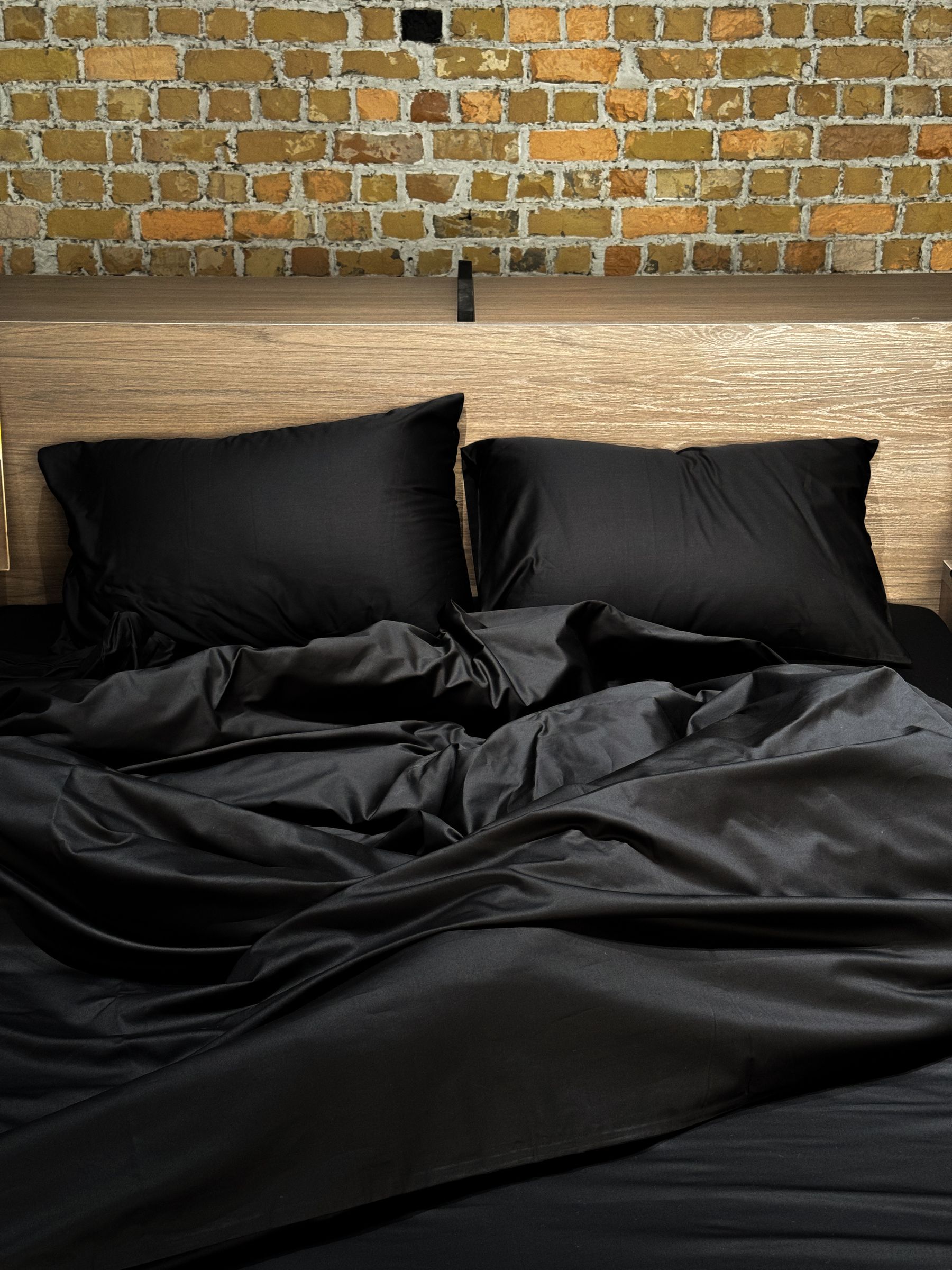
Plan for Lint, Fur and Laundering
Black textiles show pale lint, dry skin, detergent residue and light pet hair. Test a swatch with the household's actual laundry cycle, vacuum tool and pets before buying a complete set. Check colorfastness, washing temperature, tumble-dry guidance and whether a replacement piece can be purchased separately. A removable black cover is easier to maintain than a permanently upholstered bed. Keep a lint tool accessible, but reject any finish that needs constant grooming to look acceptable; the room should support daily life, not demand a photoshoot reset.
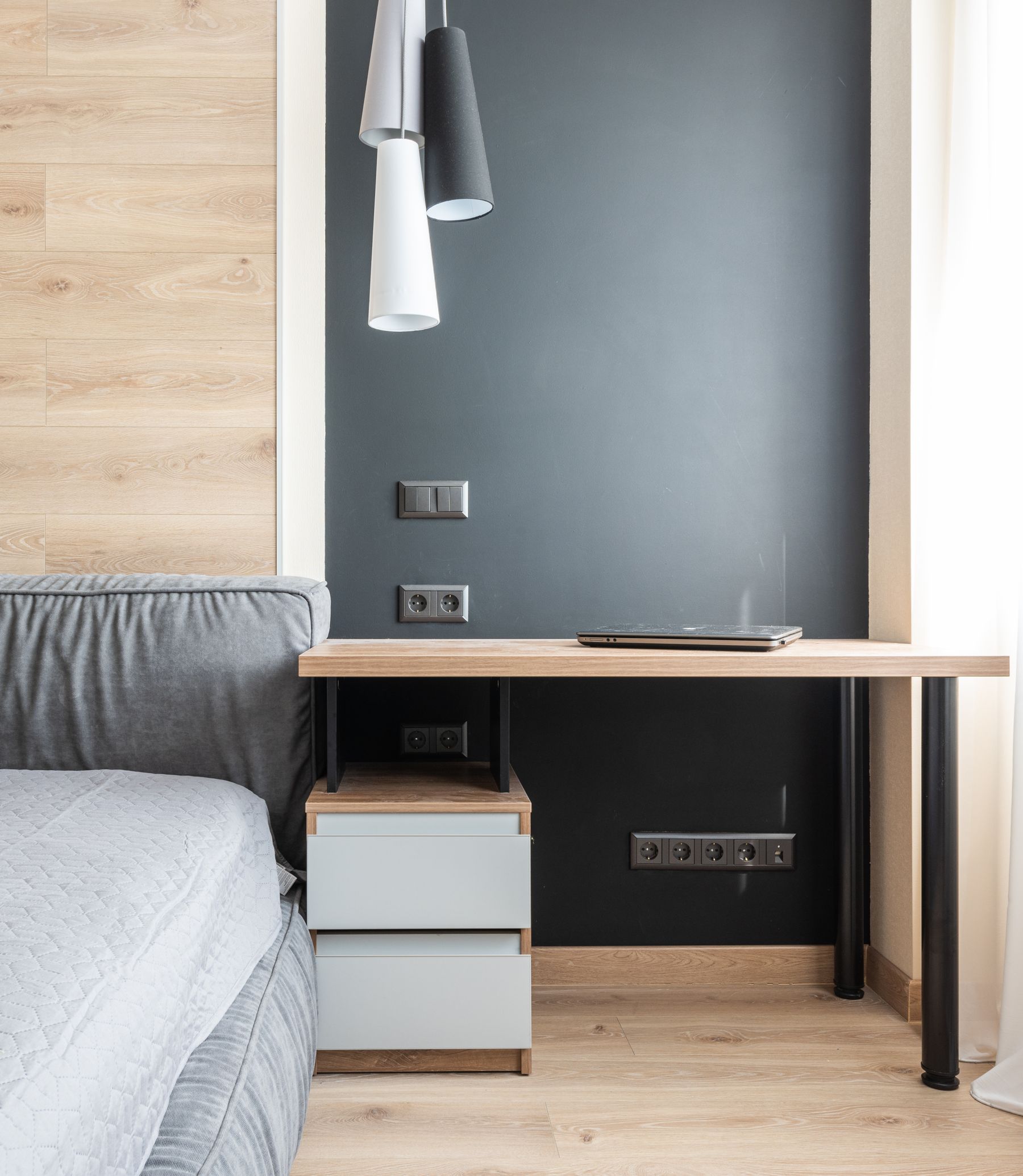
Warm Black With a Single Wood Family
Oak, walnut, ash or cork can warm black through grain and touch. Choose one dominant wood temperature from the floor or largest furniture piece, then repeat it selectively at the desk, bedside or bench. Pale oak makes a sharper contrast; walnut creates a quieter transition. Avoid adding several orange and gray stains merely to break up the darkness. [Mid-Century Bedroom Ideas](/bedroom/mid-century-bedroom-ideas/) demonstrates how timber can organize a room; the black version needs the same material discipline without borrowing an entire period style.
Cream and Stone Instead of Automatic White
If pure white feels too graphic, use cream, mushroom, oatmeal, pale taupe or natural stone for the bed and rug. These mid-light values preserve a black-led room while softening the transition around skin and sleep. Check undertones carefully: yellow cream beside a blue-black may look accidental, while mushroom can bridge a brown-black and timber floor. The goal is not a beige room with black accents; keep the dark plane visually dominant and use the lighter material where comfort, cleaning or orientation benefits.

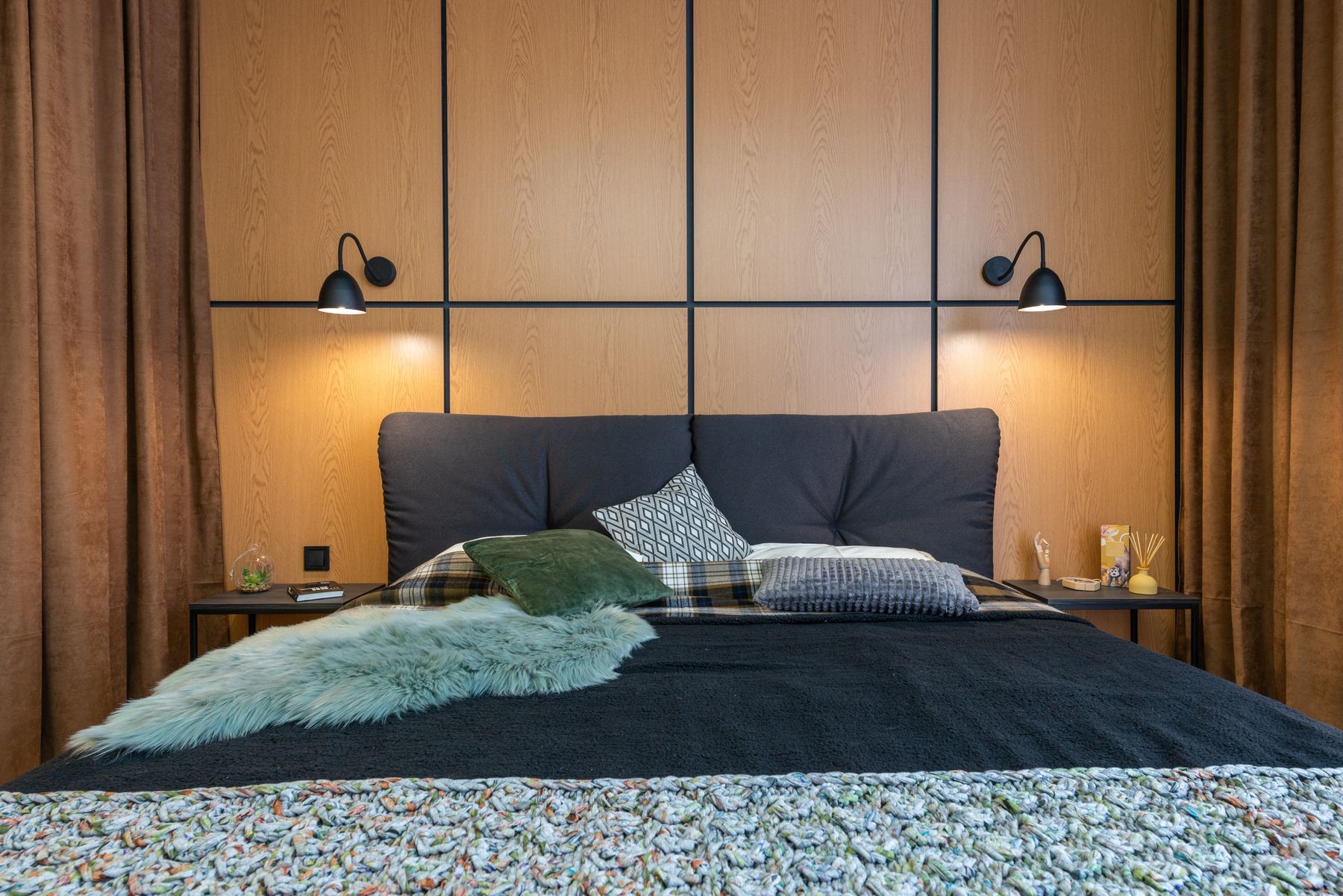
Light Across Dark Surfaces
Black absorbs more visible light than pale surfaces, so one central fixture creates bright glare and lost corners. Combine dimmable ambient light, independent reading light, wardrobe light and a low route. Aim selected beams across texture instead of blasting the room evenly, and keep sources outside the direct pillow view. [Living Room Lighting Ideas](/living-room/living-room-lighting-ideas/) expands beam and control principles; a bedroom also needs a genuine lights-out state, simple bedside control and no unnecessary indicator glow.

Daylight Protected Without Sacrificing Blackout
Treat daylight, privacy, thermal control and sleep blackout as separate window jobs. A sheer or privacy layer can stay pale enough to lift daytime light, while a lined dark curtain or blind closes at night. Measure stack-back so the treatment does not cover glass when open. Check wall temperature and condensation behind heavy curtains, especially in a dark corner where moisture is harder to notice. Blackout fabric is not necessarily thermally effective, and a black curtain facing strong sun may heat significantly depending on construction.
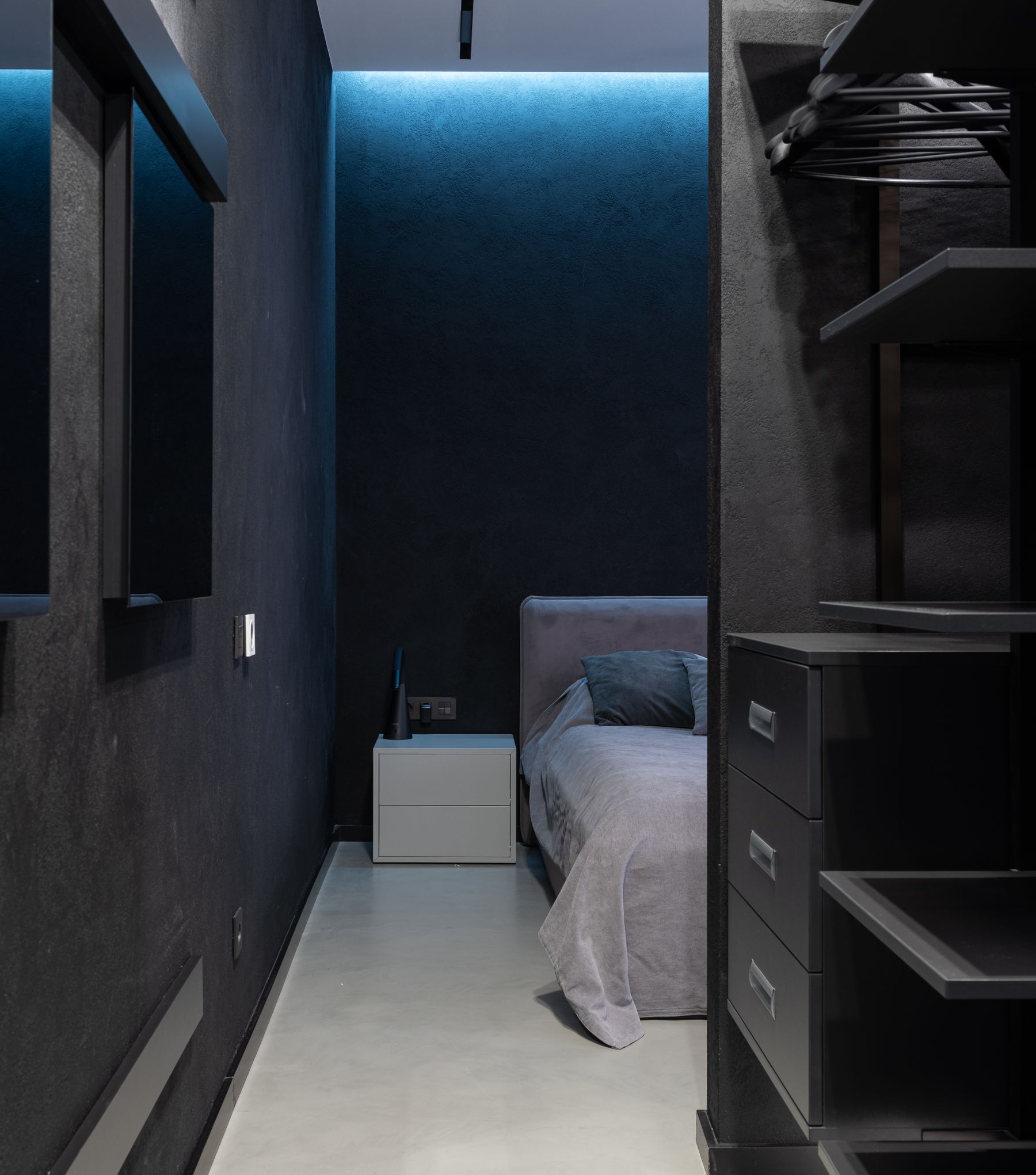
Dark Wardrobes Must Stay Legible Inside
Black wardrobe fronts can read as one architectural plane, but black interiors make dark clothing, corners and small objects harder to find. Inventory garments first, then specify lighter shelves, contrasting rails or automatic interior light where needed. Choose graspable hardware that remains visible and repairable. Matte doors hide some reflections but reveal rubbing; gloss shows fingerprints and window glare. Ventilation, door sweep and the route beside the bed matter more than a perfectly seamless elevation.
Ground the Room With the Right Floor and Rug
A black floor and black bed can merge, making edges and dropped objects difficult to read. Use timber, midtone carpet or a broad rug to establish a different value under the sleep zone. Choose fiber, pile, underlay and size for bare feet, doors, allergies and vacuuming before pattern. Pale rugs brighten but show traffic; deep black rugs show lint. The scale and maintenance guidance in [Living Room Rug Ideas](/living-room/living-room-rug-ideas/) still applies, with extra attention to nighttime legibility around the bed.


Mirrors for View, Not Generic Brightness
A mirror does not create daylight; it redirects the view and available light. Place it where it supports dressing, expands a calm sightline or returns a window—not where it reflects the bed unexpectedly or doubles a bright source at night. Full-height glass needs safe fixing and clear approach space. Smoked mirror can belong in a black room but reduces visual clarity. Use one purposeful surface rather than scattering small reflective objects that puncture the dark envelope with glare.
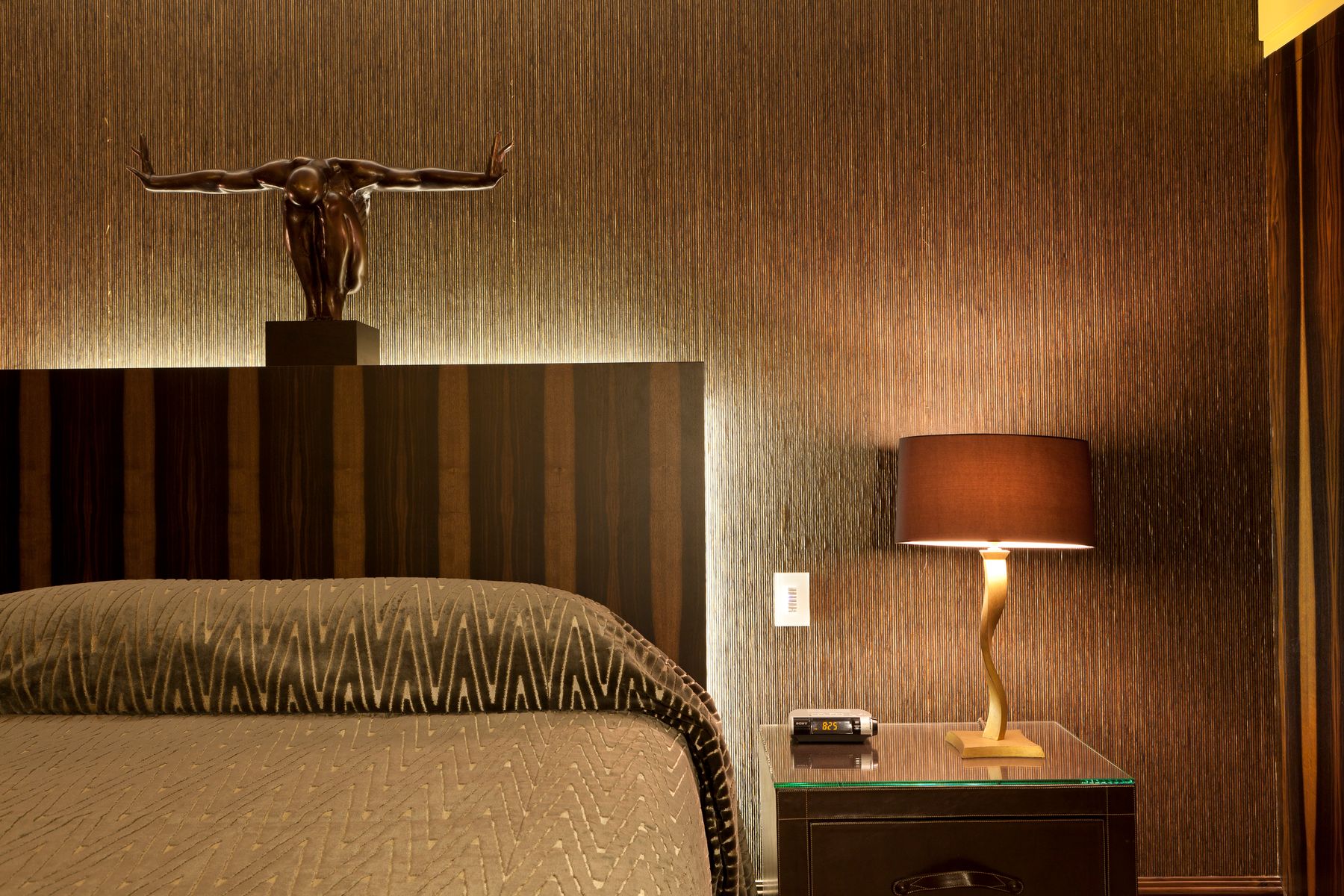
Metal Judged by Temperature and Touch
Blackened steel supports a quiet industrial line; brass and bronze add warmth; chrome or nickel sharpen a cooler scheme. Start with fixed door and window hardware, then choose one dominant metal temperature. Matte black hardware can disappear against black cabinetry and become hard to grasp in low light, so profile and tactile contrast matter. Polished fittings amplify fingerprints and glare. Use metal at real touch points, lamps or one frame instead of outlining every object.
Edit Art More Strictly on Black
Black walls can make pale paper, metallic frames and glass reflections unusually prominent. Choose work for meaning and scale, then test the complete outer dimensions before hanging. One broad textile, photograph or painting often rests more calmly than a grid of small bright rectangles. Use anti-reflective glazing where appropriate and avoid heavy glass directly above the sleeper. A collected gallery can work for [Dark Academia Bedroom Ideas](/bedroom/dark-academia-bedroom-ideas/), but a black color scheme does not require a scholarly or Gothic theme.

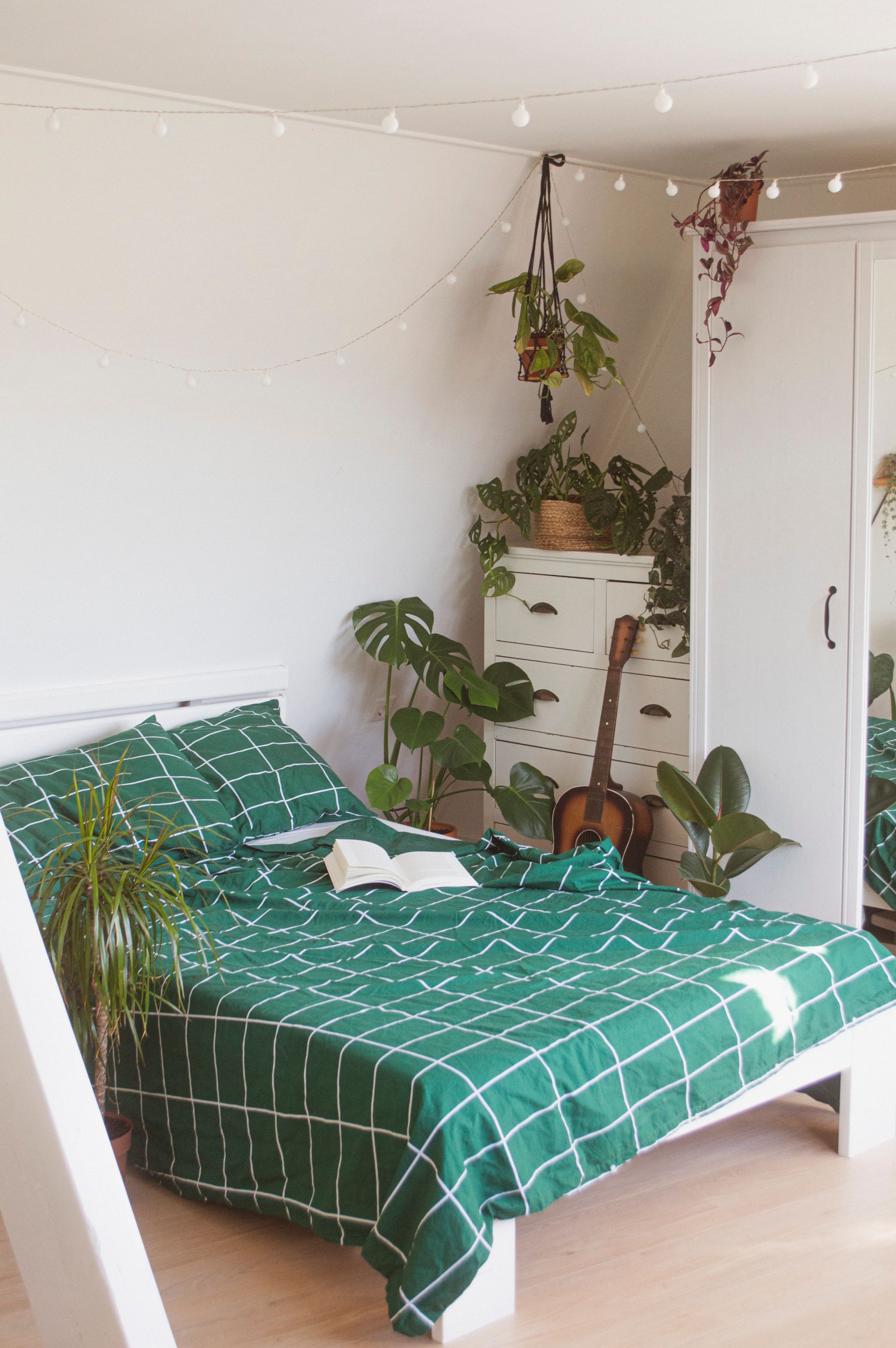
Plants Only Where They Can Thrive
Green leaves can read vividly against black, but the visual contrast does not compensate for poor plant conditions. Match species to actual window direction, distance, humidity and care routine. Use saucers and surfaces that protect dark paint and timber from water rings; inspect soil and corners for pests or damp. One healthy plant with a clear silhouette is stronger than many struggling pots. If light is inadequate, use branches, botanical art or no greenery rather than treating plants as disposable decor.

A Small Black Bedroom With Precision
Black does not automatically make a small room unusable; excess furniture depth, blocked daylight and poor lighting do. Keep the window operational, preserve the active footprint of doors and drawers, and let one continuous dark plane reduce visual fragmentation. Pale bedding or floor can reveal the bed edge without turning the room black and white. [Small Bedroom Ideas](/bedroom/small-bedroom-ideas/) develops clearance and storage tests; apply them before choosing whether the ceiling, wardrobe or bed wall receives black.
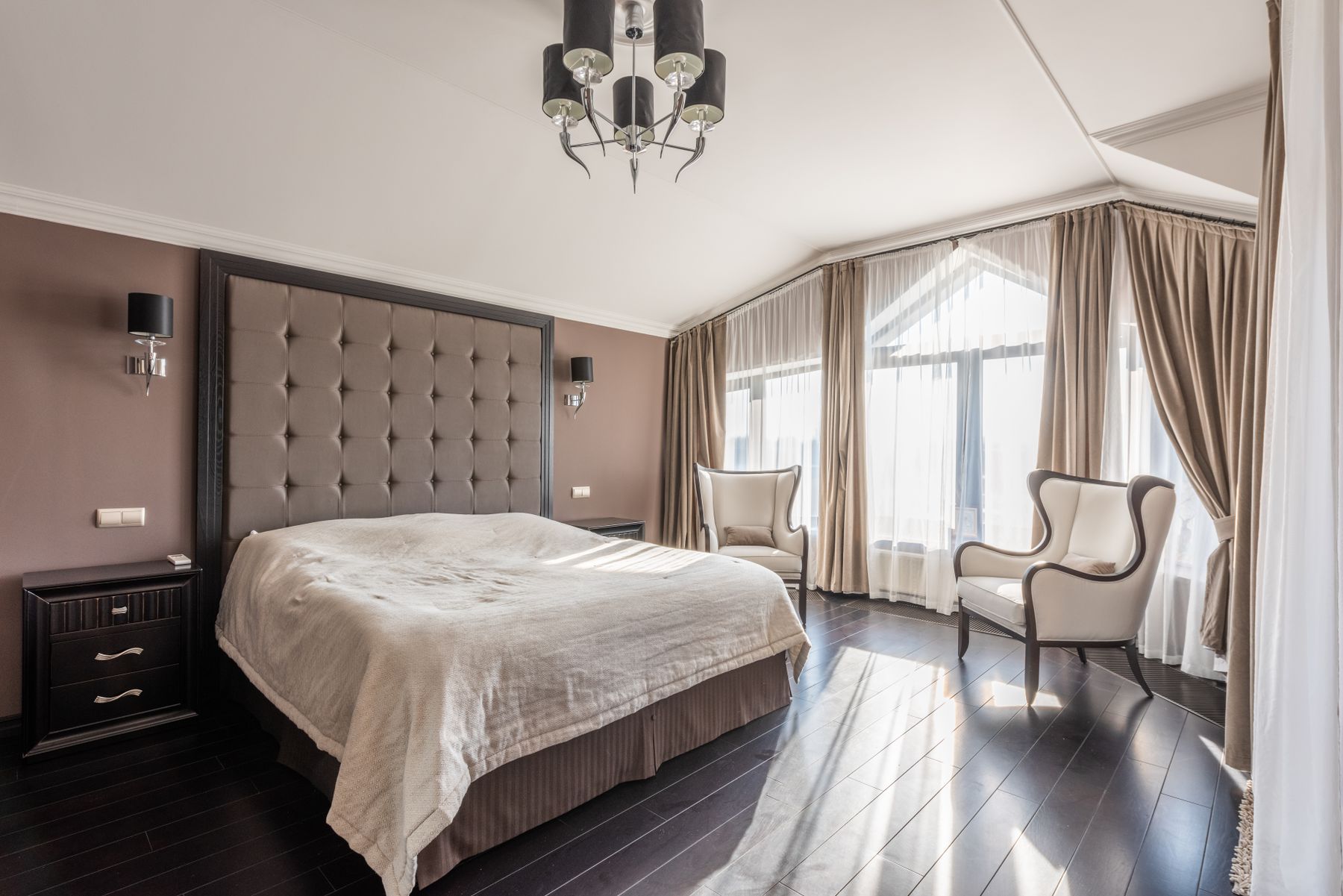
Zone a Large Black Bedroom
In a large room, repeating black everywhere can leave furniture floating in a dark field. Define the sleep, dressing and seating zones through rugs, light pools and a few shared datums. Keep the bed dominant and give secondary uses a real routine rather than filling empty corners. [Large Bedroom Ideas](/bedroom/large-bedroom-ideas/) covers proportion and circulation; the black version benefits from controlled lighter islands that reveal distance and prevent the room from feeling like several disconnected scenes.
Hide a Workspace Without Hiding Ergonomics
A black desk against a black wall may disappear from the doorway while the monitor, papers and indicator lights remain visible from bed. Provide real work depth, supportive seating, ventilation and focused light, then assign closed storage for equipment. At shutdown, clear the surface, close the laptop and change the room to its lower evening scene. Do not choose glossy black where screen reflections or fingerprints increase distraction. The workspace earns its place only when both work and sleep modes are credible.


Adapt Black for Renters
Begin with a black bed, headboard, curtain, rug or freestanding wardrobe before altering walls. Large permitted textiles create more impact than many small objects and can move with the tenant. Confirm rules in writing before painting, drilling or using adhesive film; some removable products pull paint, trap moisture or leave uneven fading. Keep original hardware labeled and stored safely. A renter-friendly room is not a lesser version: one decisive portable black element can create clearer intent than a compromised feature wall.

Shared Preferences Remain Negotiable
Two sleepers may agree on black but need different light, temperature, storage and sensory intensity. Use the shared wall or bed as the dark anchor, then provide independent reading lights, bedside surfaces and window control where possible. Symmetry is optional; equal function matters more. Discuss whether the room should feel cocooning all day or primarily at night. If one person finds a full black envelope oppressive, move the darkest material behind the bed or into furniture rather than treating preference as a styling objection.
Contrast for Accessibility
A black room should never erase the objects needed for safe use. Give the bed edge, floor route, door hardware, switches and wardrobe handles enough value or tactile contrast for the actual resident. Avoid high-contrast stripes on walking surfaces when they may obscure level changes or create visual vibration. Secure rugs, remove projecting furniture and provide a low controllable night route. Mattress height, transfer space and reach belong to the user, not to the photograph.
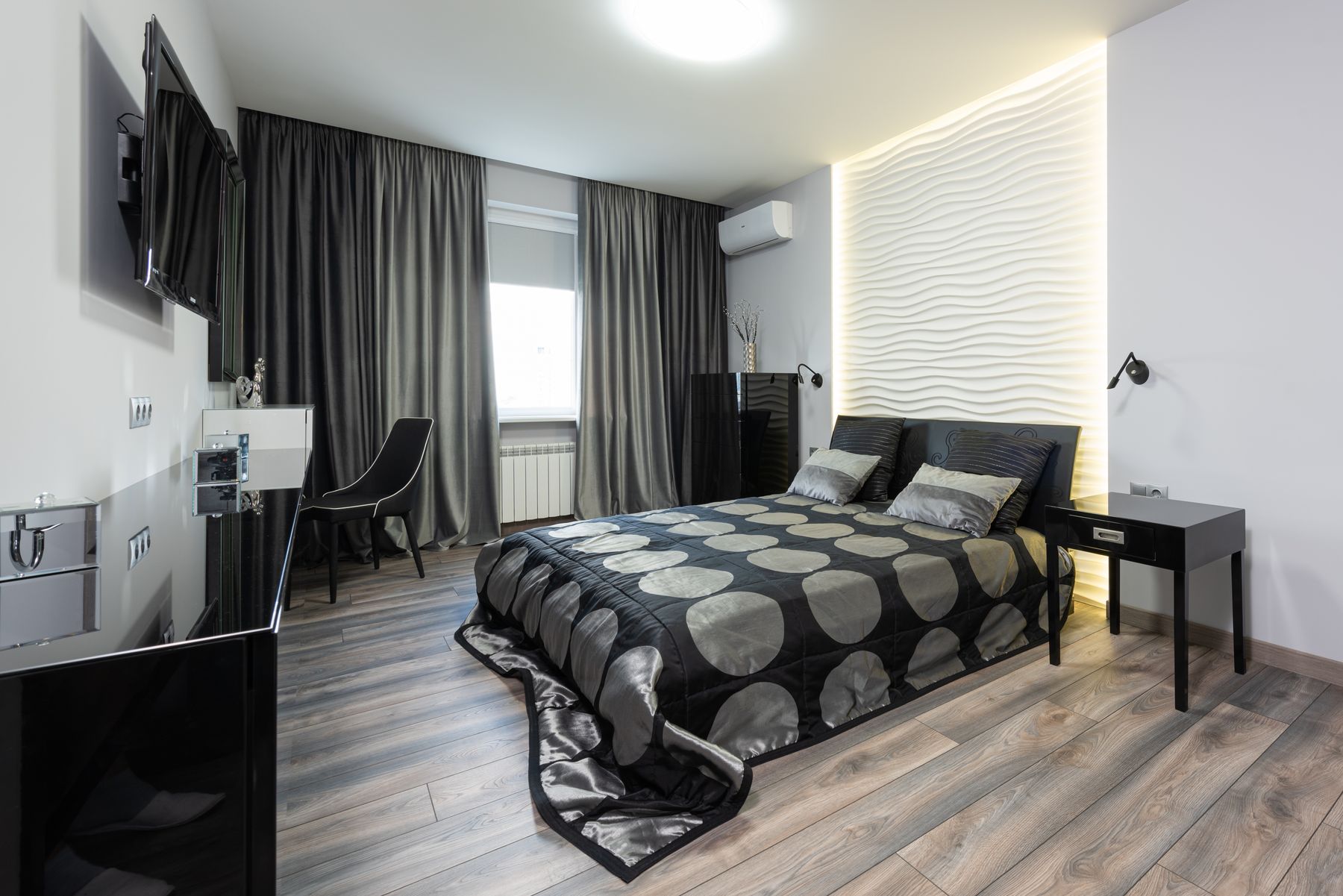
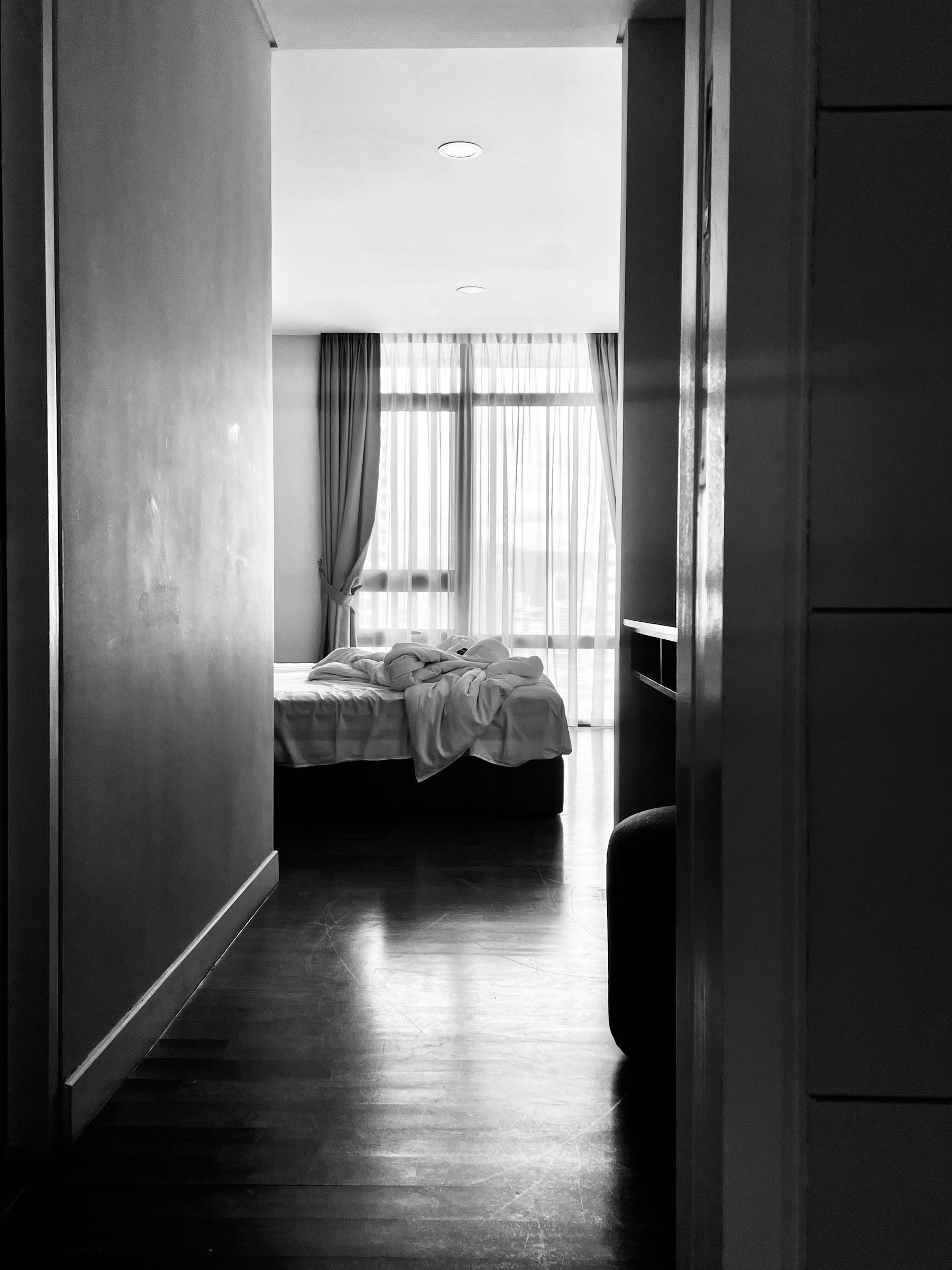
Manage Heat, Air and Acoustic Softness
Dark color does not inherently make an interior hotter, but sun-exposed dark fabrics and surfaces can absorb considerable radiant energy. Measure the real window orientation, ventilation and seasonal conditions before adding heavy curtains or wall upholstery. Rugs, curtains and soft headboards can reduce harsh reflections, yet they also collect dust and should remain cleanable. Keep supply and return vents clear, allow air around wardrobes and inspect condensation-prone corners. Comfort is a thermal, acoustic and air-quality system—not simply a moody visual effect.
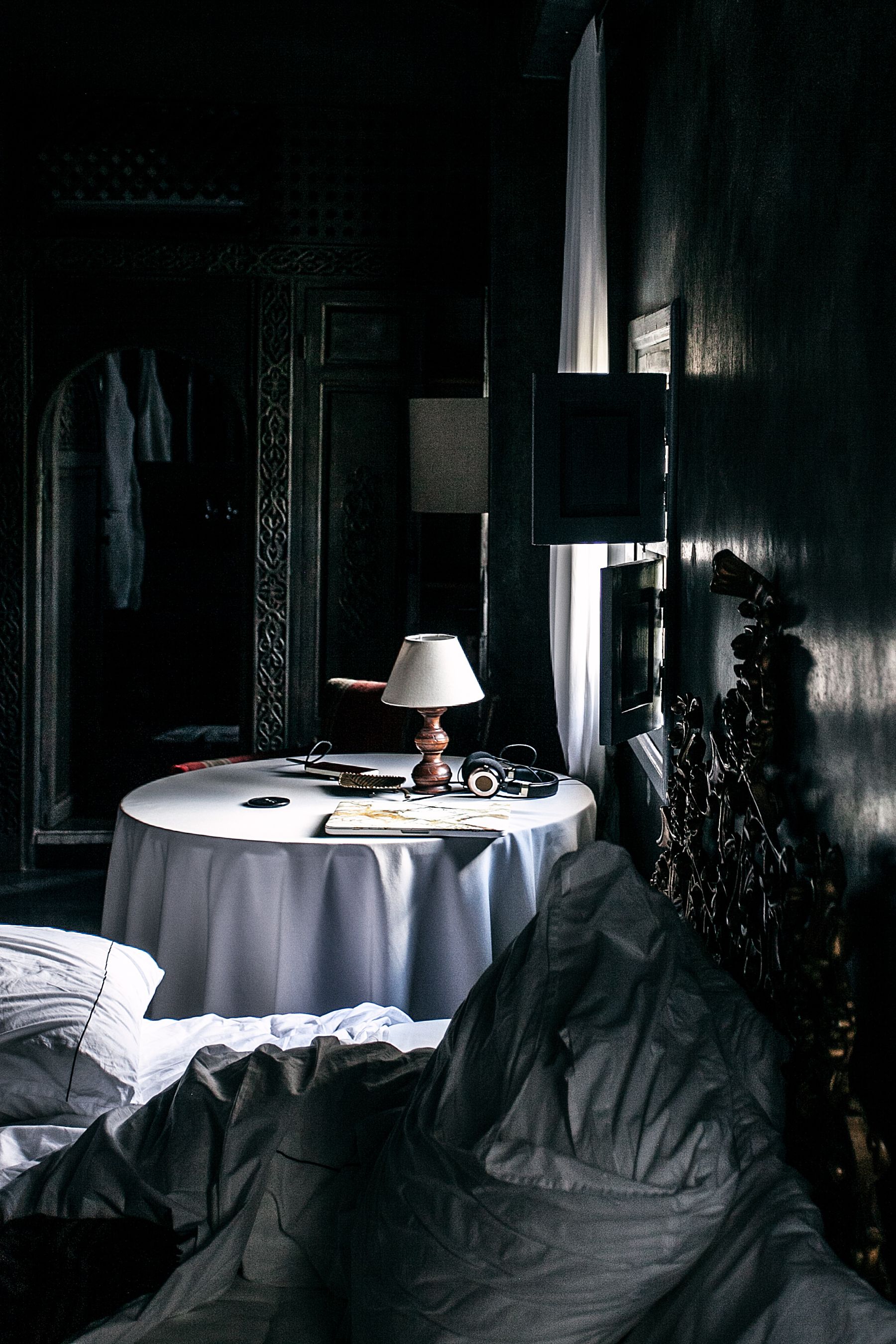
Sheen Judged for Wear and Repair
Flat black hides broad glare but can burnish where touched; higher sheen cleans more easily but highlights substrate flaws and roller marks. Match finish to location: quieter matte on low-contact walls, more durable coatings on doors, trim and busy corners. Keep the product, color code, batch information and repair method. Touch-ups on black can flash under side light, so a whole wall may need repainting for an invisible result. Test the household's cleaner on a sample rather than assuming all dark paint is washable.
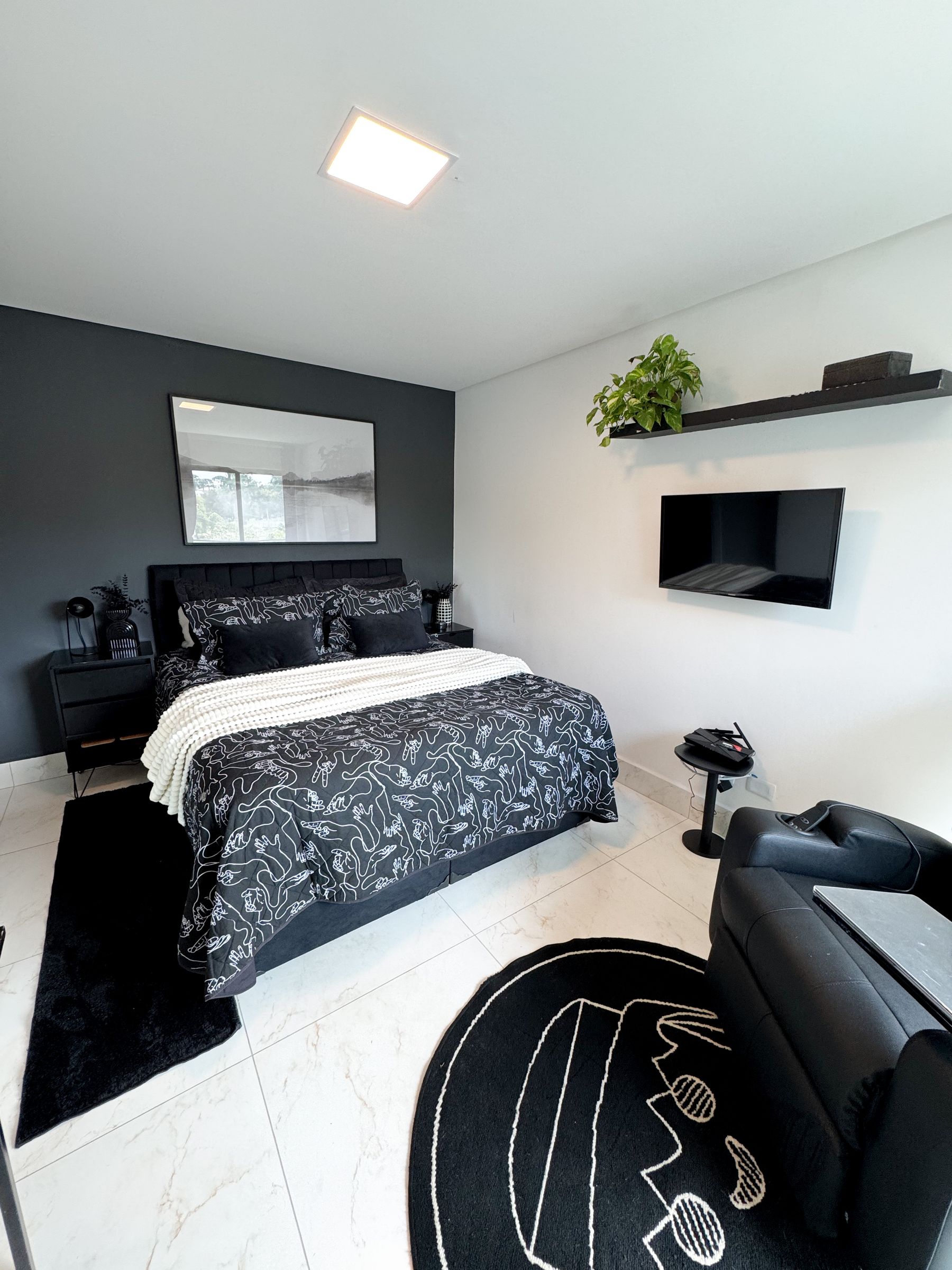
Reset the Room Before Adding More Black
Review the completed room from doorway, pillow and wardrobe in daylight and at minimum night light. Remove duplicate black frames, fragile decor, unused cushions and objects that vanish into the floor. Confirm that the bed is comfortable, curtains operate, storage resets quickly and every route remains visible. Keep the timber, pale textile, art or plant that makes the room personal. The scheme is finished when additional black would contribute less than the depth, calm and usability already present.