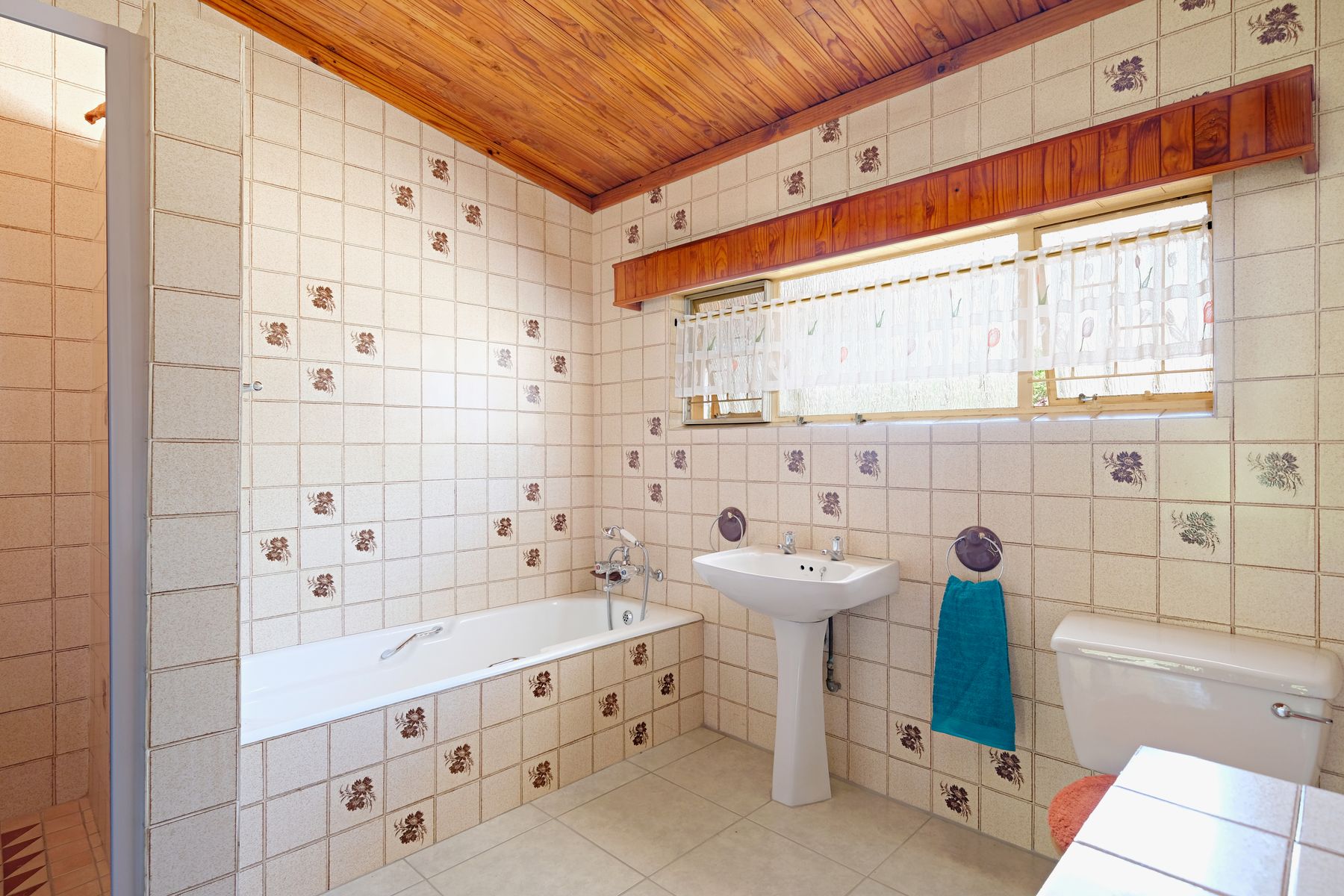
Start With the View From the Door
A classic bathroom should read as composed before its details are noticed. From the entrance, give priority to a bath, vanity, window or handsome tile plane rather than the toilet or an open storage pile. Align major fixture edges and preserve a comfortable route through the room; perfect symmetry is optional, but unexplained imbalance is not. The [bathroom layout guide](/ideas/bathroom-layout-ideas/) helps test door swings, clearances and wet-zone relationships before finishes disguise a weak plan.
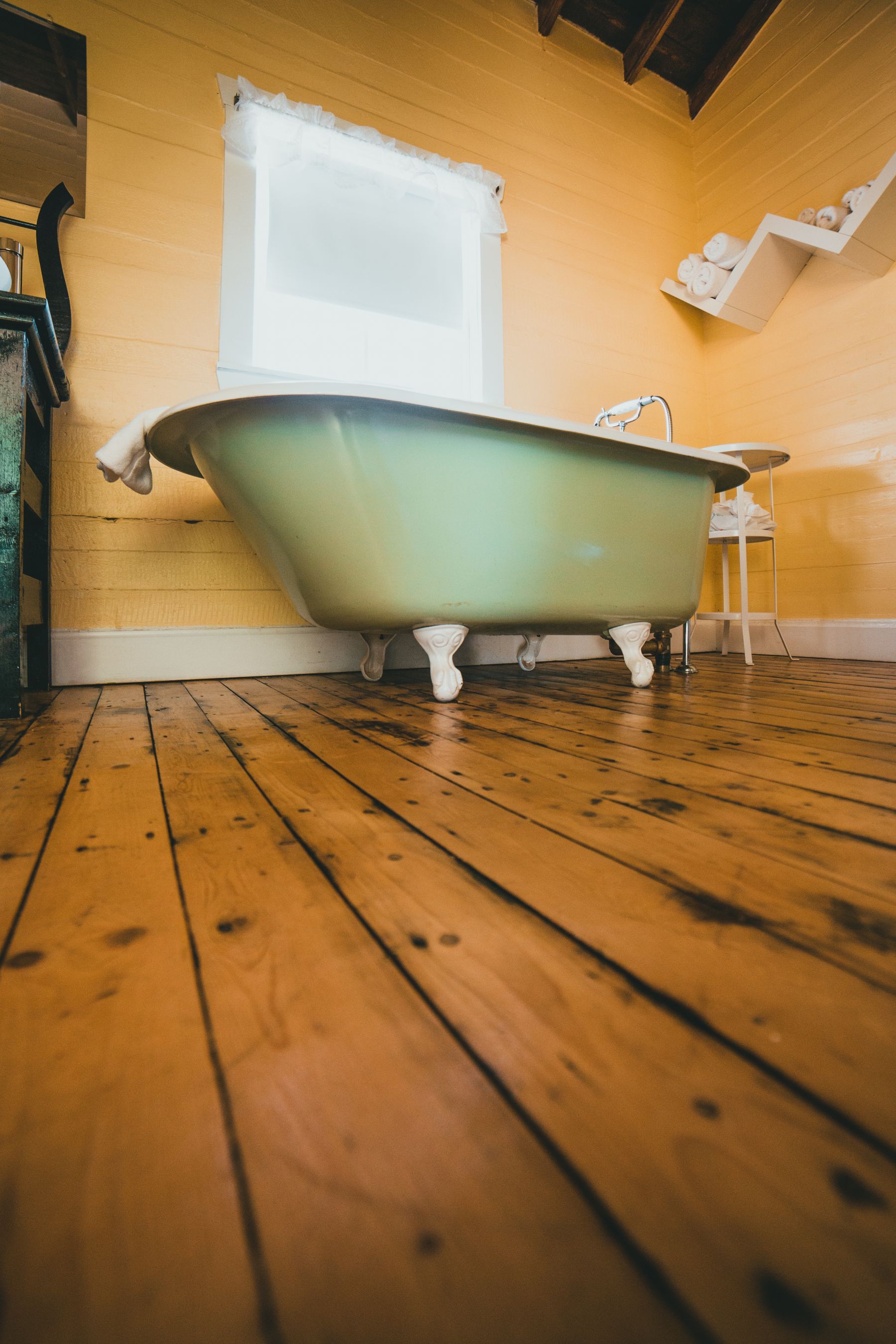
Choose One Historical Note, Not a Costume
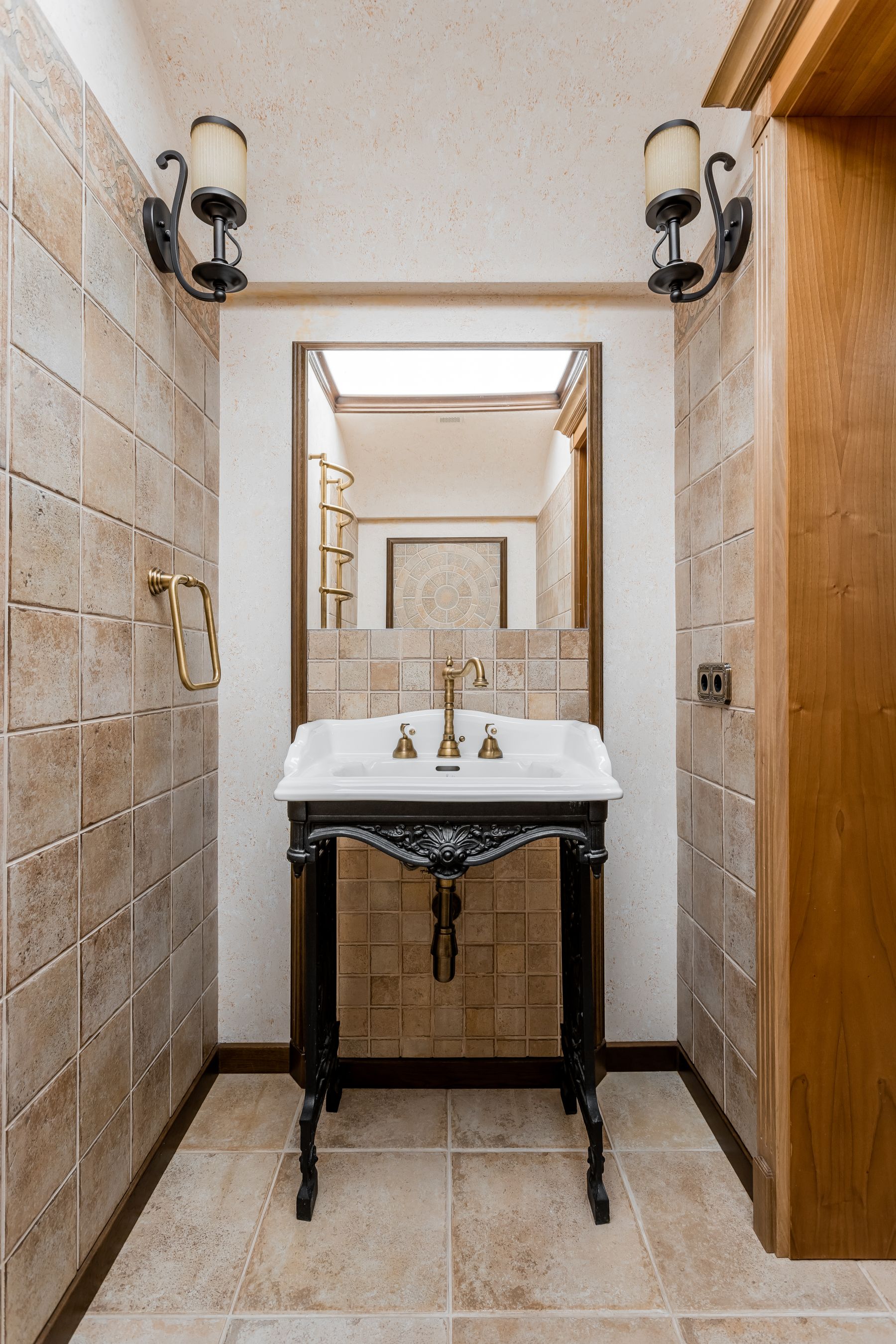
A clawfoot bath, console basin, framed vanity or softly arched mirror can supply enough historical familiarity for the whole room. Repeating turned legs, ornate taps, mouldings and decorative trims everywhere turns a flexible classic scheme into a themed reconstruction. Let one signature form lead and use simpler contemporary fittings around it. Readers wanting more explicit period language can compare [Victorian Bathroom Ideas](/ideas/victorian-bathroom-ideas/) and the broader, collected approach in [Vintage Bathroom Ideas](/ideas/vintage-bathroom-ideas/).
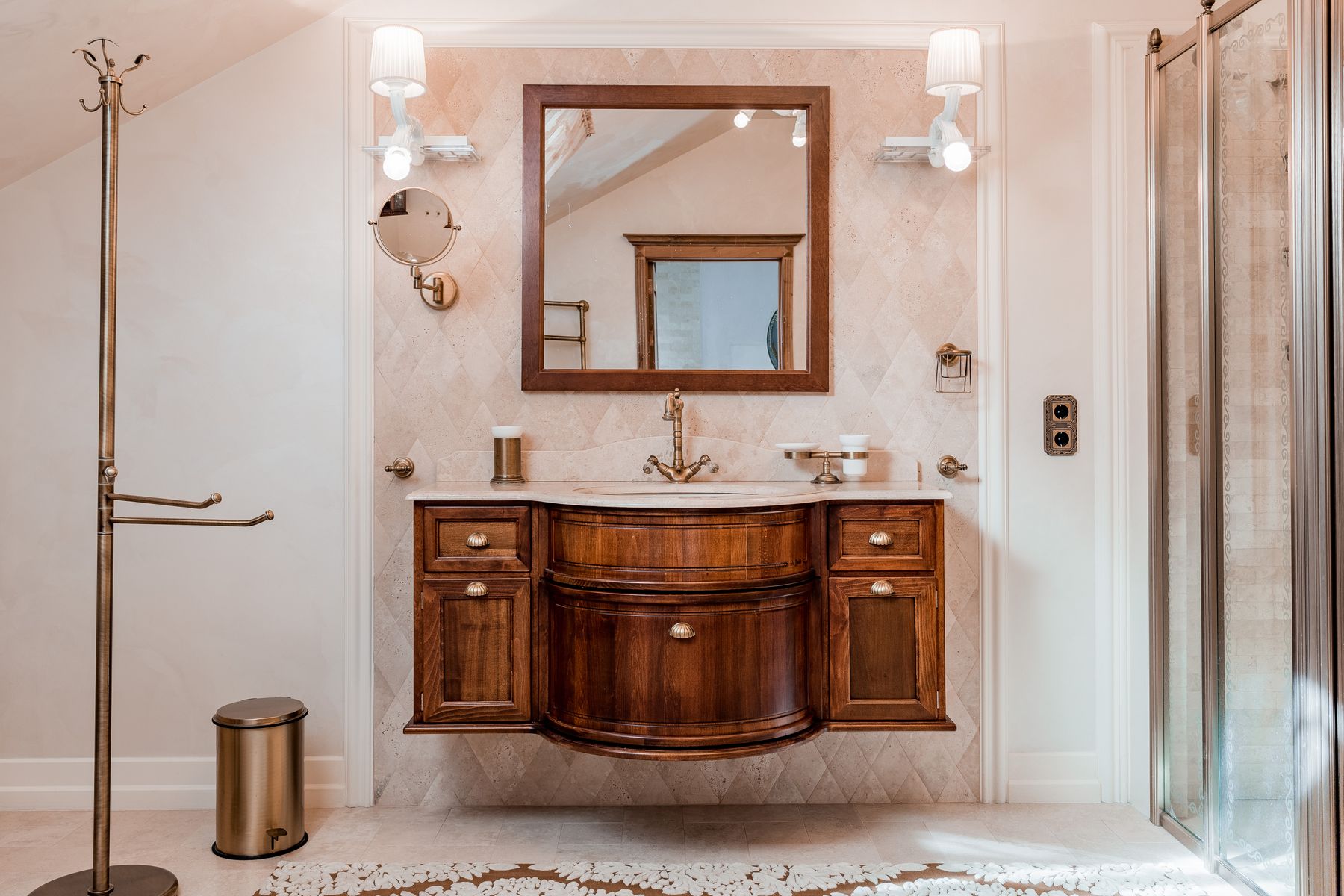
Size the Vanity Before Styling Its Doors
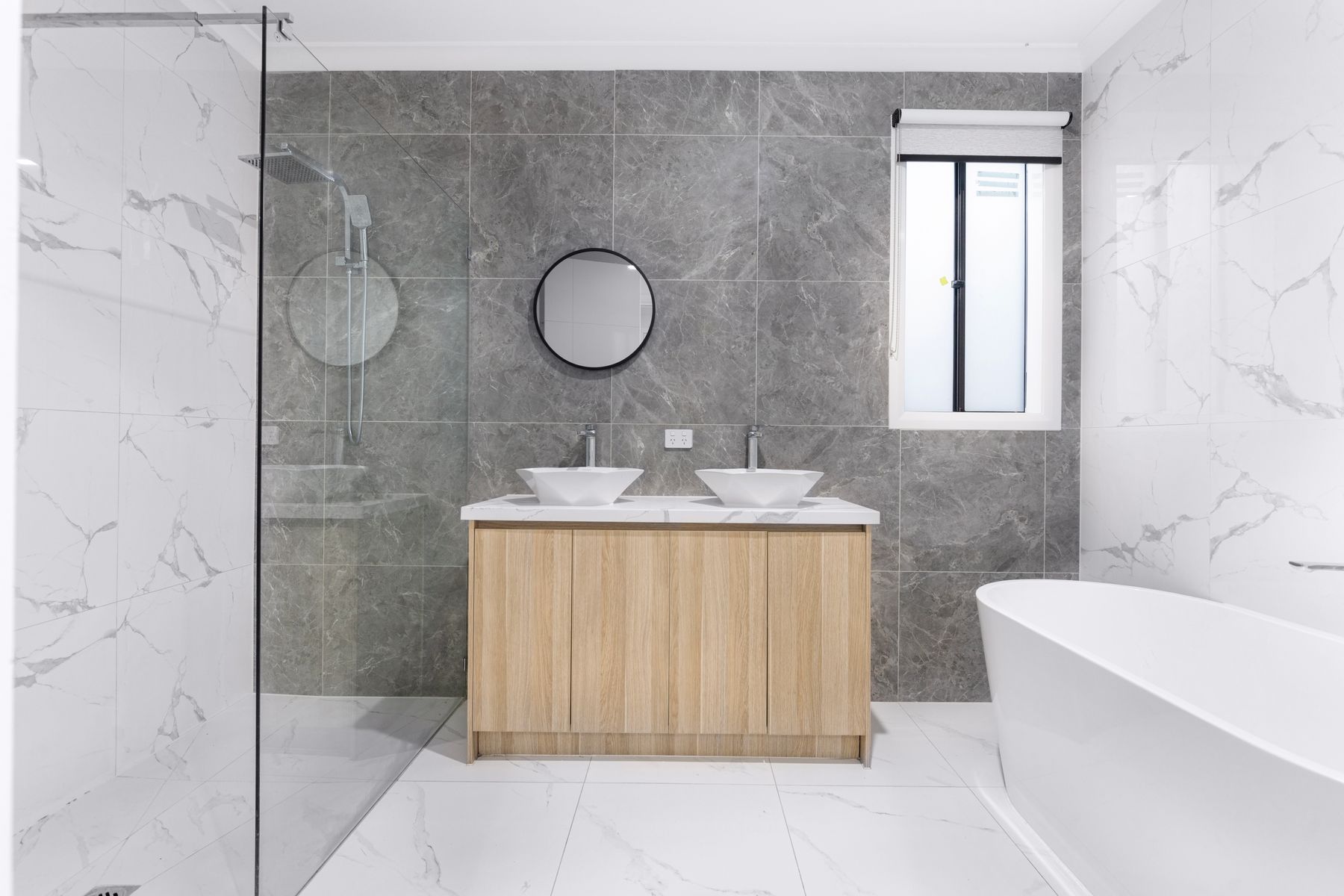
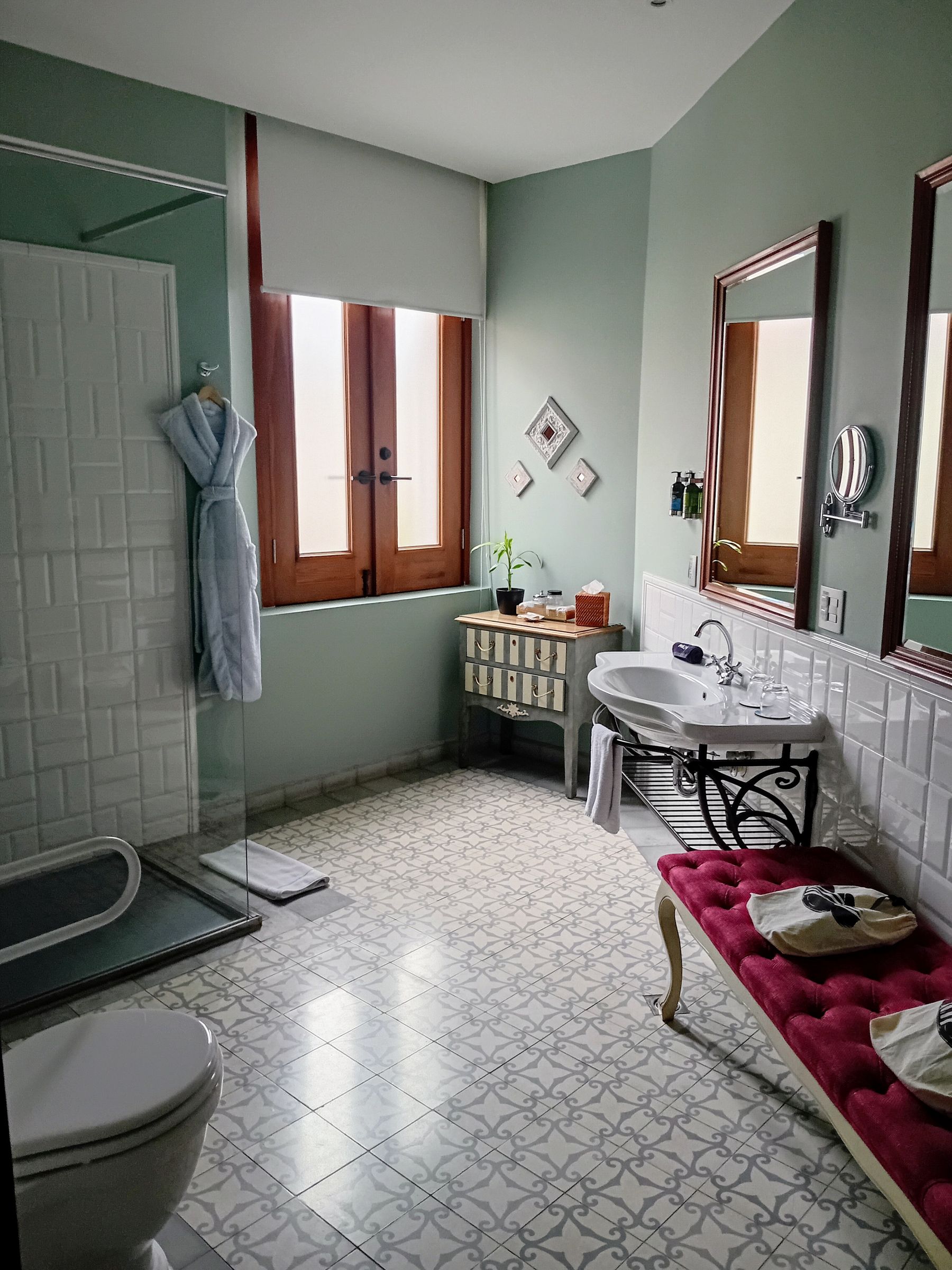
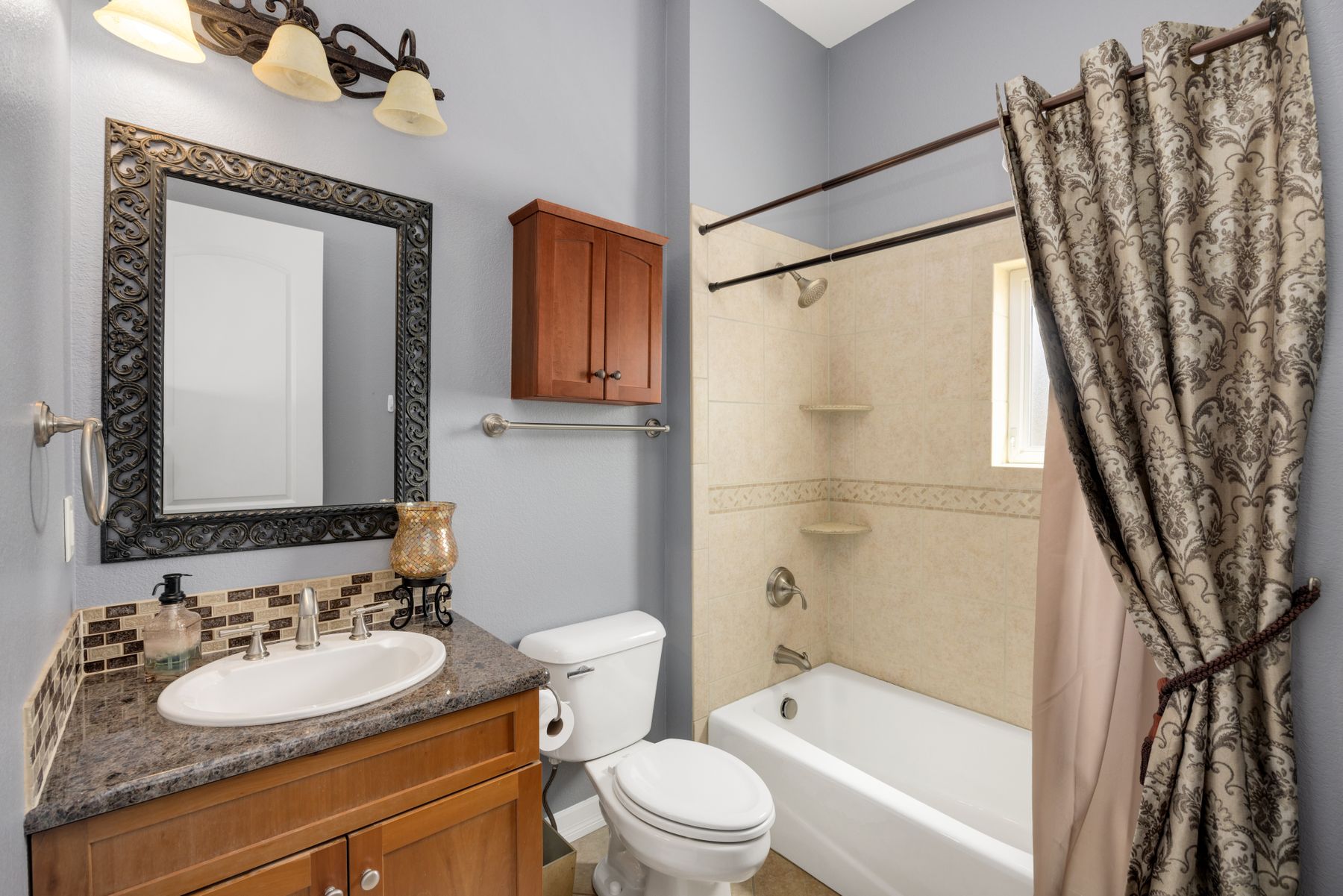
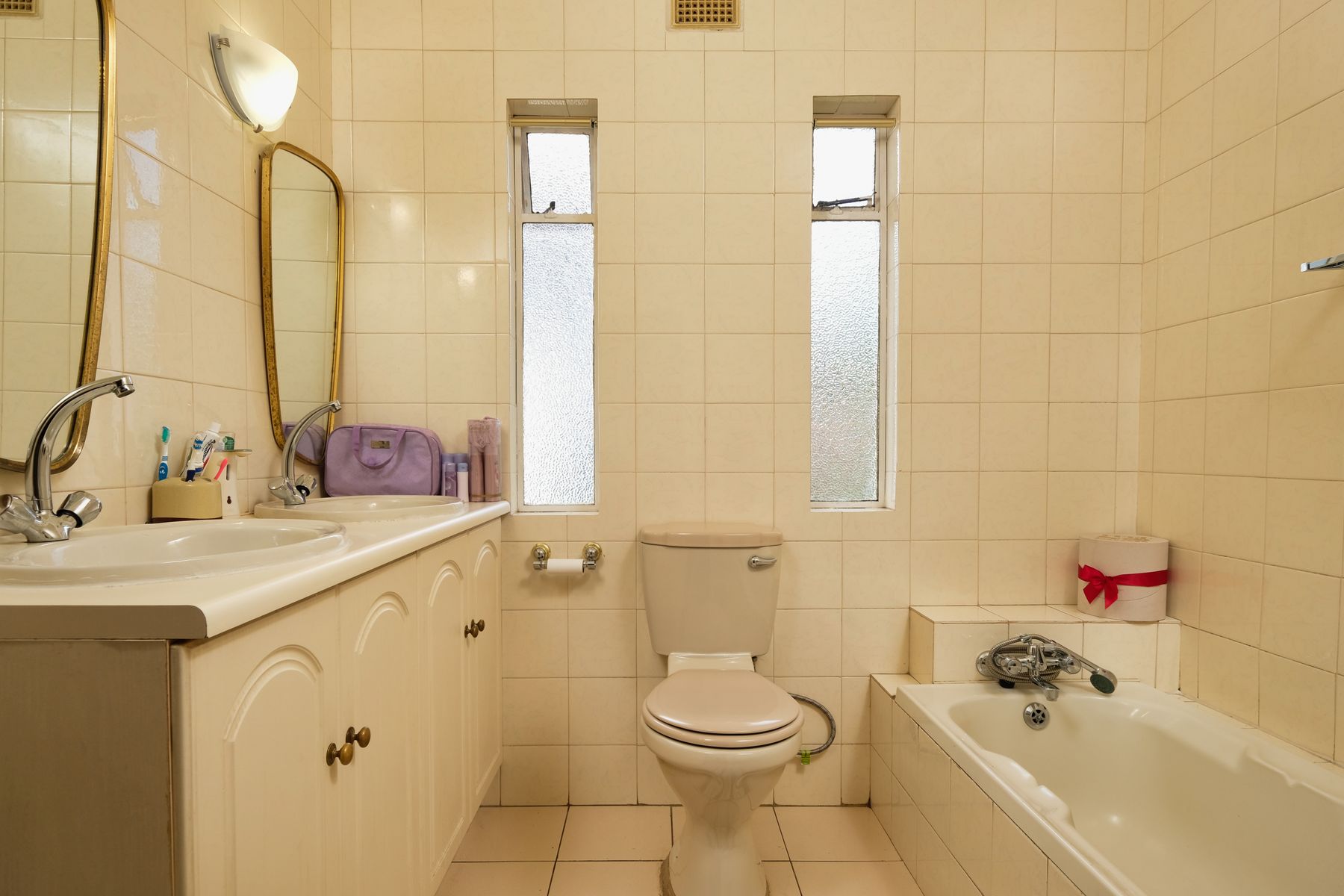
The vanity usually sets the room's visual weight and morning workflow. Decide whether one generous basin, two separate stations or a compact furniture-like unit best fits the users and circulation, then resolve drawers, plumbing conflicts, outlets and countertop landing space. Framed doors and shaped feet can make the cabinet feel classic, but useful internal divisions matter more than decorative moulding. Use the [bathroom vanity guide](/ideas/bathroom-vanity-ideas/) to compare wall-hung, freestanding and built-in options.
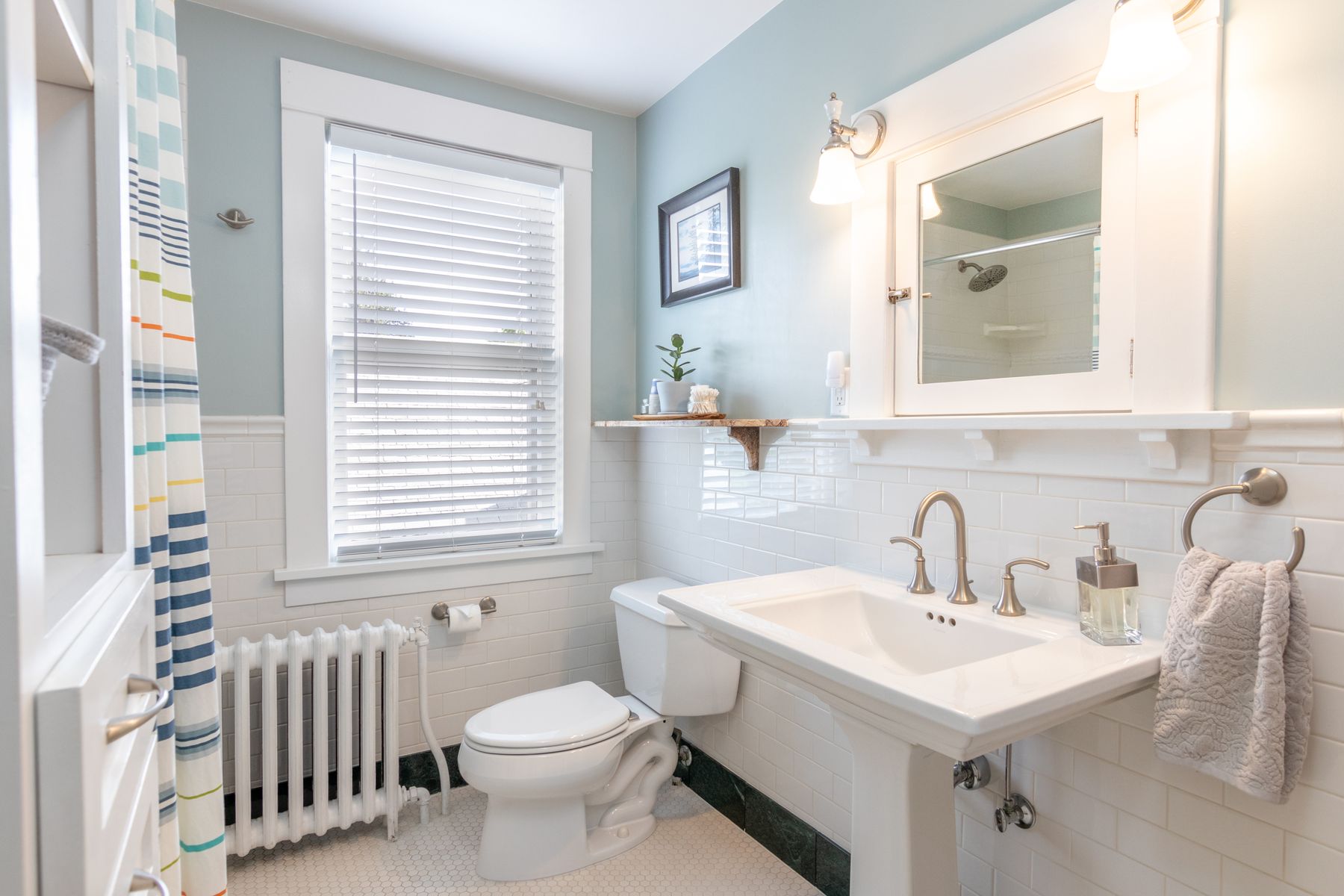
Use a Controlled White, Not Automatic Bright White
White ceramic is inherently familiar, but wall white must relate to stone, grout, wood and daylight. Creamy tile can look dirty beside a blue-white paint; a cool suite can make warm ivory walls appear yellow. Test large samples vertically and horizontally in the actual room. A mostly white scheme gains longevity through undertone and texture rather than a single uniform shade; [White Bathroom Ideas](/ideas/white-bathroom-ideas/) explores that balance in more depth.
Treat Stone as a Working Surface
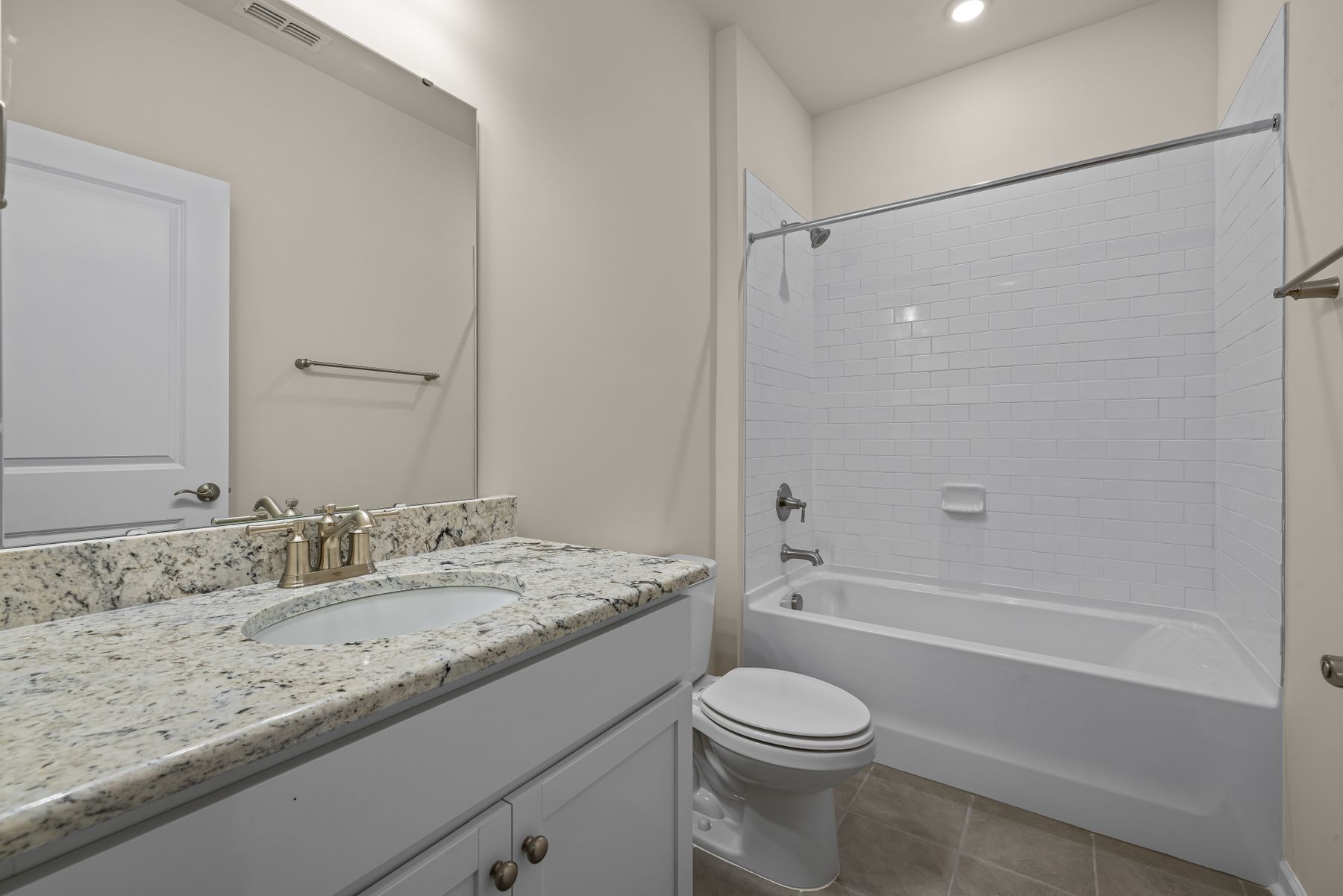
Marble, limestone and granite bring weight because their variation is geological rather than decorative, yet each has different tolerance for acids, standing water and staining. Use natural stone where its maintenance is acceptable; choose a convincing porcelain or engineered surface where family use demands greater resistance. Limit strong veining to a counter, floor or principal wall so it remains architectural. The goal is material integrity, not a luxury label.
Give Simple Tile a Deliberate Layout
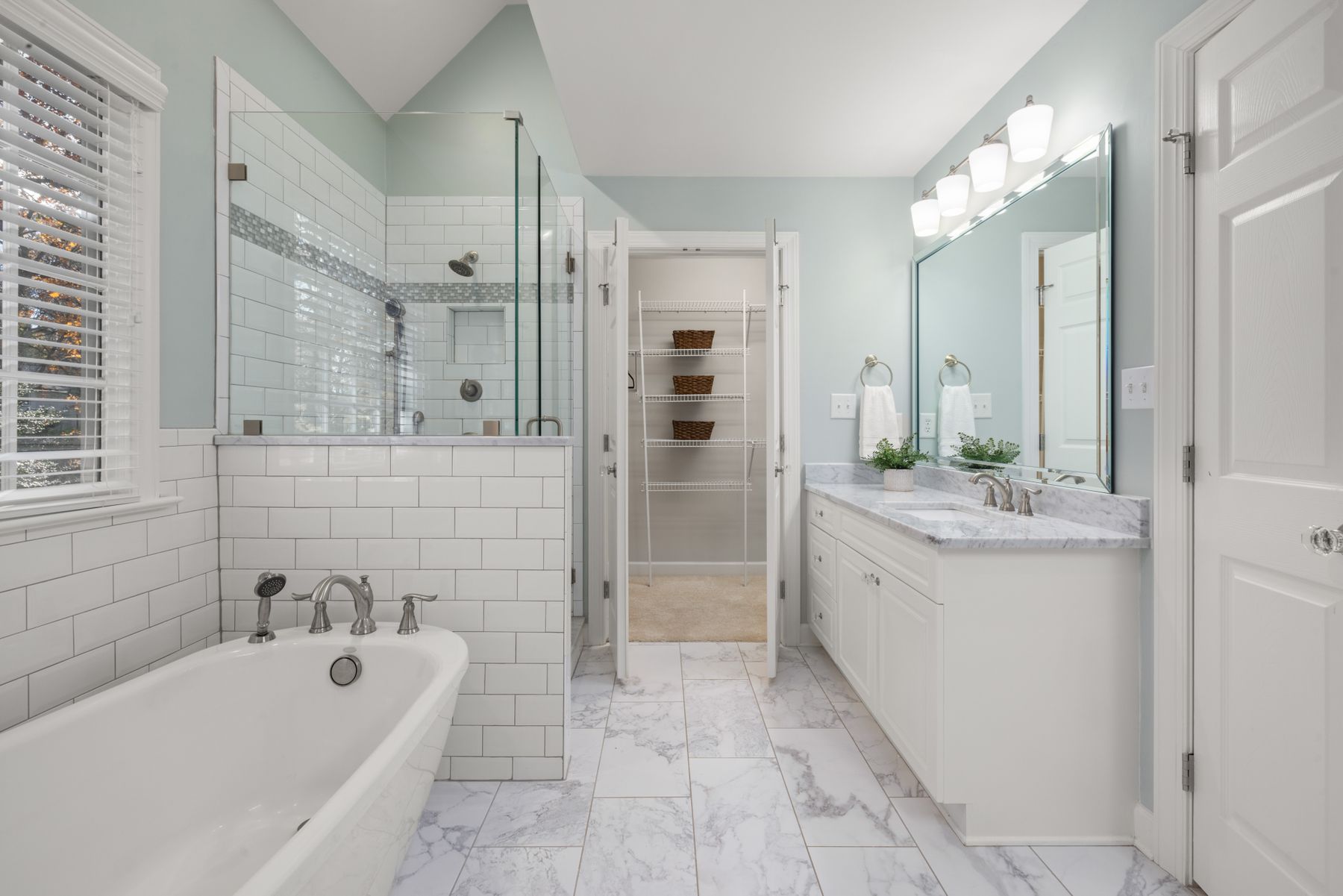
Subway, square, hexagonal and marble-look tiles are classic because they can be repaired, repeated and paired with many styles. Their longevity depends on the set-out: center key walls, avoid tiny cuts at visible corners and align changes with fixtures or joinery. A border can clarify architecture, but several competing trims make the room feel busy. Consult [Bathroom Tile Ideas](/ideas/bathroom-tile-ideas/) before choosing format from a close-up sample alone.
Ground Curved Fixtures With the Floor
A patterned, checkerboard or warm stone floor can stabilize the curves of a bath and basin, but it should not compete with every wall. Softer color contrast and larger repeats often feel more adaptable than sharp black-and-white geometry. Check slip rating, underfloor-heating compatibility, grout maintenance and transitions at adjoining rooms. The [bathroom flooring guide](/ideas/bathroom-flooring-ideas/) covers performance choices beyond pattern.
Make a Freestanding Bath Earn Its Space
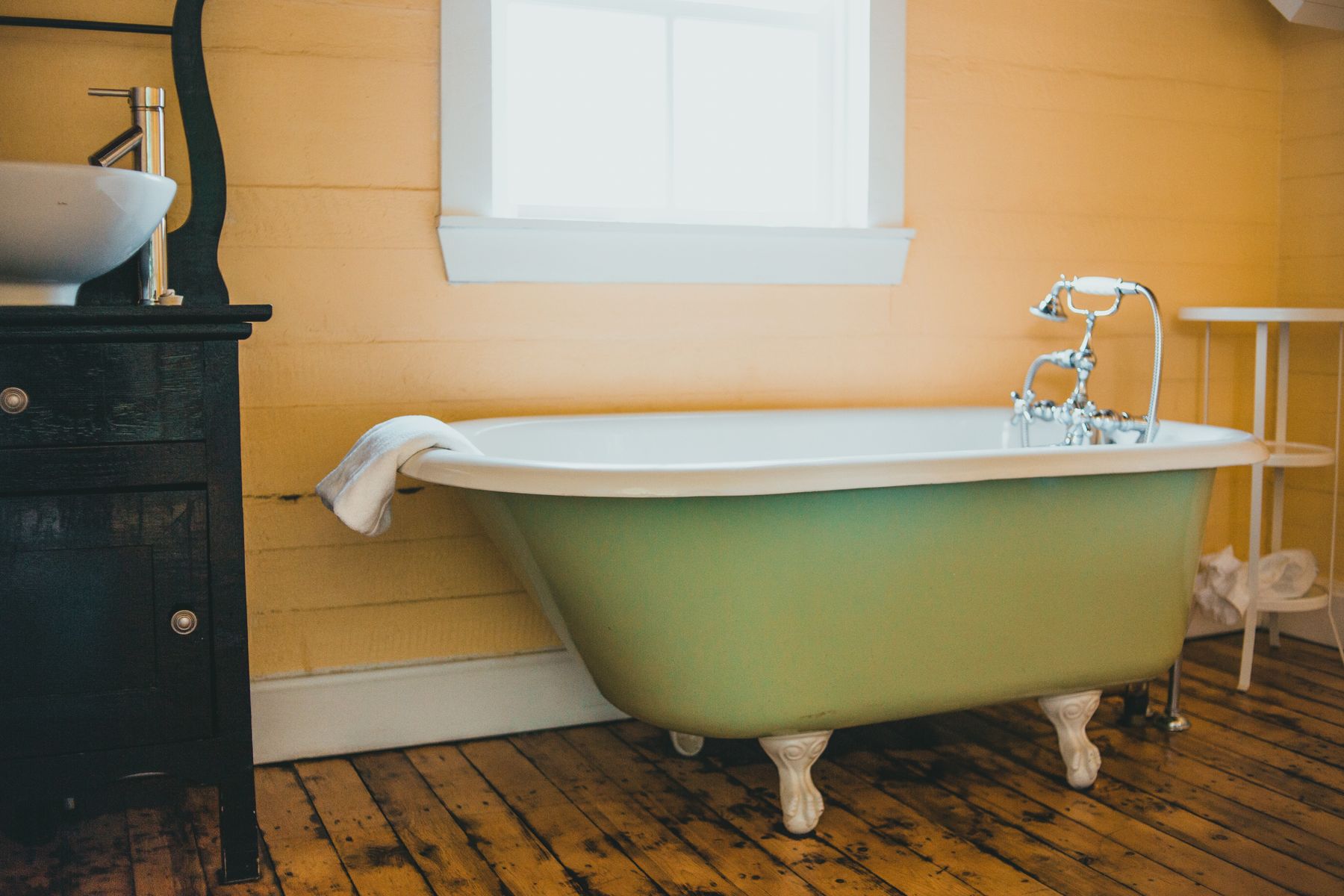
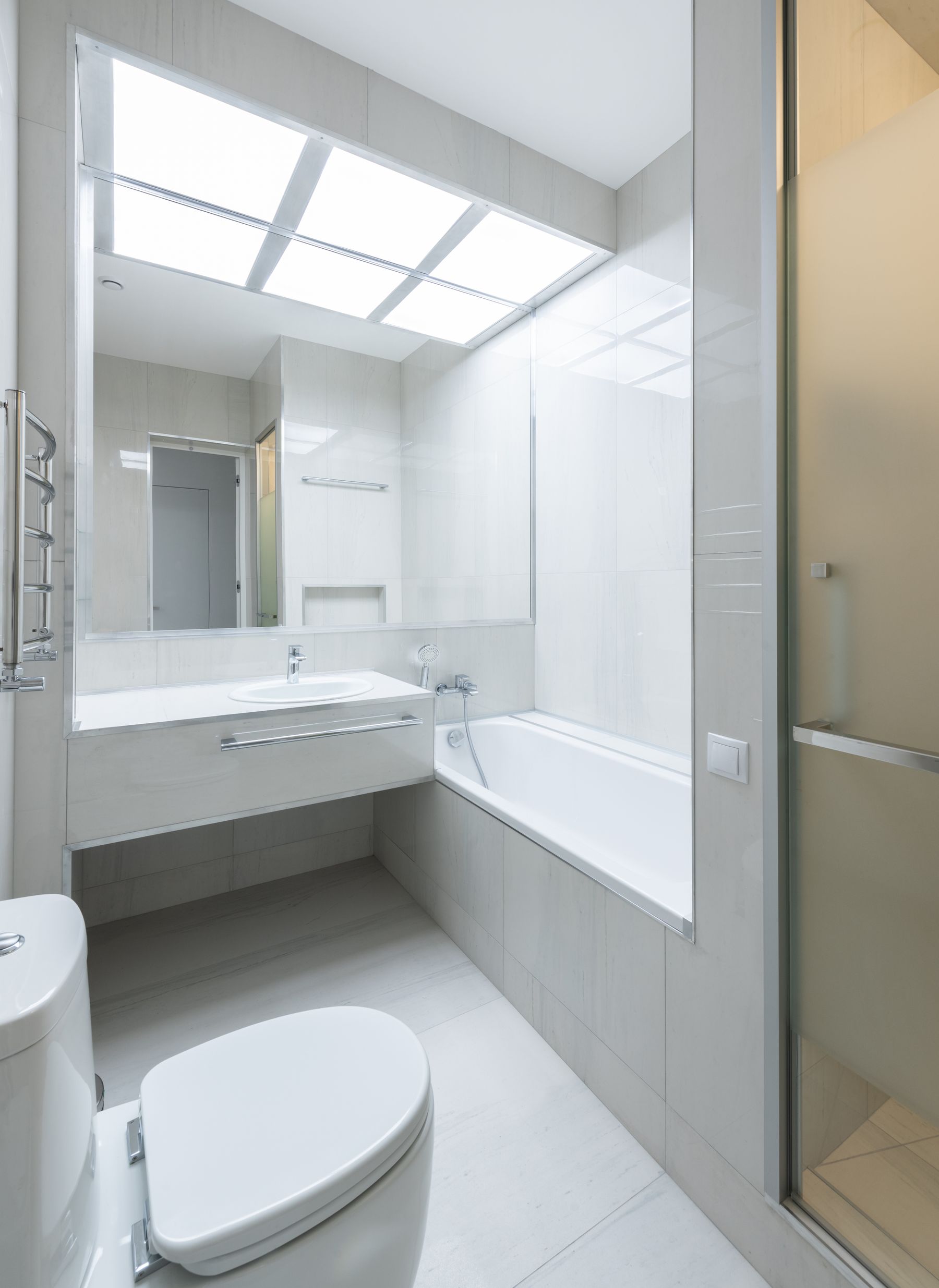
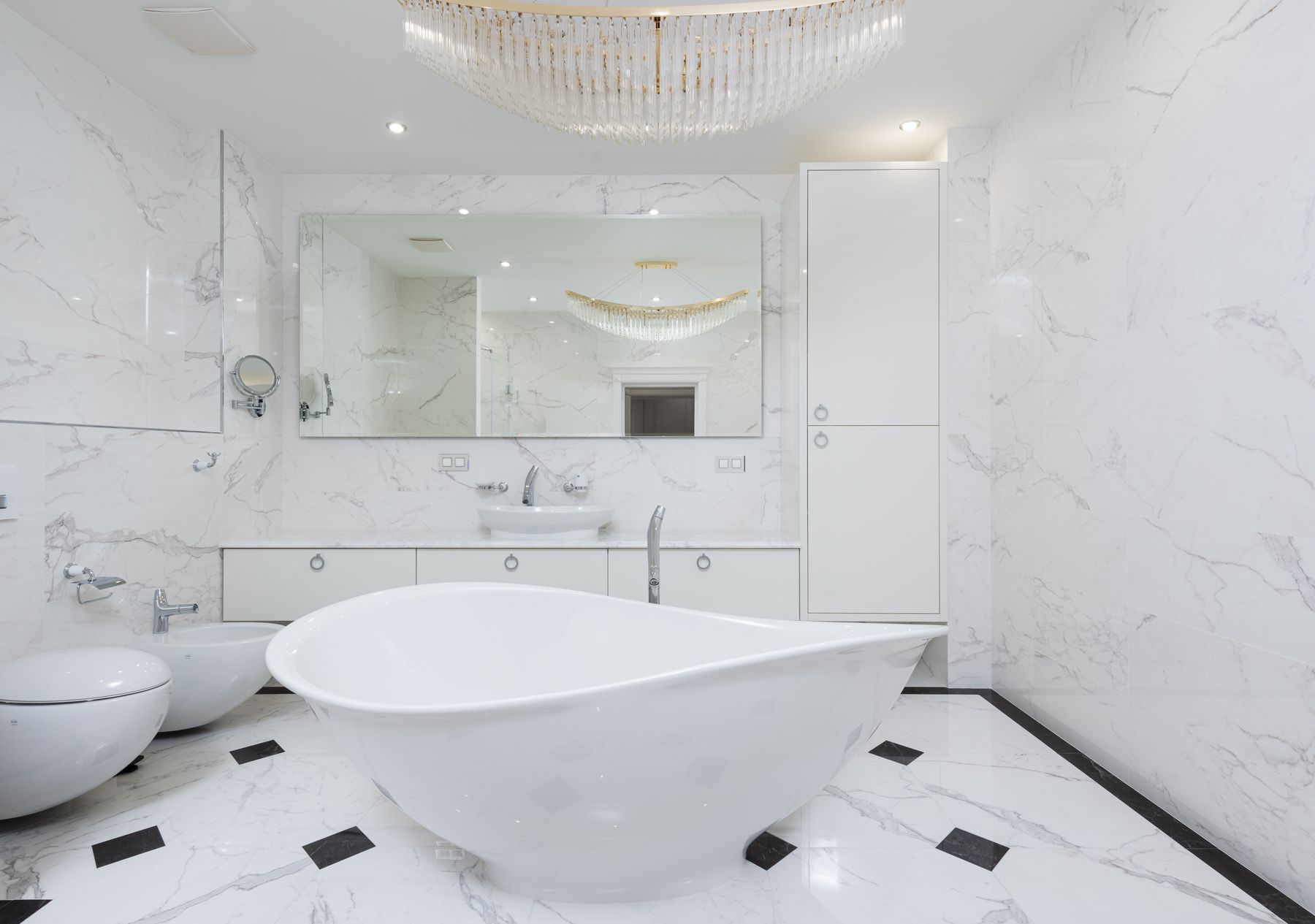
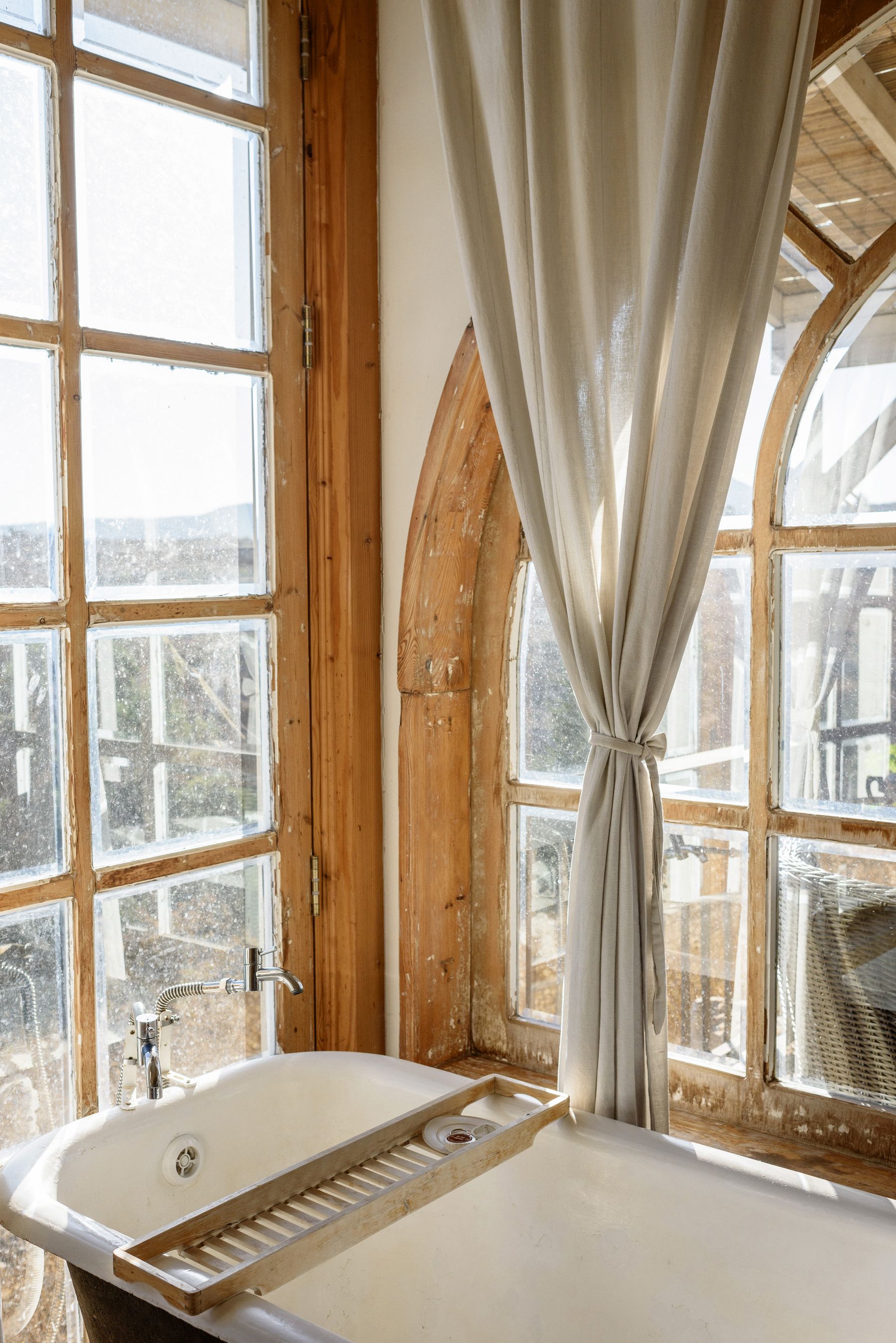
A shaped bath can be a compelling focal point, but only when users can enter safely, reach controls and clean the perimeter. Do not force a freestanding model into an alcove that leaves unusable slivers behind it; a built-in bath may look calmer and perform better. Confirm floor structure, filler position, hot-water capacity and nearby towel access. The broader [Bathtub Ideas](/ideas/bathtub-ideas/) guide helps compare silhouettes and installation types.
Design the Shower as Architecture, Not an Add-On
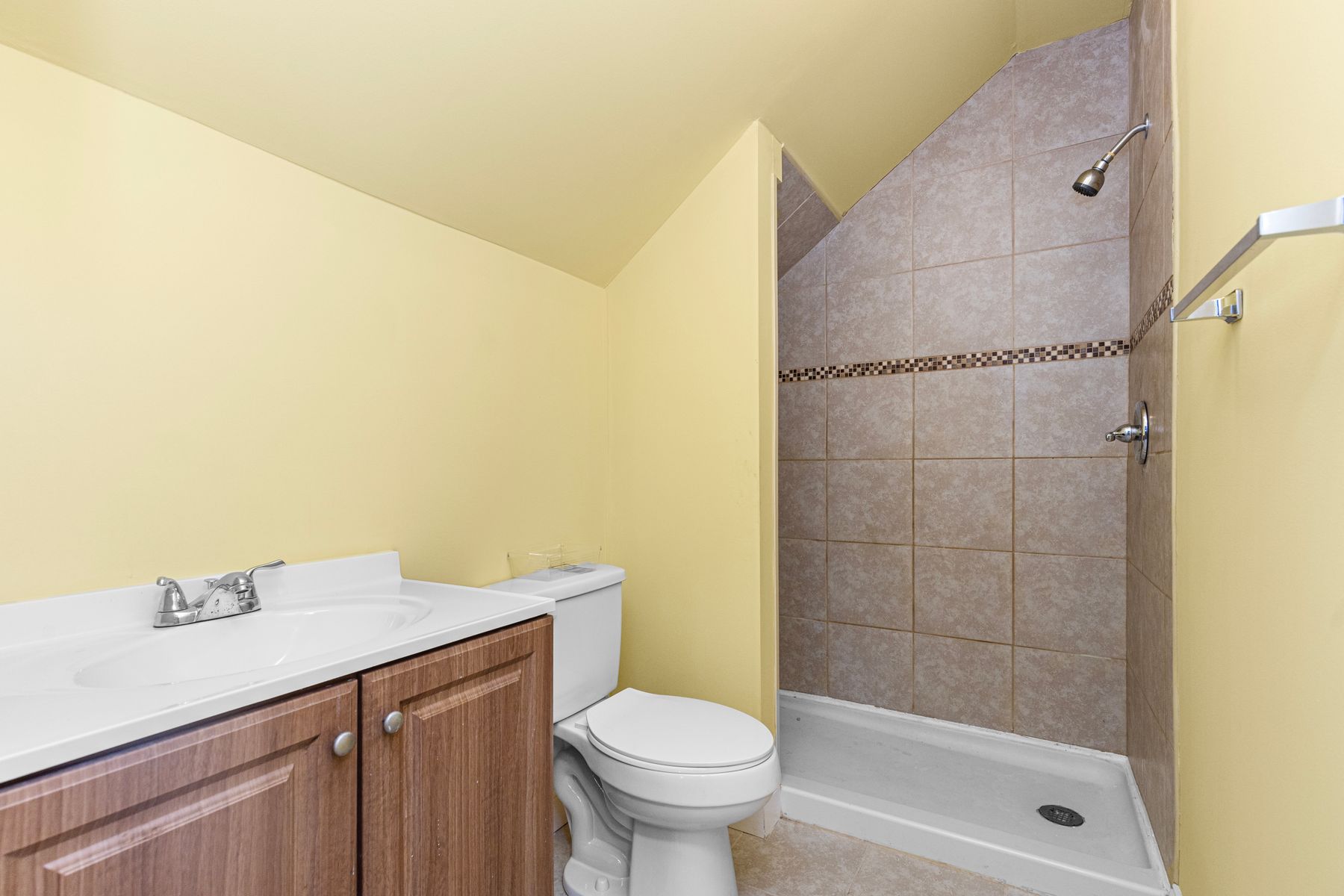
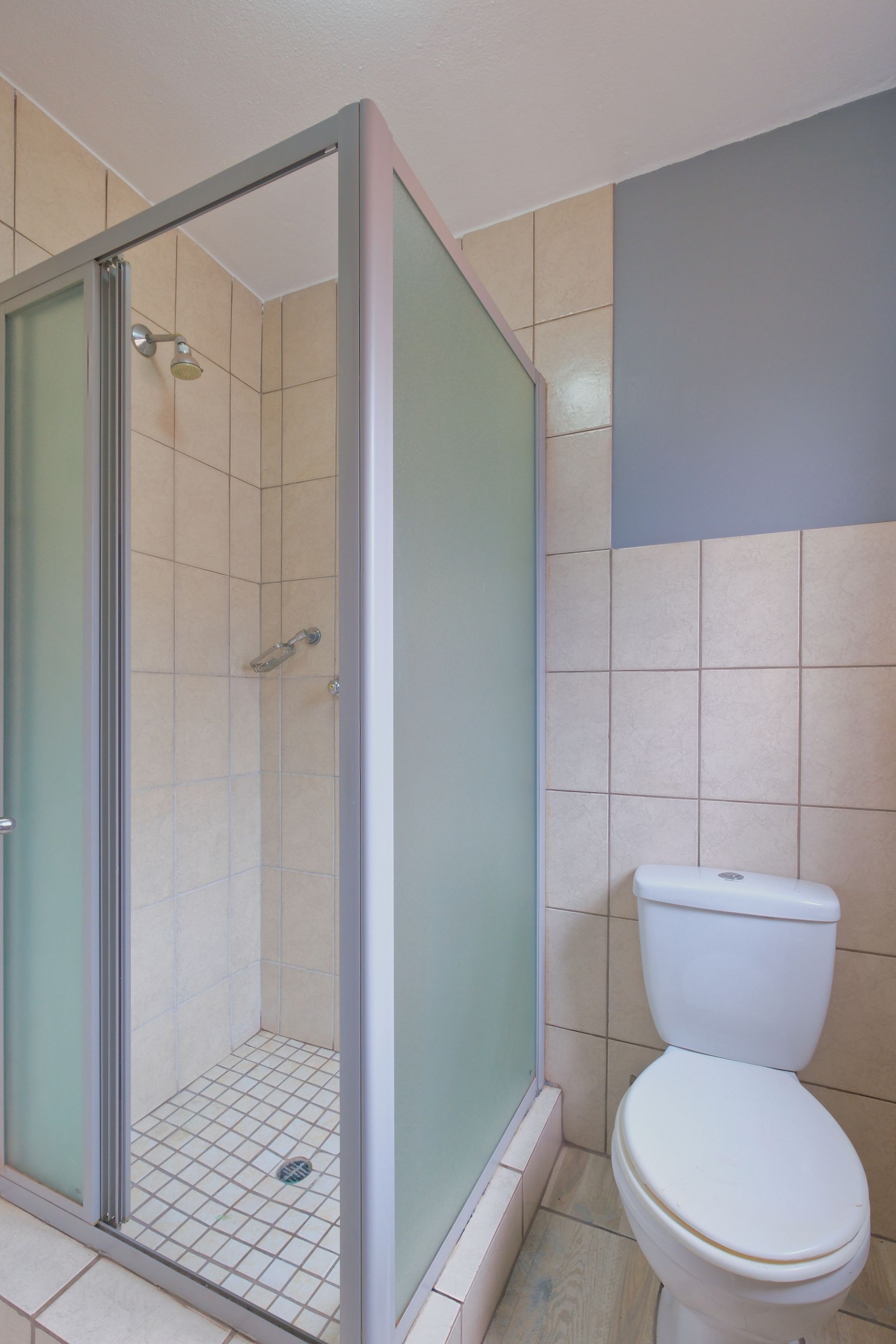
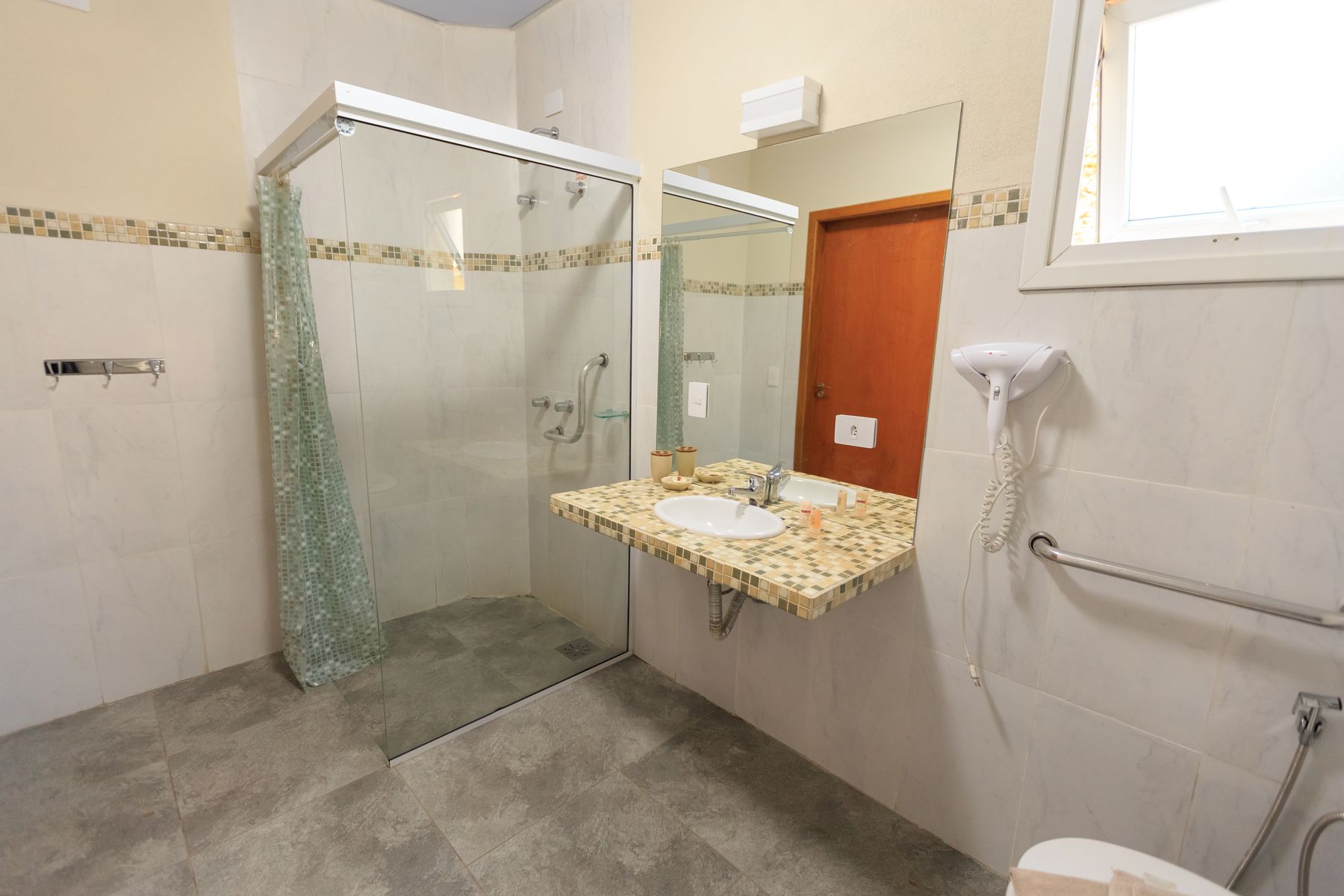
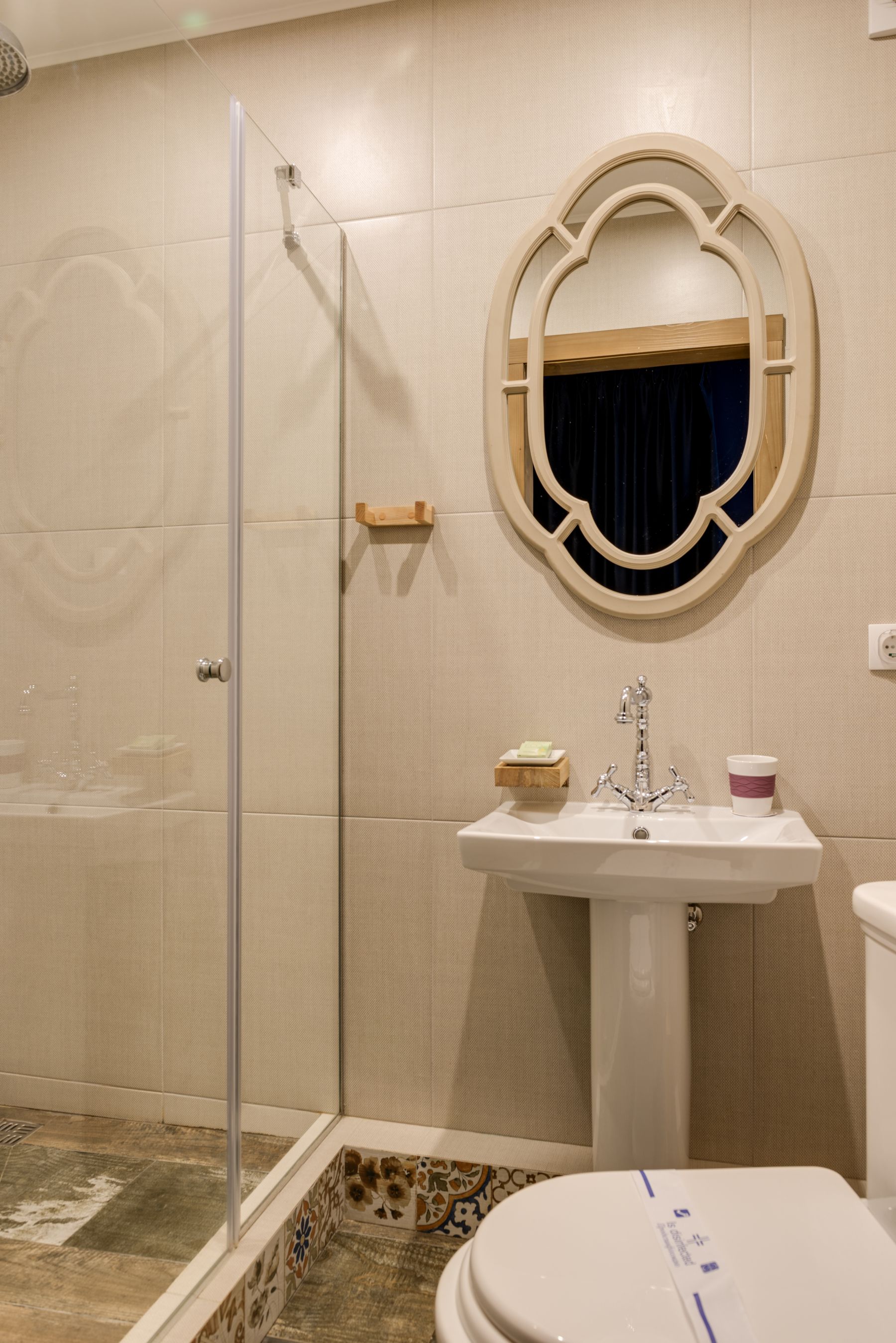
A current shower can sit comfortably in a classic bathroom when its tile lines, glass and metal finish belong to the overall composition. Favor a generous usable enclosure over a cramped bath-and-shower wish list. A low curb or curbless entry may improve continuity when waterproofing, structure and falls allow it; otherwise a precise threshold is more timeless than a risky detail. See [Walk-In Shower Ideas](/ideas/walk-in-shower-ideas/) for screen and entry tradeoffs.
Use Mirrors to Establish Rhythm
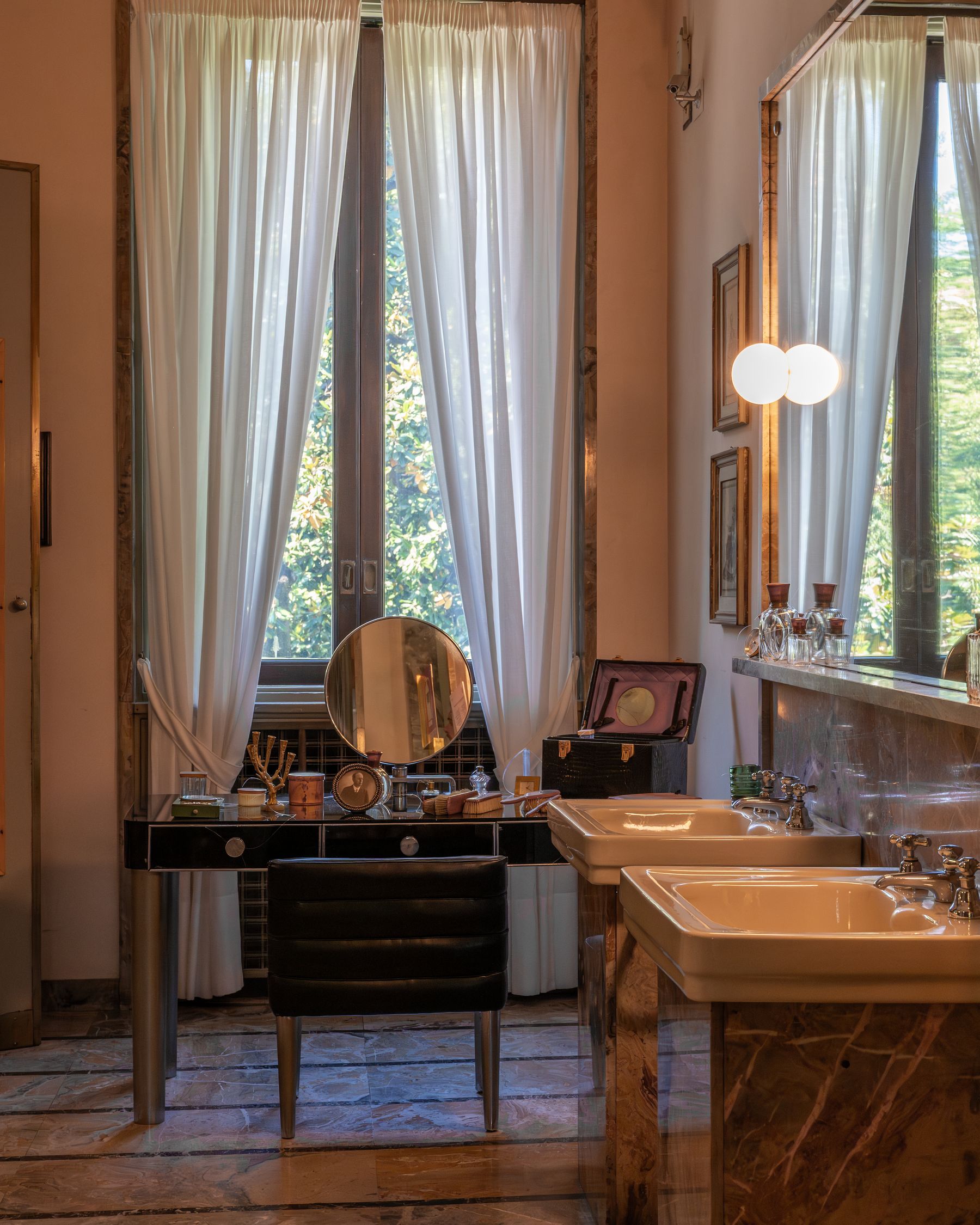
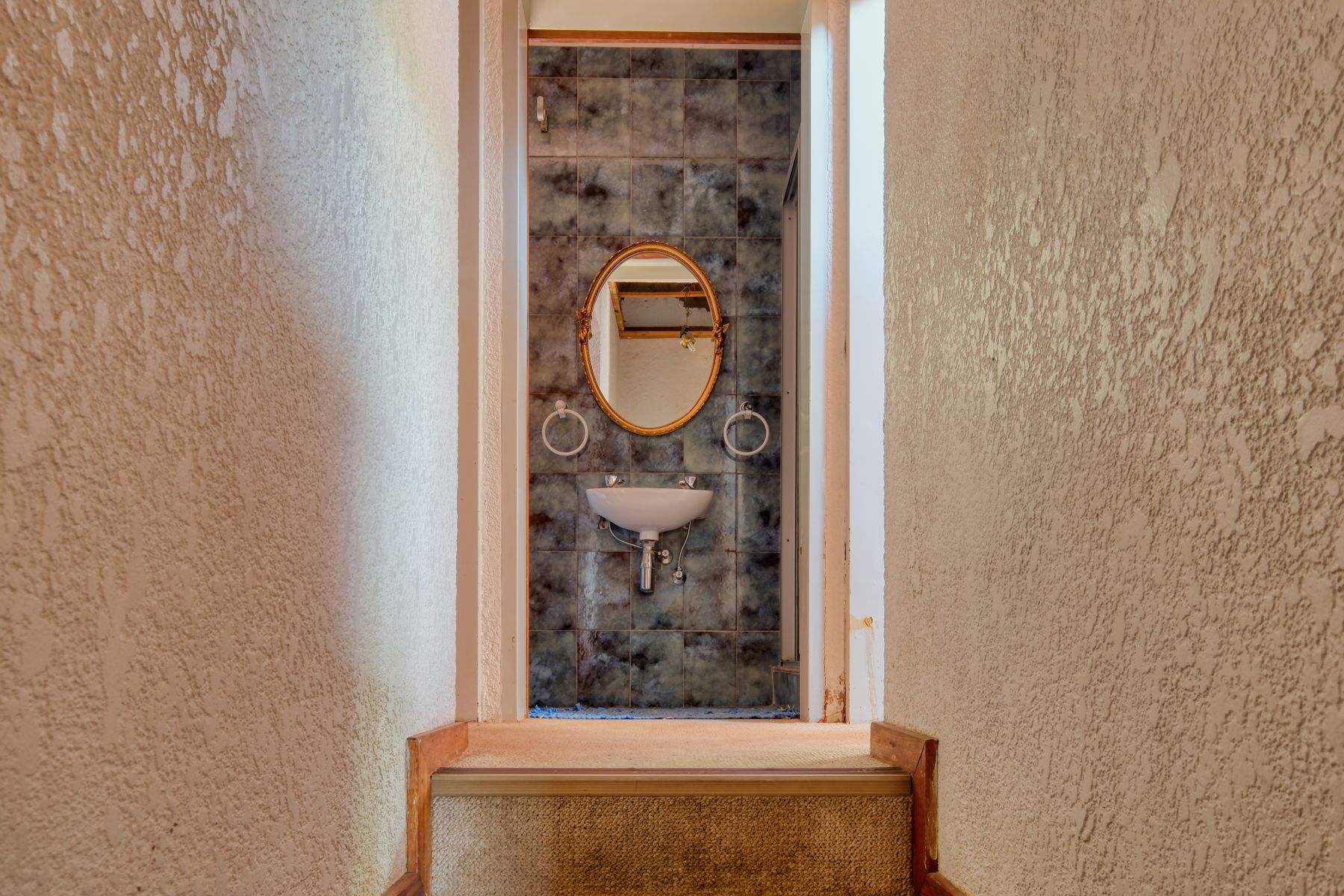
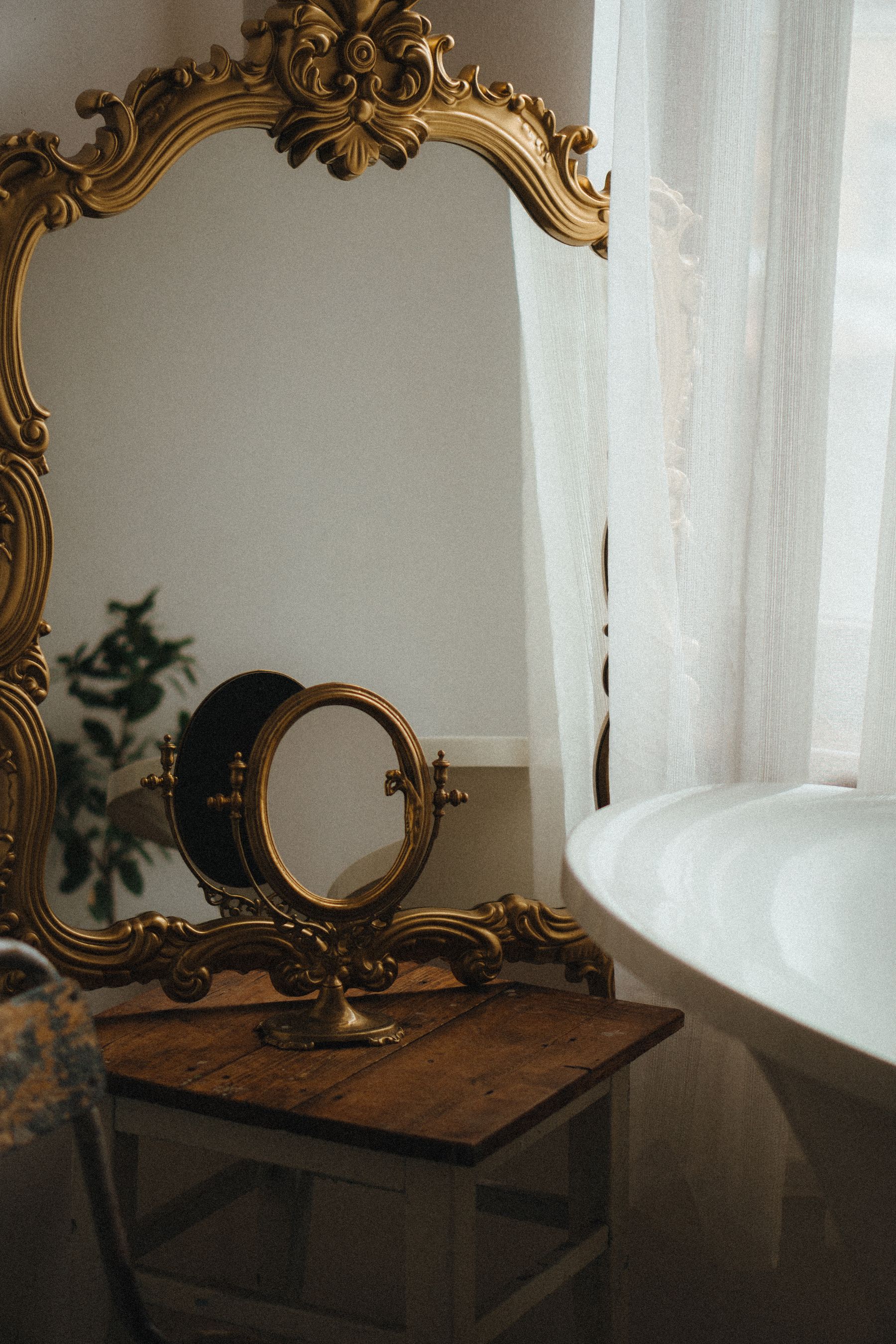
An oval, arch or gently framed rectangle introduces a softer line without making the vanity wall ornate. One wide mirror can unify a long vanity; two matching mirrors can establish rhythm over separate basins. Size them for real sightlines and leave space for flattering side light. If storage is tight, a recessed mirrored cabinet may be the more enduring choice; [Bathroom Mirror Ideas](/ideas/bathroom-mirror-ideas/) covers scale and placement.
Layer Light Instead of Relying on a Chandelier
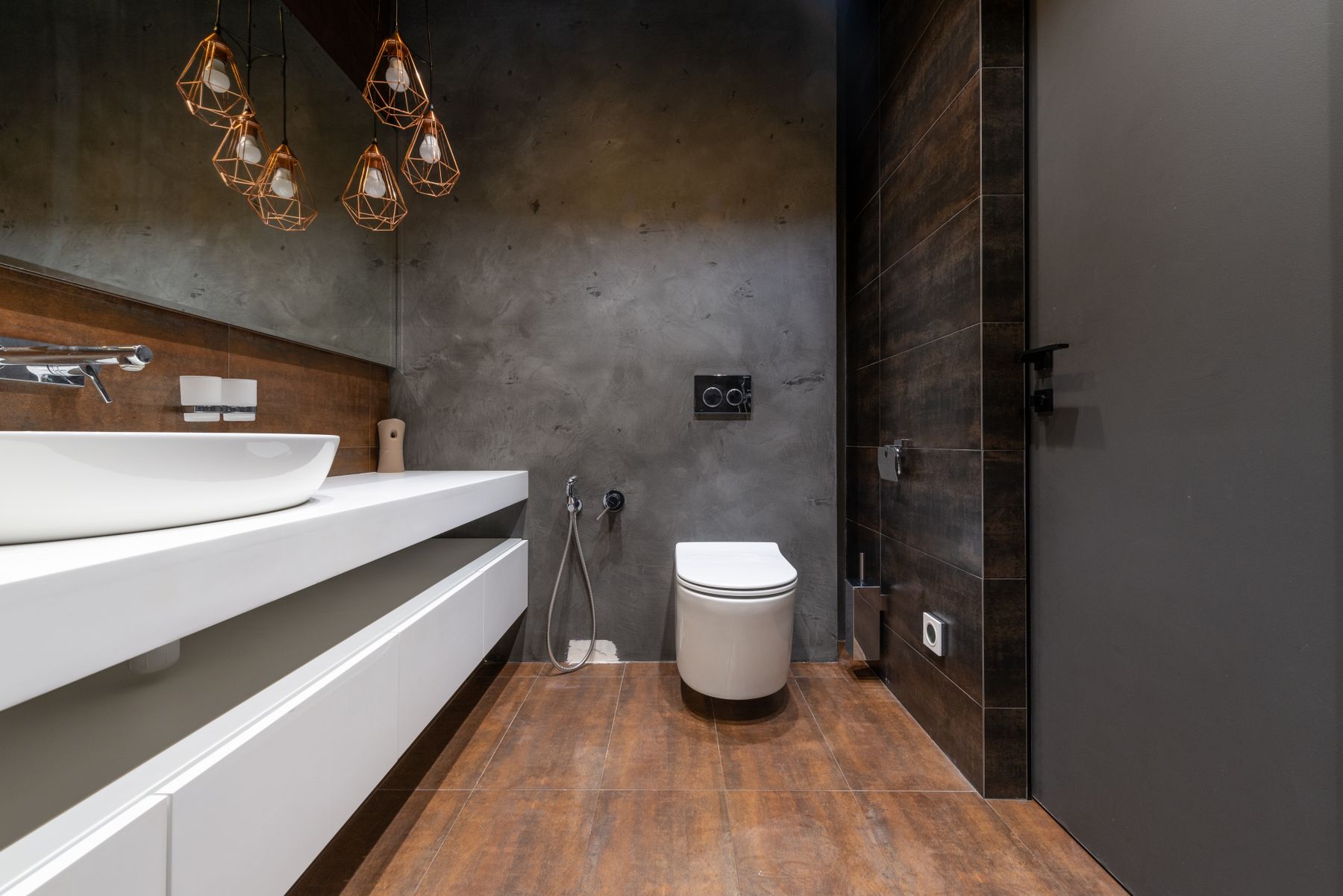
A decorative pendant or chandelier can contribute atmosphere, but it cannot provide even facial light or safe cleaning illumination alone. Combine ambient light with mirror task light and a softer nighttime layer, all correctly rated and positioned for bathroom zones. Decorative fittings should relate in scale rather than match as a set. Use [Bathroom Lighting Ideas](/ideas/bathroom-lighting-ideas/) to plan circuits, color quality and wet-area constraints.
Choose Metal by Aging Behavior
Polished nickel, chrome, aged brass and bronze all have classic precedent, but they age and clean differently. Decide whether patina is welcome, then select a finish whose maintenance suits the household and water quality. One dominant metal plus a compatible secondary accent usually feels collected; forcing every hinge, hook and light into an exact finish can look showroom-perfect rather than enduring.
Use Muted Color to Avoid Generic Neutrality
Dusty green, mineral blue, mushroom, clay and warm grey can make white ceramic and wood feel deliberate without fixing the room to a fashion cycle. Choose a color from an existing stone vein, tile tone or view outside, then repeat it at different strengths rather than adding unrelated accents. For a more committed green scheme, [Green Bathroom Ideas](/ideas/green-bathroom-ideas/) explores undertones and material pairings.
Keep Wallpaper in a Changeable Layer
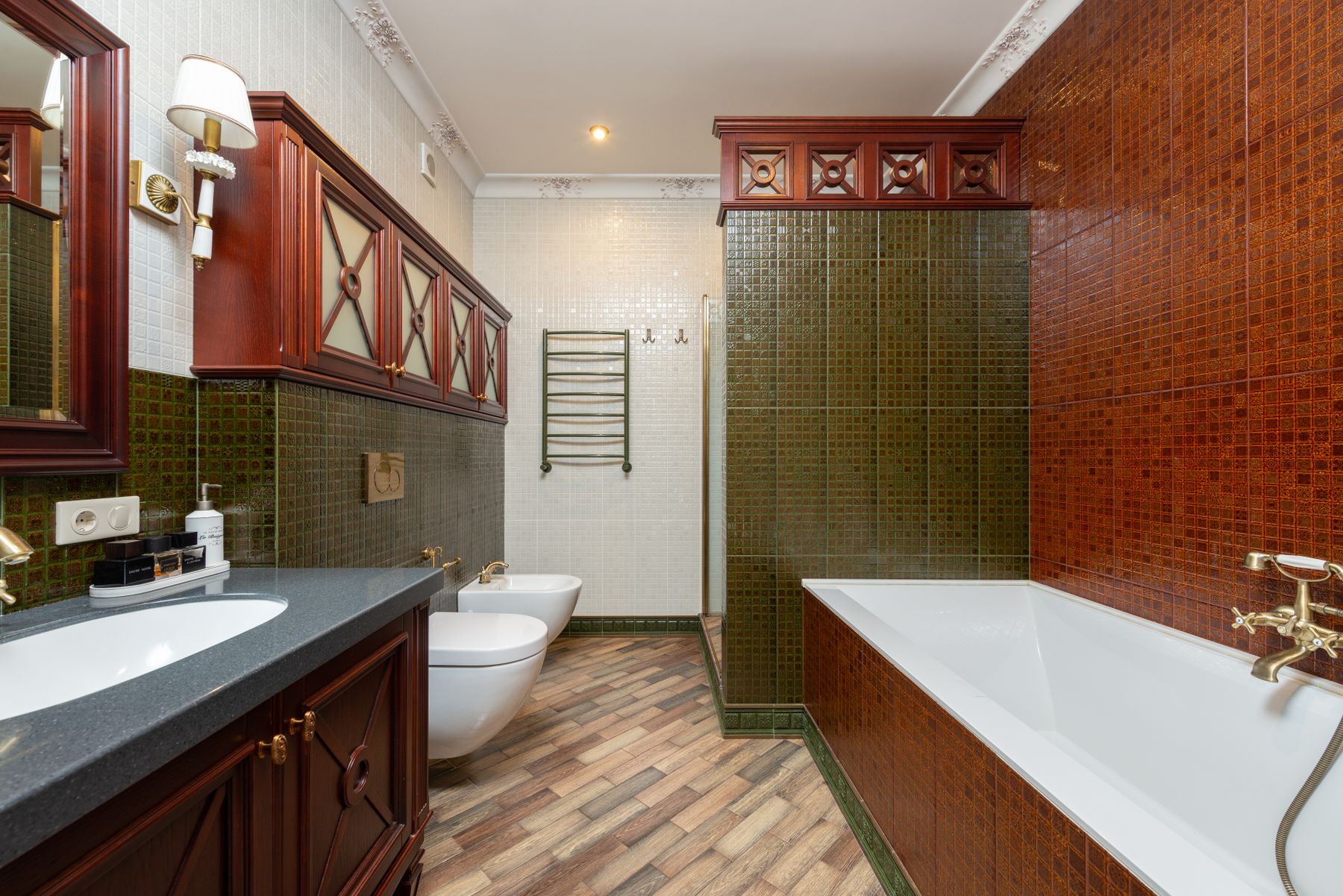
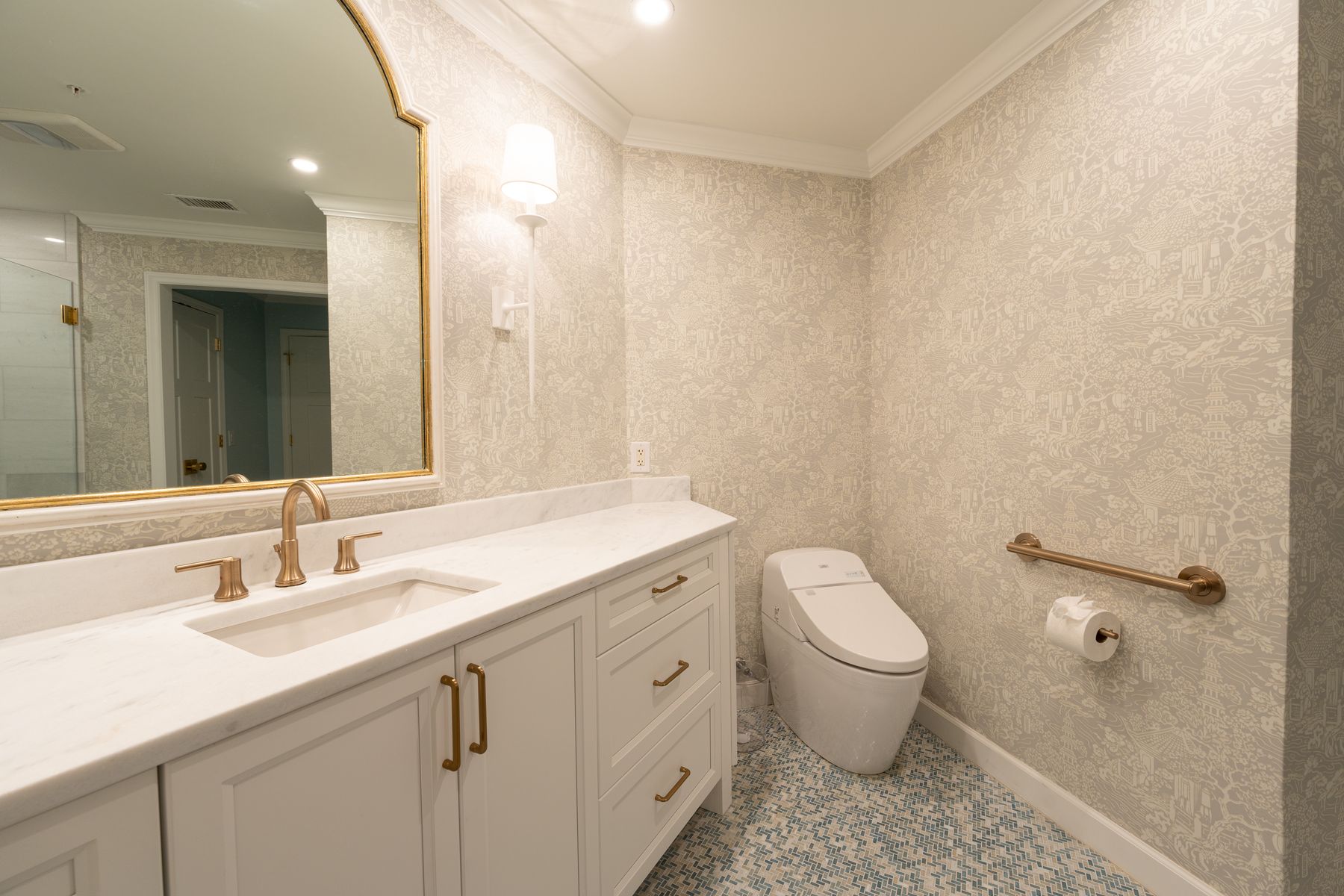
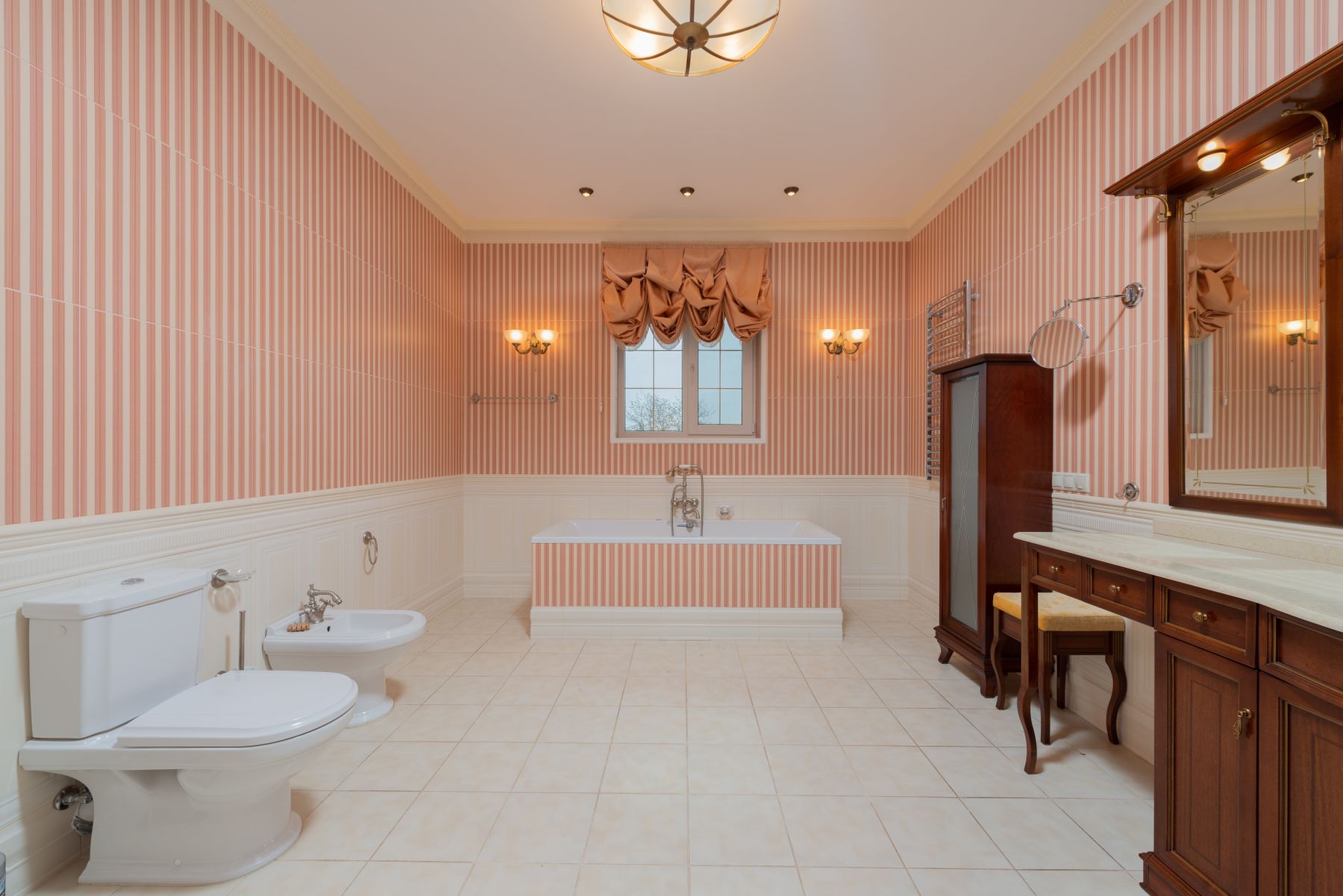
Wallpaper brings pattern, softness and personality to a powder room or the drier upper wall of a ventilated bathroom. Keep splash zones properly tiled or protected, follow the product's suitability guidance and avoid paper over unresolved damp. Because wallpaper can be replaced more easily than stone or plumbing, it is a sensible place for stronger botanical, stripe or small-scale motifs. [Bathroom Wall Ideas](/ideas/bathroom-wall-ideas/) compares paint, paneling and wet-area surfaces.
Build Storage Around Routines
Classic styling fails quickly when counters become a permanent staging area for toiletries. Give daily items shallow drawers or a mirrored cabinet near the basin, store towels where they can be reached without crossing a wet floor and keep refills in deeper storage. A double vanity should define separate routines rather than merely fill a long wall. The [bathroom storage guide](/ideas/bathroom-storage-ideas/) helps translate categories into cabinet types.
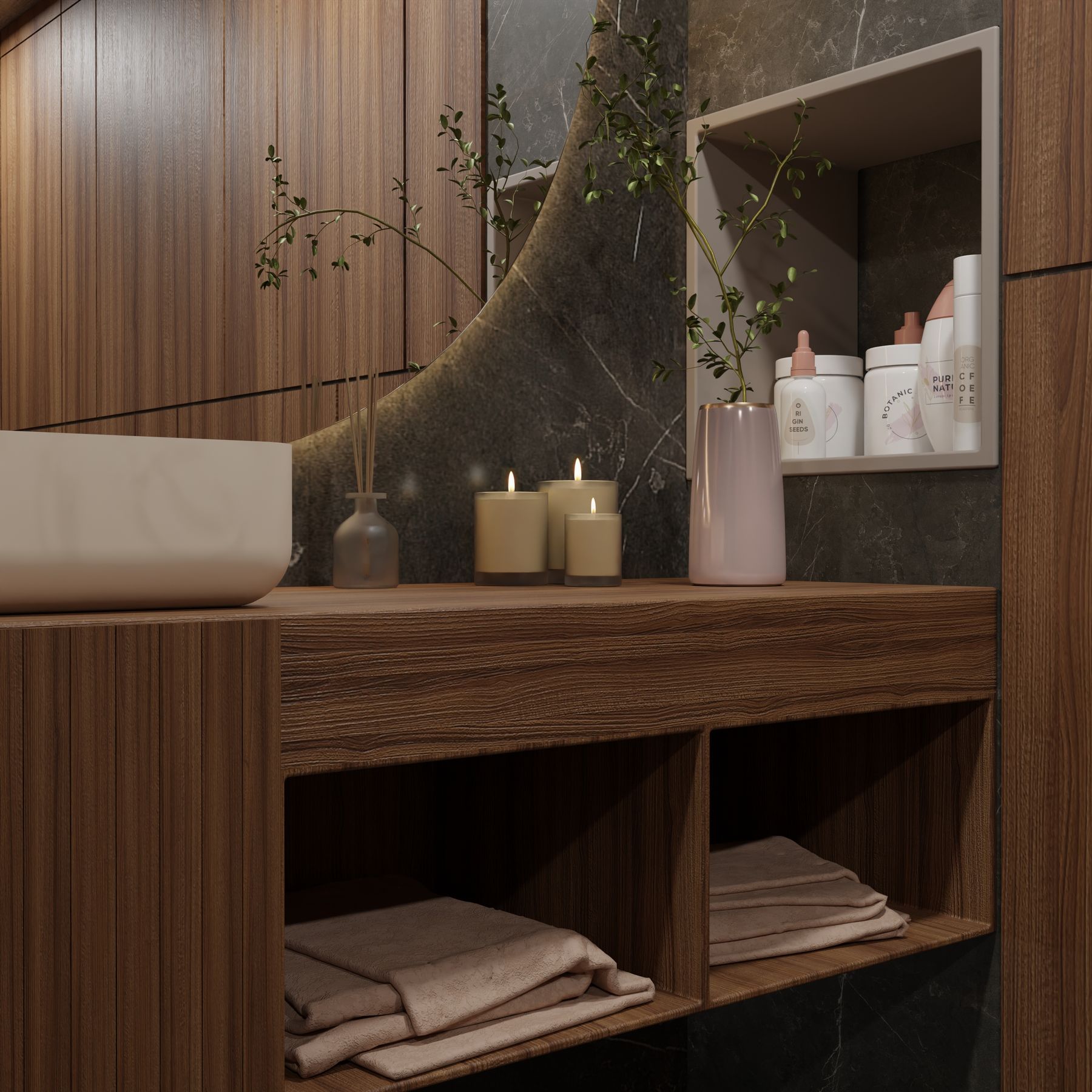
Let Open Storage Show Only Useful Things
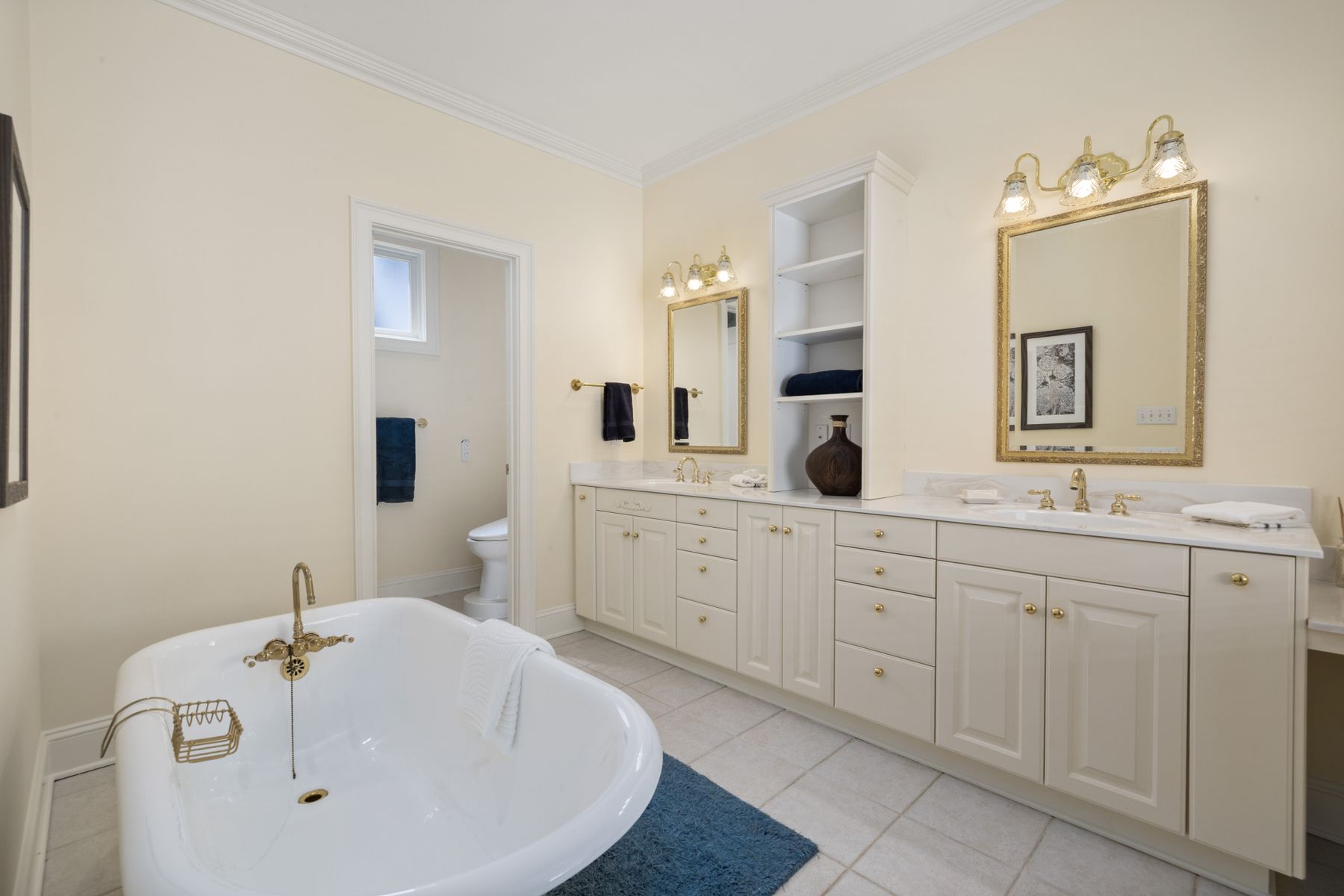
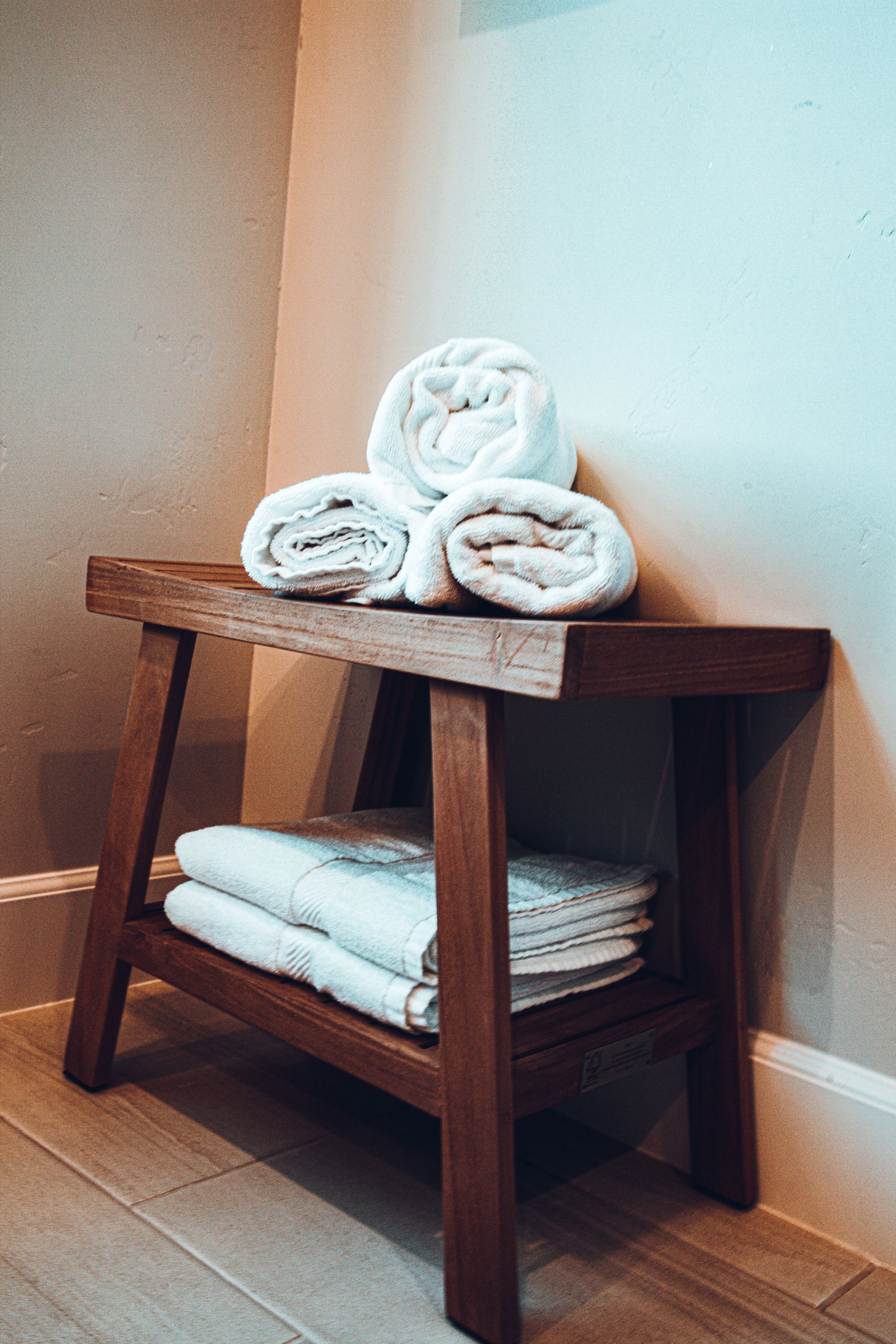
A shelf of folded towels, a small stool or one practical tray can soften hard finishes and make a classic bathroom feel inhabited. Open storage becomes clutter when it carries half-used products, spare packaging and decorative objects that collect dust. Limit it to items used regularly and give everything else closed storage. [Bathroom Shelving Ideas](/ideas/bathroom-shelving-ideas/) covers shelf depth, fixing and wet-zone placement.
Preserve Daylight Without Sacrificing Privacy
Daylight reveals stone, wood and gentle color better than added ornament. Use obscured glass, a top-down treatment or moisture-suitable shutters to protect privacy while keeping the upper opening bright. Avoid placing tall cabinets in the main light path and test the treatment from outside after dark. The [bathroom window guide](/ideas/bathroom-window-ideas/) covers privacy, ventilation and condensation considerations.
Warm the Room With Wood in the Right Zone
A wood vanity, framed cabinet or stool counterbalances ceramic and stone, especially in an older home. Specify stable construction, sealed edges and ventilation rather than assuming all timber will tolerate humidity. Keep vulnerable end grain and furniture feet away from persistent splash. For a more material-led scheme, [Warm Wood Bathroom Ideas](/ideas/warm-wood-bathroom-ideas/) examines species, tone and moisture strategy.
Make a Small Classic Bathroom Specific
A compact room does not need miniature versions of every classic feature. Choose one expressive mirror, vanity or tile detail, then protect full-use clearances and useful storage. A shower-only layout may be more elegant than forcing in a short bath; one broad mirror can outperform several framed objects. The [Small Bathroom Ideas](/ideas/small-bathroom-ideas/) guide covers layout choices, while classic character can remain concentrated in a single strong element.
Plan Thermal Comfort and Towel Drying Early
Stone and tile may look permanent yet feel unwelcoming when the room is cold and towels remain damp. Calculate heating for the space rather than treating a decorative towel rail as the only heat source. Give each regular user enough rail or hook length for drying, and place it within safe reach of bath or shower without blocking circulation. Comfort is part of why a room continues to be loved.
Design for Changing Mobility Without a Clinical Look
A level entry, slip-resistant floor, reachable controls, useful lighting and wall reinforcement for future support rails can be integrated quietly into a classic scheme. Choose lever handles and clear contrast where they make operation easier; do not hide critical edges in a low-contrast palette. The [aging-in-place bathroom guide](/ideas/aging-in-place-bathroom-ideas/) provides a broader planning framework, but local accessibility and building requirements still need professional confirmation.
Hide Technology, Not Service Access
Underfloor heating, demisters, quiet extraction, charging outlets and concealed valves can make a classic bathroom work better without dictating its appearance. Yet access panels, isolation points and replaceable drivers must remain reachable. Align controls with joinery or tile lines and avoid proprietary systems whose repair requires damaging permanent finishes. Timelessness depends as much on maintainability as on visual restraint.
Ventilate for the Materials You Chose
Paint, wallpaper, wood, grout and metal finishes last only when steam is removed effectively. Size extraction for the room and duct route, provide make-up air and use a timer or humidity control that matches actual bathing habits. A window helps but is not a dependable substitute in every season. Cleaning mold from decorative trim is not patina; moisture management protects both health and the classic finish.
Renovate in Layers When the Layout Already Works
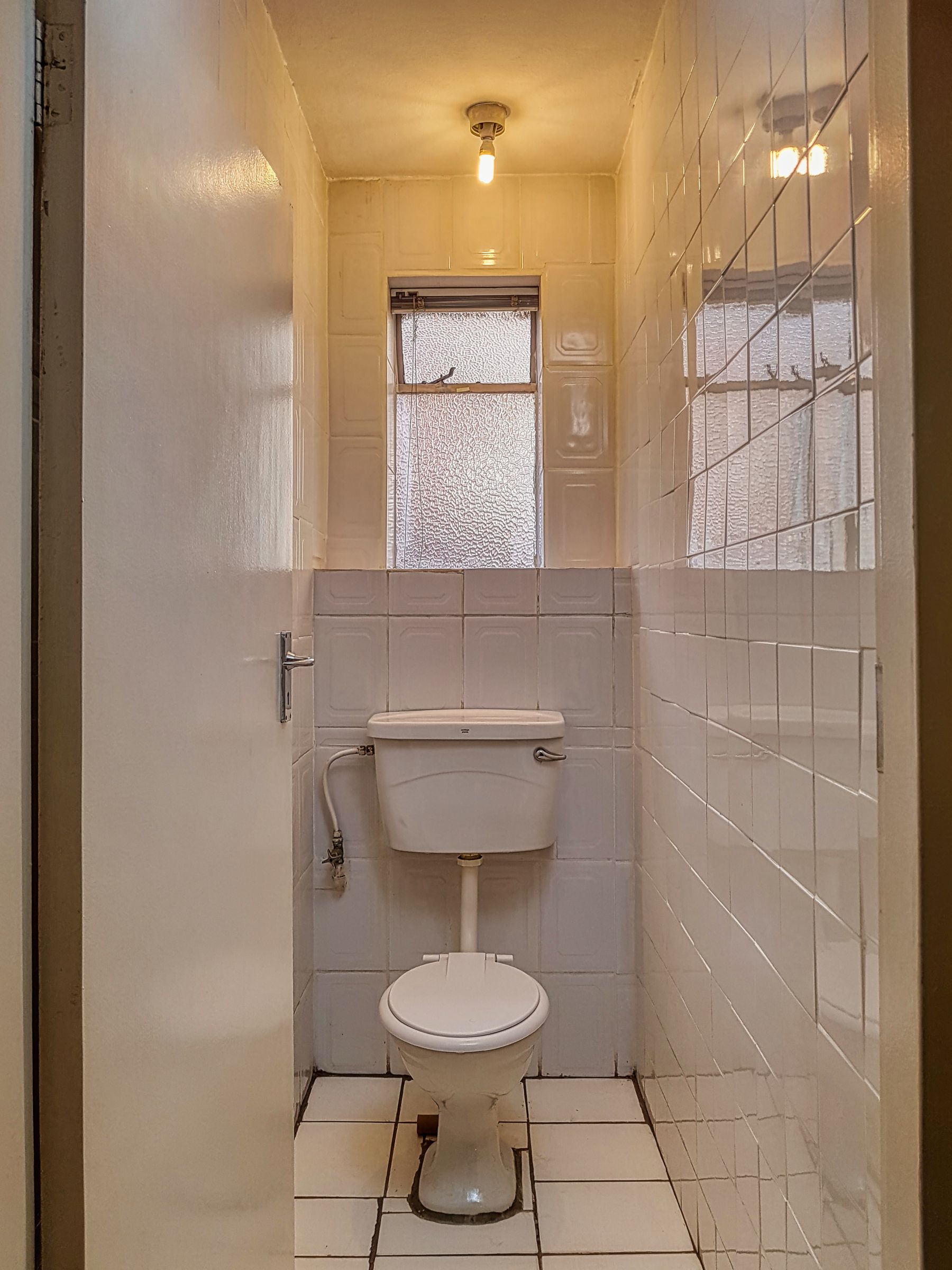
If plumbing positions, waterproofing and circulation are sound, a classic update may come from refinishing cabinetry, improving mirrors and light, replacing worn hardware and introducing a better wall color. Preserve durable tile or stone that still performs; demolition is not a prerequisite for coherence. The [bathroom remodel guide](/ideas/bathroom-remodel-ideas/) helps distinguish cosmetic work from technical renewal and keeps spending aligned with risk.
Know When Classic Is the Wrong Label
Classic is useful when the room combines familiar forms without strict historical commitment. Choose [Traditional Bathroom Ideas](/ideas/traditional-bathroom-ideas/) for formal symmetry and established cabinetry, Victorian for nineteenth-century silhouettes, [Art Deco Bathroom Ideas](/ideas/art-deco-bathroom-ideas/) for graphic geometry, or Contemporary for an evolving present-day language. Naming the direction clearly prevents a mood board from becoming a vague mixture of every old-looking feature.
Finish With a Replacement Test
Before final approval, ask what happens when a tap fails, wallpaper dates, a tile cracks or mobility needs change. Keep spare tile and grout data, record paint colors, photograph concealed services and choose fittings with available parts. Then remove any decorative element that does not improve use, comfort or hierarchy. A classic bathroom is not one that never changes; it is one whose durable framework can accept change gracefully.