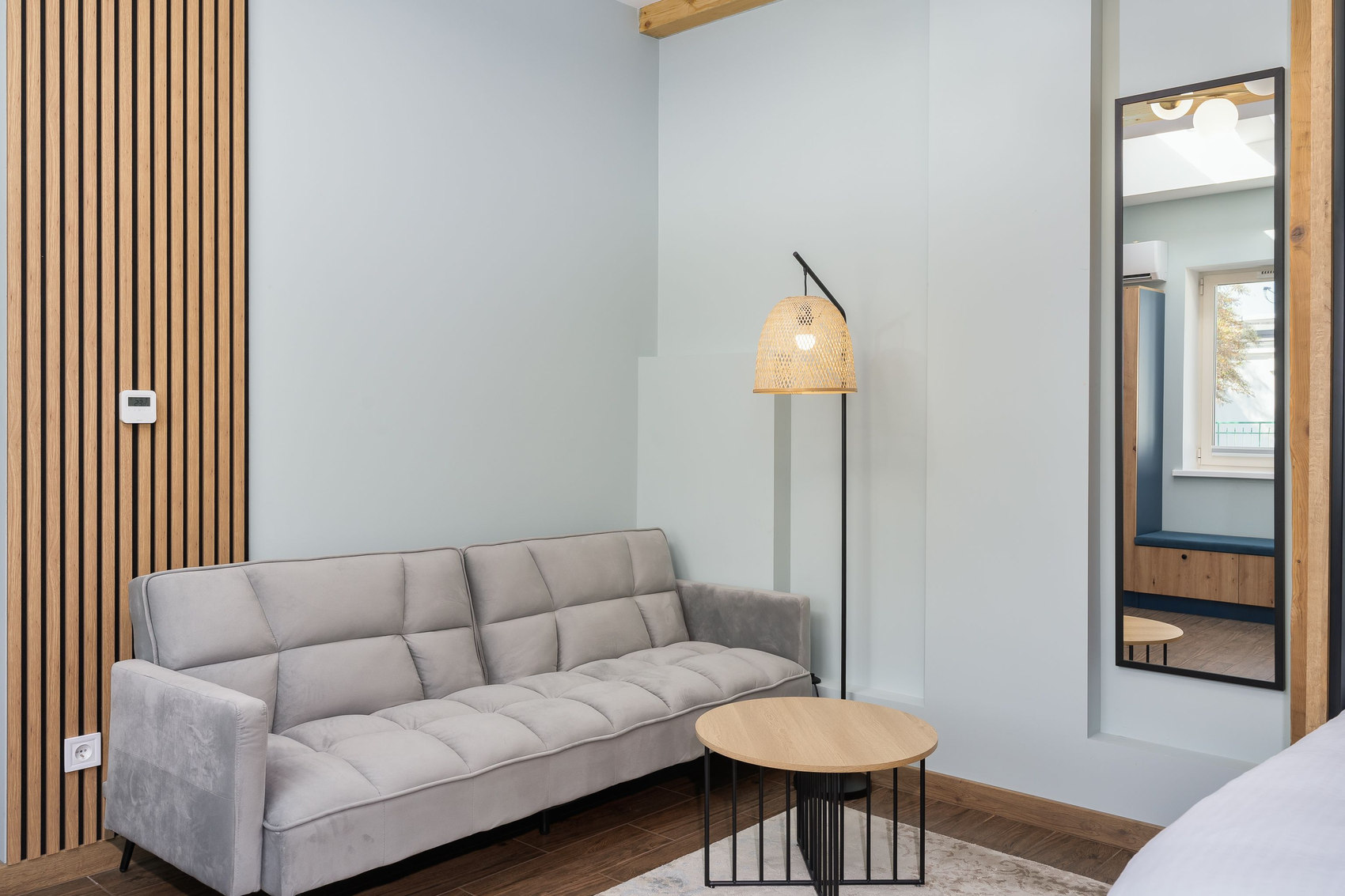
Give the open bed a clear route through the room
A gray sofa, an open-base round table, and a slim lamp keep this room visually light. For a sleeper, the same pieces also raise an essential planning question: where will they sit when the bed is open? The doorway is outside the photograph, so draw that route on your own floor plan rather than assuming the pictured layout solves it.
Before buying, take the selected sleeper’s fully opened footprint and operating instructions from its current product sheet. Mark the dimensions on the floor with removable painter’s tape, starting from the proposed wall position. Include the table, the space needed to pull the frame forward, and the overnight parking place for any chair. Then walk from the door to both sides of the bed. Open the closet and bathroom doors and check how a guest could reach a light in the dark.
Compare a real US example. IKEA lists the FRIHETEN sleeper sofa (article 405.512.31) at 88⅝ × 41⅜ in. (about 225 × 105 cm) when closed, measured as width by depth. Its sleeping surface is 56¾ × 78⅜ in. (about 144 × 199 cm). These numbers describe that specific IKEA product, not the sofa shown here. The mattress-size measurement is not a complete operating-clearance diagram: you also need space to pull out the underframe and move around it. Confirm measurements and the mechanism against IKEA’s current US product listing.
The consumer group Which? also recommends considering how a sofa bed fits when both closed and open (sofa-bed buying guide). For a den that doubles as an office, repeat the tape test with the desk chair rolled back and the monitor cables in their everyday positions. If furniture has to block a door or be carried to another room every night, choose a different footprint or conversion format. For wider seating and passage-layout decisions, see Small Living Room Ideas; here, the decisive extra test is the sleeper’s open configuration.
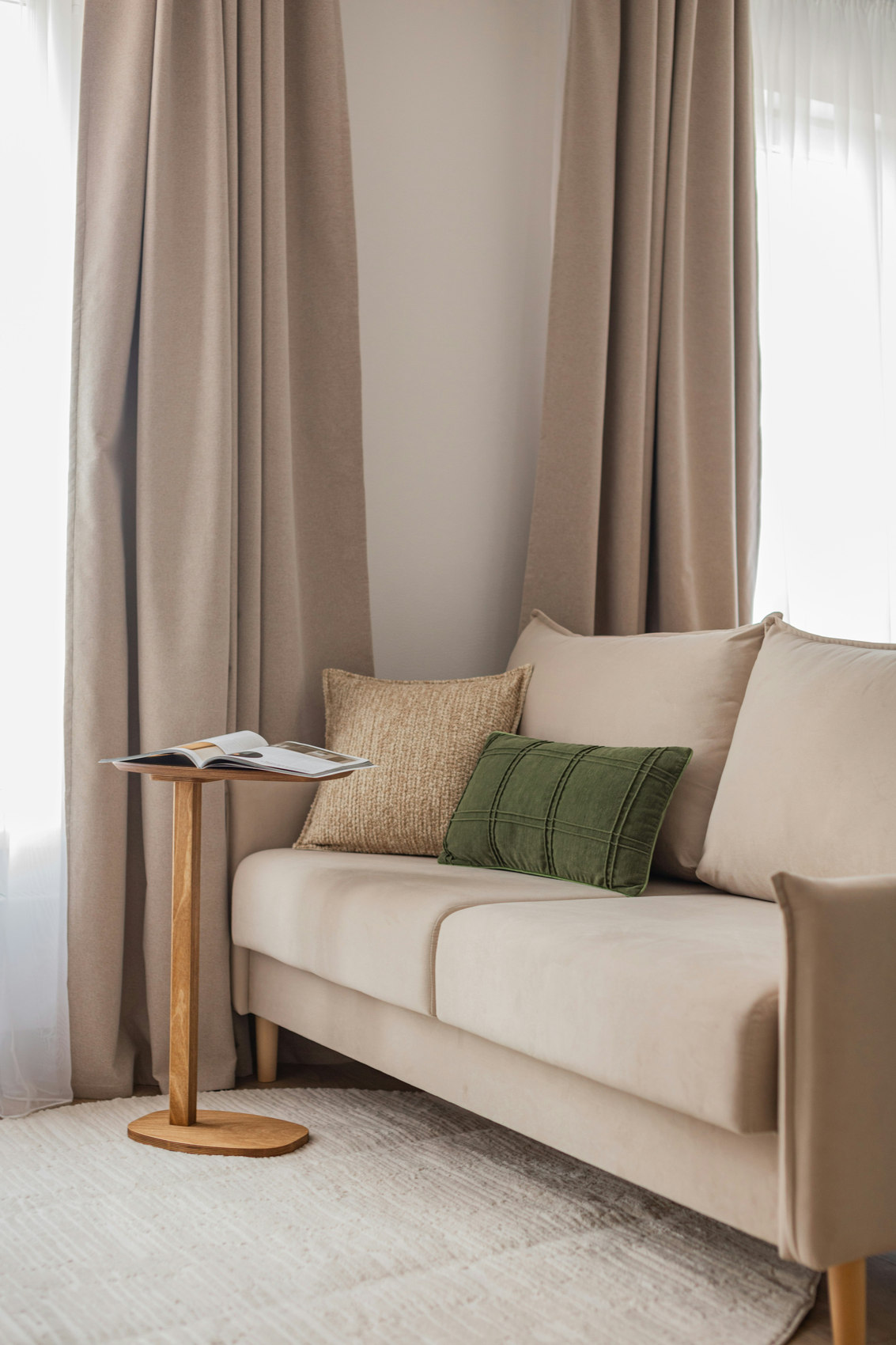
Use layered curtains to make a guest corner feel private
In this compact corner, full-length taupe curtains hang over a sheer layer beside a pale sofa. The two fabrics make the window look dressed during the day; at night, they can help the same part of the room feel more like a place to sleep. The narrow wood table is already in a useful position for a guest’s book or phone.
The choice is not just about color. Sheers filter daytime light, but a guest facing a streetlight may need lined drapes or a properly fitted room-darkening shade. If privacy is the bigger concern, check the view from outside at night with the interior lamps on before deciding which layer is sufficient.
Tape out the opened bed and try to reach the curtain controls from the usable floor area. A long panel that ends up trapped behind a pulled-out frame will not help a tired guest. Keep the fabric away from portable heaters, and choose a track or rod that lets the curtain stack without crowding the side of the sofa. The photographed sofa is a styling reference; its conversion mechanism is not established.
Choose the sleeper mechanism before copying the silhouette
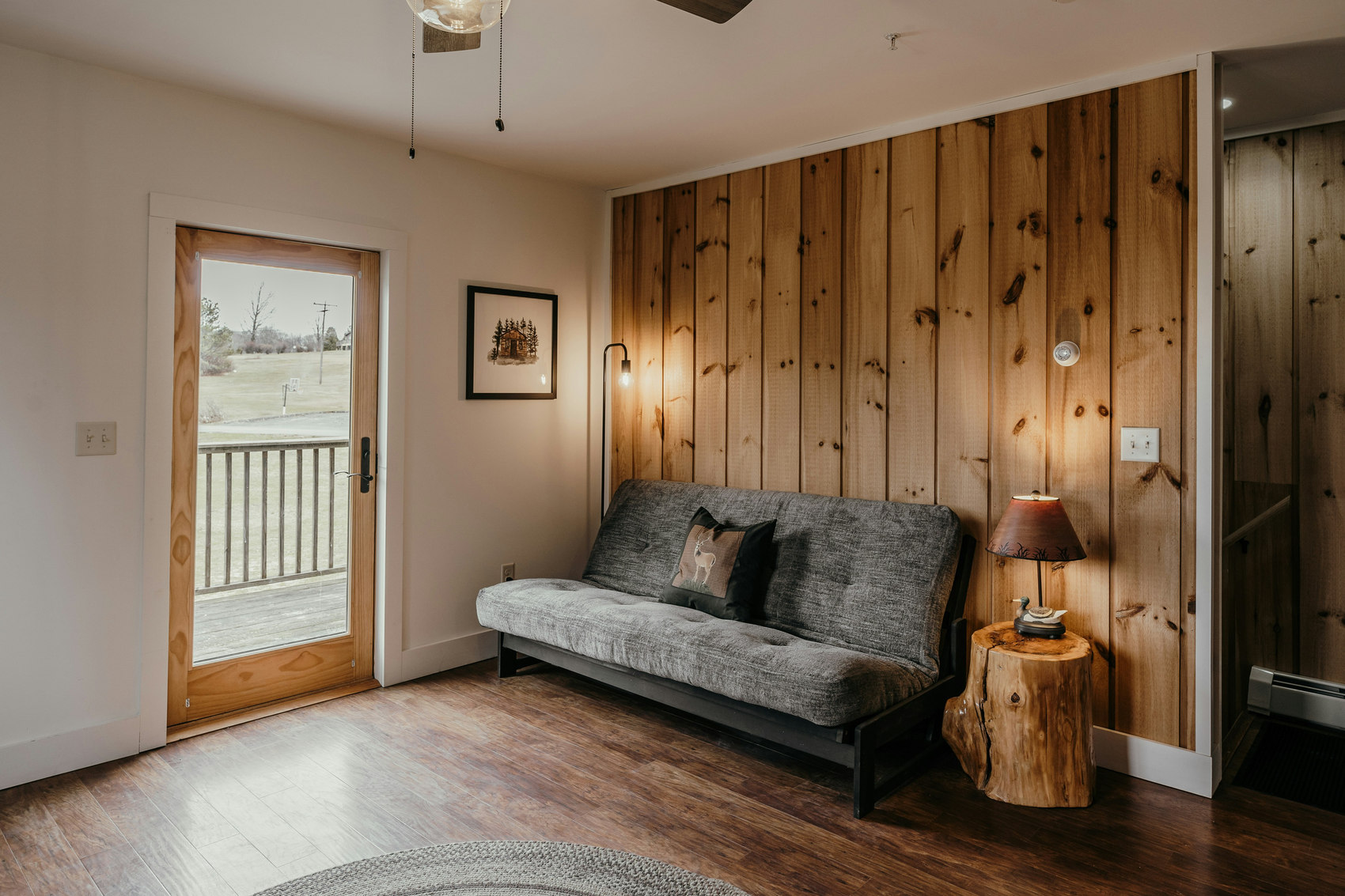
A low gray seat against a wood-paneled wall gives this room a casual, almost cabin-like feel. Its dark frame and compact proportions may suggest a futon, but the image does not show the mechanism. Treat it as a style direction, then check how the exact product you are considering opens.
A fold-flat backrest may need space behind the seating as well as in front; an extendable seat asks you to clear the floor ahead of the sofa. A separate unfold-out frame and mattress brings another opening sequence and another set of dimensions. None is universally the smallest or most comfortable: compare the actual opening steps, sleeping surface, support, and open depth of the models on your shortlist.
For a documented example, IKEA’s FRIHETEN converts by removing the back cushions, pulling the seat and underframe forward, and folding down the back section, as shown in IKEA’s US FRIHETEN guide. That is not a claim about the photographed gray seat. If you will use a sleeper regularly, rehearse the conversion in-store when possible, rather than judging the design only from its closed appearance.
The wood wall, small lamp, and quiet palette are worth borrowing even if you choose a more conventional upholstered sleeper. Just do not place its back tight against the paneling until you know whether the mechanism needs rear clearance.
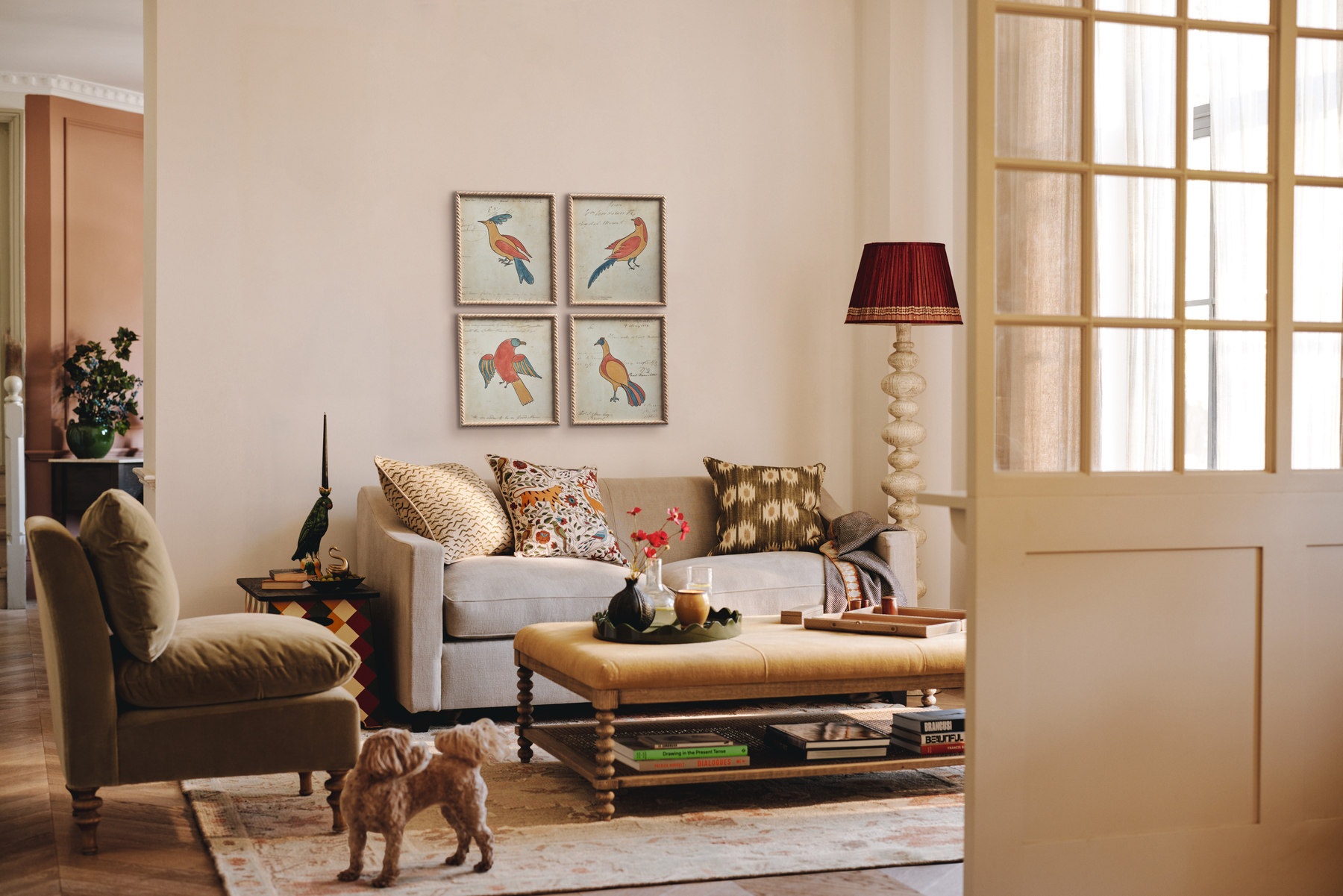
Give daytime cushions an overnight home
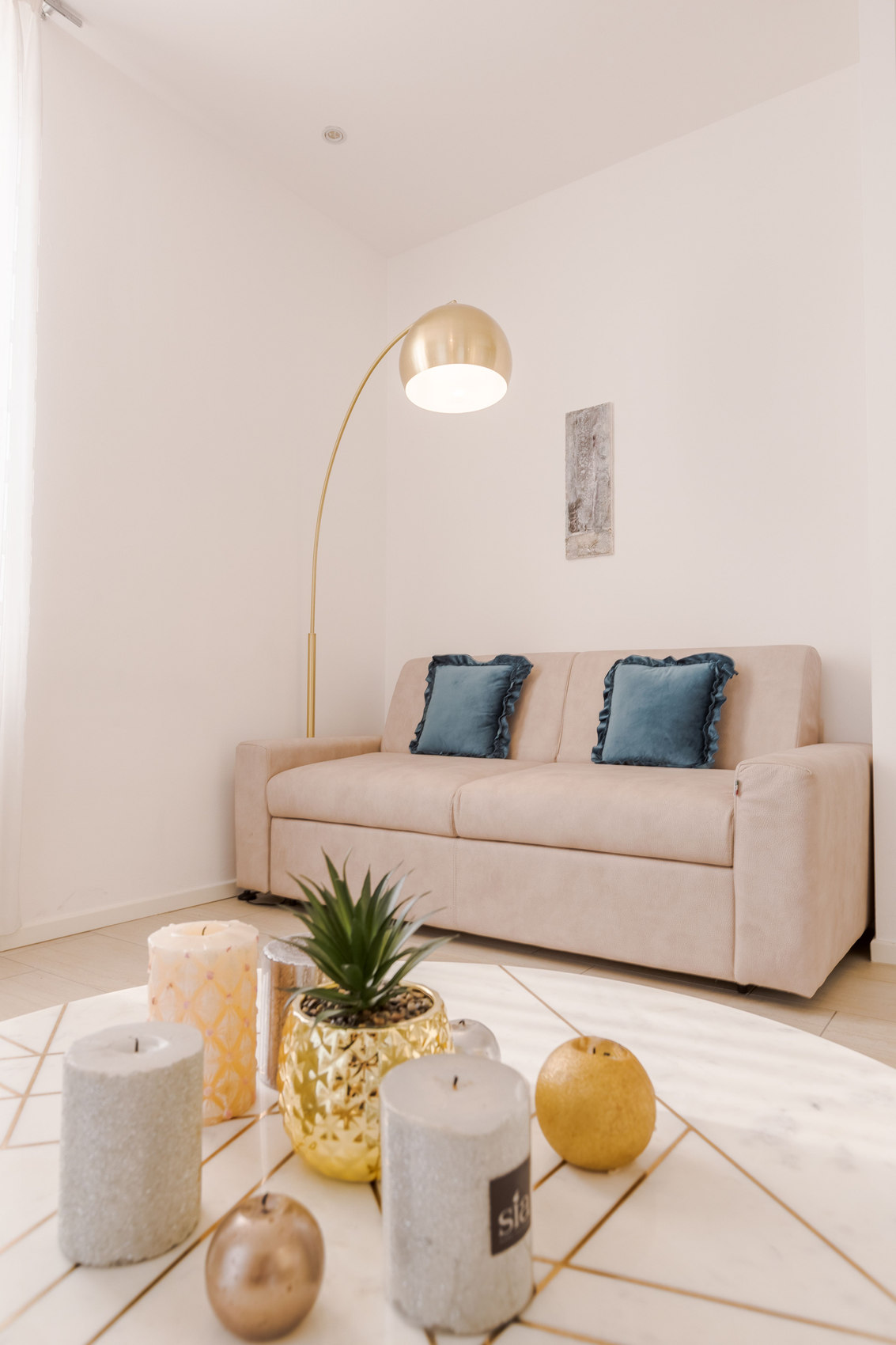
Two teal cushions with ruffled edges carry the color in this pale seating corner, while an arc lamp adds height above the sofa. It is an easy idea to borrow: choose a small number of cushions you actually like, then repeat one accent in a vase or throw instead of filling the sofa with extras.
For a sofa bed, the overnight destination is as important as the daytime arrangement. Choose a basket, a free shelf, or a storage ottoman outside the bed’s opening path. Keep sheets, sleeping pillows, and the throw in one predictable place so that making the bed does not require unpacking the living room.
Some sleepers provide storage of their own. IKEA specifies under-seat storage for the FRIHETEN sleeper sofa, but that feature must not be assumed for the sofa in this photograph or any other model. Check the storage opening while the furniture is in its intended position: a useful compartment is one you can still reach after adding the rug and side table.
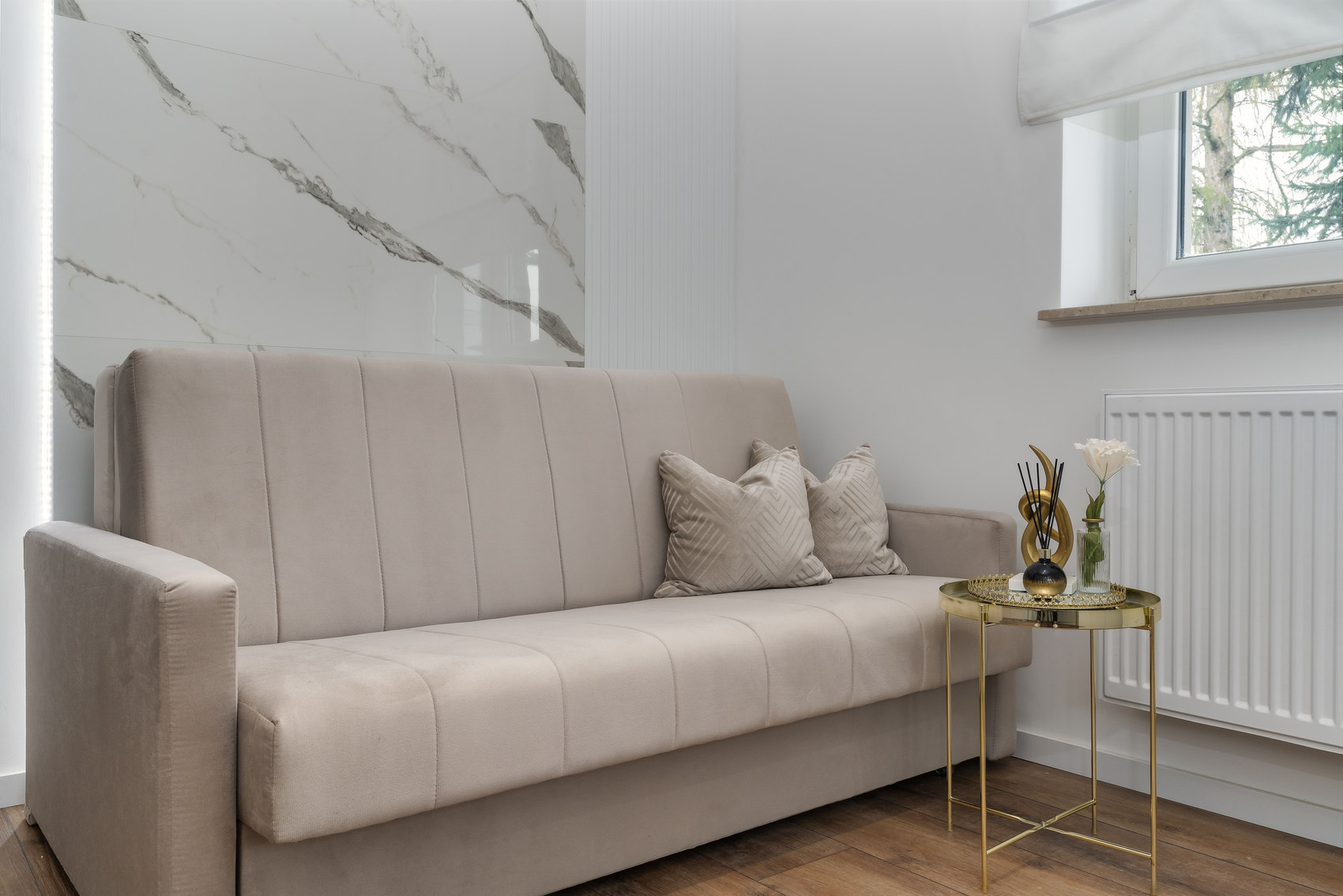
Make the side table do double duty as a nightstand
The slim brass-tone tray table beside this channel-stitched sofa barely interrupts the floor. It has room for a few small objects, but it does not make the seating corner feel as though a bedroom nightstand has been permanently parked in it.
With your chosen bed marked out or opened, sit where a guest’s pillow would be and reach for the table. It should be close enough for a phone and a glass of water, but outside the movement of the frame. Try a portable table before committing to a fixed wall shelf: the right location for daytime coffee may not be the right location for nighttime water.
Lighting deserves the same test. A tall living-room lamp can make the seating look finished, yet the switch may end up across the open bed. Use a reachable wall switch or a suitable lamp placed so that its cord stays against the wall, never across the walkable route.
Practice the guest-ready reset once. Move the coffee table to its assigned spot, open the actual sleeper according to its manual, put away decorative pillows, and walk to the door and bathroom in the lighting your guest would use. If you cannot complete that sequence without shifting heavy furniture or blocking access, adjust the plan before guests arrive.