

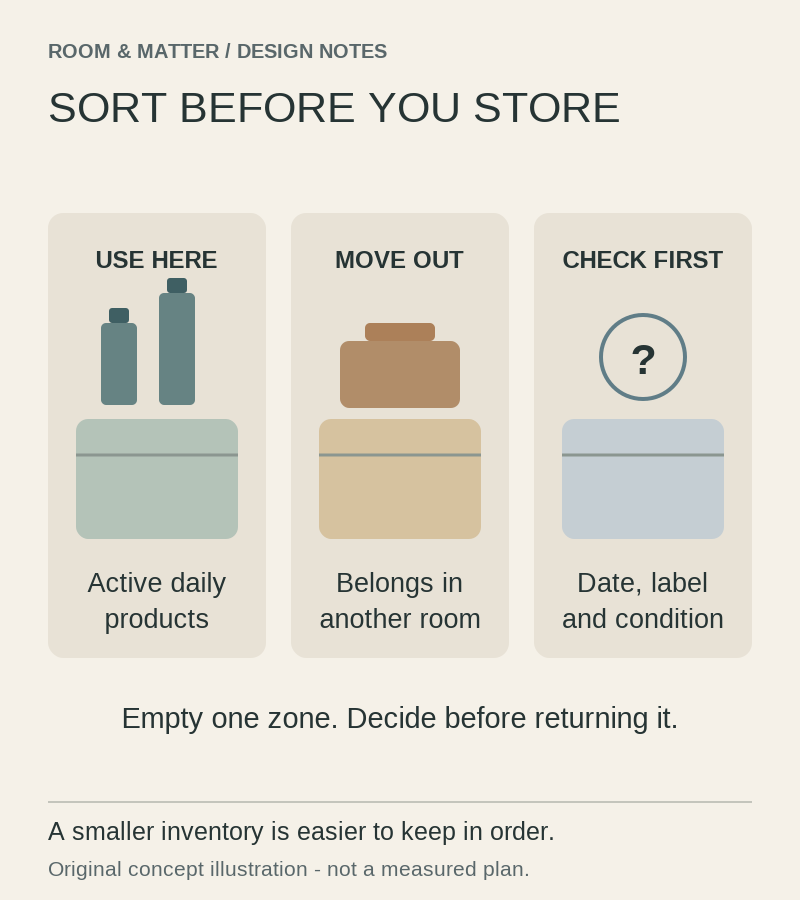
Start by Removing Products That Do Not Belong in the Room
Before reorganizing drawers and shelves, remove expired products, duplicates that can live elsewhere and items that are rarely used in the bathroom. A smaller inventory makes every later decision easier and prevents storage solutions from being designed around unnecessary volume. Work one drawer or shelf at a time so the whole room does not become an unfinished sorting project. Keep a small 'check first' group for products whose date, condition or ownership is unclear; resolve it before returning anything to storage. Move unrelated objects to the room where they are actually used. Do not pour unwanted products down the basin simply to empty a bottle; follow the product label and local disposal instructions. Once the essentials are back, leave some unassigned space. A drawer filled to its limit on the first day has no room for an ordinary change in routine.
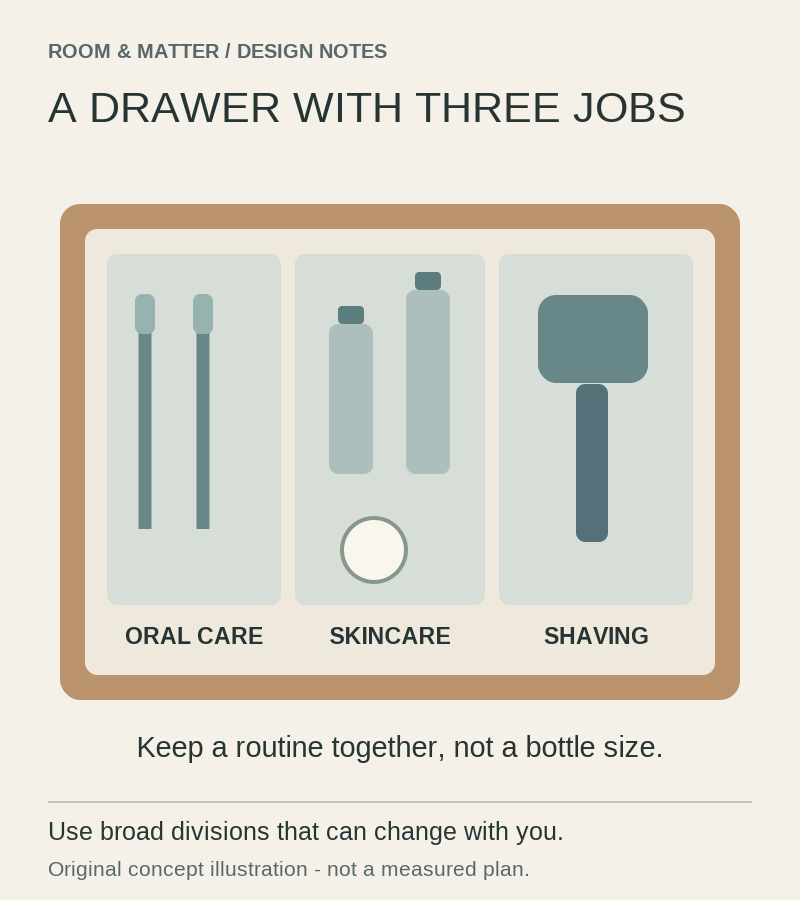
Group Daily Items by Routine
Oral care, skincare, shaving, hair tools and makeup are easier to manage when each routine has a defined drawer or section. Grouping by routine reduces searching and makes it easier to return products after use. Avoid combining unrelated items simply because they fit in the same container. Lay out a complete morning or evening sequence on a dry surface, then note which products are used together. A broad divider between oral care and skincare often works better than a separate little cup for every tube. Keep products in their original labeled packaging unless the manufacturer supports another container; coordinated bottles are not a requirement for an organized bathroom. If an item is used at the mirror but stored across the room, move its whole routine closer rather than scattering duplicates. Trial the divisions with containers you already own before buying a fitted set.
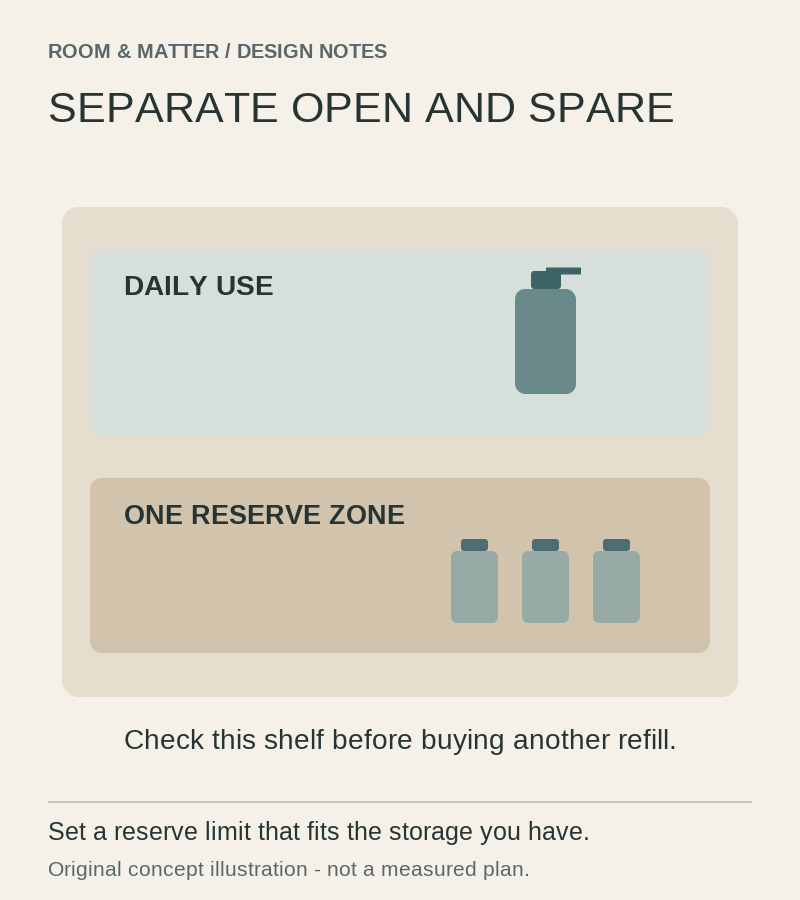
Keep Backups Separate From Daily Products
Refill bottles, extra soap, spare toothpaste and bulk purchases do not need to compete with daily items for the easiest storage positions. Keep backups in a taller cabinet, lower drawer or separate zone and restock the daily area only when needed. The reserve zone can be outside the bathroom if product instructions call for a cooler or drier place. A spare bottle behind an open one is easy to forget when the shelf is deep; turn the labels forward and keep each category in a short, visible row. Before shopping, check this one location rather than several partly filled baskets. Set the amount from real consumption and available space, not from the size of a multipack. Frequently used items should not become harder to reach just because reserves look tidy in matching containers.

Towels Need Their Own Category
Towels are large, predictable and frequently rotated, so they benefit from one dedicated shelf, drawer or cabinet area. Keep clean towels away from direct shower spray and store only the number that realistically fits the household's laundry cycle. The photograph isolates a folded towel category; it is not a model for how many towels one household needs. Try a fold with your actual towels and shelf depth, then check whether the lowest one can be removed without pulling down the pile. A small working stack and a separate place for towels in use are different jobs. Let damp towels dry fully rather than putting them into the clean stack, and keep a drying position clear when you plan the storage. Color or a simple shelf division can help distinguish personal sets without adding several extra bins.
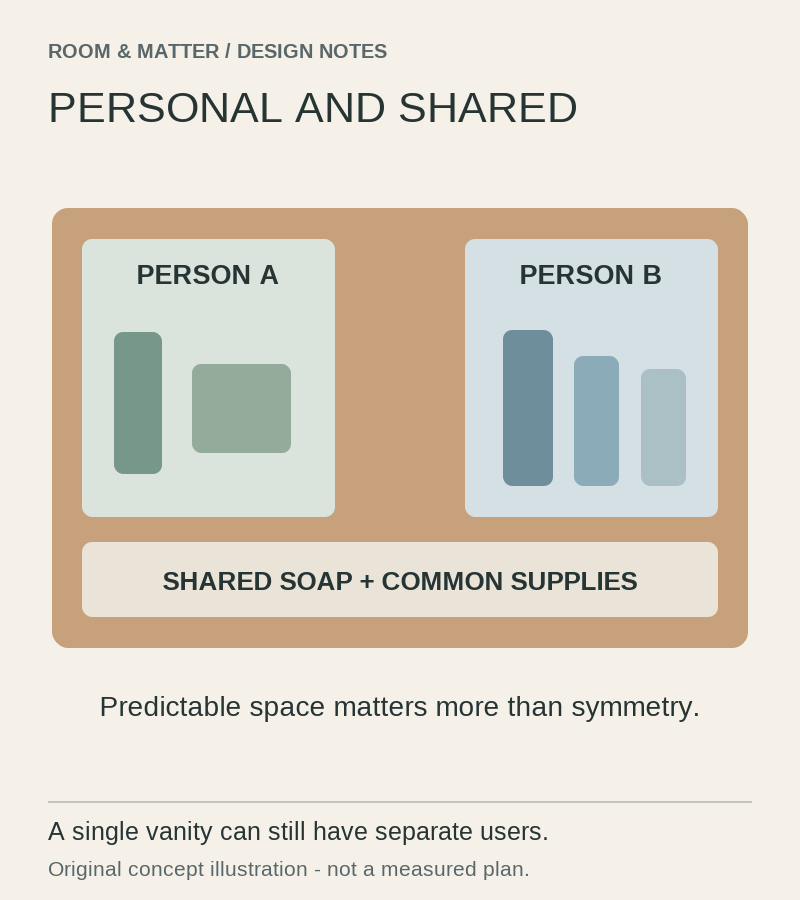
Give Shared Bathrooms Separate User Zones
In a shared bathroom, separate personal drawers or cabinet sections reduce mixing and make accountability clearer. Shared categories such as hand soap, towels and cleaning supplies can stay in central zones. The split does not need to be perfectly symmetrical as long as each person has predictable space. One sink can work with a personal tray or drawer for each user; a second basin does not automatically solve mixed belongings. Give shared supplies one agreed place so each person does not create a separate reserve. Divide by actual routine and comfortable reach rather than by equal bottle counts. Where children share the room, distinguish the categories they can reach independently from products that need appropriate restricted storage. Review the arrangement after an ordinary busy morning: the repeated misplaced item often points to a poorly located zone rather than a need for more labels.

Open Shelves Are for Tidy Categories Only
Open shelves are useful for towels, toilet paper or a small group of daily products, but they are poor places for mixed packaging and bulk backups. Keep the visible categories simple and move anything visually noisy behind doors. The small niche shown here holds only a tube and two stacked containers, making the limit easy to read. It does not establish whether the products suit that exposure; follow their storage instructions. Test an open shelf by wiping it with the normal contents in place. If every cleaning pass requires lifting a crowded collection, reduce the display or move the category behind a door. Keep everyday labels readable and choose an arrangement that can be restored quickly. Visible storage should earn its place through easy access, not require an elaborate arrangement after each use.

When a Portable Organizer Helps
A small cart or portable organizer can work well for bath products, children's routines or temporary shared storage when permanent cabinetry is limited. It should have a clear parking position and remain outside the main circulation path. A removable basket can carry a grooming kit from dry storage to a suitable working position, then return with the kit intact. The photograph shows contained tools and loose bottles beside them; it does not demonstrate safe electrical use. Hair tools belong in storage only when unplugged and fully cool, and electrical appliances must be kept away from water and used according to their instructions. Check whether a loaded basket is comfortable to lift and fits its parking space. A basket that lives permanently on the only clear counter can simply relocate the clutter instead of solving it.
Keep the Counter for Active Use, Not Storage
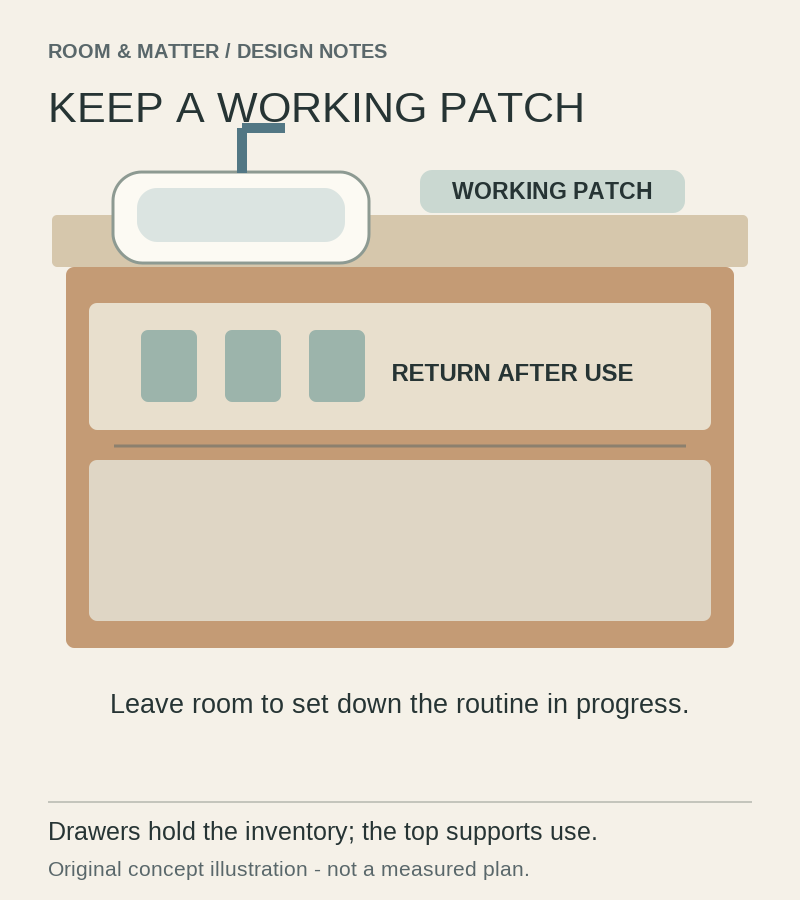
The countertop is most useful as temporary working space during grooming. Permanent product storage quickly reduces that function and makes cleaning harder. Keep only soap or one genuinely constant-use item visible and return the rest to drawers or cabinets after use. Identify a specific clear patch beside the basin and keep it available for the routine in progress. A small tray may make a daily kit easier to move, but it still needs a place to return after use. Wipe the surface as part of the reset instead of building permanent storage around every product that once landed there. If one item keeps coming back onto the counter, test whether its drawer is too full, too low or too far from the mirror. The answer may be a better position inside existing storage rather than another countertop organizer.

One Basket, One Category
Baskets can help with toilet paper, rolled towels or one larger product category, but they lose value when they become mixed catch-all containers. Use labels only if they simplify restocking rather than creating an elaborate system that requires constant maintenance. The toilet-paper basket provides a clear example: you can tell its purpose and notice when the supply is low without searching. Leave enough room to remove an item without dismantling the stack. Keep paper dry and choose a basket that can be lifted for cleaning; an attractive woven texture is not proof of suitability beside splash or steam. A small label helps when similar closed baskets sit together, while a readable open category may need none. Avoid nesting another set of tiny boxes inside unless the contents truly need a second division.
Build a Simple Restock Routine
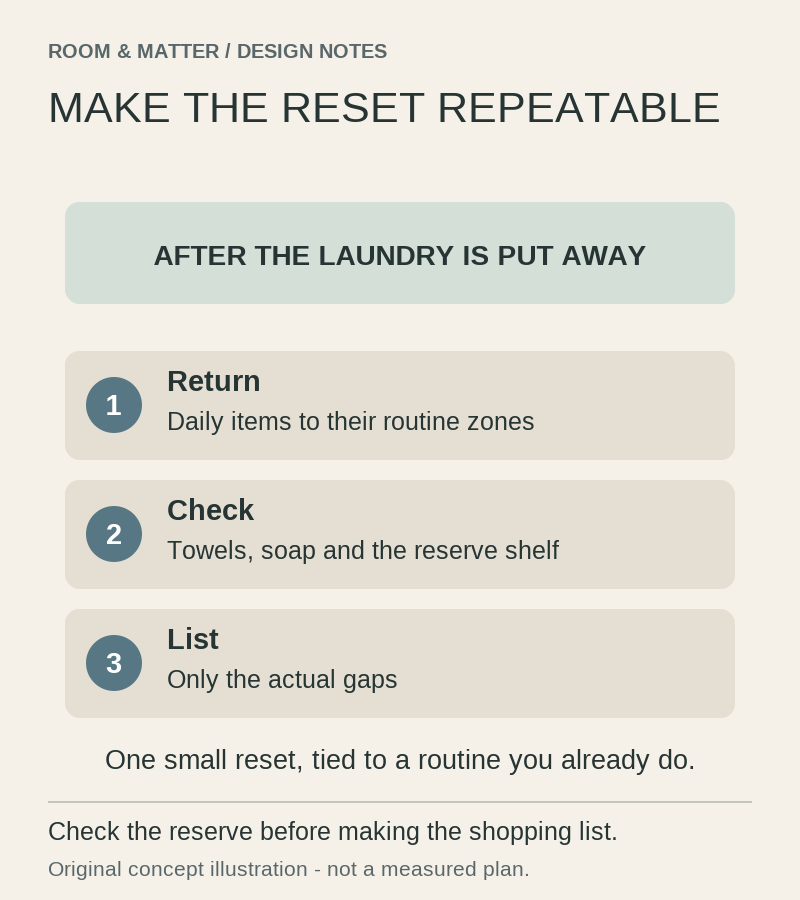
Organization lasts longer when the bathroom can be restocked in a few minutes. Keep backups together, know where towels belong and avoid storing the same category in several places. A weekly or laundry-day reset is usually more sustainable than waiting for every drawer to become disordered. Attach the check to something that already happens, such as putting away clean laundry. Return stray daily items, check the towel rotation and soap, then look at the one reserve zone before adding anything to a shopping list. Note repeat shortages rather than repeatedly overfilling the shelf. If the system takes too long to restore, simplify its categories or move the awkward item closer to where it is used. Adding another cabinet is a separate decision: the related storage guide helps when the existing shelves and drawers cannot physically hold the edited inventory.

