Choose How Much of the Room Should Be Black
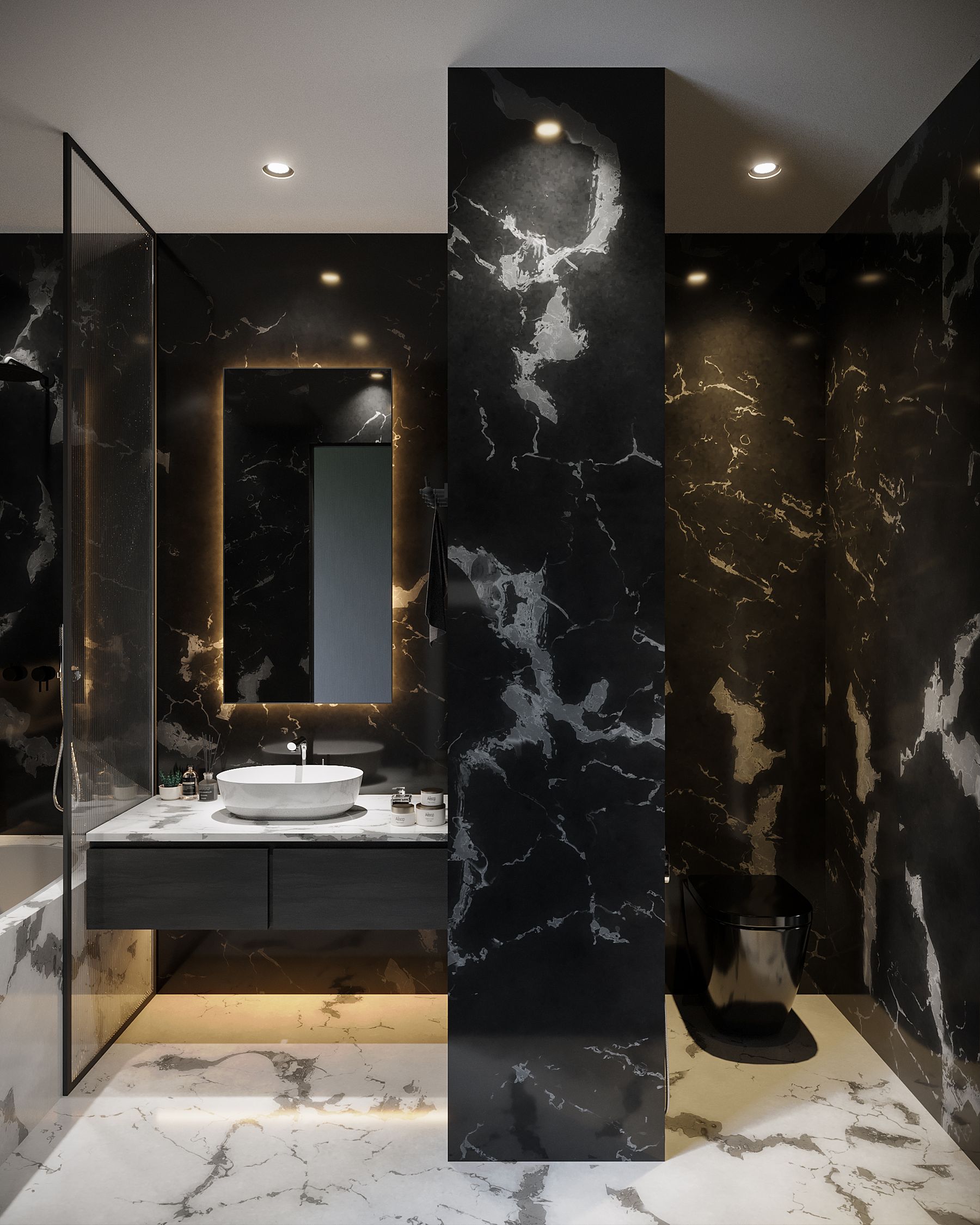
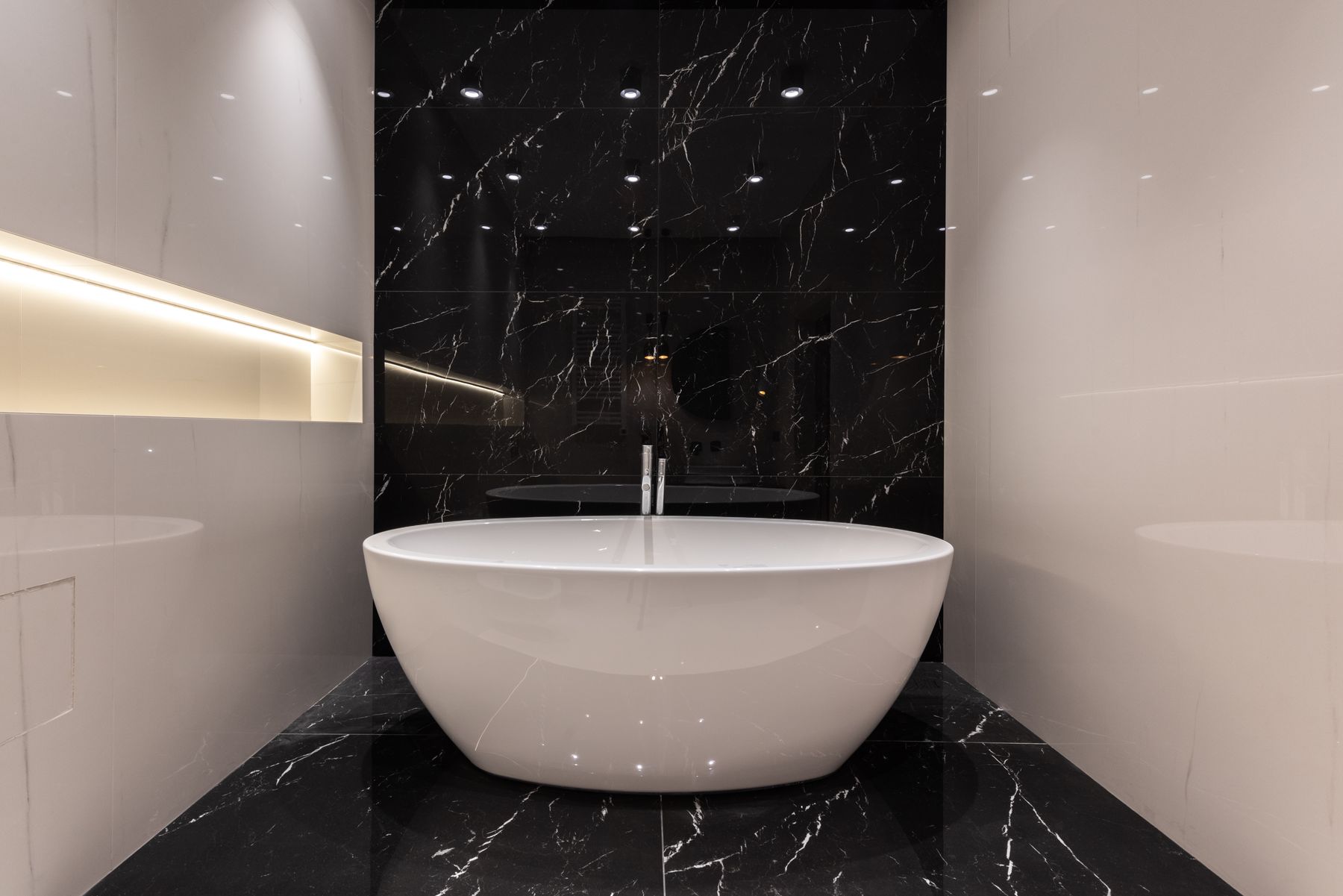
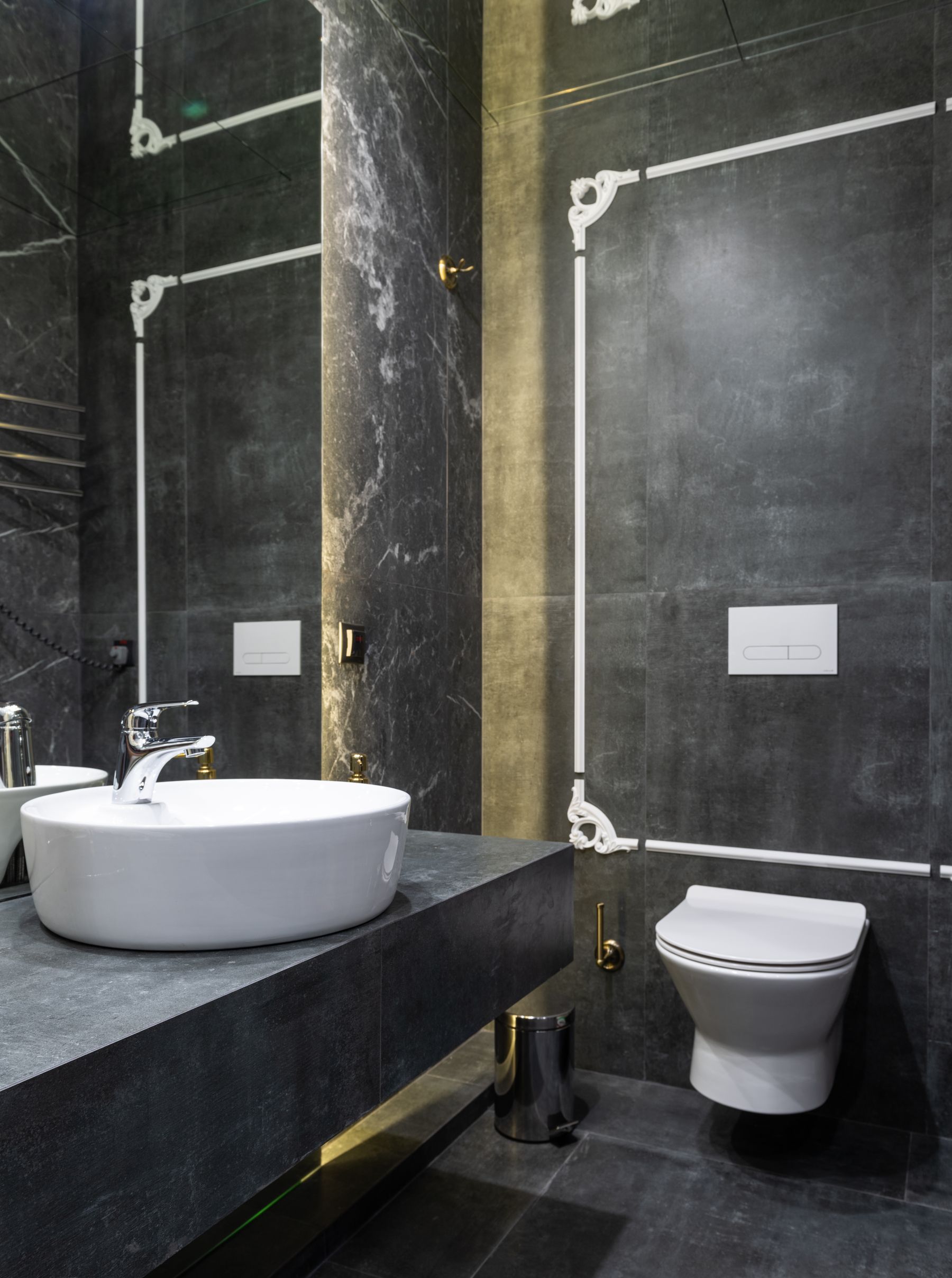
Separate three workable versions before shopping: a black envelope across most walls and floor, a black-led room with one substantial lighter material, or a pale room anchored by black fixtures and cabinetry. The first delivers immersion but needs the strongest lighting and maintenance plan; the last is easier to adjust but belongs closer to [Black and White Bathroom Ideas](/ideas/black-and-white-bathroom-ideas/) when contrast becomes the main story. Mark the intended percentage of dark surface on elevations so the concept cannot drift through isolated samples.
Give the Palette One Dominant Black Material
A convincing black bathroom usually has a lead material rather than a collection of unrelated near-blacks. It might be veined stone, handmade glazed tile, honed porcelain or painted joinery. Let that material establish the undertone and degree of movement, then choose quieter companions. Comparing every sample beside the lead finish prevents blue-black, brown-black and green-black surfaces from looking accidental. [Contemporary Bathroom Ideas](/ideas/contemporary-bathroom-ideas/) offers a useful model for one bold material balanced by calmer planes.
Use Veining to Draw the Room
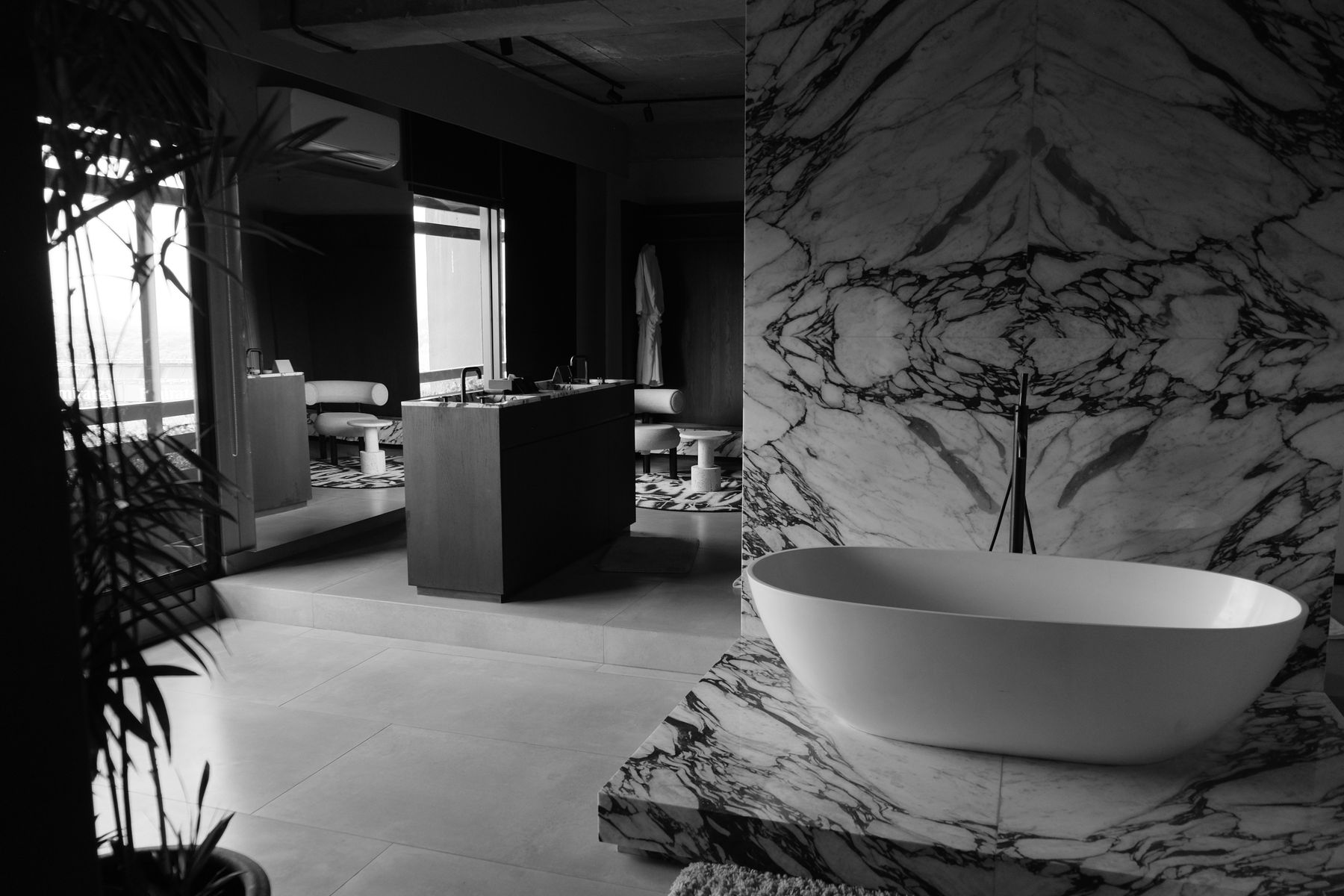
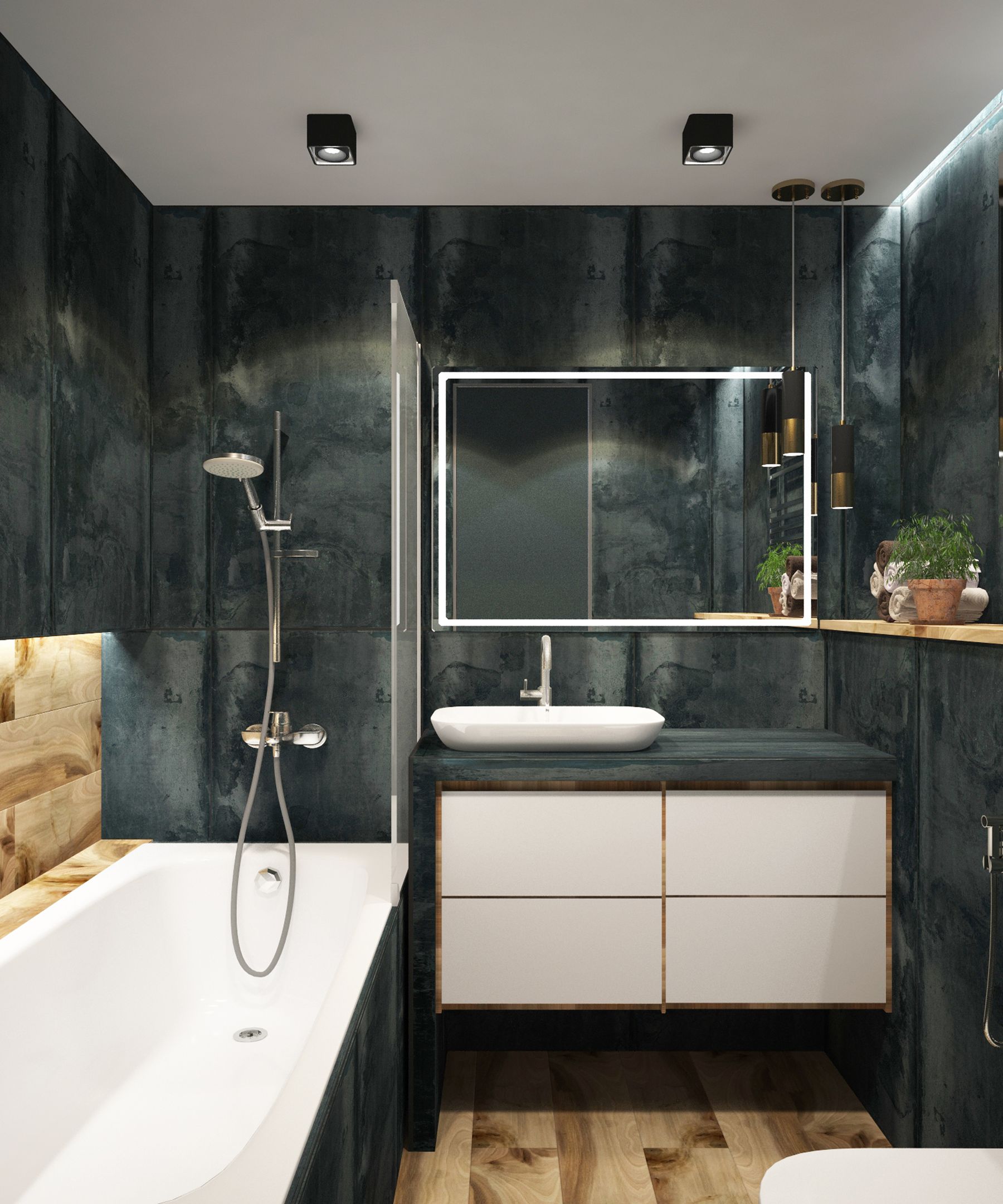
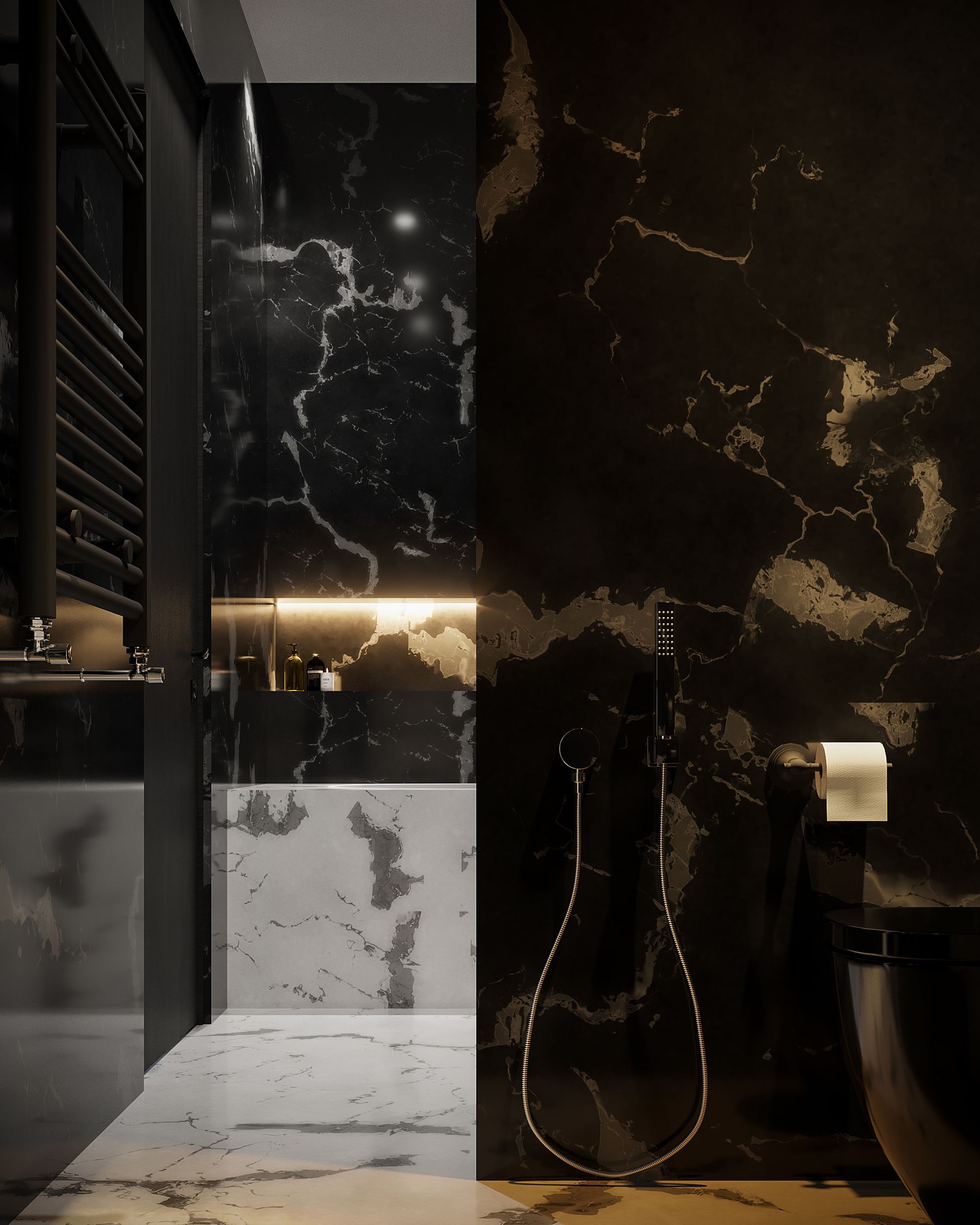
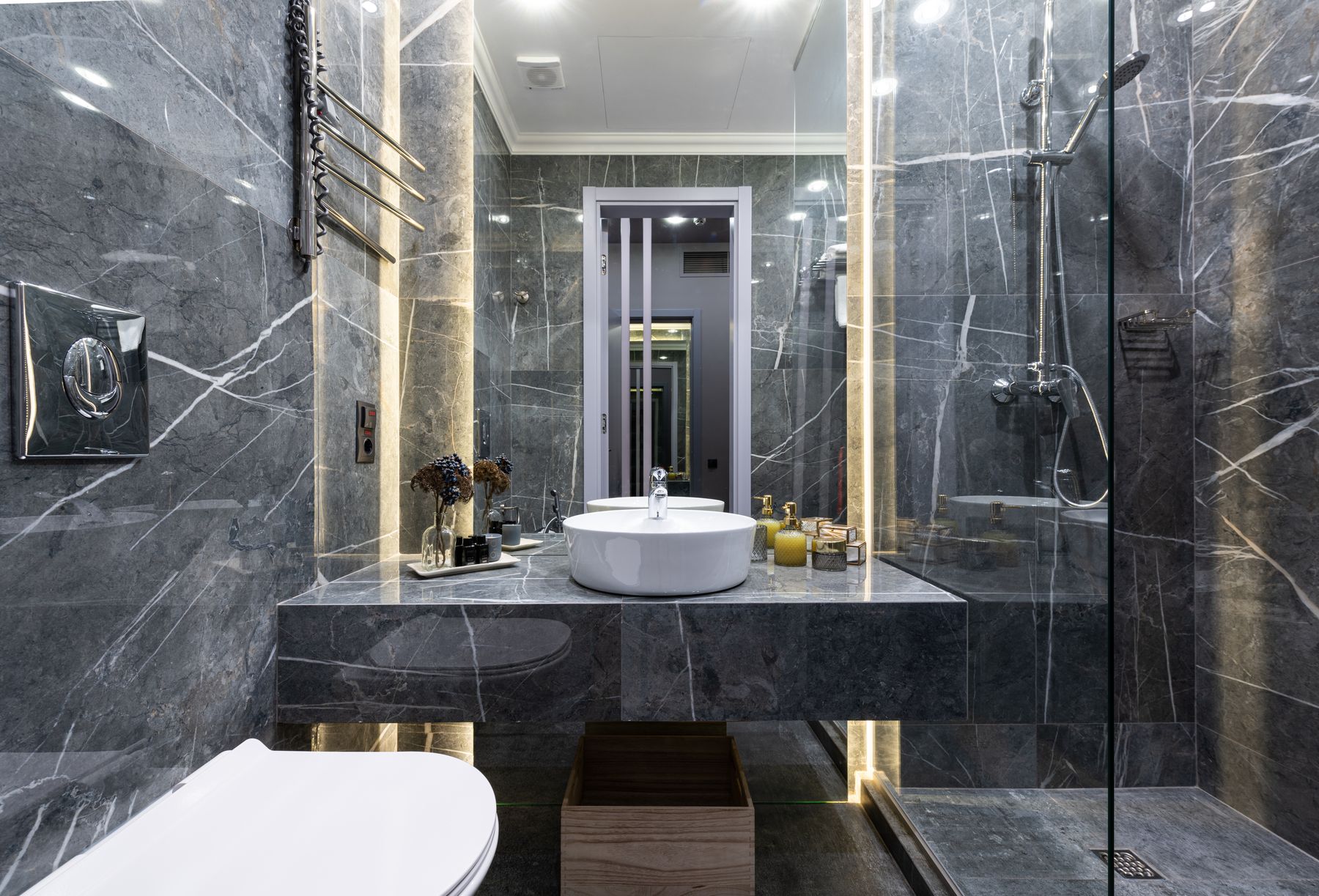
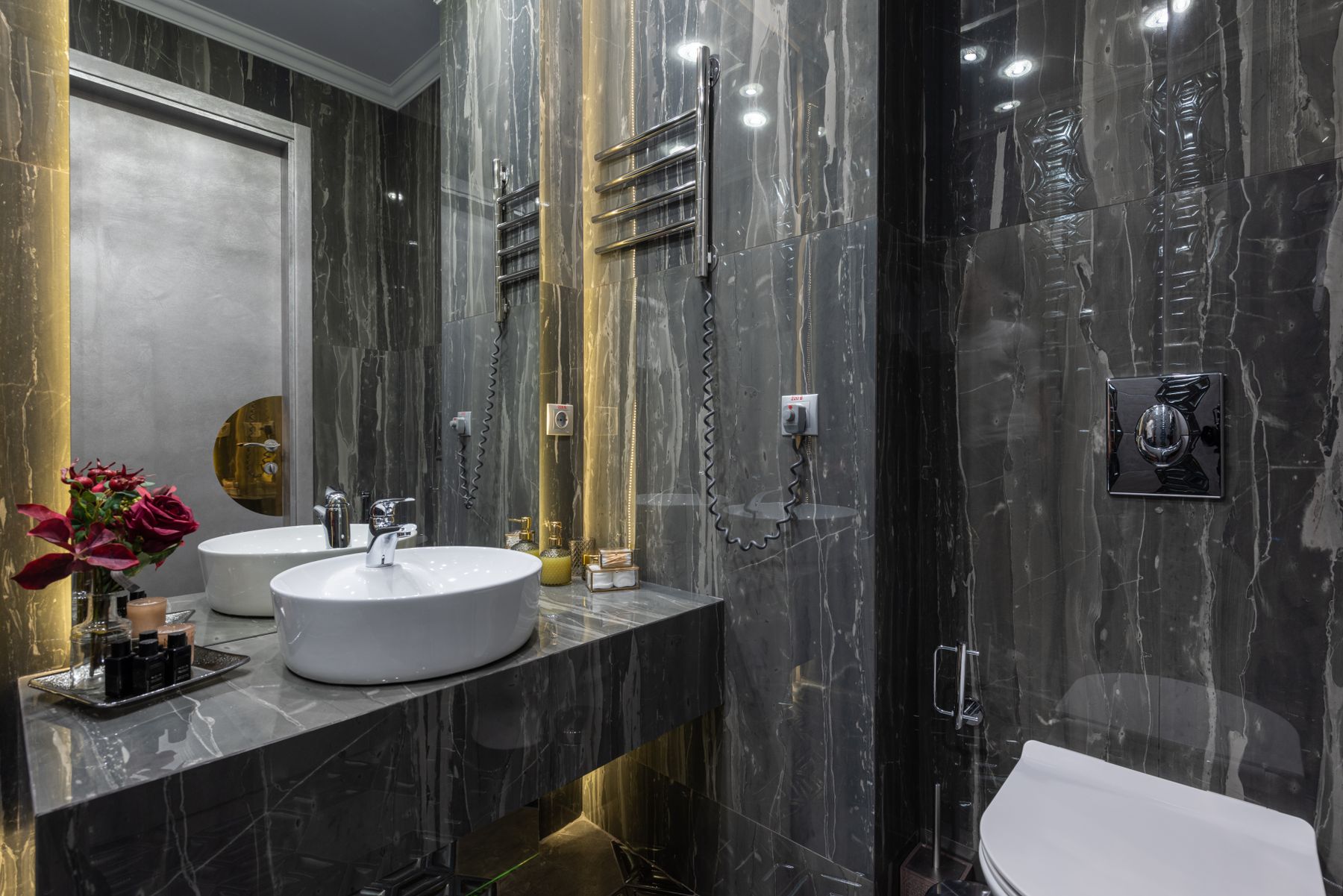
White, grey or warm mineral veining can reveal a wall's scale and lead the eye through a dark room. Large slabs minimize joints and feel monolithic, while porcelain reproductions may offer easier repeatability and maintenance. Review the complete slab layout or tile repeat before ordering: a strong vein cut by a niche, mirror or corner can look arbitrary. Use book-matching only where the symmetry will remain visible after fittings are installed.
Let Tile Scale and Grout Control the Rhythm
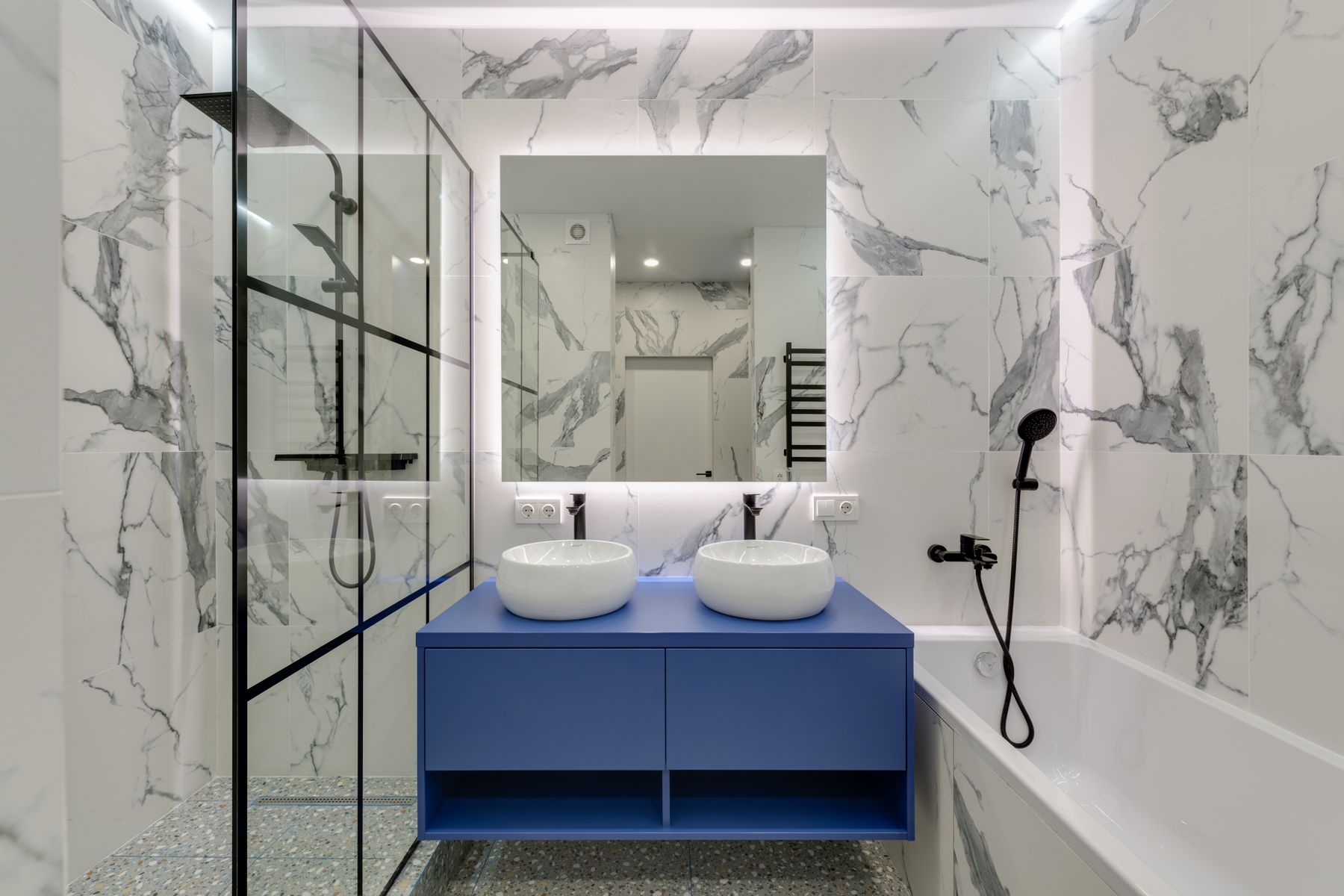
Small black tile creates a dense grid and more grout to clean; large format tile reduces lines but places greater demands on substrate preparation, cuts and handling. Matching grout quiets the pattern, while a slightly lighter joint makes scale and workmanship visible. Review the rhythm around the niche, drain and controls rather than judging an uninterrupted sample board. The [Bathroom Tile Ideas](/ideas/bathroom-tile-ideas/) guide helps compare formats once the desired density is clear.
Make the Shower the Darkest Zone
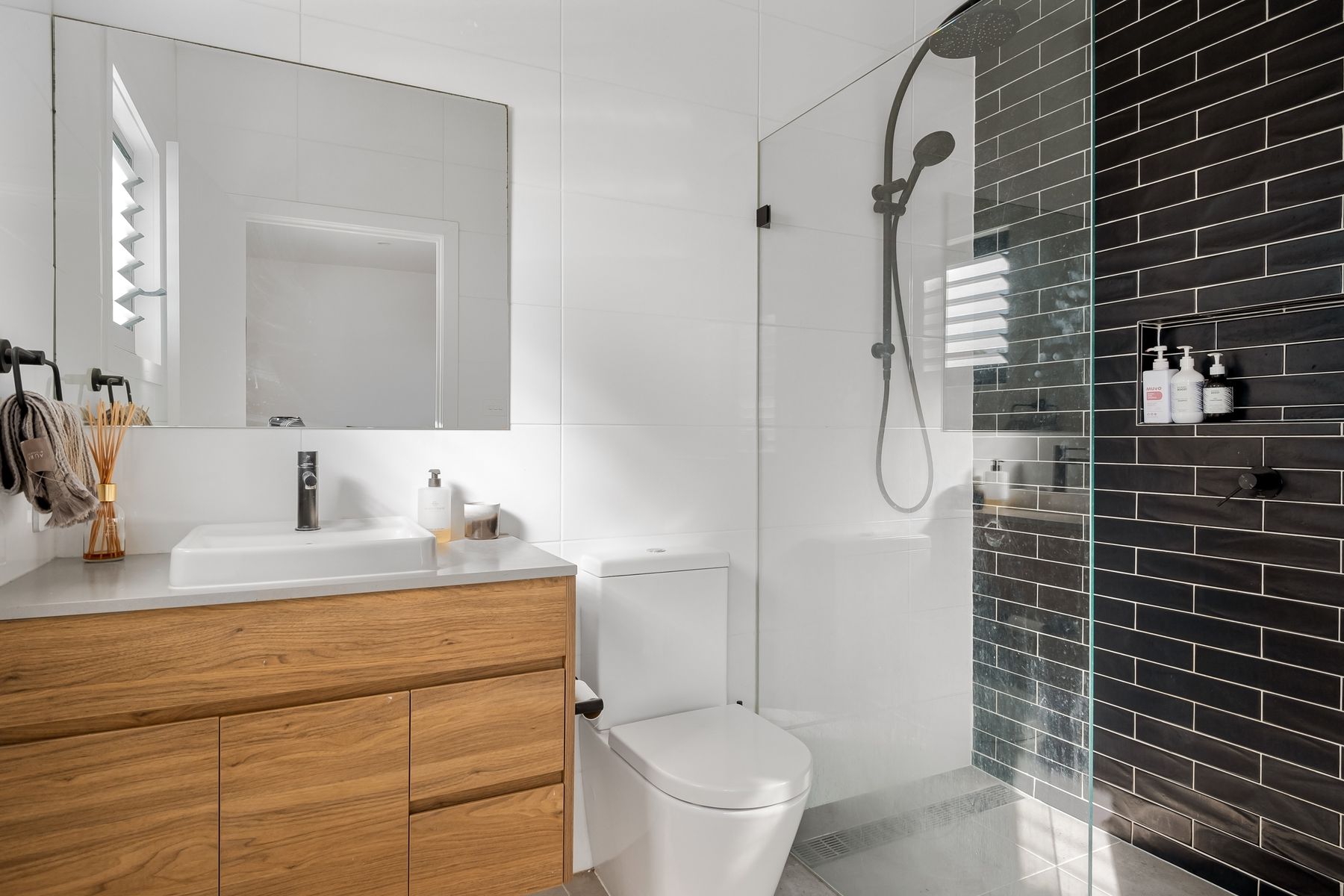
Concentrating black inside the shower creates depth without lowering the reflectance of every surface. Keep the entry, valve, shelf and floor transition easy to identify, and verify how the tile behaves when wet. Clear glass preserves the dark volume; fluted or smoked glass adds another visual layer but can reduce task visibility. Adapt the entry and drainage checks in [Walk-In Shower Ideas](/ideas/walk-in-shower-ideas/) instead of treating the black finish as the whole design.
Use a Black Bathtub as a Single Strong Silhouette
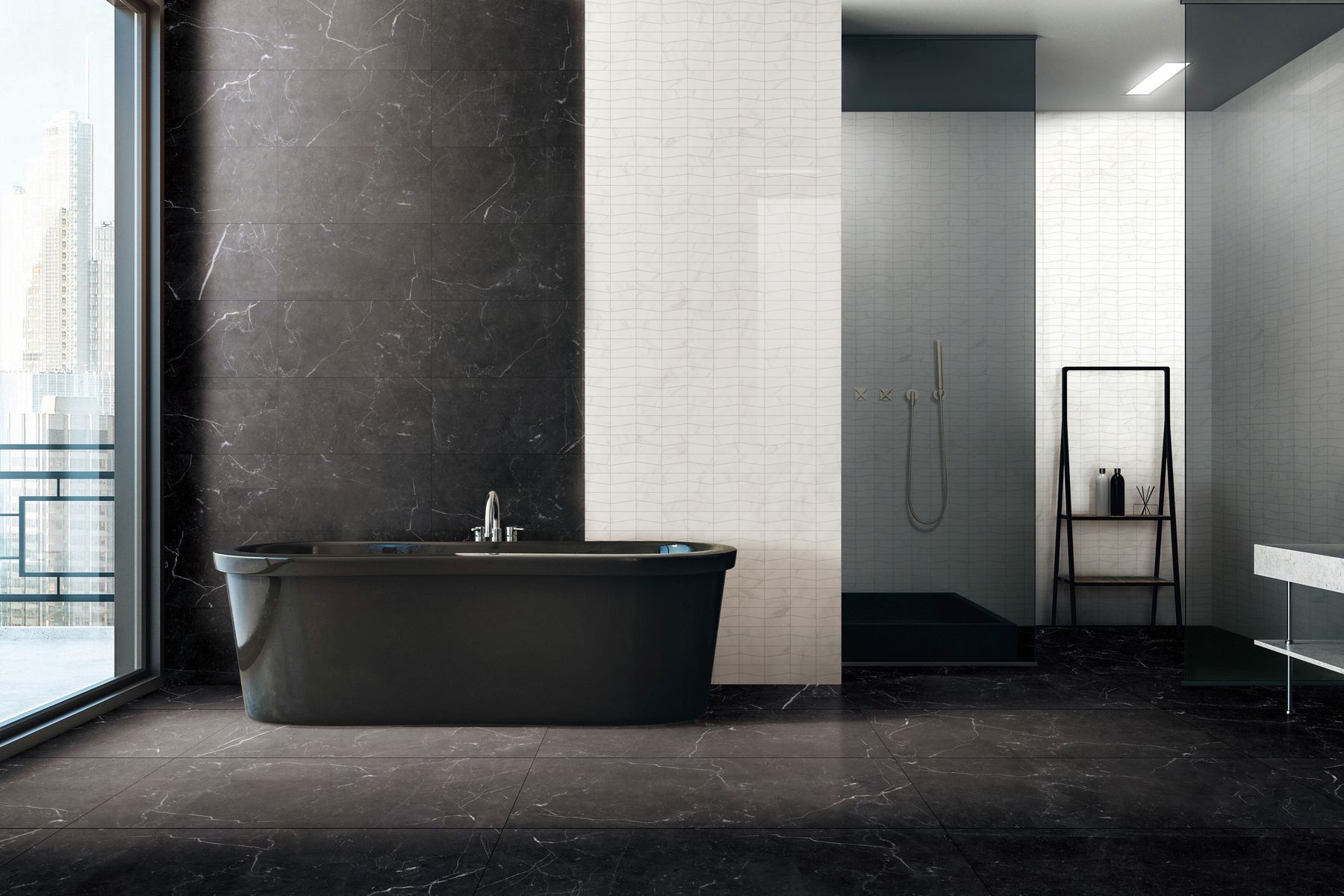
A black freestanding tub can carry the palette in a lighter room or disappear calmly into a black wall. Check the interior color, rim visibility, entry route and access to waste connections; a sculptural outline should not compromise comfortable use or servicing. Finish samples matter because a matte exterior and glossy interior show water and cleaning differently. Compare form and placement with the broader [Bathtub Ideas](/ideas/bathtub-ideas/) guide before committing to color.
Choose Black Sanitaryware Selectively
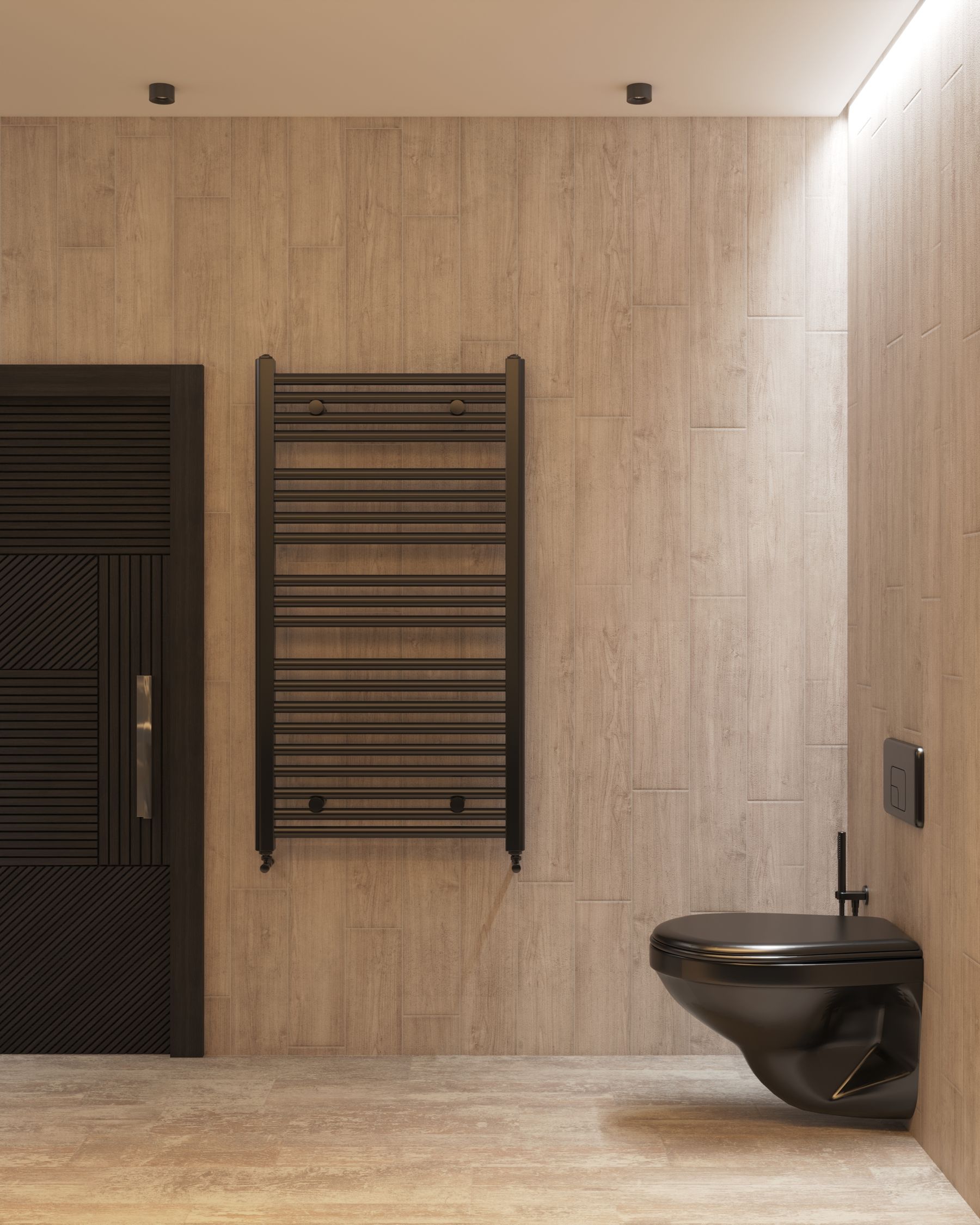
A black basin or toilet can reinforce continuity, but using every fixture in black may erase useful edges and increase visible mineral residue. Select the pieces that improve the composition, then preserve contrast at the seat, flush control, waste and surrounding floor where needed. Confirm replacement parts, cleaning guidance and long-term availability before building the room around an unusual finish.
Treat the Vanity as a Working Station
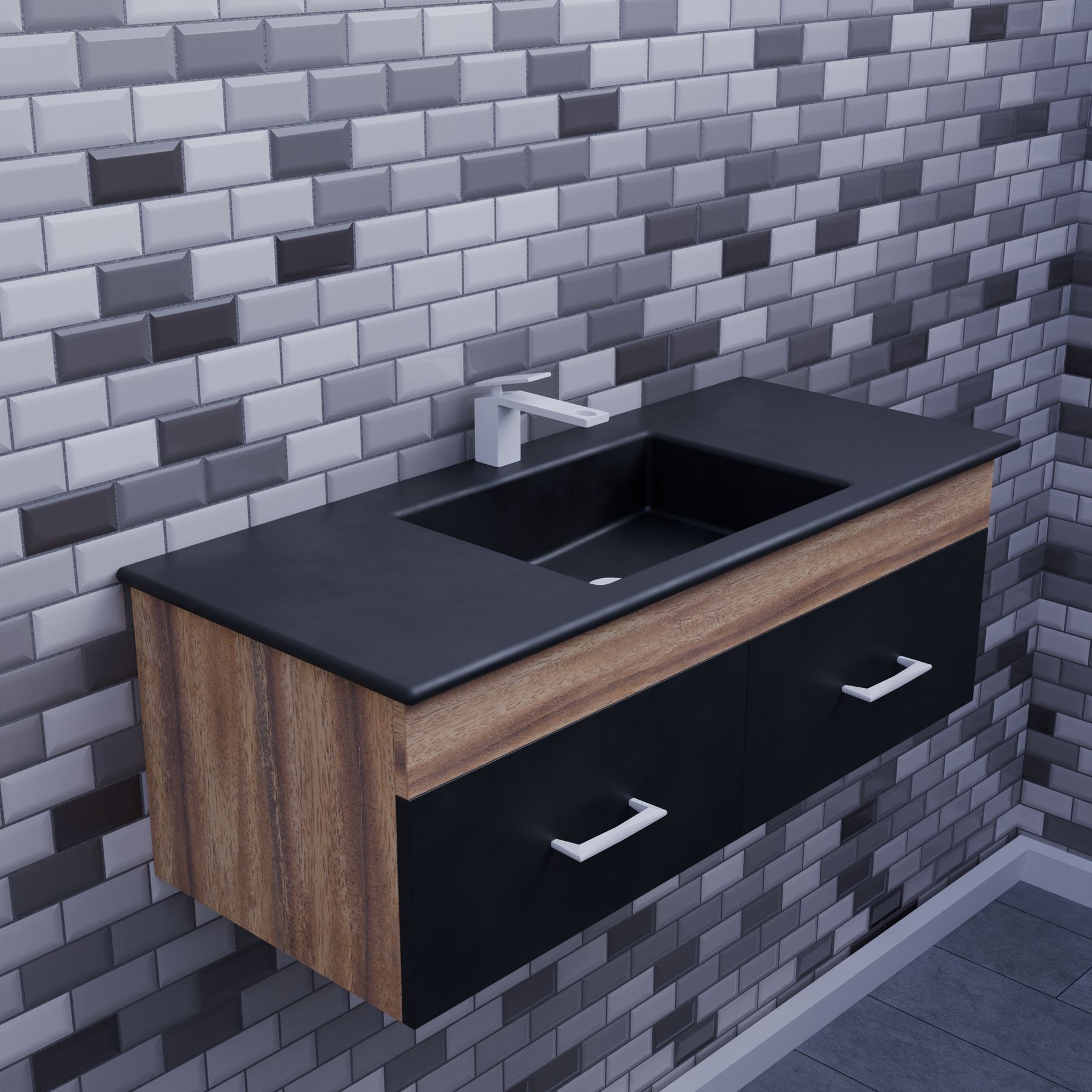
The vanity needs more than a dramatic basin. Make the countertop edge, faucet, drain and everyday objects easy to see, and use lighting that renders skin accurately at the mirror. A dark counter can show dust, toothpaste and hard-water rings quickly, so choose a finish whose care routine suits the household. Use the planning sequence in [Bathroom Vanity Ideas](/ideas/bathroom-vanity-ideas/) to resolve storage and reach before selecting a black surface.
Warm Black Cabinetry With Real Wood
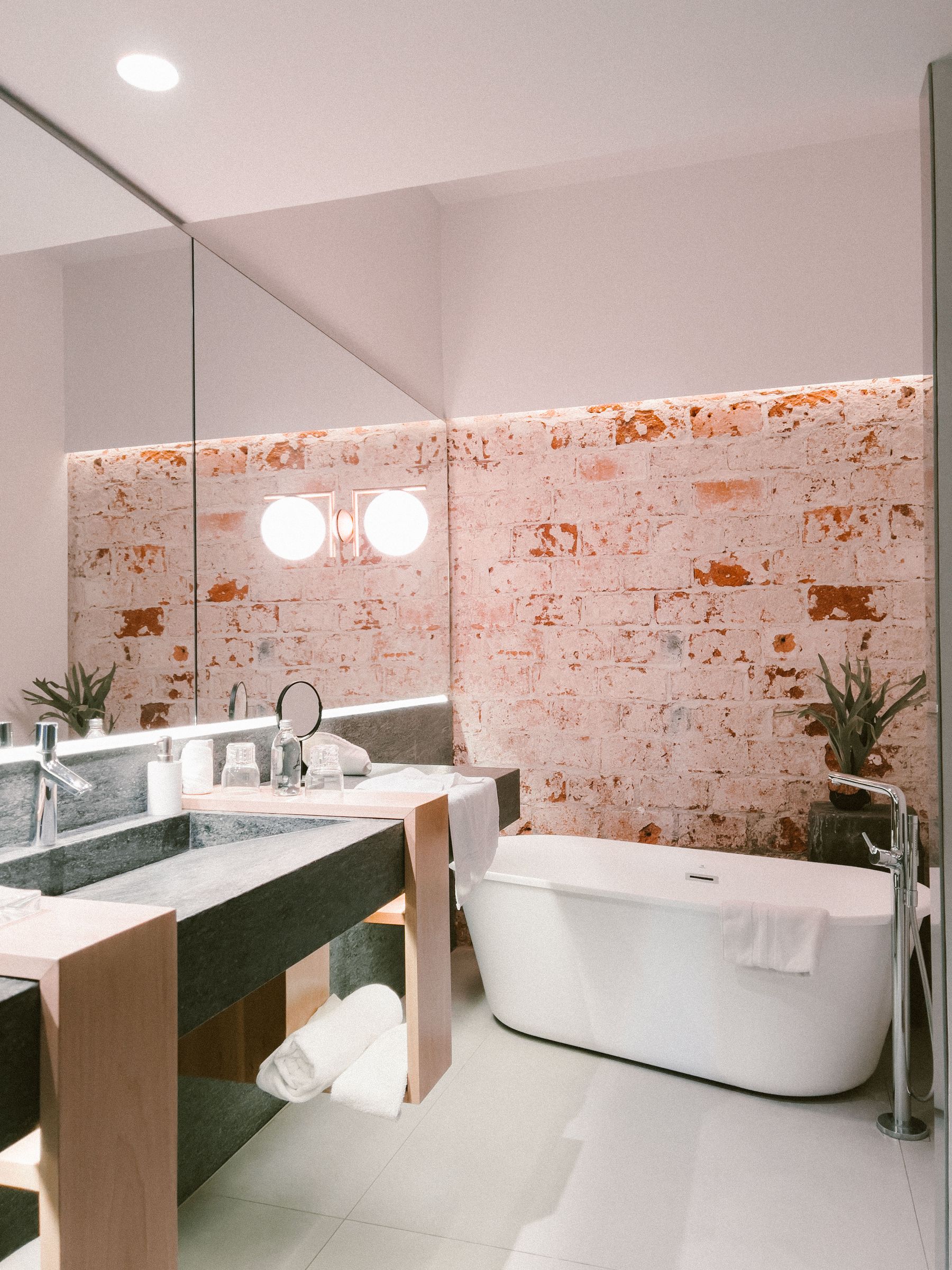
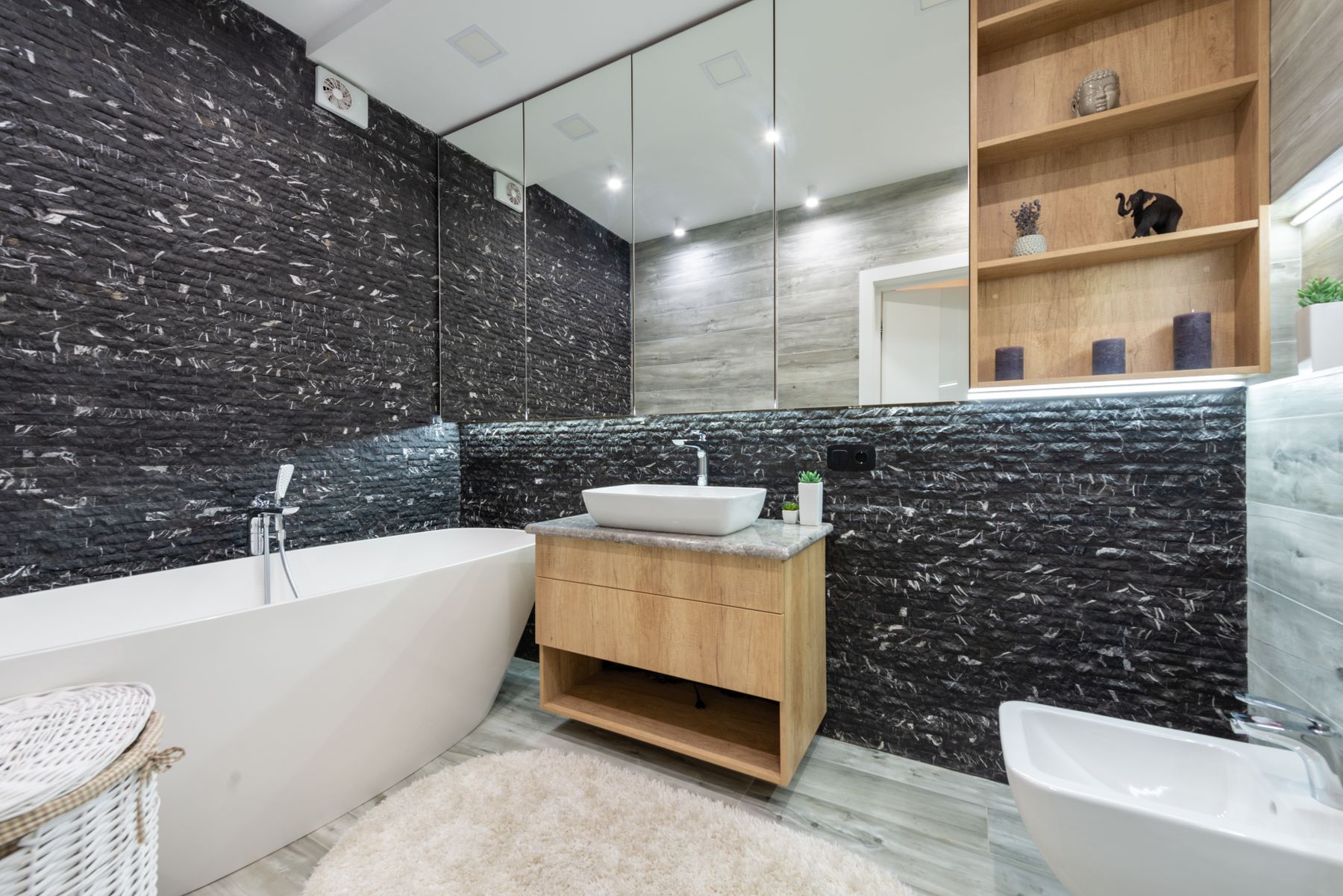
Timber introduces grain, warmth and a middle value between black surfaces and pale ceramics. Use it where touch and storage benefit from warmth: a vanity front, tall cabinet, stool or framed mirror. Specify a finish suited to bathroom humidity and keep vulnerable edges away from standing water. The focused [Warm Wood Bathroom Ideas](/ideas/warm-wood-bathroom-ideas/) guide explains how species, tone and protection affect the result.
Use Wood to Soften a Full Dark Envelope
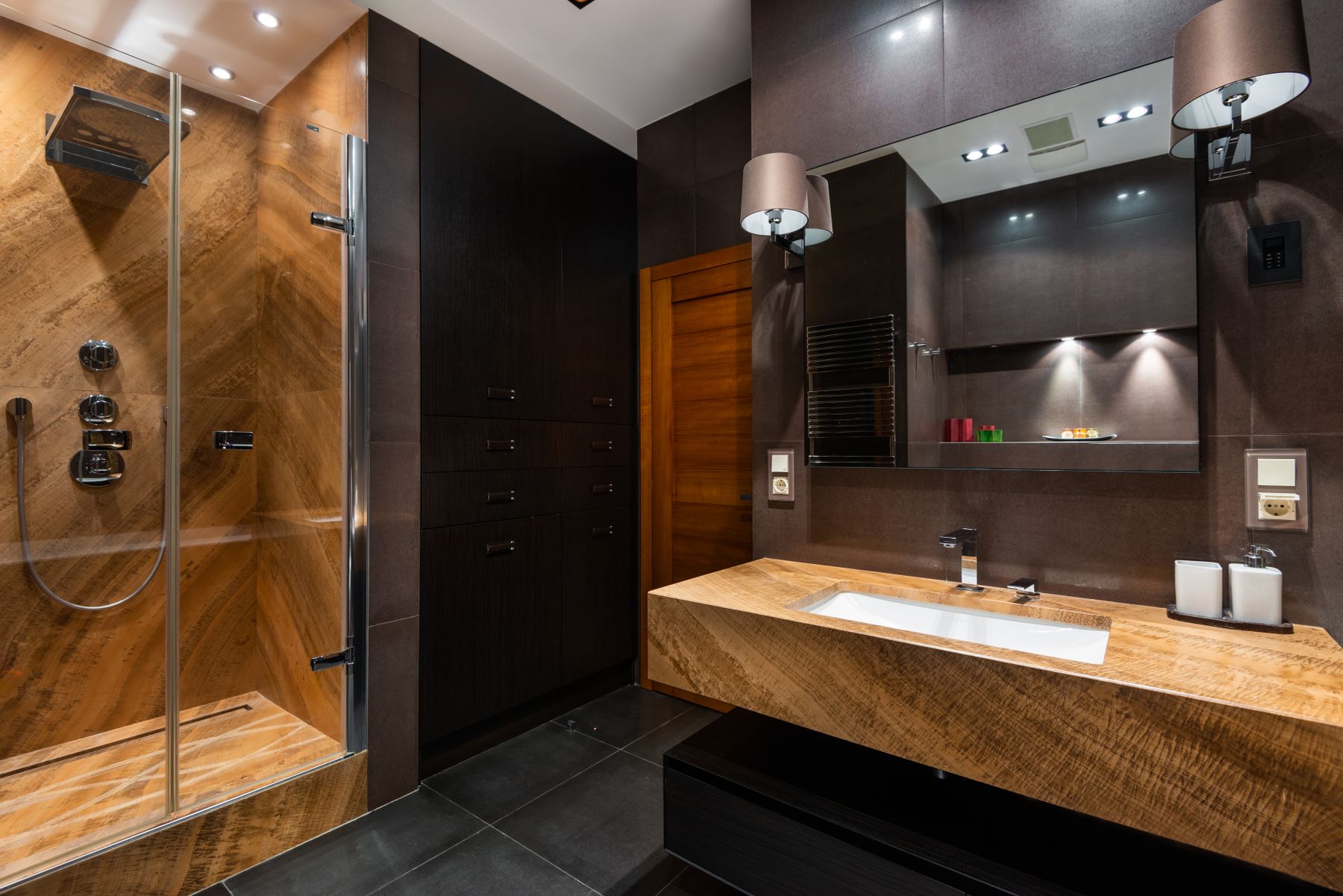
In a heavily black room, a broader timber plane can change the atmosphere more effectively than several small accessories. A wood ceiling, vanity wall or slatted panel gives the eye one warm surface and makes black feel architectural rather than severe. Avoid placing decorative slats where they trap splash or dust, and provide access behind removable panels.
Keep Pale Ceramic Where It Improves Legibility
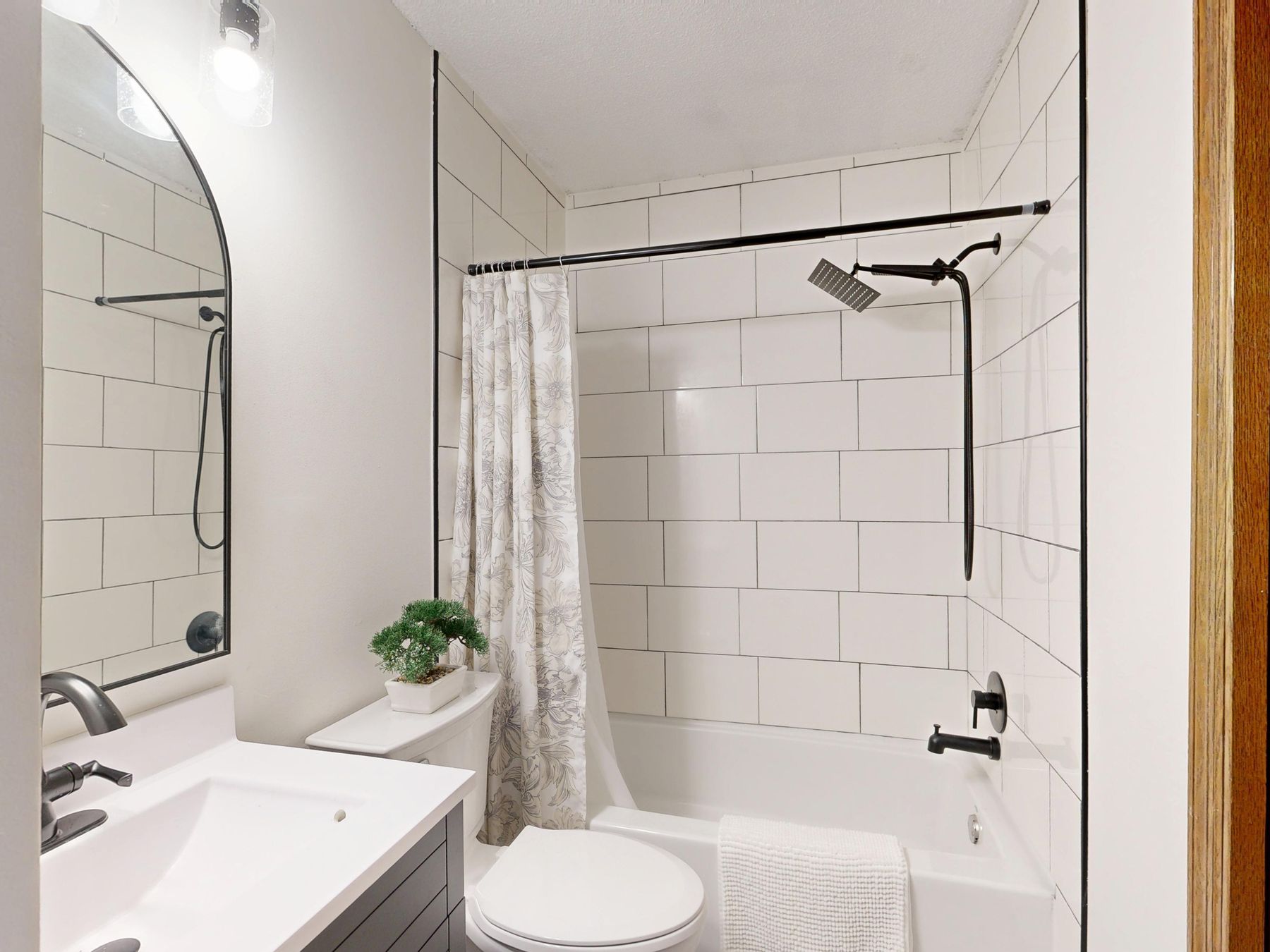
A white or pale basin, tub interior or toilet can make hygiene checks and edges easier to read while leaving walls, floor and joinery black. This is not automatically a black-and-white graphic scheme: the light element can remain functional and visually quiet. Repeat the pale value only where it clarifies use, and avoid distributing small white objects evenly around the room.

Layer Light Across Tasks and Surfaces
Black absorbs more incident light than pale finishes, so one decorative pendant or ceiling downlight rarely serves the whole room. Combine face light at the mirror, focused shower light, low-level orientation light and gentle wall washing that reveals texture. Keep glare out of mirrors and polished stone, and use controls that support bright grooming as well as lower evening light. The [Bathroom Lighting Ideas](/ideas/bathroom-lighting-ideas/) guide provides the fuller task-by-task framework.
Use Daylight Without Sacrificing Privacy
A window can expose the undertones and texture of black finishes, but its position also affects privacy and reflections. Frosted glass, a high window, external screening or a carefully composed view may preserve useful light without leaving the bather exposed. Check how the room reads on overcast days rather than judging it only in direct sun. The [Bathroom Window Ideas](/ideas/bathroom-window-ideas/) guide compares privacy strategies in more detail.
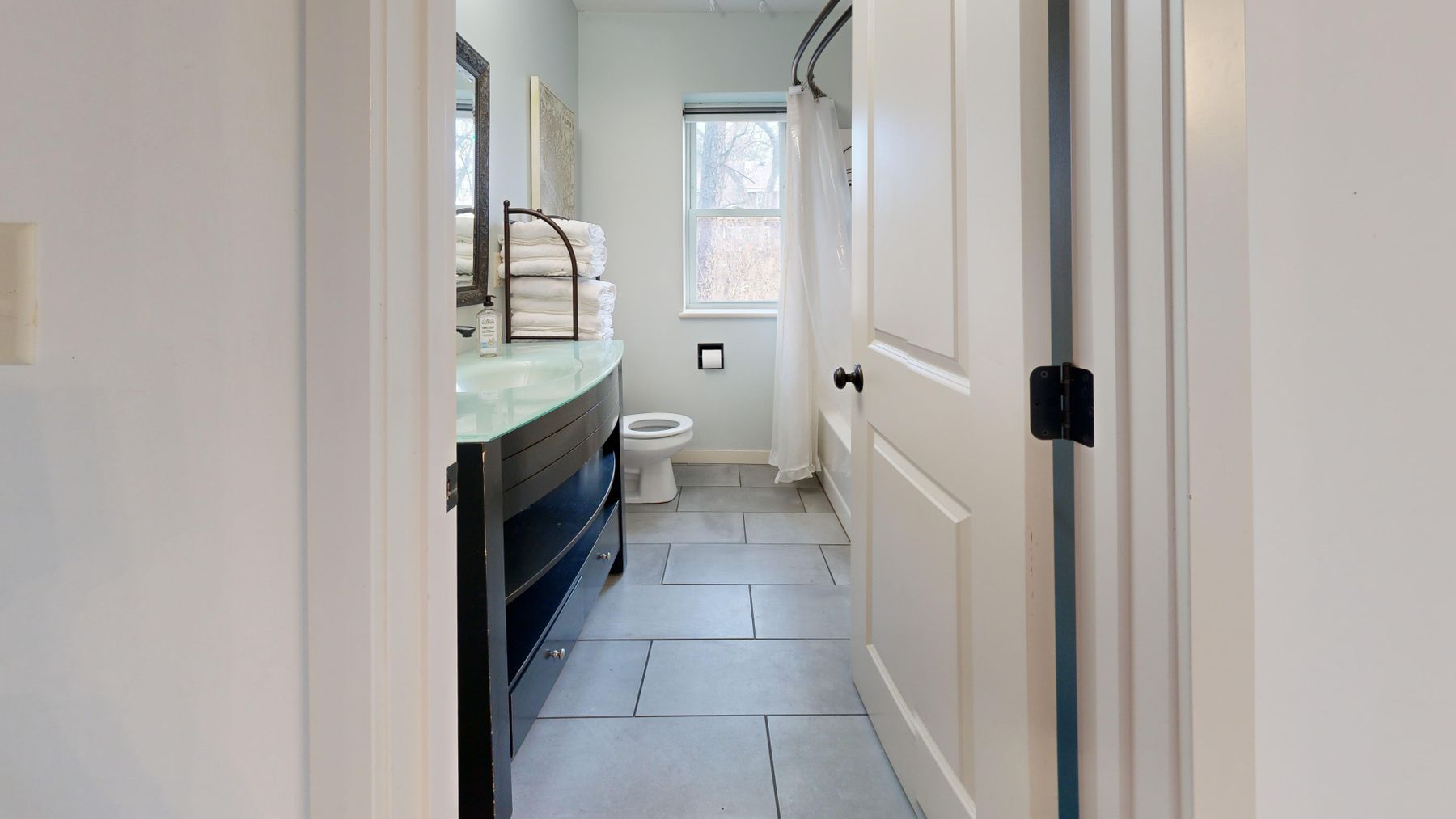
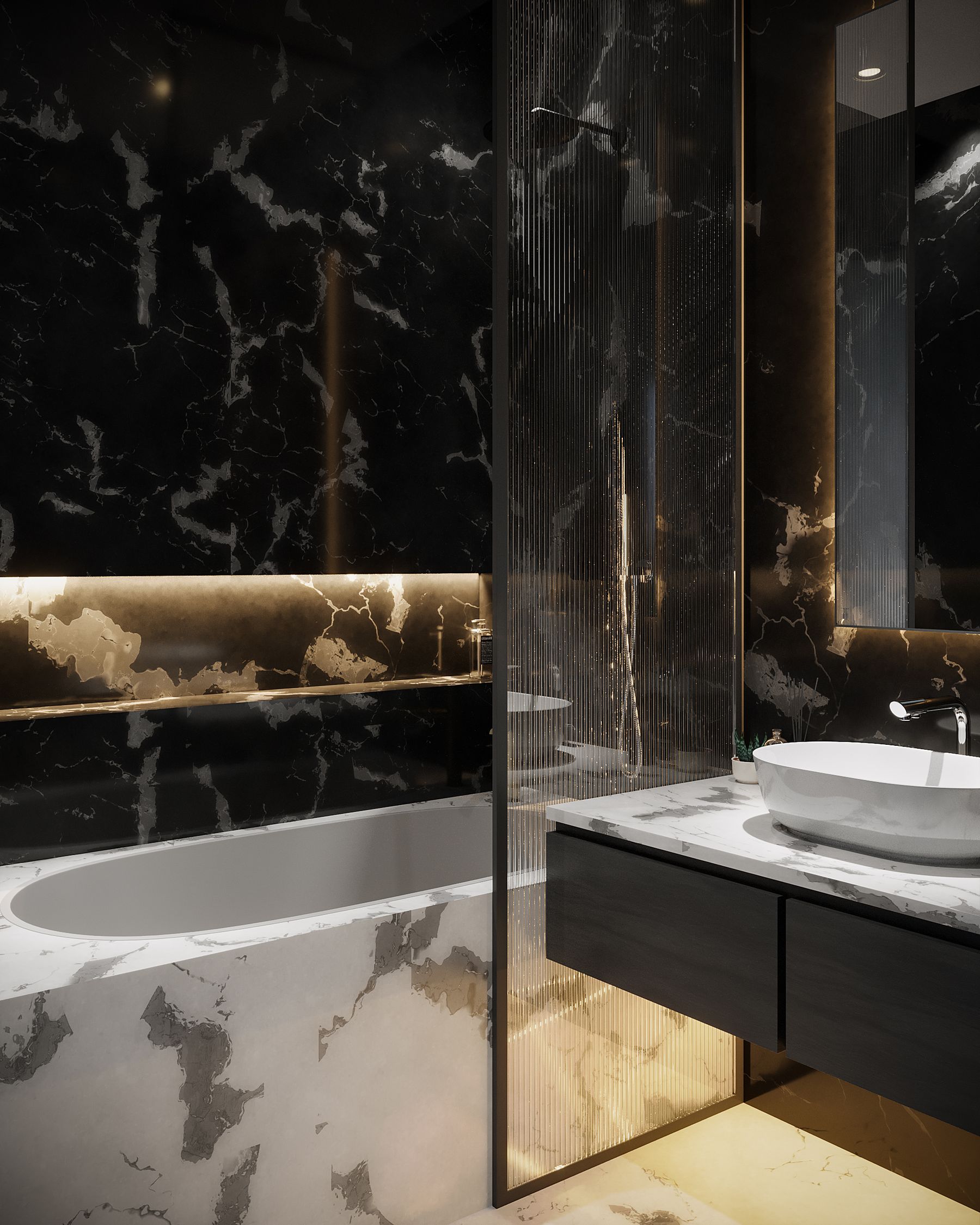
Mix Matte and Gloss for Depth
An all-matte palette can feel soft but show handling and lose edge definition; an all-gloss room can multiply glare, reflections and water marks. Use sheen according to exposure: perhaps honed wall tile, a polished stone focal plane and satin cabinetry. Confirm that every finish is suitable for its wet or high-touch location. Variation should help reveal the room, not create a patchwork of unrelated blacks.
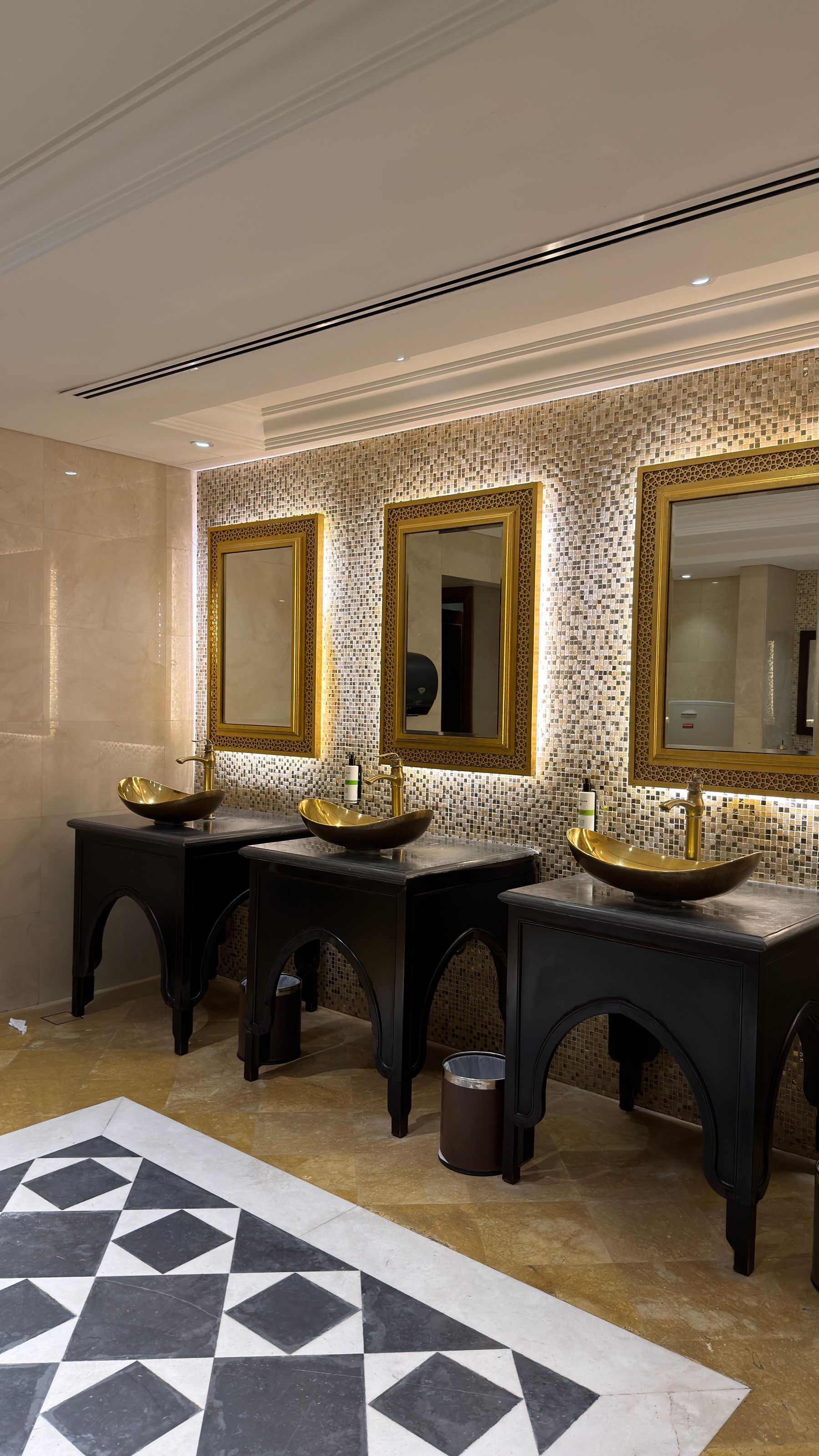
Choose Metal by Undertone and Handling
Warm brass can lift a brown-black stone, while chrome or stainless steel brings a sharper reflection to cooler blacks. Black hardware can disappear into the envelope but may offer less contrast at controls. Select one principal metal, then allow a second only when it has a clear functional or historic reason. Check coating warranties, cleaning requirements and frequent touch points; [Art Deco Bathroom Ideas](/ideas/art-deco-bathroom-ideas/) shows a more decorative black-and-metal direction.
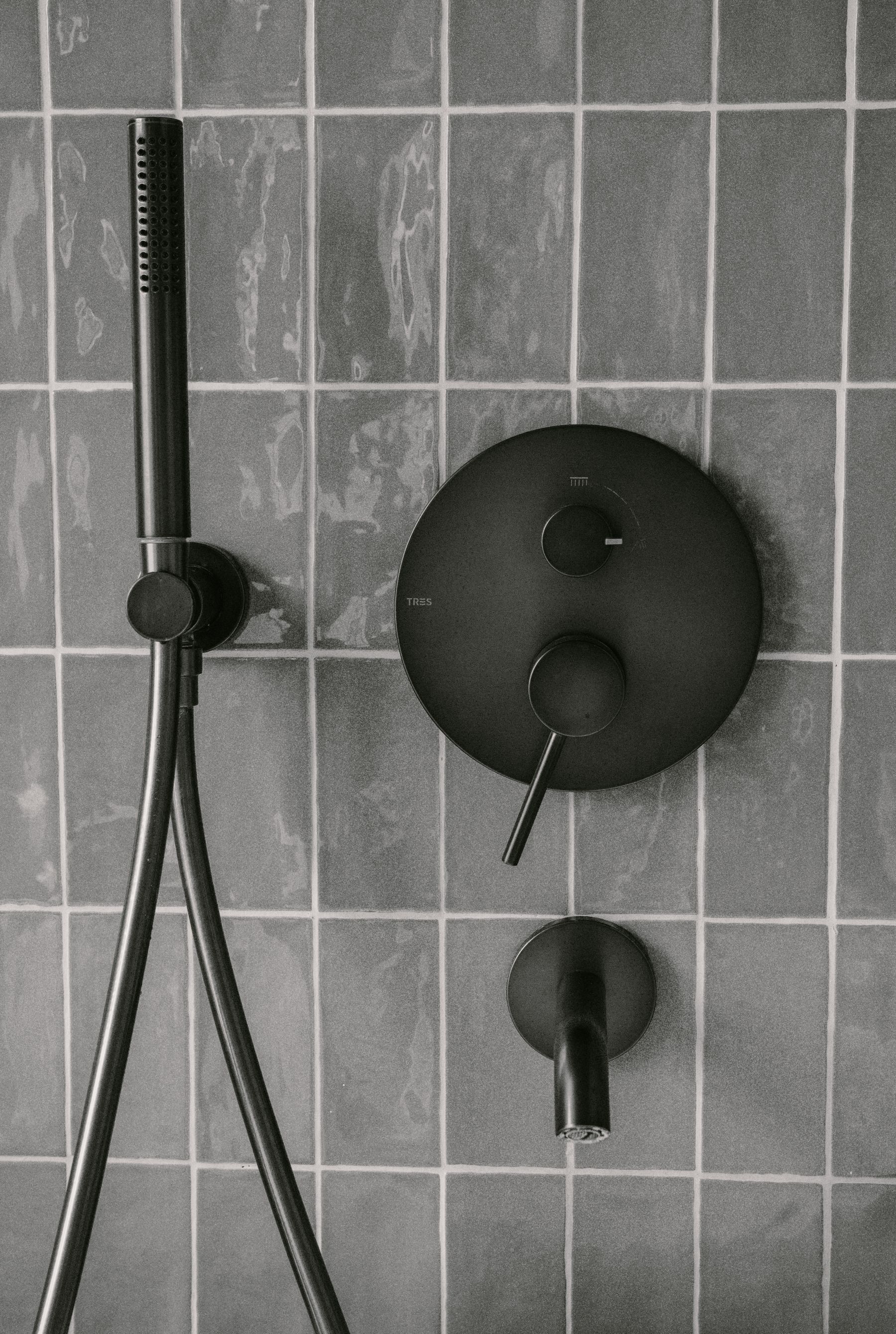
Make Black Hardware Visible Where It Matters
Matte black shower fittings and handles can create continuity, but a black control on black tile may become difficult to find in low light. Preserve a visible outline with grout, a backing plate, reflected light or a nearby material change. Review the durability of coatings at handles and moving joints, because wear is most noticeable at repeated touch points.
Use Glass and Mirrors to Extend Sightlines
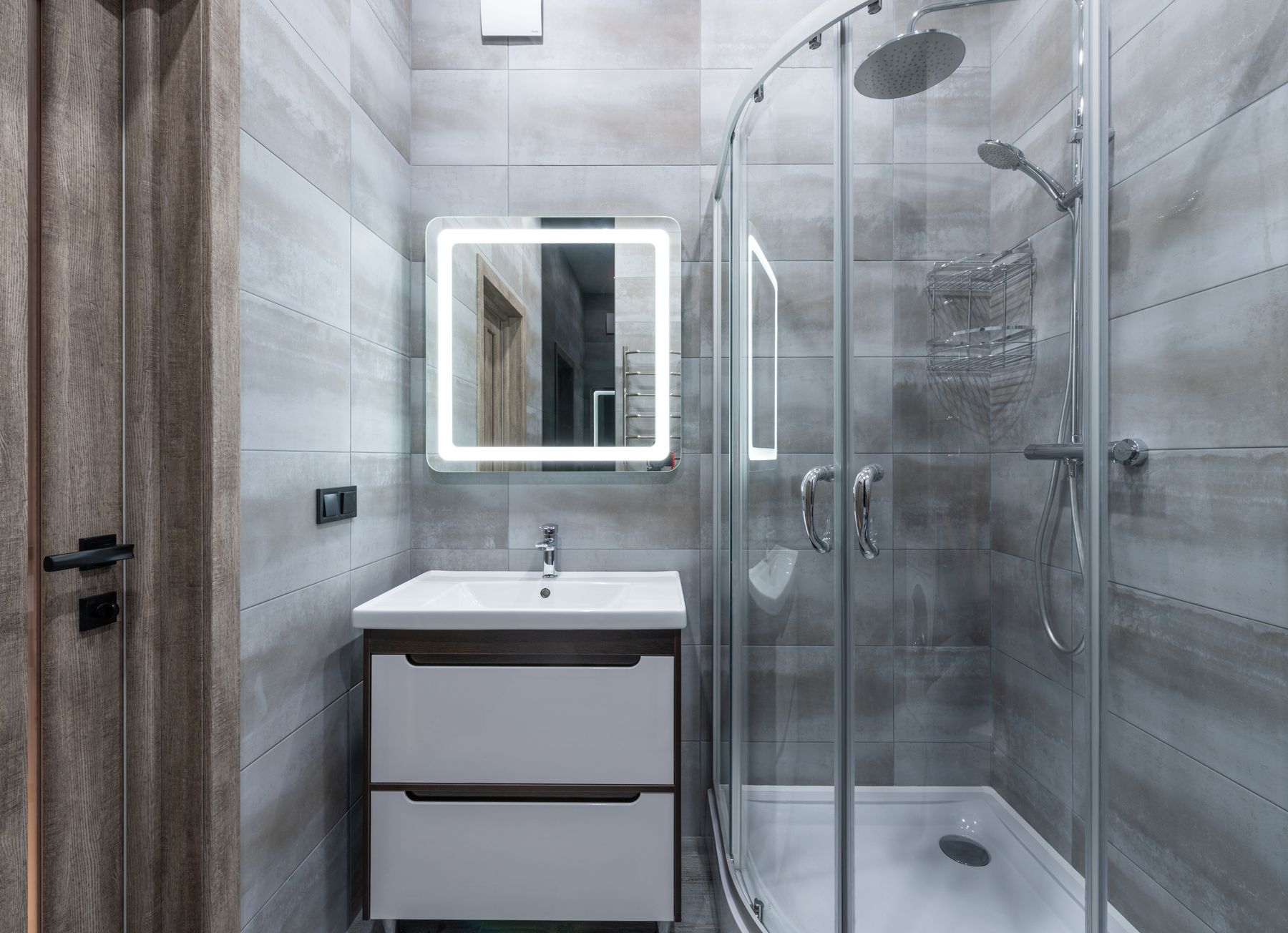
Clear shower glass and a generously scaled mirror can keep a dark bathroom from breaking into small opaque compartments. Position mirrors to reflect a textured wall, window or calm surface rather than the toilet or a cluttered shelf. Smoked glass adds mood but reduces visibility, while fluted glass softens views at the cost of more visual texture. Borrow the circulation logic from [Modern Bathroom Ideas](/ideas/modern-bathroom-ideas/) rather than using reflection as a substitute for a clear layout.
Scale Black Carefully in a Small Bathroom
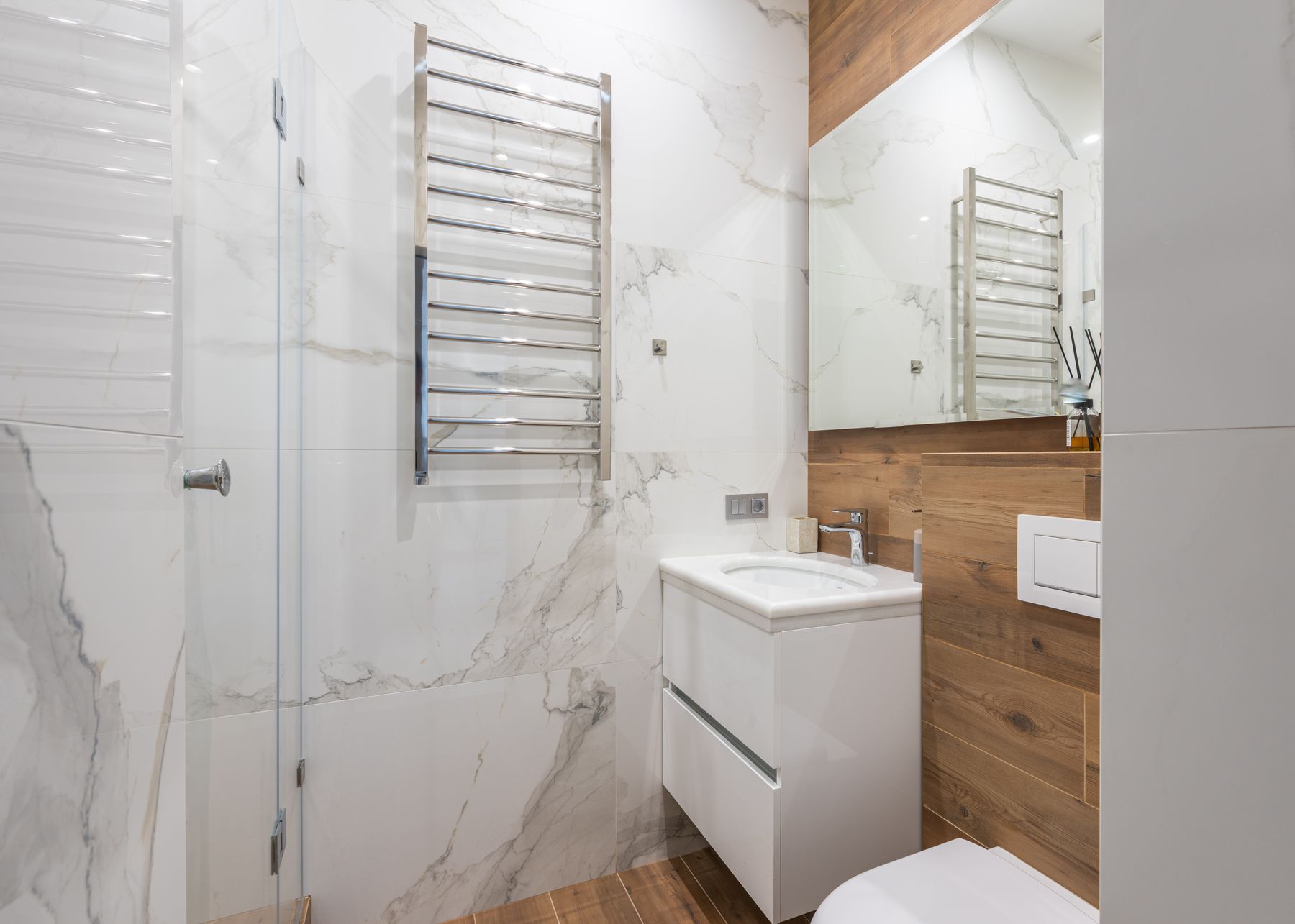
Black does not have to be banned from a compact room, but bulky dark cabinetry, broken tile patterns and weak light can make circulation harder to read. Choose a continuous dark plane, keep the floor path clear and use a wall-hung or visually light vanity where appropriate. A small powder room may suit full immersion because tasks are brief; a busy family bathroom needs stronger functional light and storage. Continue with [Small Bathroom Ideas](/ideas/small-bathroom-ideas/) for layout-first solutions.
Treat Low Daylight as a Functional Constraint
A windowless or shaded bathroom can still use black, but grooming, cleaning and safe movement must not depend on atmosphere alone. Increase vertical task light, illuminate storage interiors and reveal the shower threshold and floor perimeter. Use a lighter ceiling or reflective detail only if it supports the composition. Evaluate the room with the door closed and all normal fixtures installed, not from a bright construction-stage photograph.
Preserve Contrast for Safer Movement
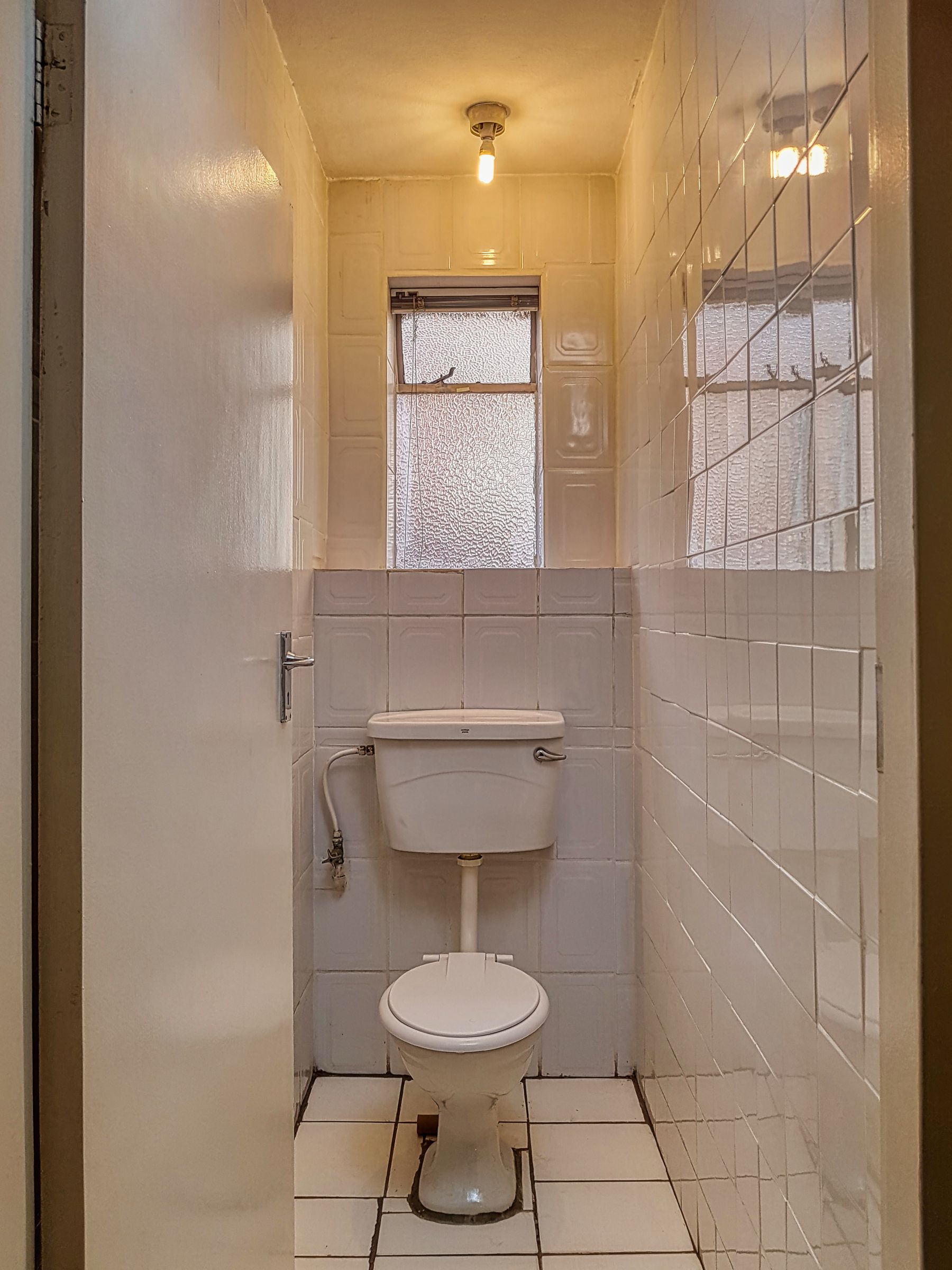
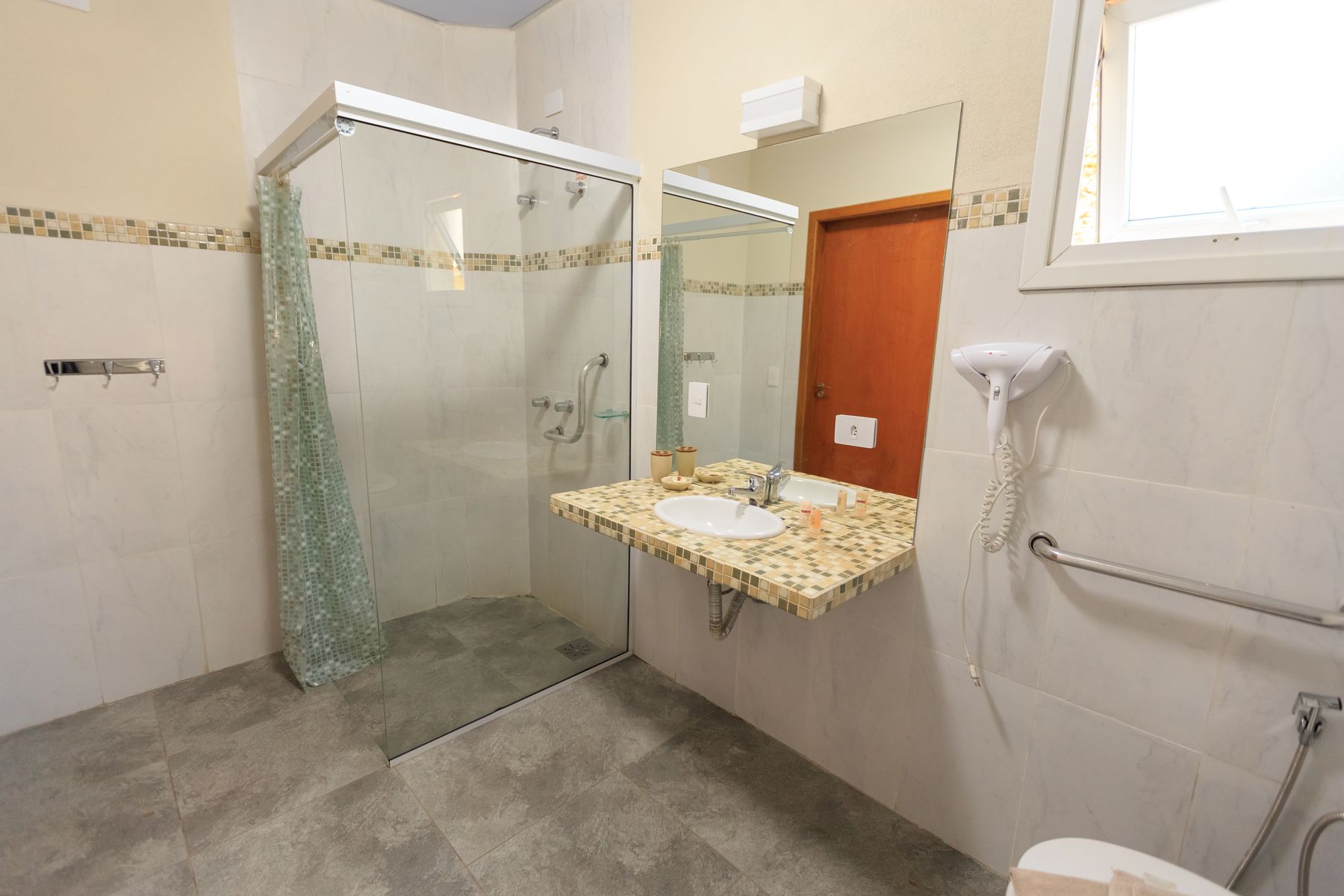
A monochrome room should still reveal the toilet seat, shower entry, controls, support points and changes in floor level. Contrast can come from sheen, a lighter edge, metal, timber or directed light without abandoning the black palette. Support bars need proper anchoring and placement for the user, not just visibility. The [Aging-in-Place Bathroom Ideas](/ideas/aging-in-place-bathroom-ideas/) guide gives a fuller framework for movement, reach and wet-zone safety.
Hide Clutter Without Hiding Daily Essentials
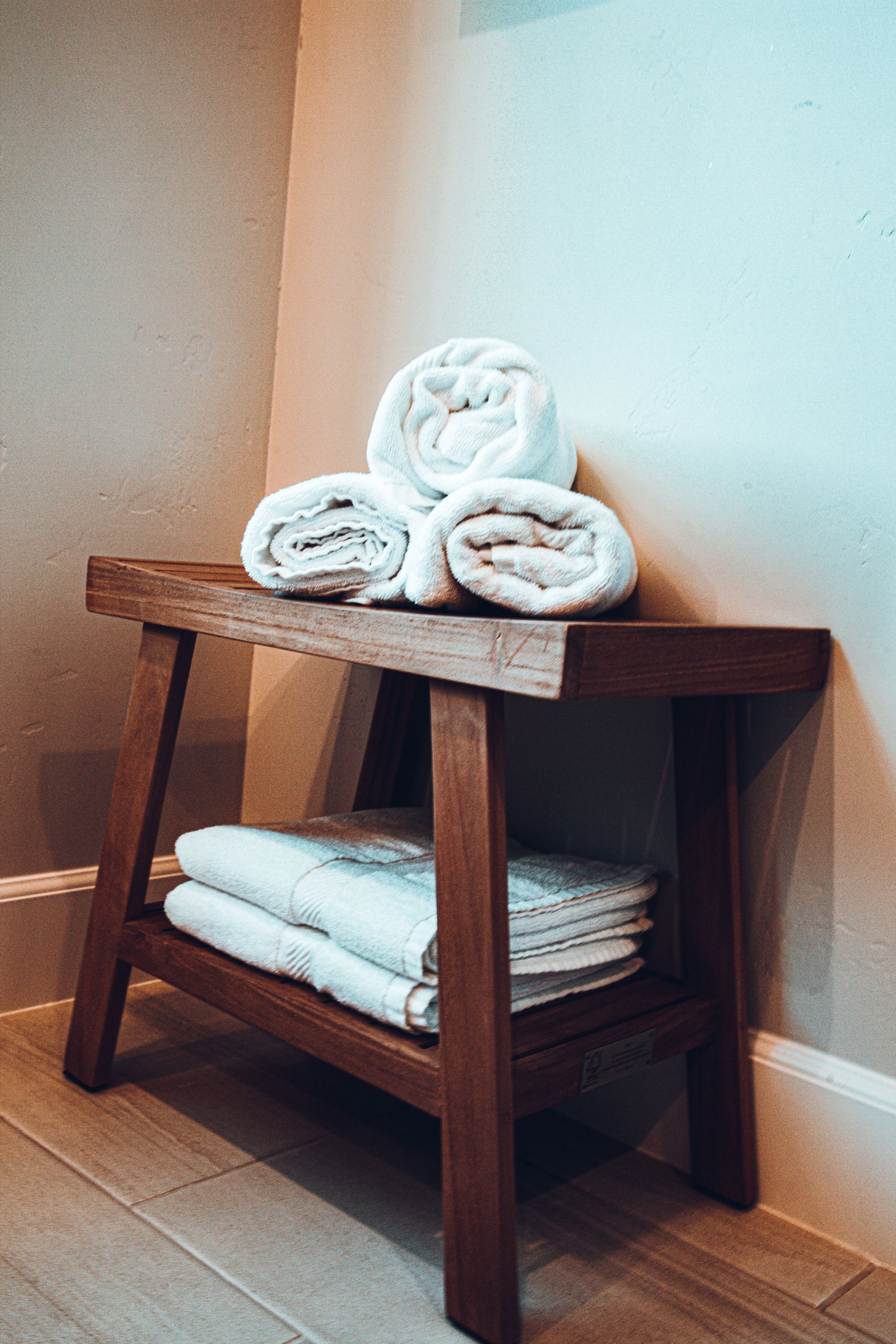
Bright packaging and loose bottles attract attention against black surfaces, yet storage that is too concealed slows daily routines. Give frequently used items a shallow drawer, recessed cabinet or controlled tray at the point of use; move backups away from the vanity. Add internal lighting where dark cabinet interiors make contents hard to find. Use [Bathroom Storage Ideas](/ideas/bathroom-storage-ideas/) to divide daily, reserve and cleaning categories.
Choose a Floor for Grip, Joints and Cleaning
A dark bathroom floor should be assessed wet, with the exact finish, tile size, grout and cleaning routine. Highly polished stone may suit a wall but be inappropriate under wet feet; textured surfaces can improve grip yet hold residue. Smaller shower tile may accommodate falls more readily but increases joint density. Compare complete assemblies with [Bathroom Flooring Ideas](/ideas/bathroom-flooring-ideas/) and verify technical performance for the location.
Plan Ventilation Around Visible Moisture
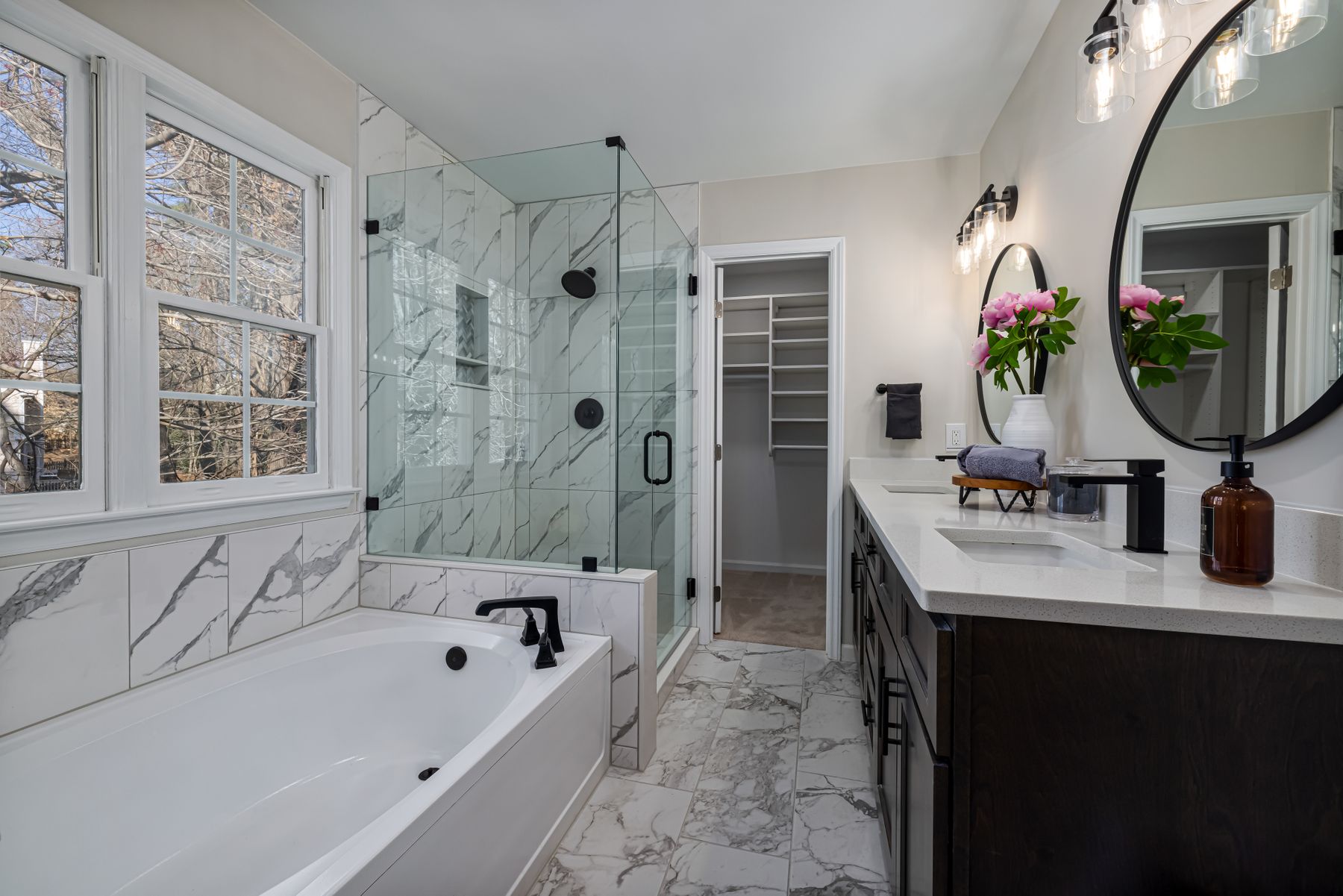
Condensation, streaks and dust are more conspicuous on many black surfaces, so moisture control belongs in the visual plan as well as the technical one. Size and route extraction appropriately for the room and fixtures, provide make-up air as required and avoid trapping dampness behind decorative panels or in deep niches. Lighting that grazes a wall will also reveal residue, making a reliable drying routine more valuable than cosmetic concealment.
Test Water Marks Before Specifying Matte Black
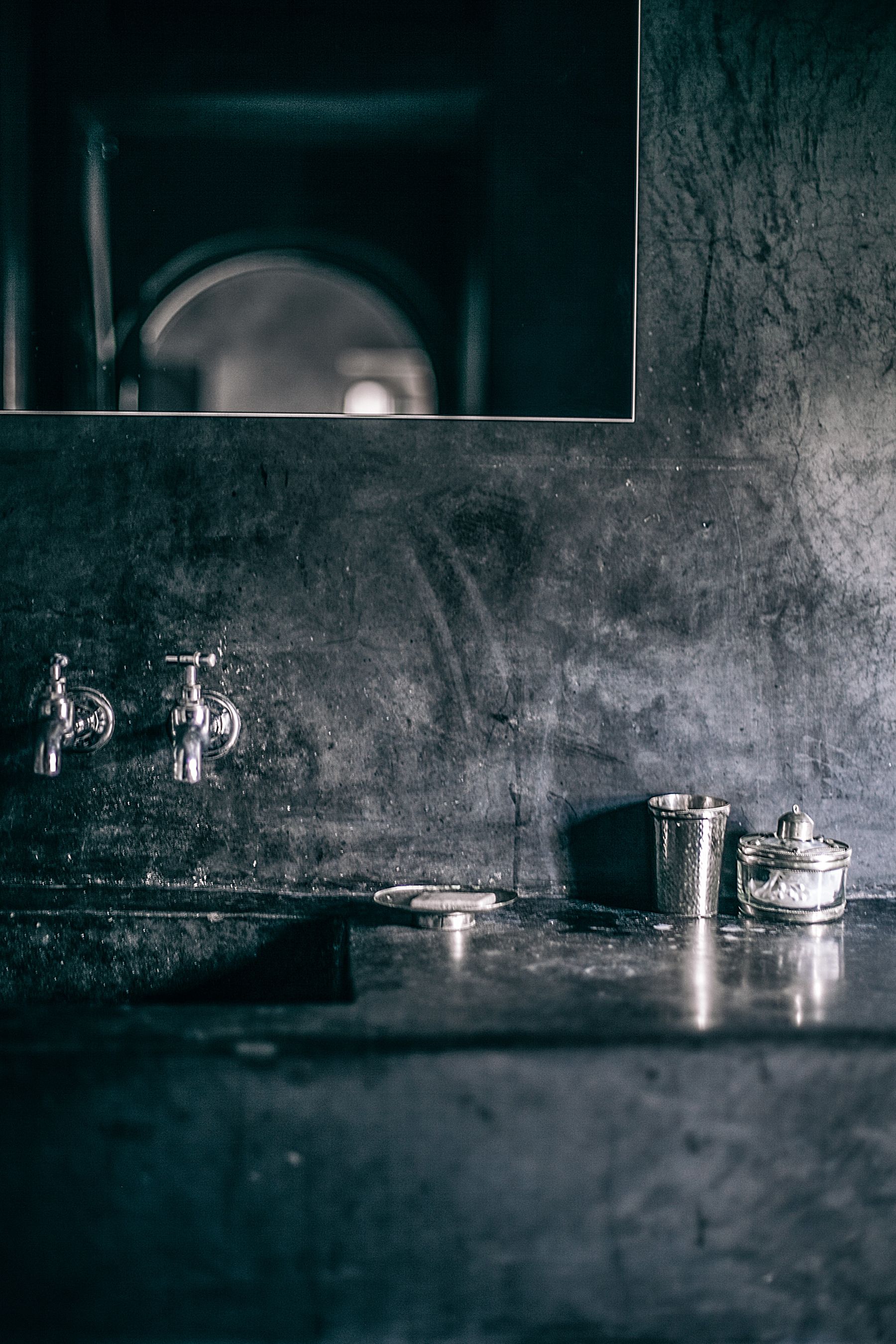
Matte black basins, taps and counters can show soap film, toothpaste, lint and mineral deposits even when the shape is simple. Use the manufacturer's approved cleaner on a sample, let local tap water dry on it and check for rings or discoloration. A daily squeegee or microfiber wipe may be realistic in a small ensuite and burdensome in a family bathroom. Choose the finish after testing the routine, not from an untouched showroom display.
Use Black as a Reversible Rental Layer
Renters or cautious renovators can create a black-led effect through textiles, a framed mirror, removable accessories, a freestanding cabinet or landlord-approved paint rather than replacing waterproof finishes. Keep plumbing fittings and fixed electrical work within the permission and competence required. A limited reversible layer is most successful when one larger dark element anchors it instead of many small black objects.
Keep Black Distinct From Gothic and Industrial
Black is a color strategy, not a style by itself. Pointed profiles, aged ornament and theatrical antiques move toward [Gothic Bathroom Ideas](/ideas/gothic-bathroom-ideas/); exposed pipework, rough masonry and workshop fittings move toward [Industrial Bathroom Ideas](/ideas/industrial-bathroom-ideas/). A black bathroom can instead be modern, classic, organic or minimal. Name the intended style separately, then edit details that introduce an accidental second narrative.
Run a Sample-and-Maintenance Decision Test
Build a portable board with the lead black, grout, floor, metal, timber and pale functional contrast. View it beside the mirror, shower and doorway in morning, overcast and nighttime light; wet and clean the relevant pieces. Then compare the complete black proposal with a lighter version, including extraction, lighting and upkeep rather than finish prices alone. The sequencing questions in [Bathroom Remodel Ideas](/ideas/bathroom-remodel-ideas/) help turn that choice into a buildable scope.