Keep the Topic Color-Led, Not Style-Led
Black and white is a palette, so it can support several design languages without becoming one itself. Black Bathroom is black-dominant and immersive; White Bathroom is pale and material-led; Art Deco depends on period geometry and polish. Begin with the room's users, architecture and desired contrast level, then choose the stylistic route instead of treating every monochrome scheme as modern or Deco.
Choose a Dominant Color Before Buying Tile
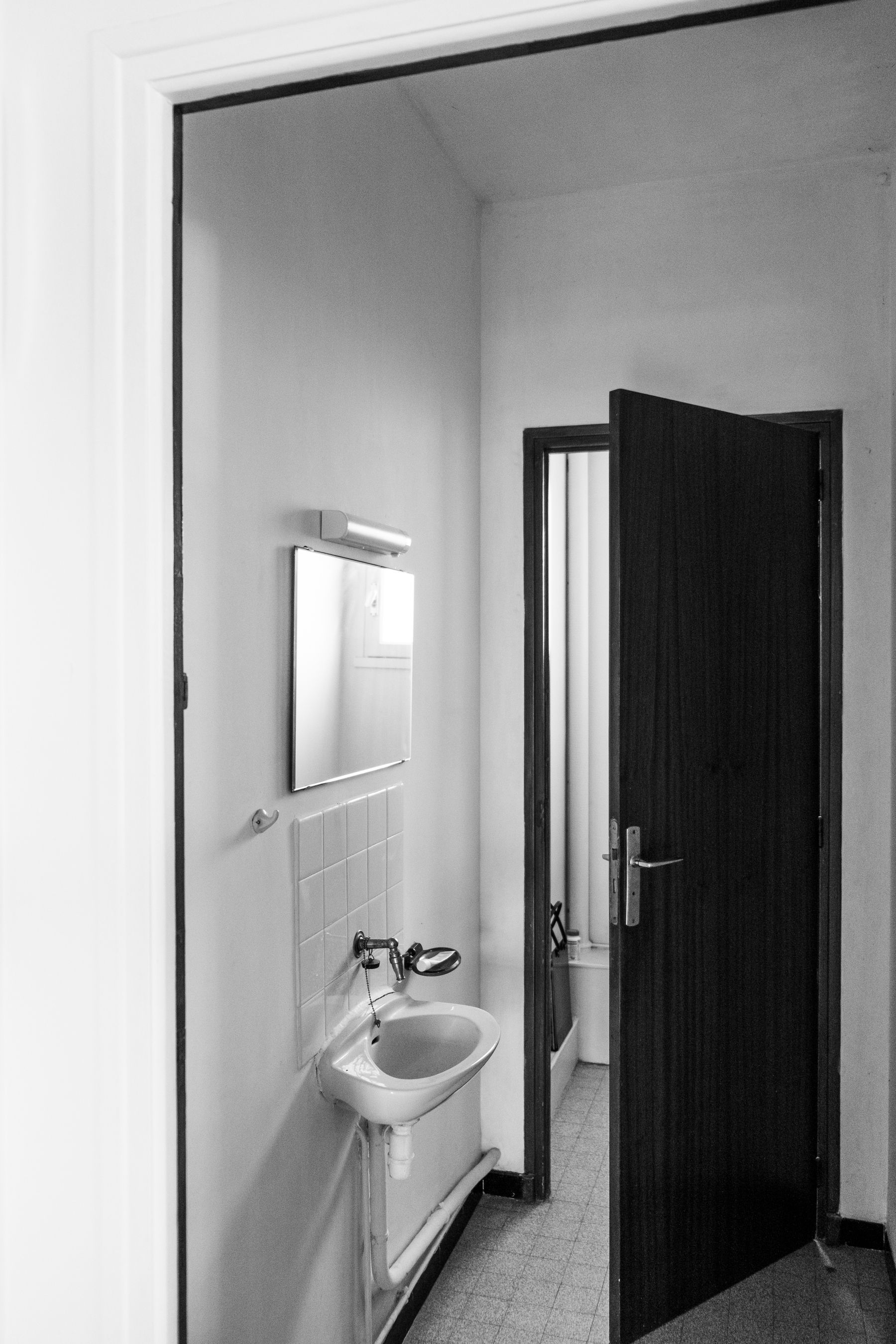
A white-dominant shell usually preserves daylight and makes dark furniture or frames read clearly. A black-dominant room feels more enclosed and dramatic, but it needs varied sheen, deliberate lighting and strong fixture visibility. Estimate walls, floor, cabinetry and large fixtures as areas rather than counting individual products; one dark floor can carry more visual weight than several black taps.
Use Black as a Zone, Not Confetti
Black works best when it defines a complete object or bounded area: a vanity, floor, shower frame or bath wall. Scattered hooks, dispensers, shelves and trims can make the palette feel busy without adding structure. Group dark elements around a functional zone and allow nearby white surfaces to remain uninterrupted.
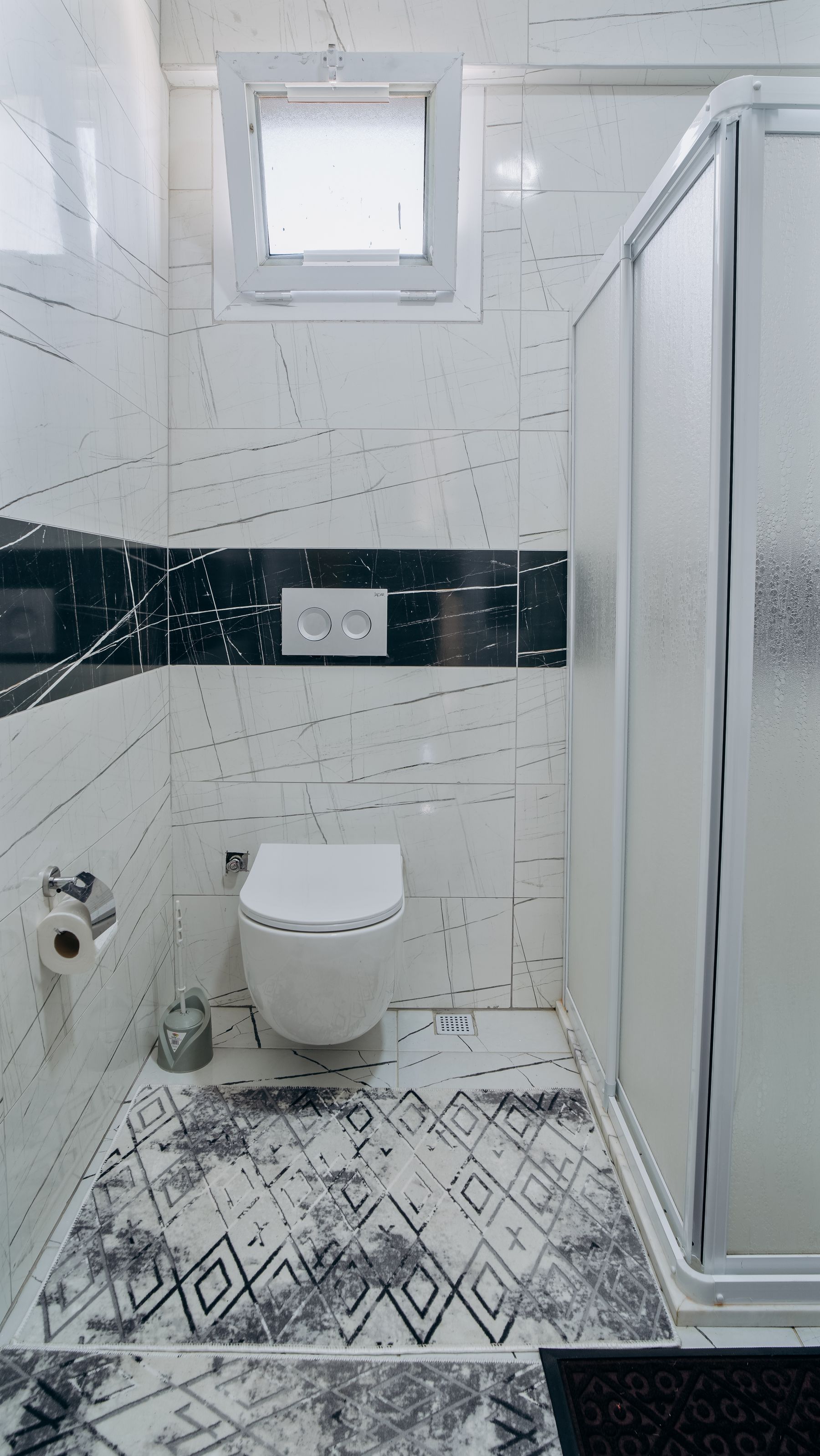
Make a Patterned Floor the Main Graphic Move
Checkerboard, hexagon, basketweave and abstract monochrome floors can give a small bathroom a complete identity. Choose the repeat at room scale, review perimeter cuts and keep walls calmer so the pattern has a clear boundary. In wet areas, slip performance, grout exposure and drainage should narrow the product choice before the motif does.
Let Grout Control the Tile Grid
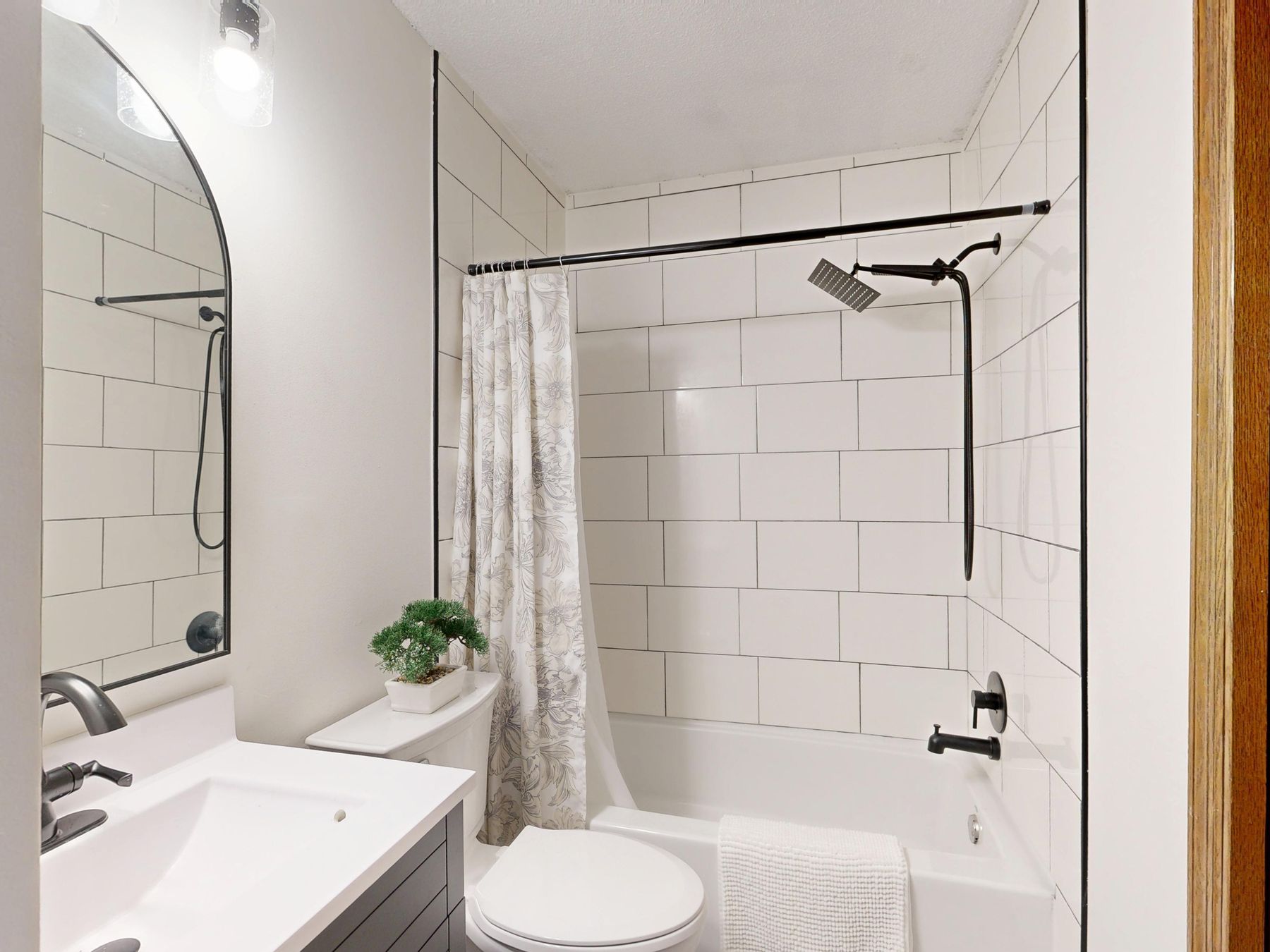
Dark grout on white tile turns every joint into a line, while a closer grout match allows the surface to read as one field. Use strong contrast where the module aligns with mirrors, shelves and shower edges; irregular cuts become more visible when every joint is outlined. Grout color also changes how quickly residue or discoloration is noticed.
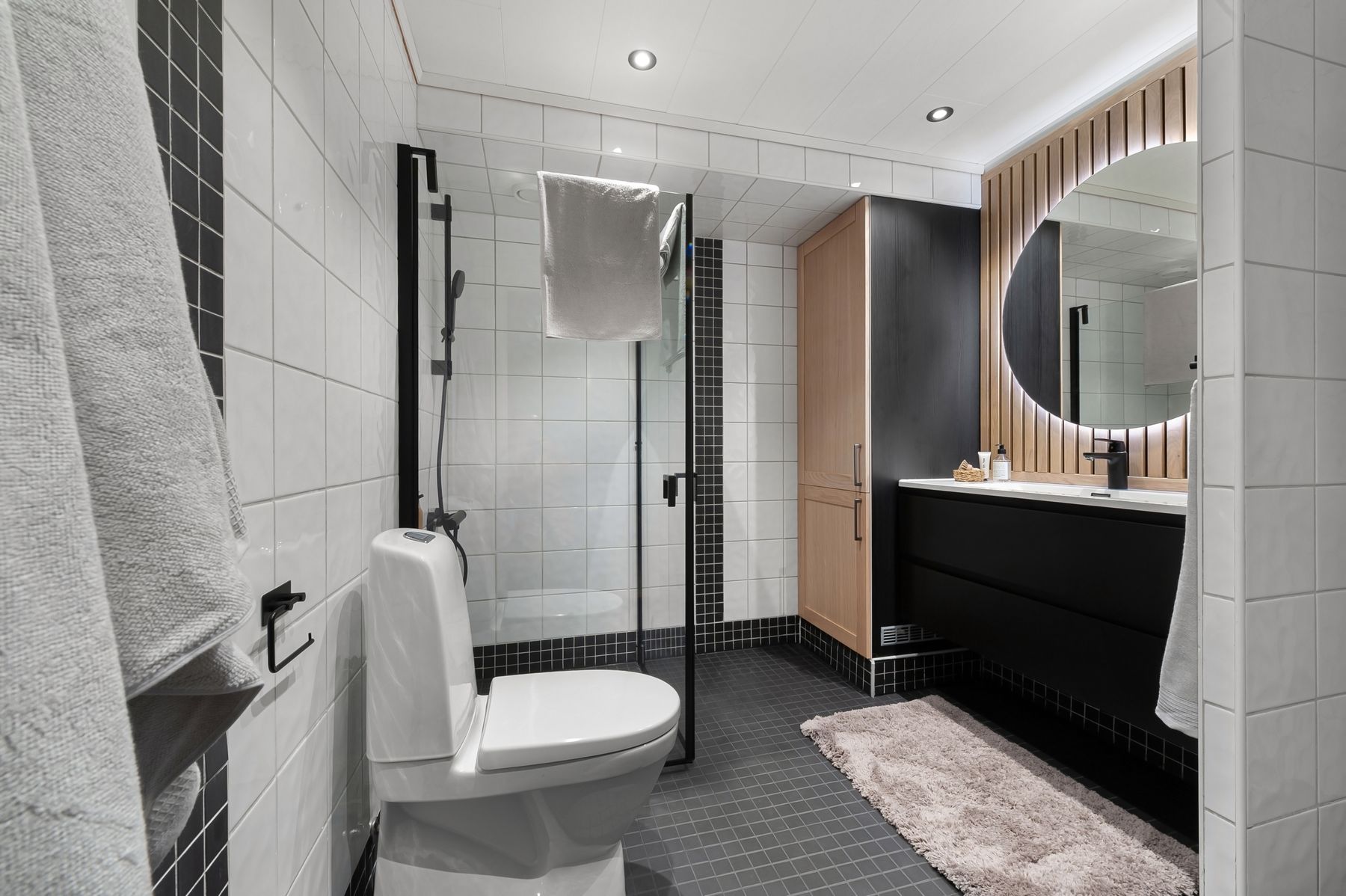
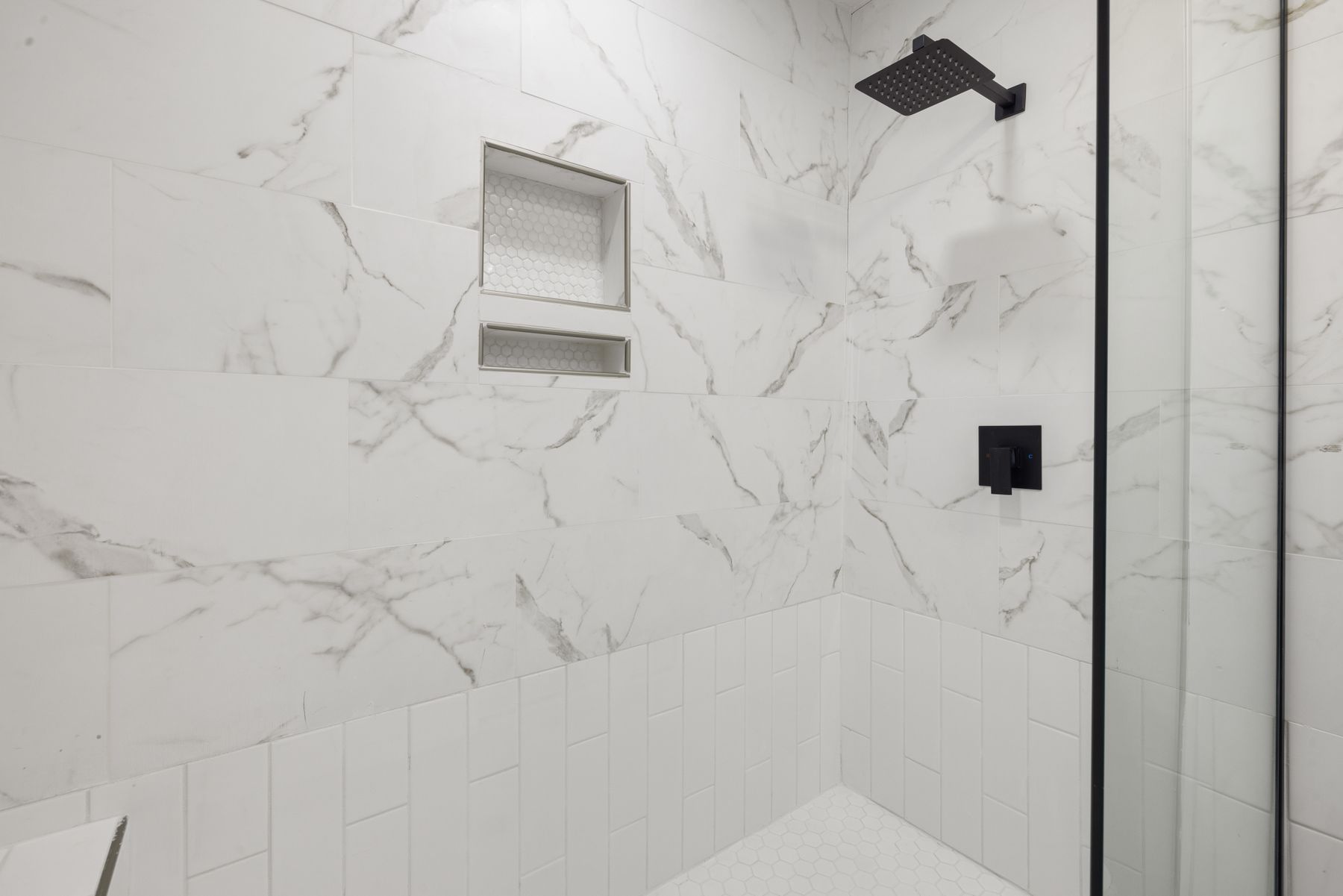
Use Marble Veining as the Middle Value
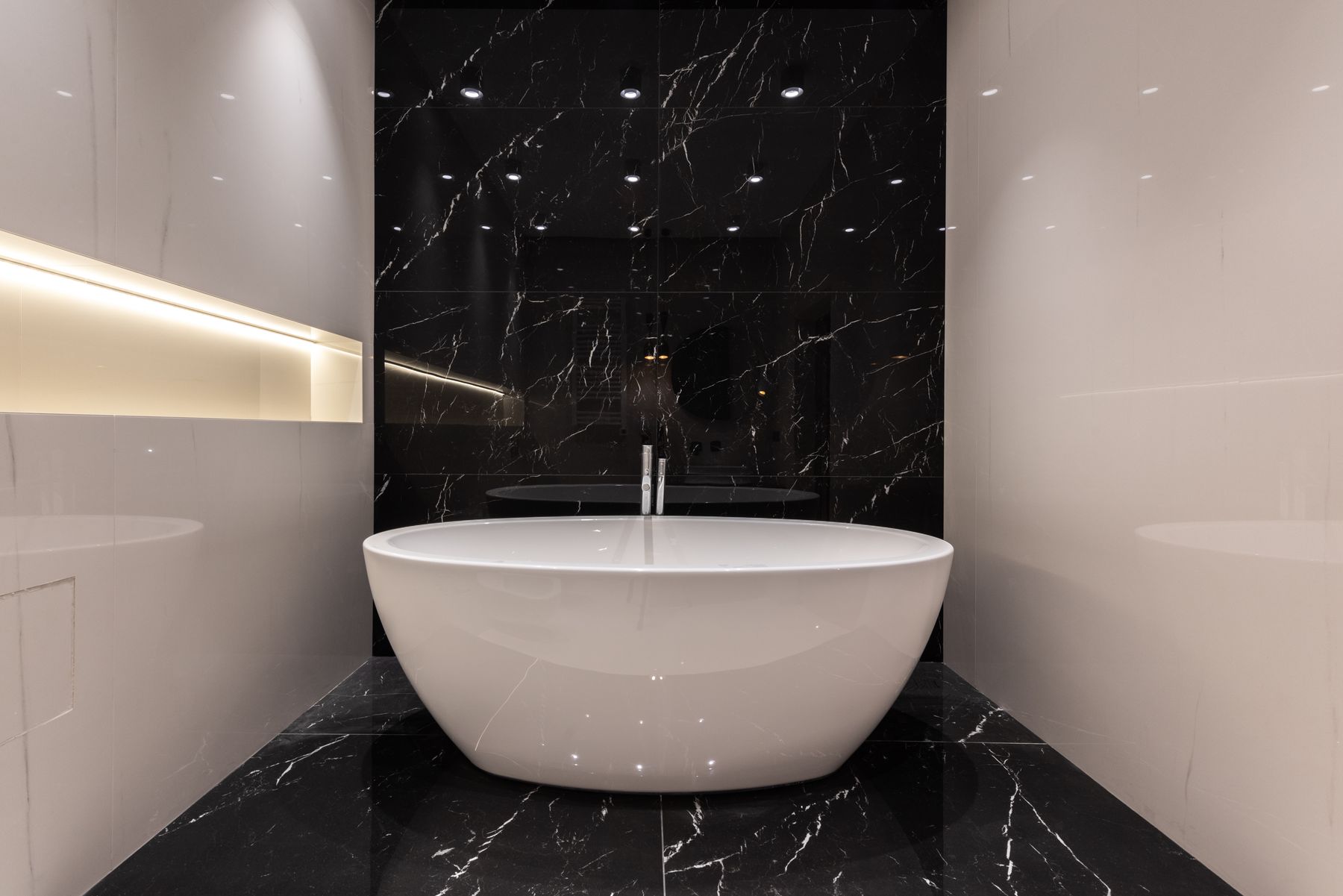
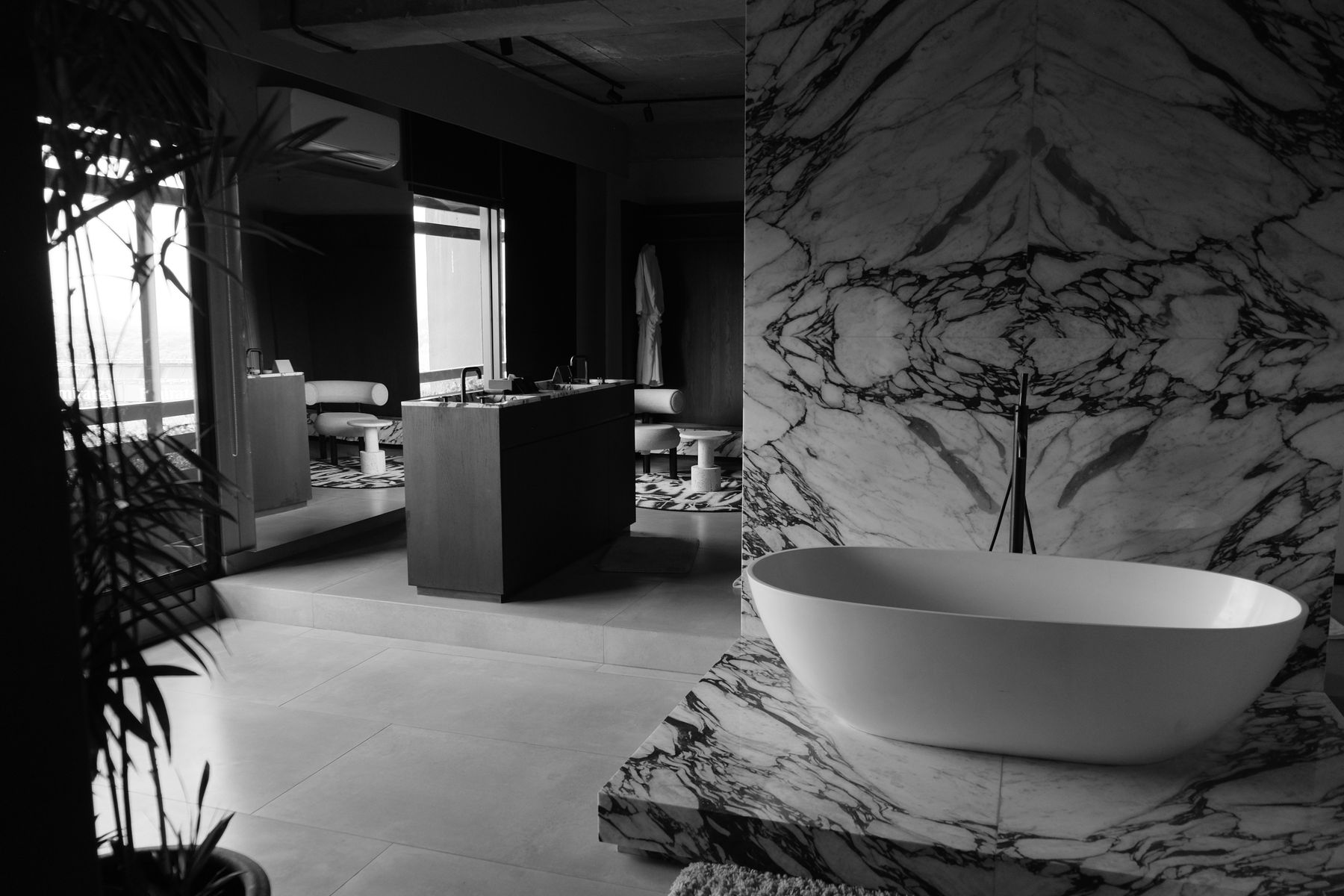
White marble with grey or black veining can bridge solid black and plain white without introducing another color family. Decide whether the stone is a quiet background or the expressive focal plane, then coordinate slab joins, bookmatching and cutouts. Natural stone and convincing porcelain alternatives have different sealing, weight, edge and repair implications.
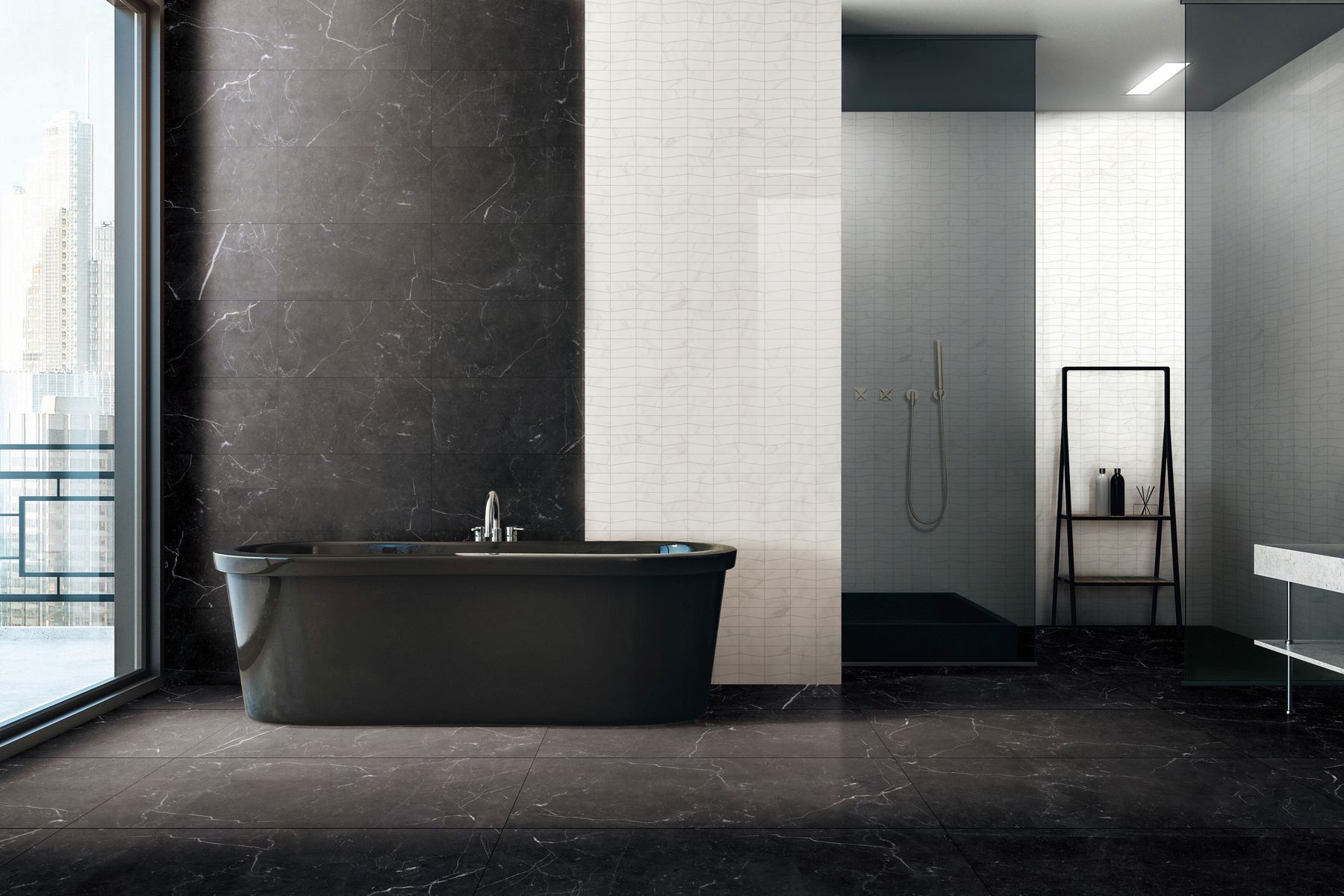
Let a Black Bath Be the Single Heavy Object
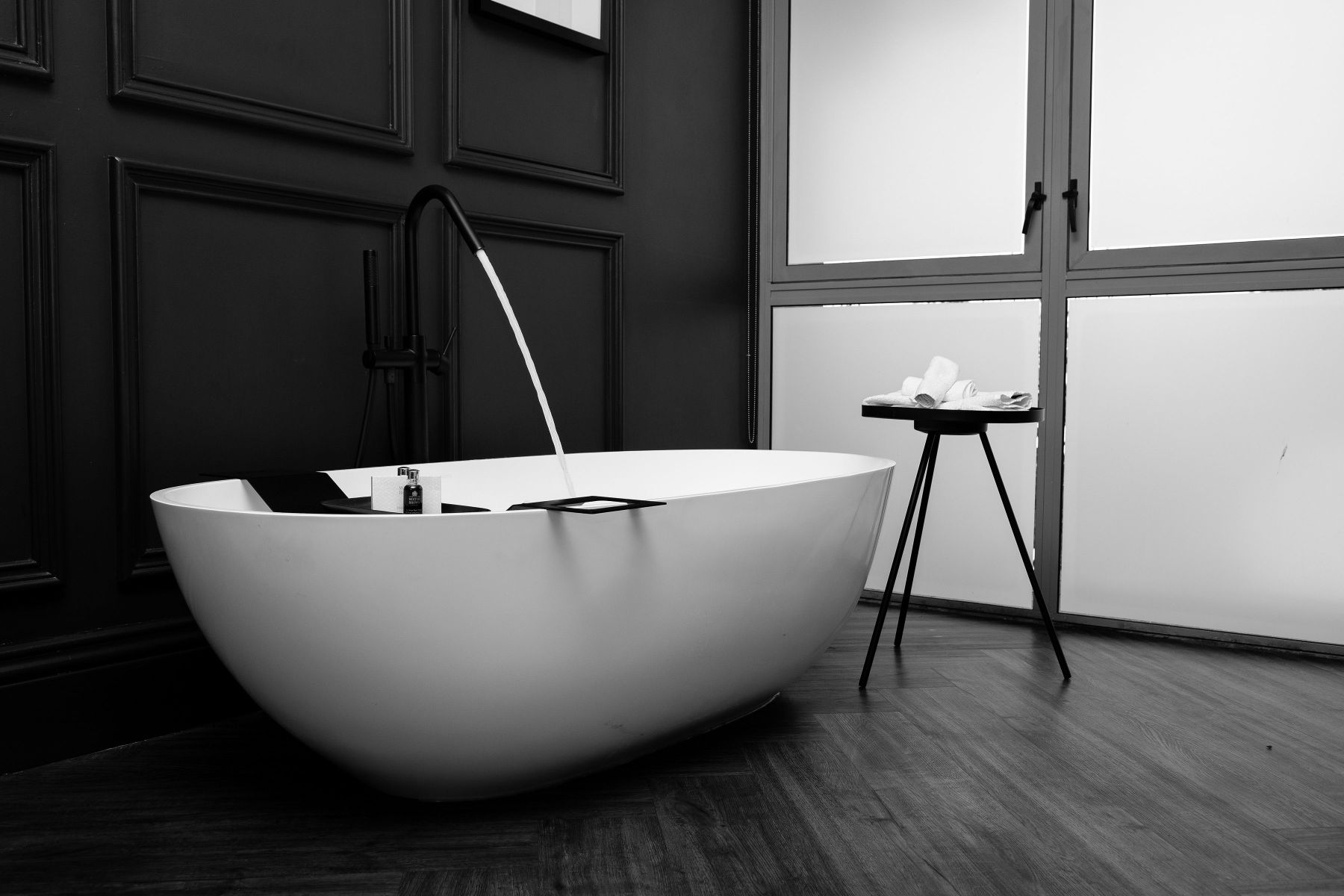
A black freestanding bath can establish the palette without dark walls or a patterned floor. Give its silhouette a lighter background, preserve cleaning clearance and position the filler so it does not obstruct entry. Matte, gloss and textured finishes show dust, mineral deposits and scratches differently, so the strongest photograph is not automatically the easiest surface to live with.
Frame a White Bath With a Dark Backdrop
A white tub becomes more sculptural against charcoal paneling, a black wall or dark flooring. Keep the fixture edge visible at night and avoid placing every dark element directly behind it, which can flatten the composition. The wall treatment must still tolerate moisture and remain reachable for cleaning.
Anchor the Vanity With Black Cabinetry
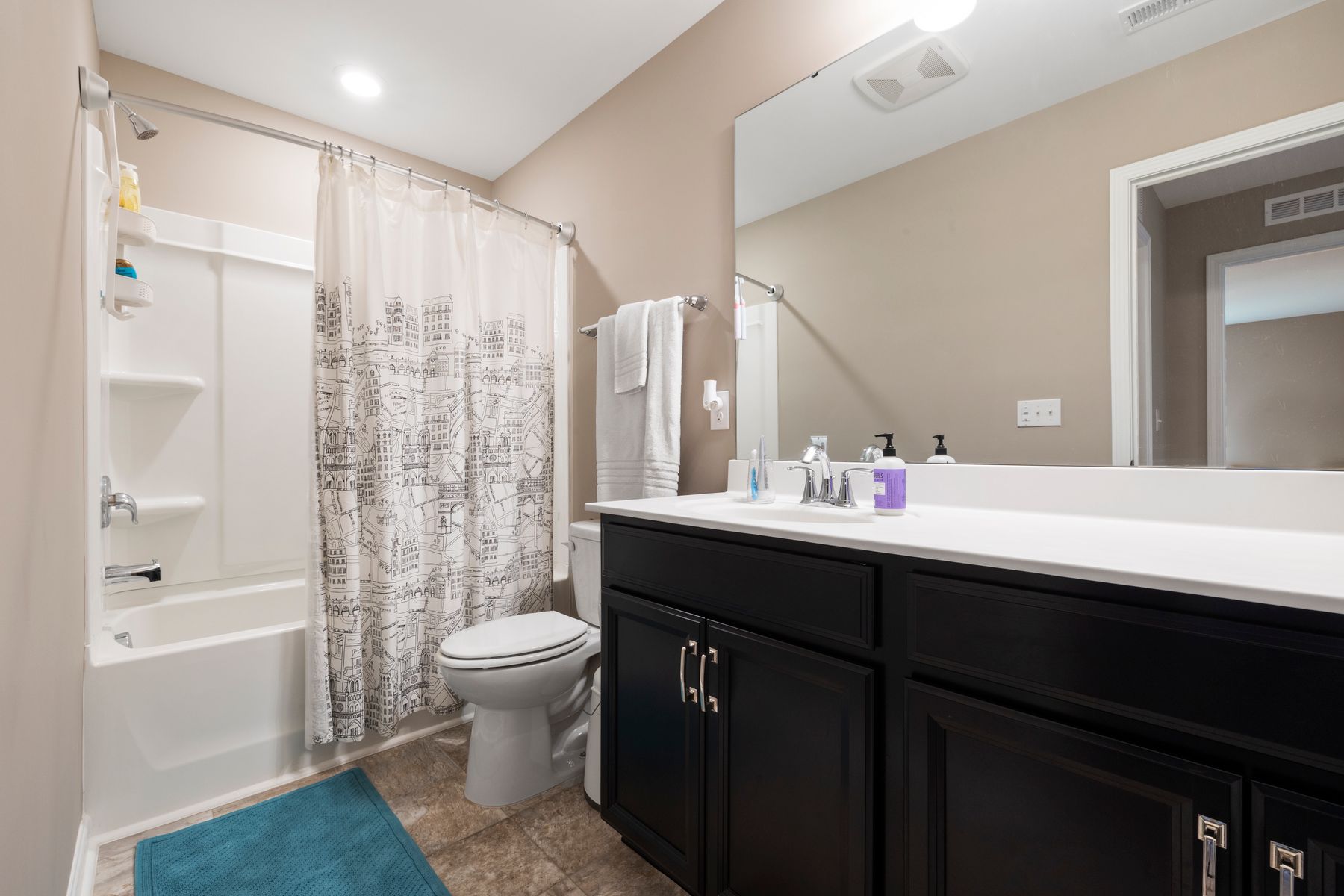
Black cabinetry gives the dry zone weight while white walls, counter and sanitaryware preserve brightness. Choose a finish by fingerprints, edge durability and touch-up options, not only sheen. Drawer divisions, mirror width and basin position should organize the elevation so the dark mass looks intentional rather than oversized.
Use a Dark Counter as a Horizontal Line
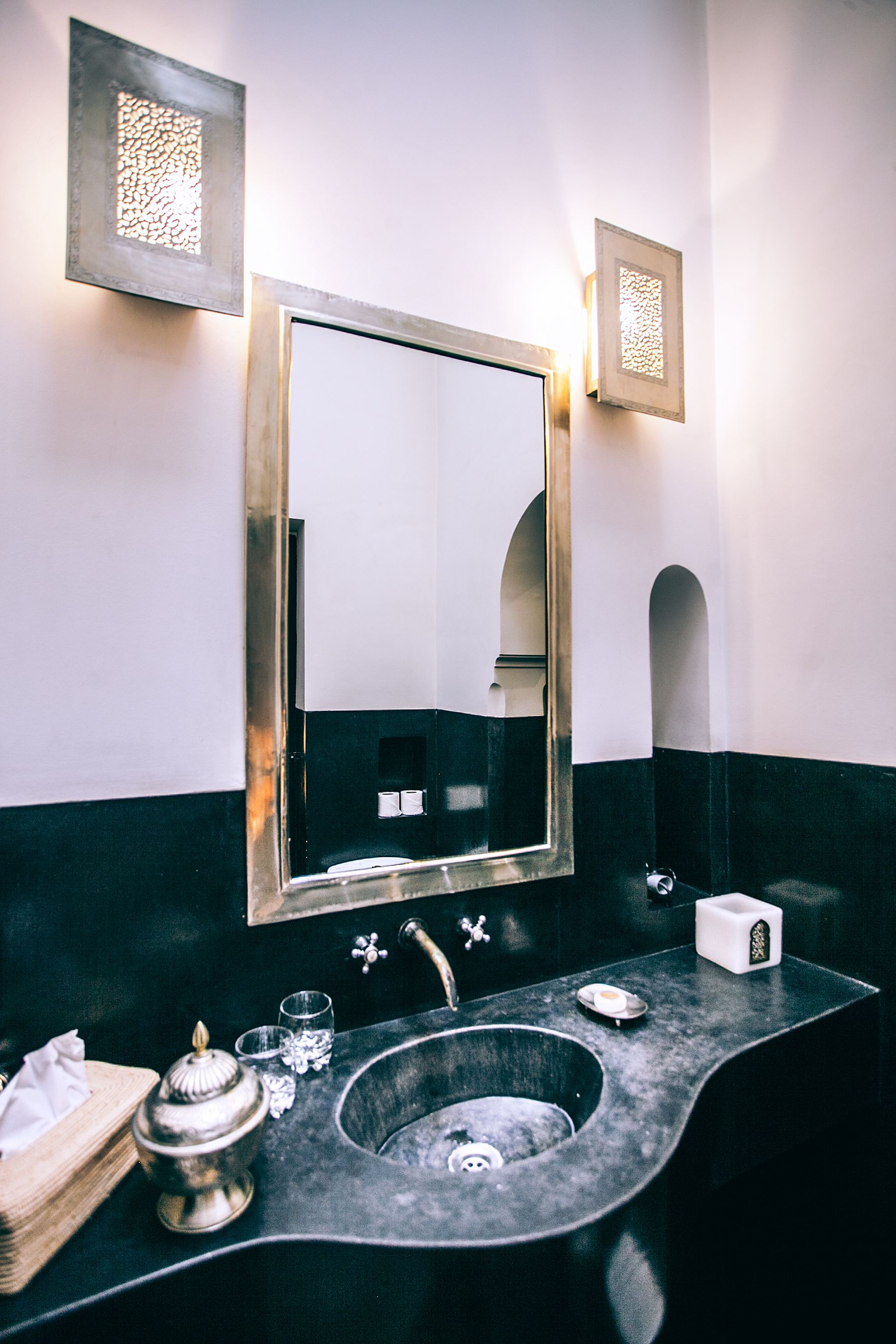
A black counter or basin deck concentrates contrast at working height and can suit a room where permanent walls need to stay light. Check water spotting, seam visibility and the relationship between basin, tap and backsplash. Keep the surface clear enough for its line to read; daily clutter quickly breaks a graphic composition.
Reverse the Formula With a Pale Floating Vanity
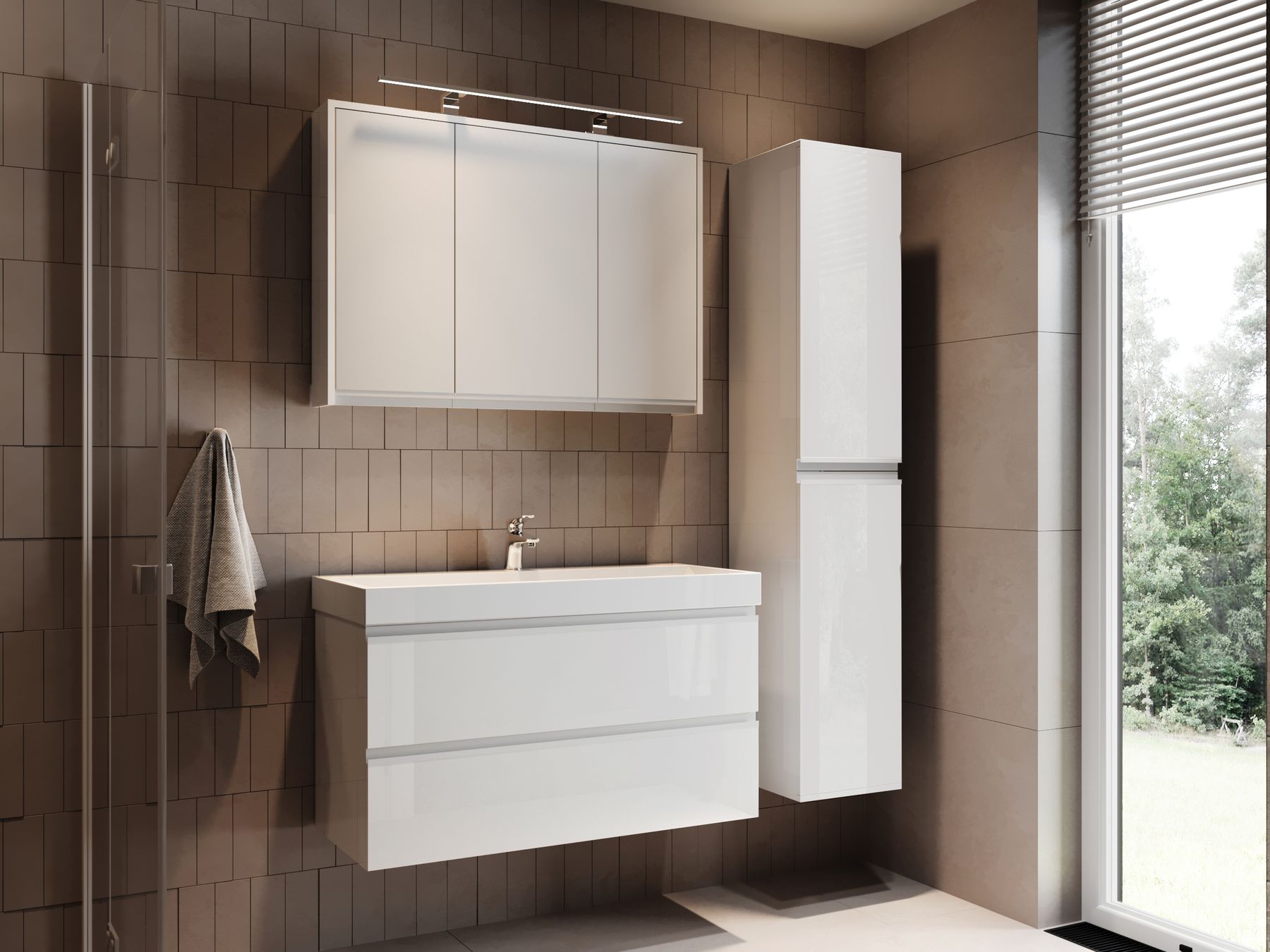
A pale or white floating vanity can disappear into the wall while black taps, mirror edges or a dark floor provide definition. This route is useful in smaller rooms because more of the visual volume remains light. Confirm wall structure, plumbing access and useful drawer depth before choosing a minimal floating profile.
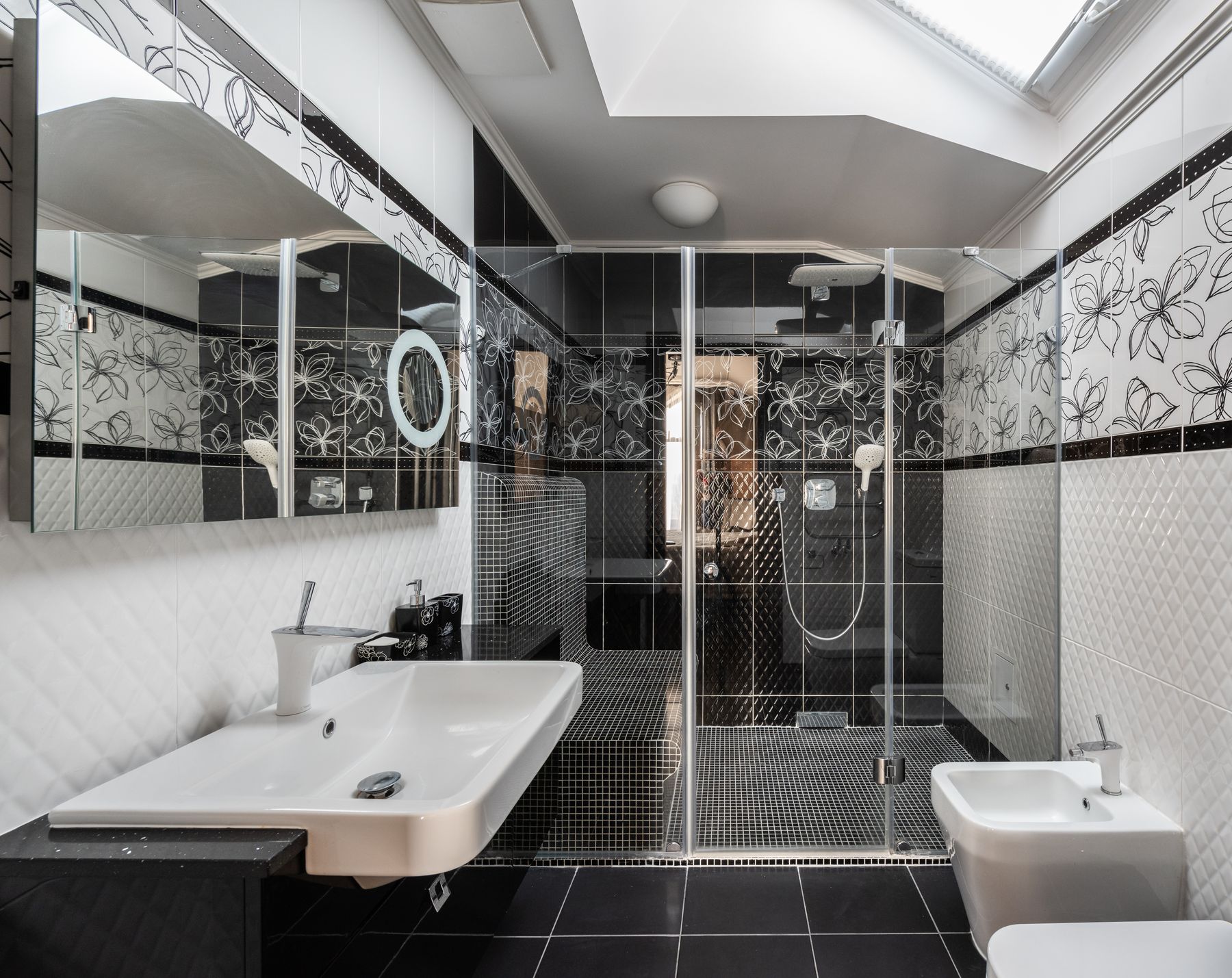
Concentrate Contrast Inside the Shower
A dark shower floor, patterned border or black frame can make the wet zone legible against pale walls. Use clear glass only where the view, cleaning routine and privacy suit it. Waterproofing, floor falls, controls and accessible drainage remain the priorities; graphic tile cannot rescue a poorly resolved wet area.
Use Black-Framed Glass Only When the Grid Helps
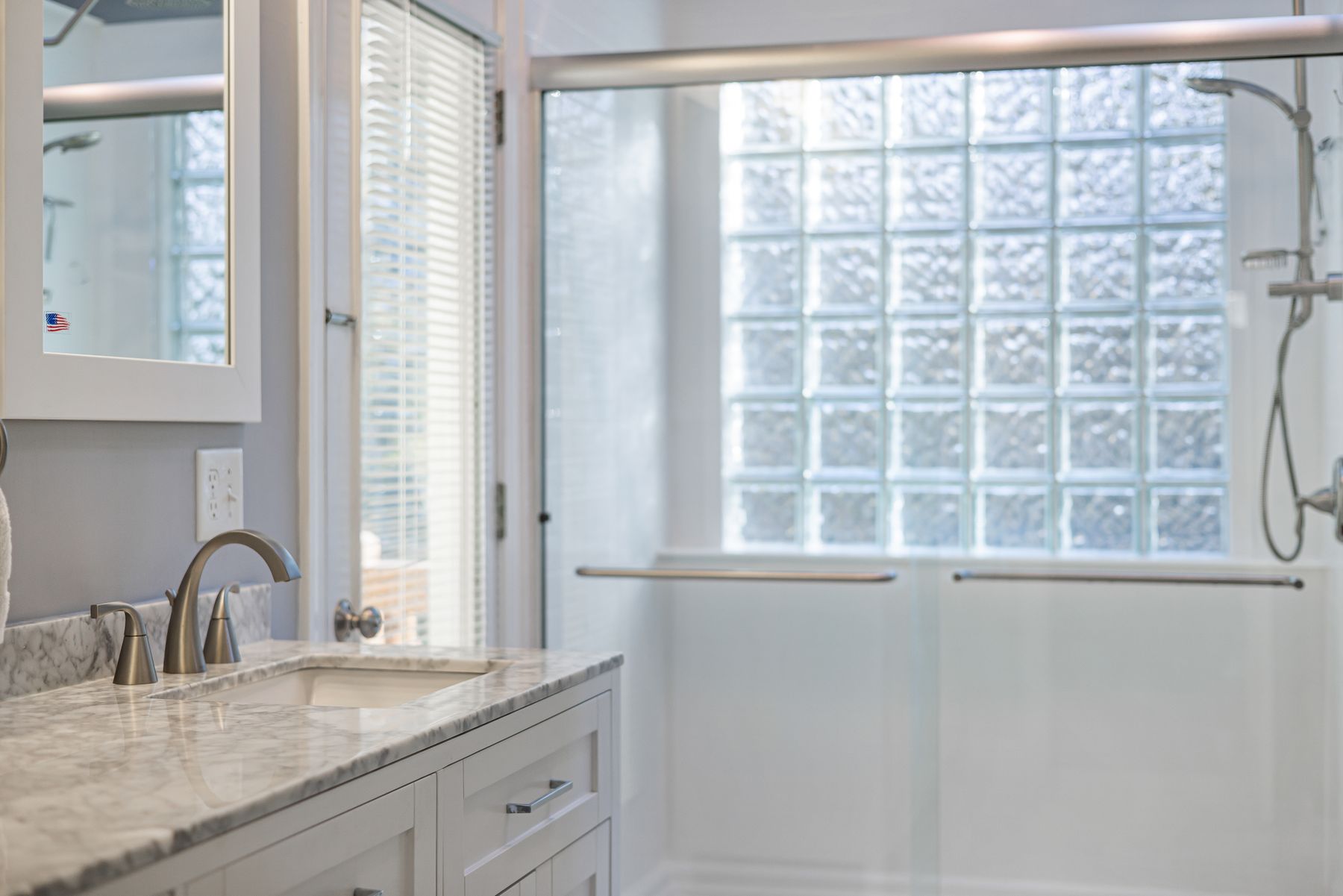
A black shower frame can repeat a window, mirror or tile grid, but extra mullions also add joints to clean and lines that may crowd a small room. Frameless glass is often the better choice when the floor or vanity already supplies enough contrast. Select the enclosure by splash control, door clearance and maintenance before decorative effect.
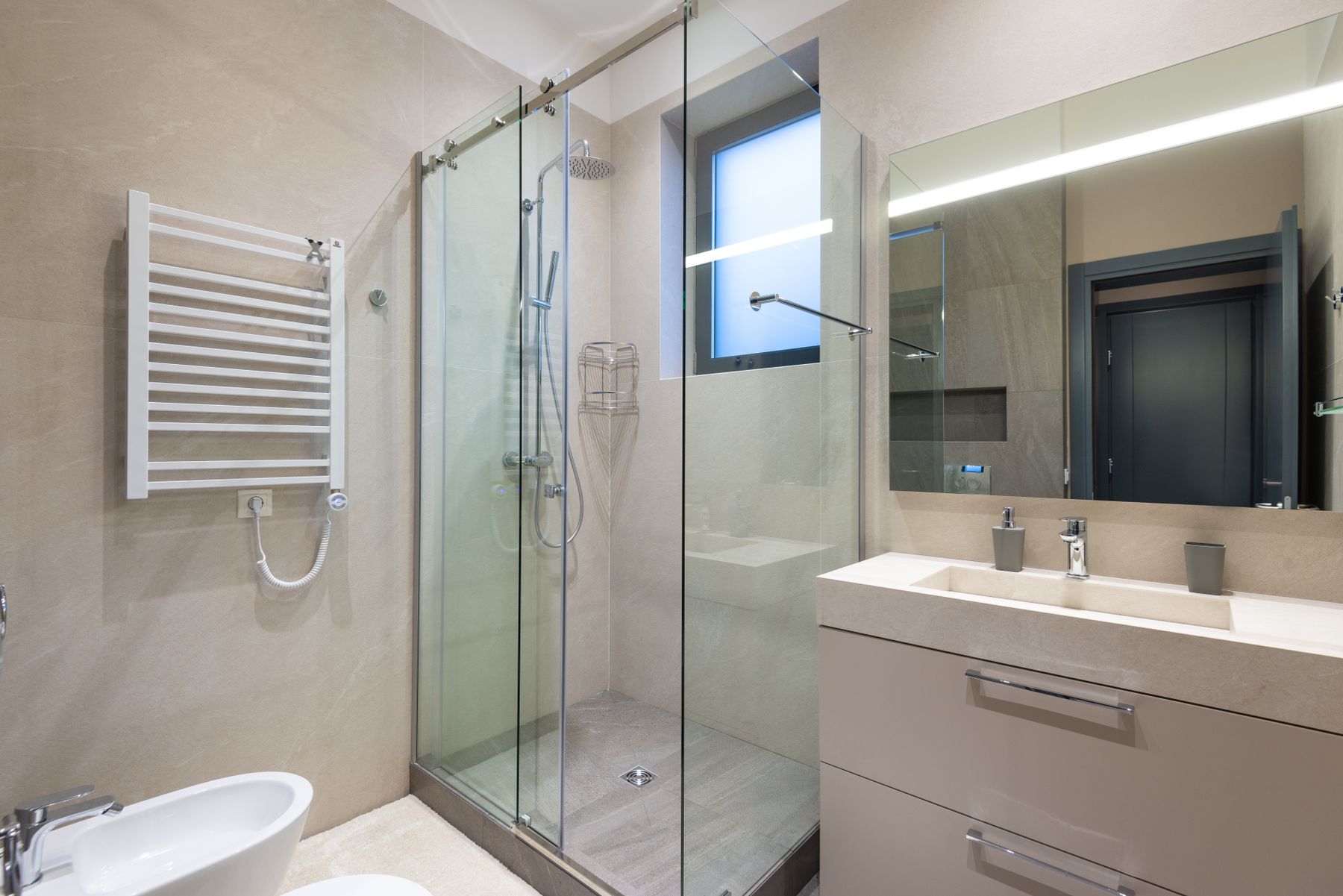
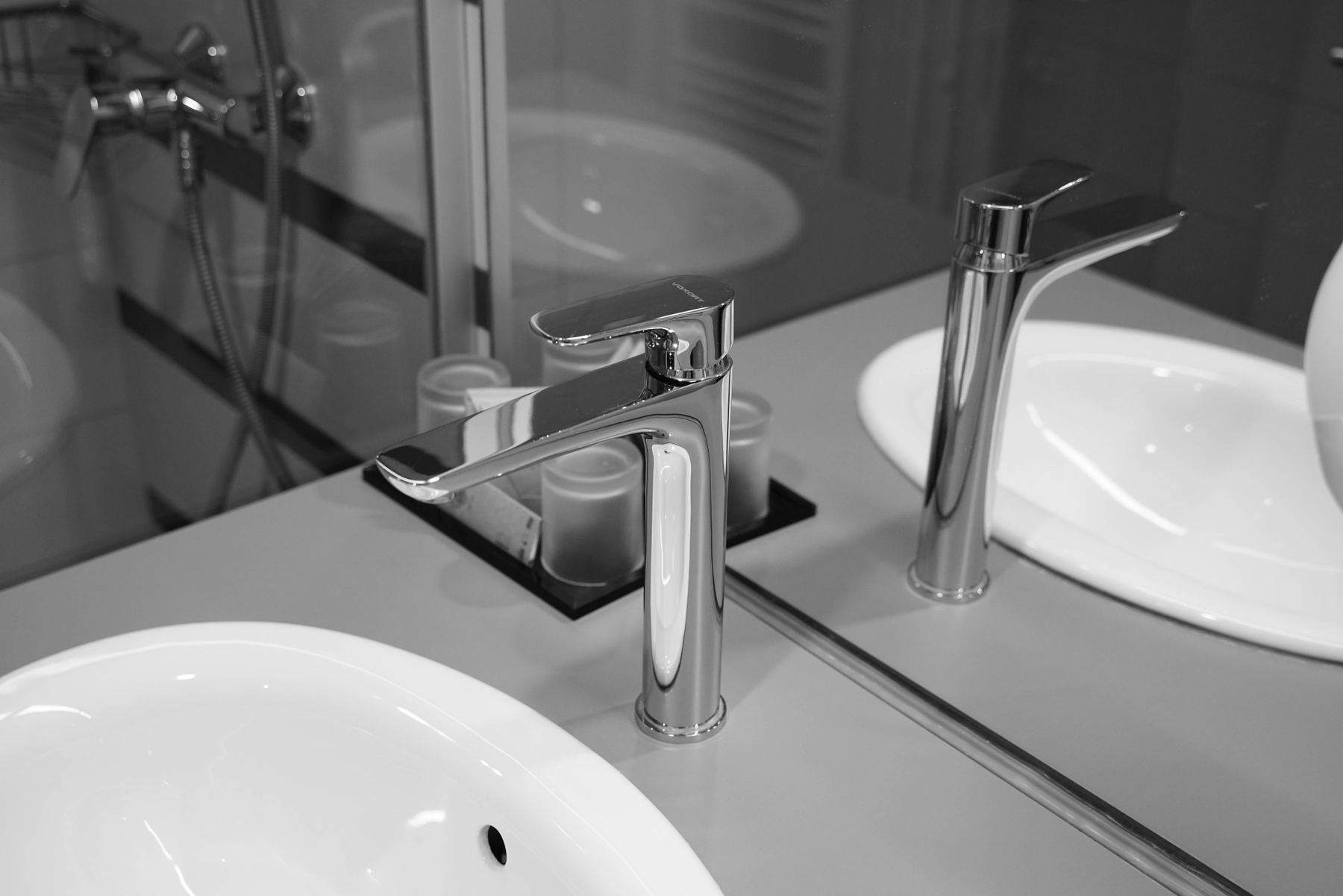
Let Reflective Metal Add a Third Brightness
Chrome, polished nickel and stainless steel reflect both dark and light surfaces, adding movement without introducing a major color. Brass can warm the scheme, but it becomes a stronger stylistic cue. Assign finishes by function and undertone instead of matching every drain, hinge and accessory automatically.
Mix Metals Through Roles, Not Randomly
A monochrome bathroom can support more than one metal when each has a clear job—for example, black shower framing, chrome plumbing and a restrained warm-metal light. Repeat shape or finish temperature so the room still feels connected. Avoid using mixed metals as a reason to add another decorative layer to every fitting.
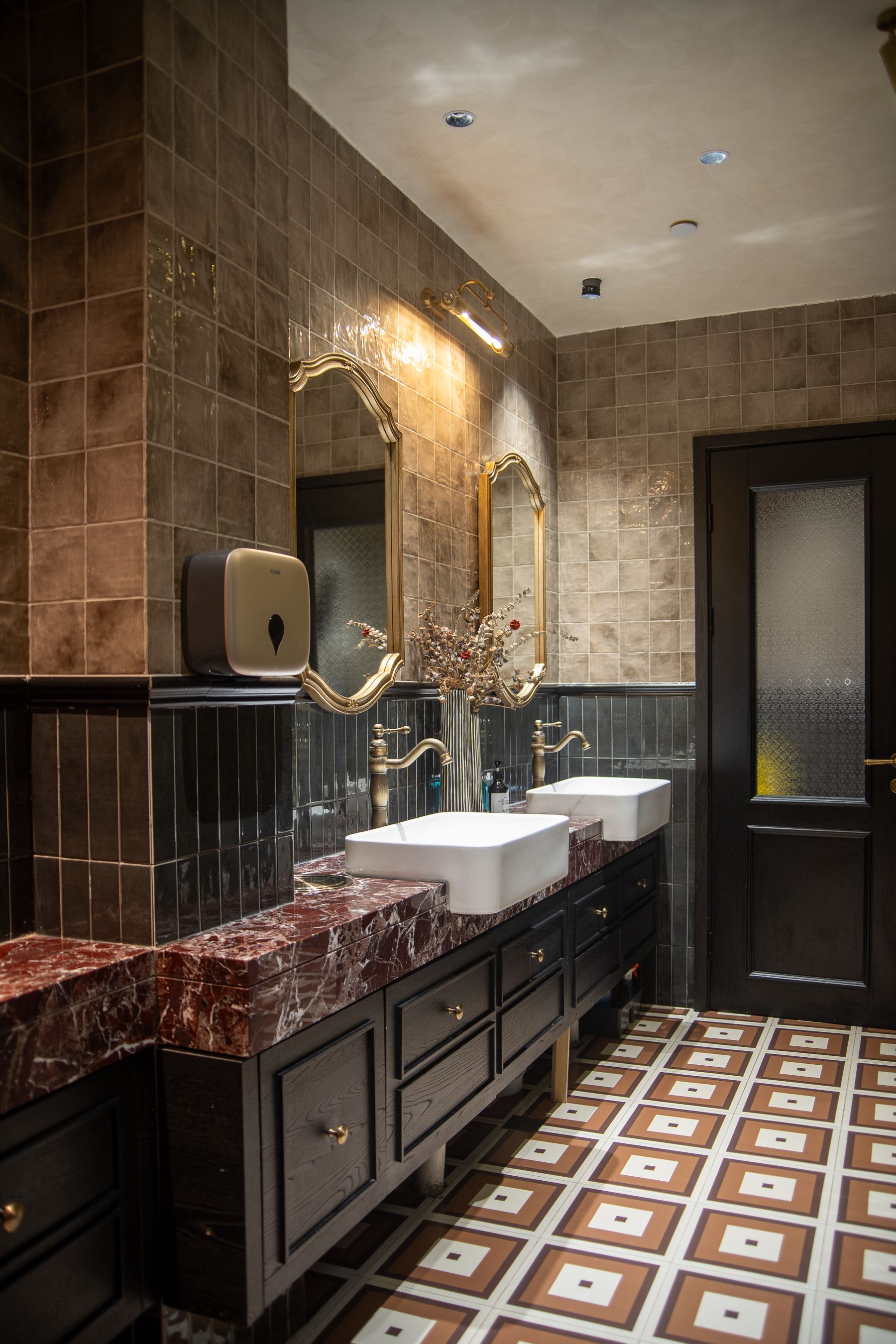
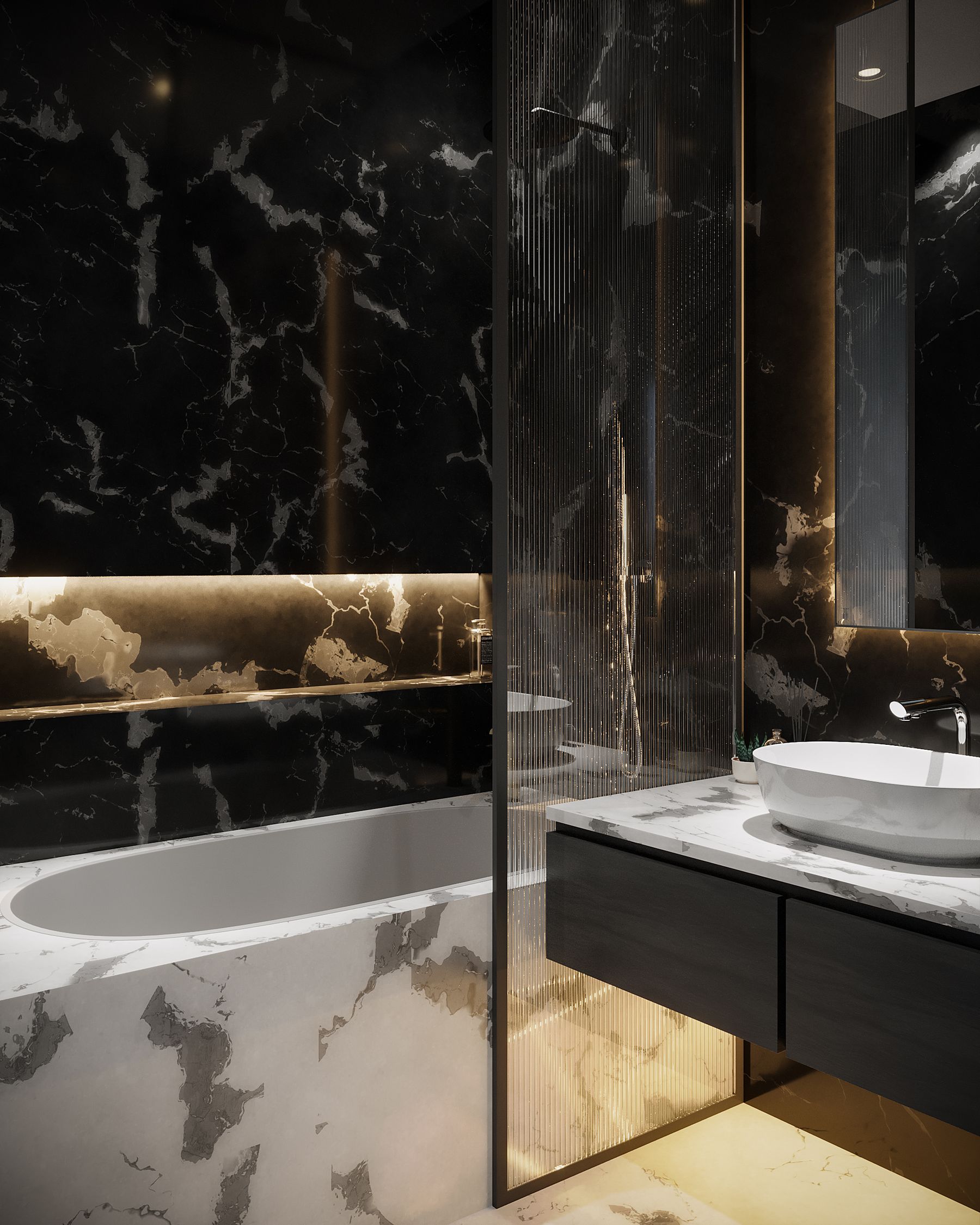
Light Dark Surfaces for Use, Not Drama Alone
Black tile and dark stone absorb more light and can hide water or objects if the room relies on a single decorative fixture. Provide even mirror light, safe illumination at the floor and shower, and a softer ambient layer for bathing. Reflections from marble, mirrors and glass should be checked for glare from the user's eye level.
Scale the Contrast Down in a Small Bathroom
A compact room can handle bold black and white when one surface carries the pattern and the route remains clear. Keep upper walls lighter, concentrate storage and avoid outlining every edge in black. A large mirror can extend the view, but check what it reflects; doubling the busiest pattern can make the room feel more crowded.
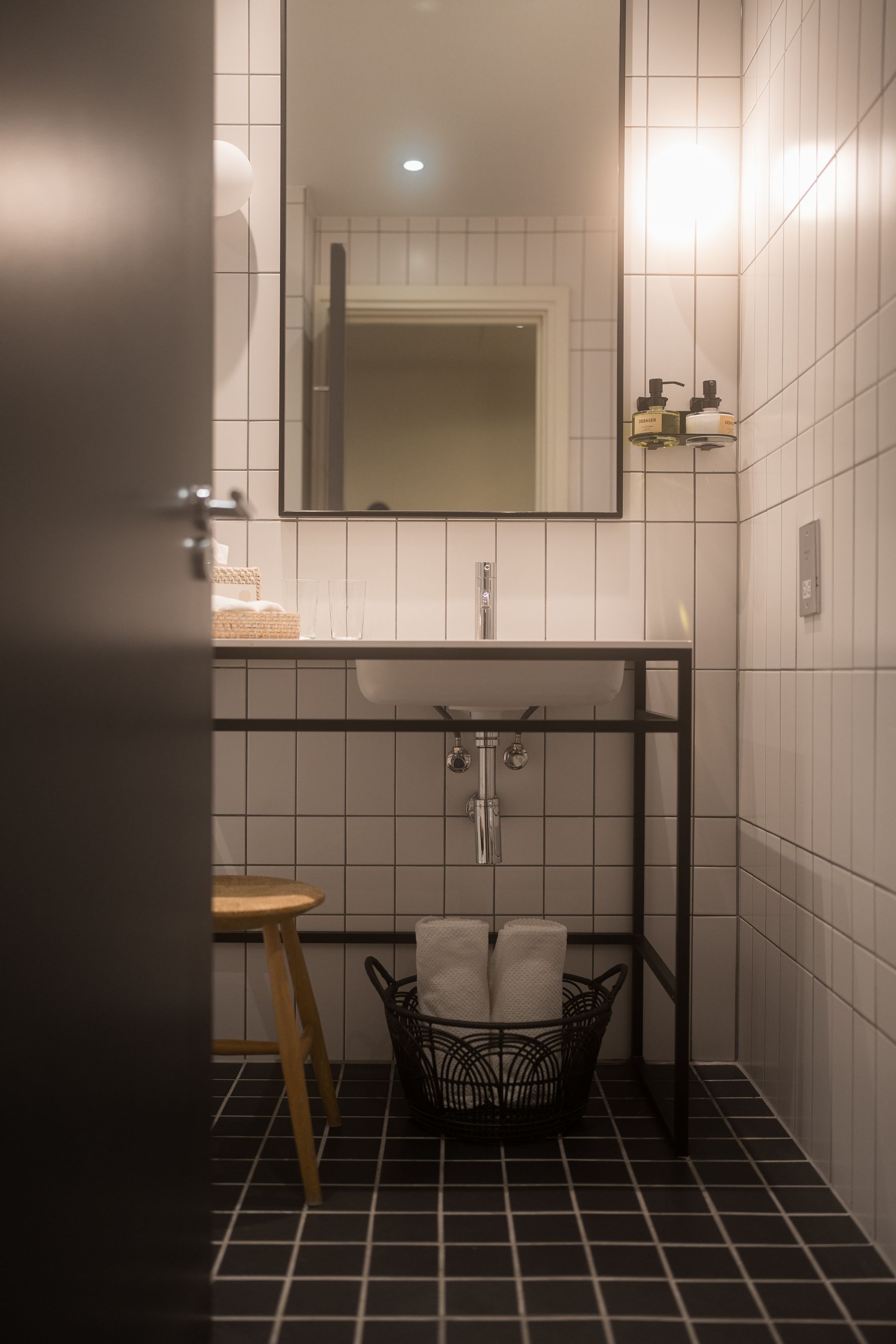
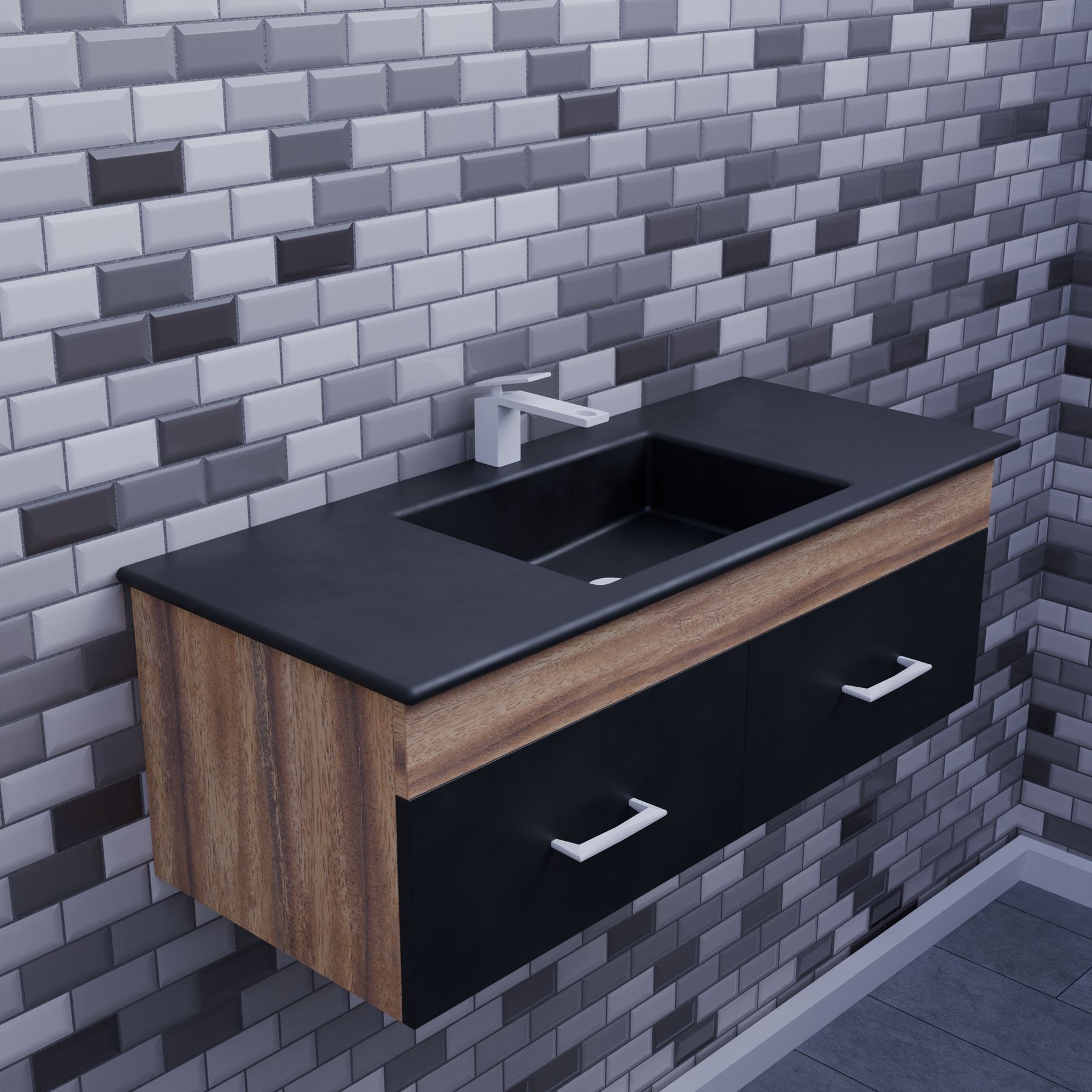
Hide Storage Behind the Strongest Plane
Monochrome rooms expose visual clutter quickly. Use drawers, mirrored cabinets or a full vanity run for daily products, then leave only the items needed in the wet zone. Cabinet gaps and handles can reinforce the composition, but access to outlets, traps and shutoffs must remain straightforward.
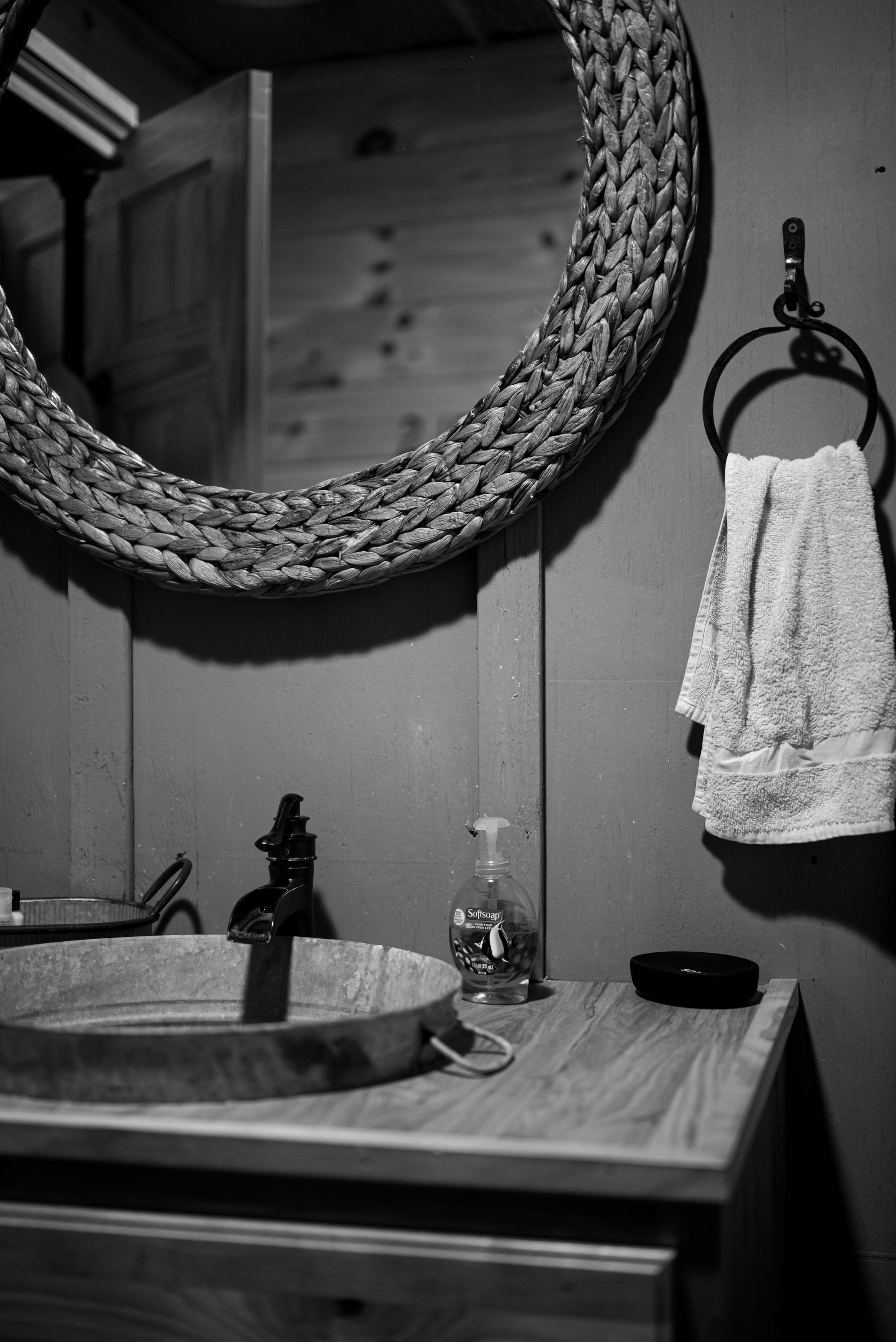
Warm the Palette With One Natural Material
Timber, woven fiber or textured stone can soften black and white without replacing it with a third color story. Choose one material family and repeat it lightly at the vanity, mirror or stool. Keep moisture exposure and cleaning realistic; a woven frame beside constant spray may age faster than a timber cabinet in the dry zone.
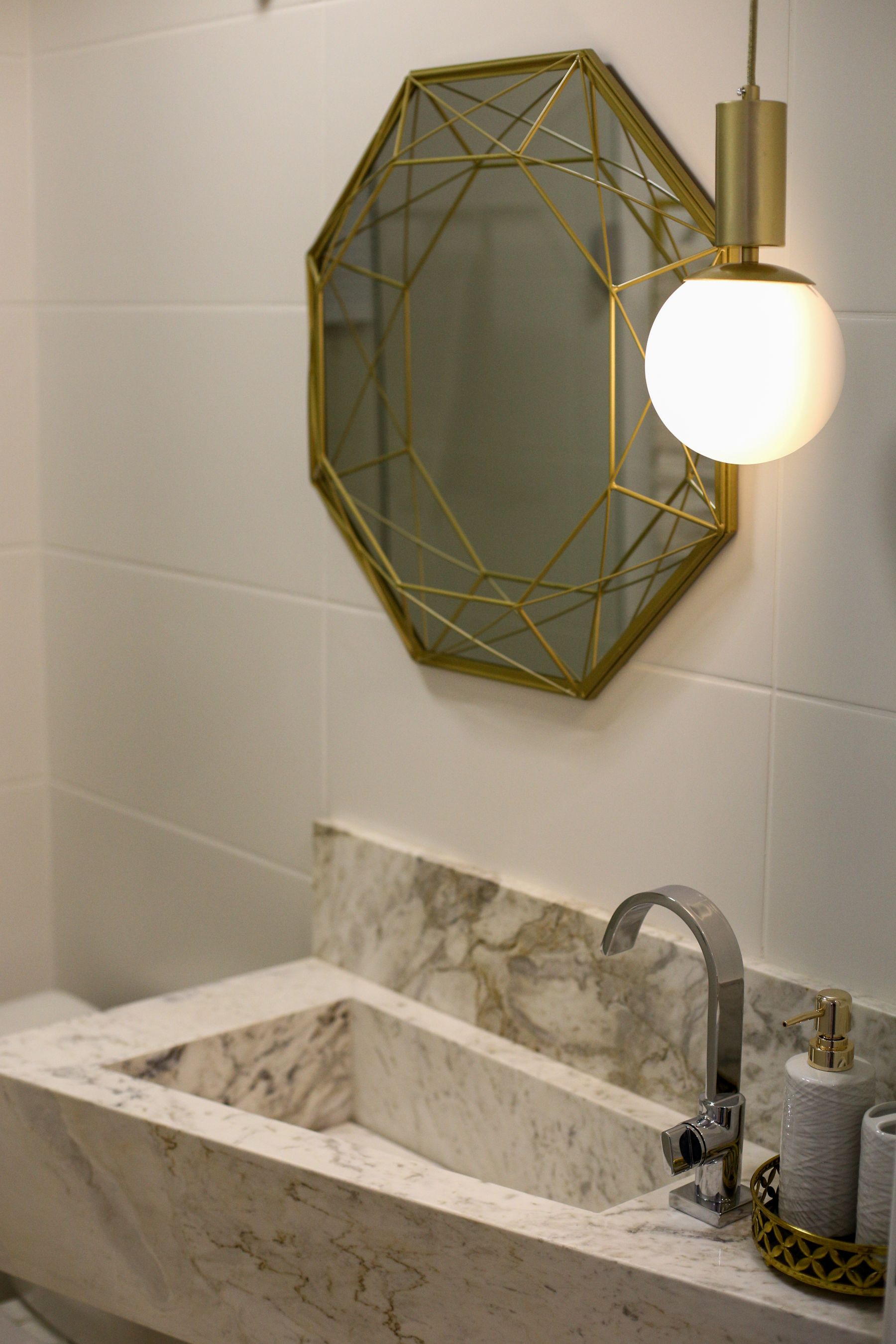
Use One Deco Shape Without Turning the Room Period-Themed
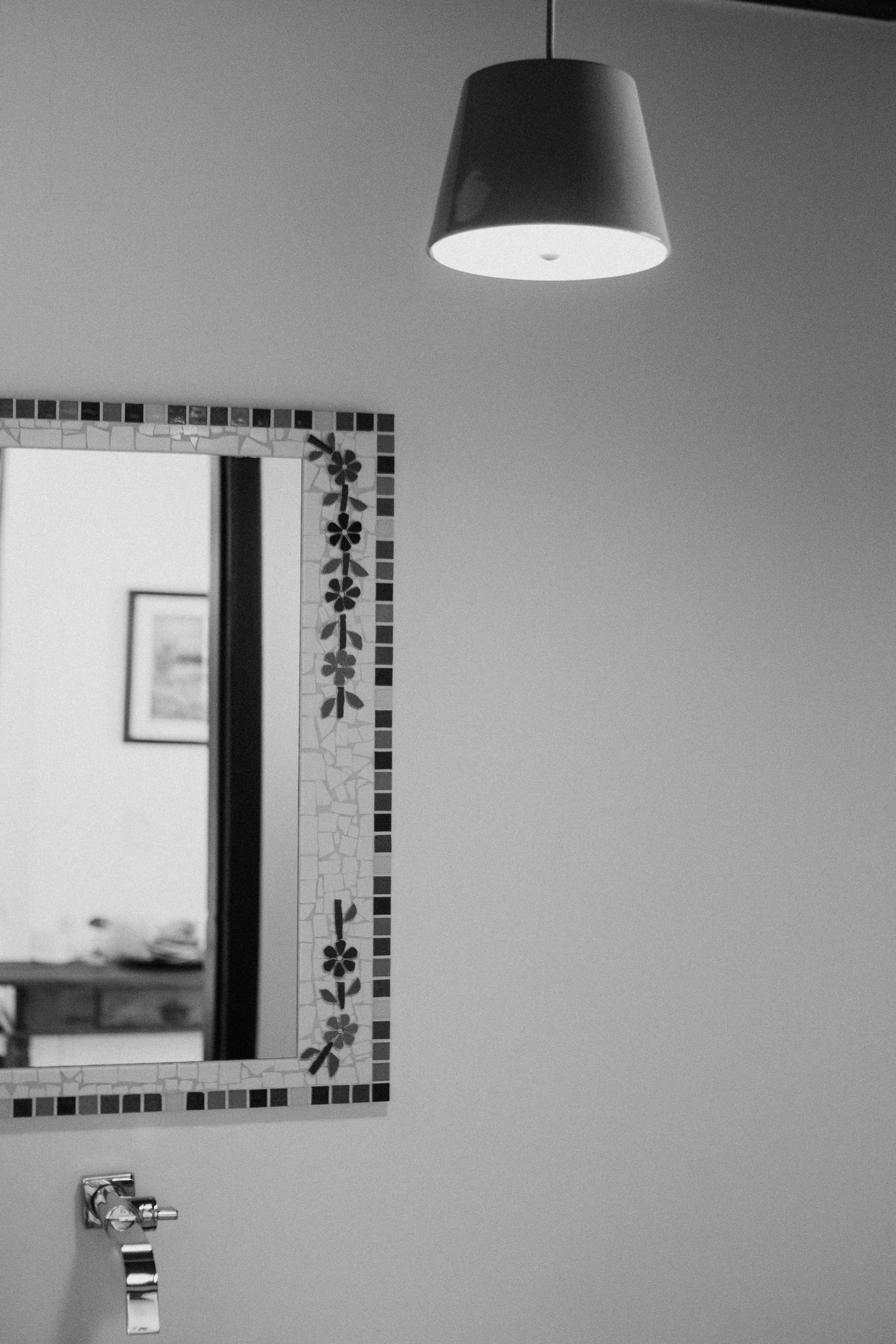
A faceted mirror or geometric floor can give monochrome contrast a decorative direction, but Art Deco is a separate period-specific intent. If the room already has a shaped mirror, strong tile and metallic lighting, additional fan motifs or stepped borders may become costume. Let one period cue lead and keep the remaining fixtures contemporary and practical.
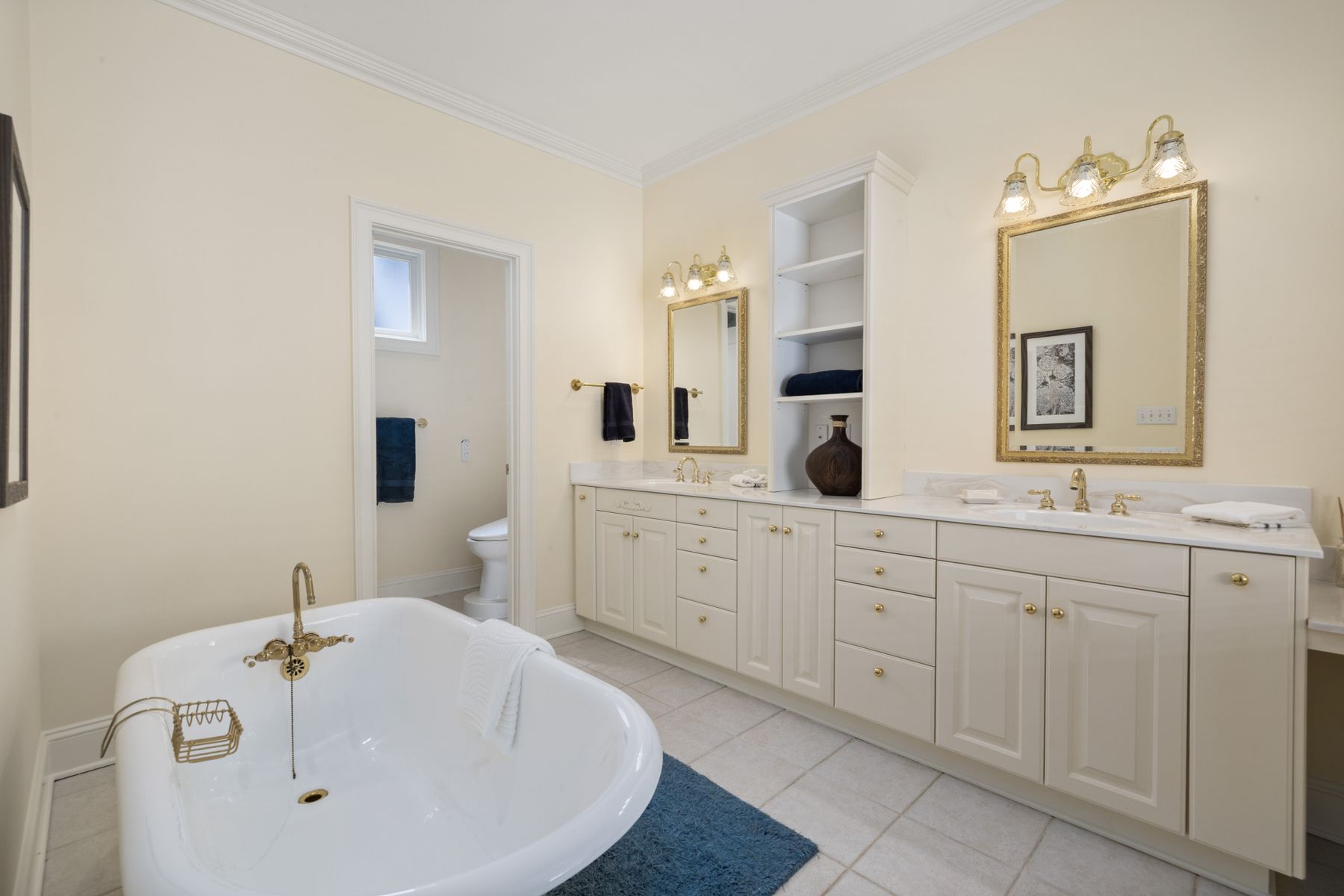
Build a Softer Traditional Black-and-White Route
Traditional black and white can rely on paneled cabinetry, framed mirrors, pale ceramic and a dark floor rather than sharp modern striping. Use off-white, softer black and a measured metal finish to reduce starkness. Symmetry should support basin spacing and storage, not force identical modules where plumbing or users need something different.
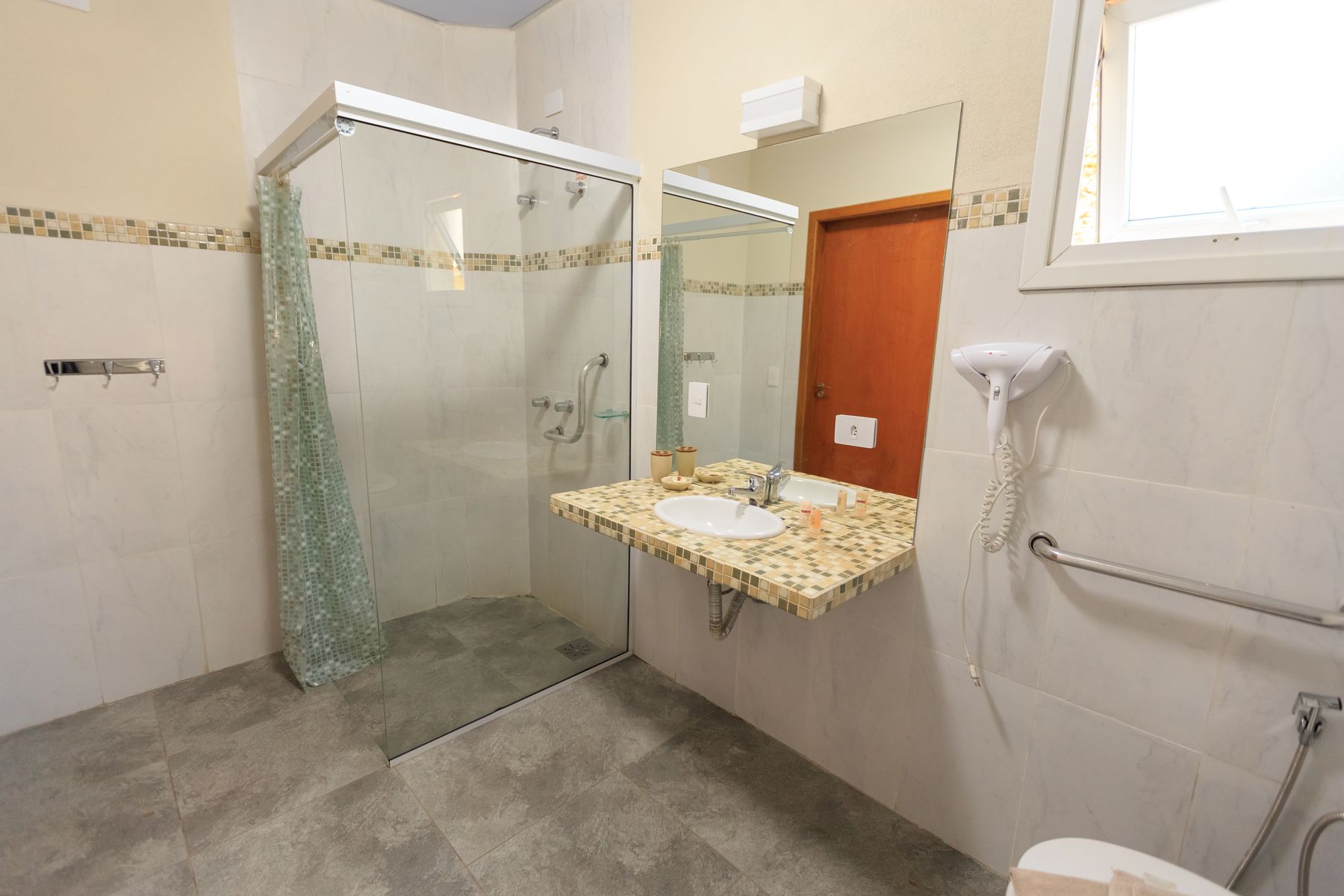
Use Contrast to Support Accessibility
Black and white can clarify a toilet, basin, rail or threshold when contrast is placed around the item that needs to be found. Pattern can also obscure level changes, and a dark homogeneous floor may hide water or objects. Plan clear routes, dedicated support, seating and reachable controls around the users and qualified guidance rather than treating visual contrast as a complete safety solution.
Choose Black Finishes by Maintenance Behavior
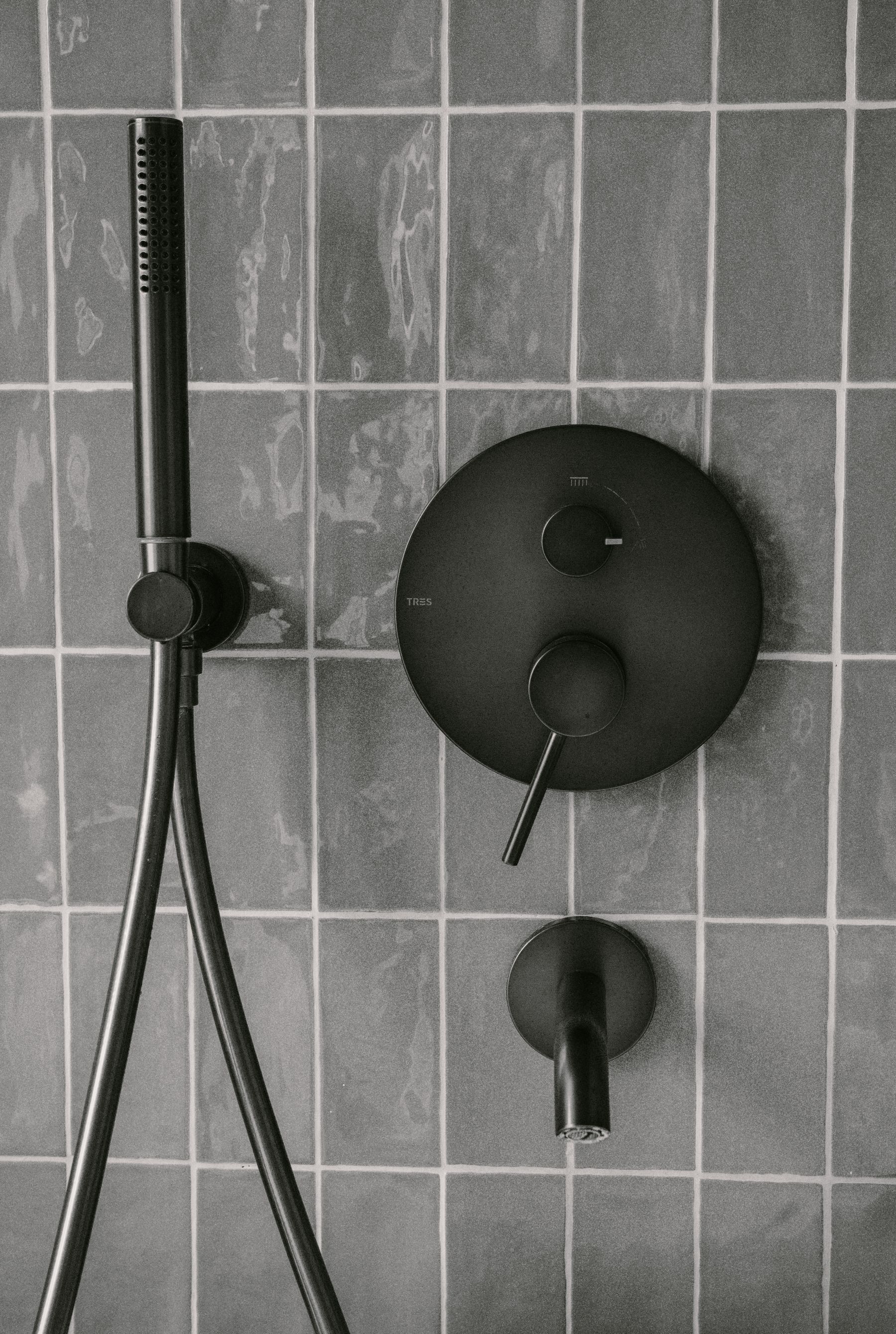
Matte-black taps, shower frames and counters can show mineral deposits, soap film, dust or abrasion more clearly than mid-tone finishes. Ask how the coating should be cleaned, whether replacement parts match and how edges can be touched up. Broad black surfaces also need enough light for routine cleaning, while white grout and sealant reveal different kinds of discoloration.