Define Art Deco Before Adding Glamour
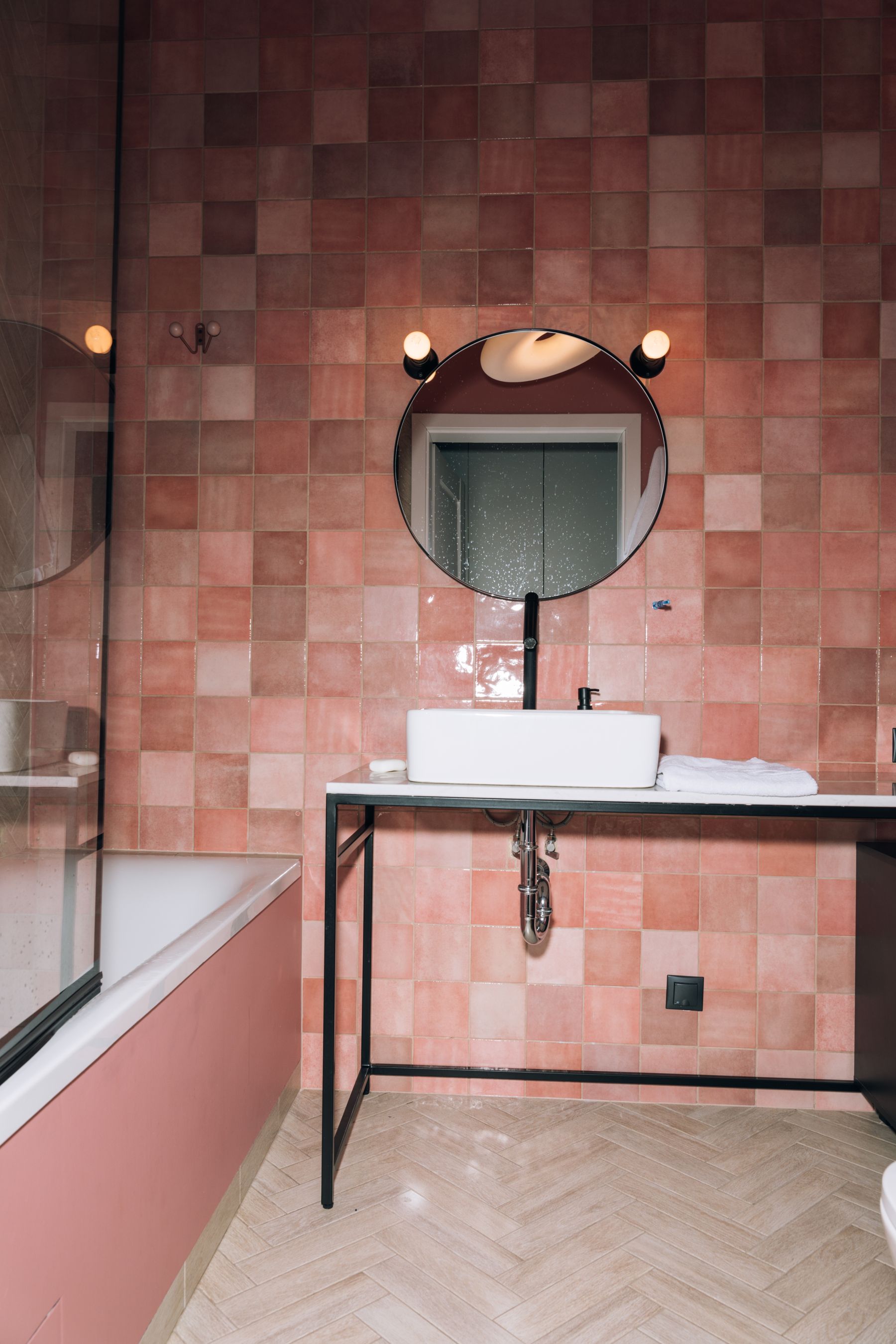
Art Deco is an early-twentieth-century design language shaped by machine-age geometry, streamlined curves, symmetry and luxurious-looking surfaces. Victorian bathrooms rely more on nineteenth-century forms, Gothic on shadow and historic silhouettes, Vintage can mix periods, and Retro usually points to later decades. Establishing that boundary prevents any ornate or metallic bathroom from being labeled Deco.
Give One Surface the Primary Geometry
A geometric floor, vanity wall or shower panel can establish the style more convincingly than several unrelated borders. The chosen plane needs enough uninterrupted area for its repeat to read, with cuts coordinated around mirrors, niches and controls. Adjacent surfaces should operate at a calmer scale so the principal pattern remains architectural rather than decorative noise.
Use Symmetry as a Planning Tool
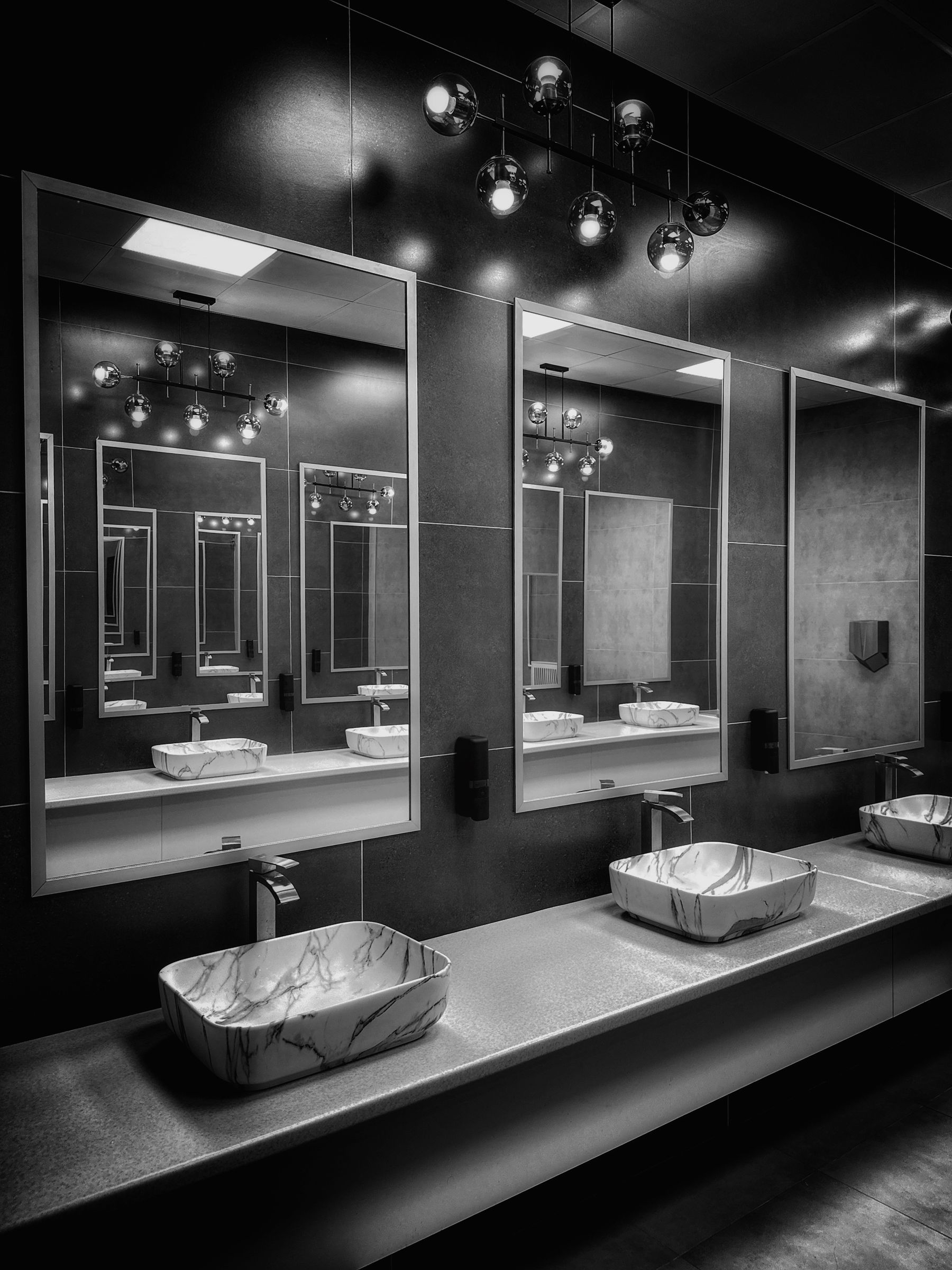
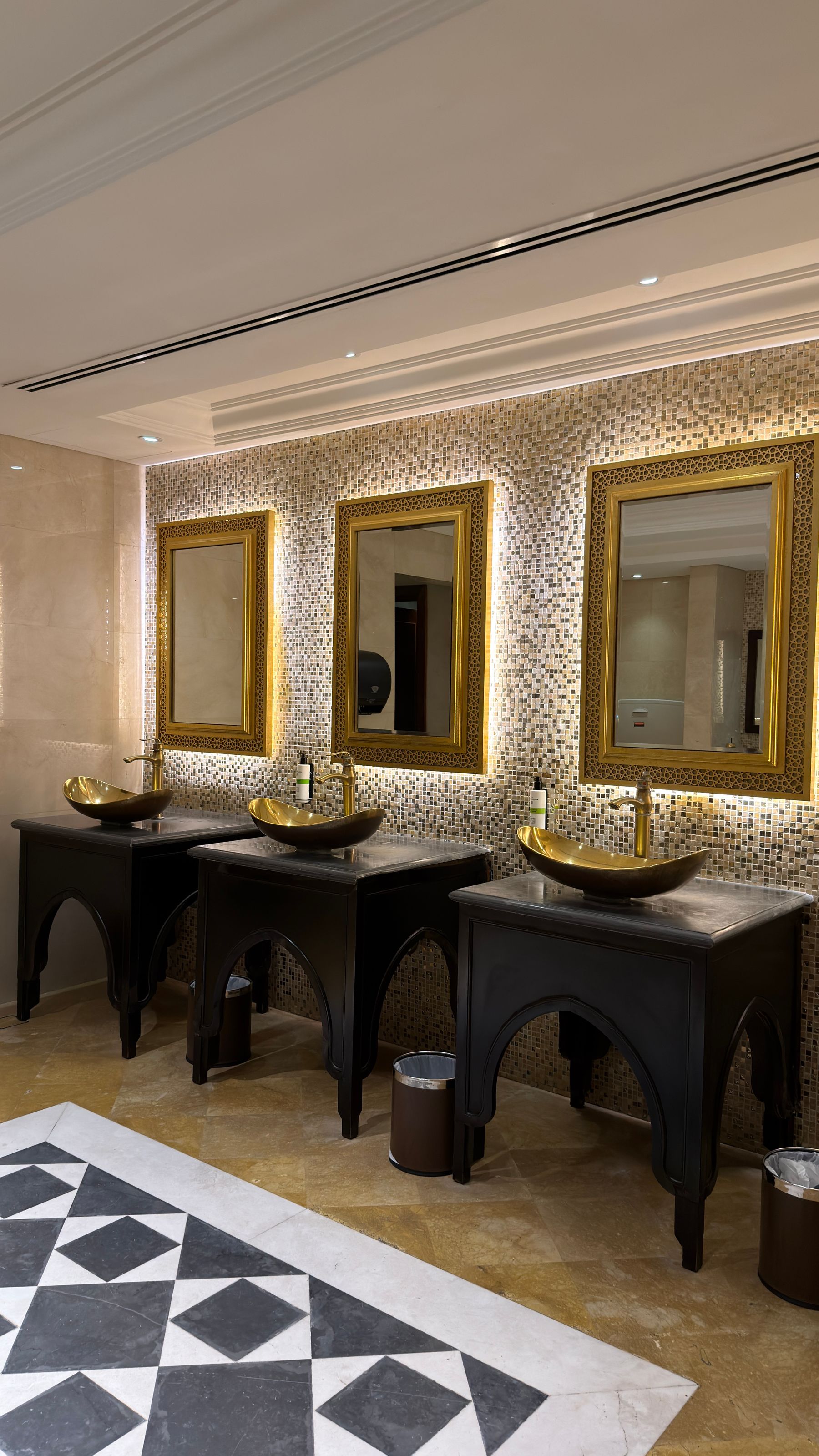
Paired basins, mirrors and lights can create the formal rhythm associated with Deco interiors. Start with users, plumbing, drawer widths and wall clearance, then build the balanced elevation around those constraints. Near-symmetry is often better than forcing equal modules that leave unusable storage or awkward gaps.
Make the Floor the Graphic Anchor
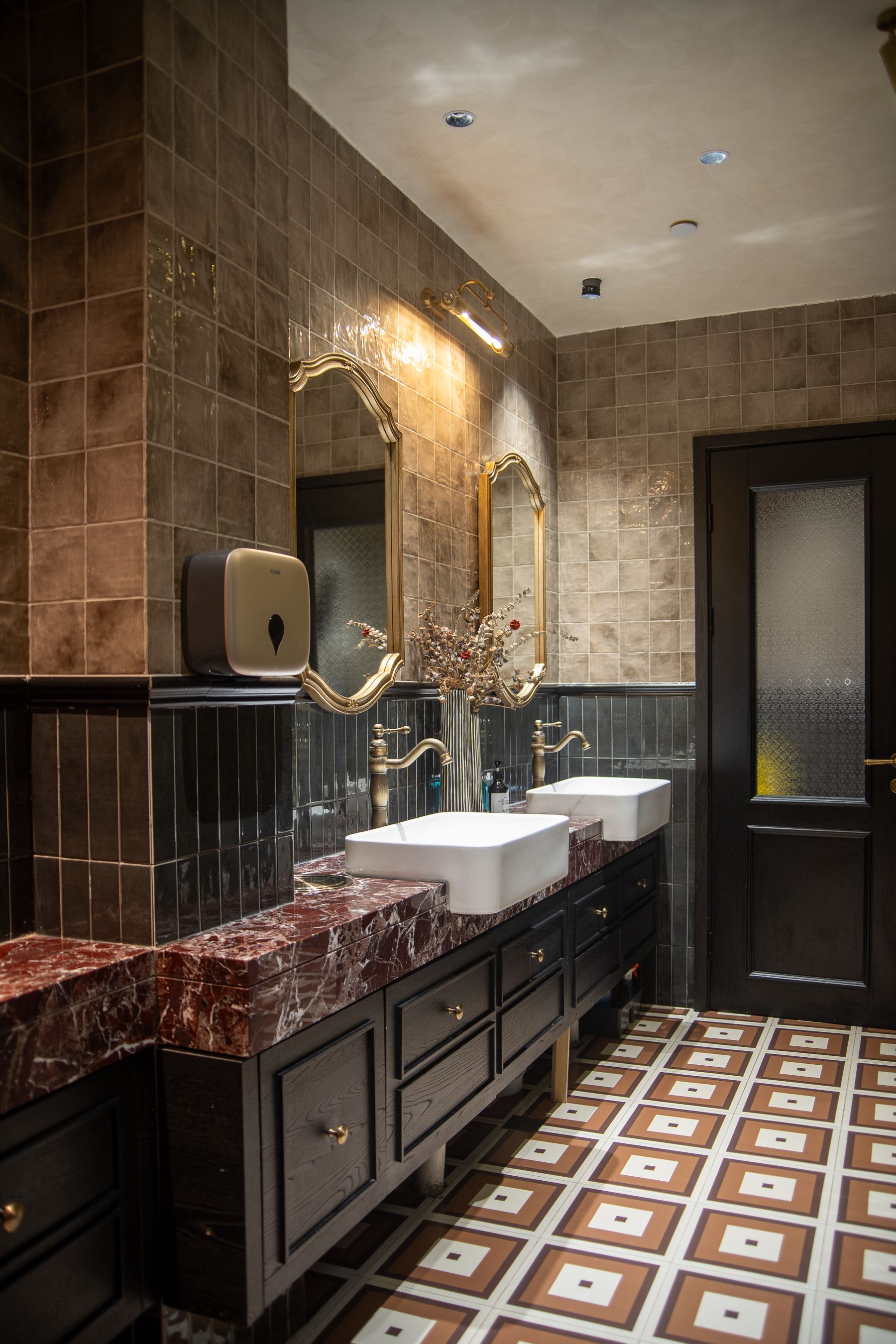
A black-and-white grid or geometric mosaic can deliver a clear Deco signal while walls remain calm. Set the pattern from the main doorway or vanity axis and review perimeter cuts before installation. Wet-area slip performance, grout exposure and cleaning requirements matter as much as the motif, especially when the floor continues into a shower.
Pair Black With Warm Metal Selectively
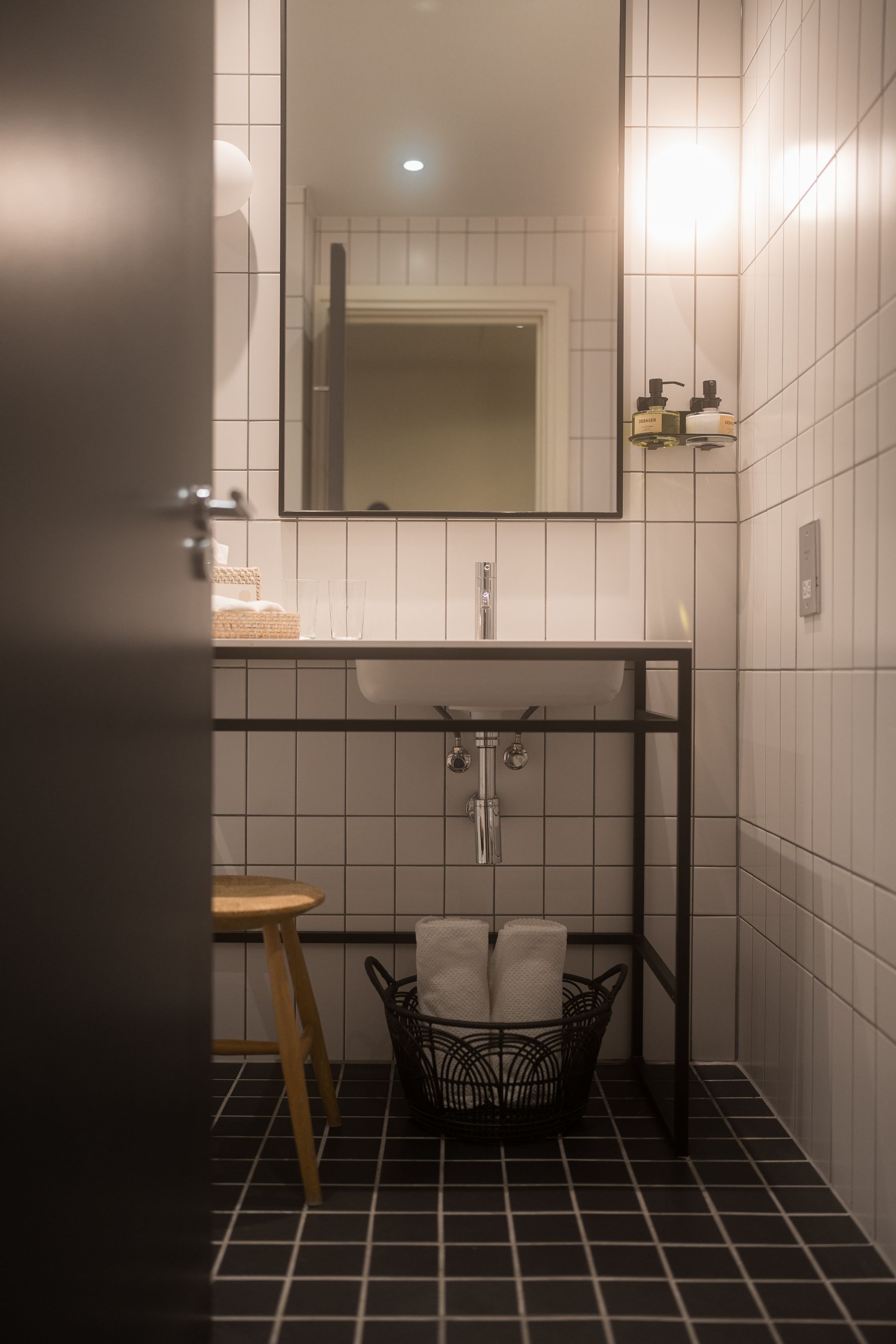
Black and gold are recognizable shorthand, but refinement comes from proportion. Let a dark vanity, basin or bounded wall provide weight, then use brass or another warm metal to outline mirrors, taps and light rather than coating every hinge and accessory. A pale ceiling or stone field prevents the contrast from becoming oppressive.
Use Jewel Green as Architecture, Not an Accessory Theme
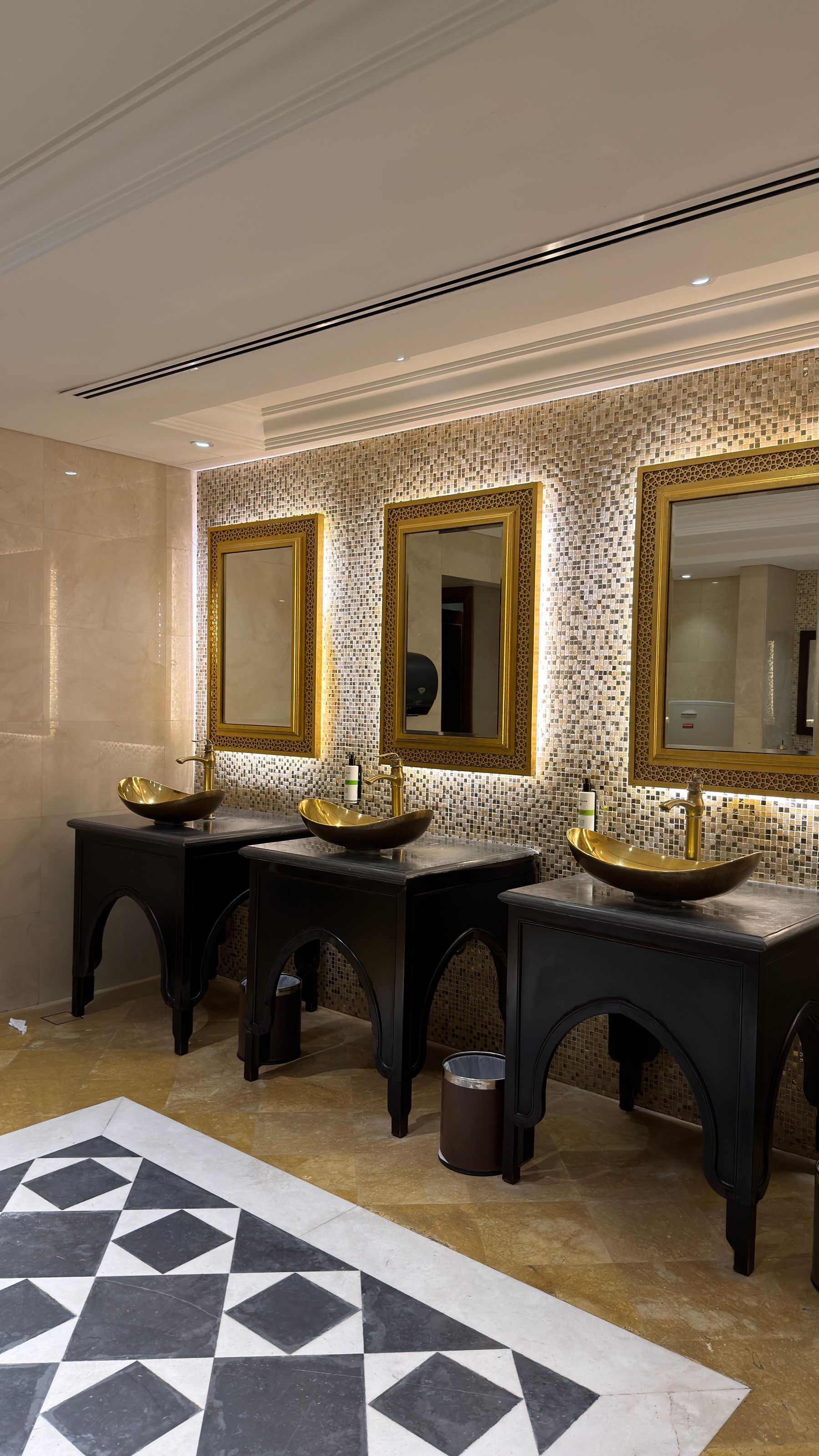
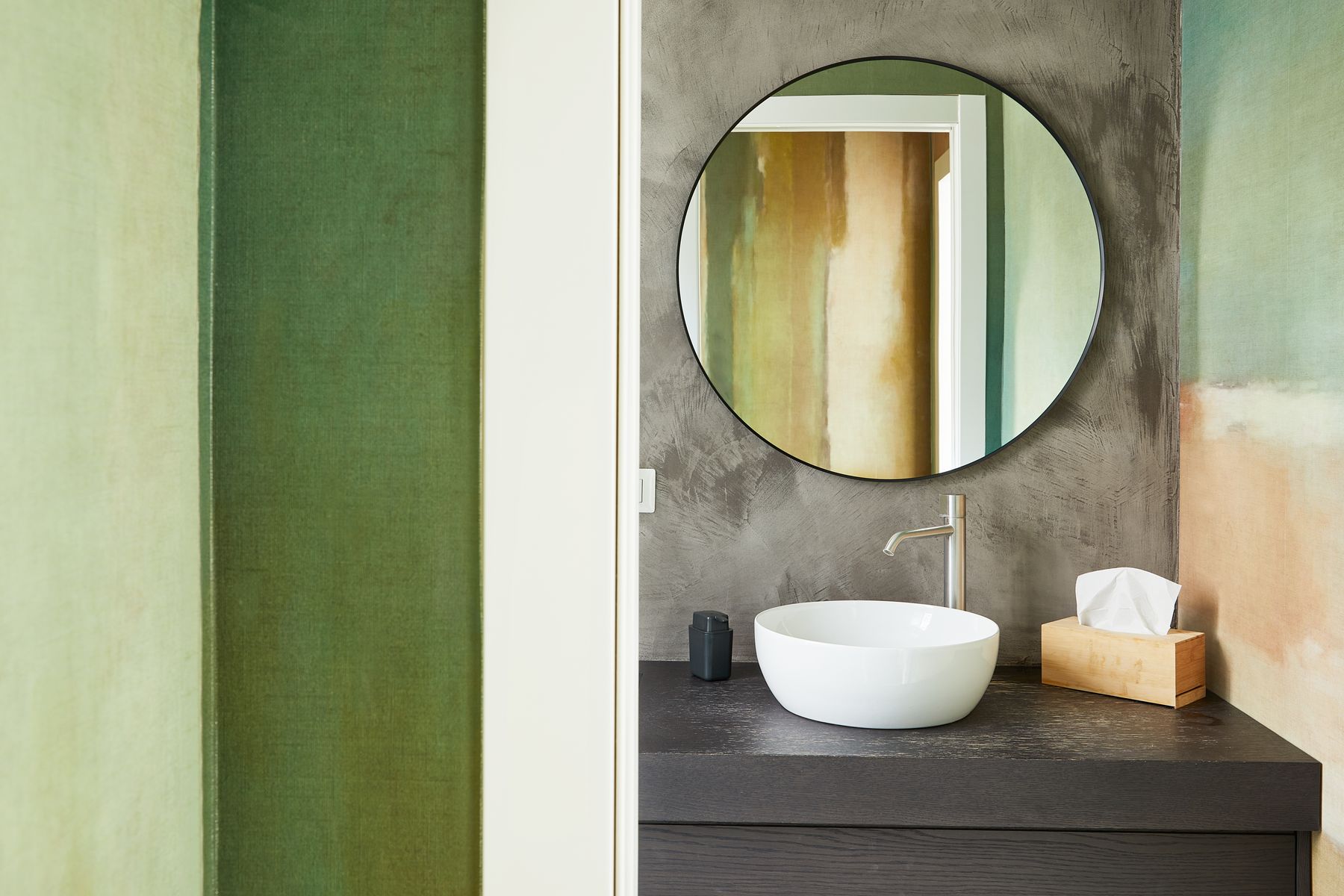
Emerald, bottle green and desaturated jade offer a richer route than default black and gold. Apply the color to one wall field, vanity or tile plane, then pair it with cream, black, marble or a restrained metal. The color should define an architectural area; matching towels, soap dispensers and ornaments are unnecessary.
Choose Chrome When Brass Would Feel Too Heavy
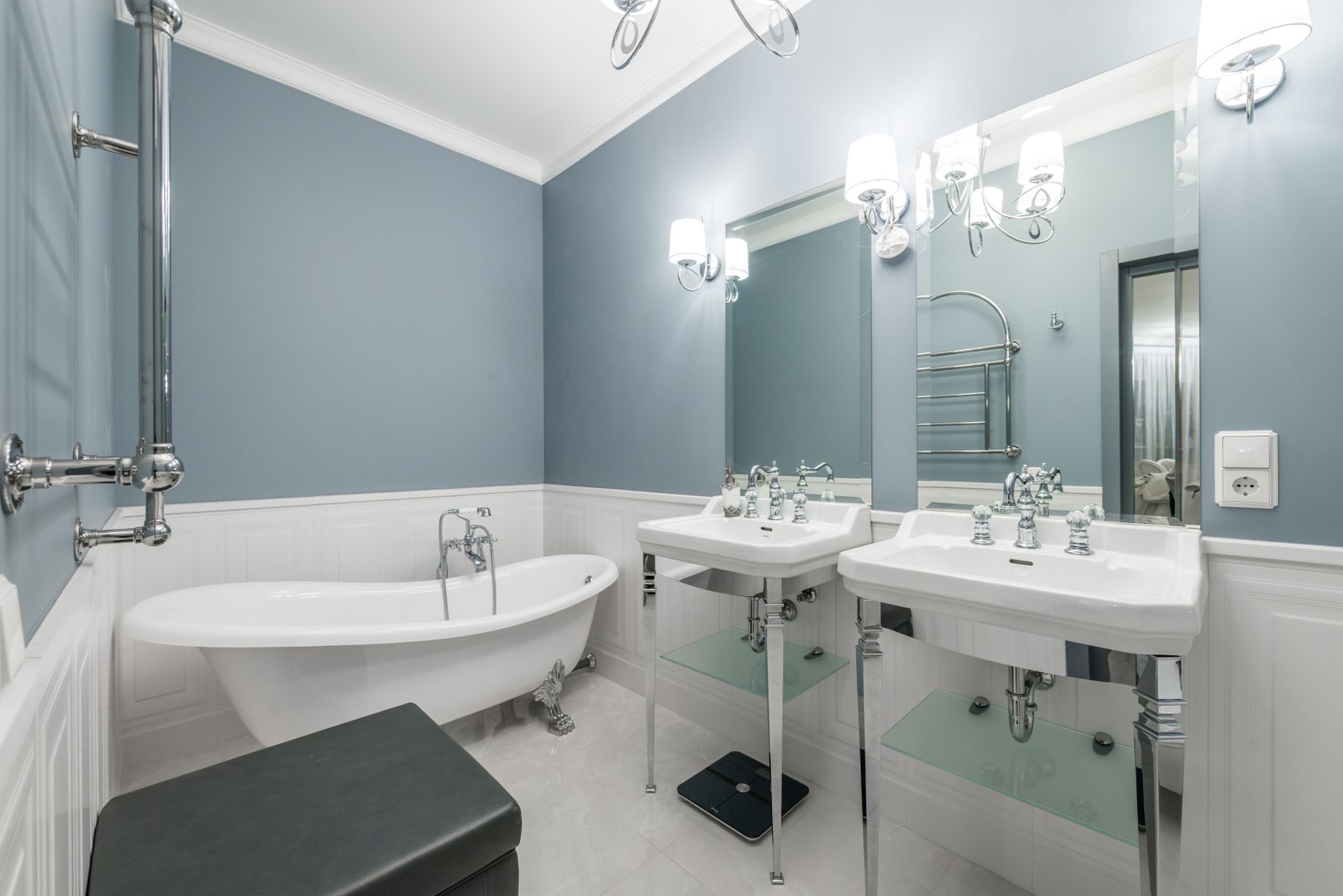
Chrome and polished nickel suit the machine-age side of Art Deco and can make a small or pale bathroom feel cleaner than extensive warm metal. Repeat the cool finish on taps, mirror edges or lights, but allow black lines and glass to provide contrast. Mixing one cool and one warm metal can work when each has a defined role and compatible undertone.
Concentrate Dark Stone Instead of Drenching the Room
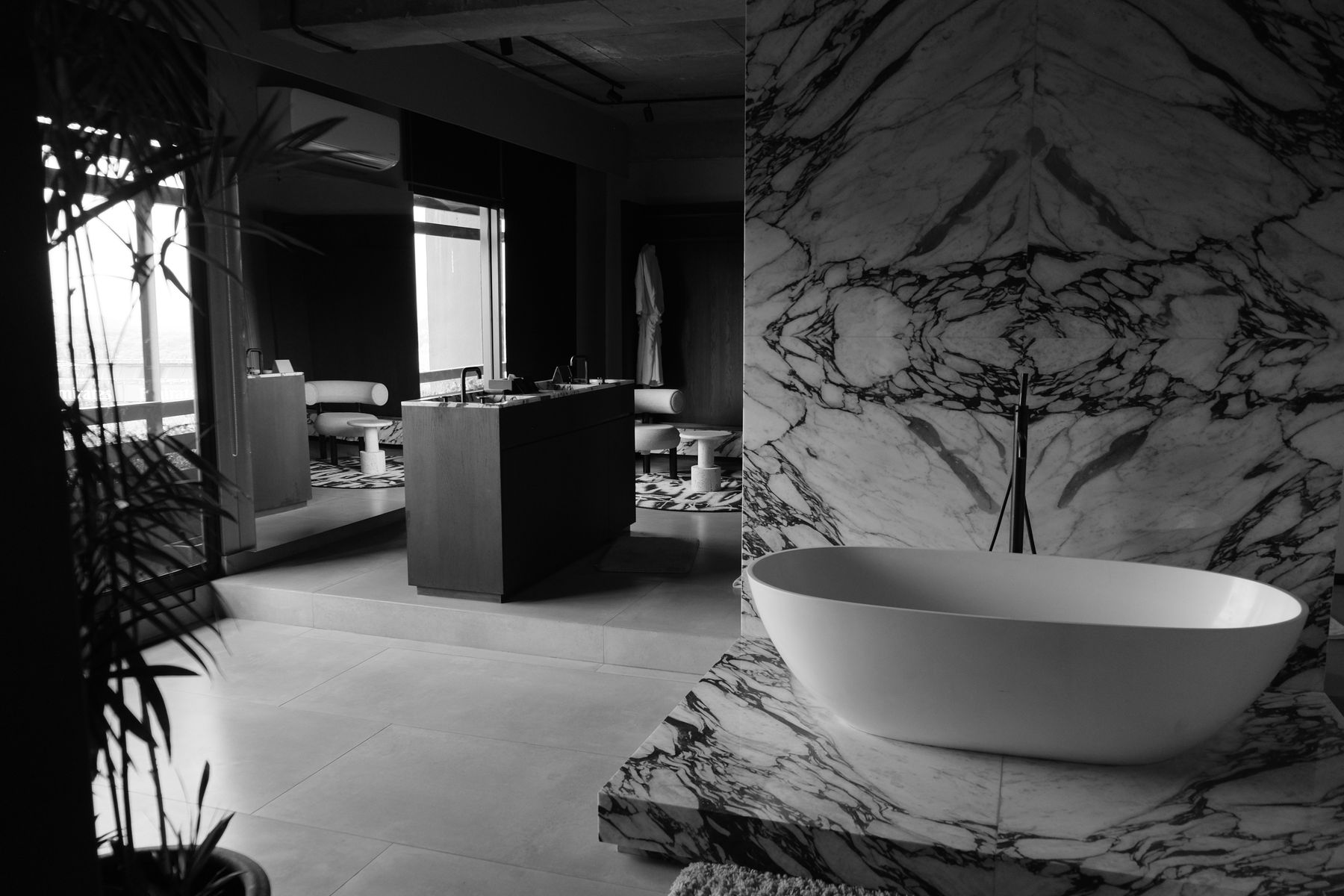
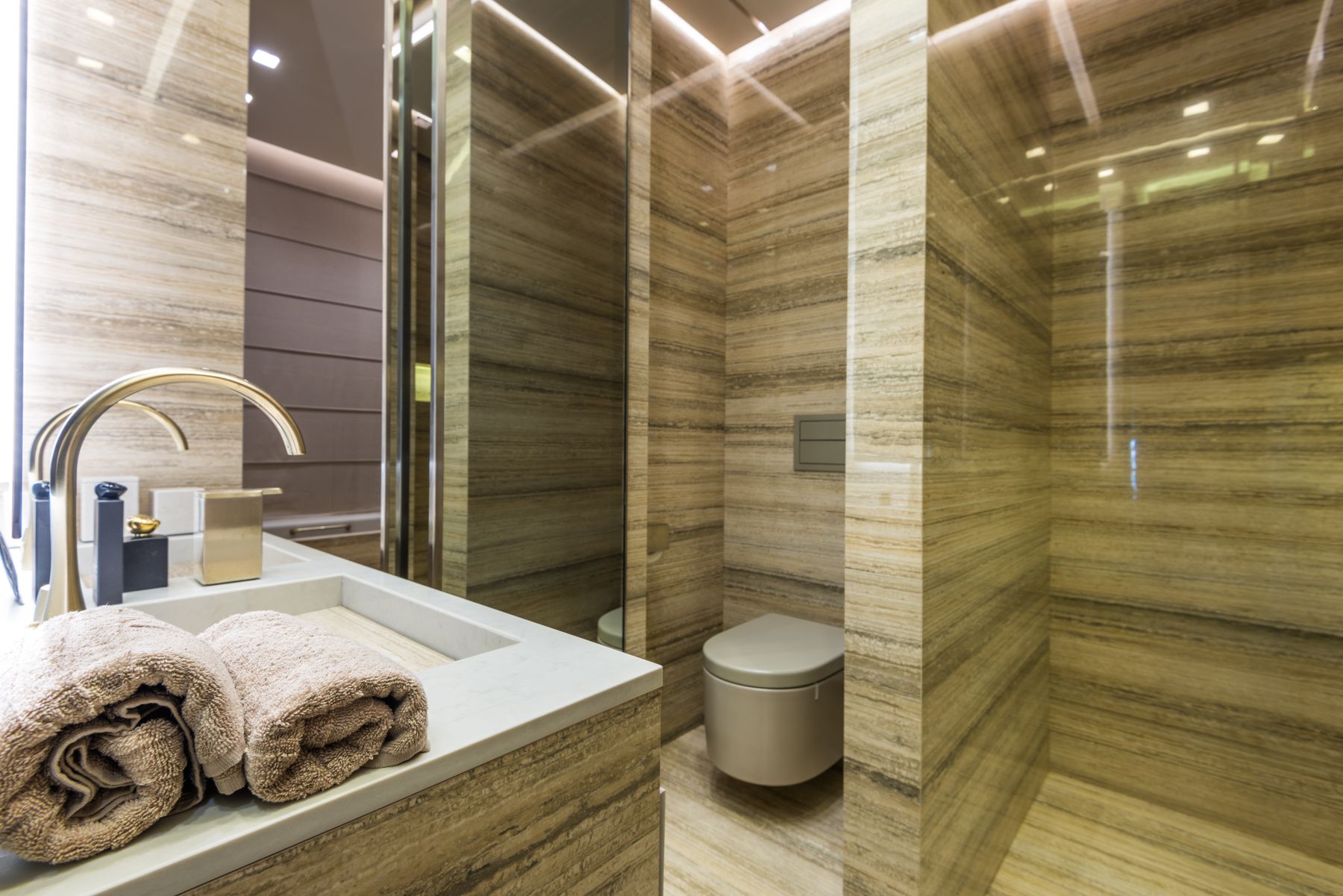
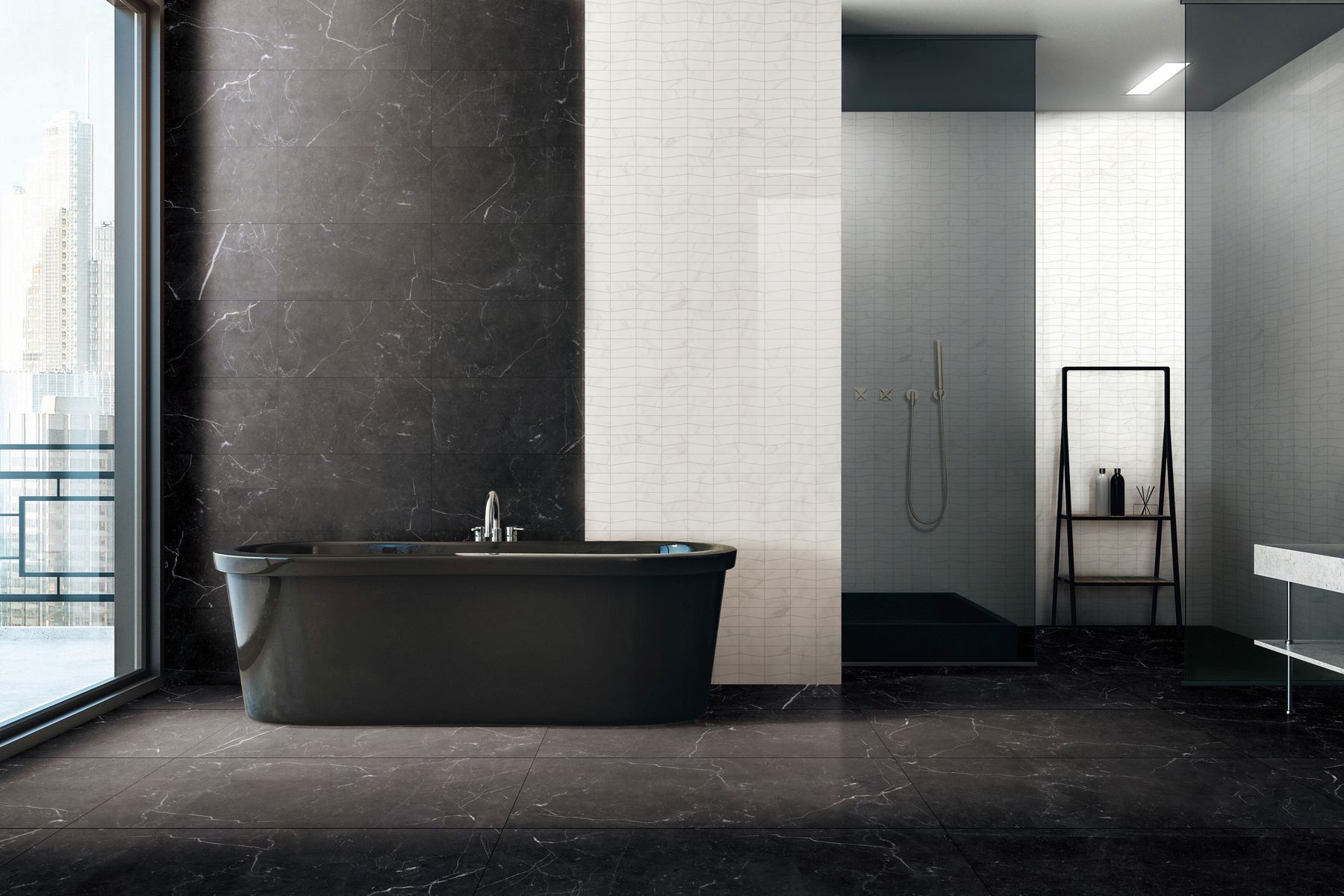
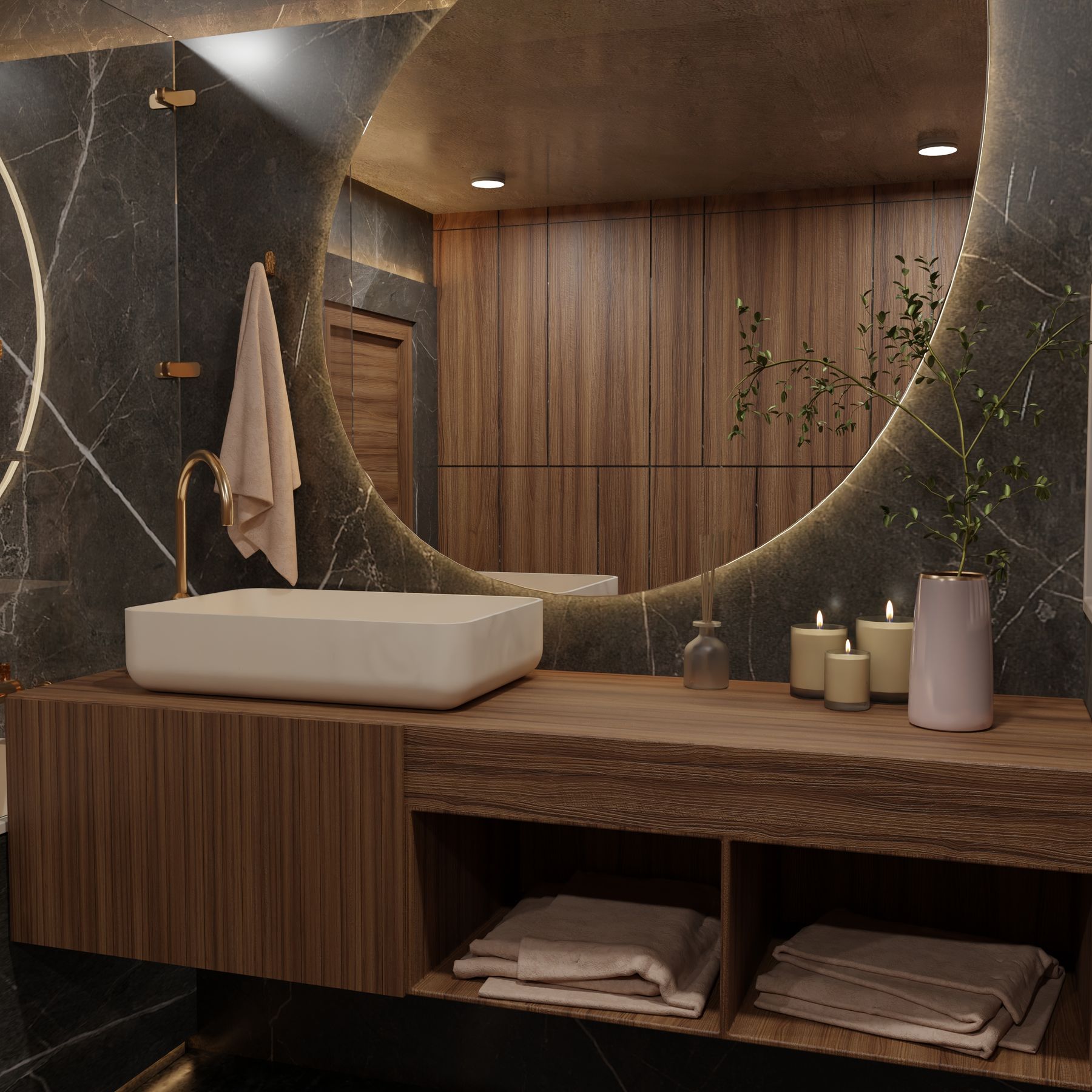
Expressive black or heavily veined stone can create the dramatic scale associated with Deco, but it needs a clear stopping point. Use it behind a bath, across a vanity or on one framed plane, then bring back pale ceramic, light or a quieter floor. Review slab joins and bookmatching because the seam becomes part of the geometry.
Use Pale Marble to Carry Light
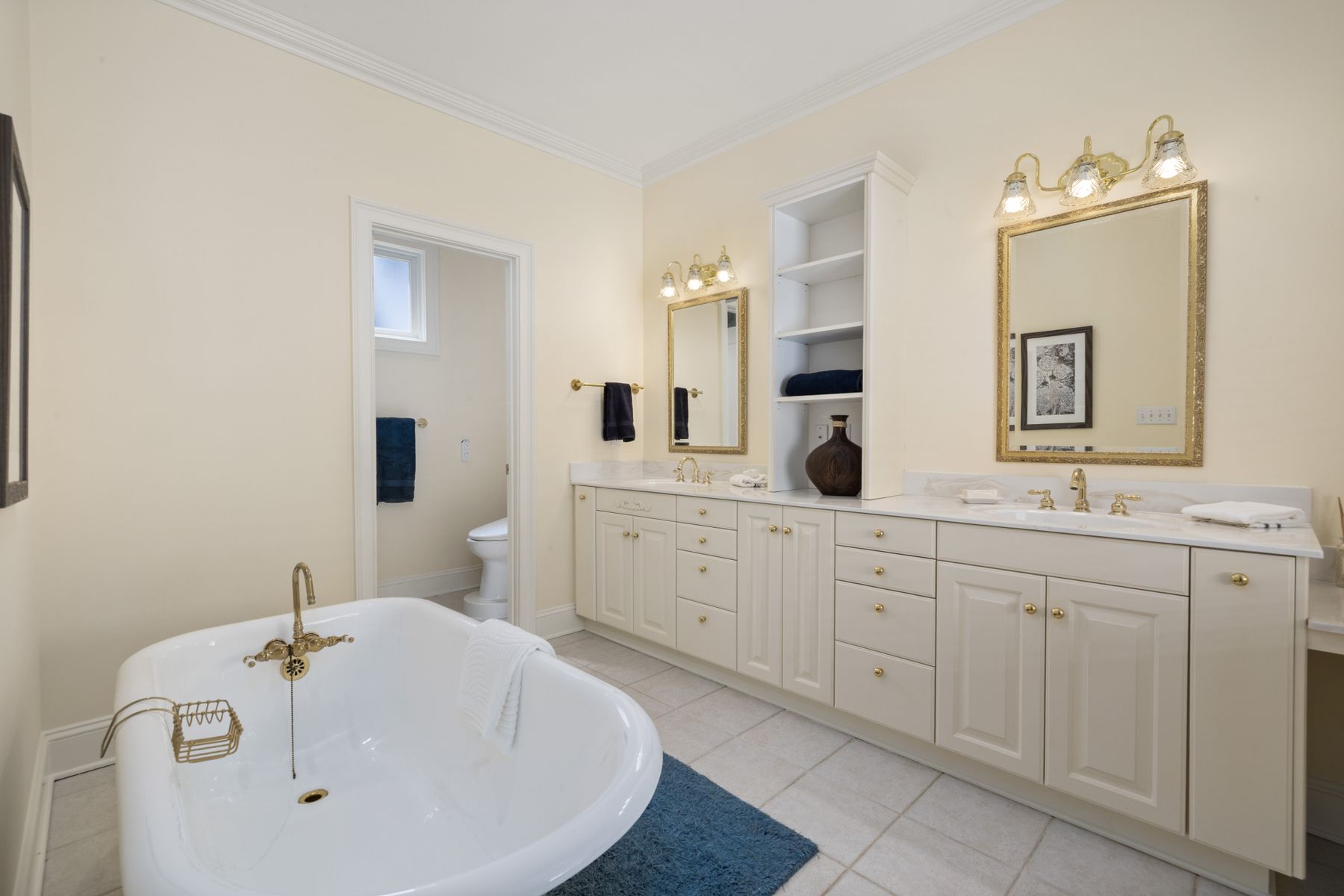
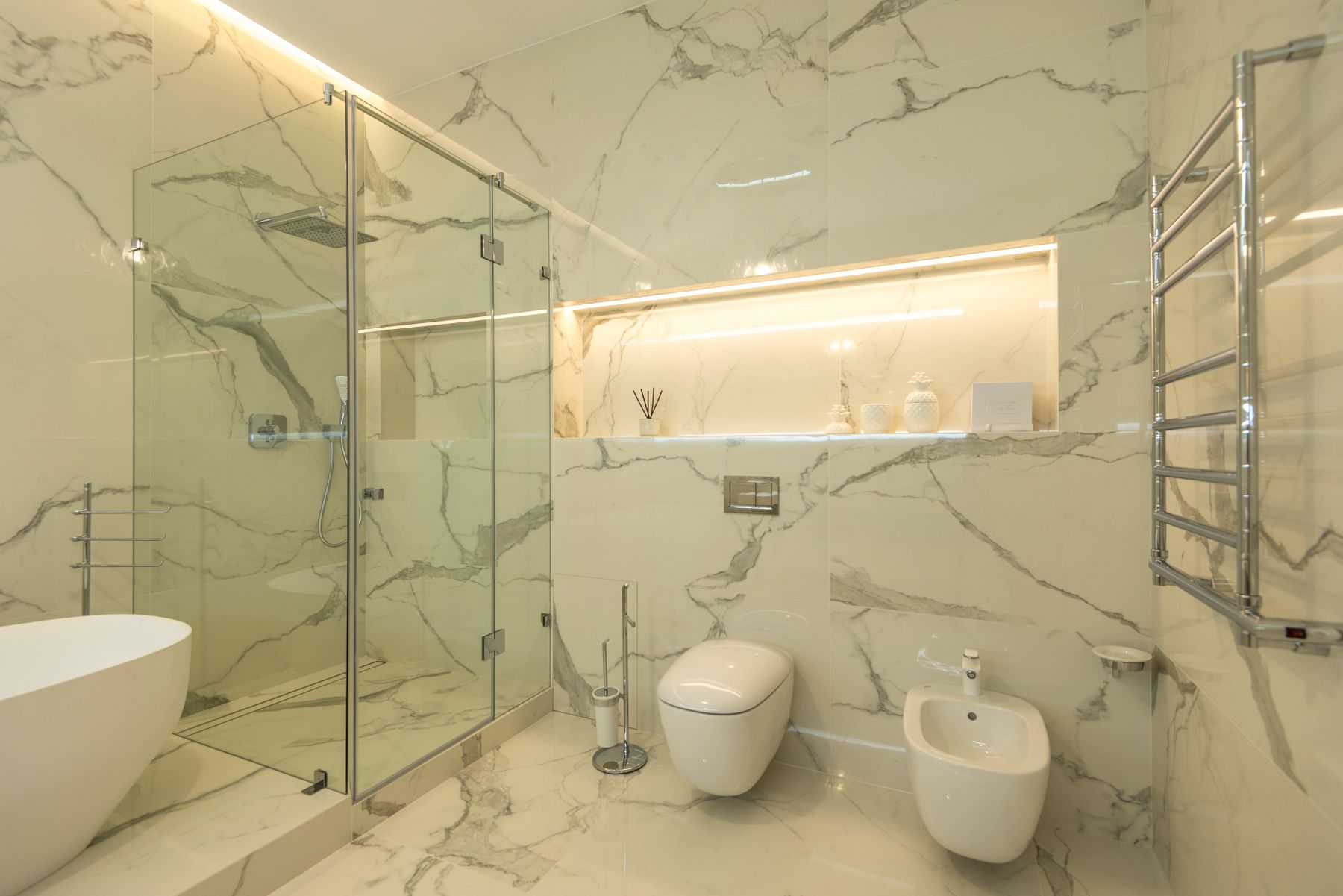
Pale marble or a convincing stone surface can provide the polished foundation while mirrors, black lines and metal supply the Deco character. Limit competing veining directions and coordinate the floor, wall and counter transitions. Natural stone also requires realistic decisions about sealing, staining and cleaner compatibility rather than being treated as maintenance-free luxury.
Let a Faceted Mirror Carry the Period Shape
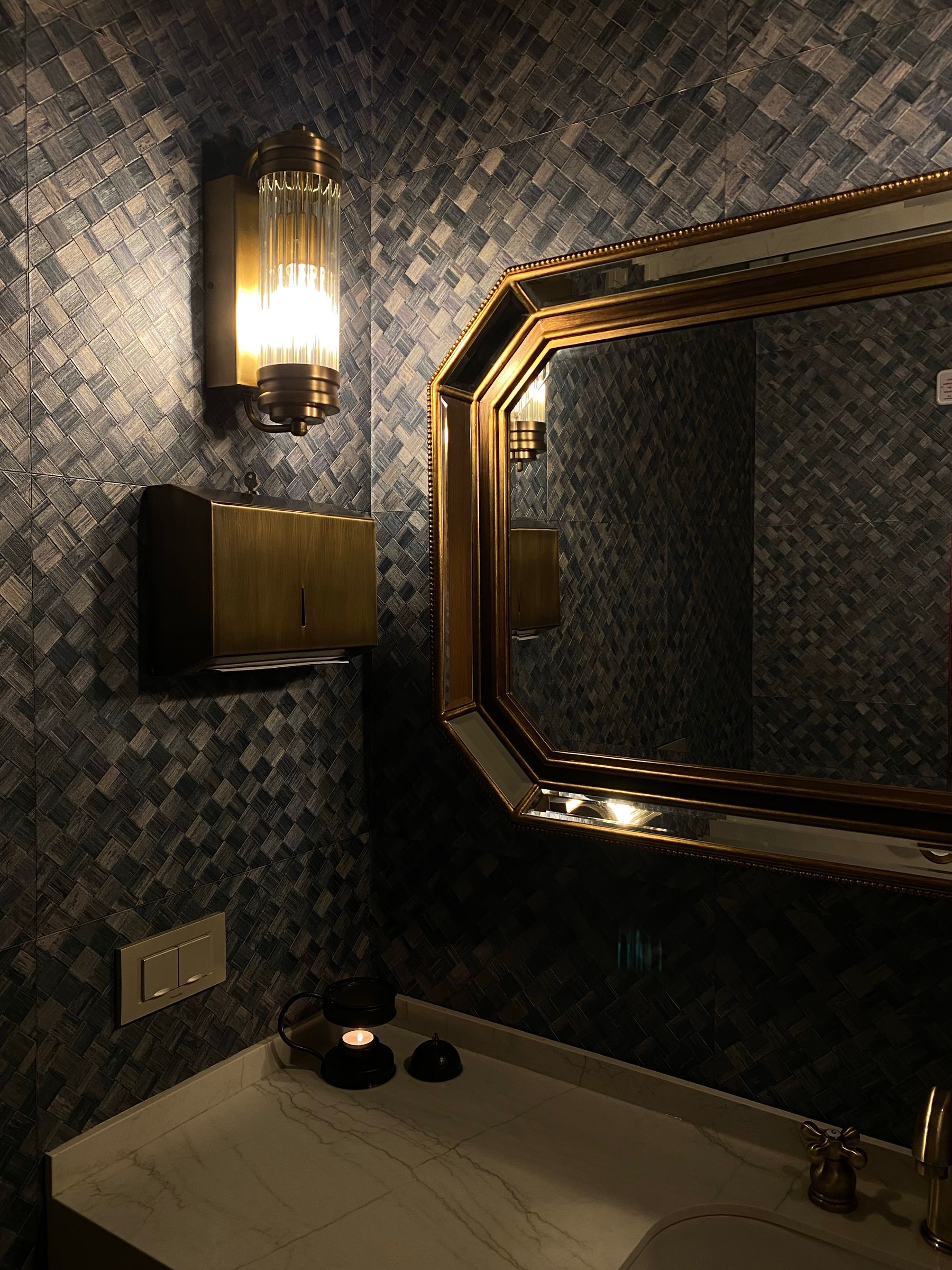
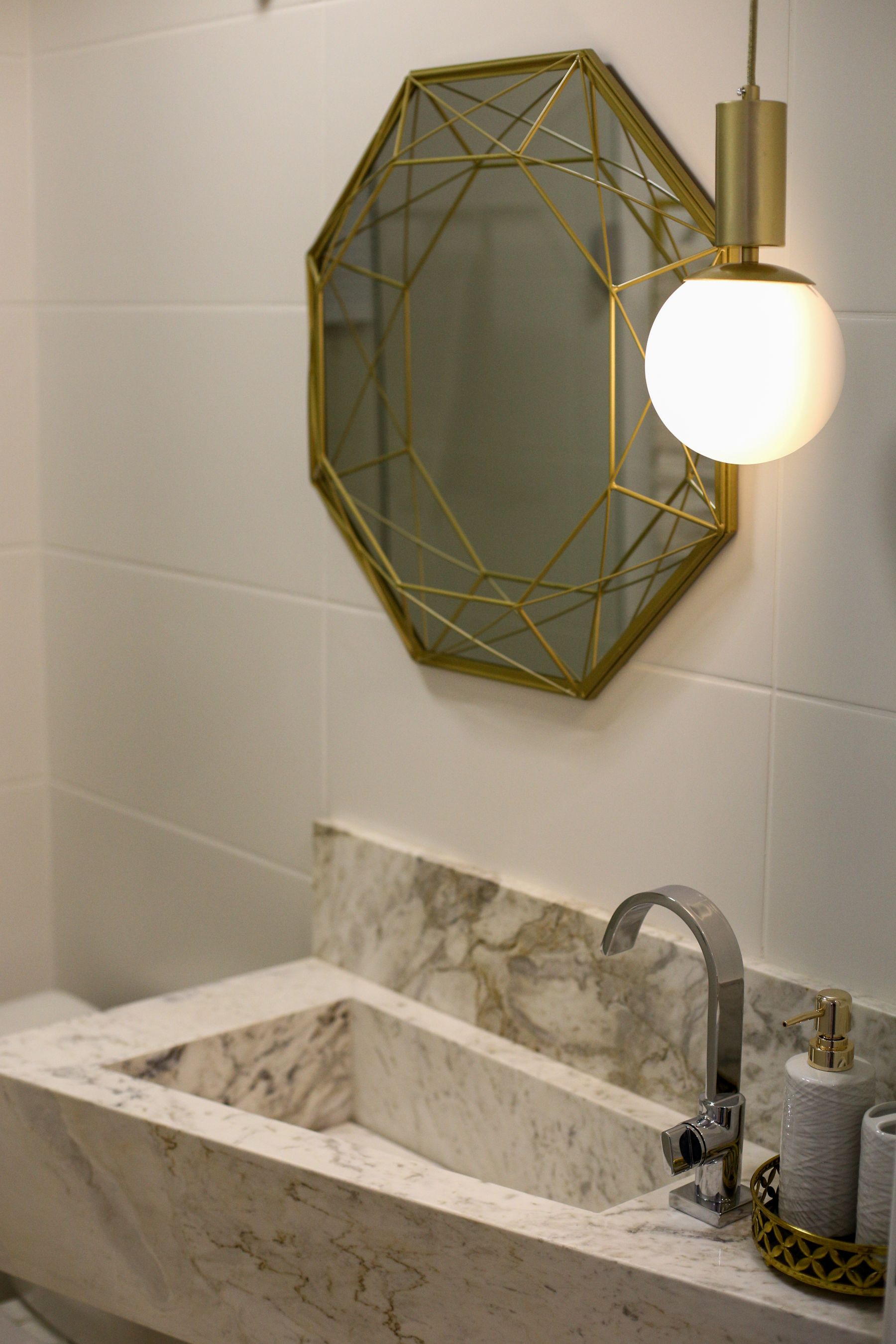
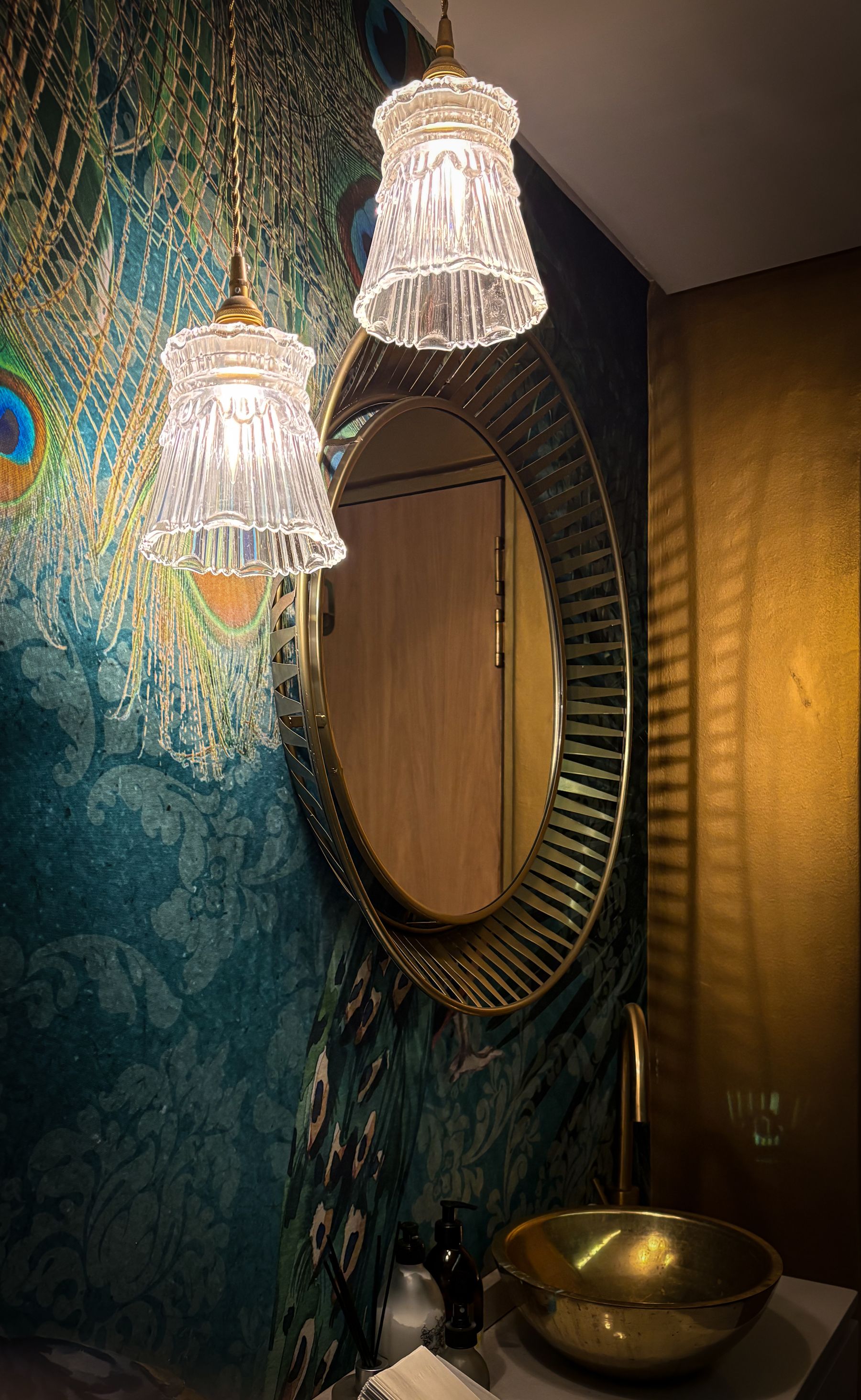
A faceted, stepped or clipped-corner mirror can introduce Deco geometry without altering every permanent surface. Size it for real face and body sightlines, then position taps and task lighting around its outline. If the frame is visually complex, the backsplash should support rather than compete with it.
Concentrate Ornament at One Focal Elevation
An expressive mirror, decorative wall finish and sculptural light can coexist when they form one composition. Keep the opposite wall and secondary fittings simpler so the eye knows where to settle. This approach is especially useful in a powder room, where a smaller viewing distance can make several decorative zones feel crowded.
Repeat Mirrors to Organize a Shared Vanity
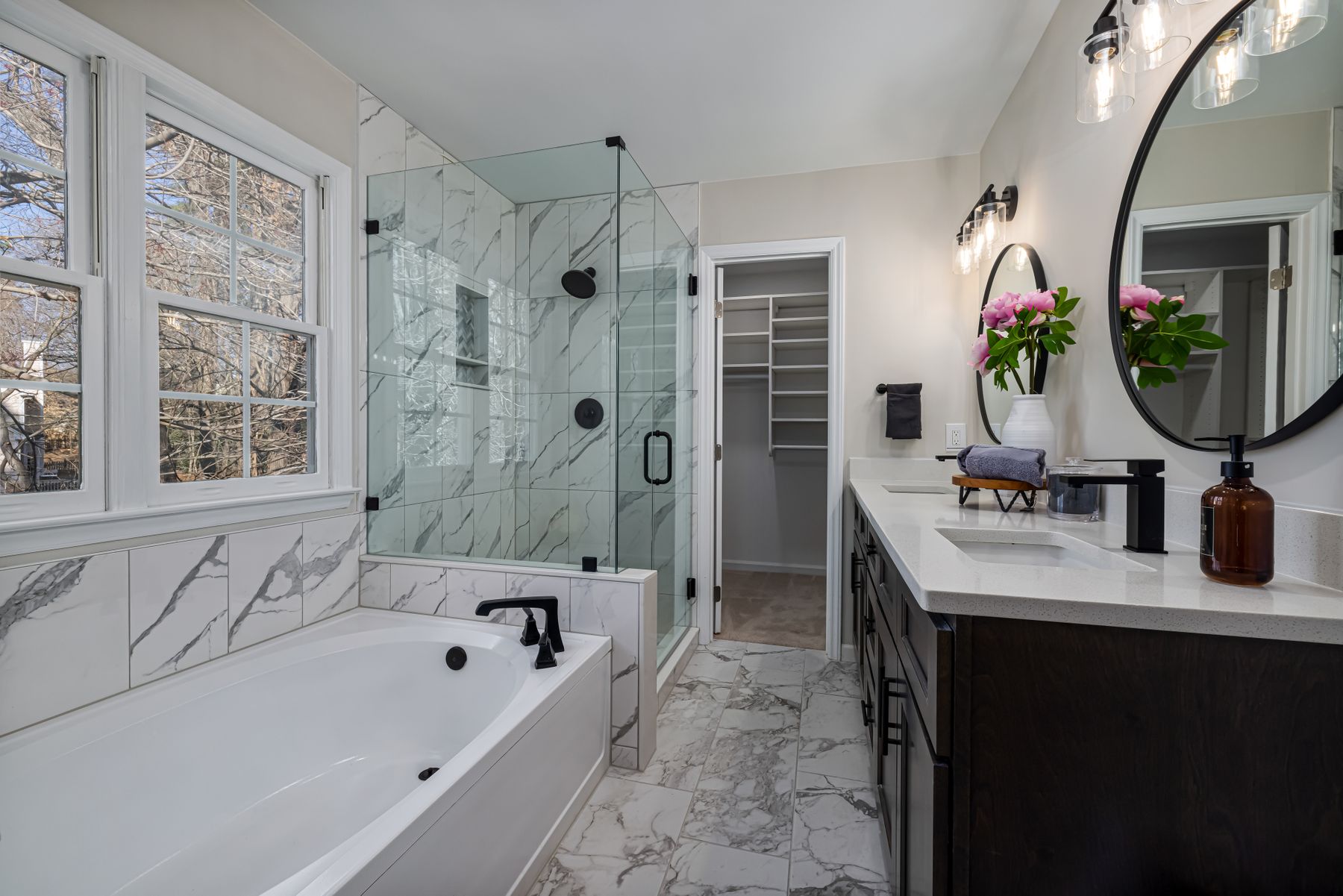
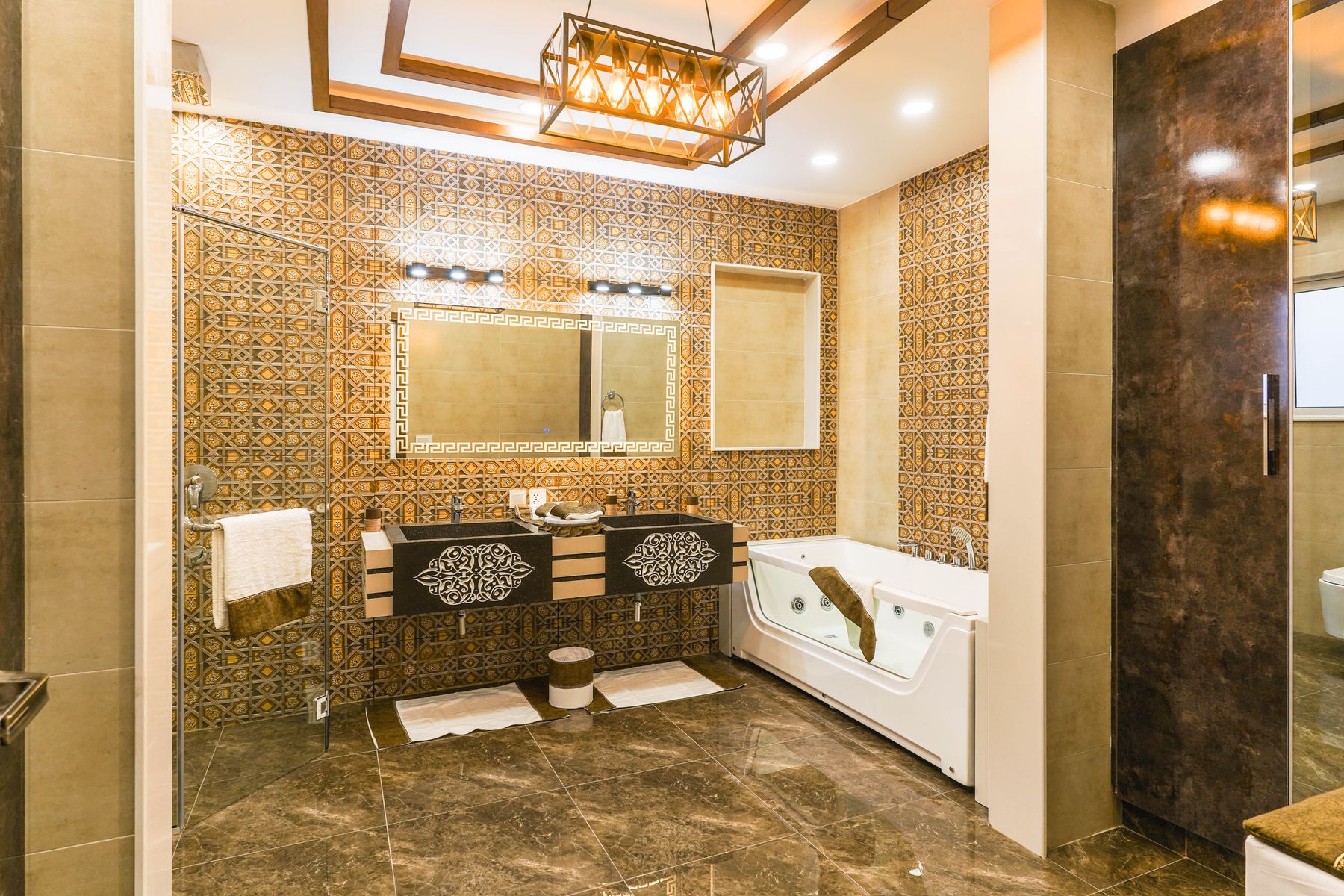
A double vanity gains Deco rhythm when mirror widths, vertical lines and basin positions repeat consistently. Shared storage still needs to account for drawers, outlets, grooming tools and plumbing access. A mirrored wall or glass partition can increase reflection, but task light should remain flattering rather than producing glare from every direction.
Layer Functional Light Into the Composition
Decorative sconces and pendants should sit within a complete lighting plan. Provide even facial light at the mirror, safe illumination at the shower and route, and a softer ambient layer for the bath. Reflective stone and mirrors can multiply glare, so dimming, shielding, color rendering and wet-area ratings deserve as much attention as fixture shape.
Use Mosaic as the Fine-Grain Layer
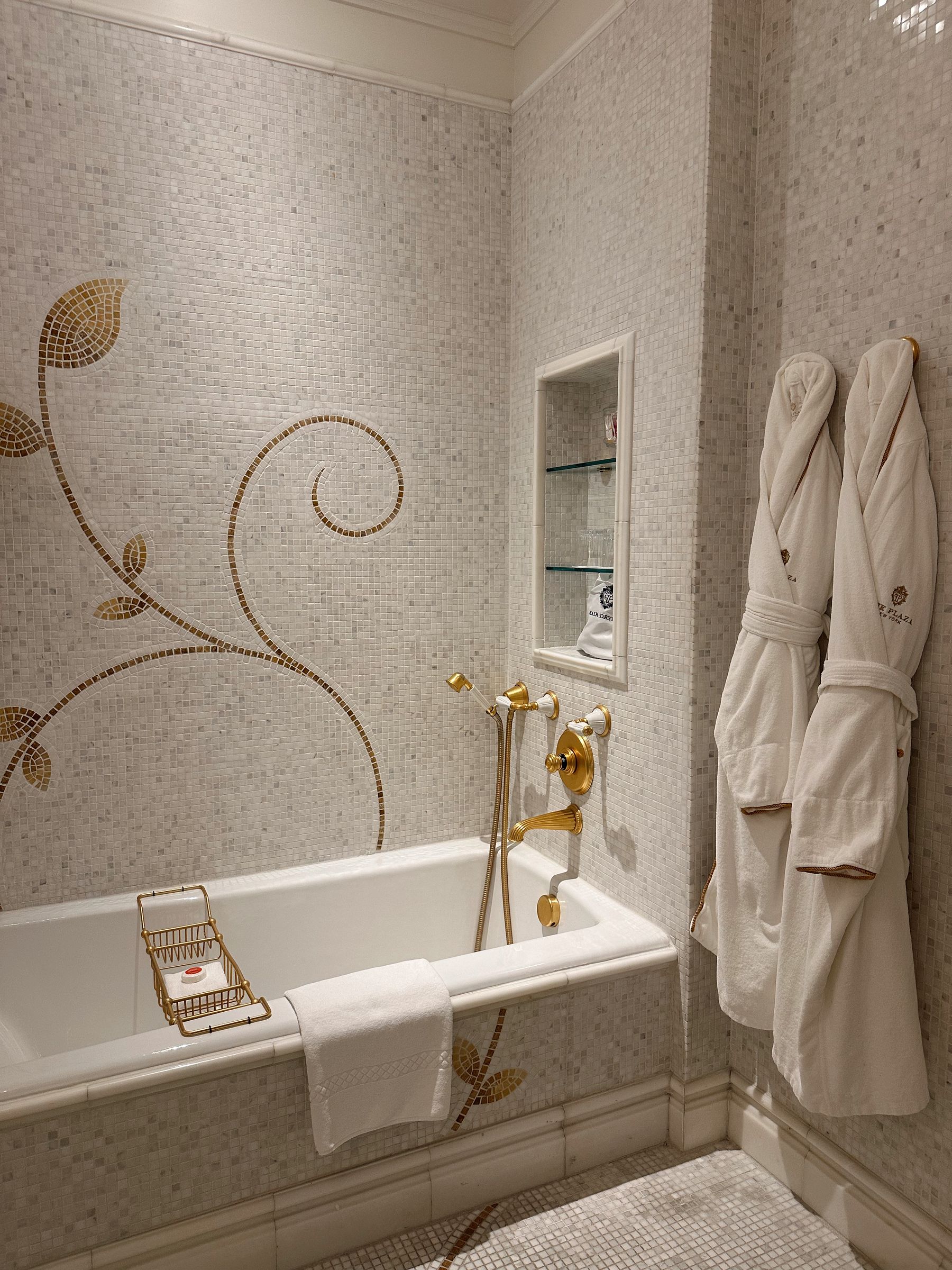
Small mosaic can bring texture and intricate rhythm to a bath surround, niche or vanity wall. Because it introduces many grout joints, keep it within a cleanable, deliberately bounded area and let larger stone or tile provide visual rest. Metallic-looking mosaic should be checked for wet-area suitability and cleaner compatibility rather than selected by shine alone.
Give Decorative Tile One Clear Role
Patterned tile can frame the vanity, bath or floor, but applying it to every surface makes geometry difficult to read. Choose whether the tile is a backdrop, border or primary artwork and simplify the surrounding planes. Large fixtures should not obscure the strongest repeat or leave only accidental fragments visible.
Use the Bath as a Sculptural Silhouette
A black, white or softly curved freestanding bath can act as the room's largest streamlined form. It needs comfortable access, realistic cleaning space and a filler position that does not obstruct entry. Give the bath a quiet backdrop if the floor or vanity already carries strong geometry.
Give the Shower One Geometric Detail
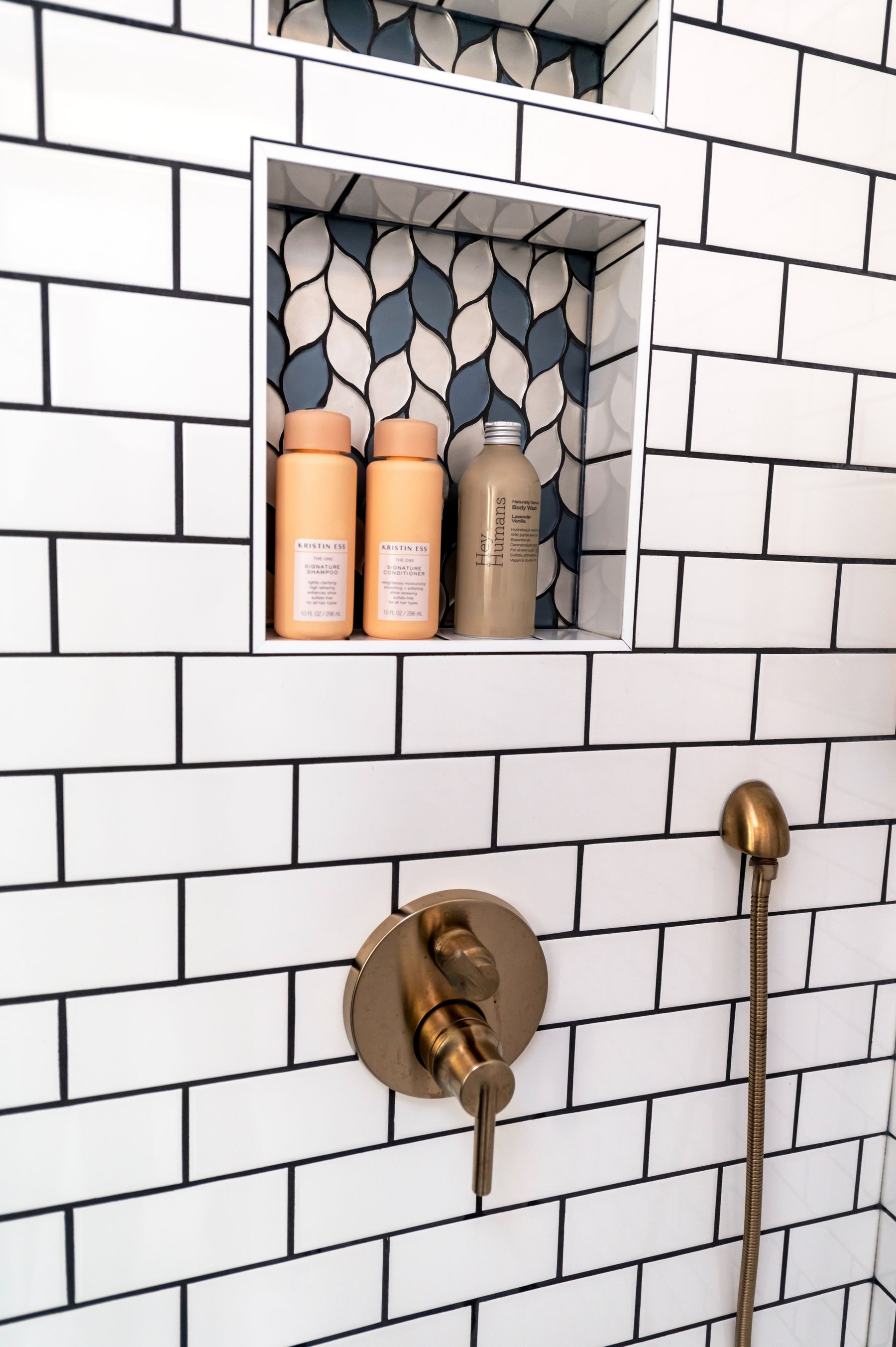
A patterned niche, framed glass panel or repeated black line can connect a modern shower to the Deco scheme. Keep waterproofing, drainage, controls and service access contemporary and straightforward. One carefully placed decorative insert is usually stronger than several borders interrupted by valves and shelves.
Scale the Pattern for a Small Bathroom
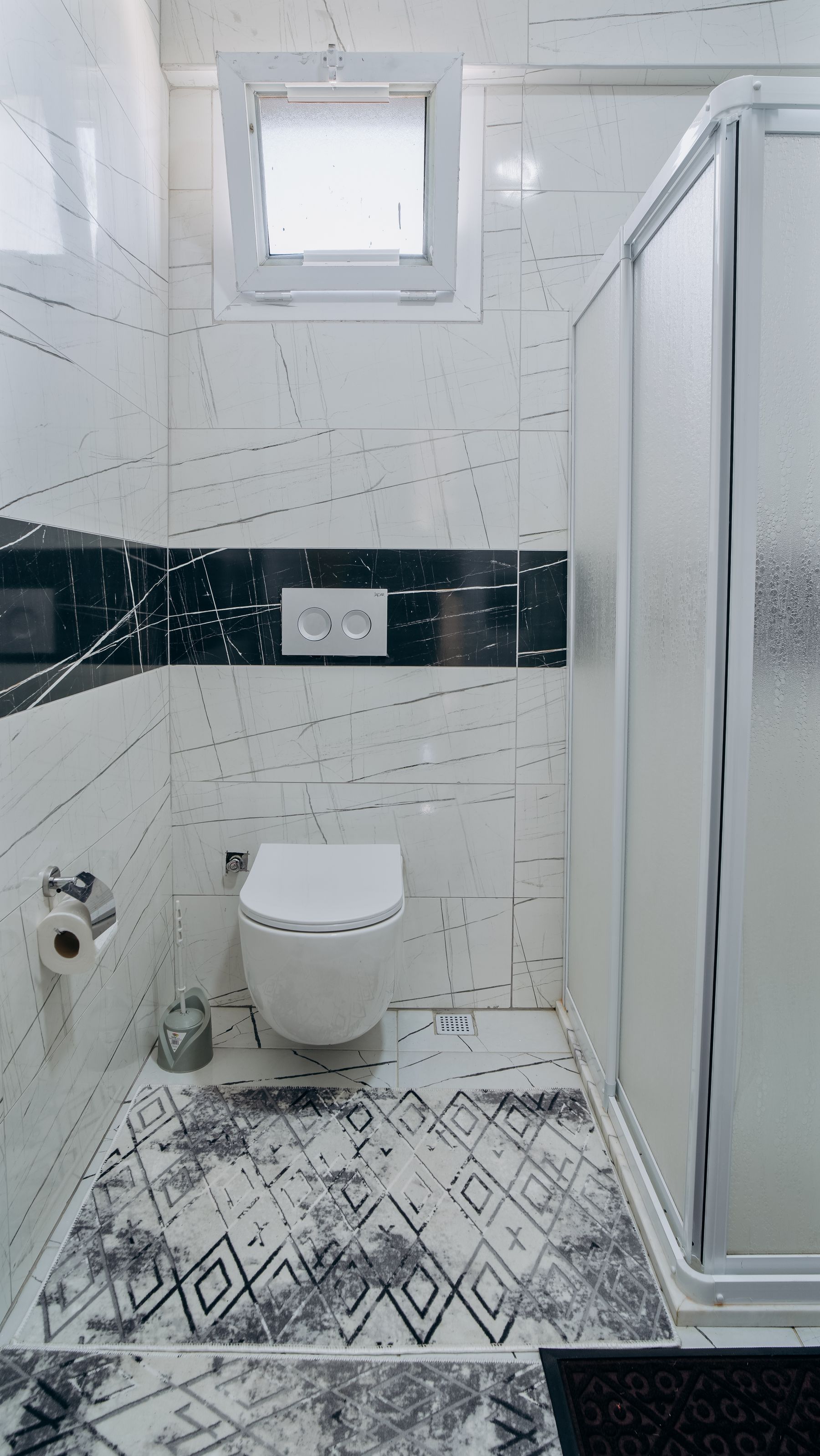
A compact bathroom can support bold Deco geometry when the pattern has one clear field and the route remains visually open. Use glass where it genuinely improves sightlines, keep storage concentrated, and avoid a different motif on every short wall. A large mirror can extend the composition, but it should not reflect the busiest surface repeatedly.
Hide Daily Clutter Behind Strong Lines
Deco geometry loses clarity when bottles cover the counter and bath edge. Use drawers, mirrored cabinets or a furniture-like vanity to contain everyday products while leaving a small display area for deliberate objects. Align door and drawer breaks with the mirror or basin so storage supports the elevation rather than fragmenting it.
Use Daylight and Privacy Glass as Material
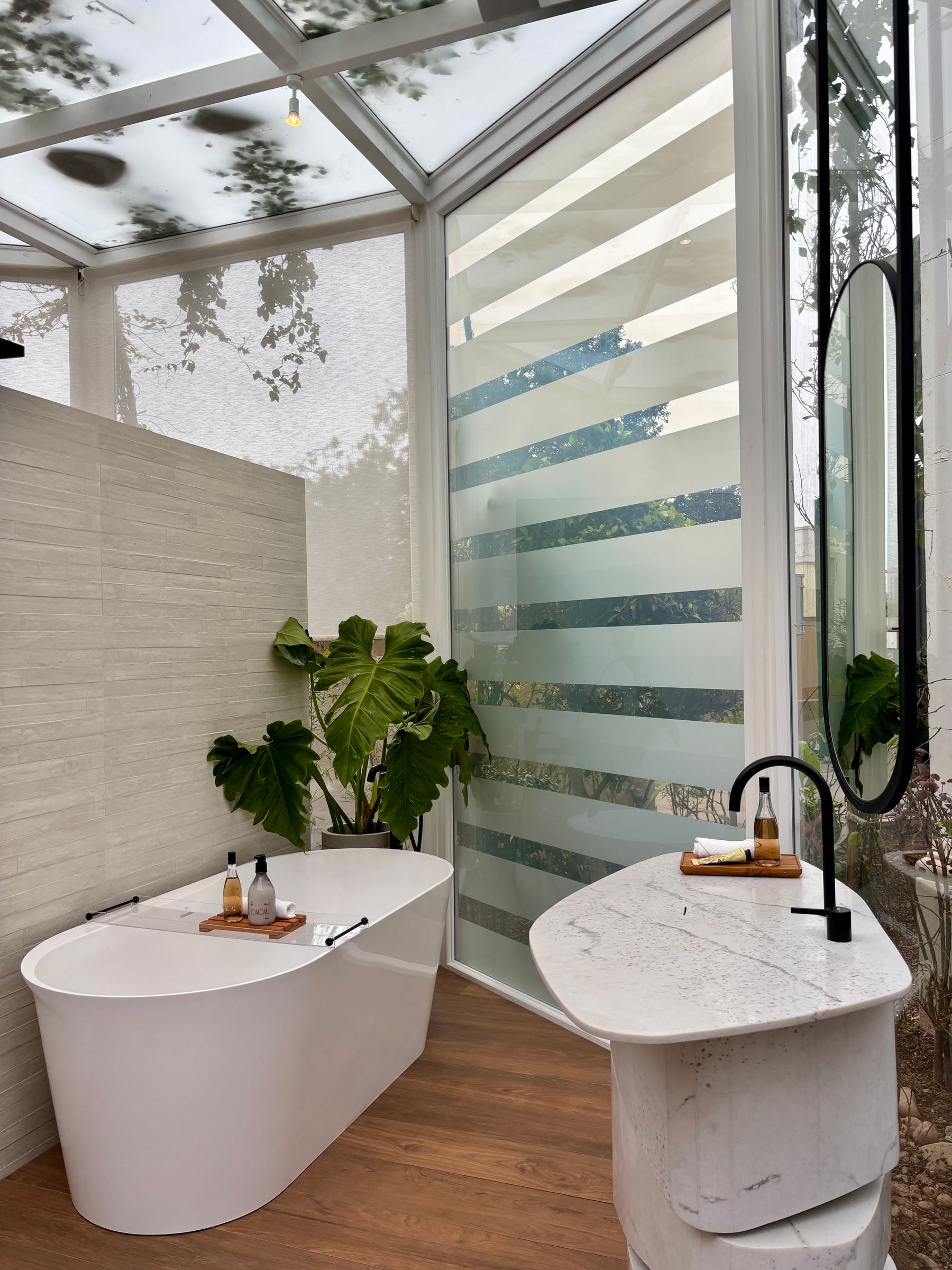
Textured, reeded or obscured glass can echo vertical Deco lines while distributing daylight and protecting privacy. Check the real view after dark, ventilation requirements and cleaning access before choosing a decorative pane. Clear glass may suit an internal shower screen, while privacy glass is more useful at the exterior boundary.
Build Accessibility Into Contrast and Support
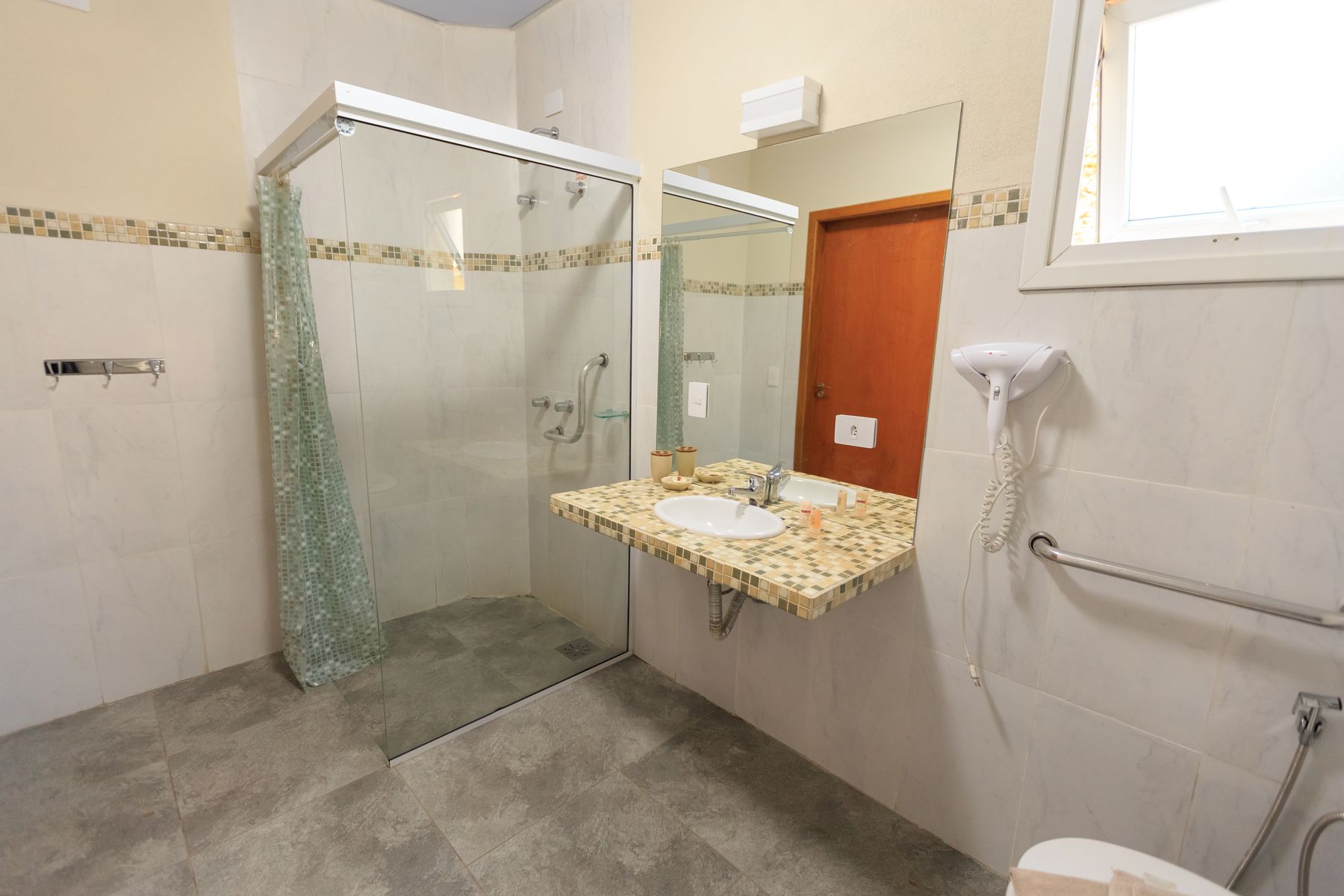
Strong contrast can make controls and level changes easier to identify, but pattern should not obscure the floor edge or support points. Plan the clear route, shower entry, seating, structural reinforcement and dedicated grab bars around the users and qualified guidance. Decorative rails or towel bars are not substitutes for properly designed support.
Plan Maintenance Before Choosing Gloss
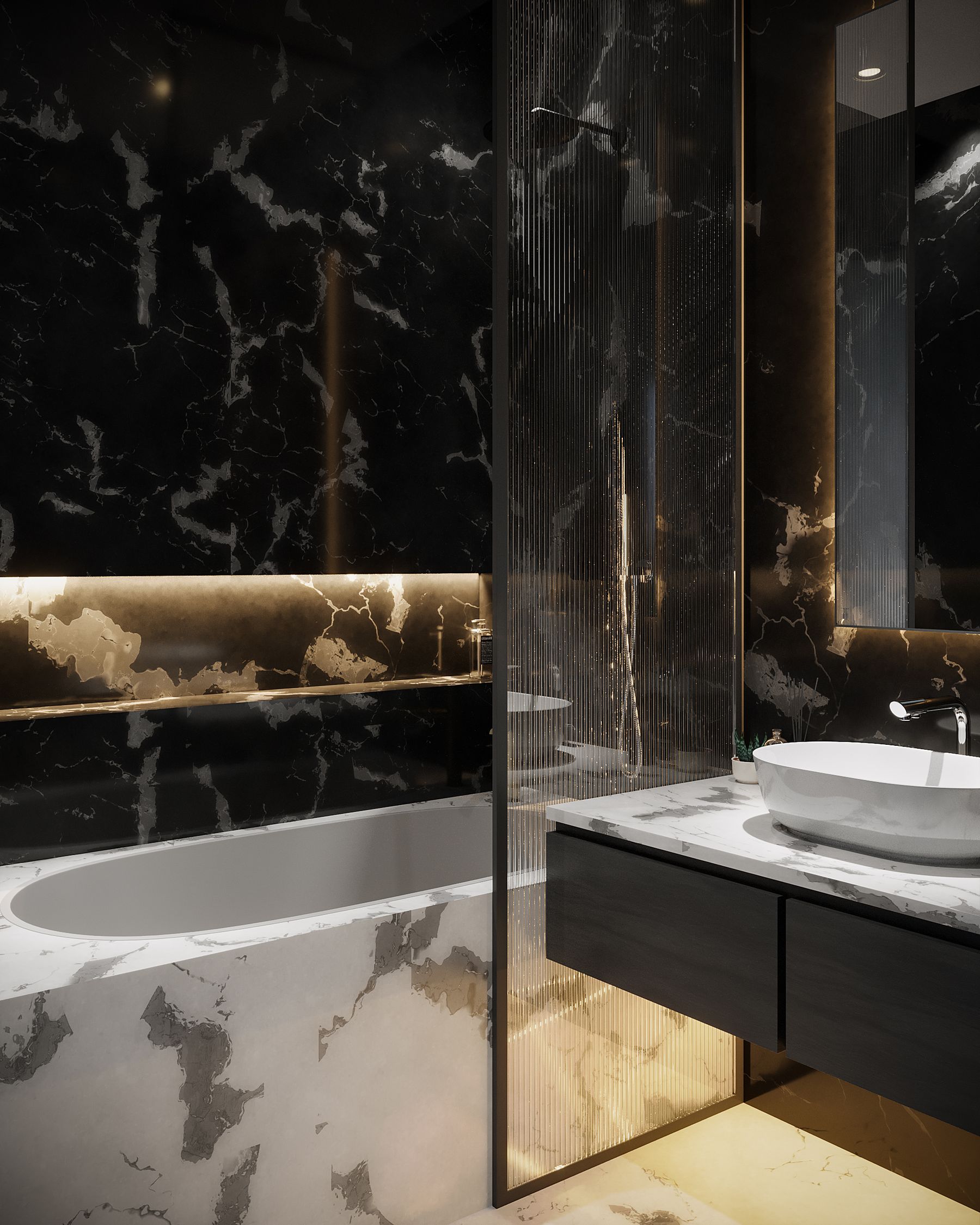
Dark polished stone, mirrors, metal and small mosaic can show water spots, soap residue or damaged sealant quickly. Review local water hardness, cleaner compatibility, grout quantity, ventilation and access to every reflective surface. Mixing honed and polished finishes can preserve depth while reducing the amount of high-maintenance gloss.
Edit the Scheme Until the Rhythm Is Clear
The final edit should leave one main motif, one dominant material contrast and a consistent family of lines. Remove redundant sunbursts, figurines, mirrored trays and extra metals if the room already has a shaped mirror, graphic floor and balanced lights. A successful Deco bathroom should still feel deliberate when ordinary towels and toiletries are present.