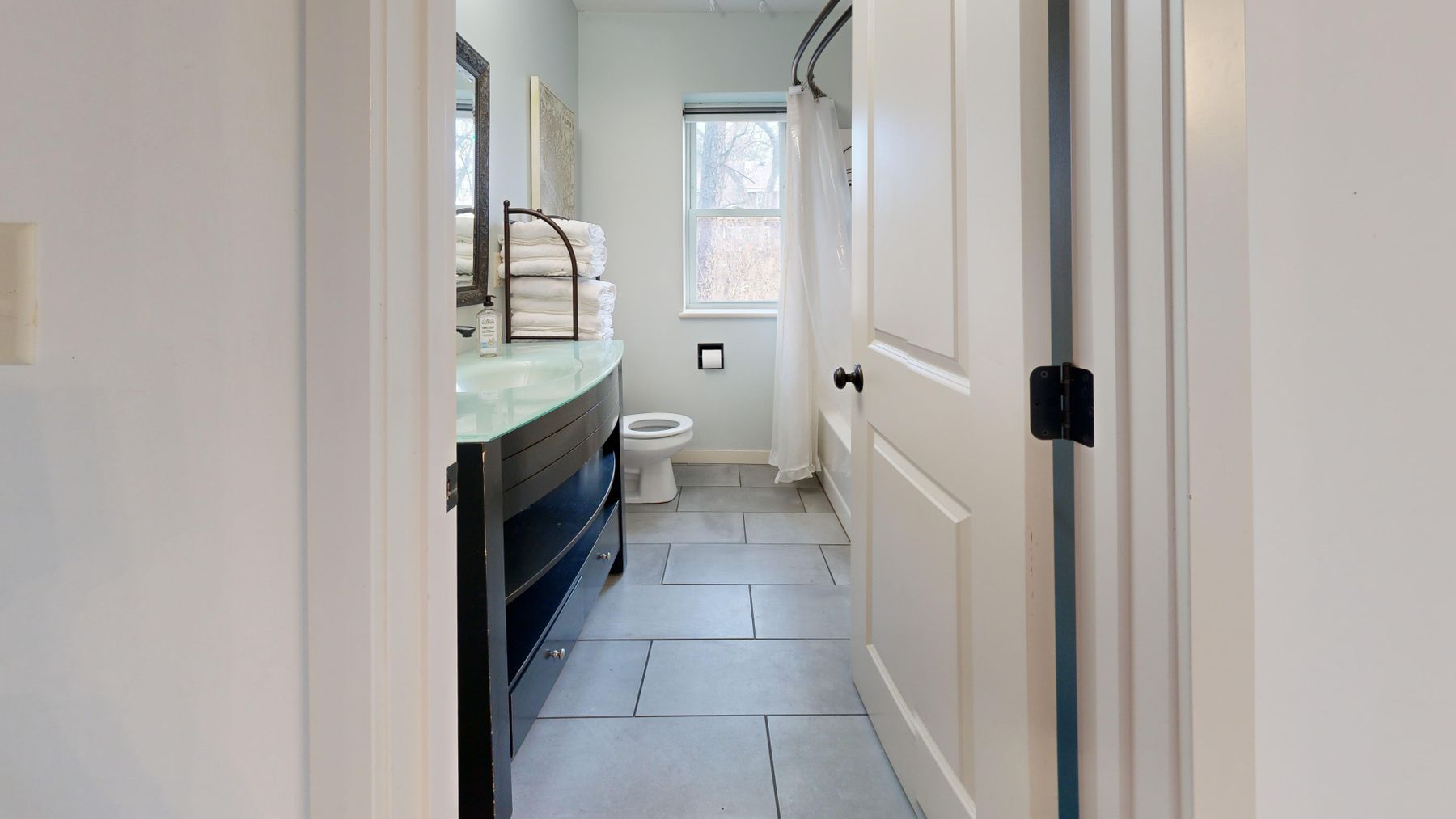
Decide Whether Green Is Neutral, Earthy or Jewel-Like
A greyed sage can behave almost like a neutral, olive brings more yellow and earth, emerald carries obvious saturation and forest green can become a dark architectural field. Choose that role before comparing dozens of samples. The daylight and fixed materials still matter, but the first decision is what kind of presence the green should have.
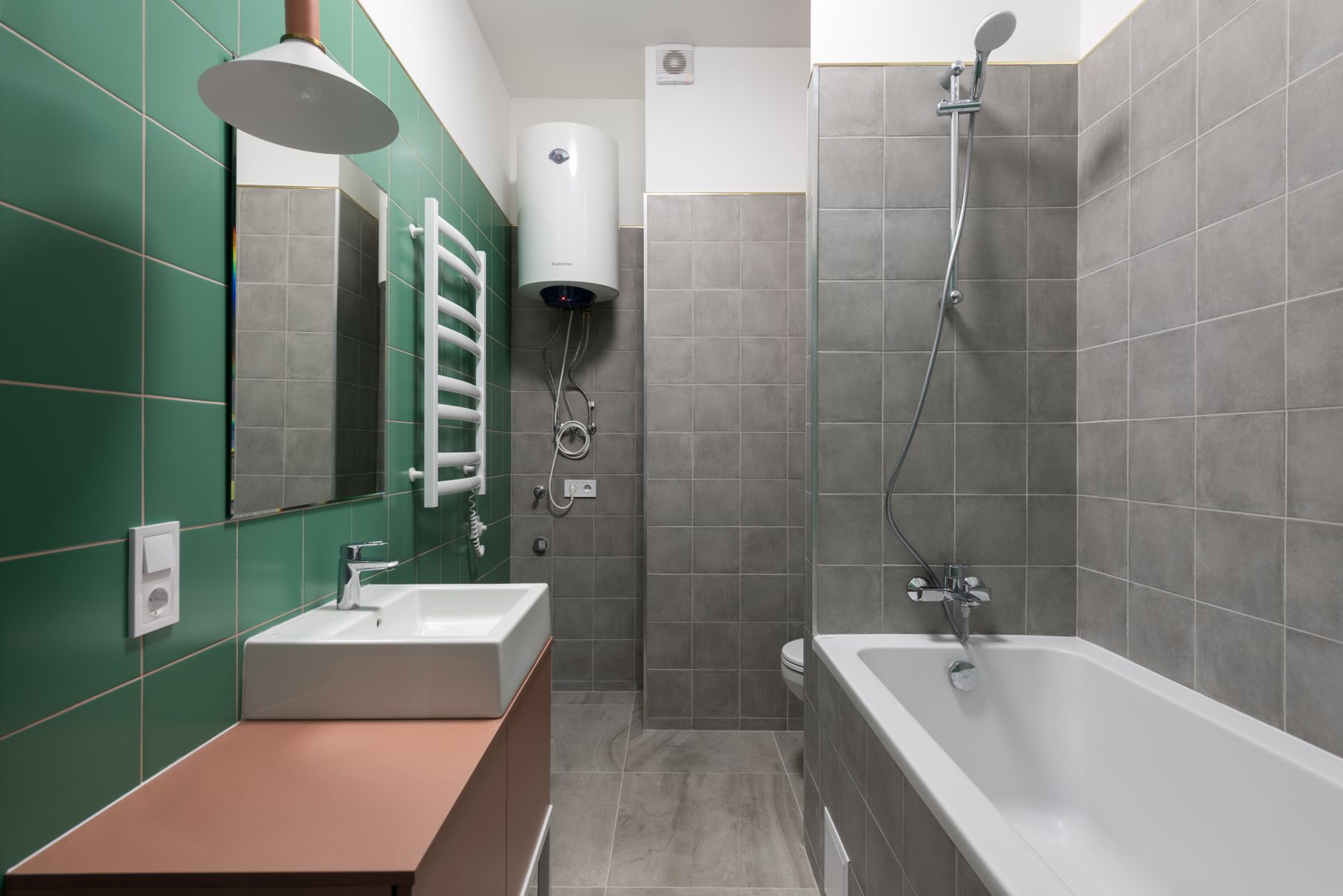
Separate Sage, Olive, Emerald and Forest by Role
These green families should not be treated as interchangeable points on one ladder. Sage works comfortably over larger areas, olive connects strongly to mineral and timber tones, emerald needs clearer visual hierarchy and forest green may behave more like charcoal than like a mid-value color. The room rarely needs several of them at once.
Use Paint for a Lower-Commitment Green Surface
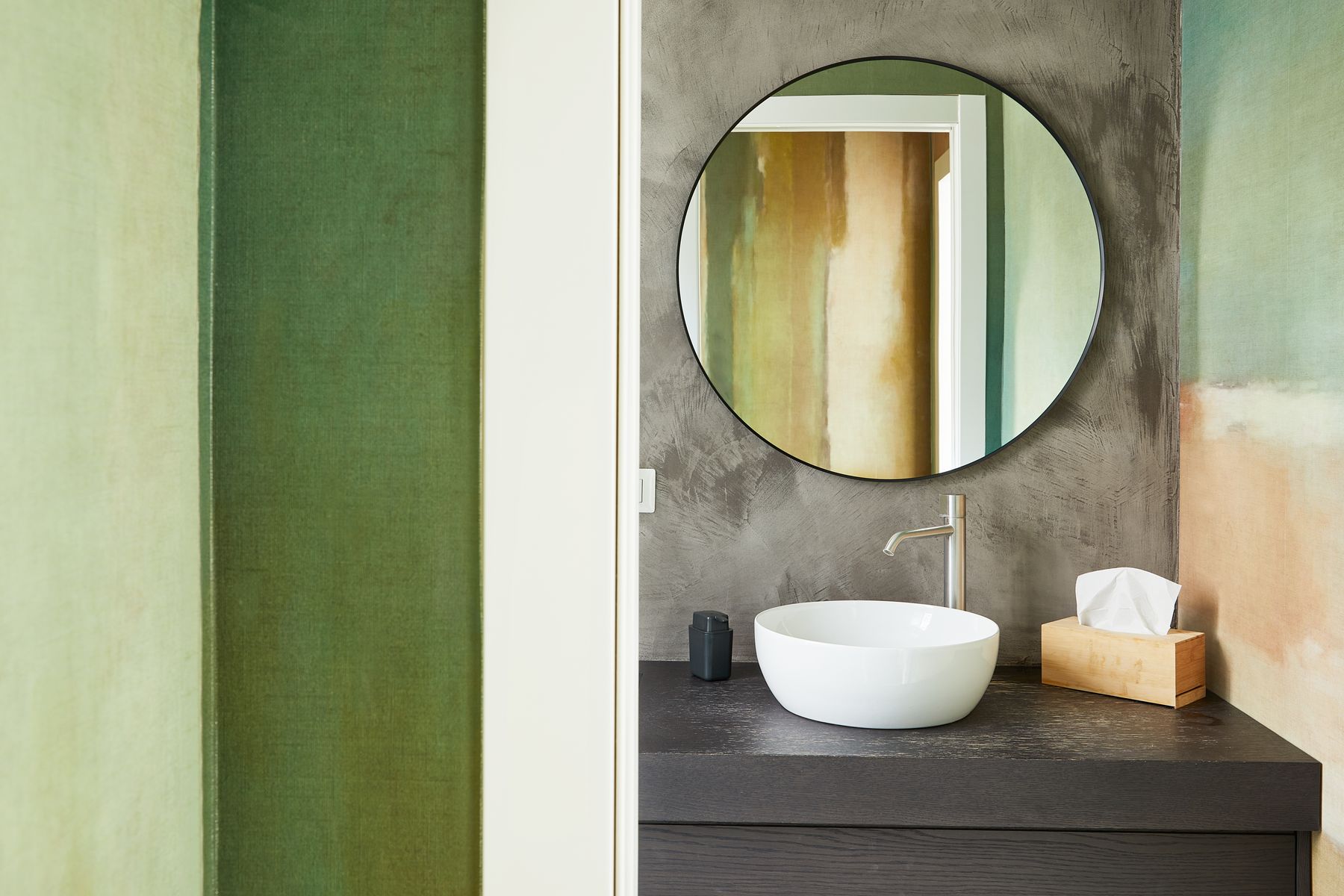
Paint can carry sage, olive or deep green across a vanity wall, ceiling or upper zone without committing the complete room to tile. Keep direct splash areas properly protected and select a bathroom-suitable system for the substrate and ventilation conditions. A painted surface is also easier to revise when daylight proves different from the mood board. Improve mirror lighting at the same time so the green renders accurately.
Let Green Tile Behave Like a Material, Not Paint
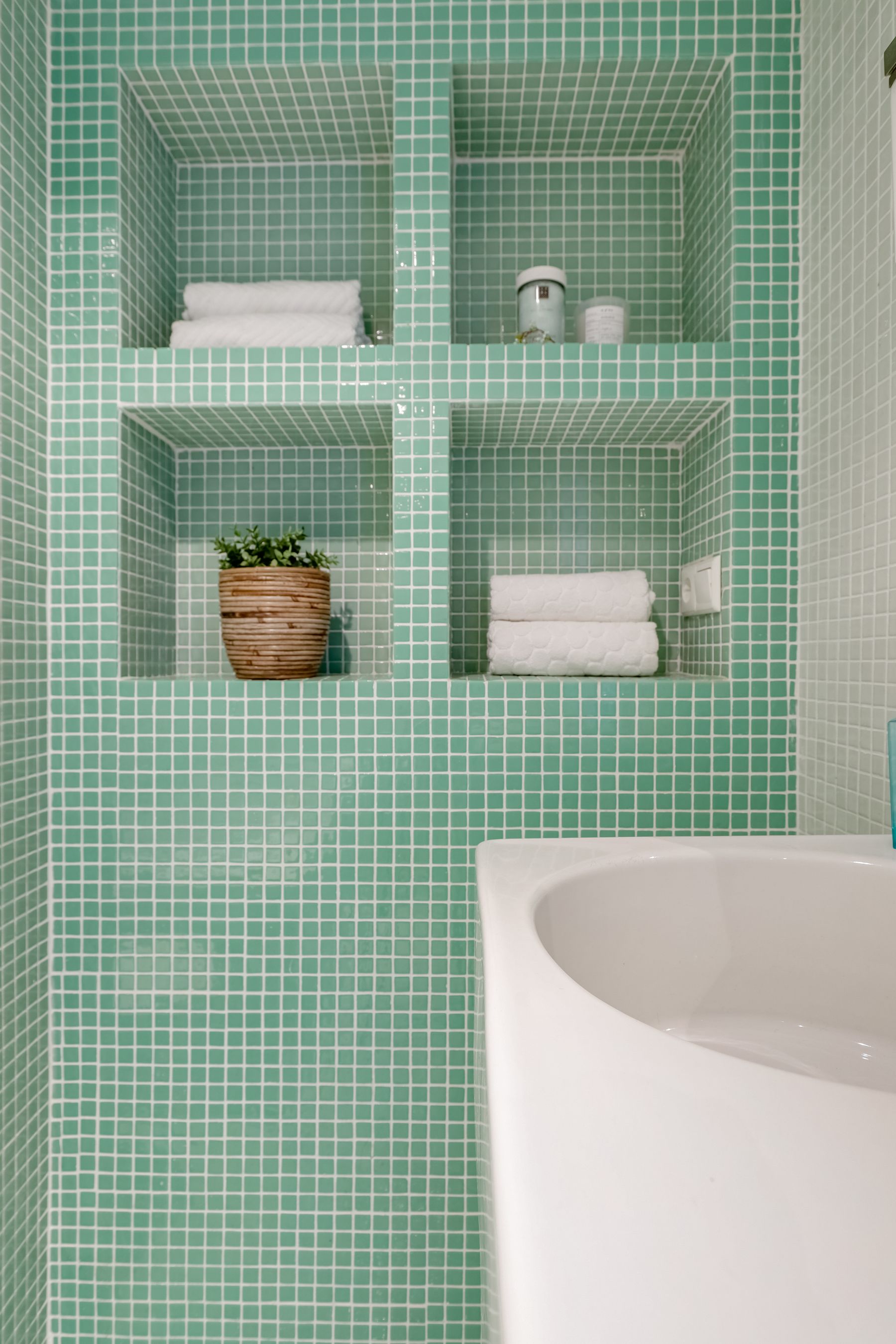
Green tile brings joints, reflection, glaze and repeated modules that paint does not. Use the tile where those qualities matter—shower wall, backsplash, bath surround or floor—rather than covering a surface simply because it is available. The grid and sheen should contribute to the green's character, not merely carry its hue.
Let Grout Decide Whether Green Reads as Field or Grid
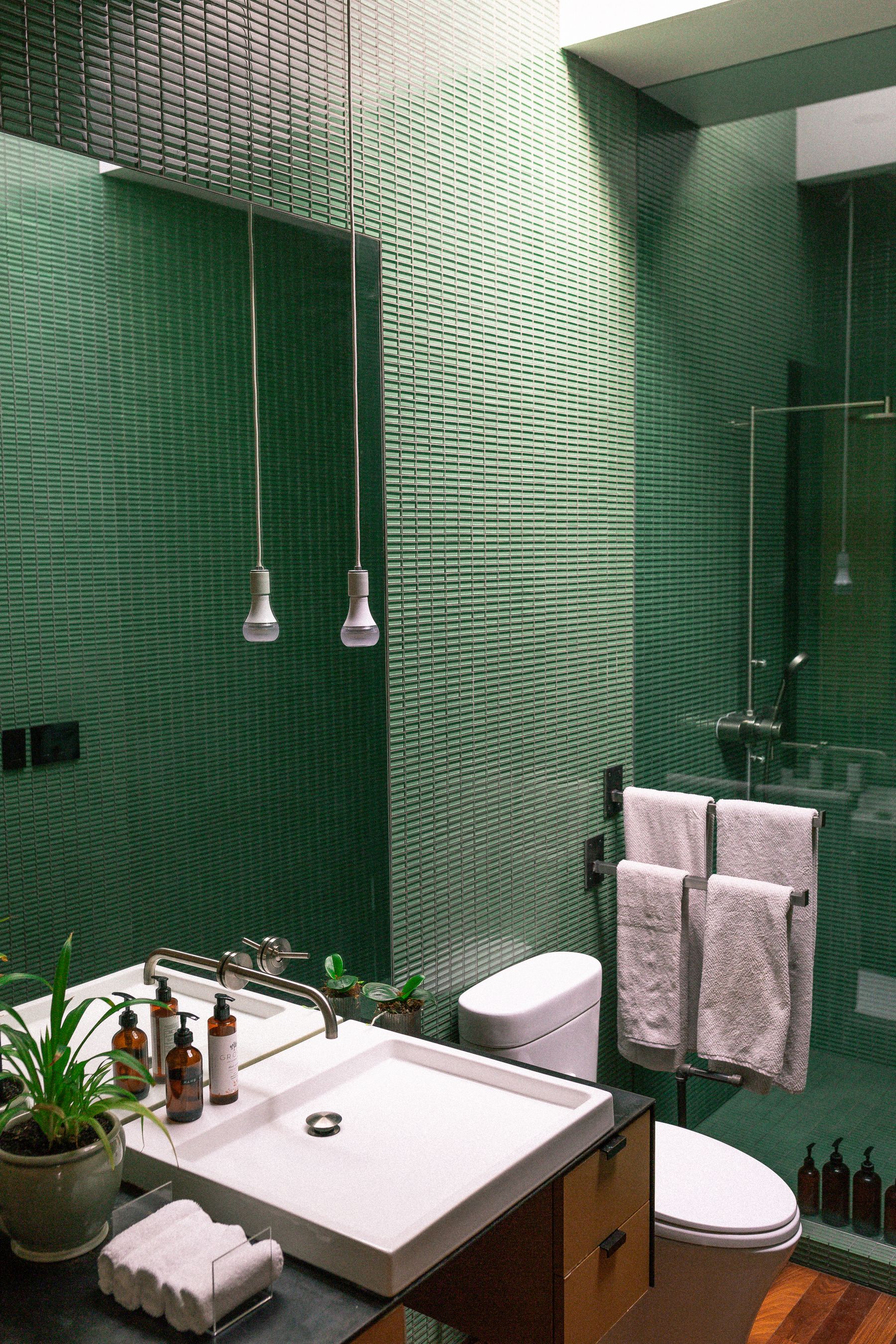
Matching or grey-green grout lets small tile merge into a calmer field; pale grout reveals every unit; dark joints create a more graphic pattern. The choice also affects how staining and mineral deposits appear. Build a sample with the actual tile, joint width and sealant, then wet and clean it. A color decision made from separate dry swatches cannot predict the completed wall.
Use Glaze Variation to Keep Green Alive
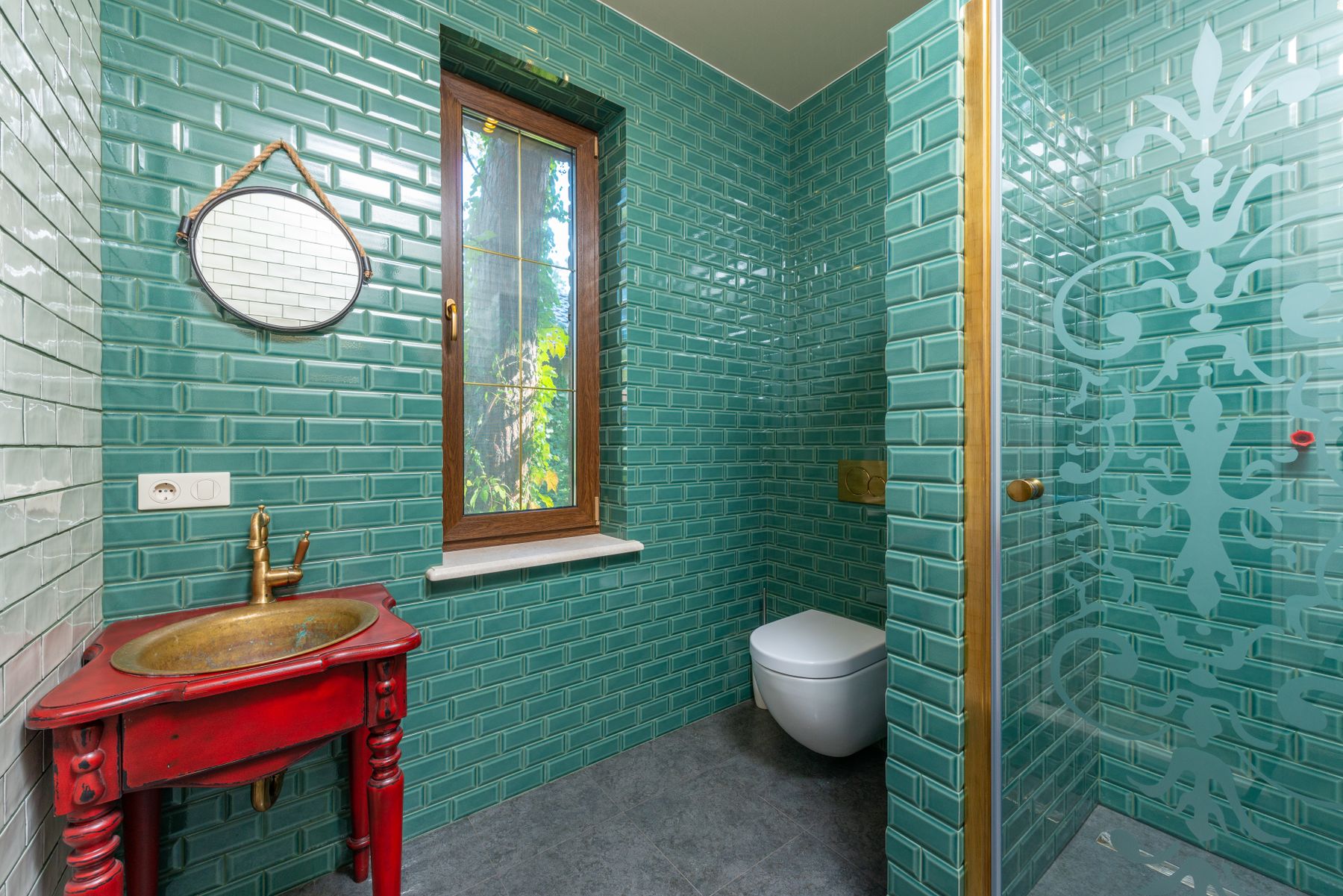
Variation in glaze can move green toward moss, olive, blue-green or almost black across the same wall as light and water change. That movement is often more valuable than adding a second pattern. Let a varied glaze be the expressive layer and keep nearby stone or cabinetry calmer so the surface does not become visually noisy.
Control How Much Heritage the Green Carries
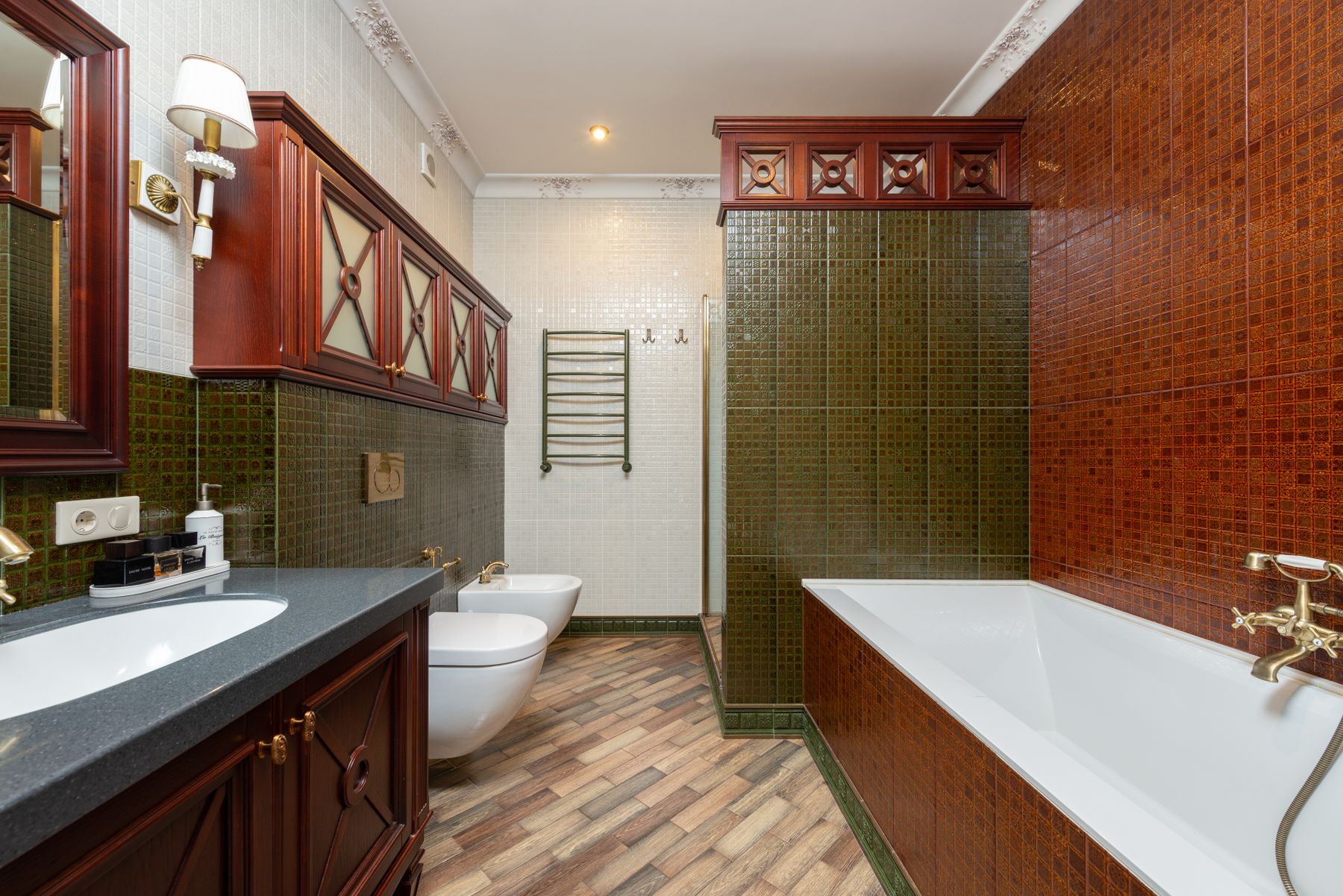
Bottle green, deep glazed tile and certain green-and-white combinations can quickly acquire a historic or heritage character. Decide whether that is the goal. Cleaner cabinet profiles, stainless or nickel and quieter stone can make the same green feel more contemporary; marble, brass and traditional forms will strengthen the period signal.
Make a Colored Fixture the One Green Event
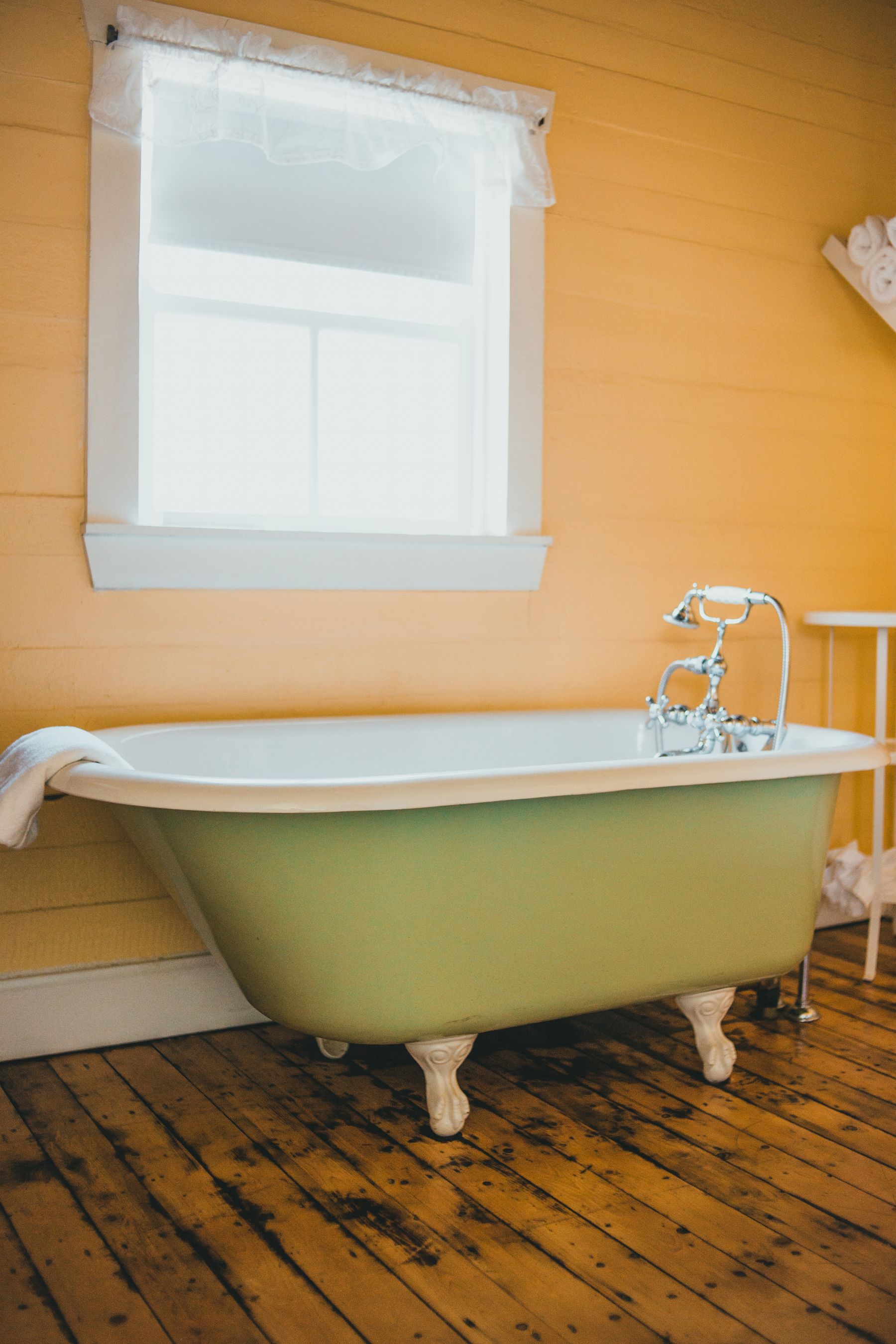
A green bath can carry enough color for the entire room because sanitaryware has strong silhouette and scale. Let the fixture remain singular, using walls and floor to frame it rather than repeating matching green accessories. This keeps the colored object intentional instead of turning the bathroom into a coordinated suite.

Use White Ceramic as a Stable Reference
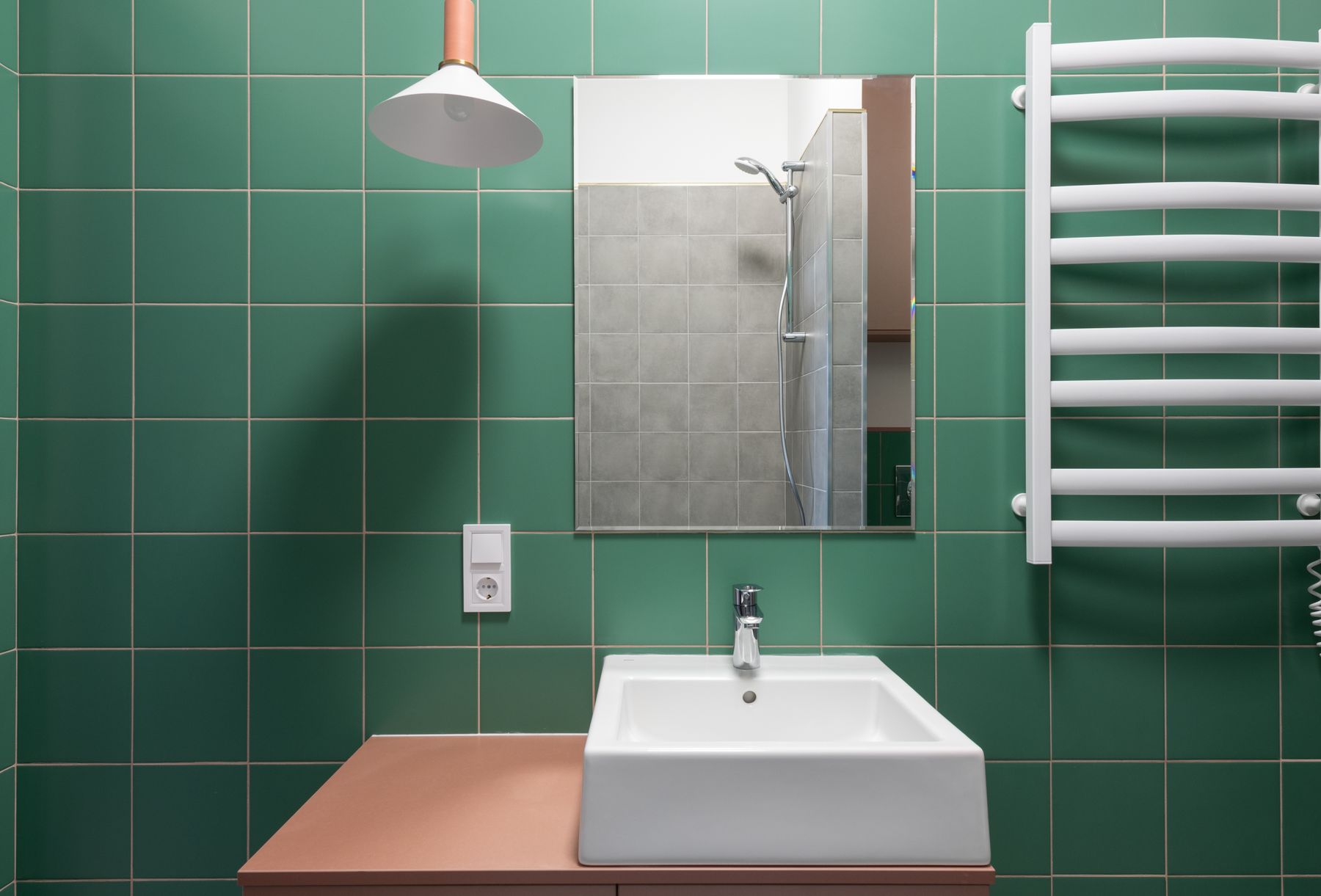
White basins, toilets and baths give green a consistent value reference. Warm white softens olive and moss; cooler white sharpens blue-green and emerald. Compare ceramic, grout, tile and paint together because a green chosen independently can make an off-white fixture look yellow. The expanded [White Bathroom Ideas](/ideas/white-bathroom-ideas/) explains how undertone and sheen affect pale sanitary surfaces.
Use Green Joinery as the Furniture Anchor
A vanity allows green to occupy a controlled furniture-scale volume outside the wettest surfaces. Sage, olive or deeper green can establish the palette while ceramic, mirror and wall finishes remain quieter. Use the joinery as one coherent mass and avoid scattering small painted green elements around the room simply to repeat it.
Keep the Shower Clear Around Strong Green
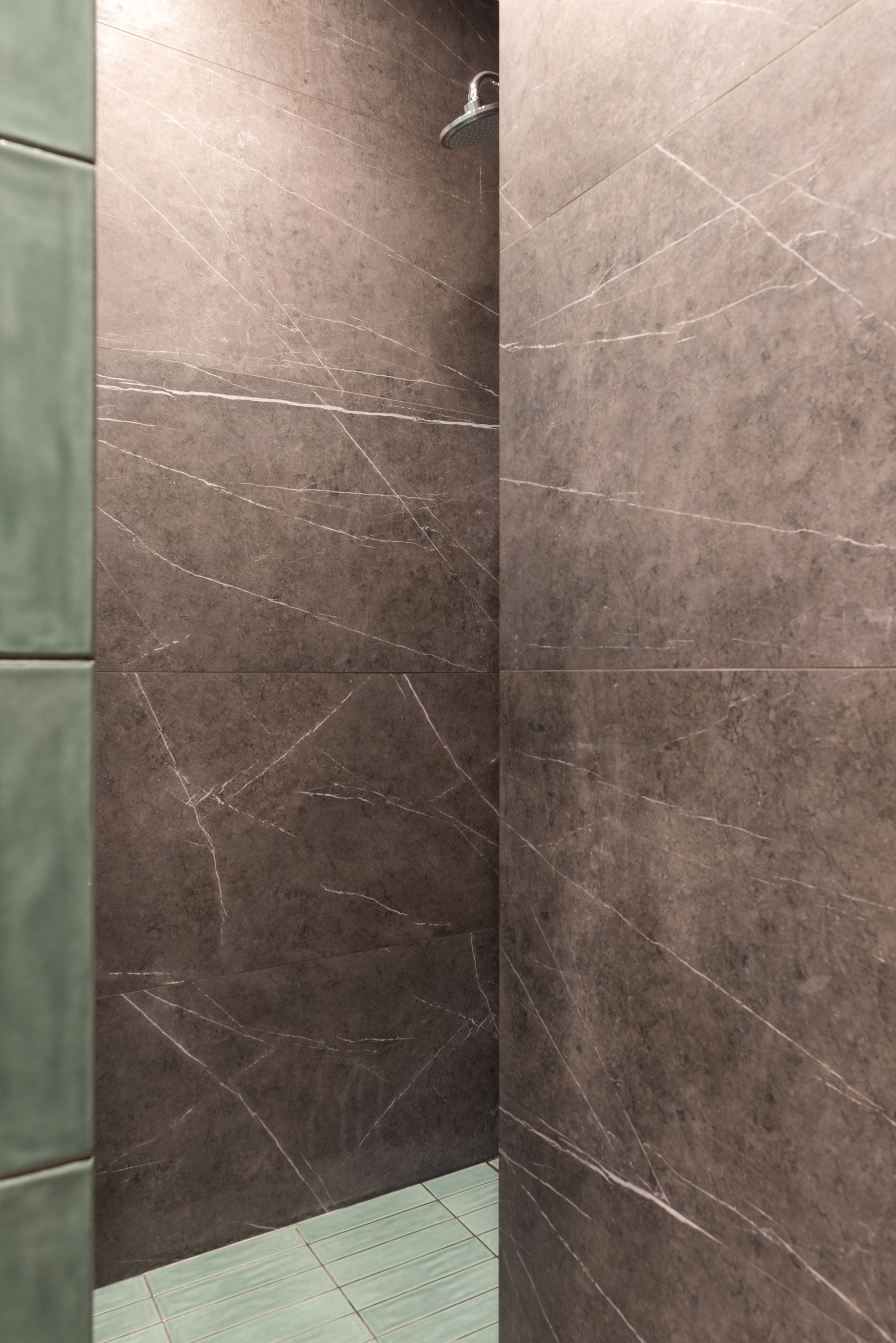
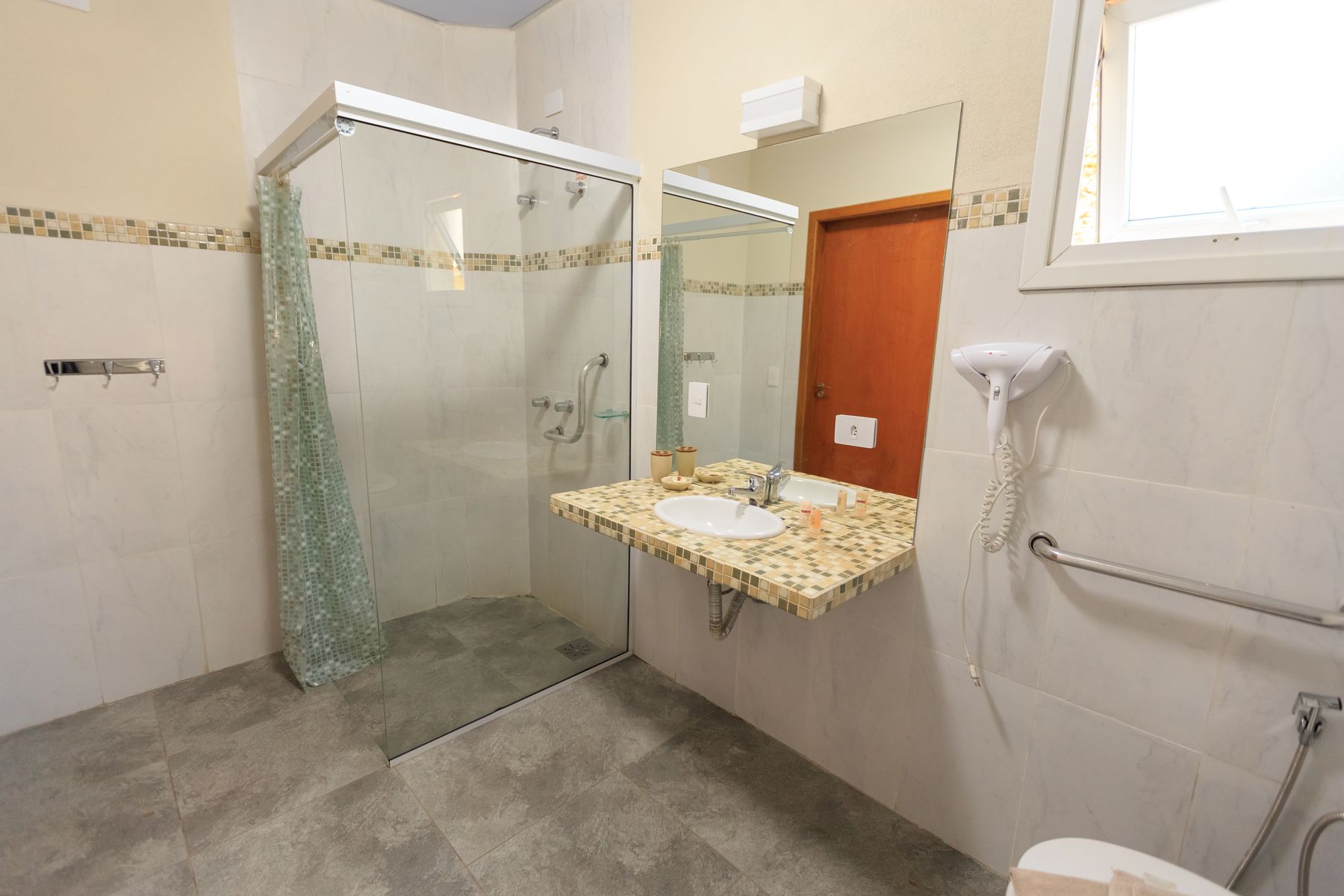
Clear glass can preserve the continuity of green tile or reveal the relationship between green and pale stone. The enclosure still needs safe support, splash control and cleaning access; frameless is not automatically better. Keep controls, niches and the entry legible against tonal surfaces. Continue to [Walk-In Shower Ideas](/ideas/walk-in-shower-ideas/) for threshold, drainage and screen planning.
Use Stone to Pull Green Away From Botanical Styling
Stone gives green a mineral counterpart that can prevent the room from becoming overly botanical. Pale limestone can soften olive, veined marble can make emerald more formal and darker stone can ground sage. Choose the stone for the style direction you want rather than adding leaf prints or plant-themed accessories to explain the palette.
Match Green and Timber by Temperature
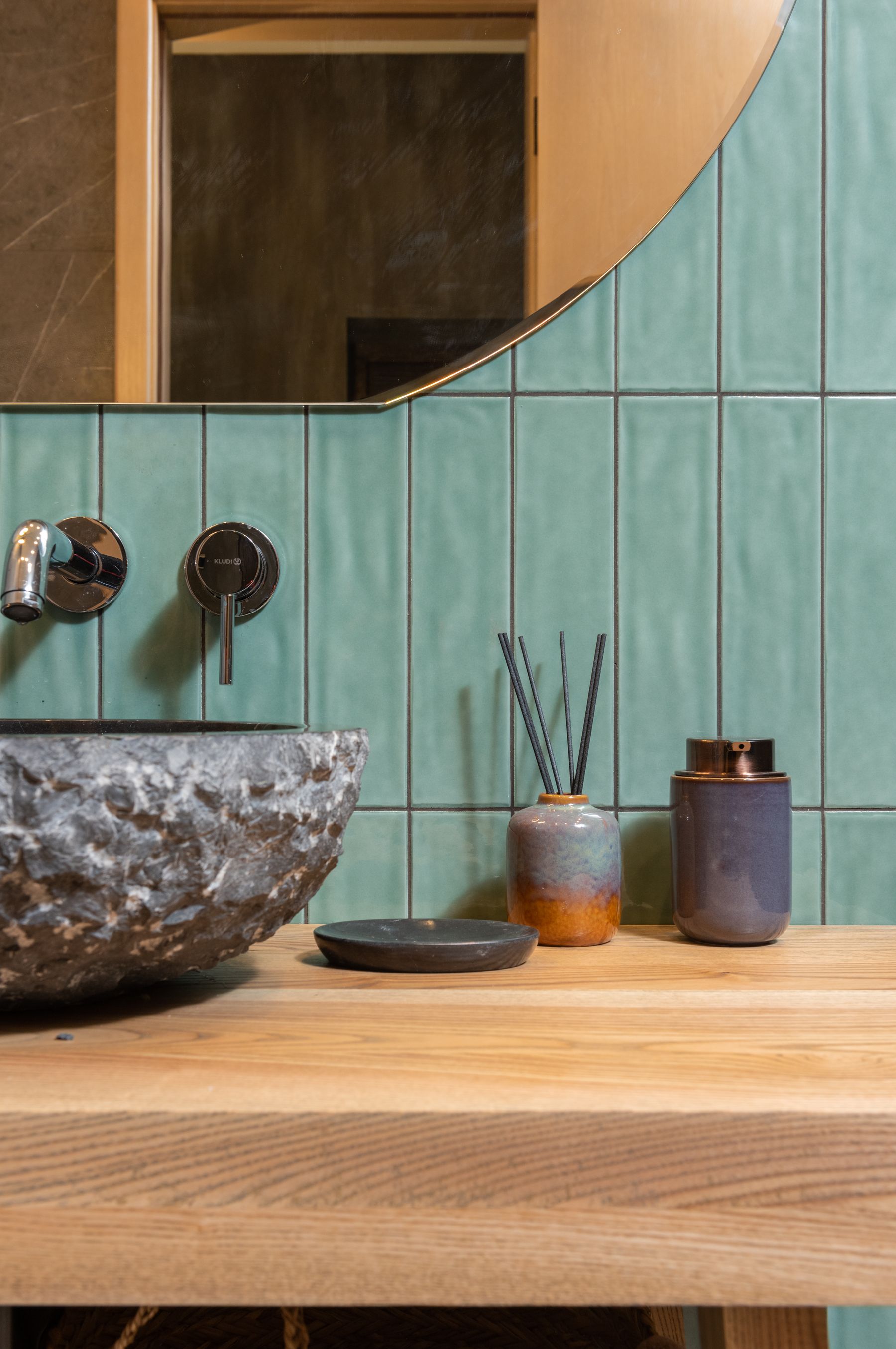
Green and timber can still clash. Yellow-green beside honeyed oak may become muddy, while a bluer green against warmer wood can create clearer contrast. Sage with pale oak behaves differently from olive with walnut. Evaluate undertone and value rather than relying on the idea that two natural-looking materials must work together.
Do Not Assume Green Needs Brass
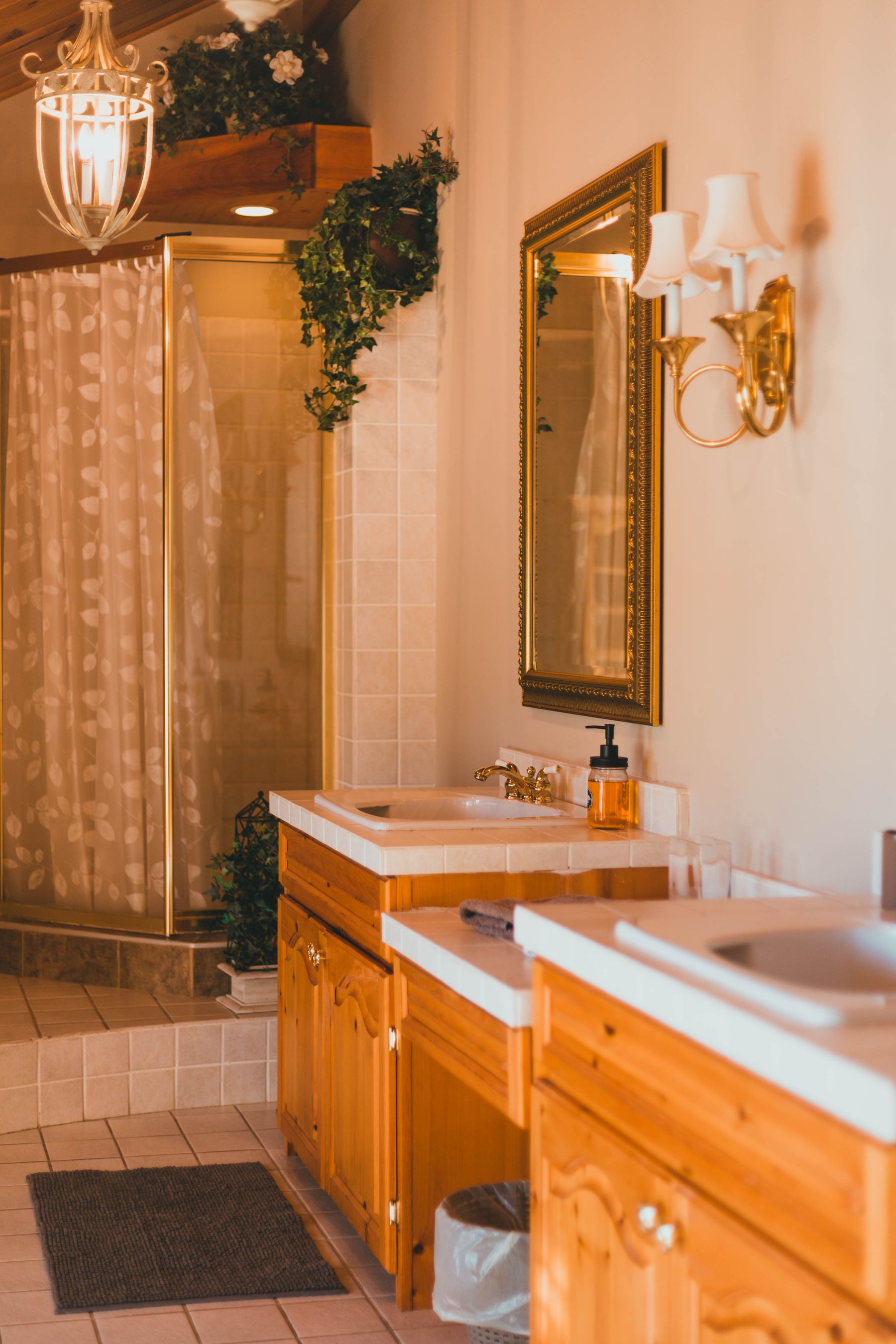
Brass is a familiar partner for green, but it can quickly reinforce heritage or luxury cues. Stainless steel and nickel can make the same green cleaner and more contemporary, while black can add a graphic boundary. Choose the metal according to the intended reading rather than a conventional color pairing.
Use Blush or Terracotta as a Controlled Complement
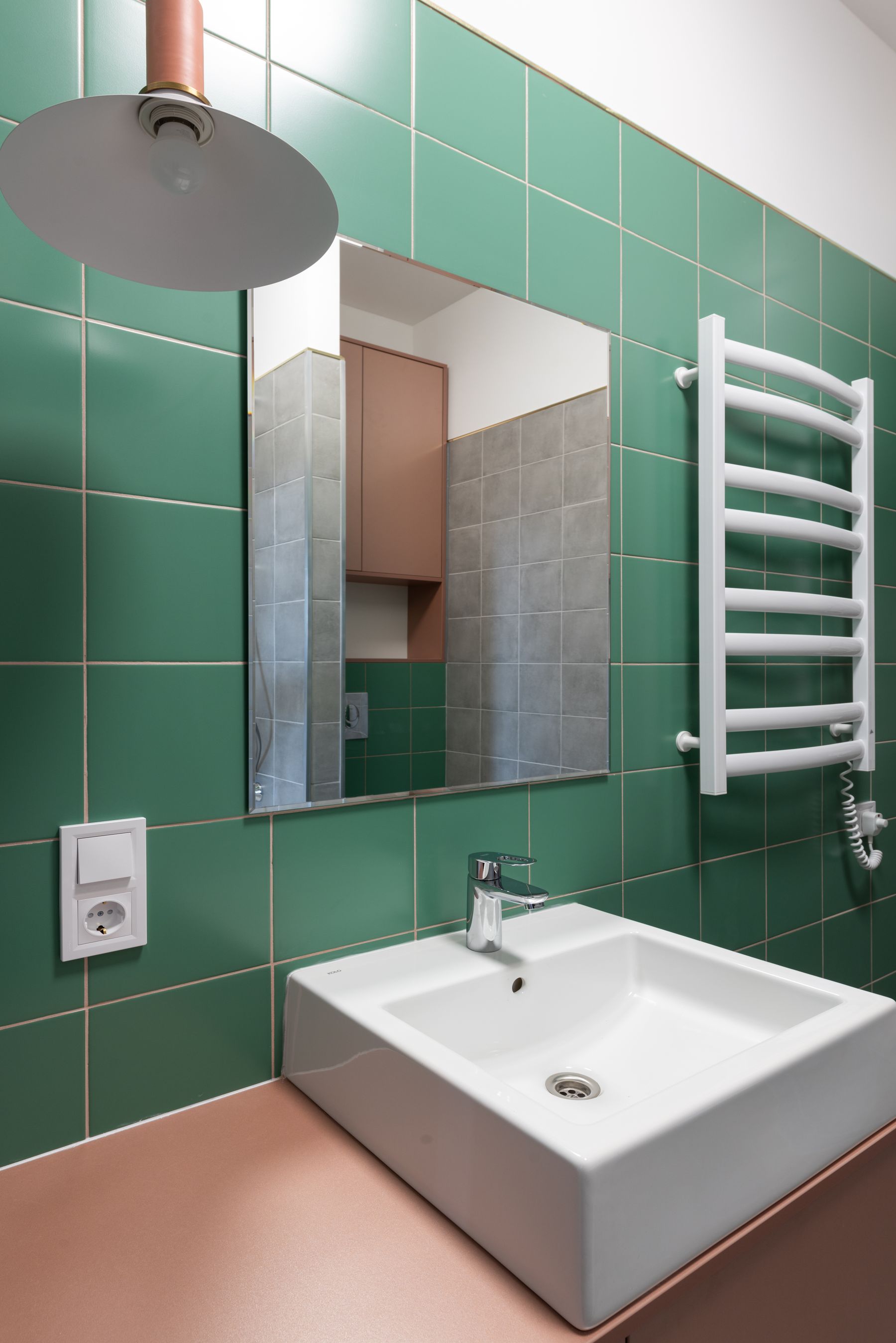
Blush, clay and terracotta sit opposite green strongly enough to create energy, so keep them concentrated in one surface or material family. A pale pink counter, clay pot or warm floor may be enough. Several unrelated peach, orange and red accents dilute the green identity. When layered textiles, clay and greenery become dominant, compare the more decorative [Boho Bathroom Ideas](/ideas/boho-bathroom-ideas/).
Use Black Only Where It Clarifies the Green
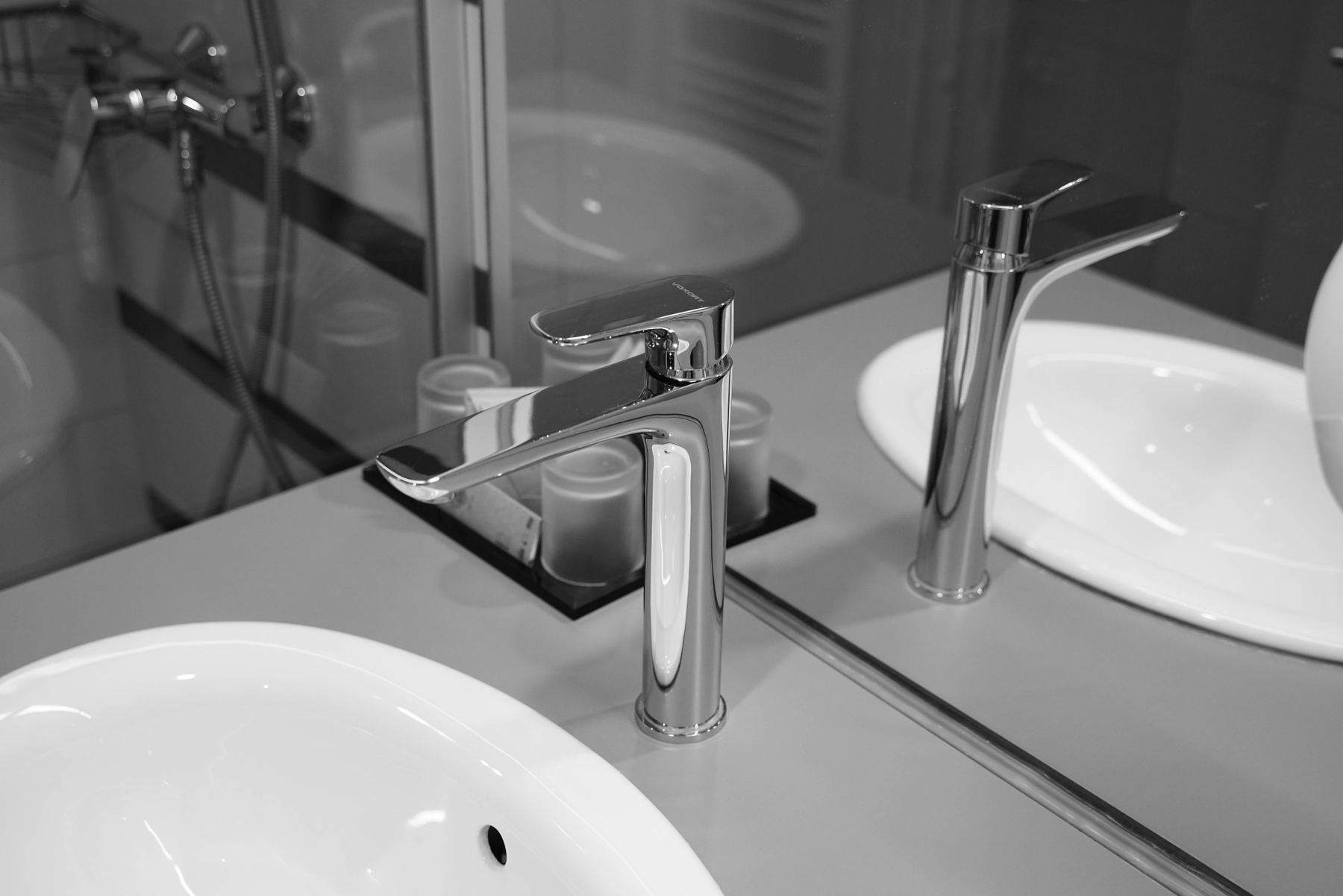
A black mirror frame, shower line or faucet can sharpen pale sage and prevent mid-green surfaces from dissolving together. Limit the dark outline to functional edges instead of making every accessory black by formula. Too much black changes the balance from green-led to high-contrast. Use [Black Bathroom Ideas](/ideas/black-bathroom-ideas/) when black becomes the organizing palette rather than a supporting detail.
Let Plants Confirm, Not Create, the Palette
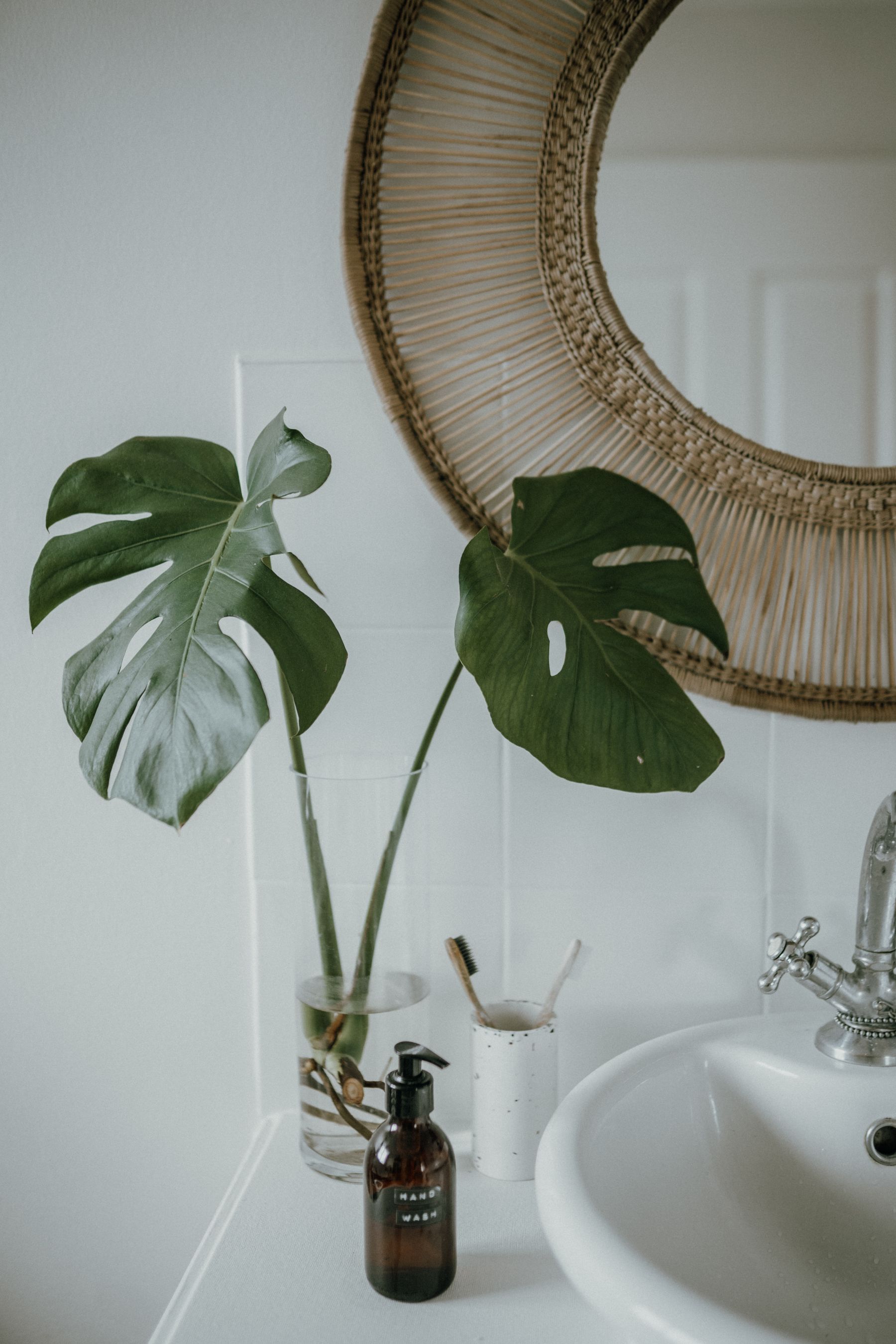
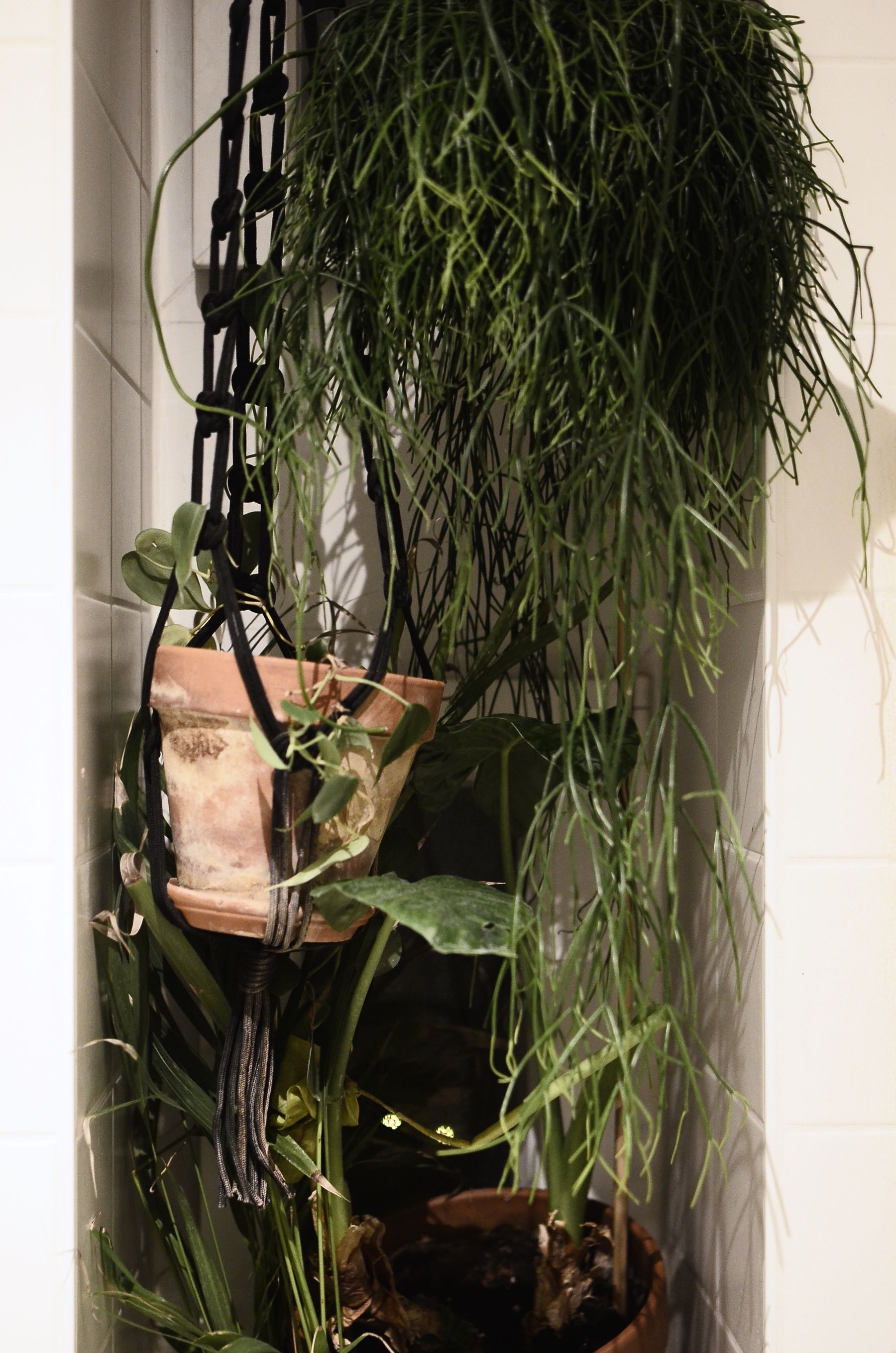
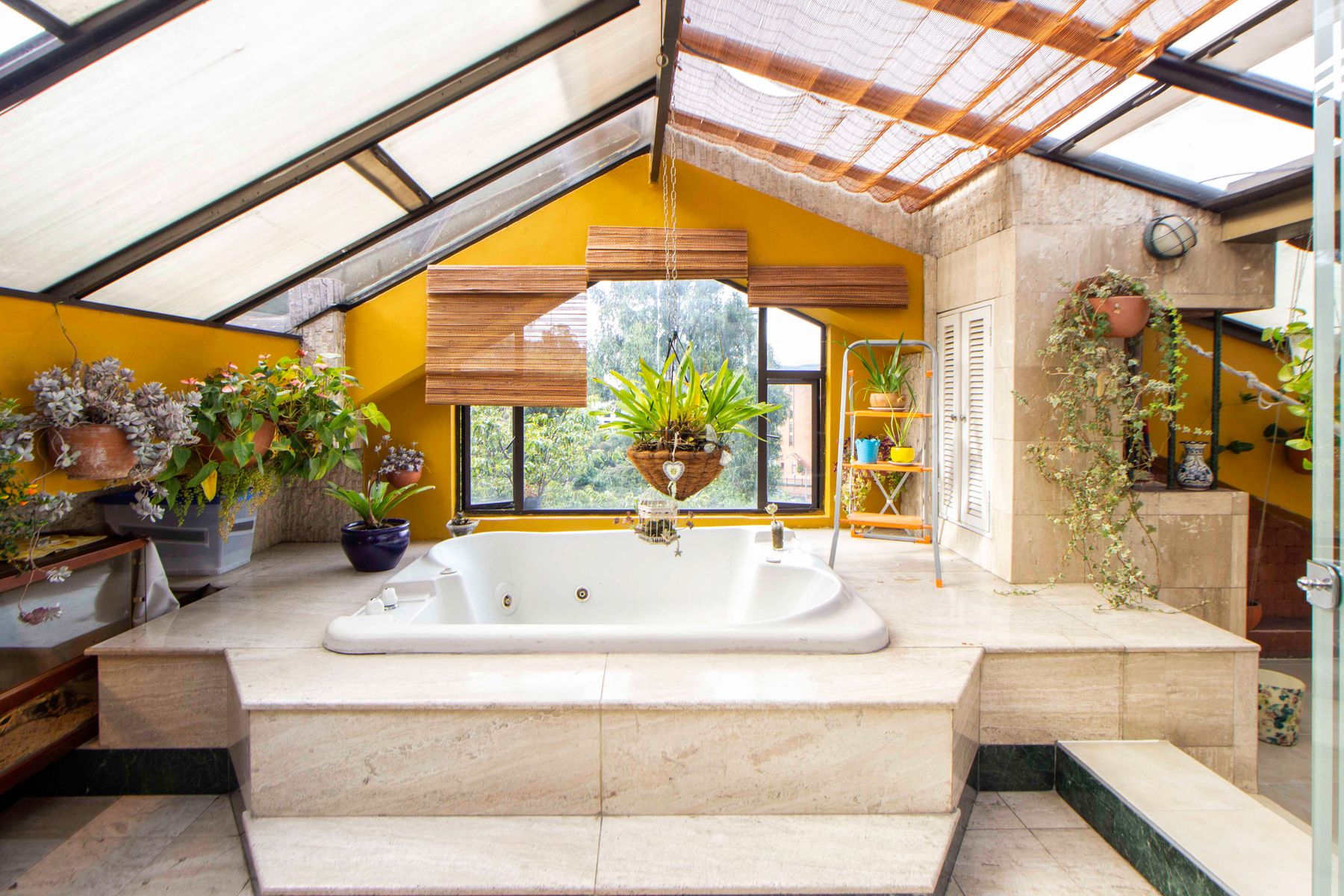
Plants can echo green surfaces and add living movement, but they should not be required to prove that a bathroom is green. Choose species for actual light, humidity and maintenance conditions, group them where care is realistic and let the architectural color remain complete without them.
Layer Lighting for Green, Faces and Night Use
Green needs more than one ceiling source. Provide even face light at the mirror, safe shower illumination, controlled ambient light and low-level nighttime guidance. Warm light may pull olive forward, while cooler light can sharpen blue-green, so test both with the actual material board. The [Bathroom Lighting Ideas](/ideas/bathroom-lighting-ideas/) guide offers a task-by-task framework.
Make a Small Green Bathroom Legible
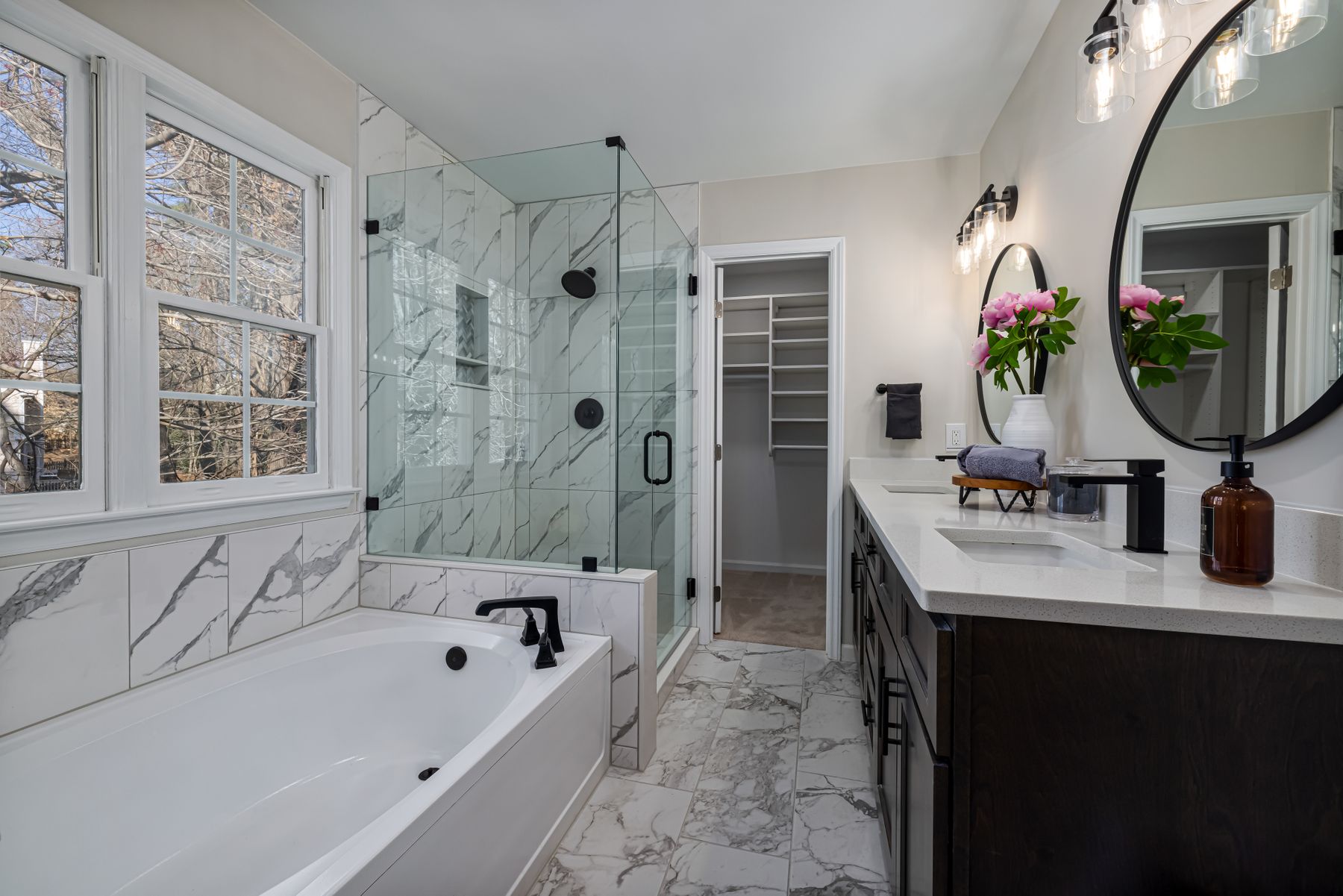
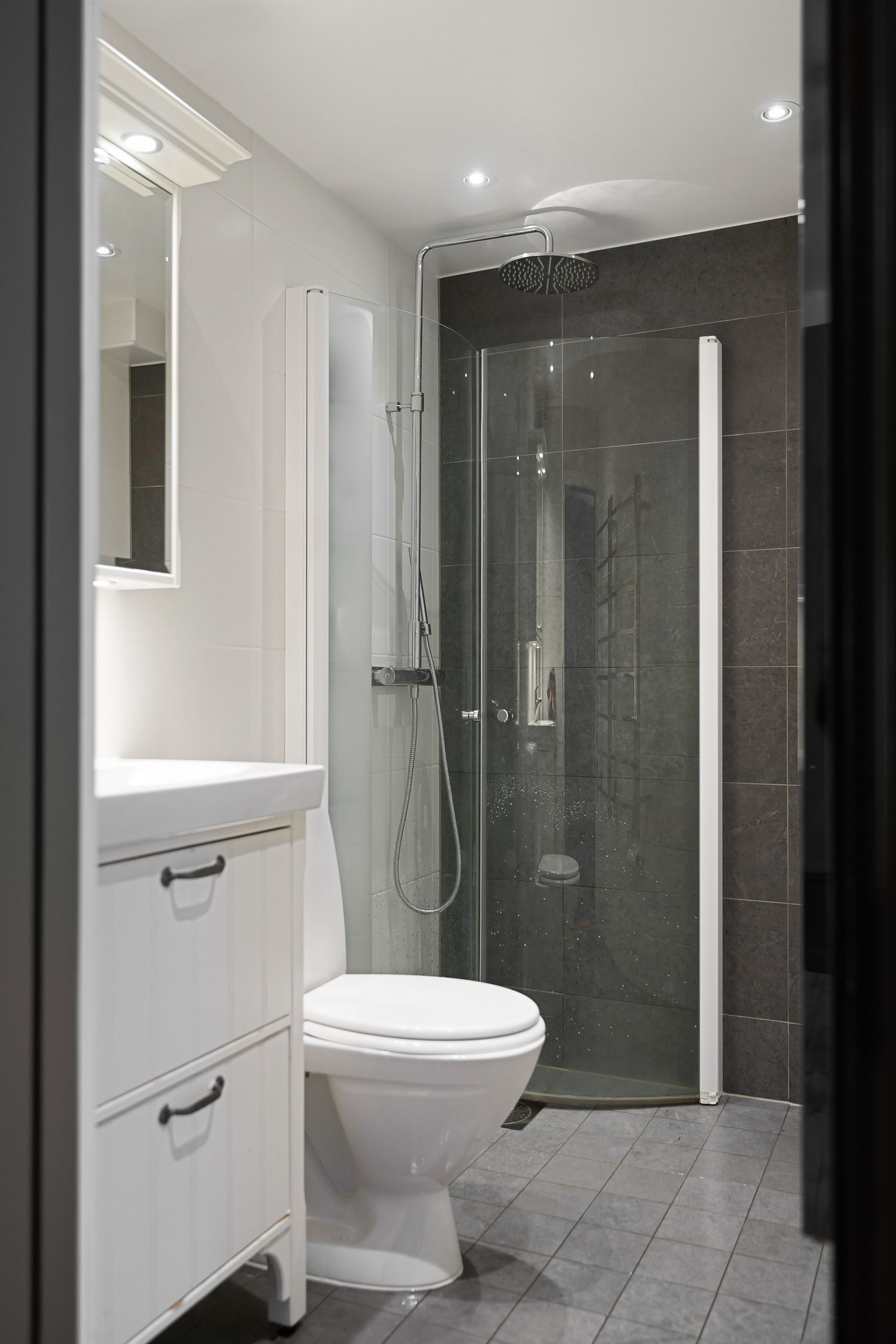
A compact bathroom can hold sage or forest green, but color does not solve an oversized vanity, blocked door or crowded fixture projections. Keep the route clear, choose one principal green plane and preserve contrast at controls and floor transitions. Pale green can maintain reflectance; deep green can create an intentional jewel-box effect. [Small Bathroom Ideas](/ideas/small-bathroom-ideas/) covers the layout tests beneath the palette.
Know When Forest Green Becomes Nearly Black
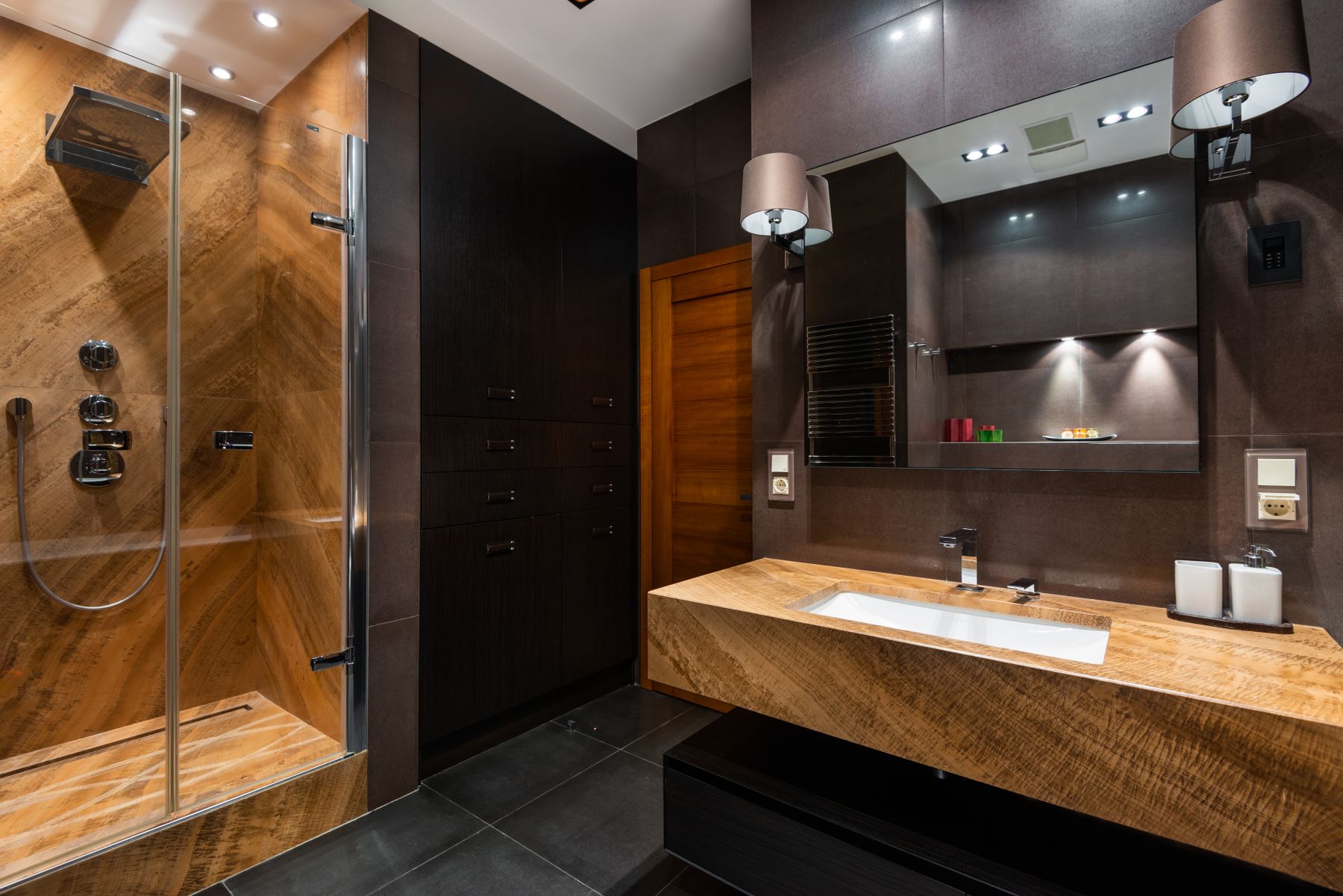
Forest green can cross a threshold where the eye reads it primarily as a dark value. In a windowless room, design it with the same attention to edge visibility, mirror light and floor contrast that a black bathroom requires. Preserve enough light and reflective variation that the green identity remains visible where you want it.
Keep Laundry From Breaking the Green Composition
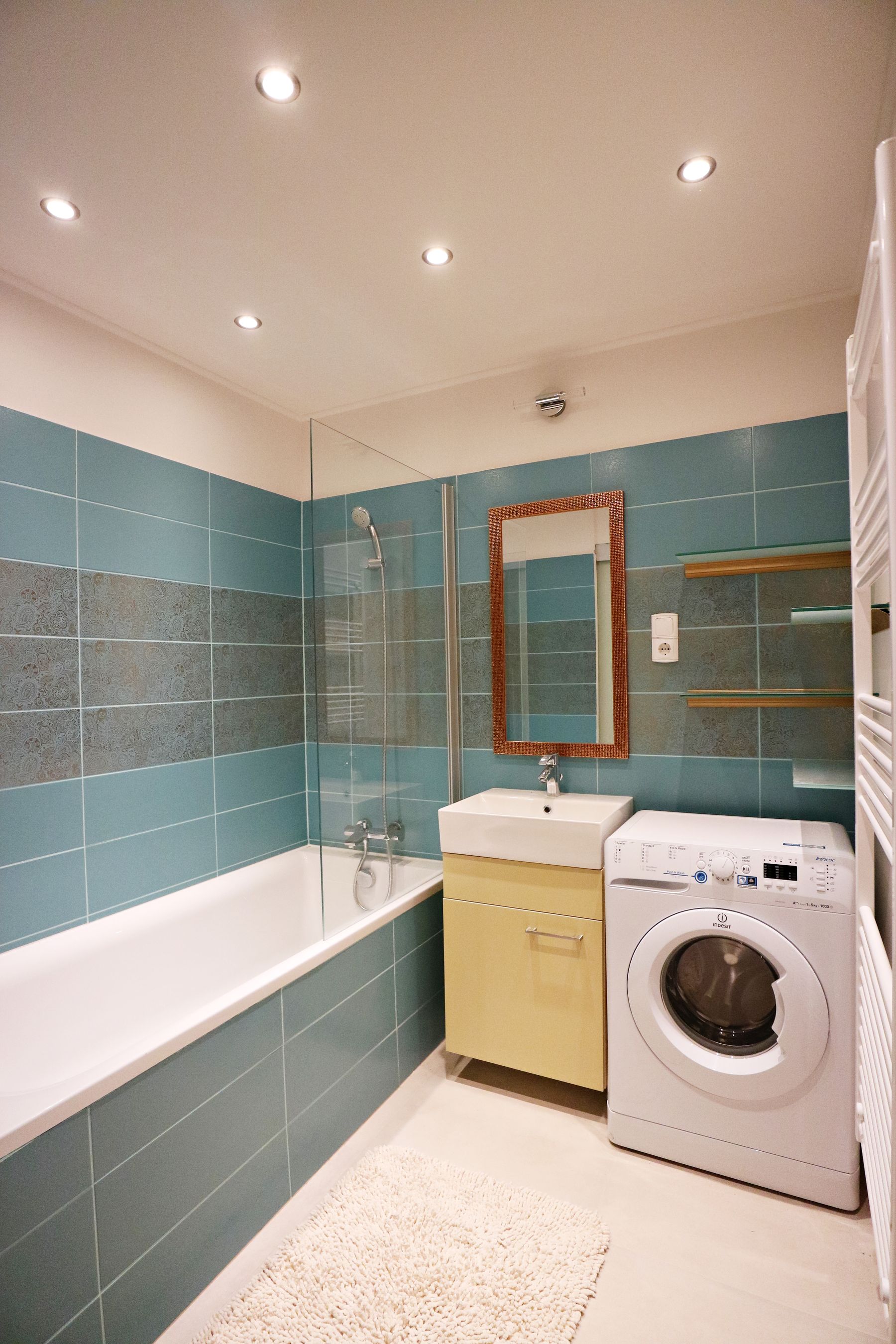
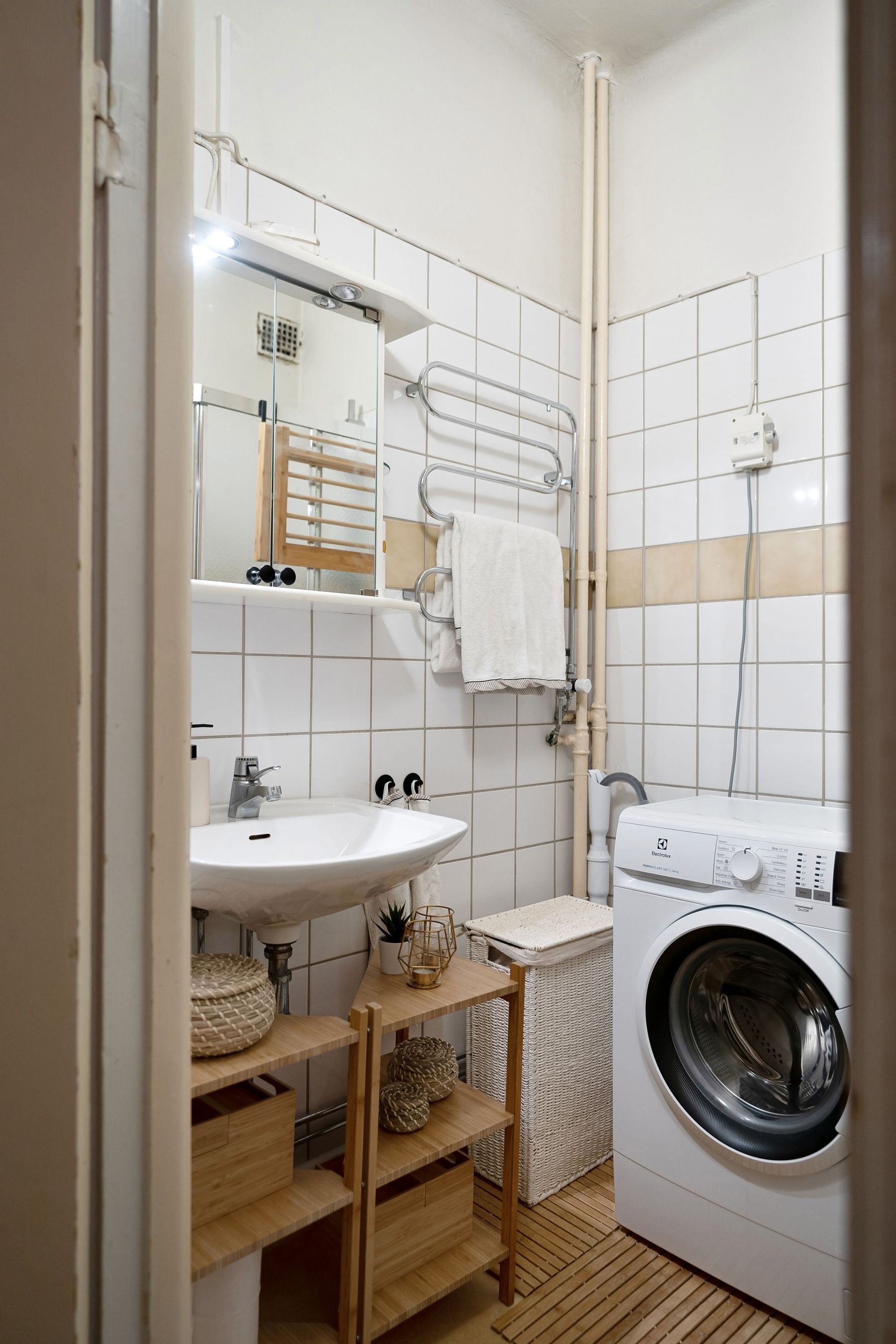
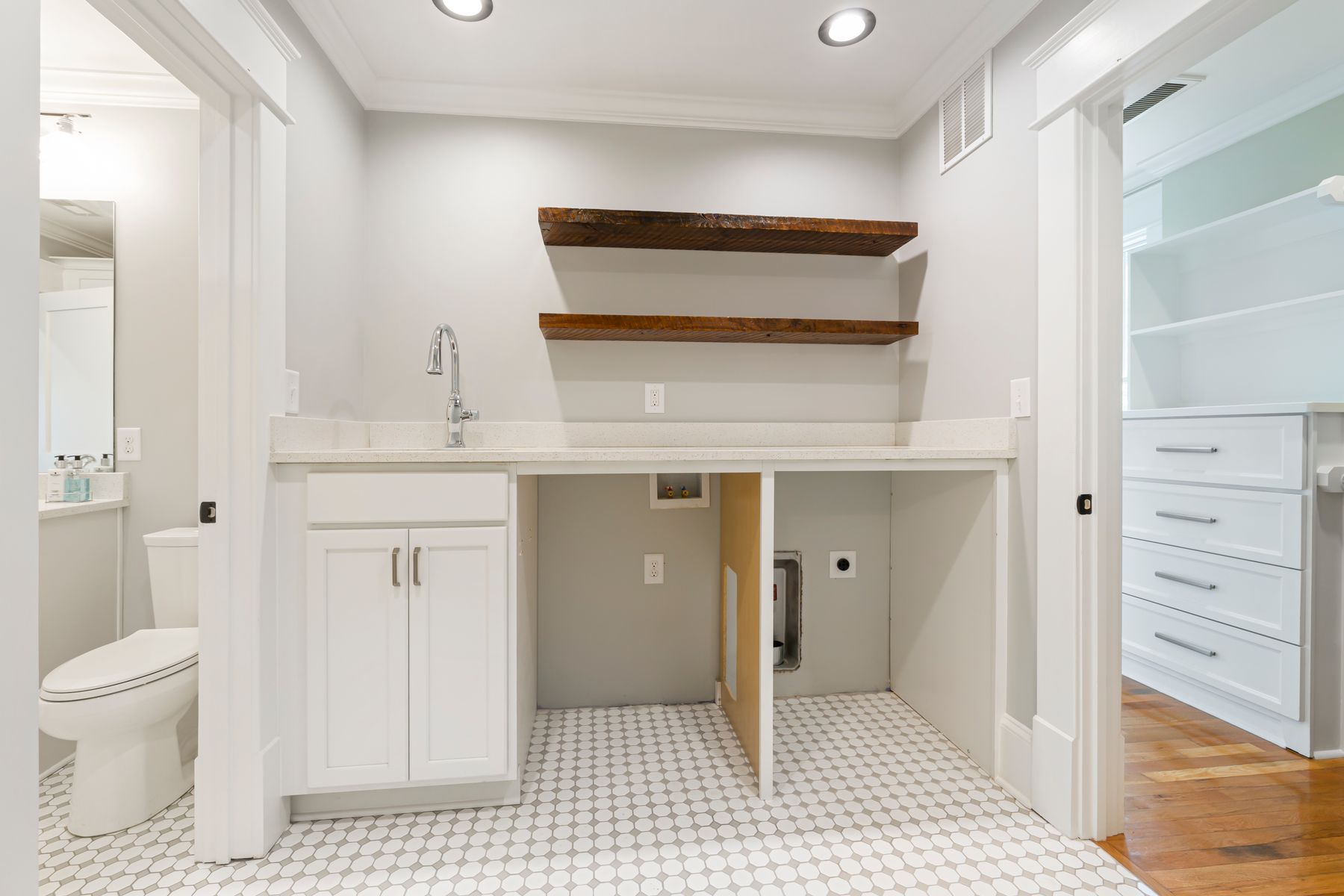
When a washer shares the bathroom, give detergent, hampers and folded linens defined storage before refining the green surfaces. A machine can sit within pale cabinetry or under a counter so the room still reads as a bathroom rather than an appliance alcove. Preserve service access, ventilation and clear routes. Green should organize the envelope, not disguise unresolved utility requirements.
Give the Green Backdrop Visual Breathing Room
Bright packaging and cleaning bottles can dominate a calm green wall. Give daily items shallow storage near the basin and shower, keep backups elsewhere and combine open shelving with closed cabinetry according to the routine. Do not hide everything if that slows daily use. [Bathroom Storage Ideas](/ideas/bathroom-storage-ideas/) provides useful category, reach and capacity tests.
Keep Controls Readable Against Deep Green
Tonal green tile can hide a shower step, control or support rail when values are too similar. Use ceramic, metal, grout, directed light or a controlled color shift to distinguish important elements. Grab bars and seats require proper placement and anchoring for the user. [Aging-in-Place Bathroom Ideas](/ideas/aging-in-place-bathroom-ideas/) offers a fuller movement and reach framework.
Ground Green With a Floor Built for Water
A green floor can ground pale walls or connect a shower to the wider room, but grip, drainage, joint density and cleaning decide whether it succeeds. Gloss that looks rich on a wall may be unsuitable under wet feet; heavy texture can hold residue. Test the exact product and assembly. [Bathroom Flooring Ideas](/ideas/bathroom-flooring-ideas/) compares performance before decoration.
Keep Daylight Honest Around Green
Green benefits from daylight, so solve privacy without automatically covering the window. Obscure glass, high glazing, shutters, blinds or exterior screening provide different balances of view, humidity resistance and maintenance. Check nighttime visibility from outside because bright interior light can silhouette a user. Keep tall storage away from the strongest daylight where the plan allows.
Design Humidity Control Into the Green Scheme
Condensation, mildew and failing sealant disrupt a saturated color field quickly. Choose paint, grout and sealant suited to their exposure, but do not expect a coating to replace extraction, make-up air and heat. Avoid inaccessible ledges that stay damp. Fan sizing, ducting and electrical work should respond to the actual room and local requirements, not to a generic palette.
See How Green Materials Age Between Cleans
Dark glossy green may show mineral spots sharply, while pale or varied glaze can hide soap film until sheen changes. Let local water dry on tile, grout, glass and metal samples, then clean them with approved products. Confirm that matching sealant is available and replaceable. The most attractive green surface is a poor choice when joints or relief cannot be reached in the real room.
Introduce Green at the Highest-Impact Surface
A technically sound neutral bathroom may need only a painted vanity, green upper wall, renewed grout, improved textiles and better mirror light. Keep the intervention large enough to feel intentional instead of scattering many small green objects. Separate cosmetic work from waterproofing, plumbing and electrical problems. [Bathroom Remodel Ideas](/ideas/bathroom-remodel-ideas/) helps define scope before replacing useful materials.
Check Whether the Green Hierarchy Still Reads
Assemble the lead green, ceramic, grout, stone, timber, metal and textile on one board. View it in daylight, overcast conditions and every lighting scene, then wet and clean the relevant pieces. Compare the result with a broader [Neutral Bathroom Ideas](/ideas/neutral-bathroom-ideas/) palette and a more plant-led tropical scheme. Choose green when it improves atmosphere and material relationships—not simply because bathrooms are expected to feel natural.