Read the Daylight Before Choosing the White
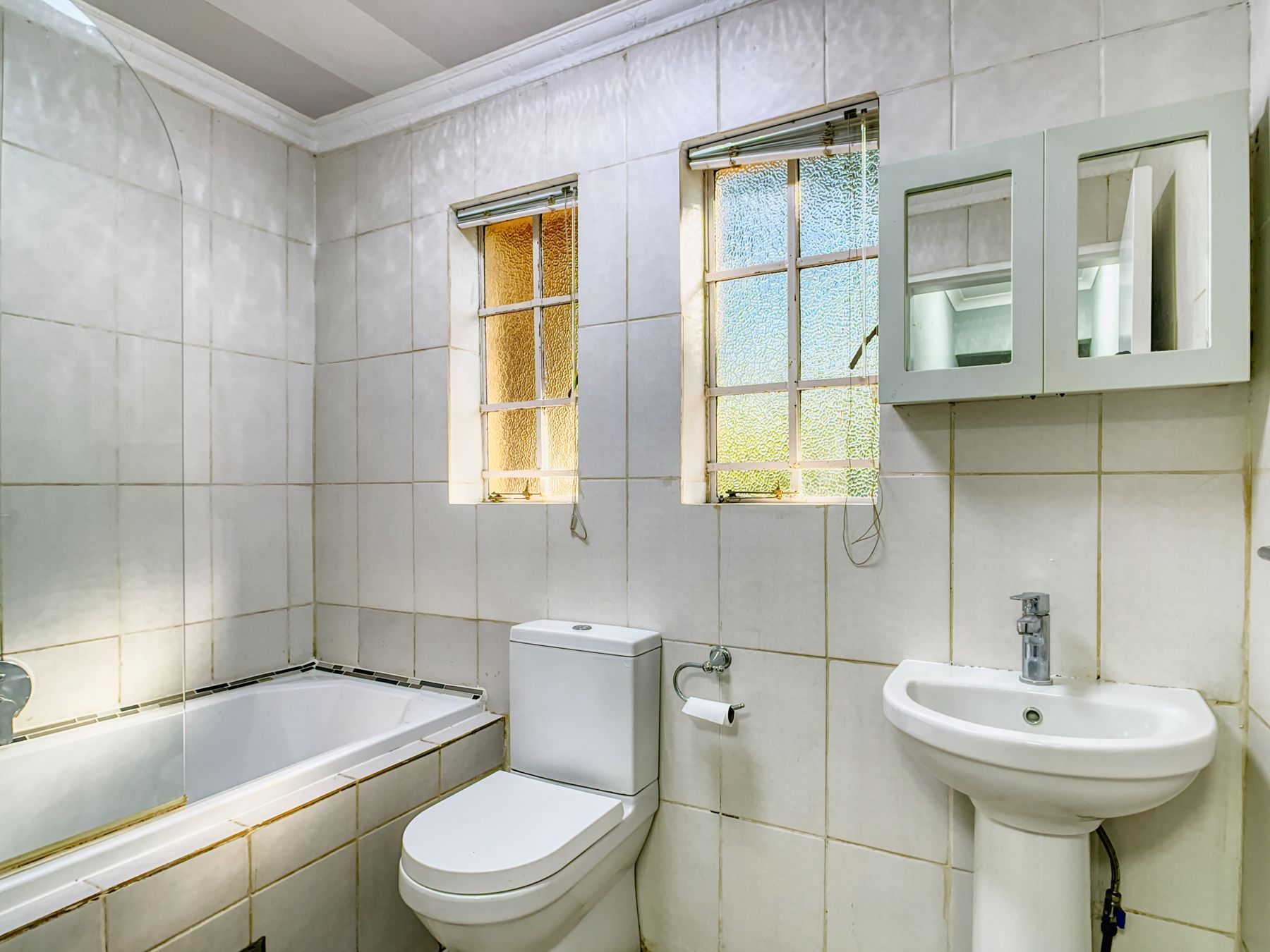
Cool northern light, warm evening sun and a shaded window change the same white substantially. Record how the room looks on an overcast morning and after sunset, then compare large wall, tile and cabinet samples beside the existing ceramic. A bright showroom chip cannot predict the room. Protect the useful window before assuming another pale finish will solve a lighting problem.
Choose Warm White, Cool White or Soft Ivory
Warm white and ivory sit naturally with oak, brass and cream stone; cooler white sharpens chrome, blue-grey and crisp daylight. Neither is universally cleaner or more modern. Establish one lead undertone, then describe every supporting white as warmer, cooler, brighter or softer than it. Remove any sample that makes the sanitaryware look unintentionally aged or the tile unexpectedly blue.
Layer Whites Instead of Matching Everything
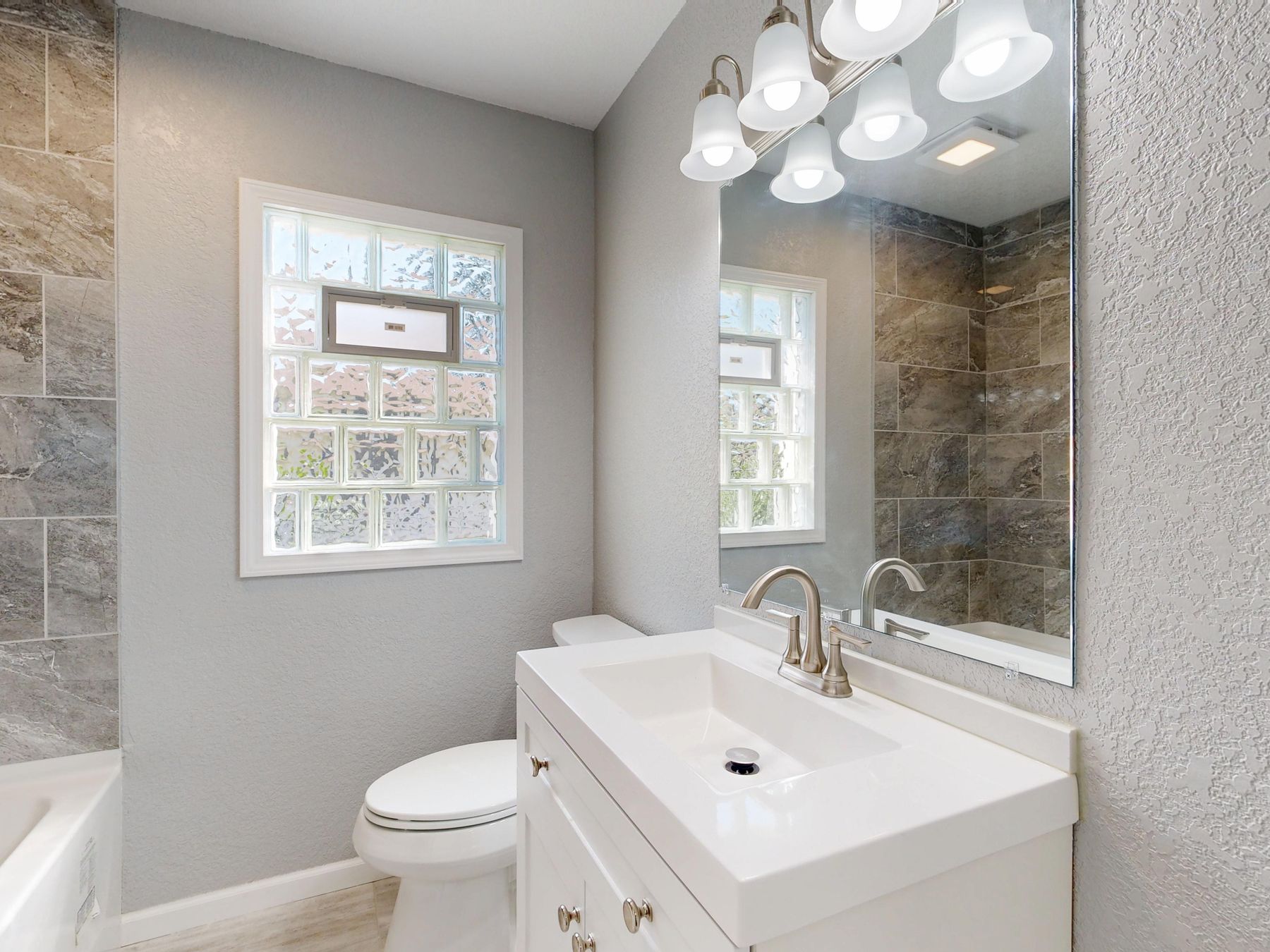
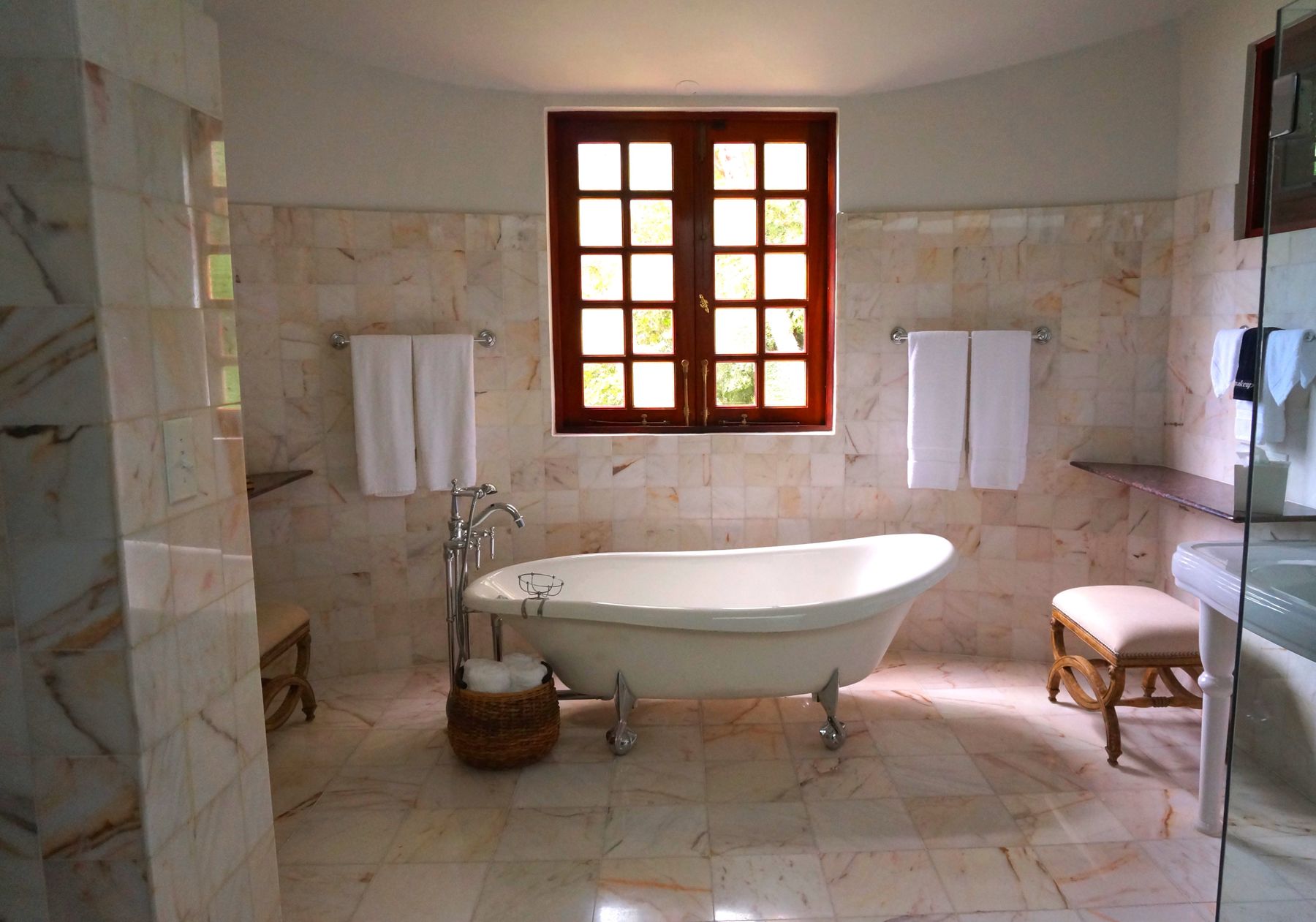
A convincing white room can include chalky paint, glossy ceramic, translucent glass and veined stone. The relationship matters more than identical color codes. Use value and sheen changes to distinguish planes, then repeat one undertone to hold them together. Exact matching across unrelated materials is rarely possible and may leave the result flatter than a deliberate family of near-whites.
Use Tile Relief to Draw the Surface
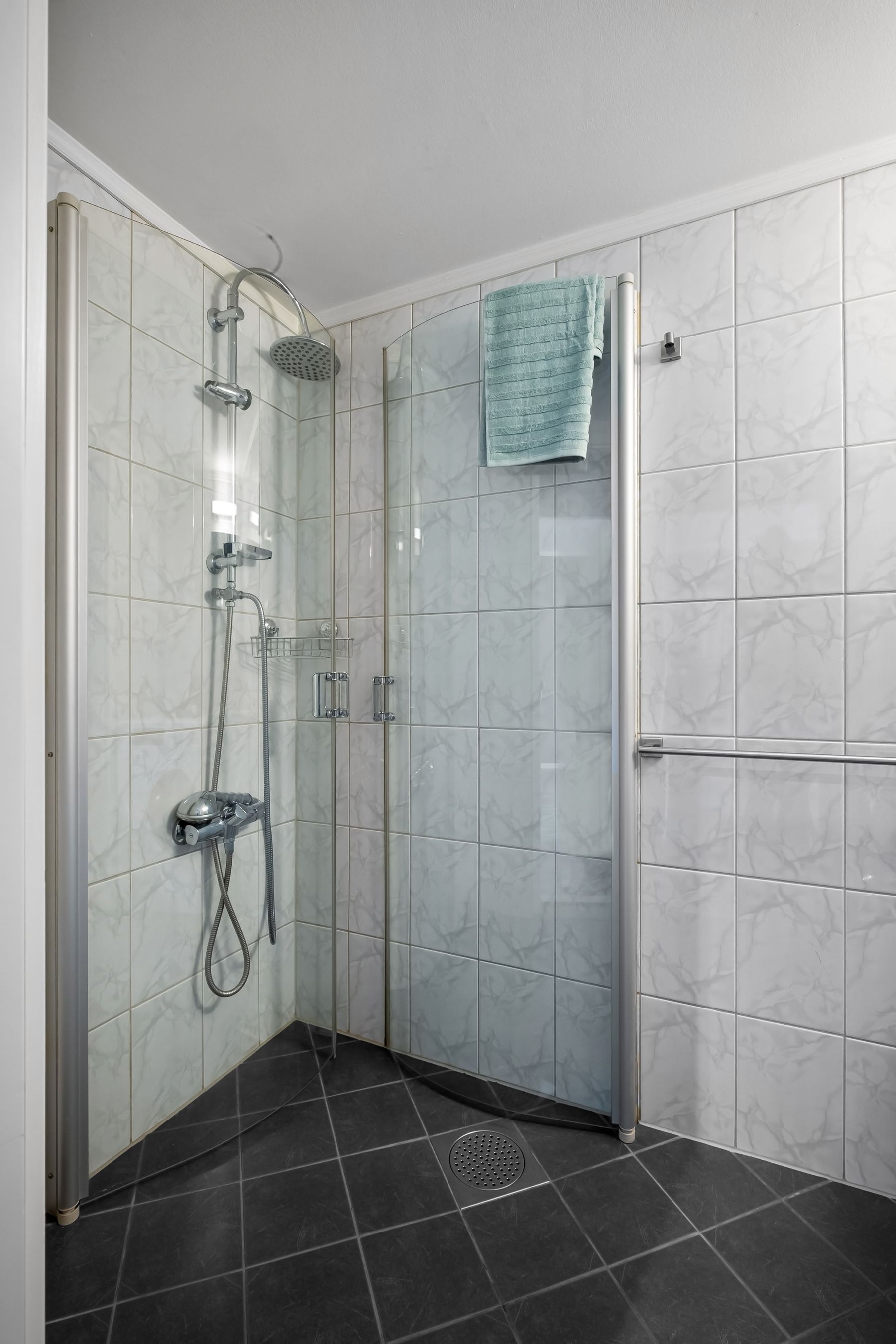
Handmade edges, fluting, zellige-like variation or a simple beveled tile can cast enough shadow to give white walls character. Texture should still suit the cleaning demands of its location; deep relief behind a basin or inside a shower collects more residue. Use one tactile surface at useful scale, then let calmer tile complete the wet zone. The [Bathroom Tile Ideas](/ideas/bathroom-tile-ideas/) guide helps compare formats and layouts.
Let Grout Set the Rhythm
White-on-white grout creates continuity; a warm, grey or slightly darker joint reveals the grid and may age more gracefully. Strong black grout turns tile into a graphic pattern and begins moving toward [Black and White Bathroom Ideas](/ideas/black-and-white-bathroom-ideas/). Test the installed-look board with the exact joint width, sealant and lighting, then judge stain visibility as seriously as color.

Use Marble Veining as the Main Pattern
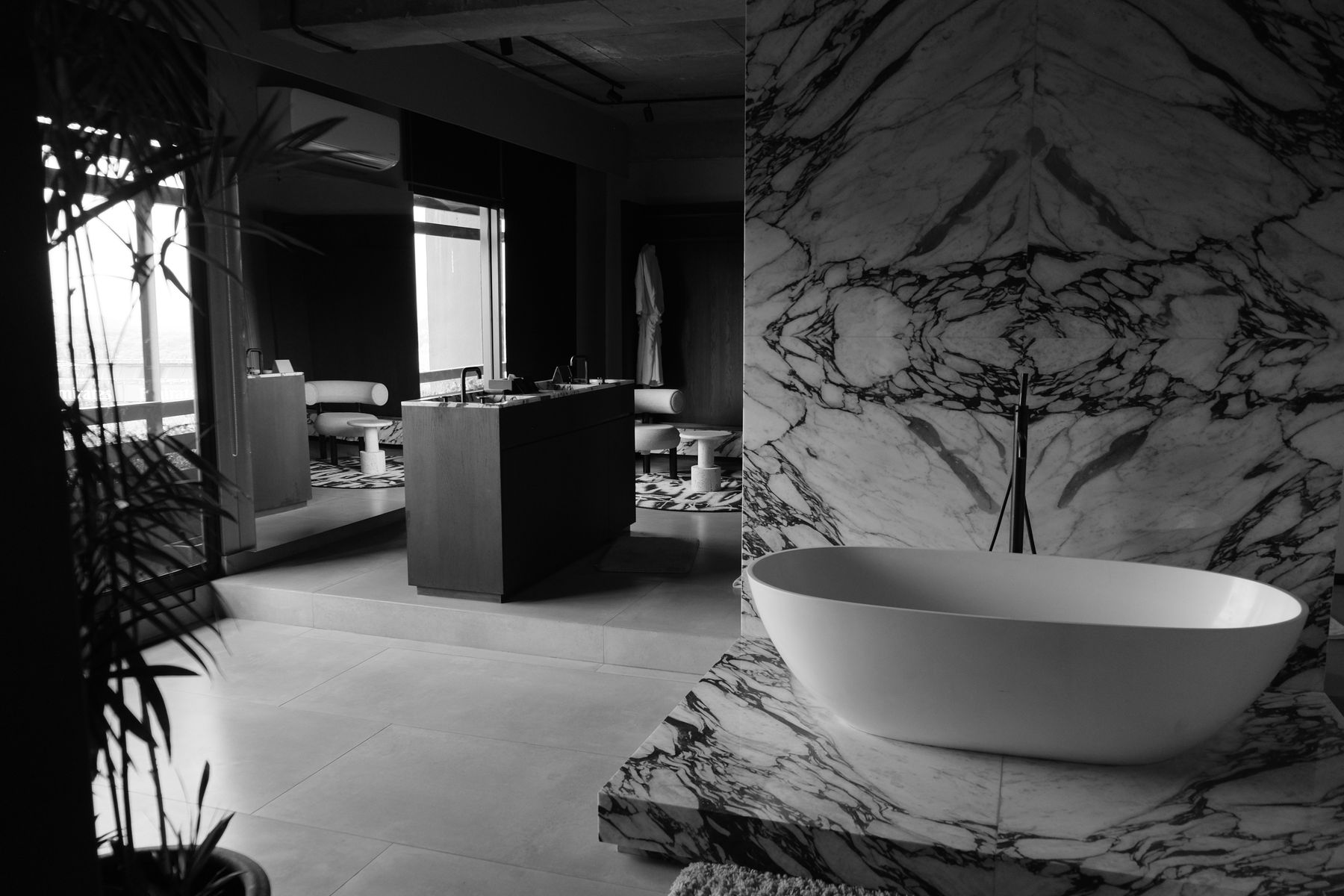
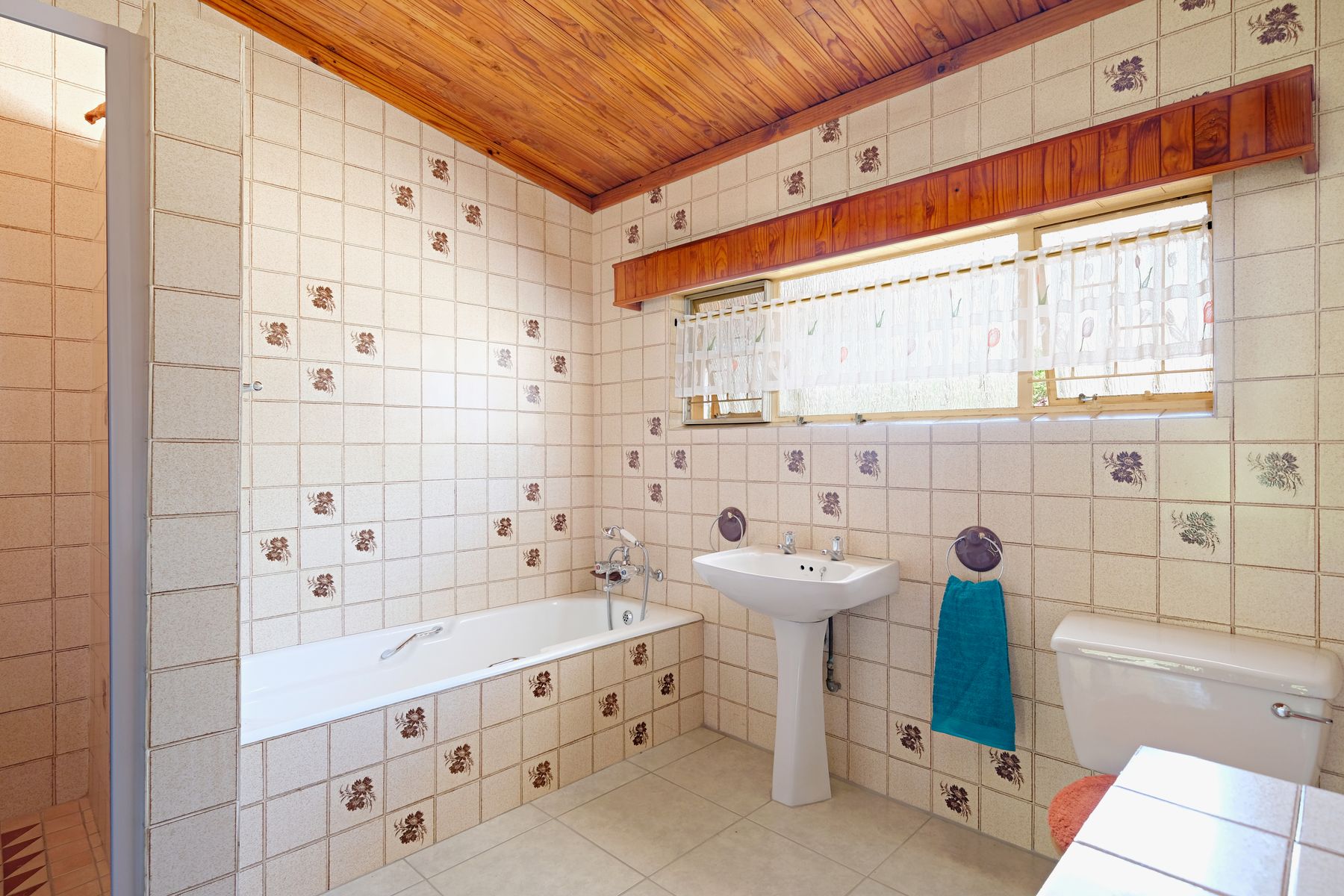
White marble and marble-look porcelain introduce grey, beige or gold movement without abandoning the pale palette. Decide whether the stone belongs on one focal plane, the vanity or the complete wet envelope. Review actual slabs, batch variation or porcelain repeats before cutting around mirrors and niches. If the veining is expressive, keep neighboring tile and textiles quiet.
Use Pale Stone for Softer White
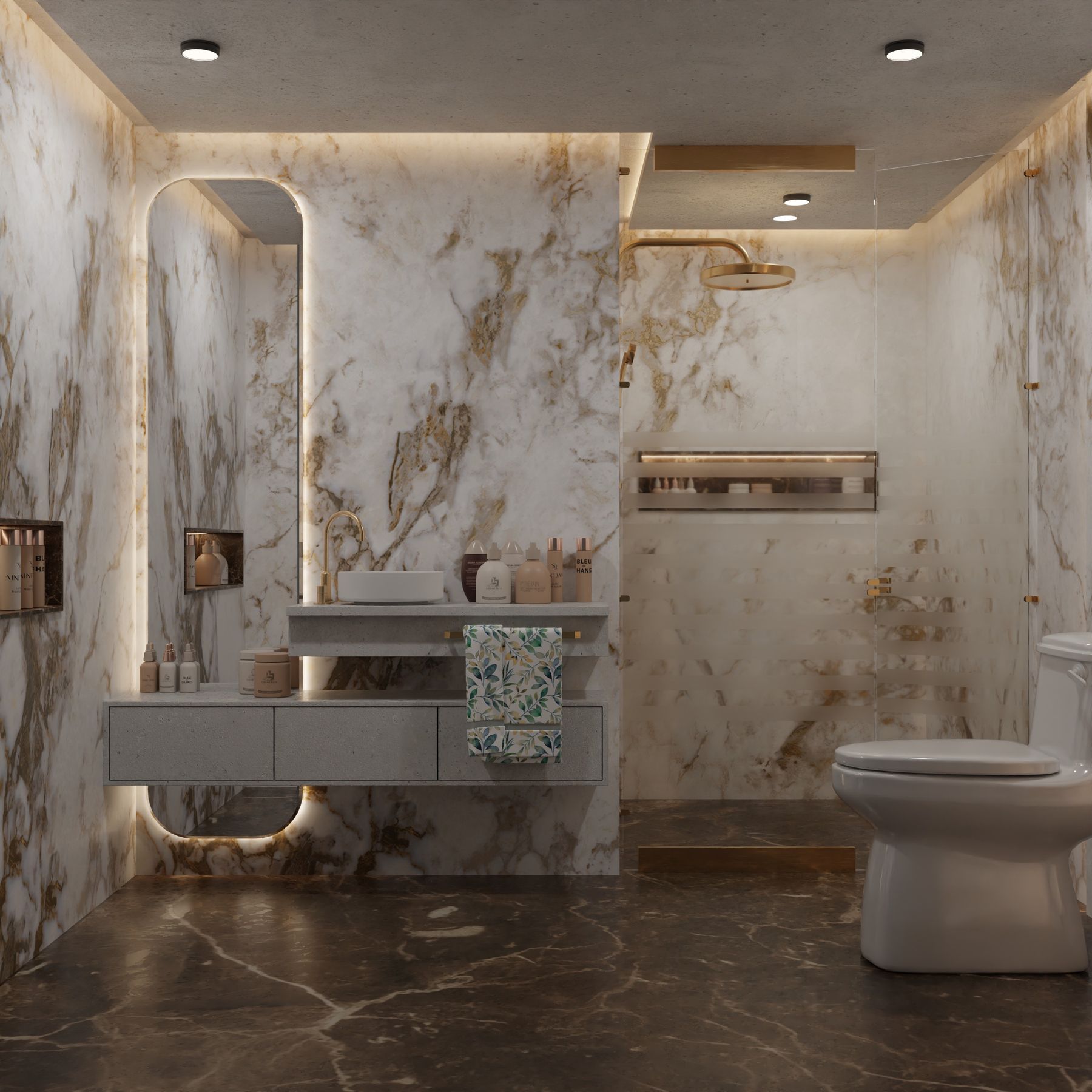
Limestone, travertine and other pale stones shift white toward cream, sand and mineral variation. They can make a bright room feel calmer than high-gloss ceramic, but porosity, sealing and suitability vary. Use the stone where its texture can be maintained and keep heavy veining or fossils visible rather than treating natural variation as a defect.
Keep the Shower Visually Open
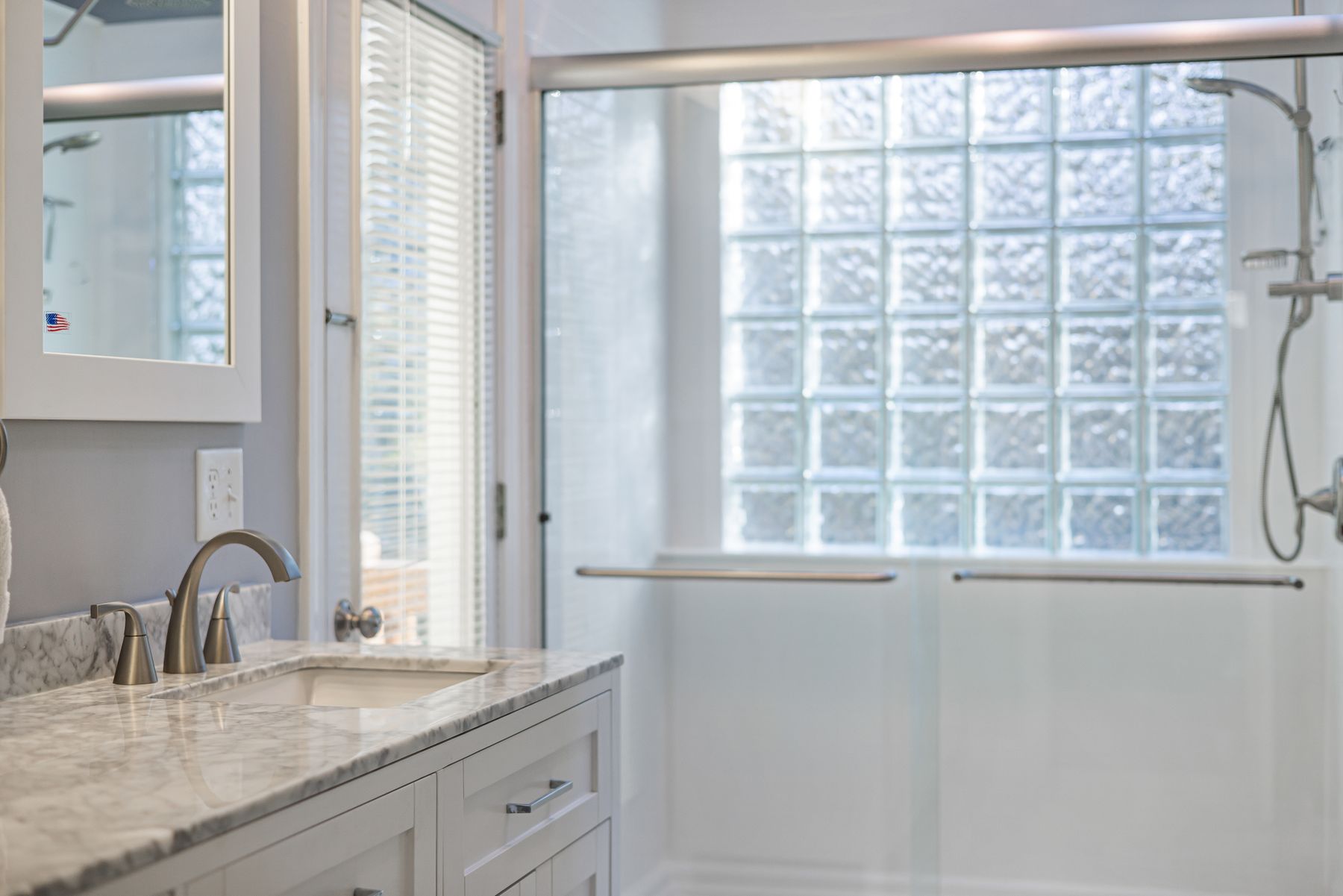
Clear glass can preserve the continuity of a white tile field, but the enclosure still needs safe support, splash control and cleaning access. Frameless is not automatically better; a discreet frame may suit the span and door more reliably. Keep the shower entry, controls and niche visible against pale surfaces. Continue to [Walk-In Shower Ideas](/ideas/walk-in-shower-ideas/) for threshold and drainage planning.
Choose the Bathtub From the Floor Plan
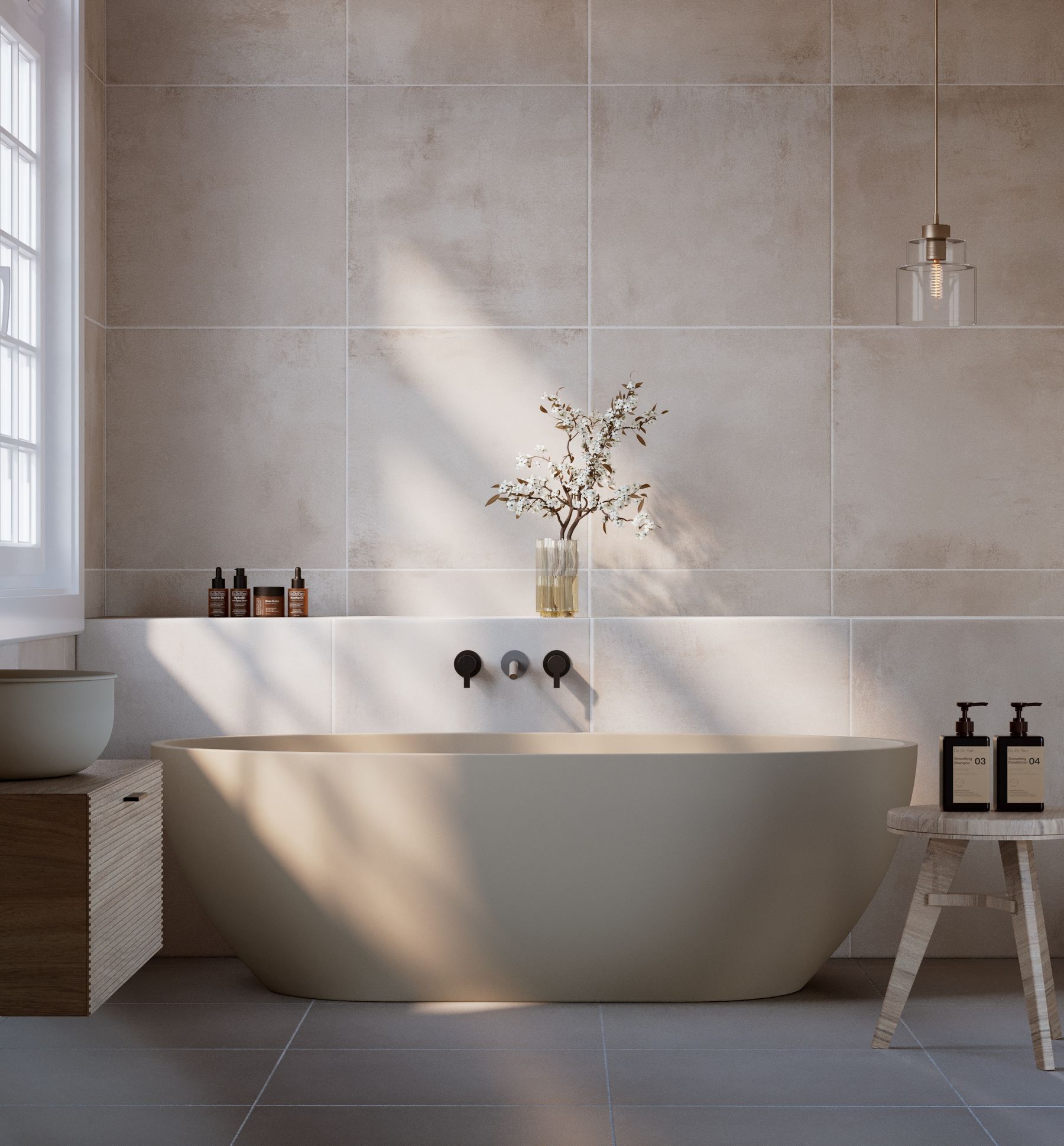
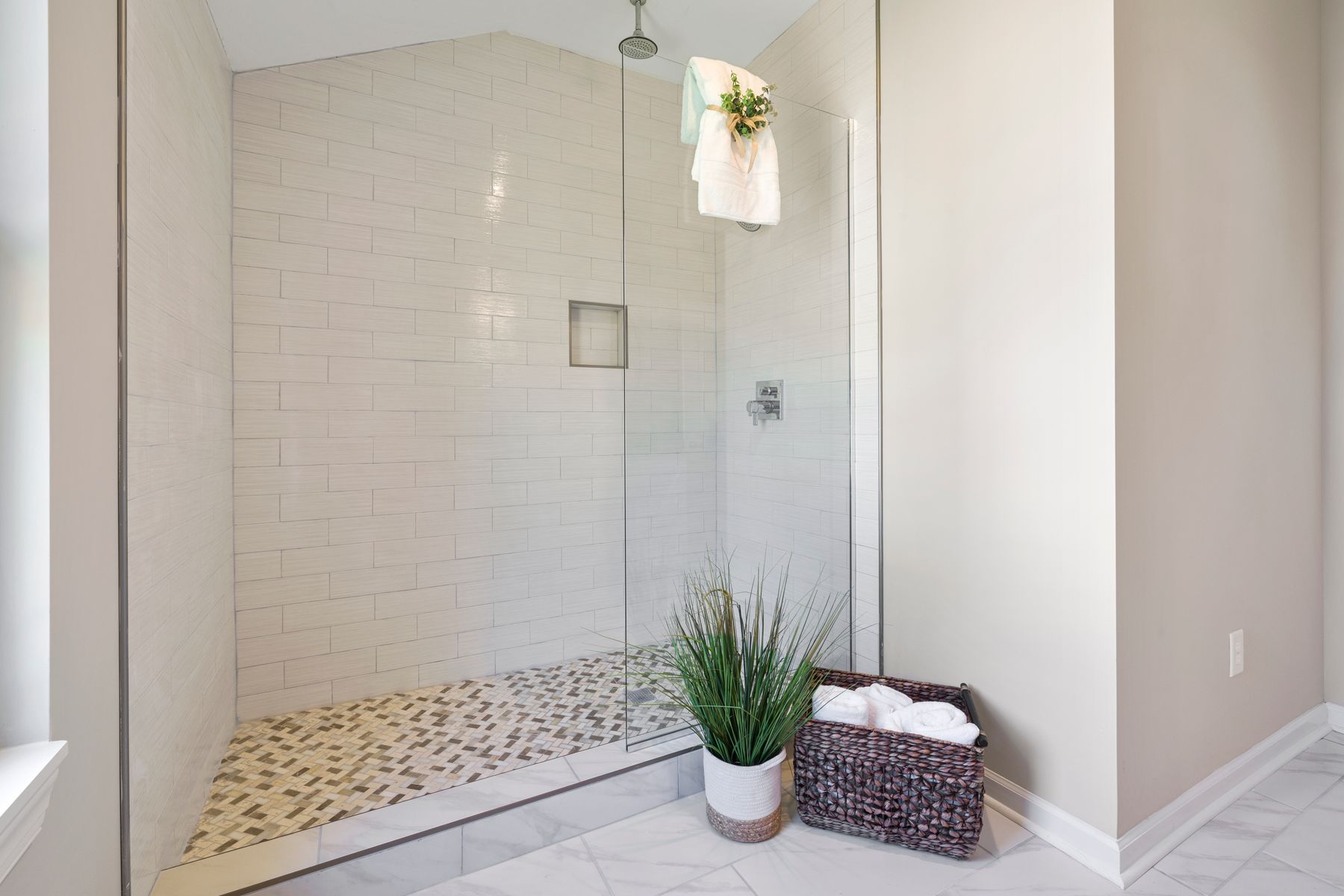
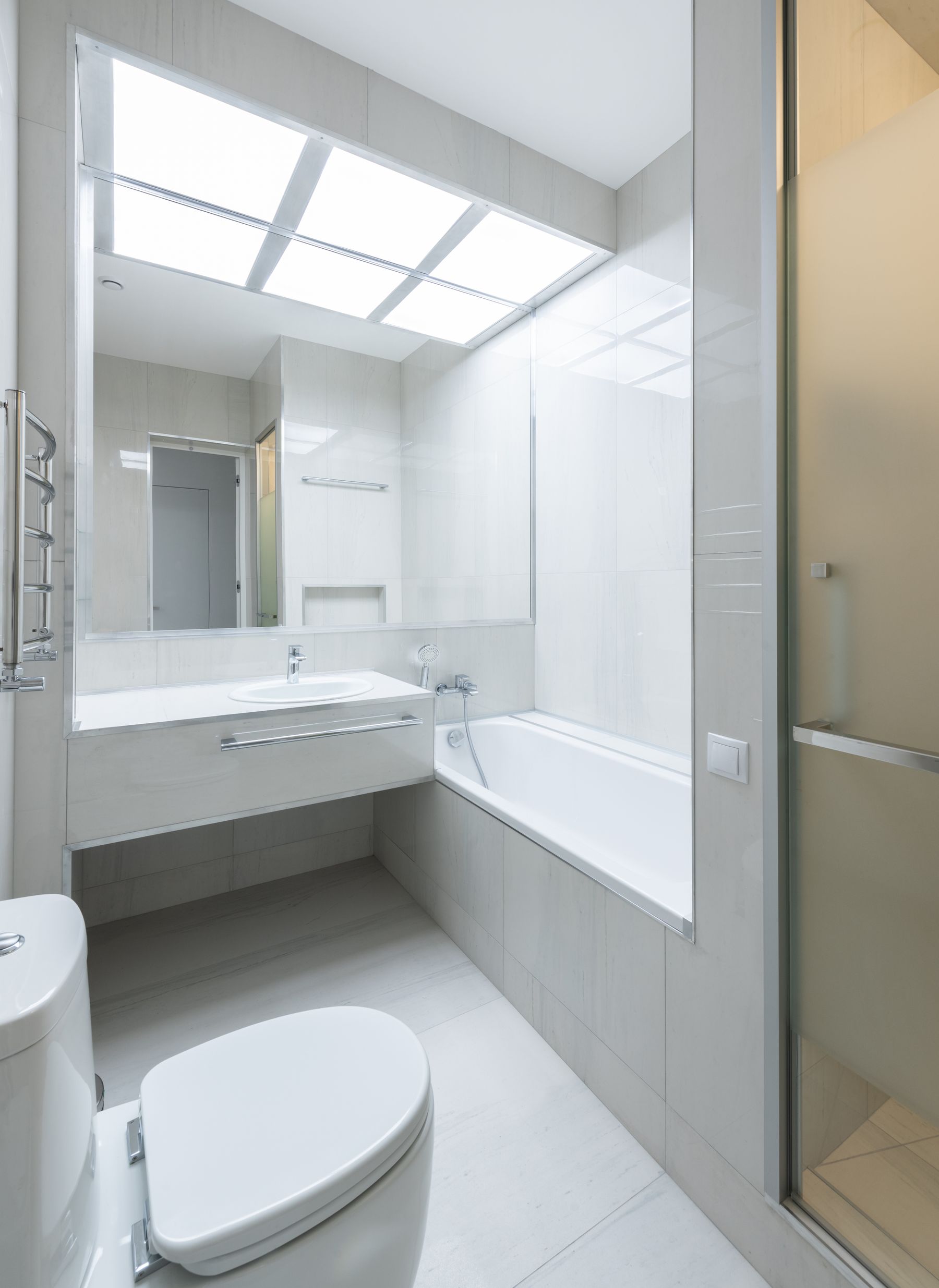
A white bathtub can merge quietly with the room, making its size and clearances more noticeable than its color. A freestanding form needs cleaning access and safe entry; an integrated bath may use space more efficiently and provide useful ledges. Compare both routes in [Bathtub Ideas](/ideas/bathtub-ideas/) and let household bathing habits decide.
Make the Vanity Architectural
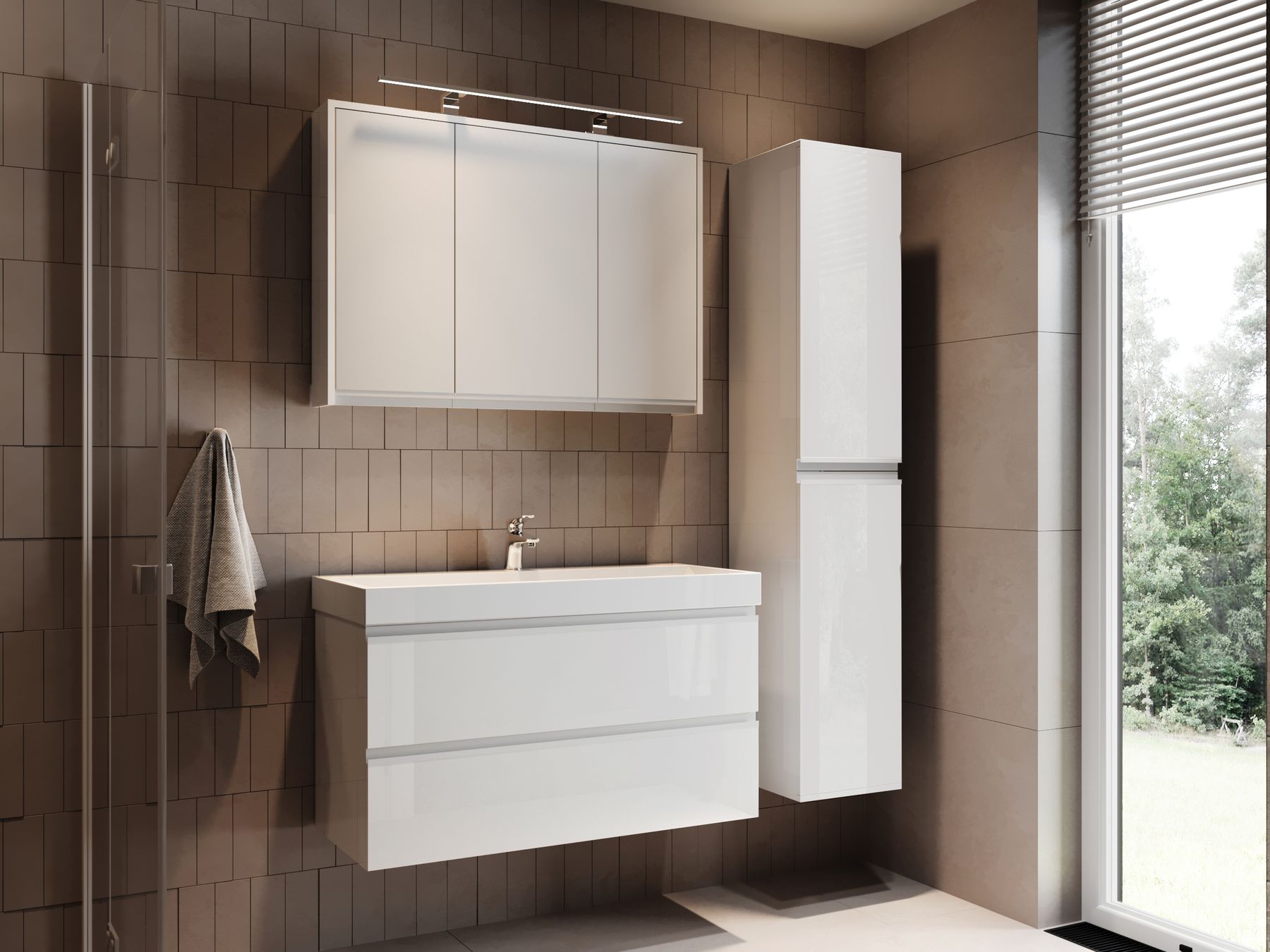
When color is restrained, cabinet proportion, drawer rhythm, shadow gaps and the relationship to the mirror become more important. A floating vanity exposes floor and feels lighter; a floor-standing unit may provide more storage and visual weight. Use [Bathroom Vanity Ideas](/ideas/bathroom-vanity-ideas/) to resolve reach, counter space and plumbing before refining the white finish.
Use a Double Vanity Without Doubling Clutter
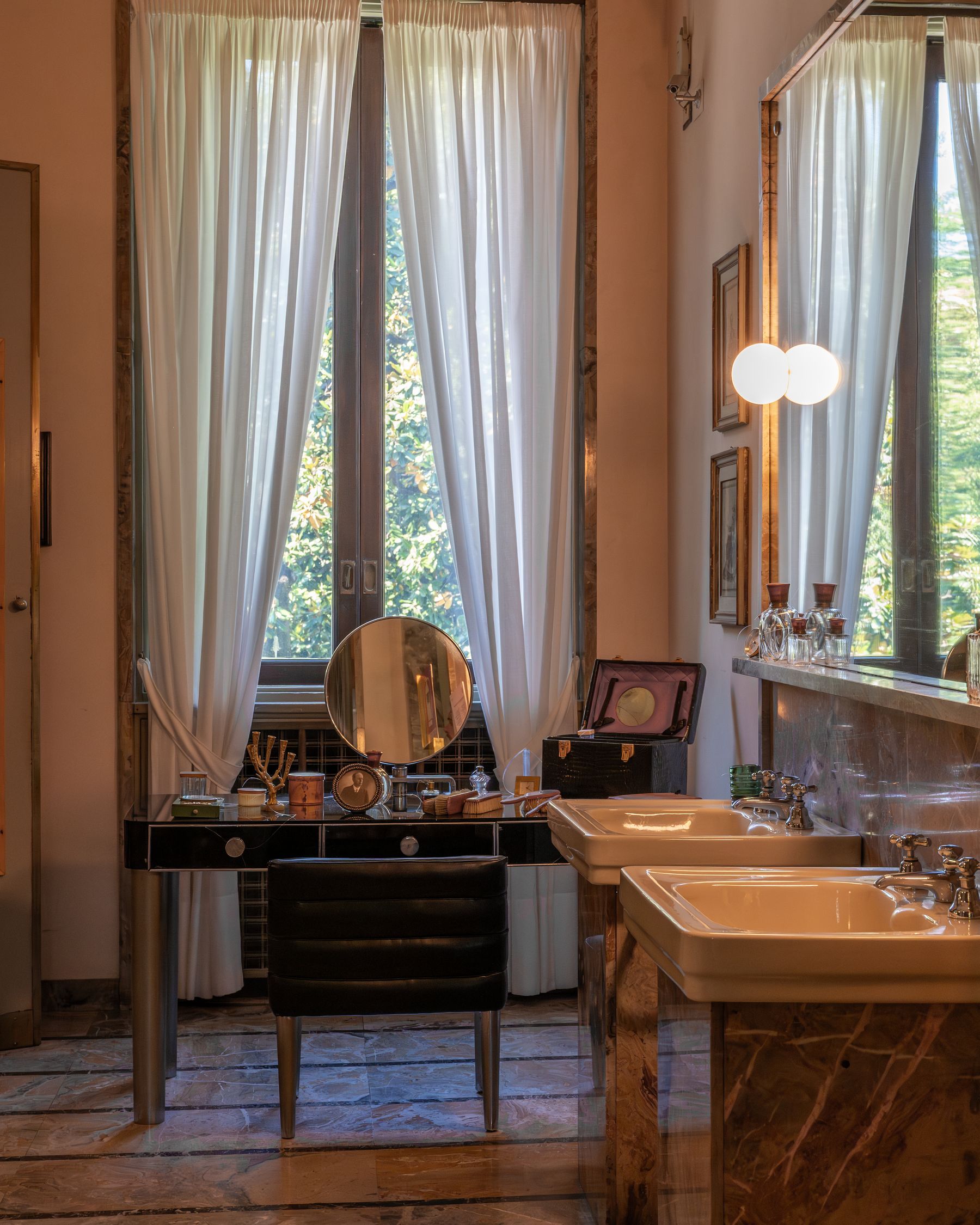
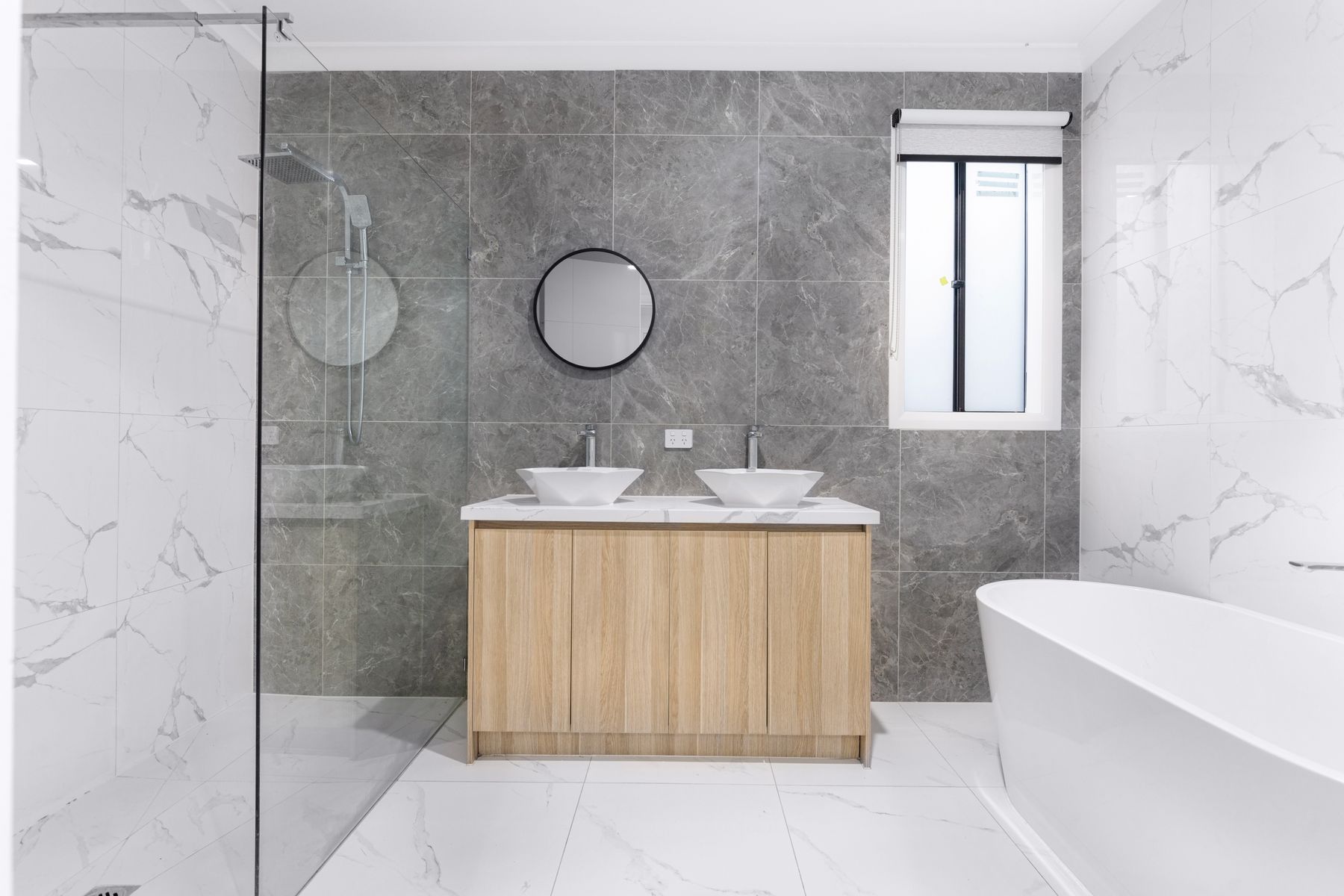
Two basins can support shared routines, but they also reduce continuous counter and add plumbing. A long white vanity works best when drawers, outlets, mirrors and lighting are coordinated for two real users rather than repeated symmetrically by default. Keep daily items contained so the broad pale surface remains an asset instead of an exposed storage shelf.
Warm White With Real Timber
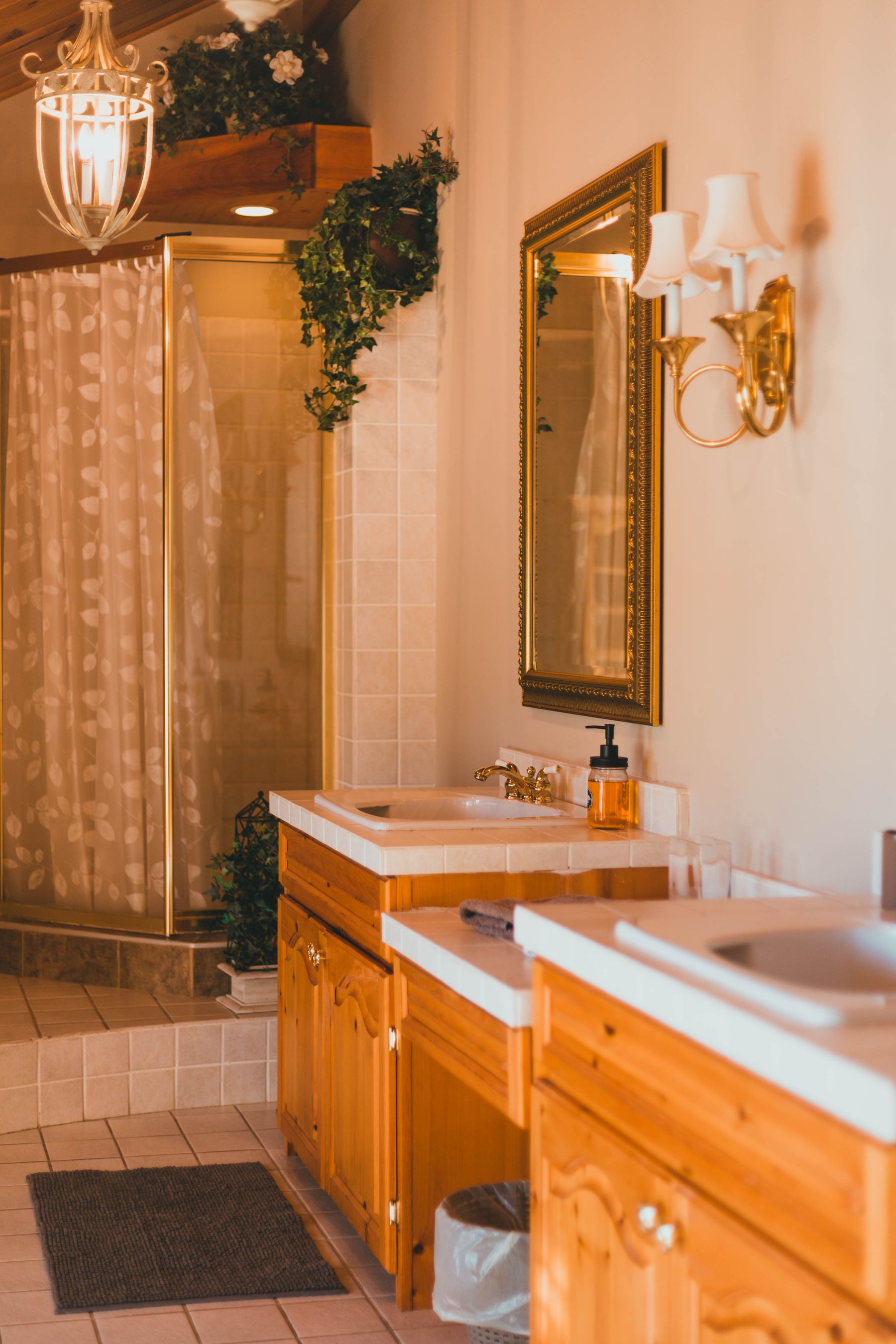
Oak, walnut or another warm wood gives white a middle value, visible grain and a tactile counterpoint. Use it at meaningful scale—a vanity, tall cabinet, ceiling or framed mirror—rather than scattering small wooden objects. Confirm the finish and edge detailing suit humidity. [Warm Wood Bathroom Ideas](/ideas/warm-wood-bathroom-ideas/) explores species and moisture-conscious applications further.
Add Brass as Controlled Warmth
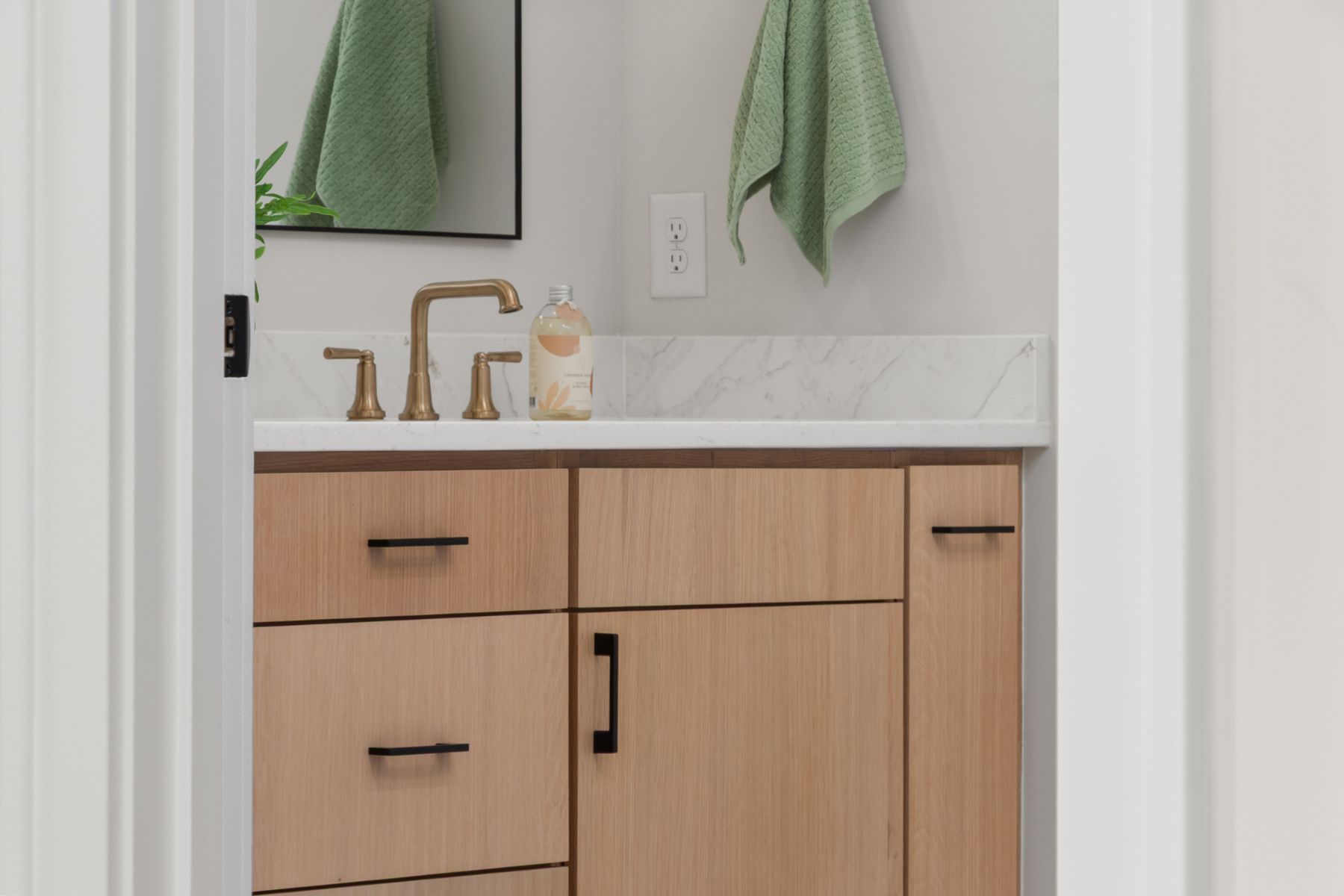
Brass can keep warm white and cream stone from feeling washed out, but it does not need to appear on every hinge and accessory. A faucet, mirror frame or pair of sconces may be enough. Decide whether the finish should remain stable or develop patina, and coordinate undertones. If geometry and ornament become dominant, [Art Deco Bathroom Ideas](/ideas/art-deco-bathroom-ideas/) may be the clearer style route.
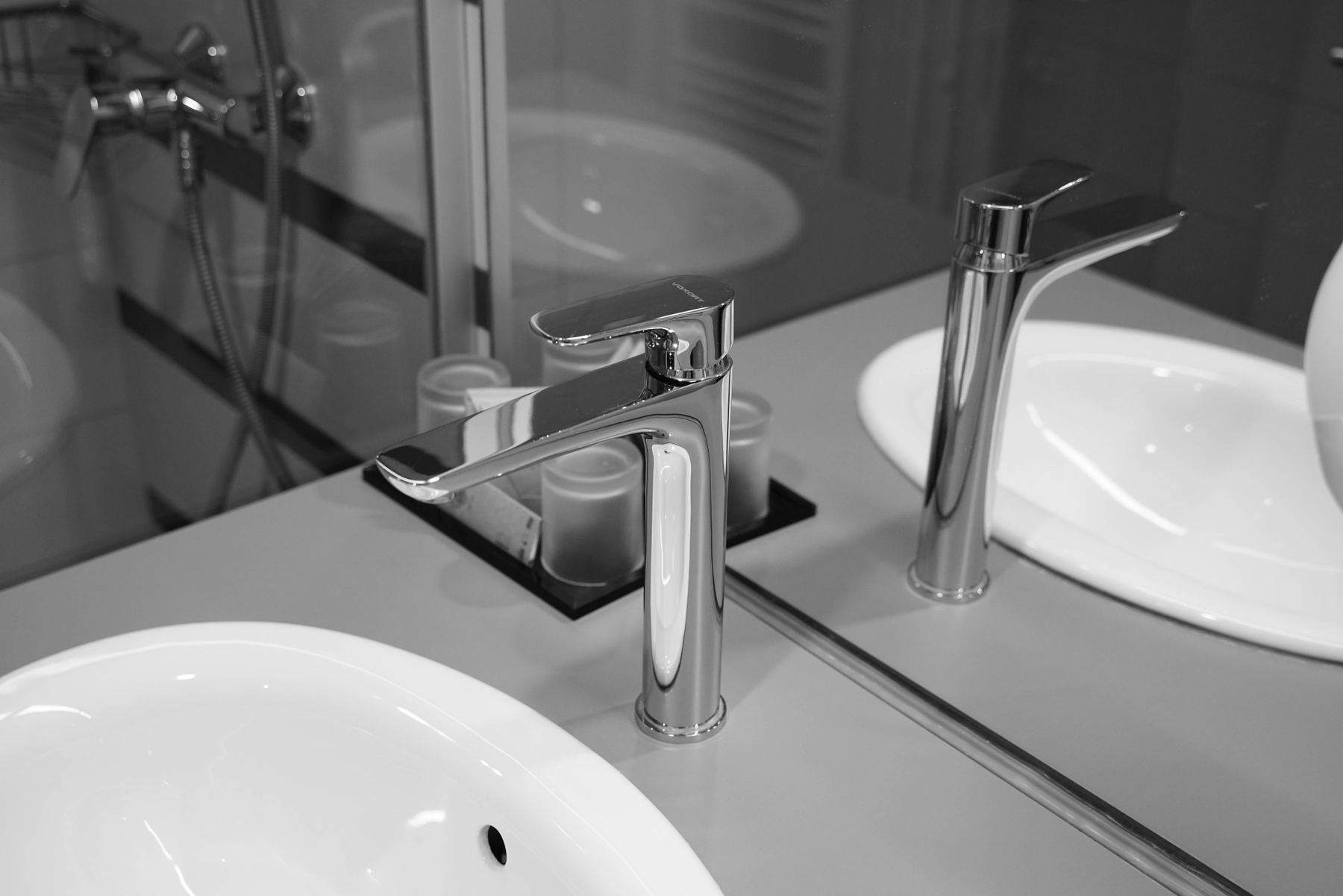
Use Chrome or Nickel for a Crisper Edge
Chrome reflects its surroundings and works with crisp or cool whites; brushed nickel offers a softer line with fewer sharp reflections. Both can clarify fittings without adding a new color family. Review fingerprints, water marks and replacement availability alongside appearance. A mixed-metal room can work, but repeated undertones or shapes should make the combination intentional.
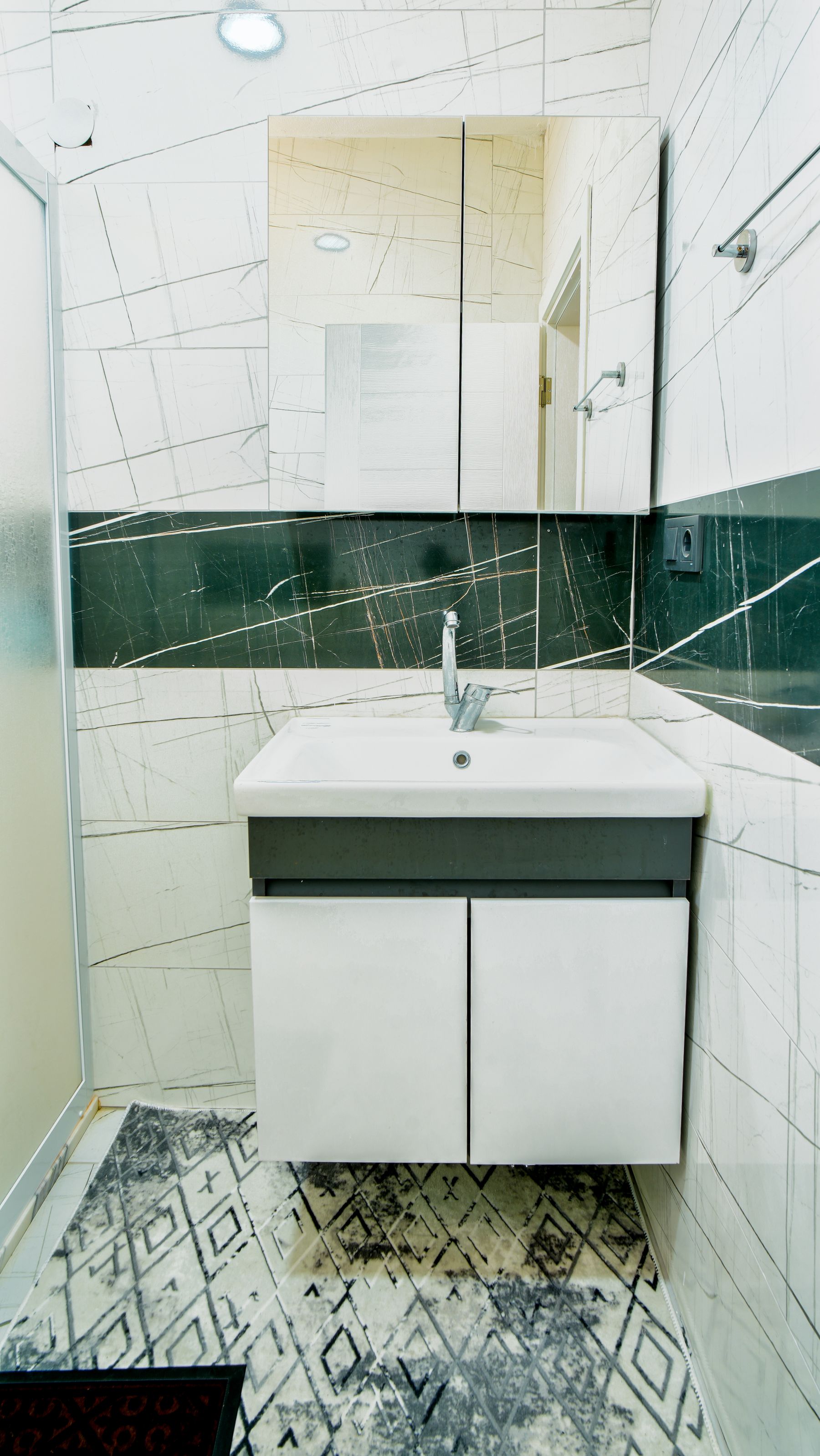
Use Black Details Only Where They Clarify
A black faucet, mirror frame or shower line can prevent pale surfaces from dissolving into one another. Limit the contrast to functional outlines and avoid turning every accessory black by formula. If black and white become equal visual partners, the dedicated [Black and White Bathroom Ideas](/ideas/black-and-white-bathroom-ideas/) guide is the stronger destination.
Balance Matte and Reflective Surfaces
White ceramic, polished stone, glass and mirrors can create glare under strong daylight or poorly aimed fixtures. Counter them with honed stone, matte cabinetry, textured tile or soft textiles. Variation in sheen creates depth without adding color, but each finish must suit its wet or high-touch location. Review the room at night with every normal light switched on.
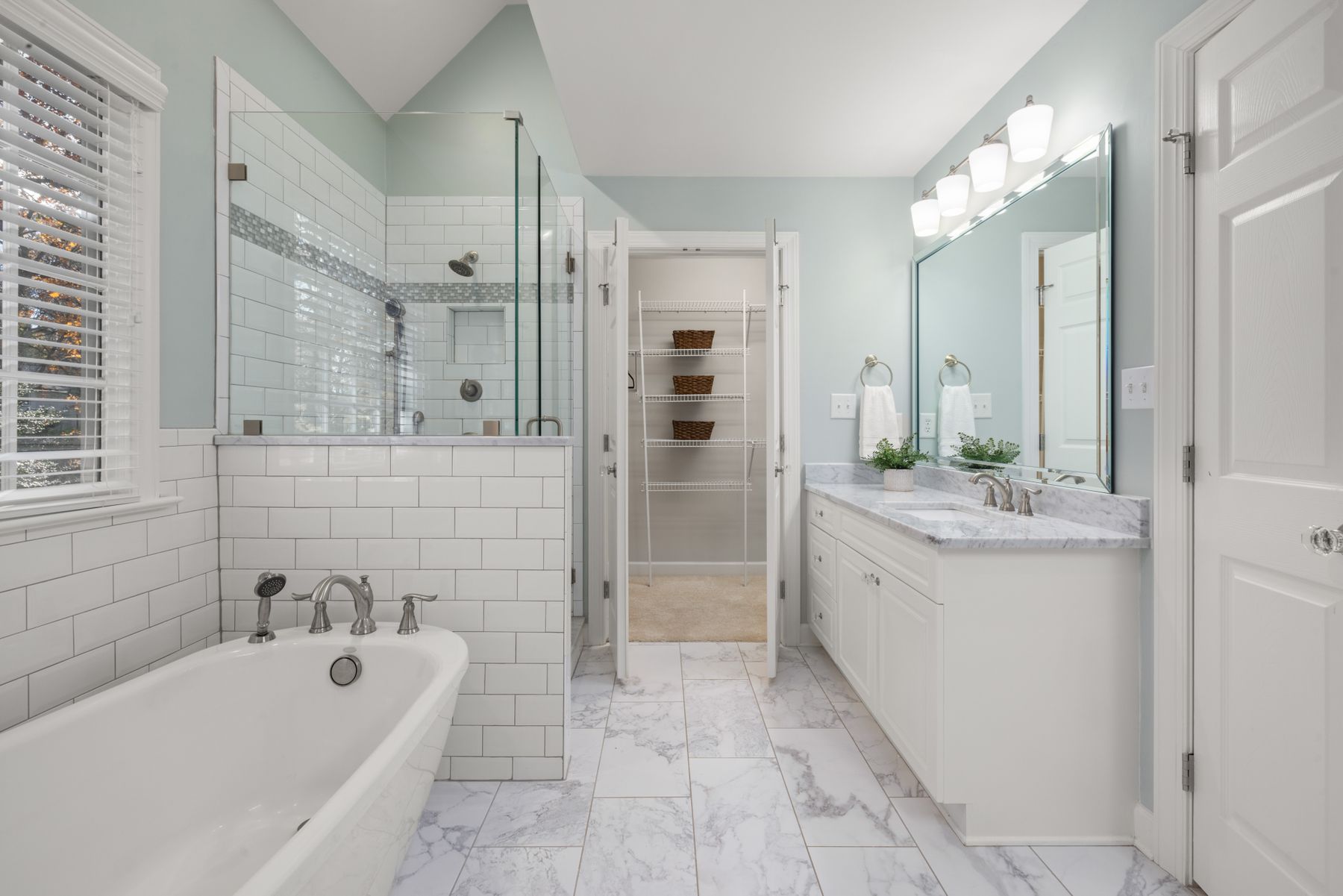
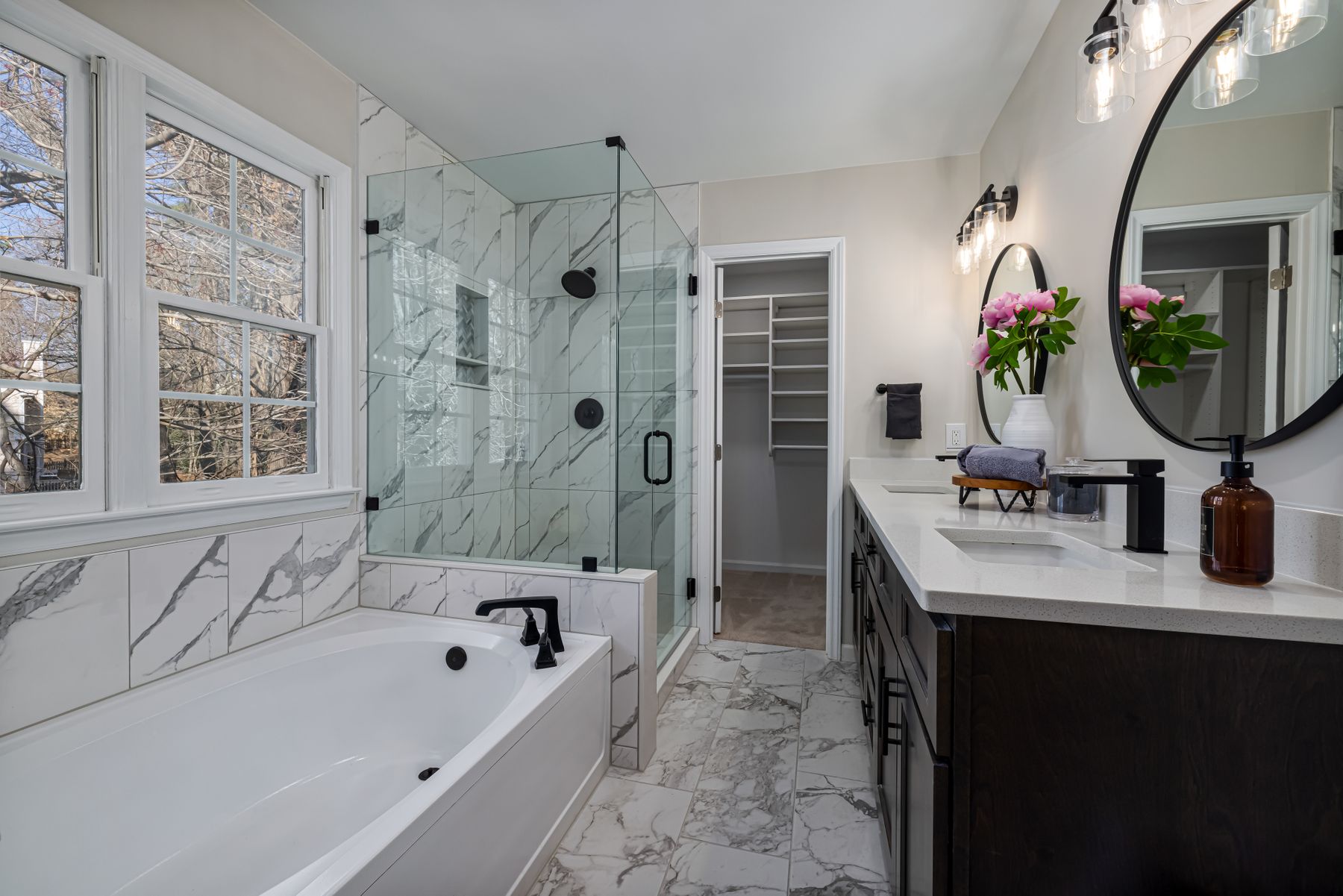
Layer Lighting Instead of Making White Brighter
White reflects available light but cannot correct shadows at the face or inside the shower. Combine mirror lighting, clear wet-zone illumination, low-level nighttime guidance and controlled ambient light. Avoid high-output ceiling light as the only source. The [Bathroom Lighting Ideas](/ideas/bathroom-lighting-ideas/) guide provides the full task-by-task framework.
Keep a Small White Bathroom Proportional
White can reduce visual interruption, but it cannot compensate for an oversized vanity, blocked door or awkward fixture projection. Keep the floor path clear, use glass where it improves sightlines and size storage for actual needs. One continuous tile field is usually calmer than several tiny pale patterns. [Small Bathroom Ideas](/ideas/small-bathroom-ideas/) covers the underlying layout tests.
Give a White Bathroom One Character Feature
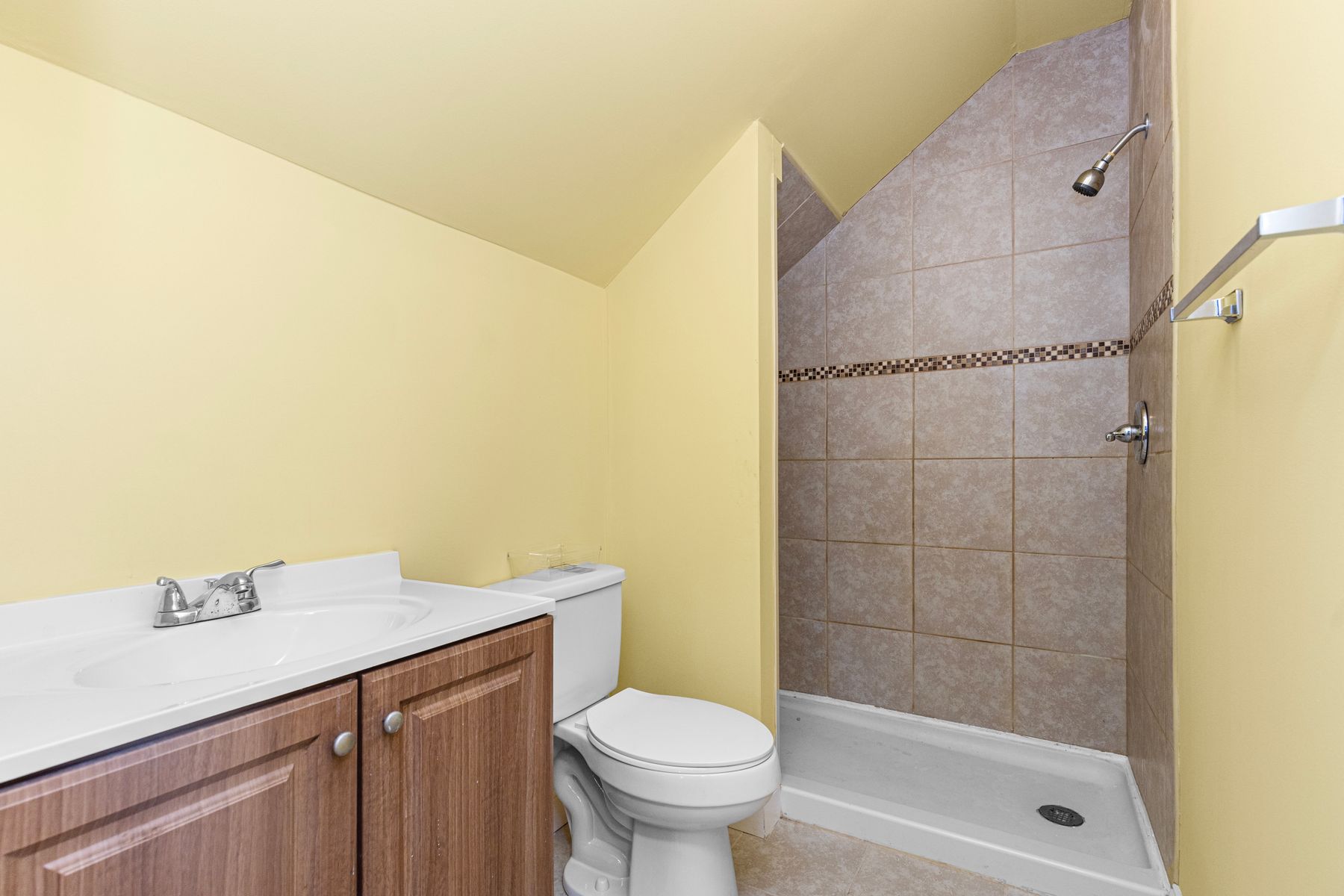
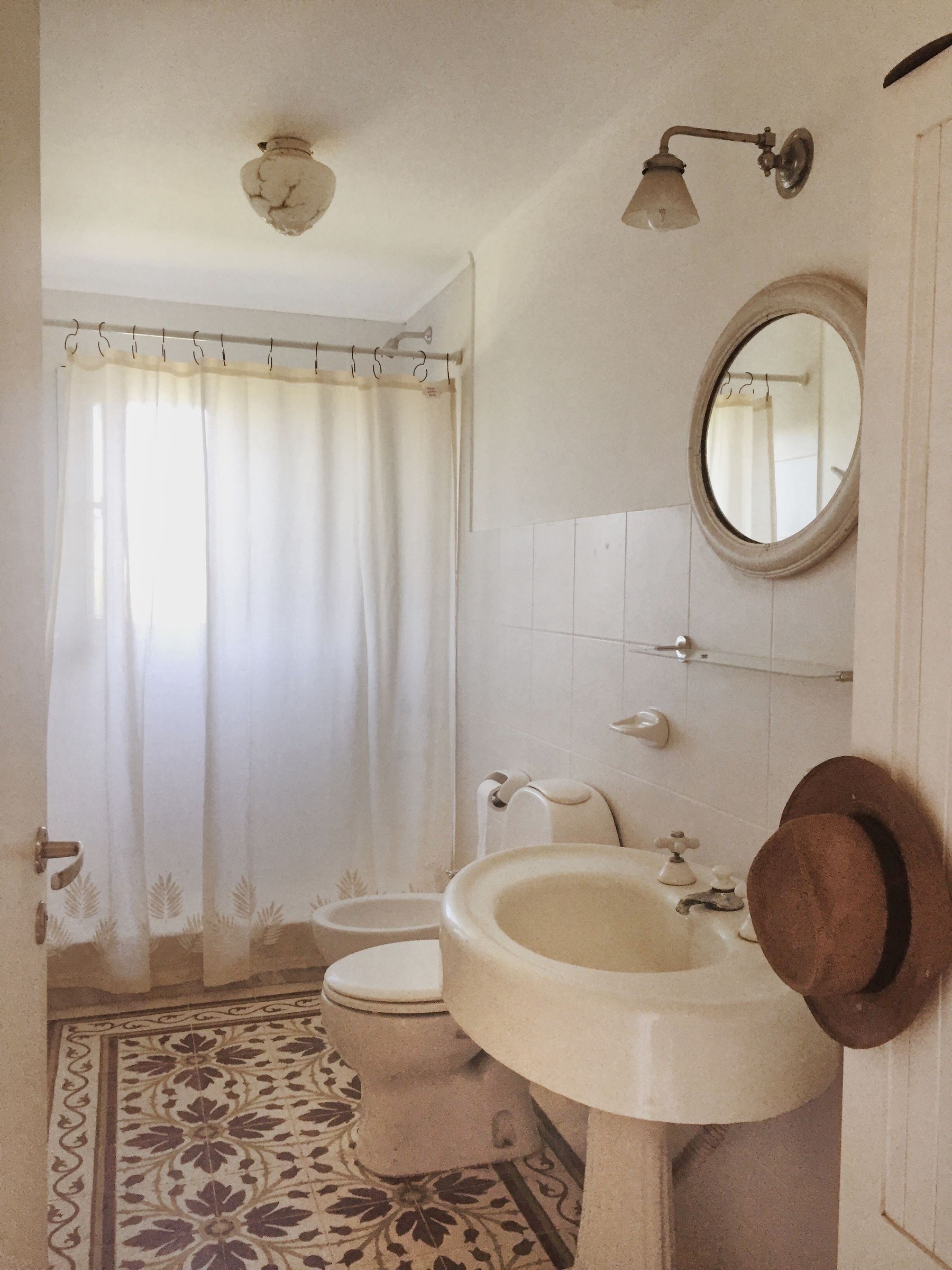
A patterned floor, floral tile, vintage mirror or sculptural light can prevent white from becoming anonymous. Choose one feature that suits the architecture and leave enough quiet space around it. Several unrelated character pieces weaken each other. In a period direction, compare [Vintage Bathroom Ideas](/ideas/vintage-bathroom-ideas/) or [Classic Bathroom Ideas](/ideas/classic-bathroom-ideas/) before adding detail.
Protect Privacy Without Losing Light
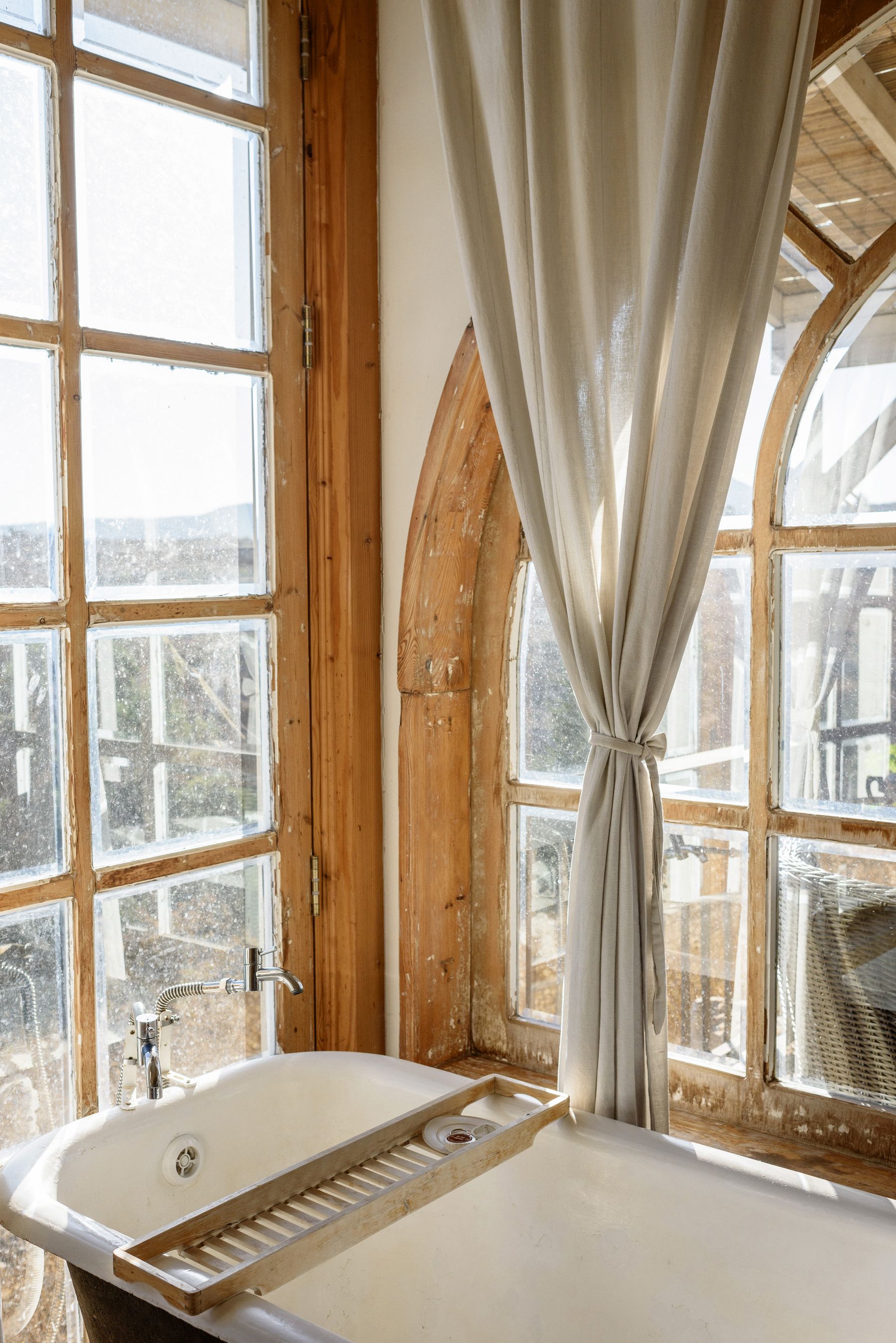
White rooms benefit strongly from daylight, so privacy should filter the view without automatically blocking the window. Obscure glass, a high window, shutters, blinds or exterior screening offer different balances. Check nighttime visibility from outside because bright interior surfaces can silhouette users. Keep moisture performance and cleaning access part of the window treatment decision.
Plan Storage So Packaging Does Not Become the Palette
Bright packaging, towels and cleaning bottles attract attention against a calm white field. Give daily items shallow storage near the point of use, keep backups elsewhere and provide protected shower storage. Do not make everything invisible if that slows the routine. The category and reach tests in [Bathroom Storage Ideas](/ideas/bathroom-storage-ideas/) should determine cabinetry before its finish.
Keep Edges and Support Points Visible
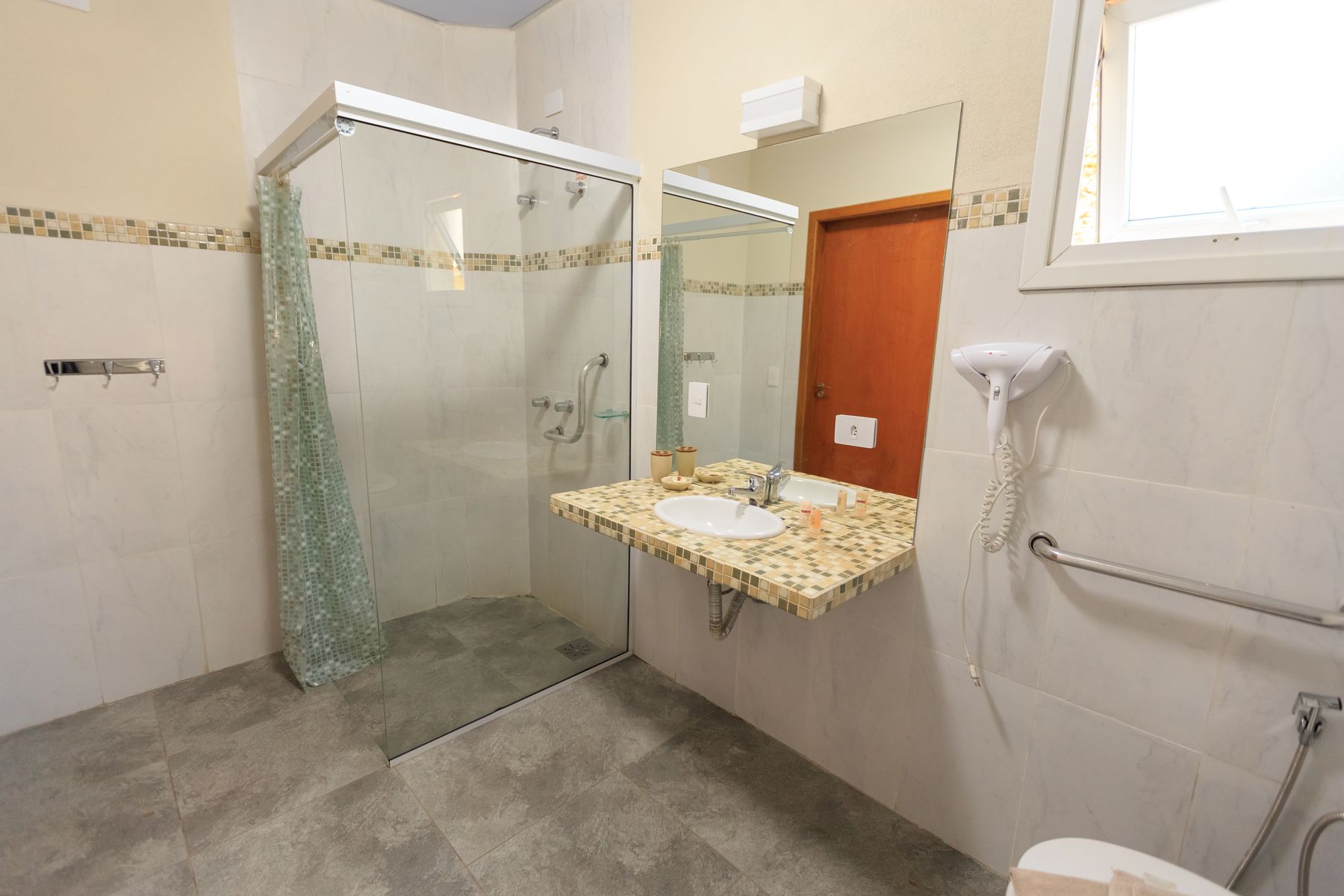
An all-pale room can hide the edge of a shower step, toilet seat, control or support rail. Use value, sheen, metal, grout or directed light to distinguish critical elements while keeping the palette white-led. Support bars need proper anchoring and placement for the user. [Aging-in-Place Bathroom Ideas](/ideas/aging-in-place-bathroom-ideas/) provides a fuller movement and reach framework.
Choose the White Floor for Wet Feet
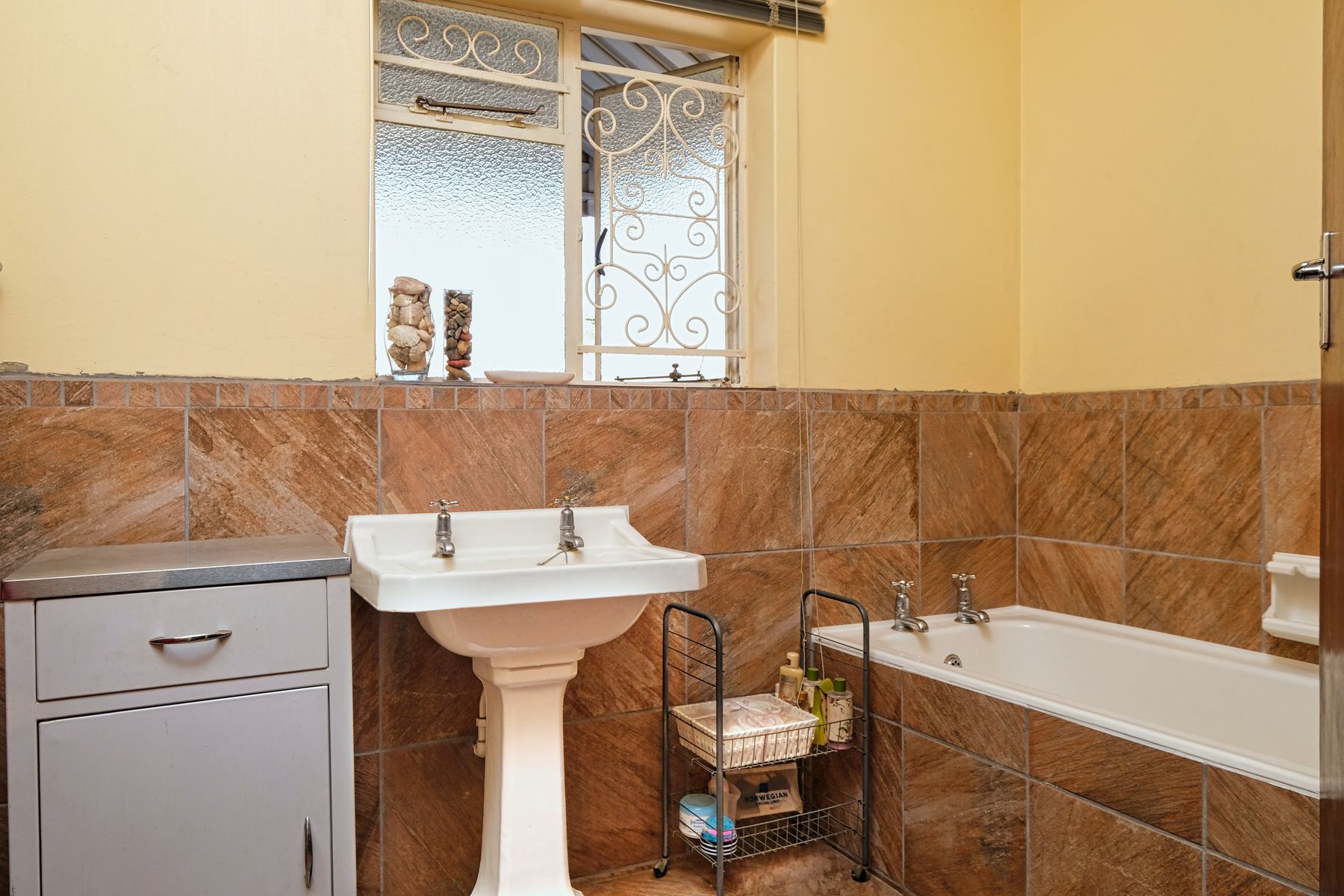
A pale floor can brighten the room, but grip, drainage, joint density and cleaning determine whether it works. Highly polished white stone may be suitable on a wall and unsuitable under wet feet; deep texture can hold dirt. Assess the exact assembly wet and review transitions into the shower. Continue with [Bathroom Flooring Ideas](/ideas/bathroom-flooring-ideas/) for performance-first comparisons.
Design Ventilation Into the Bright Finish
Condensation, mildew and failing sealant are conspicuous in a white bathroom. Coordinate extraction, make-up air and heat with the shower volume and household schedule rather than using fresh paint to disguise moisture. Avoid inaccessible ledges and panel joints that stay damp. Fan sizing, ducting and electrical work should follow the specific room and local requirements.
Plan Towel Drying and Textile Warmth
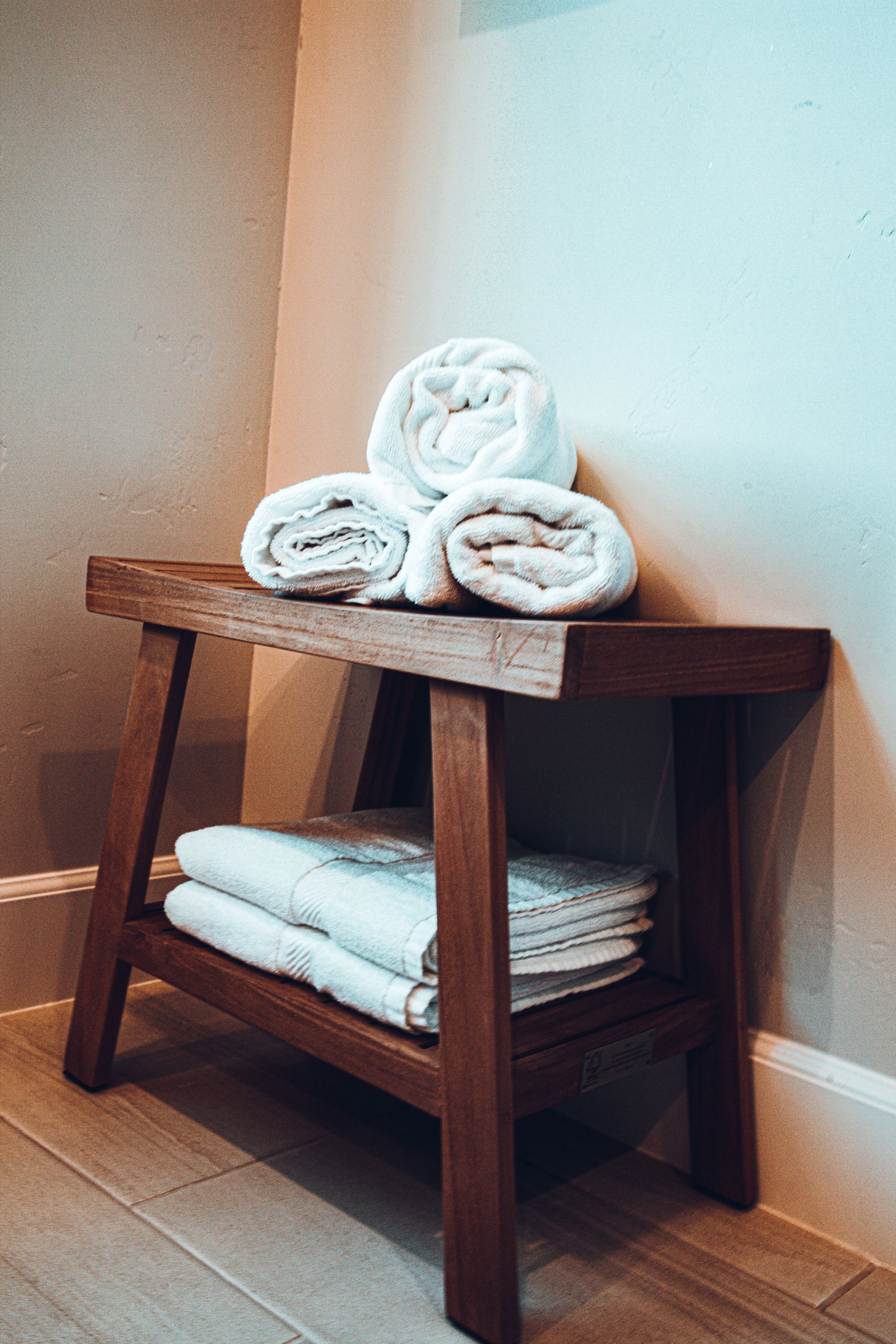
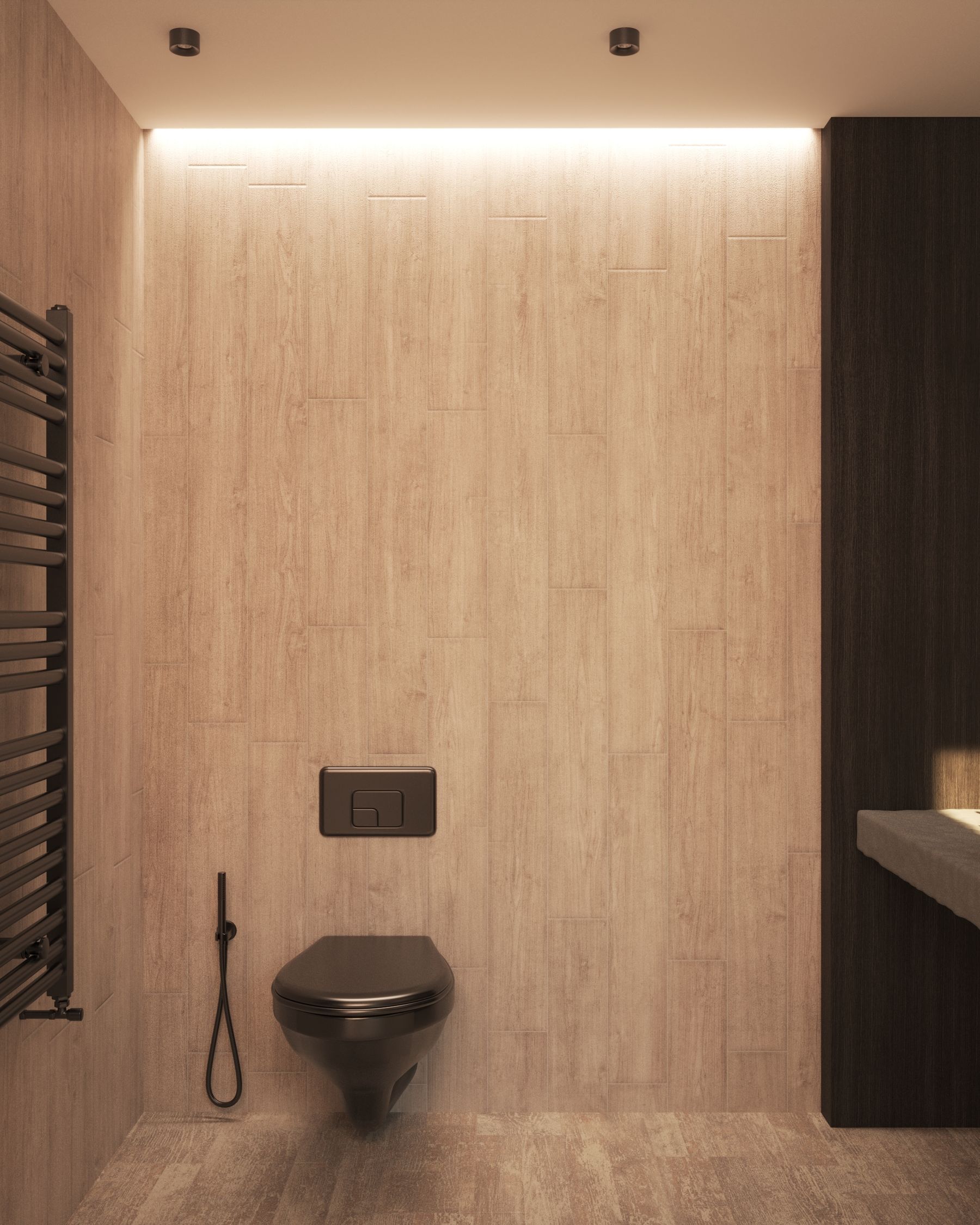
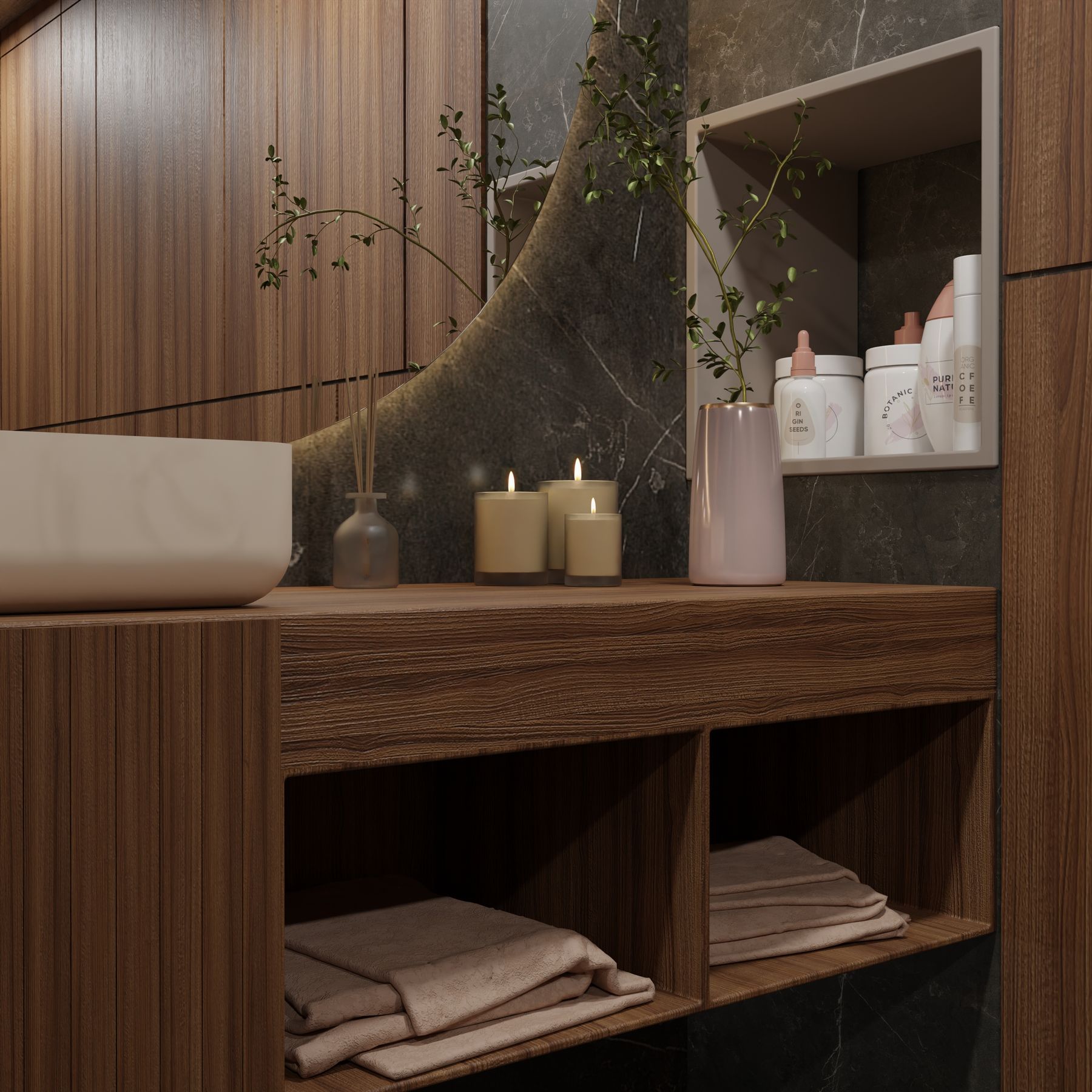
Towels provide warmth, softness and temporary color, but they also need air and clearance to dry. Put rails or hooks on the exit route without crowding the shower door or toilet. Choose a repeatable textile family rather than many small decorative accents. In a white room, rumpled damp towels become especially visible, making function and appearance the same decision.
Test Grime, Sealant and Local Water
White shows some marks quickly while making others—such as soap film on pale tile—easy to overlook until texture changes. Let local water dry on tile, grout, glass and metal samples, then clean them with approved products. Review sealant color and replacement access because yellowing or mildew can undermine the whole palette. Choose cleanability from real tests, not assumptions about white.
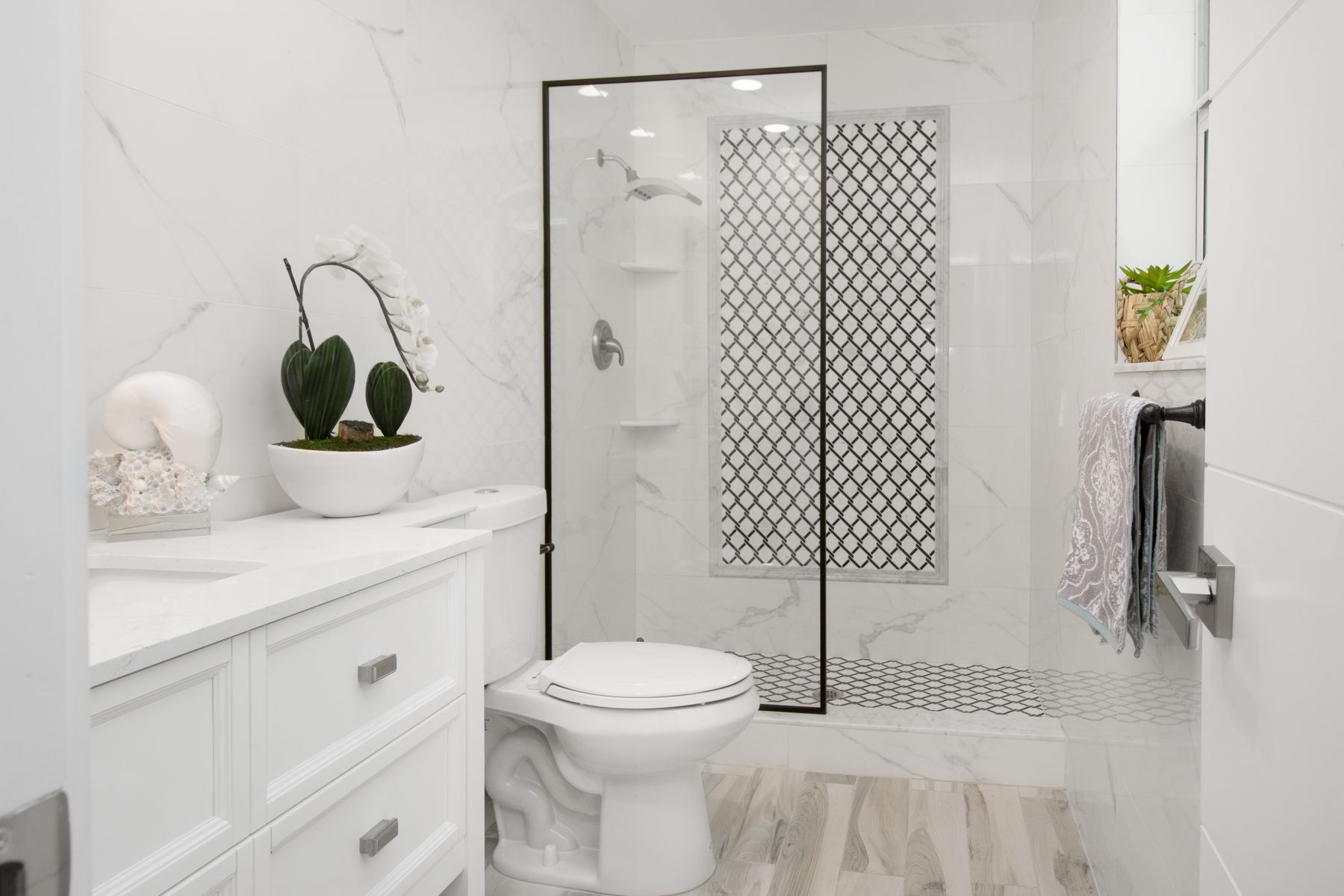
Refresh an Existing White Bathroom Without Rebuilding
Serviceable white tile may need hierarchy rather than demolition. A timber vanity, improved mirror light, renewed grout or sealant, better storage and one coherent metal finish can transform the room. Separate cosmetic work from waterproofing, plumbing and electrical issues. [Bathroom Remodel Ideas](/ideas/bathroom-remodel-ideas/) helps define scope before replacing materials that still perform well.
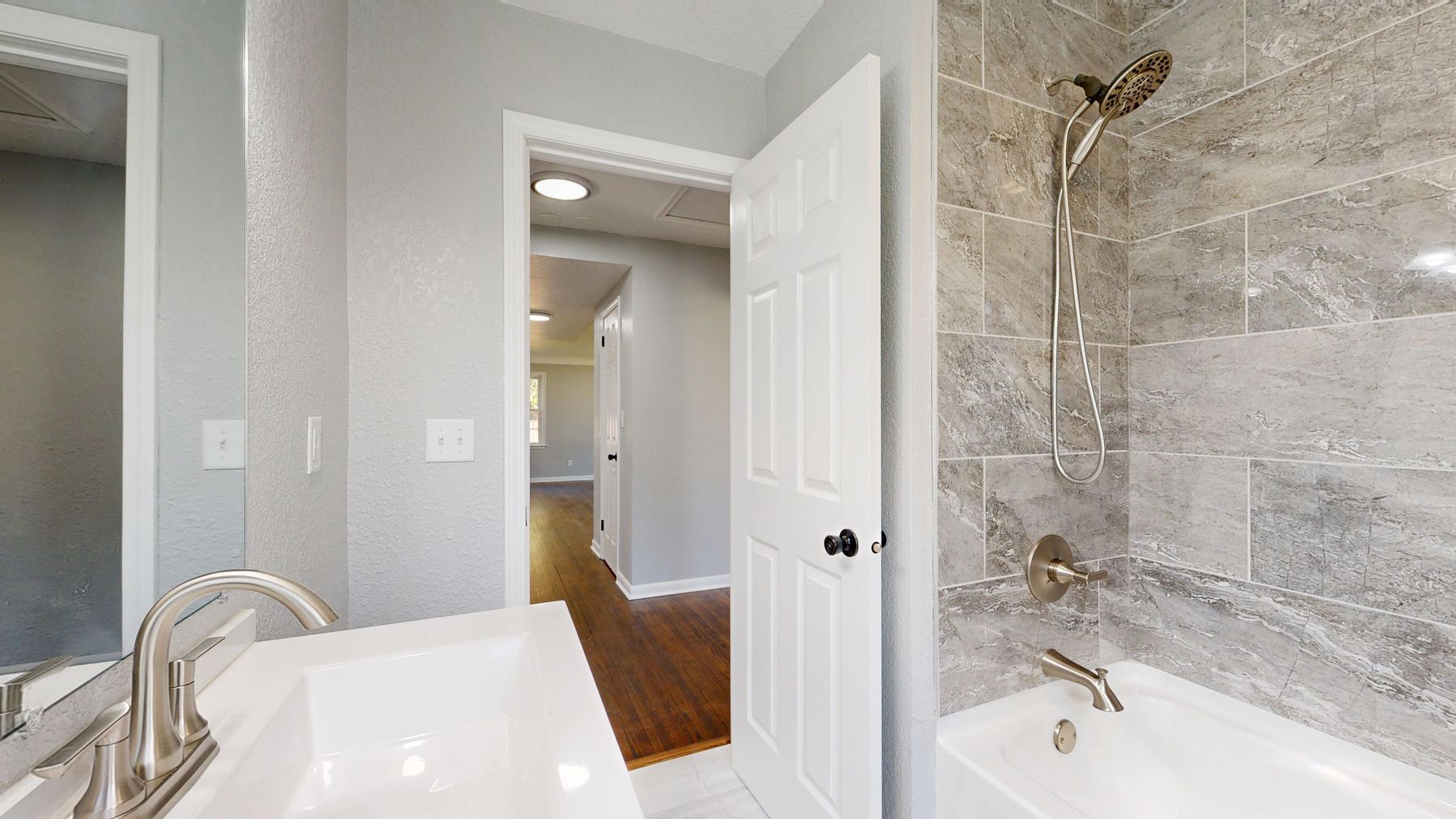
Run a White-Palette Decision Test
Assemble the lead white, ceramic, grout, stone, floor, timber, metal and textile on one board. View it in morning, overcast and nighttime light, then wet and clean relevant pieces. Compare the result with a warmer Neutral Bathroom scheme and a more graphic black-and-white version. Choose white when it improves light, clarity and material detail—not simply because it feels safest.