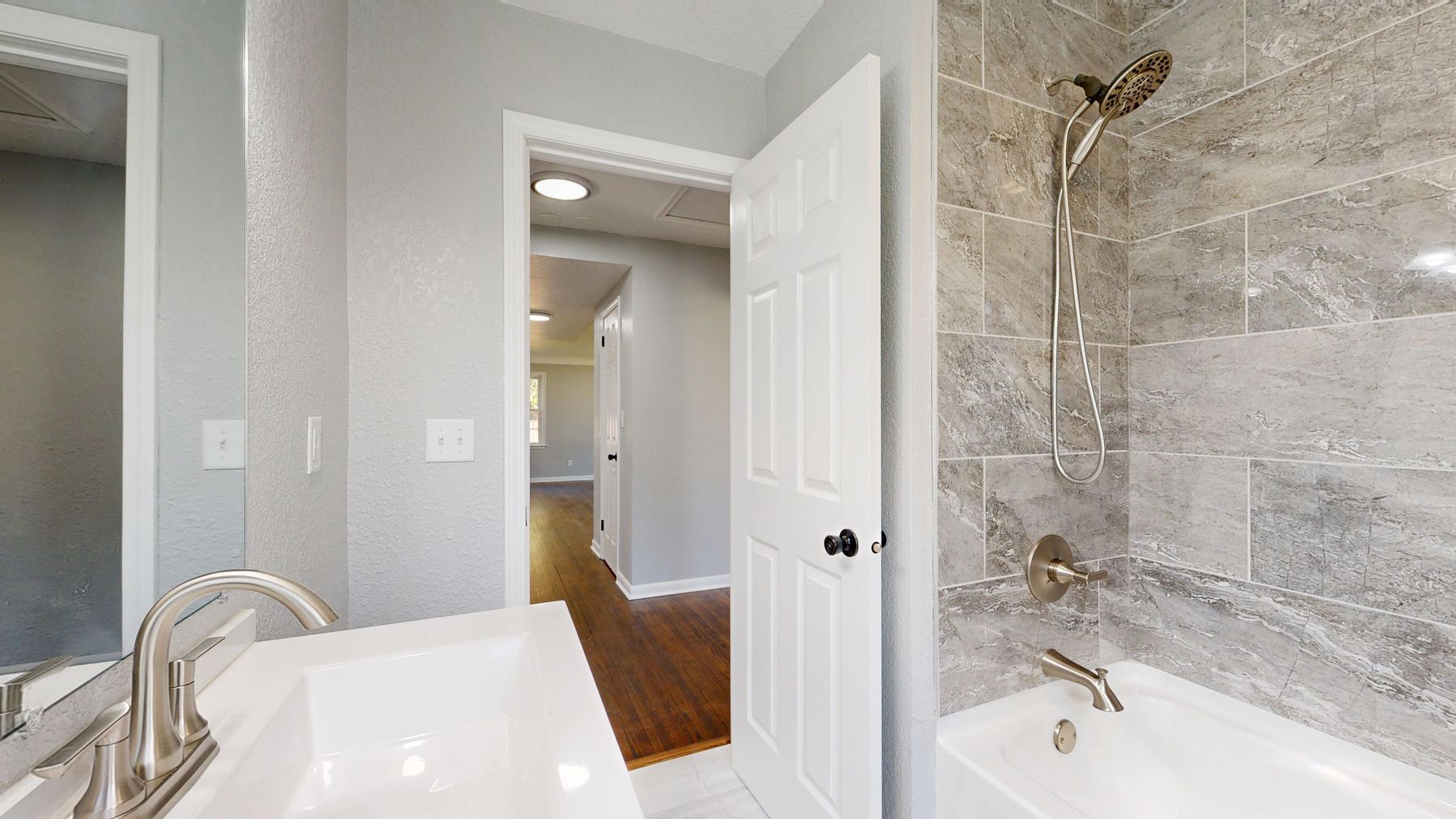
Calibrate Grey Against the Fixed Whites
Grey changes when it sits beside sanitaryware, grout and painted trim. A cabinet sample that appears neutral alone can suddenly look blue beside warm ceramic or beige beside a crisp white basin. Start with the whites and pale materials that are hardest to change, then choose a grey that either connects them or creates a deliberate separation. This makes the palette responsive to the room rather than to the sample card.
Decide Whether Grey Bridges or Separates
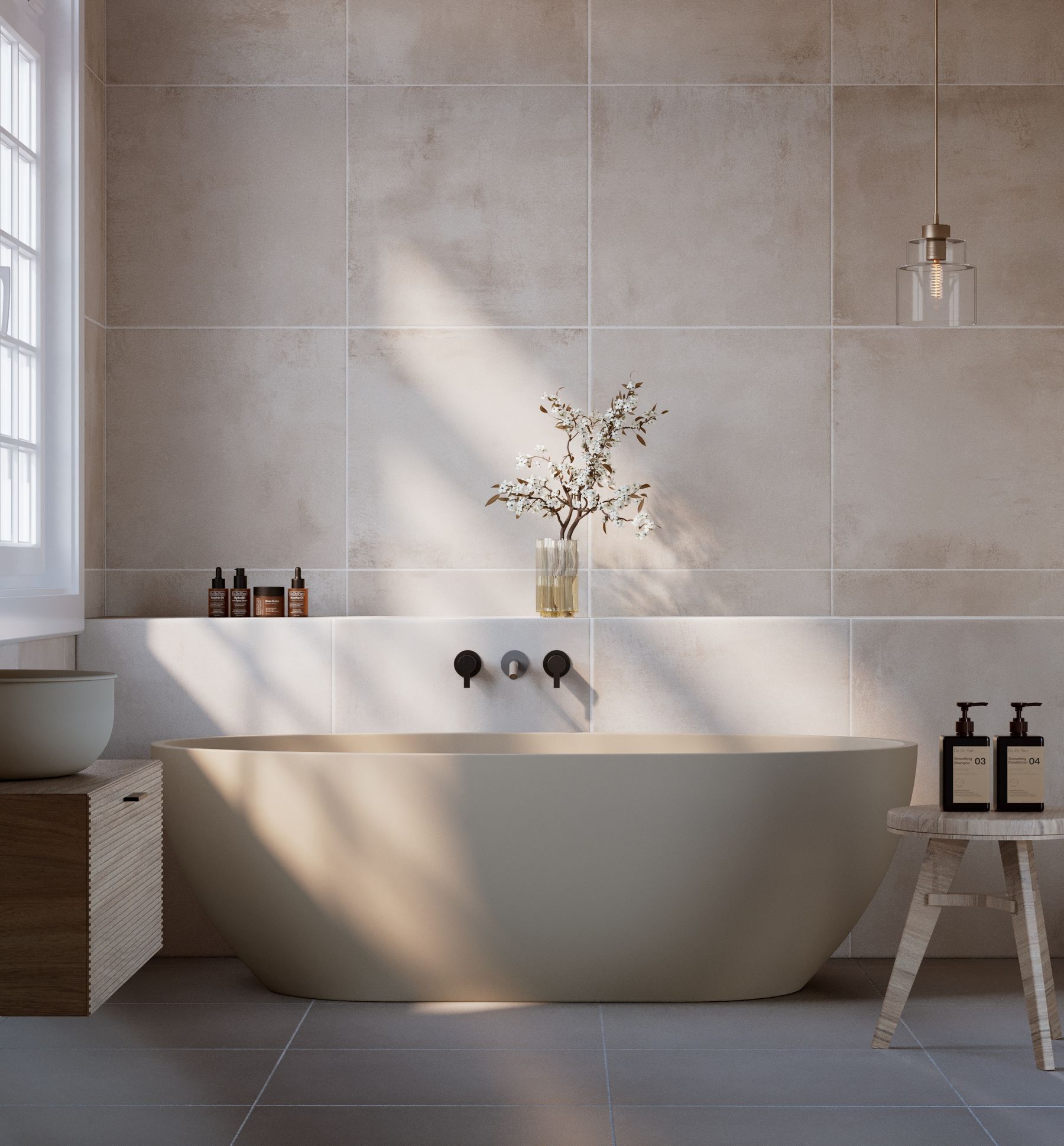
Warm grey, cool grey and greige are useful categories only after you decide what the grey must do. A mushroom-grey can bridge creamy stone and timber; a cooler grey can sharpen white ceramic and stainless steel; a deeper neutral can deliberately separate a pale vanity from the shower. Choose the role first, then the undertone that performs it.
Build a Value Ladder That Survives Wet Reflection
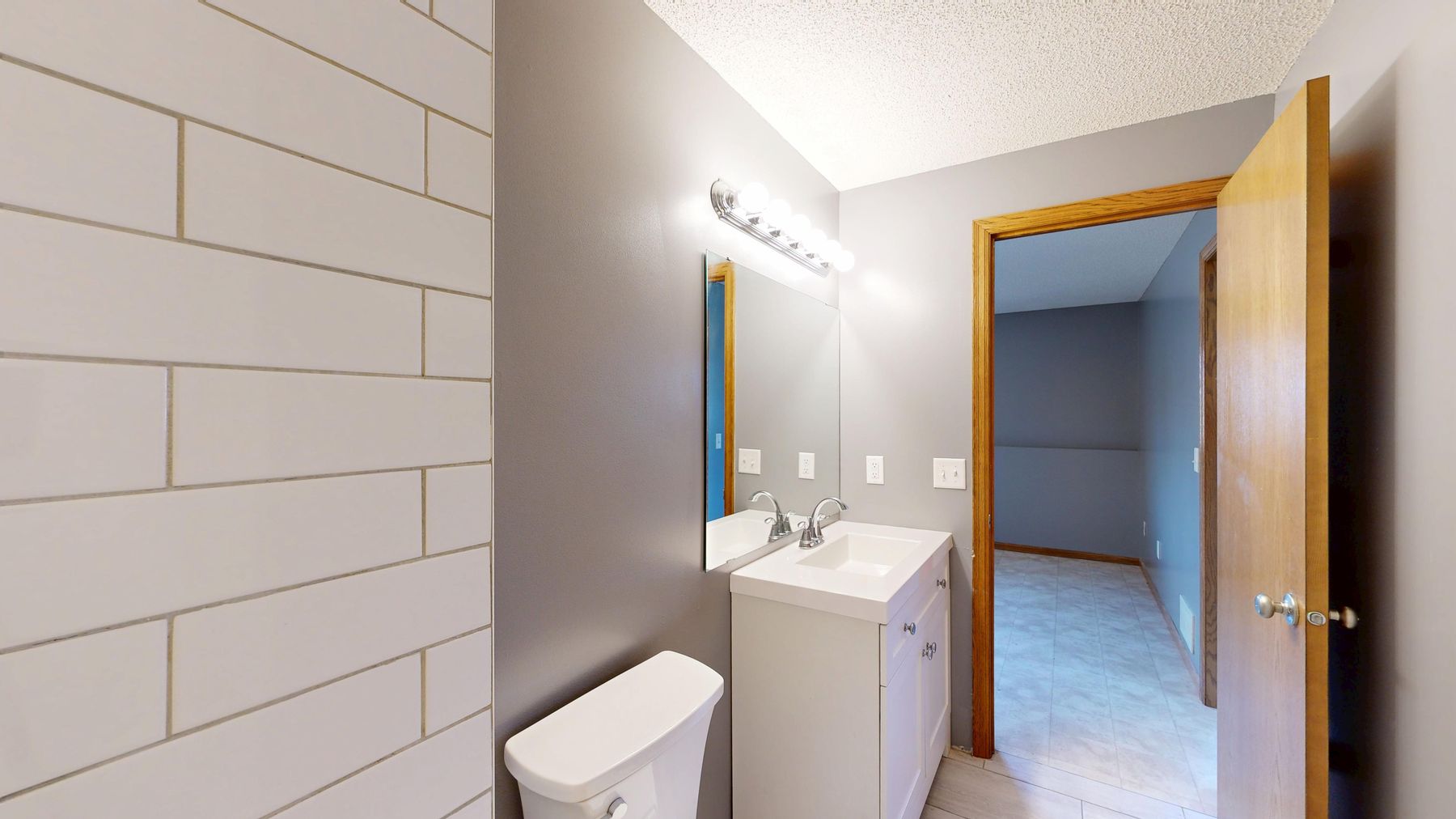
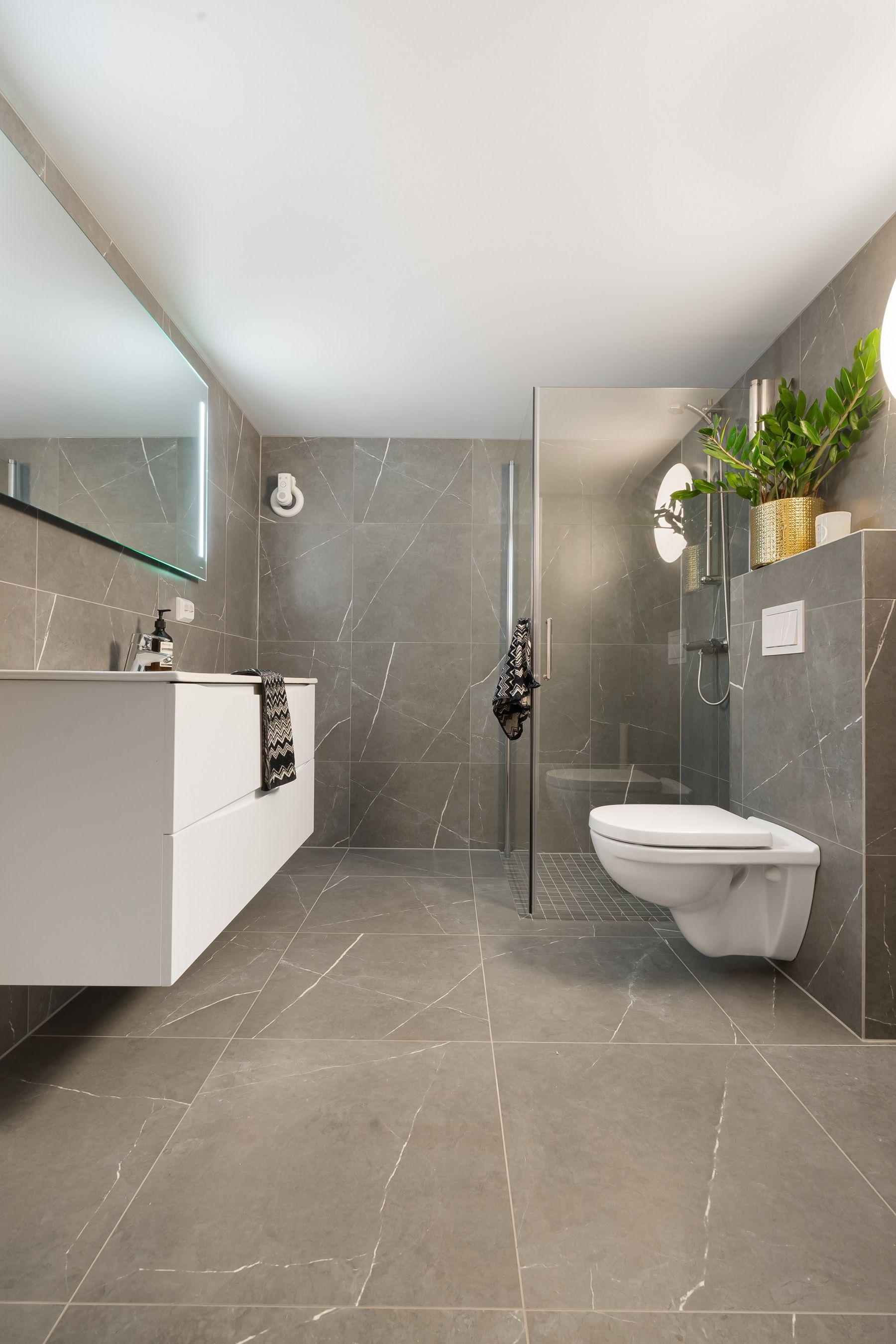
Bathroom surfaces change value when wet, glossy or strongly lit. Establish a light, middle and dark role for the main planes so the room remains legible when tile reflects water and artificial light. Pale ceramic can be the light reference, mid-grey cabinetry or wall tile the middle, and charcoal a bounded anchor. Avoid filling every plane with slightly different middle greys that merge after sunset.
Let One Mineral Family Define the Grey
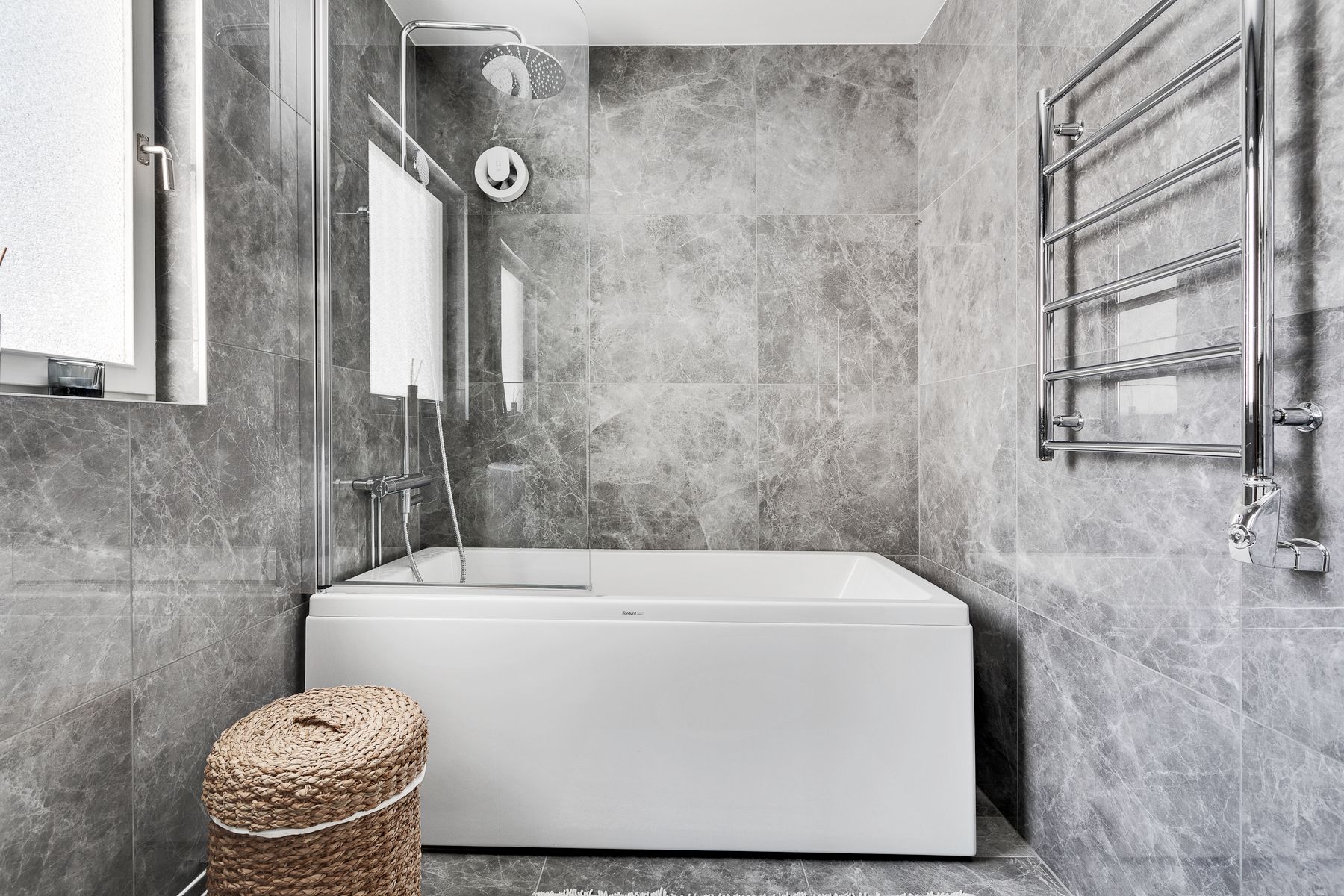
Concrete, limestone, marble and ceramic grey each carry different texture and undertone. Choose which material family should define the room's grey character, then let painted surfaces and secondary tile support it rather than imitate it. A limestone-led grey bathroom should not need faux-concrete accents, and a concrete-led scheme does not need every stone to repeat the same mid-tone.
Use Tile Format to Control the Mood
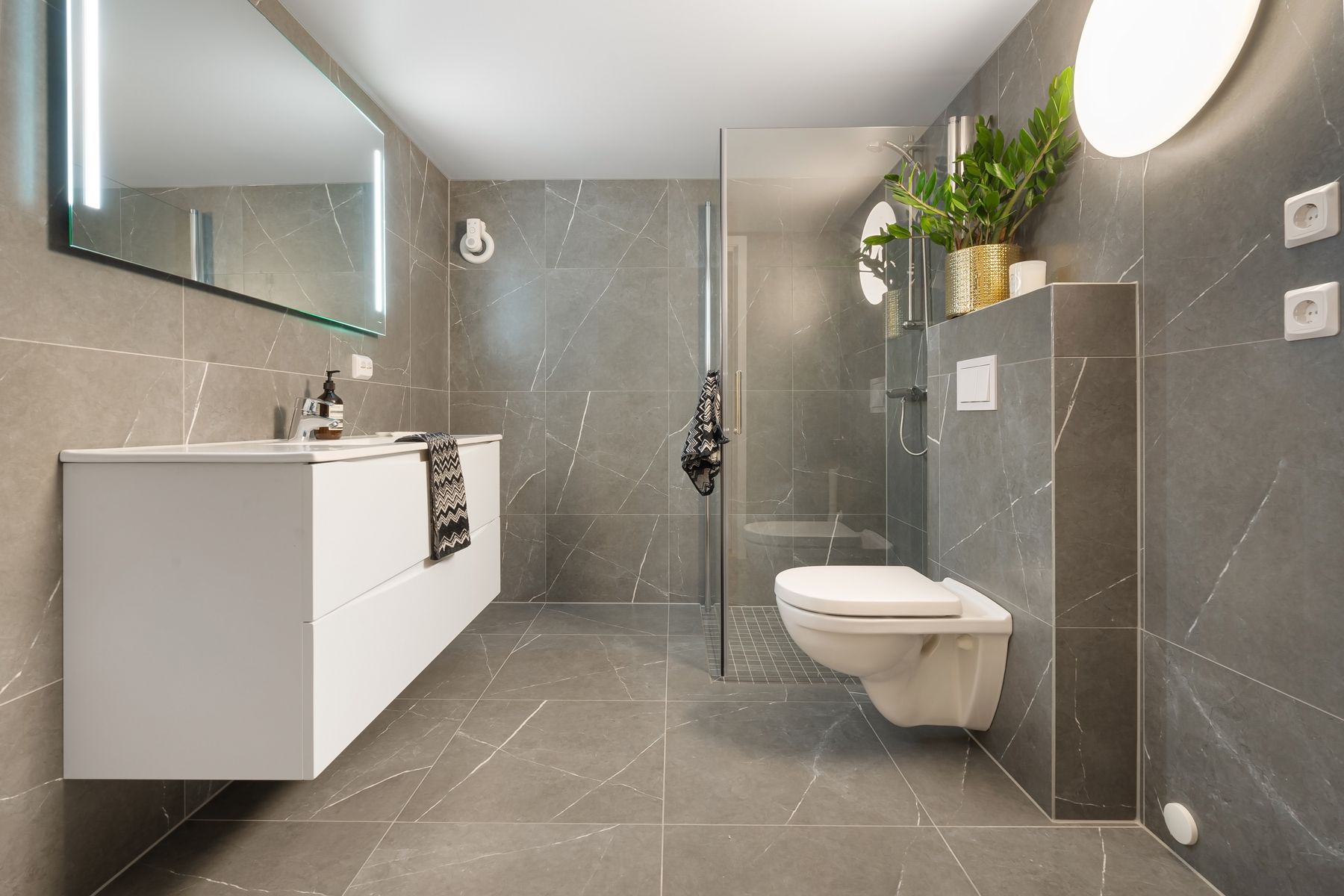
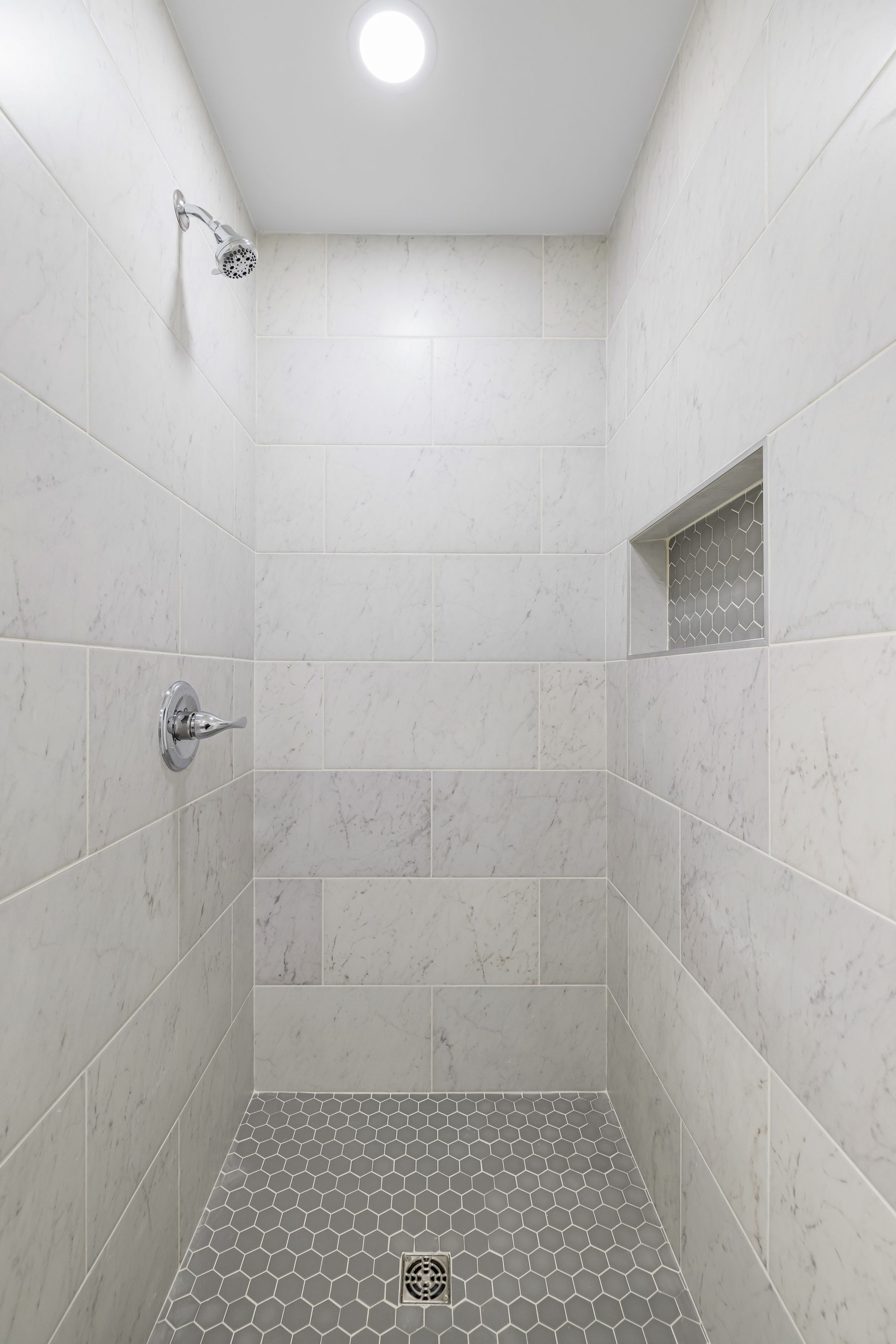
Large grey tile creates long calm planes but magnifies uneven substrates and awkward cuts. Smaller squares, subway tile or mosaics introduce more rhythm, grout and cleaning. Align tile scale with the room and the design language rather than assuming bigger always feels more luxurious. The complete [Bathroom Tile Ideas](/ideas/bathroom-tile-ideas/) guide helps compare format, layout and wet-zone detailing.

Let Grout Define or Quiet the Grid
Matching grout makes tile behave like a continuous material; a lighter or darker joint exposes scale and workmanship. In a busy family shower, practical stain behavior may matter more than perfect visual matching. Test the installed-look combination wet and dry because both tile and grout can change value. Use one deliberate joint strategy rather than switching contrast without an architectural reason.
Distinguish Concrete Grey From Flat Grey
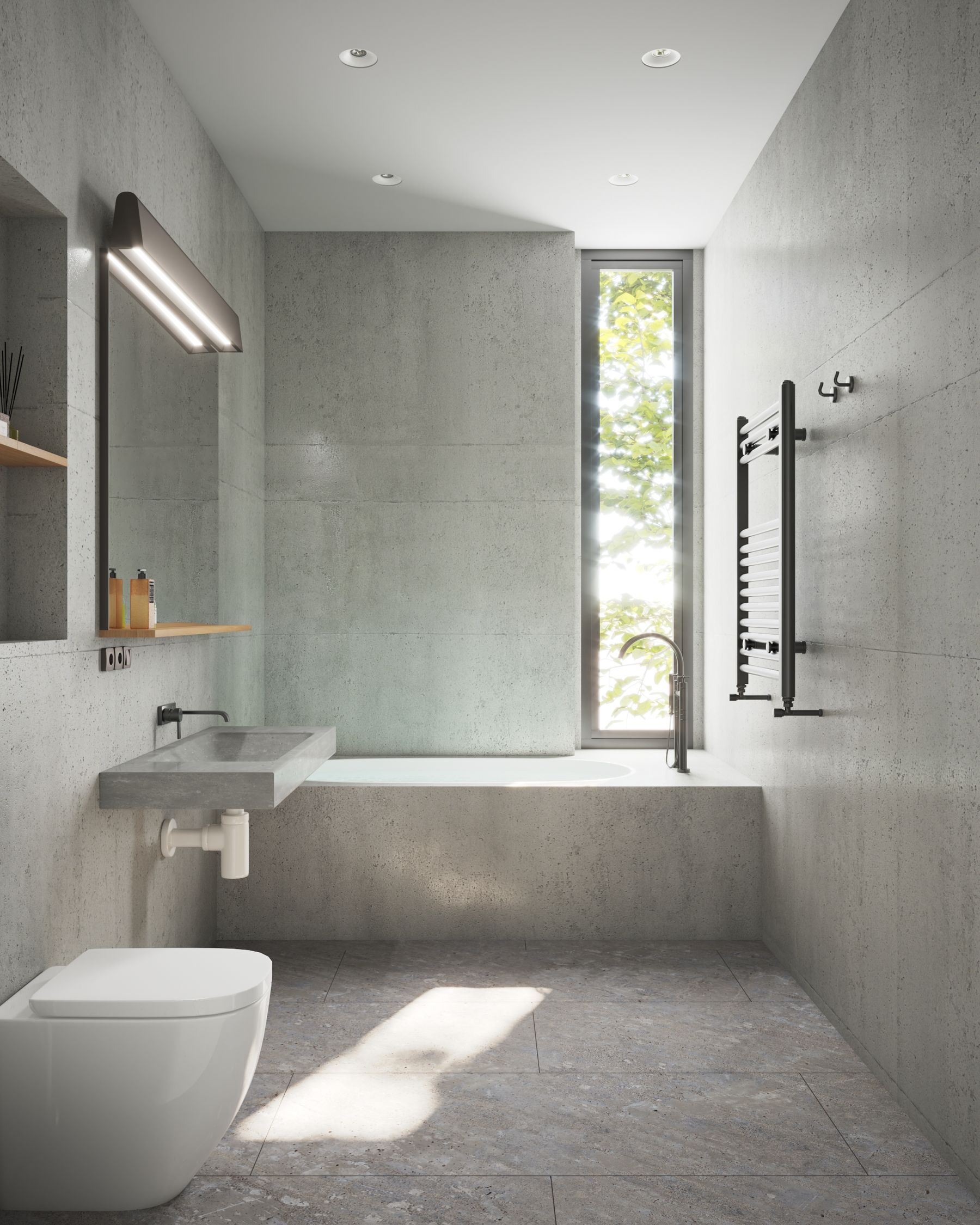
Concrete-like surfaces gain character from mineral variation, pores, clouding and changes in reflectance. A flat grey paint beside them should not try to copy that complexity exactly. Let concrete or microcement read as the textured material and use smoother greys to frame it. This separation prevents the room from becoming one continuous industrial-looking mid-tone.
Use Grey Stone for Natural Variation
Limestone, slate and other grey stones bring pores, fossils, tonal shifts and irregular edges that flat porcelain cannot fully reproduce. Those qualities create depth, but porosity, sealing, slip behavior and cleaning vary by material and finish. Keep heavily textured stone away from areas where daily residue would be difficult to remove, and approve representative pieces rather than one unusually quiet sample.
Use White Ceramic as the Calibration Point
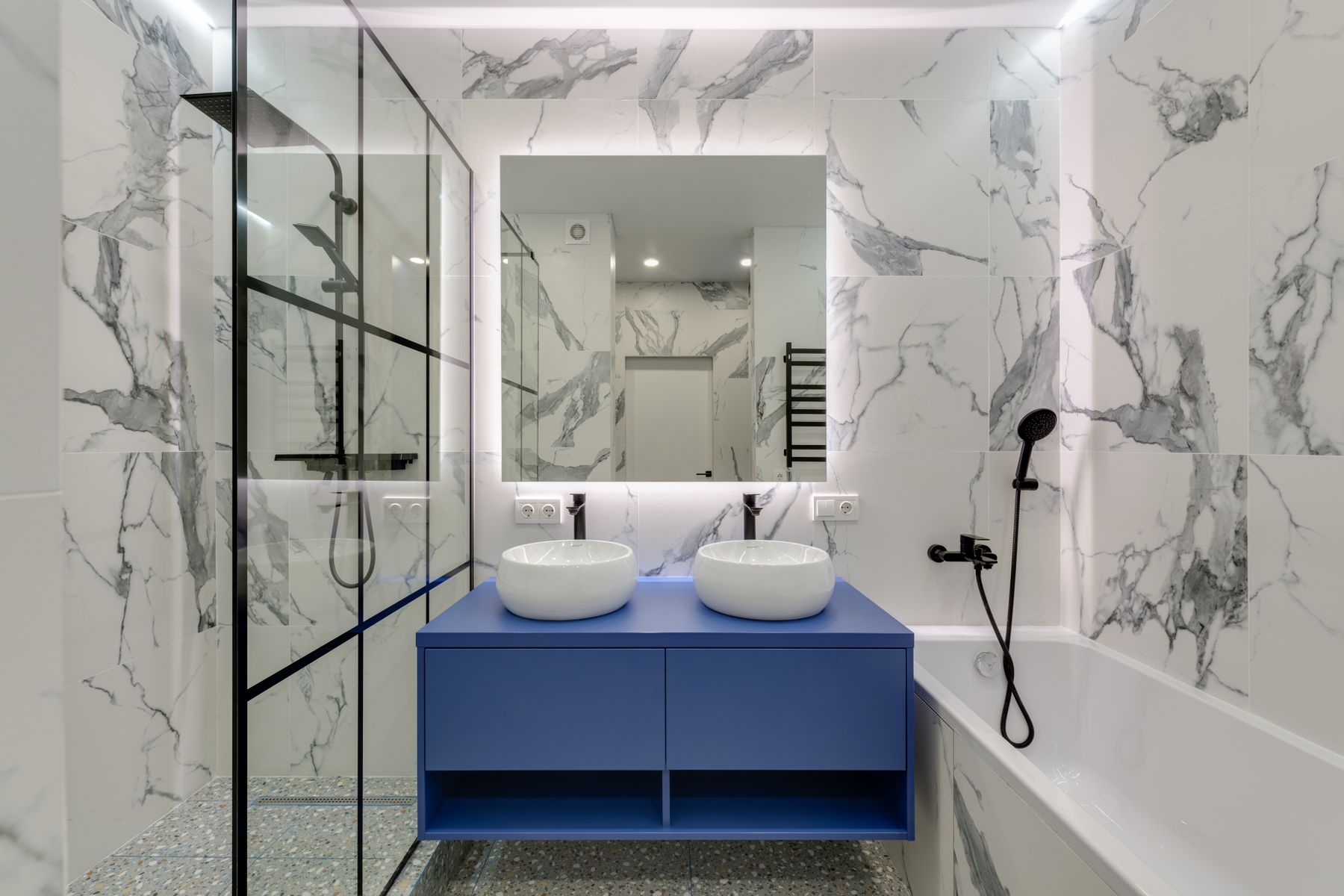
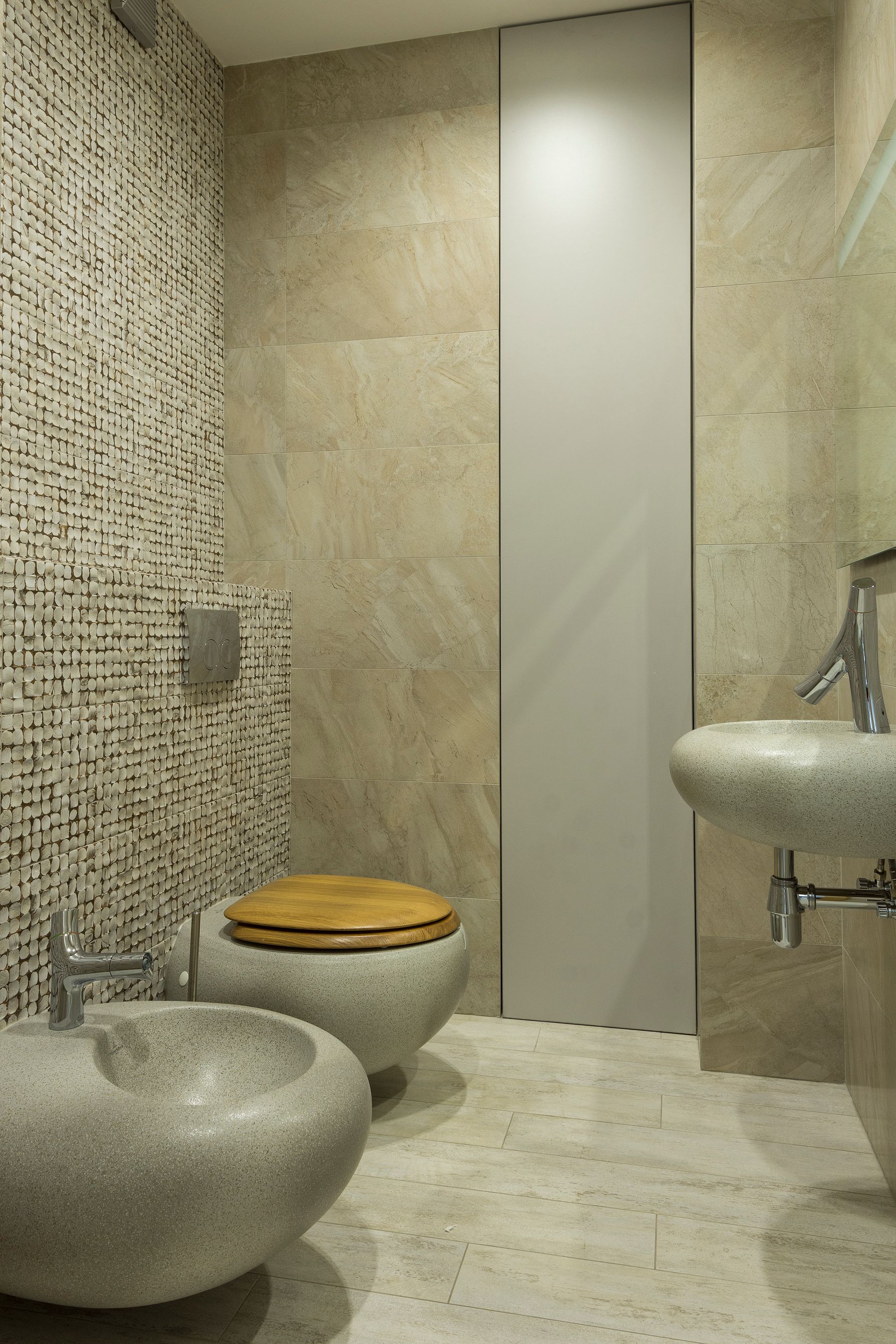
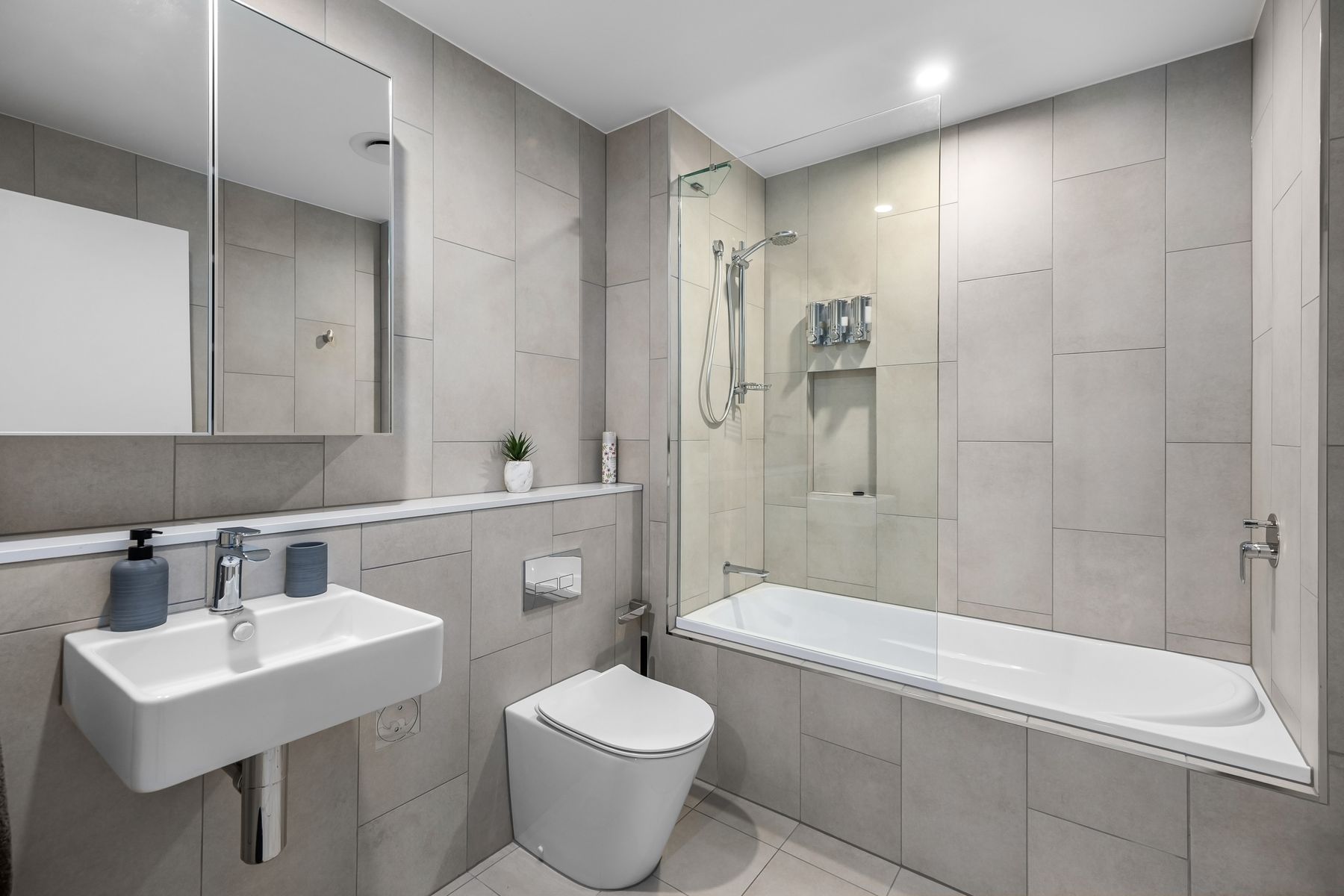
White basins, baths and toilets are useful because their stable high value reveals what the surrounding grey is doing. Instead of treating ceramic as an unavoidable neutral, use it as the reference point for cabinet depth, grout and wall value. In darker schemes, this contrast can also make fixture edges easier to read without adding decorative white accents elsewhere.
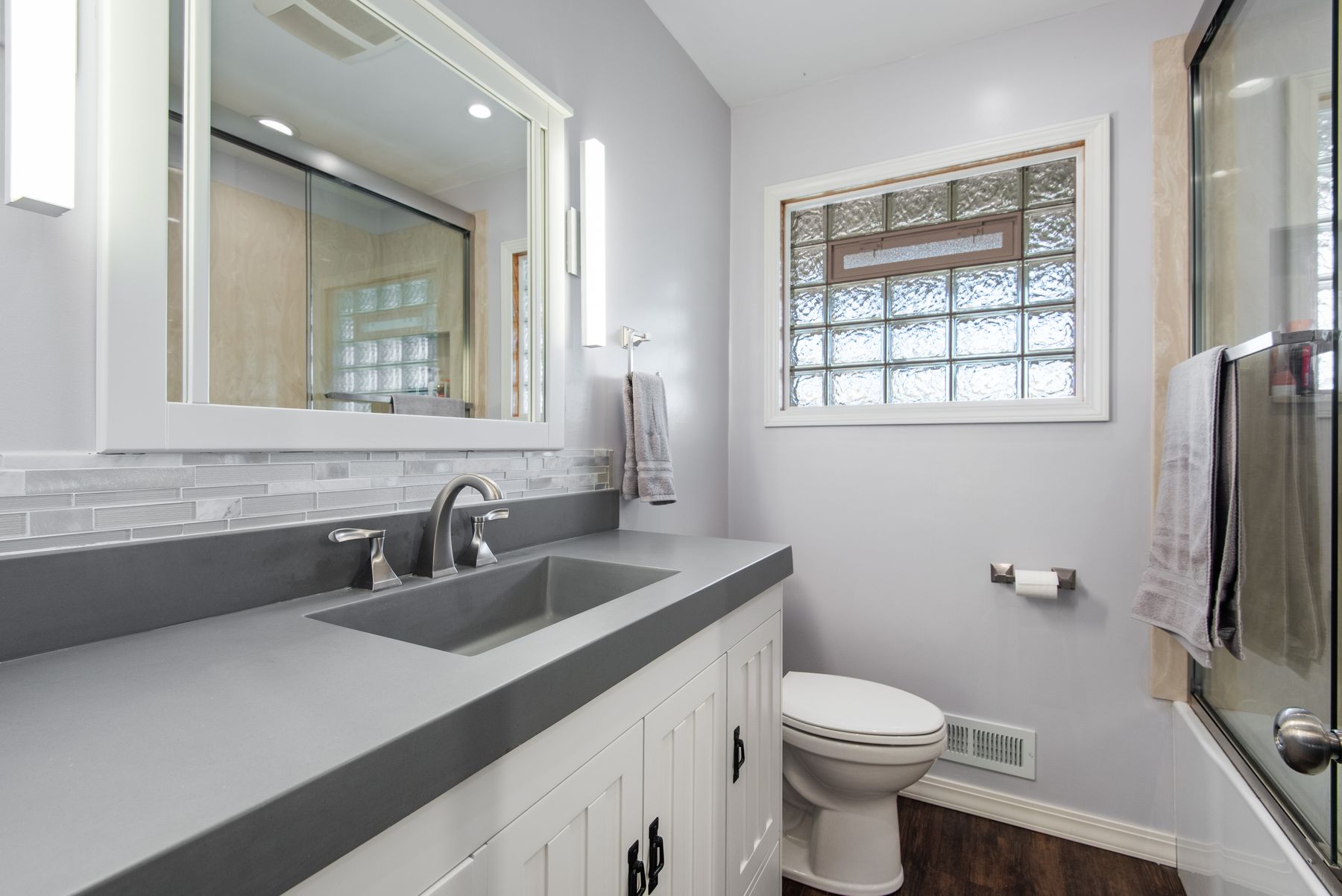
Bring Grey Into the Vanity
A grey vanity can carry the palette while walls remain pale, which is useful in low-light or compact bathrooms. Cabinetry also introduces profile, shadow lines and storage at a furniture scale. Coordinate its undertone with the countertop and floor, then make handles and drawer gaps visible enough for daily use. The planning sequence in [Bathroom Vanity Ideas](/ideas/bathroom-vanity-ideas/) should come before the paint color.
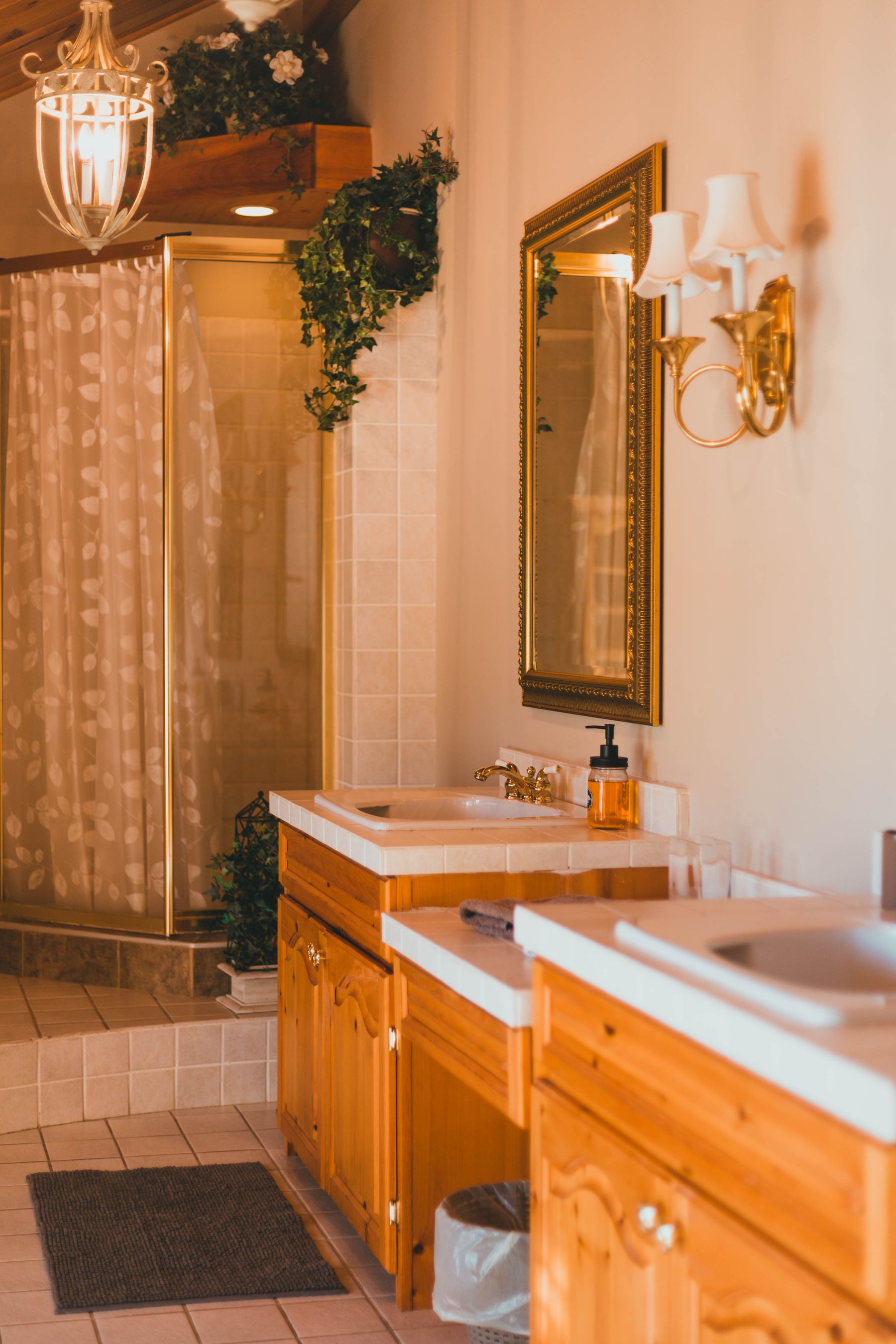
Use Timber to Correct Grey Temperature
Timber can shift how grey is perceived, but not every grey needs the same wood. Honeyed oak may make a blue-grey feel more balanced, while walnut can give pale warm grey stronger depth. Use the wood to correct or reinforce temperature rather than adding it automatically for warmth. One substantial timber surface is more informative than many small accessories.
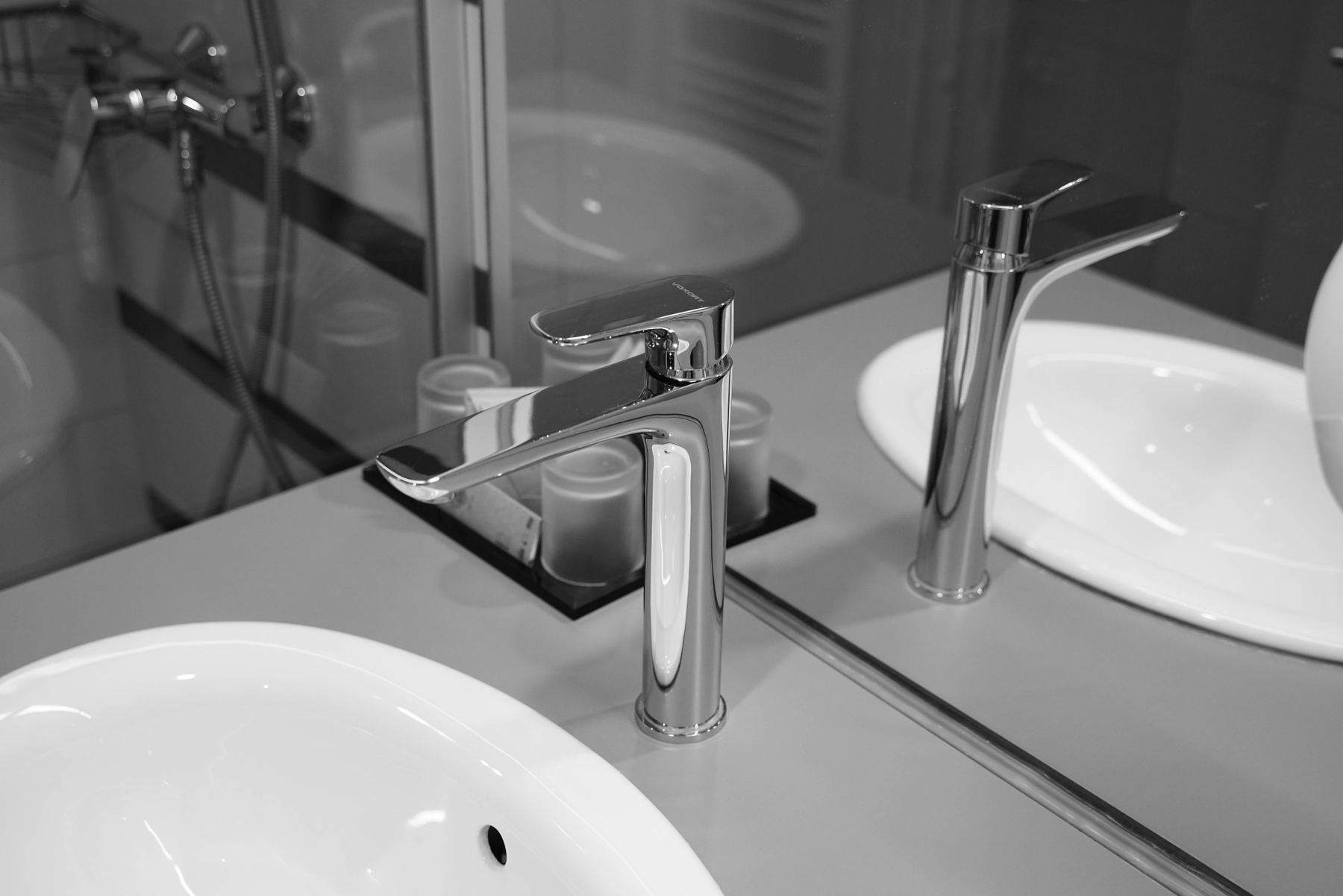
Pair Grey With Brushed Nickel or Chrome
Chrome reflects surrounding color and can make cool grey feel crisp, while brushed nickel offers a softer lower-contrast line that suits warmer mineral palettes. The metal should help controls remain visible without becoming a separate decorative theme. Review fingerprints, water marks, coating care and replacement availability at the same time as color. Avoid calling every silver finish interchangeable.
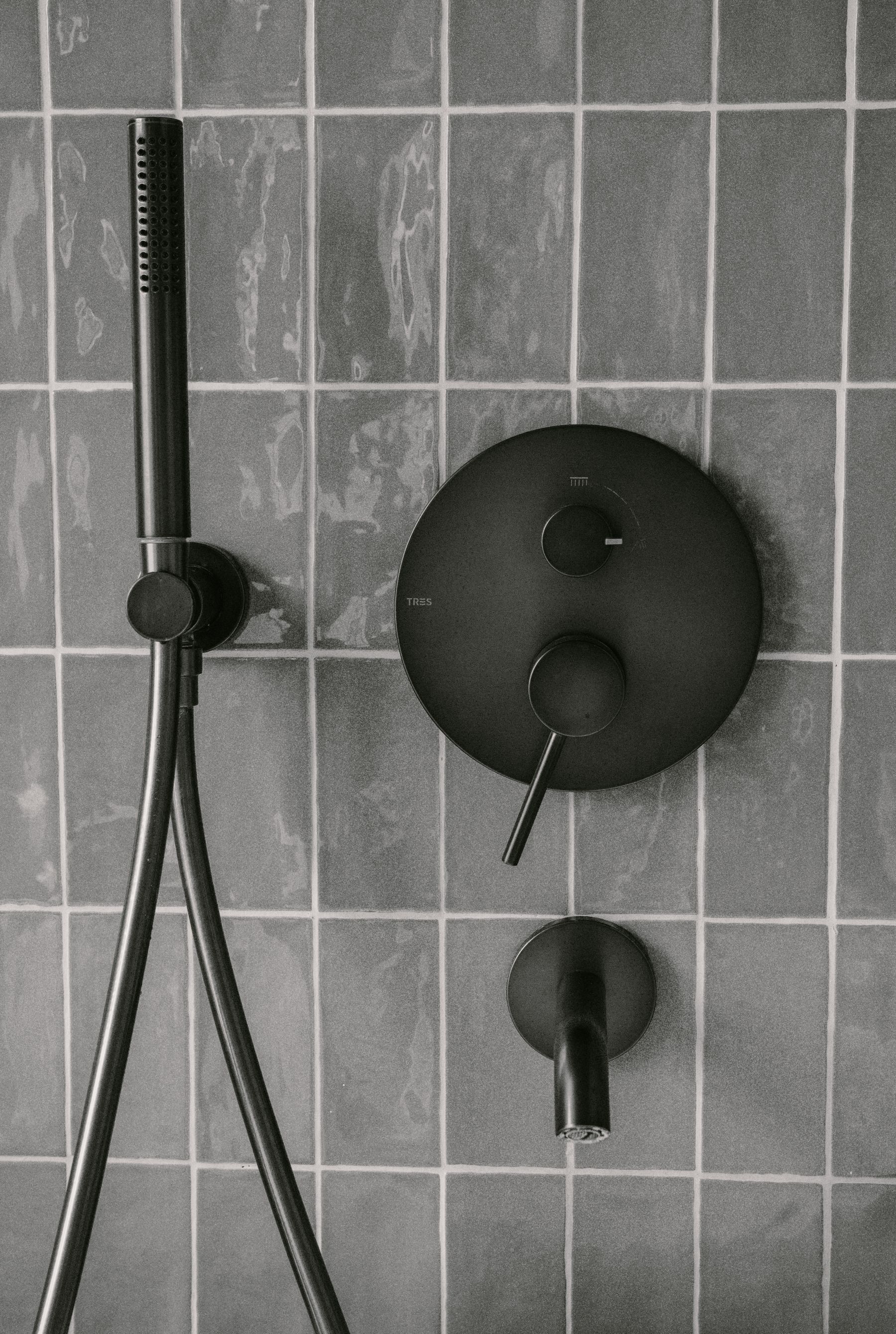
Use Black Fittings as Punctuation
Matte black taps, frames and rails can outline a pale grey scheme, but repeating them on every possible fitting may turn the room into a black-accent formula. Use black where it clarifies a functional line or balances a dark window frame. Check contrast, coating durability and mineral marks. For a genuinely black-dominant direction, continue to [Black Bathroom Ideas](/ideas/black-bathroom-ideas/) rather than adding more isolated accents.
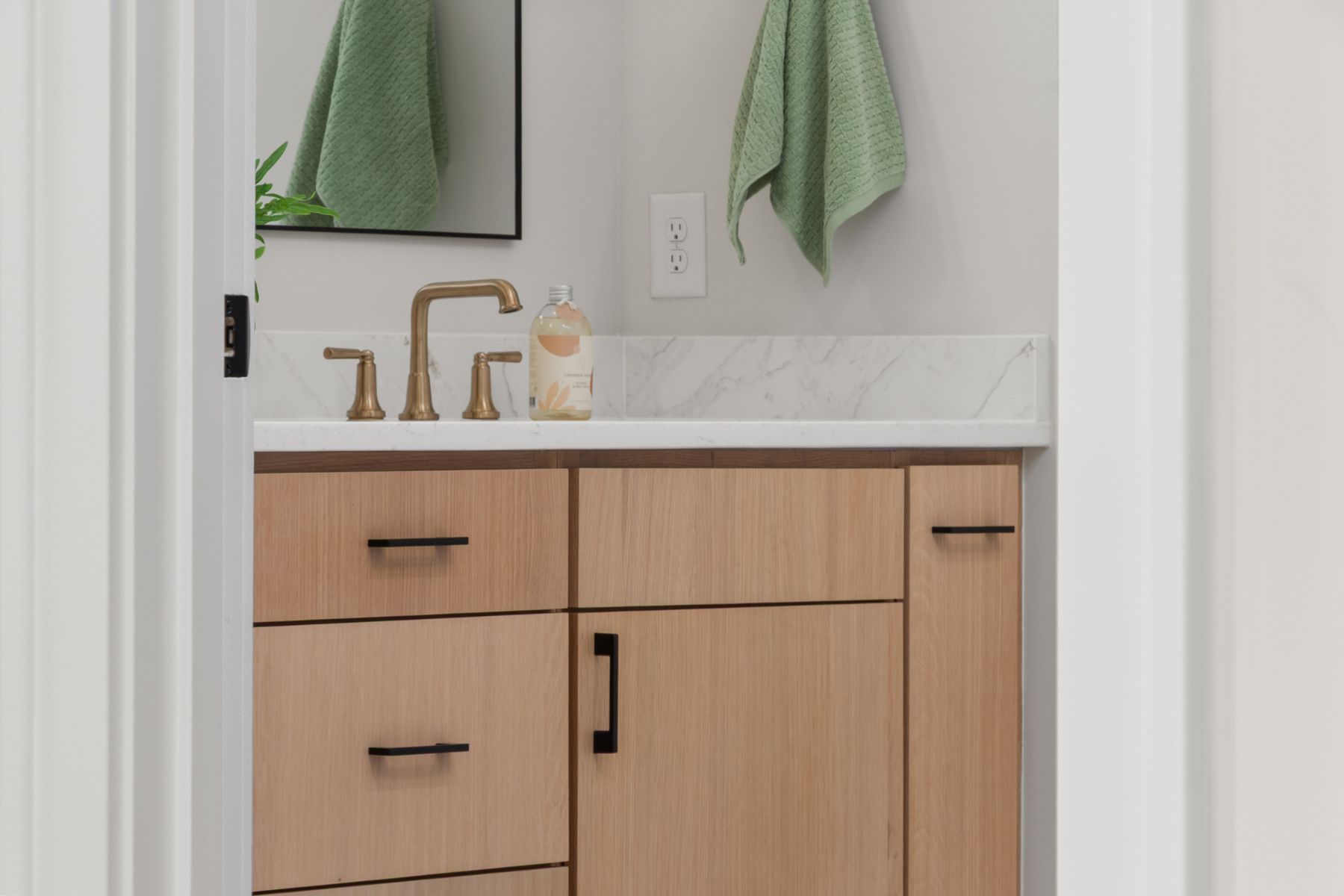
Add Brass Without Forcing Luxury
Warm brass can lift taupe-grey stone and connect naturally with timber, but it does not need to appear on every hinge and accessory. A faucet, mirror frame or pair of sconces may provide enough warmth. Match undertones and decide whether the finish should remain stable or develop patina. More decorative geometry belongs in [Art Deco Bathroom Ideas](/ideas/art-deco-bathroom-ideas/) when metal becomes part of a stronger historical style.
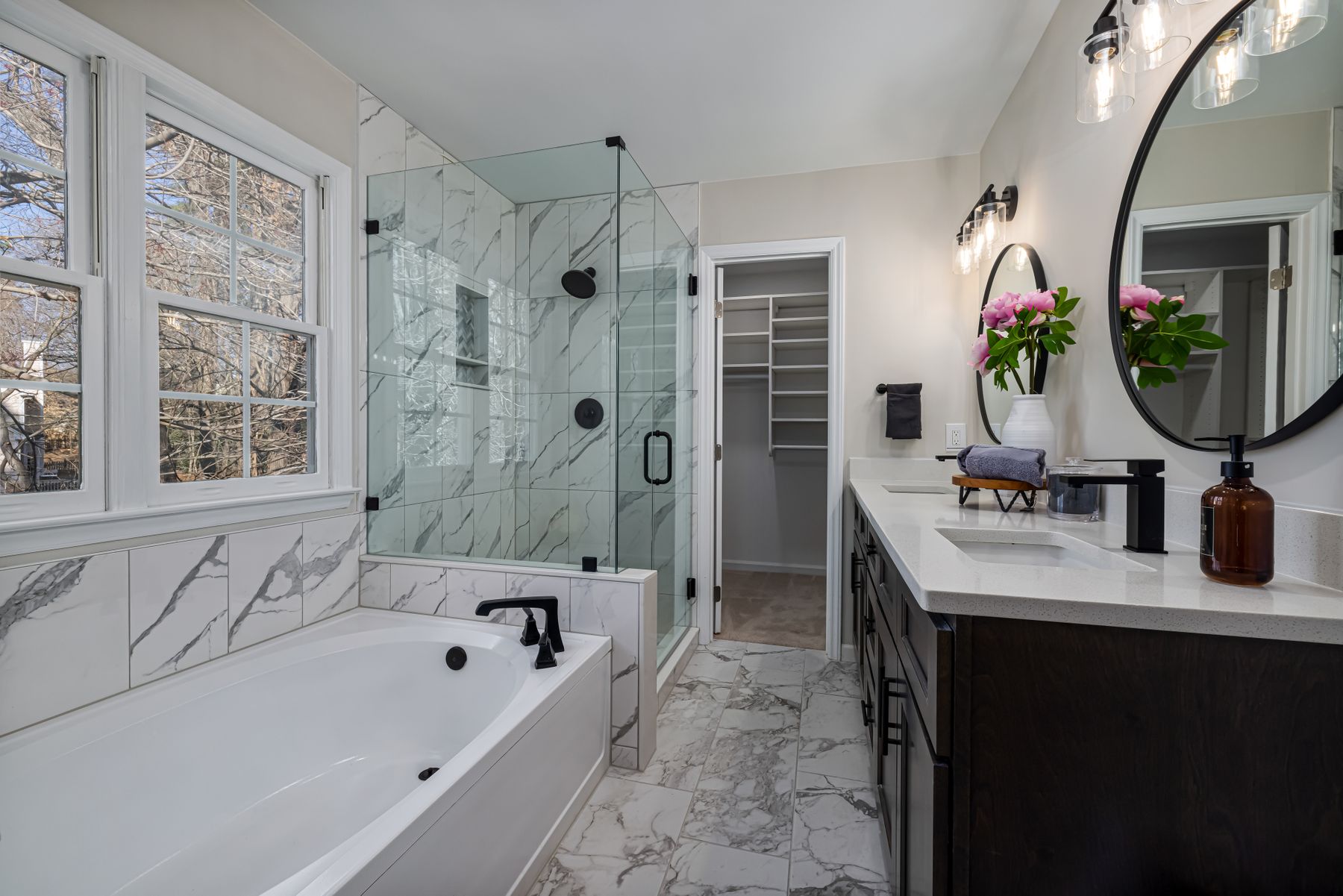
Run the Grey Bathroom Night Test
Grey often loses nuance when daylight disappears. Under evening light, cabinet, floor, wall and stone can collapse into the same middle value even if they felt distinct during the day. Use mirror light for faces, task light where needed and enough ambient or grazing light to preserve surface texture. The goal is not simply brightness; it is to maintain the value structure after sunset.
Protect Daylight and Privacy Together
Daylight reveals subtle grey undertones better than artificial light, but glazing must still protect the bather. High windows, obscure glass, external screening and carefully composed views offer different balances of light and privacy. Check the window from outside after sunset because an interior grey scheme may silhouette users strongly. Compare strategies in [Bathroom Window Ideas](/ideas/bathroom-window-ideas/).
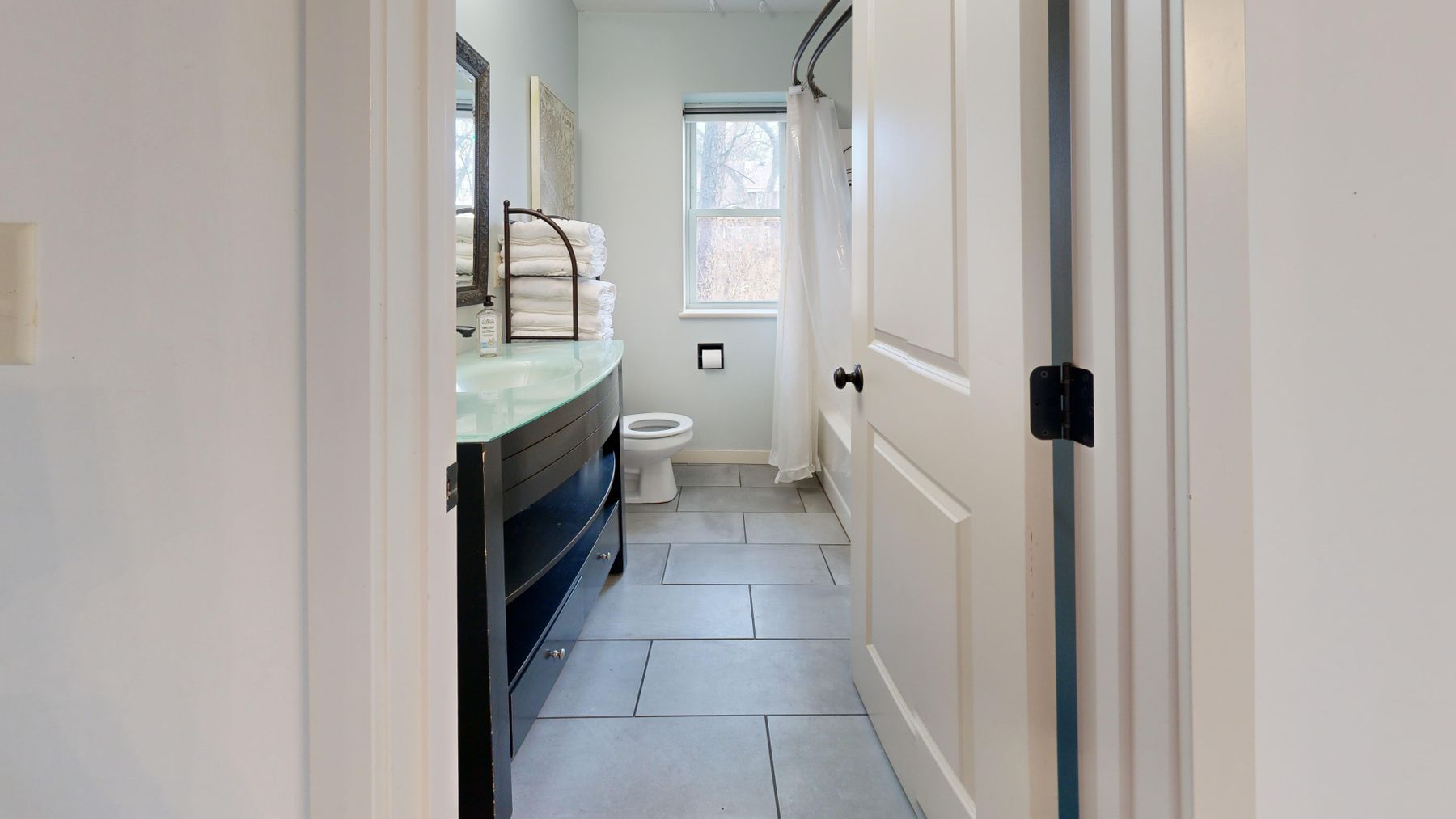
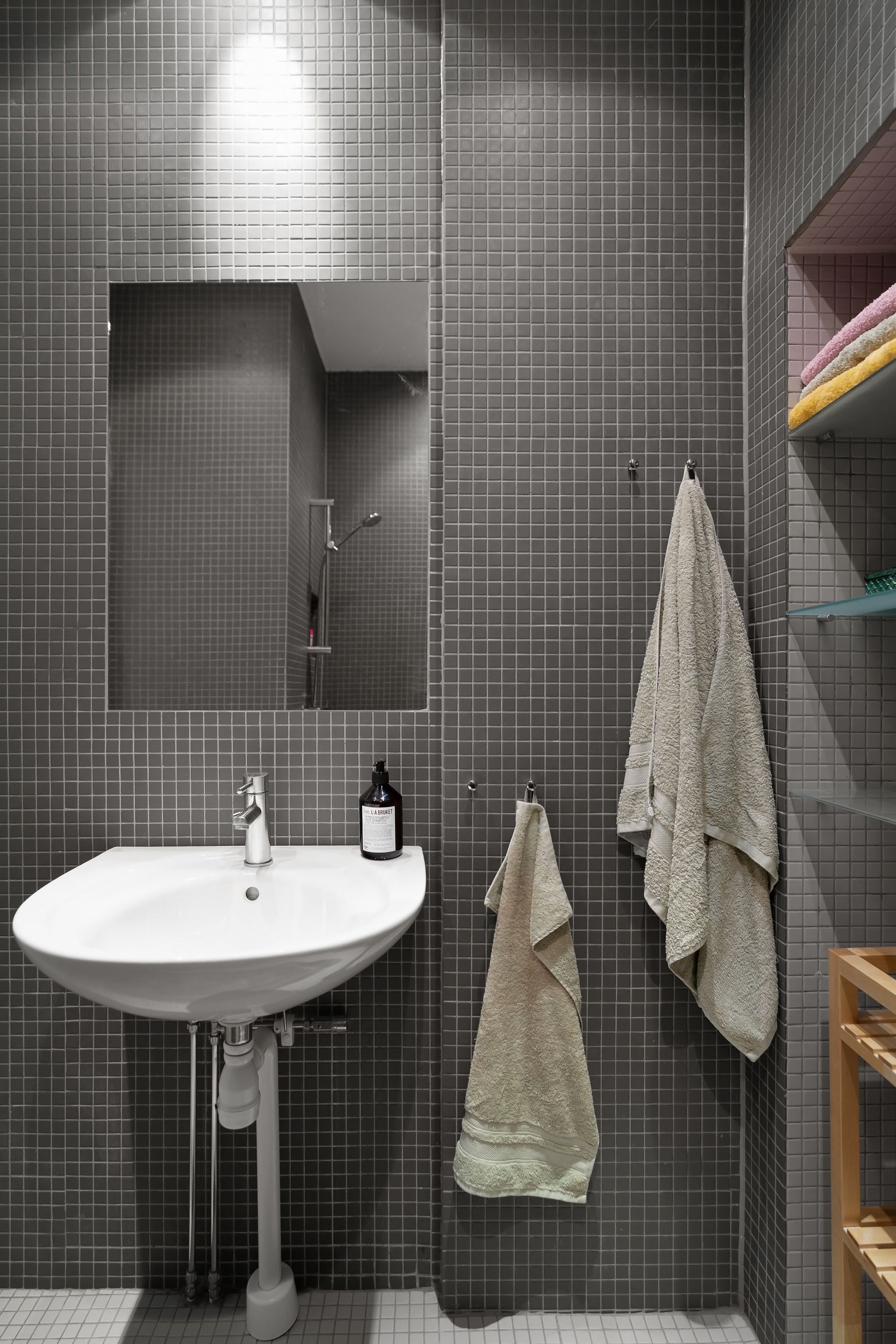
Keep a Small Grey Bathroom Clear Around the Face
A compact room can use grey successfully when the mirror, basin and main floor path remain bright and readable. Put deeper grey lower down, inside the shower or on one continuous plane rather than breaking every surface into small dark patches. Avoid an oversized mid-grey vanity that visually narrows circulation. [Small Bathroom Ideas](/ideas/small-bathroom-ideas/) covers the underlying layout and storage tests.
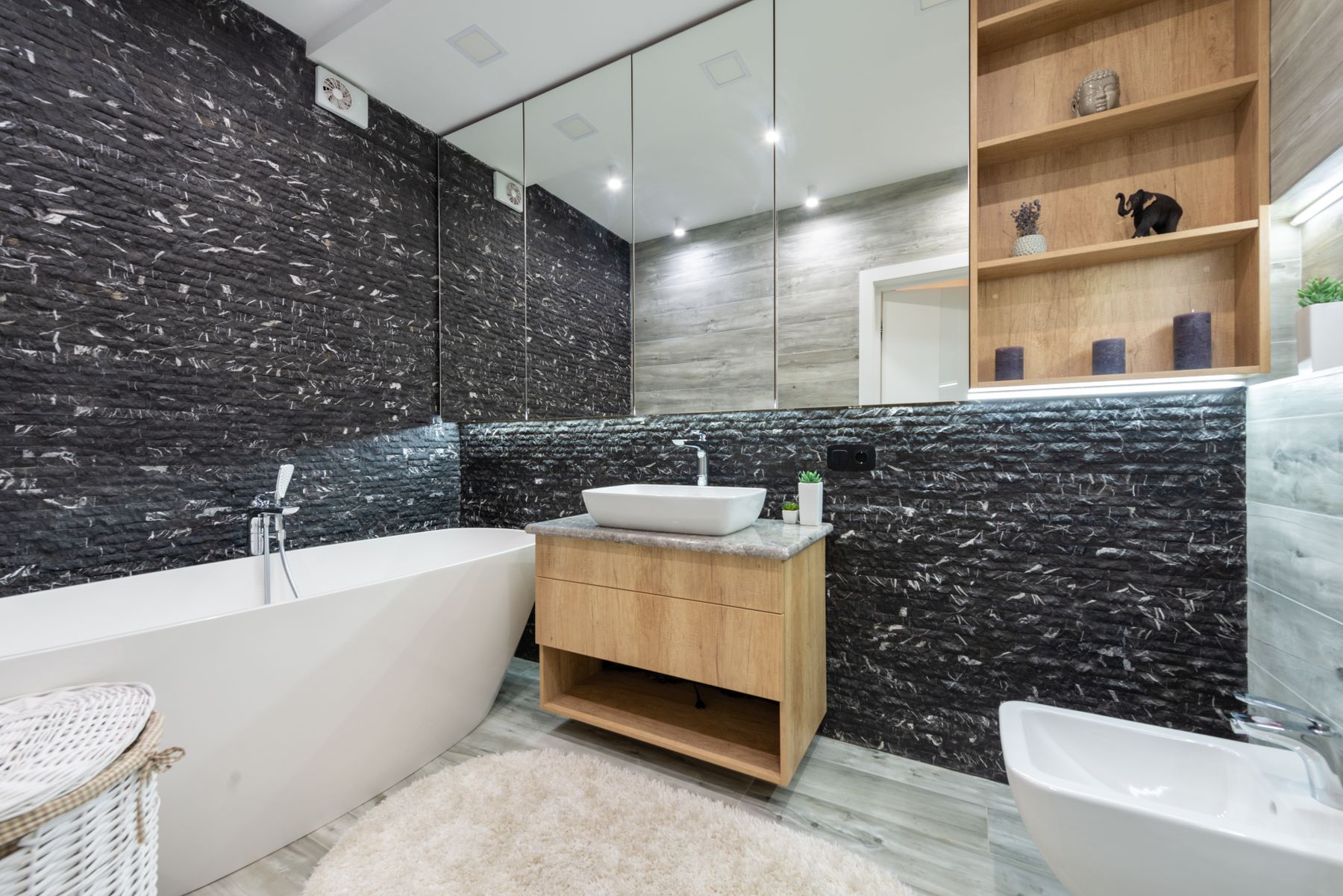
Give Charcoal One Architectural Job
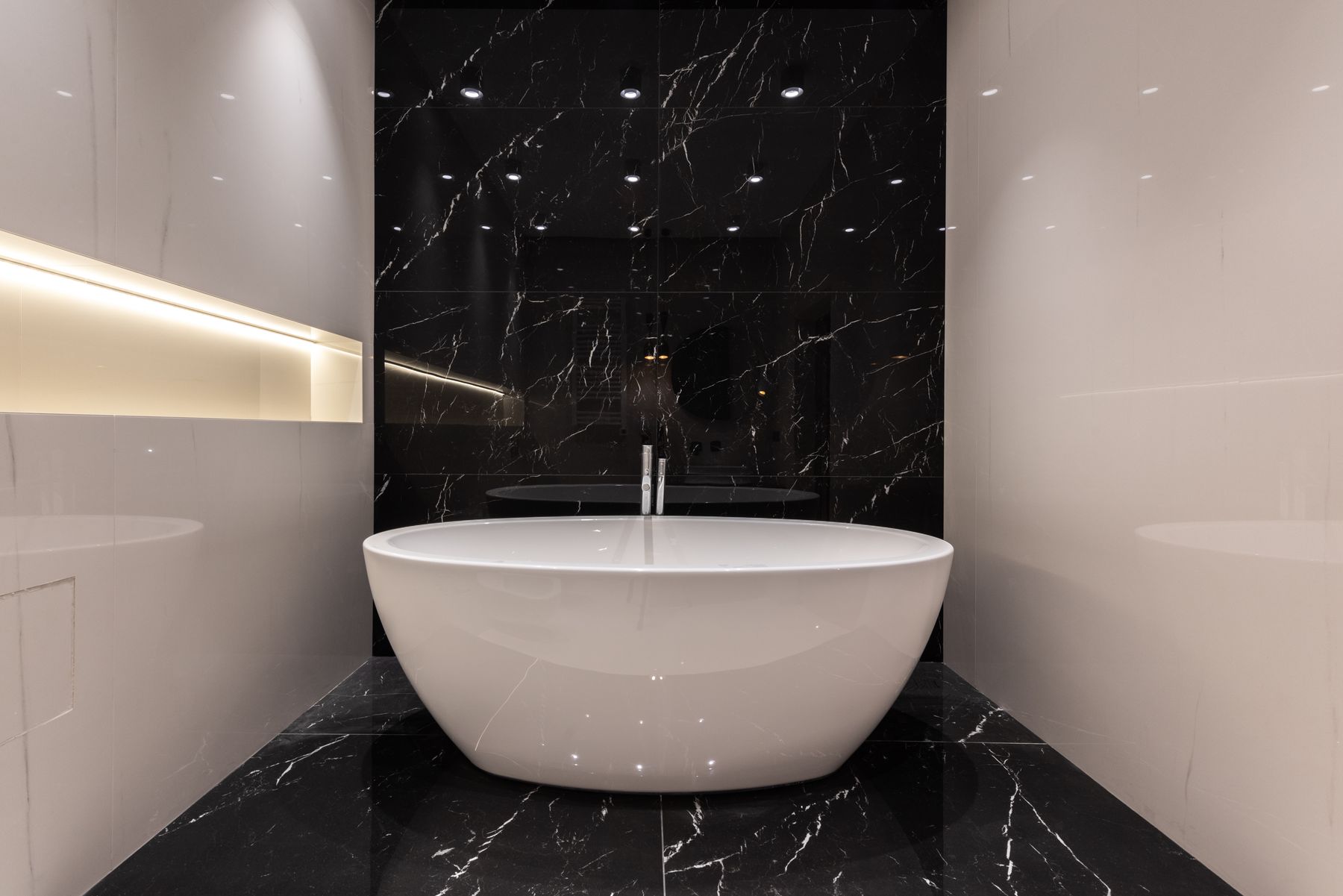
Charcoal is strongest when it has one explicit role: shower enclosure, vanity, floor, bath surround or a single wall plane. Scattering dark grey through small fittings and accessories weakens its architectural effect and can make the palette look accidental. Let one bounded dark mass anchor the room, then use lighter greys and ceramic to preserve legibility.
Use Pattern Without Losing the Neutral Base
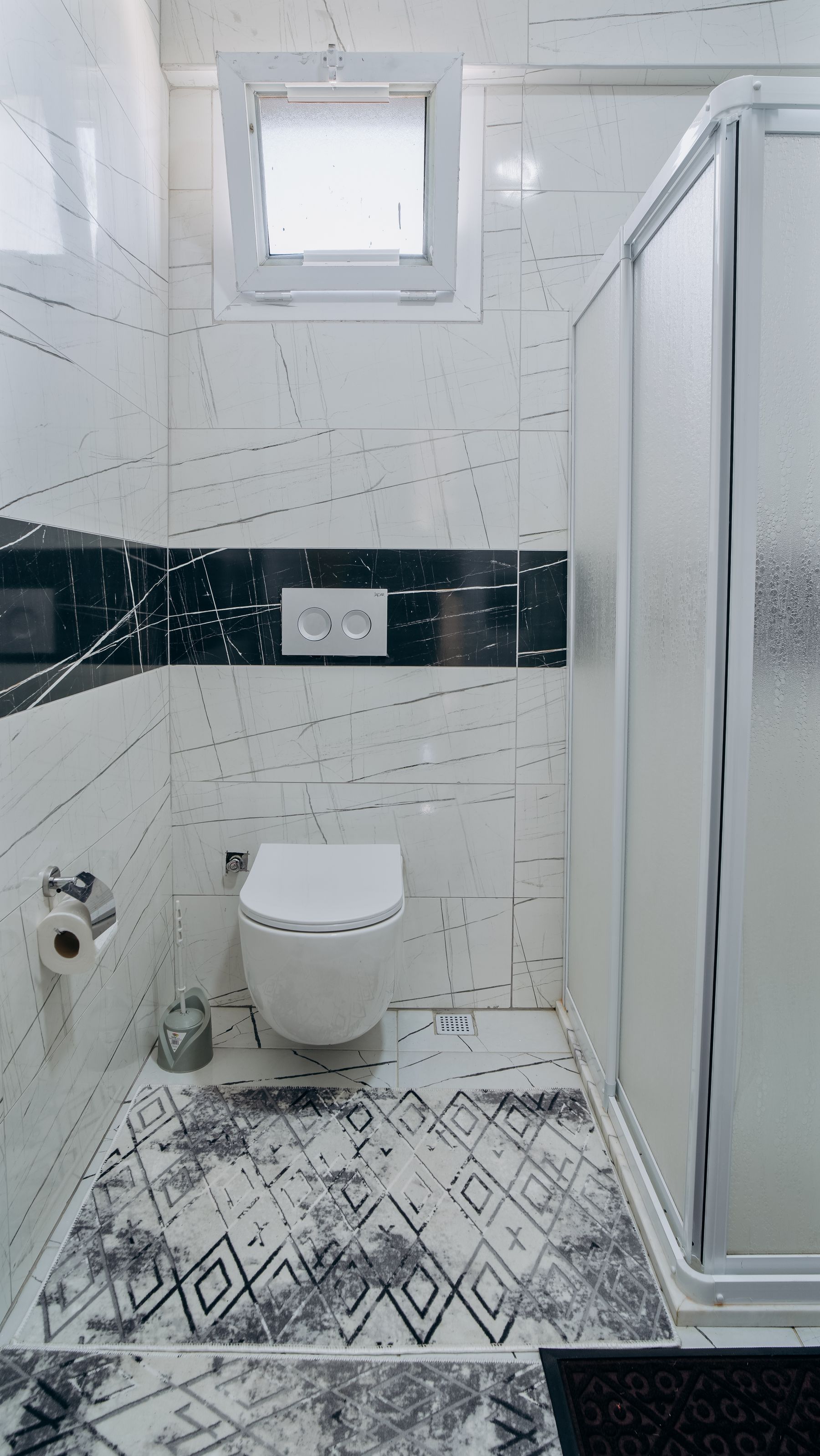
Herringbone, terrazzo, geometric tile or veined stone can give grey character, but pattern needs hierarchy. Use one principal patterned plane and keep surrounding grout, cabinetry and textiles quieter. In a small room, pattern scale should be judged from the doorway and normal standing position. Avoid combining several grey patterns merely because their colors technically coordinate.
Bring in Greenery Only Where It Can Thrive
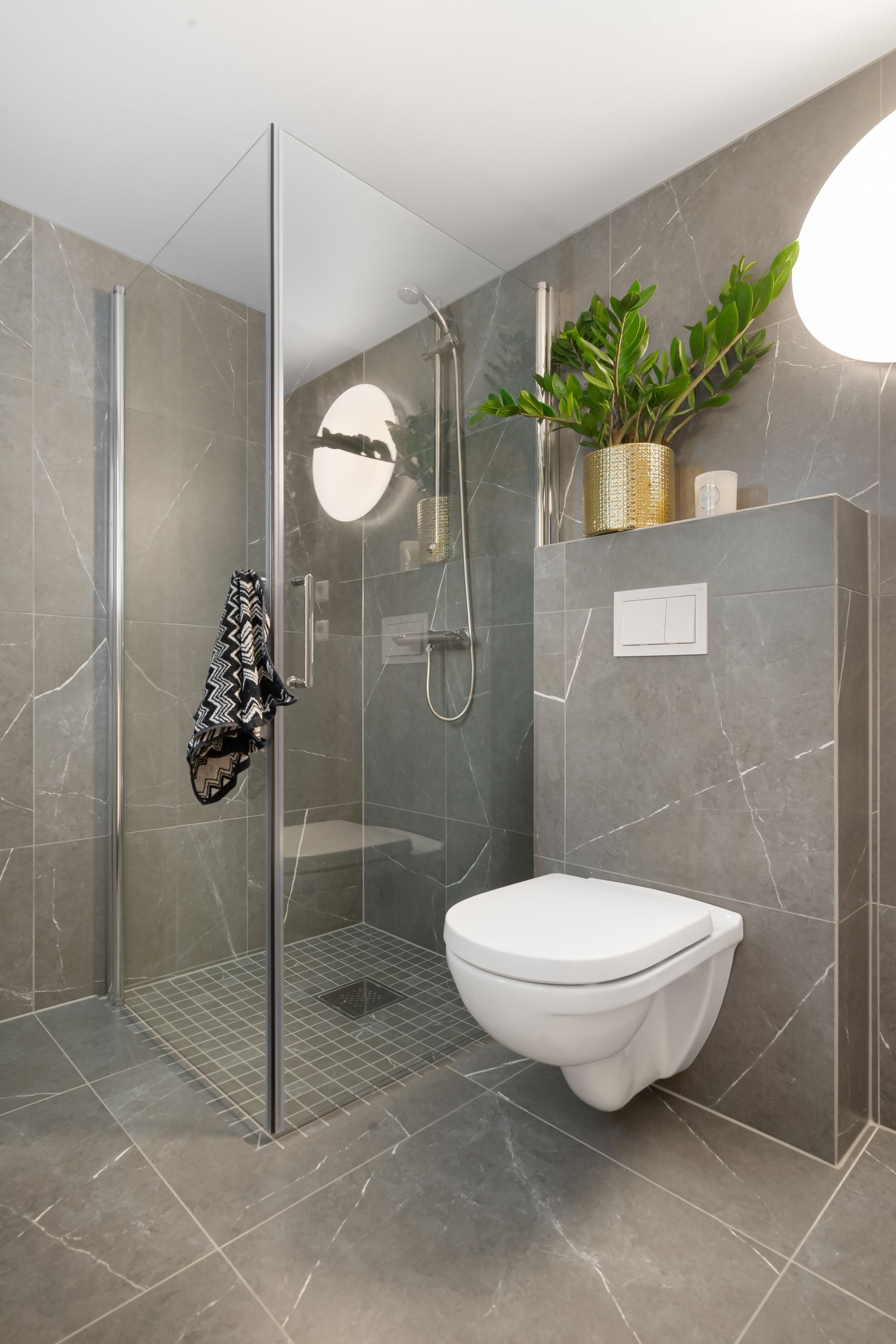
Green foliage can relieve a mineral grey palette and provide a natural color reference, but a plant is not a permanent styling prop. Match species to actual daylight, temperature and humidity, and keep soil or watering away from vulnerable surfaces. One healthy plant has more value than several failing ones. For a color-led green interior, use [Green Bathroom Ideas](/ideas/green-bathroom-ideas/) instead.
Plan Storage Before Grey Becomes the Disguise
Grey cabinets do not solve clutter if daily items still cover the countertop. Assign shallow storage near the basin, protected space in the shower and separate capacity for towels, backups and cleaning supplies. Interior lighting may be useful inside darker cabinetry. The categories and reach tests in [Bathroom Storage Ideas](/ideas/bathroom-storage-ideas/) should determine the unit before its grey finish.
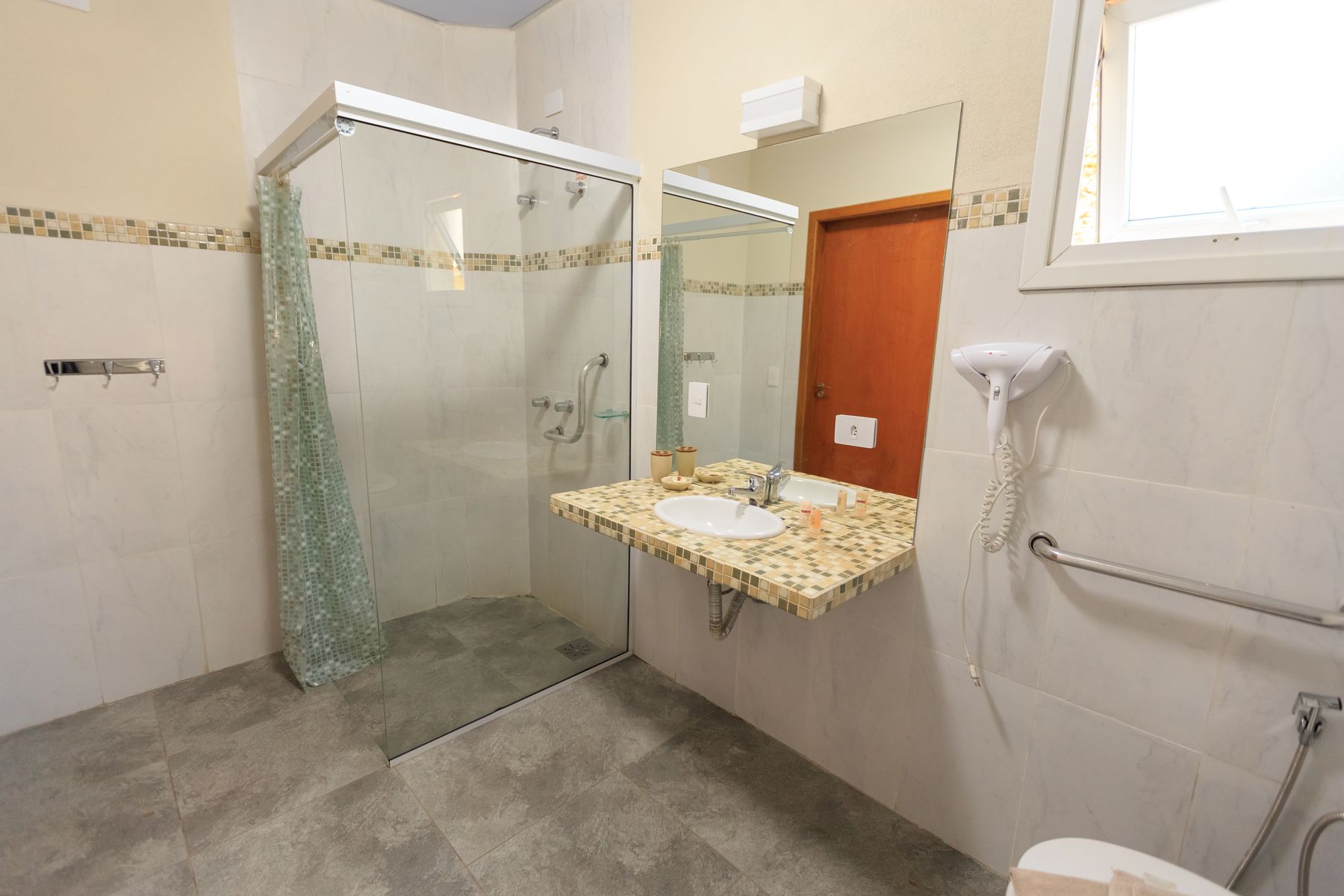
Keep Floor Transitions and Controls Visible
A tonal grey scheme can conceal shower thresholds, support points and changes of level if adjacent surfaces share the same value. Use contrast in sheen, grout, metal, light or material to clarify edges without adding a bright accent color. Support bars must be properly anchored and positioned for the user. [Aging-in-Place Bathroom Ideas](/ideas/aging-in-place-bathroom-ideas/) offers the wider movement and reach framework.
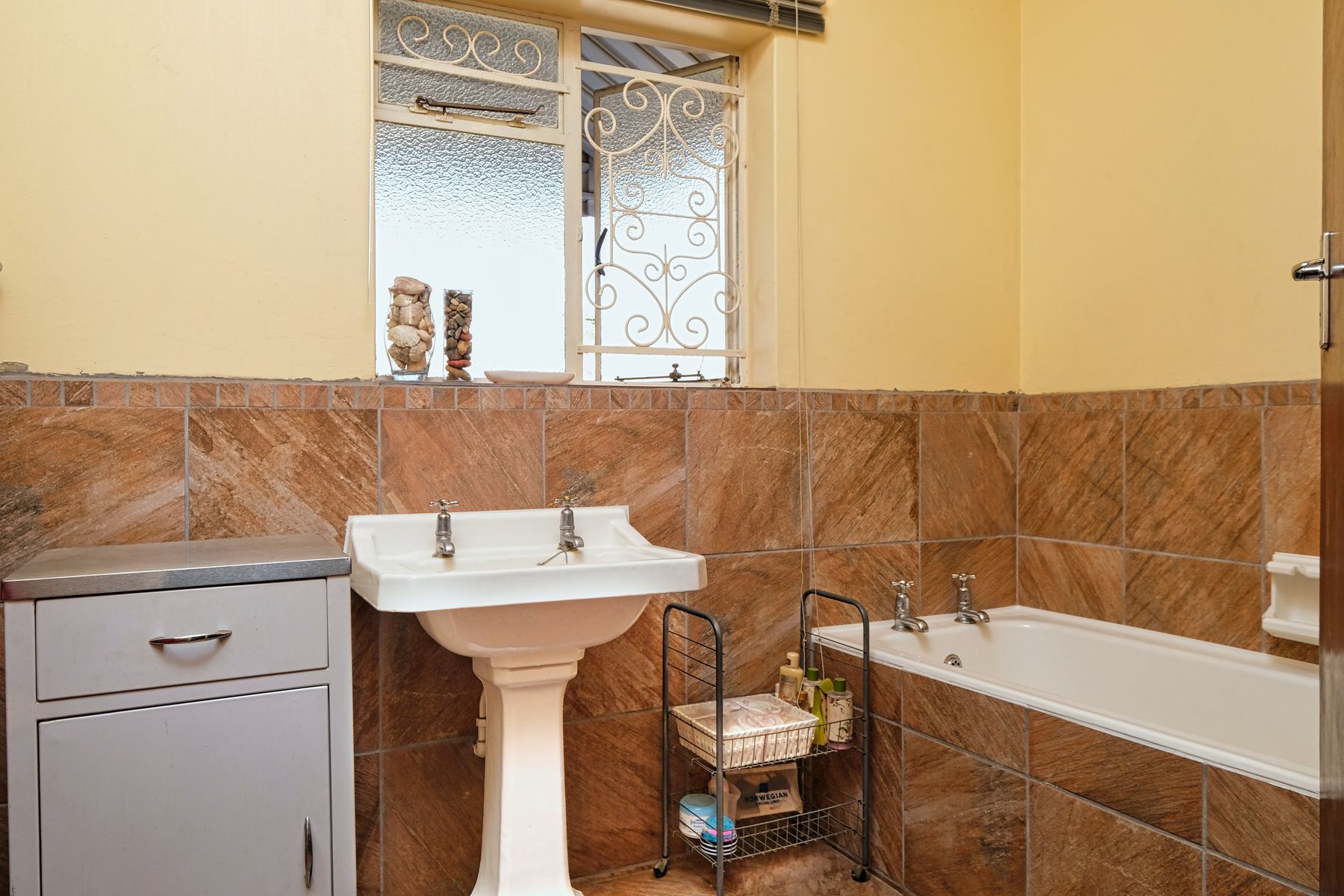
Specify the Grey Floor for Wet Use
Floor color cannot compensate for unsuitable grip, awkward falls or difficult cleaning. Assess the exact tile or stone finish when wet, along with joint density and transitions into the shower. Highly textured material may improve traction but trap residue; polished stone may belong on a wall instead. Compare assemblies in [Bathroom Flooring Ideas](/ideas/bathroom-flooring-ideas/) and verify technical performance for the installation.
Plan Ventilation and Towel Drying
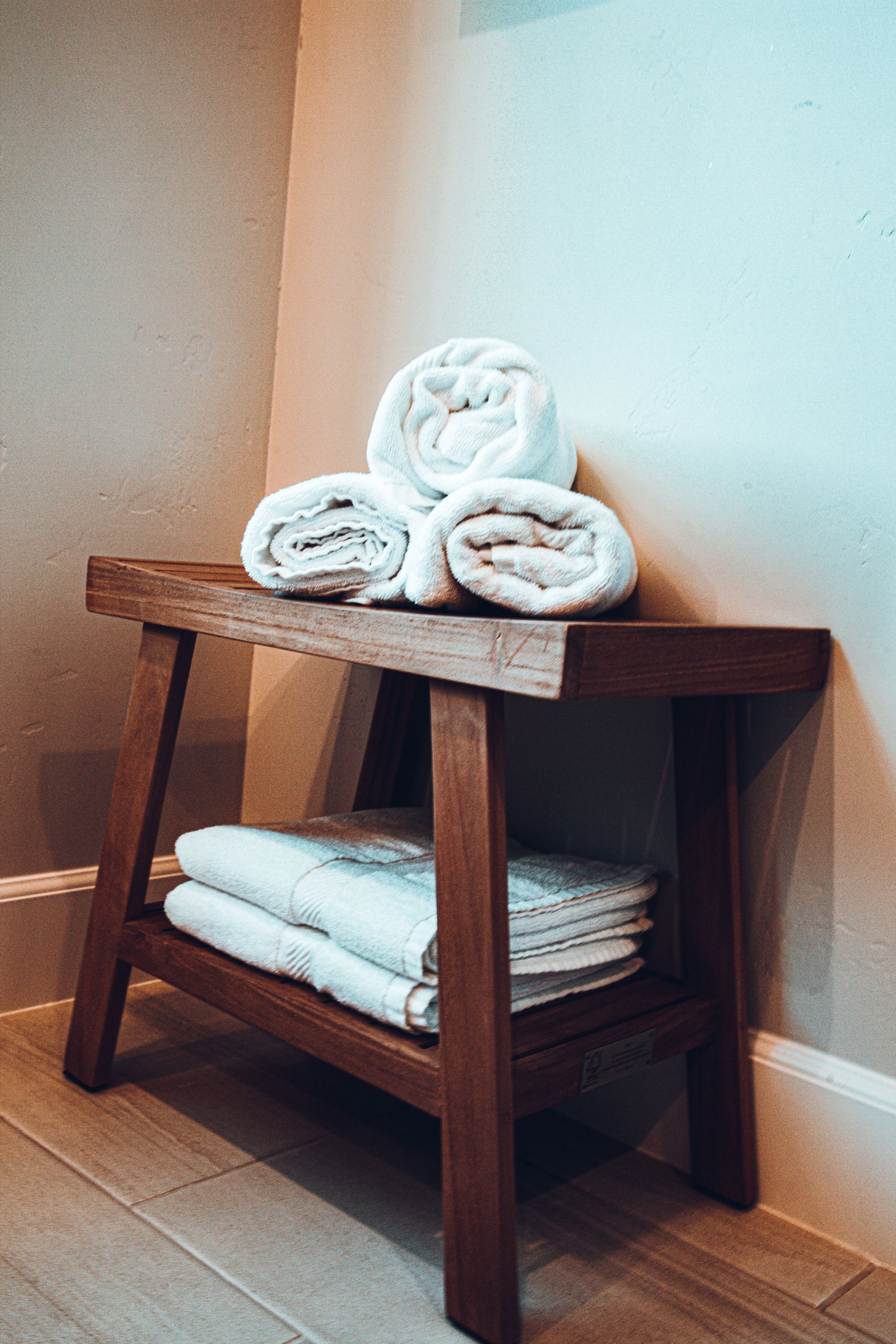
Steam, damp towels and slow-drying joints can make a neutral room feel dull long before finishes fail. Coordinate extraction, make-up air and heating with the shower volume and household routine, and give towels a location where air can reach them. Do not use dark grey to hide condensation or mildew. Fan sizing, ducting and electrical work should follow the room and local requirements.
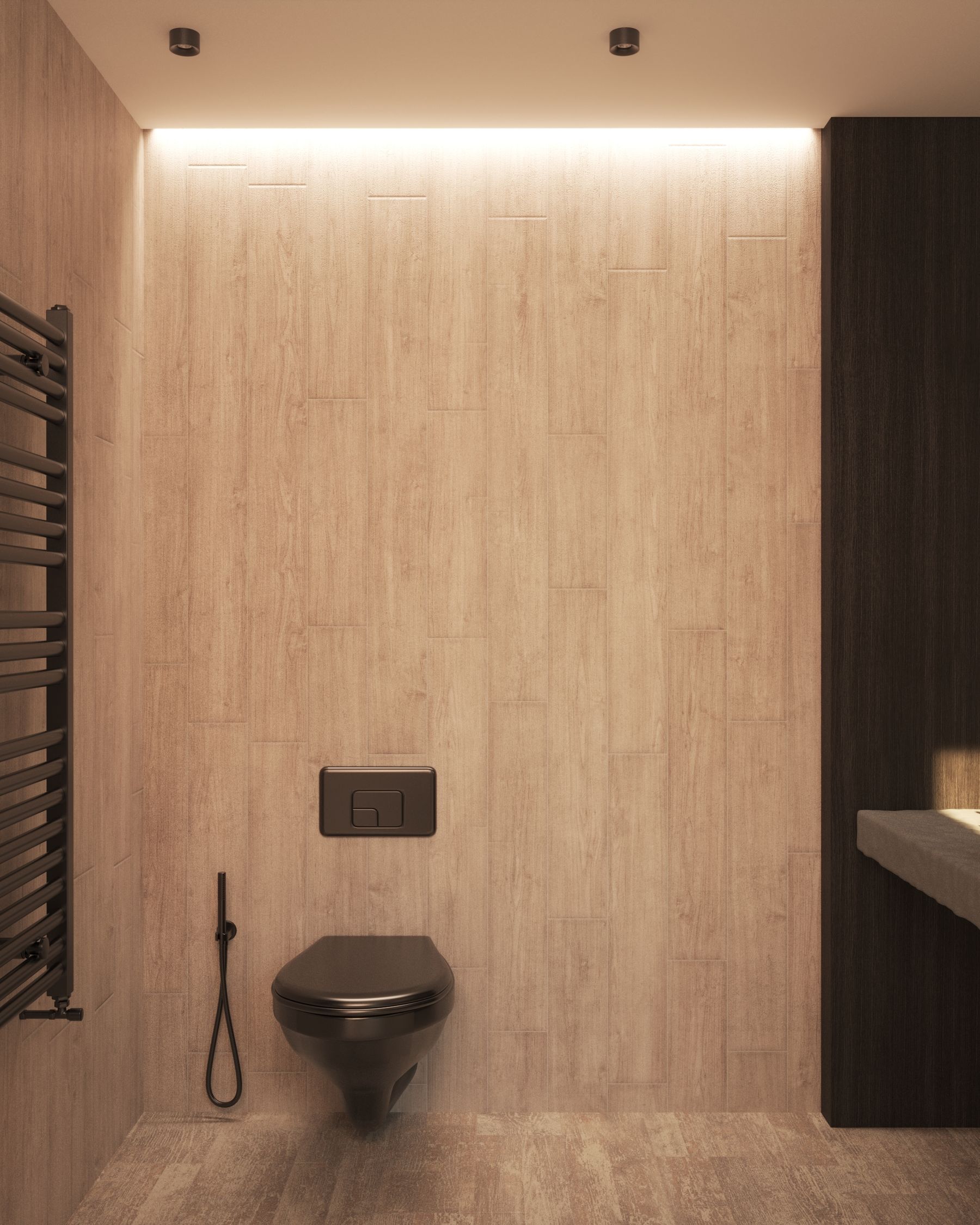
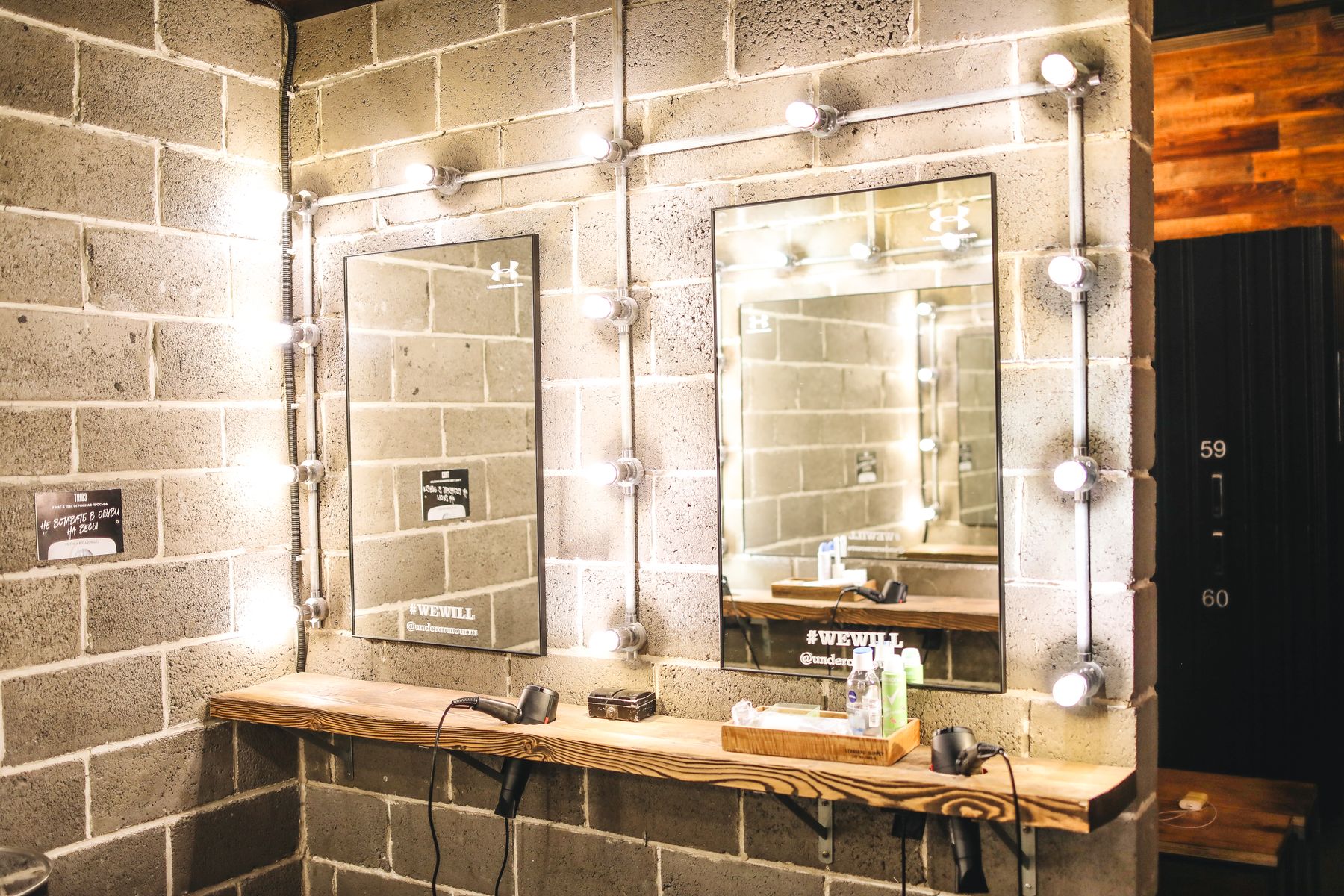
Test Grey for Residue Before Committing
Some grey finishes disguise dust while highlighting soap film, mineral deposits or dried splash. Matte charcoal, concrete-look tile and dark grout can behave very differently once exposed to the household's water and cleaners. Test the actual surface with tap water, soap and intended cleaning products so maintenance becomes part of the specification rather than a surprise.
Refresh a Grey Bathroom Without Replacing Tile
Existing grey tile may need warmth and hierarchy rather than demolition. A timber vanity, improved mirror light, a better storage plan, warmer paint and one coherent metal finish can shift the room substantially. Replace failing grout or sealant for performance, not merely color. Use [Bathroom Remodel Ideas](/ideas/bathroom-remodel-ideas/) to separate cosmetic, service and waterproofing work before setting the budget.
Run a Grey-Palette Decision Test
Assemble the main grey, grout, floor, ceramic, metal, timber and textile on one board. View it in morning, overcast and nighttime conditions; wet the relevant pieces and photograph them from the doorway. Compare the result with a warmer Neutral Bathroom alternative and a darker charcoal version. Choose grey only when its undertone, depth and maintenance improve the room rather than simply avoiding a clearer color decision.