Define Organic as a Relationship, Not a Beige Look
Begin with the qualities the room should borrow from nature: filtered light, irregular texture, gradual transitions, tactile temperature, visible aging or a framed landscape. Organic is not shorthand for cream paint, a timber stool and one vase of stems. A dark stone room can be organic; so can a light contemporary one. What matters is whether form, material, light and use feel connected rather than applied as decoration. [Neutral Bathroom Ideas](/ideas/neutral-bathroom-ideas/) is the better destination when the primary decision is simply a low-chroma palette.
Choose an Organic Design Lane
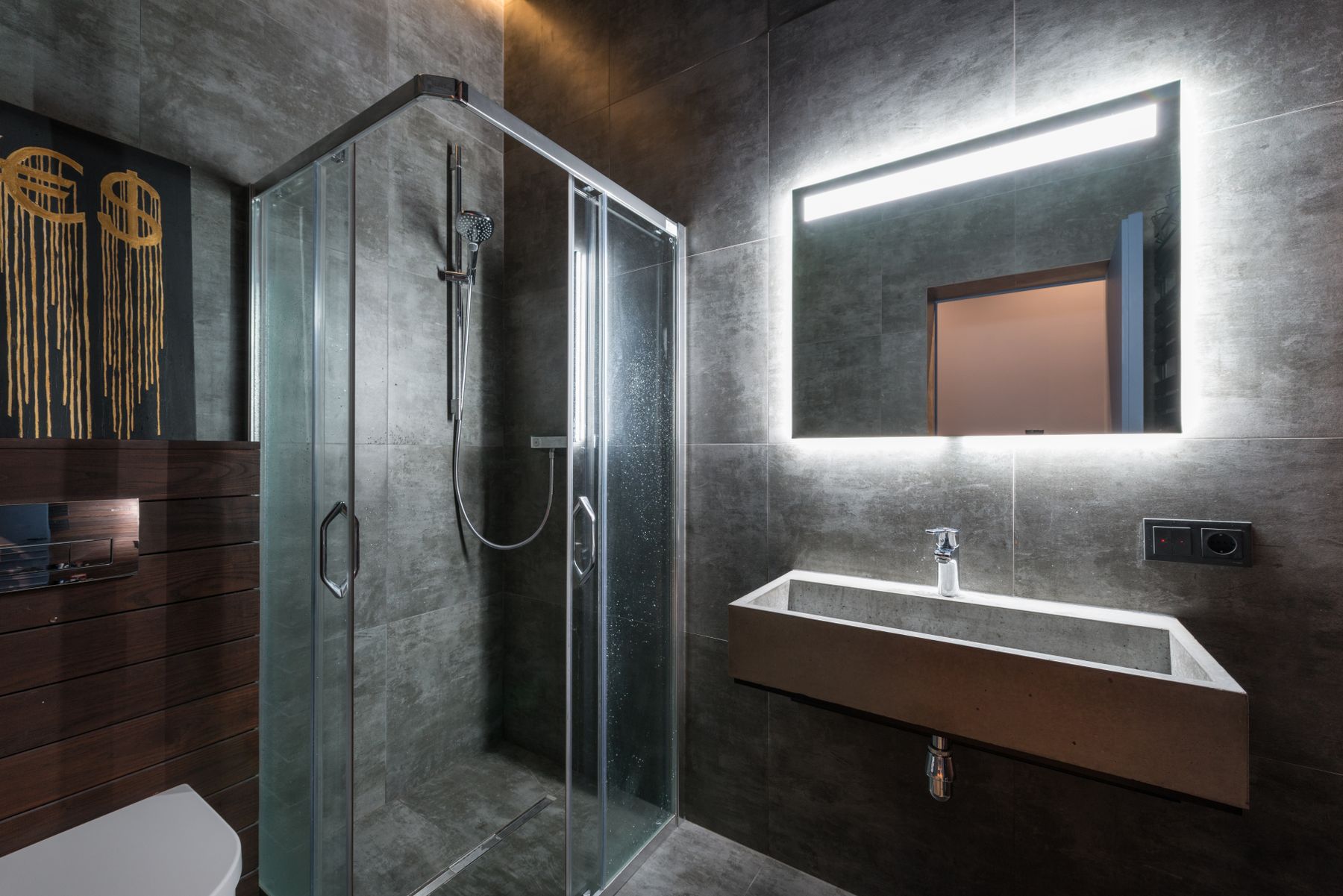
Organic modern uses clean planning with softened silhouettes and natural variation. Biophilic design prioritizes daylight, view, planting and sensory connection. Earthy handmade schemes use plaster, clay, irregular tile and crafted objects, while sculptural mineral rooms rely on stone, concrete-like forms and monolithic basins. Select one lane to lead and borrow sparingly from another. Otherwise every natural-looking object competes. If strict Nordic-Japanese restraint and cultural references are central, [Japandi Bathroom Ideas](/ideas/japandi-bathroom-ideas/) offers a more accurate framework.
Start With Site, Climate and Existing Architecture
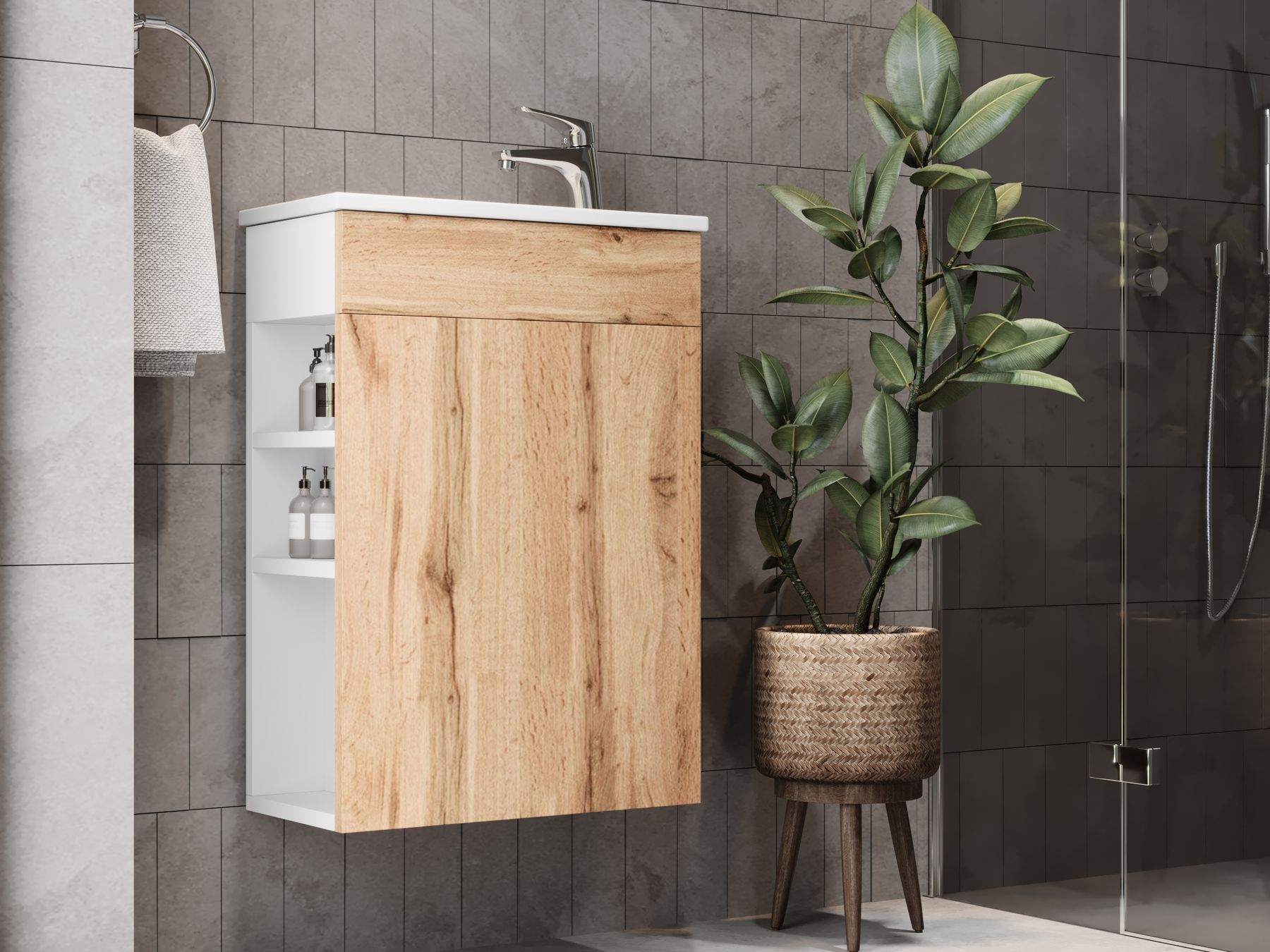
Survey orientation, climate, window position, wall construction, existing timber, usable views and the room's moisture pattern before building a mood board. A sunny dry climate may support different plaster and shading decisions from a cold external wall with persistent condensation. Preserve useful original stone or wood when it can be repaired, but do not romanticize damaged material. In an apartment without a landscape view, reflected daylight, natural variation and one healthy plant may provide the connection. Let the building determine which organic gestures are authentic and technically manageable.
Frame a Real View Before Adding Decor
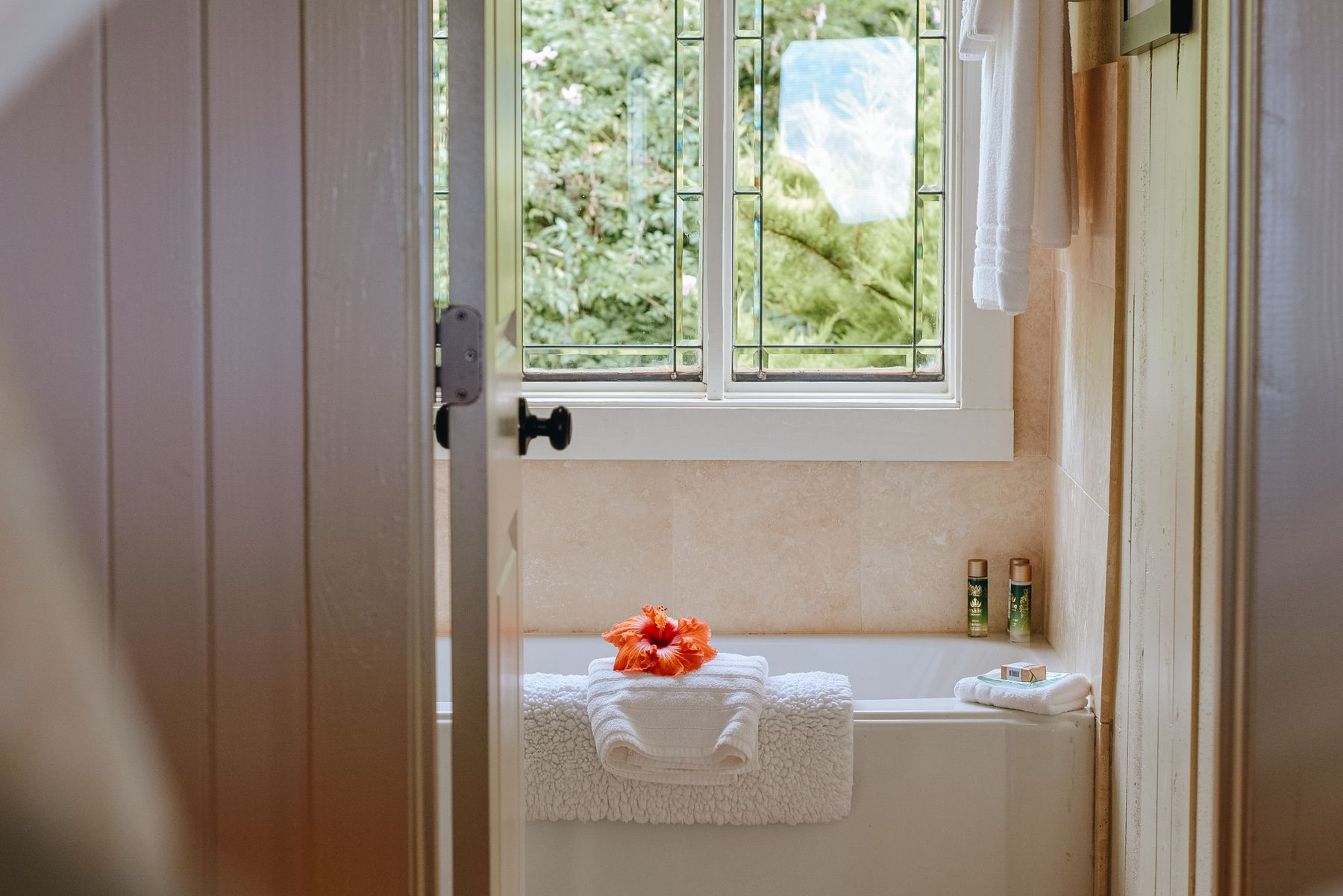
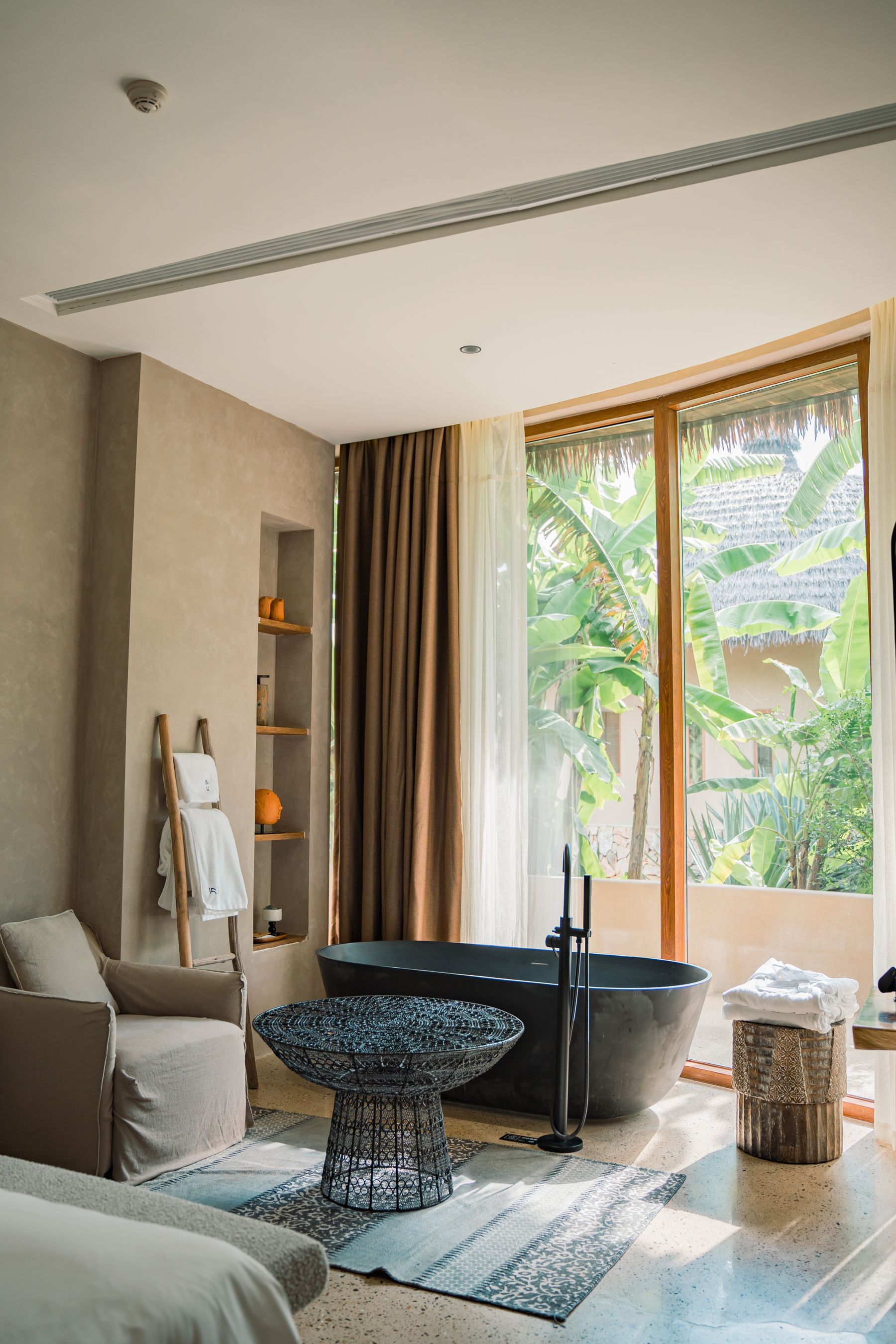
Where privacy allows, organize the bath, shower or vanity sightline around sky, trees or garden rather than treating the window as leftover wall area. Check the view from seated and standing positions, not only the doorway photograph. Use obscured lower glazing, screening or planting to protect privacy while retaining upper light. Avoid blocking the best view with storage that could sit elsewhere. [Tropical Bathroom Ideas](/ideas/tropical-bathroom-ideas/) is distinct when climate, lush foliage and resort character lead; Organic can work with a sparse winter branch or open sky.
Use Daylight as a Material
Daylight gives stone, plaster, timber and handmade tile their changing depth. Bring it from the side or above where possible, then control glare, privacy and UV exposure. A skylight can wash a textured wall without exposing the bather; a high window can show sky and retain privacy. Do not enlarge glazing without considering heat loss, summer gain and cleaning access. Provide dependable electric light for dark hours because an organic atmosphere should not reduce mirror accuracy or safe navigation. [Bathroom Lighting Ideas](/ideas/bathroom-lighting-ideas/) can help coordinate those layers.
Soften Geometry Without Losing Clearances
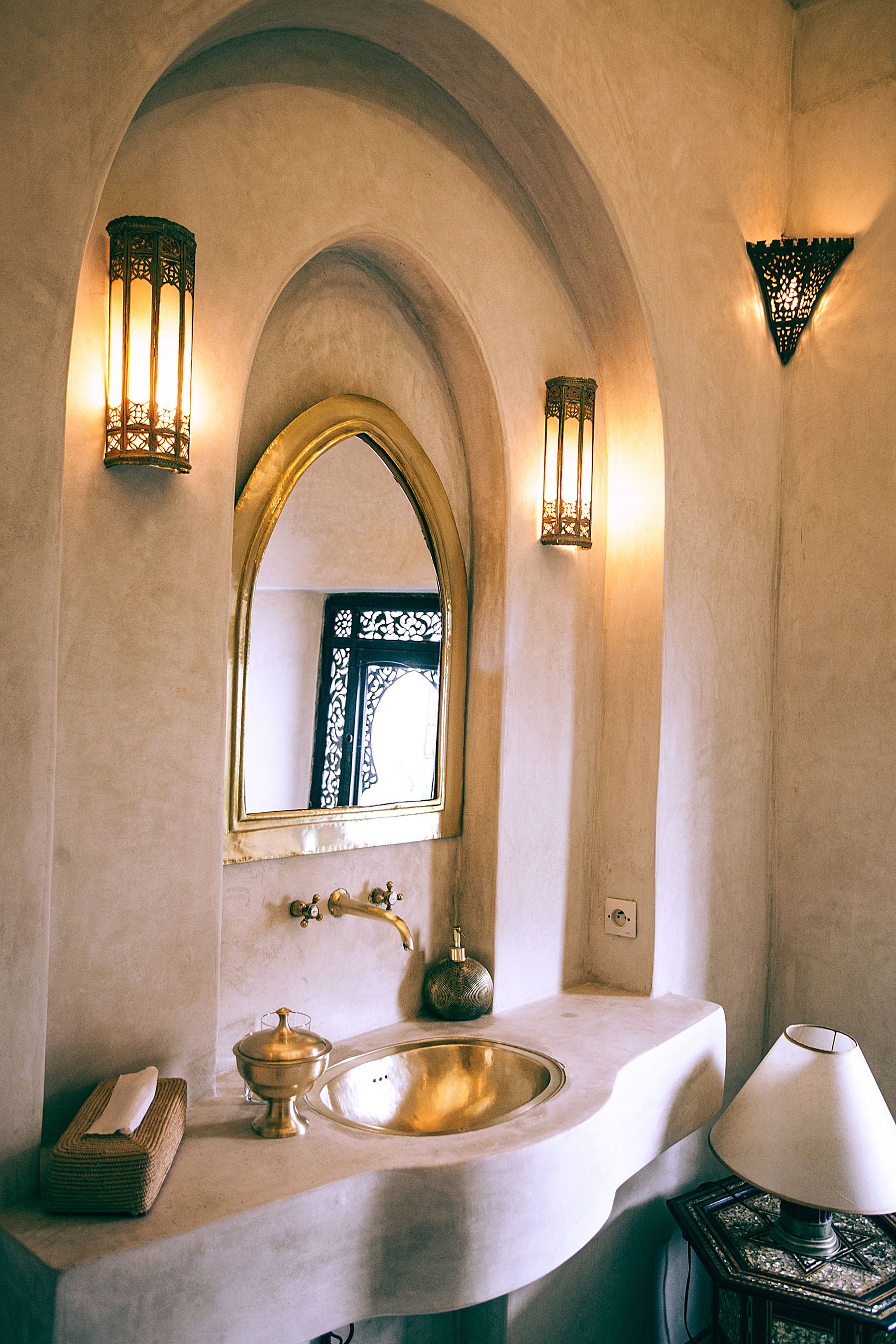
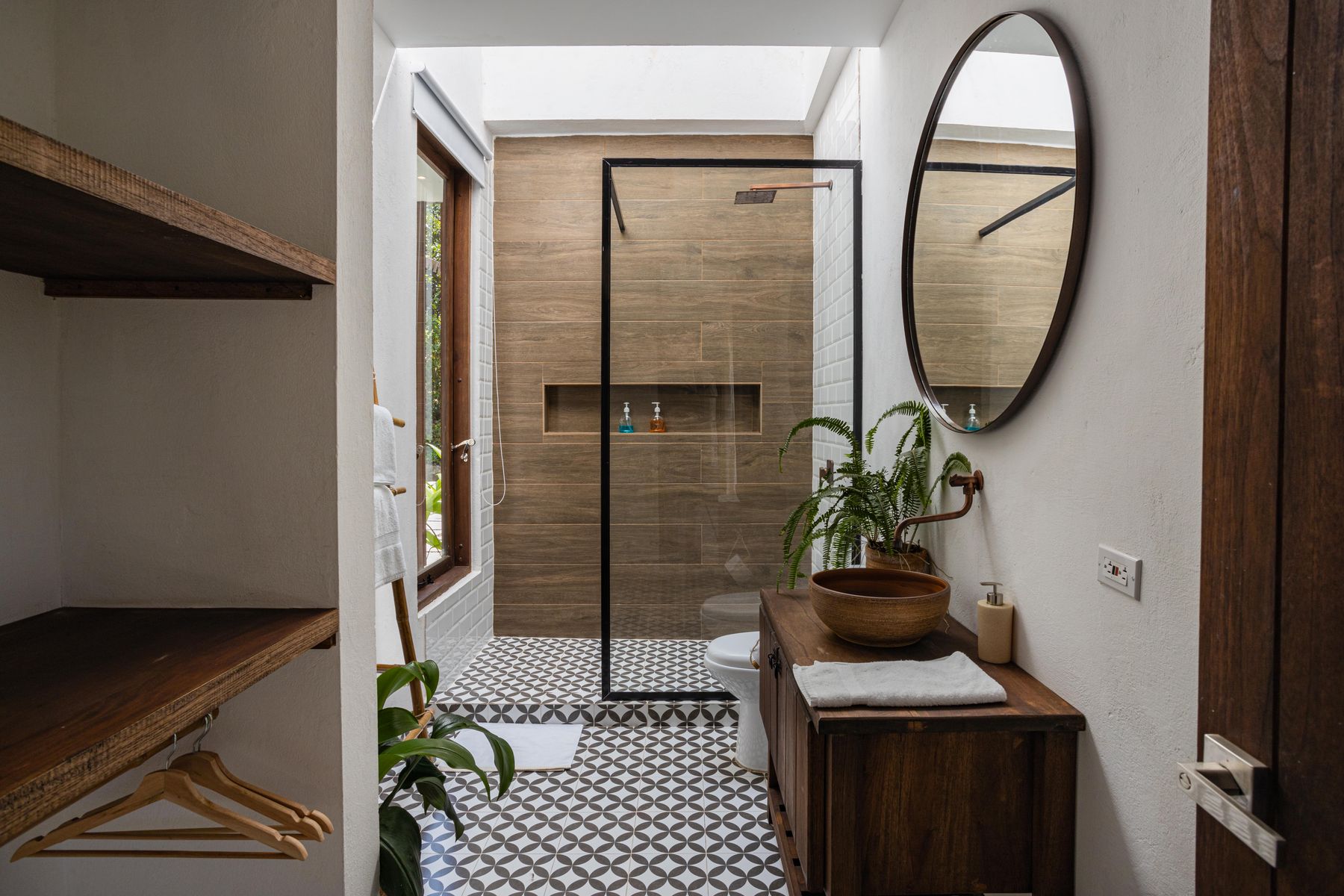
Rounded corners, an arched niche, oval mirror or curved vanity can soften a hard tiled room, but every radius should preserve approach, door swing, storage and cleaning access. Use curves where the body moves or light changes direction, not on every edge. A broad bend may improve circulation around a bath; a fashionable fluted basin can create difficult crevices. Draw the tangent between curved and straight materials at full scale. Organic form is most convincing when it solves the plan while reducing abrupt visual transitions.
Build an Earth Palette From Actual Samples
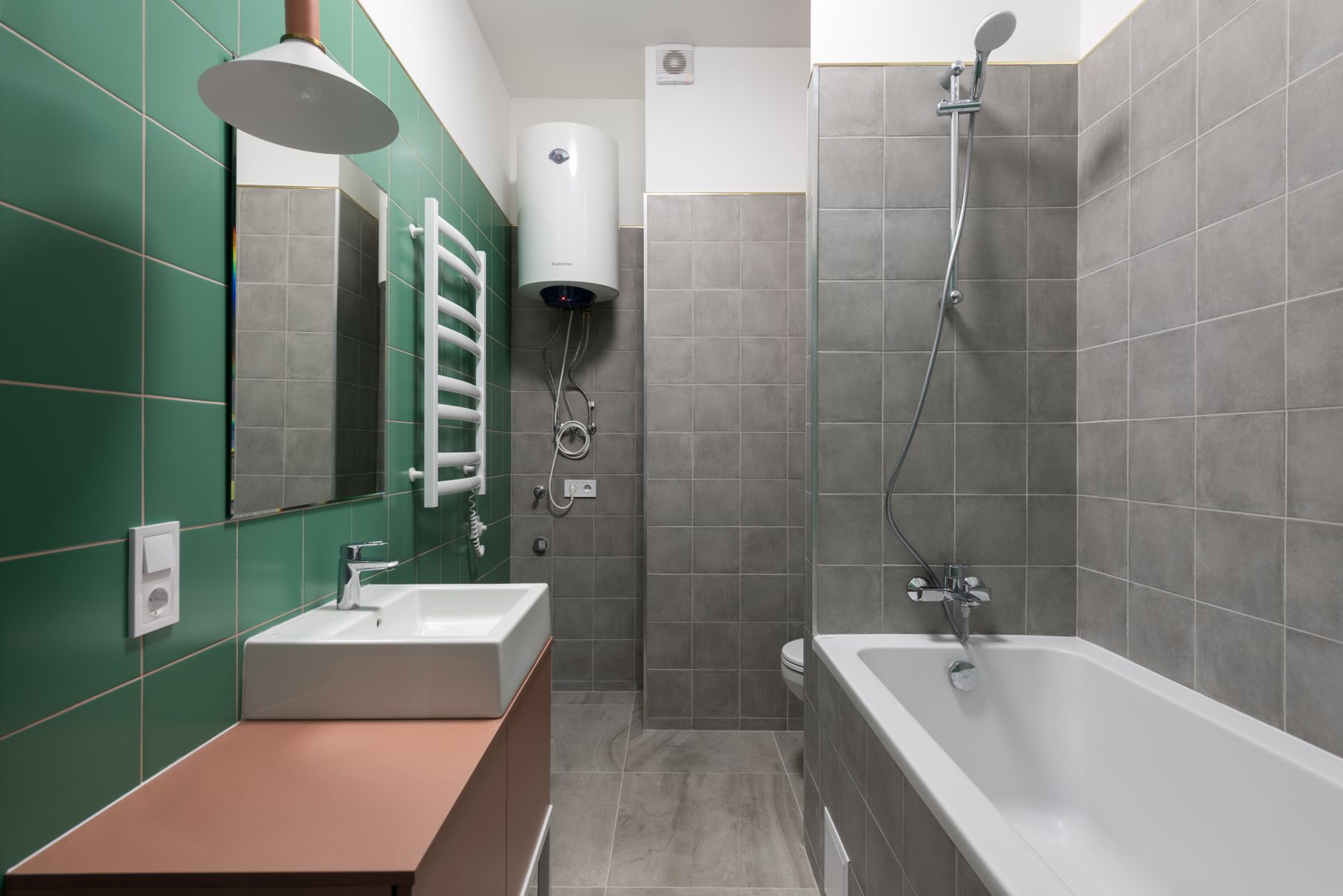
Sample the local or chosen materials first, then derive paint, grout and textiles from their undertones. Earthy does not mean uniformly tan: chalk, clay pink, moss, lichen, iron oxide, bark, charcoal and deep water tones can create more specific schemes. Use one dominant field, one material with movement and one controlled contrast. Check every sample wet and dry under the installed lamps. [Green Bathroom Ideas](/ideas/green-bathroom-ideas/) is the better route when green itself is the organizing color rather than one note in a broader material composition.
Let Stone Show Variation Without Becoming Hazardous
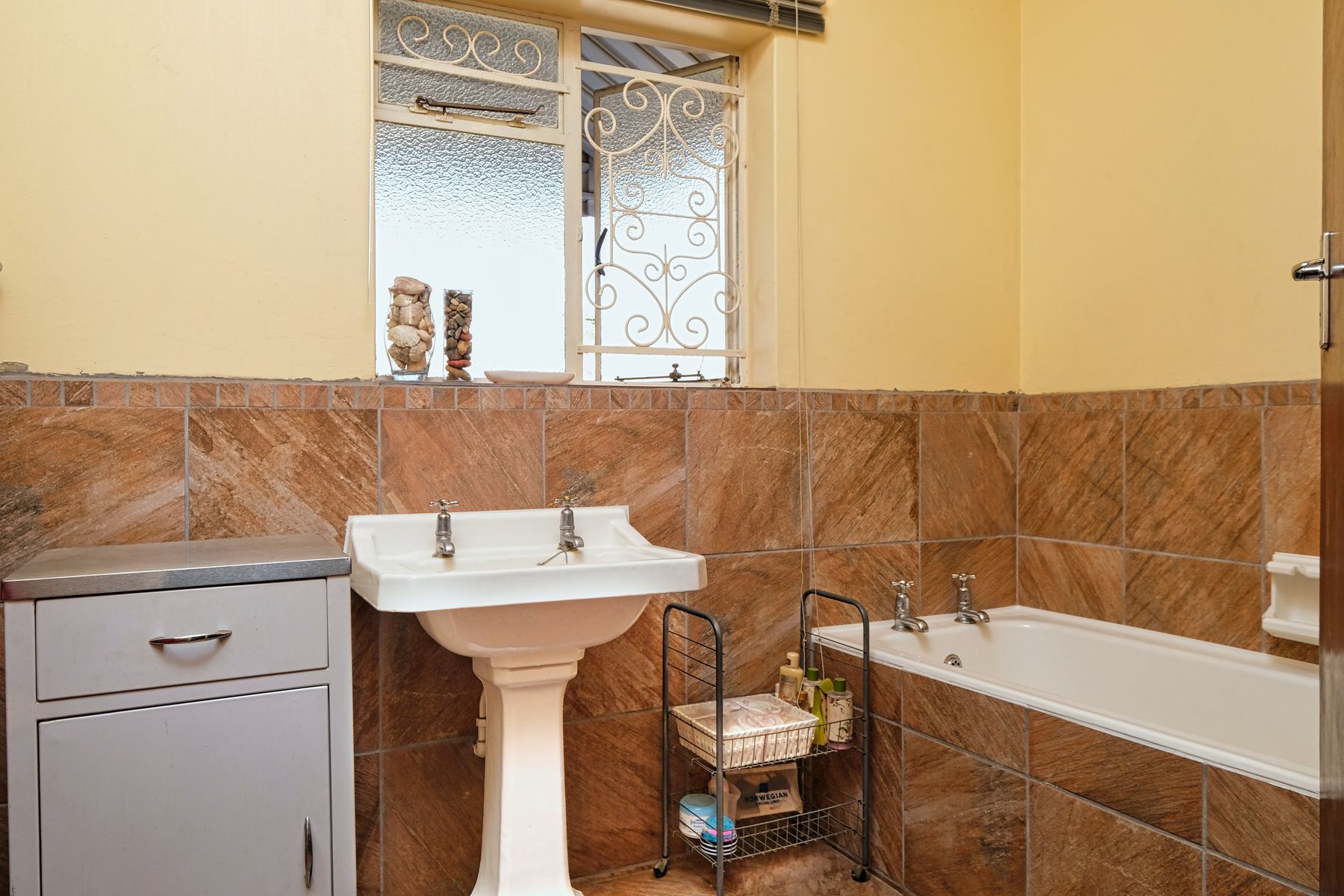
Stone can anchor an organic bathroom through color variation, fossil traces, veining and tactile temperature. Match the finish to the location: a coarse shower floor may trap residue, while a polished wet floor can be slippery. Ask about porosity, sealing, stain response, cleaning chemistry, edge fabrication and replacement. Lay out the actual slabs or tile batch because natural variation cannot be judged from one chip. A stone-look porcelain can be more appropriate in demanding zones if its print, joint layout and surface performance are honest.
Use Mineral Plaster Only as a Complete System
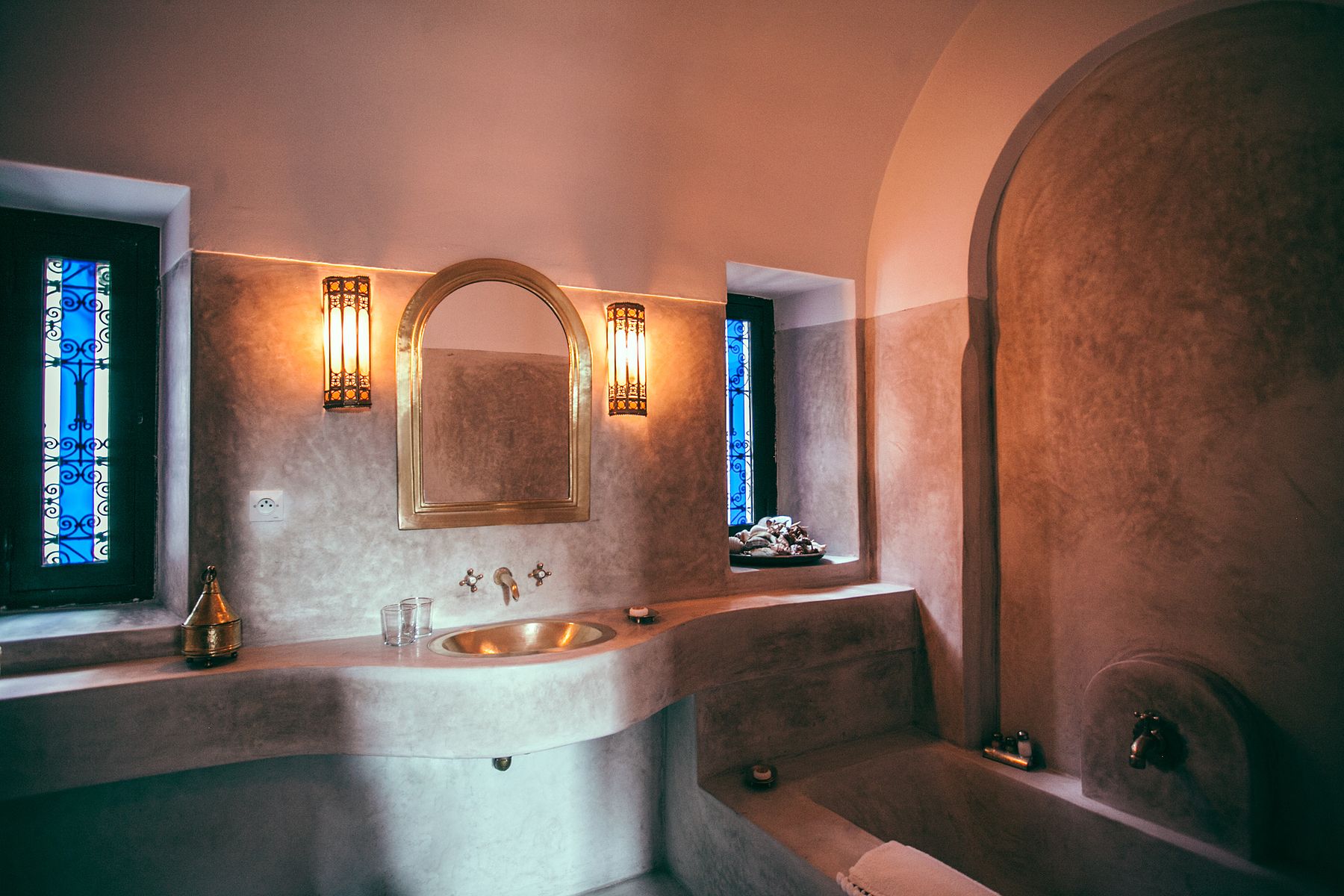
Lime plaster, tadelakt and other mineral finishes can create soft continuity, yet product names are not interchangeable and not every system belongs in direct wet zones. Specify substrate, waterproofing, reinforcement, penetrations, installer experience, curing, cleaner and repair method together. Mock up corners and color movement; hand application creates variation that a tiny sample cannot predict. Keep service panels reachable rather than sealing the room into a monolith. [Mediterranean Bathroom Ideas](/ideas/mediterranean-bathroom-ideas/) covers the regional language when arches, tadelakt and sun-warmed materials become the primary style.
Bring Timber Where It Can Dry
Timber adds grain, warmth and a familiar domestic scale, but choose construction and location before species. A vanity, mirror cabinet or dry wall can carry the material more safely than a shower lining or horizontal bath deck. Detail exposed edges, basin cutouts and ventilation, and retain written care guidance. Use one timber family rather than several near-matches. [Warm Wood Bathroom Ideas](/ideas/warm-wood-bathroom-ideas/) provides the full material and moisture framework; Organic uses wood as one part of a wider relationship among light, stone, form and landscape.
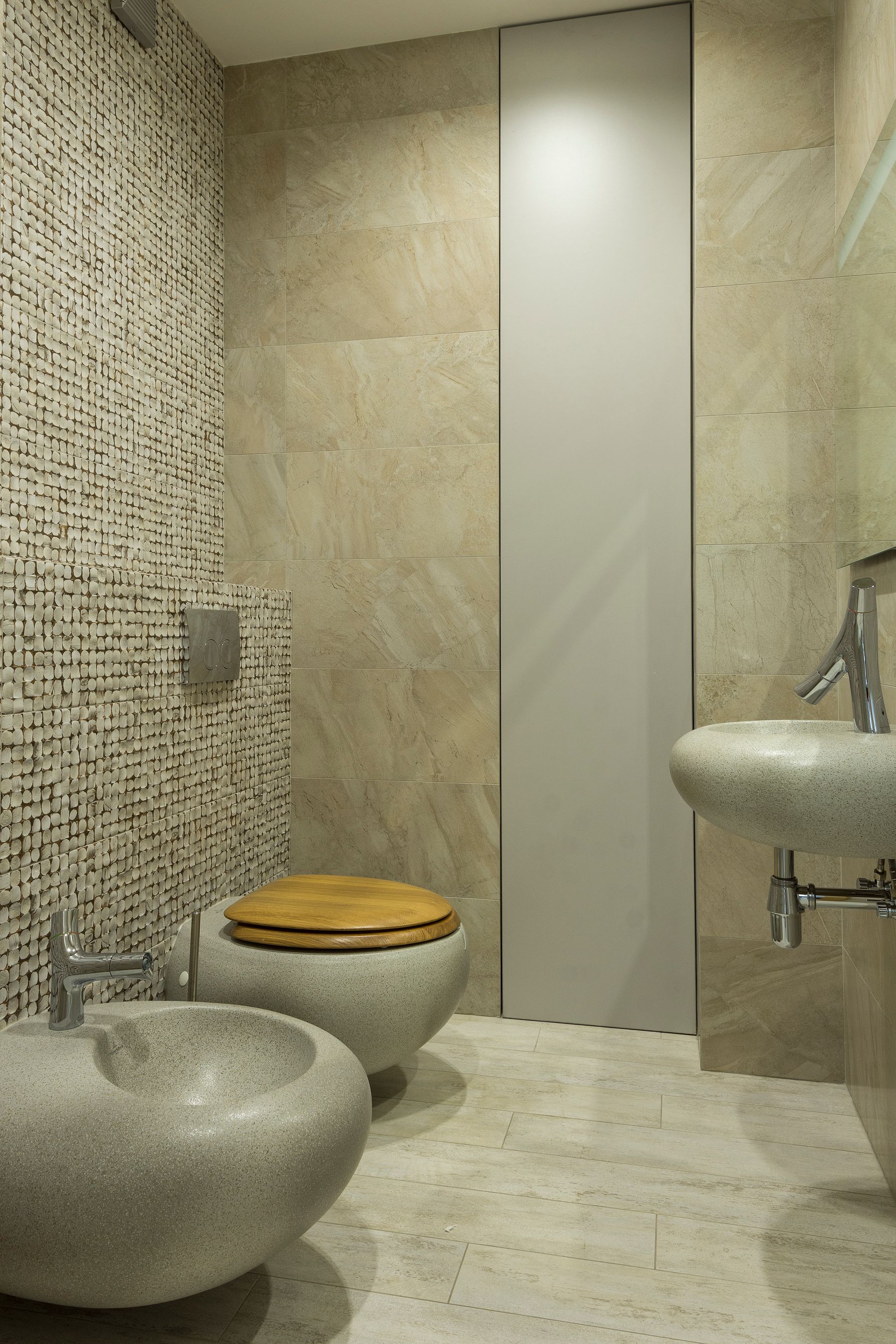
Choose Tile With Natural Rhythm, Not Fake Randomness
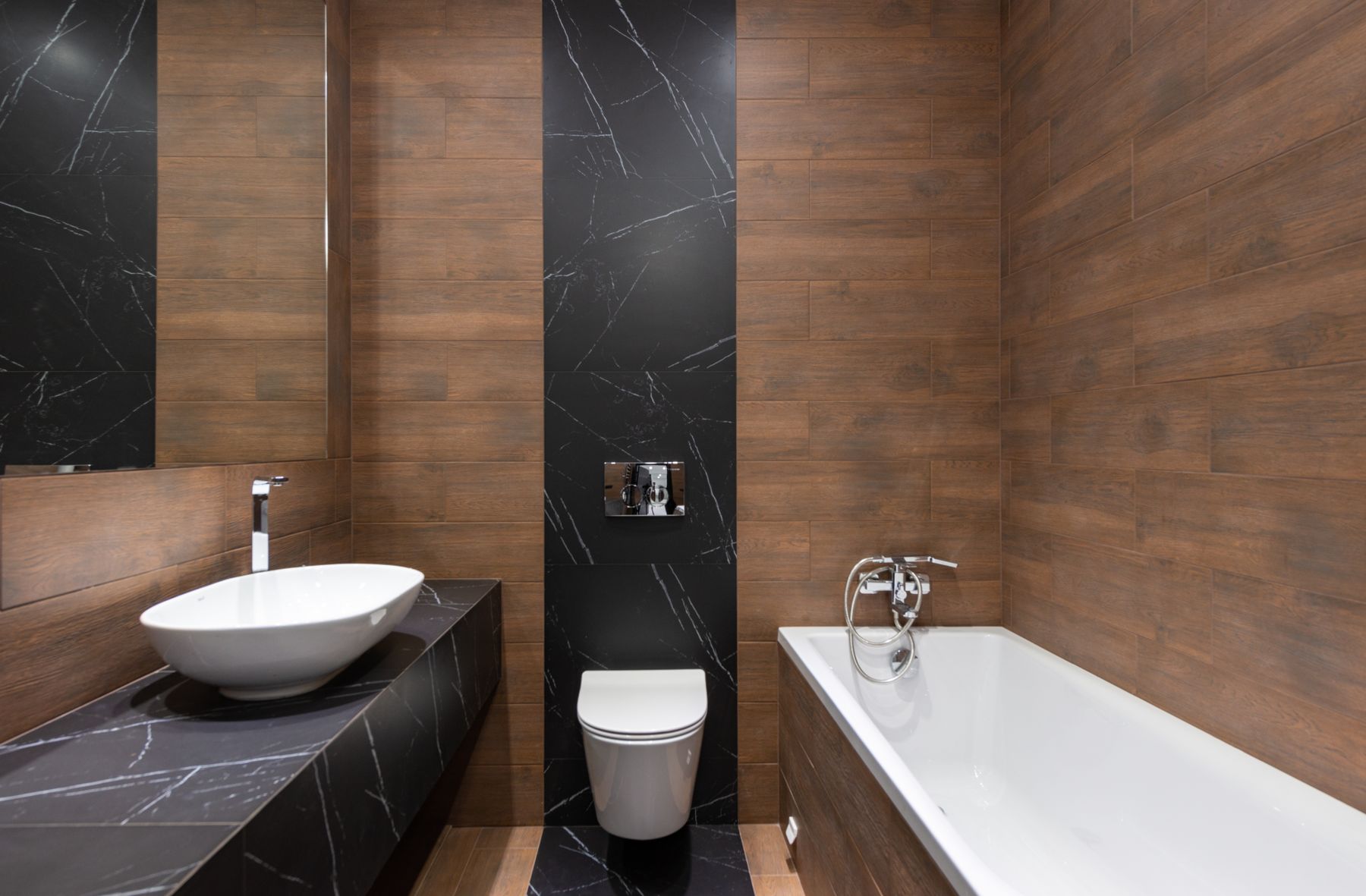
Handmade and stone-look tiles can add controlled irregularity while providing robust wet-area performance. Inspect a full box or digital repeat, mix pieces before installation and decide whether grout reveals or quiets the module. Avoid prints with repeated knots, mirrored veins or exaggerated distress that undermine the natural claim. Large formats reduce joints but increase substrate and handling demands; smaller tile can follow curves but creates more grout to maintain. Let one surface carry variation and keep adjacent materials calmer.

Use a Sculptural Basin as a Tactile Focal Point
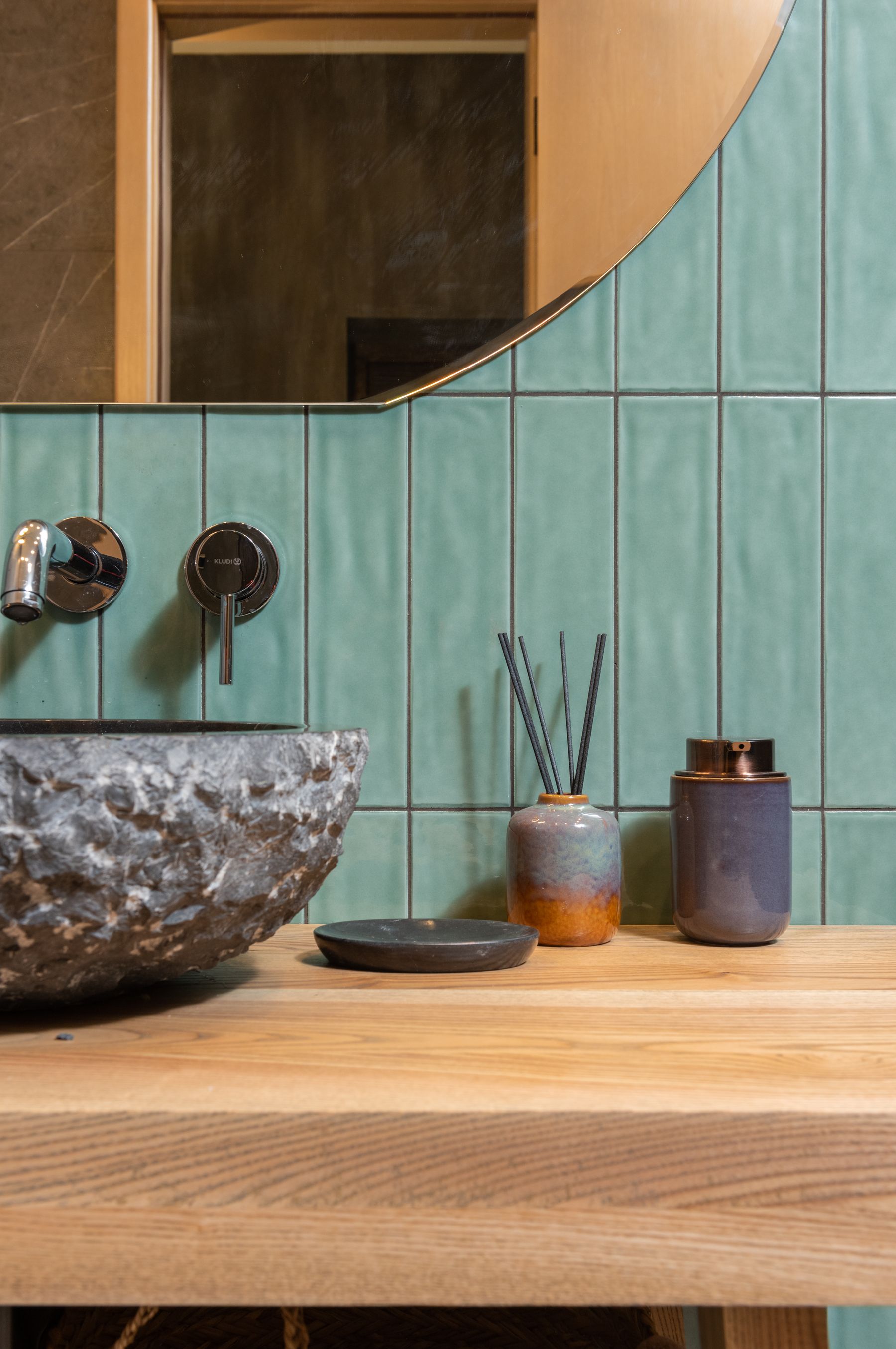
A carved stone, cast mineral or softly asymmetrical basin can give the room a convincing organic center without covering every wall in texture. Test bowl depth, splash behavior, tap reach, overflow, drainage speed and cleaning access before choosing solely by silhouette. Heavy stone also needs verified support. Preserve clear counter where daily objects actually sit and avoid pairing a highly figured basin with equally active stone behind it. The focal point should improve handwashing, not become an awkward sculpture that throws water across vulnerable timber.
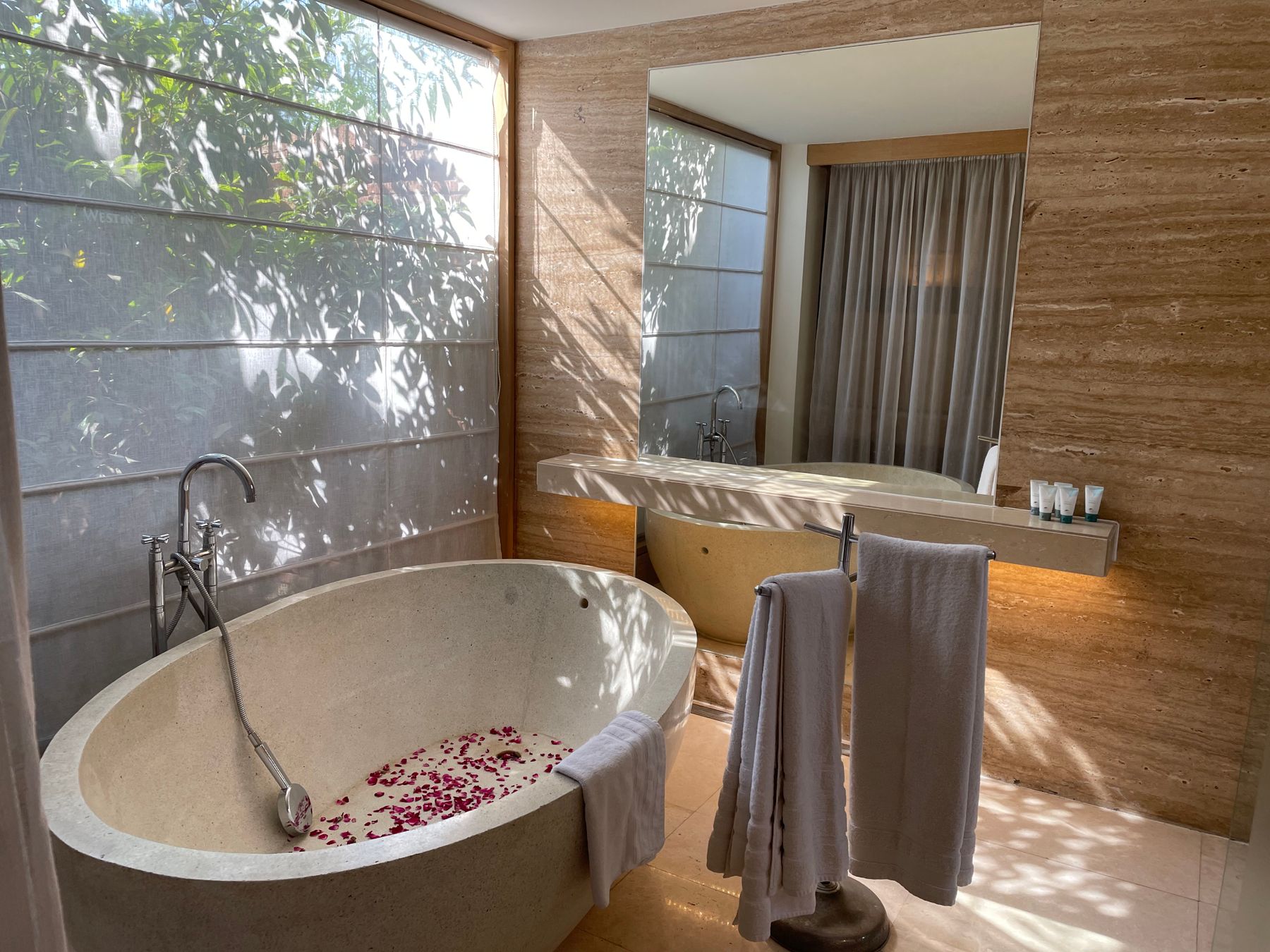
Make the Bath Feel Grounded, Not Staged
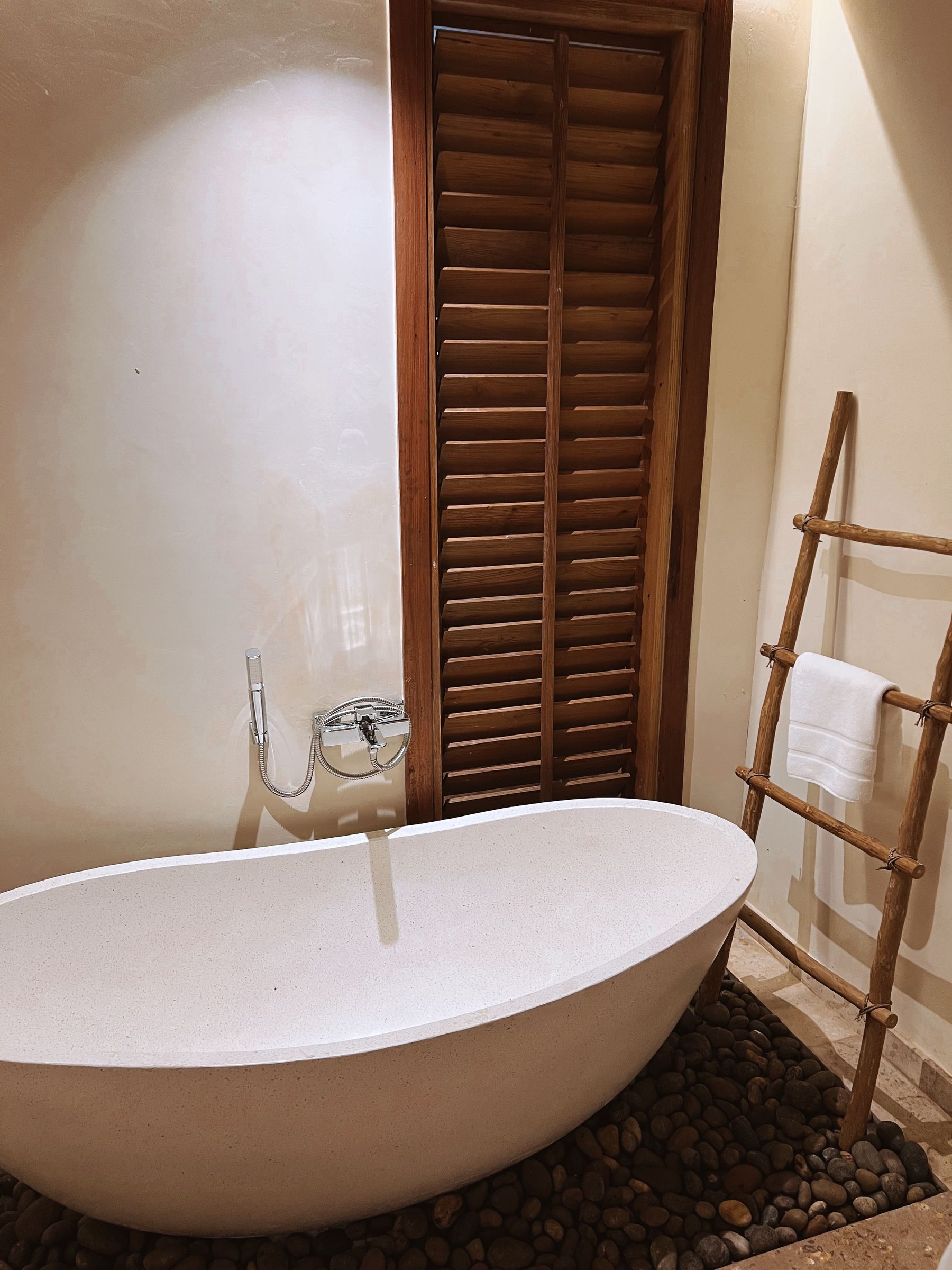
A sculptural bath becomes organic when its mass, position and surrounding surfaces belong to the architecture. Check step-in height, back support, water volume, floor loading, cleaning gap, filler reach and a safe place for a towel. A stone or stone-like tub can be visually grounded by a quieter floor and framed view; a light acrylic bath may benefit from a plastered alcove rather than imitation boulder styling. [Spa Bathroom Ideas](/ideas/spa-bathroom-ideas/) is distinct when bathing ritual and sensory recovery lead the entire brief.
Let the Shower Express Water and Texture
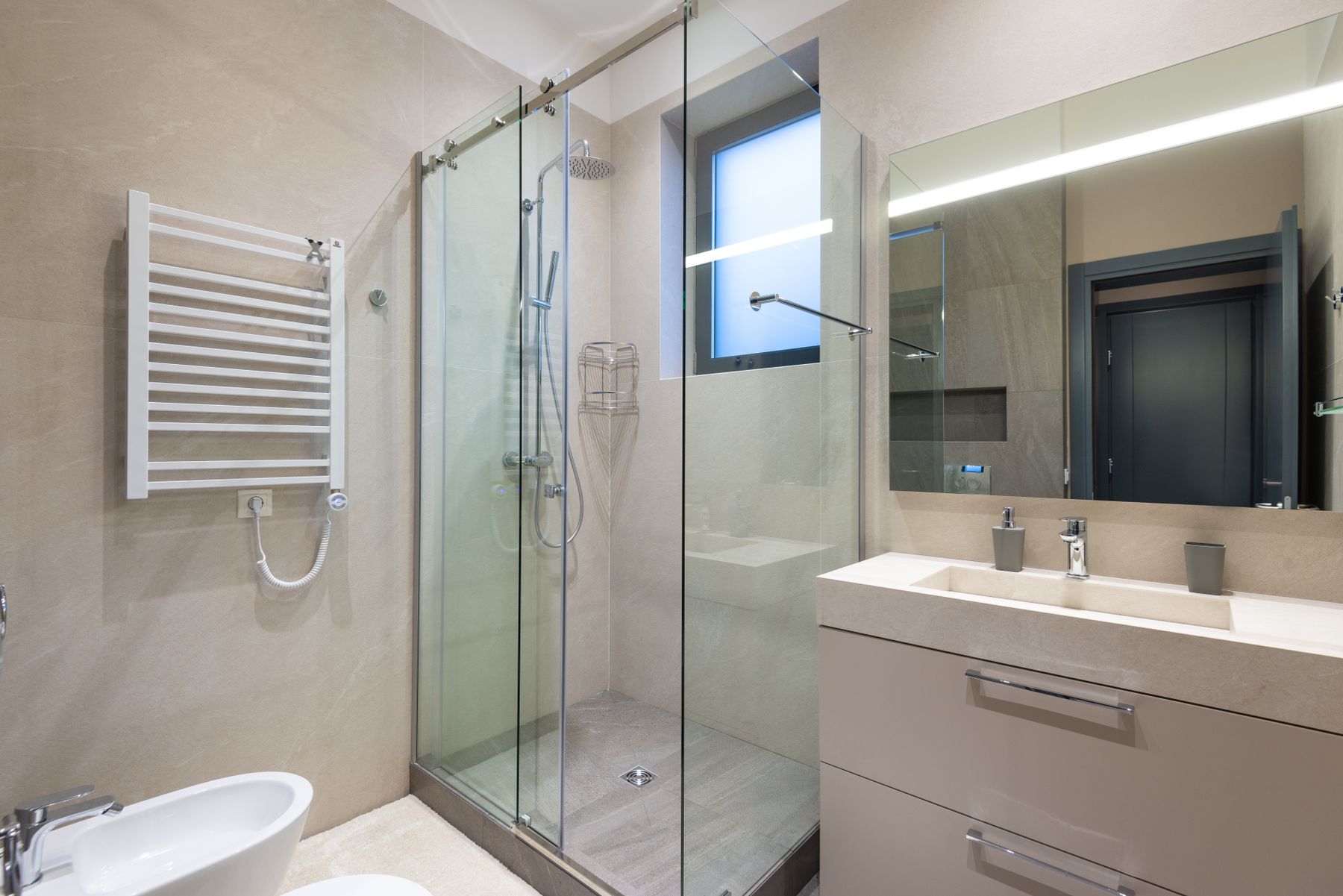
Use the shower to clarify how water meets material: a simple rain head, tactile wall and visible but controlled drainage can be more convincing than many accessories. Keep the floor reliably slip resistant and the controls reachable before entering spray. Rough stone belongs where it can be cleaned; smoother surfaces may be better in soap-heavy zones. Glass can preserve light, but an open shower still needs containment and warmth. [Walk-In Shower Ideas](/ideas/walk-in-shower-ideas/) provides a fuller framework for screens, falls and thresholds.

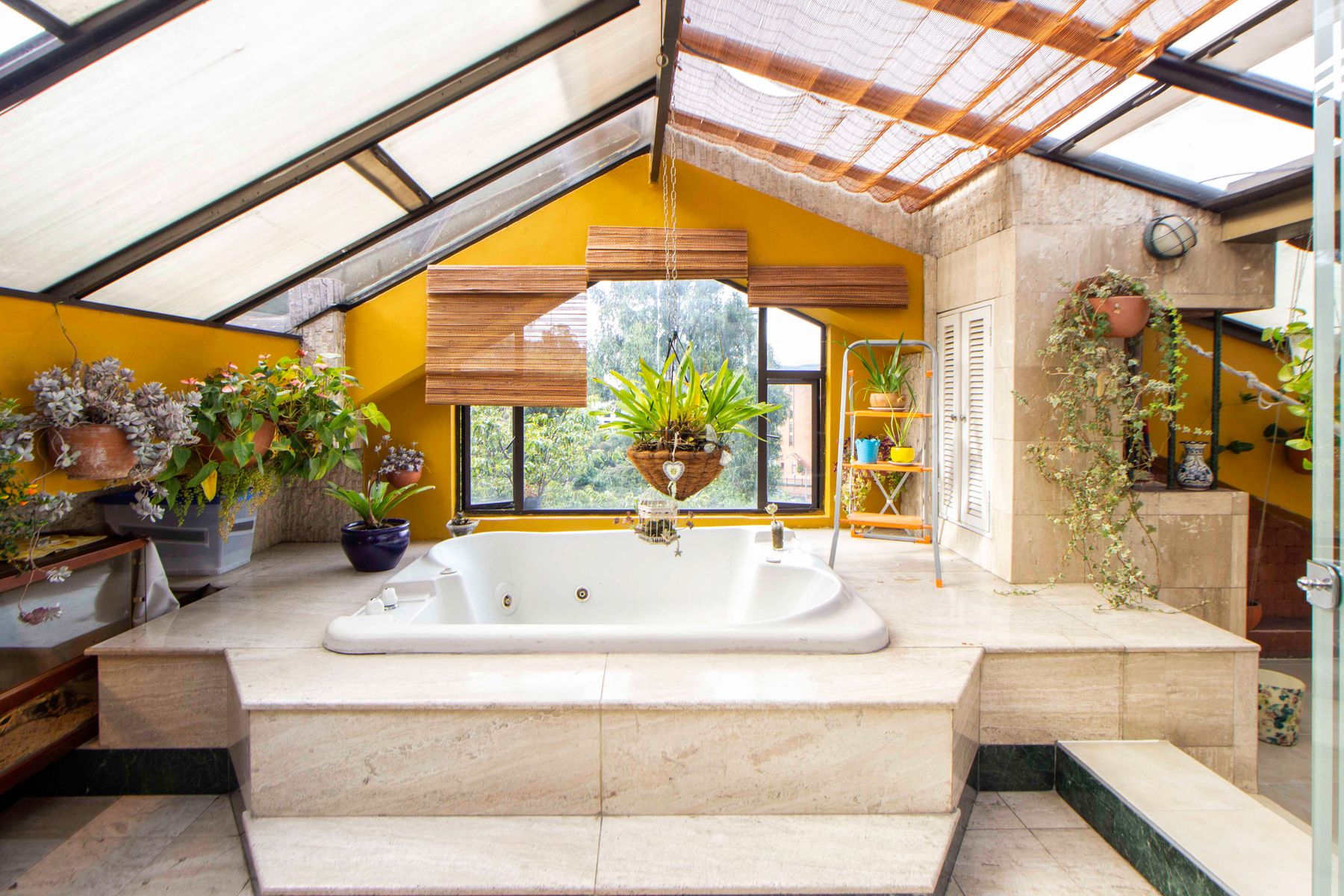
Choose Plants From Measured Light
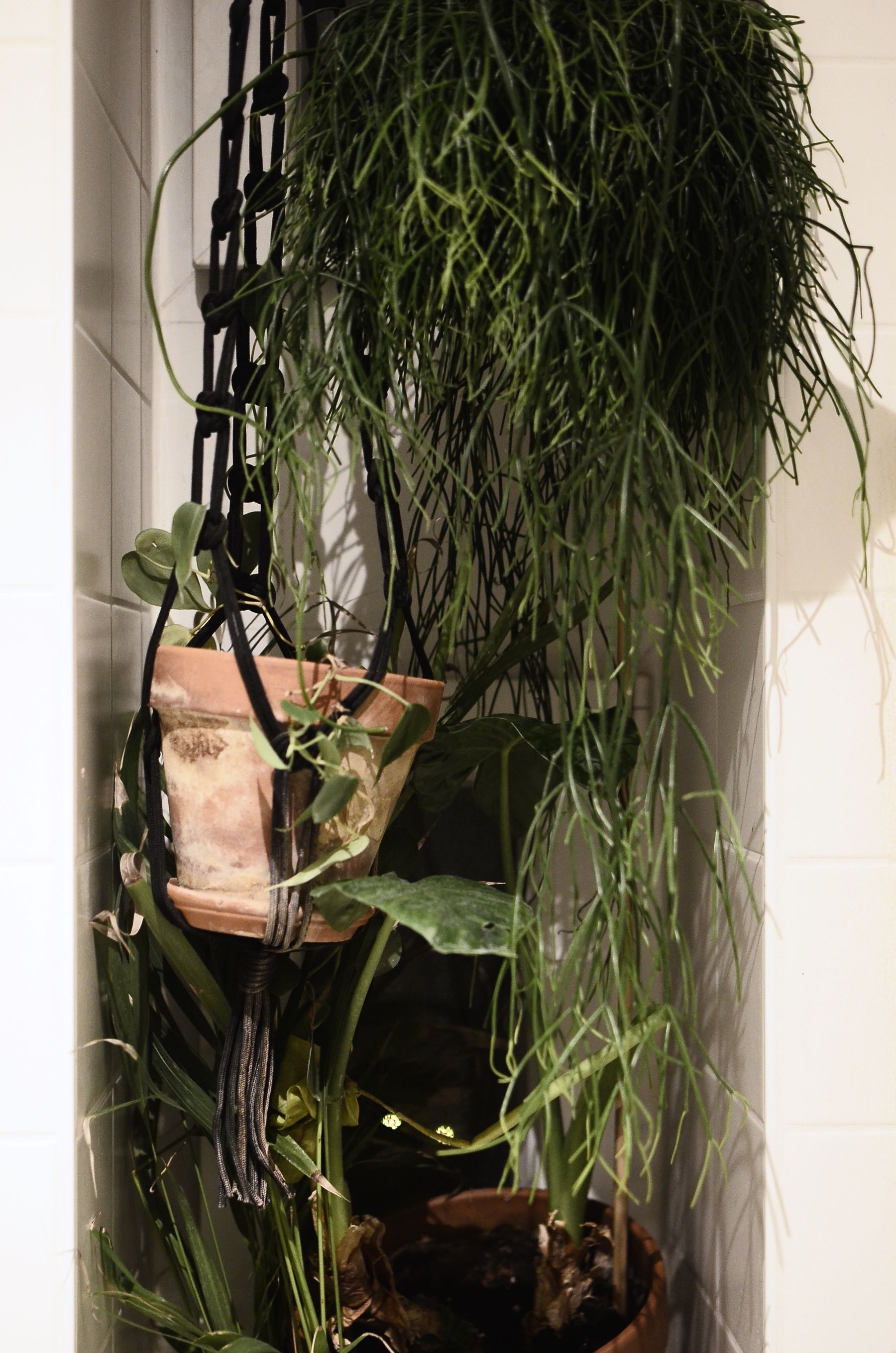
Measure window direction and useful light before selecting a plant, then account for temperature, drafts, watering access, toxicity and mature size. Humidity can suit some species but does not replace photosynthesis, and direct shower spray can keep soil waterlogged. Keep pots off vulnerable ledges and provide saucers or cachepots that can be emptied. One healthy specimen is more organic than a crowded collection in decline. In a dark room, use a grow light designed for the plant or choose art, texture and a borrowed view instead.

Use Planting to Shape Privacy
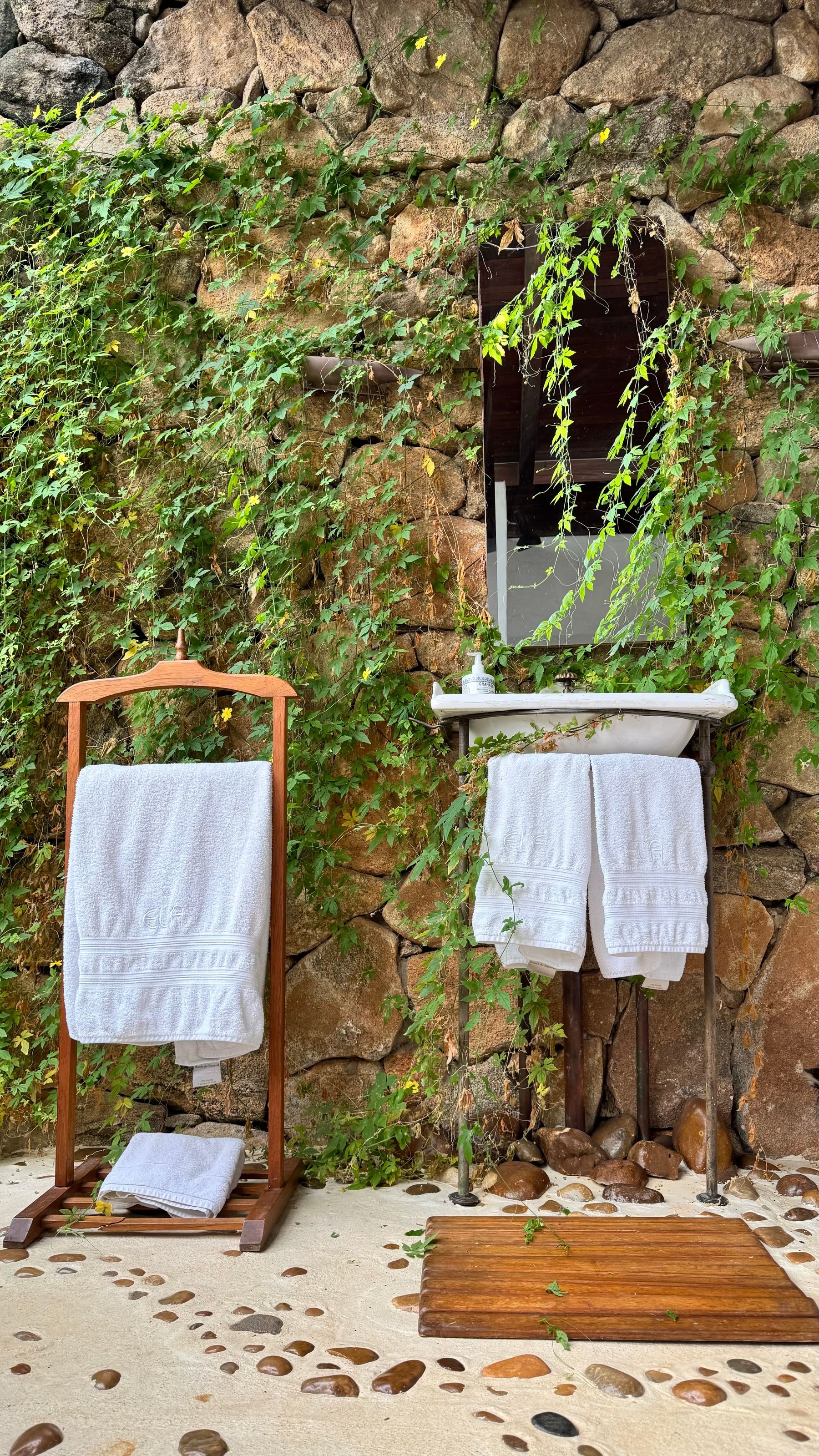
A garden-facing bathroom can use planting as a living privacy layer rather than frosting every pane. Combine evergreen structure with seasonal depth, and assess the view after pruning, leaf fall and nighttime interior lighting. Do not rely on a young plant to provide immediate screening or position roots where they threaten waterproofing and drainage. Indoor plants should not obstruct doors, support rails or cleaning. [Outdoor Bathroom Ideas](/ideas/outdoor-bathroom-ideas/) becomes more relevant when bathing itself crosses the building envelope.
Design Windowless Organic Character Without Fake Greenery
A windowless bathroom can still feel organic through honest material variation, soft geometry, warm-to-neutral light, tactile hardware and good air movement. Avoid plastic foliage or living plants kept permanently below their light needs. Use a stone basin, timber cabinet, mineral-toned tile or one relief surface, then light across it so texture remains visible. Mechanical extraction, towel drying and nighttime orientation are essential. The goal is not to simulate a forest but to preserve sensory richness in a room whose environmental connection must come from material and form.

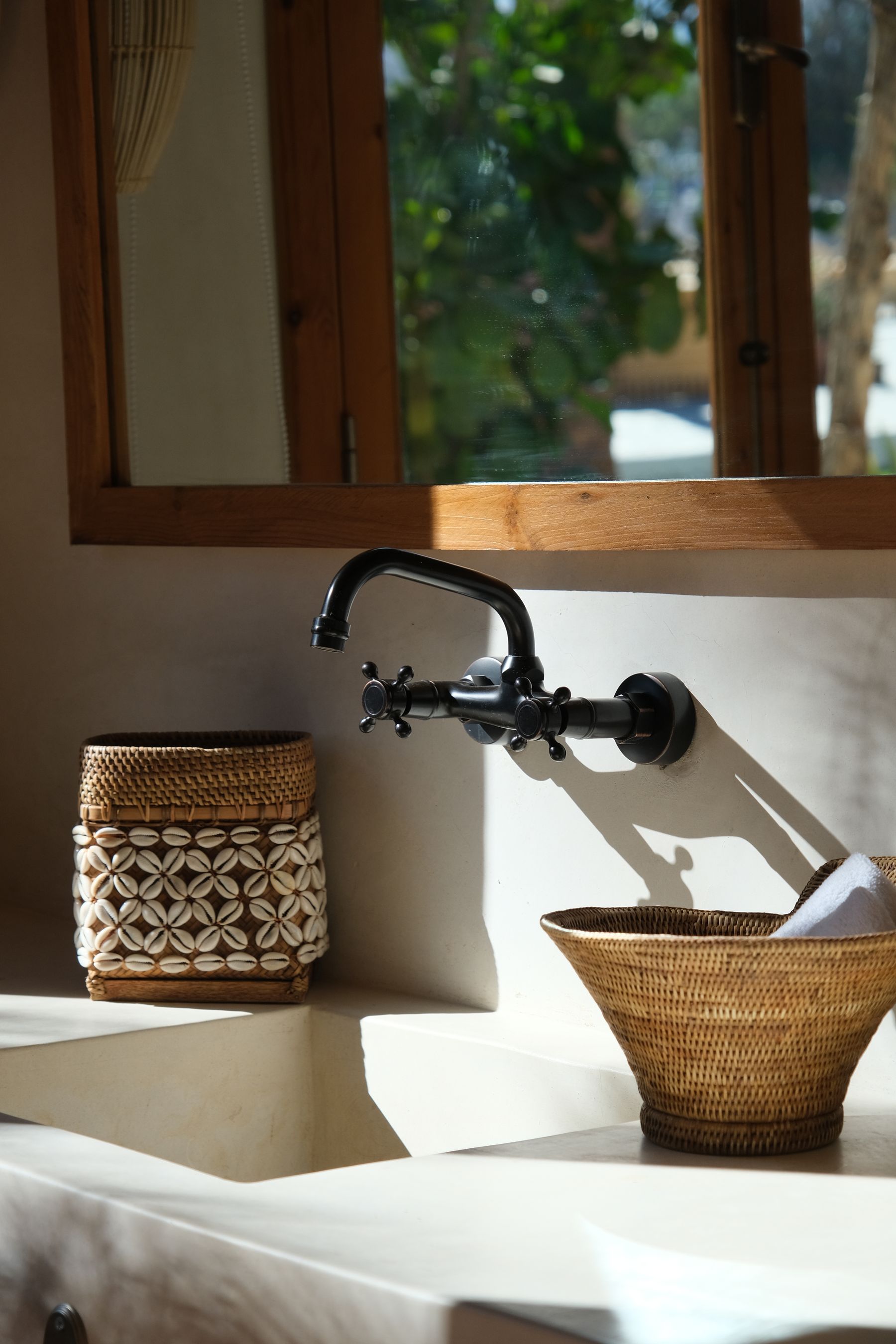
Layer Light for Texture, Faces and Evening Calm
Use daylight where possible, vertical light at the mirror, soft grazing light on texture and low-level illumination for night. Warm dimming can support evening calm, but face light must still render skin accurately. Hide sources only when they remain accessible and do not create hot spots on uneven plaster. Avoid turning every niche into a glowing line; excessive concealed light makes the room feel technological rather than natural. Test stone and timber under the actual lamps because color temperature can exaggerate orange or flatten green-grey.
Let Ventilation Protect the Natural Materials
Natural materials do not make moisture harmless. Provide effective extraction to the exterior, replacement air and controls that run long enough after bathing. An open window may help in suitable weather but should not be the only strategy. Avoid sealed cavities behind cabinetry and inspect cold corners where condensation persists. A quiet fan is more likely to be used, and a humidity control can support inconsistent routines. If plaster, grout, timber or towels remain damp, correct airflow and heat before adding another coating or fragrance.
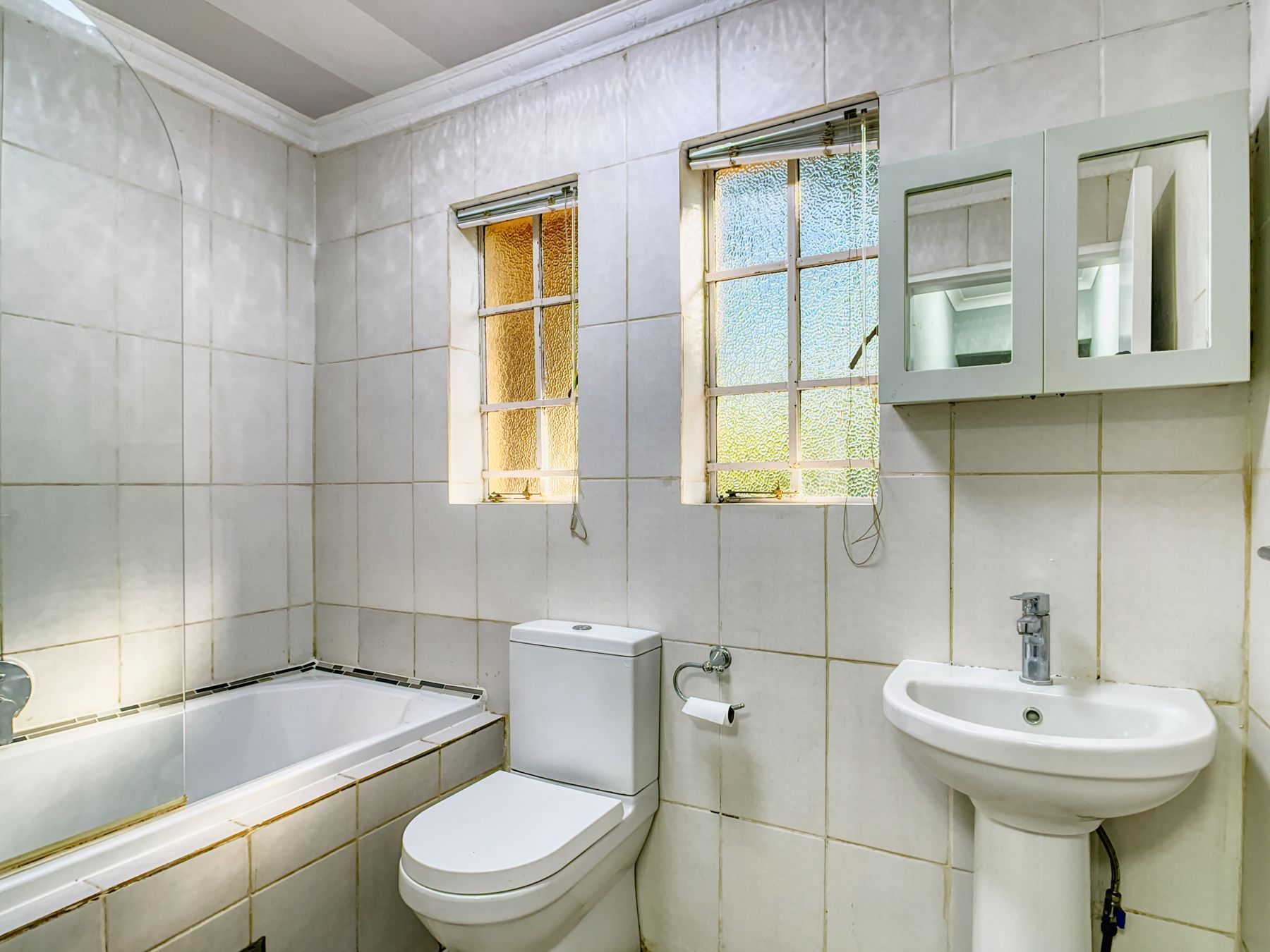
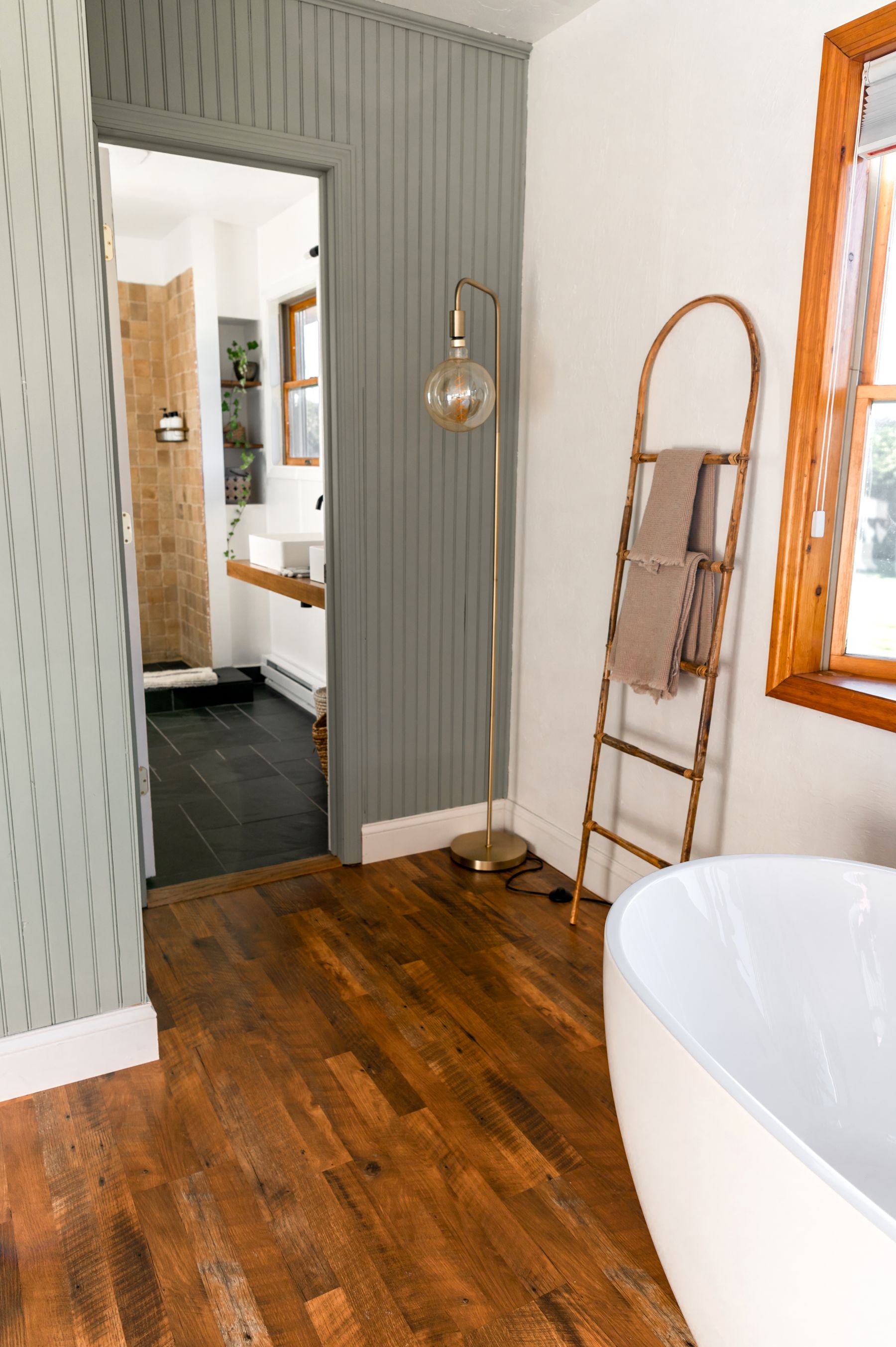
Make Thermal and Acoustic Comfort Part of Nature
An organic room should feel comfortable through the body, not only resemble a landscape. Address cold glazing, uninsulated floors, shower drafts and hard echo. Radiant heat may improve a tiled floor when insulation and controls are designed together; absorbent elements must still be washable and kept outside persistent wetting. Quiet extraction, solid doors and isolated pipework reduce mechanical intrusion. [Cozy Bathroom Ideas](/ideas/cozy-bathroom-ideas/) develops thermal and emotional comfort further, while Organic keeps these sensations tied to material and environmental connection.
Hide Storage Without Sealing In Dampness
Organic rooms often rely on visual calm, but concealed storage must still reflect real routines. Separate medicines, grooming tools, cleaning products, spare paper, laundry and damp cloths. Vent any compartment that receives used towels, keep plumbing visible enough to inspect and use removable liners below the basin. A recessed mirror cabinet can preserve counter space, while one open shelf may hold a washable daily object. Do not turn woven baskets into an uncleanable storage system in splash zones simply because their texture looks natural.
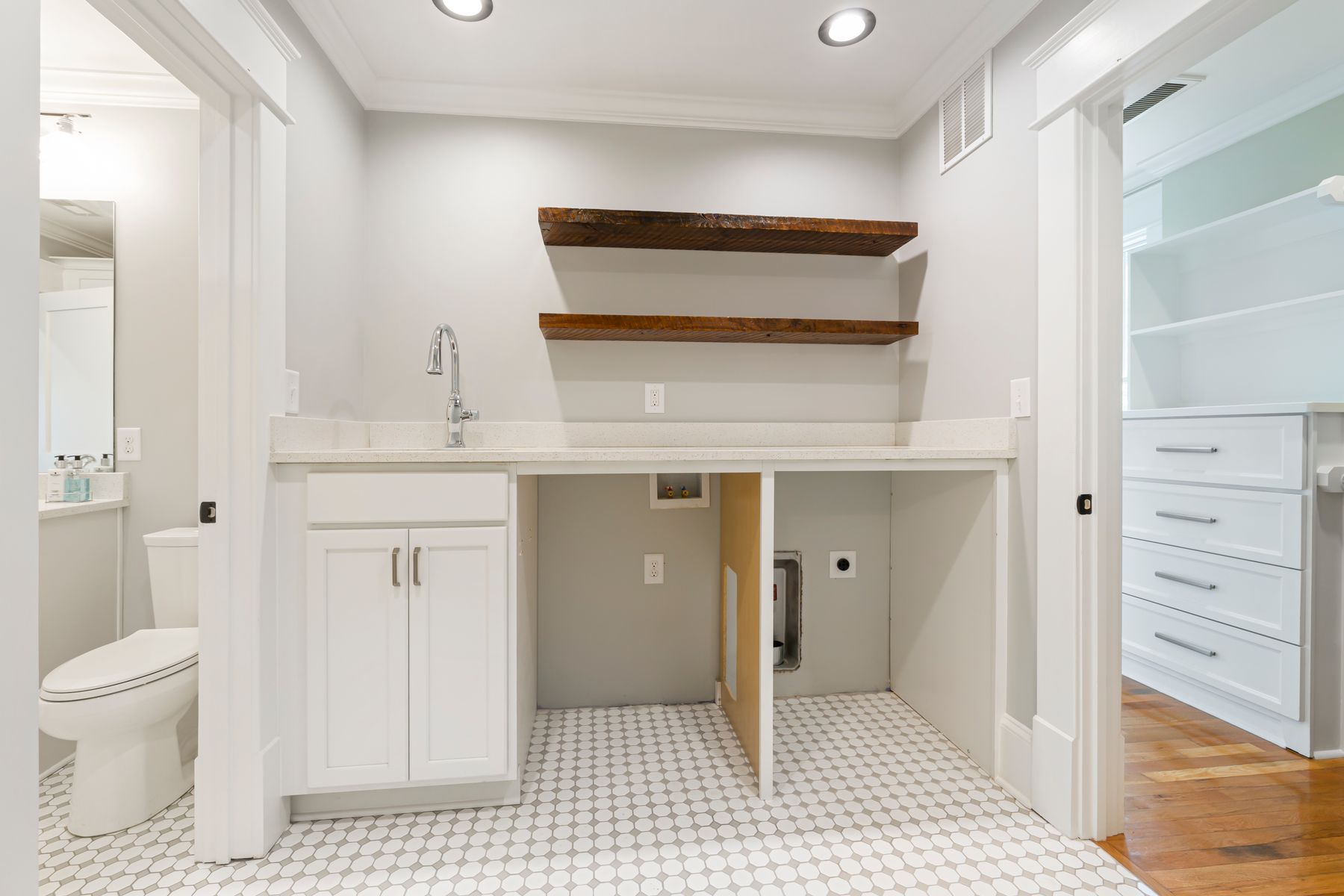
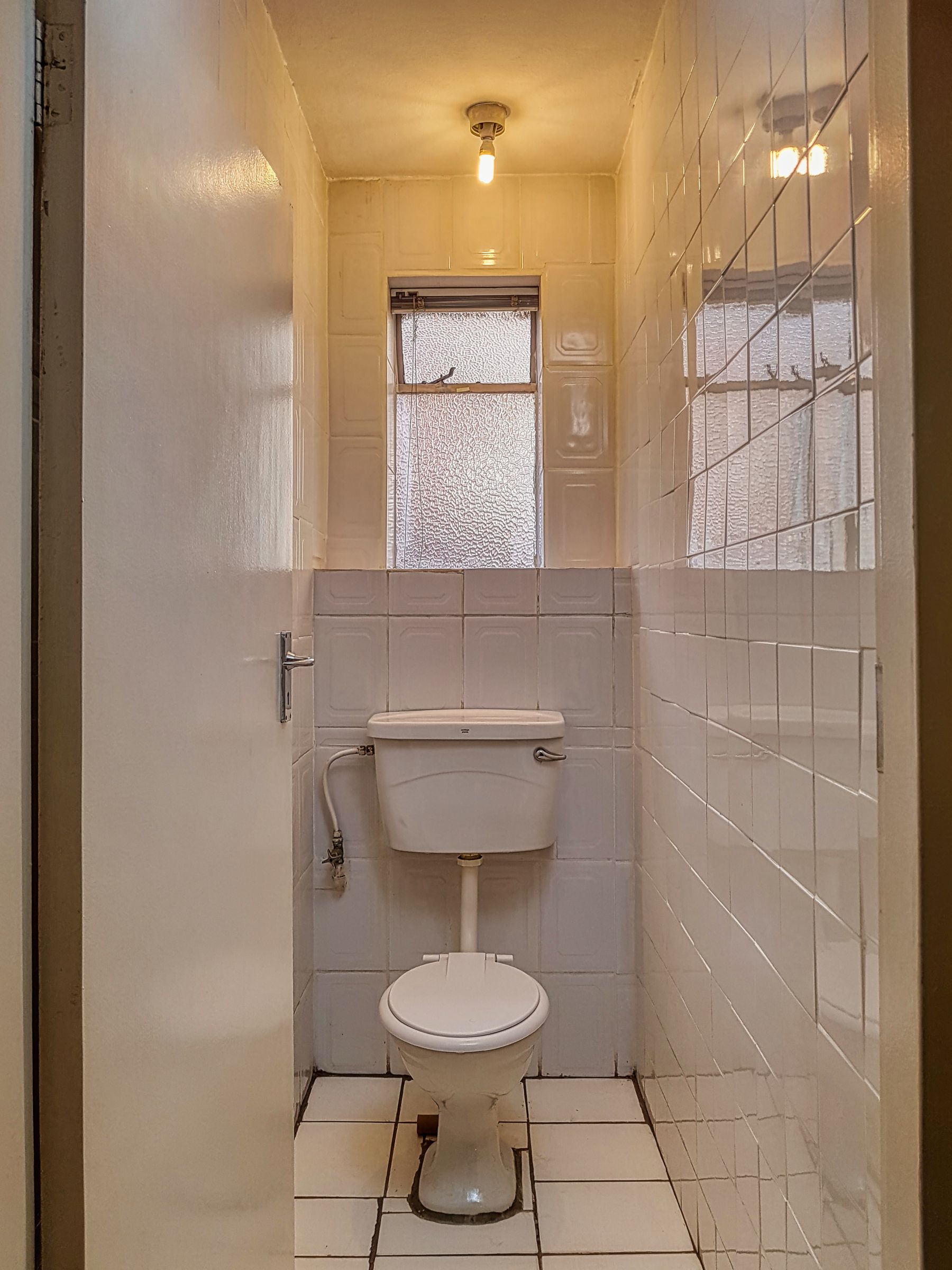
Make a Small Organic Bathroom Specific
In a small room, choose one organic asset to lead: a framed view, sculptural basin, timber vanity or continuous mineral wall. Many pebbles, baskets, plants and irregular accessories create clutter rather than connection. Protect door swing, drawer opening, shower containment and a dry towel reach. Use a mirror to distribute daylight and keep the floor visually continuous without compromising slip resistance. [Small Bathroom Ideas](/ideas/small-bathroom-ideas/) should guide space planning; Organic supplies the material and sensory hierarchy.
Keep Accessibility Visible Within Soft Design
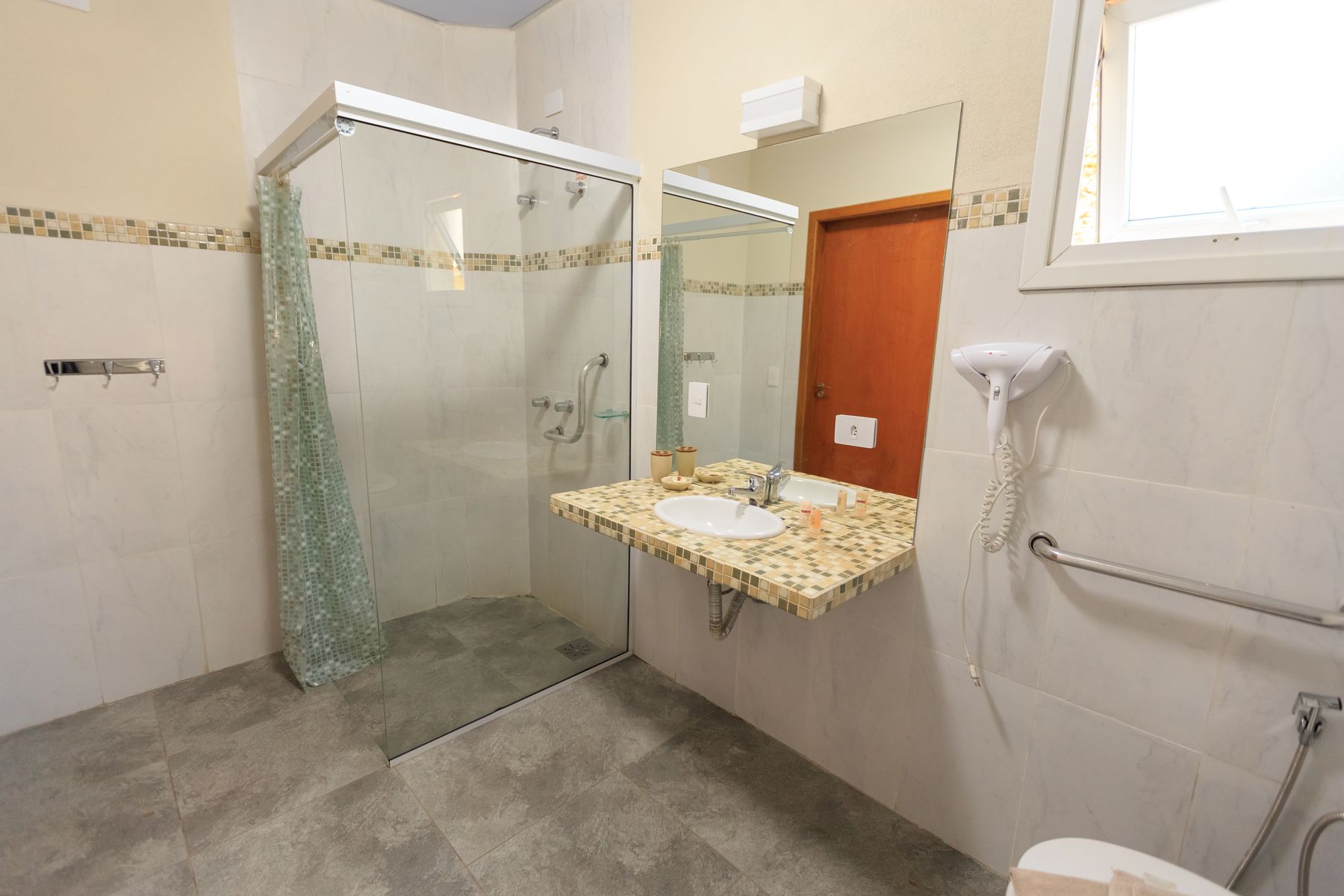
Curves can reduce sharp corners, but accessible design still needs verified approach, transfer, reach, support and contrast. Reinforce walls before applying plaster or paneling, distinguish rails from their background and keep floor transitions legible. A stone basin or thick vanity should not block knee space or create a hidden impact edge. Controls must be operable with wet hands, and plants must stay out of circulation. [Aging-in-Place Bathroom Ideas](/ideas/aging-in-place-bathroom-ideas/) provides the functional framework that the organic language should support.
Evaluate Material Health Beyond Natural Branding
Natural-looking does not guarantee low emissions or benign chemistry. Request product declarations or credible certifications where available, and review adhesives, waterproofing, sealants, finishes and cleaners as well as visible surfaces. Ventilate during curing and follow safe installation guidance. Avoid making medical promises about materials or plants. A durable porcelain that needs mild cleaning may be preferable to a porous natural finish requiring frequent harsh treatment. Material health is a documented performance question, not a color or texture category.
Reduce Water and Energy Without Reducing Usefulness
An organic aesthetic is incomplete if an oversized bath, poorly controlled shower or long hot-water wait undermines resource use. Choose efficient fittings that still deliver a satisfactory spray, insulate hot-water routes, repair leaks and size the bath to real routines. Controls should make comfortable use intuitive rather than punitive. Consider how much heated water is wasted before temperature stabilizes and whether recirculation is justified for the building. Keep shutoff valves and serviceable cartridges accessible so efficiency survives beyond installation.
Prefer Traceable, Local or Reclaimed Materials Carefully
Ask where stone, timber and crafted tile come from, what certification or chain of custody supports the claim and how replacement material could be obtained. Local sourcing can reduce transport and strengthen regional character, but local does not automatically mean low impact. Reclaimed timber or furniture needs screening for contamination, hidden metal, instability and previous coatings before bathroom use. Reuse existing fixtures when condition and water performance remain sound. The strongest organic choice may be retaining and repairing what the building already owns.
Design for Patina, Repair and Replacement
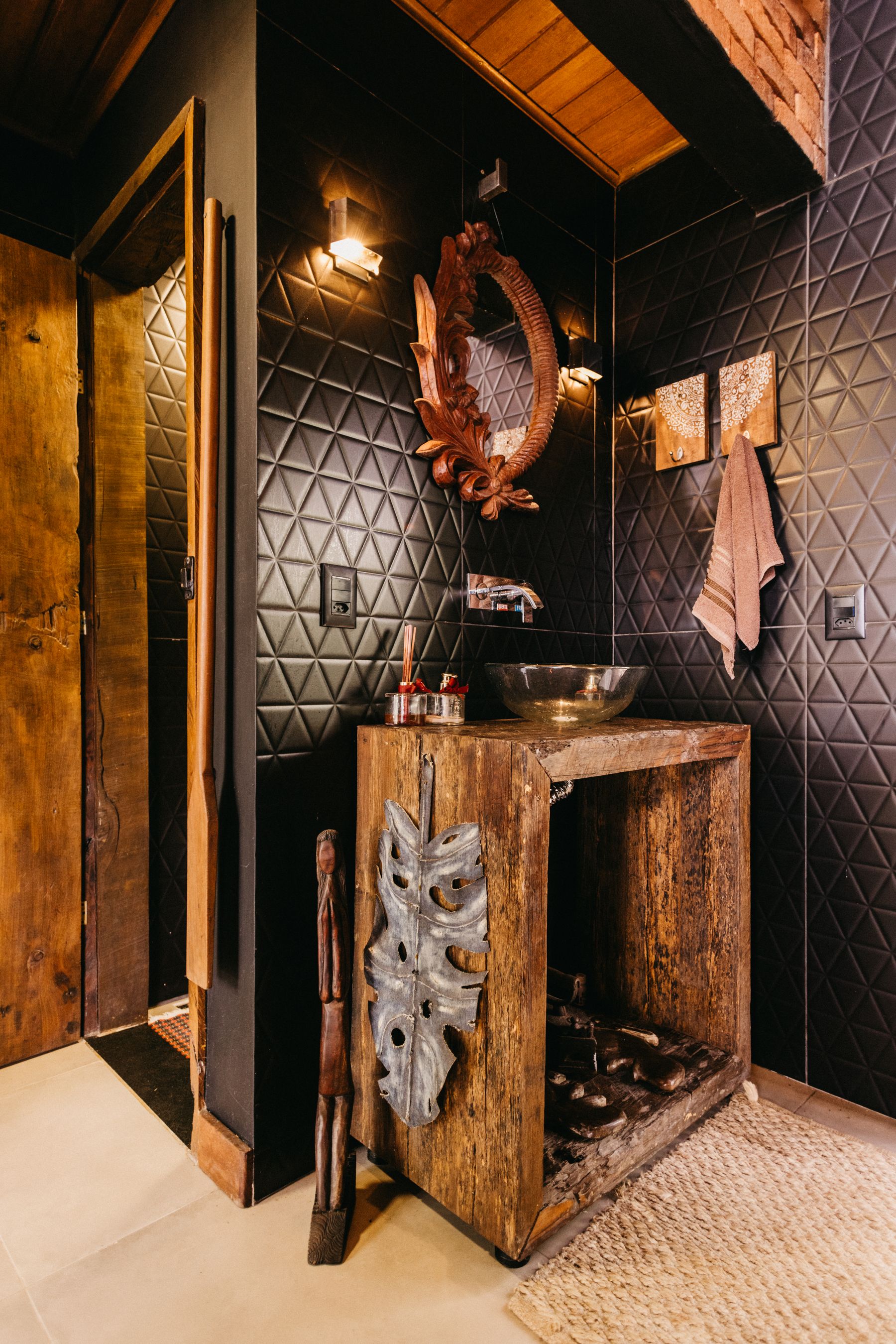
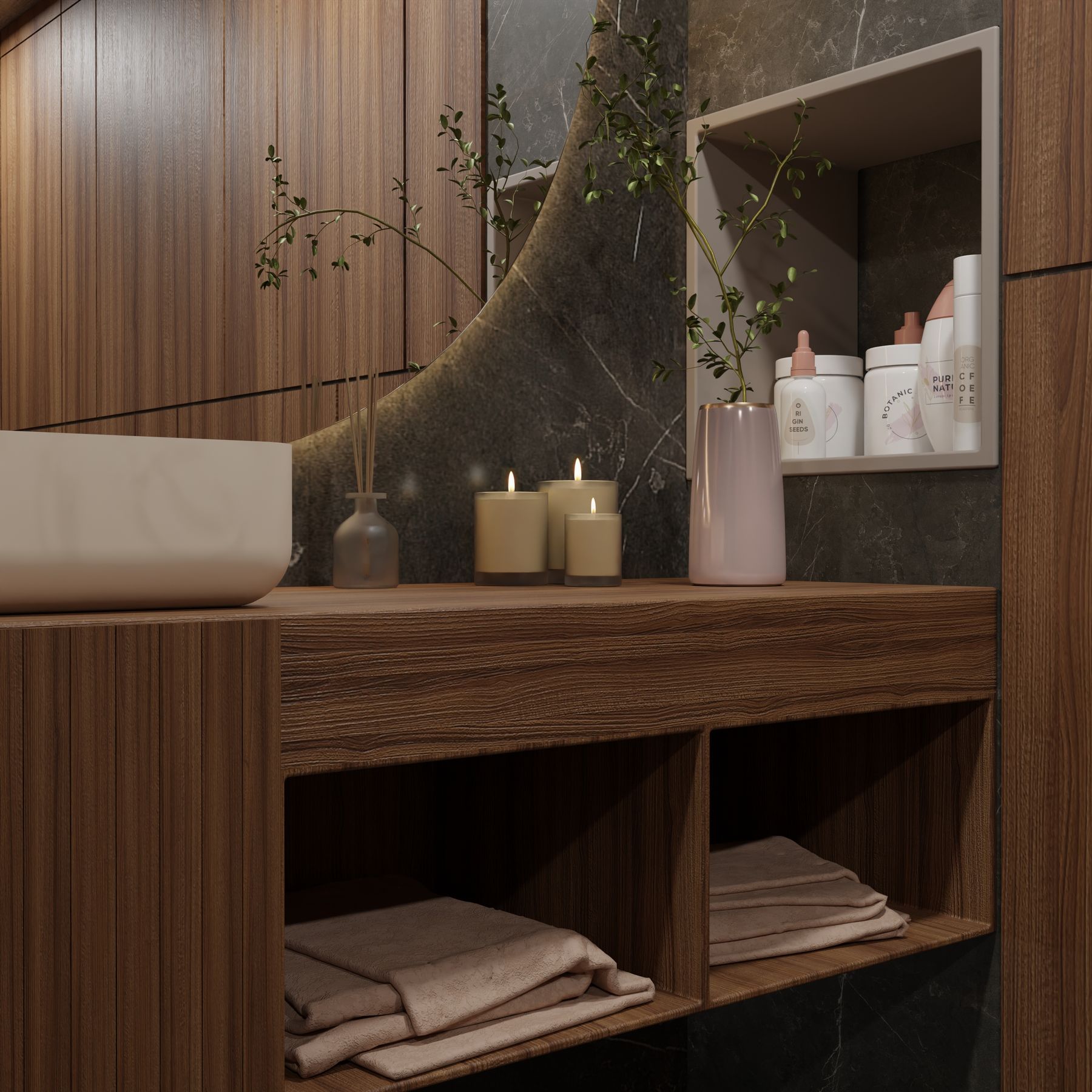
Decide which changes are acceptable patina and which signal failure. Stone may deepen, metal may oxidize and timber may mellow; swelling, loose joints, persistent staining and failed sealant require action. Keep finish names, spare tile, stone offcuts and photographs of concealed services. Make bath panels, traps, valves and fan components reachable without destroying adjacent surfaces. A seamless appearance should not create a sealed object that cannot be maintained. Repairability often contributes more environmental value than a fashionable claim on the original packaging.
Clean Natural Texture Without Overworking It
Every ridge, open weave and porous surface changes the cleaning workload. Keep rough plaster, woven storage and heavily textured stone away from toothpaste, cosmetics and direct spray unless the maintenance plan is realistic. Use manufacturer-approved neutral cleaners and avoid assuming vinegar, bleach or descaler is safe on every natural material. Dry bamboo and timber accessories on all sides and remove containers that trap rings. Edit open shelves so wiping does not require moving a decorative collection each week.
Create a Budget Organic Upgrade Without Material Theater
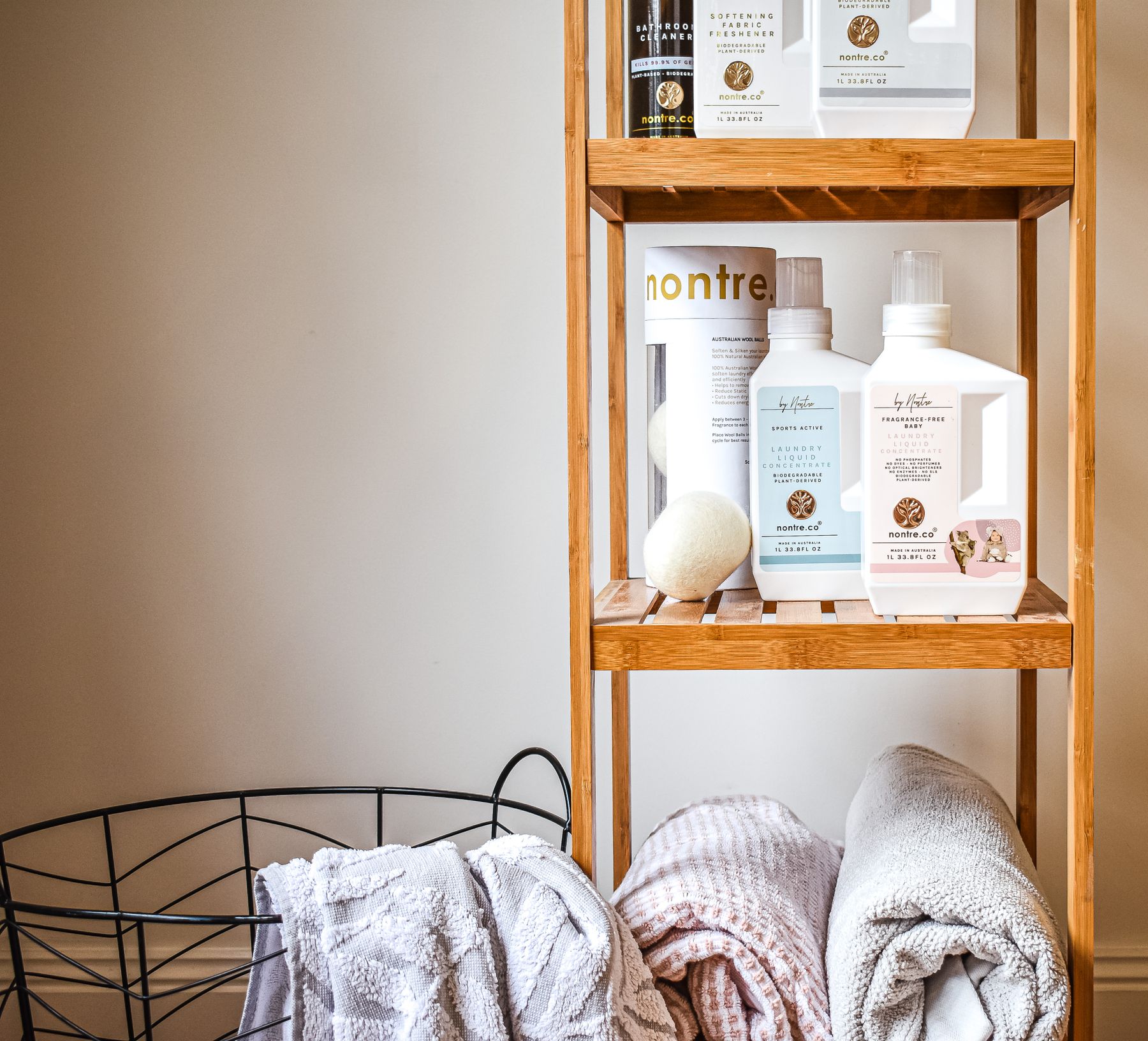
For a rental or limited budget, prioritize better light, a healthy plant suited to the window, one timber mirror or stool kept dry, washable natural-colored textiles and fewer plastic containers. A clay pot or stone tray can add tactile variation, but avoid overcrowding the vanity with objects that imitate a mood board. Improve extraction and fix leaks before styling around them. Removable changes should preserve clear circulation and leave no moisture damage. The objective is a more convincing sensory relationship, not a cheap copy of stone architecture.
Separate Organic From Its Neighboring Intents
Organic centers nature connection, material variation, soft form and honest aging. Tropical emphasizes climate, lush planting and indoor-outdoor resort atmosphere. Warm Wood is a specific material route; Neutral is a palette; Japandi is a defined stylistic synthesis; Spa focuses on restorative ritual; Mediterranean adds regional architecture and craft. A room can overlap, but one intent should organize its decisions. This boundary prevents a generic collection of beige, timber and plants from cannibalizing several more useful destination guides.
Run a Final Organic Integrity Check
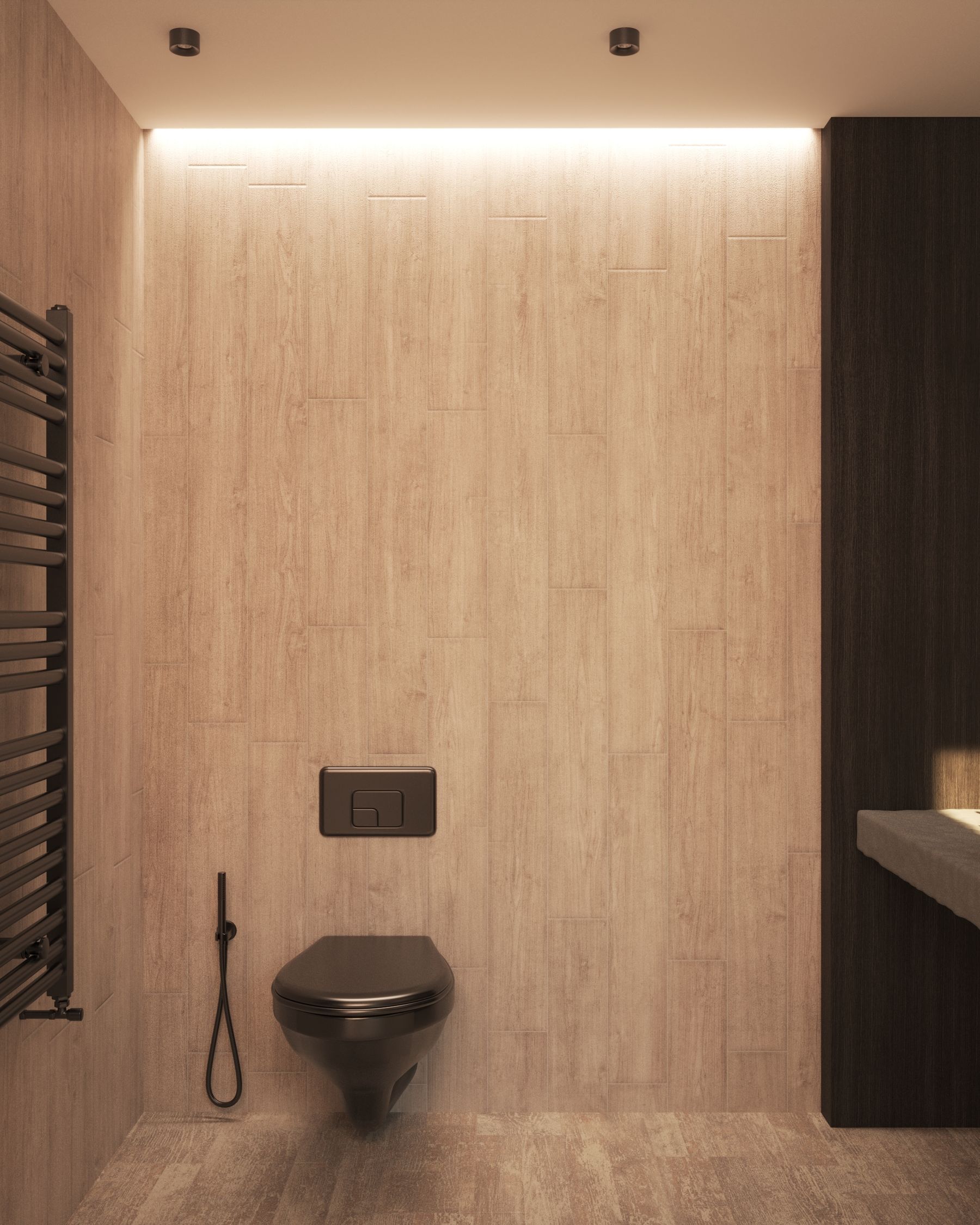
Before ordering, verify the room still works when every decorative object is removed. Confirm daylight and electric light, privacy, ventilation, splash zones, floor traction, accessible contrast, plant conditions, substrate and finish compatibility, cleaner guidance, service access, sourcing evidence and a repair path. Check that one material or view leads and that no section of the room promises nature while depending on fragile or unmaintainable detailing. A successful organic bathroom feels grounded because its relationships are coherent, not because it contains the maximum number of natural-looking products.