
Define Tropical Beyond the Leaf Print
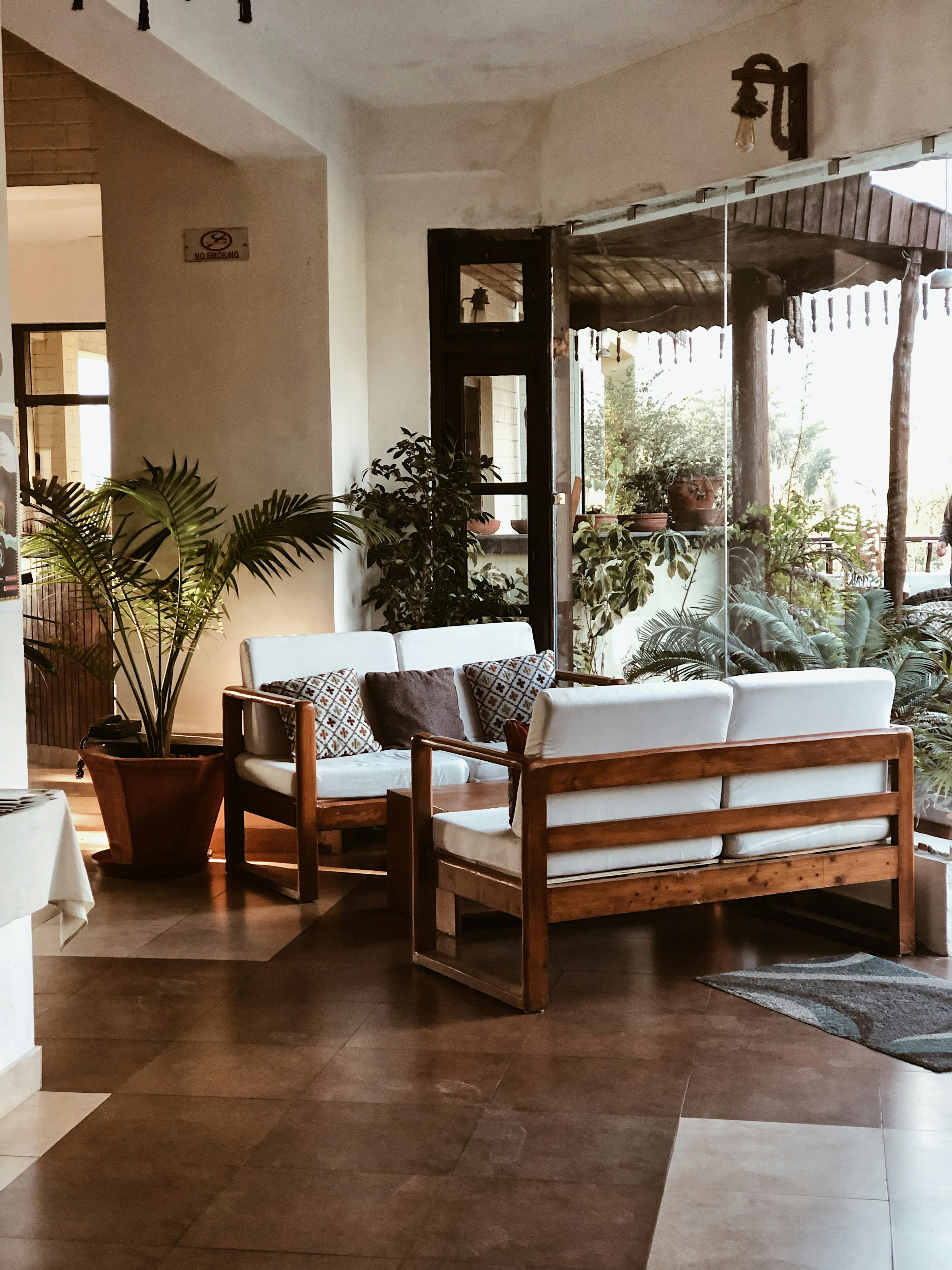
Begin with the environmental relationship you want the room to express. Tropical design can mean filtered daylight, cross-ventilation, shade, water, stone, timber and an easy transition to planting; it does not require palm-print objects on every surface. In a temperate apartment, translate those relationships rather than pretending the room has another climate. Open the view, make the shower feel garden-facing, introduce a warm mineral base and use one credible botanical layer. The result should still read as tropical when every literal leaf motif is removed. For a broader nature-led approach where material variation and biophilic connection lead without a tropical climate cue, continue to [Organic Bathroom Ideas](/ideas/organic-bathroom-ideas/).
Choose a Clear Tropical Design Lane
Tropical modern combines simple architecture with deep shade, large openings and local-looking materials. Botanical maximalism makes pattern and saturated color the event. Resort minimalism keeps stone, timber, towels and planting extremely edited, while an urban-jungle room concentrates healthy plants around a conventional bathroom shell. Choose one as the lead and another only as a supporting note. Mixing resort stone, novelty flamingos, bohemian tassels and several unrelated leaf prints rarely creates richness; it removes hierarchy and makes future maintenance harder to see.
Decide Whether the Room Is Climate-Led or Decorative
A bathroom in a humid tropical region can use deep overhangs, screened openings, outdoor circulation and naturally ventilated buffer zones. A sealed northern-city bathroom usually needs insulation, mechanical extraction and tighter water control. Both can look tropical, but their construction logic is not interchangeable. State which condition applies, then borrow only compatible ideas. A green room with one healthy plant may be a more honest and durable translation than an open wall, untreated wood and permanent damp introduced for atmosphere.
Plan the Daily Route Before the Garden View
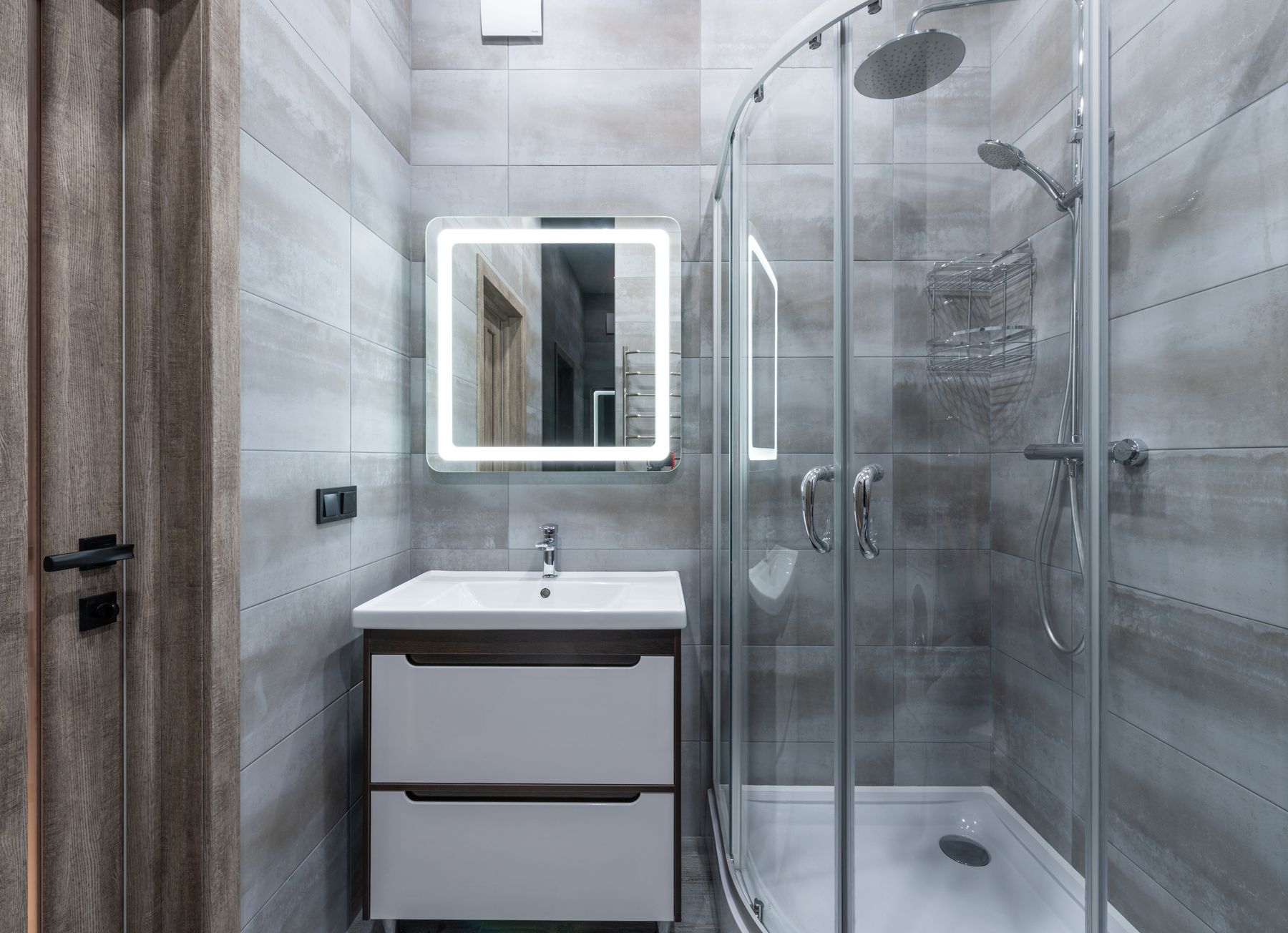
Map the approach to the basin, toilet, shower, bath, storage and towel before orienting everything toward foliage. A tropical bathroom should feel relaxed because movement is clear, not because basic functions have been hidden. Check door and screen swings, wet footprints, night access and whether a second user can pass. Frame the best green view from the bath or shower only after privacy, reach and cleaning are resolved. The strongest vista cannot compensate for a towel hook placed beyond a slippery floor.
Treat Daylight as the First Tropical Material
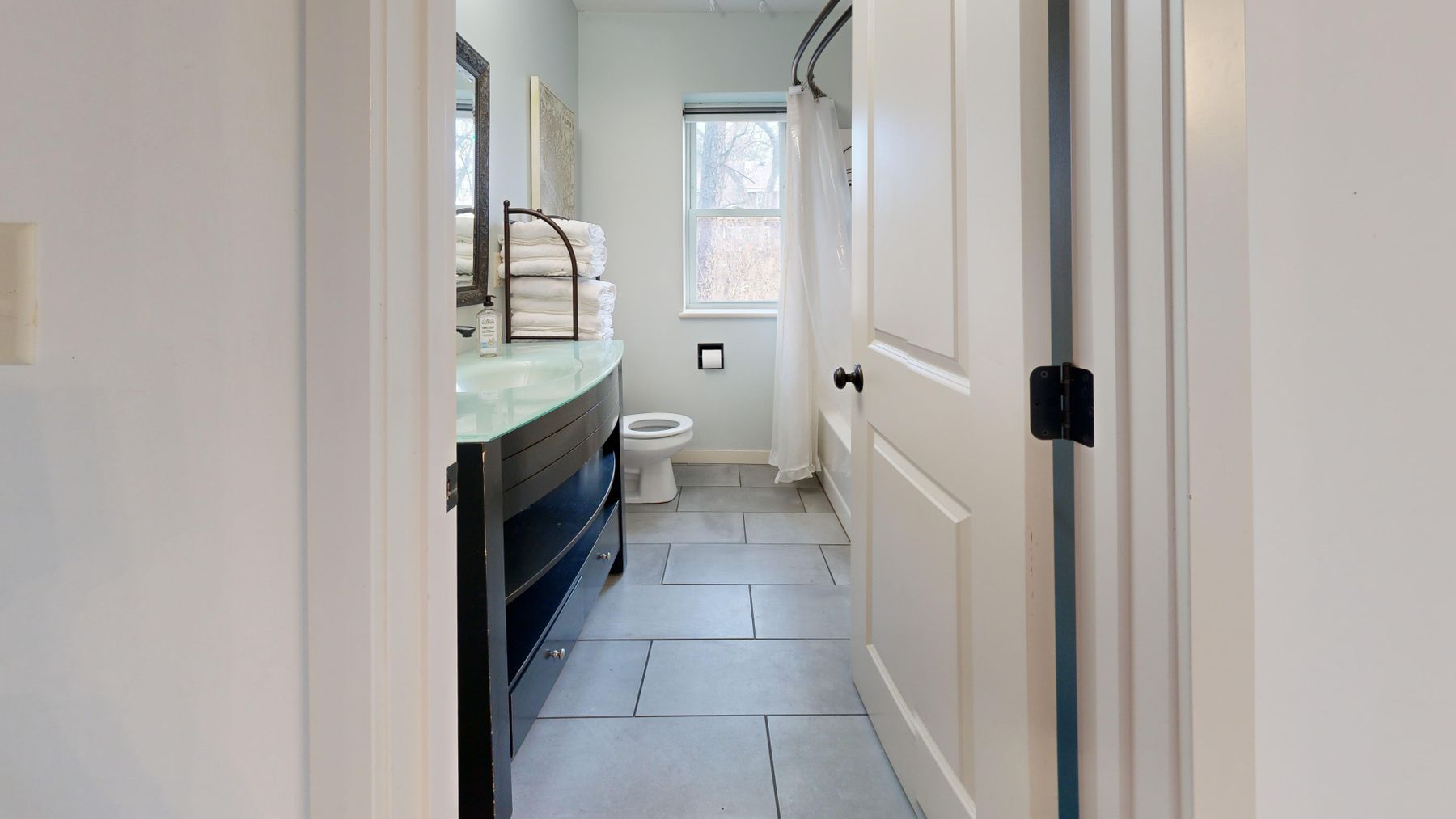
Record window orientation, seasonal sun, shadow from neighboring buildings and the hours when the room is actually used. Frosted glass preserves light better than a permanently closed blind, while a high window or rooflight can protect privacy and illuminate planting. Deep green finishes need enough light to retain color and detail. Do not place a plant because an editorial photograph shows one there; measure conditions at that exact shelf through the darker season and confirm that cleaning access remains available.
Design Ventilation for People, Plants and Finishes
High humidity after a shower is not a tropical feature to preserve. Size extraction for the room and bathing load, vent it outdoors, provide make-up air and use a timer or humidity control when appropriate. A window is helpful but not dependable in cold weather or when privacy keeps it closed. Leave air around cabinetry, dry towels fully and monitor persistent condensation on glass or ceilings. Plants that prefer humidity still need air movement; stagnant damp encourages mildew, pests and failing finishes.
Create an Indoor-Outdoor Connection Without Losing Control
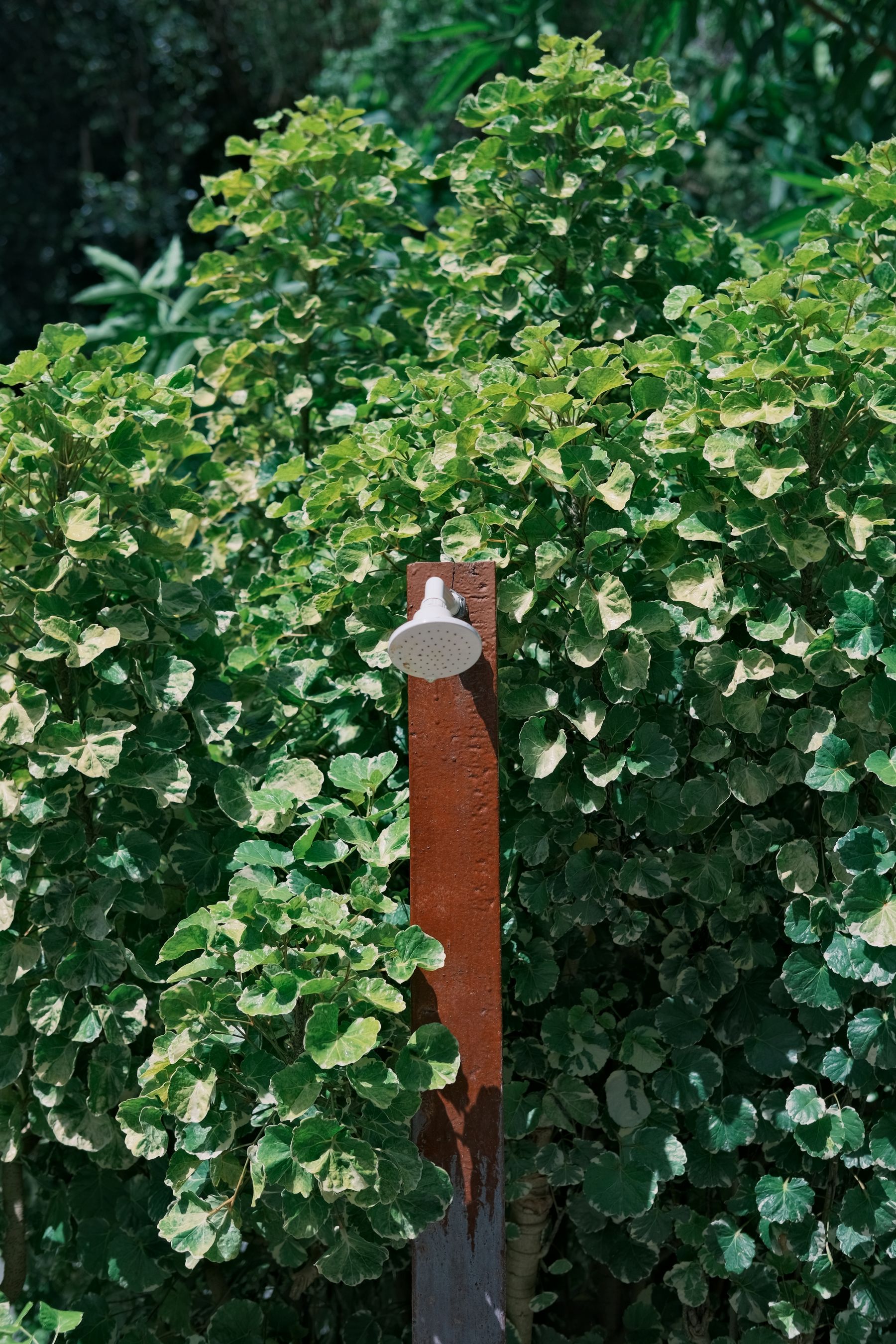
A glazed garden wall, planted lightwell, screened courtyard or roofed shower terrace can create the tropical relationship with different levels of exposure. Test sightlines in leaf-off seasons, at night and from neighboring floors. Detail thresholds, drainage, insects, security and cleaning before enlarging an opening. In colder climates, high-performance fixed glazing may express the garden more reliably than an operable wall. The goal is sensory connection—light, movement, foliage and weather—not uncontrolled water or an avoidable thermal penalty.
Build the Palette From Leaf, Earth, Water and Sun
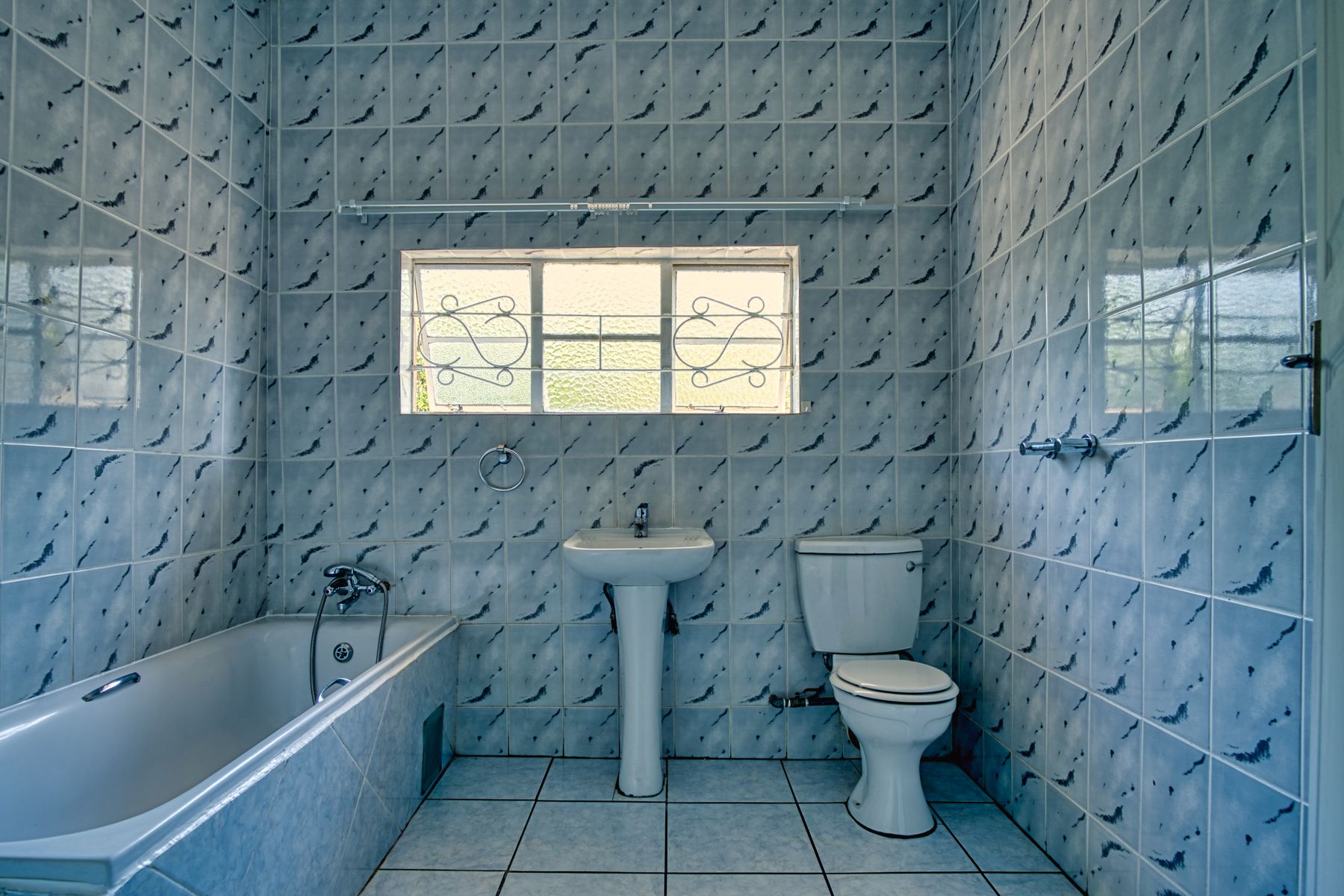
Use nature as a relationship guide rather than a literal swatch card. Deep leaf green needs a lighter mineral or timber plane; lagoon blue benefits from sand, clay or warm metal; ochre and terracotta need cooling white or foliage. Decide which color belongs to permanent tile and which can live in towels, paint or pots. Preserve contrast at controls, floor edges and supports. A tropical palette can be pale and bleached or nocturnal and saturated, but it should remain readable under evening light.
Use Stone as a Cooling Visual Anchor
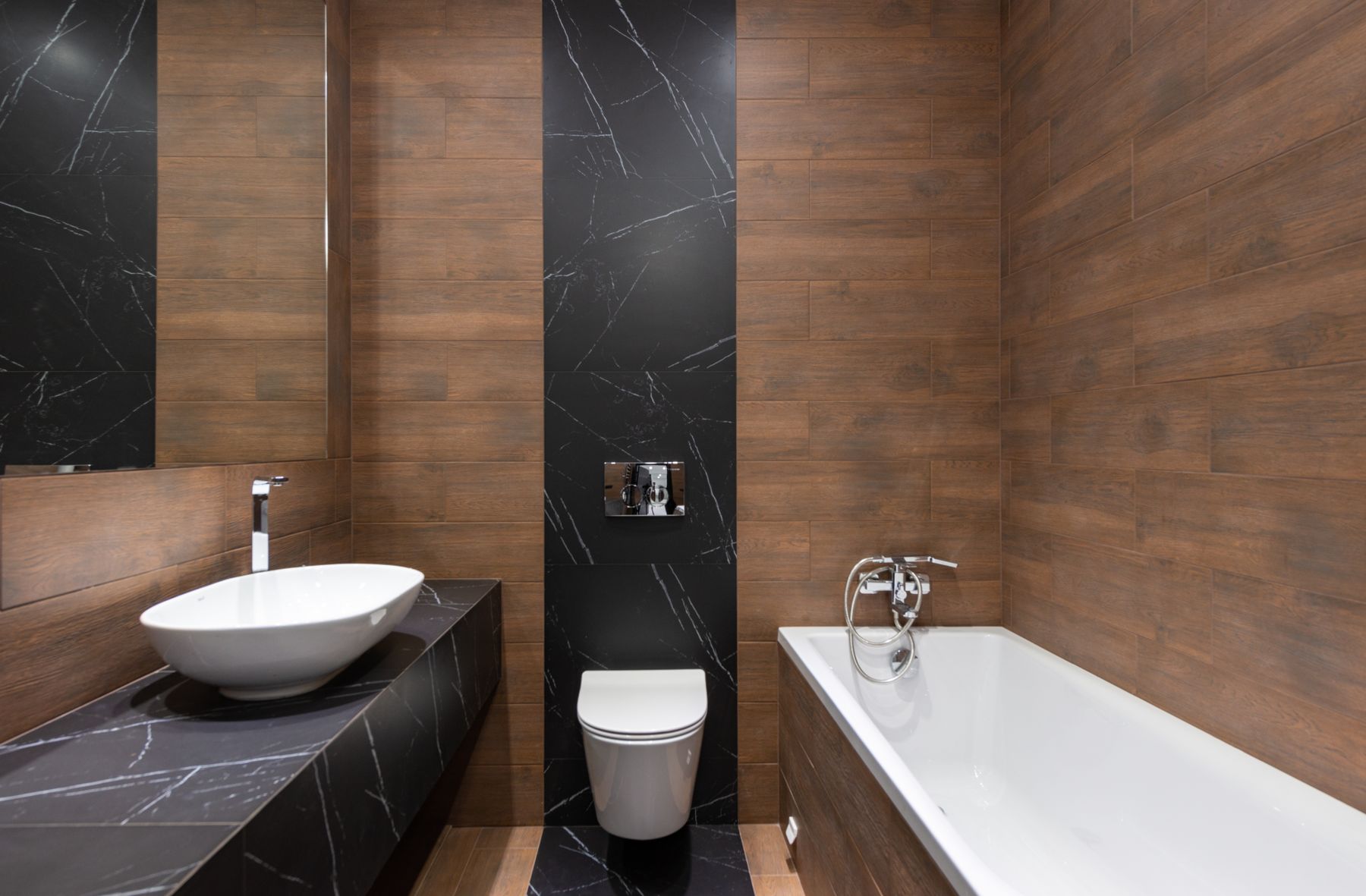
Stone, terrazzo, tadelakt-like finishes and convincing porcelain can create the cool mineral layer associated with tropical retreats. Choose them by wet grip, porosity, cleaning chemistry, jointing and local installation skill—not by appearance alone. A heavily textured wall can hold dust and soap, while a rough floor may be uncomfortable underfoot. Use one continuous mineral field at the shower, floor or vanity, then let timber and foliage provide warmth rather than combining several unrelated stones.
Detail Timber for Water Rather Than Wishful Thinking
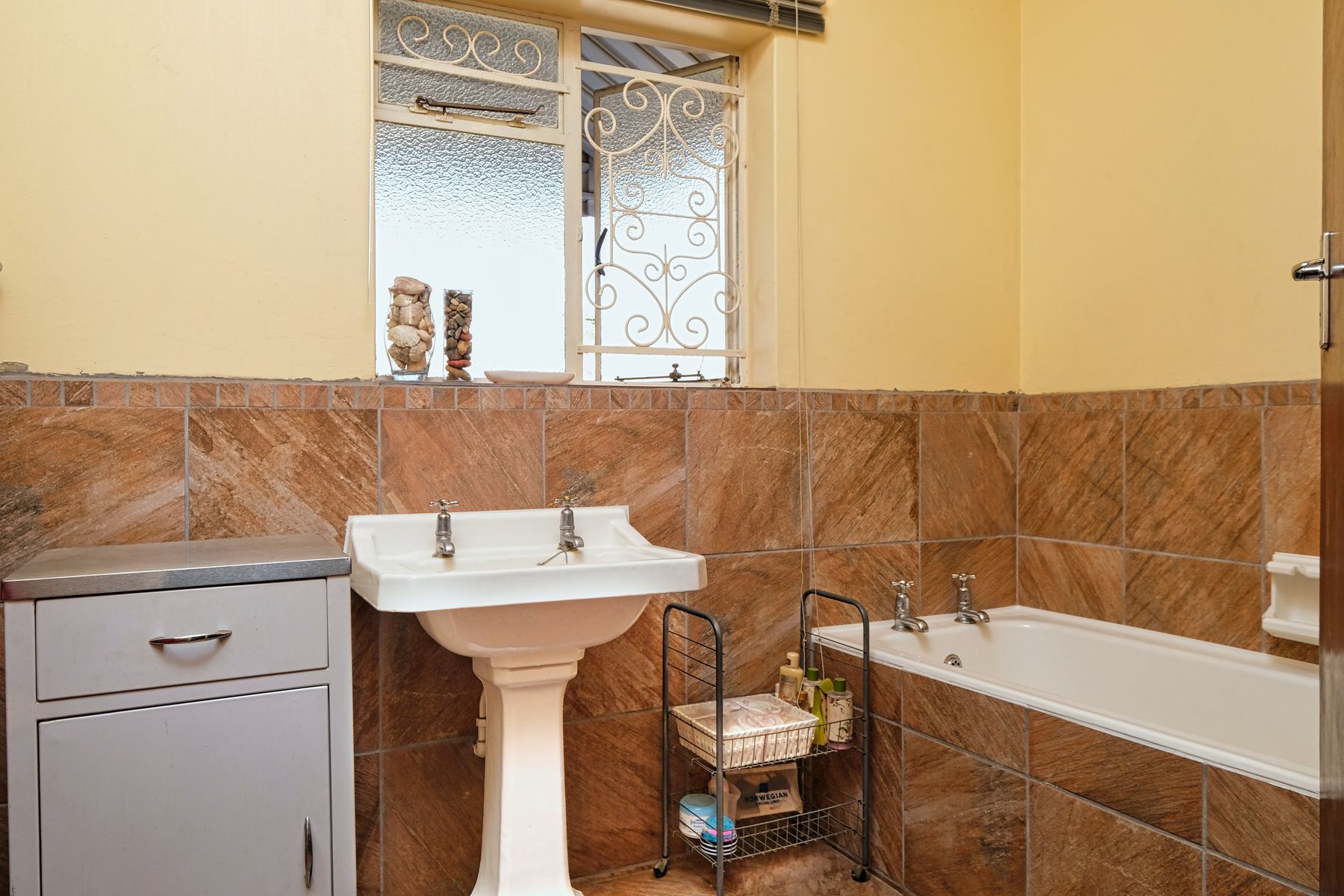
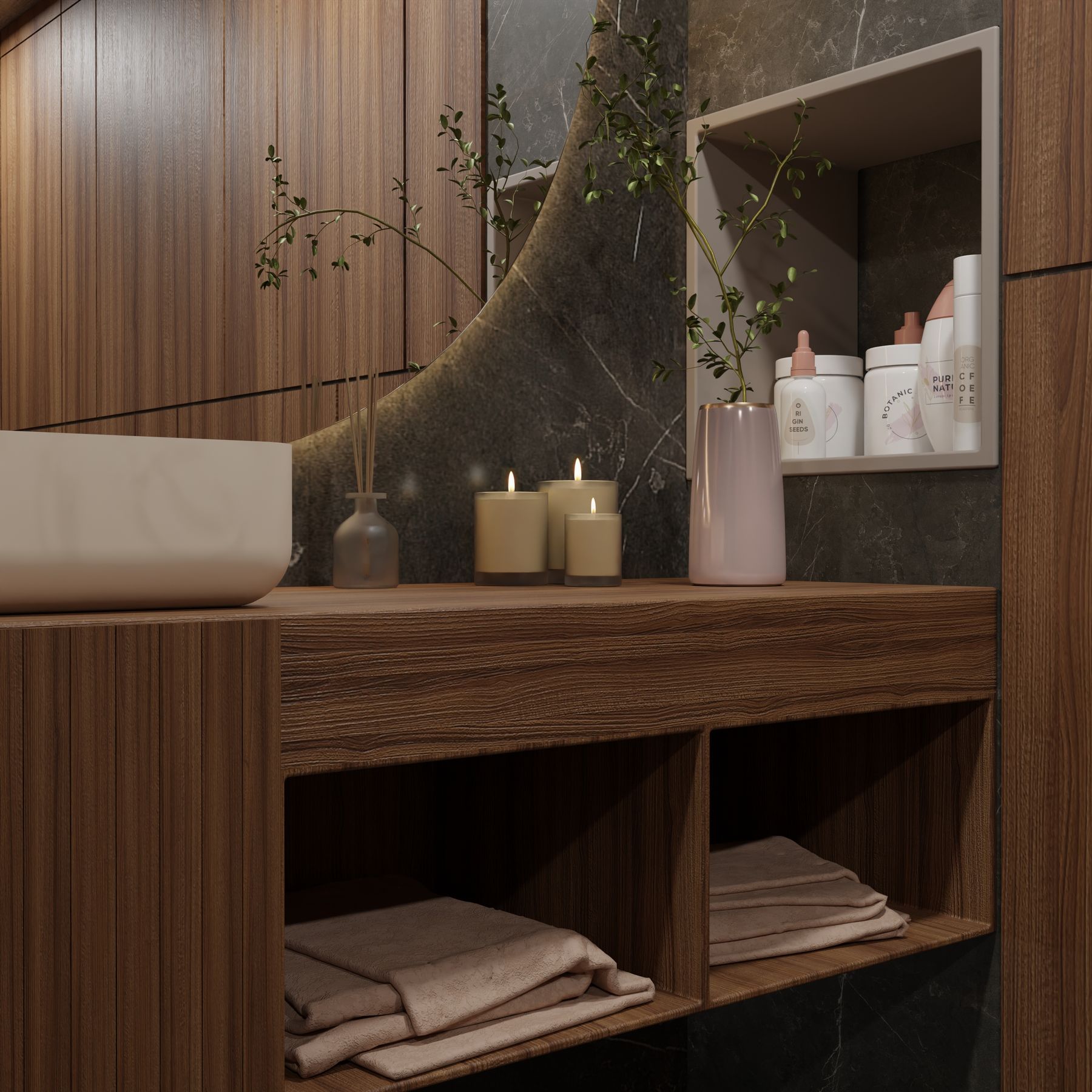
Species, cut, substrate, finish and edge detailing determine whether timber survives. Keep vulnerable veneers away from standing water, seal all sides where required, lift cabinetry above wet floors and make damaged pieces replaceable. Slatted ceilings and walls need access for inspection rather than trapping moisture behind a decorative skin. Wood-look porcelain may be the better shower-floor choice, leaving real timber for a dry vanity or ceiling. Warm wood is tropical only when the room also carries light, landscape or climate logic.
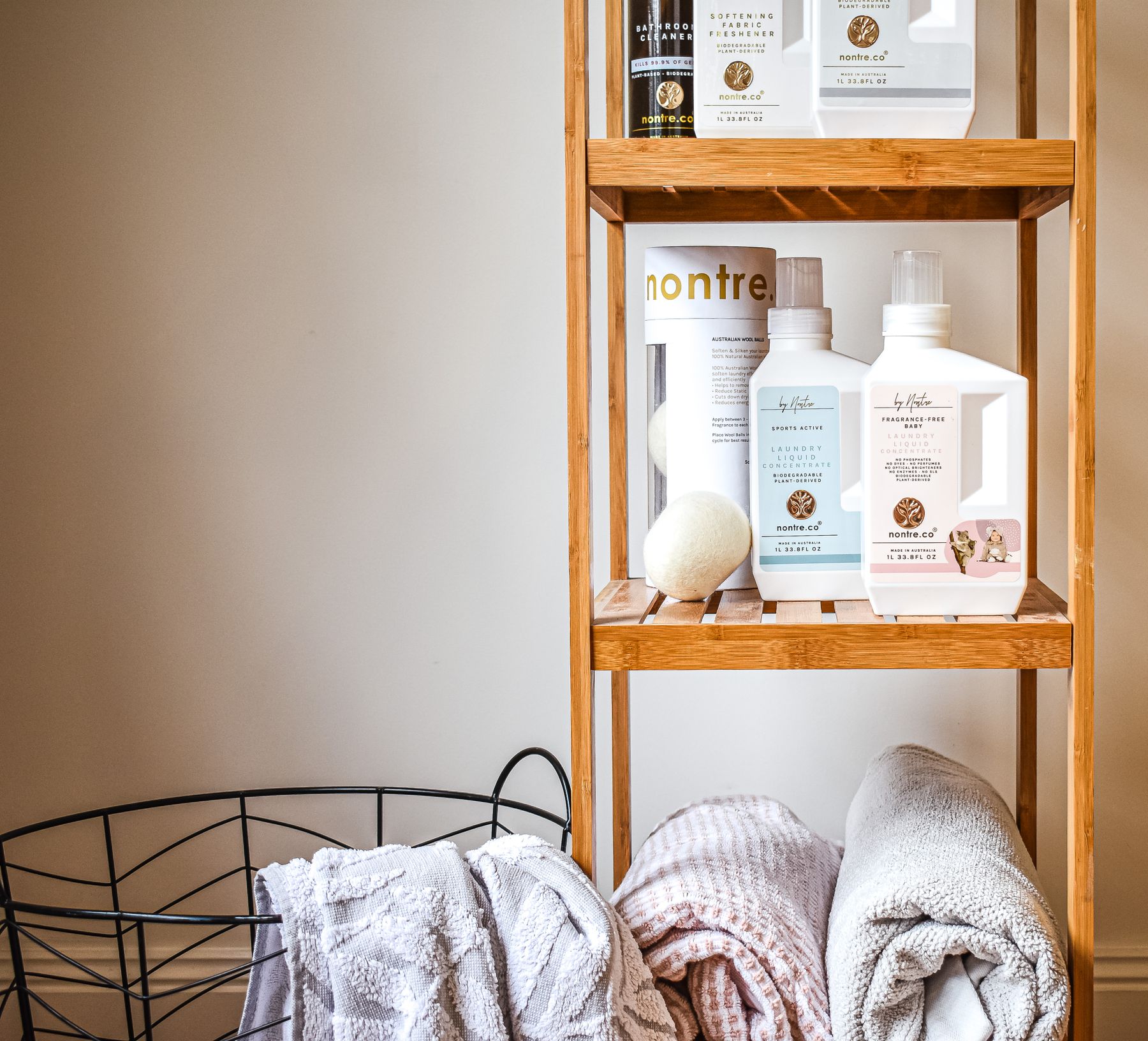
Keep Bamboo and Rattan in Serviceable Dry Zones
Bamboo, cane and rattan bring fine texture and filtered-shadow associations, but repeated saturation can swell fibers, weaken bindings and harbor mildew. Use them as removable shelving, a mirror frame, basket or screened cabinet in a ventilated zone beyond direct spray. Keep towels loosely stored and inspect the underside. Synthetic woven material may suit a semi-outdoor location better, though it should still be repairable and visually quiet. One well-placed woven element is more convincing than a matched resort accessory set.
Use Terracotta and Clay as the Warm Counterpoint
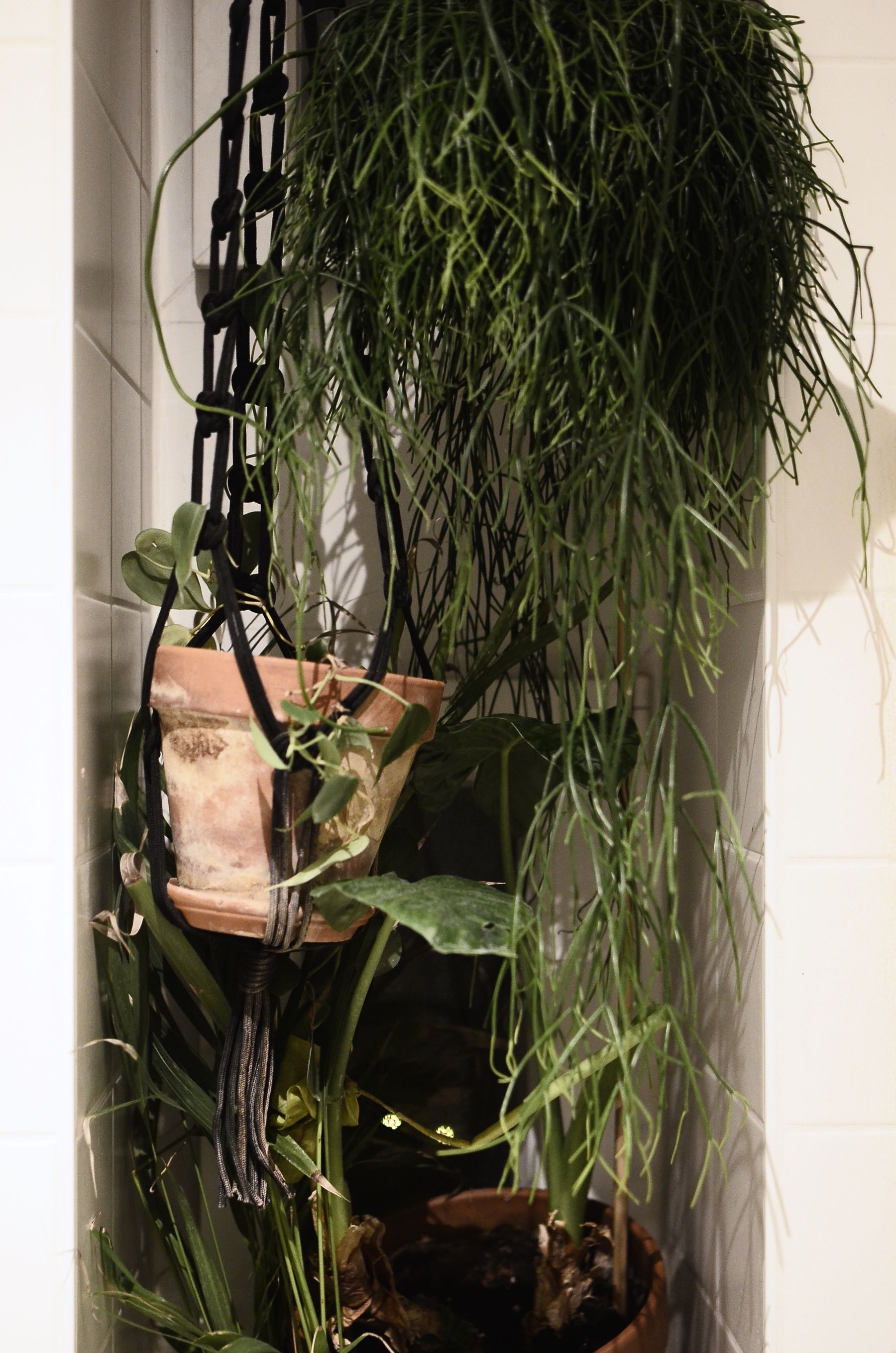
Terracotta tile, unglazed pots and earthy ceramics stop a green tropical room feeling synthetic. Their porosity also demands planning. Confirm whether floor tile requires sealing, how water marks will appear and where potted plants can drain without staining stone or timber. Vary pot sizes by the plants' root needs rather than assembling identical containers. In a small room, one rust-toned floor or a few clay vessels is enough to balance green tile and pale fixtures.
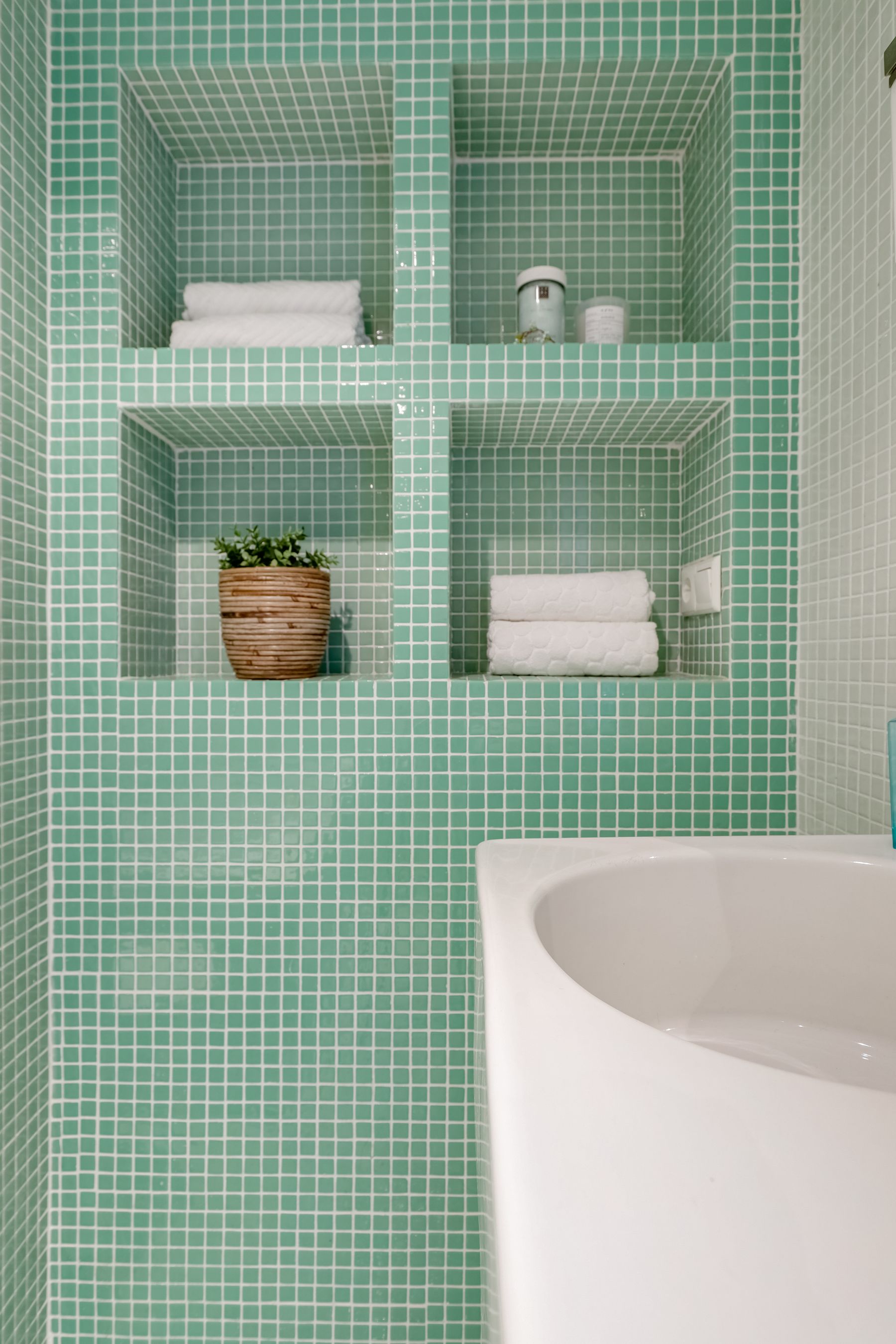
Choose Green Tile When Plants Cannot Carry the Color
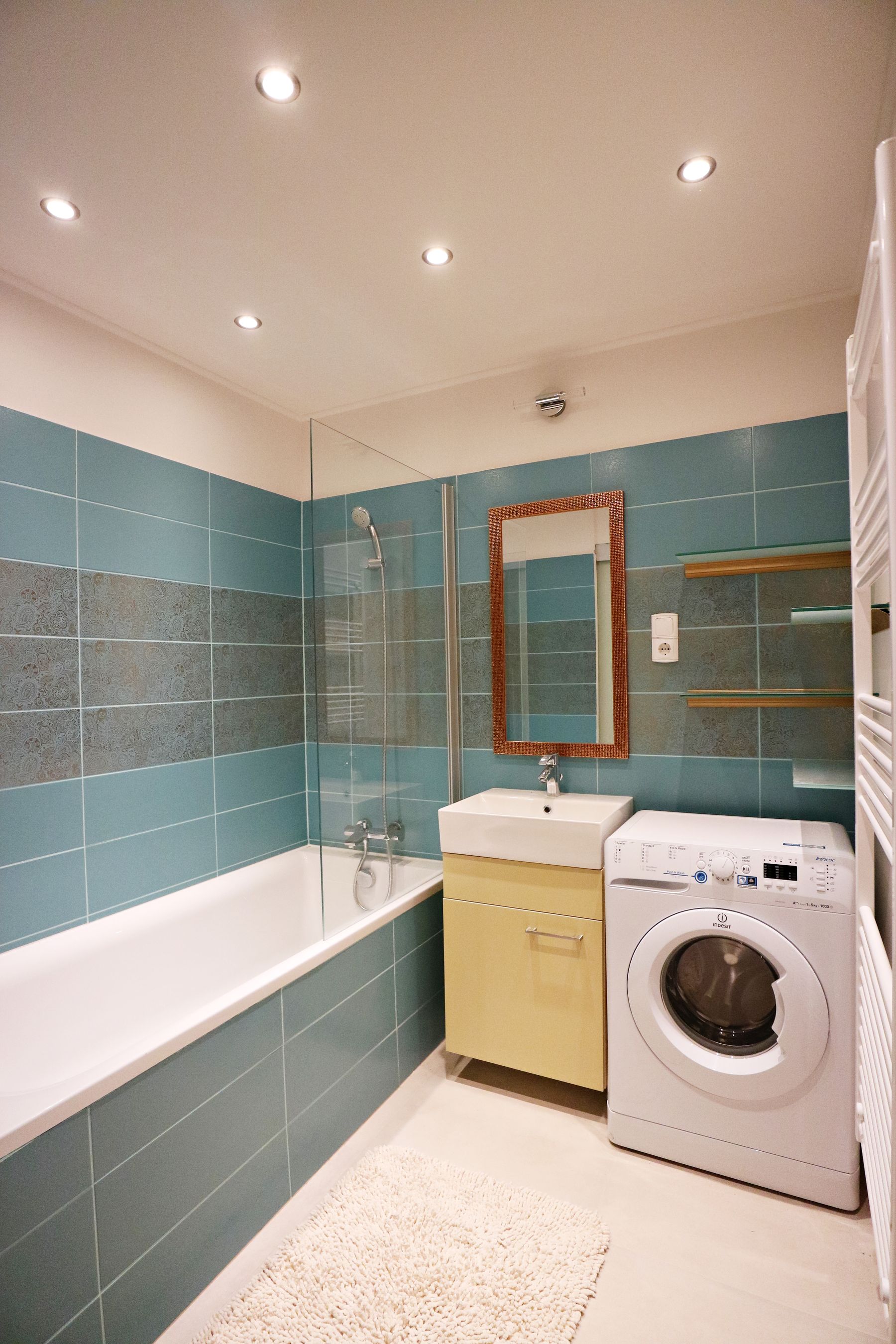
Green tile is a durable color carrier in rooms where plant light or care is limited. Choose a blue, yellow, grey or black undertone after comparing it with timber, stone and skin under the actual lighting. A reflective glaze can animate filtered light; a matte tile may feel calmer but show residue differently. Cover one coherent plane rather than scattering green accents. Tile does not make a room tropical by itself, so support it with mineral warmth, a landscape view or a carefully chosen botanical form.
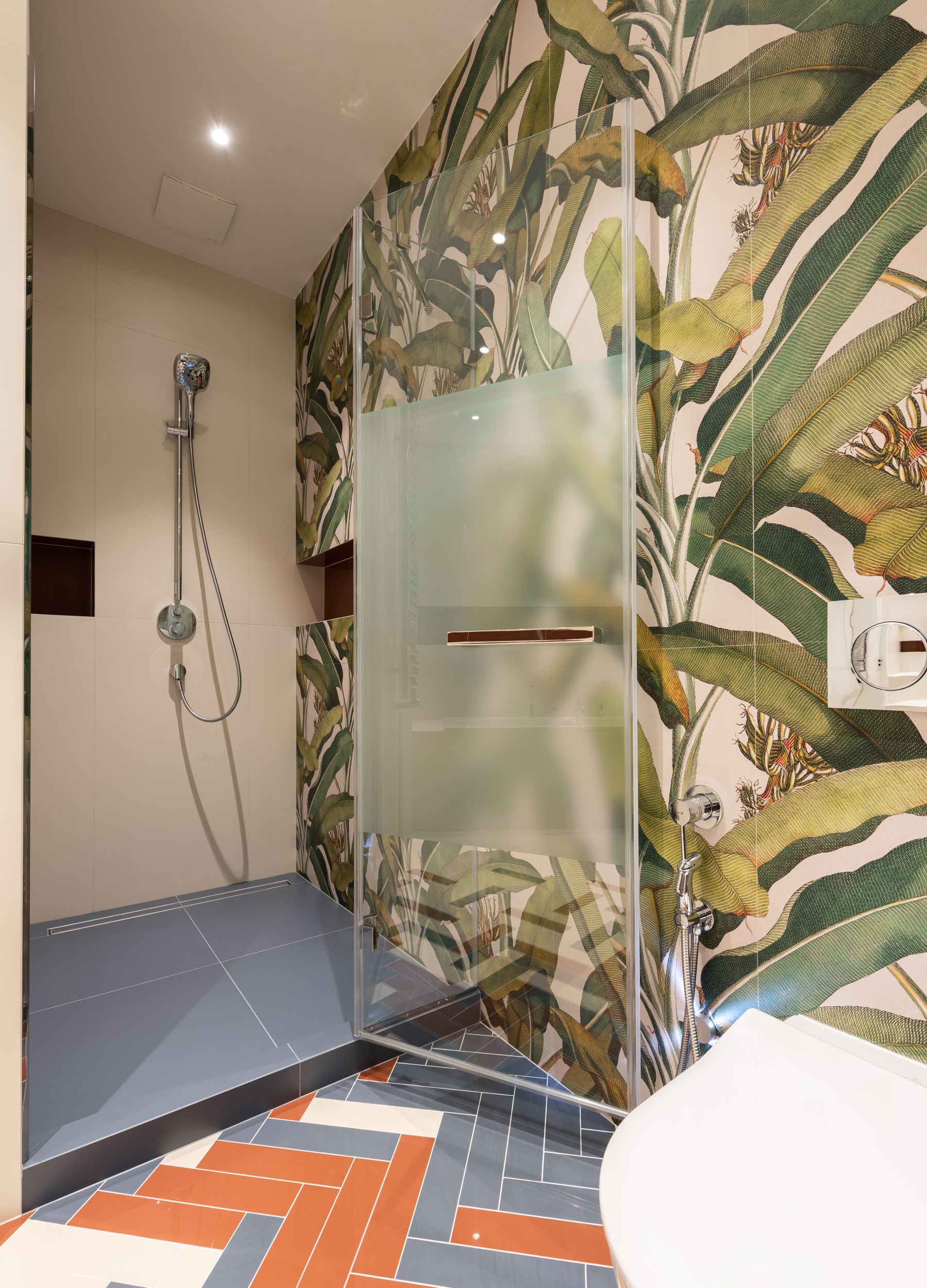
Put Botanical Wallpaper in a Defensible Zone
Botanical wallpaper can create the entire atmosphere in a powder room or dry bathing zone, but select it only after extraction, substrate and splash boundaries are resolved. Confirm the manufacturer's bathroom guidance, seam behavior and cleaning method. Keep it away from shower spray and basin splash unless the exact system supports that exposure. Scale the repeat to the wall and decide where major leaves land around mirrors and corners. Pair an assertive print with quieter sanitaryware instead of adding competing tropical motifs.
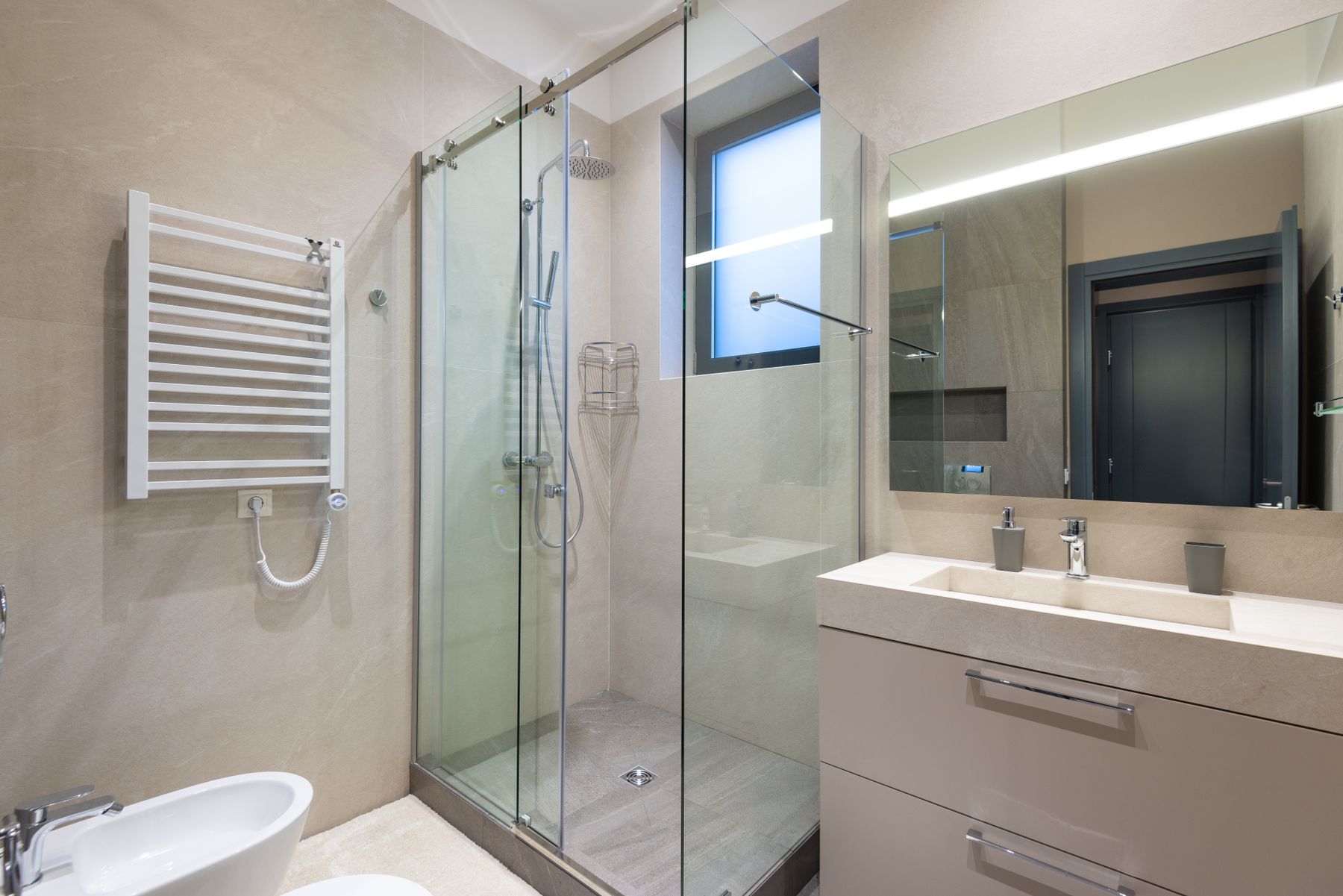
Make the Shower the Primary Water Experience
Prioritize spray control, comfortable controls, a reachable towel, drainage and safe footing before choosing a rain head. A clear screen can share garden light; a framed opening can create a more sheltered feeling. Oversized rain fixtures need adequate water pressure, hot-water capacity and an efficient alternative for quick use. Avoid artificial rock grottoes that are hard to waterproof and clean. Stone, planting beyond the glass and one strong water sound can make a conventional shower feel tropical without turning it into scenery.
Treat an Outdoor Shower as a Separate Building Problem
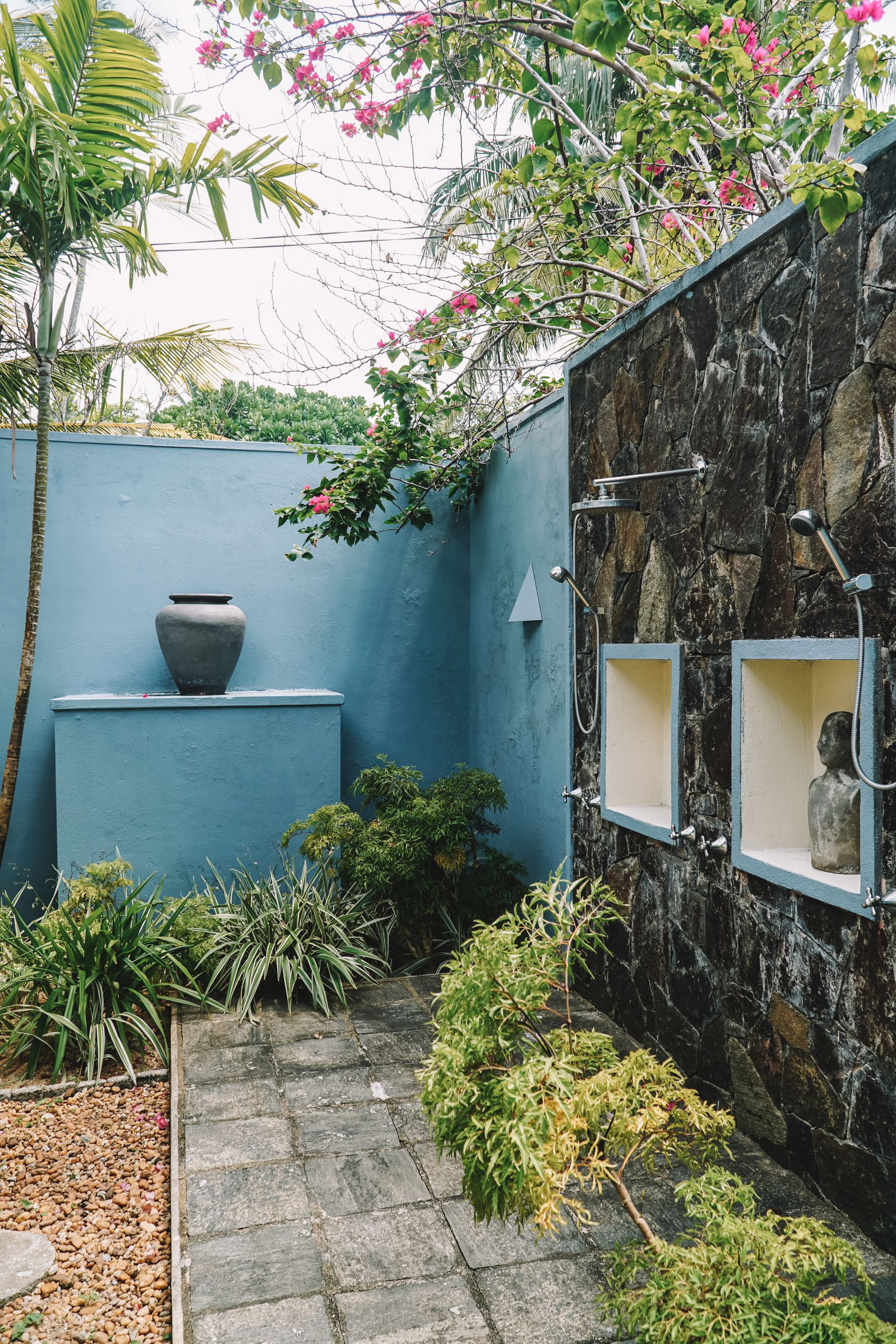
An outdoor shower belongs in the tropical family but has distinct requirements: frost strategy, supply isolation, ground drainage, wastewater rules, wind, salt, ultraviolet exposure, insects, privacy and security. Decide whether it is a rinse point, primary shower or seasonal extension, because each implies different hot water and storage. Use hardware rated for the location and keep soap from entering planting unless the drainage plan allows it. Link to the indoor bathroom through material or view, not by pretending the two assemblies are identical.

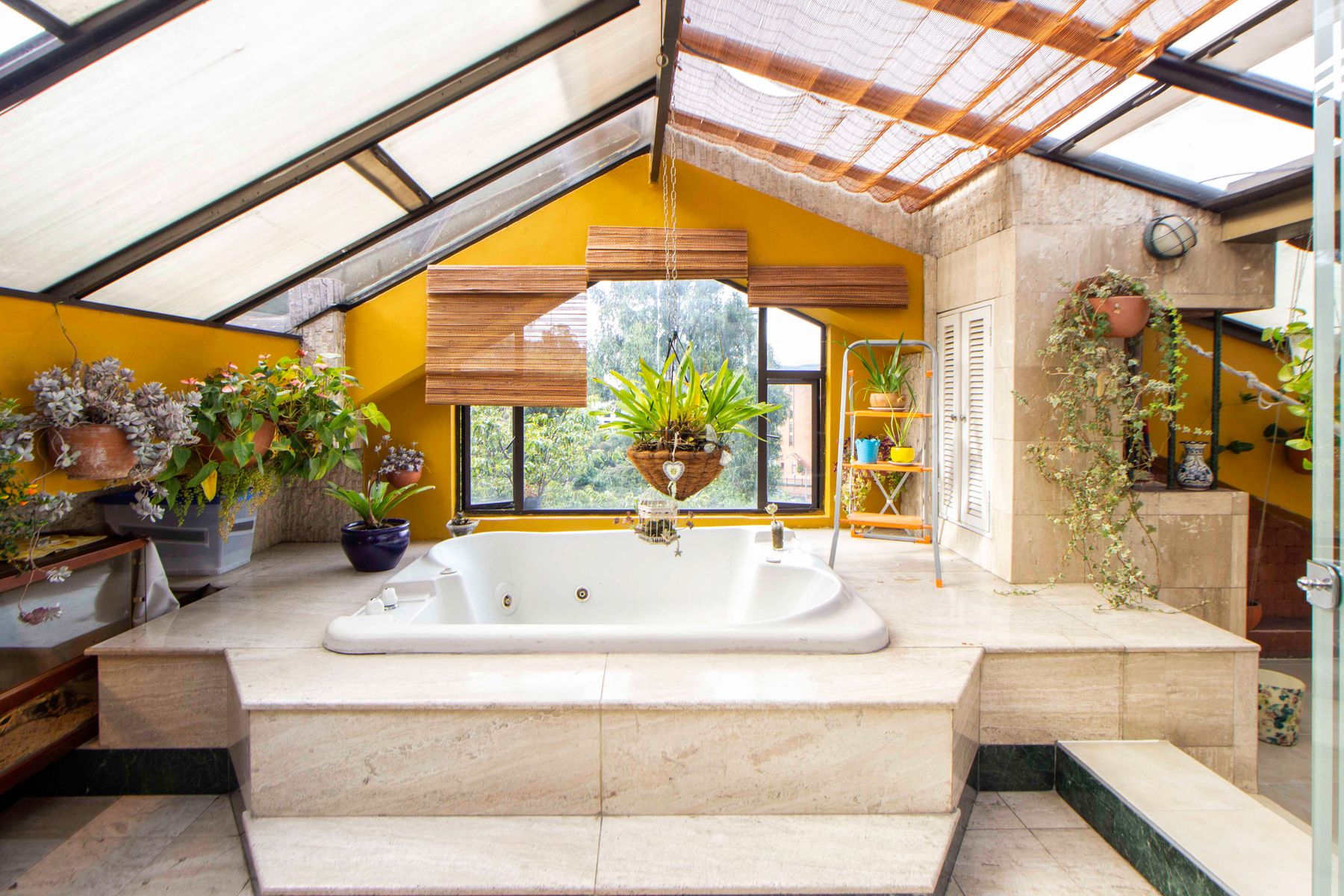
Place the Bath Where the View Earns Its Footprint
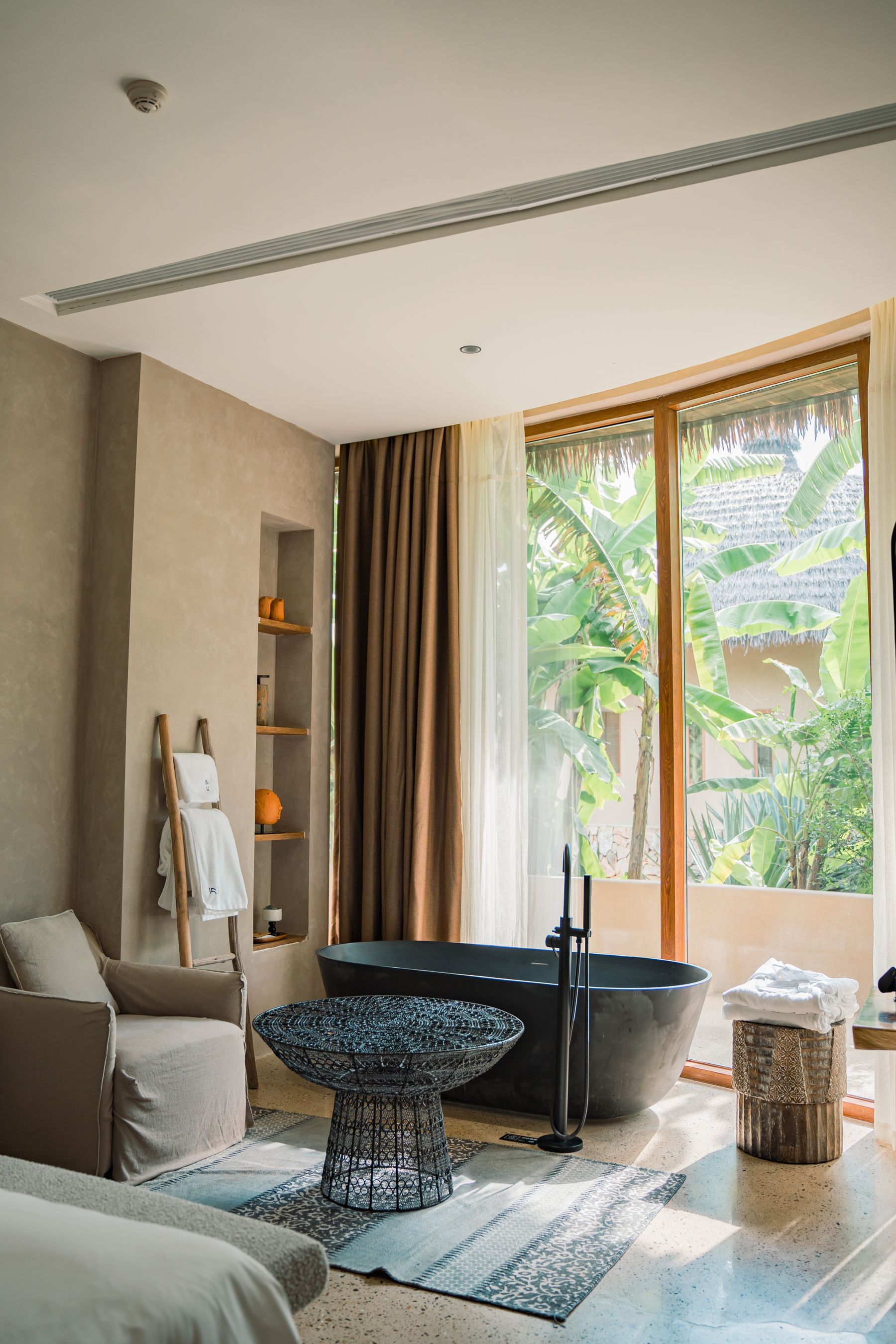
A bath facing foliage can become the emotional center, but only if it fits the user's routine and the room can support its filled weight, approach and cleaning perimeter. Keep controls reachable before entry and preserve a stable exit with a nearby towel. Plants should not block the filler or drop soil into the water. A built-in bath below a garden window may use space better than a sculptural freestanding model and can provide a ledge for one well-chosen plant.
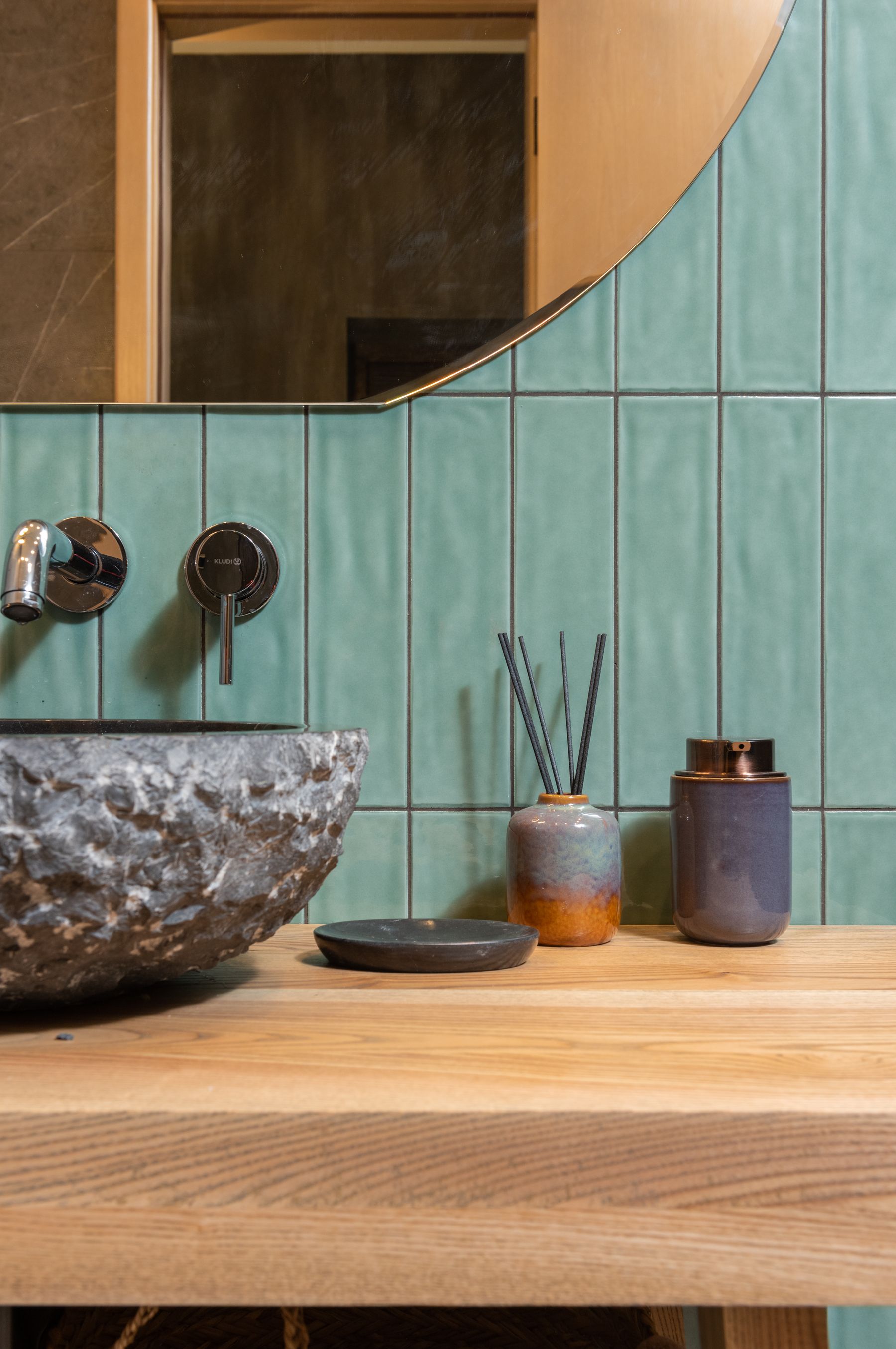
Build the Vanity From Stone, Timber and Clear Landing Space
A monolithic stone basin, timber cabinet or plastered plinth can anchor the room, but the vanity still needs clear landing space, sealed edges, working drawers and service access. Avoid deeply irregular bowls that splash or hold residue. If the stone is porous, test soap and cosmetics; if the timber is veneered, protect every cutout. Keep the planting to one side rather than crowding the grooming zone. The composition should feel crafted while remaining easy to reset after a rushed morning.
Layer Mirrors and Light Like a Shaded Canopy
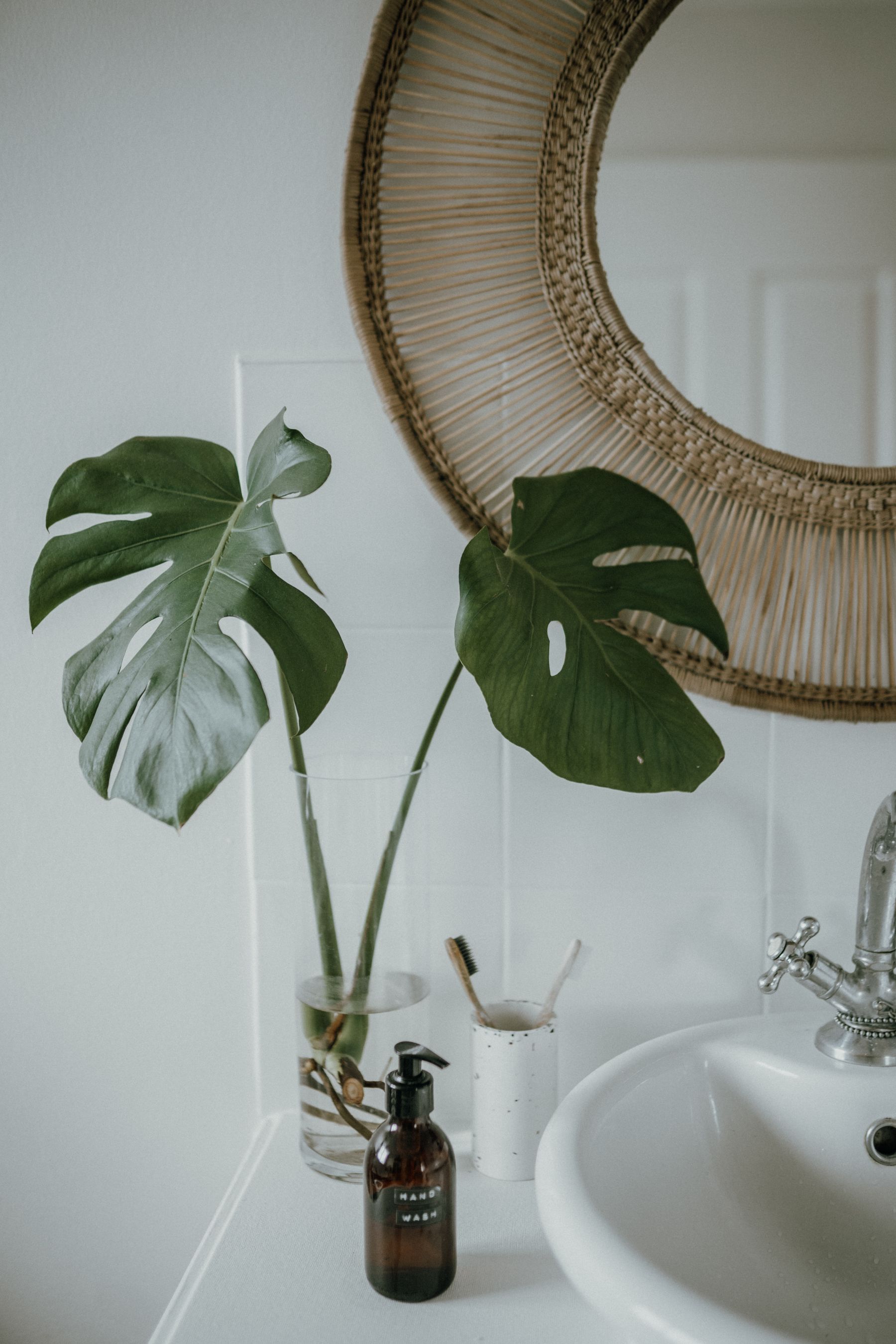
Tropical rooms often look appealing because highlights and shadow are layered, but grooming still requires even vertical light and good color rendering. Use ambient ceiling or concealed light, face light at the mirror and a low night layer. Aim accent light at texture or foliage without scorching leaves or producing theatrical green shadows on skin. Choose a mirror shape that reflects the strongest view and does not multiply clutter. Moisture-rated fittings and maintainable lamps matter more than a resort-like decorative shade.
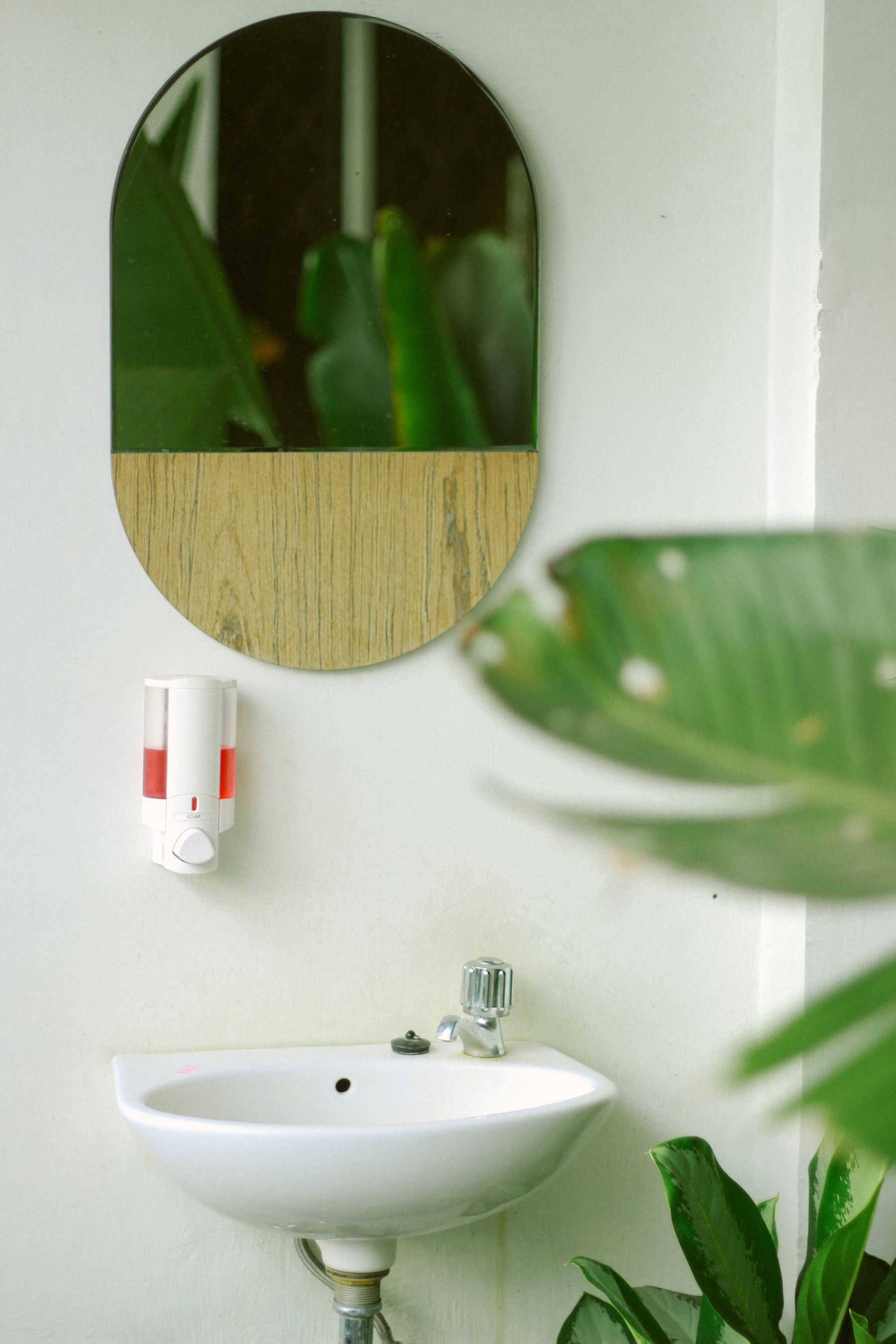
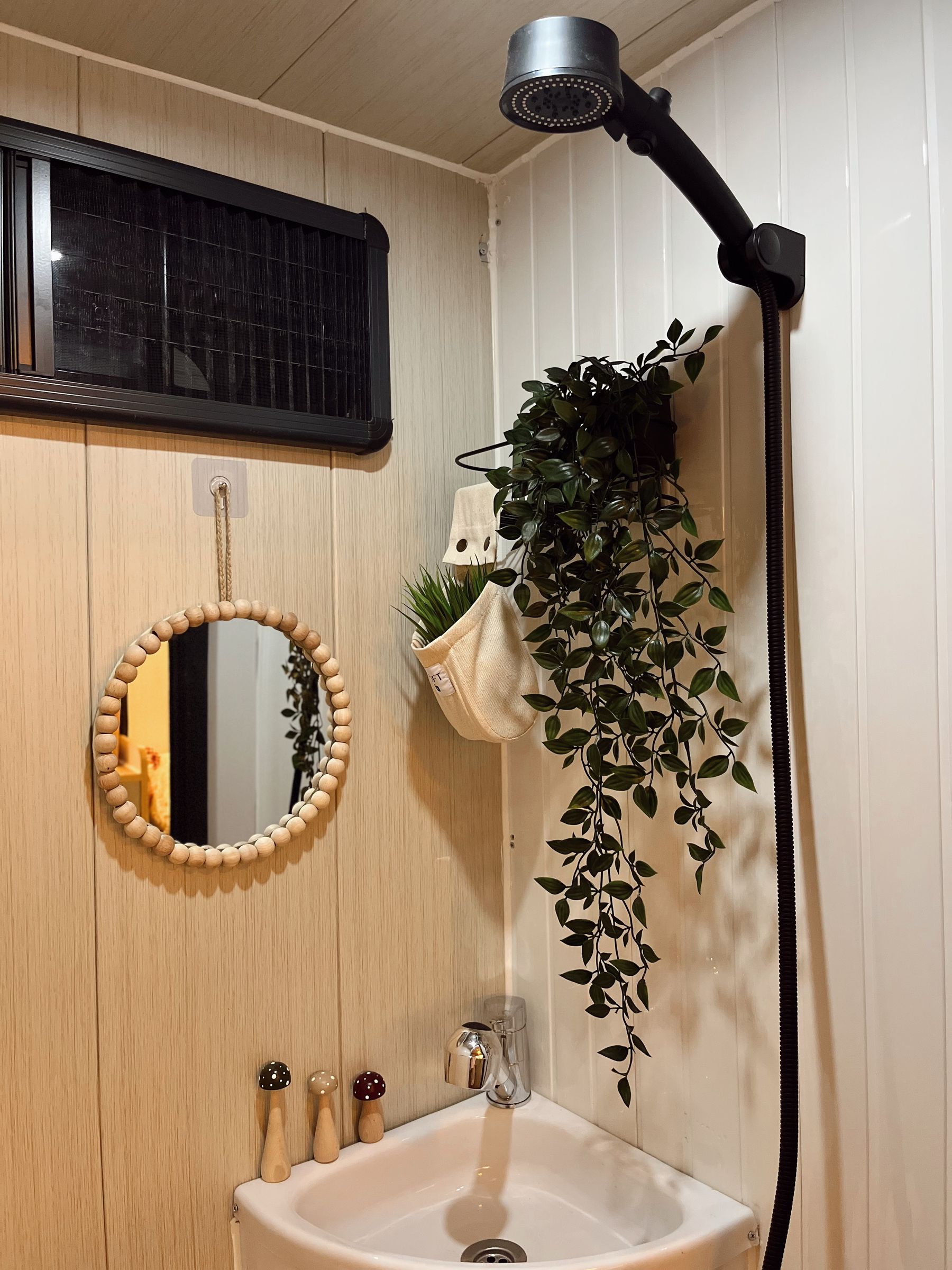
Match Each Plant to the Exact Place
Bathroom humidity can help some tropical plants, but light remains essential and conditions vary sharply across one room. Match species to measured light, temperature and care capacity; confirm toxicity if children or pets can reach them. Keep foliage away from hot lamps, direct spray and fan inlets. Provide removable pots and access for rotation, pruning and pest inspection. Start with one floor plant and one smaller shelf plant, then add only after both remain healthy through a full seasonal cycle.
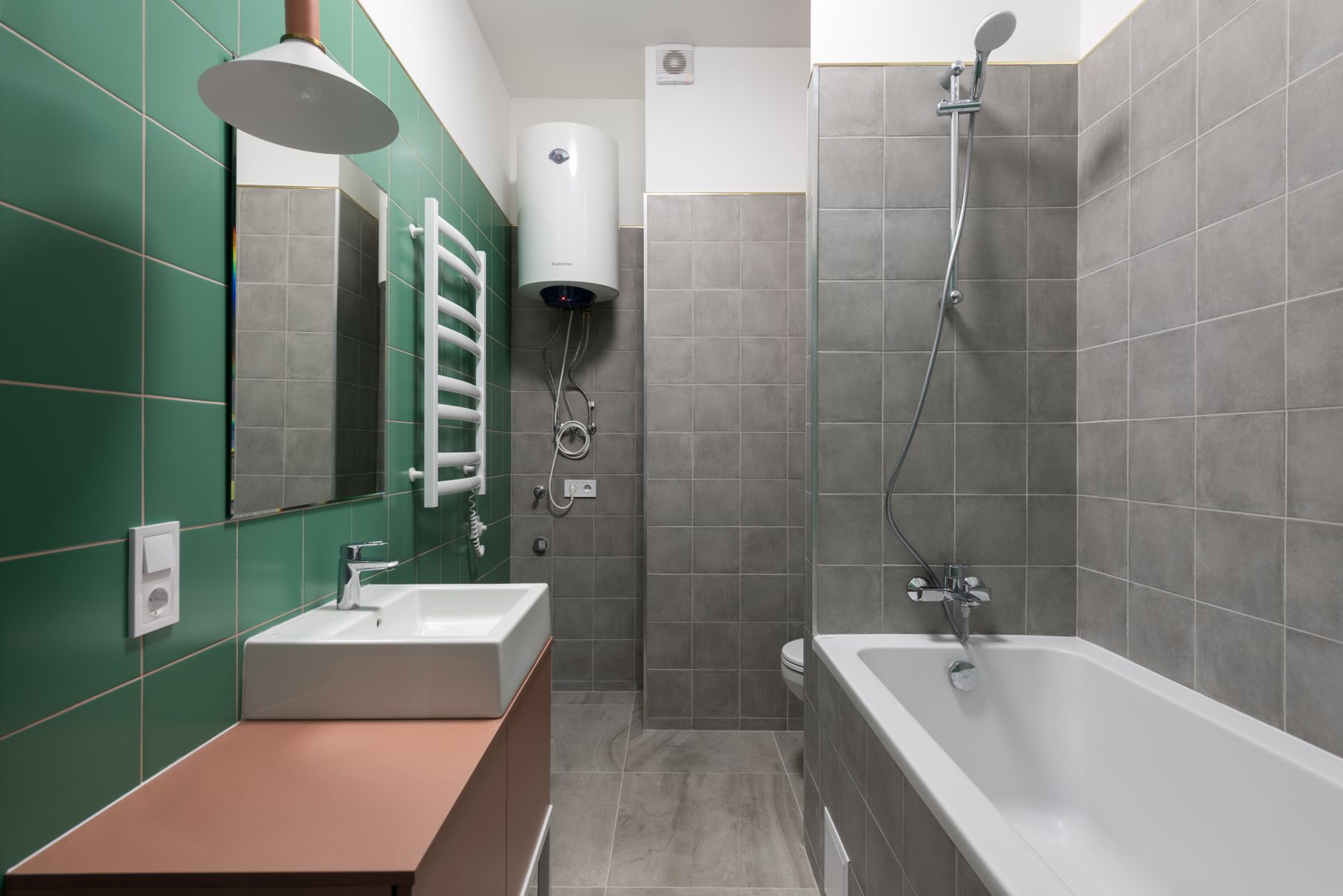
Give a Windowless Bathroom a Credible Botanical Alternative
A windowless bathroom is generally not a suitable home for live plants without a properly specified grow-light system. Do not rotate struggling plants through darkness and call that low maintenance. Instead, use green glaze, botanical art, a relief surface or a single high-quality leaf pattern, then build accurate mirror light and strong extraction. If grow lights are introduced, select spectrum, duration, heat, moisture rating and switching for the actual species. Artificial plants should be sparse, washable and clearly decorative.
Compose Plants as Architecture, Not Shelf Clutter
Use canopy, mid-level and trailing forms only when the room has the scale and care routine to support them. A tall plant can soften a dead corner; a trailing plant can mark a ledge; one broad leaf can echo a mirror. Avoid placing many small pots around the basin, toilet and shower where they complicate cleaning. Coordinate containers without making them identical, protect every surface from drainage and leave foliage enough air. The strongest composition has visible negative space around each living form.
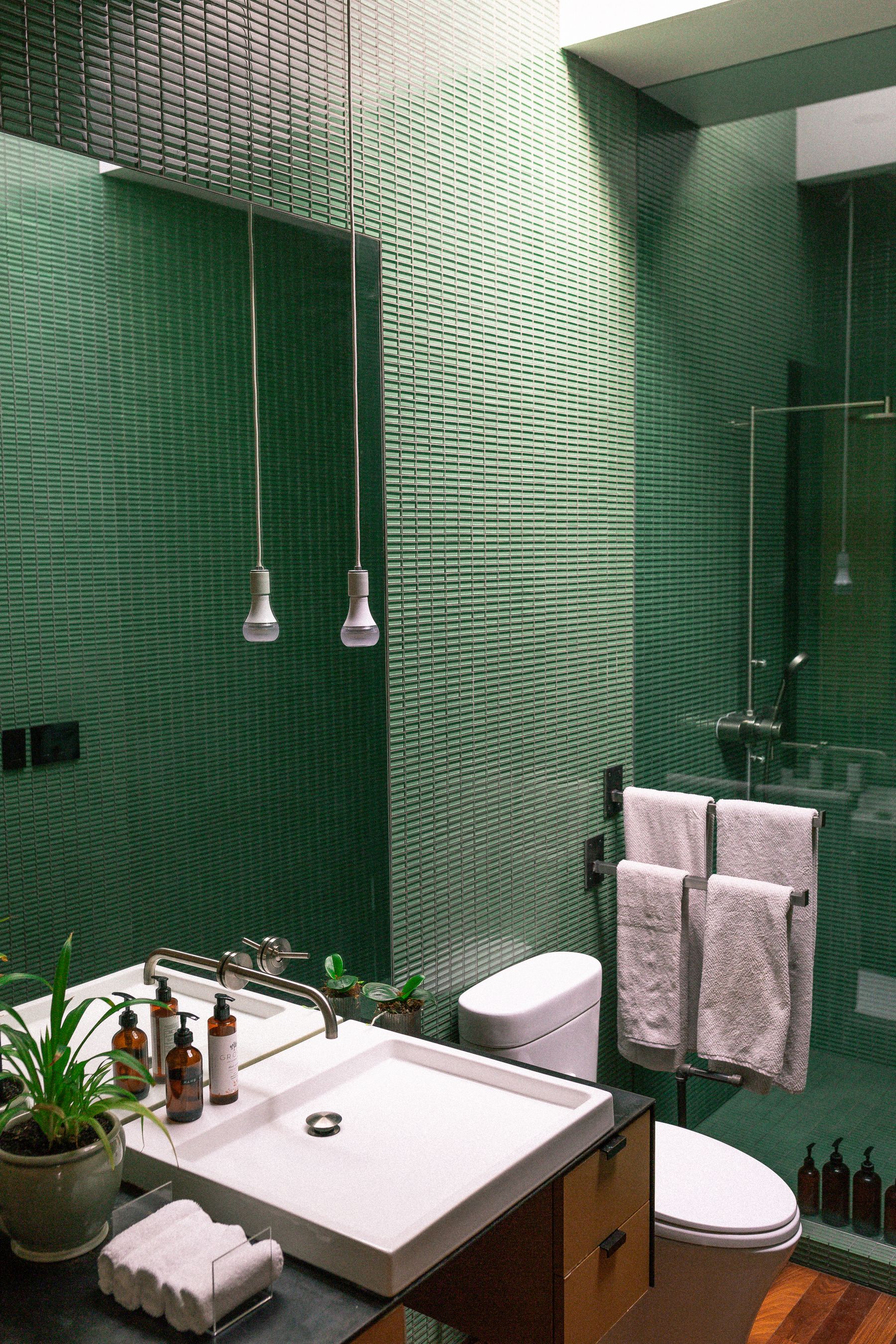

Use Screens and Louvers to Shape Privacy
Timber louvers, bamboo screens, patterned block and planting can filter light while maintaining the tropical rhythm of shade and air. Their privacy performance changes with viewing angle, distance and night lighting, so test the actual assembly rather than trusting a front elevation. External screens need structural fixing, weather durability and cleaning access; interior versions must stay away from direct saturation unless designed for it. Combine a permeable screen with obscured glass or a solid lower panel when absolute privacy is required.
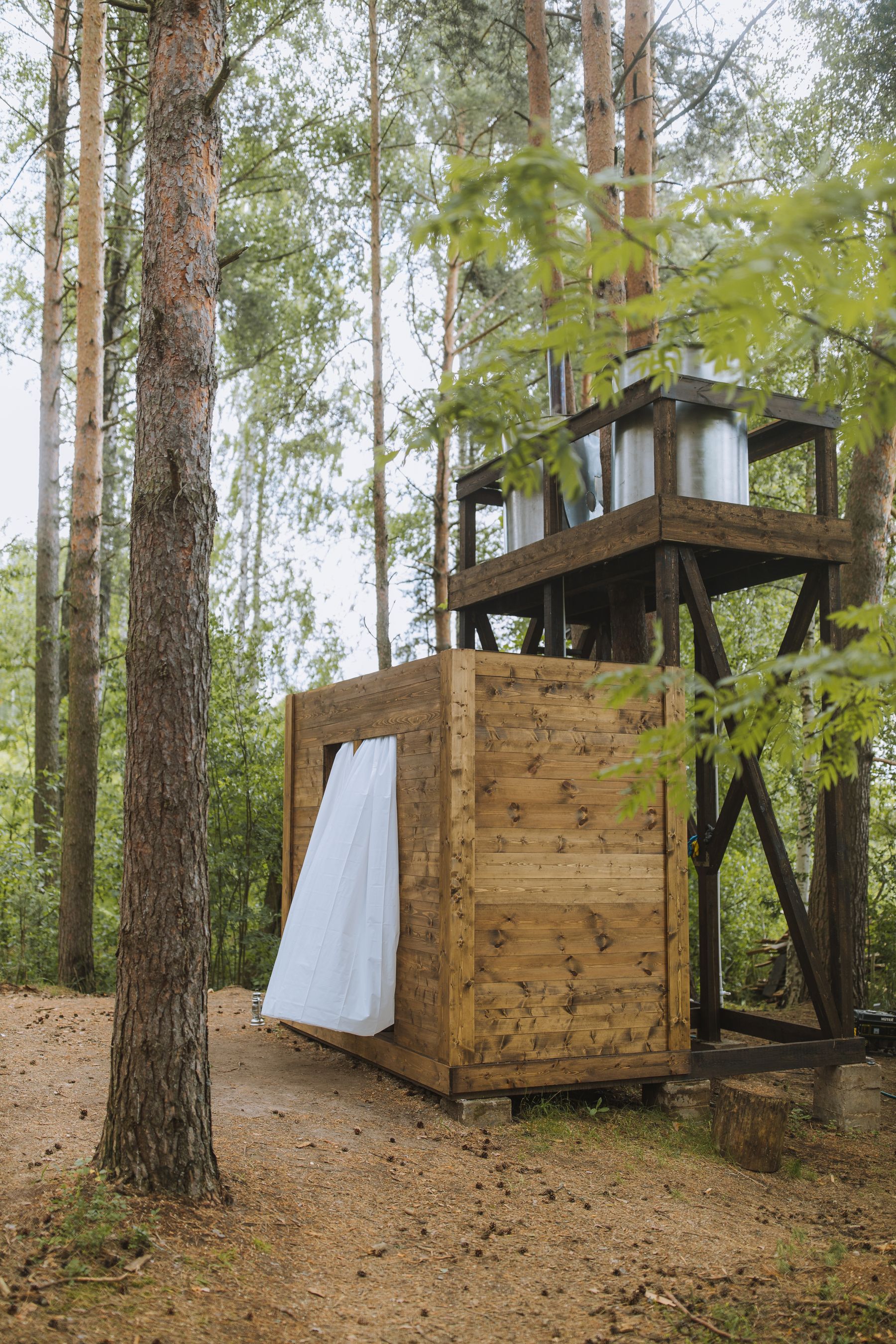
Plan for Insects, Leaves and Weather at Open Edges
Semi-outdoor bathrooms receive leaf litter, pollen, insects, wind-driven rain and occasional animals. Use screens where climate permits, avoid standing water in trays and saucers, and provide a floor that can be swept before it is washed. Detail lighting to limit insect attraction near the user's face and inspect timber for concealed damp. Secure loose accessories during storms and protect outlets and fittings for exposure. A romantic opening is successful only when the household accepts its real seasonal operating routine.
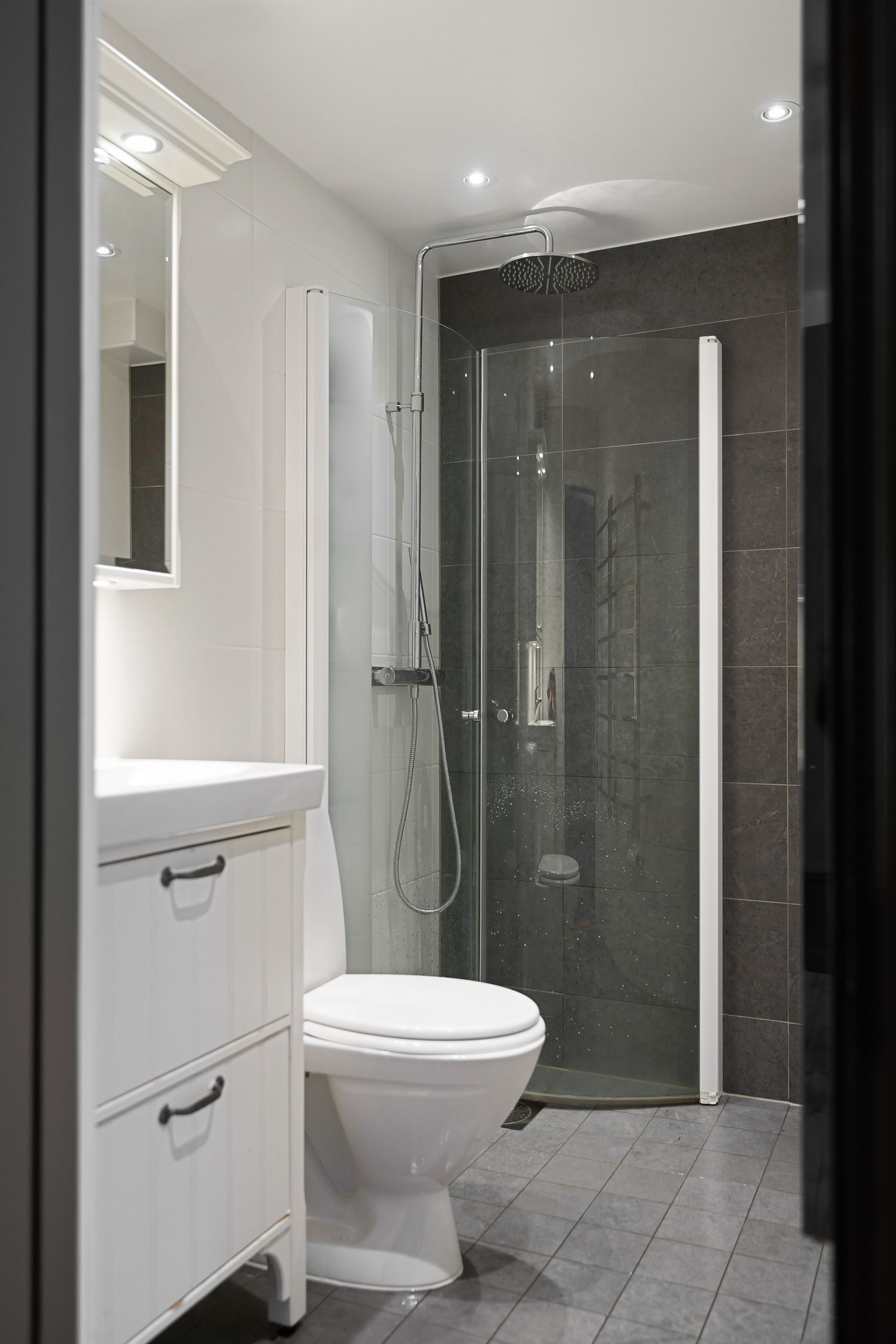
Concentrate Tropical Character in a Small Bathroom
In a compact bathroom, choose one concentrated move: green tile in the shower, a botanical ceiling, a stone vanity, a garden-facing mirror or one large healthy plant. Keep the floor and door route clear, use shallow storage and let glass share depth where privacy allows. Tiny pots, stools and baskets quickly consume working space. Carrying one surface from floor to ceiling can feel more immersive than distributing several motifs. Tropical intensity should increase atmosphere without reducing the room's functional capacity.
Integrate Accessibility Into the Landscape Idea
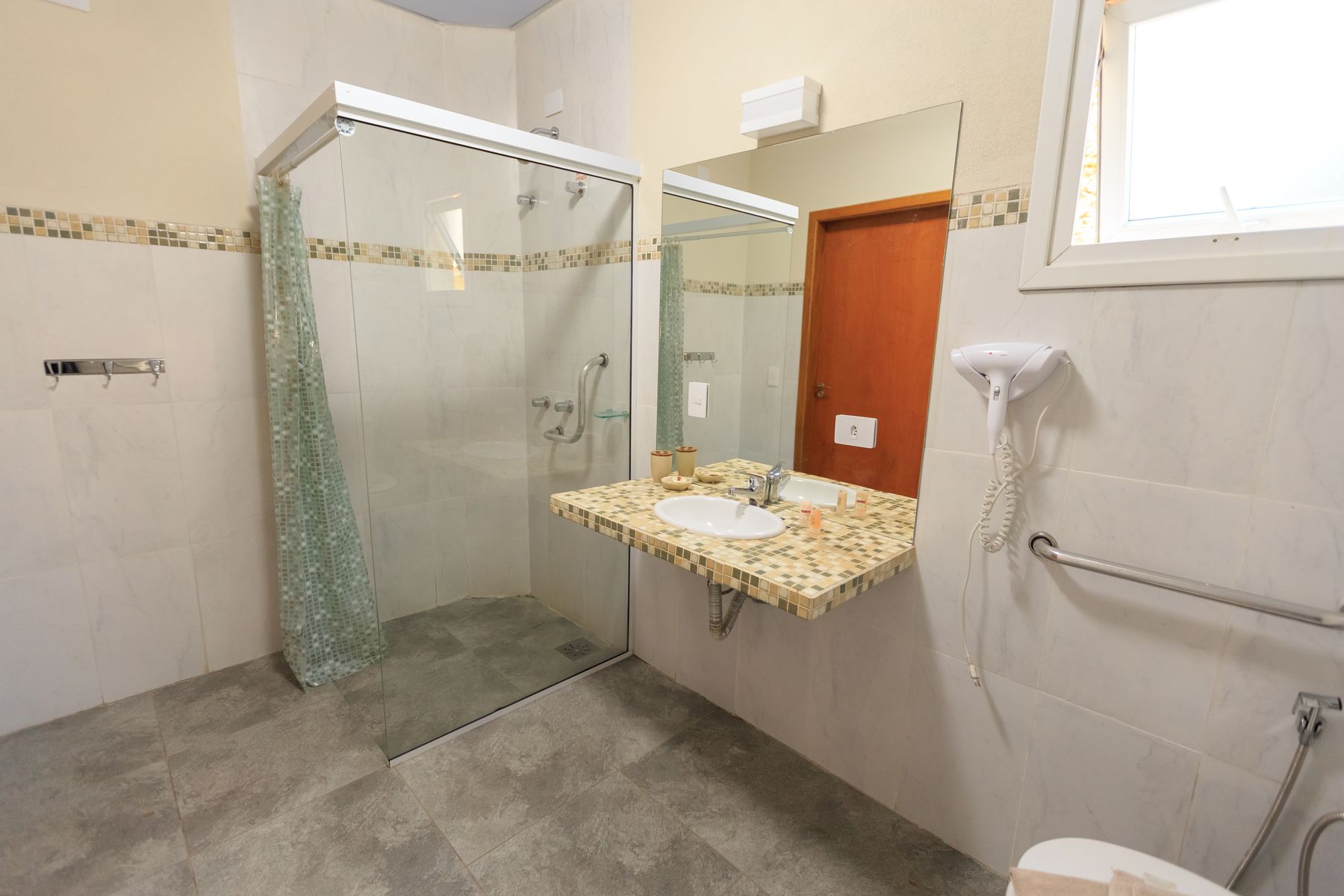
Provide a step-free approach where possible, useful turning and transfer space, reachable controls and storage, slip-resistant flooring and wall blocking for support. Contrast a dark rail against pale stone or a warm metal rail against green tile so safety is intentional rather than hidden. Avoid loose pebble floors, low plant stands and narrow gaps around sculptural baths. A garden view can support comfort, but it should never compete with clear edges, stable seating and a towel that can be reached before standing.
Store Supplies Where They Can Actually Dry
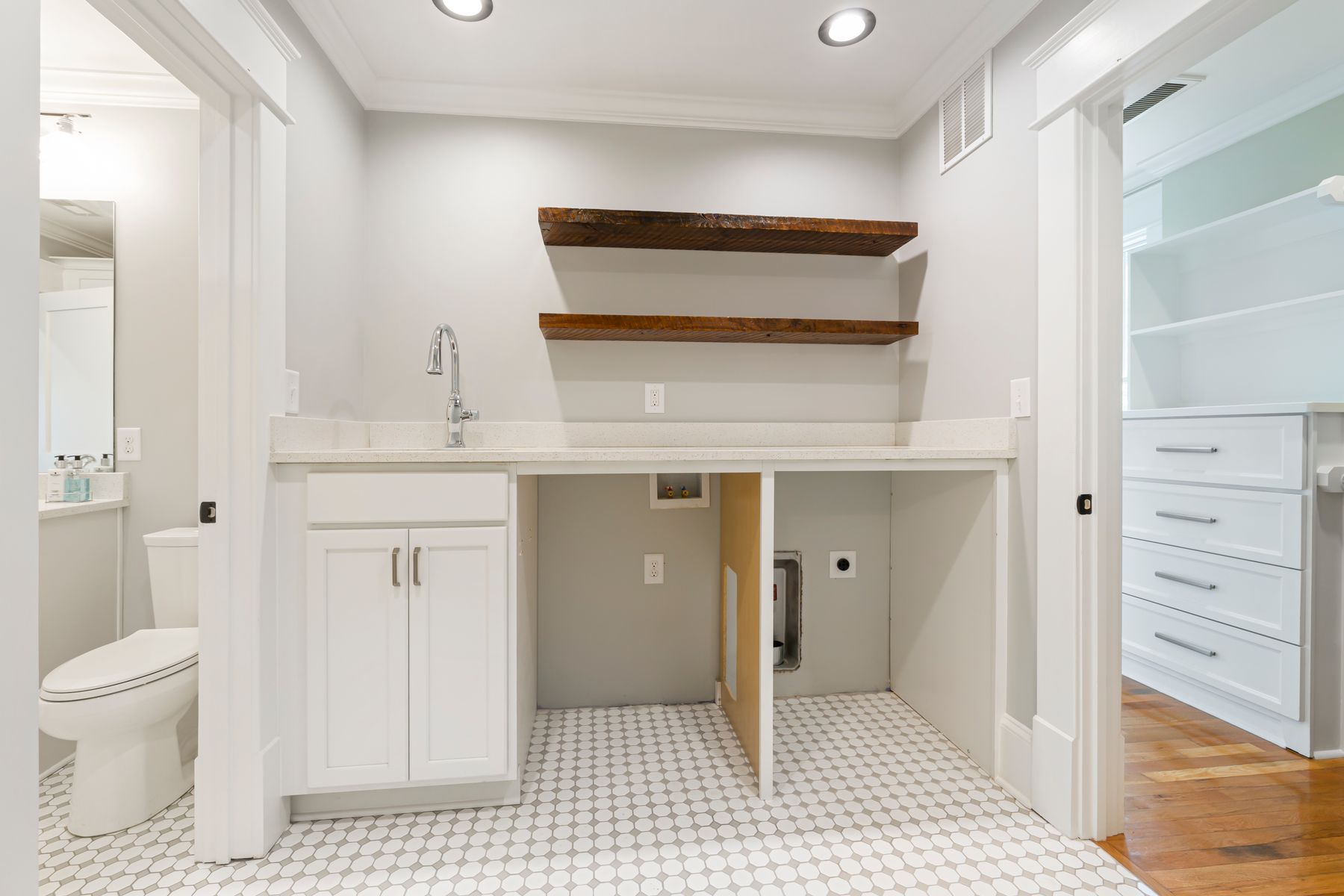
Lush rooms still need a place for spare paper, medicines, cosmetics, cleaning supplies and damp towels. Put moisture-sensitive goods in closed storage outside the hottest zone, provide ventilated space for textiles and avoid using decorative baskets as the only system. A recessed cabinet can keep the vanity quiet; a tall unit can hide bulk supplies if air can circulate behind it. Limit open shelving to washable, frequently used objects so planting remains the visual layer rather than a disguise for clutter.
Write a Maintenance Plan for Water, Wood and Foliage
Hard water marks glass and dark tile, soap affects stone, plant leaves collect dust, potting mix spills and timber finishes eventually need inspection or renewal. Record the approved cleaner for each surface and the watering, pruning and pest routine for each plant. Keep spare tile and finish information, inspect sealant and cabinet edges, and make the fan accessible. If weekly care already feels unrealistic, reduce the planting and material variety now rather than accepting a room that will look neglected quickly.
Keep Tropical Distinct From Its Neighboring Styles
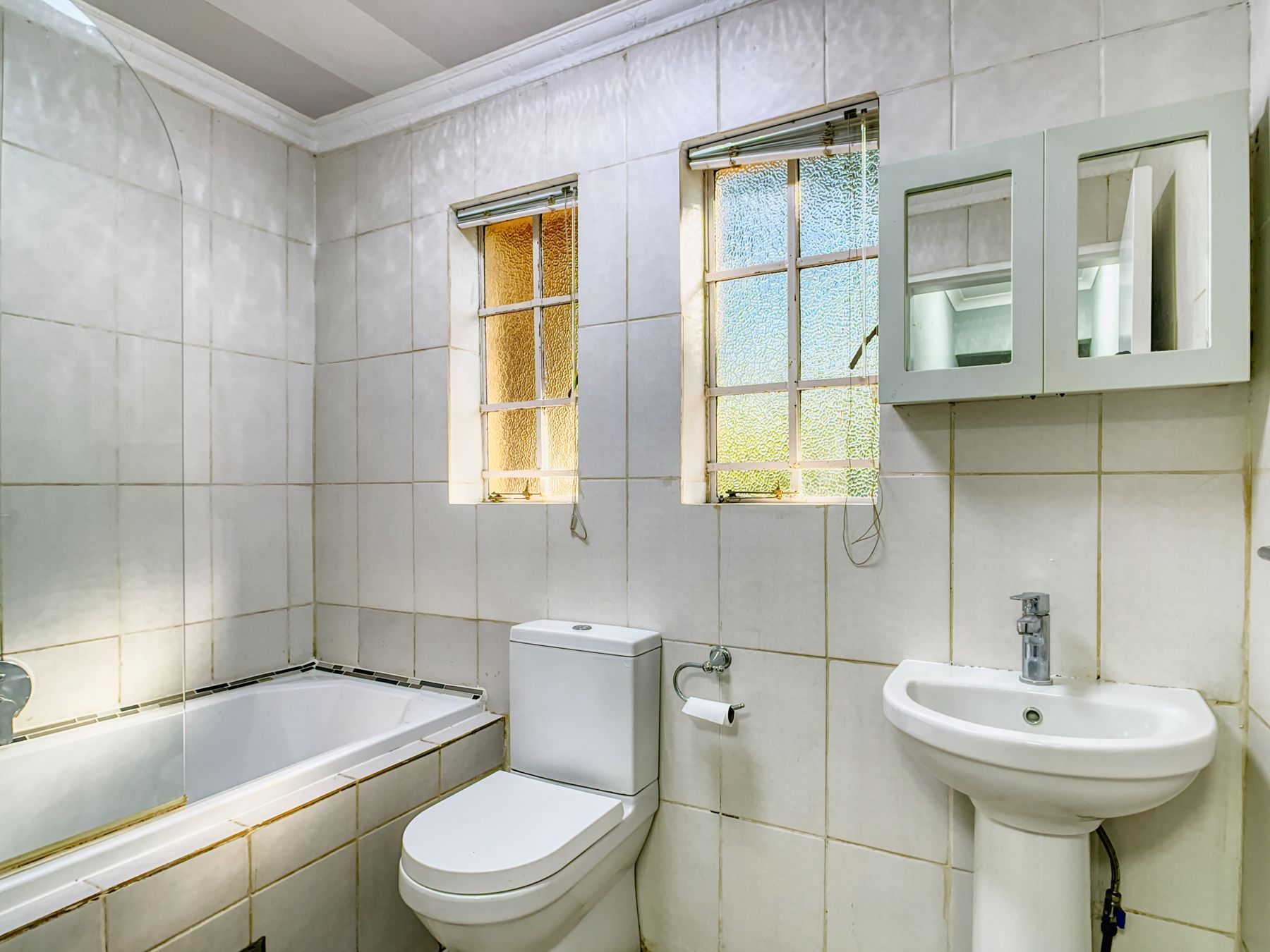
Green Bathroom is organized by color; Boho by collected textiles, woven pieces and eclectic layering; Organic by natural form, material health and softness; Coastal by sea, salt, pale light and sand; Outdoor by exposure and site services. Tropical can borrow from each, but its primary relationship is warm-climate landscape, filtered light, water, foliage and climate-responsive material thinking. Name that relationship in the permanent plan. If accessories alone could relabel the room, the destination intent is not yet distinct enough.
Create a Reversible Tropical Layer for Rentals
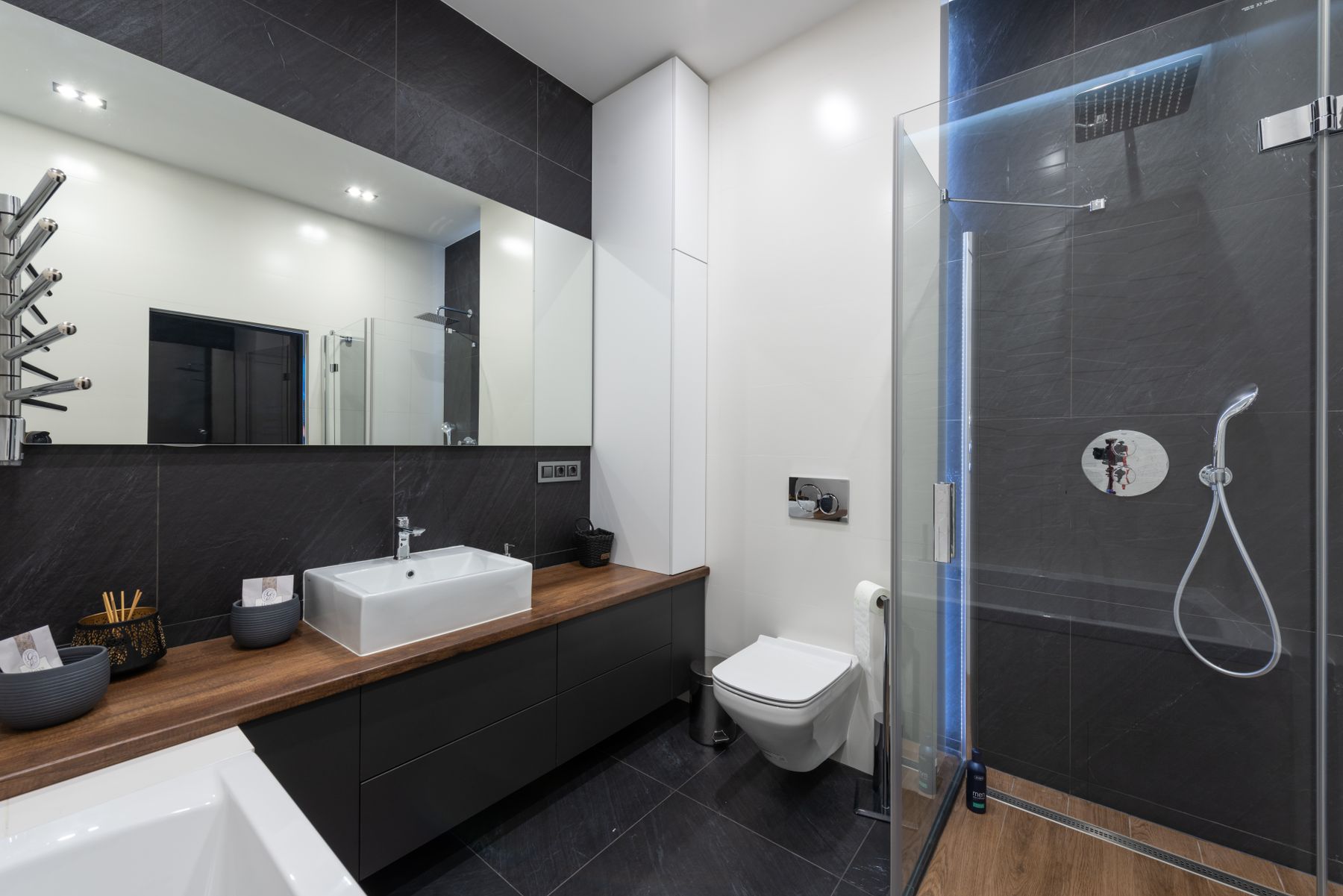
Improve bulb color, shower curtain, towels, bath mat, one stable plant stand and a moisture-tolerant framed botanical image before covering tile or hardware. Use removable solutions only when their adhesive and backing are rated for the humid location and can be tested inconspicuously. Store original hardware and keep exits, vents and service panels clear. A single large leaf plant near adequate light usually looks more deliberate than numerous artificial vines. Spend first on changes that improve daily function and can move home with you.
Use a Quiet Resort Edit Instead of a Theme
A resort-minimal tropical bathroom uses few objects because storage, housekeeping and architecture do the work. Translate that honestly at home: hide bulk supplies, provide enough towel drying, keep the vanity resettable and choose one excellent stone, timber or planting gesture. Do not imitate hospitality styling with rolled towels, shells and trays that have no daily function. The room should feel restorative when toiletries are present, a towel is damp and the evening light is on—not only in an empty photograph.
Finish With the Resort, Not Theme Park, Test
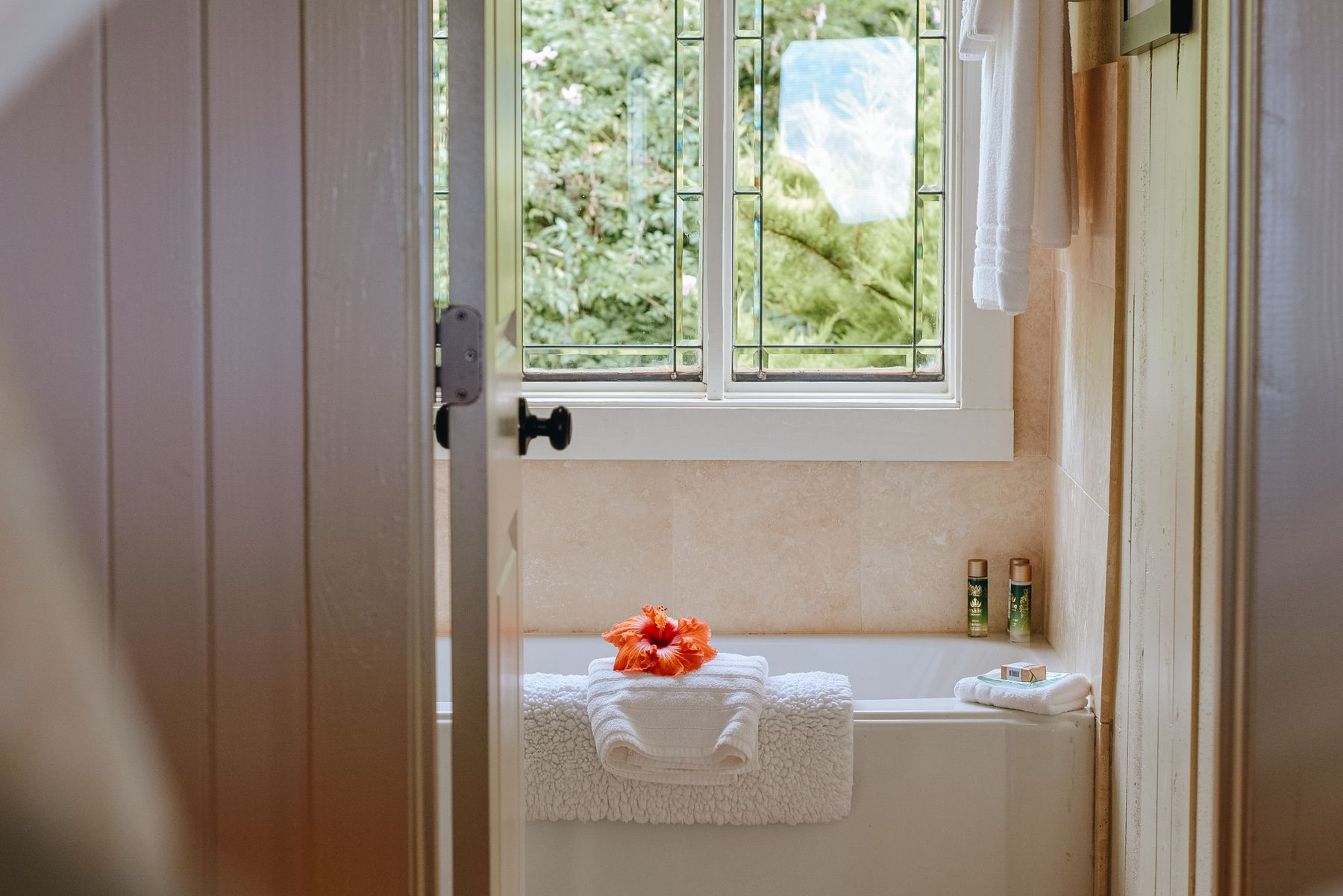
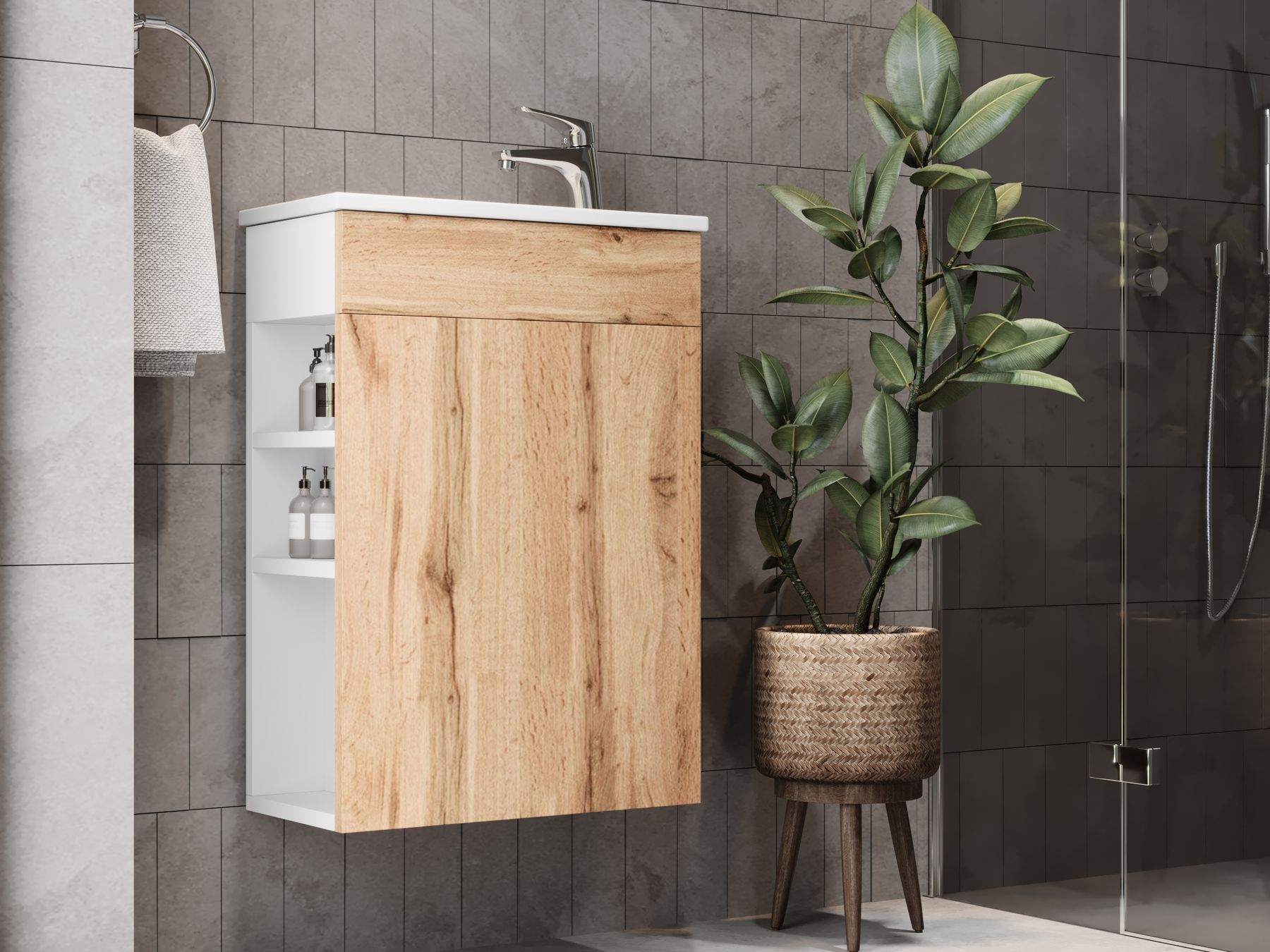
Remove novelty signs, faux-tiki objects, repeated palm prints, artificial garlands and extra woven accessories. If the bathroom still feels tropical through filtered light, green depth, warm mineral texture, timber, water and a credible relationship to planting, the concept is sound. Then test it fully loaded: shower, dry towels, water plants, clean the floor, reach storage, use it at night and inspect privacy. Add nothing unless it solves a specific functional or compositional weakness revealed by that test.