Begin With One Material That Has Real Weight
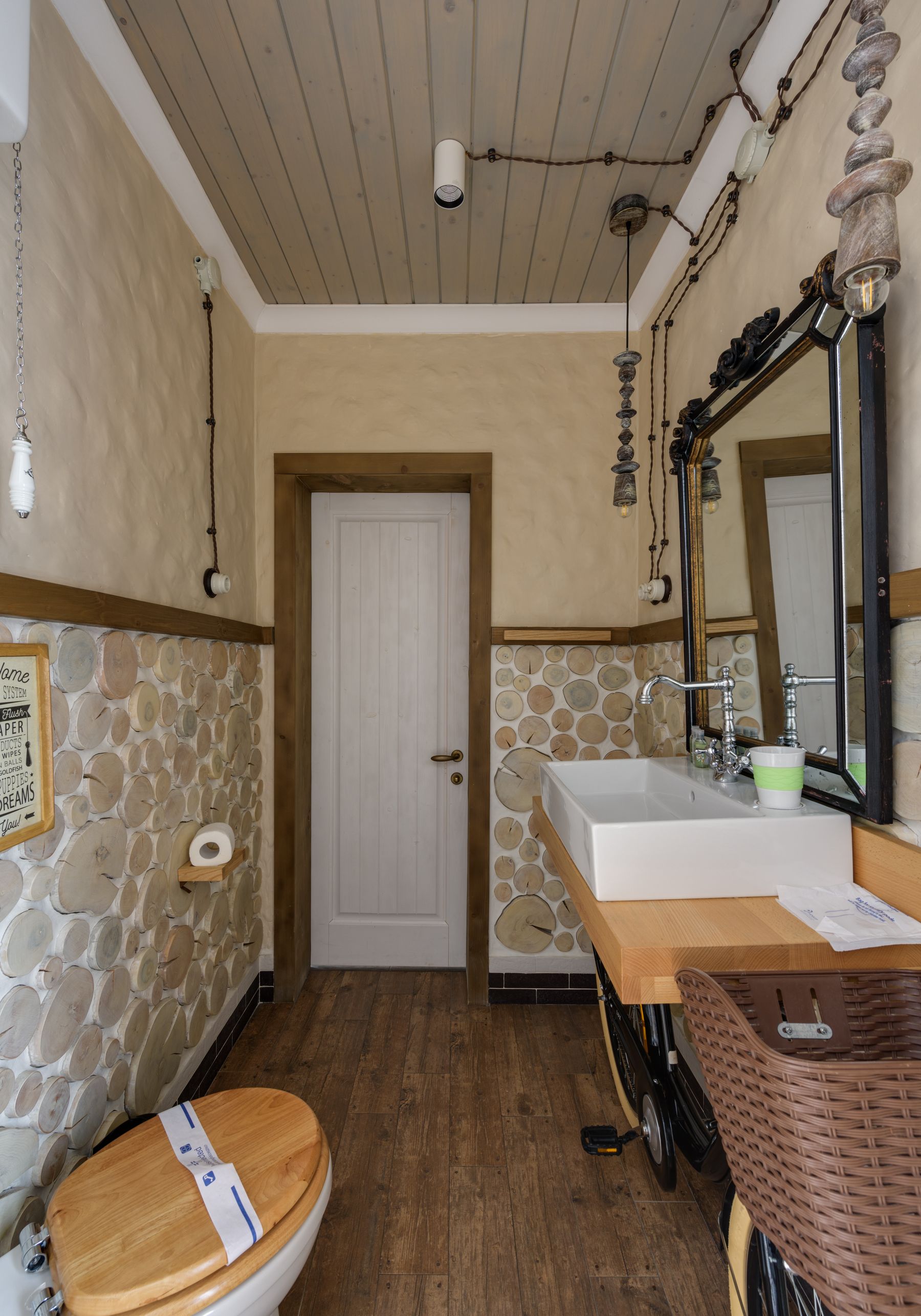
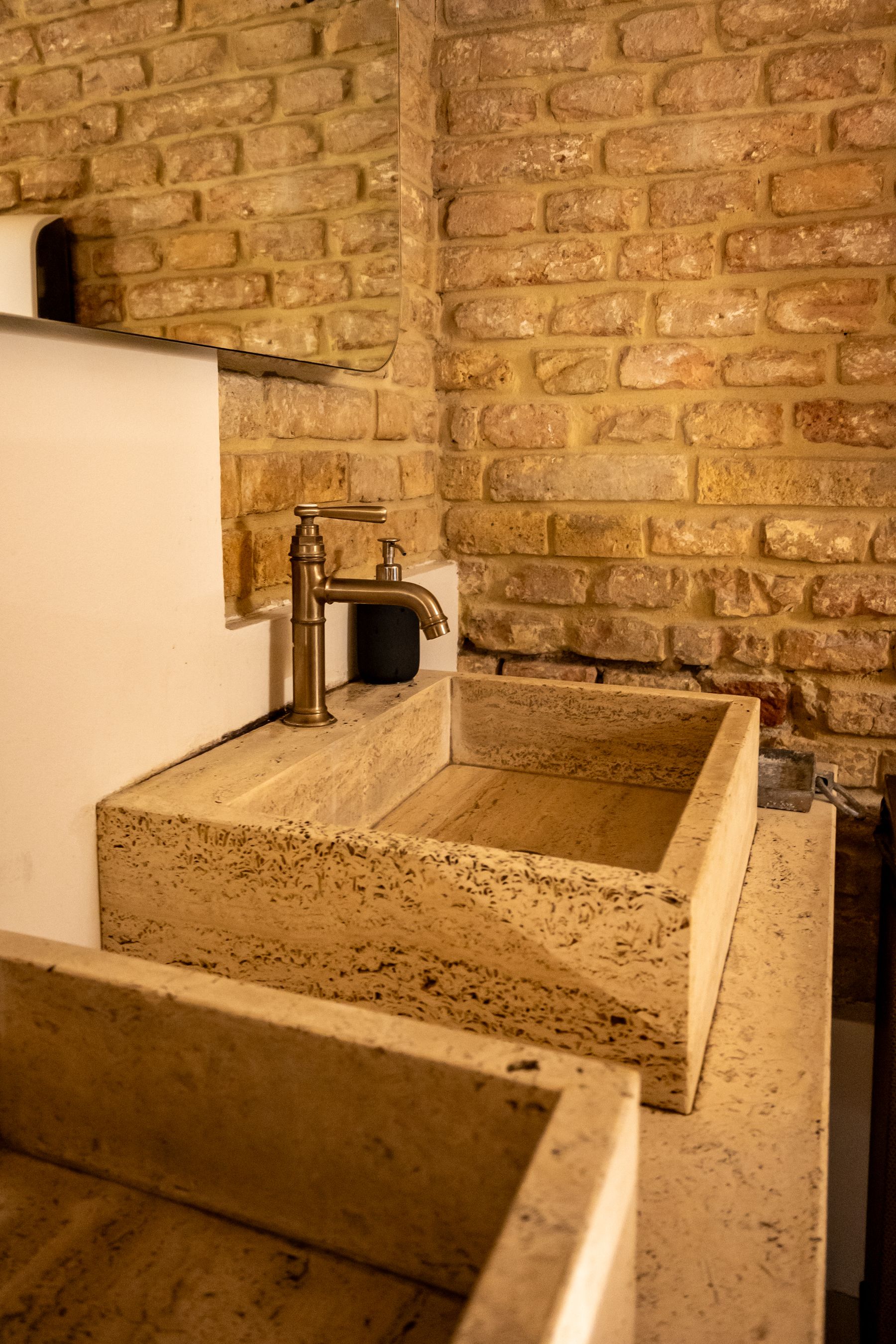
A carved stone basin, timber vanity or broad masonry wall can establish a rustic direction more convincingly than many small accessories. Choose the strongest material first, then make the tile, paint and hardware quieter. Before committing to a heavy or porous piece, confirm structural support, sealing, faucet reach and realistic cleaning access.
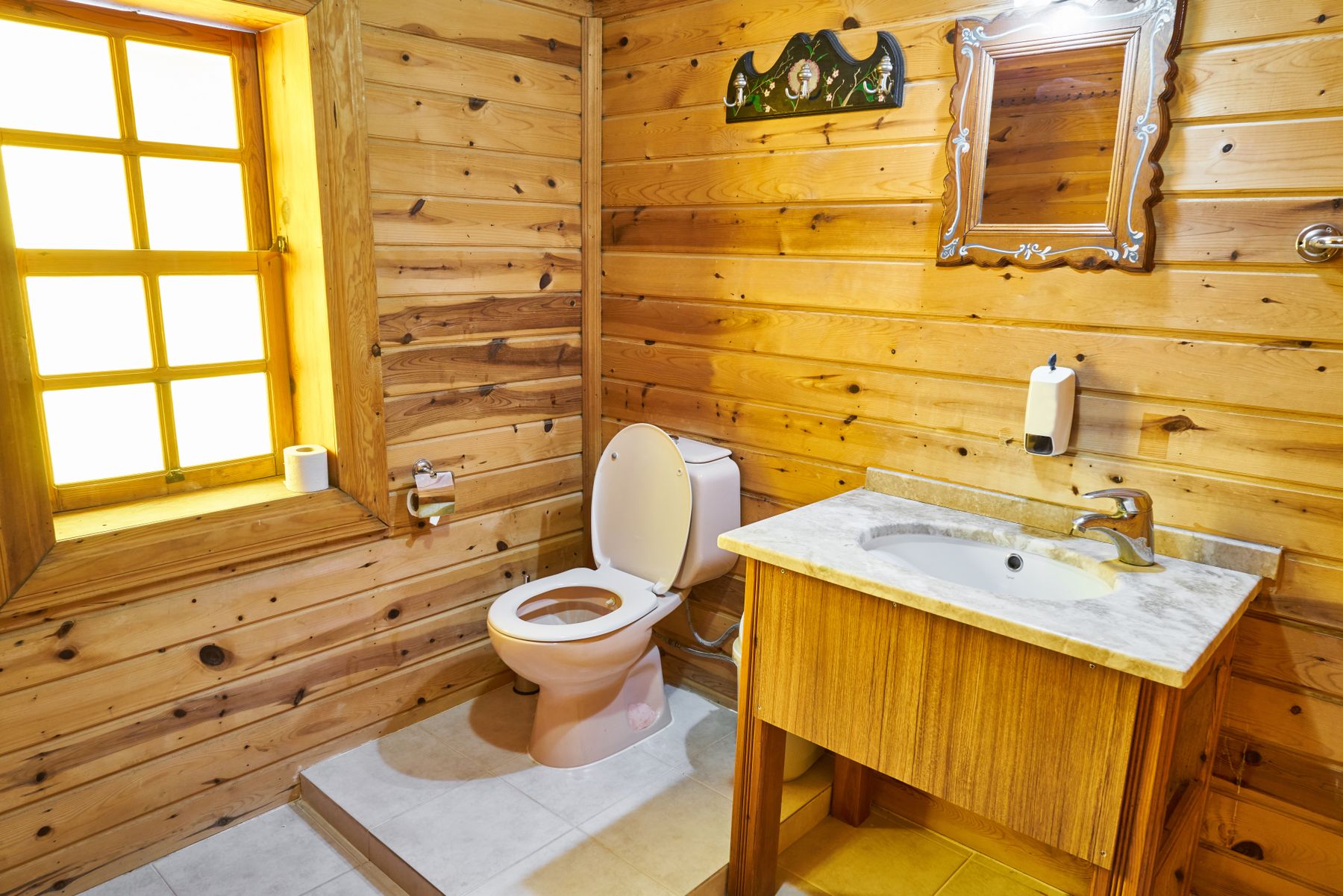
Use a Wood Vanity as the Warm Anchor
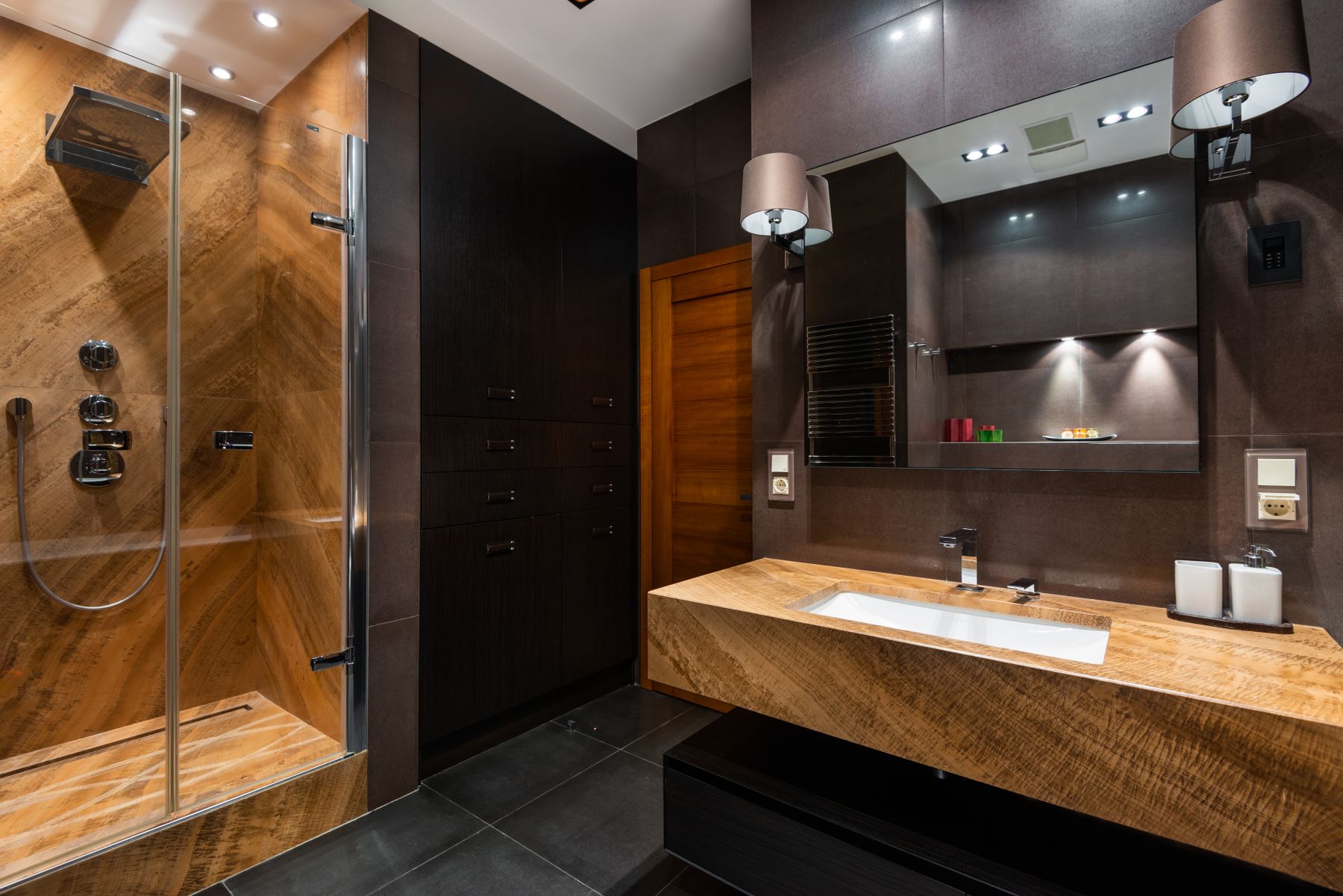
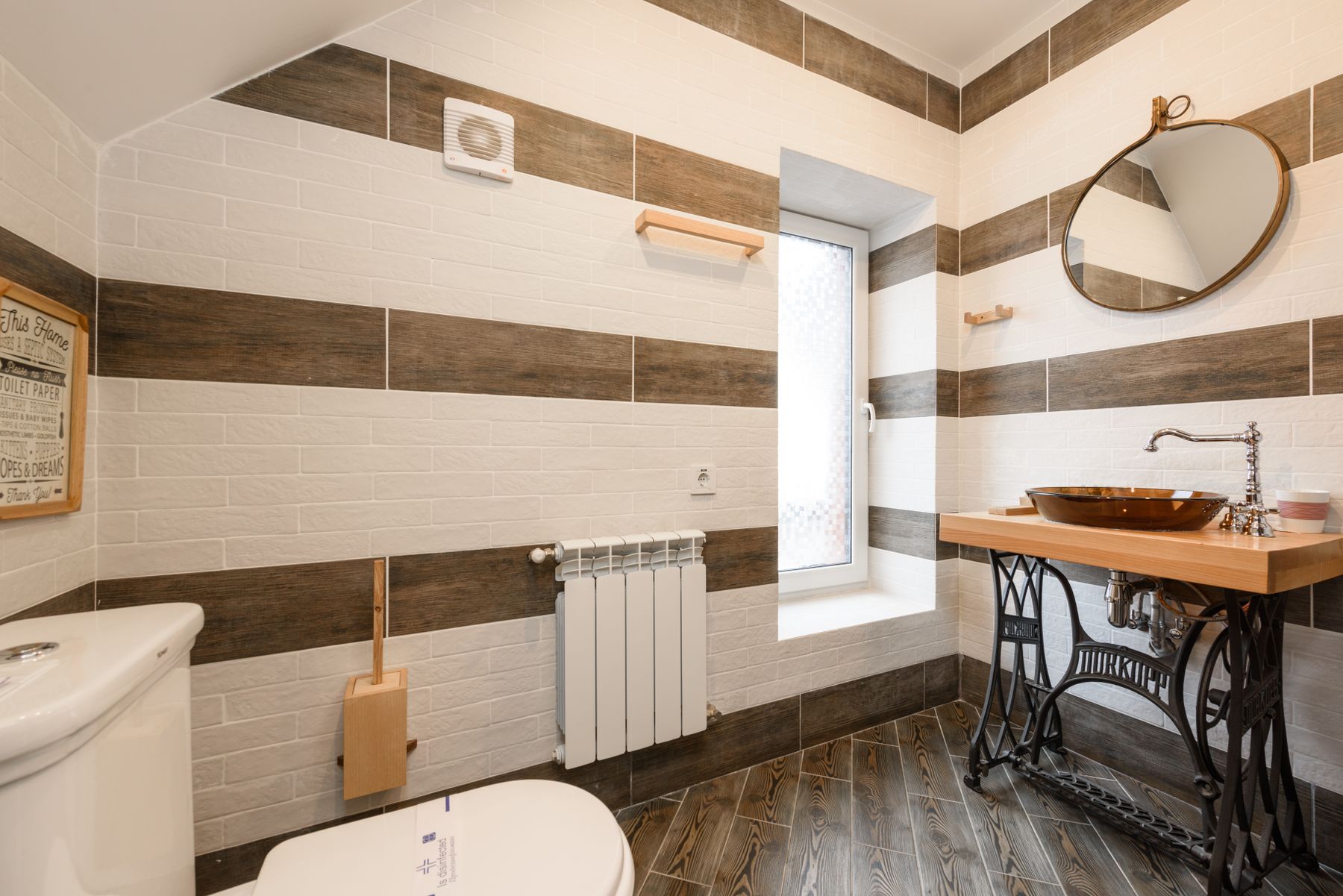
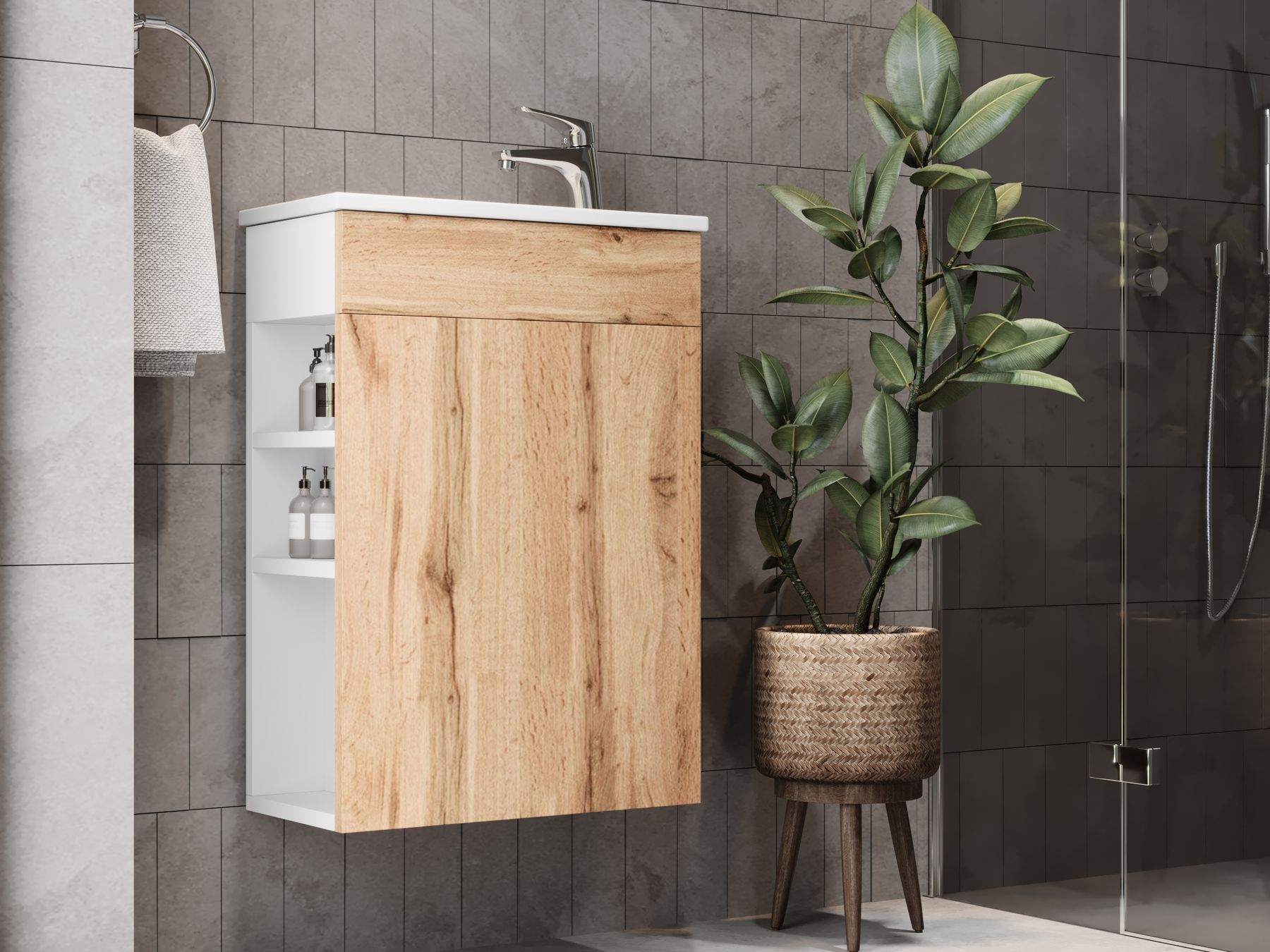
A wood vanity gives visible grain a practical job: it carries the sink, conceals plumbing and stores daily supplies. Rustic does not require a heavily distressed cabinet; a substantial form, matte finish and natural variation are usually enough. Specify bathroom-suitable construction rather than adapting untreated furniture that may swell or stain.
Place Real Wood According to Water Exposure
Timber performs very differently on a vanity front, ceiling or bench than it does inside a shower. Use it most confidently in ventilated splash or dry zones, protect end grain and joints, and follow the finish maker's maintenance schedule. Where direct saturation is unavoidable, a convincing porcelain or compact laminate may preserve the visual idea with less risk.
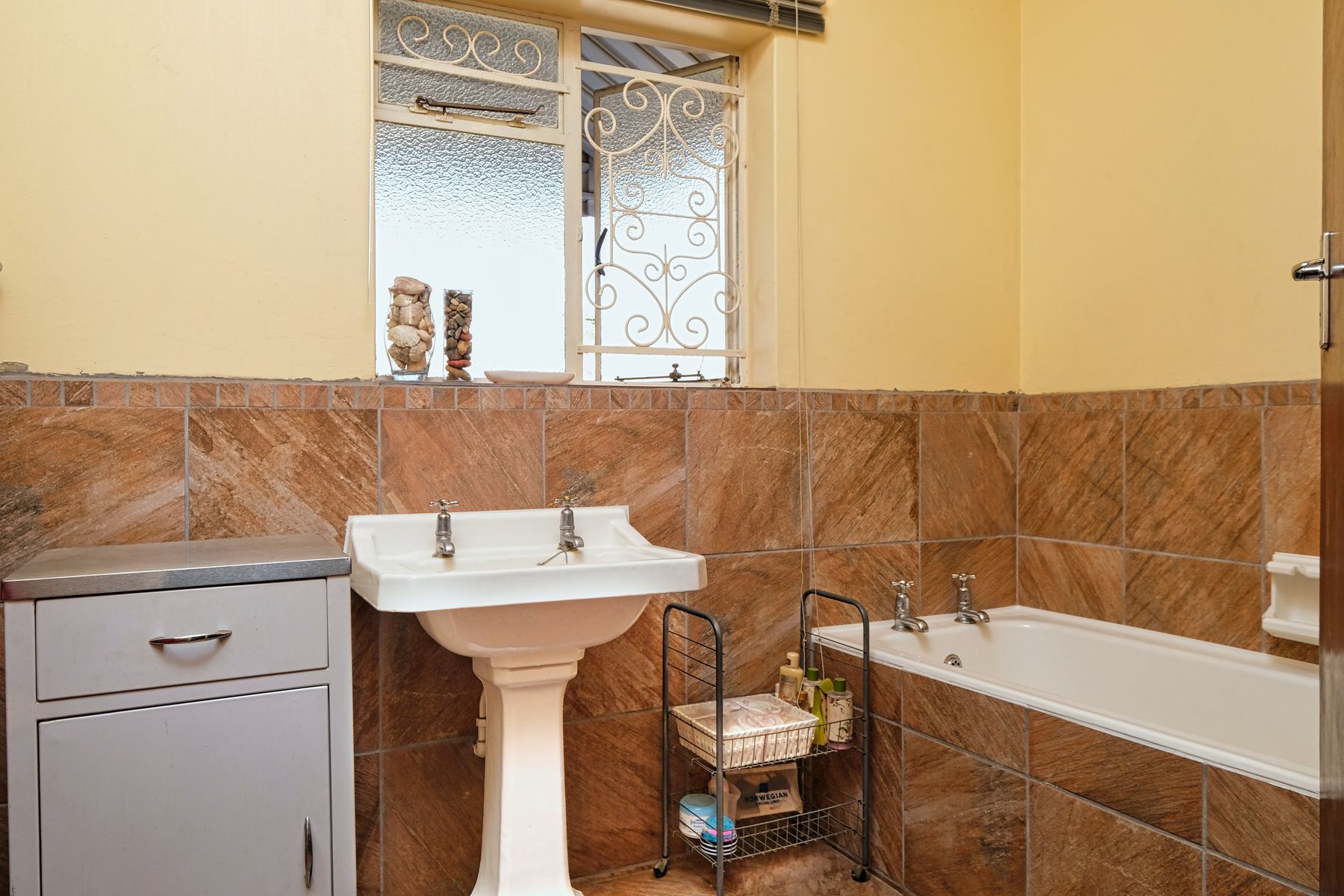
Choose Stone for the Job, Not Only the Texture
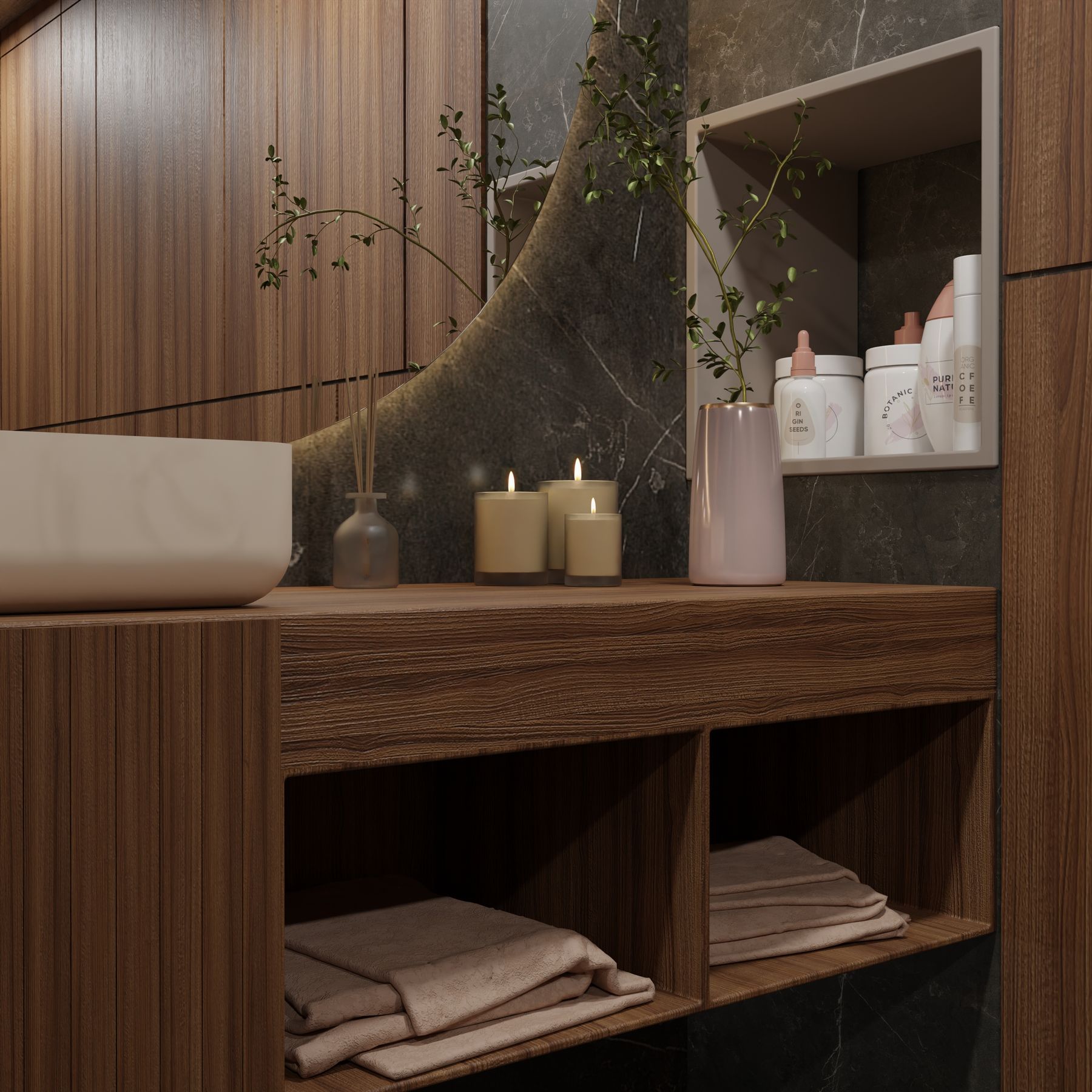
Stone adds mineral depth, but the roughest or most porous option is not automatically the best bathroom finish. Ask how a sample responds to soap, standing water, cleaning products and sealing before specifying it across a floor or shower. A textured porcelain interpretation can provide similar visual weight where maintenance or slip resistance is the deciding factor.
Give the Shower One Crafted Pattern
Herringbone, handmade-look tile or another directional layout can give the shower a crafted focal point. Keep the pattern inside one clearly bounded zone and use quieter finishes around it so the enclosure remains legible. Because extra joints increase grout maintenance, pattern density should be a practical choice as well as a decorative one.
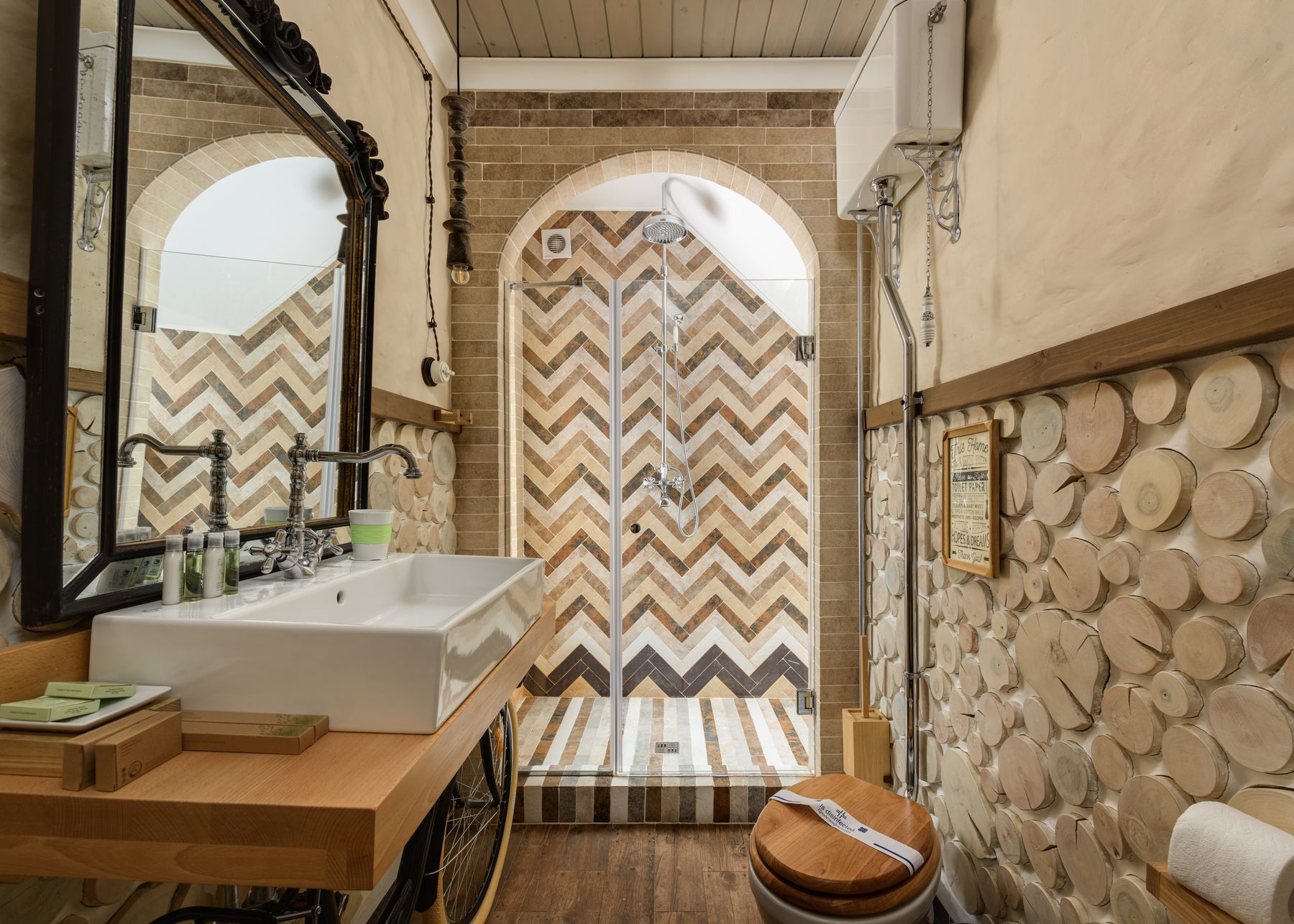
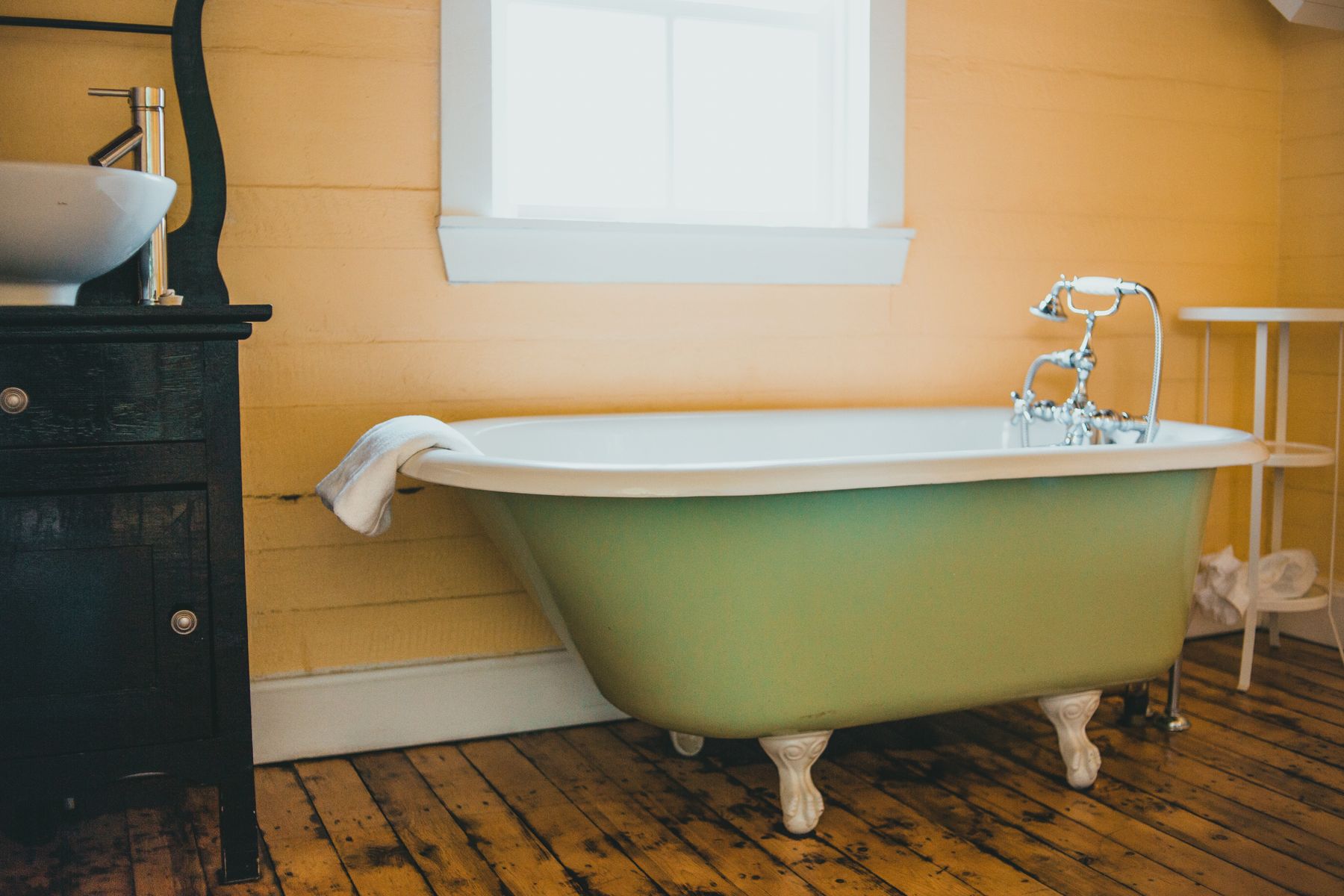
Build the Floor Around Grip and Transitions
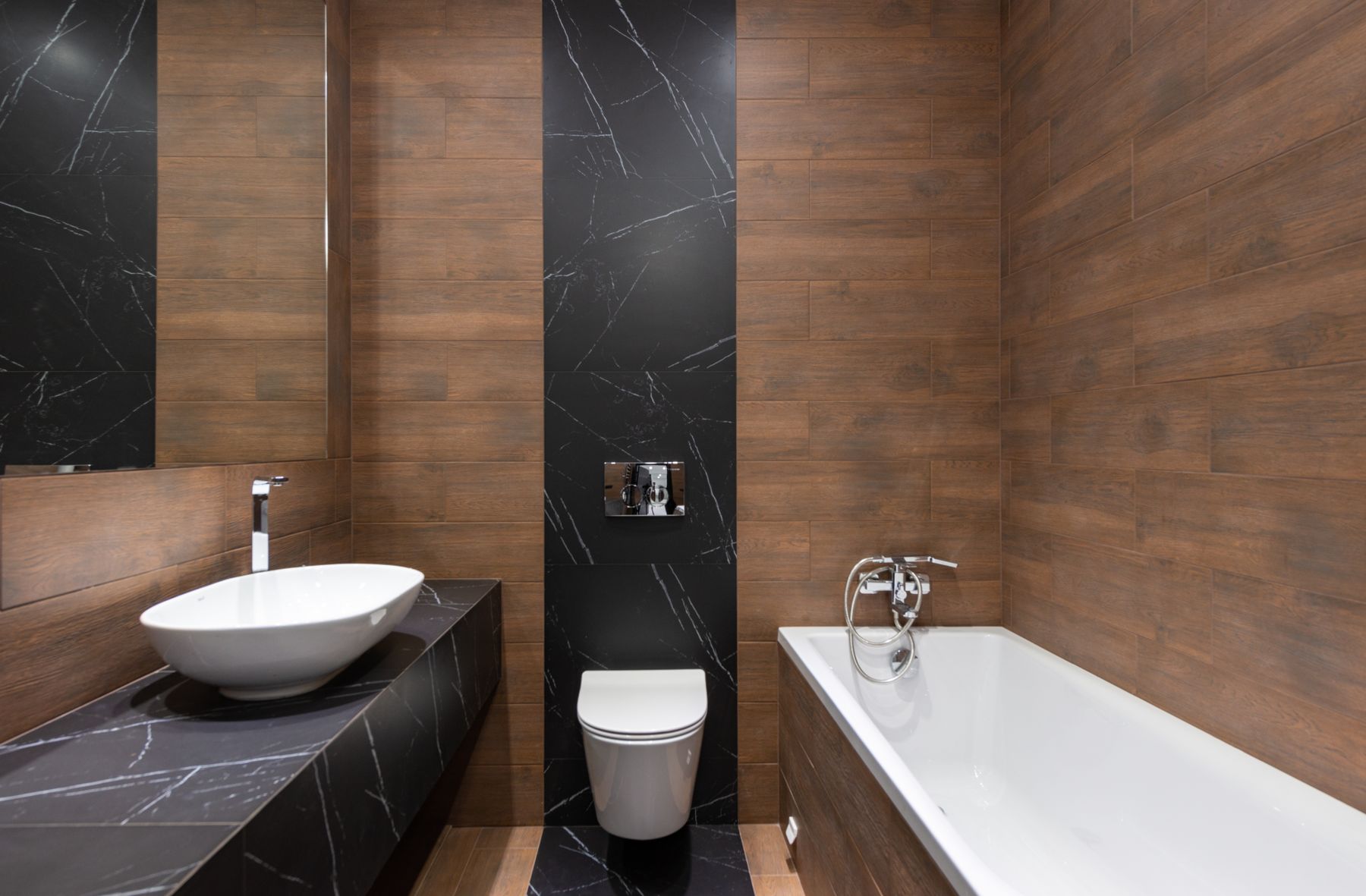
A warm-toned floor can connect timber, stone and classic fixtures, but wet traction and threshold details come first. If you want a wood appearance, compare bathroom-rated tile and resilient products with properly specified timber systems rather than assuming ordinary boards are suitable. Plan clean transitions at the shower, doorway and any change in level.
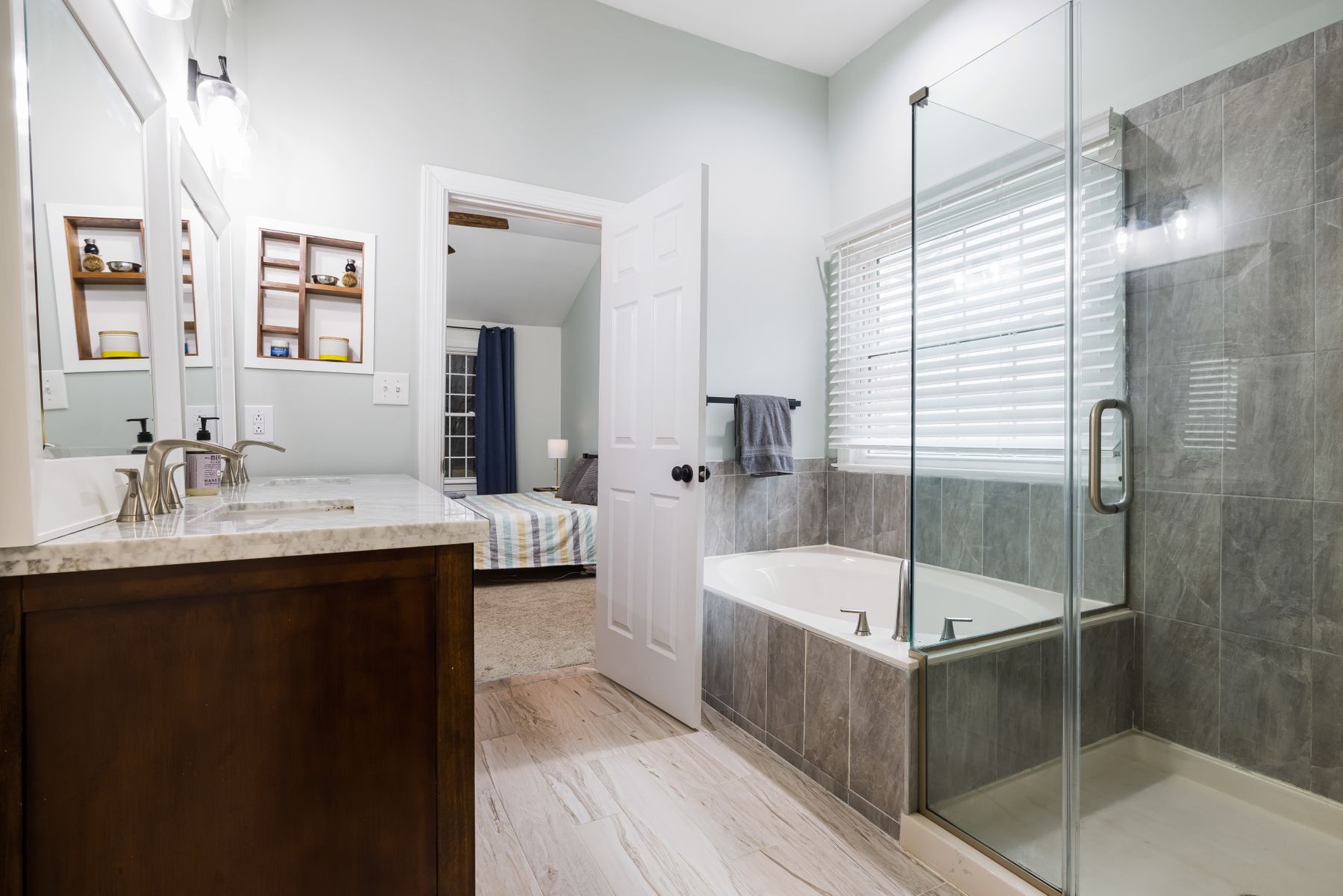
Pair Rustic Materials With a Modern Wet Zone
A rustic bathroom does not need an old-fashioned shower. Clear glass, a simple tray or curbless floor and quiet large-format tile can make the working wet zone feel current while a wood vanity or ceiling supplies warmth. The contrast is strongest when contemporary elements are visually simple rather than aggressively glossy or futuristic.
Move Strong Timber to the Ceiling or Dry Walls
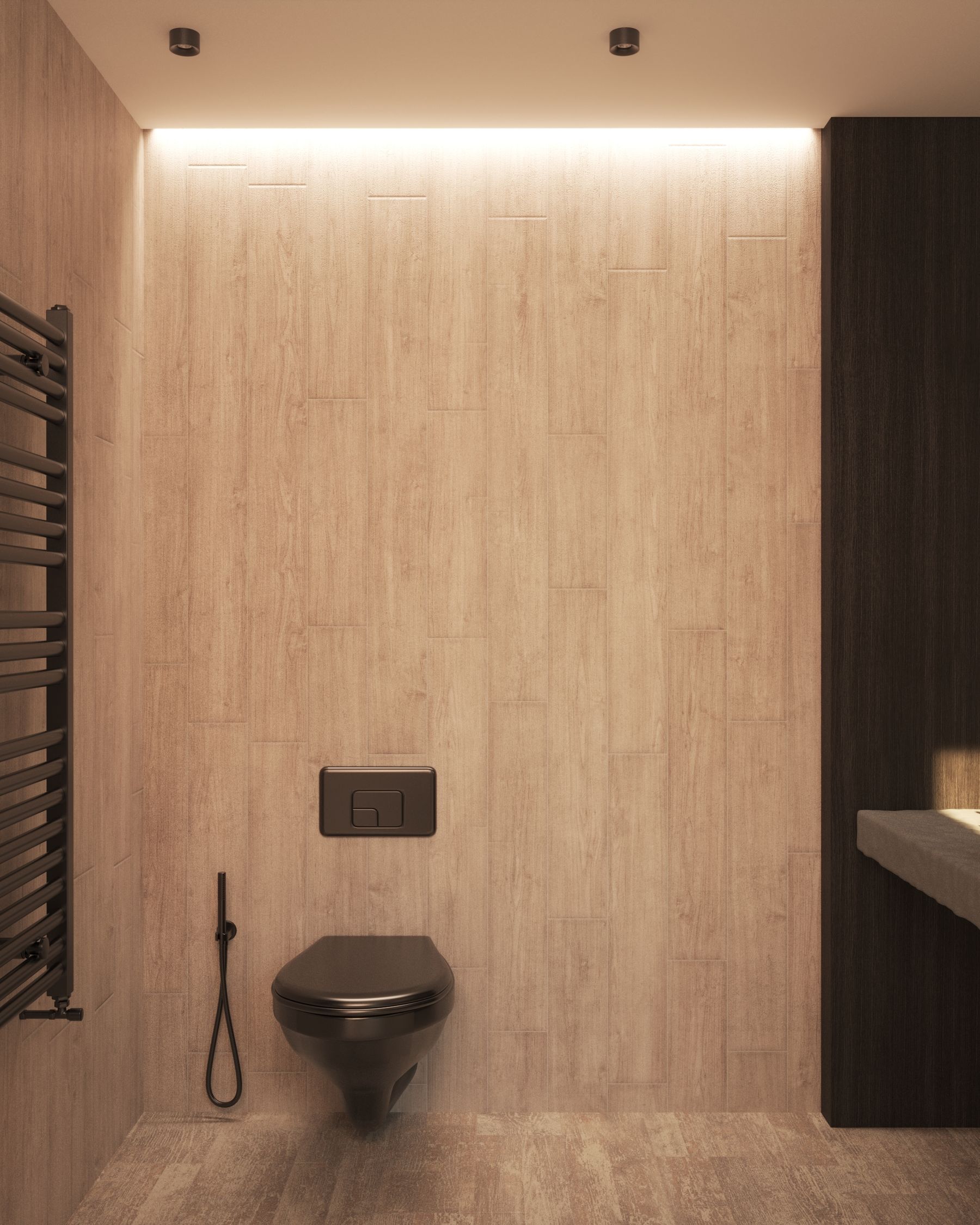
A boarded ceiling, beam or dry-zone wall can deliver more rustic character than timber placed directly behind a shower. This leaves the hardest-working surfaces available for tile, glass or another washable finish. Real timber still needs allowance for humidity and movement, so ventilation and perimeter detailing remain part of the design.
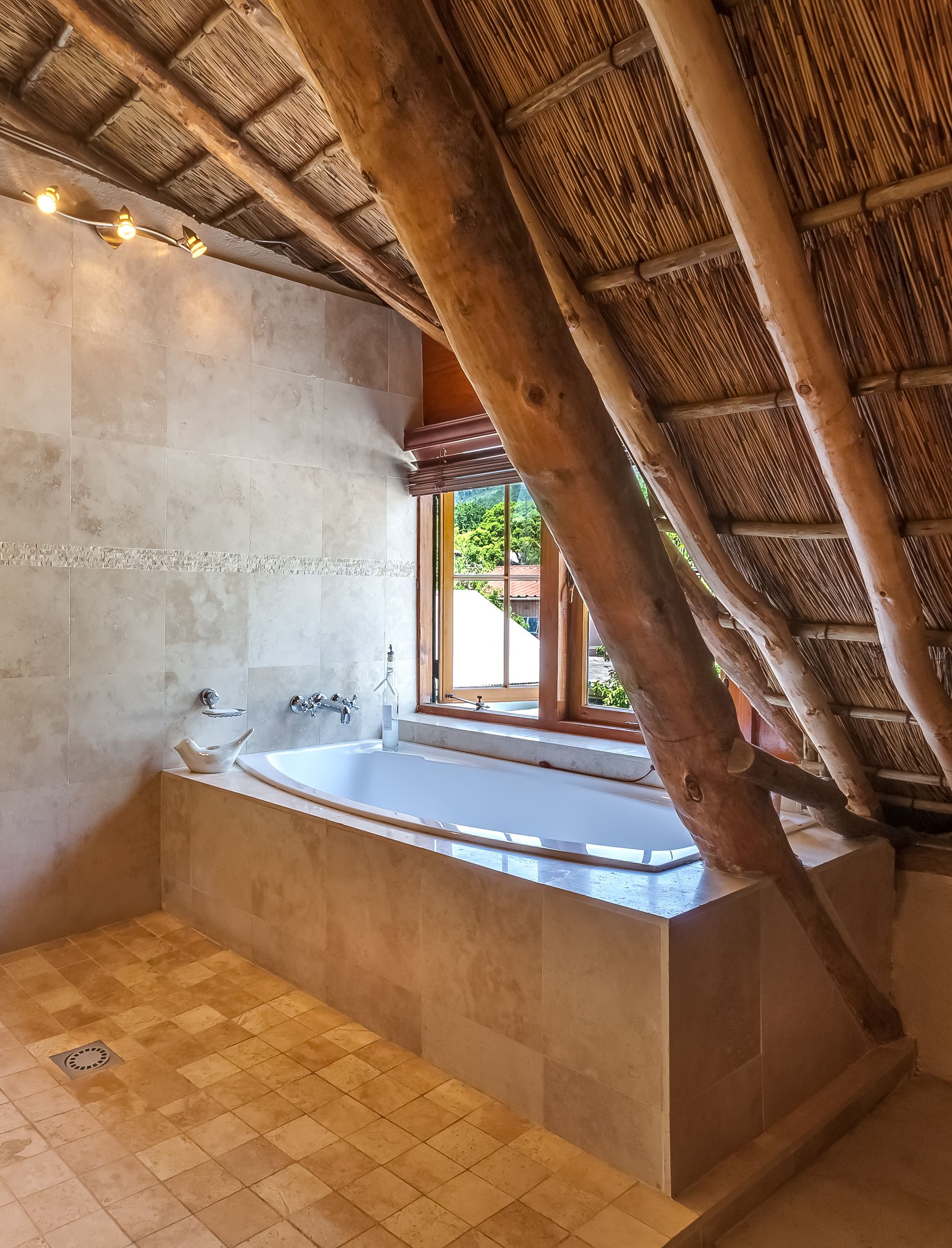
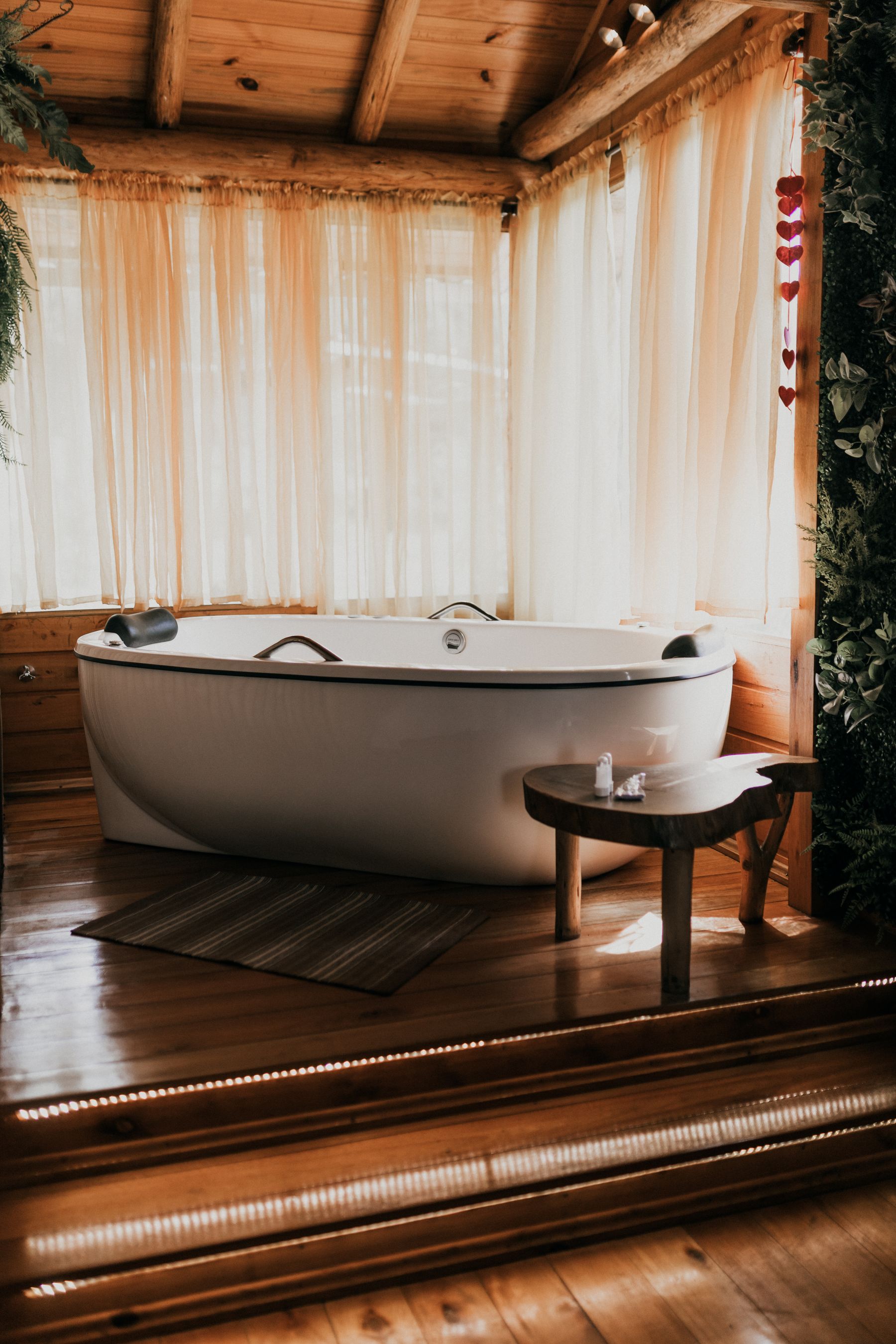
Let a Cabin-Like Shell Stay Visually Quiet
When walls, floor and ceiling already have strong timber character, additional rustic decoration usually makes the room heavier. Use simple sanitaryware, clear circulation and only a few dark metal notes so the architecture remains the main event. Pale textiles and a clean bath silhouette prevent the scheme collapsing into one brown field.
Size a Vessel Sink as a Working Object
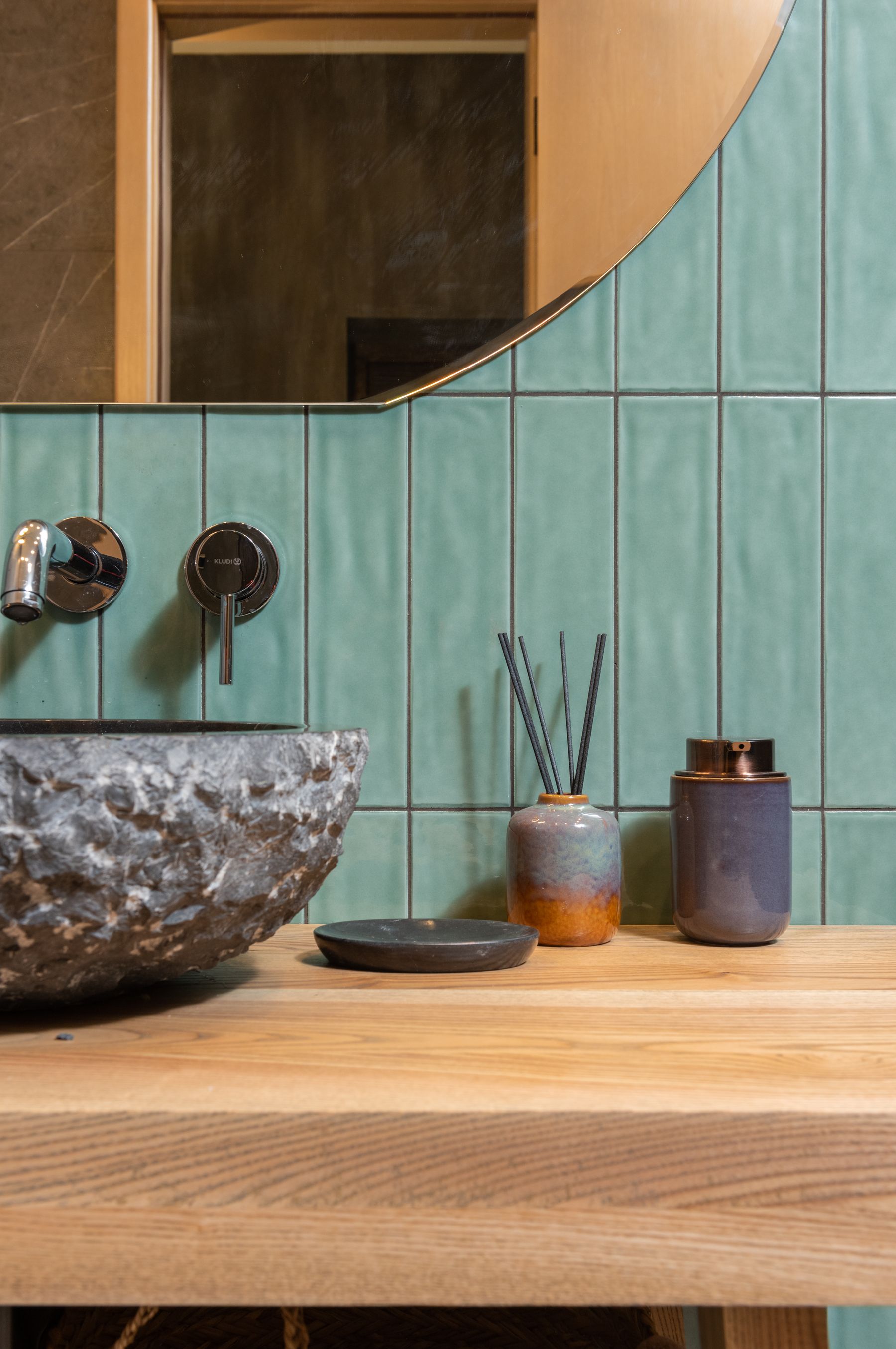
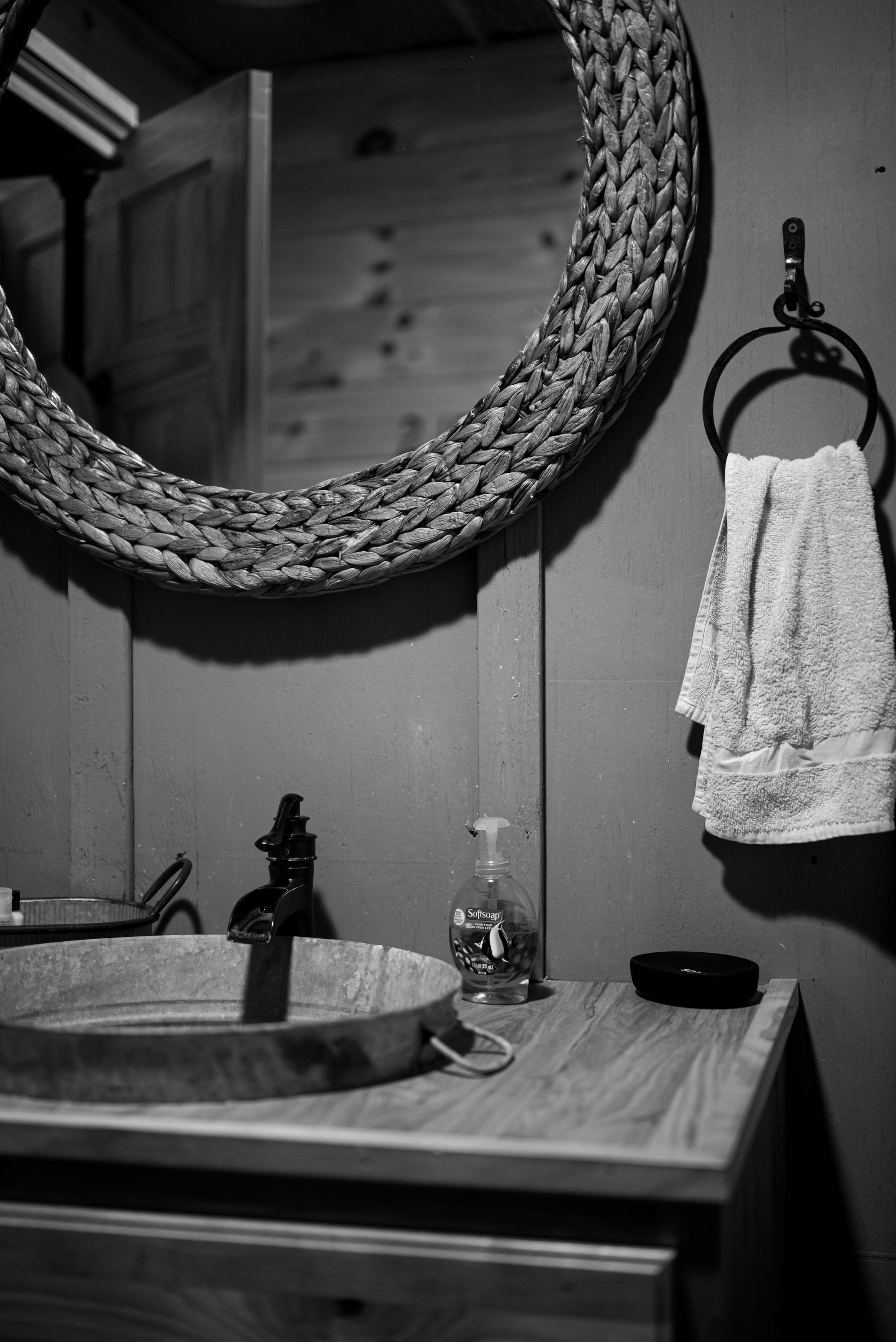
A vessel basin can reinforce the tactile, hand-made side of a rustic vanity, but its total height and faucet relationship matter more than its sculptural shape. Check the finished rim, reach, splash pattern and clear counter space as one assembly. Keep the backsplash and mirror restrained so the basin does not compete with several other focal points.
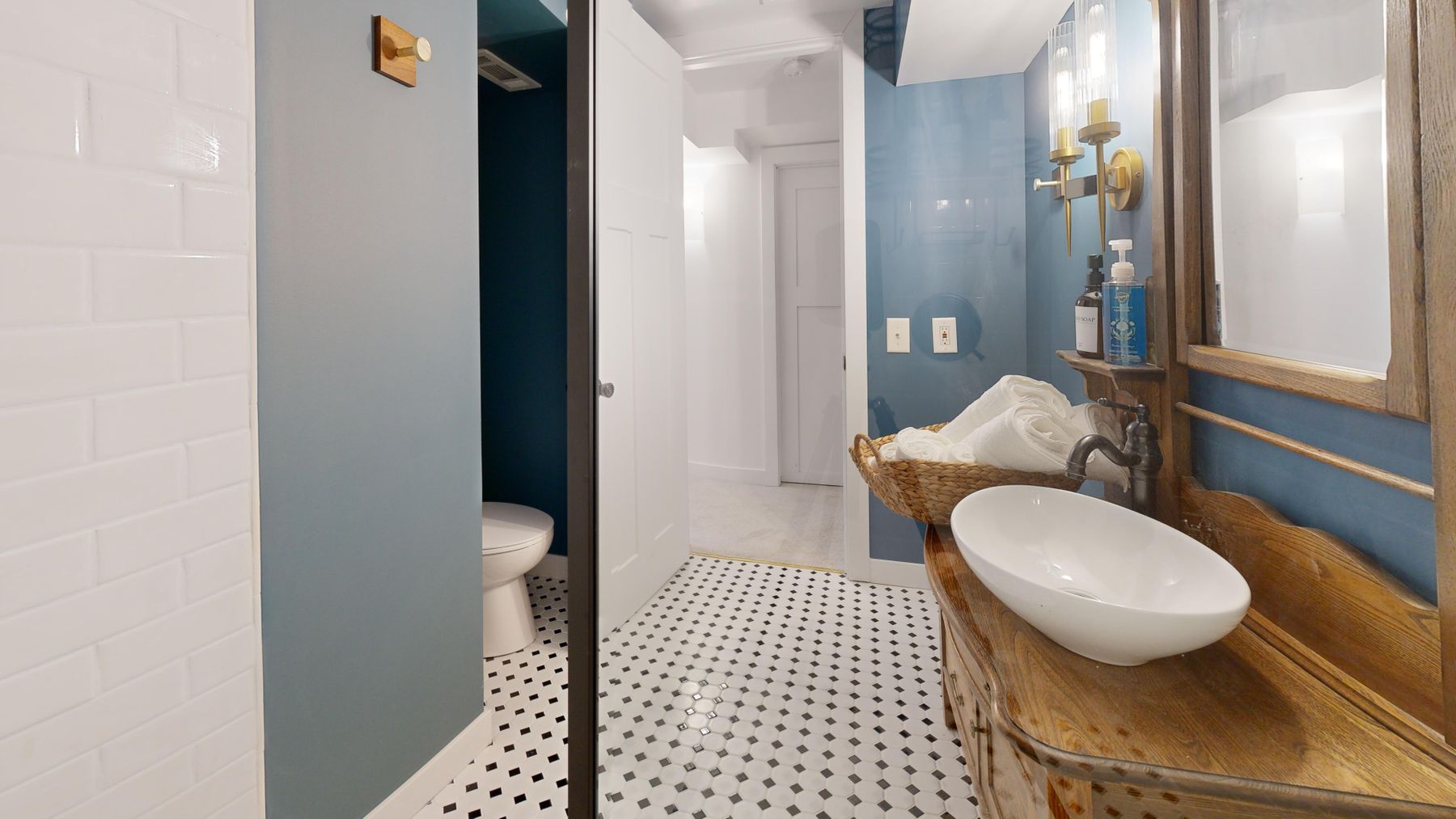
Use Craft and Texture Without Fake Distressing
Character can come from a rough-edged stone bowl, visible joinery, handmade-looking tile or woven fibers rather than deliberately chipped paint. Materials with real variation tend to age more convincingly and are easier to combine with contemporary fixtures. Limit obvious irregularity to one or two elements so the room still feels intentional.
Keep a Wood-Heavy Palette From Turning Orange
Timber absorbs and warms light, so several honey-colored surfaces can become visually dense after dark. Balance them with pale ceramic, mineral grey, muted green or a cooler metal, and test the wood under the planned evening lamps. A little tonal contrast preserves the grain better than adding more brown accessories.
Treat Daylight and Privacy as One Decision
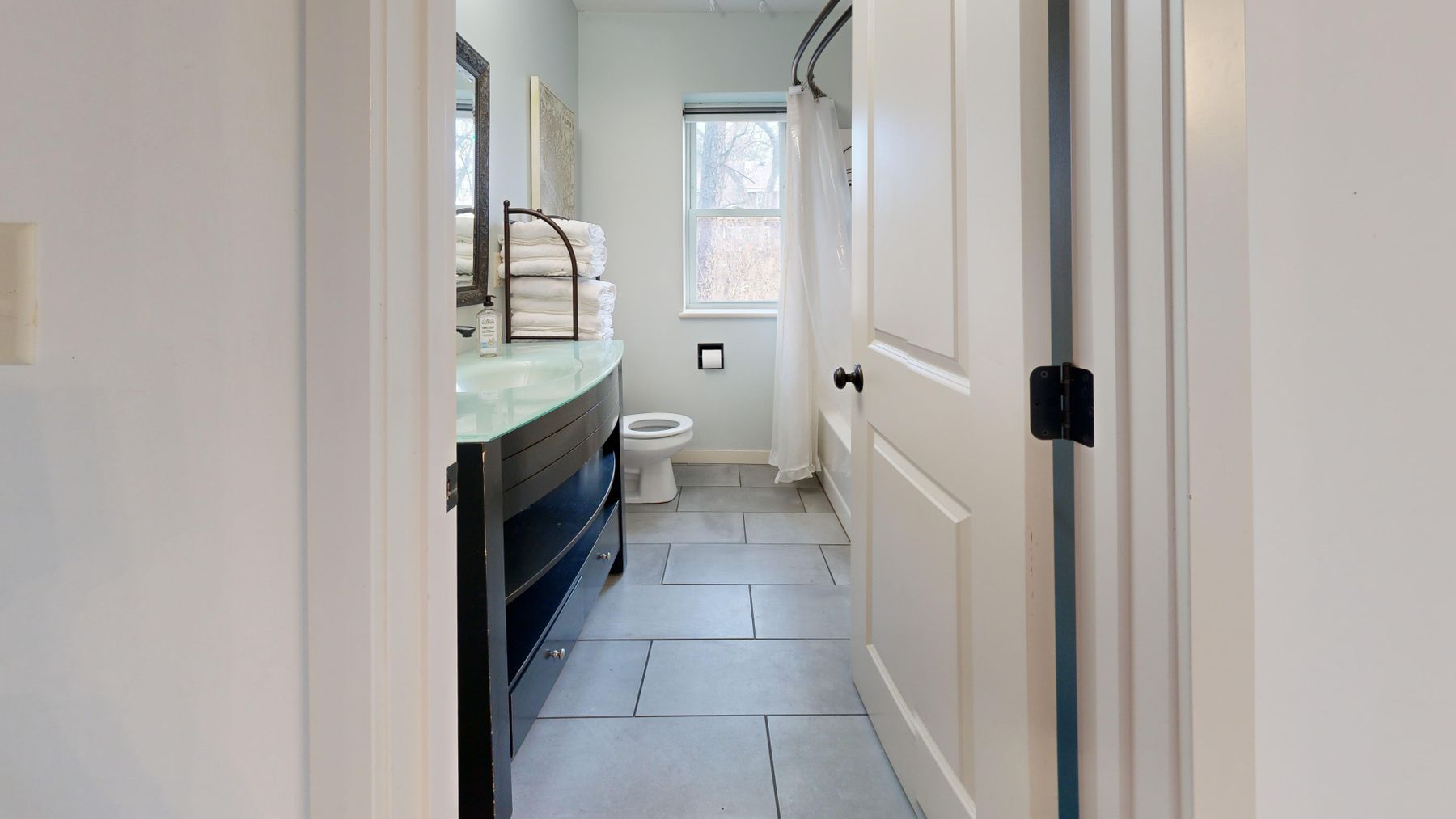
Natural light reveals wood grain and stone variation, but a bathroom window also needs a privacy strategy that works throughout the day. Place clear glazing above direct sightlines or use obscured glass, a lower blind or exterior screening while preserving the brightest upper portion. Avoid covering a useful window with heavy rustic shutters simply to reinforce the style.
Layer Light Instead of Relying on One Warm Pendant
Warm light flatters timber, but a single amber source can hide dirt, flatten stone and make grooming difficult. Combine accurate mirror light with softer ambient illumination and properly rated wet-zone fittings. Concealed or grazing light can reveal texture, while the task layer should keep faces and floors clear.
Mix Open Display With Closed Everyday Storage
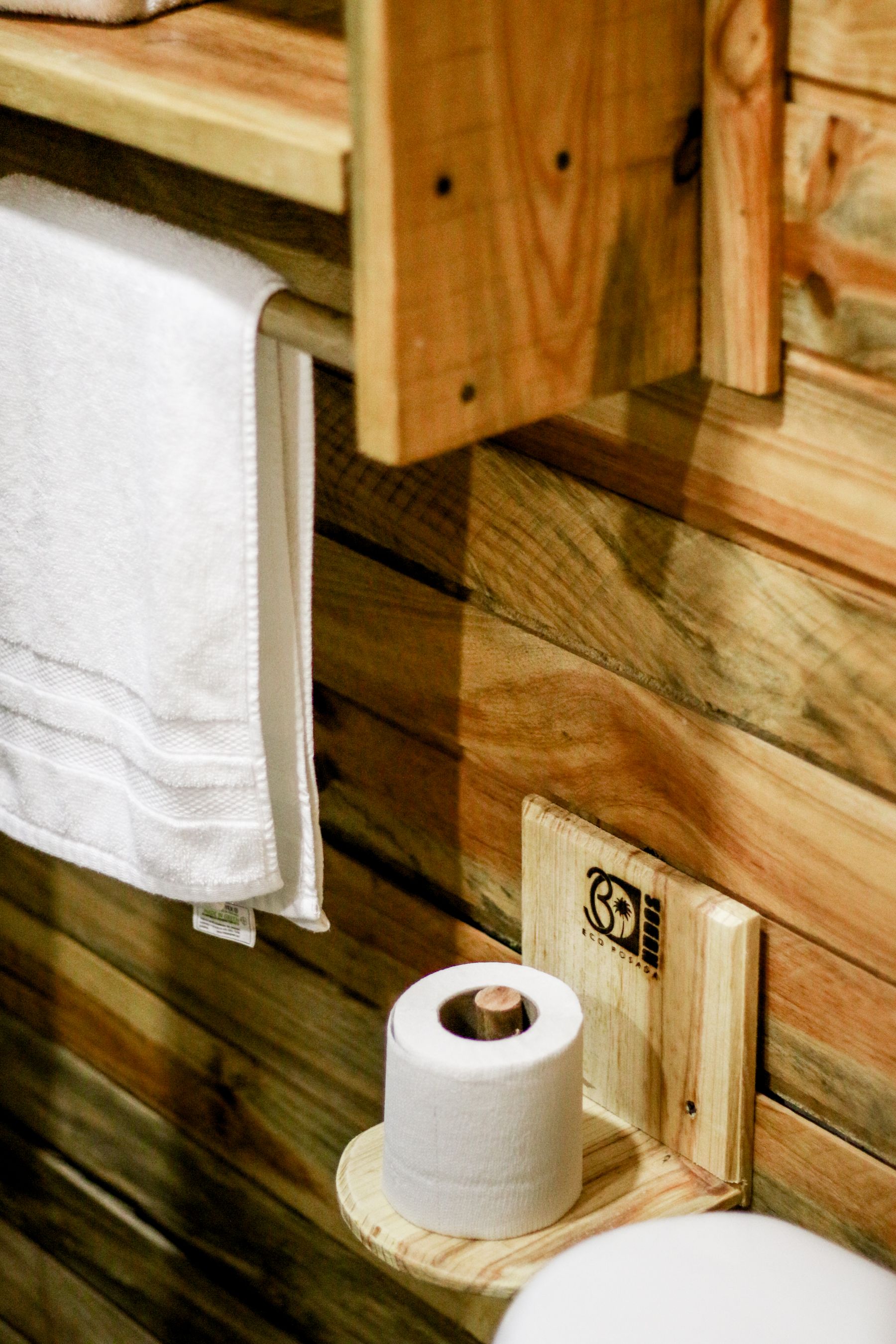
A rustic shelf is useful for towels and frequently replaced supplies, but it should not carry every bottle in the room. Pair one open ledge with vanity drawers or a shallow cabinet so visual texture does not become visual clutter. Keep paper and spare textiles away from splash zones and allow air to circulate around stored items.
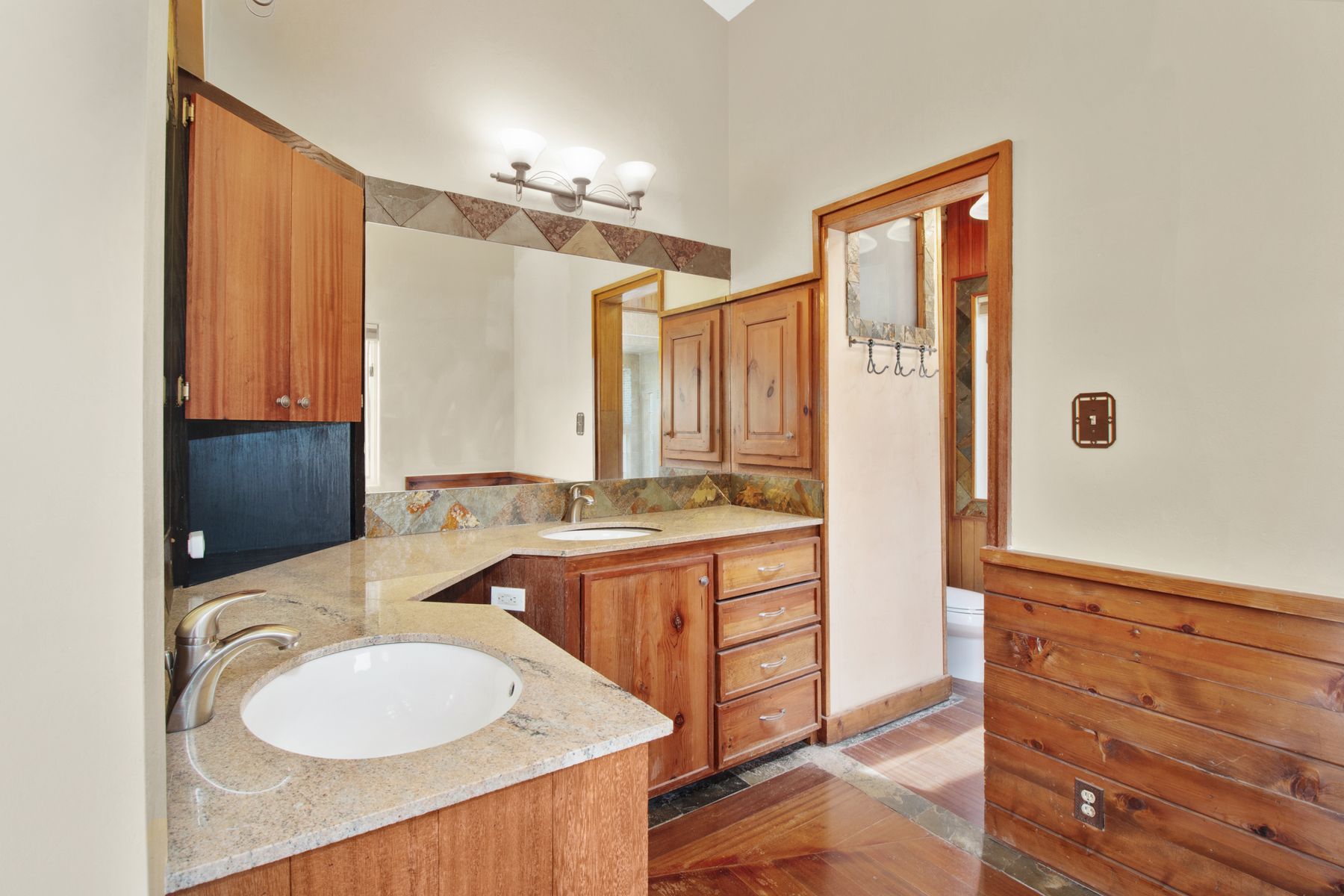
Plan Shared Storage Before Styling a Double Vanity
In a family or shared bathroom, the most useful rustic feature may be a generous wood cabinet rather than a decorative tub. Give each user a drawer or zone, preserve clear landing space around both basins and keep damp towels out of deep closed compartments. Symmetry can calm strong grain, but the plumbing and routines should determine the final module widths.
Use One Rustic Move in a Small Bathroom
Compact rooms rarely benefit from timber, rough stone, patterned tile and dark metal all at once. Choose one space-defining move—a wood vanity, textured shower wall or warm floor—then keep the enclosure transparent and the circulation unobstructed. A simpler background also makes the chosen material look more intentional.
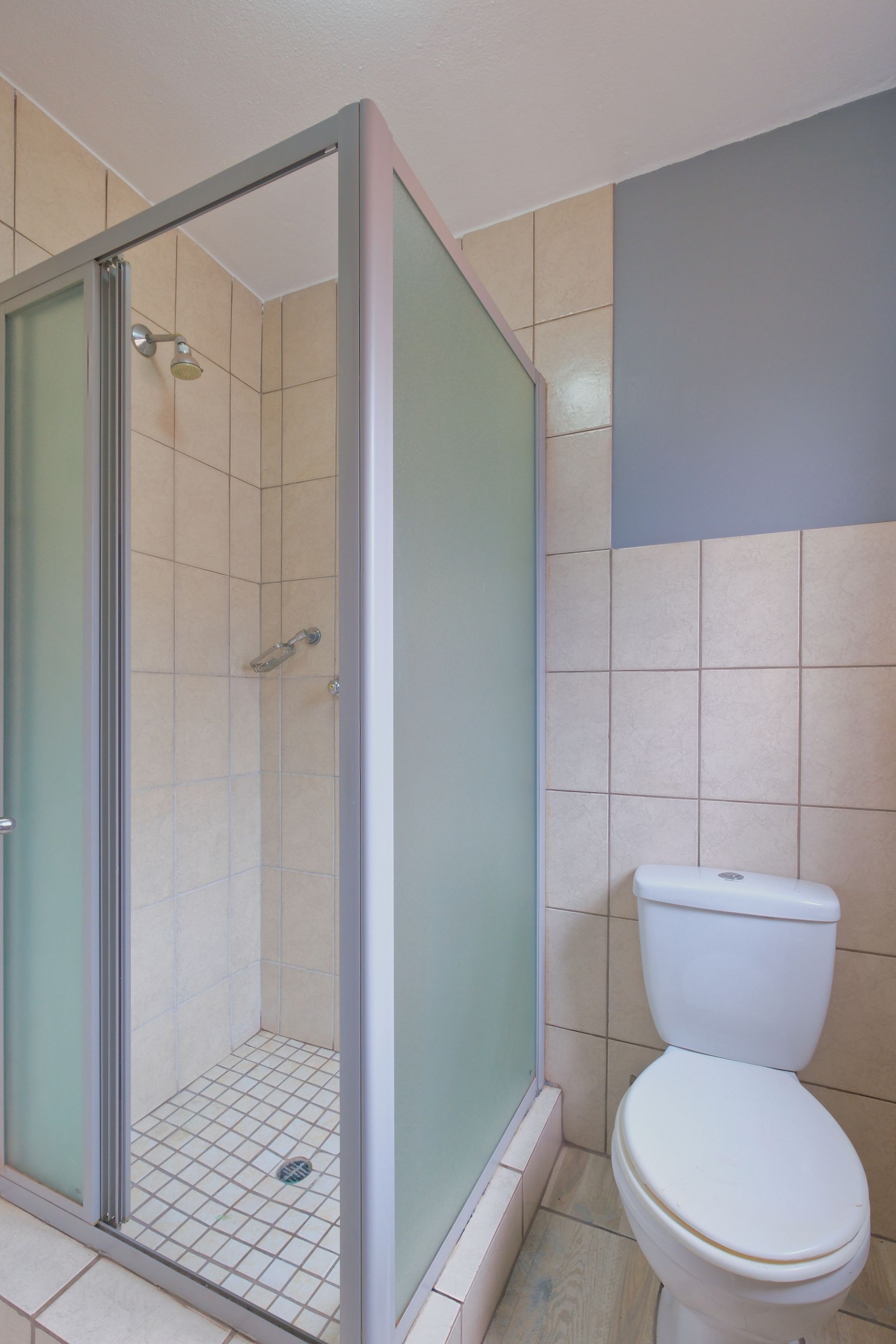
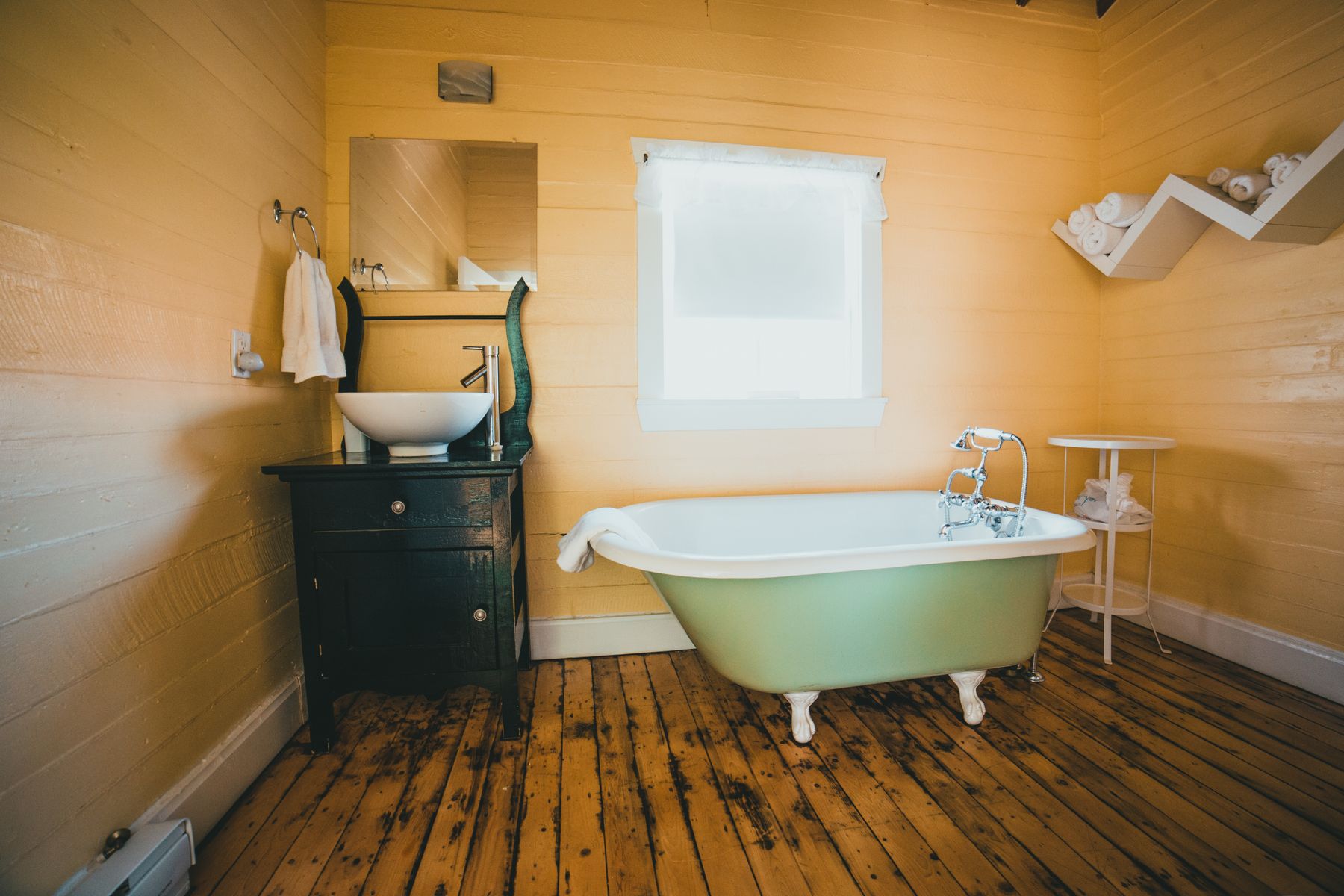
Use One Classic Fixture to Soften the Material Weight
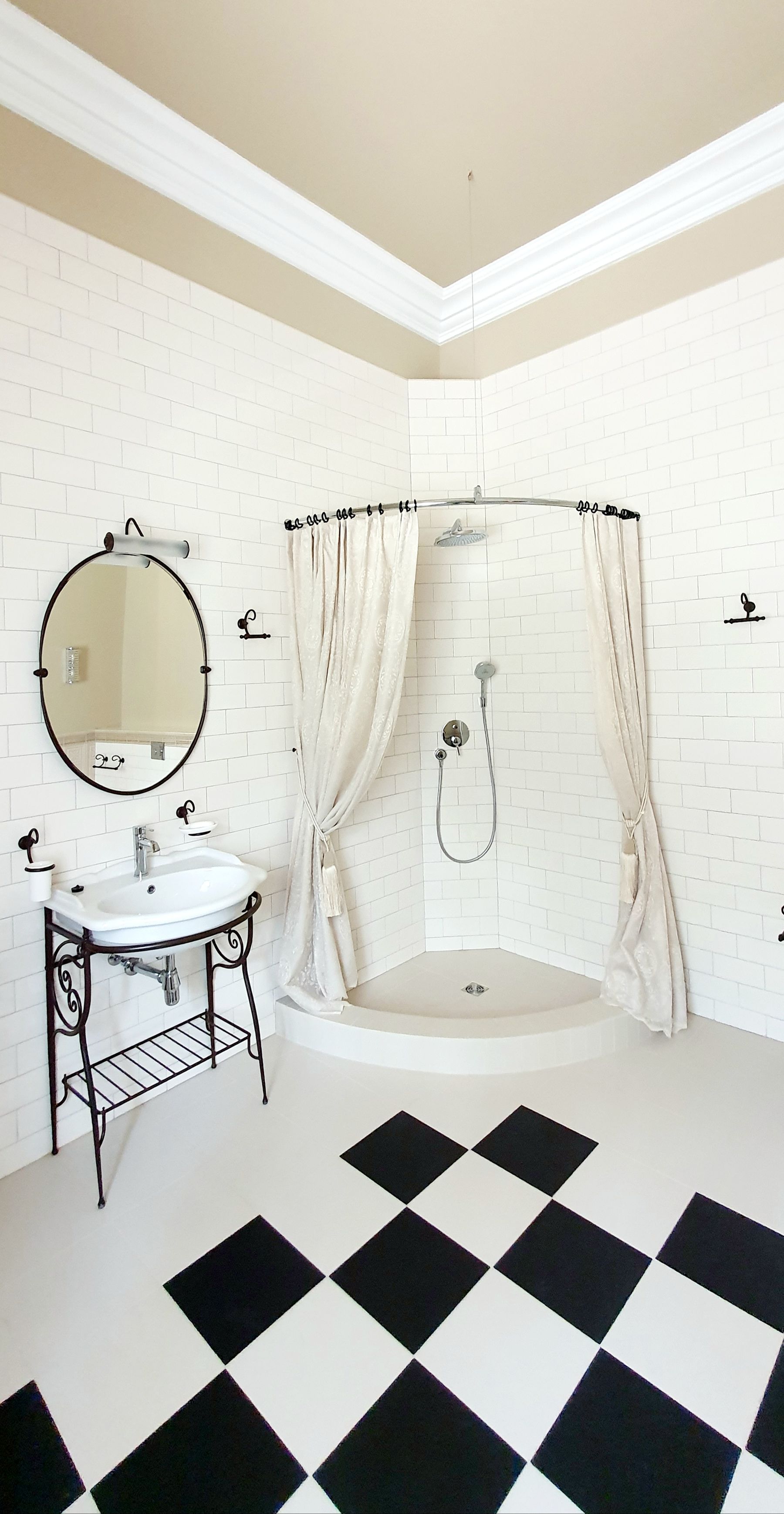
A clawfoot or traditionally shaped bath introduces curves against plank walls, stone and heavier cabinetry. It does not require a full suite of reproduction fittings; one classic silhouette can provide enough historic tension while the shower, storage and lighting remain practical. Confirm floor loading, cleaning access and comfortable entry before choosing the tub for appearance alone.
Preserve Genuine Age Selectively
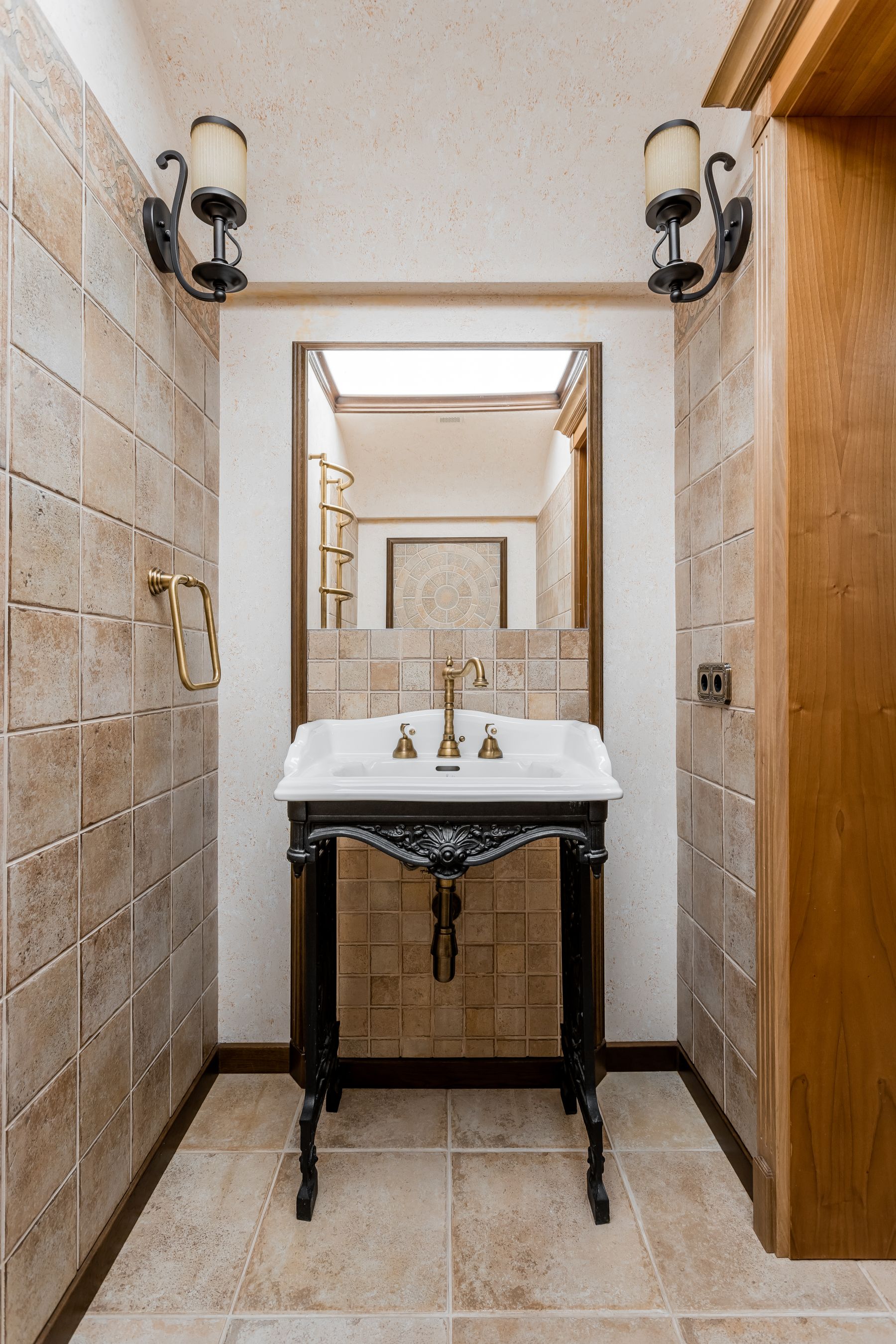
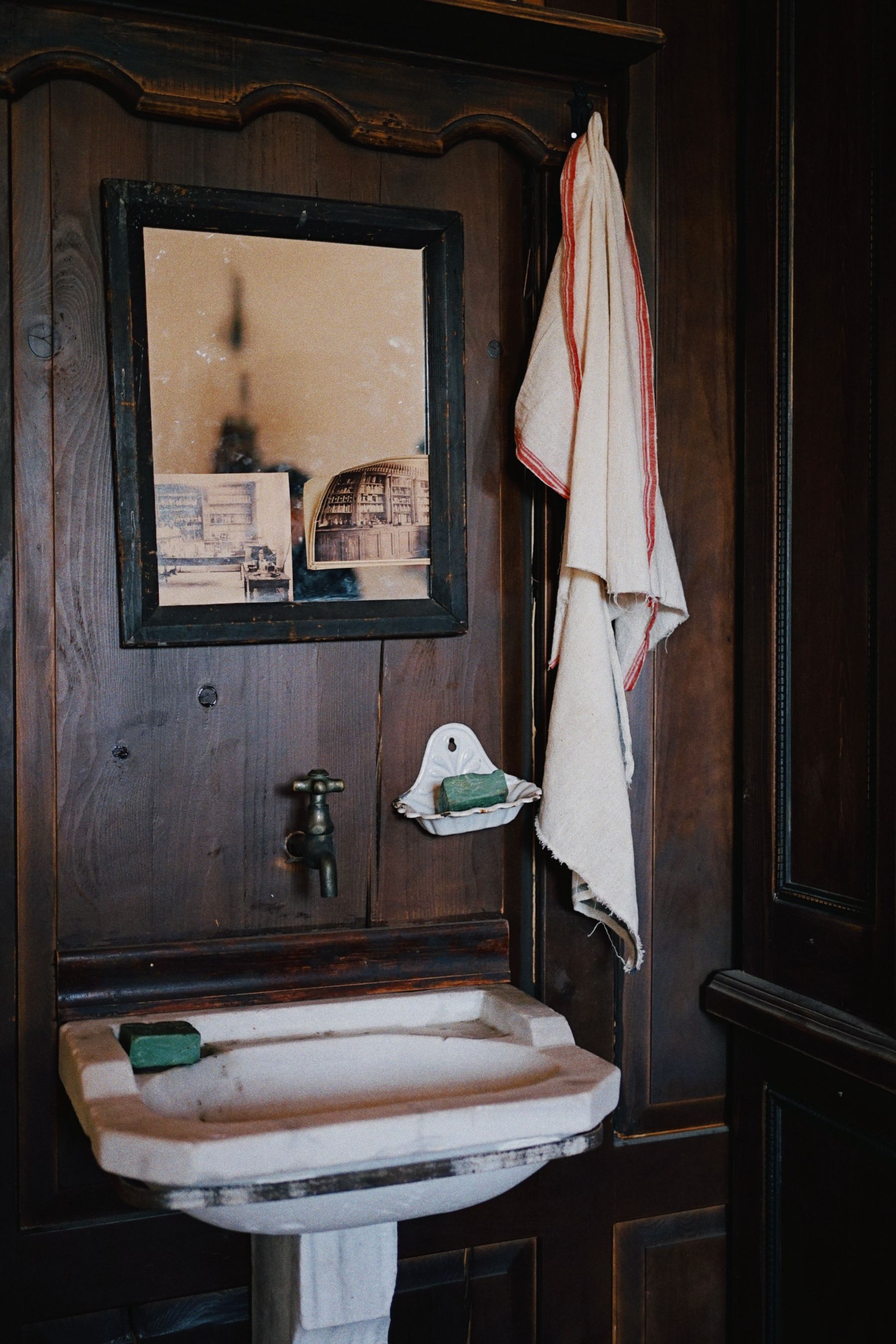
An old basin, dark timber wall or worn mirror can carry more credibility than newly distressed furniture. Keep an original element only after checking stability, plumbing compatibility, lead risks where relevant and whether it can be cleaned hygienically. Pair it with new valves, lighting and discreet storage so age reads as character rather than neglect.
Build Accessibility Into the Rustic Scheme
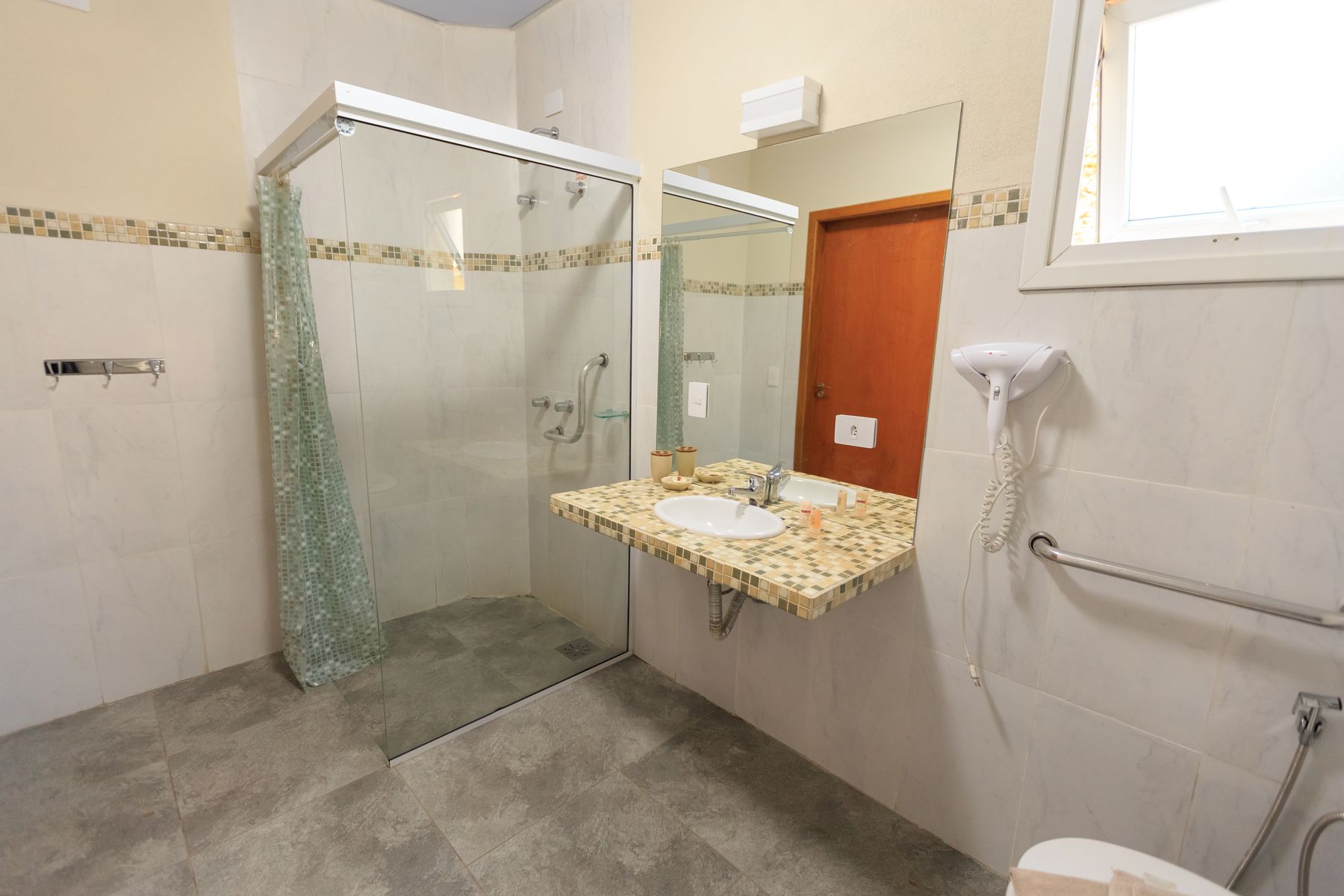
Natural materials should not introduce unnecessary thresholds, sharp protrusions or unstable furniture. A level shower, clear turning area, reinforced walls for future rails and lever controls can sit comfortably beside timber and stone. Contrast between floor, wall and fixtures also helps edges remain legible in a visually textured room.
Add Greenery Only Where the Room Can Support It
A plant can soften stone and timber, but it is not a substitute for ventilation and should not obstruct the vanity or cleaning route. Match the species to actual daylight, temperature and humidity rather than to a styling photograph. In a dark bathroom, a branch, dried arrangement or botanical color may be more honest than a struggling live plant.
Design Ventilation and Service Access Into the Details
Rustic cladding and built-in furniture can hide useful voids, but they must not trap moisture or make valves impossible to reach. Provide effective extraction, gaps where the assembly requires them and removable access panels that align with the joinery. Dark finishes and tactile surfaces also need enough light to reveal leaks, dust and early mold rather than concealing them.
Know Where Rustic Ends and Neighboring Styles Begin
Rustic is material-led: visible grain, stone, craft and physical warmth are the main story. Farmhouse adds more domestic and traditional cues, industrial introduces harder metal and masonry, while contemporary rustic pares the palette back and sharpens the lines. Decide which relationship matters before shopping so the room does not accumulate barn doors, black pipework, vintage florals and spa accessories without a hierarchy.