Choose the Farmhouse Lane Before Choosing Finishes
Decide whether the room should feel clean and modern, collected and traditional, or closer to a working rural interior. Modern farmhouse uses simpler profiles and fewer objects; a collected route can accommodate an old mirror, classic tub or patterned floor; a rustic route gives more weight to stone and rough timber. Naming the lane makes later choices easier. [Farmhouse Living Room Ideas](/living-room/farmhouse-living-room-ideas/) carries the same old-and-new decision into seating, hearths, storage and media.
Build a Light Shell That Is Warm, Not Sterile
Warm white, cream, putty and pale mushroom are useful backgrounds because they allow cabinetry and fixtures to read clearly. Avoid assuming that farmhouse automatically means brilliant white walls with black lines. A warmer base usually sits more comfortably beside oak, aged brass and off-white ceramic. Test paint and tile against the actual vanity and sanitaryware in the room's daylight and evening light, since near-whites can turn yellow, pink or grey beside one another.
Bring in Muted Color Instead of Repeating Farmhouse White
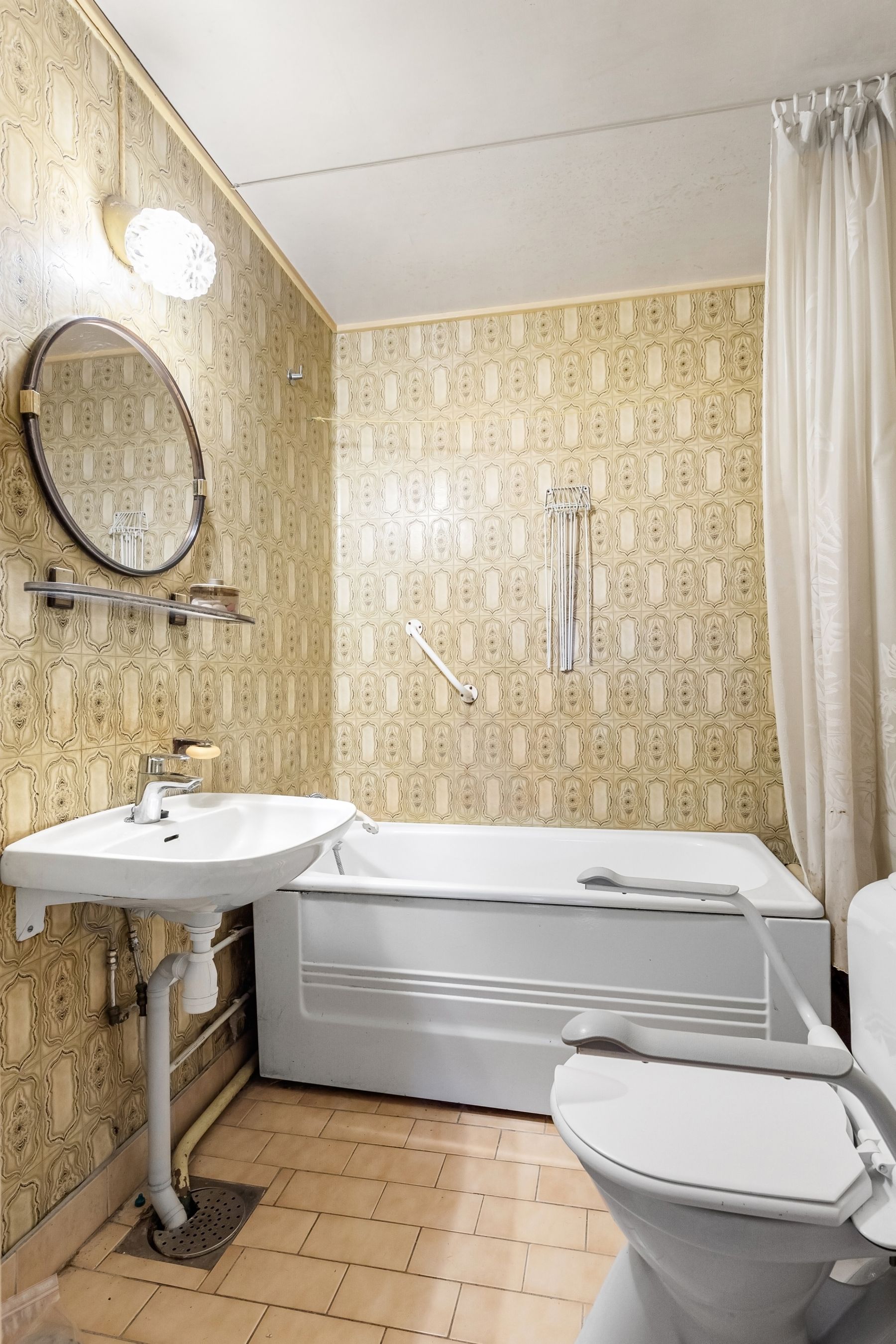
Sage, dusty blue, clay, mushroom and muted ochre can give a farmhouse bathroom more depth than the older all-white formula. Use color on painted joinery, a dry-zone wall, wallpaper or a contained tile field rather than scattering several accents. The shade should relate to timber and metal undertones, not merely look rural in isolation. Pattern works especially well in powder rooms and dry upper walls, where it can be changed without disturbing waterproof construction.
Use Paneling Where It Solves an Architectural Problem
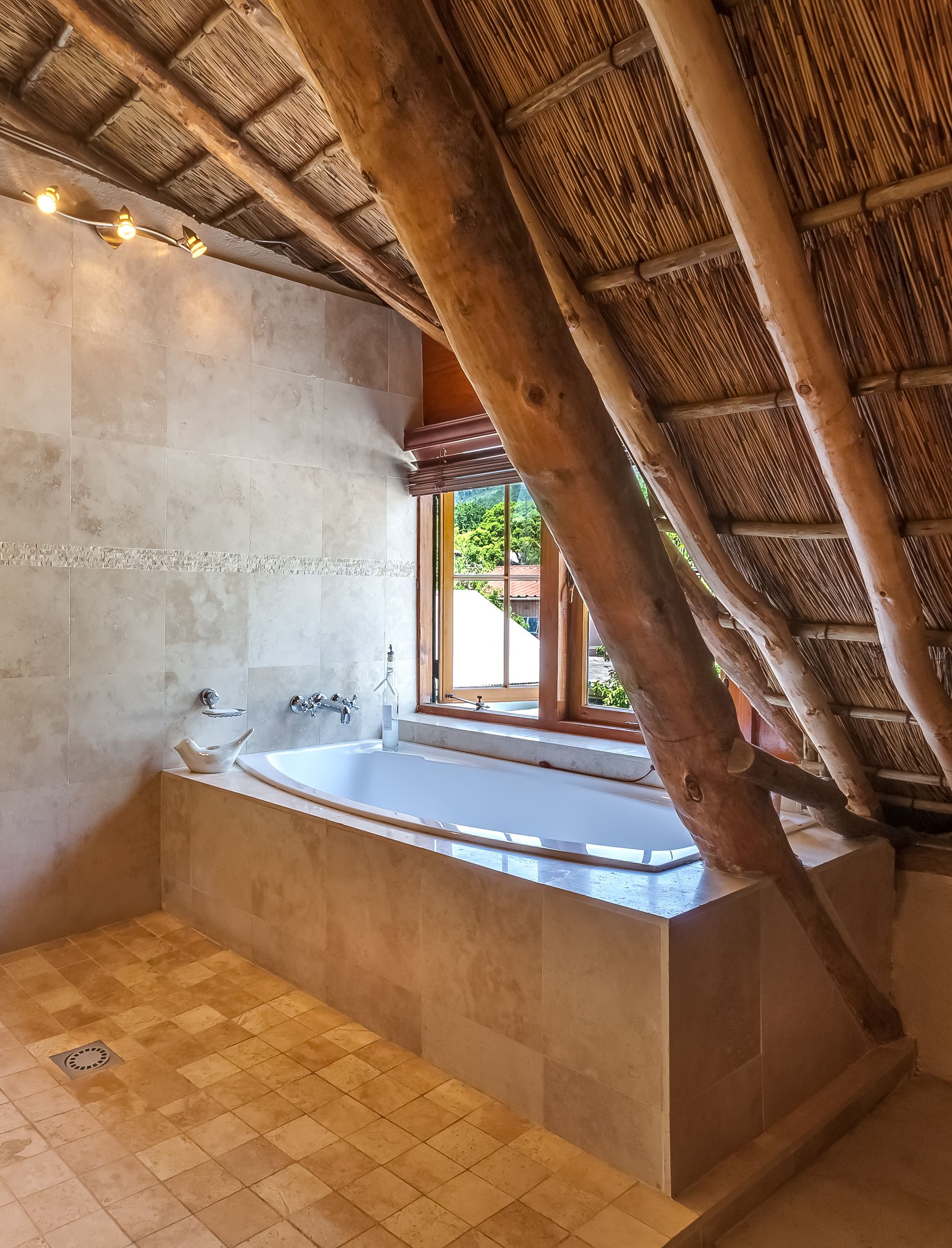
Shiplap, tongue-and-groove or simple board paneling can add scale, protect a lower wall or emphasize a ceiling. It should not be applied automatically to every surface. Keep it out of direct wet exposure unless the complete assembly is specified for that use, including substrate, joints, coating and ventilation. Vertical boards can lift a low room; a lower wainscot can bring human scale to a tall wall. Paint profiles cleanly rather than manufacturing chips and wear.
Keep the Main Wet-Zone Tile Straightforward
Rectangular, square or softly irregular tile suits farmhouse because the format is familiar and easy to coordinate. Interest can come from a stacked, brick or vertical layout, a handmade glaze, or a grout that quietly reveals the grid. Avoid combining a decorative insert, contrasting border and patterned niche merely to make plain tile feel special. Construction remains contemporary: the waterproofing, falls, movement joints and edge details matter more than nostalgic appearance.
Let a Patterned Floor Carry the Decoration
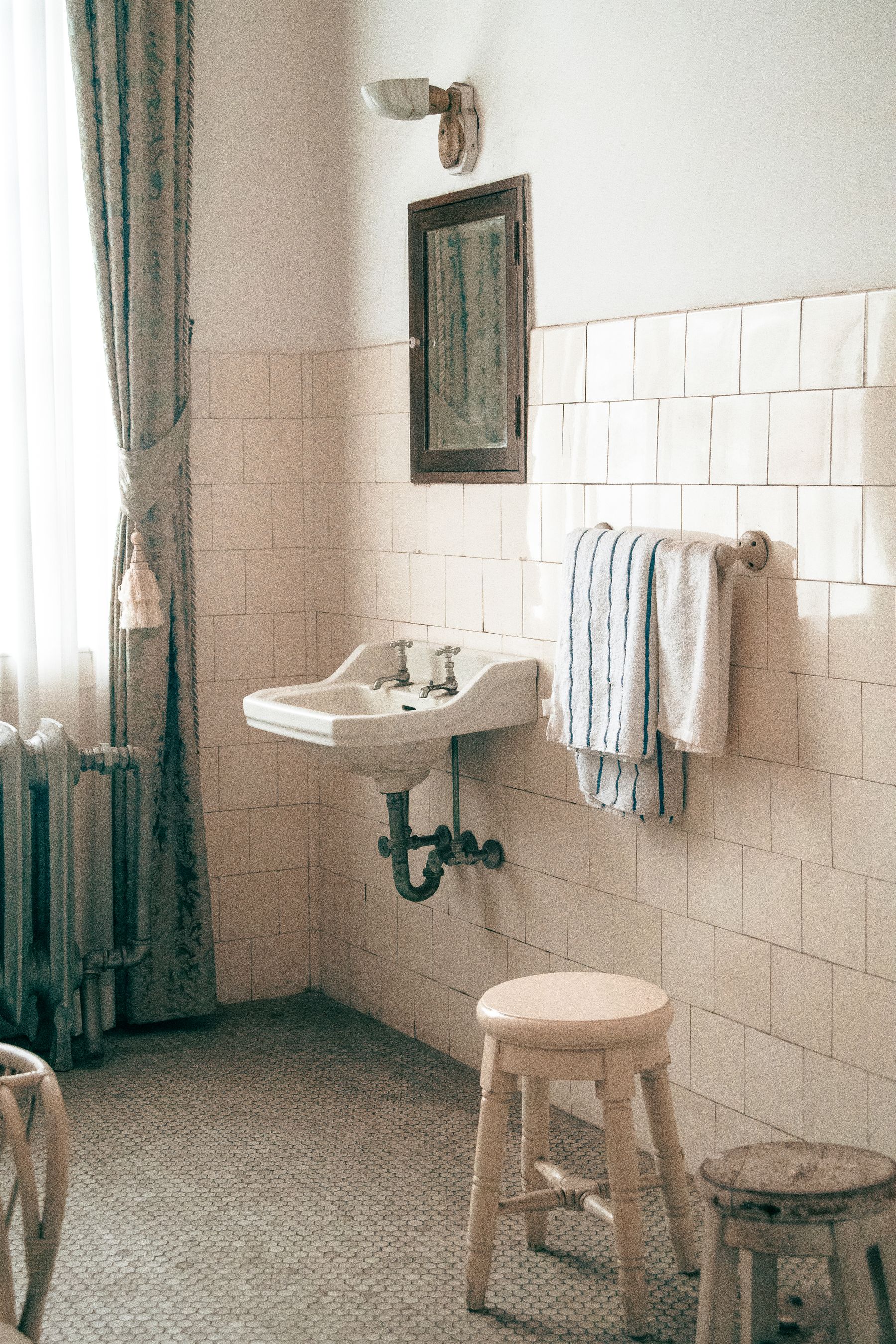
A small geometric, checkerboard, encaustic-look or mosaic floor can give the room age and rhythm without requiring themed wall decor. Keep the palette connected to cabinetry and metal, and inspect several repeats at room scale before ordering. In a compact bathroom, a tightly detailed pattern may feel busy; in a larger room, a tiny motif can disappear. Specify the exact tile for slip resistance, wet use and cleaning rather than choosing by photograph alone.
Make the Vanity Feel Like Useful Furniture
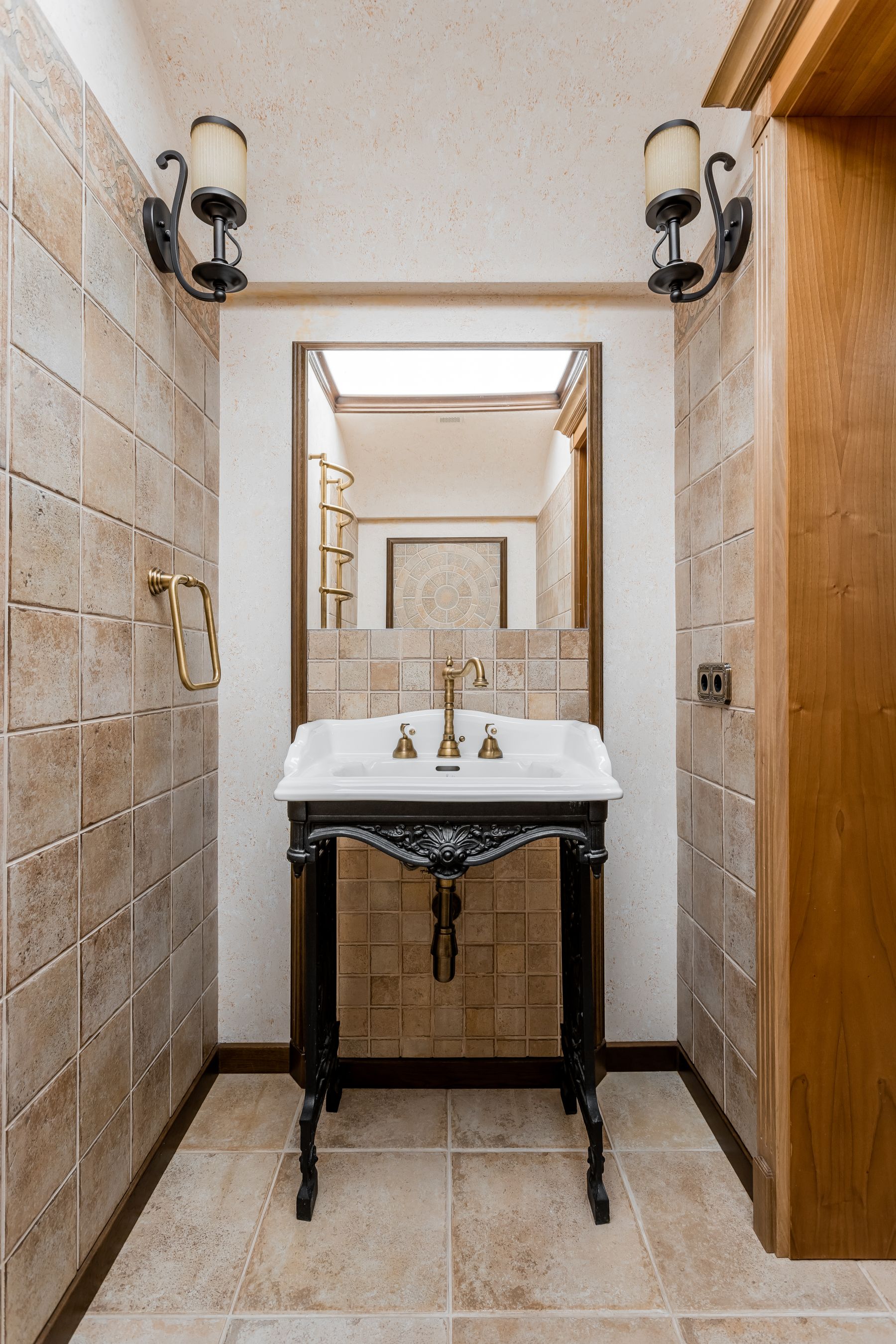
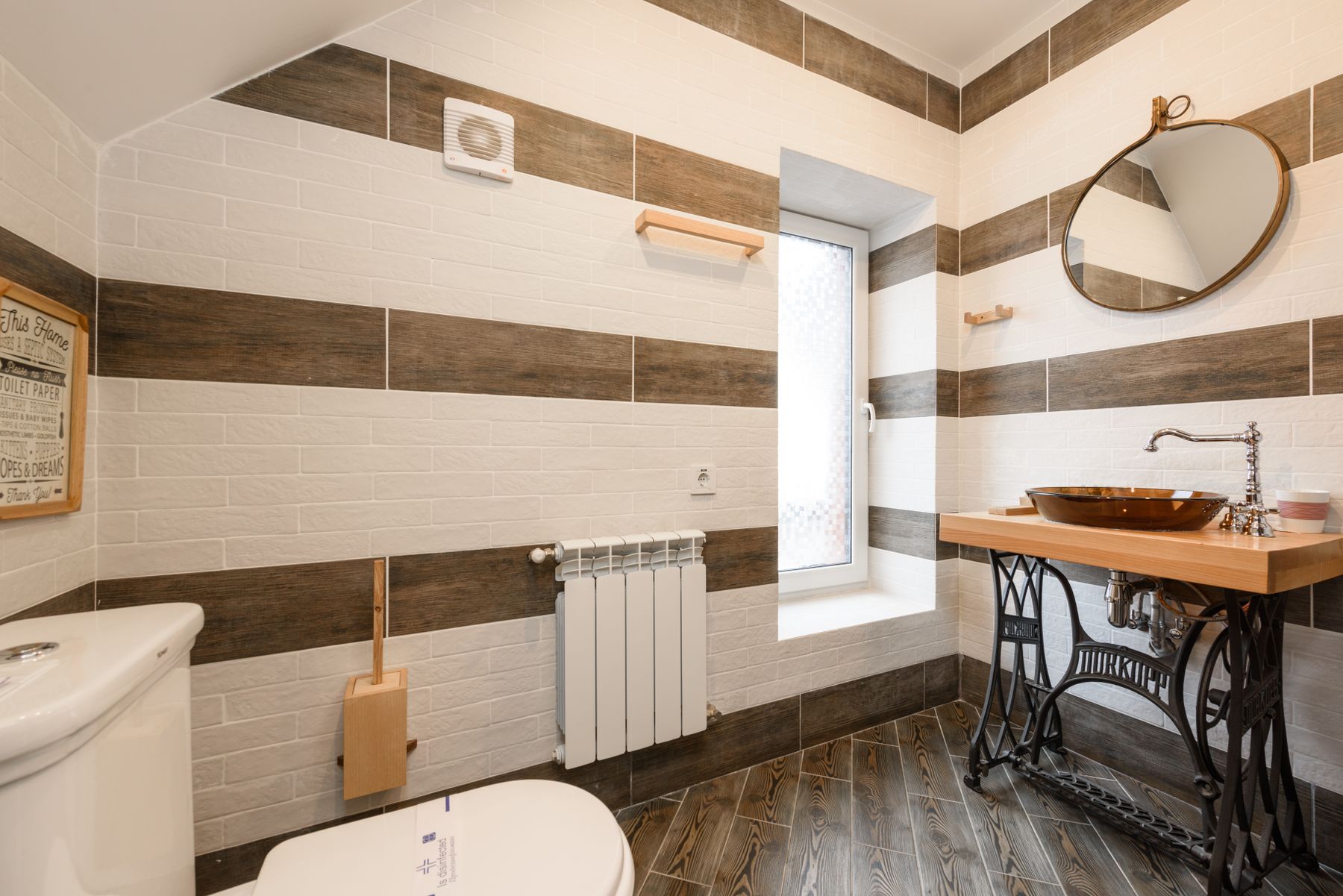
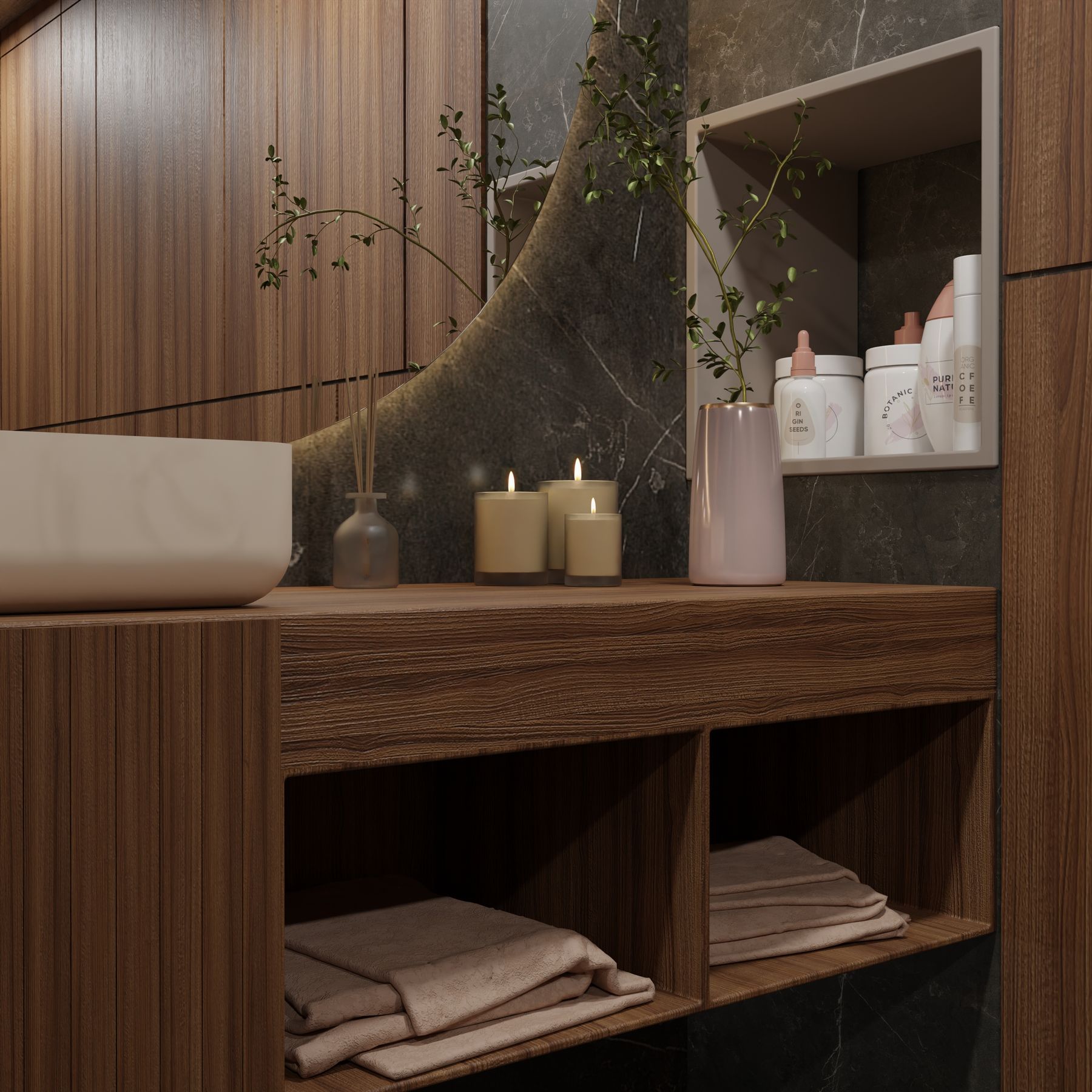
Framed doors, visible legs, inset drawers or a freestanding silhouette can make the vanity feel rooted in older domestic furniture. The inside still needs efficient storage, plumbing access and moisture-resistant construction. Choose drawers for everyday items and reserve open lower shelves for towels or baskets that genuinely fit. A converted antique can be beautiful, but its height, basin cutout, weakened joints and finish need professional assessment before it enters a wet room.
Scale a Double Vanity Like a Work Station
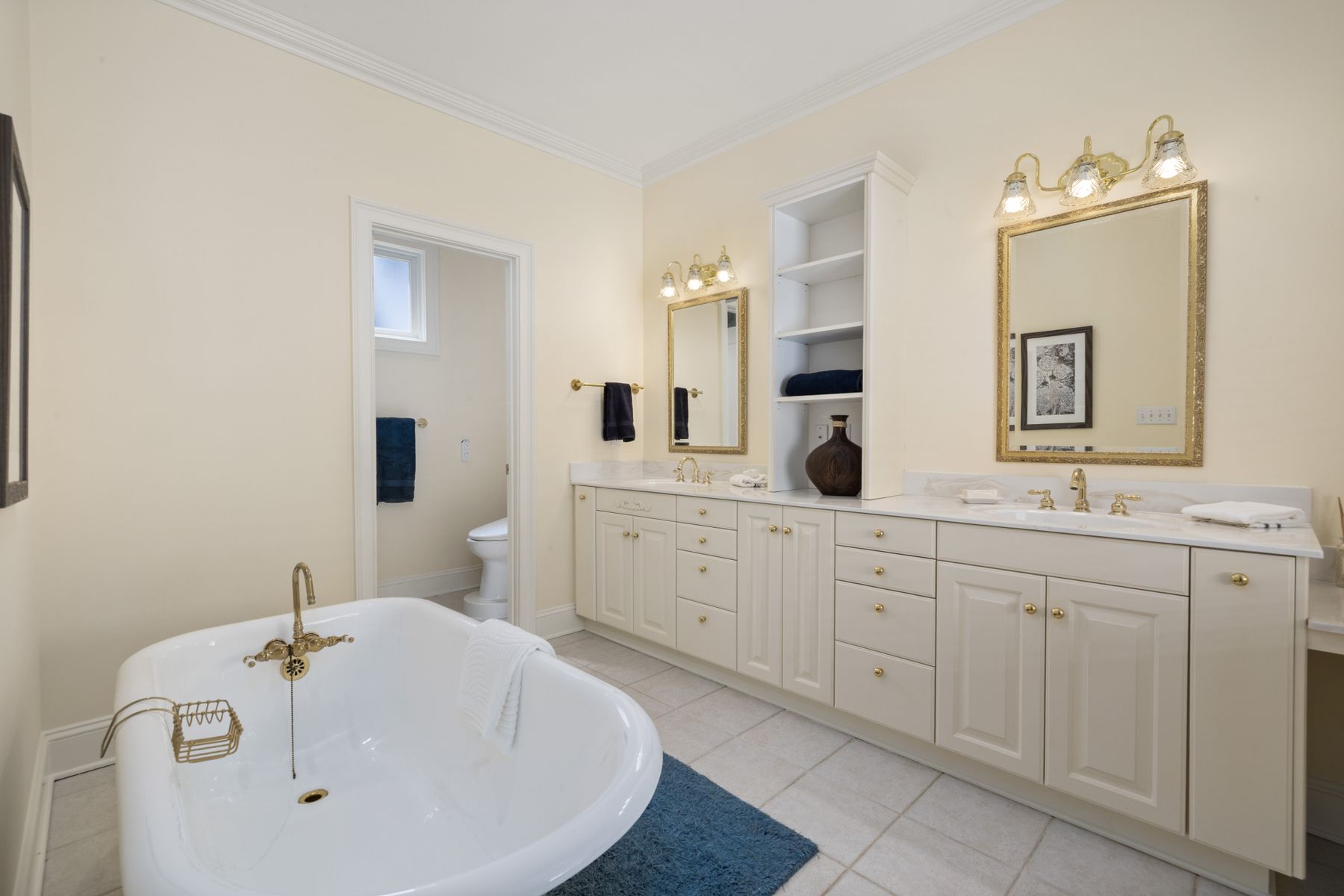
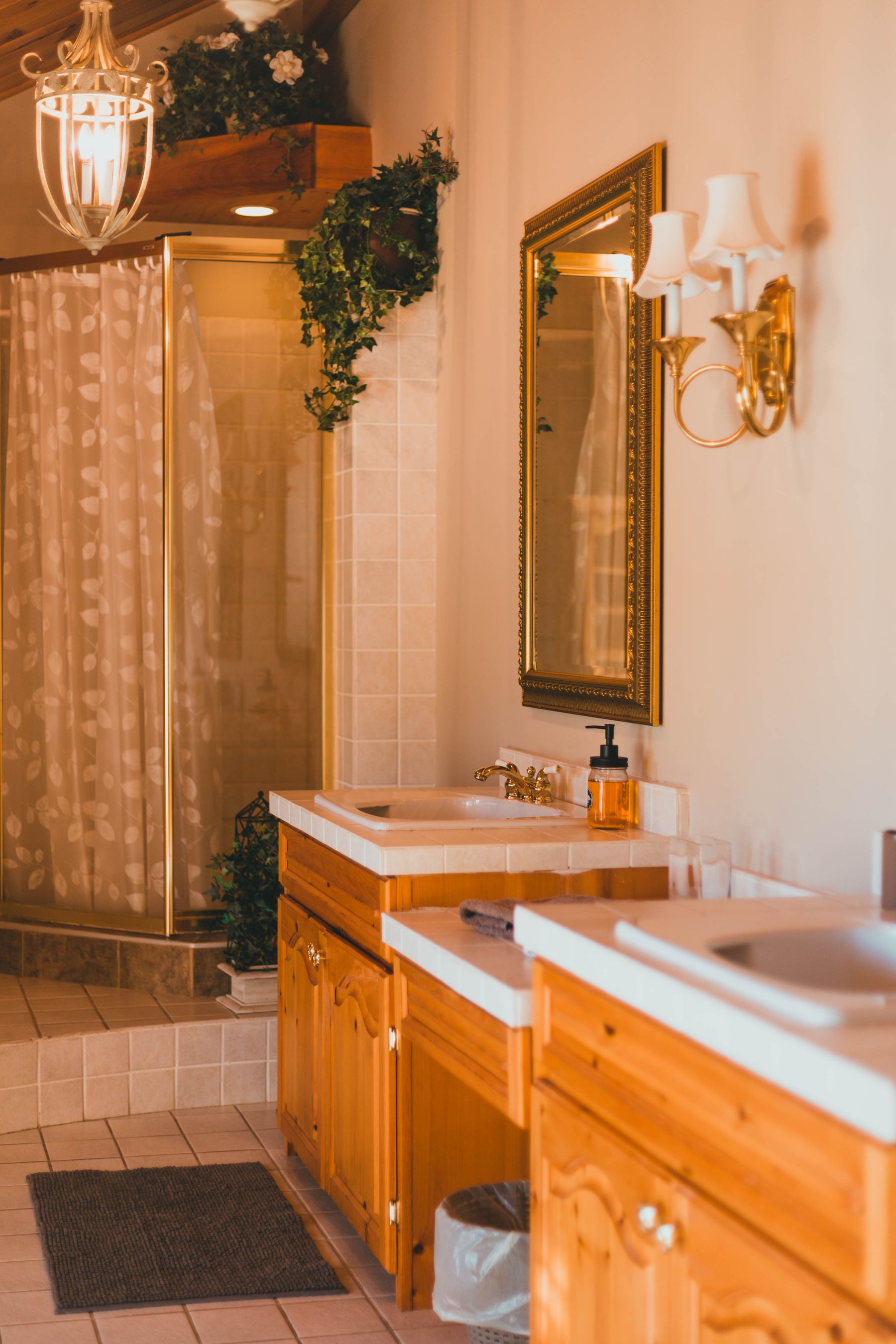
A long framed cabinet can suit farmhouse style, but two basins only help when each user has elbow room, drawer access and useful mirror light. In a medium room, one generous basin and more uninterrupted counter may serve better. Align mirrors and sconces to the working zones instead of centering everything on the wall. Use a painted finish or one wood tone consistently so the long elevation does not become visually heavy.
Choose a Basin for Use, Not a Farmhouse Label
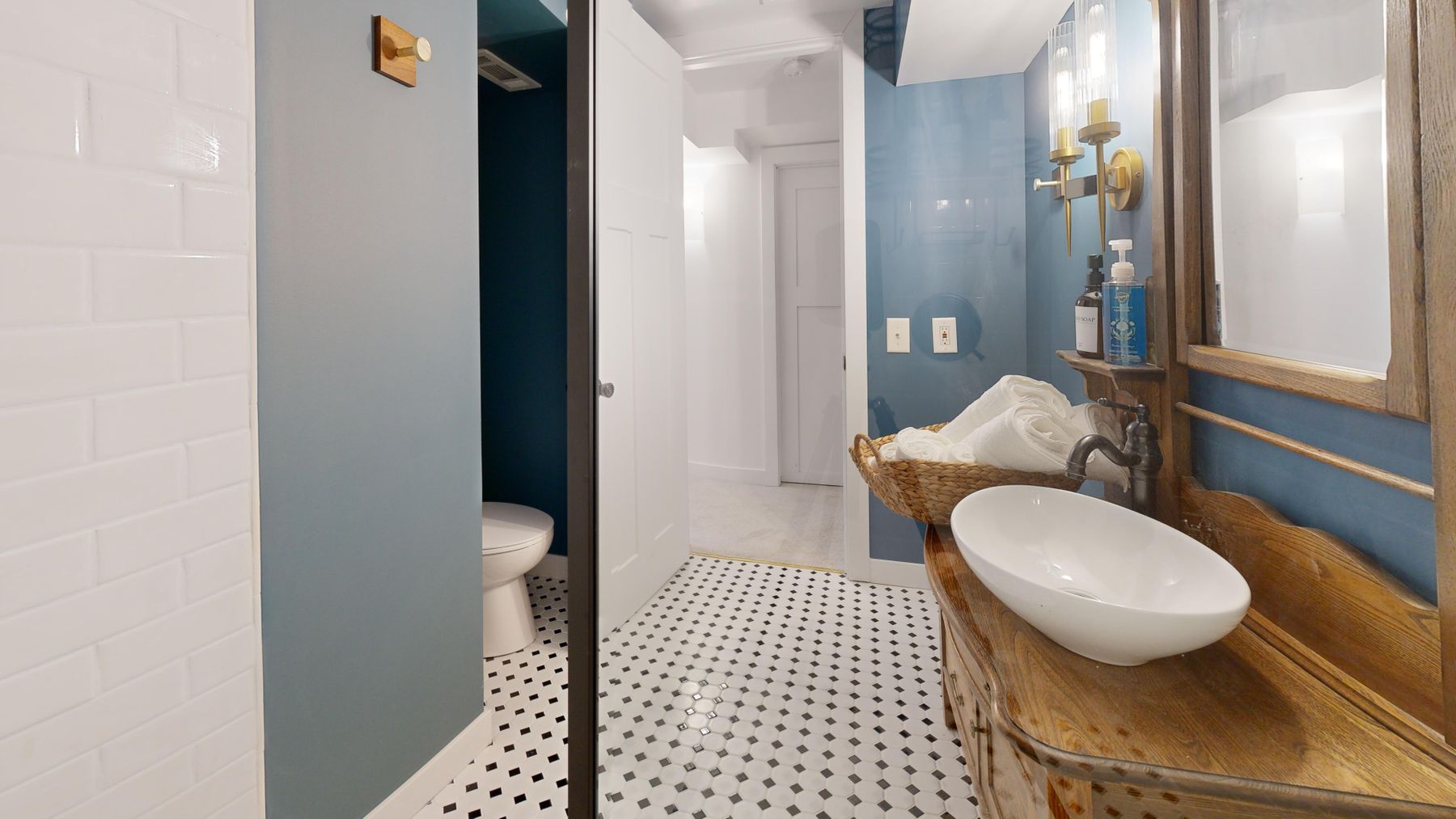
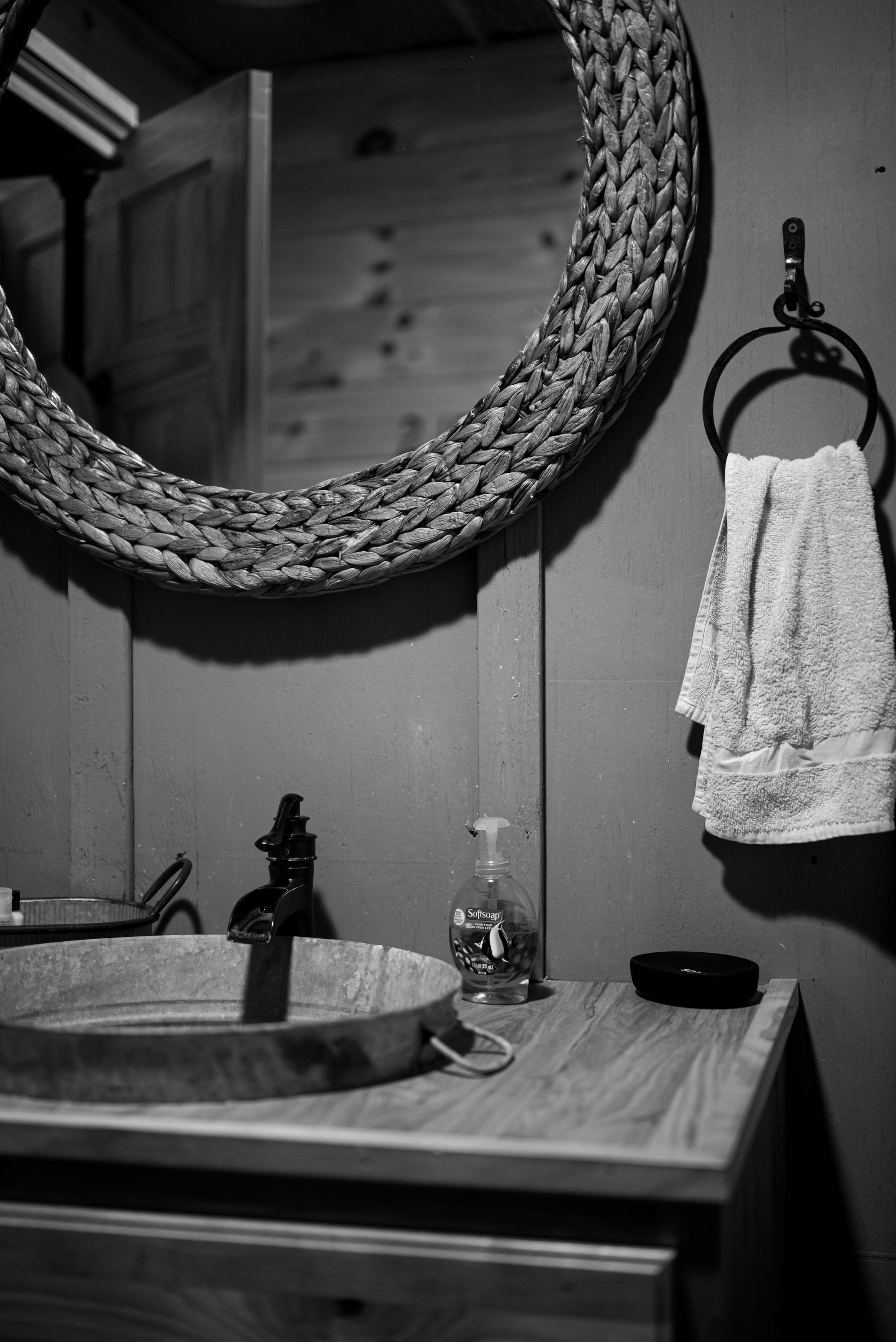
Apron-front, trough and vessel basins are often marketed as farmhouse, yet none is mandatory. A deep undermount basin may be easier to clean and pair with a furniture-like vanity. If choosing a vessel, calculate the finished rim and tap relationship so the assembly is not too high or prone to splash. A shared trough needs enough faucet spacing and counter support. Let use, plumbing and cleaning determine the form before style language.
Use a Classic Bath as One Strong Historic Form
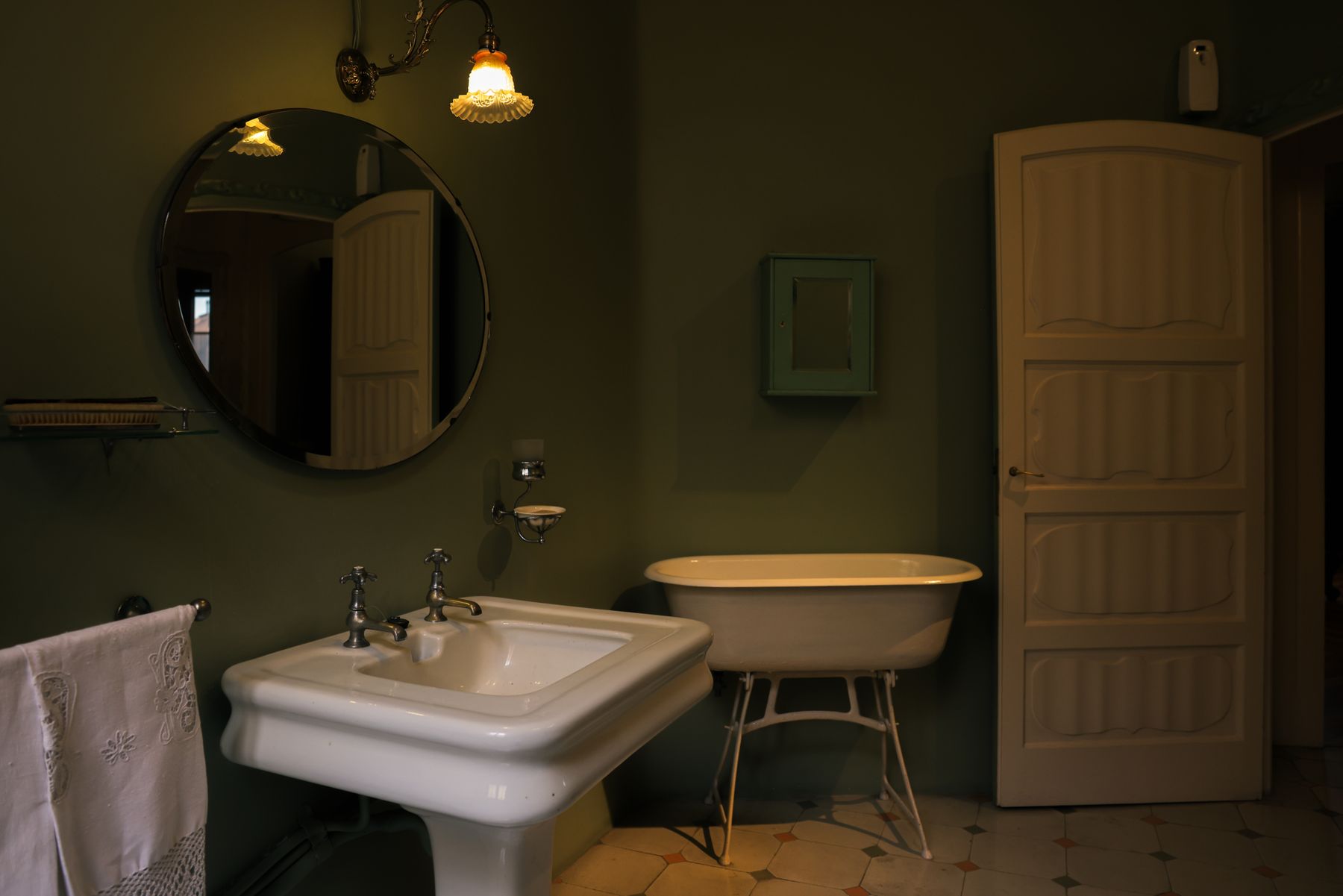
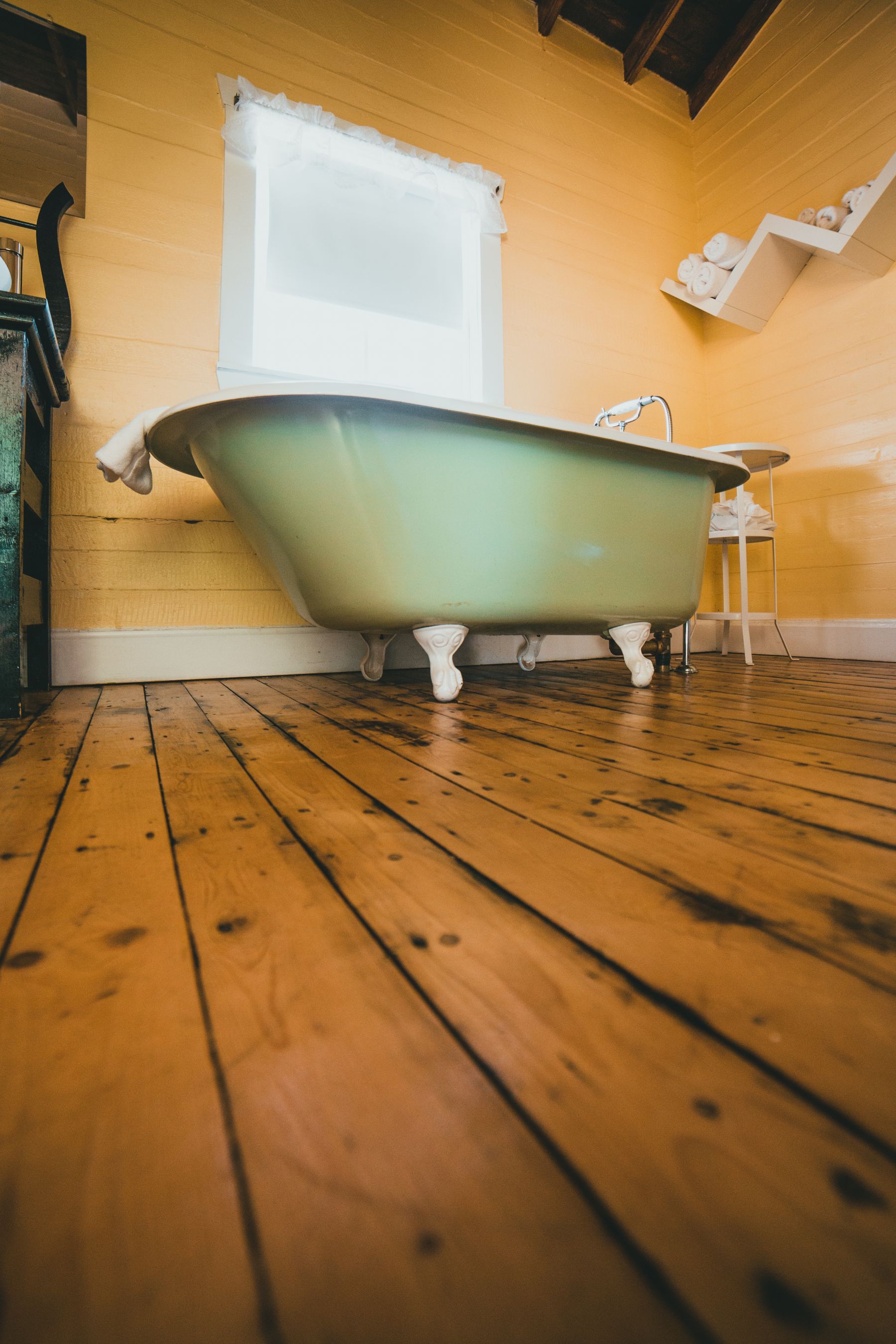
A clawfoot, roll-top or simple skirted bath can be the room's clearest historic reference. Check floor capacity, filler position, cleaning access and comfortable entry before falling for the outline. Freestanding baths need more surrounding space than photographs suggest; a built-in bath with a paneled apron may be the better farmhouse solution in a family bathroom. Keep nearby storage and lighting current so the bath reads as a deliberate anchor rather than a prop.
Keep the Shower Technically Current
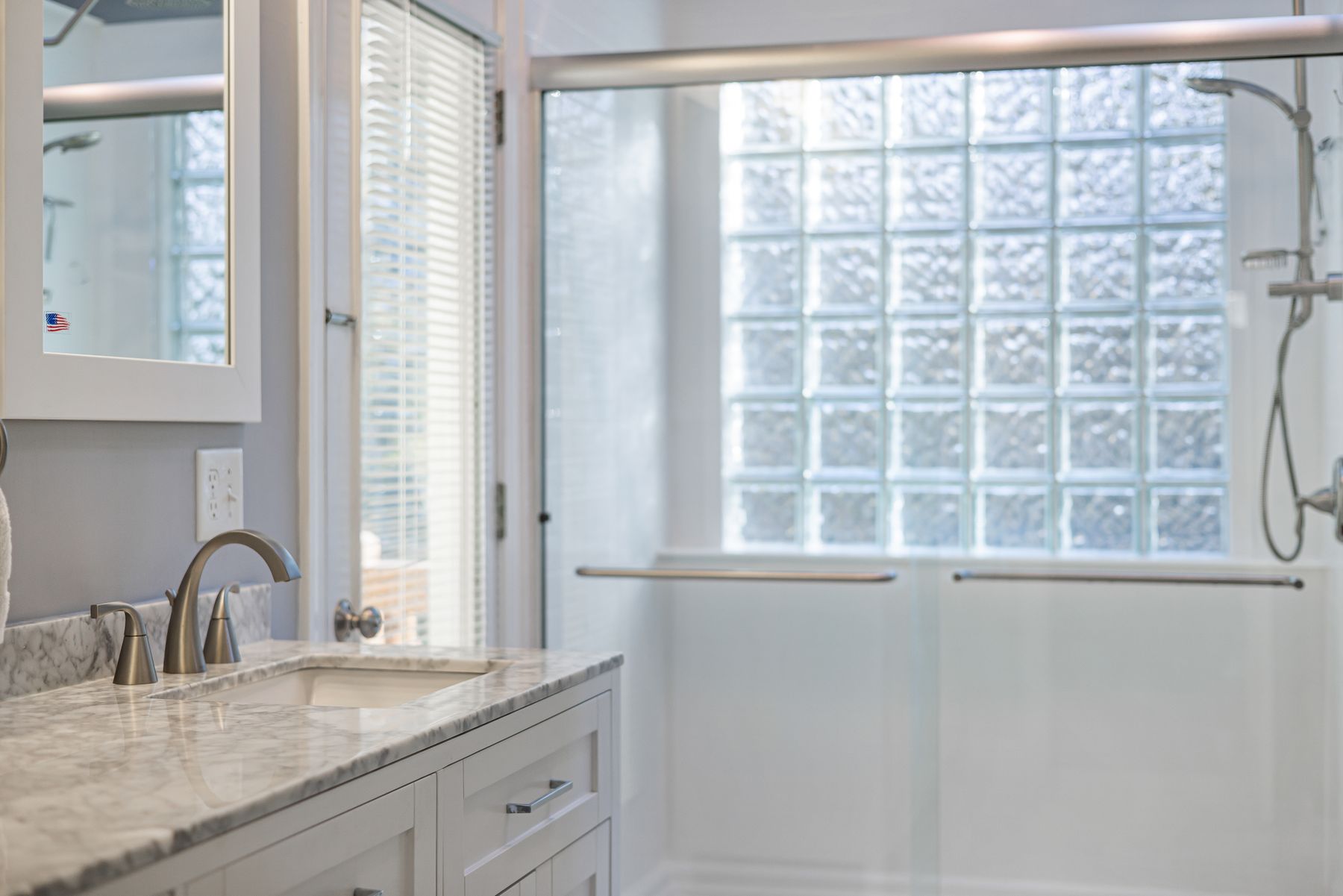
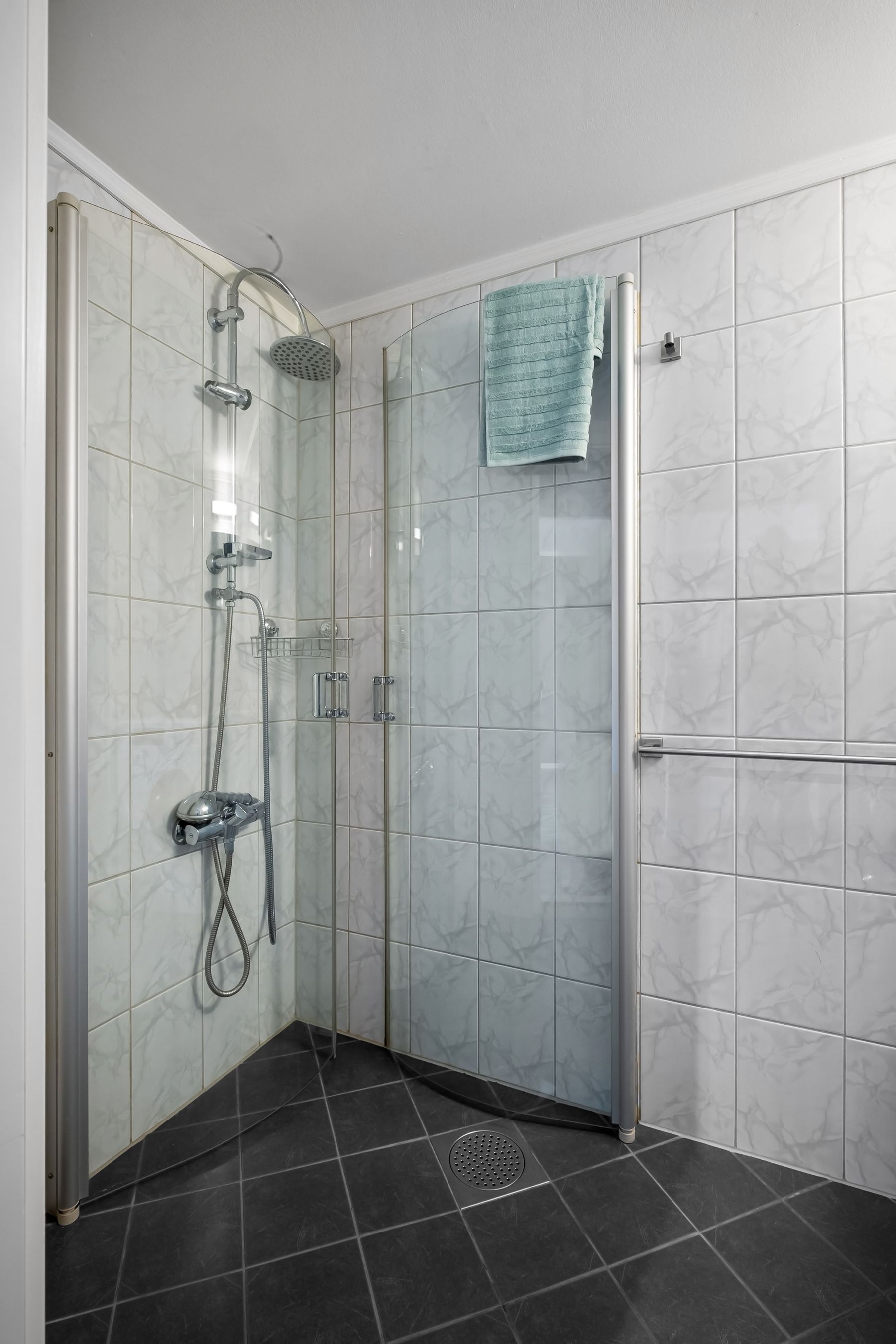
A farmhouse shower does not need exposed pipes or a complicated vintage enclosure. Use clear or lightly reeded glass, straightforward tile and hardware related to the room's primary metal. Resolve waterproofing, drainage, niches, valve access and enclosure support as a complete system. A low curb or level entry can improve use, but it needs enough splash control and floor fall. Keep decorative character at the tile, handle or nearby cabinetry rather than compromising construction.
Coordinate Wood Instead of Collecting Random Reclaimed Tones
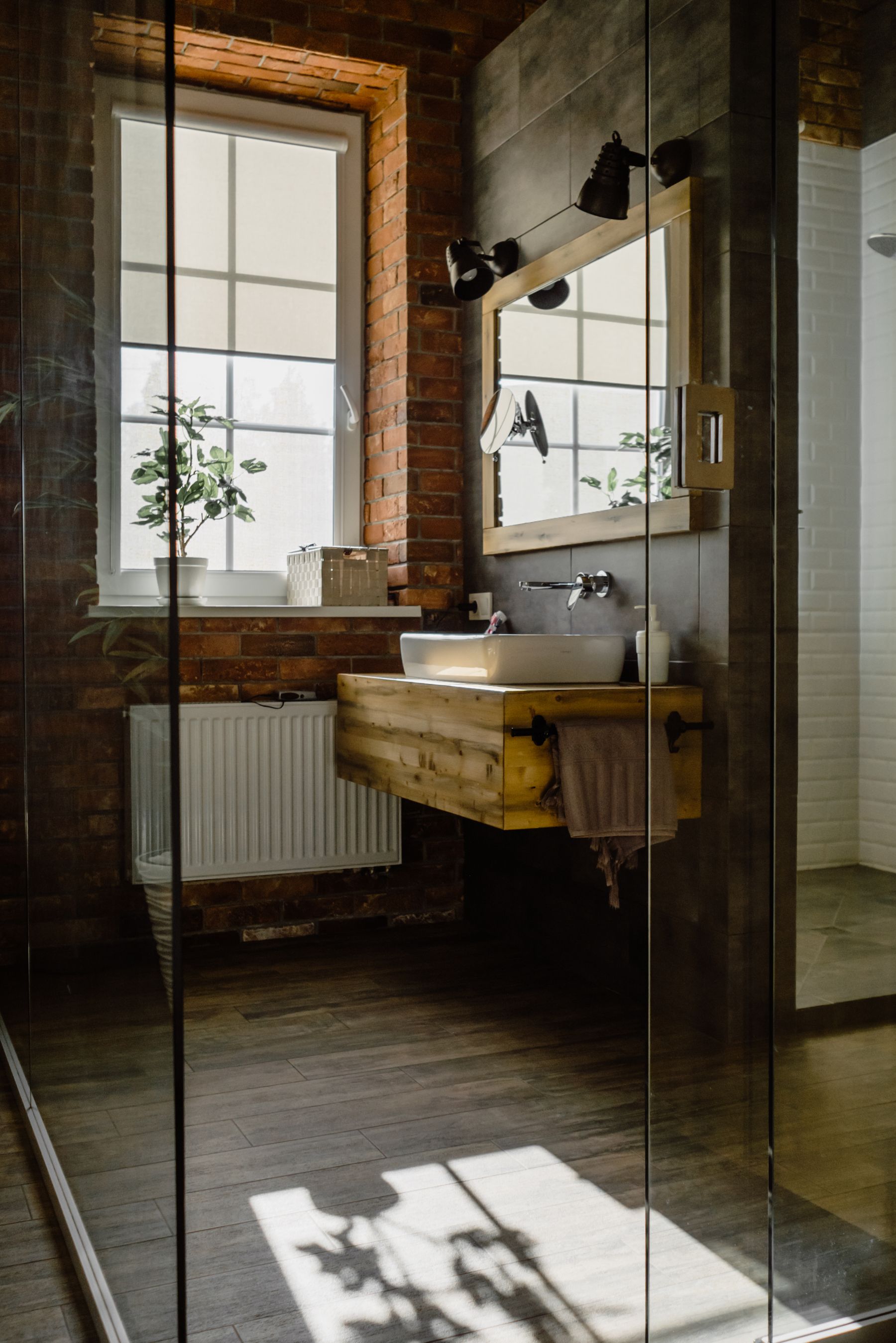
Visible grain brings farmhouse warmth, but too many wood species make the room look assembled from props. Choose one dominant family for vanity, paneling or floor, then allow a smaller related tone at a stool, shelf or mirror. Compare samples under bathroom light because oak, walnut and stained softwood can shift beside cream or grey tile. Select cabinet construction and finishes for moisture exposure, and avoid placing vulnerable end grain where water regularly collects.
Use Stone and Brick as Accents, Not Obligations
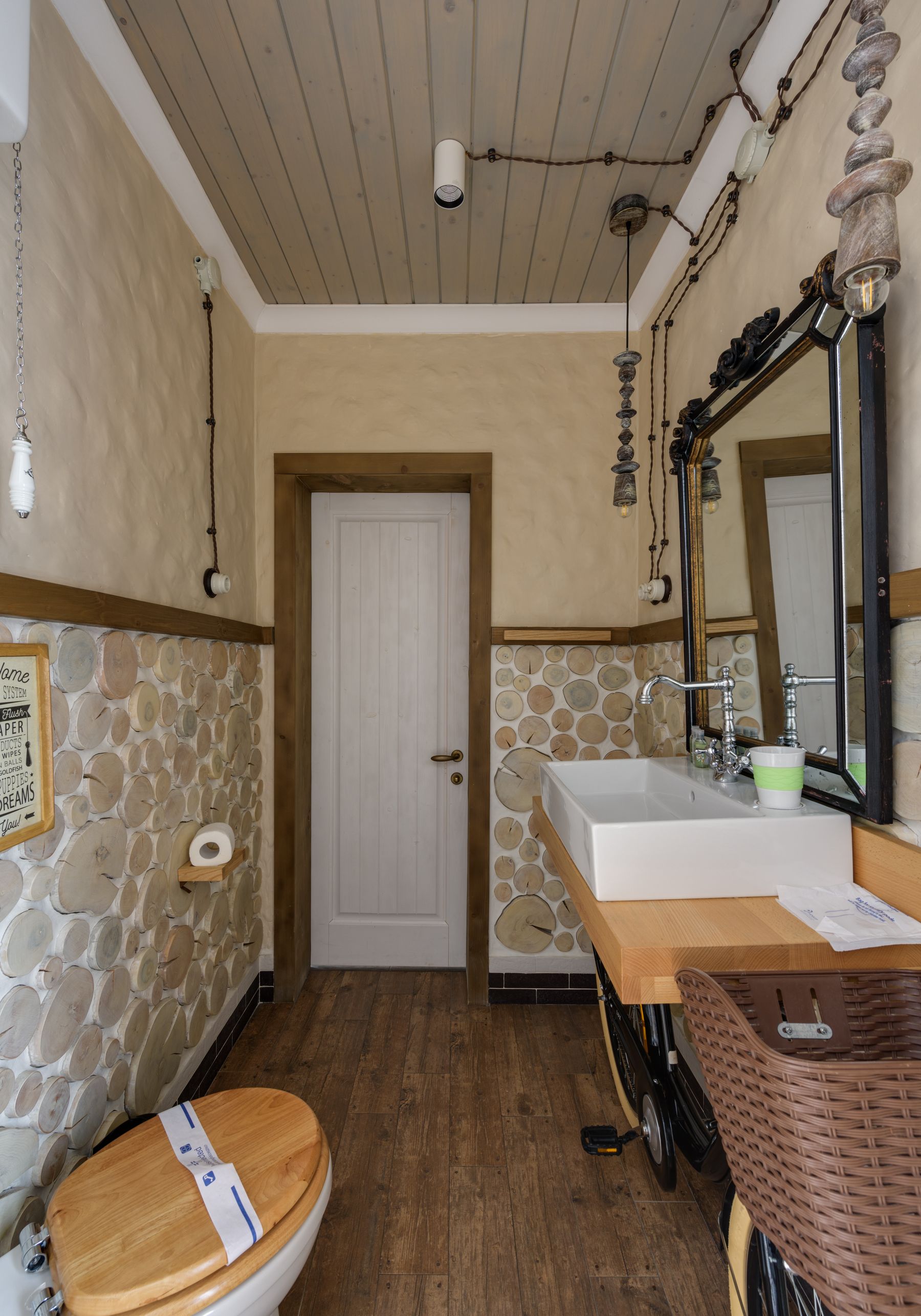
Existing brick or stone can connect a bathroom to the building, especially in a converted farmhouse. Newly applied veneer is less convincing when every other element is also trying to look old. Assess porosity, salts, sealing, cleaning and splash exposure before leaving masonry visible. In many rooms, a stone counter, threshold or one retained wall supplies enough mineral weight. Keep adjacent surfaces smoother so the texture remains intentional and the room is practical to clean.
Select Metal for Touch, Patina and Cleaning
Unlacquered brass, aged bronze, blackened metal, brushed nickel and chrome can all work. Brass and bronze add warmth, nickel is a quiet bridge, and black produces a sharper modern farmhouse line. Ask whether a finish is living, plated or coated and what cleaners are permitted. One dominant family with modest variation feels collected; every item in exactly the same manufactured finish can feel staged. Keep high-touch hardware comfortable and easy to replace.
Let One Mirror Carry the Collected Layer
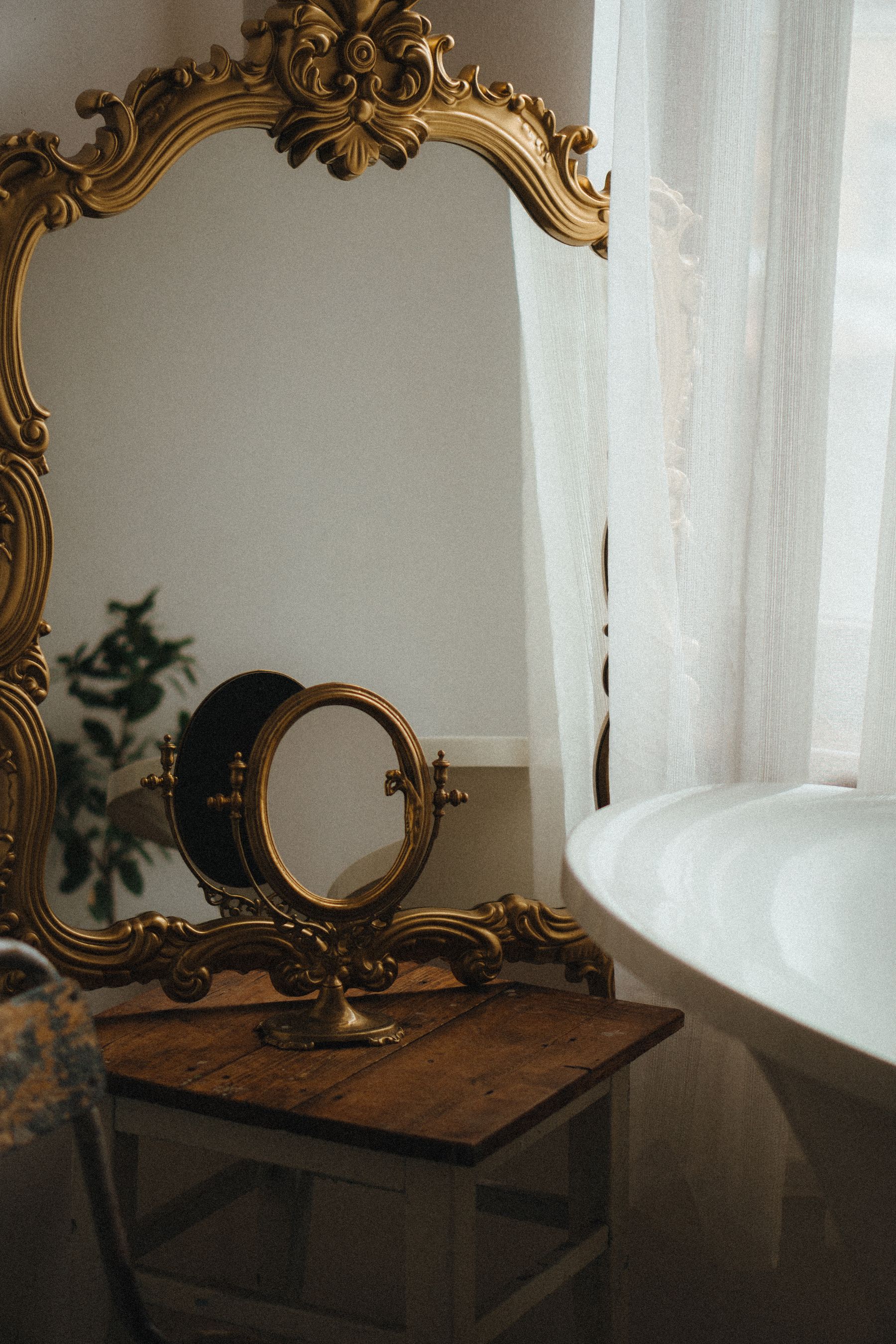
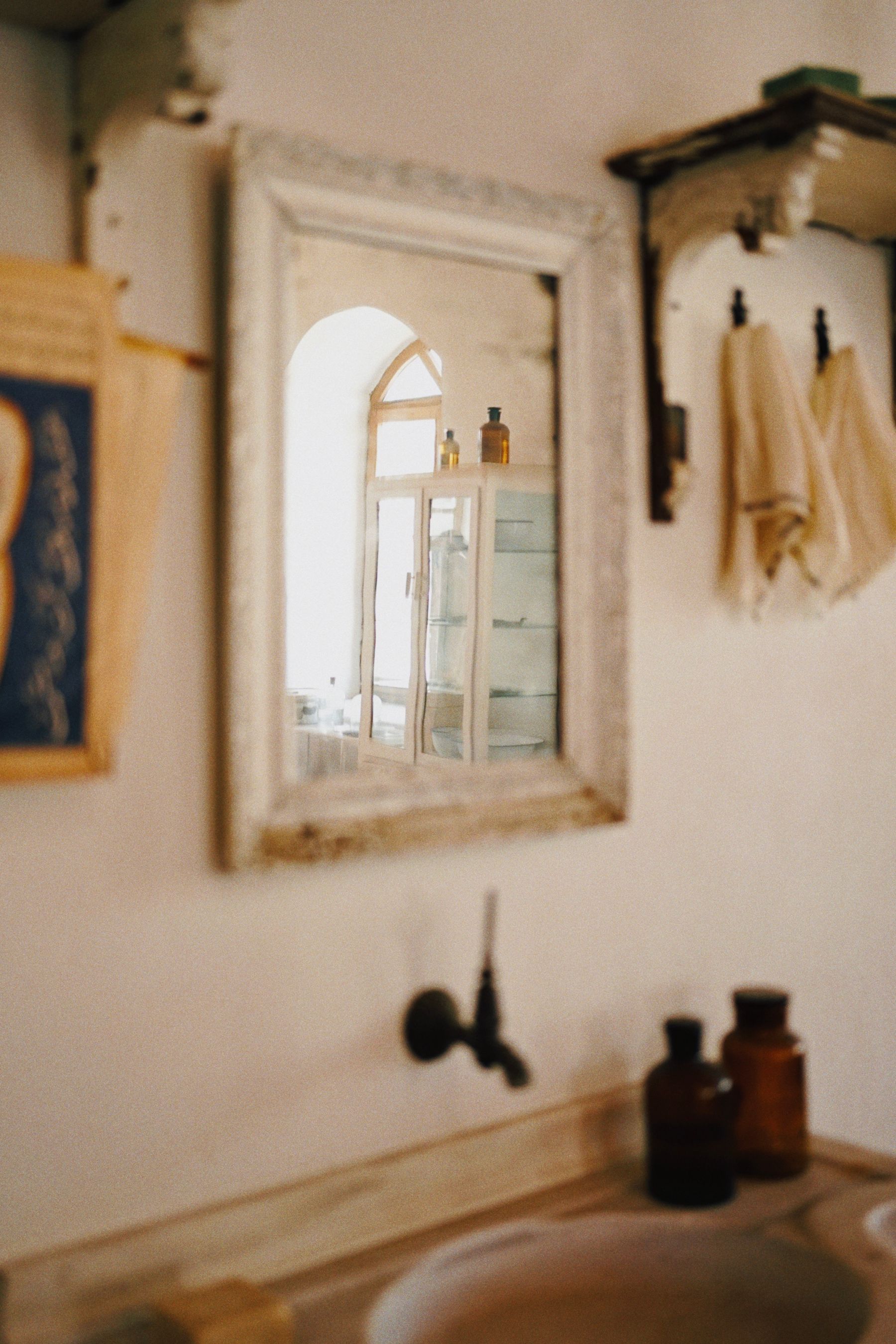
A timber, painted or aged-metal mirror is an efficient way to introduce history at eye level. The reflective area still needs to suit the users and work with face lighting. If using a genuinely old mirror, inspect the backing, glass condition and mounting; charming weight and irregularity require secure support. Keep the wall around it calmer. A gallery of small mirrors, signs and jars usually weakens both function and the sense that the piece was naturally collected.
Layer Familiar Lighting Without Copying a Barn
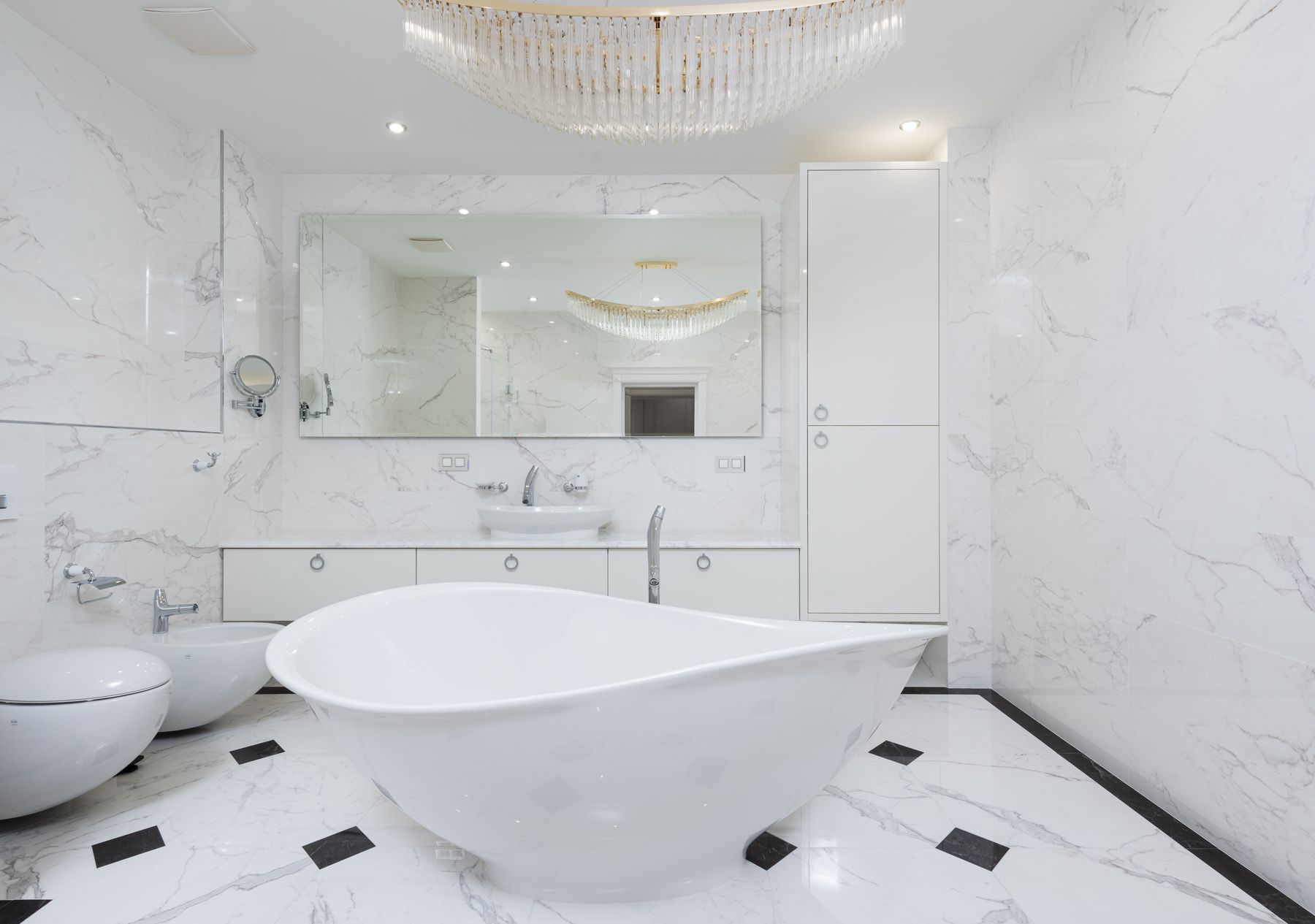
Schoolhouse globes, simple sconces, shaded pendants and restrained chandeliers can feel familiar without becoming literal agricultural fixtures. The vanity needs even face light, the shower requires suitable rated illumination, and a low night layer improves safety. Decorative central light alone creates shadows and does not solve grooming. Keep color temperature compatible with warm paint and timber, and verify fixture ratings, clearances and local electrical requirements in wet areas.
Use the Window for Daylight, Then Solve Privacy
Farmhouse rooms benefit from daylight because it reveals timber and tactile paint, but a bath beside a window still needs privacy, condensation control and durable trim. Consider shutters, a simple blind, frosted or reeded glass, or a high lower panel. Fabric belongs in a dry enough zone to air properly. Check the external view at night with lights on, and make sure the treatment does not block ventilation or collide with taps and storage.
Divide Open and Closed Storage by What It Holds
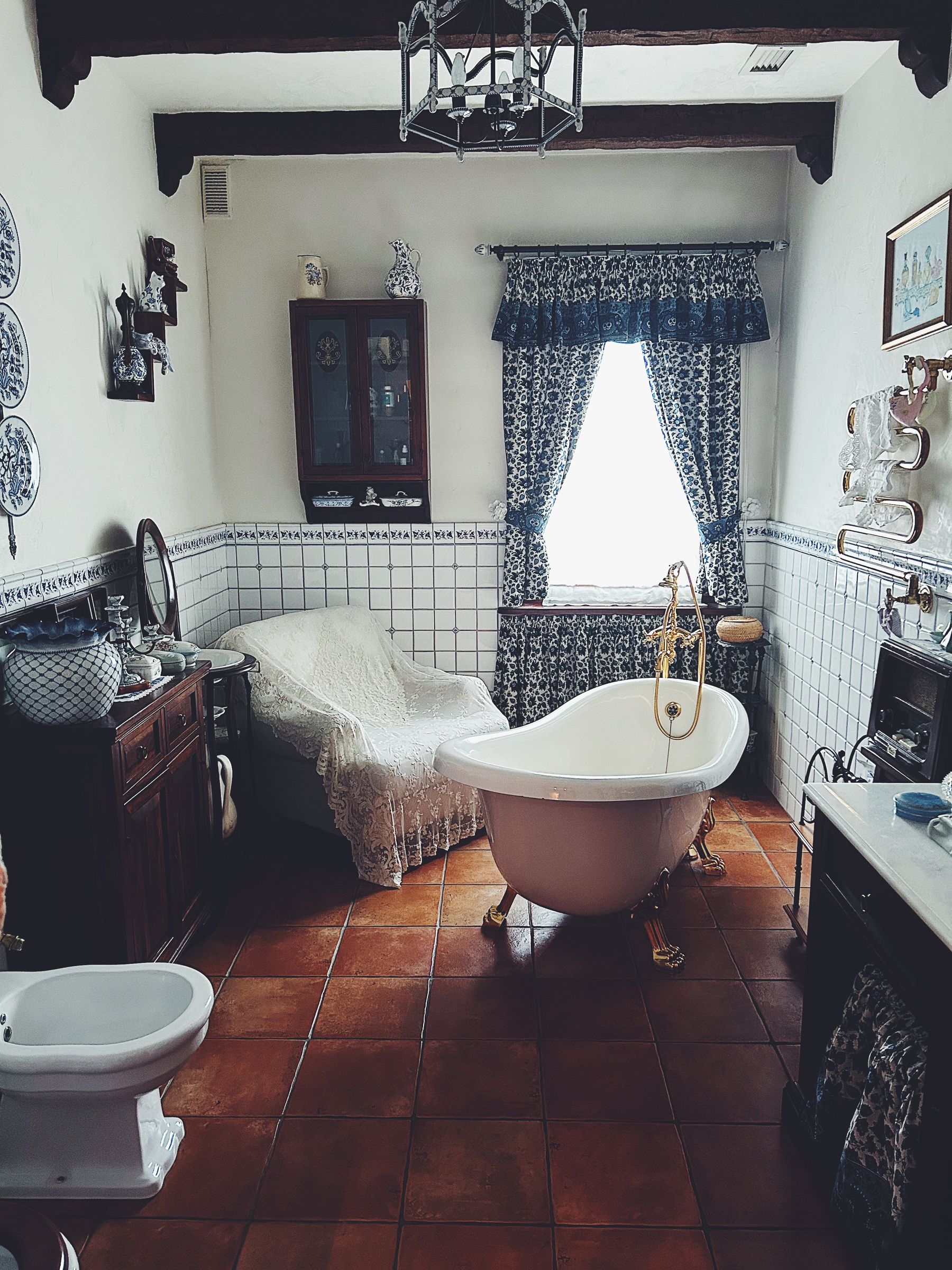
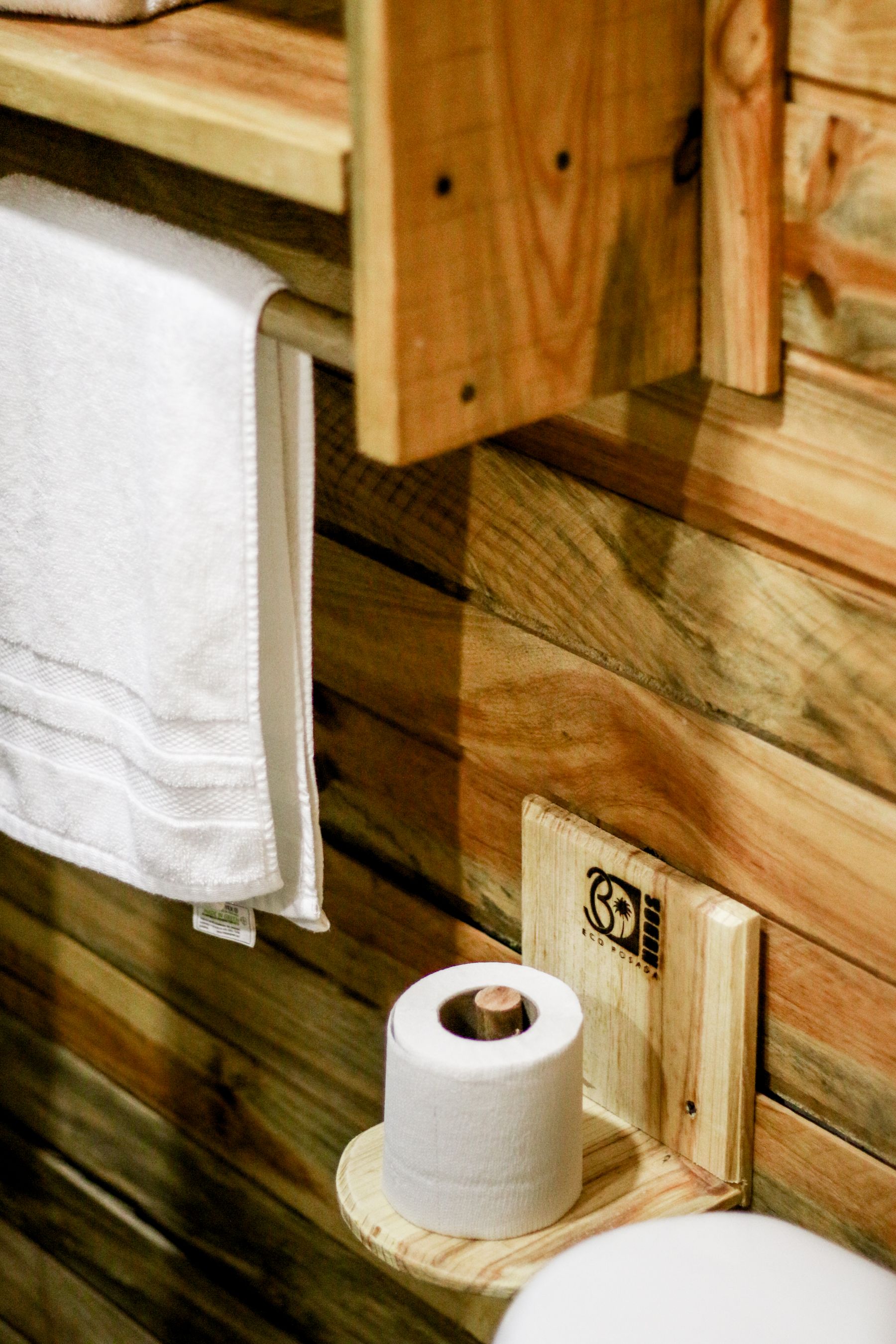
Open shelves can support the workroom quality of farmhouse style, but most bathrooms also need closed storage. Display towels, a basket or a few daily objects; conceal medicines, backups, cleaning supplies and mixed packaging. Place shelves where items remain reachable without entering a wet floor and where surfaces can be wiped. A medicine cabinet behind the mirror or drawers inside the vanity often provides more daily value than another decorative ladder shelf.
Use Baskets and Textiles as Replaceable Warmth
Woven baskets, striped towels, linen-look blinds and a washable mat can make painted and tiled surfaces feel lived in. Keep them away from constant splash and provide space to dry. Natural fiber is not automatically bathroom-proof, so use washable or moisture-tolerant alternatives where needed. One or two textile patterns are enough. Ruffles, lace, florals and distressed accessories in quantity move the room toward Shabby Chic rather than the more utilitarian farmhouse language.
Give a Small Farmhouse Bathroom One Clear Character Move
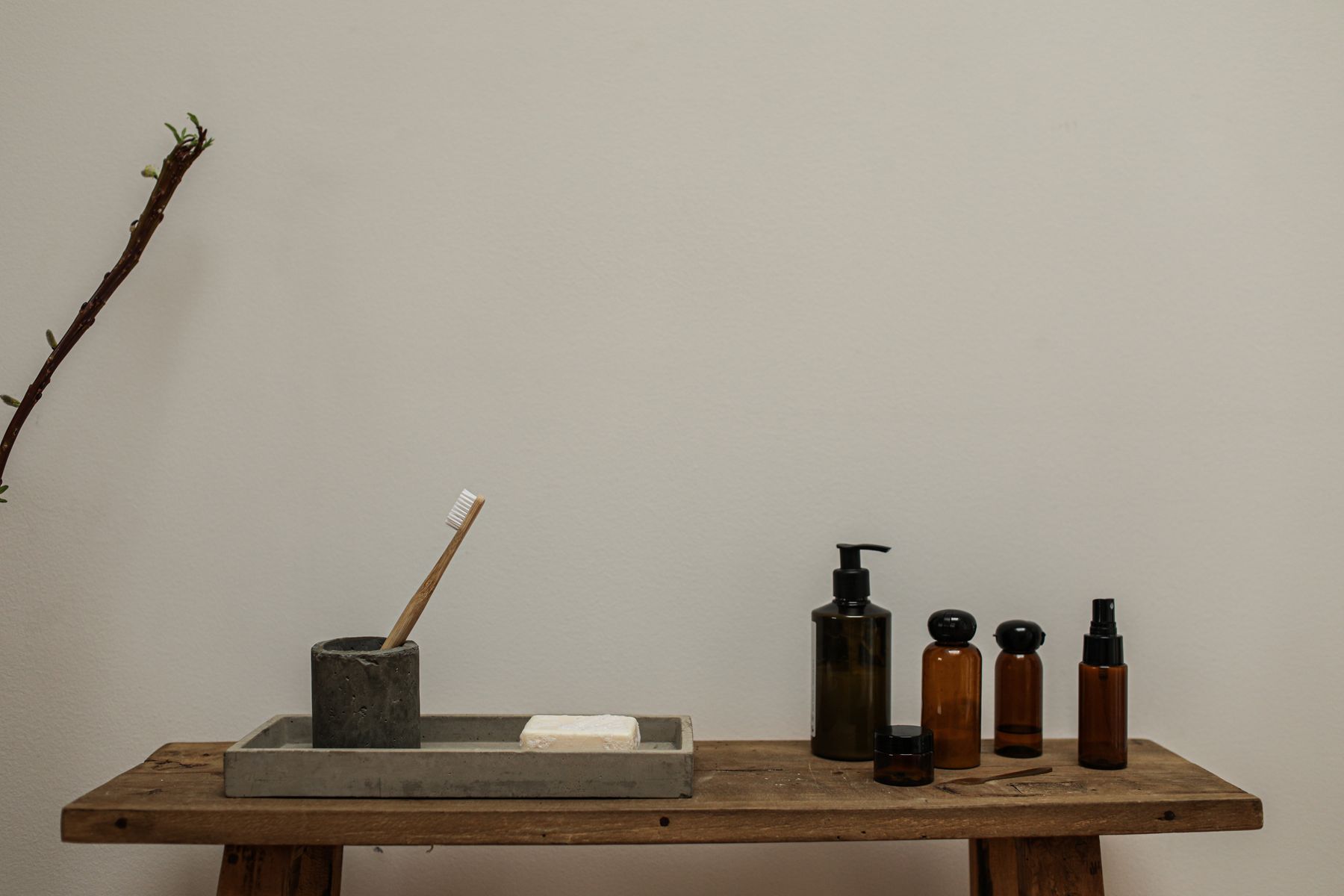
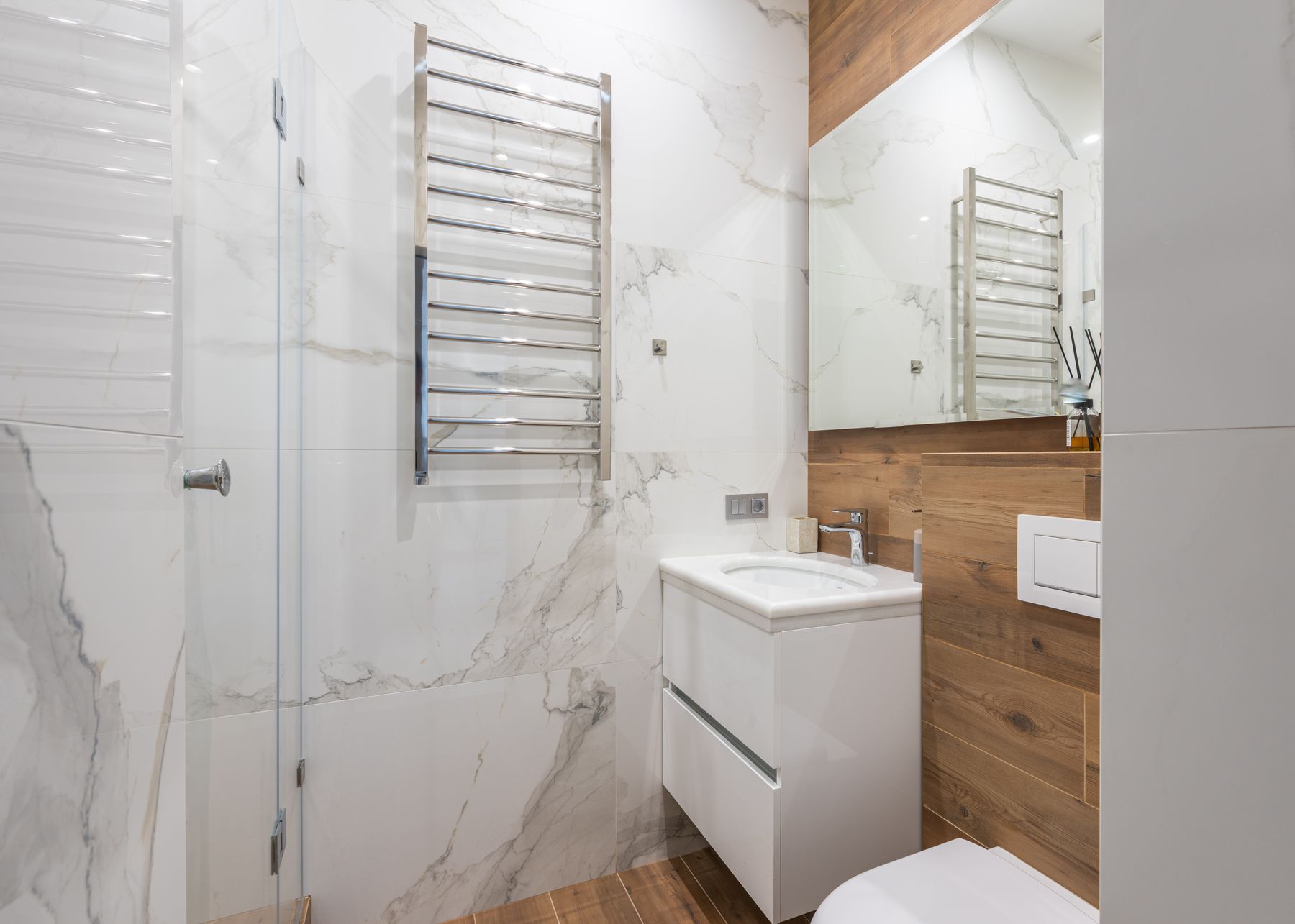
In a small bathroom, choose the element that carries the style: a painted vanity, paneling, patterned floor or collected mirror. Keep the other surfaces calm and protect the narrowest circulation point. A shallow cabinet, wall-mounted tap or outward-opening door may improve use more than another decorative feature. Related pale walls can extend sightlines, but controls and edges still need contrast. Do not reduce storage so far that toiletries permanently occupy every farmhouse-style ledge.
Let a Powder Room Take the Bolder Pattern
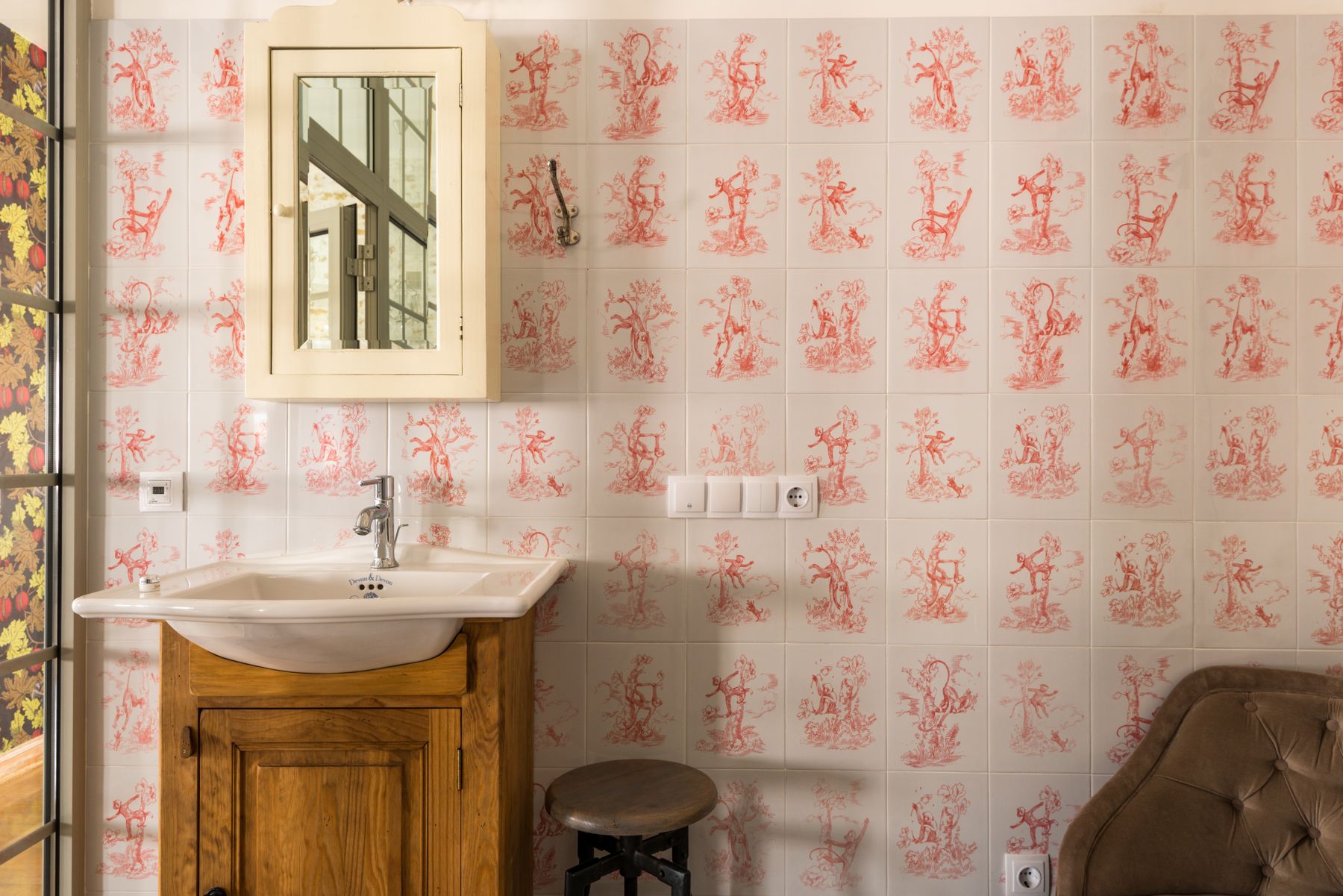
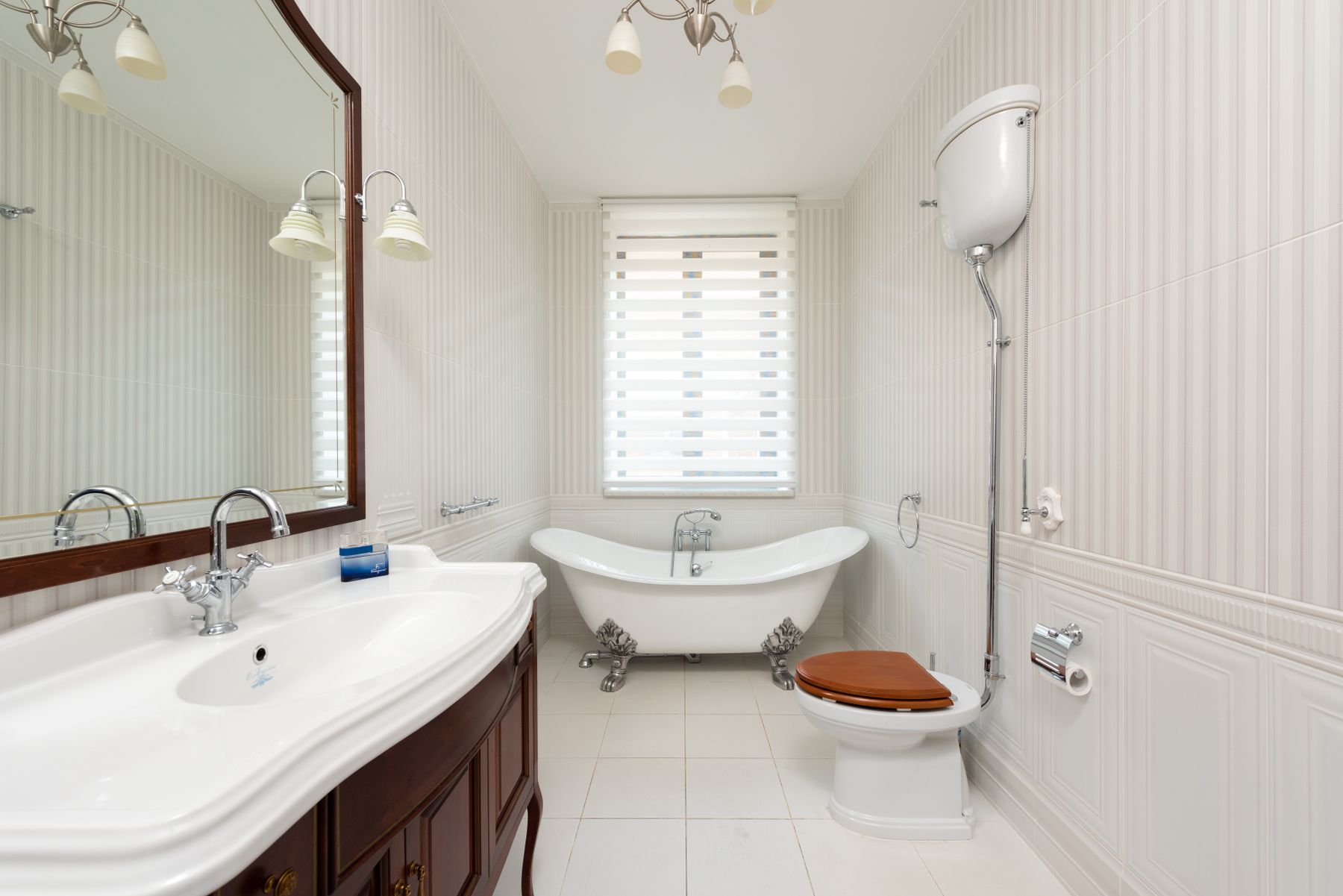
A powder room has less direct water exposure and a smaller material budget, making it a good place for wallpaper, deep paint or a distinctive mirror. Retain a useful basin, flattering light and concealed essentials rather than treating the room as a display box. A botanical, stripe or small historic motif can suggest rural character without literal farm imagery. Check ventilation, washable finish guidance and the pattern repeat before ordering.
Integrate Laundry Like Part of the Working Room
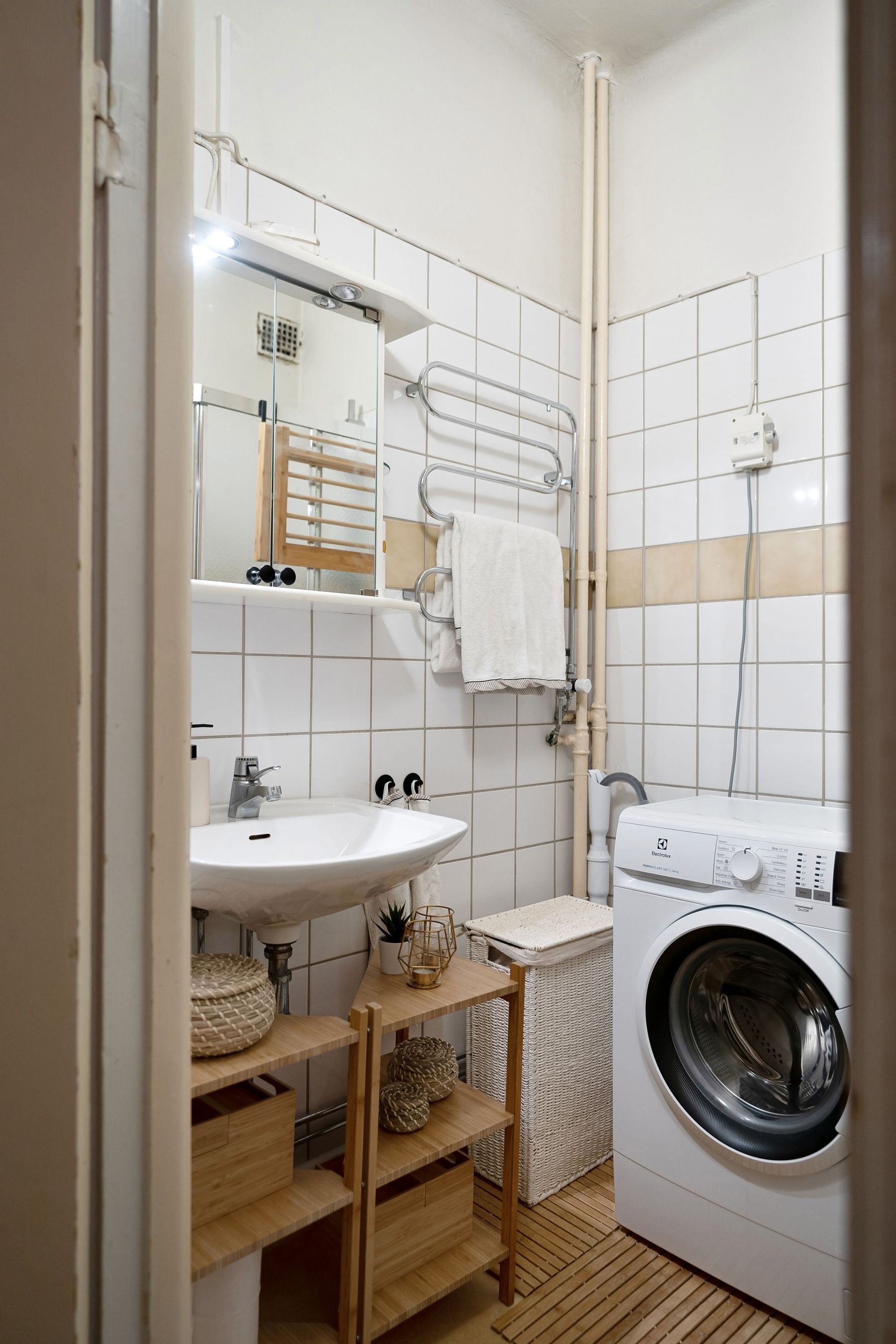
Farmhouse style is rooted in utility, so a bathroom-laundry combination can feel appropriate when it is planned honestly. Align appliances, counter and storage into one practical elevation and repeat the room's painted or timber finish. Provide ventilation, service access, safe connections, hamper space and somewhere for detergents. A curtain may conceal equipment in a low-budget update, but it should not obstruct airflow or access and needs to be washable.
Make Modern Farmhouse Cleaner, Warmer and Less Formulaic
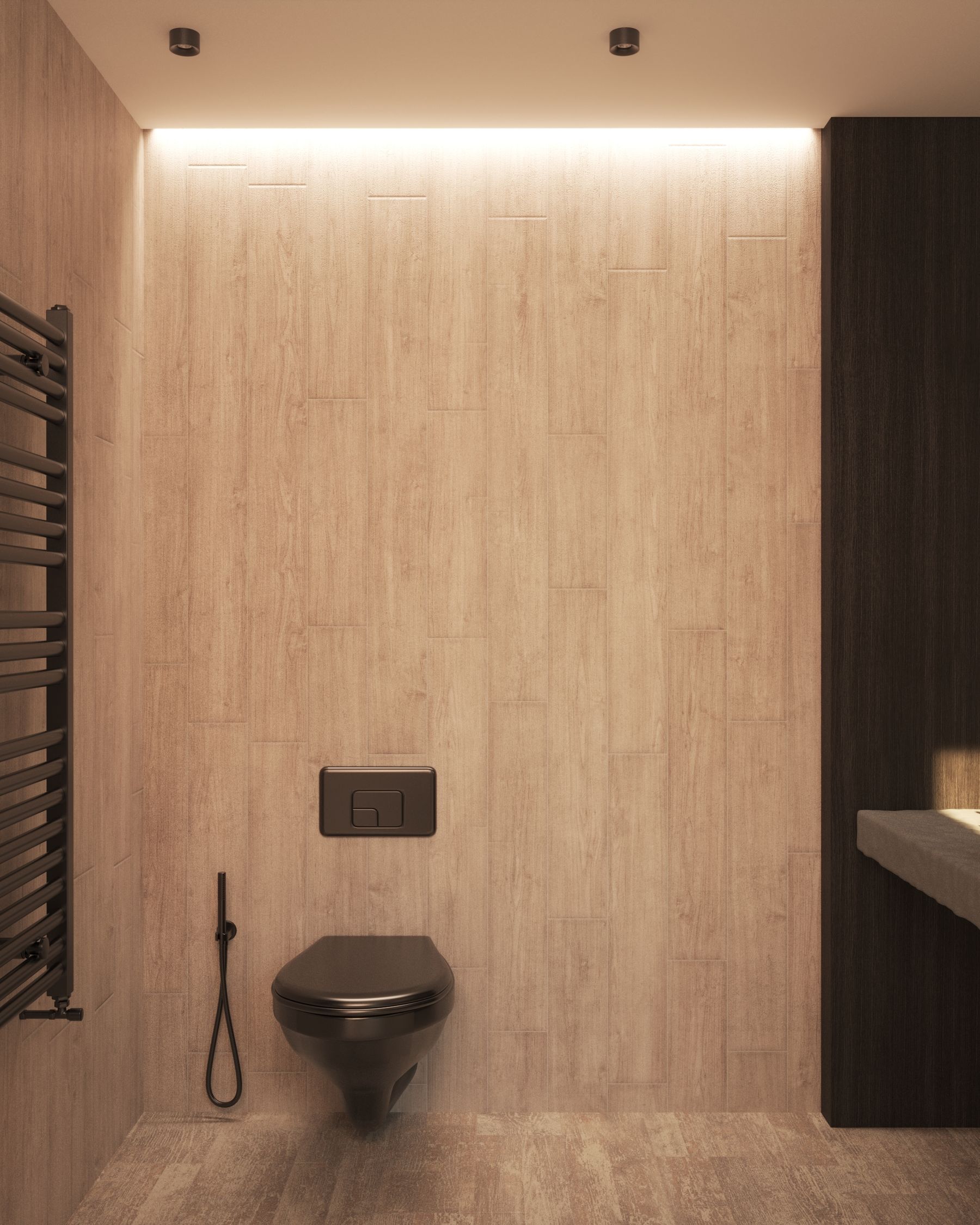
For a current modern farmhouse bathroom, simplify door profiles, use warm neutral walls, choose one wood element and reduce black outlines. Brushed nickel, bronze or aged brass can feel softer than repeating matte black at every fitting. Tactile tile or stone adds depth without signs, mason jars or faux-rustic lighting. The result should still feel practical and familiar, but it can share the clean construction and uncluttered storage of a contemporary bathroom.
Keep Rustic, Cottage, Country and French Country Distinct
Rustic emphasizes rougher stone and timber; Cottage is softer, smaller-scale and often more whimsical; Country is a broad rural family; French Country combines rustic materials with more refined curves, ornament and textiles. Farmhouse is most defensible when it stays practical: straightforward cabinets, useful shelving, familiar fixtures and a balance of painted and natural surfaces. Borrow one adjacent note if it suits the building, but avoid collapsing every rural style into the same room.
Preserve Accessibility Within the Old-House Look
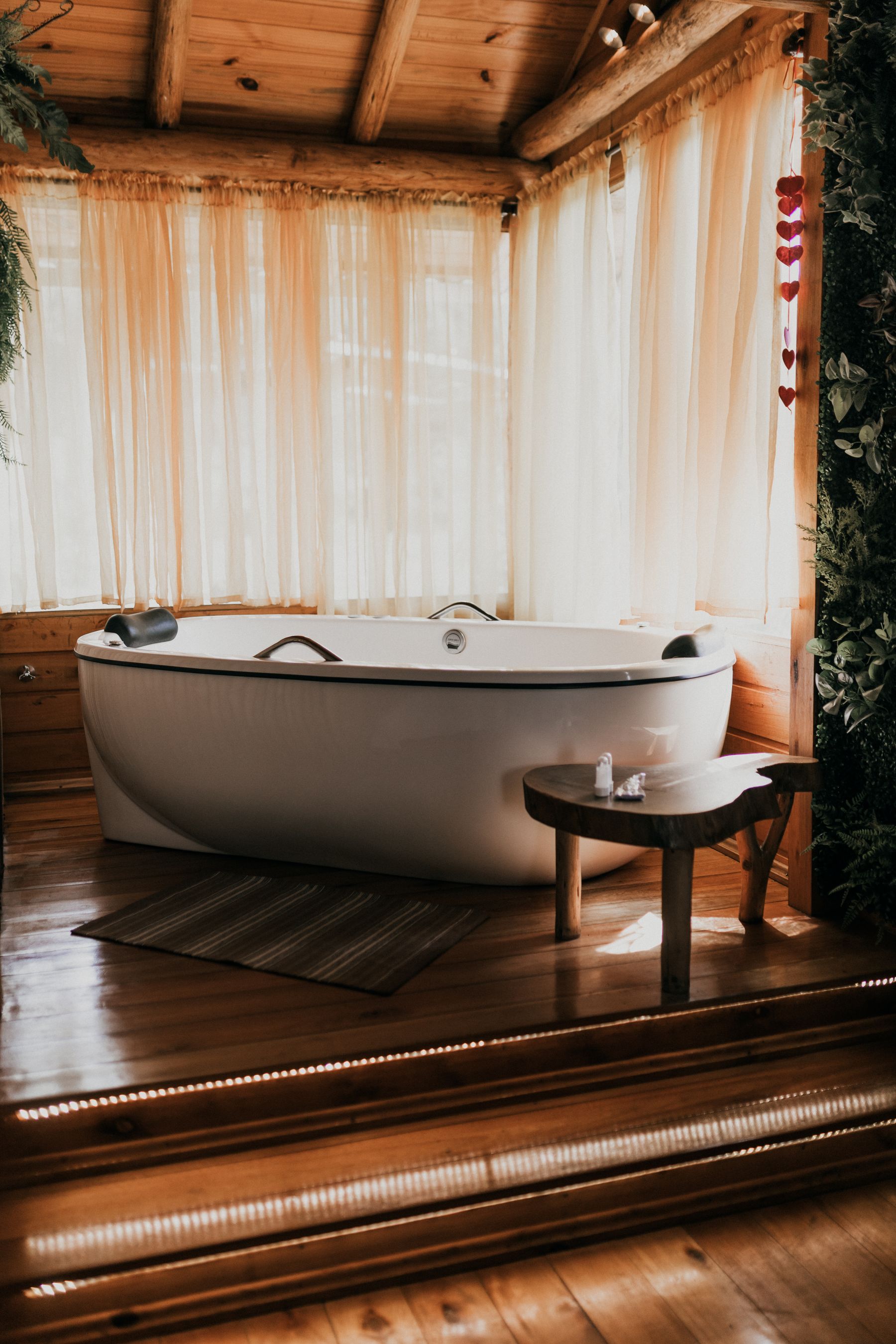
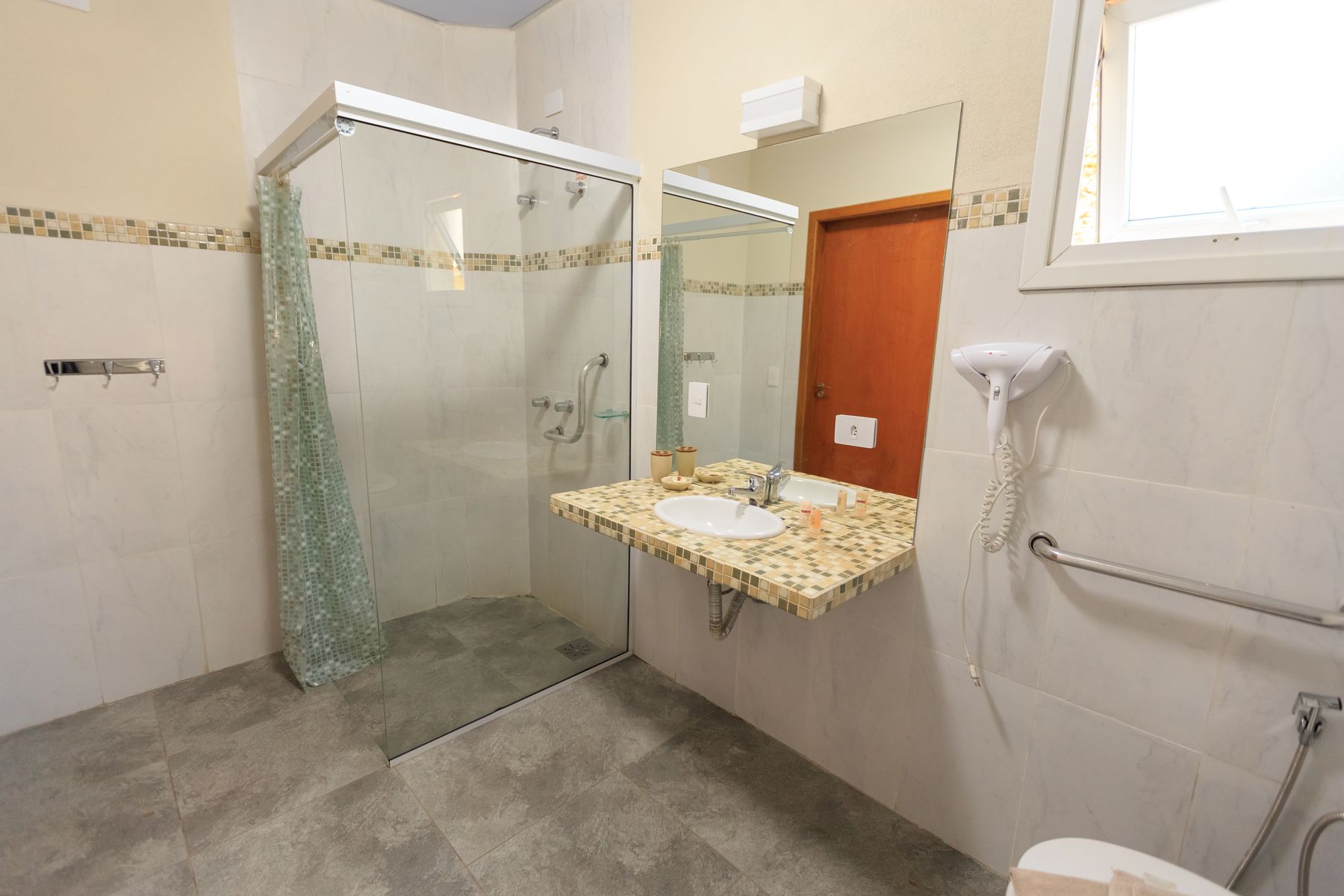
A classic bath and furniture-like vanity should not create difficult entry, hidden controls or narrow routes. Plan non-slip flooring, reachable storage, comfortable vanity height, support reinforcement, night lighting and enough contrast at edges and controls. A walk-in shower can still use simple farmhouse tile and warm metal. Accessibility requirements depend on the users, project and jurisdiction, so use qualified design guidance rather than copying a photograph.
Ventilate Painted Wood, Textiles and Grout Properly
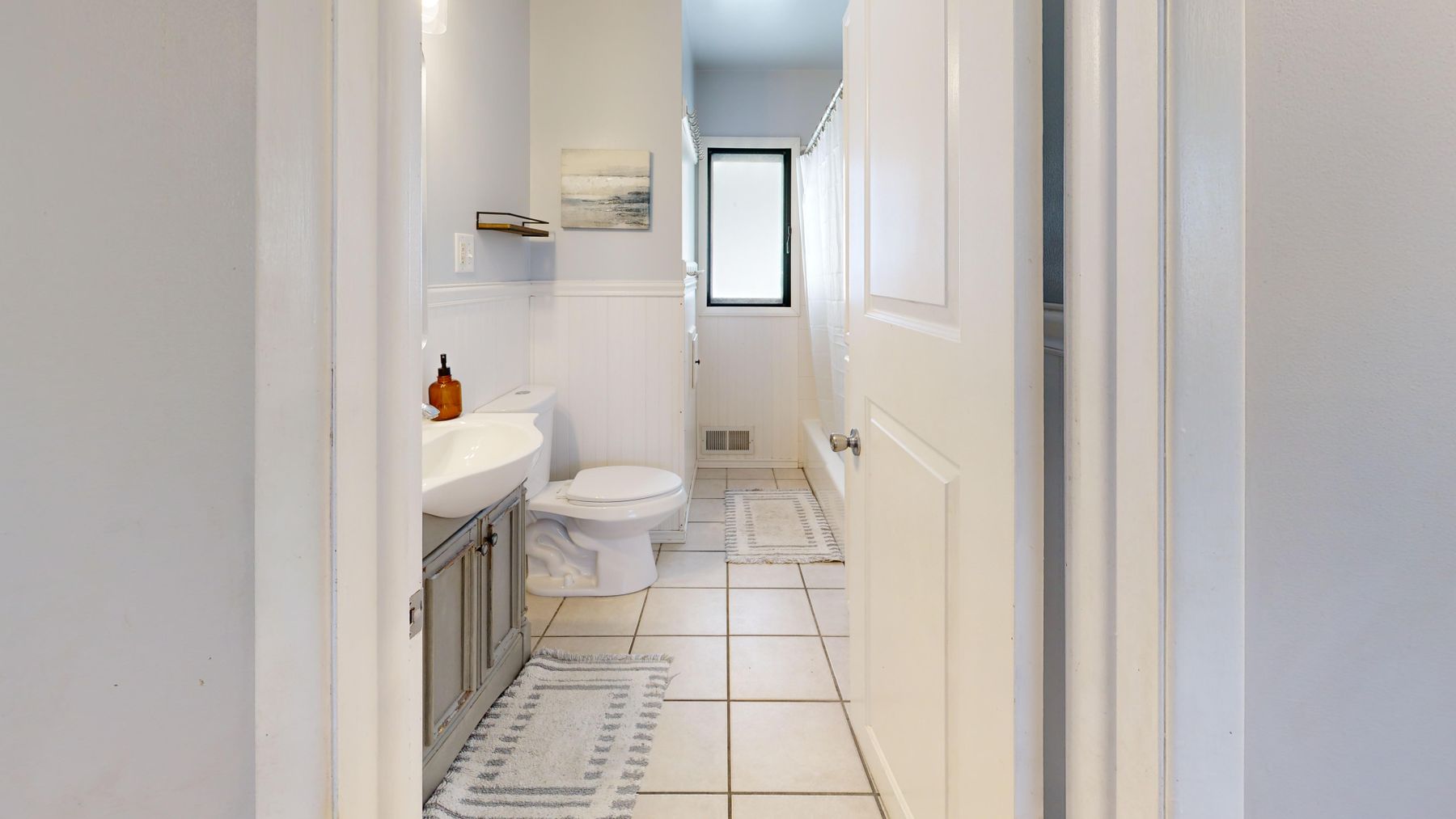
Farmhouse materials reveal humidity problems quickly: panel joints swell, paint marks, baskets smell and pale grout discolors. Size and duct extraction appropriately, provide make-up air, and use timer or humidity control where suitable. A window helps with daylight but is not always a reliable ventilation strategy. Leave towels room to dry and avoid packing furniture tightly against damp walls. Technical moisture control is what makes natural and painted finishes sustainable in daily use.
Plan Cleaning Around Texture and Patina
Patina is acceptable aging; mildew, failed sealant and water damage are not. Decide which surfaces may mellow and which must stay crisp. Textured tile, unlacquered metal, natural stone and old timber each require different care. Keep product guidance, use compatible cleaners and provide access behind freestanding fixtures. Limit tiny decorative objects that must be moved every time the room is wiped. A convincing farmhouse bathroom should become richer through use, not merely harder to clean.
Finish With the Cliché Removal Test
Before finalizing, mentally remove the signs, jars, ladders, black labels and deliberately distressed accessories. If the room still reads as warm, practical and rooted in familiar construction, the design is doing real work. If not, improve one permanent decision: the vanity proportion, paneling height, floor pattern, mirror or light. Then check storage, splash zones, clearances and cleaning once more. Farmhouse character should survive without a caption telling the viewer what style it is.