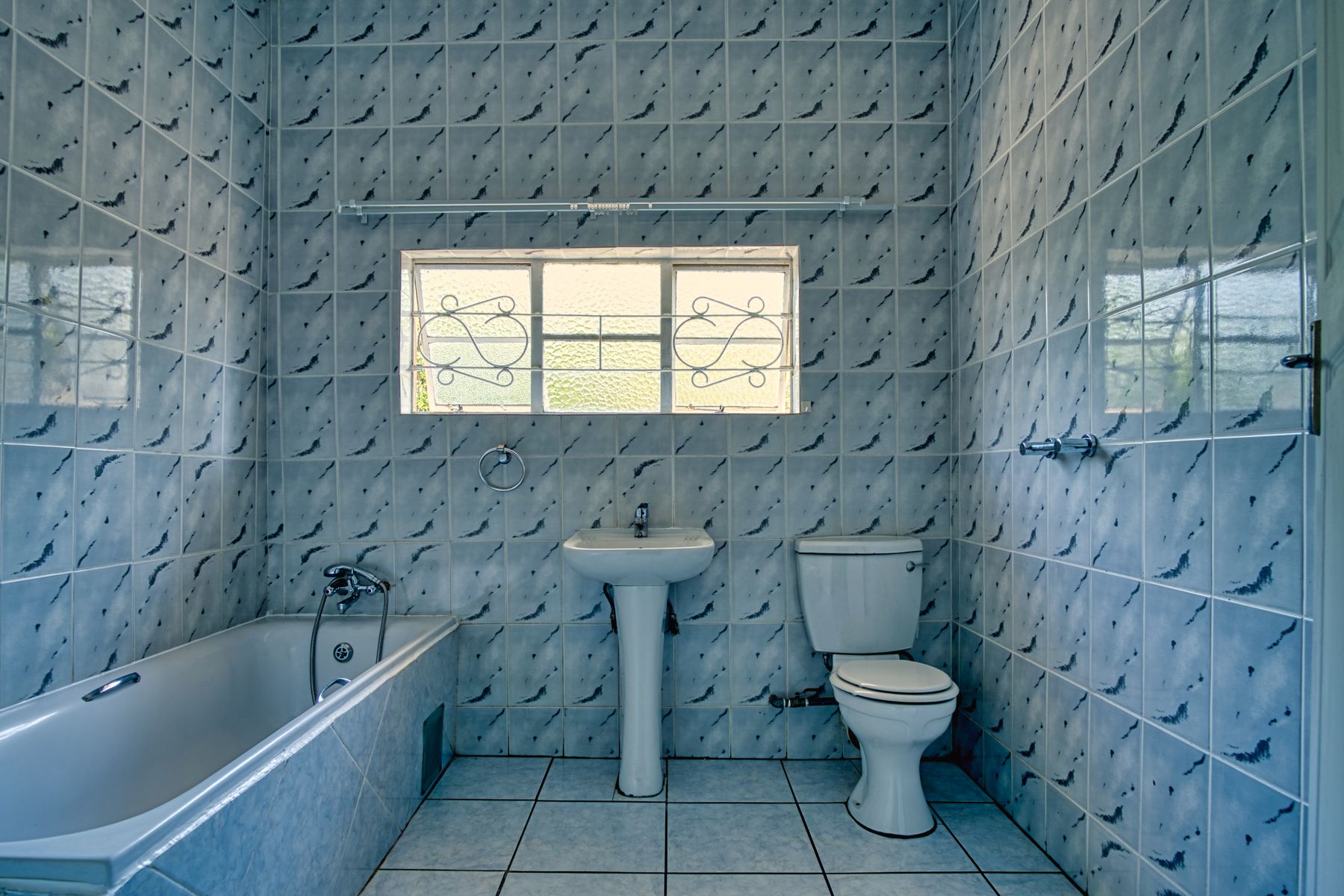
Decide Whether Blue Should Recede or Lead
Before comparing shades, decide whether blue should behave like a background, a bounded wet-zone field or the first thing noticed from the doorway. A greyed powder blue can recede across a large surface, cobalt can lead inside a shower and navy can give a vanity or wall real mass. The role determines the useful saturation more clearly than a color name alone.
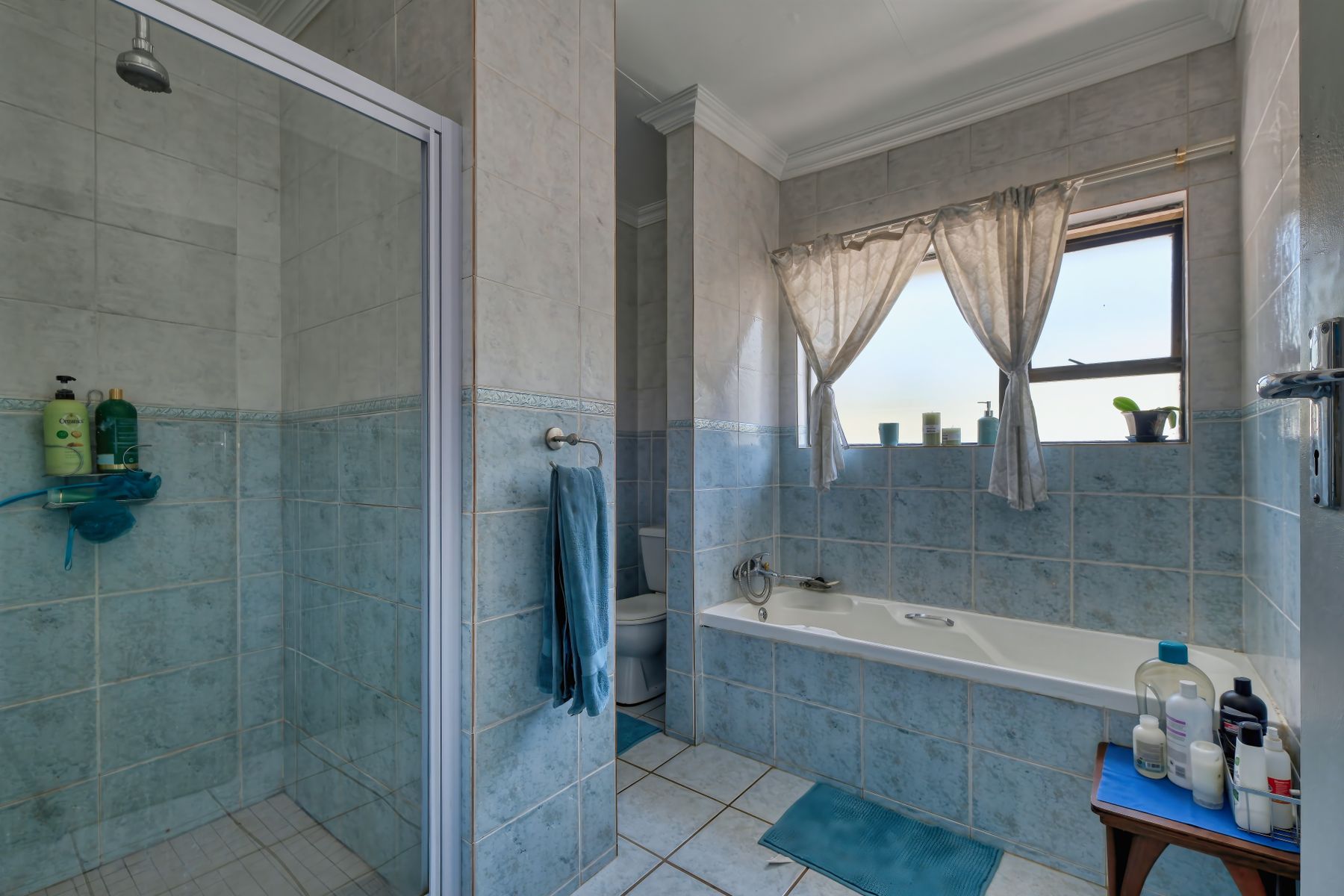
Separate Powder, Denim, Teal and Navy by Job
Different blue families solve different design problems. Powder and blue-grey can cover larger areas quietly; denim and slate can bridge stone and white ceramic; teal introduces a second undertone that needs simpler neighbors; navy creates a dark architectural mass. Treat these as roles rather than as a progression you need to include in one room.
Use Paint for a Lower-Commitment Blue Surface
Paint can place blue across a full wall, ceiling or upper zone without committing every surface to tile. Keep direct splash areas properly protected and choose a bathroom-suitable system for the substrate and ventilation conditions. A painted vanity wall is also easier to revise than a saturated tiled envelope. For a restrained update, improve the mirror and lighting at the same time so the new blue reads accurately.
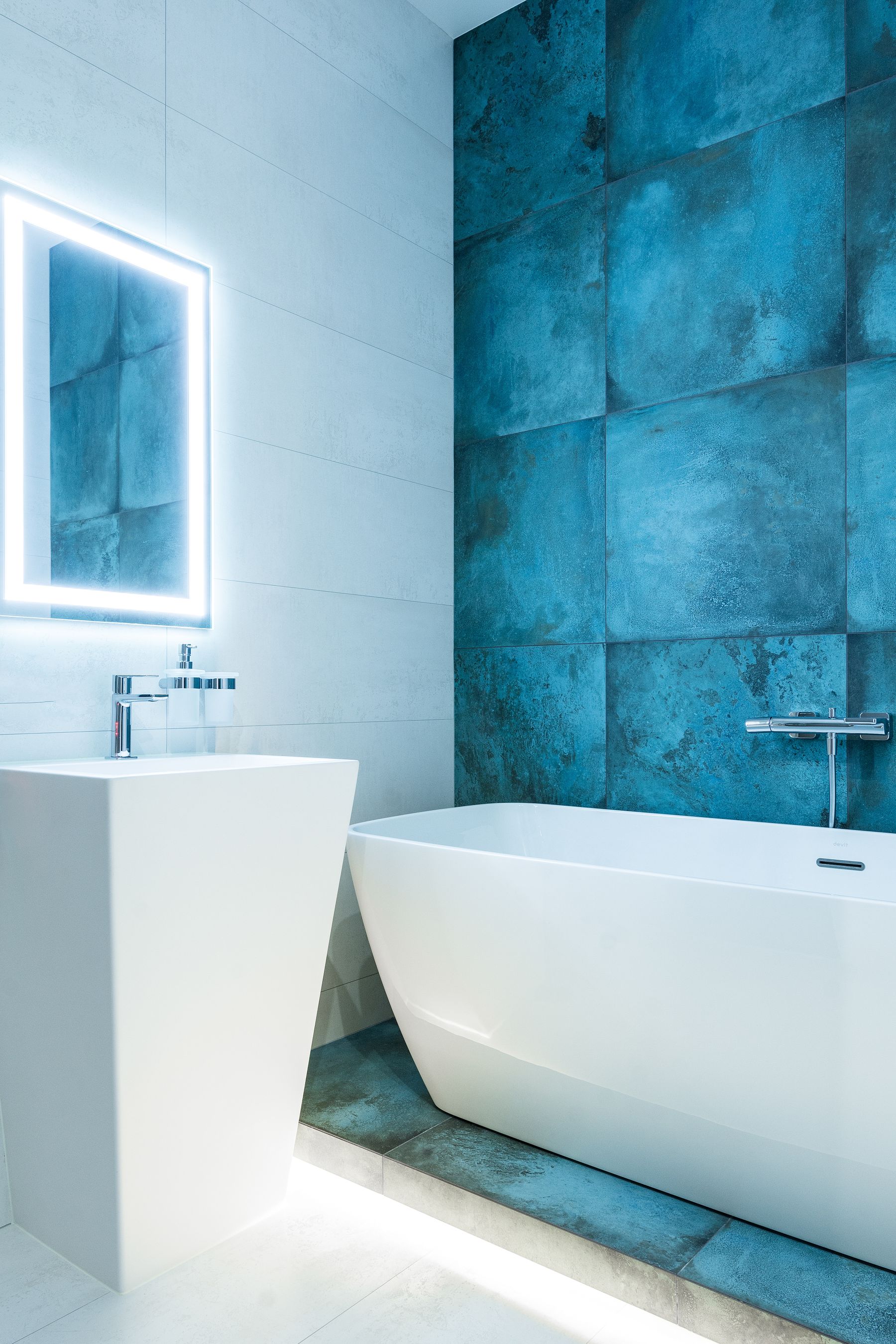
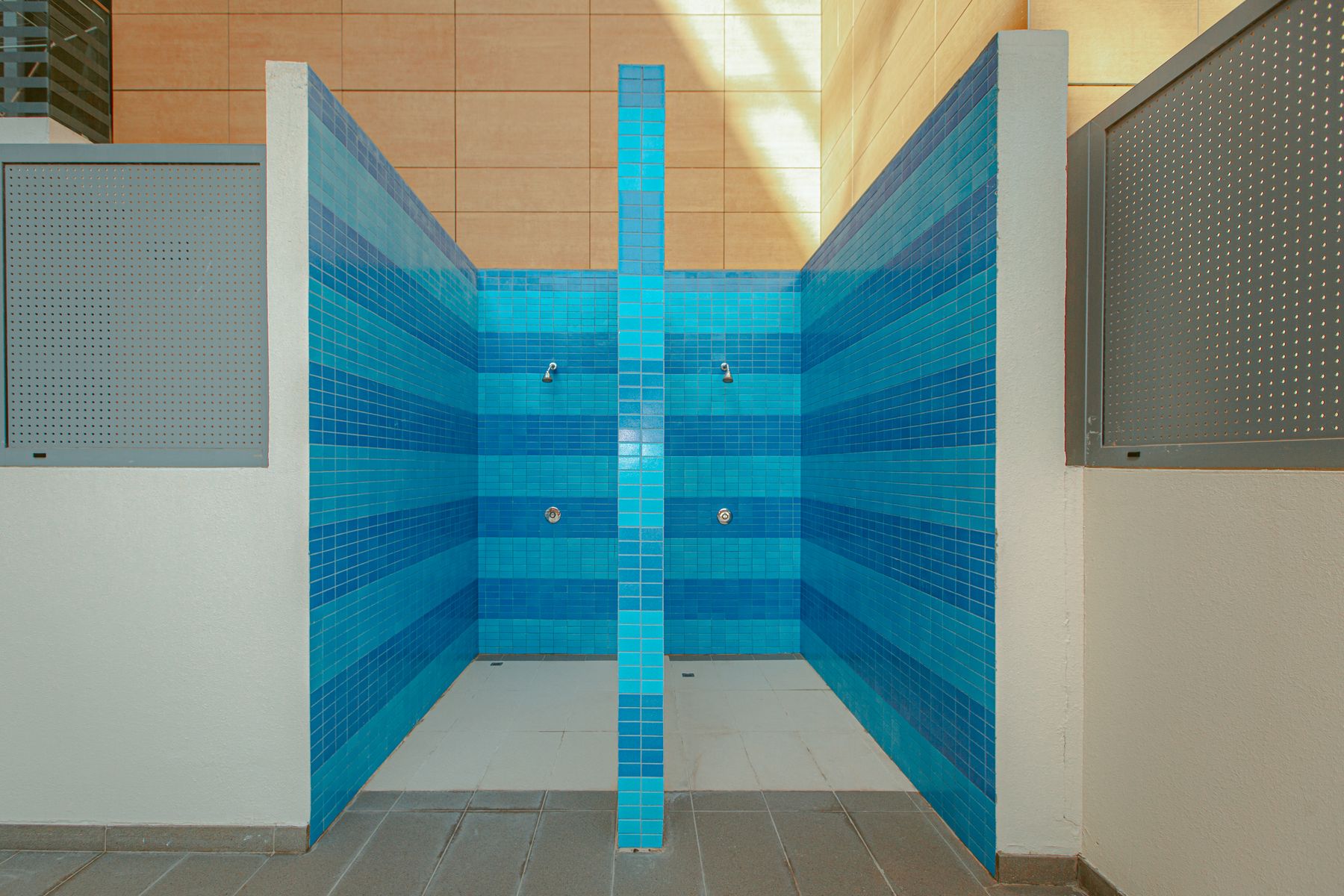
Let the Wet Zone Carry the Highest Saturation
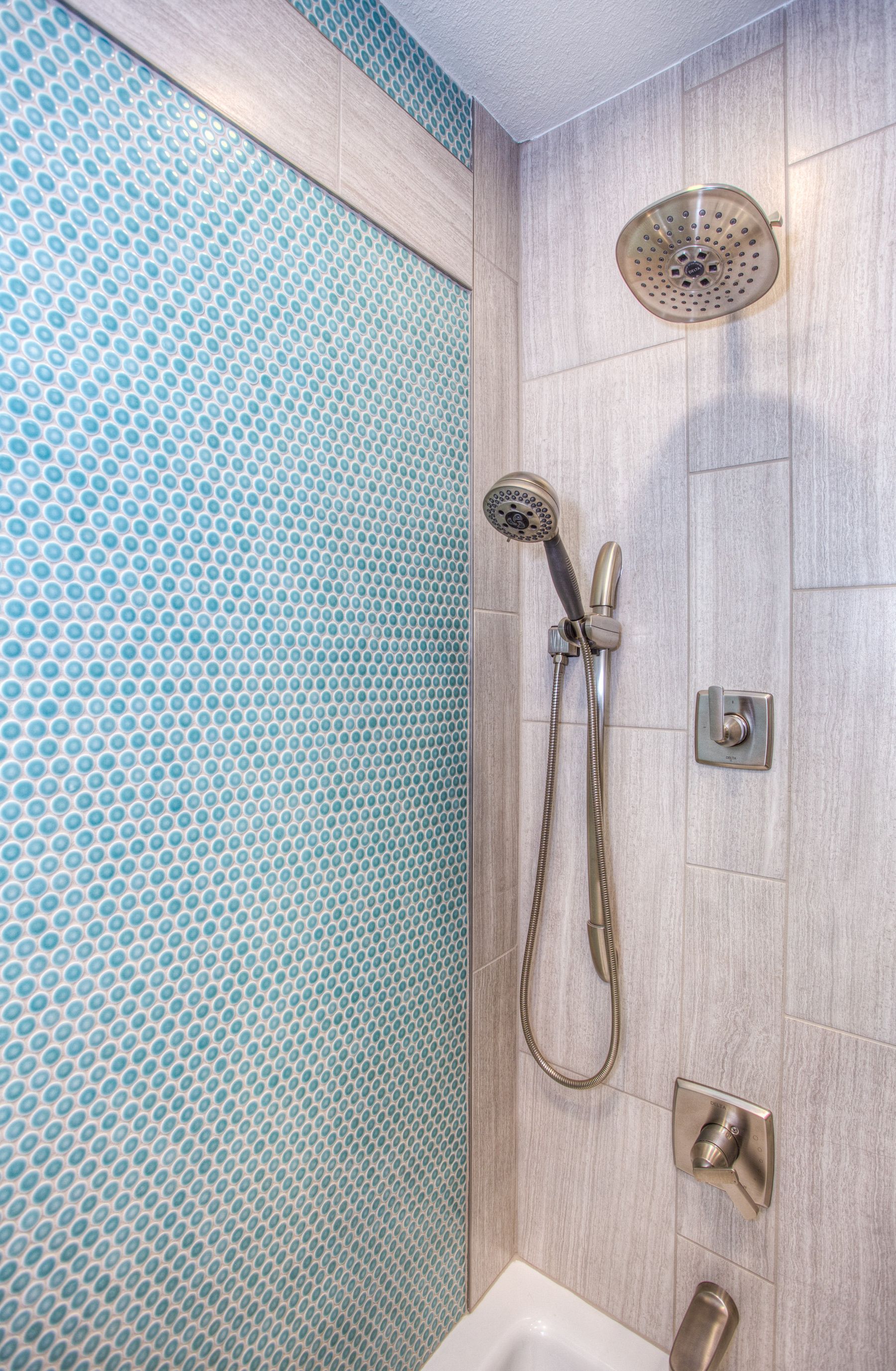
A shower offers a natural boundary for stronger blue because glass, tile joints and the wet-room geometry already define the zone. Cobalt, teal or saturated glazed tile can become one concentrated event while the dry vanity and walls remain quieter. The water and reflection will add movement, so avoid asking nearby surfaces to compete at the same intensity.
Let Grout Change the Blue Tile Rhythm
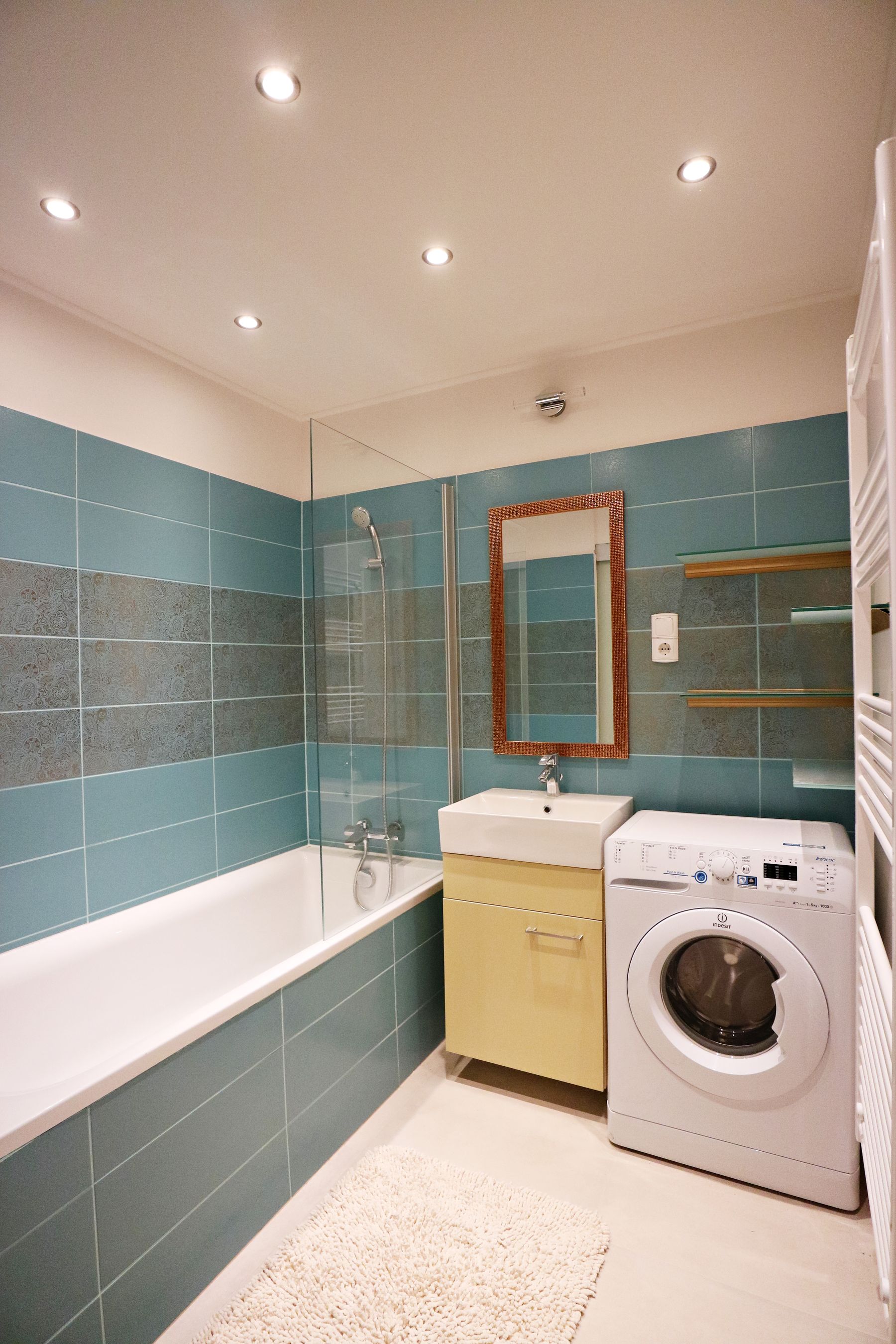
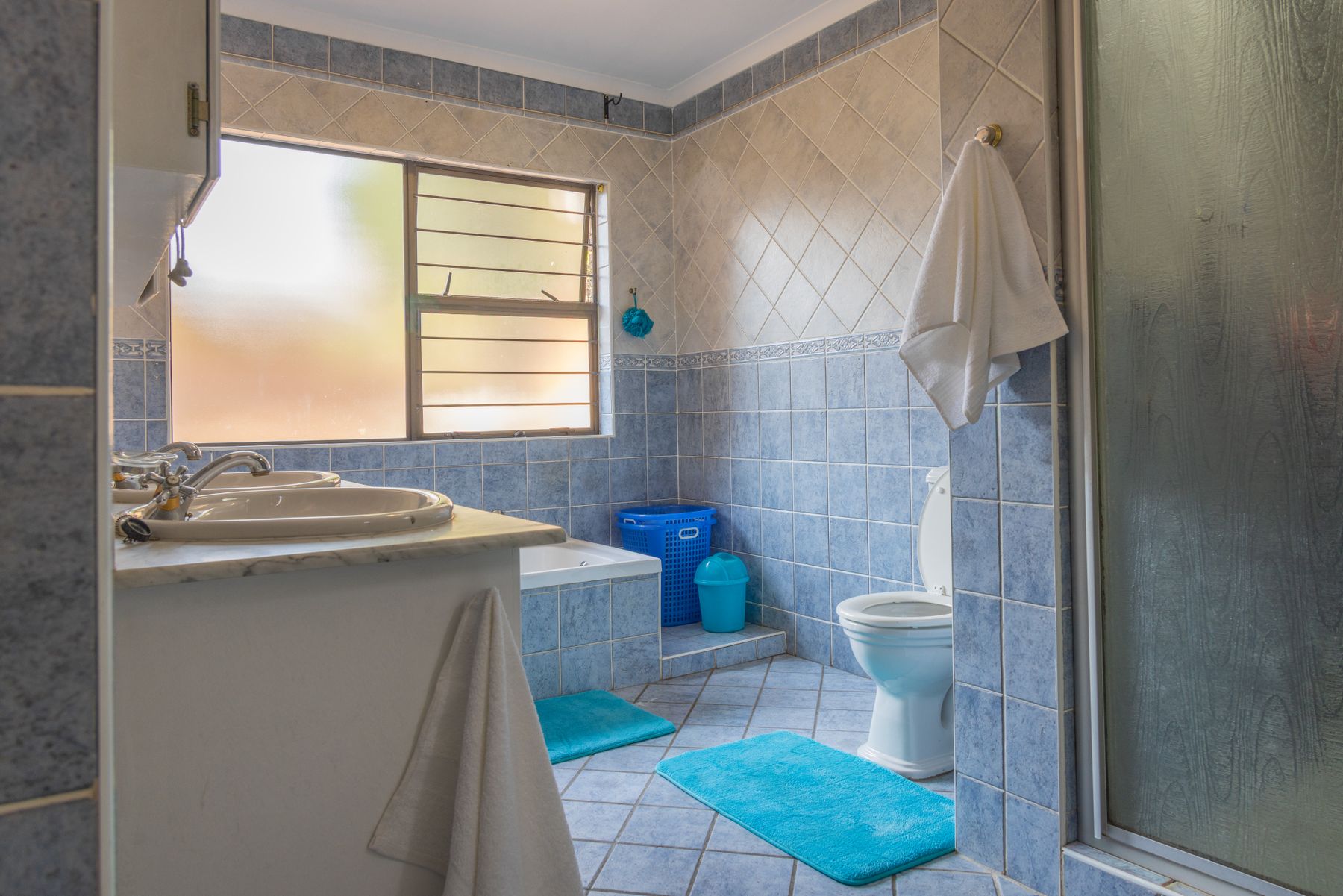
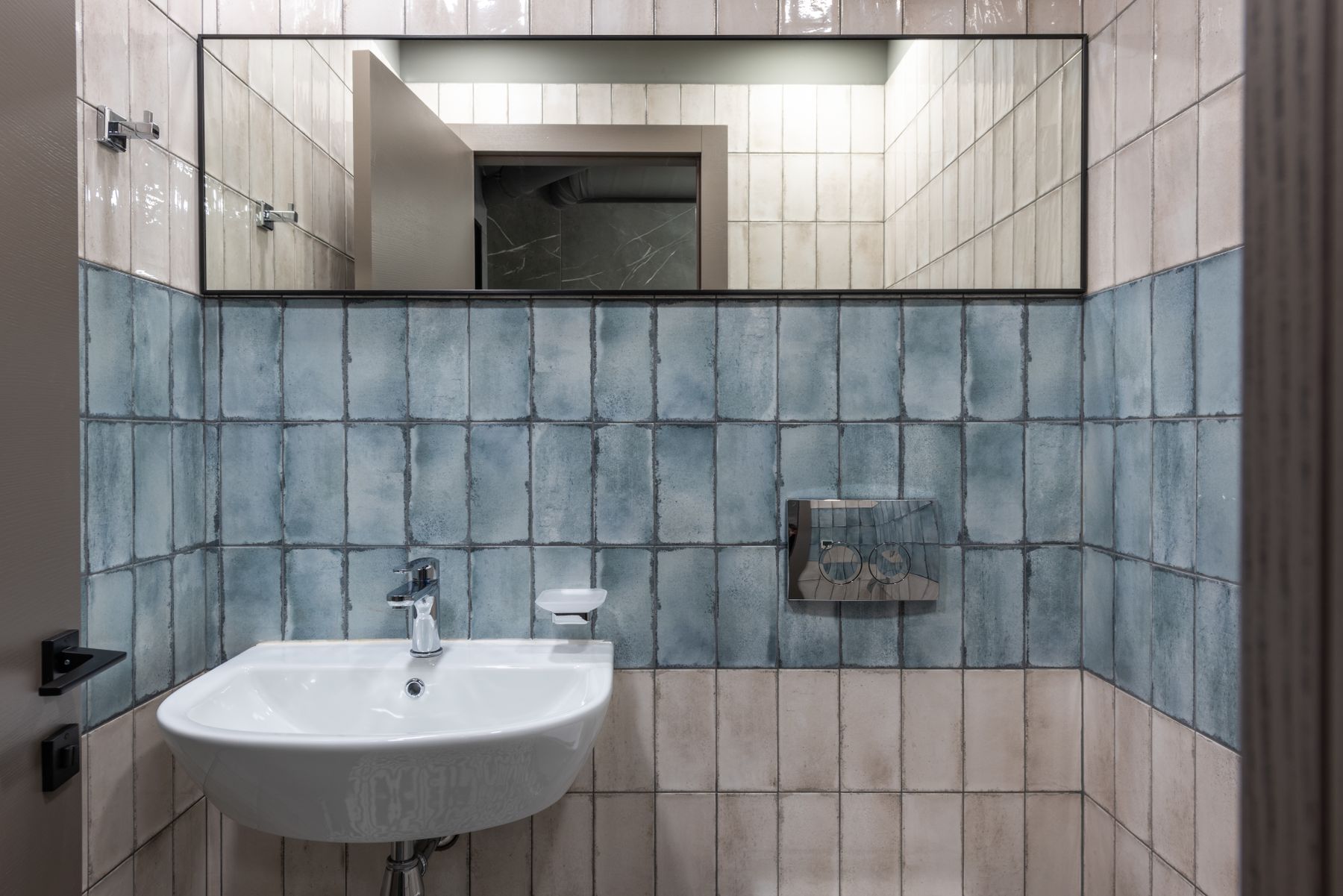
A close blue or grey grout lets tile read as a continuous color field; pale grout reveals each unit; a dark joint can make the geometry much more graphic. The best choice also needs to age credibly around water and cleaning products. Build a sample with the actual tile, joint width, sealant and grout before ordering. [Bathroom Tile Ideas](/ideas/bathroom-tile-ideas/) provides further format and layout comparisons.
Control the Heritage Signal in Blue Tile
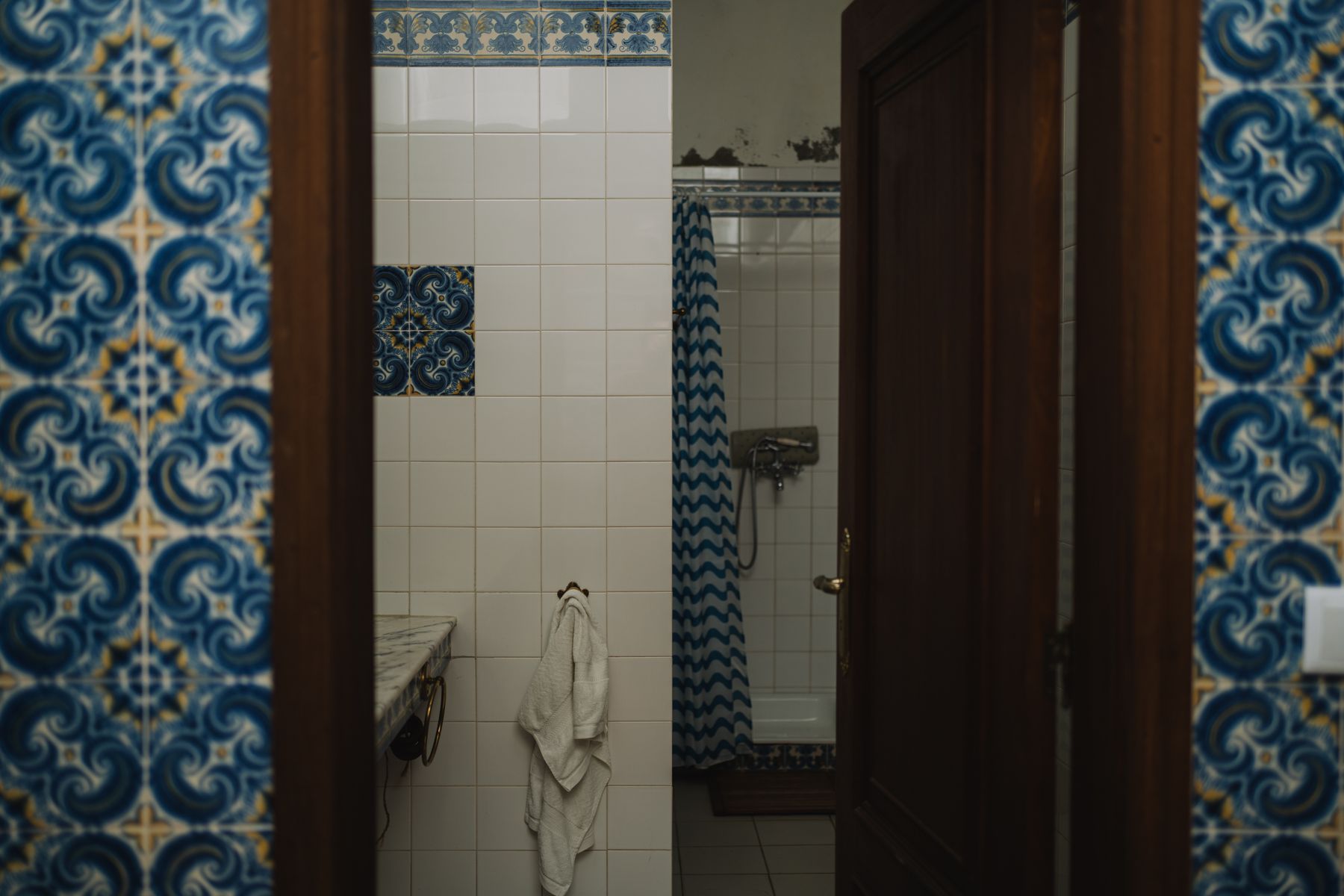
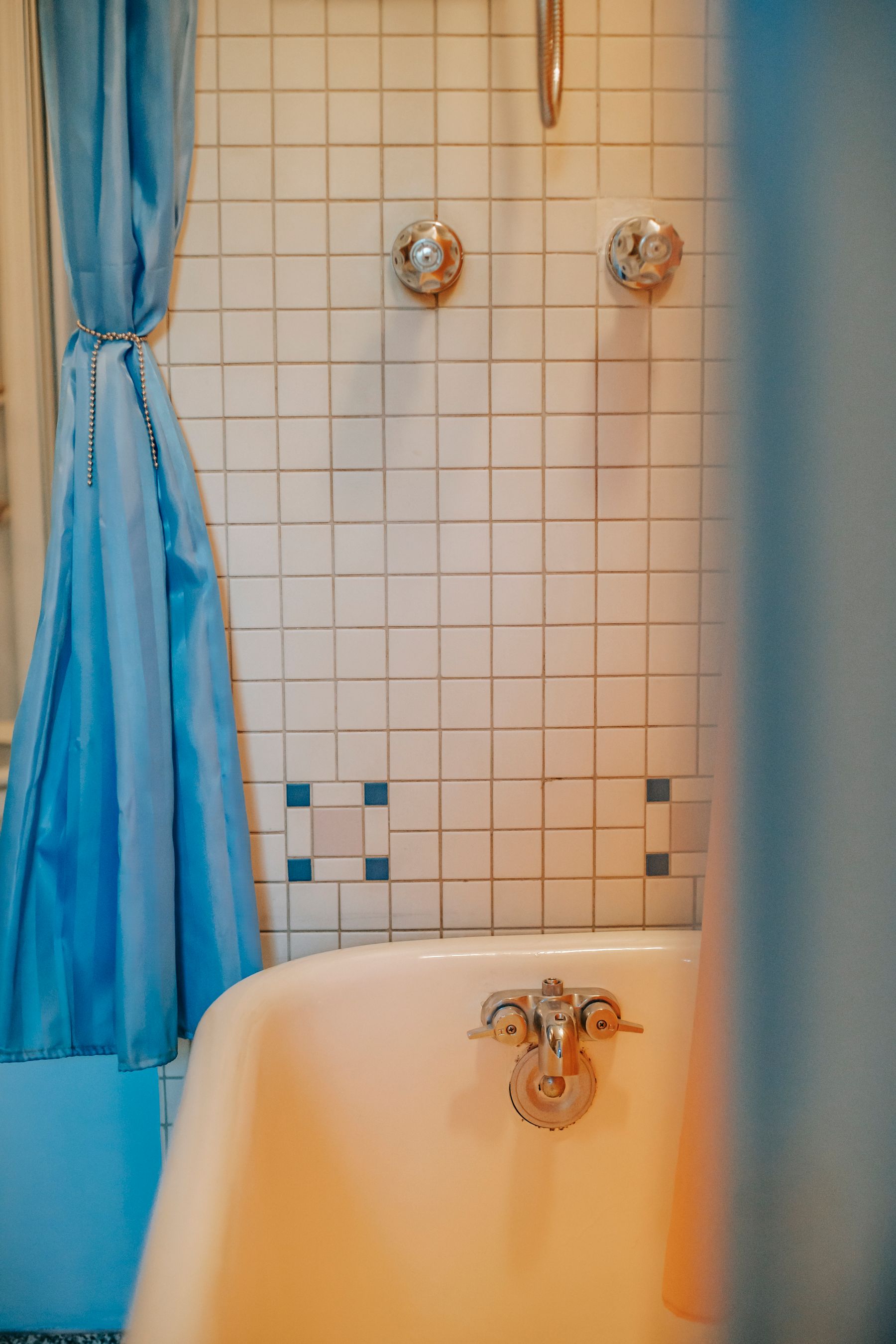
Certain blue tiles, especially patterned or glazed forms, can push the room toward heritage, Mediterranean or traditional references. That may be desirable, but the effect should come from a conscious material set. Pair heritage-coded tile with simpler contemporary cabinetry or restrained metal if you want to keep the room current, rather than repeating period cues in every fitting.
Avoid Accidental Coastal Coding
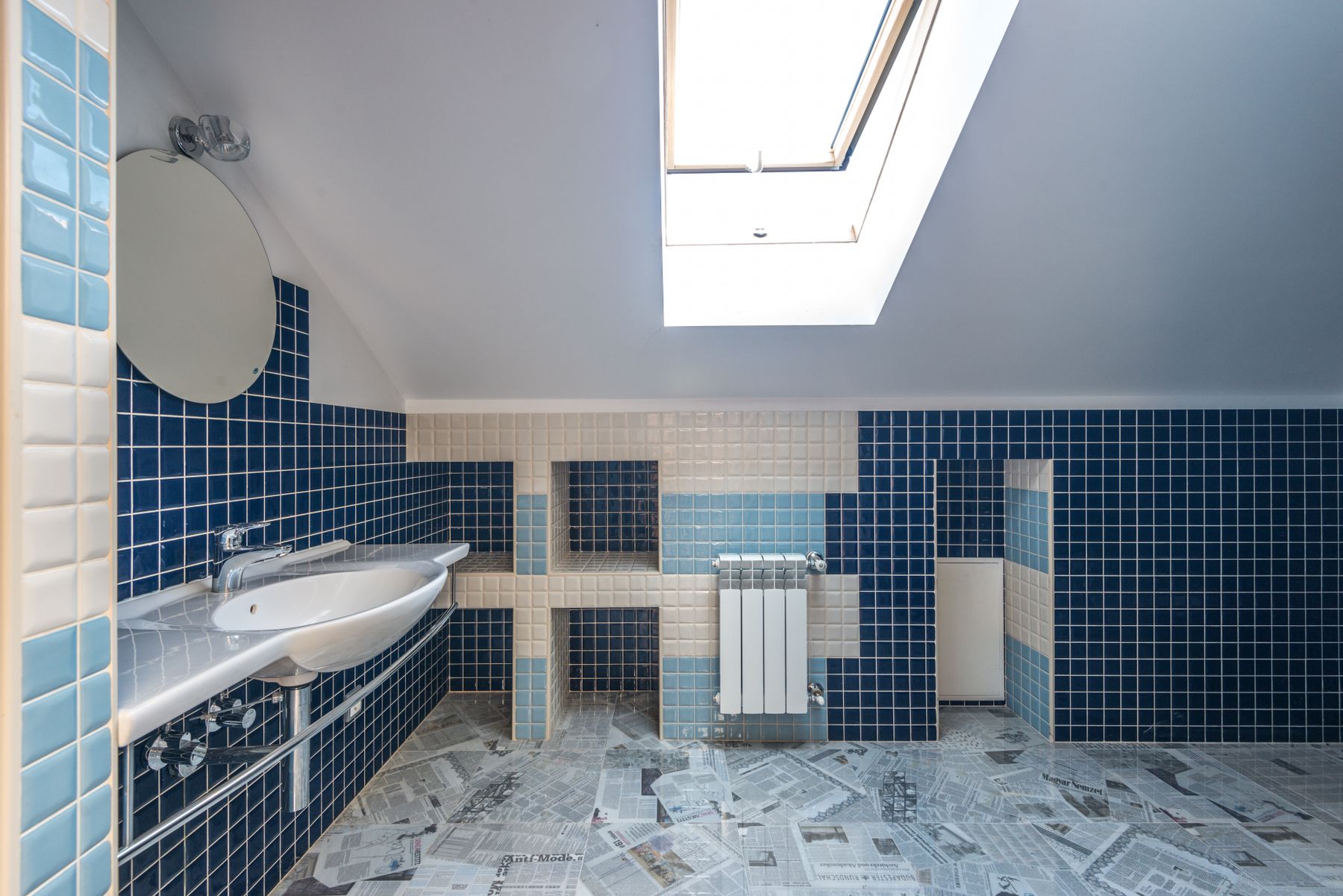
Blue and white can read coastal even when that was not the intention, especially when combined with very pale timber, woven accessories and bright white stone. If the goal is urban, graphic or formal, change one supporting cue: richer timber, mineral stone, stainless steel, darker grout or a more architectural tile layout can shift the same blue elsewhere.
Use Mosaic Where Fine Texture Earns Its Grout
Blue mosaic can blend several tones and curve around small surfaces, but the greater joint density changes cleaning, grip and long-term appearance. Use it where its fine scale is appreciated up close: a niche, shower floor or bounded wall. Confirm that the tile and complete assembly suit the application. A mosaic covering every surface may trade useful texture for visual noise and heavier maintenance.
Frame a White Bathtub With Blue
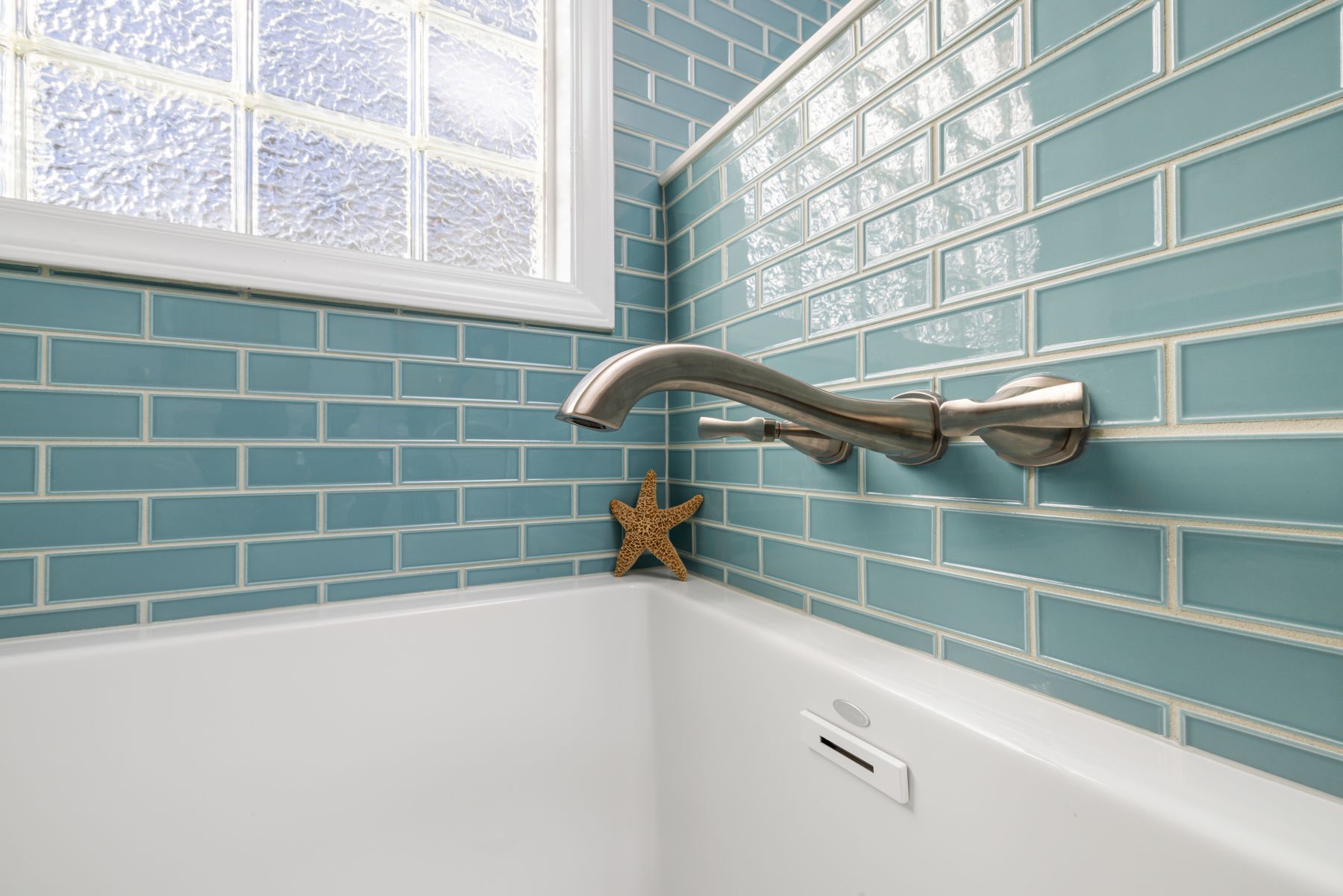
A blue wall or surround can make a white bathtub read as a crisp form without requiring blue cabinetry and flooring too. Decide whether the bath zone is the room's principal view, then align tile joints, ledges and controls around it. Freestanding and integrated baths have different clearance, cleaning and storage implications; use [Bathtub Ideas](/ideas/bathtub-ideas/) to resolve the type before styling the backdrop.
Use White Ceramic as a Consistent Reference
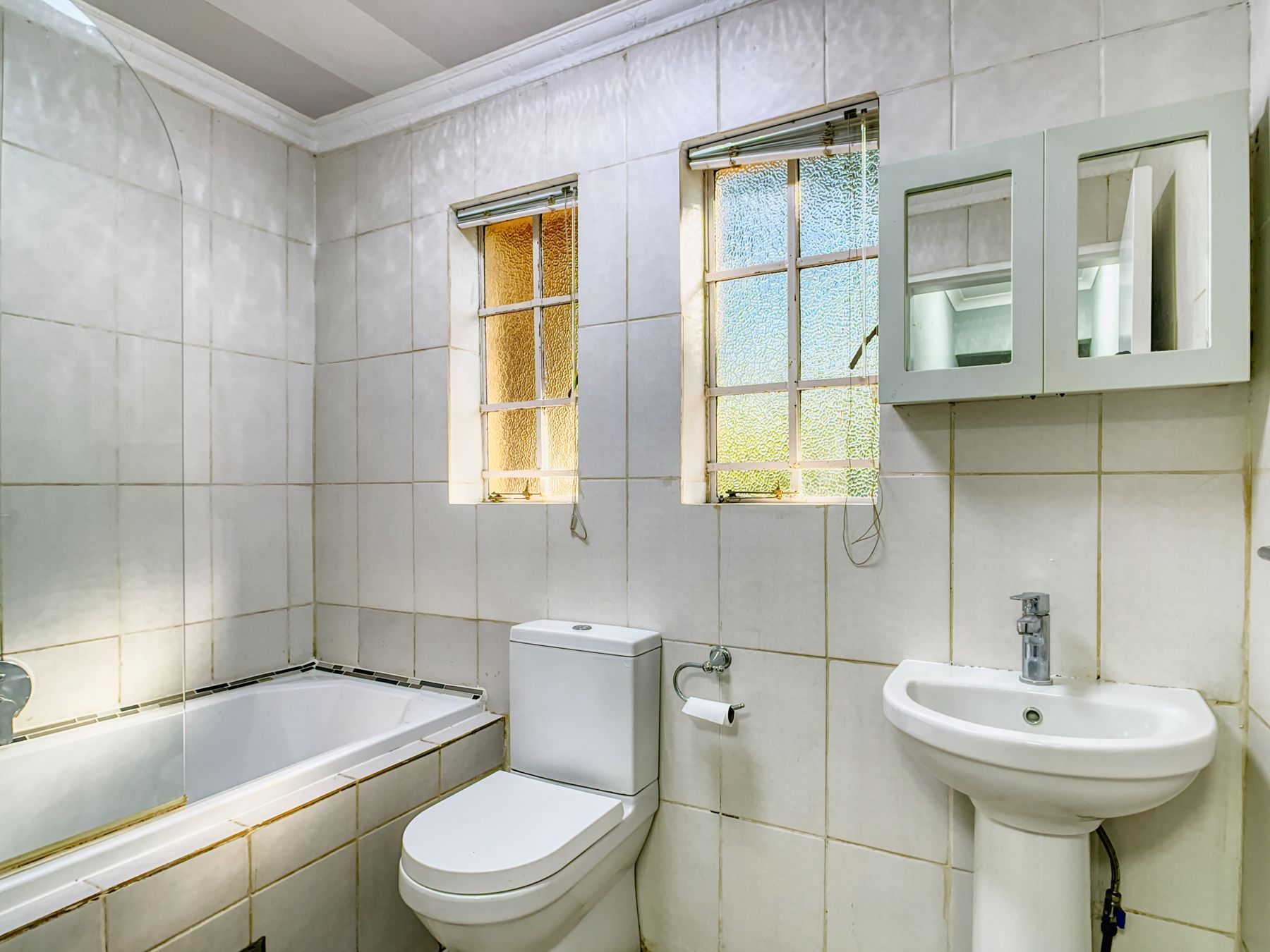
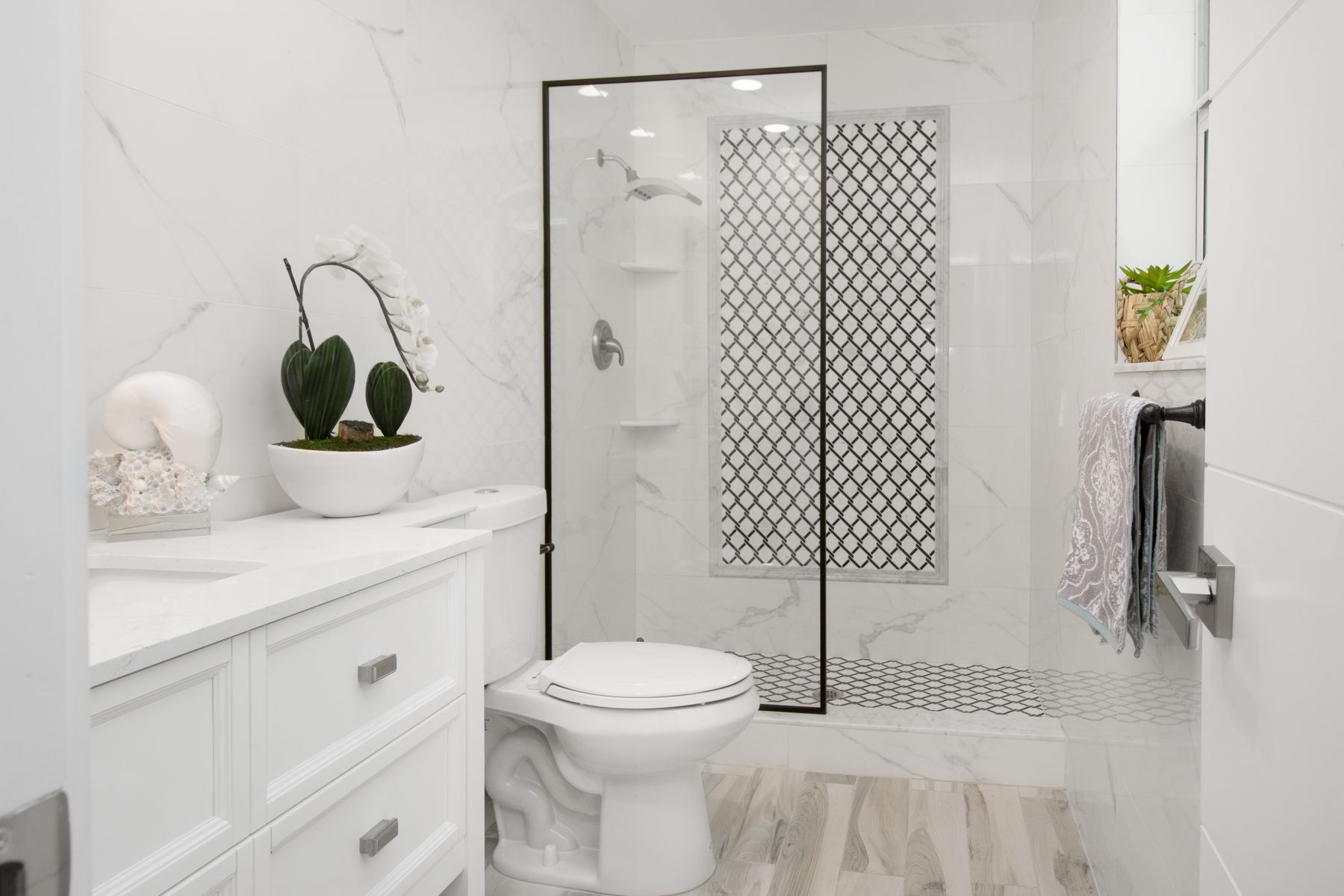
Basins, toilets and baths often remain white even when walls or cabinetry turn blue. Treat that ceramic as a fixed reference: a warmer white softens teal and denim, while a cooler white sharpens navy or cobalt. Avoid choosing paint, grout and tile separately under showroom light. The expanded [White Bathroom Ideas](/ideas/white-bathroom-ideas/) guide explains how undertone and sheen affect pale sanitary surfaces.
Use Blue Joinery as Furniture
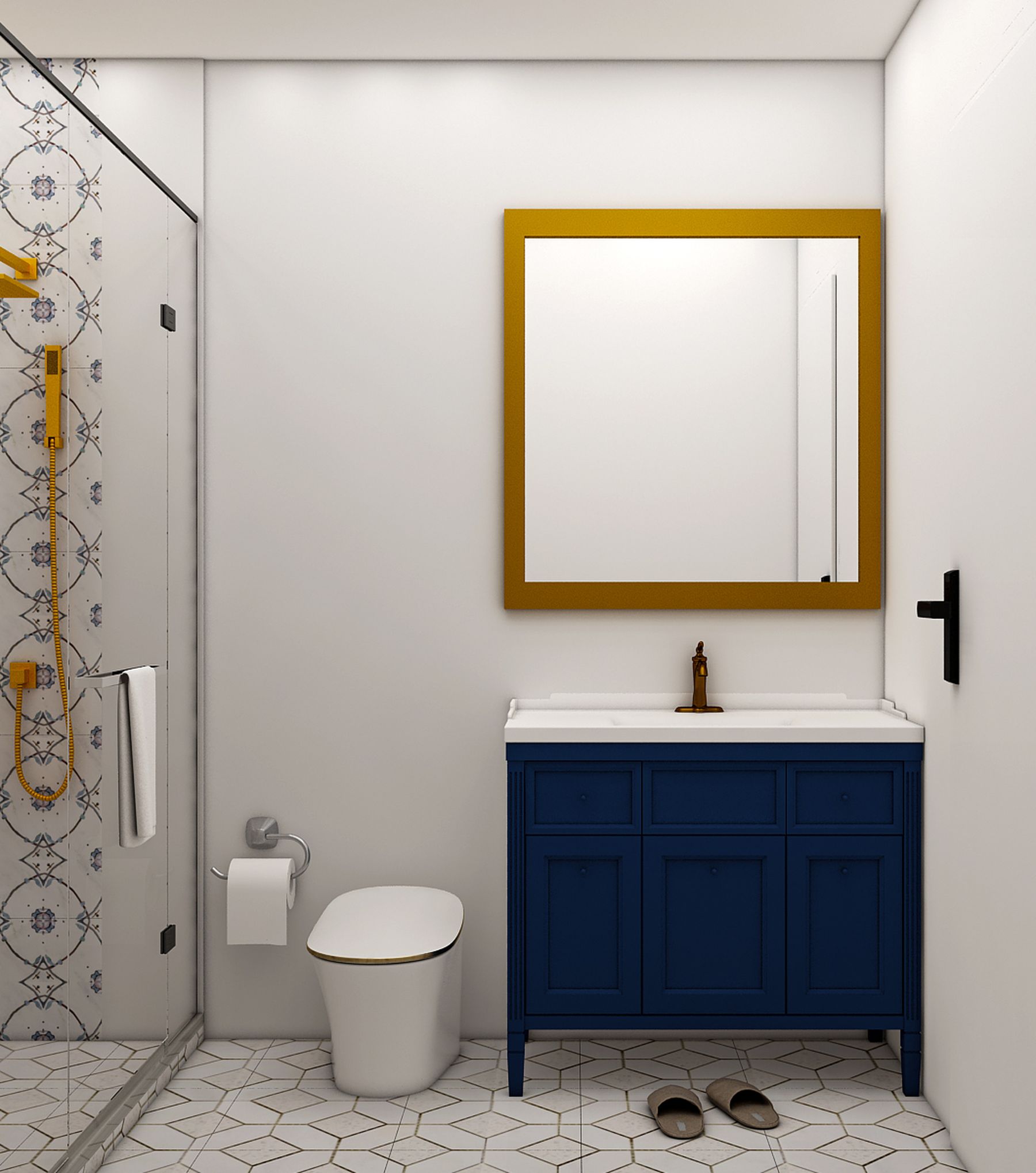
A blue vanity works best when it reads as one furniture-scale object rather than another small accent. Navy, slate or teal can give the basin wall weight while white ceramic and a lighter floor preserve clarity. Hardware, mirror and lighting should support the vanity's role instead of creating several competing blue or metallic focal points.
Give Saturated Blue Breathing Room
Strong blue already supplies substantial visual information. Clear shower glass, simple mirror geometry and restrained adjacent tile can give the color space to read without creating a themed room. The more saturated the blue, the more useful one quiet neighboring plane becomes.
Choose Metal to Change Blue's Character
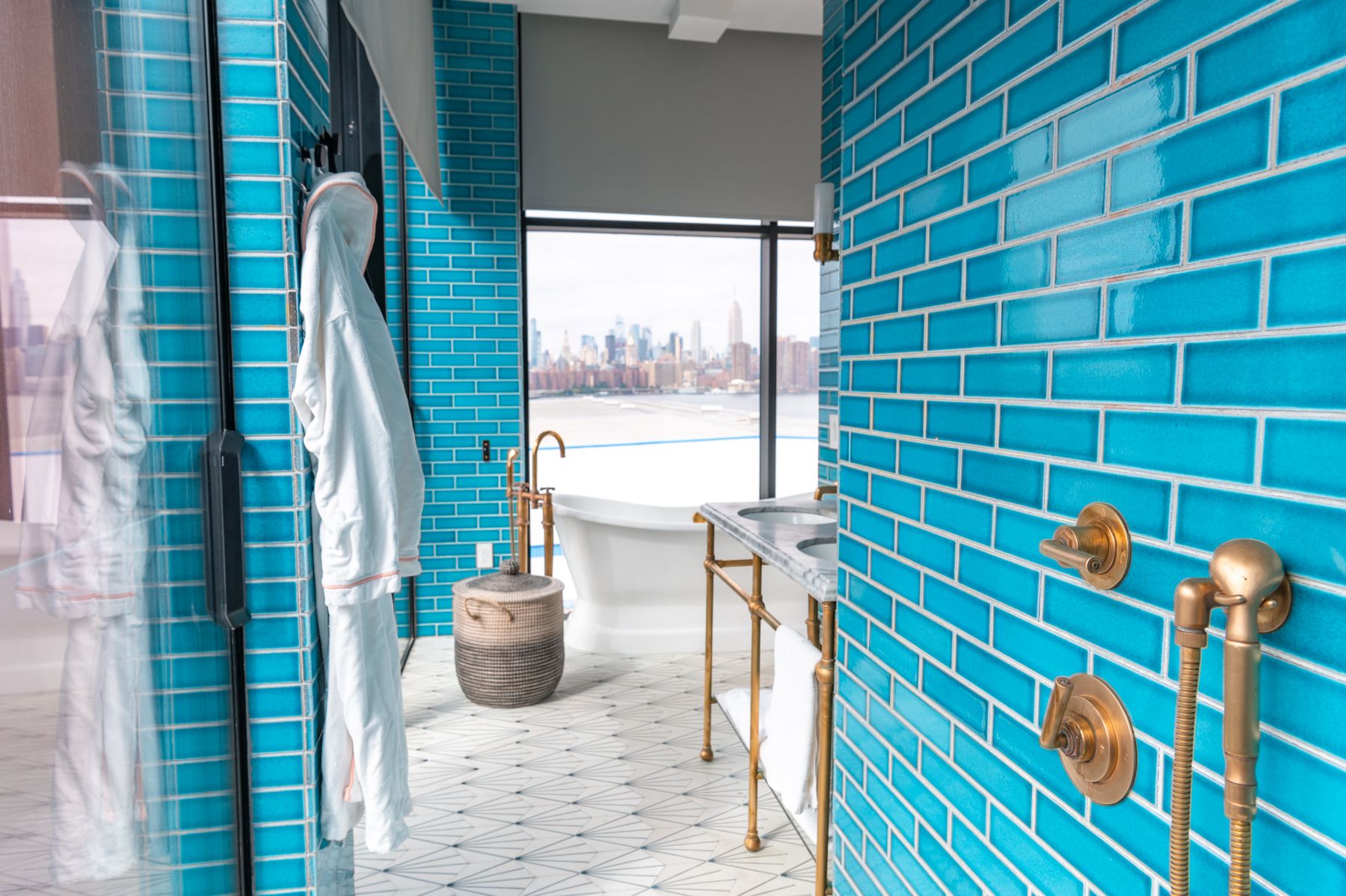
Metal changes the cultural and temperature reading of blue. Brass can push navy toward a richer, more traditional or glamorous direction; nickel and chrome can make it cleaner and cooler; black can add a graphic edge. Decide which character you want before repeating the finish across taps, handles and lighting.
Use Timber to Shift Blue Away From Coolness
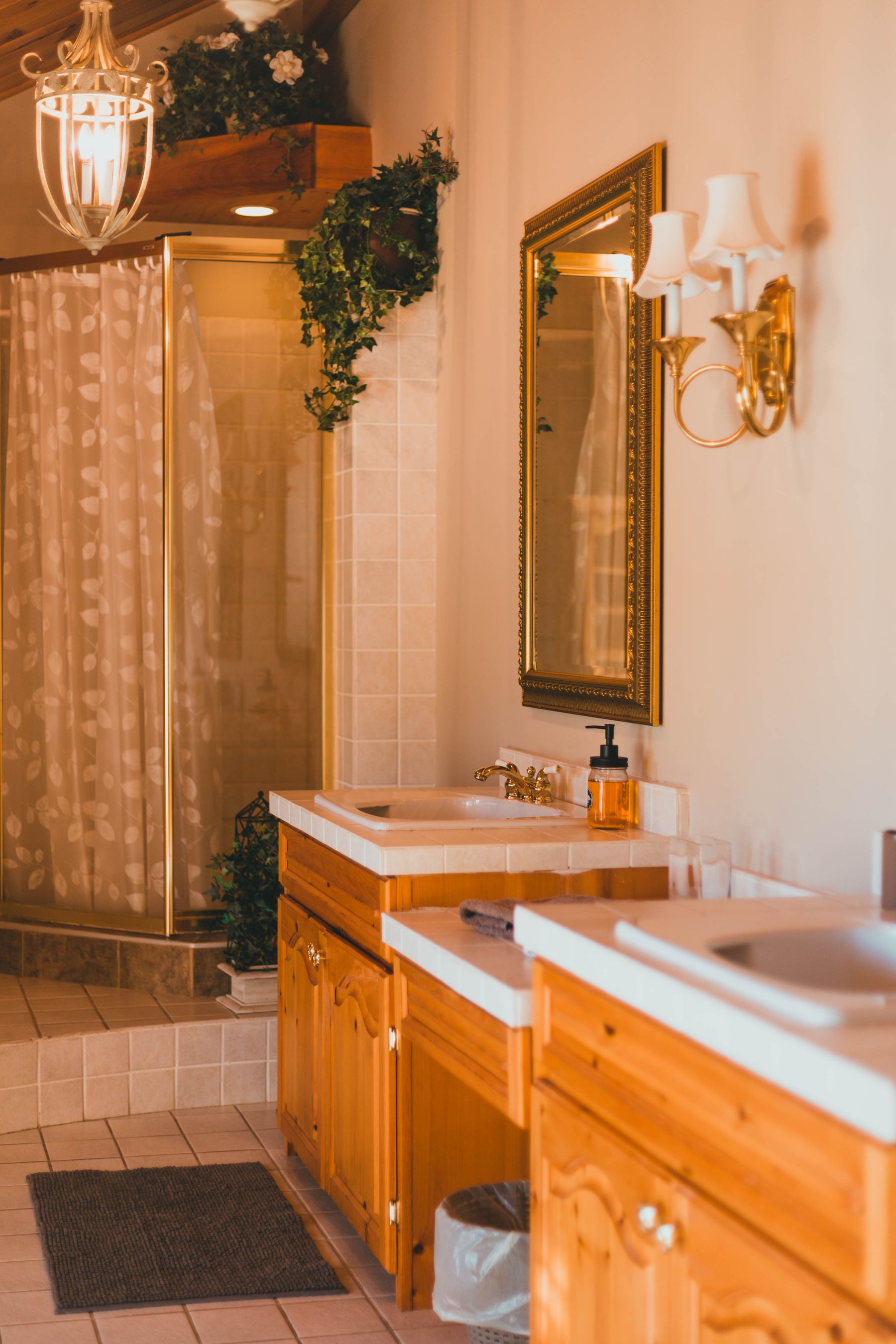
Timber can alter the emotional temperature of blue more effectively when it appears at a meaningful scale: vanity front, floor, shelf wall or furniture piece. Pale oak can make navy feel fresher, walnut can make it more formal, and warmer wood can pull a blue-grey away from a clinical reading. Use the timber to steer the blue deliberately rather than as generic warmth.
Ground Sky Blue With Earthier Material
Very pale blue can feel weightless beside white ceramic and glass. Brown-veined stone, limestone, taupe mineral surfaces or a deeper floor can give the scheme an earth reference and prevent it drifting into a purely airy theme. One grounded material is often enough; the goal is balance, not adding another decorative palette.
Use Chrome or Nickel for a Cooler, Softer Edge
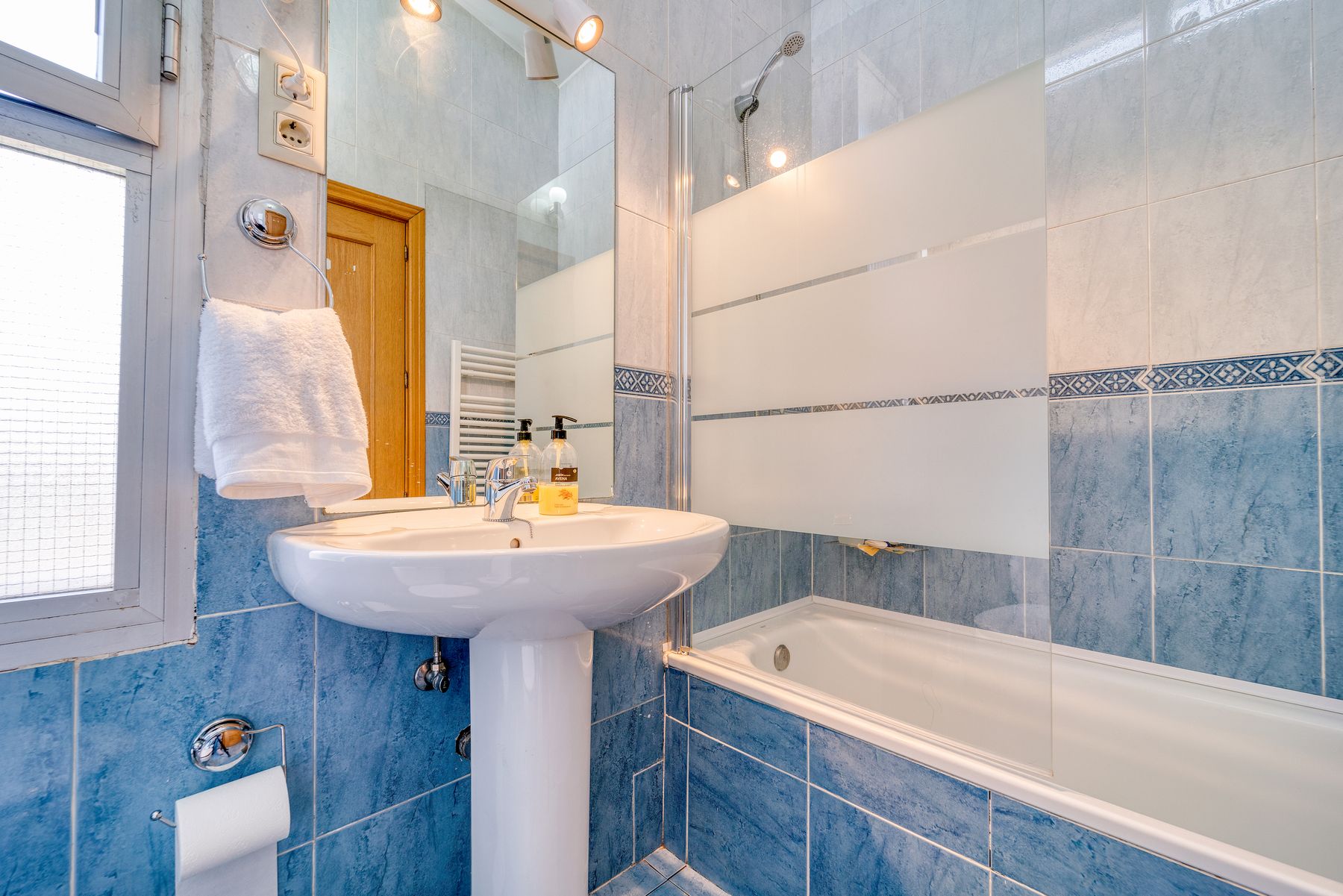
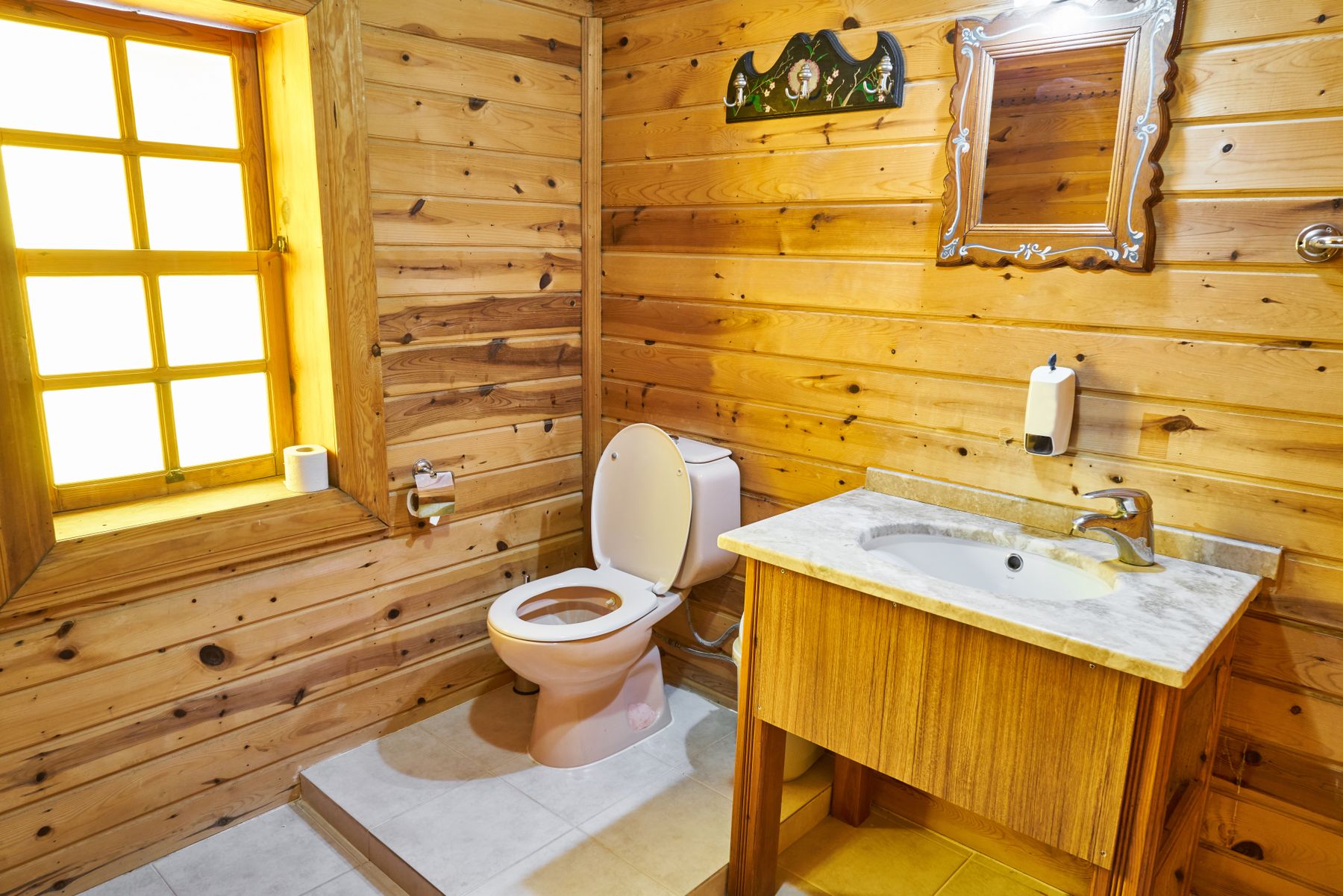
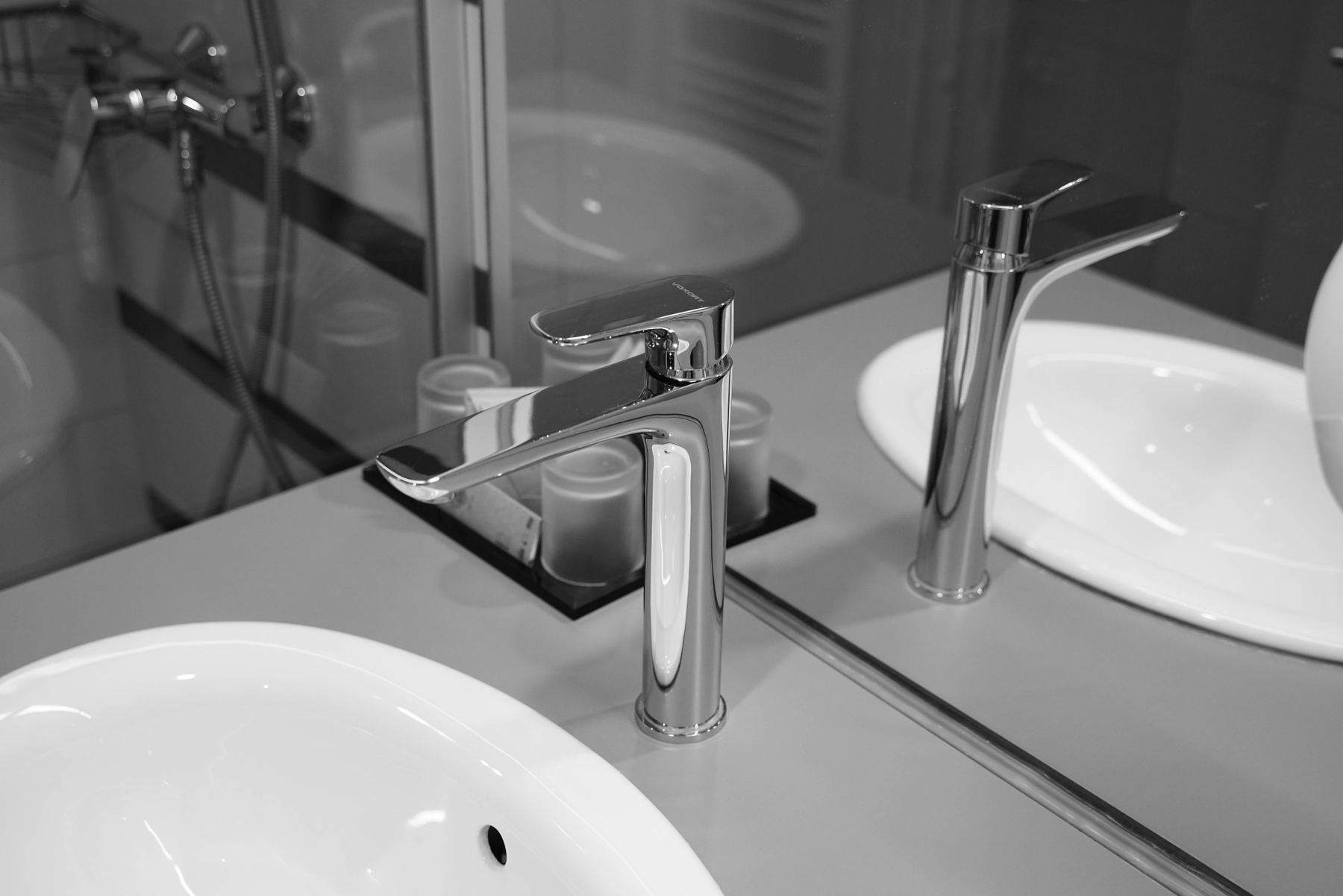
Chrome can make blue-and-white schemes feel crisp, while brushed nickel gives indigo, slate and blue-grey a quieter metallic edge. Coordinate the faucet, visible shower parts and major hardware, but do not force an exact finish match where components age differently. Reflections can also help controls remain visible on dark blue. Judge fingerprinting, water spots and replacement availability alongside the initial appearance.
Layer Lighting for Color, Faces and Night Use
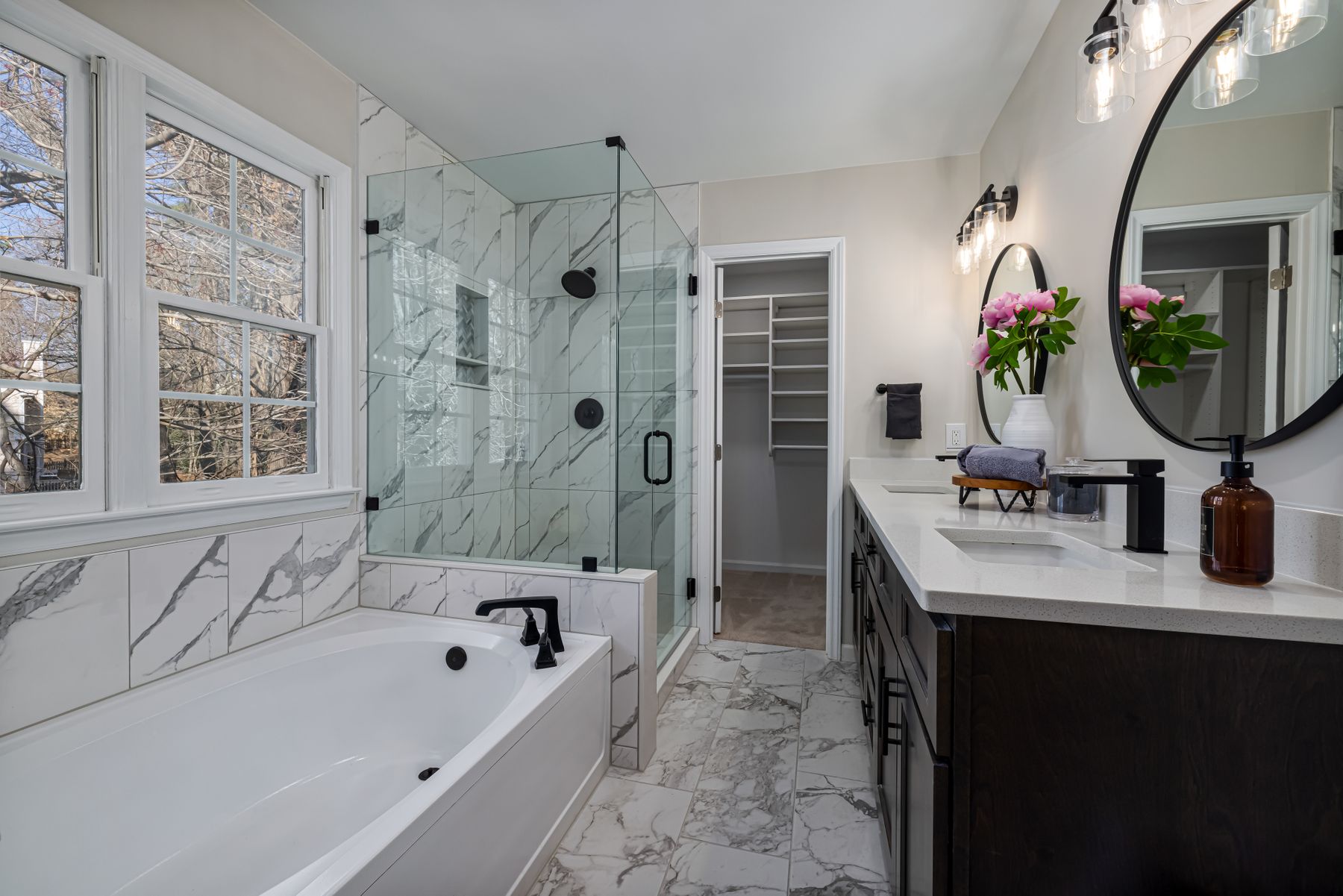
Blue needs more than one bright ceiling source. Provide even face light at the mirror, safe illumination in the shower, controlled ambient light and low-level nighttime guidance. Warm light can soften blue, while cooler task light may render it more sharply, so test both circuits with the actual materials. The [Bathroom Lighting Ideas](/ideas/bathroom-lighting-ideas/) guide supplies a task-by-task planning framework.
Make a Small Blue Bathroom Legible
A compact bathroom can hold pale or deep blue, but color does not solve an oversized vanity, blocked door or crowded fixture projections. Keep the route clear, choose one principal blue plane and preserve contrast at the floor, controls and basin. Deep color can create a convincing jewel-box effect when intentional; pale blue can maintain brightness. [Small Bathroom Ideas](/ideas/small-bathroom-ideas/) covers the underlying layout tests.
Treat Navy as a Night-Lighting Problem
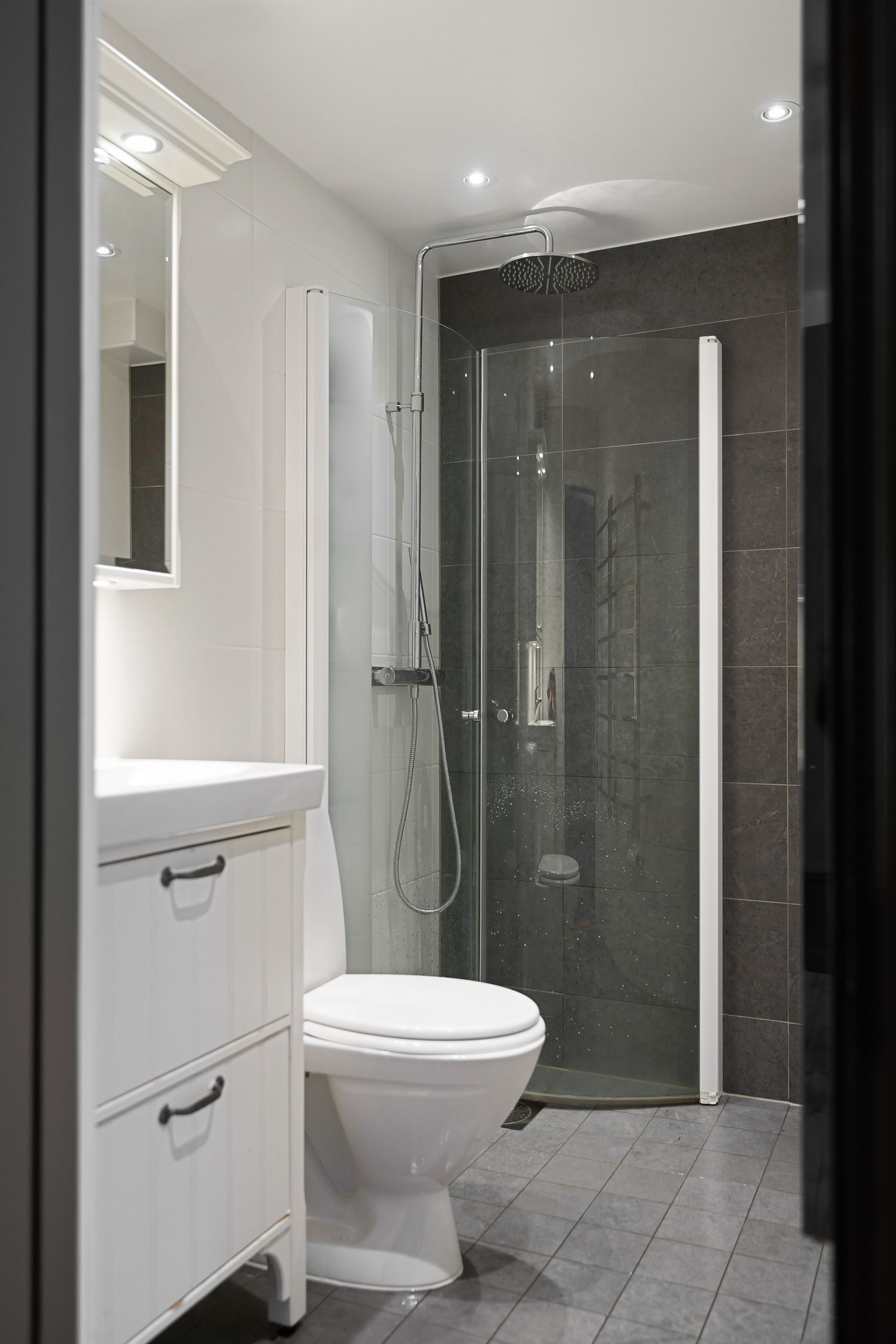
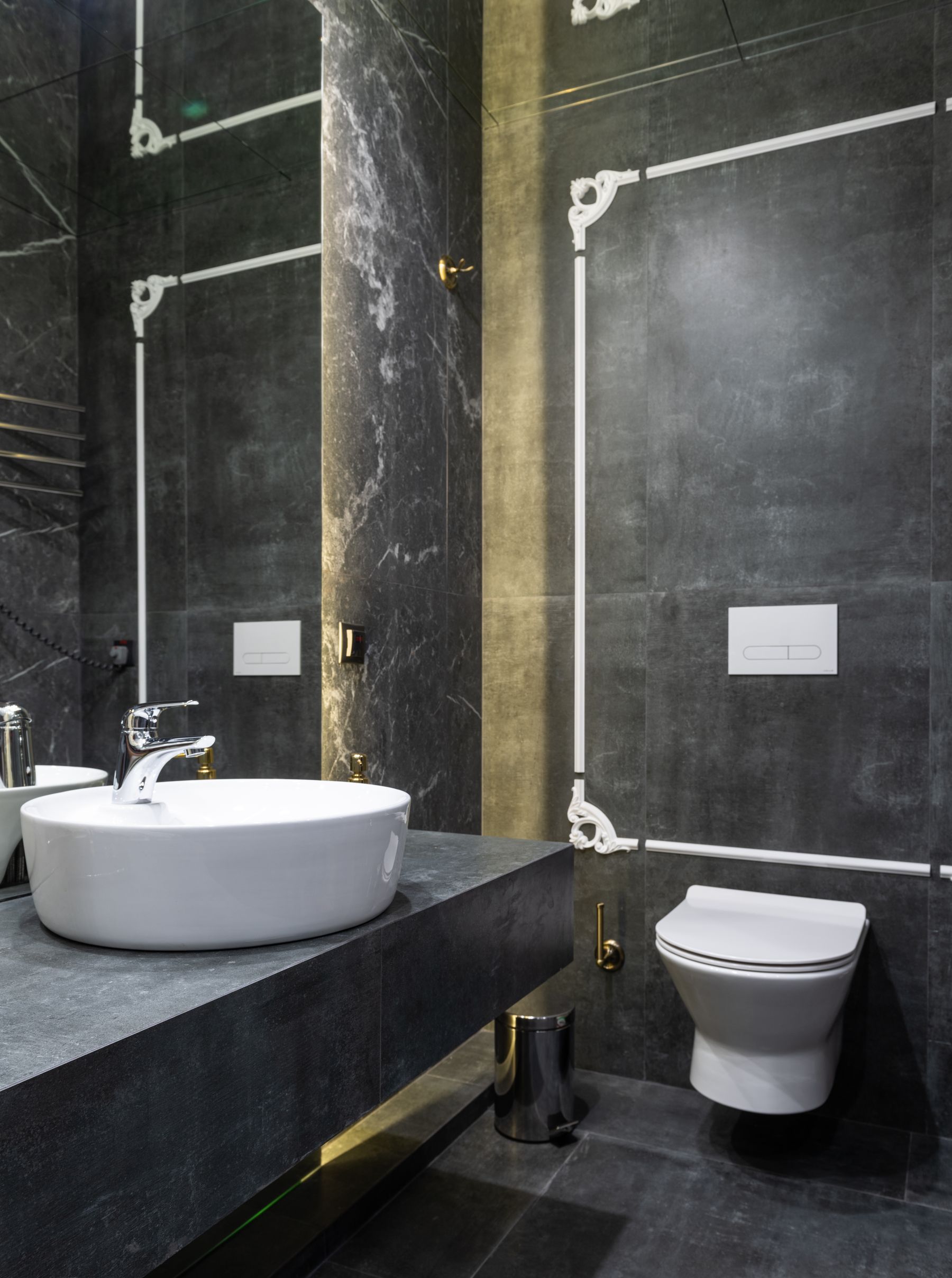
Navy can approach black once daylight disappears, which means cabinet edges, controls and floor transitions may lose clarity. Design mirror, shower and low-level light around the evening condition rather than choosing the blue in daytime and lighting it later. A navy room succeeds when the color remains identifiable and the functional edges remain visible after dark.
Plan Storage Before Blue Becomes the Backdrop to Clutter
Bright packaging and cleaning bottles can dominate a carefully composed blue wall. Give daily items shallow storage near the basin and shower, keep backups elsewhere and combine open shelving with closed cabinetry according to the routine. Do not conceal everything if that makes the room frustrating to use. [Bathroom Storage Ideas](/ideas/bathroom-storage-ideas/) provides useful category, reach and capacity tests.
Use Textiles to Test Additional Blue Before Making It Permanent
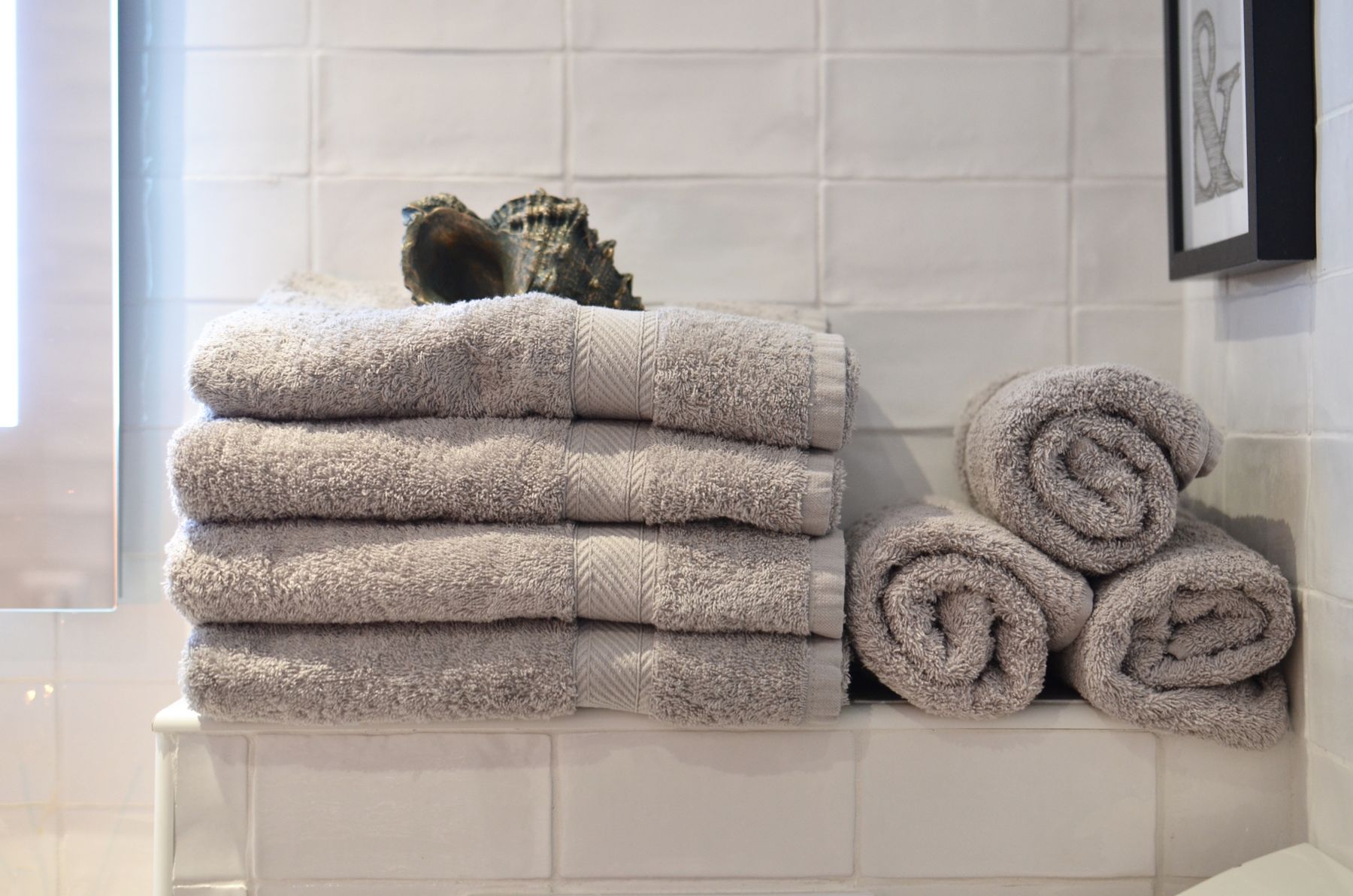
Towels, a bath mat or curtain can introduce a second blue depth without another renovation decision. This is useful when the permanent tile or vanity already establishes the main color and you are unsure whether the room needs more saturation. Add one textile layer, live with it, then decide whether the palette needs another fixed blue surface.
Keep Pale Blue From Hiding Functional Edges
Tonal blue tile can hide the edge of a shower step, a control or a support rail when values are too similar. Use white ceramic, metal, directed light, grout or a controlled value shift to keep important elements visible. Grab bars and seats require proper placement and anchoring for the user. [Aging-in-Place Bathroom Ideas](/ideas/aging-in-place-bathroom-ideas/) provides a fuller movement and reach framework.
Let the Floor Be Practical Before It Is Blue
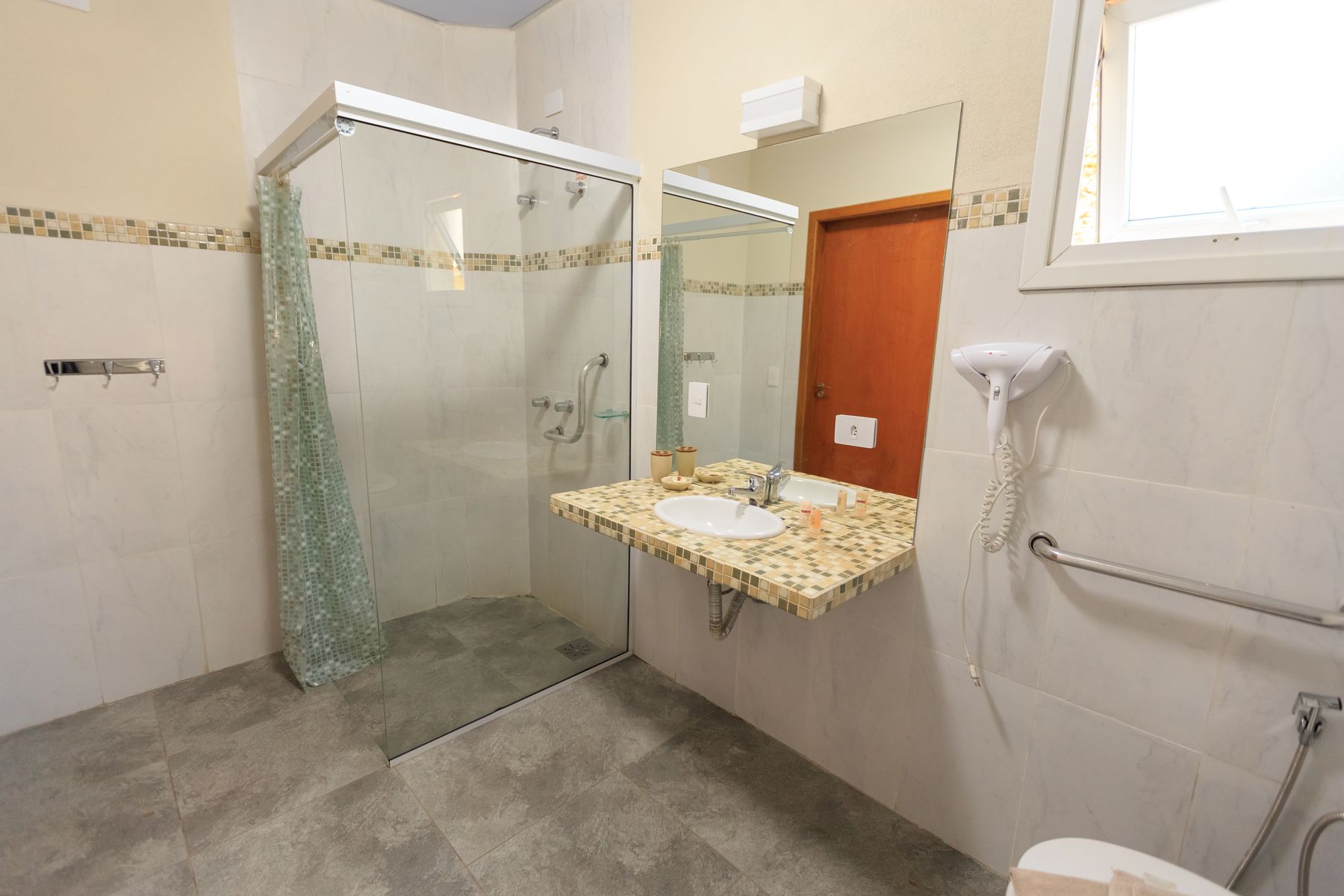
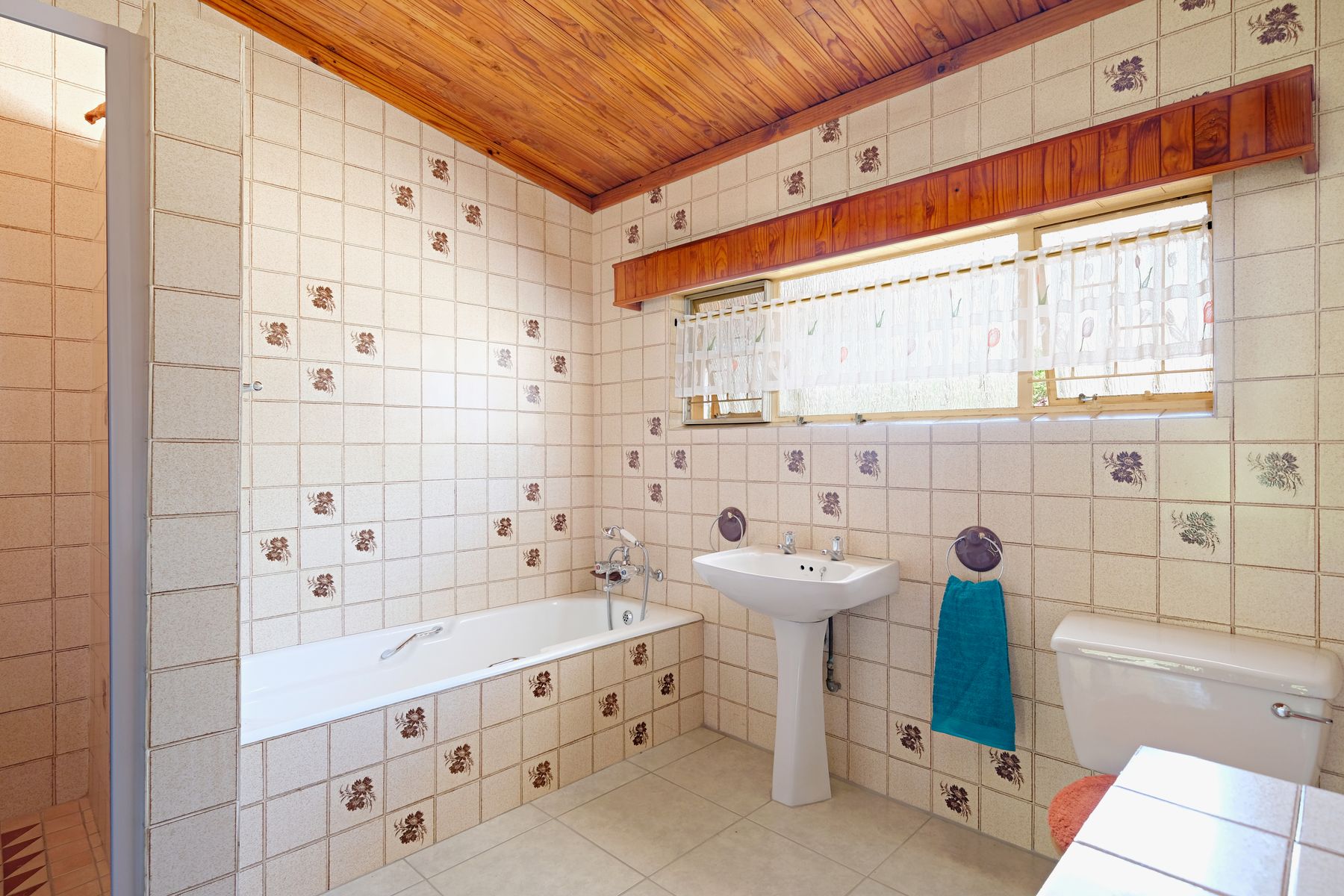
A blue floor can ground white walls or connect a patterned shower to the wider room, but slip resistance, drainage, joint density and cleaning determine whether it works. Gloss that looks vivid on a wall may be inappropriate under wet feet; very rough texture can hold residue. Test the exact product and assembly. [Bathroom Flooring Ideas](/ideas/bathroom-flooring-ideas/) compares performance before decoration.
Filter Daylight Without Muddying Blue
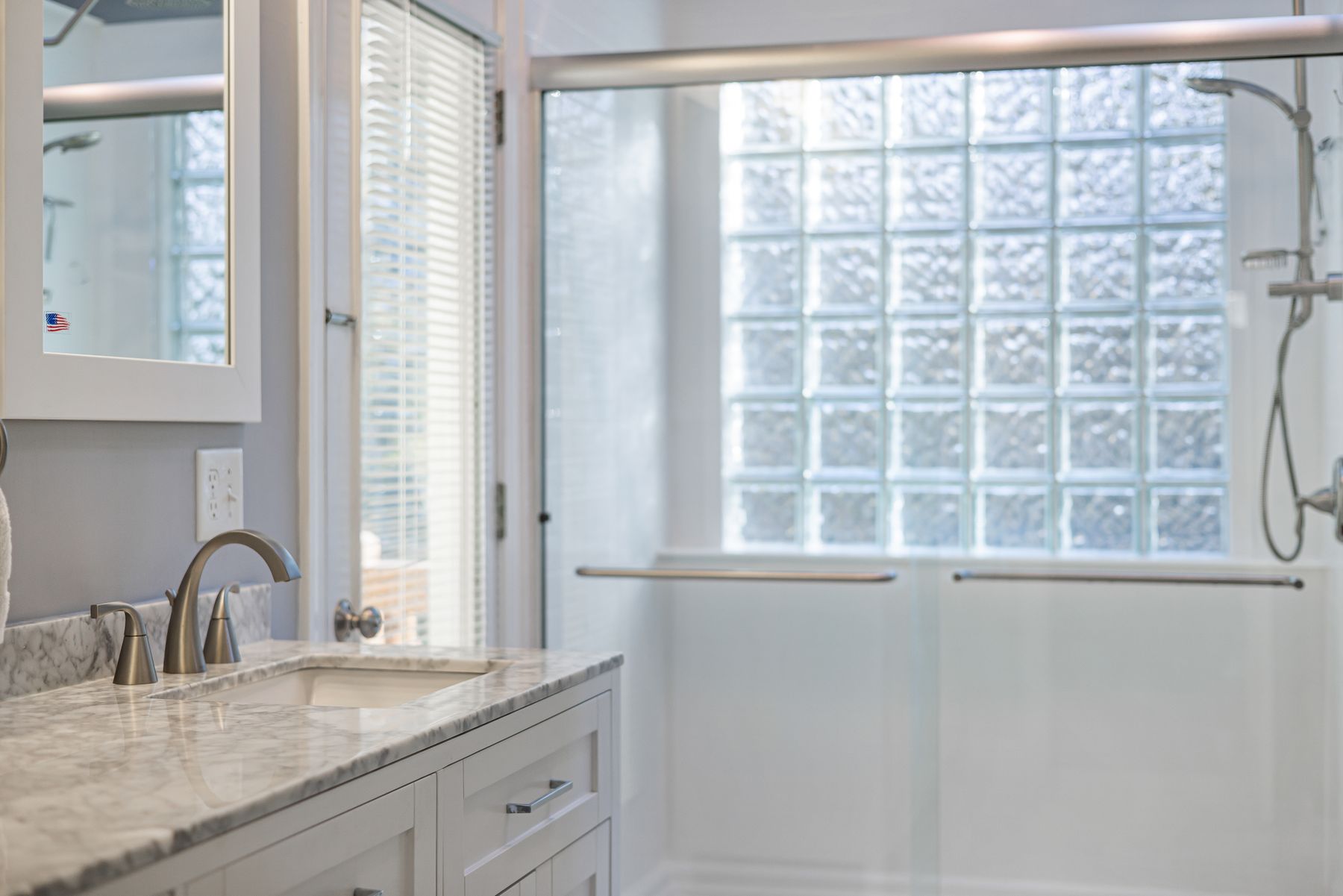
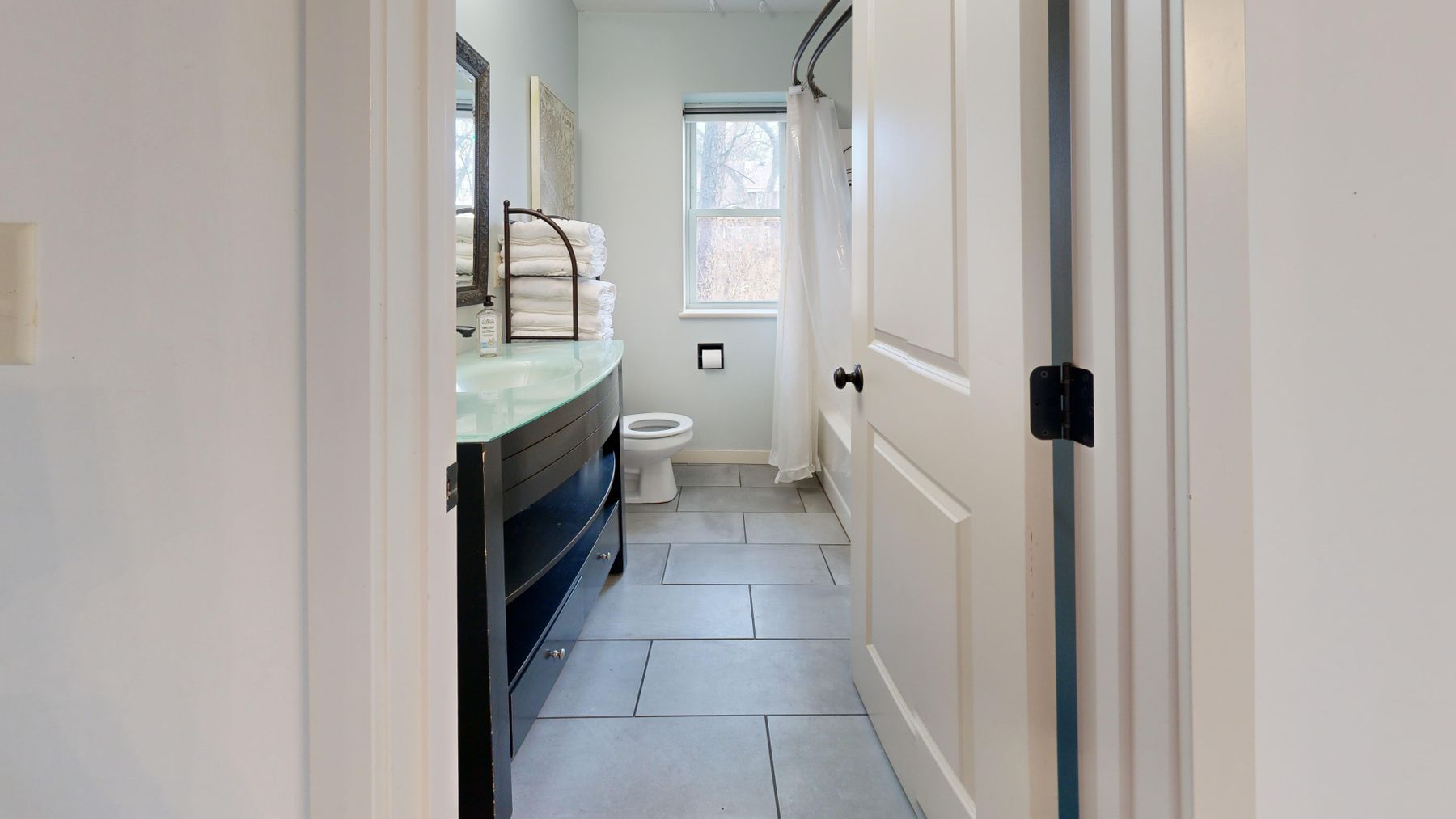
Blue benefits from real daylight, so solve privacy without automatically covering the window. Obscure glass, a high window, shutters, blinds or exterior screening create different balances of view, moisture resistance and maintenance. Check nighttime visibility from outside because interior light can silhouette a user. Keep tall storage away from the strongest daylight where the plan allows.
Protect Blue Surfaces From Persistent Humidity
Condensation, mildew and failing sealant disrupt a saturated color field quickly. Choose paint, grout and sealant systems suited to their exposure, but do not expect a coating to replace extraction, make-up air and heat. Avoid inaccessible ledges that remain damp after showering. Fan sizing, ducting and electrical work should respond to the actual room and local requirements rather than a generic color scheme.
Check How Blue Finishes Show Everyday Residue
Dark glossy blue may show mineral spots sharply, while pale or variegated blue can hide soap film until the sheen changes. Let local water dry on tile, grout, glass and metal samples, then clean them with approved products. Confirm that matching sealant is available and replaceable. The most attractive blue surface is a poor choice when joints or textures cannot be reached in the real room.
Change the Room With One Strategic Blue Move
A sound neutral bathroom may need only a painted vanity or door, a blue upper wall, renewed textiles and improved lighting. Keep the intervention large enough to feel intentional and avoid scattering many small blue accessories. Separate cosmetic work from waterproofing, plumbing and electrical problems before investing. [Bathroom Remodel Ideas](/ideas/bathroom-remodel-ideas/) helps define scope when the existing room has both visual and technical issues.
Audit the Blue Scheme Before You Commit
Assemble the lead blue, white ceramic, grout, floor, timber, metal and textile on one board. View it in daylight, overcast conditions and each lighting scene, then wet and clean the relevant pieces. Compare the result with a quieter [Neutral Bathroom Ideas](/ideas/neutral-bathroom-ideas/) palette and a darker black-led scheme. Choose blue when it improves atmosphere, depth and material relationships—not merely because bathrooms are expected to look aquatic.