Choose a Coastal Direction Before Choosing Blue
Decide whether the room should feel clean and modern, tailored in an East Coast or Hamptons manner, or more natural and weathered. Modern coastal favors simple planes, clear glass and pale oak. A tailored route can take darker navy, framed cabinetry and polished nickel. A rugged coast may use more stone, limewashed texture and richer timber. Naming the direction prevents glossy hotel fittings, rustic baskets, beach-house stripes and Mediterranean plaster from competing in one small room.
Make Daylight and Sightlines the First Material
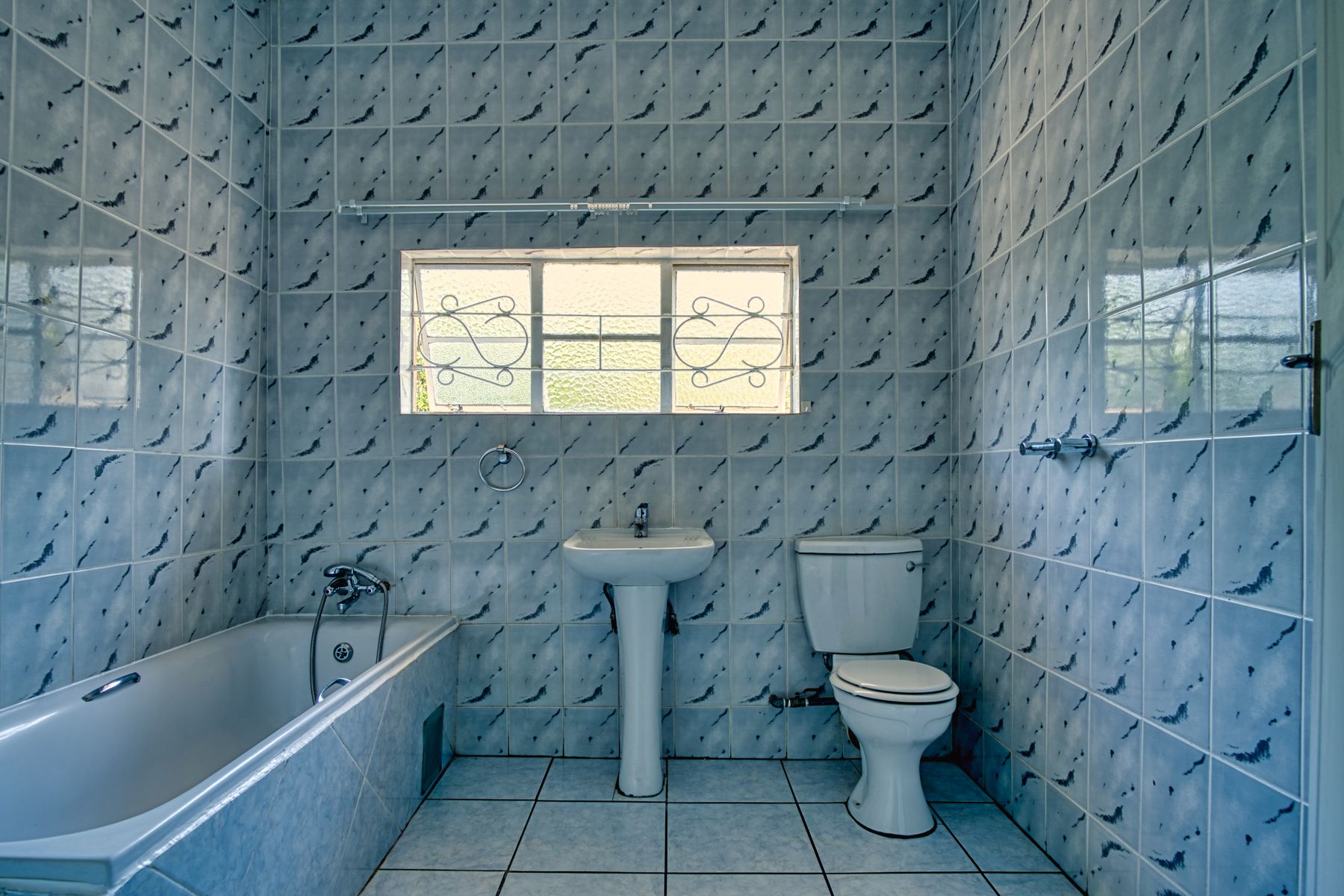
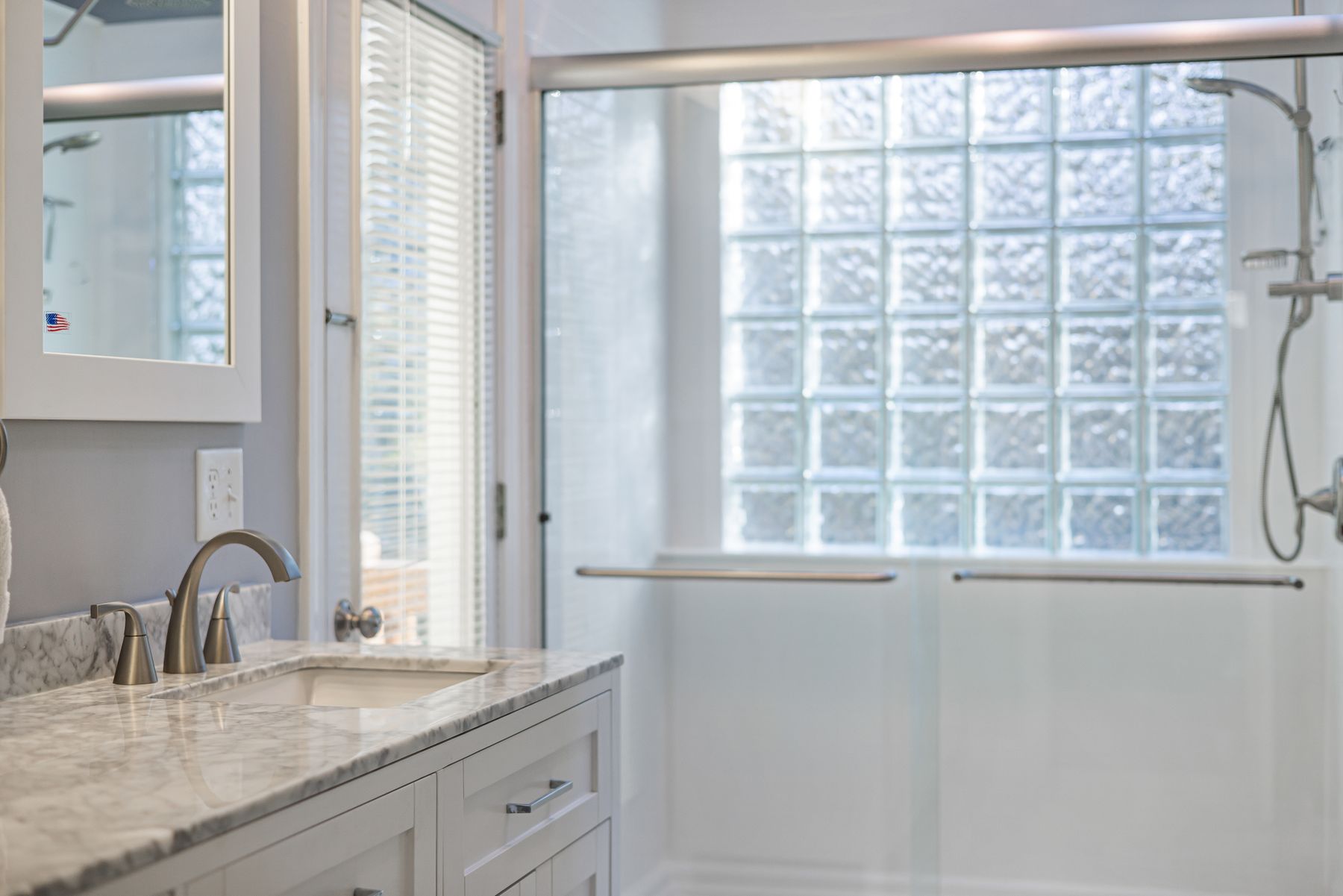
Protect the route of daylight from window to mirror, shower and floor before adding tall storage or opaque screens. Use pale planes to bounce light, but retain enough contrast to make edges and controls legible. Clear glass can extend the view through a shower; a lower vanity may preserve a window line better than a full-height cabinet. In a room without useful daylight, reproduce the hierarchy with broad ambient light, focused mirror lighting and a softer low-level source rather than pretending one bright ceiling lamp is sunshine.
Build a Warm White, Sand and Shell Base
Warm white, oyster, sand, putty and pale greige create a useful mineral shell. Compare them against the actual white of the bath and basin: sanitaryware can expose yellow, pink or grey undertones that looked invisible on a small sample. Use one dominant near-white, one supporting mineral tone and a controlled darker note. This base works especially well when the view or daylight is the feature and avoids making blue a compulsory proof of style.
Design a Coastal Bathroom Without Blue
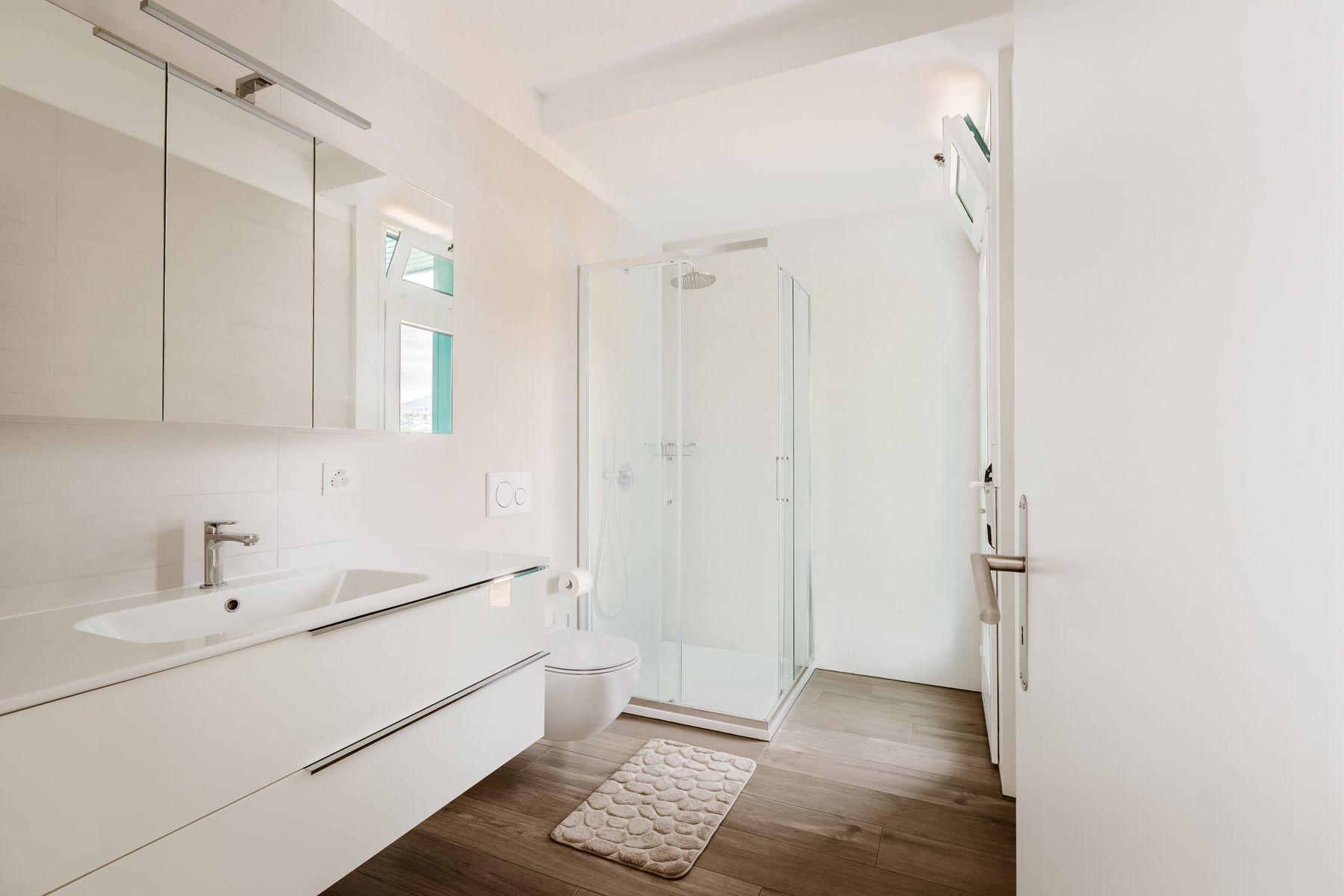
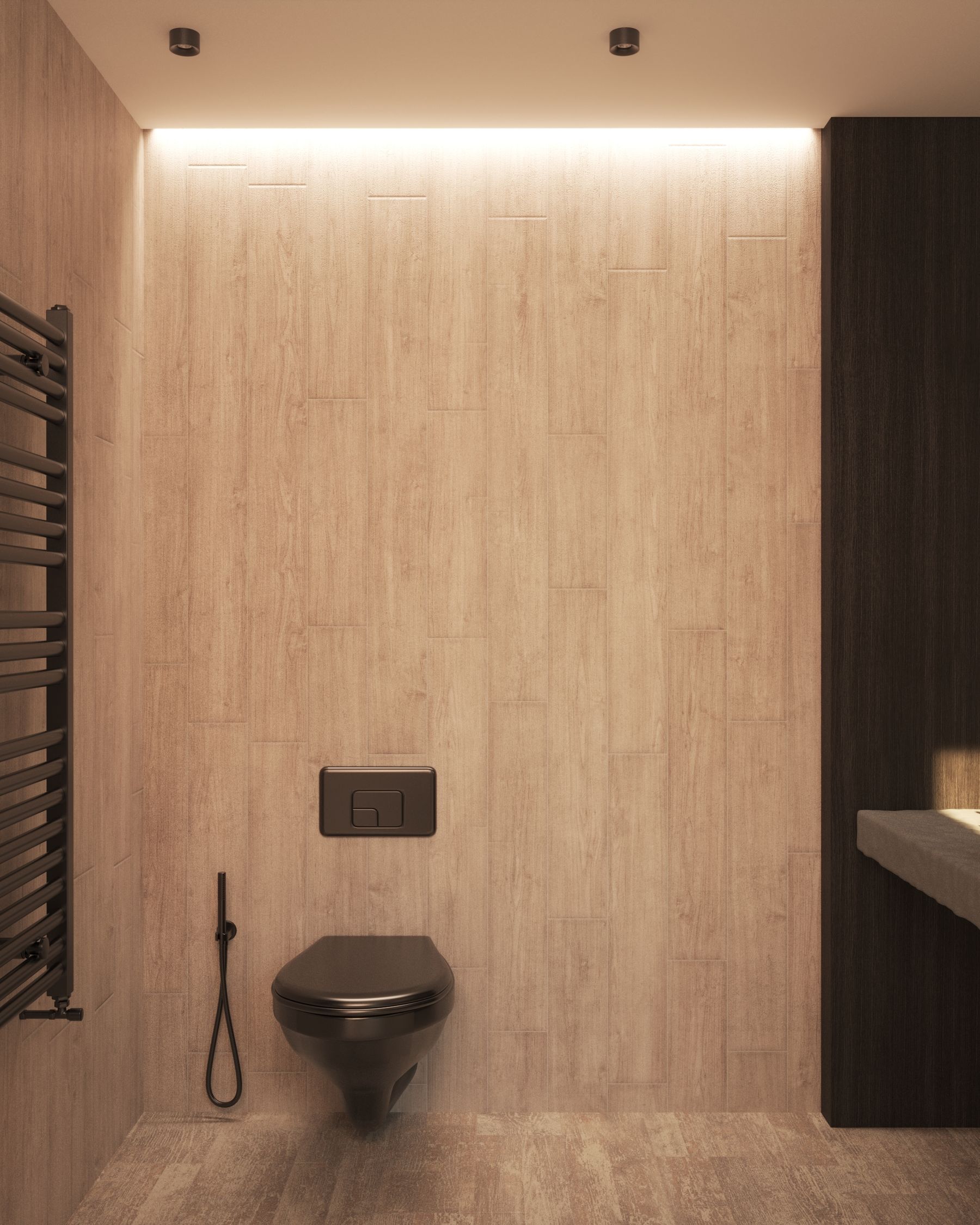
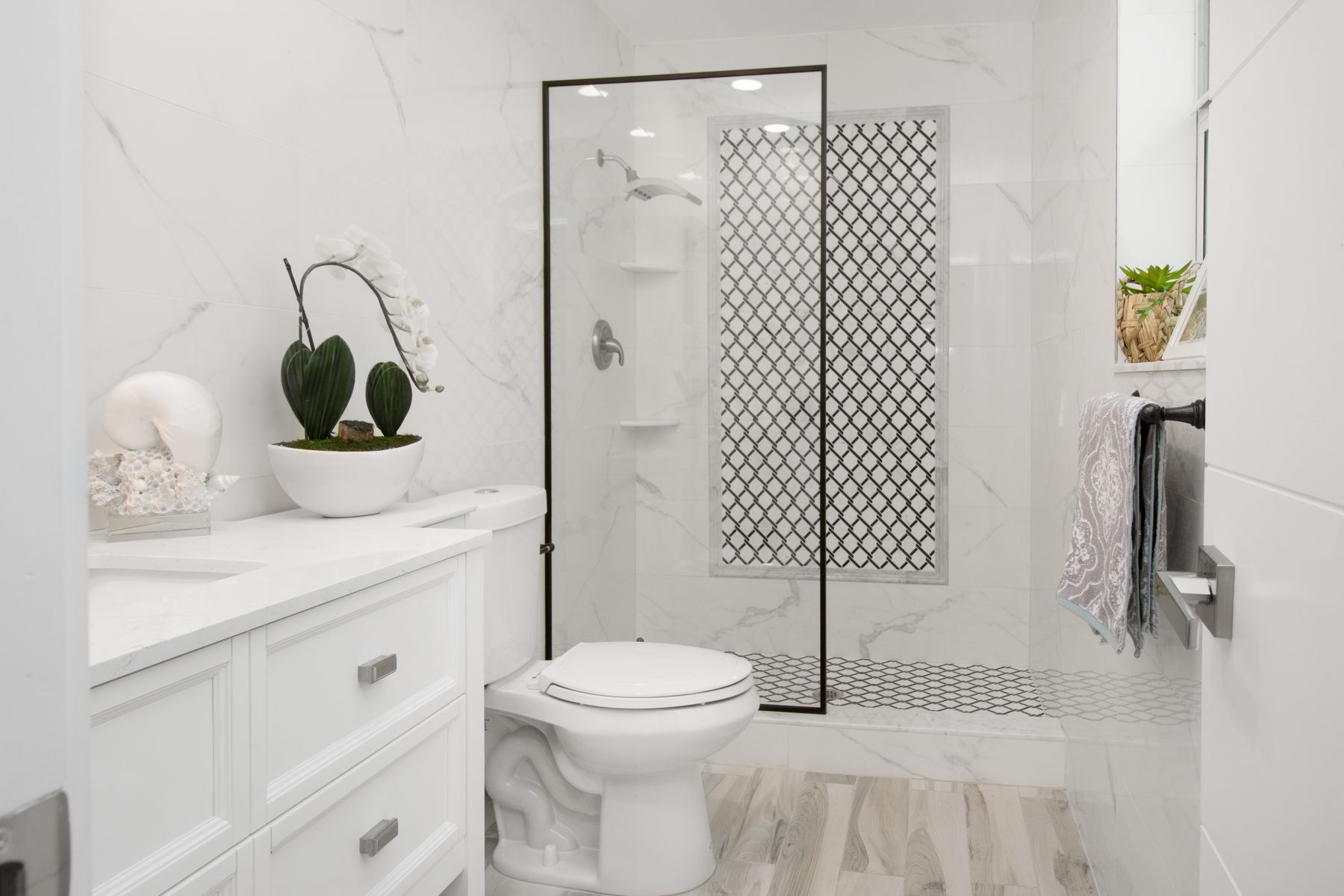
A no-blue coastal room can combine shell white, dune beige, bleached oak, chalky stone and a small amount of woven texture. The connection comes from atmospheric qualities rather than a literal color code. Preserve tonal separation so the room does not dissolve into cream: timber grain, grout lines and a slightly deeper floor can define planes. This is the clearest way to keep Coastal separate from the broader Blue Bathroom intent, which may be dramatic, urban, retro or Art Deco.
Use Sky Blue as Atmosphere, Not a Uniform
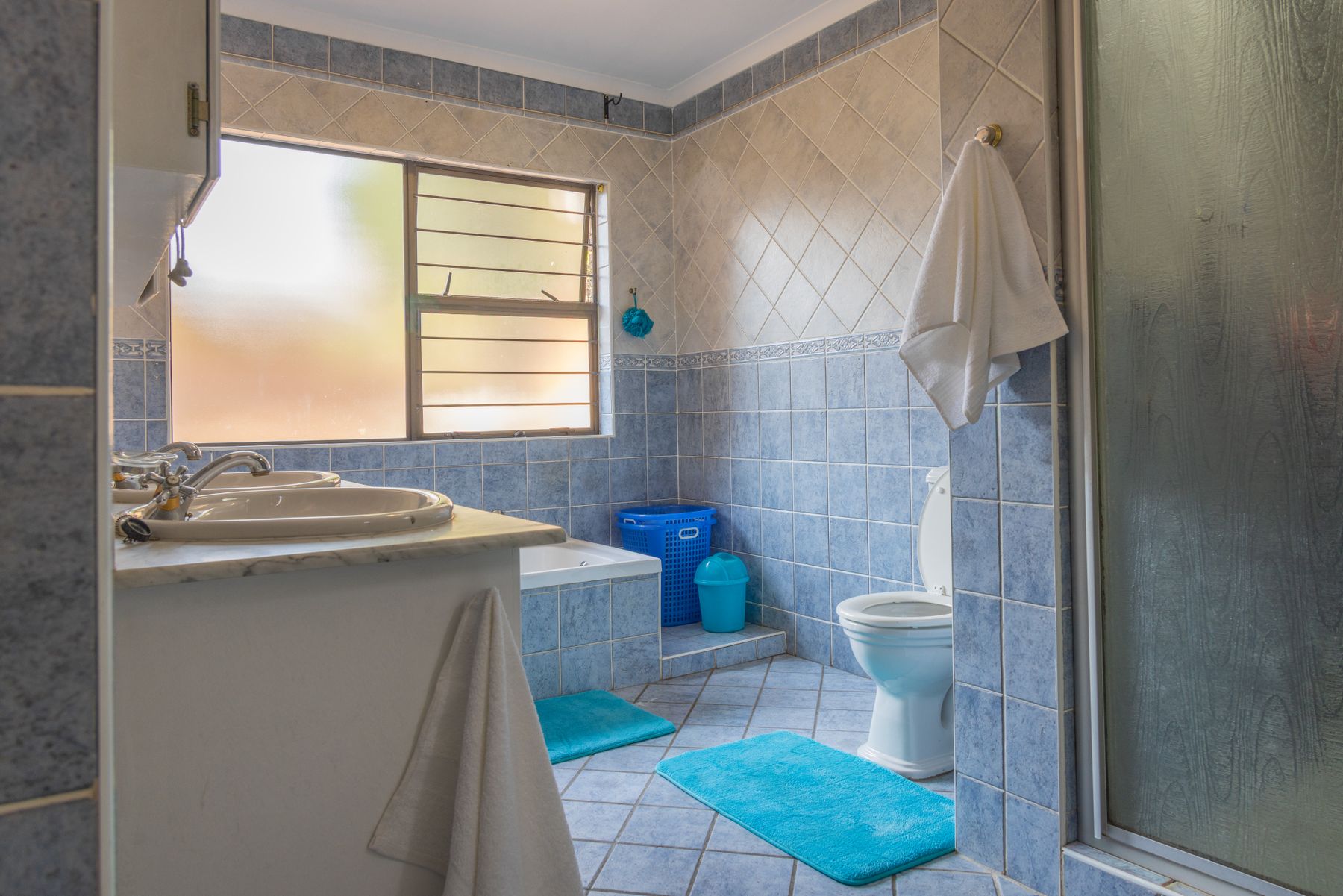
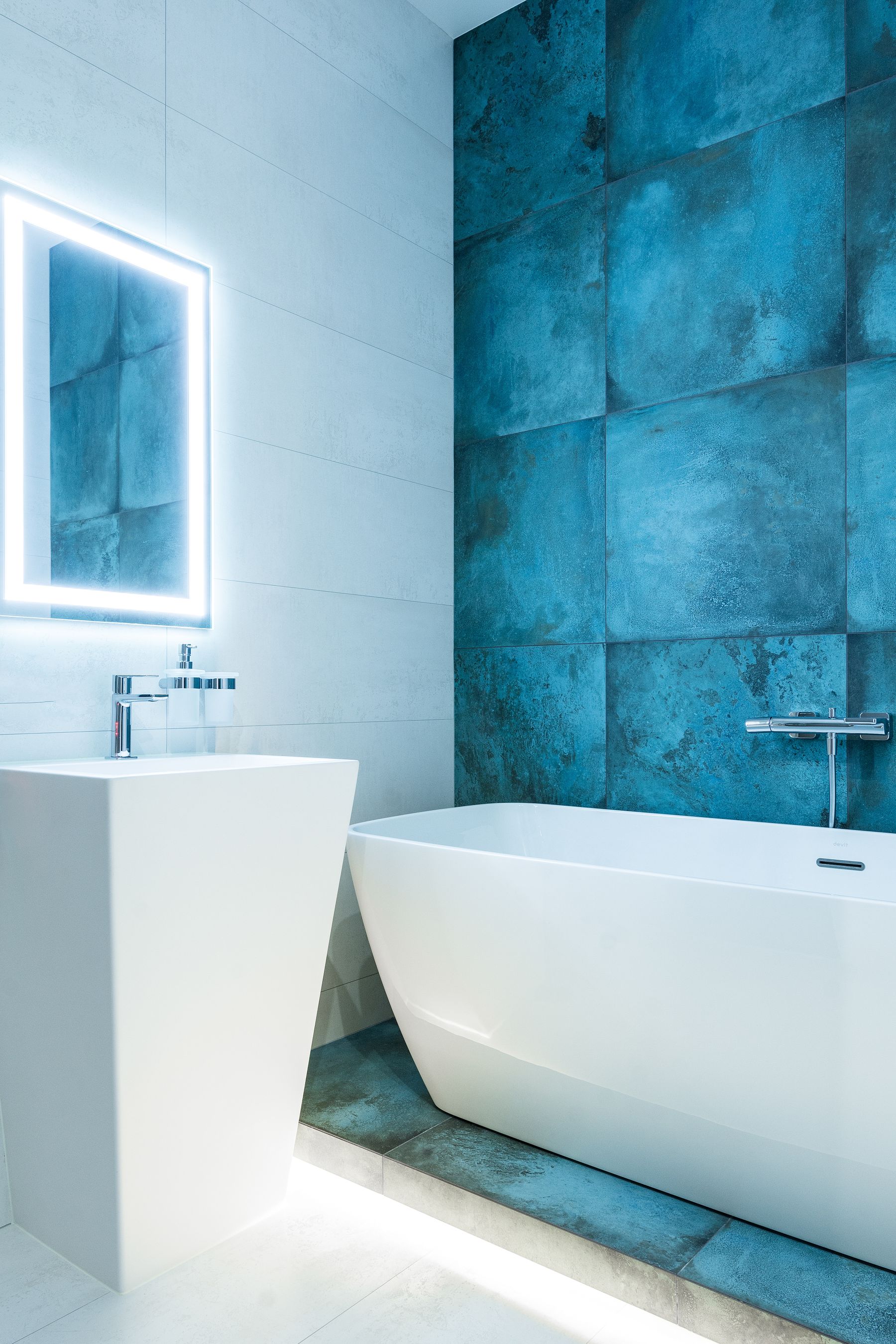
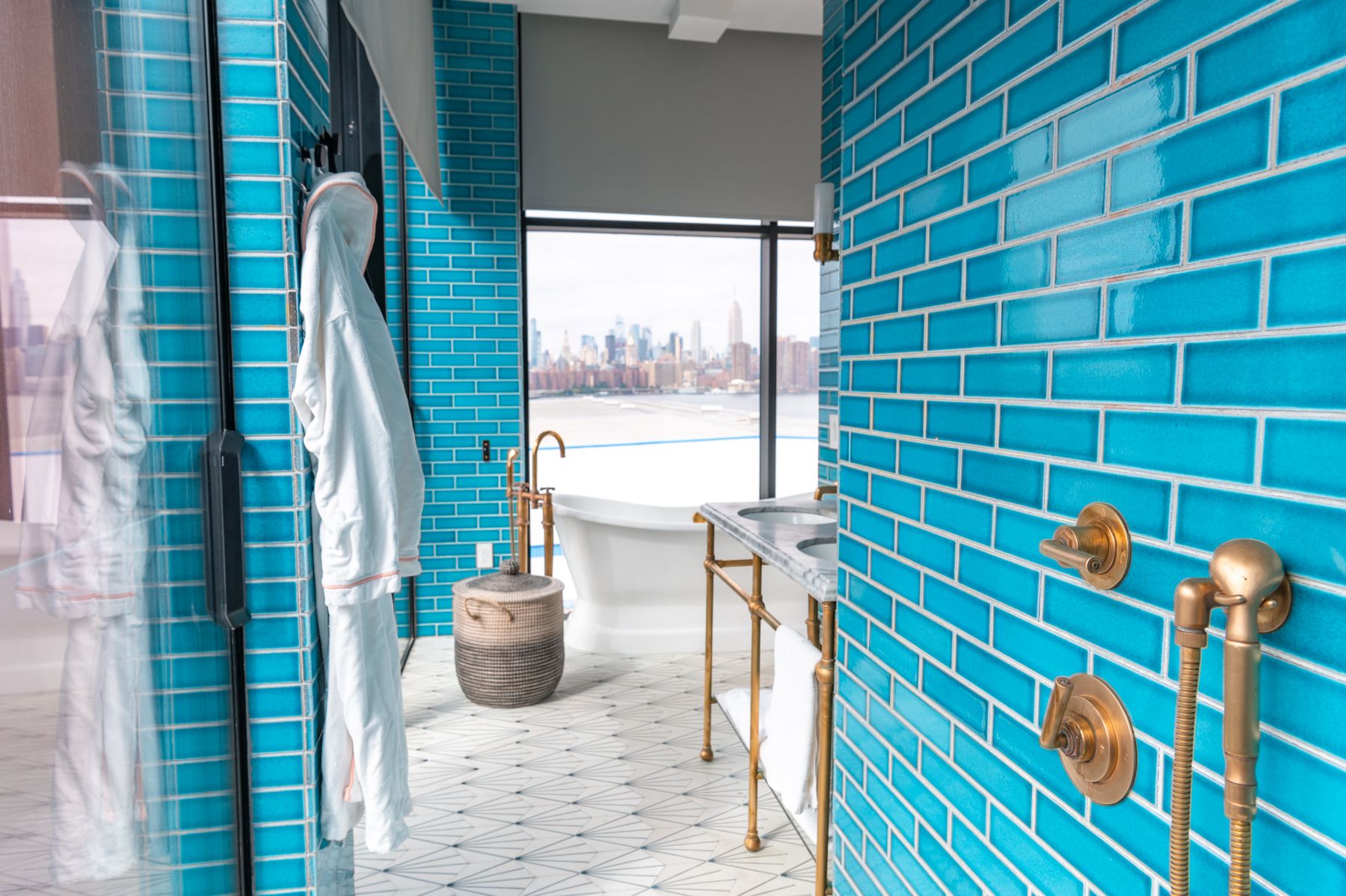
Powder, mist and washed sky blue are most effective on one wall, vanity, shower field or upper painted zone. Grey the color slightly if the room receives cool light; use a clearer blue where warm daylight or oak keeps it balanced. Repeating the same blue across tile, paint, towels and accessories flattens the composition. Let color occupy one meaningful architectural area, then support it with warm white, timber and stone.
Try Sea-Glass Green for a Softer Water Reference
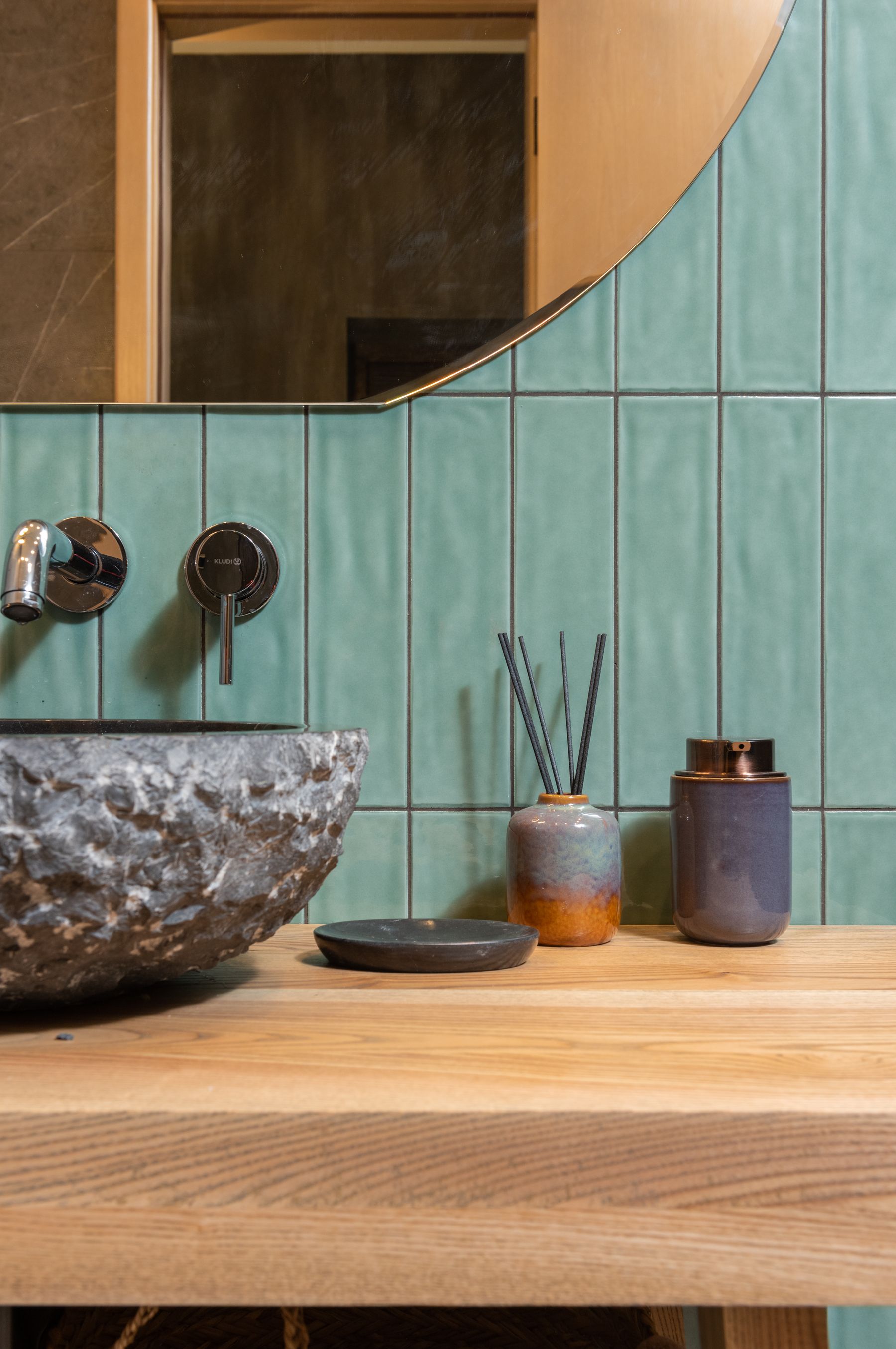
Sea-glass, celadon and greyed aqua sit between water and vegetation, making them useful where bright blue feels too literal. Pair the color with honed stone, pale wood or warm metal and avoid adding multiple competing greens. A translucent or variegated glaze can make the wall respond to light, but every handmade-looking tile still needs a planned layout, suitable wet rating and an approved cleaning method.
Anchor a Tailored Scheme With Controlled Navy
Navy can give an East Coast coastal bathroom discipline, especially on a vanity, lower wall or compact tile field. It is heavier than sky blue, so confirm that daylight, mirror light and pale surrounding surfaces can carry the contrast. Pair it with nickel for a crisp tailored result, brass for warmth, or wood for a less formal direction. Avoid adding red, rope and striped accessories unless a deliberately nautical room is the actual goal.
Pair Blue With Brown and Wood for Natural Balance
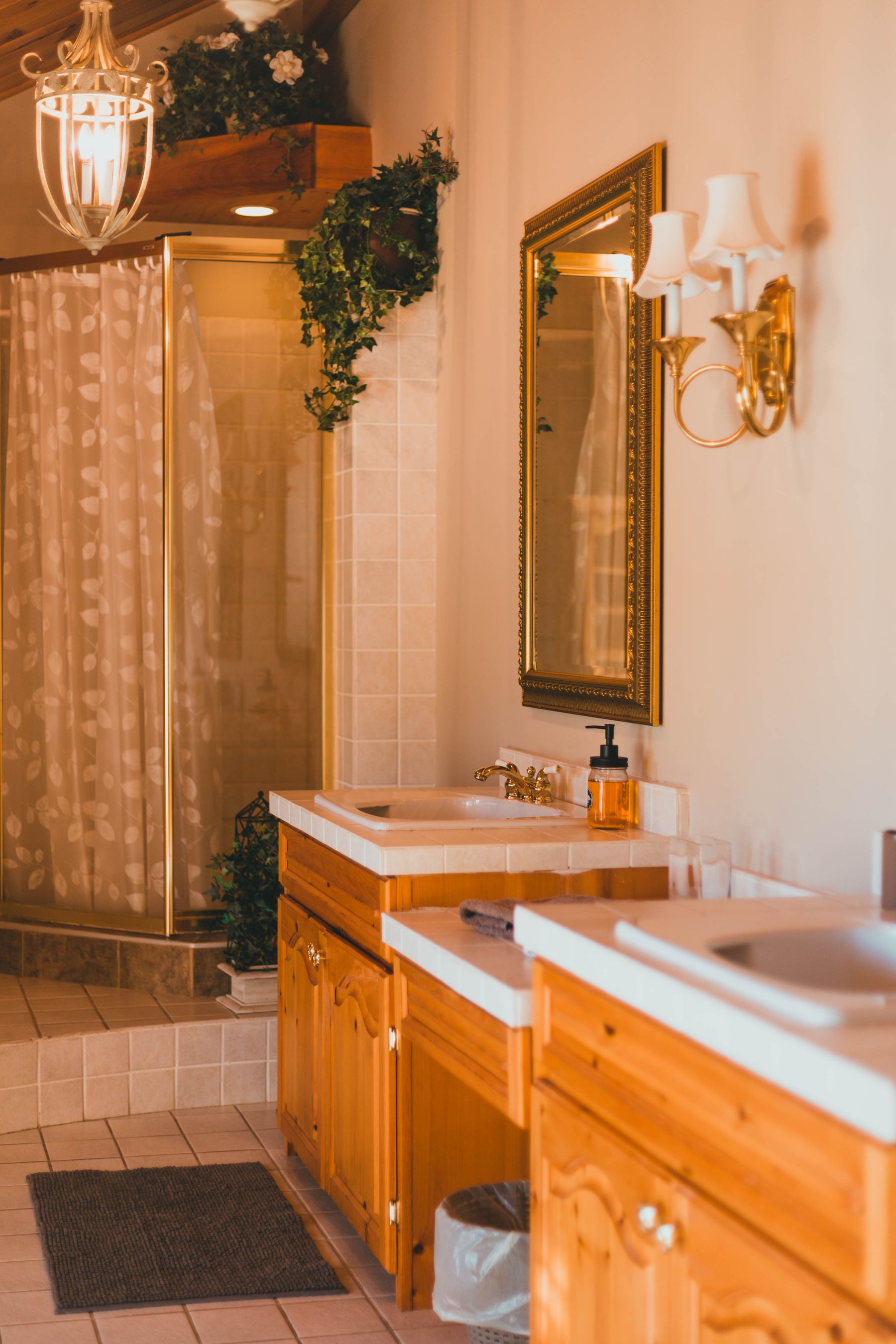
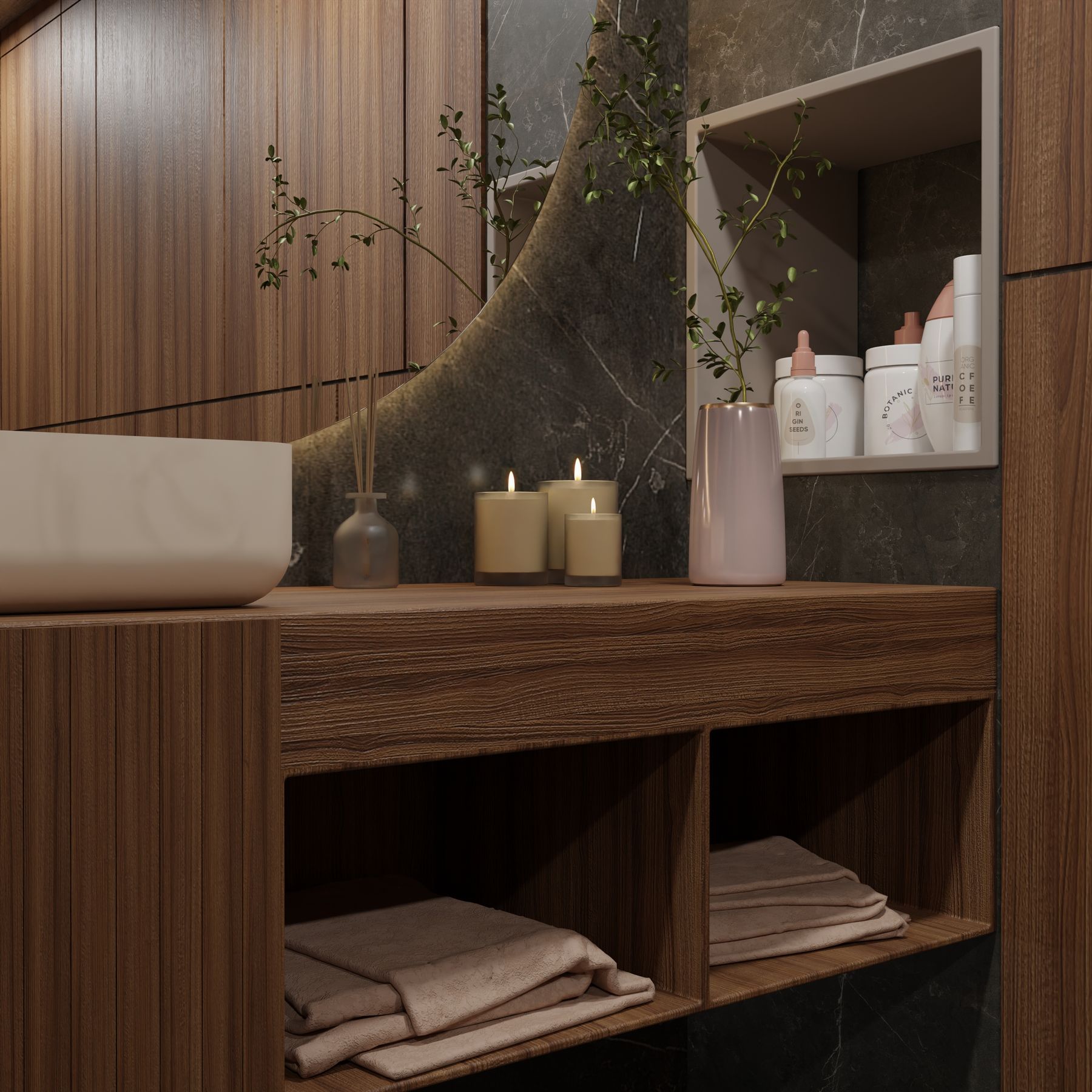
Blue and brown meet naturally in coastal landscapes, and the combination gives a bathroom more depth than blue and white alone. Let wood or a warm stone provide the brown rather than introducing an arbitrary chocolate paint. Pale oak keeps the room airy; mid-tone walnut or stained timber creates a richer East Coast effect. Repeat the wood family only where it is useful, and choose bathroom-suitable construction rather than decorative driftwood finishes.
Reserve Limewash and Plaster Texture for Suitable Zones
Limewash, mineral paint and plaster-like finishes can create the soft variation associated with sun and sea air, but not every formulation belongs in a bathroom. Confirm substrate, splash exposure, sealing, cleaning and manufacturer approval. Use robust tile or another fully specified wet system inside showers and around baths. A textured dry wall is most convincing when adjacent wet surfaces are simpler, allowing variation to read as material rather than a special effect.
Choose Wall Tile for Light, Scale and Water
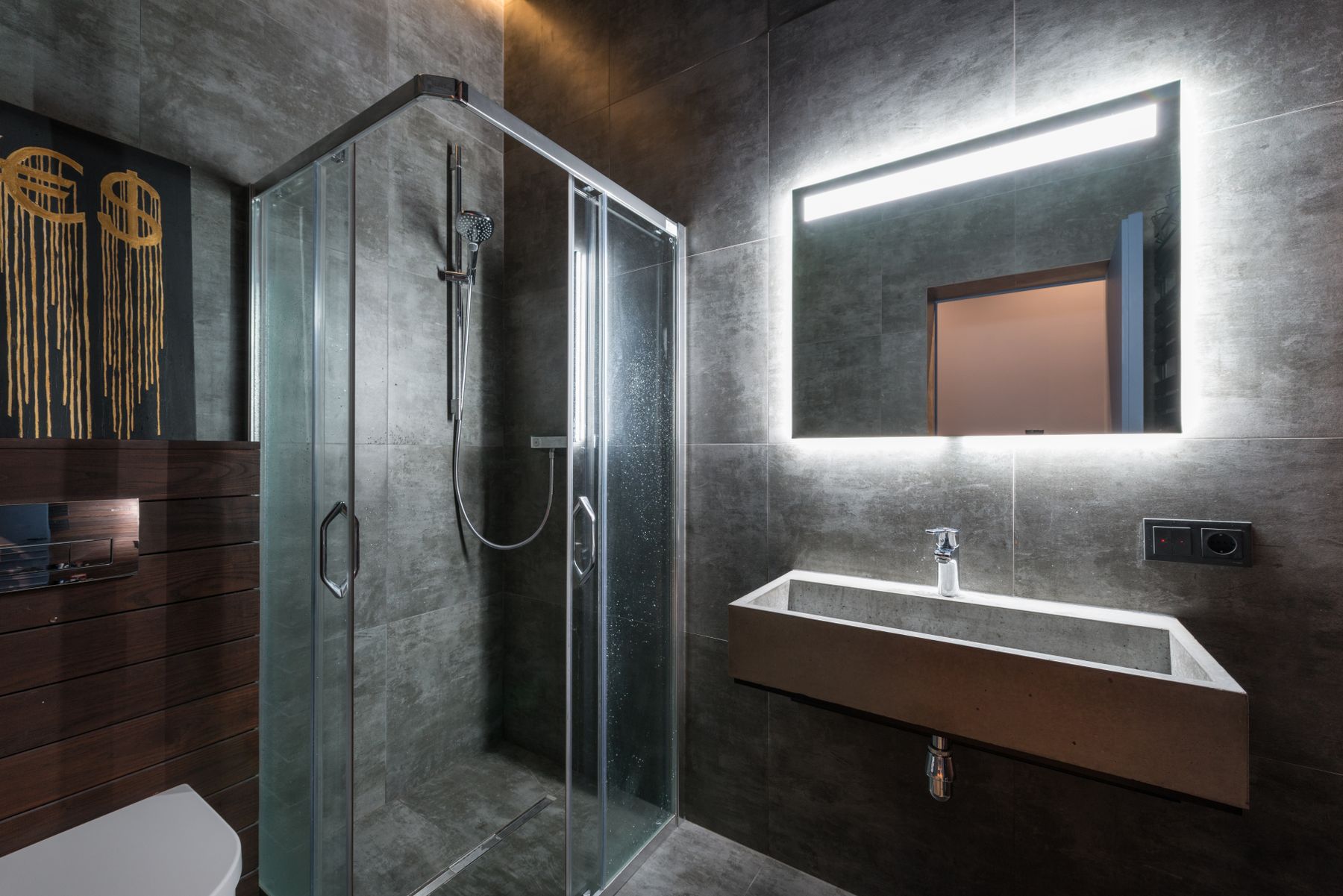
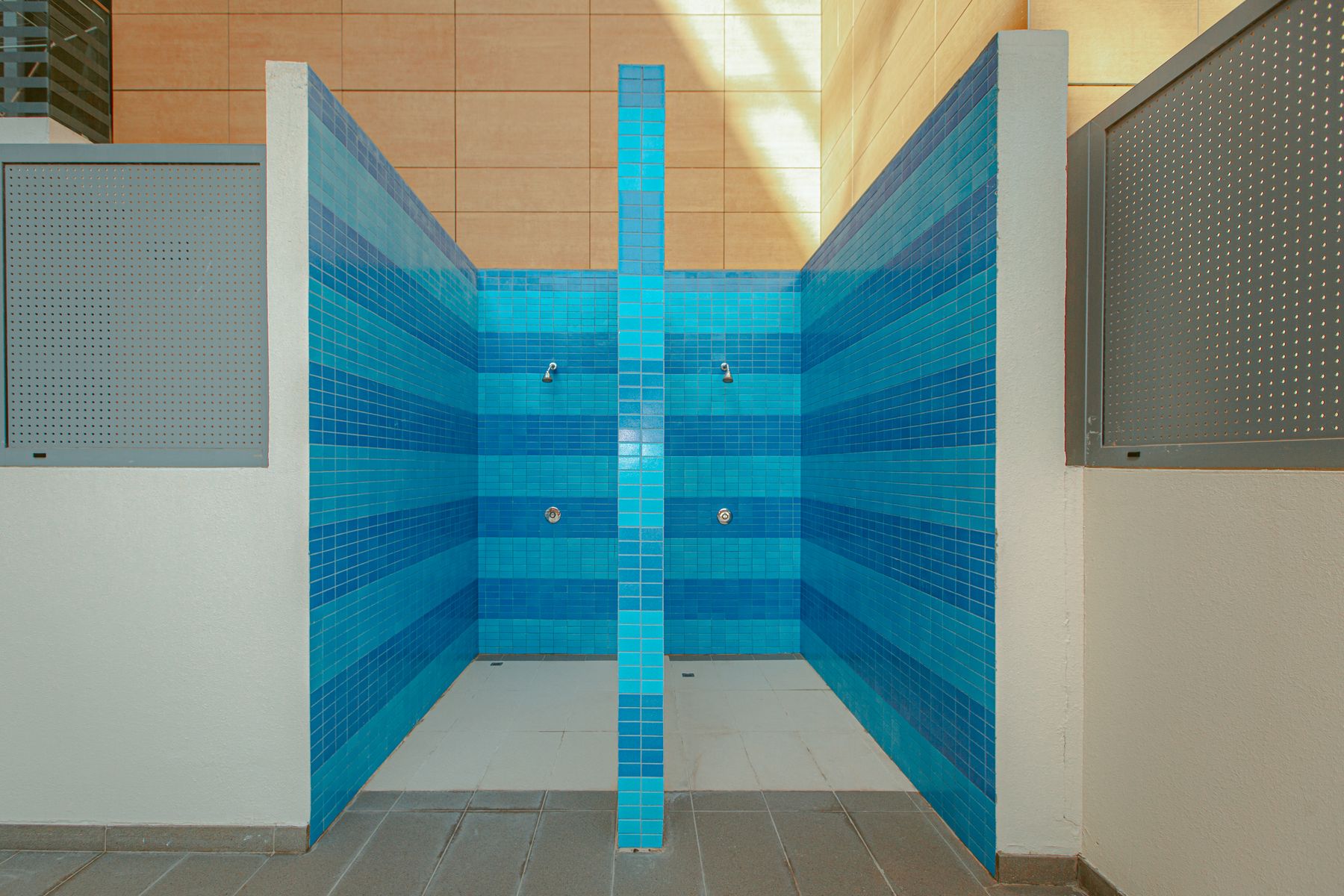
Softly irregular glazed tile, simple squares, narrow rectangles and pale stone-look slabs all fit the coastal vocabulary. Small formats create shimmer and more grout; large formats calm the field and reduce joints. Choose according to the room's scale, substrate and maintenance rather than a trend image. Lay out niches, valves, edges and cuts on an elevation before ordering, and keep decorative borders out unless they belong to a clearly tailored direction.
Use Grout to Support the Surface, Not Draw a Net
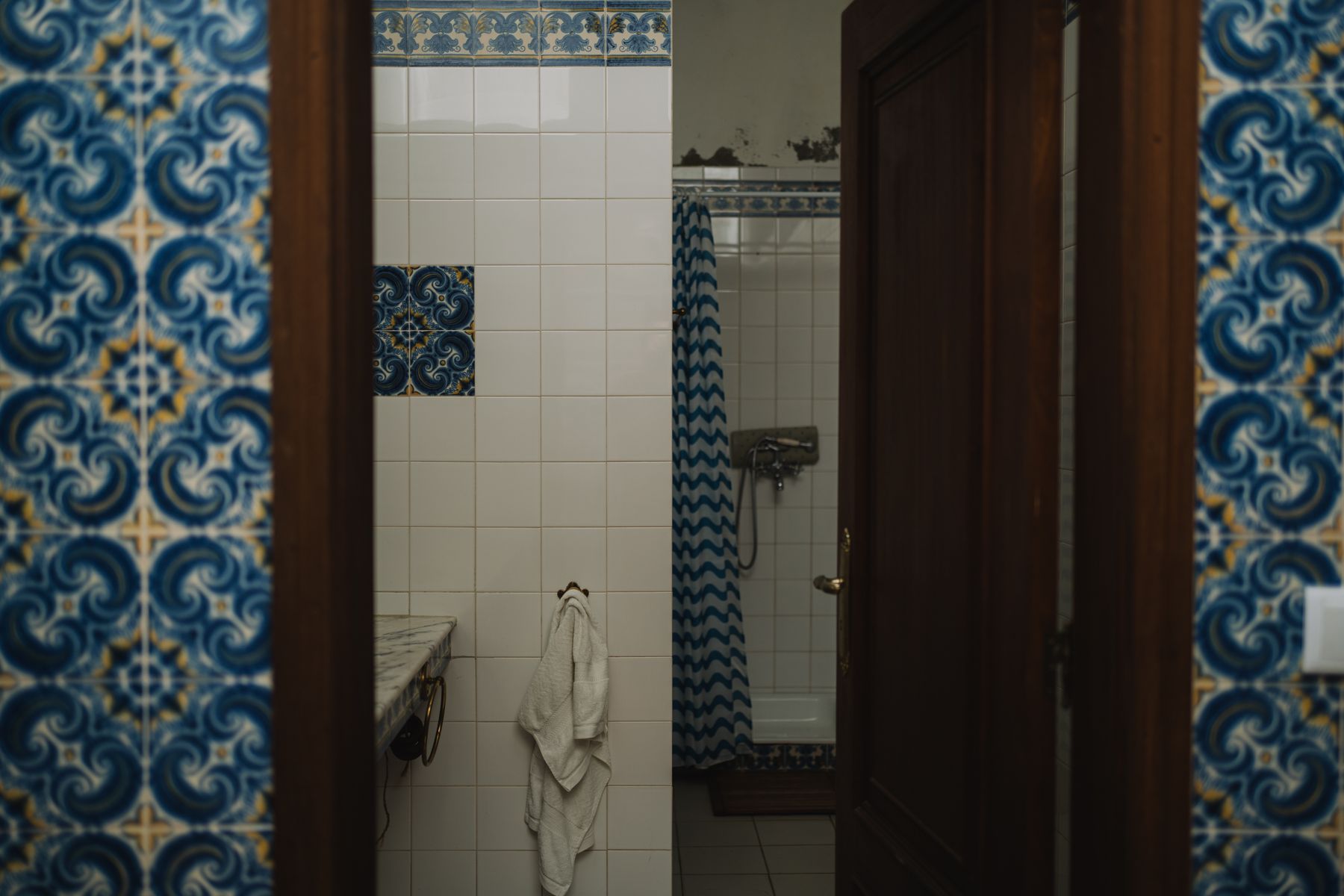
Low-contrast grout lets washed blue, green or white tile read as a continuous watery surface. A darker line produces a crisper, more graphic effect that may suit tailored coastal but can dominate a small shower. Consider joint width, stain resistance, sealant color and the cleaning burden of pale floors. Use sample boards rather than selecting grout from a tiny stick, since the finished joint changes both tile color and scale.
Give the Floor Sand, Stone or Quiet Pattern
A sand-toned porcelain, honed stone look, fine terrazzo or quiet geometric pattern can ground the room. Select the exact finish for wet slip performance and cleaning; a photograph cannot establish either. If the walls already carry blue glaze, let the floor be calmer. In a plain white room, a small-scale pattern can add collected character. Plan thresholds and perimeter cuts so the floor does not look like a decorative mat dropped into the space.

Let Honed Stone Supply Natural Movement
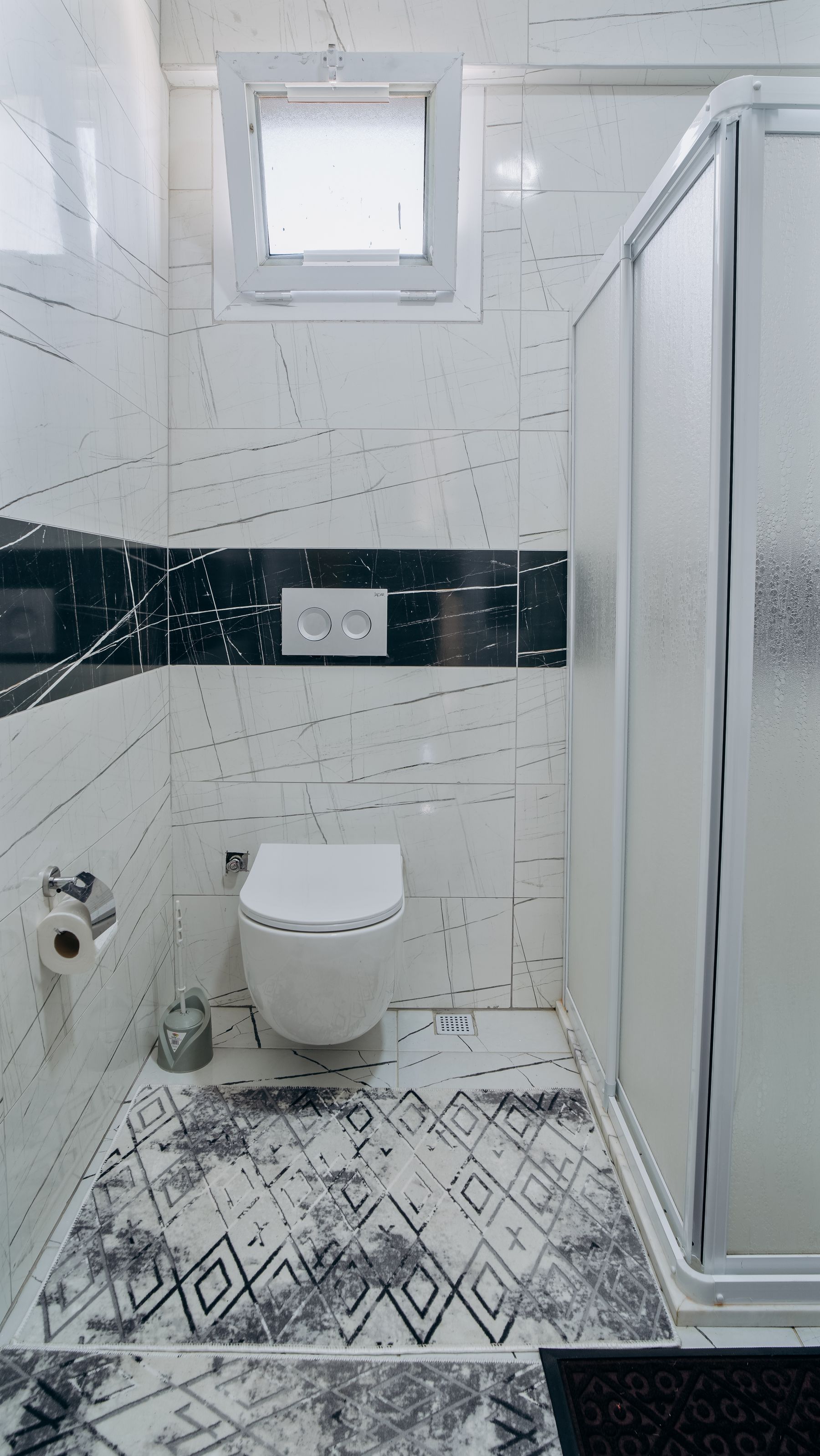
Limestone, marble and convincing mineral-look porcelain can connect the bathroom to weathered coastal geology. Use veining and tonal variation as the pattern, then simplify neighboring tile and textiles. Natural stone requires honest discussion of porosity, etching, sealing and acceptable patina; porcelain can reduce care but must still be detailed at edges and joints. Do not specify a vulnerable surface merely because its name sounds coastal.
Use Pale Wood Where It Can Dry
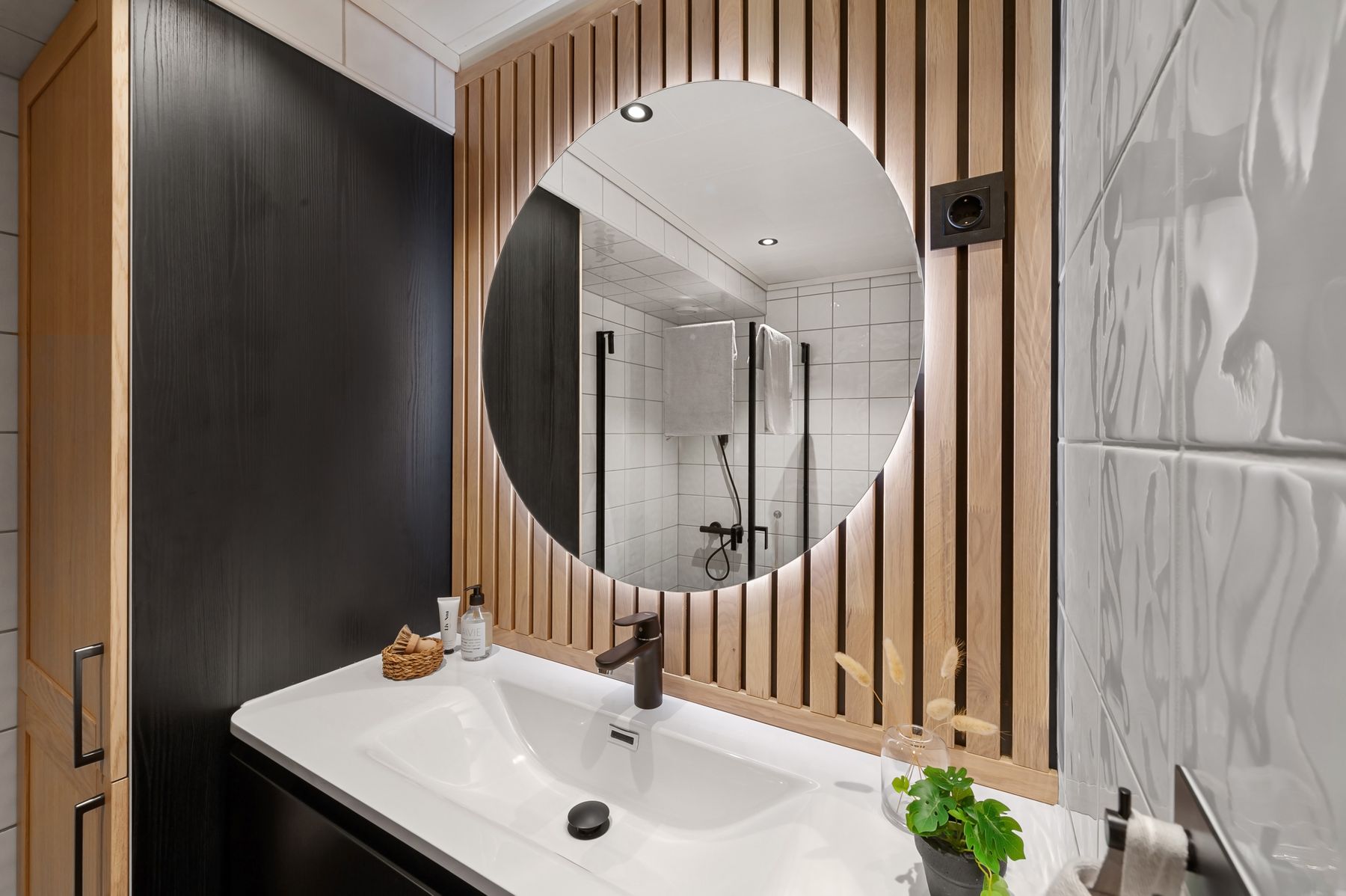
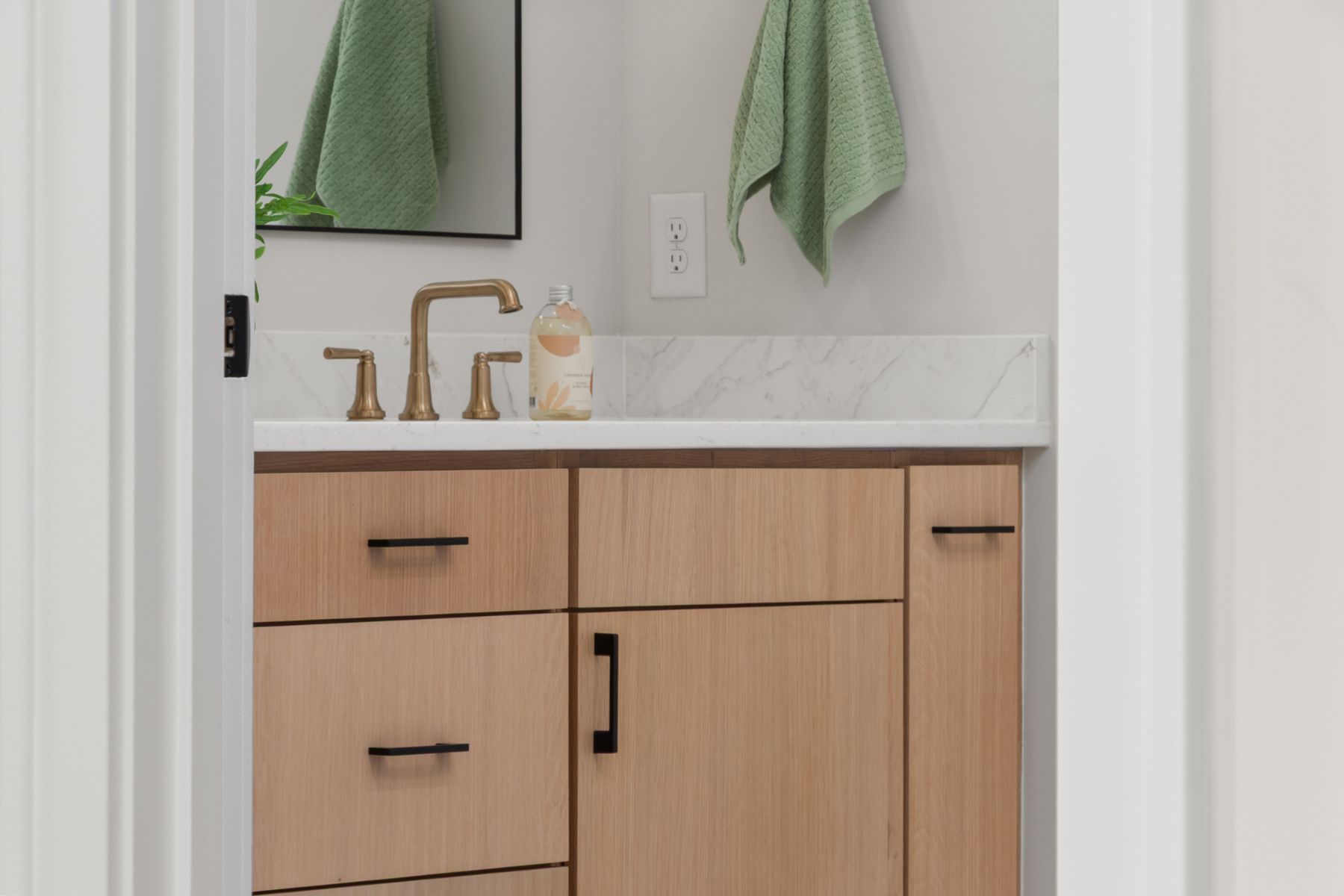
Oak-like and other light timber tones work well at vanities, mirrors and shelves outside persistent splash. Specify moisture-resistant cabinet construction, protected edges and a finish that can be repaired or maintained. Leave air around freestanding pieces and do not allow water to sit on horizontal grain or exposed end grain. Wood-look porcelain may suit a heavily exposed floor, but use it as a performance choice rather than mixing several imitation species.
Allow Darker Wood in a Richer East Coast Version
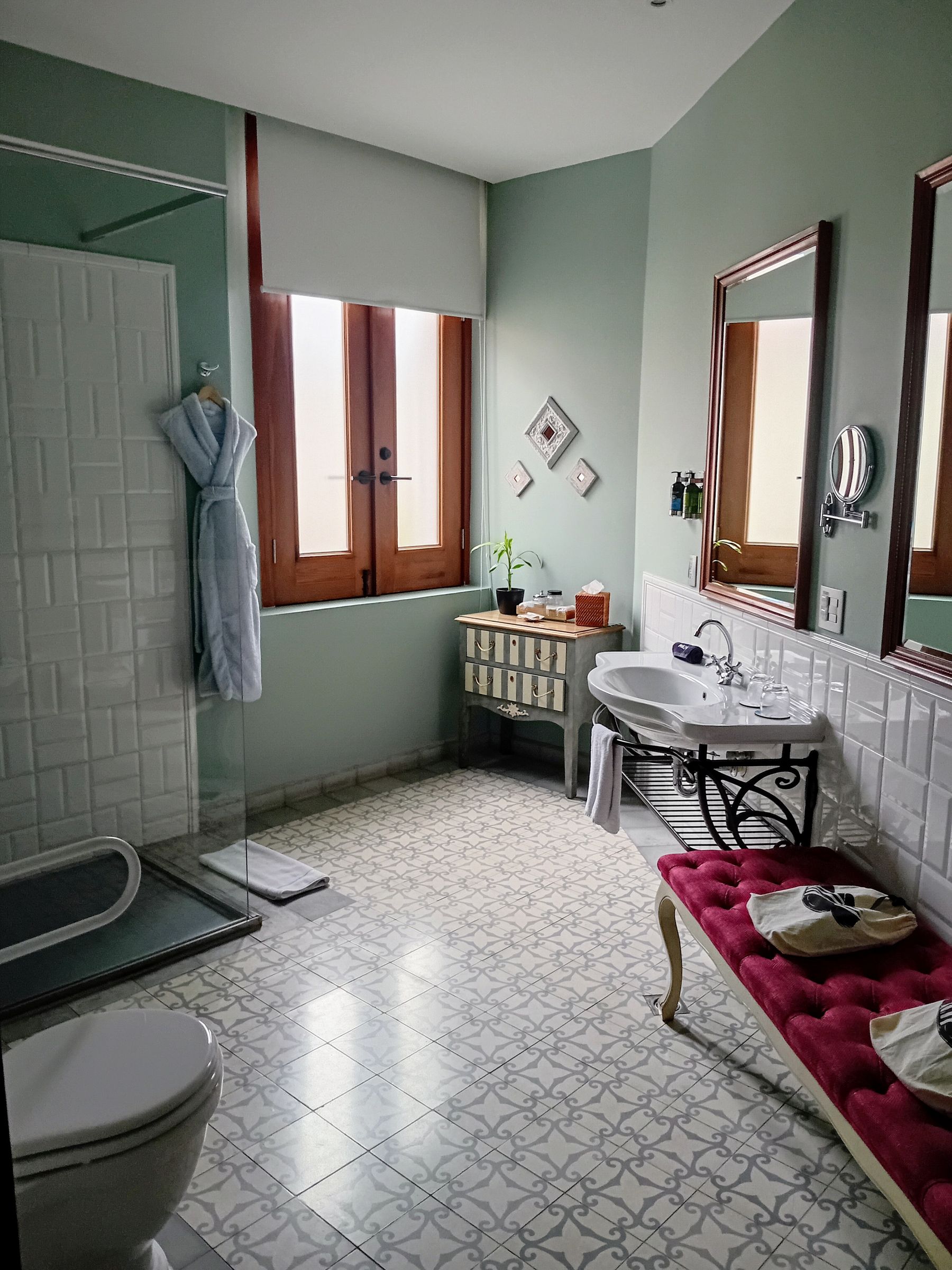
Coastal does not require every board to look sun-bleached. Walnut, mahogany-toned stain or medium oak can anchor navy, nickel and warm white in a tailored room. Keep the wood to a strong vanity or mirror rather than darkening every surface, and provide sufficient light around it. A richer timber also helps distinguish a mature residential bathroom from a casual beach-rental formula. Coordinate grain and undertone instead of combining multiple ‘weathered’ stains.
Keep Woven Texture Functional and Dry
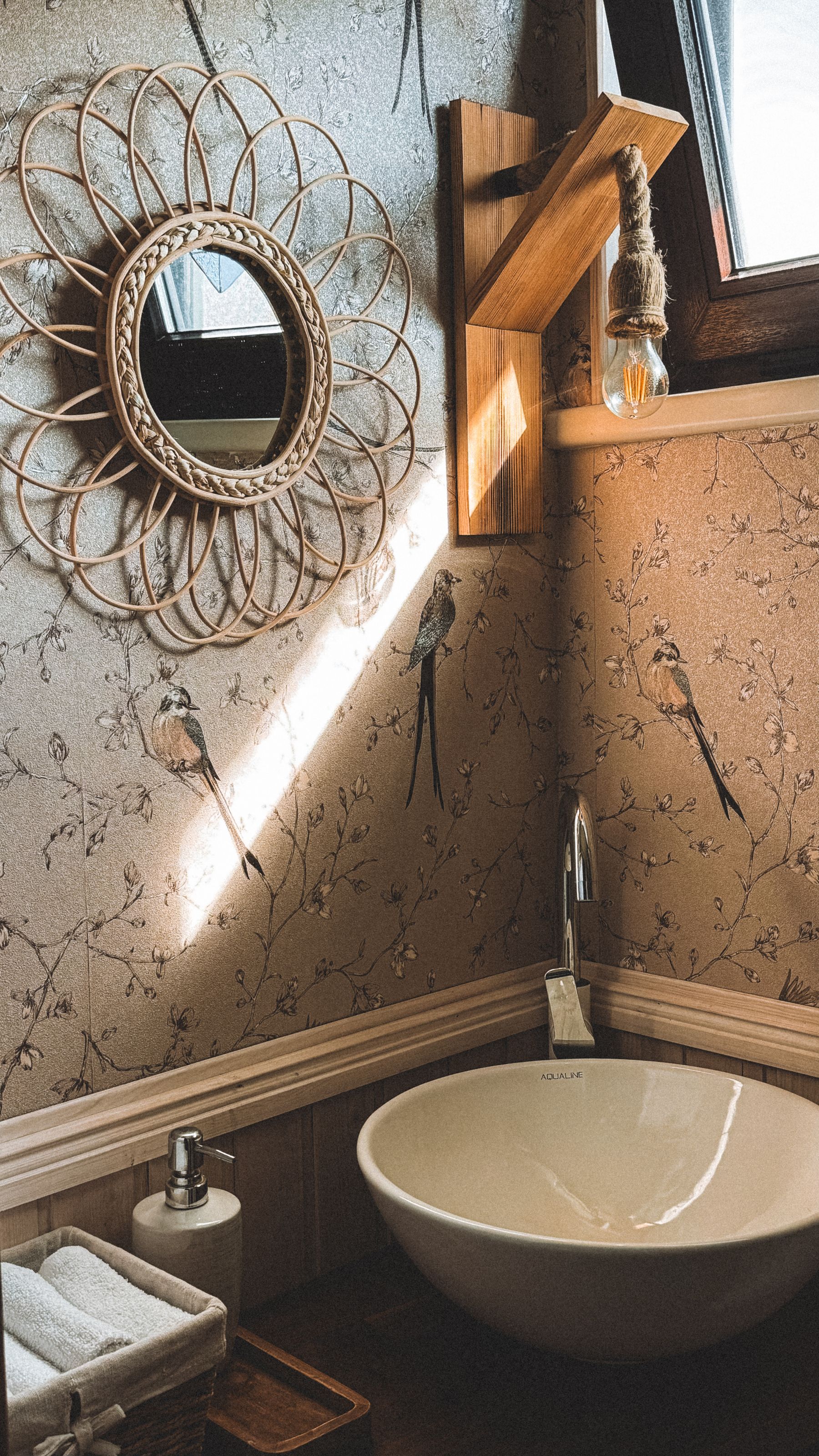
Rattan, cane, seagrass and basketry can add a useful hand-made layer, but absorbent fibers do not belong beside constant splash or in a room that dries slowly. Use one mirror frame, closed-liner basket or stool where ventilation is reliable and cleaning remains possible. Synthetic lookalikes may perform better in exposed locations, though their weave still traps dust. Woven texture should be a supporting material, not evidence that the room is coastal.
Make the Vanity Calm, Useful and Well Proportioned
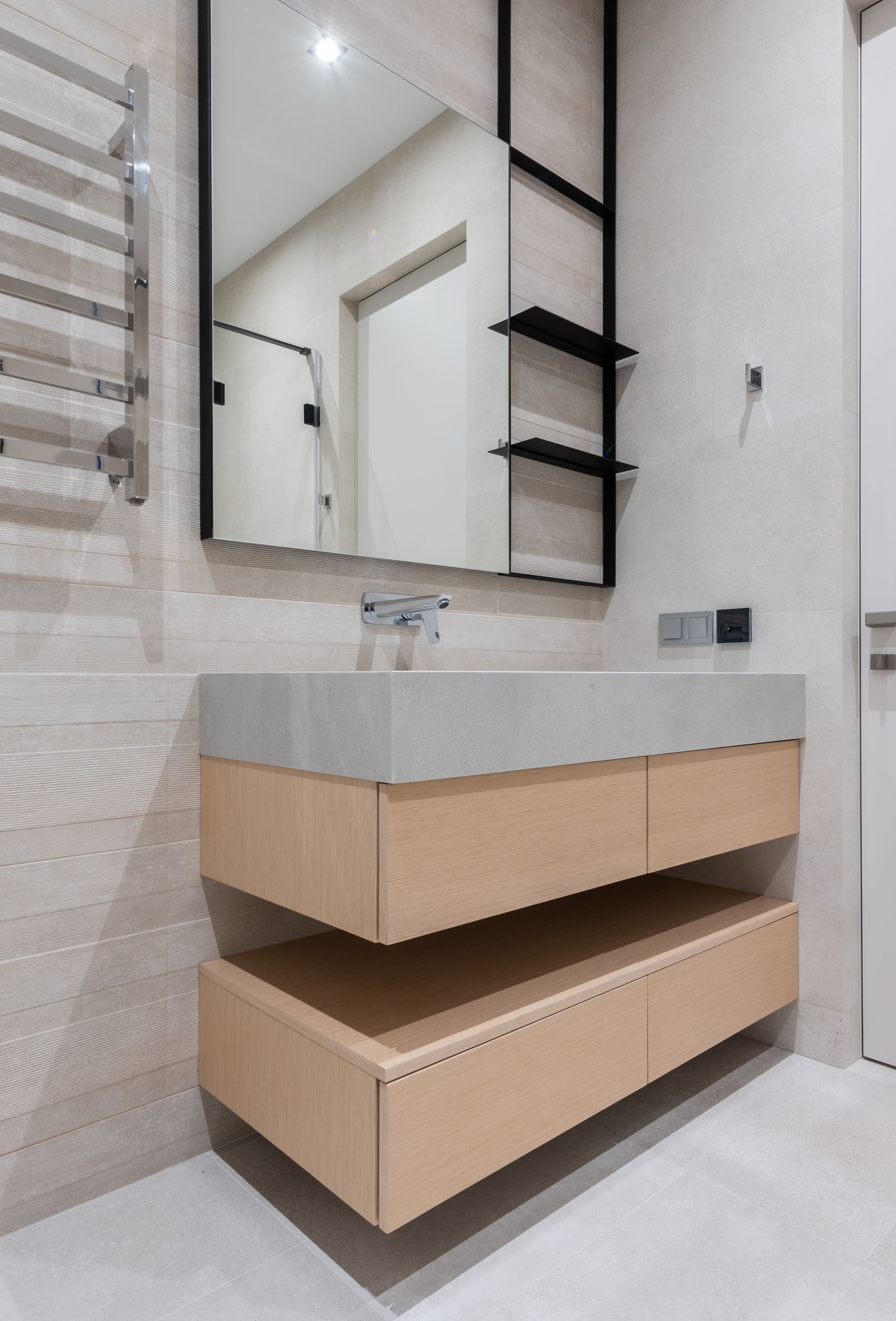
A coastal vanity can be pale timber, warm white, sea-glass green or controlled navy, but it must first organize the routine. Prioritize full-extension drawers, plumbing access and a counter that tolerates water. Slatted fronts and open shelves look breezy yet collect dust and expose visual clutter. Use them only when the storage plan justifies them. Size the basin, tap and mirror as one working composition rather than selecting each item independently.
Open the Shower Visually but Control the Water
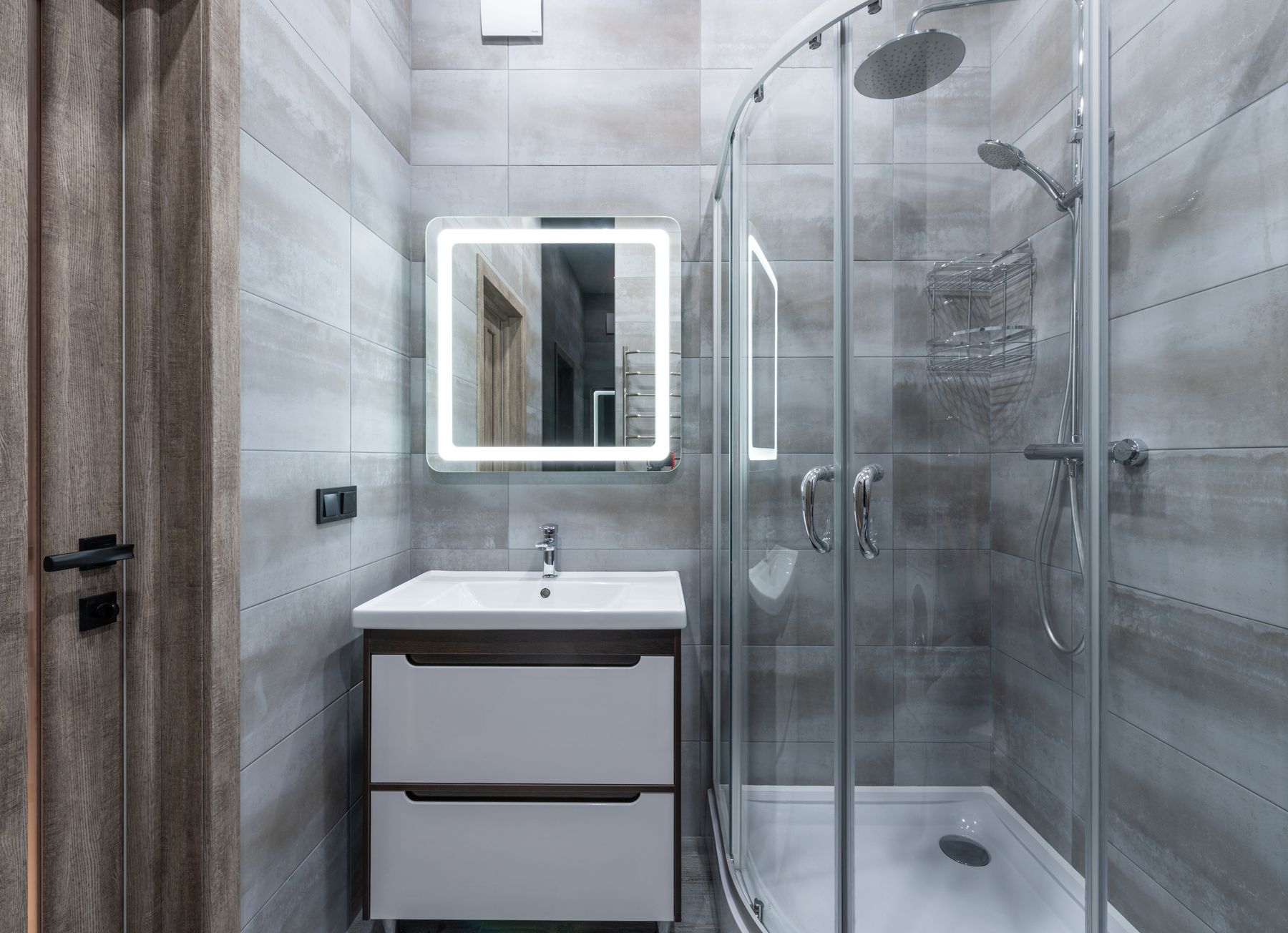
A clear panel or lightly framed enclosure allows daylight and pale material to continue through the wet zone. That does not mean removing every barrier. Model spray direction, shower size, floor falls, drainage and the dry route before choosing a fully open design. A low curb may contain water better than a fashionable short panel. Keep glass hardware aligned with the room's metal family and provide reachable surfaces for cleaning.
Use the Bath as a Quiet Horizon
A low built-in bath, simple freestanding form or compact back-to-wall model can provide the room's long calm line. Choose by bathing comfort, cleaning access, filler position and floor capacity rather than the idealized view. Freestanding tubs need more clearance than photographs imply; built-in forms often perform better in family bathrooms and small spaces. A window view can be valuable, but privacy and glare must be solved at both day and night.
Choose Metal by Mood and Exposure
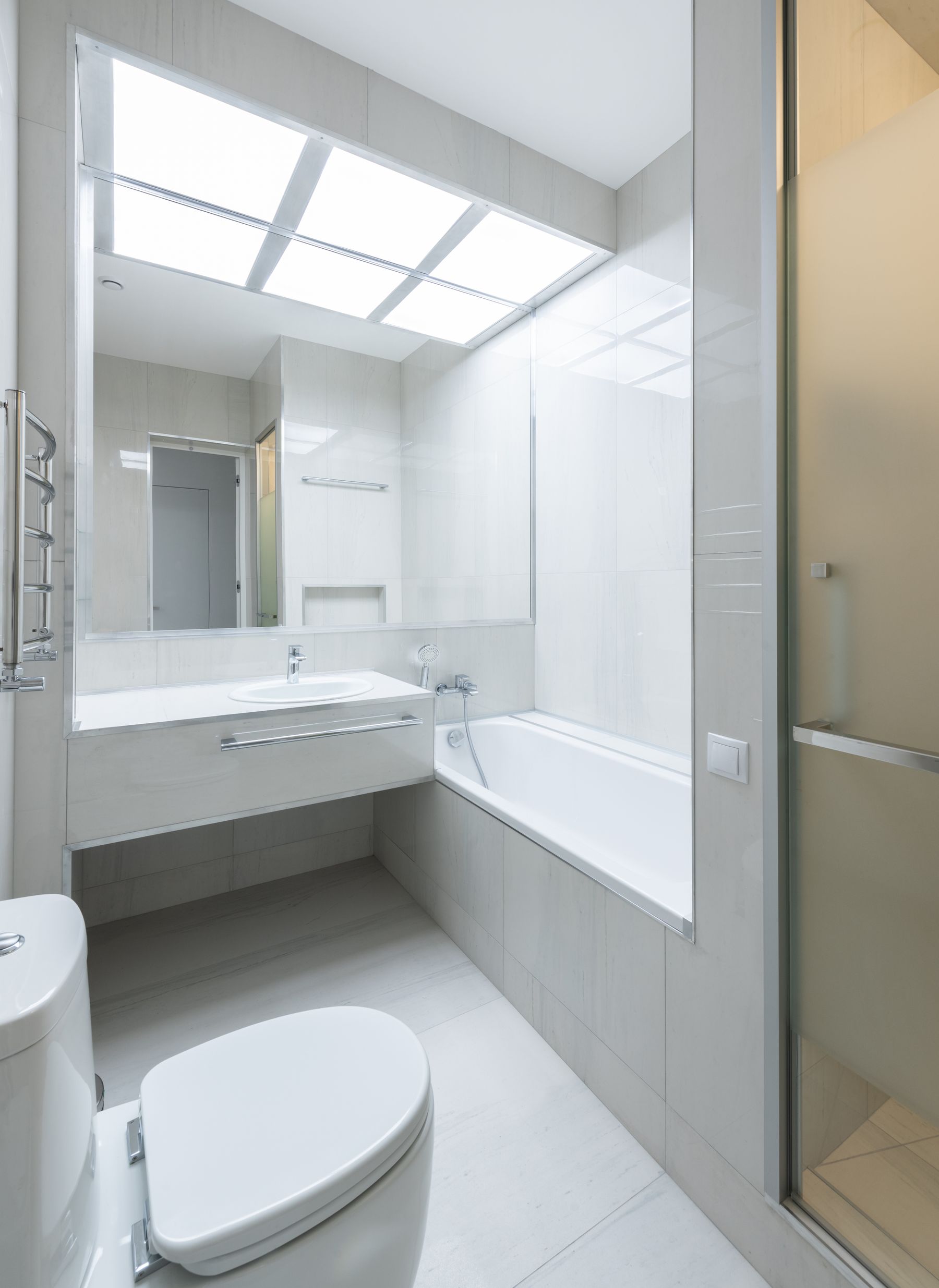
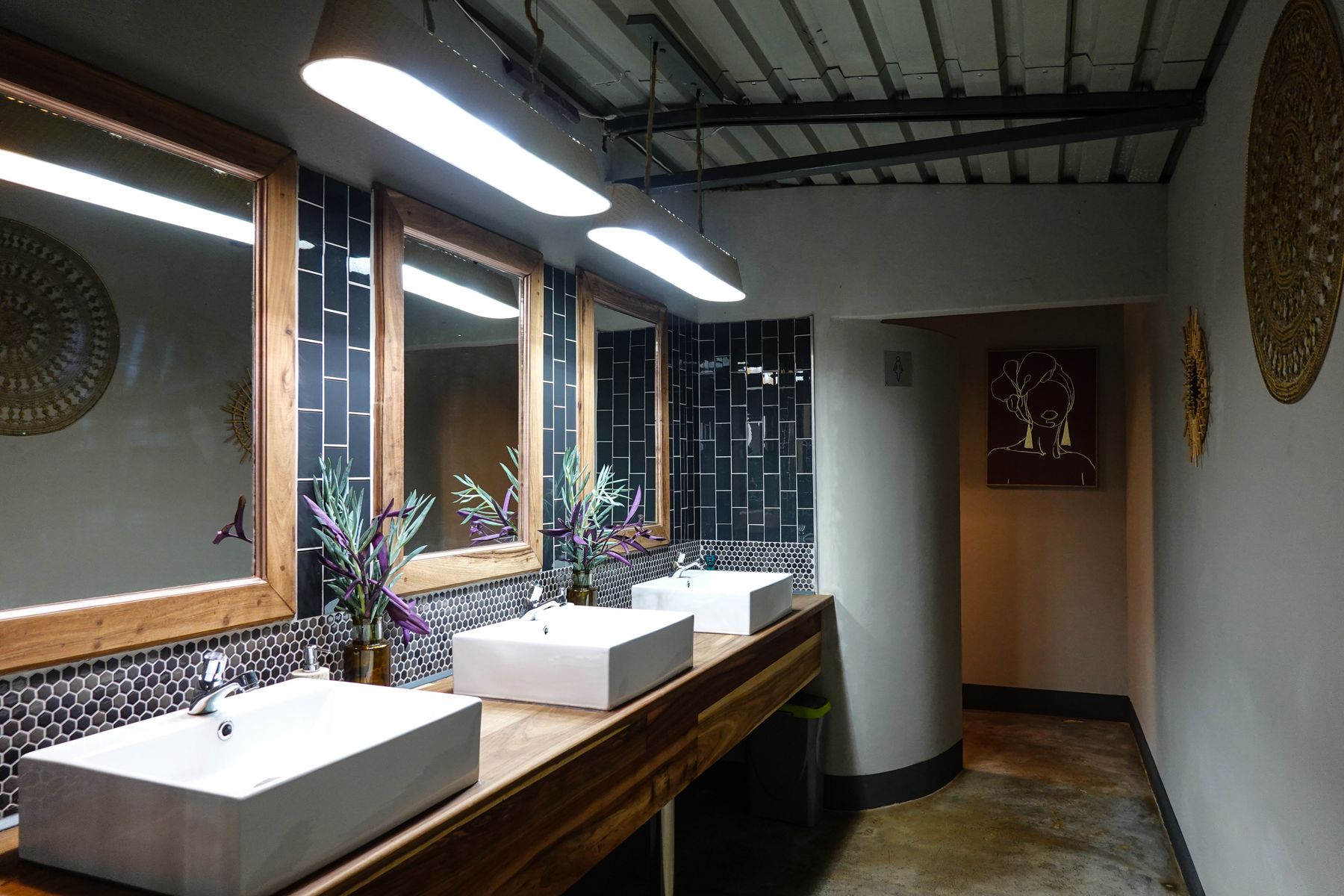
Polished nickel and chrome support a clear, tailored coastal direction; brushed nickel softens reflections; aged brass adds sun-warmed contrast; matte black creates a sharper contemporary line. Ask whether the finish is plated, coated or living, and follow its cleaning guidance. In an actual marine environment, confirm corrosion resistance and warranty rather than assuming a finish name predicts performance. One dominant family with limited variation feels considered and remains easier to replace.
Use the Mirror to Multiply Light, Not Theme
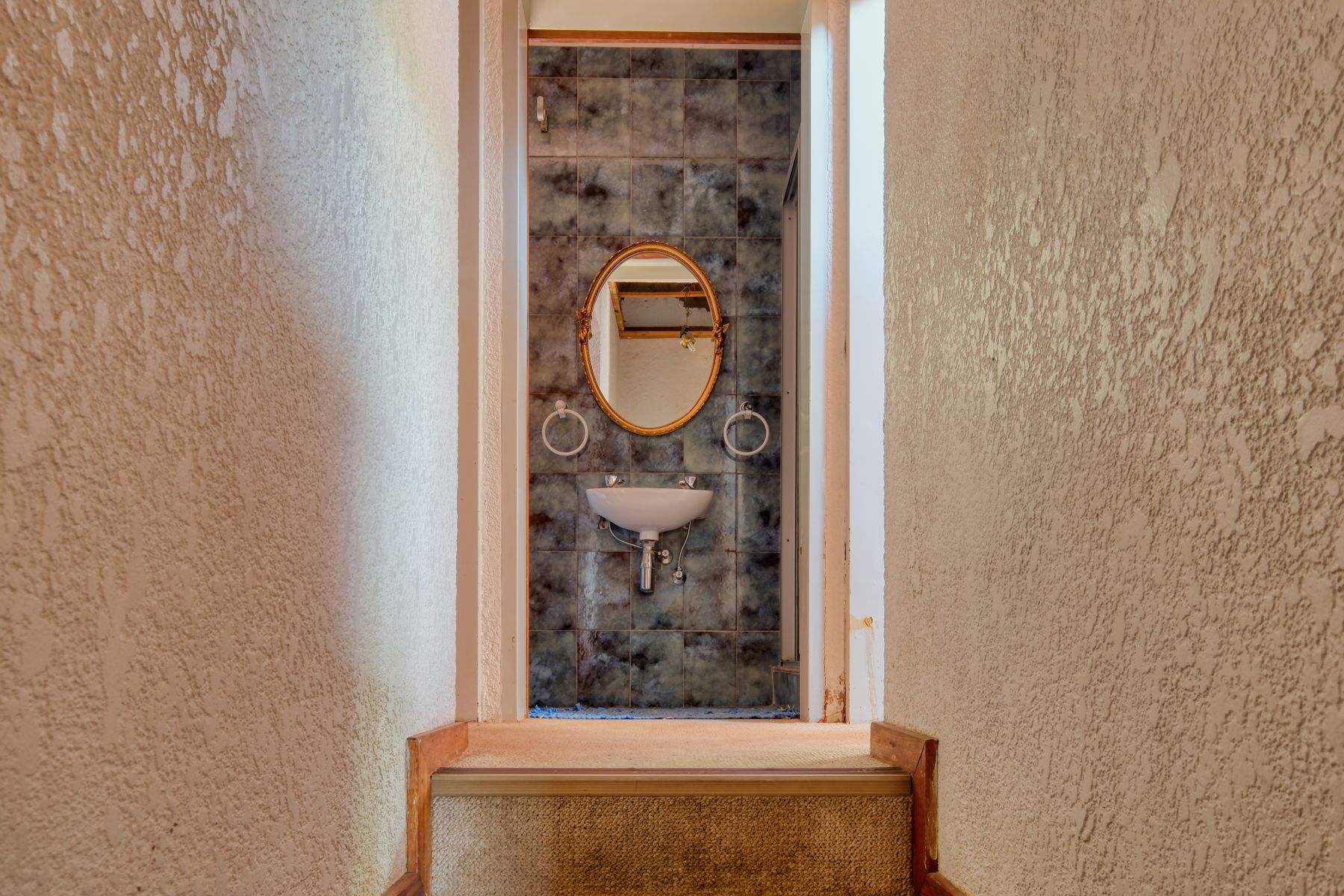
An oval, softly rectangular or full-width mirror can echo the coastal preference for gentle lines while improving light at the vanity. Scale it to the basin and sconces, not to an arbitrary wall center. Avoid porthole and rope frames unless a deliberately nautical room is intended. A timber, nickel or thin painted frame can connect the mirror to cabinetry without becoming a decorative label. Confirm edge protection and mounting for the humid environment.
Layer Lighting for Bright Days and Soft Evenings
Coastal brightness should not disappear at sunset. Combine broad ambient light with vertical illumination at the face and a lower, softer source for bathing or night use. Choose high color quality so blue-green tile, warm white paint and wood retain their intended undertones. Decorative pendants can work outside restricted wet zones, but do not trade safe placement or useful mirror light for a beach-house silhouette. Put layers on separate controls.
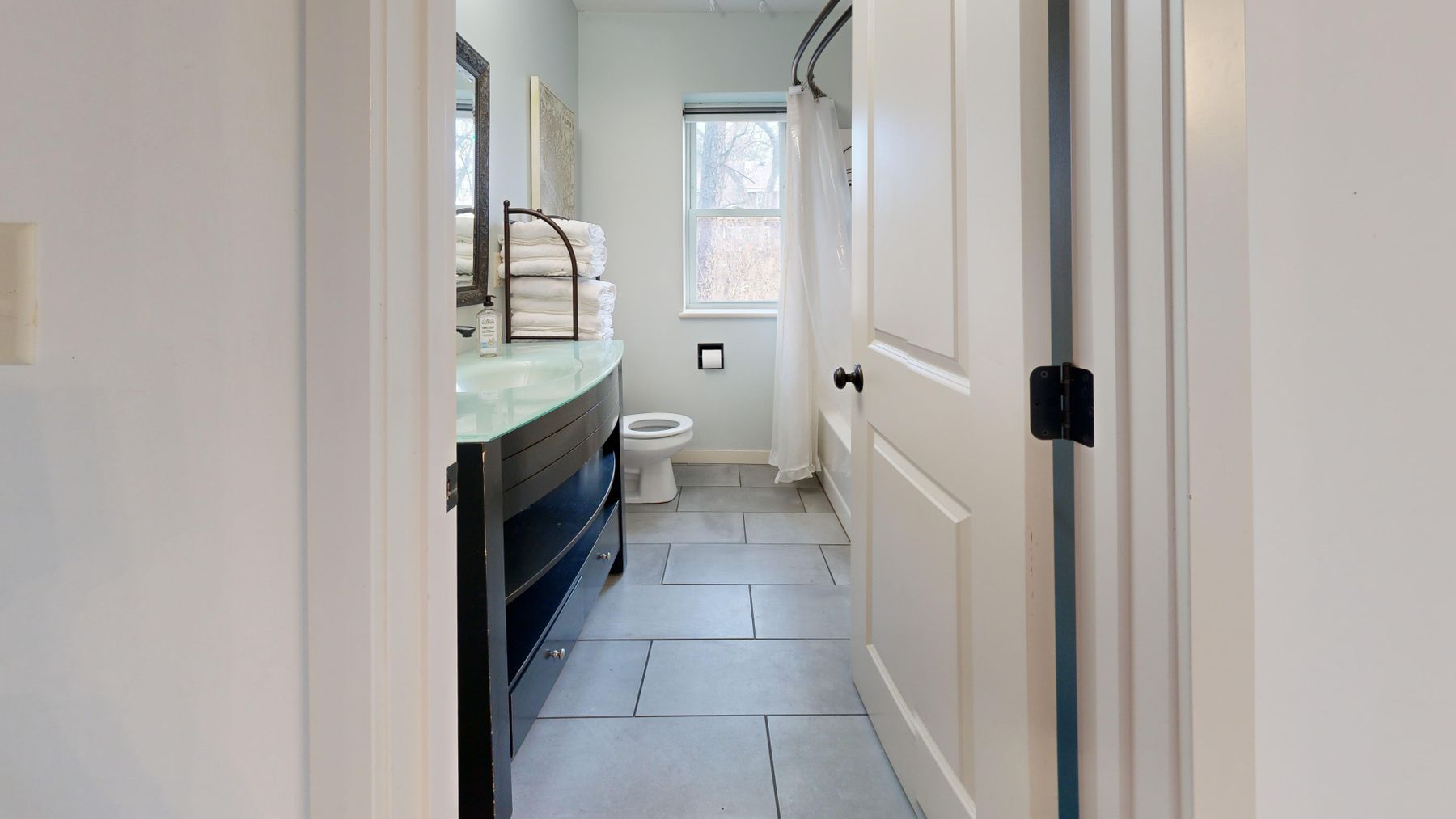
Solve Window Privacy Without Losing the Sky
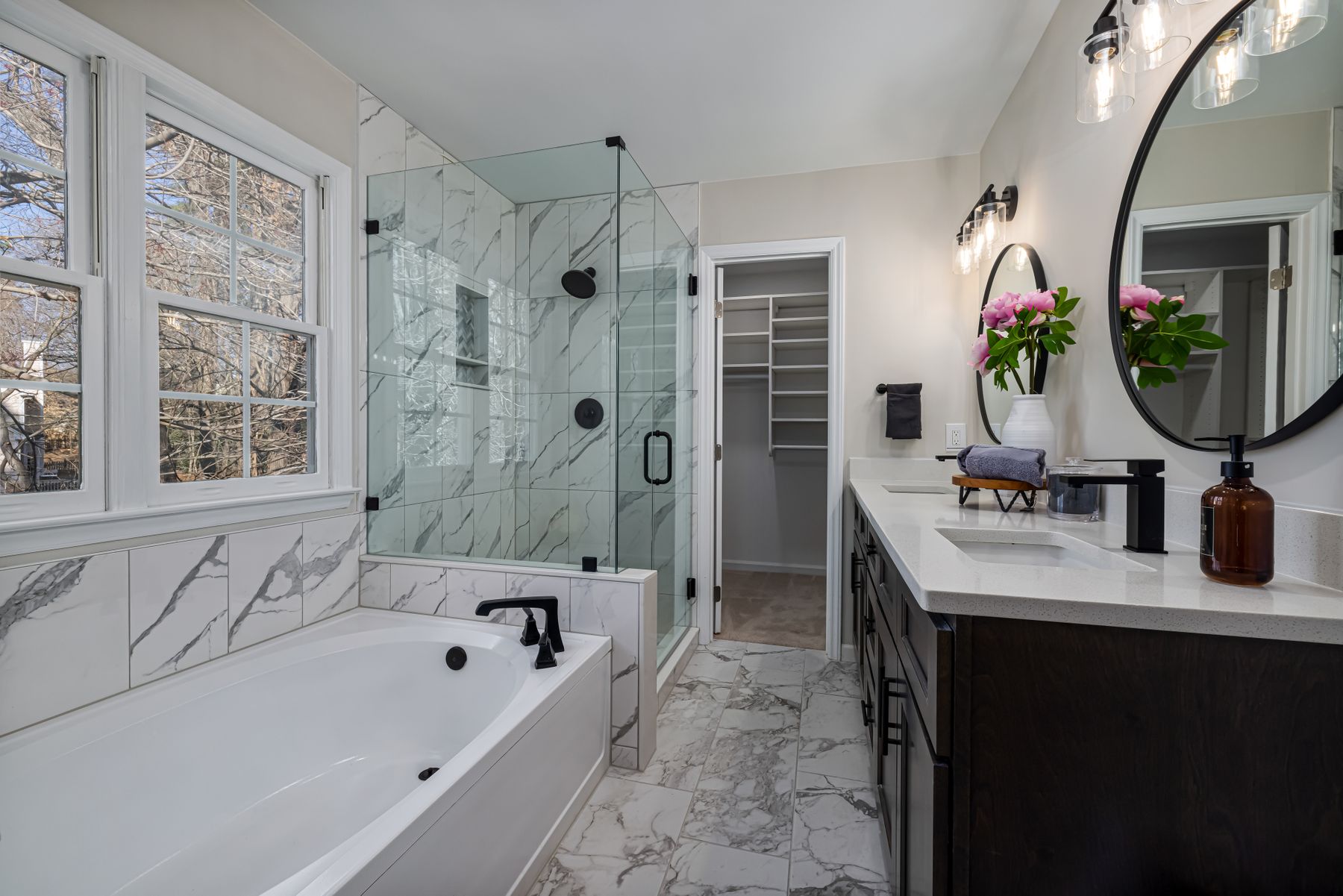
Use the exterior approach and nighttime conditions to determine the privacy zone. Obscured lower glazing, a bottom-up blind or a carefully placed screen may protect the body while leaving sky and tree views open. Select moisture-suitable fabrics and hardware, and avoid a heavy treatment that stays damp beside a bath. If the window is within the wet zone, coordinate waterproofing, sill fall and frame material before choosing the decorative solution.
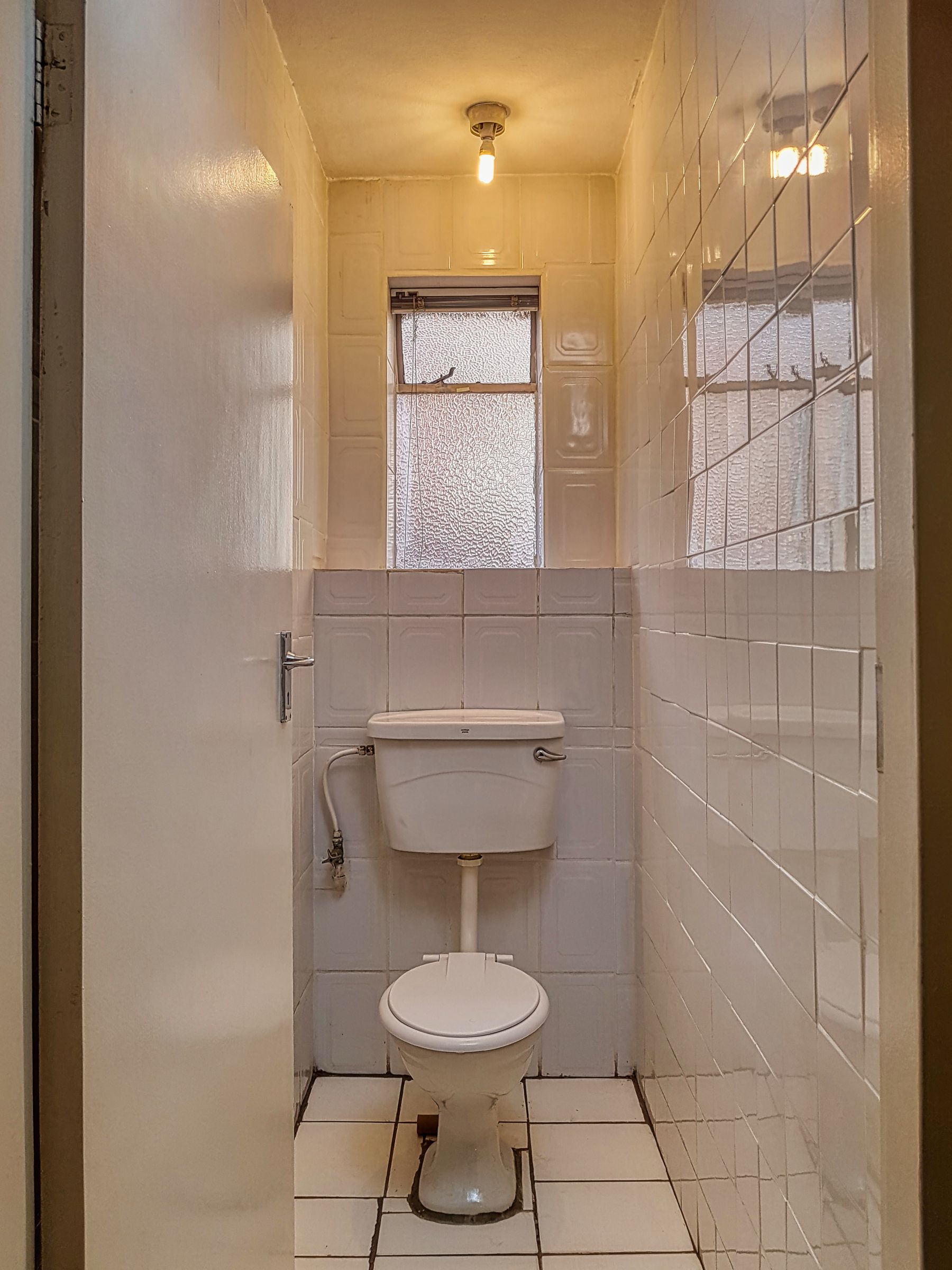
Scale Coastal Ideas Down for a Small Bathroom
Use one pale field, one warm material and one controlled color note rather than shrinking every coastal cue into the room. A wall-hung or shallow vanity can improve floor visibility; clear glass or a well-sized curtain can keep the wet zone flexible. Do not sacrifice medicine storage, towel drying or door clearance for decorative baskets. Run the main wall tile consistently to reduce visual stops, then use a small amount of timber or sea-glass color to provide identity.
Preserve Contrast and Support Easy Movement
Pale rooms can hide level changes, controls and the edges of sanitaryware. Use tonal contrast at the floor, vanity, handles or shower threshold so the layout remains legible. Plan blocking for future grab rails, reachable storage, lever controls and a stable place to sit even if these are not immediately required. A level-entry shower can support access, but only with correct falls and splash control. Coastal calm should reduce effort, not erase useful visual information.
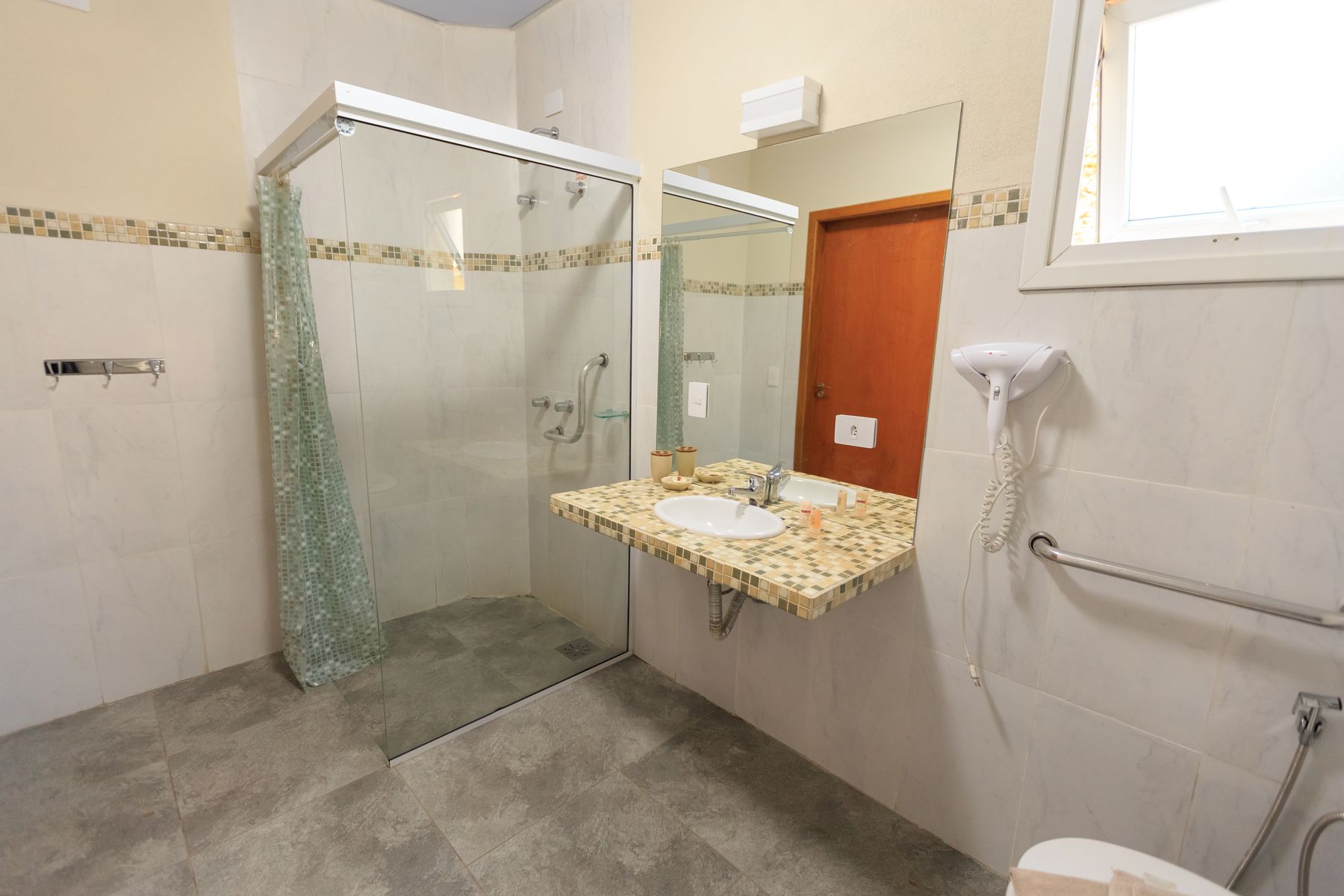
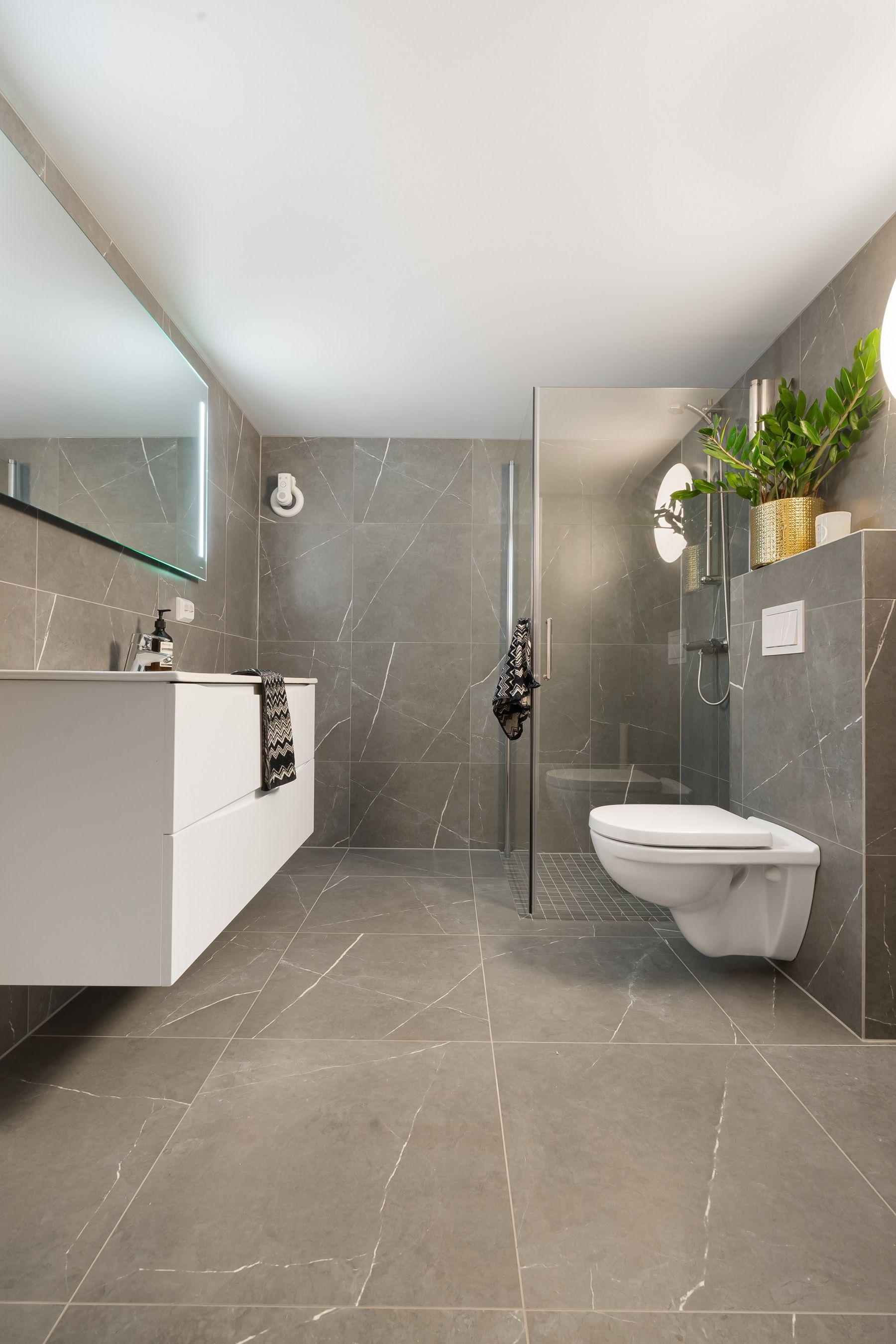
Ventilate for Wood, Fiber and Pale Grout
Coastal materials make poor drying visible: pale grout discolors, baskets smell, timber edges swell and metal spots. Size and duct extraction correctly, provide make-up air and use timer or humidity control where appropriate. A window brings light but is not a dependable substitute for mechanical ventilation. Give towels space to dry and avoid blocking air around cabinetry. The relaxed material palette lasts only when the room returns to dry conditions promptly.

Specify for Salt Air in a Real Coastal Location
A bathroom near the sea may receive salt-laden air through open windows and on wet bodies, accelerating corrosion and leaving deposits on glass and metal. Ask suppliers about the precise alloy, coating, fixings, edge protection and warranty for the exposure level. Marine-grade stainless components can still stain if contaminated or neglected, and concealed fixings matter as much as visible taps. Rinse deposits, dry hardware and maintain seals according to the product guidance.
Plan Cleaning Around Water Marks and Texture
Clear glass, pale grout, honed stone, woven fibers and living metals each age differently. Decide which patina is acceptable and which marks signal failed maintenance. Keep care guidance for every permanent finish, provide access around baths and vanities, and avoid deep texture where soap or salt deposits collect. A squeegee route, towel-drying place and uncluttered counter matter more than another decorative tray. Long-term calm depends on reducing friction in the cleaning routine.
Finish With the No-Nautical-Props Test
Mentally remove the shells, anchors, rope, coral forms, signs and striped towels. If the bathroom still feels open, natural and connected to water-side light, the permanent design is working. If not, improve one architectural relationship: window and sightline, vanity and floor, tile and grout, or stone and wood. Then check storage, wet performance, contrast and care. Coastal should be recognizable as a spatial atmosphere, not because accessories explain the theme.