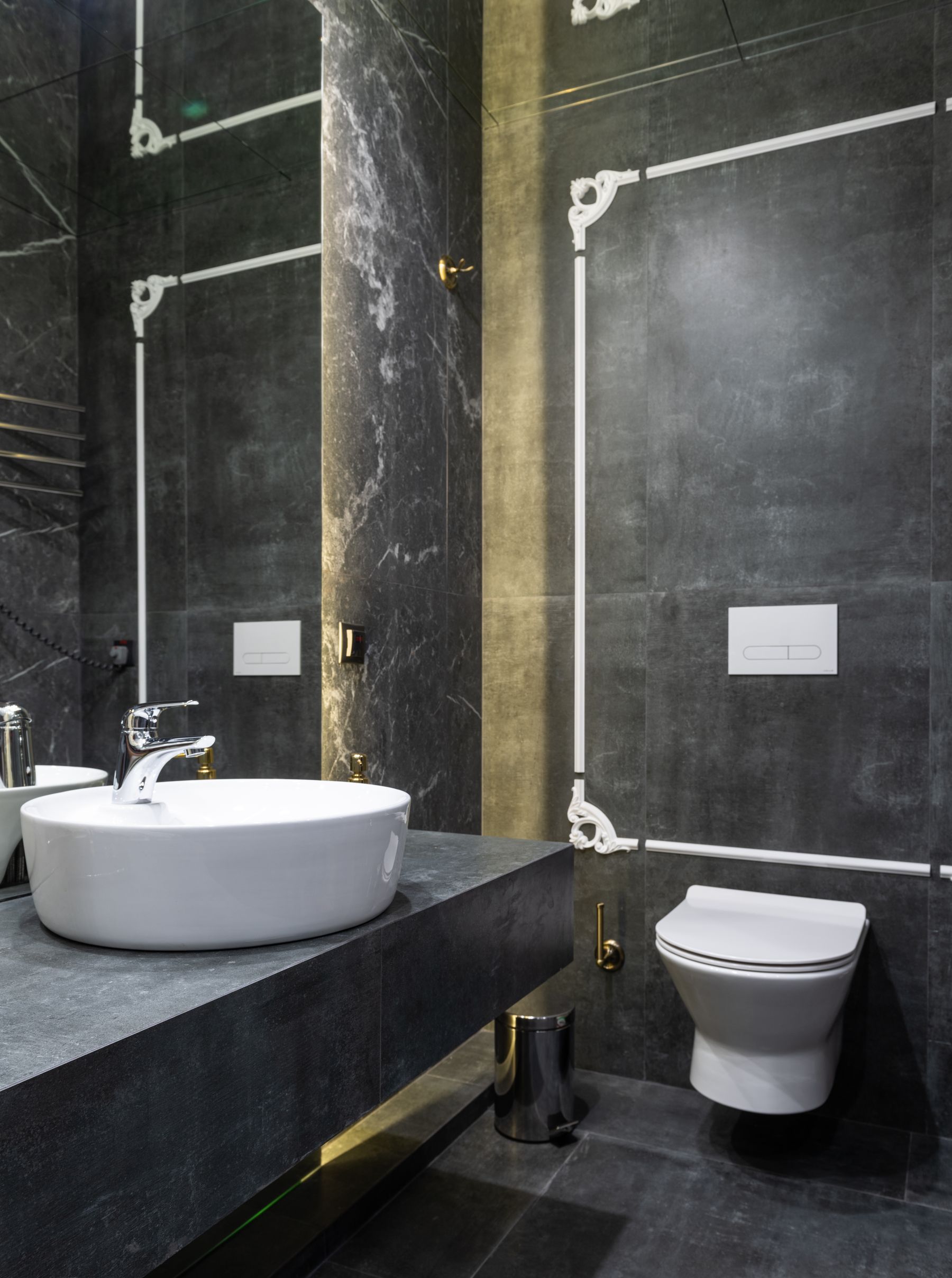
Map the Dark Palette Before Choosing Materials
Begin with charcoal, navy, forest, espresso, tobacco, burgundy and near-black samples at the same approximate value. Decide whether the room should feel mineral, cool, earthy or enveloping before tile veining and metal finishes distract from the color decision. A dark palette can contain more than one hue, but one should lead and the others should support material transitions rather than compete equally.
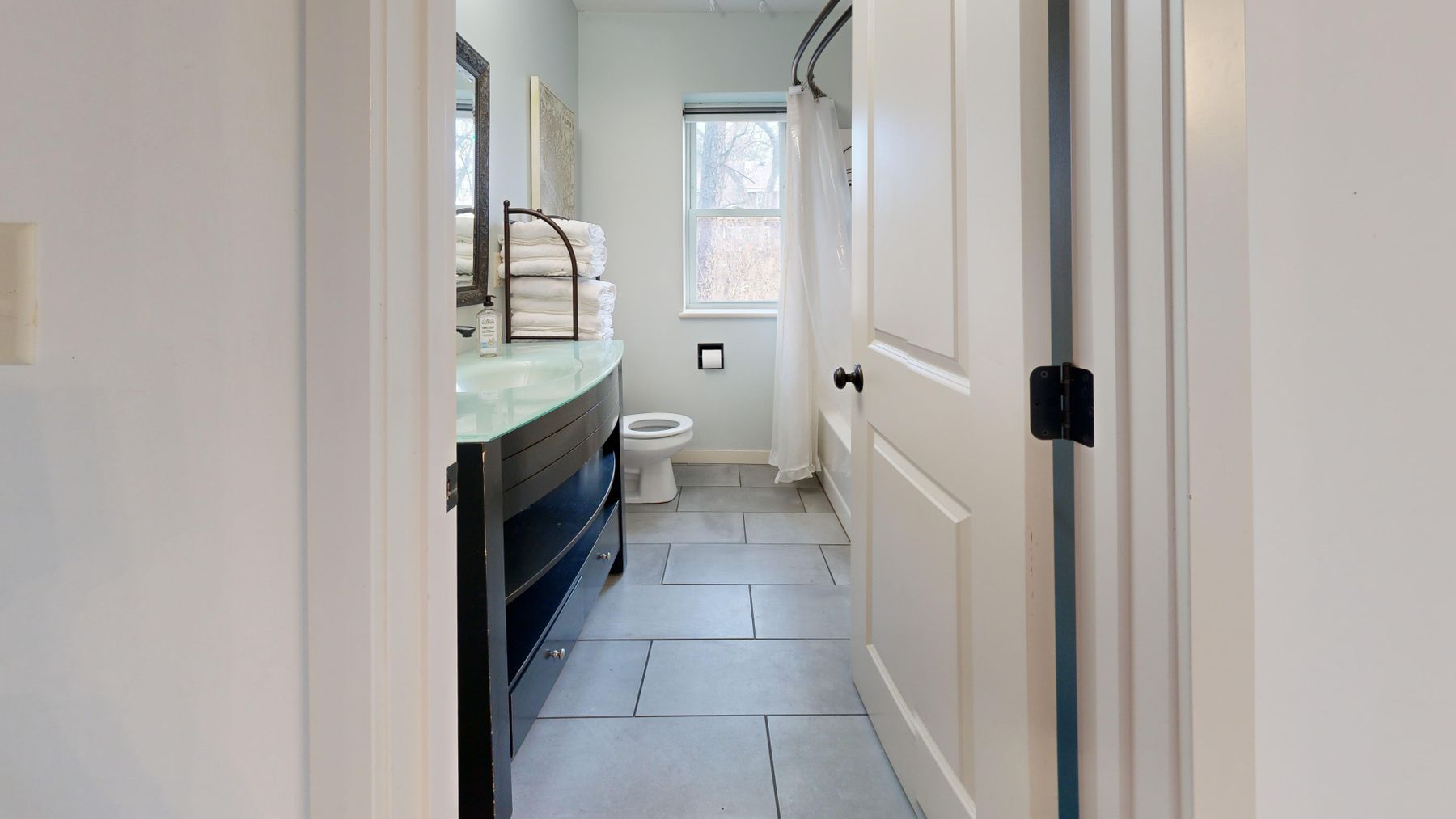
Read Daylight Before Deepening the Walls
Daylight reveals whether a near-black leans blue, green, brown or violet and determines where texture remains visible. Observe the room on bright and overcast days, then trace which wall loses detail first. A dark bathroom does not require a large window, but useful daylight should not be blocked by tall storage. Continue to [Bathroom Window Ideas](/ideas/bathroom-window-ideas/) for privacy and glazing strategies.
Use Charcoal When Black Feels Too Absolute
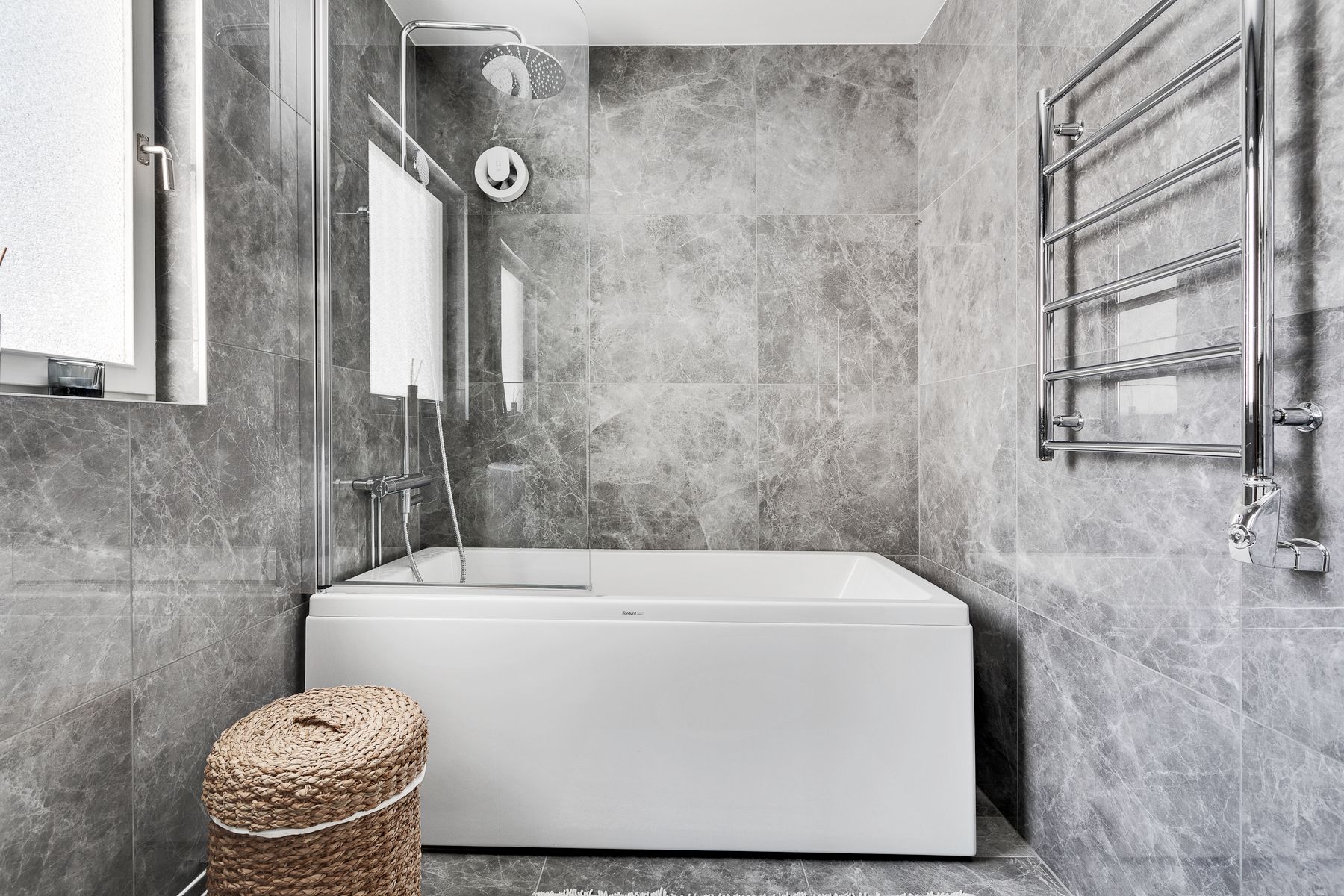
Charcoal introduces depth while preserving more visible modelling than a uniform black. Blue-grey charcoal feels sharper beside nickel and white ceramic; brown-grey charcoal sits more naturally with oak, brass and limestone. Avoid specifying it from a digital swatch because surrounding grout and warm lamps can shift the reading. [Grey Bathroom Ideas](/ideas/grey-bathroom-ideas/) offers a fuller undertone comparison.
Let Navy Create Depth Without Reading Black
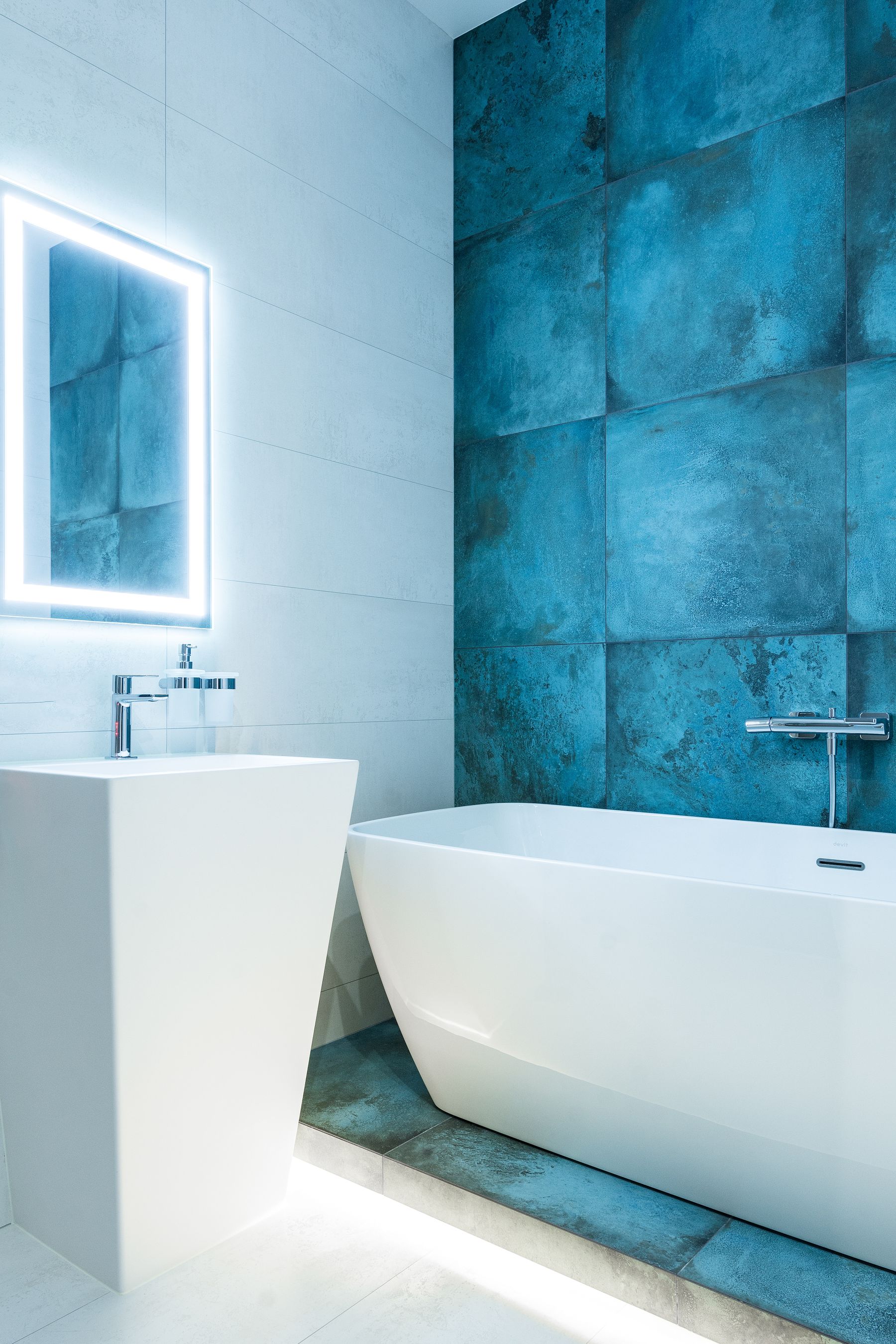
Navy can feel architectural in a shower, vanity wall or painted envelope while maintaining a clear blue identity. Pair it with warm timber, brown stone, nickel or controlled brass rather than defaulting to nautical stripes. Preserve enough direct light for blue to remain visible at night. The broader [Blue Bathroom Ideas](/ideas/blue-bathroom-ideas/) guide compares denim, teal, cobalt and navy in greater depth.
Choose Forest or Moss for an Earthier Dark Room
Forest, moss and deep olive connect naturally with stone, walnut and aged metal. Greyed green is calmer; blue-green feels cooler and more contemporary; yellow-olive becomes earthier under warm light. Keep plants secondary so the room remains color-led rather than botanical. Compare the wider shade range in [Green Bathroom Ideas](/ideas/green-bathroom-ideas/).
Build Warm Darkness With Espresso and Tobacco
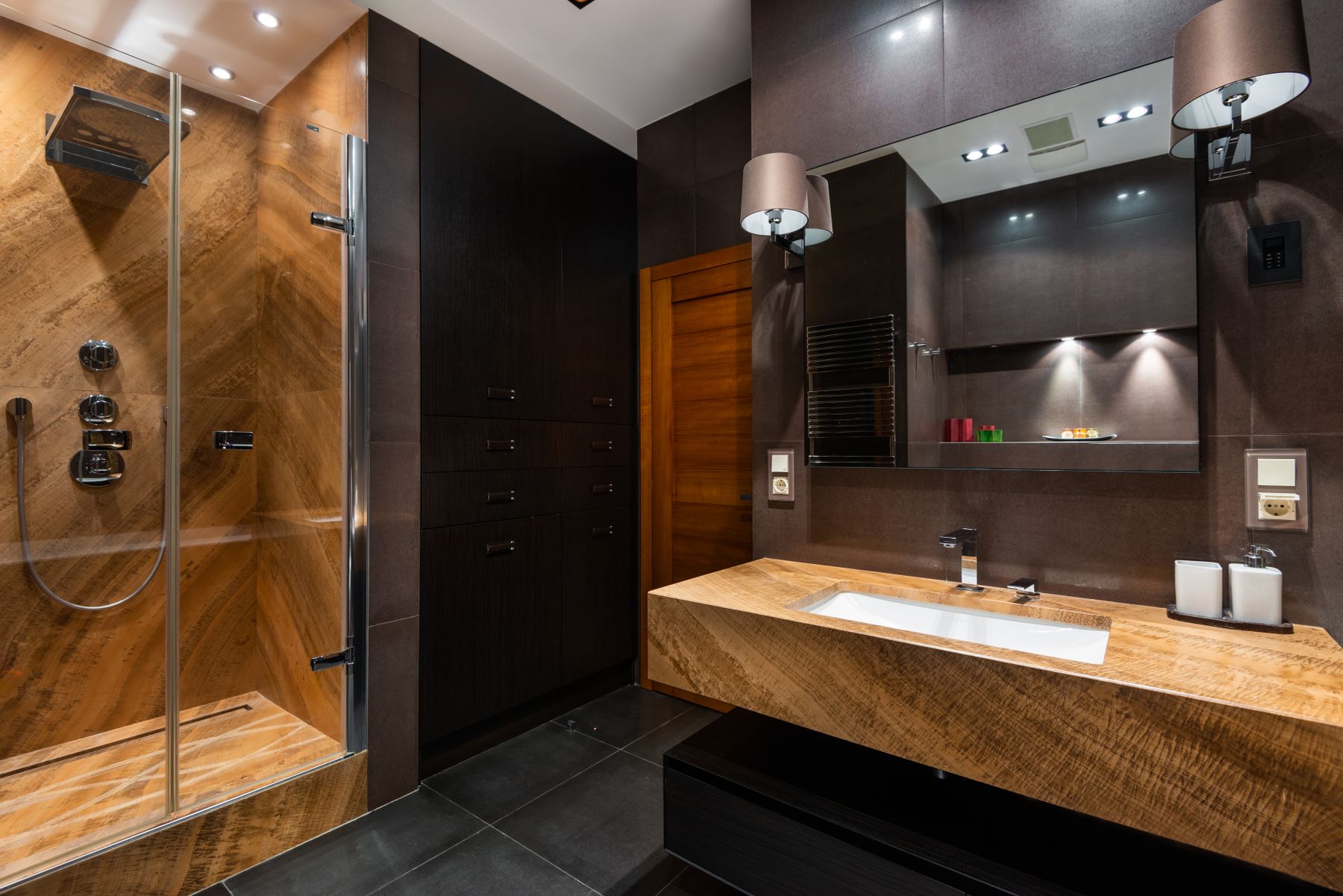
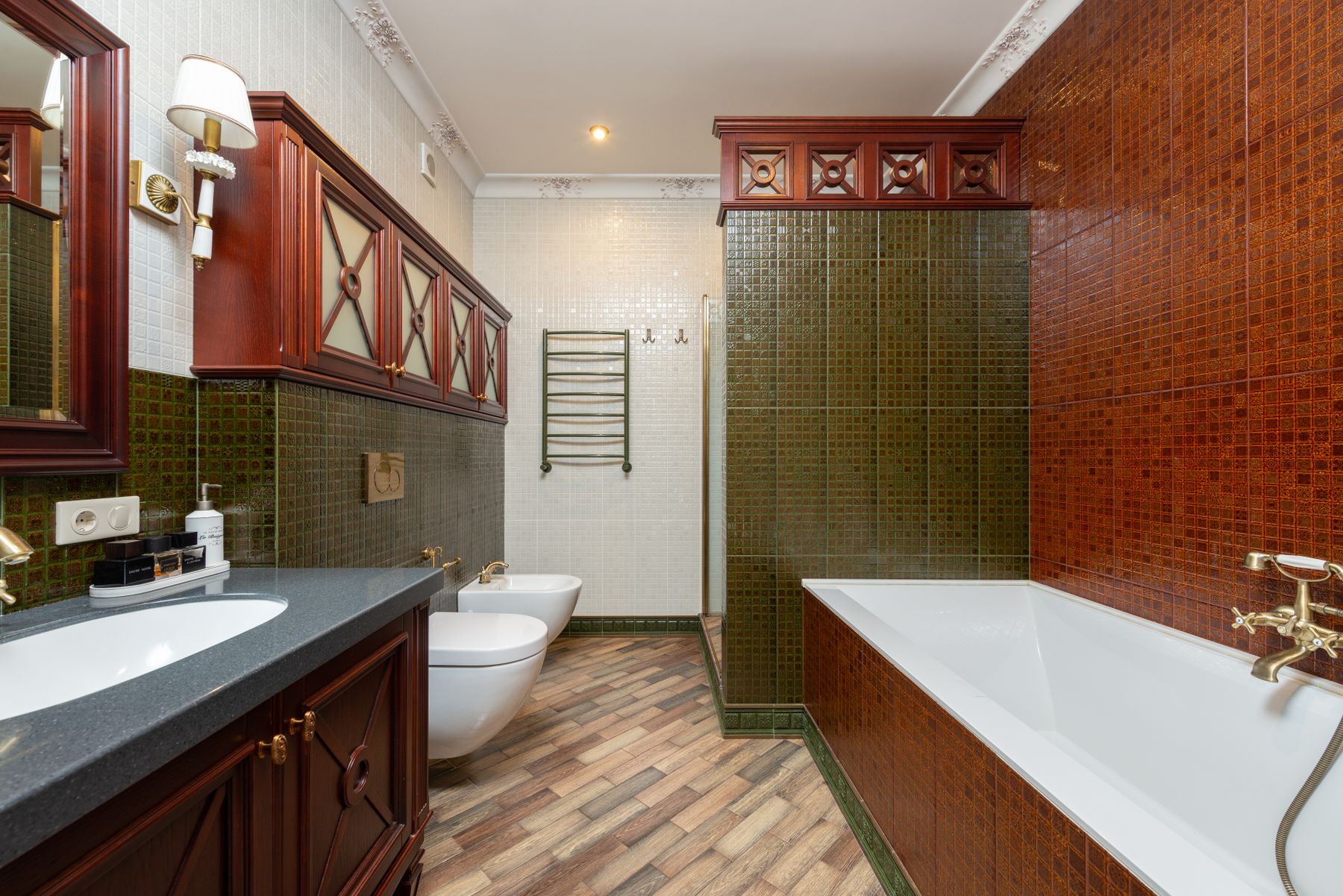
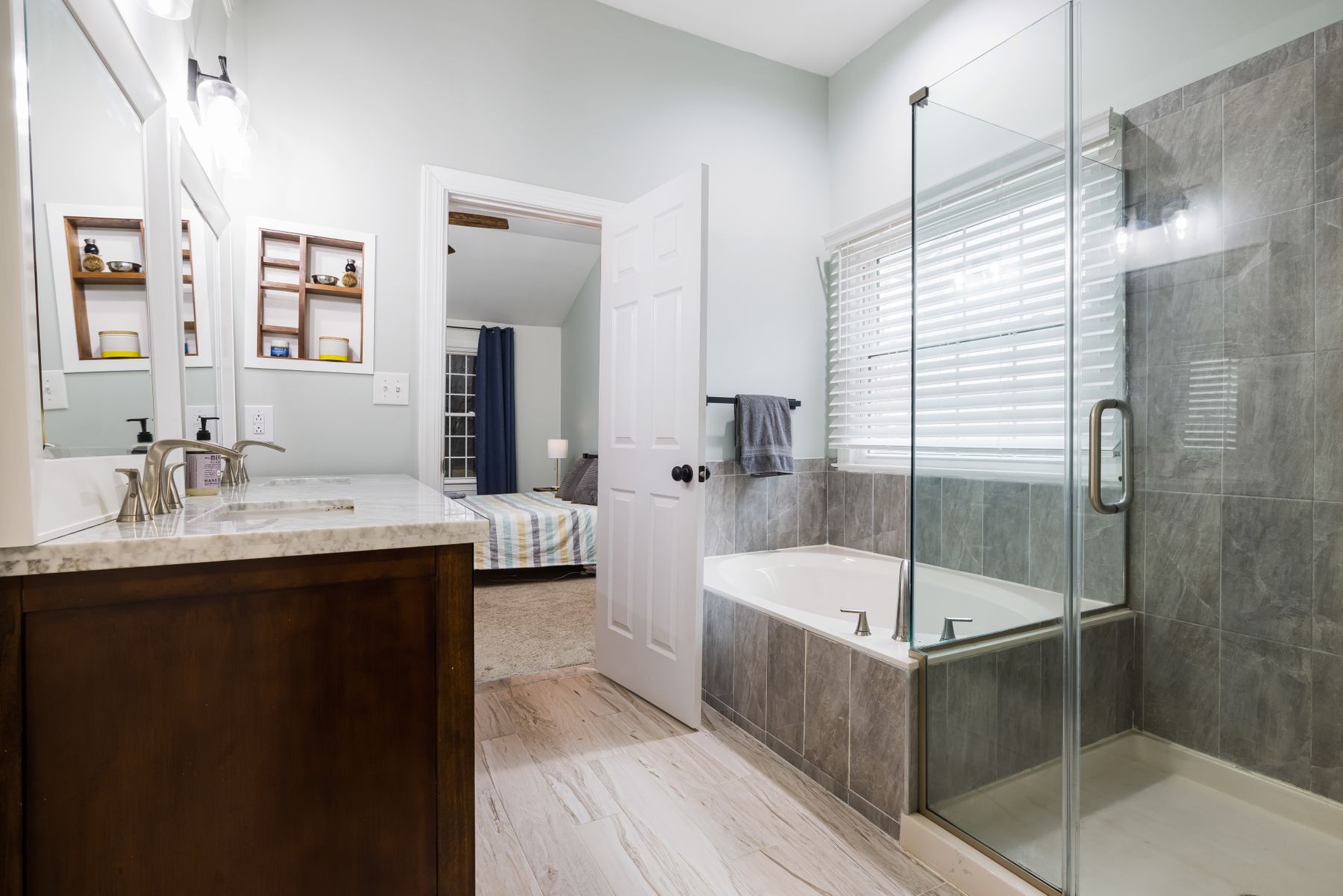
Espresso, tobacco and chocolate brown make a dark bathroom feel warmer and less graphic than charcoal or navy. Use real timber, stained veneer, brown stone or mineral paint to introduce tonal grain rather than one flat synthetic brown. Balance red undertones with cream ceramic, muted metal or grey-brown grout. The goal is depth and material variation, not a uniformly brown box.
Use Black as One Member of the Palette
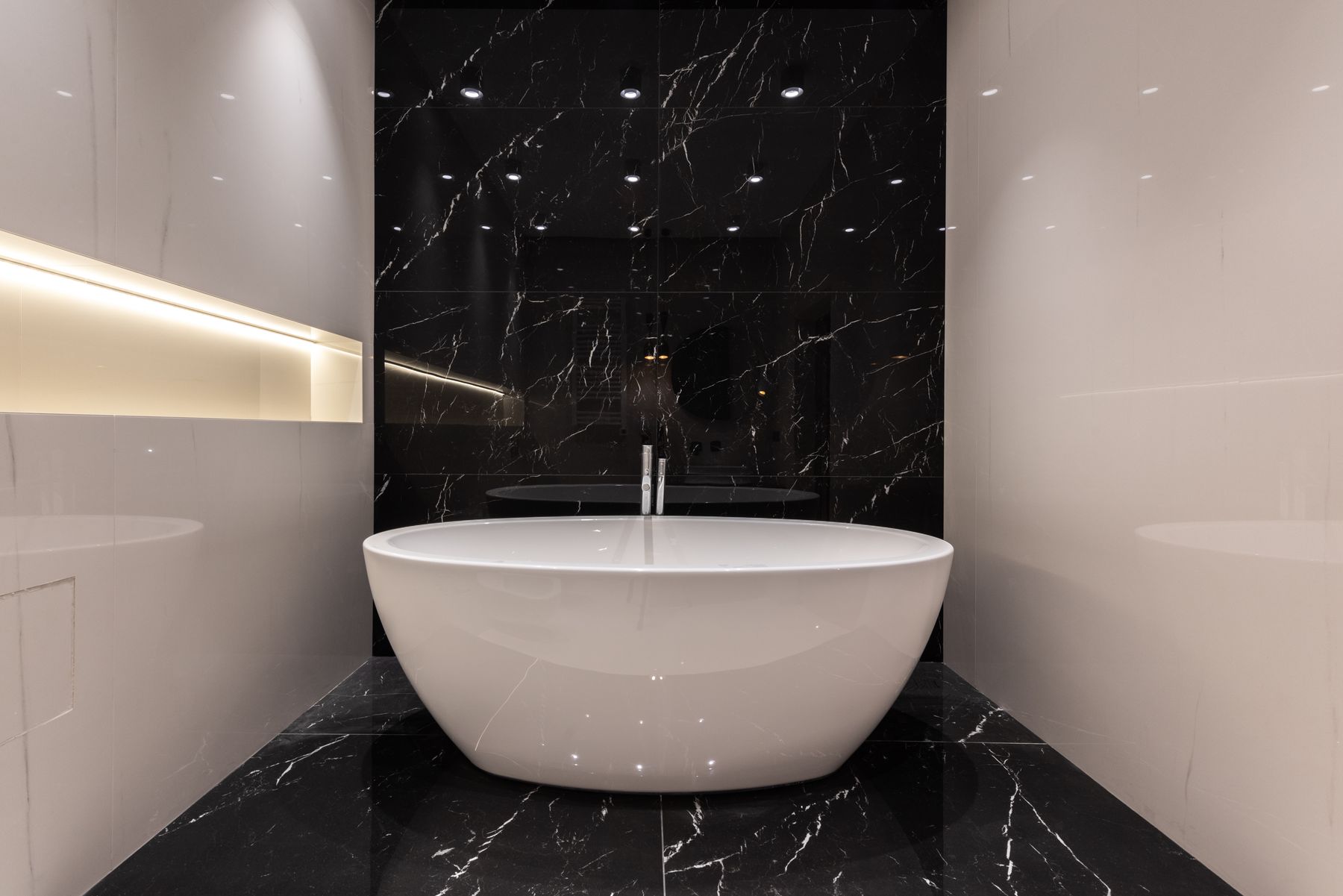
Black can define a frame, floor, vanity or stone vein without becoming the entire palette. This allows navy, moss, brown or burgundy to remain visible and prevents every plane from merging. Use black where the room needs a visual stop, not automatically on every fitting. If black itself should dominate, [Black Bathroom Ideas](/ideas/black-bathroom-ideas/) is the more precise destination.
Color-Drench Walls and Ceiling Only With a Lighting Plan
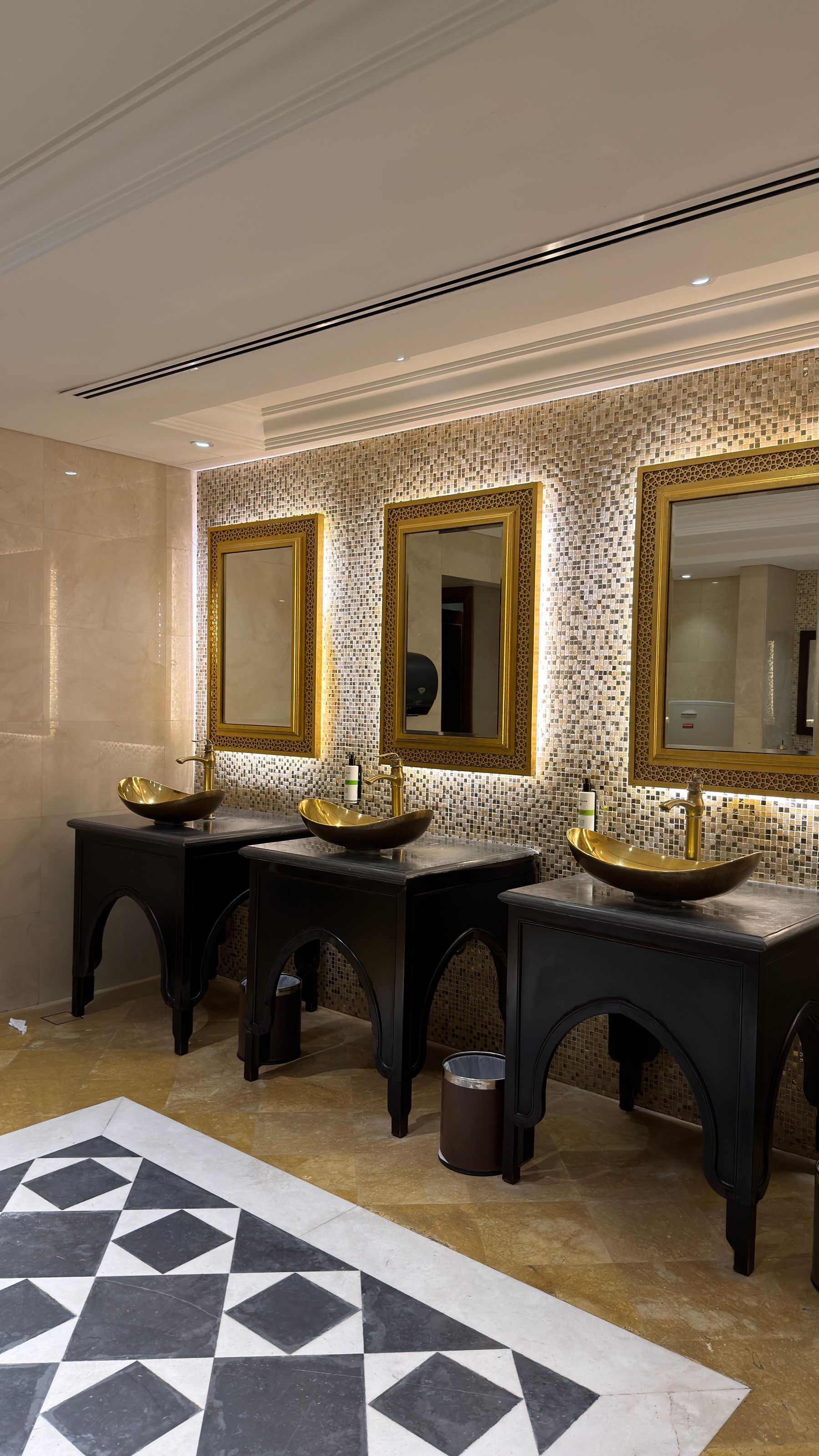
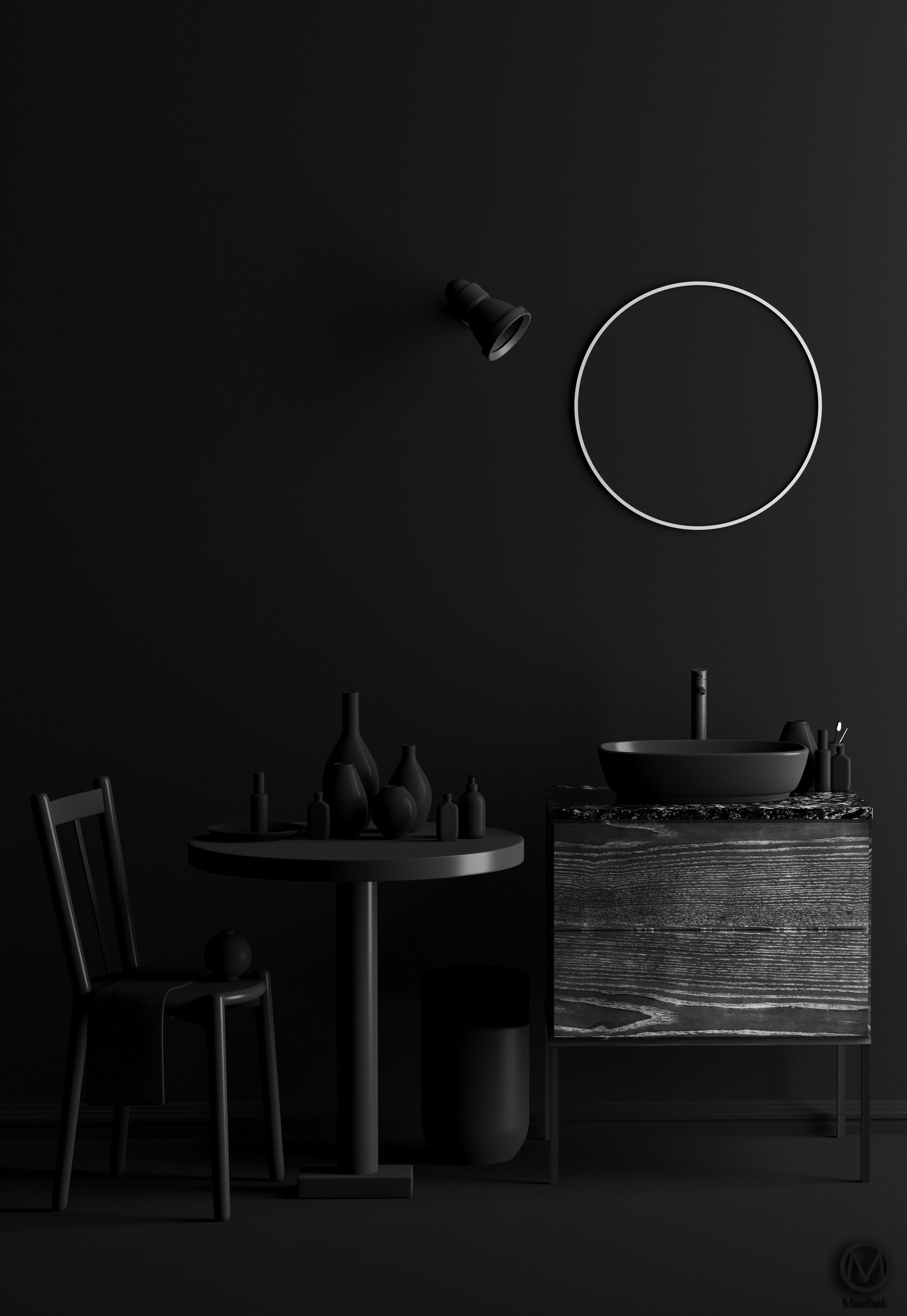
Extending a deep color across walls and ceiling can remove visual boundaries and make a small room feel intentionally cocooning. It also reduces natural bounce, so mirror, shower and floor lighting must be resolved first. Use sheen changes or shallow architectural relief to keep planes distinguishable. A dark ceiling should never obscure ventilation grilles, detectors, access panels or safe maintenance points.
Use Dark Tile at Architectural Scale
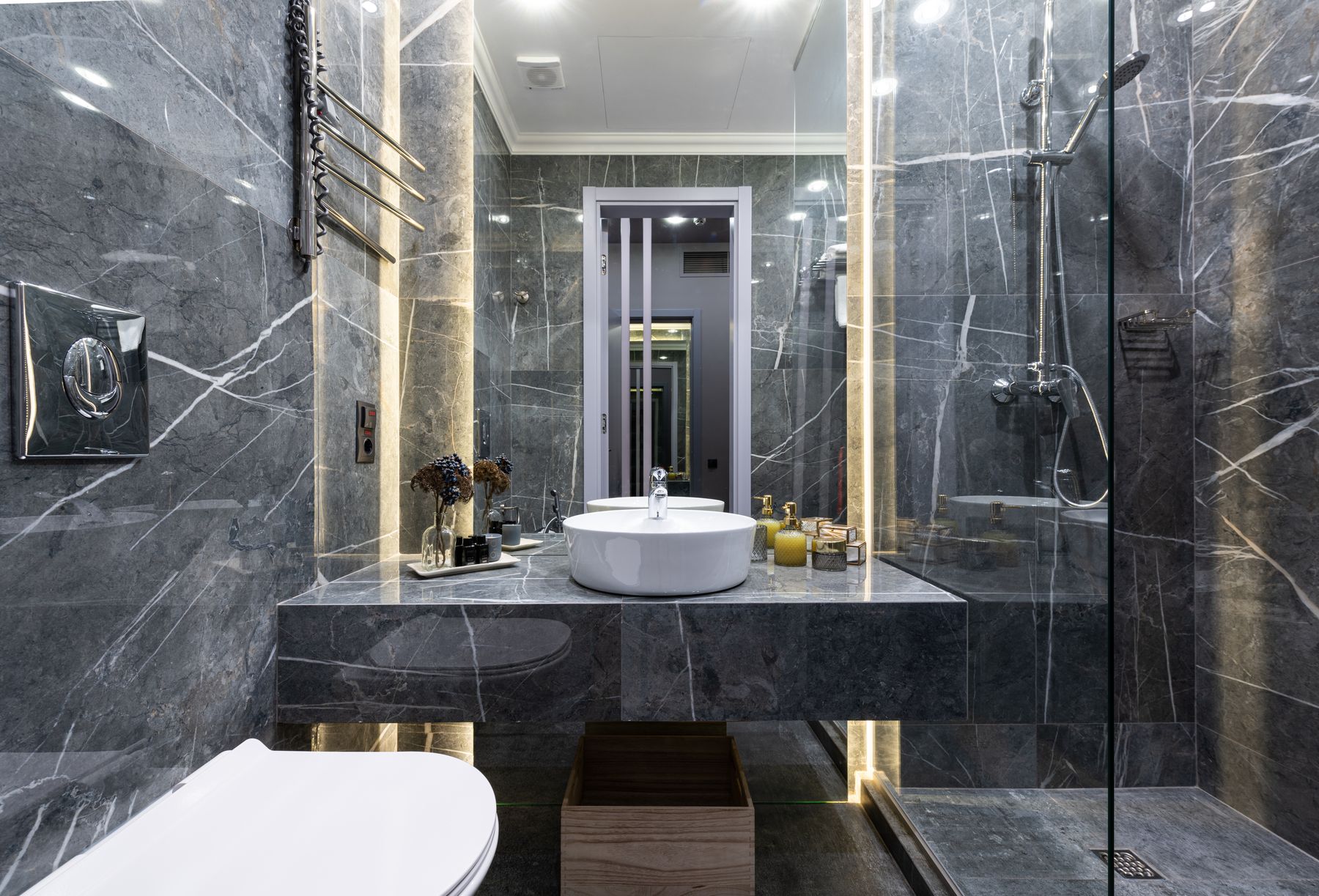
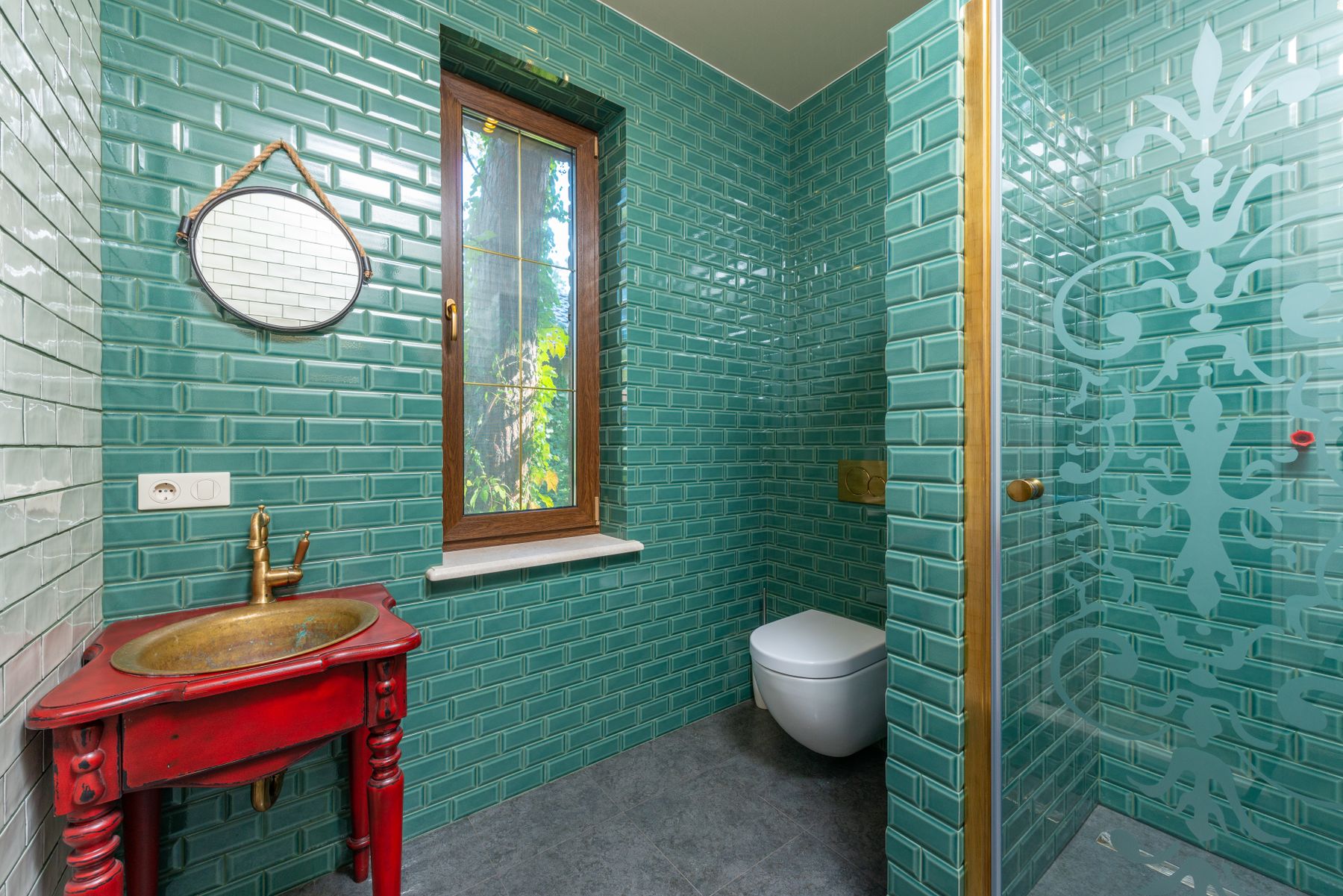
A full shower wall, bath surround or vanity wall gives dark tile enough scale to feel intentional. Select the zone from the doorway view and waterproofing requirements, then align niches, sockets and fittings with the module. Keep one quieter surface if the tile has strong veining or variation. [Bathroom Tile Ideas](/ideas/bathroom-tile-ideas/) compares formats and focal-zone planning.
Let Grout Control the Amount of Visual Grid
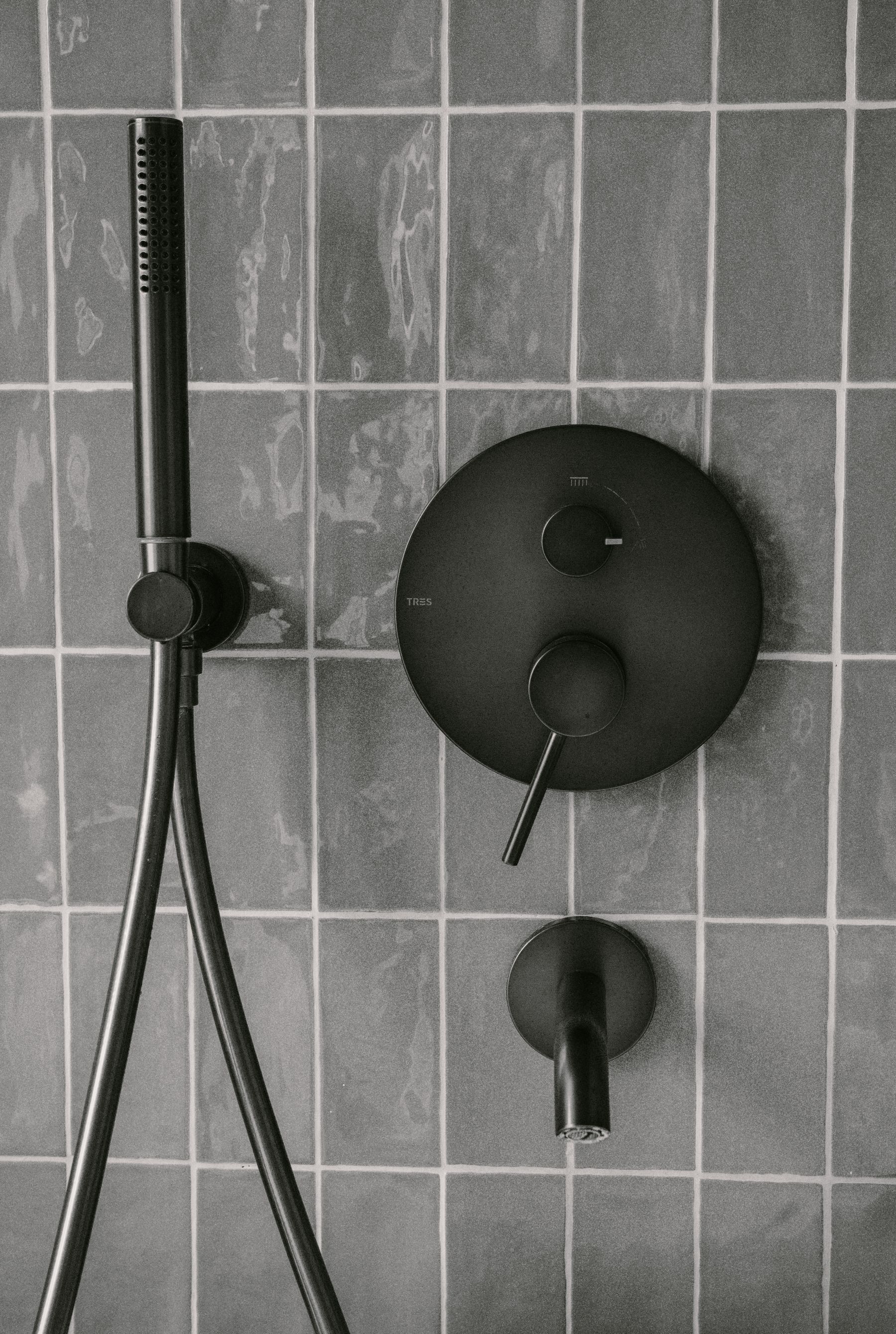
Matching grout lets small dark tile merge into a calmer field; lighter grout reveals every unit; a slightly warmer joint can connect tile to timber or stone. Joint density also affects cleaning and how soap residue appears. Build a board with the actual tile, width and sealant, then wet it. Separate dry chips cannot show whether the completed wall will feel textured or busy.
Vary Sheen So Dark Surfaces Do Not Flatten Together
Combine matte paint, honed stone, softly glazed tile and controlled polished details instead of making every plane equally flat or reflective. Matte surfaces absorb light and feel quiet but can show handling marks; gloss reveals shape and is often easier to wipe but exaggerates spotting. Place reflectance where it helps navigation or texture, not simply where a showroom image looks dramatic.
Use Dark Stone for Movement, Not Automatic Luxury
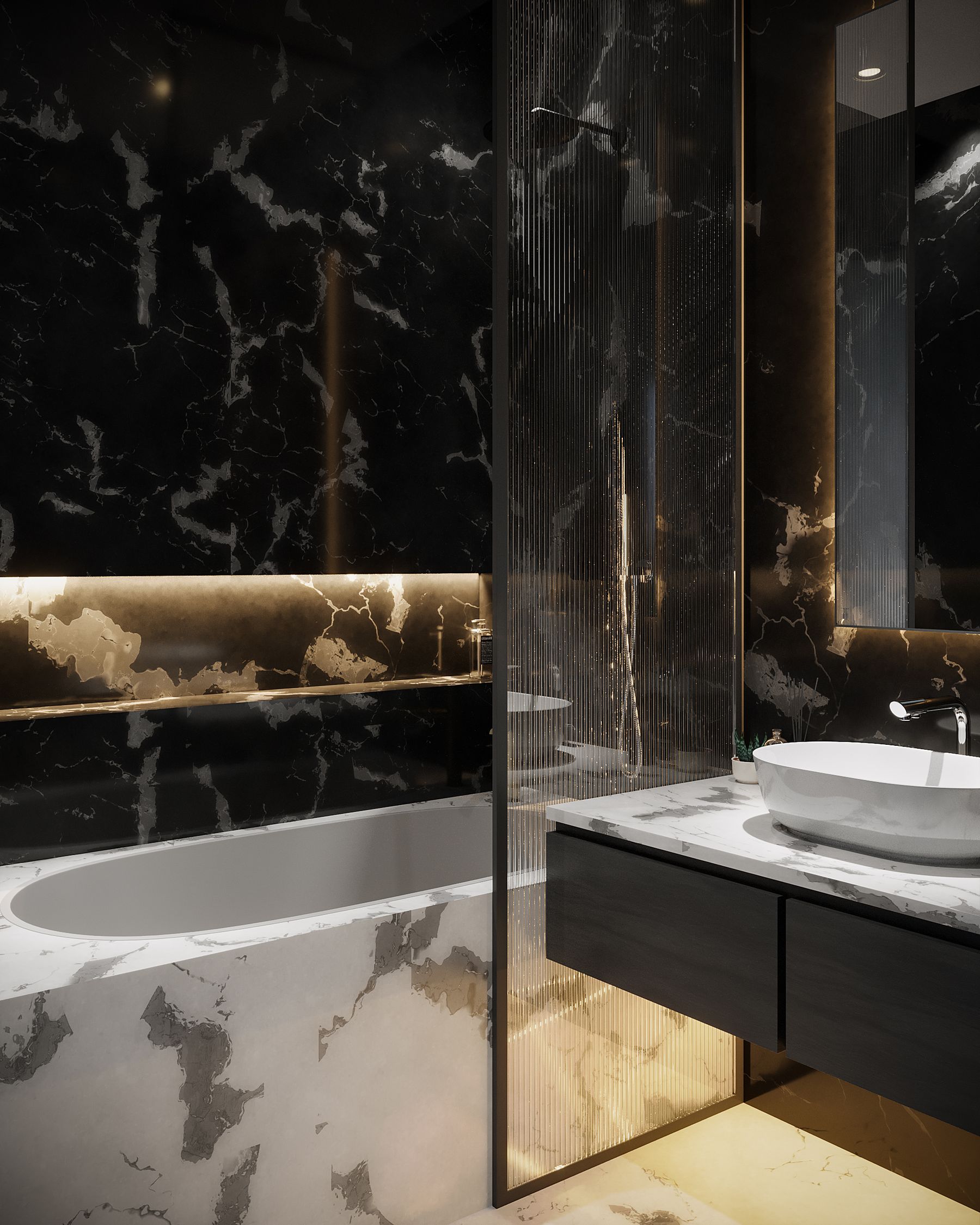
Dark marble, soapstone, slate and convincing mineral-look porcelain can introduce veining and tonal shifts that prevent a low-value room from feeling flat. Choose the slab or repeat deliberately and decide where seams will fall. Porosity, sealing, slip resistance and cleaning vary by material and location. Stone should solve a surface and spatial problem before it is treated as a luxury signal.
Add Timber Where Hands and Eyes Need Warmth
A timber vanity, mirror, tall cabinet or ceiling can bridge dark walls to skin tones and textiles. Use wood at meaningful scale rather than scattering small accessories. Confirm that species, coating, edges and ventilation suit humidity, especially near basins and showers. [Warm Wood Bathroom Ideas](/ideas/warm-wood-bathroom-ideas/) covers moisture-conscious placement and tonal balance in greater depth.
Use White Ceramic as a Functional Reference
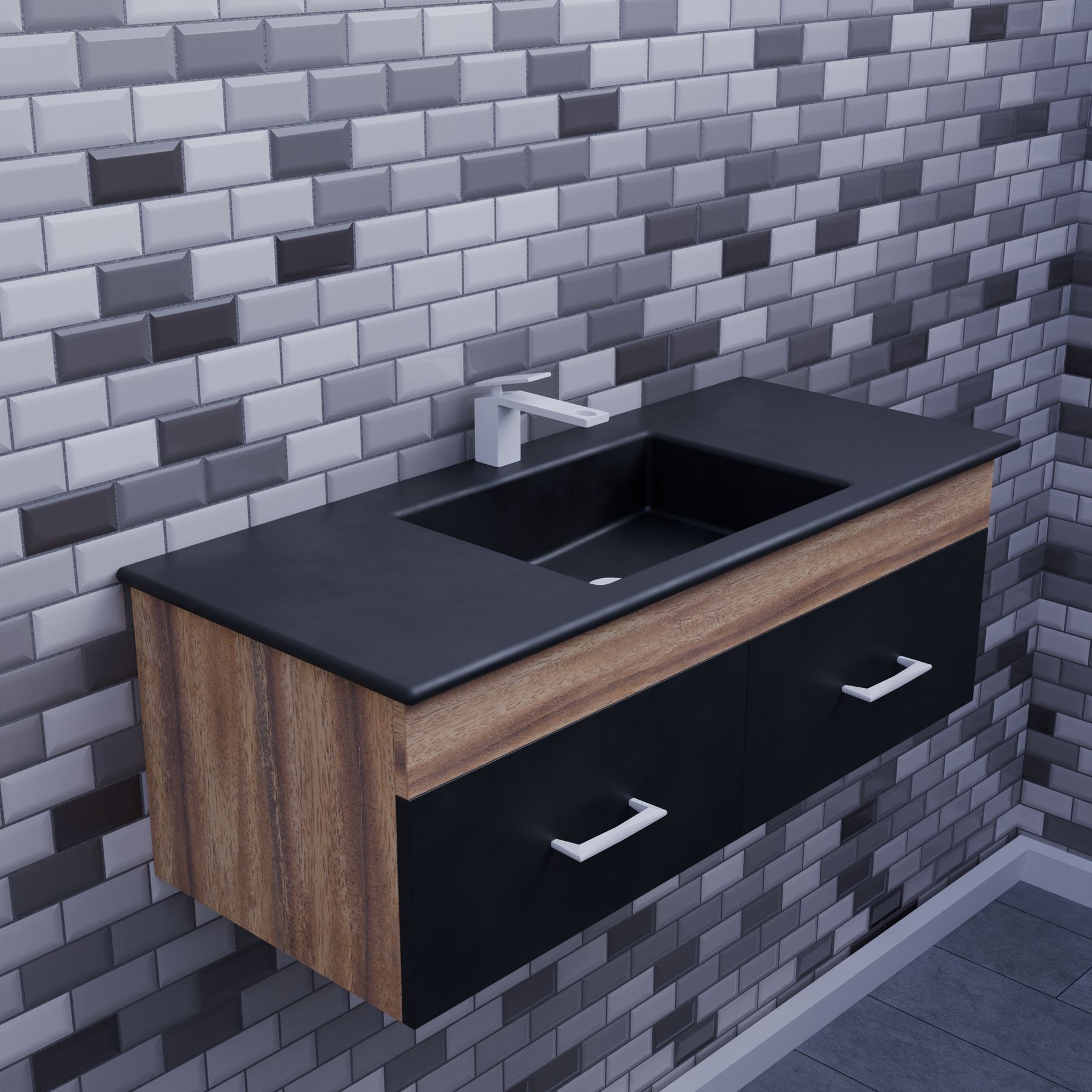
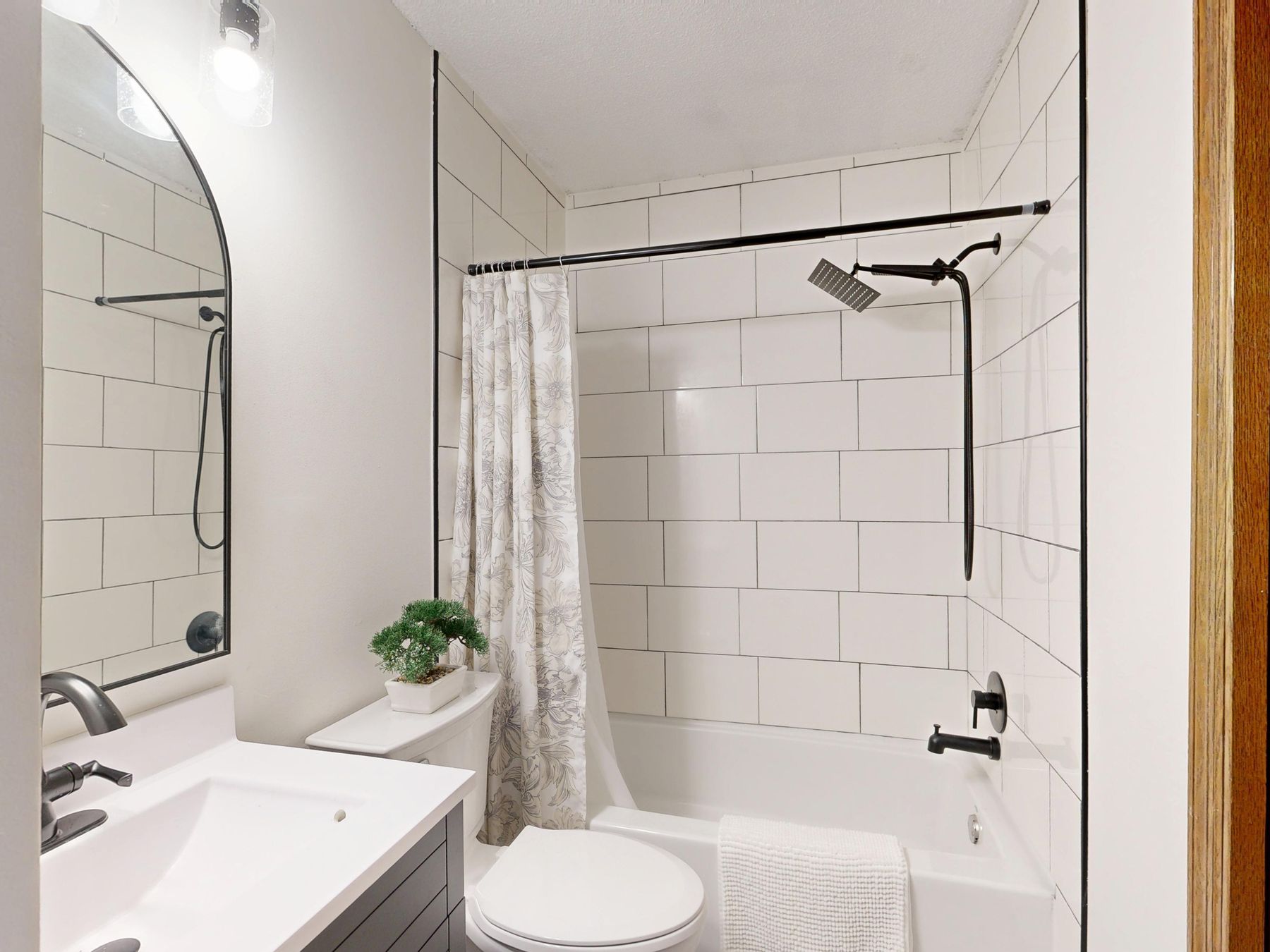
White basins, toilets and baths create immediate contrast and make hygiene surfaces easy to identify. Warm white softens espresso and moss; cleaner white sharpens navy and charcoal. The ceramic need not turn the room into a black-and-white scheme if timber, stone and a colored dark remain visible. [White Bathroom Ideas](/ideas/white-bathroom-ideas/) explains undertone and sheen in pale fixtures.
Let One Colored Fixture Break the Dark Envelope
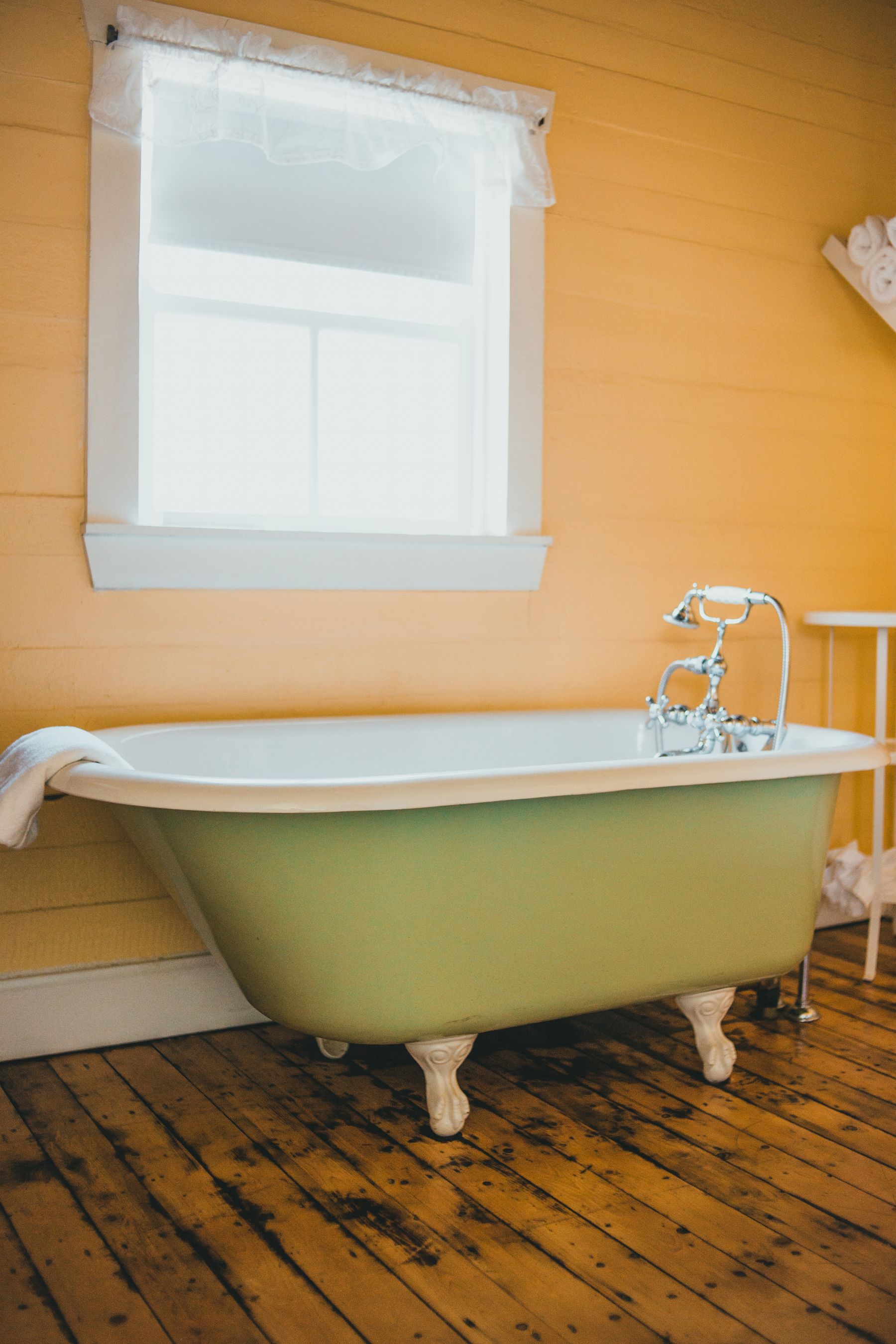
A deep green, burgundy or aged colored bath can become the room's focal object while walls remain charcoal, brown or near-black. Check entry, cleaning clearance and plumbing before treating the fixture as sculpture. Avoid matching every towel and accessory to it. Compare practical forms and placement in [Bathtub Ideas](/ideas/bathtub-ideas/) before committing to a visually dominant tub.
Choose Metal for Visibility as Well as Warmth
Brass and bronze warm navy, green and brown; nickel and chrome provide cooler highlights; black can disappear against dark tile. Choose enough contrast for taps, controls and handles to remain visible, then coordinate finish families without forcing exact matches that age differently. Test water spotting and handling marks on the sample because high contrast makes poor maintenance performance more obvious.
Use Mirrors to Reveal Depth, Not Fake Brightness
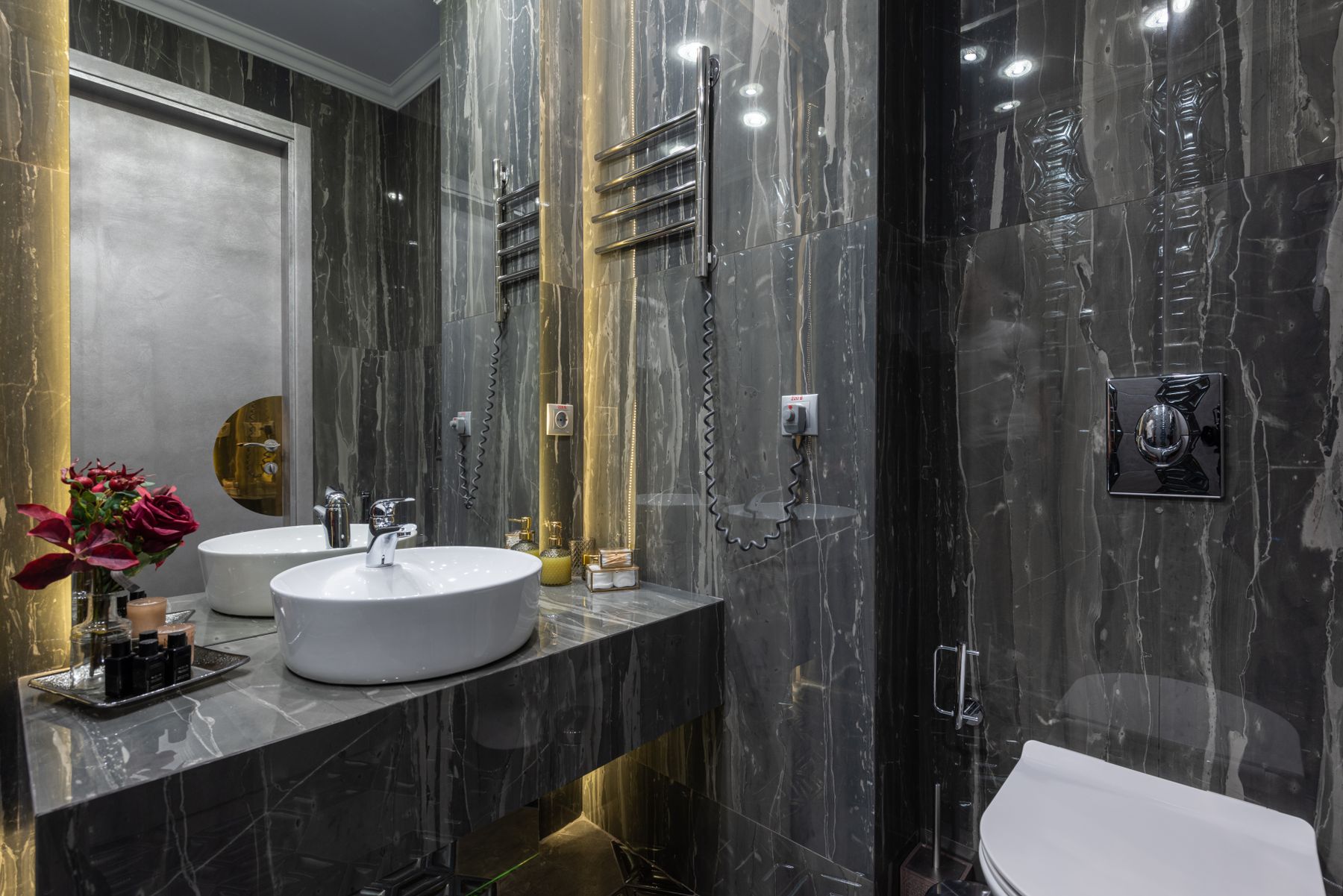
A mirror can return daylight, show a second material plane and improve orientation, but it cannot replace adequate task light. Position it for a useful reflection rather than an exposed toilet or cluttered shelf. Edge lighting or nearby sconces should illuminate the face without creating glare. [Bathroom Mirror Ideas](/ideas/bathroom-mirror-ideas/) covers scale, placement and storage integration.
Layer Mirror, Shower, Floor and Night Lighting
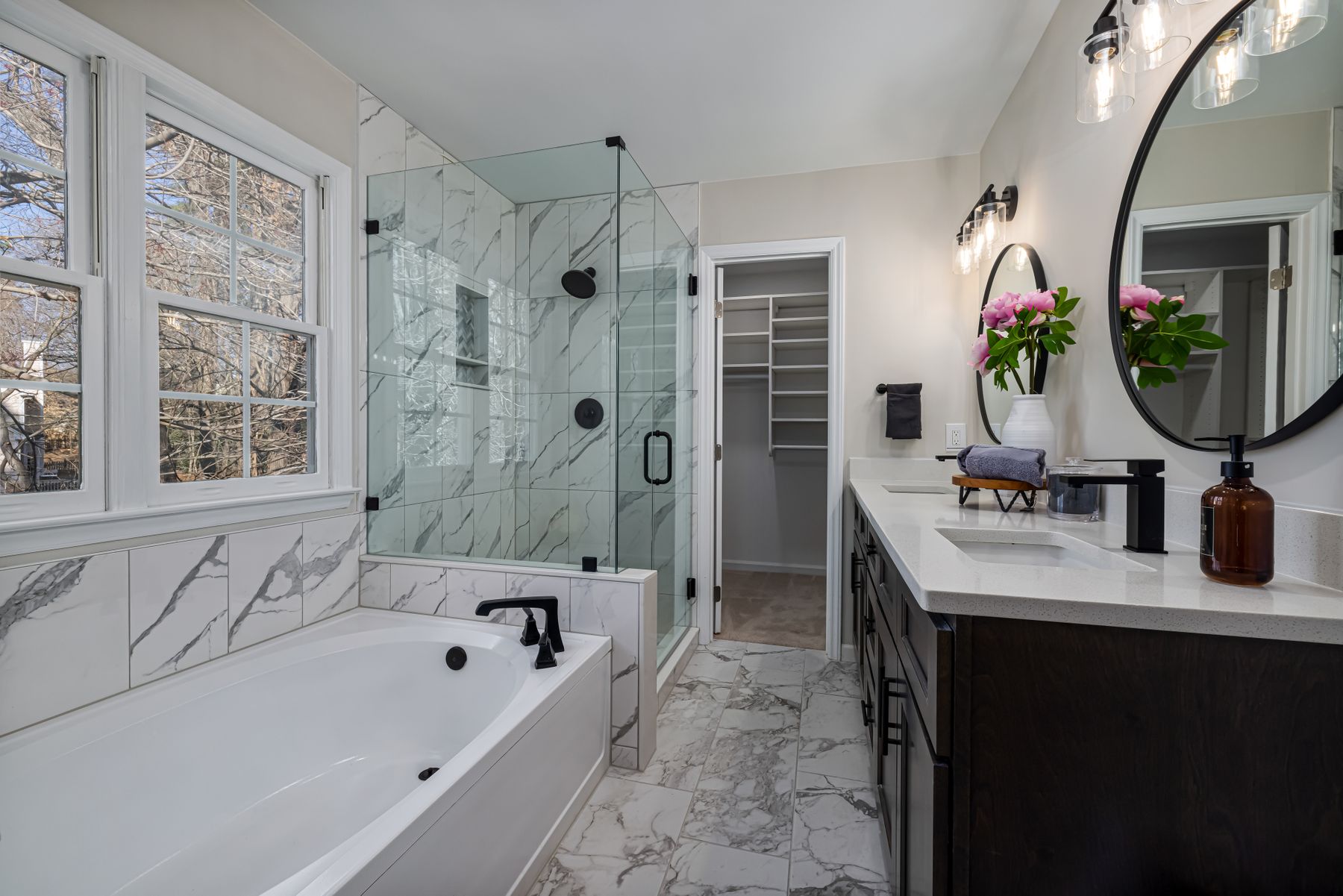
Dark rooms need separate lighting tasks: accurate vertical light at the mirror, safe shower illumination, general navigation light and a low-glare night scene. Add wall washing only where it reveals useful texture. Avoid depending on one dramatic pendant or backlit mirror. The [Bathroom Lighting Ideas](/ideas/bathroom-lighting-ideas/) guide explains circuits, glare and layered illumination in more detail.
Make a Small Dark Bathroom Intentional
A compact bathroom can be dark without pretending to be larger. Prioritize clear circulation, shallow storage, a visible basin and controlled sightlines, then choose whether one plane or the complete envelope carries the deepest value. Continuous color may reduce visual fragmentation, but thresholds and controls still need contrast. [Small Bathroom Ideas](/ideas/small-bathroom-ideas/) provides the fuller layout framework.

Treat a Windowless Dark Bathroom as a Lighting Project
A windowless room can support deep color when faces, controls, floors and the shower remain accurately lit. Use separate mirror, ceiling, wet-zone and low night-light scenes rather than one amber source. Coordinate extraction so condensation does not dull paint or grout. Dark color can create atmosphere, but it cannot substitute for visibility, ventilation or an accessible route to every fixture.
Keep the Shower Legible Inside a Dark Shell
Dark tile can make the shower feel calm, but steps, drains, controls and niches must remain visible. Use metal, grout, directed light or a controlled value shift to distinguish them. Clear glass preserves the palette while adding cleaning work; a framed screen may improve edge definition. Continue to [Walk-In Shower Ideas](/ideas/walk-in-shower-ideas/) for drainage, opening and splash-control planning.
Use a Dark Bathtub Without Losing Its Edge
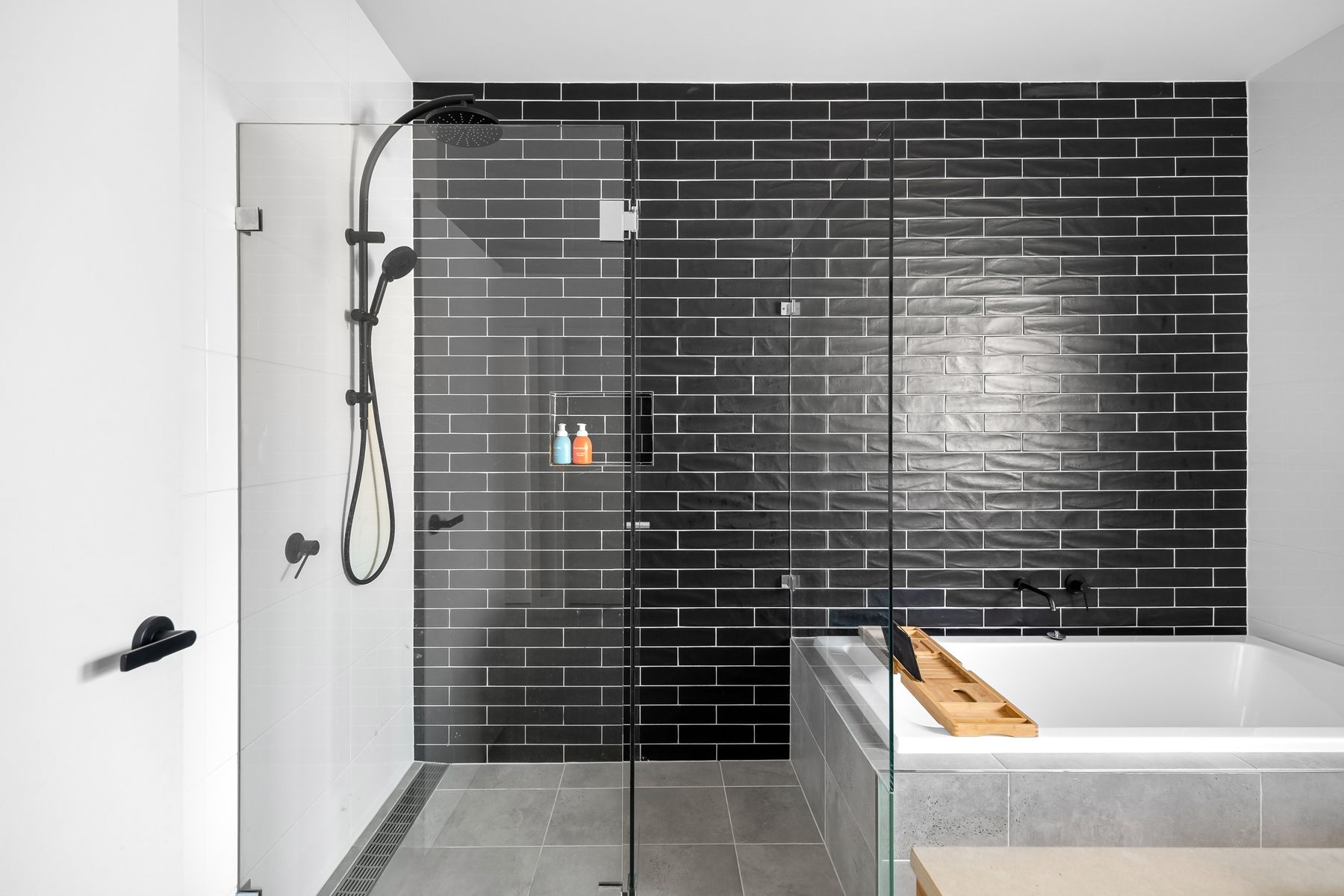
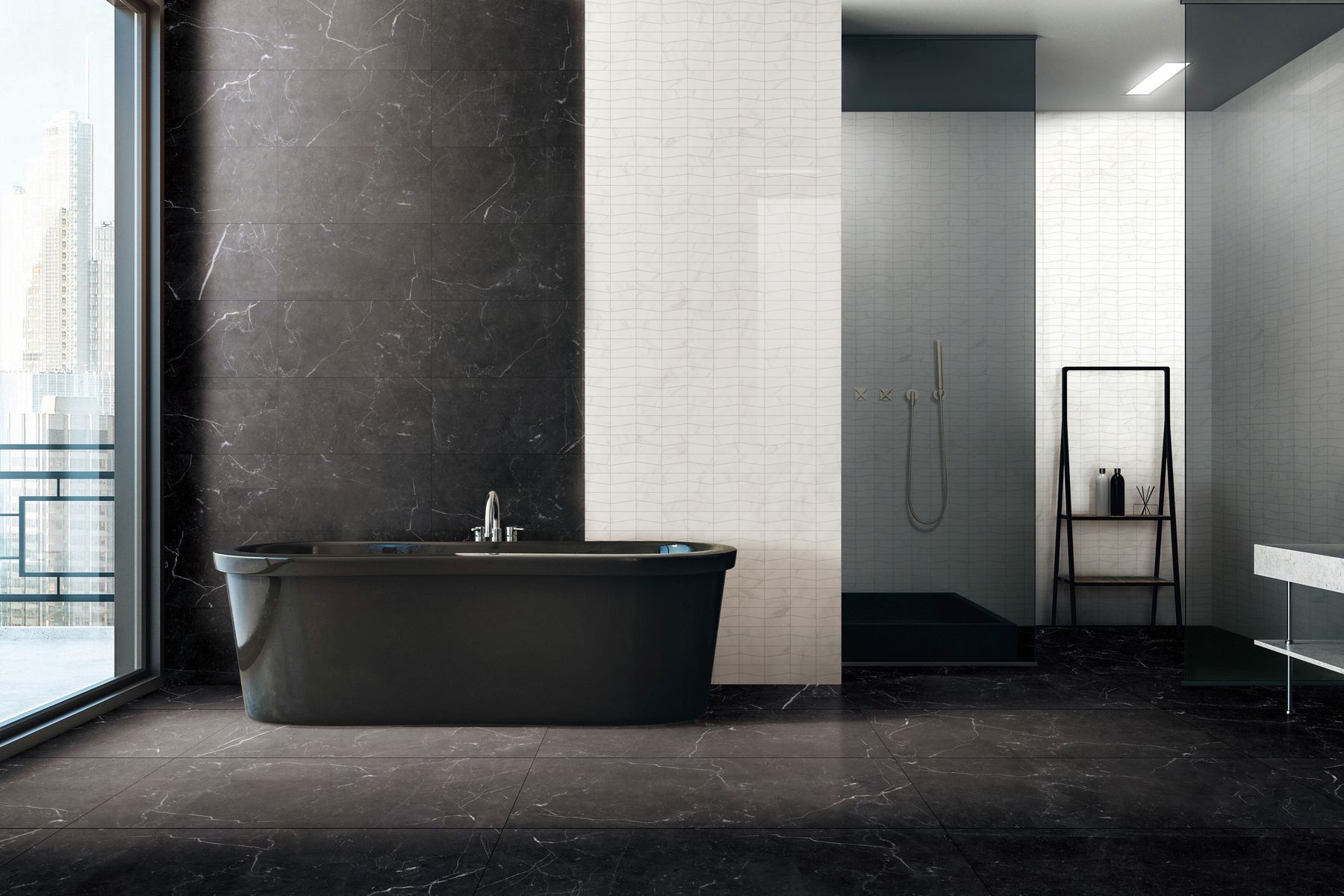
A black, charcoal or deep colored bath can disappear against an equally dark wall. Preserve its rim and floor contact through a lighter joint, directed light, pale stone or a deliberate change in sheen. Confirm entry, grab position and cleaning access before chasing a seamless silhouette. A visible edge is a functional requirement, not a compromise to the moody composition.
Plan Vanity and Storage Before Choosing the Dark Finish
Dark shelves can hide toiletries, cables and small objects rather than organizing them. Give daily items shallow storage near the basin and shower, keep backups elsewhere and combine open and closed storage according to the routine. Resolve drawer access, plumbing and counter space before paint or veneer. [Bathroom Storage Ideas](/ideas/bathroom-storage-ideas/) provides category, reach and capacity tests.
Preserve Contrast at Controls, Steps and Supports
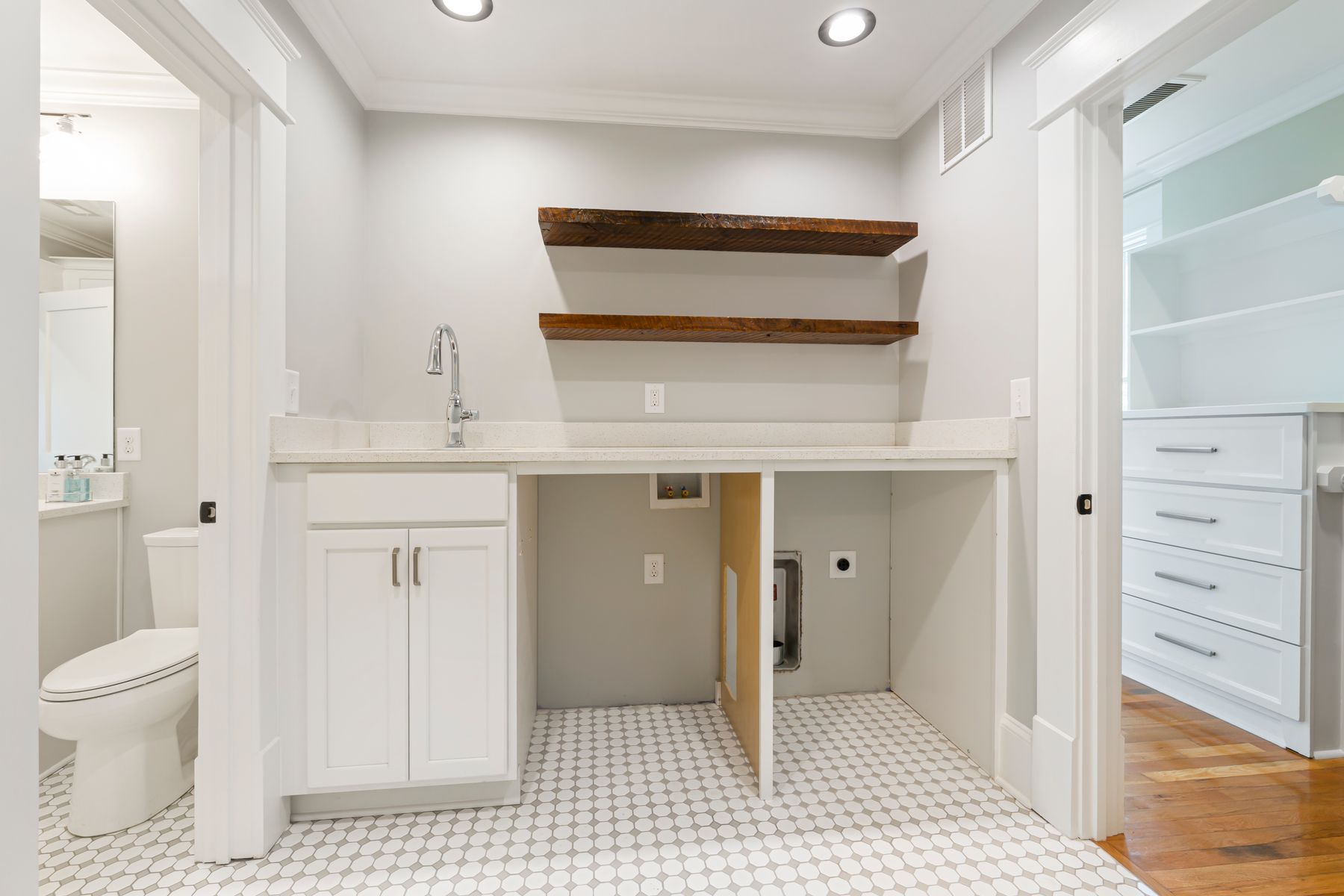
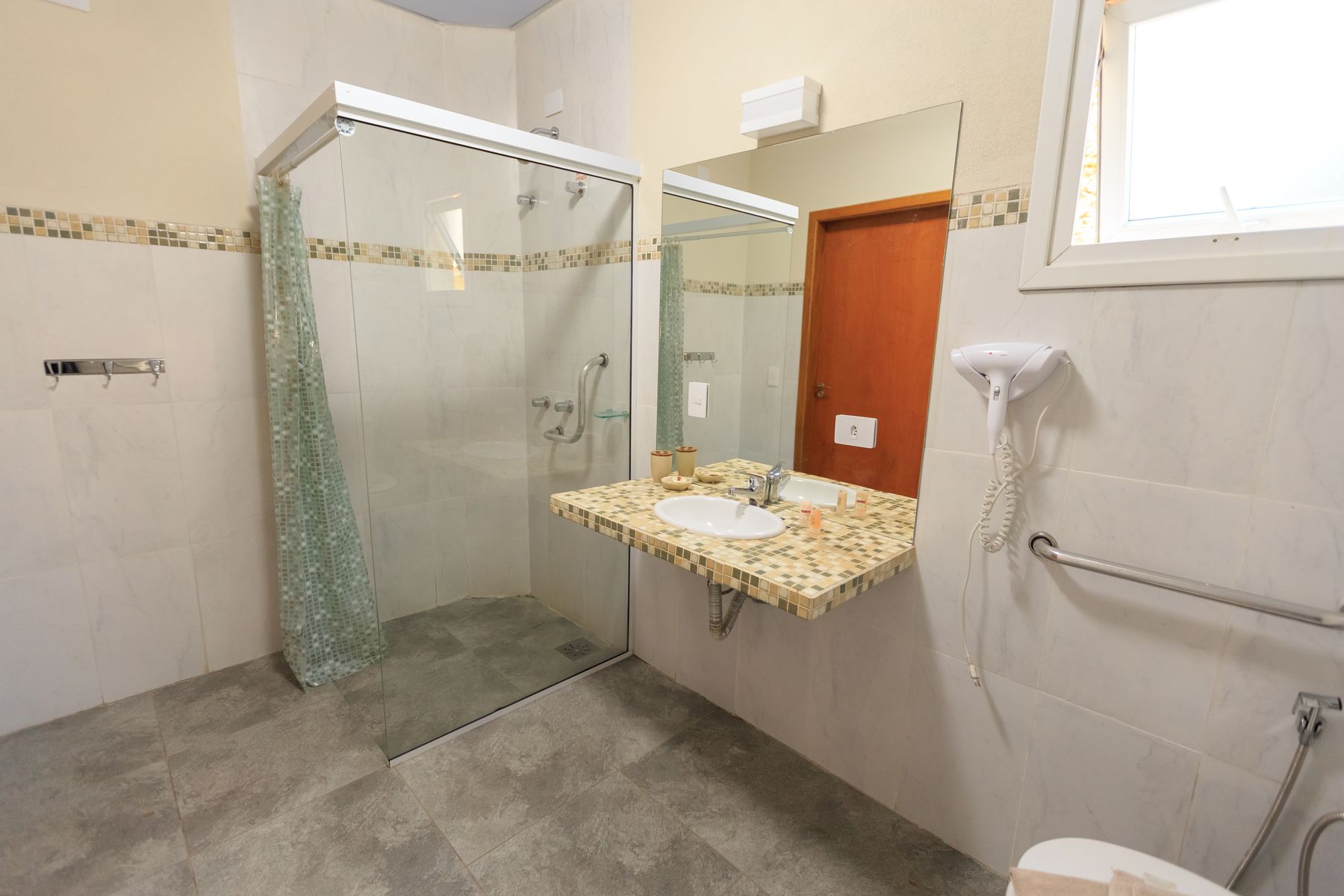
A dark tonal scheme can hide a shower step, control, seat or support rail when values are too similar. Use ceramic, metal, grout and directed light to distinguish important elements. Grab bars require proper placement and anchoring for the user, not merely a contrasting finish. [Aging-in-Place Bathroom Ideas](/ideas/aging-in-place-bathroom-ideas/) offers a fuller movement and reach framework.
Choose Dark Flooring for Wet Performance First
A charcoal, brown or deep green floor can ground the room, but grip, drainage, joint density and cleaning decide whether it succeeds. Gloss that looks rich on a wall may be unsuitable under wet feet; heavy texture can hold residue. Test the exact assembly rather than its color chip. [Bathroom Flooring Ideas](/ideas/bathroom-flooring-ideas/) compares performance before decoration.
Coordinate Ventilation With a Low-Reflectance Envelope
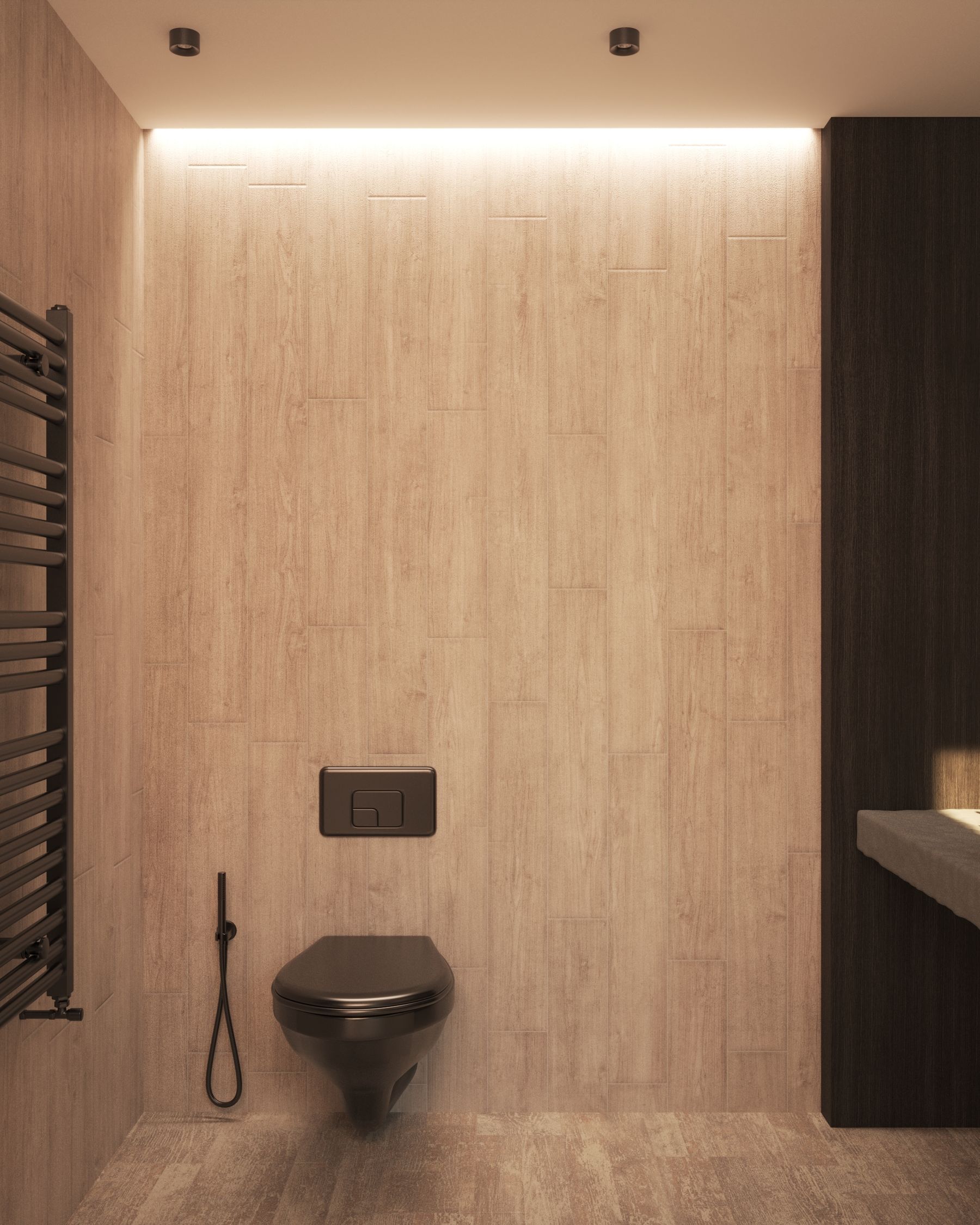
Condensation, mildew and failing sealant interrupt dark surfaces quickly, especially when low reflectance makes damp patches hard to notice. Choose paint, grout and sealant for their exposure, but do not expect coatings to replace extraction, make-up air and heat. Avoid inaccessible ledges. Fan sizing, ducting and electrical work should respond to the actual room and local requirements.
Add Thermal Comfort Without Hiding the Palette
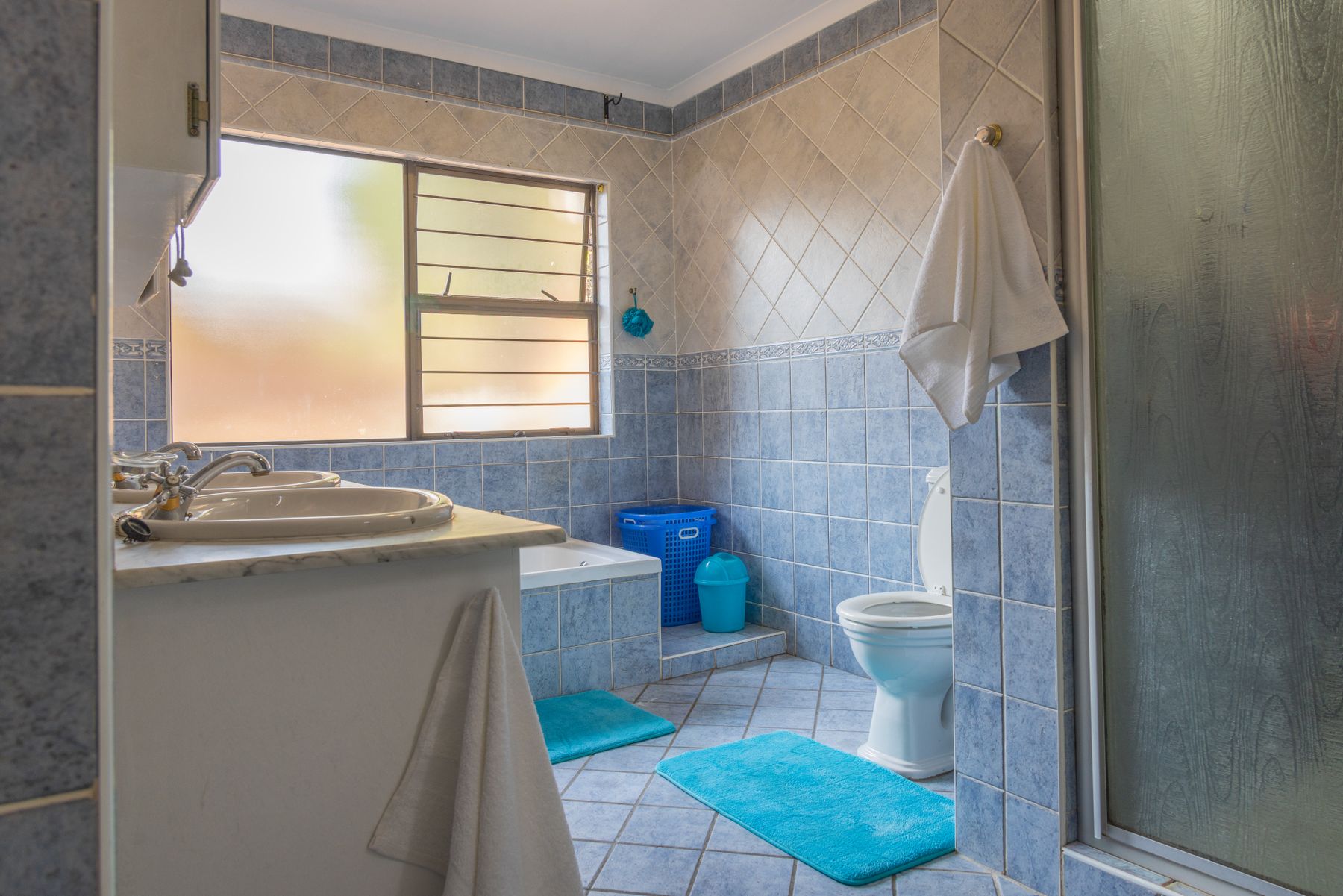
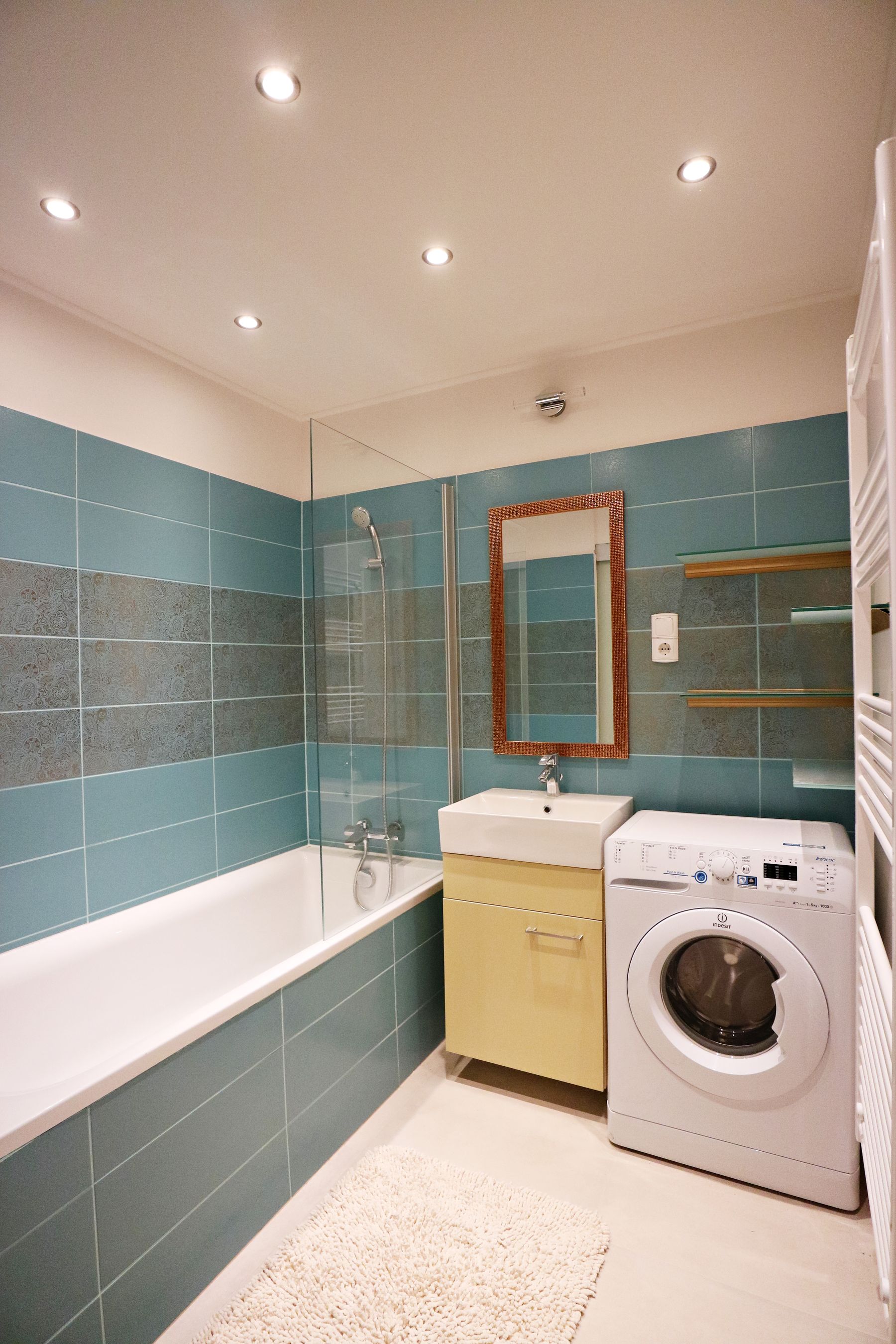
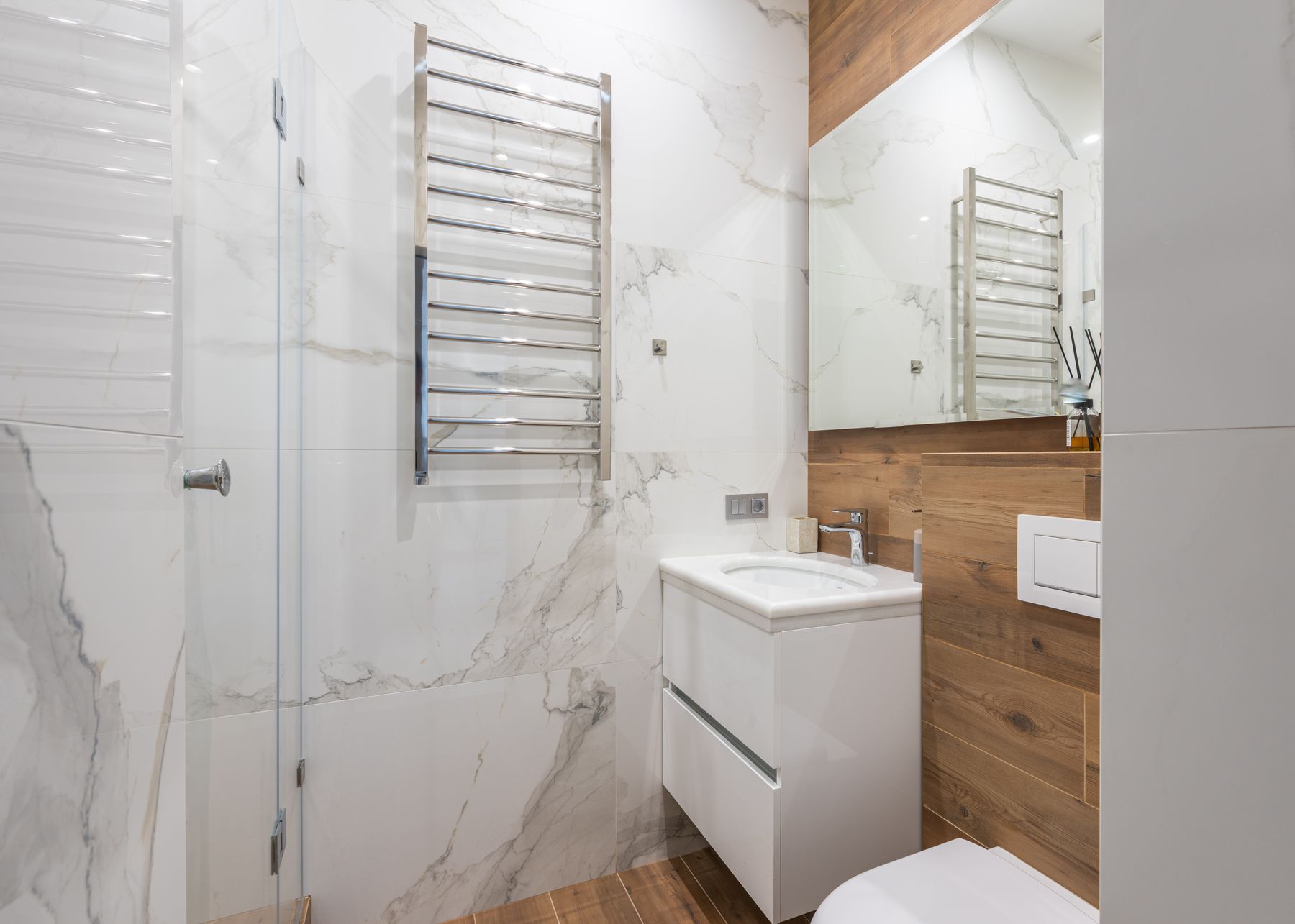
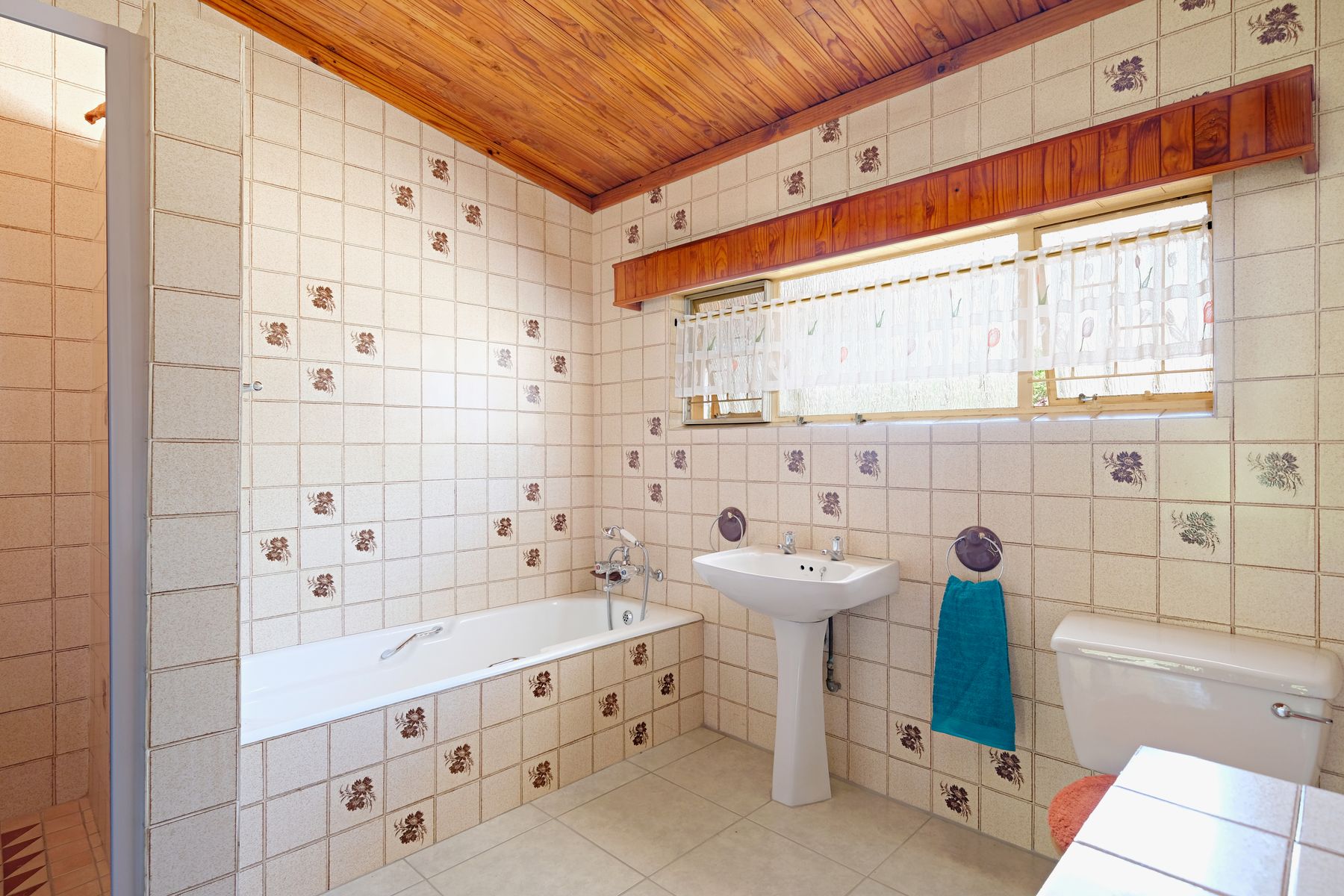
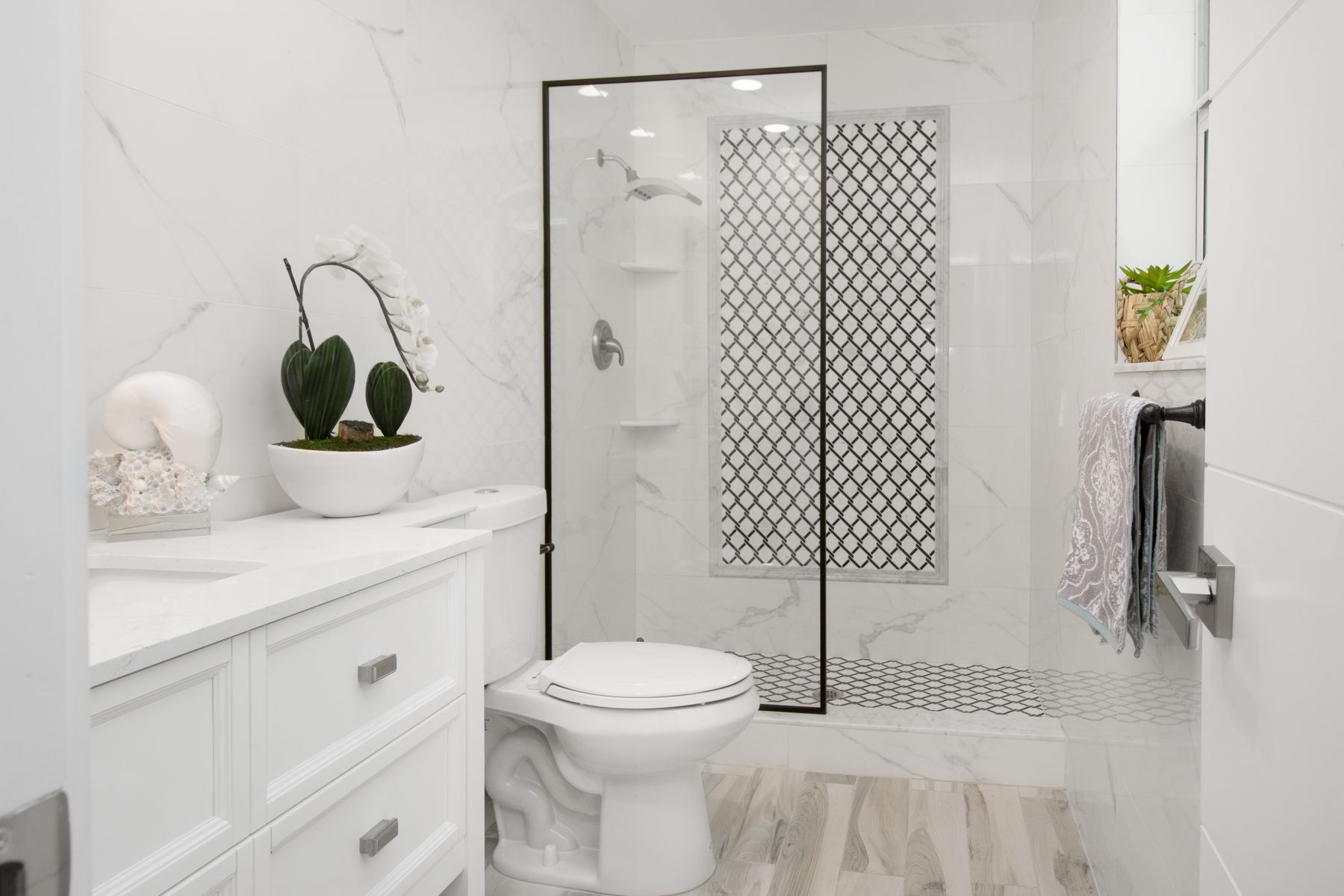
Dark rooms can look warm while still feeling cold at tile, floor and towel level. Resolve insulation, floor temperature, draughts, heated rails and drying space independently from color. Place heat where people stand and textiles dry rather than covering cold surfaces with permanent clutter. A pale reference image makes the distinction clear: perceived warmth and actual thermal comfort are separate design problems.
Test Water Spots, Soap Film and Handling Marks
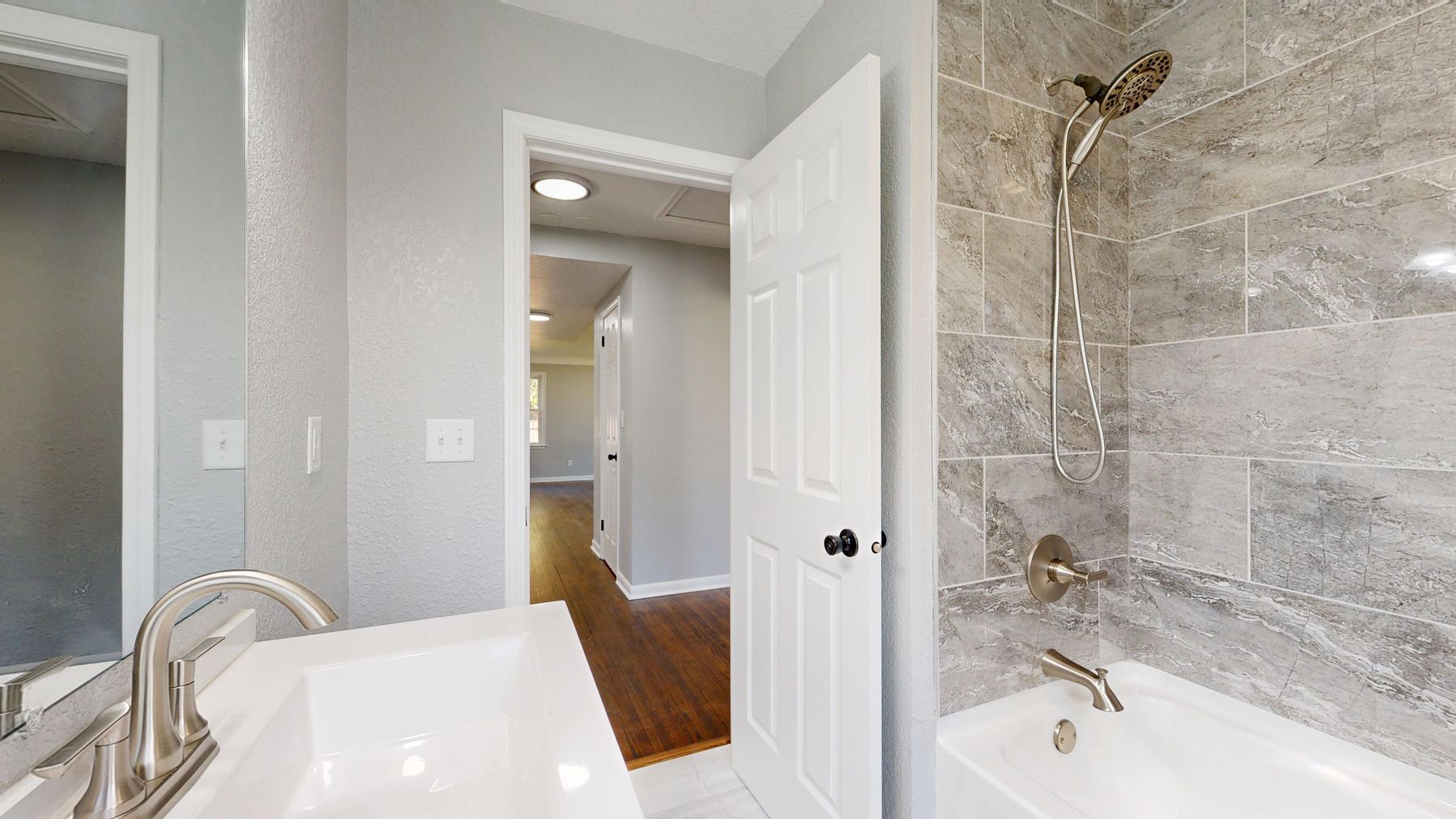
Dark glossy tile, glass and black metal may show mineral spots sharply; textured or varied surfaces can hide soap film until sheen changes. Let local water dry on every sample, then clean it with approved products. Confirm that matching sealant is replaceable and joints remain reachable. The best dark finish is the one that still looks coherent after the household's real cleaning routine.
Run a Dark-Palette Decision Test Before Committing
Assemble the lead dark color, grout, ceramic, stone, timber, metal and textile on one board. View it in daylight, overcast conditions and every lighting scene, then wet and clean the relevant pieces. Compare the result with a specifically [Black Bathroom Ideas](/ideas/black-bathroom-ideas/) scheme and a broader [Neutral Bathroom Ideas](/ideas/neutral-bathroom-ideas/) palette. Choose darkness when it improves atmosphere and material relationships—not simply because it photographs dramatically.