Put a slim table along the wall
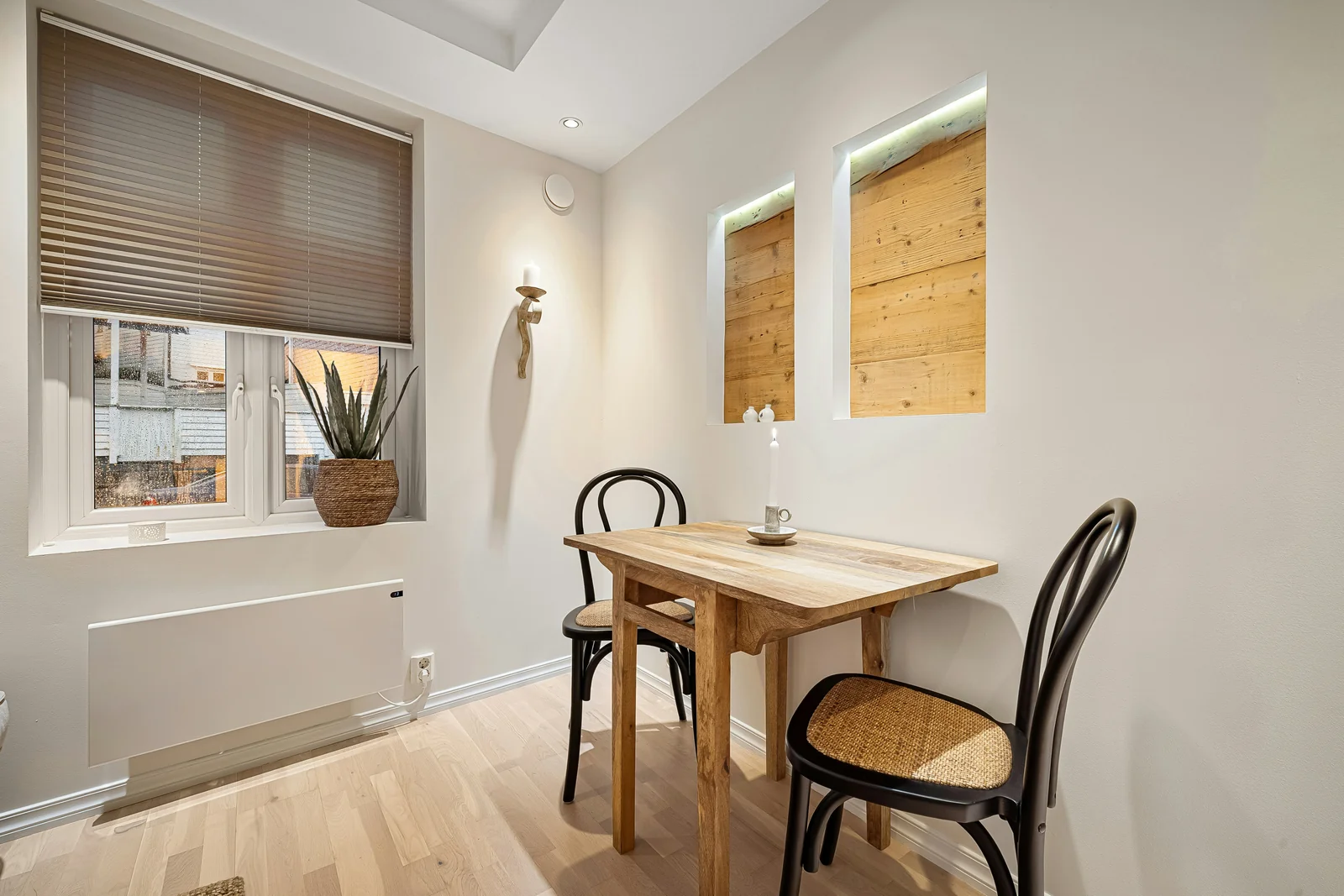
A shallow window-side table is more convincing than a large dining set squeezed into the center of the room. In this narrow white interior, the wood top runs parallel to the window wall while two dark chairs keep the arrangement modest.
Use this position for one or two daily diners, with seats on the sides people can actually reach. A chair that lives against a wall is not automatically an extra dining place: someone must be able to pull it back and sit down. Keep a nearby radiator, window hardware and door accessible, and resist storing spare chairs on the only clear route through the room.
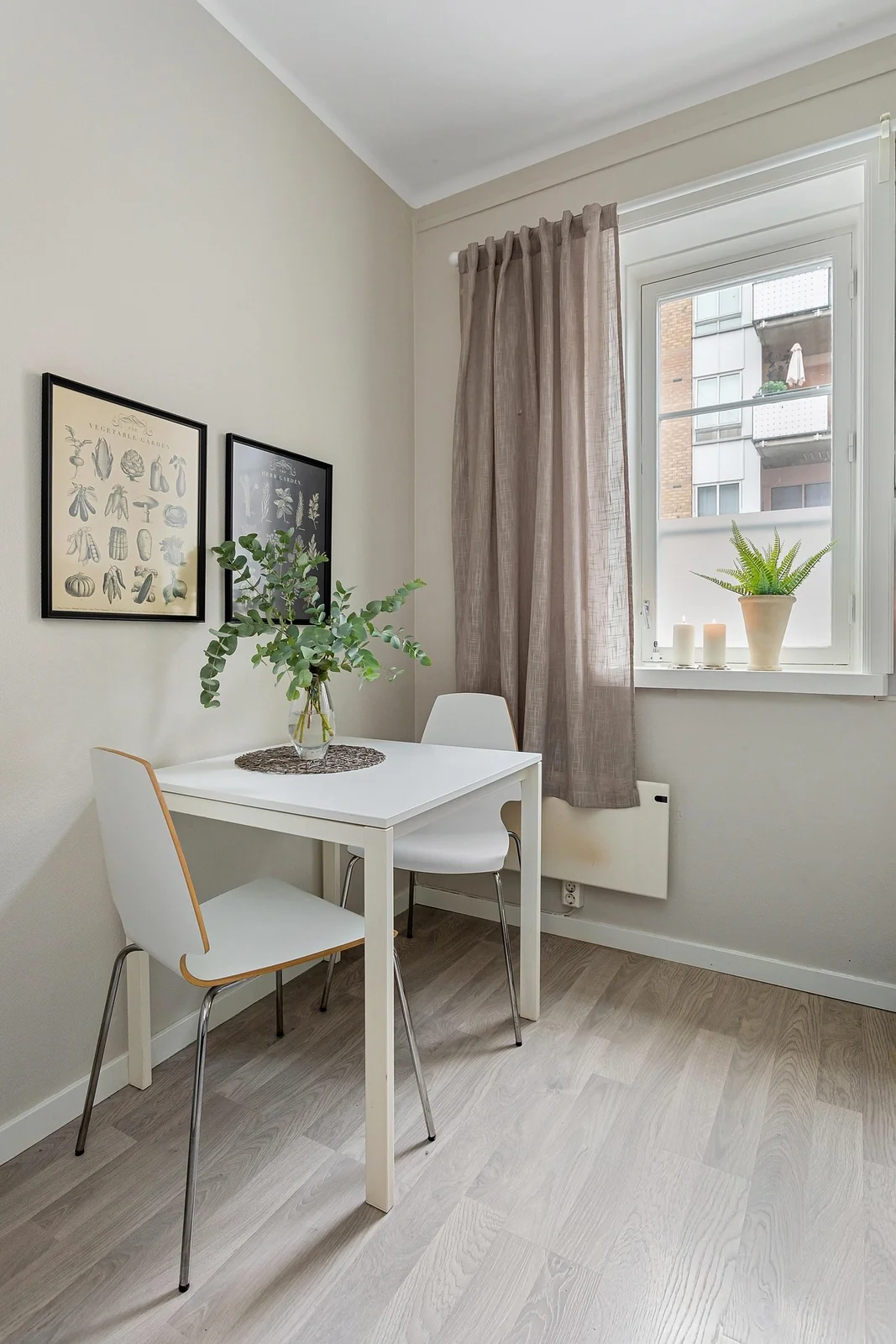
Give a square top a square corner
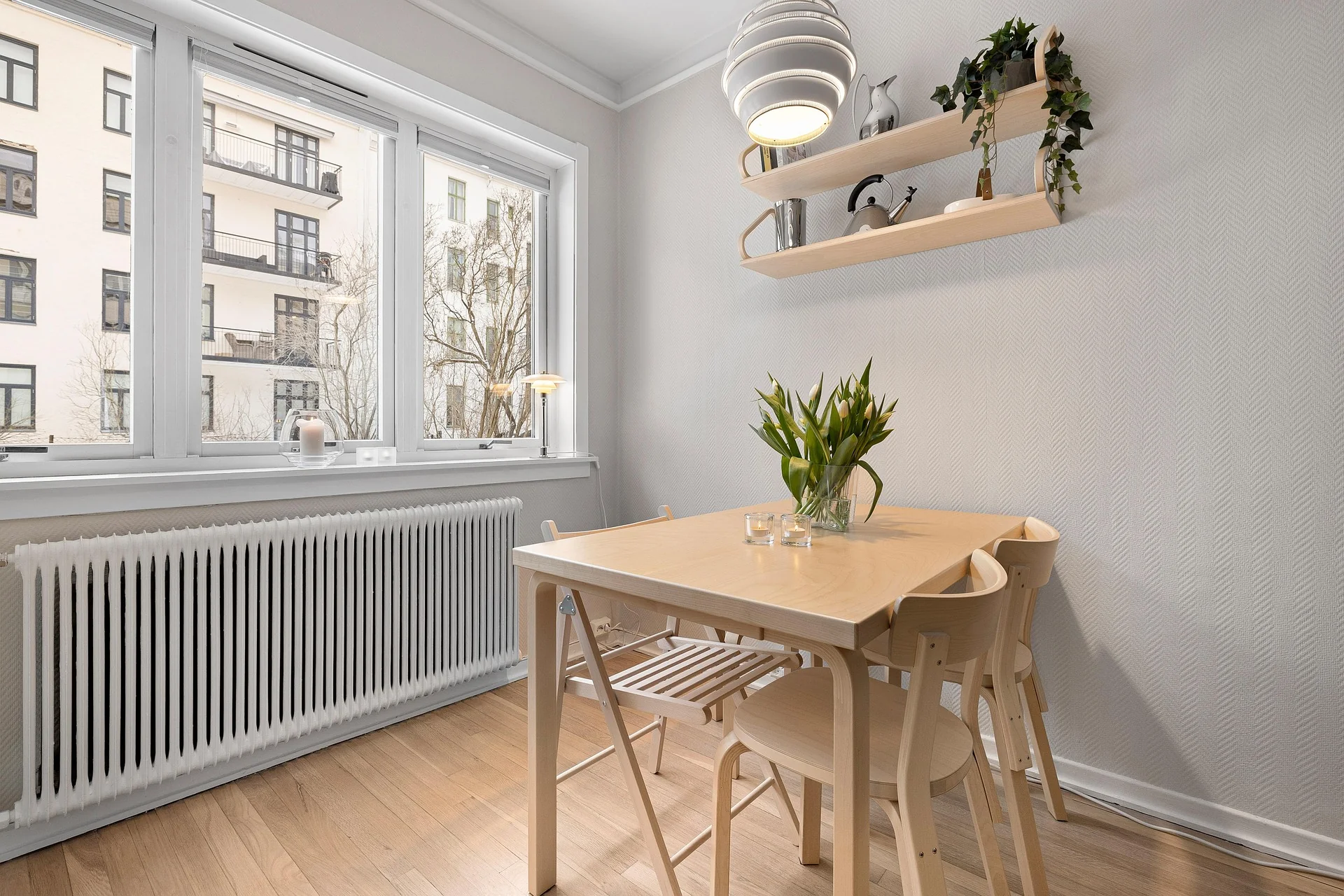
A compact square or almost-square table can make a shallow nook useful without an elaborate dining-zone layout. The pale top and chairs shown here sit close to a window; the table feels sized for the meal rather than for the furniture catalog.
This shape works nicely for two people facing one another and for rooms with clear right-angled boundaries. Its drawback is also its geometry: a corner may project farther into a walkway than a rounded edge. Place two real dinner plates, glasses and a shared serving dish on a candidate tabletop—or draw them at scale—before assuming its area is enough. A small square top is not necessarily a comfortable four-person table.
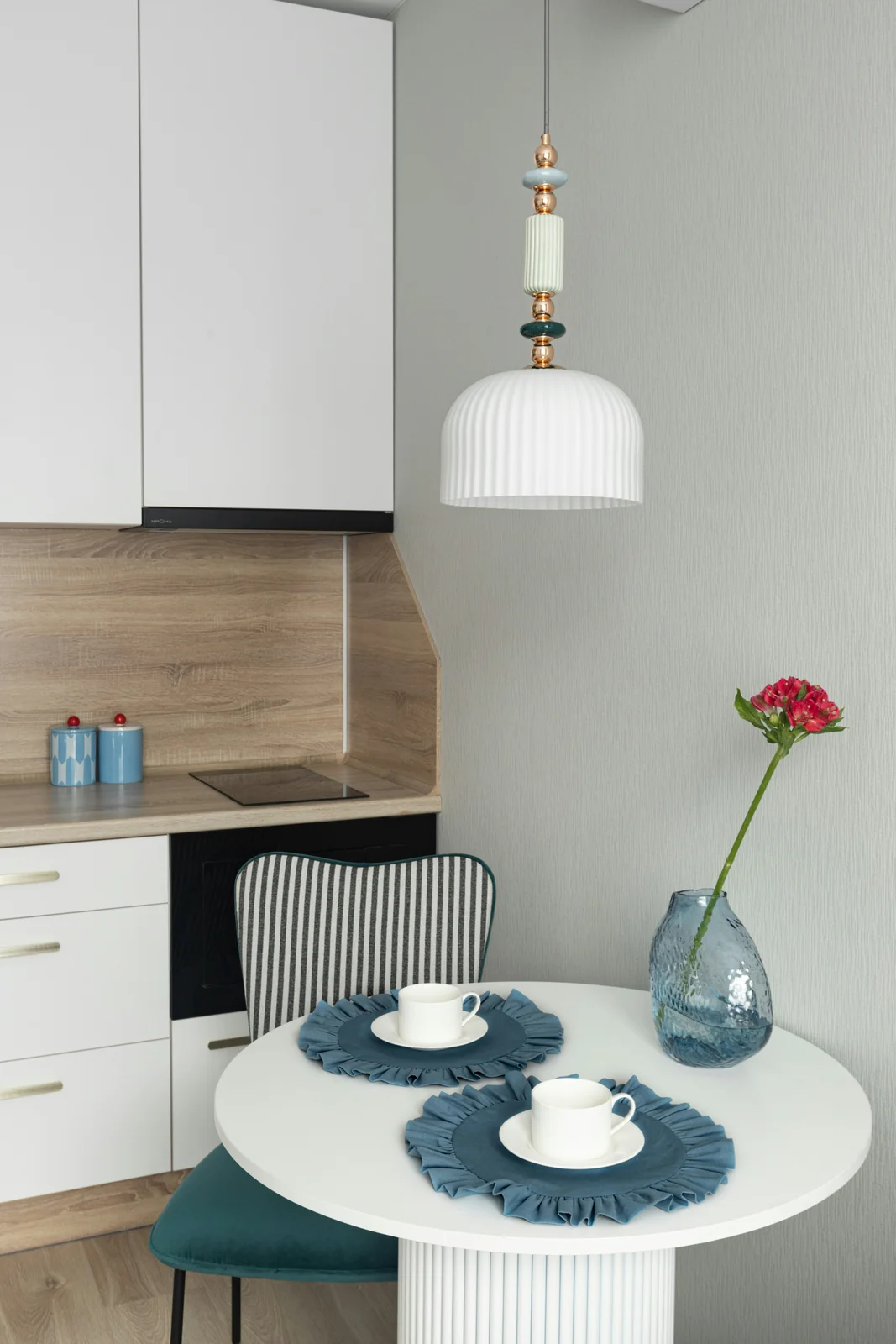
Choose a small round table at the kitchen edge
A white round tabletop set just outside the kitchen cabinets gives this corner an easy breakfast rhythm. There is no separate dining room: a few steps from the counter is enough.
A circular edge may feel gentler where people turn around a cabinet or doorway, but round does not mean space-saving in every layout. Compare the full diameter—not just the apparent softness of its outline—with a rectangle placed parallel to the same wall. Check how far each chair sits from the kitchen work area. If the shape appeals but you want more stylistic variations, explore our round dining table ideas guide; here, the priority is daily fit.
Compare the table base, not just the top
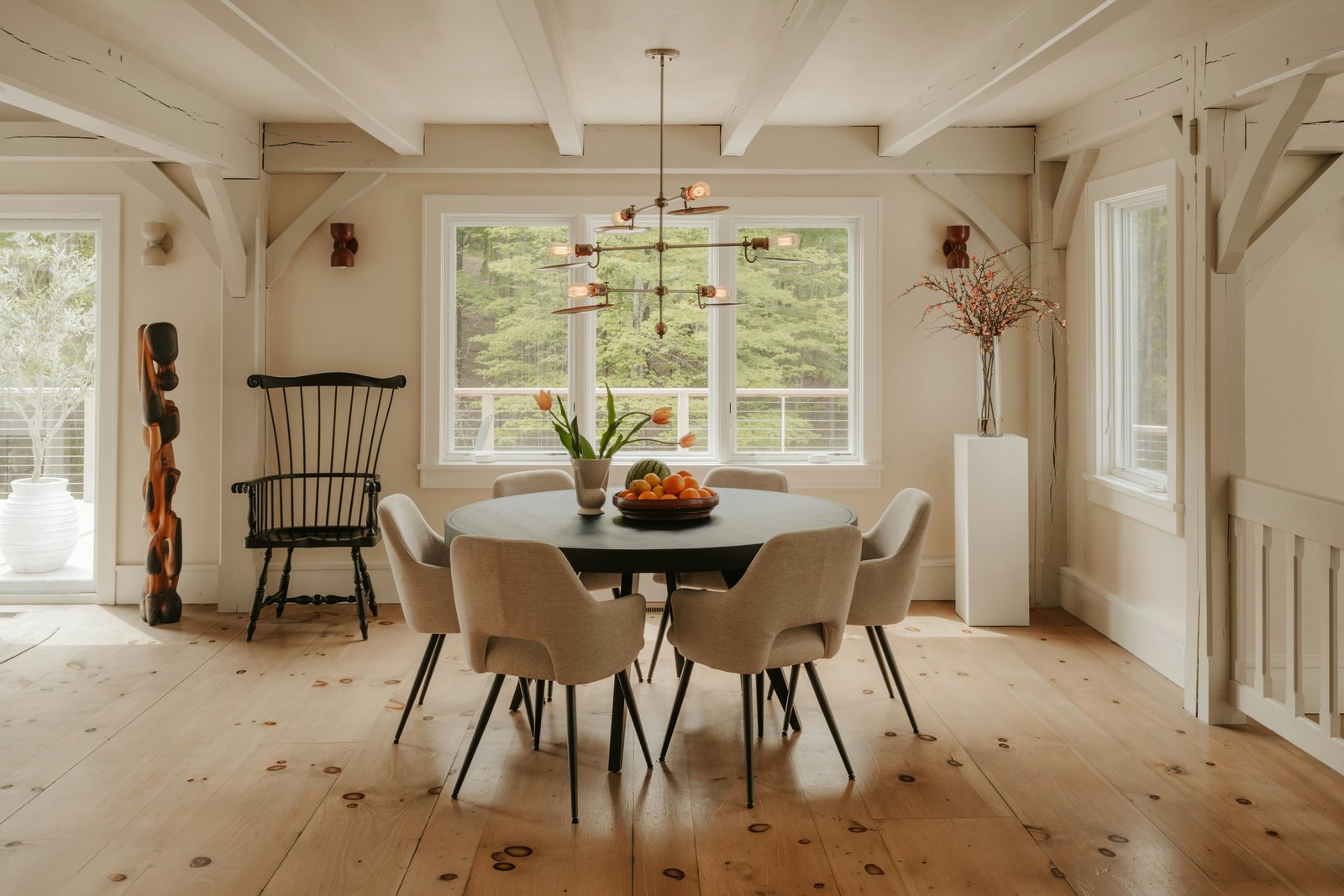
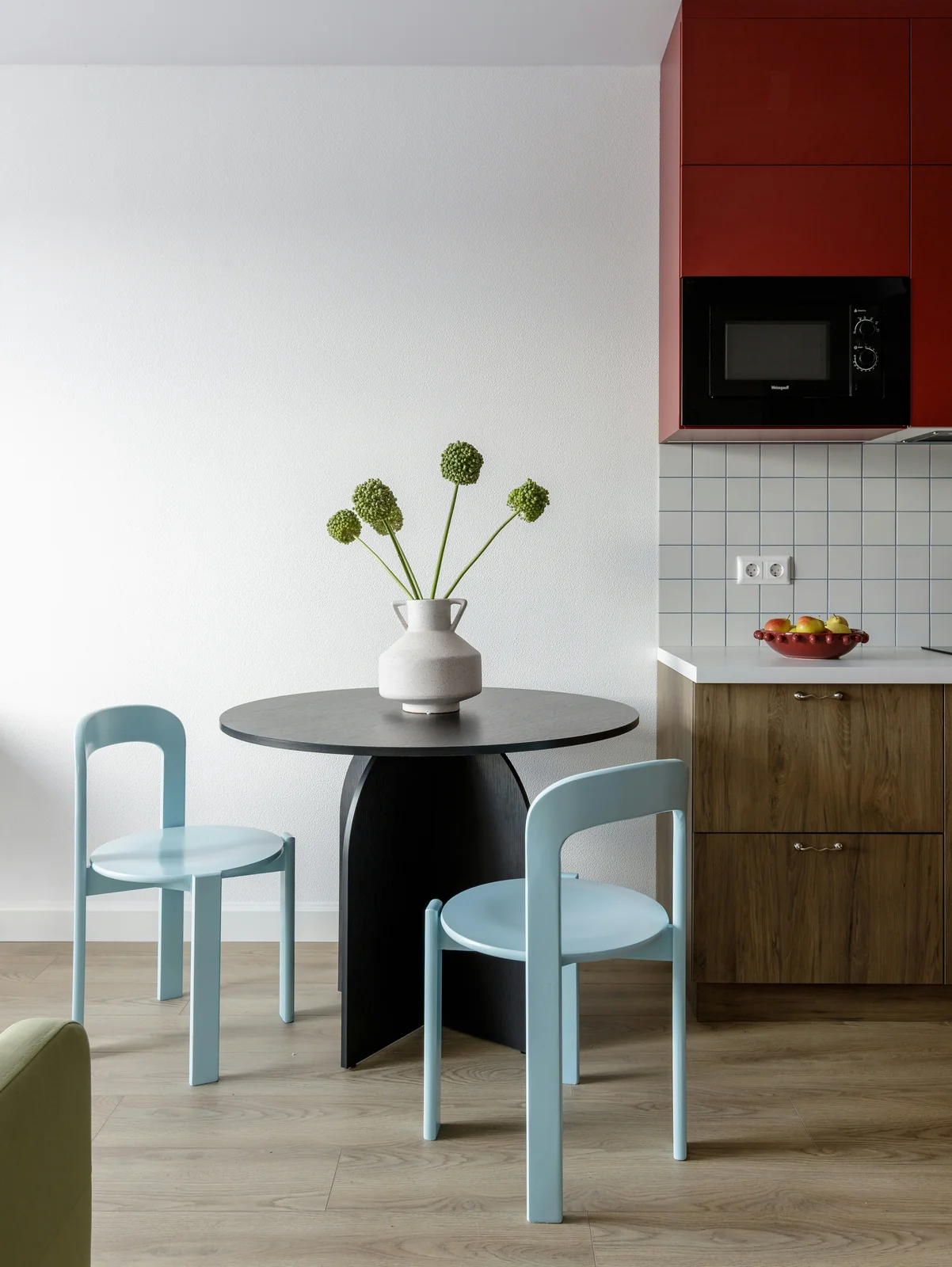
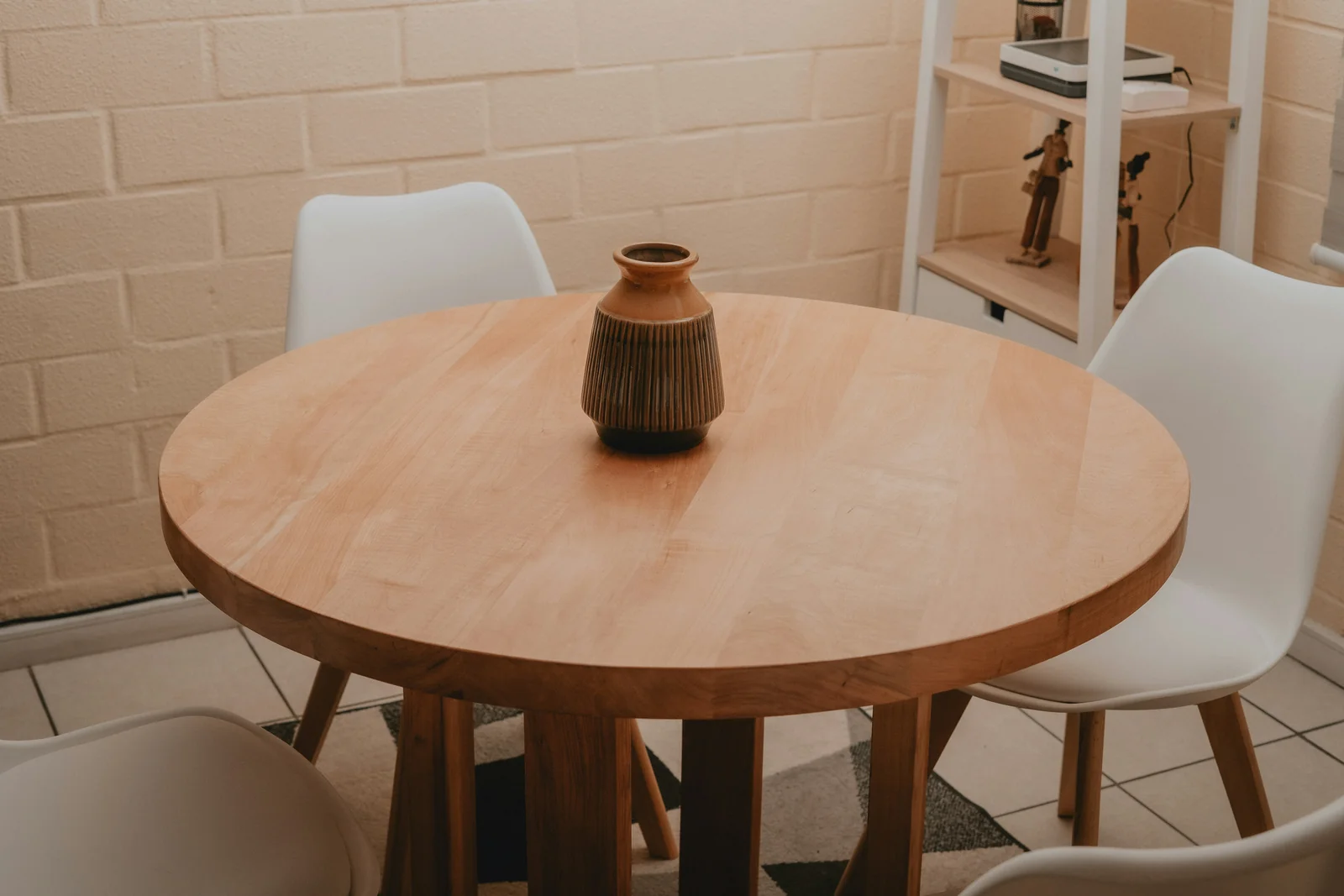
Two rounded tables can behave very differently when people sit down. The black table in the first photo has a central pedestal beneath its slender top; the wood table in the second photo places visible supports nearer the edge. Neither arrangement automatically wins.
A central pedestal may allow chairs to move around the perimeter, but its foot can take up the floor space where a diner wants to place theirs. Perimeter legs can leave open space in the middle yet interfere with the chairs at particular angles. Take the actual chair measurements to the showroom: include seat width, arms, the underside of the tabletop and any apron below it. Then sit, shift your feet and pull the chair fully out.
Make an awkward alcove or stair corner earn its space
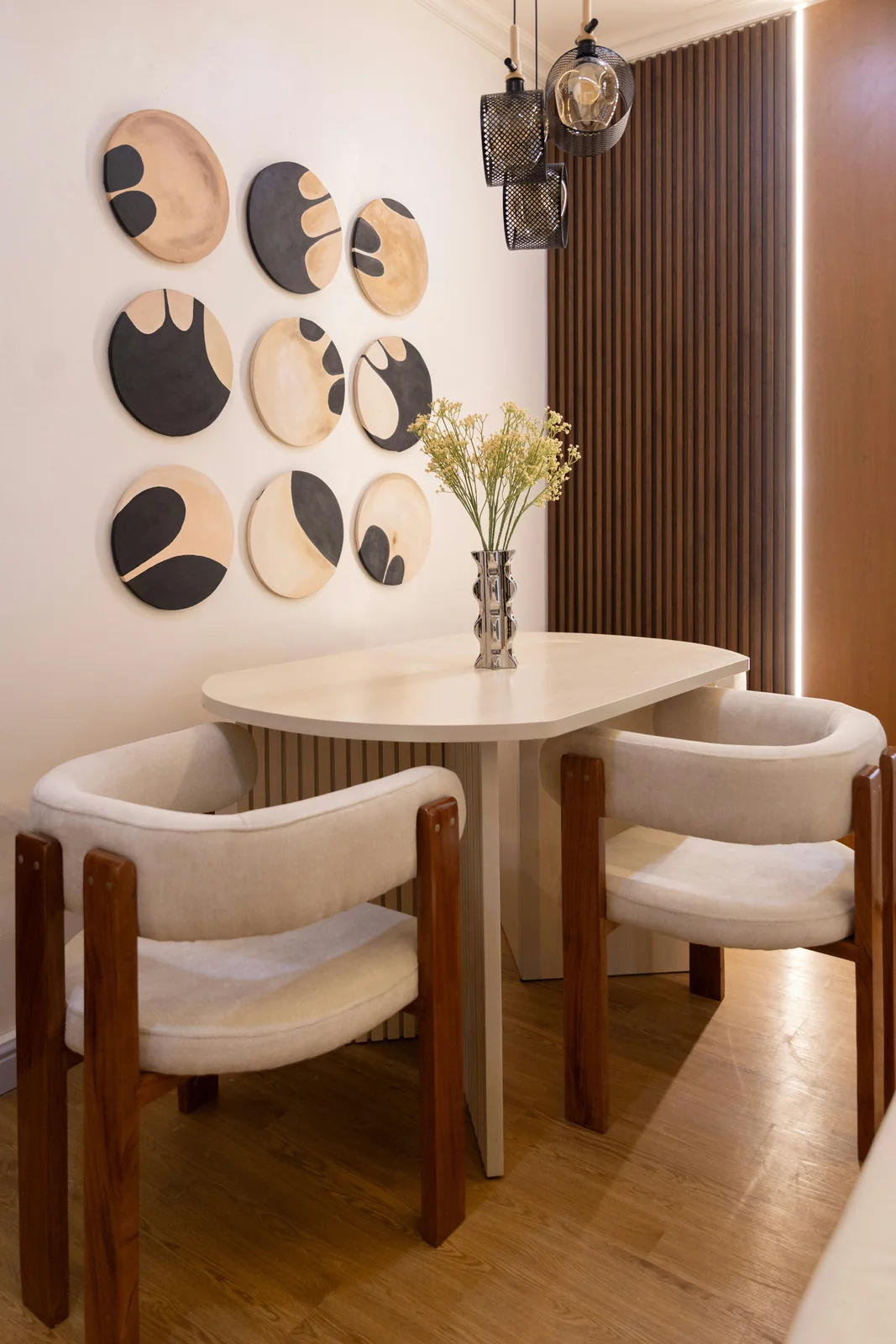
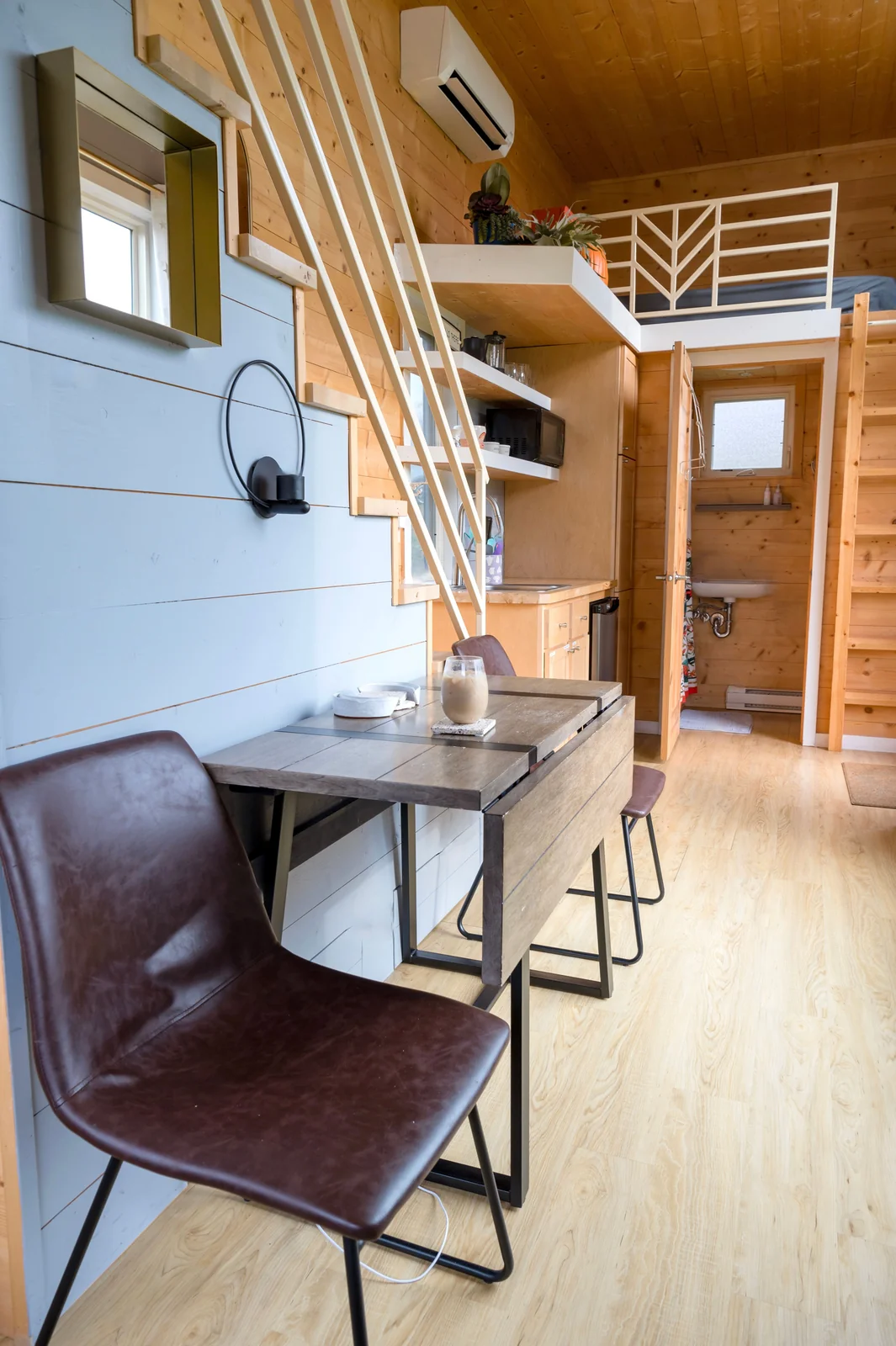
This wood-lined nook accommodates a rounded table and two generous upholstered chairs. Another photograph shows a much narrower table tucked beneath a loft staircase. Both use floor area that a standard dining set would overwhelm, but the chair experience is different.
The soft chairs in the alcove are inviting for a longer meal, yet their backs need room to move. Beneath the stairs, a slim surface with a single chair may be more realistic than two permanent seats. Before buying, mark the room the chair occupies when someone sits down, not just where its legs stand when pushed in.
Let a window-side table share the living room
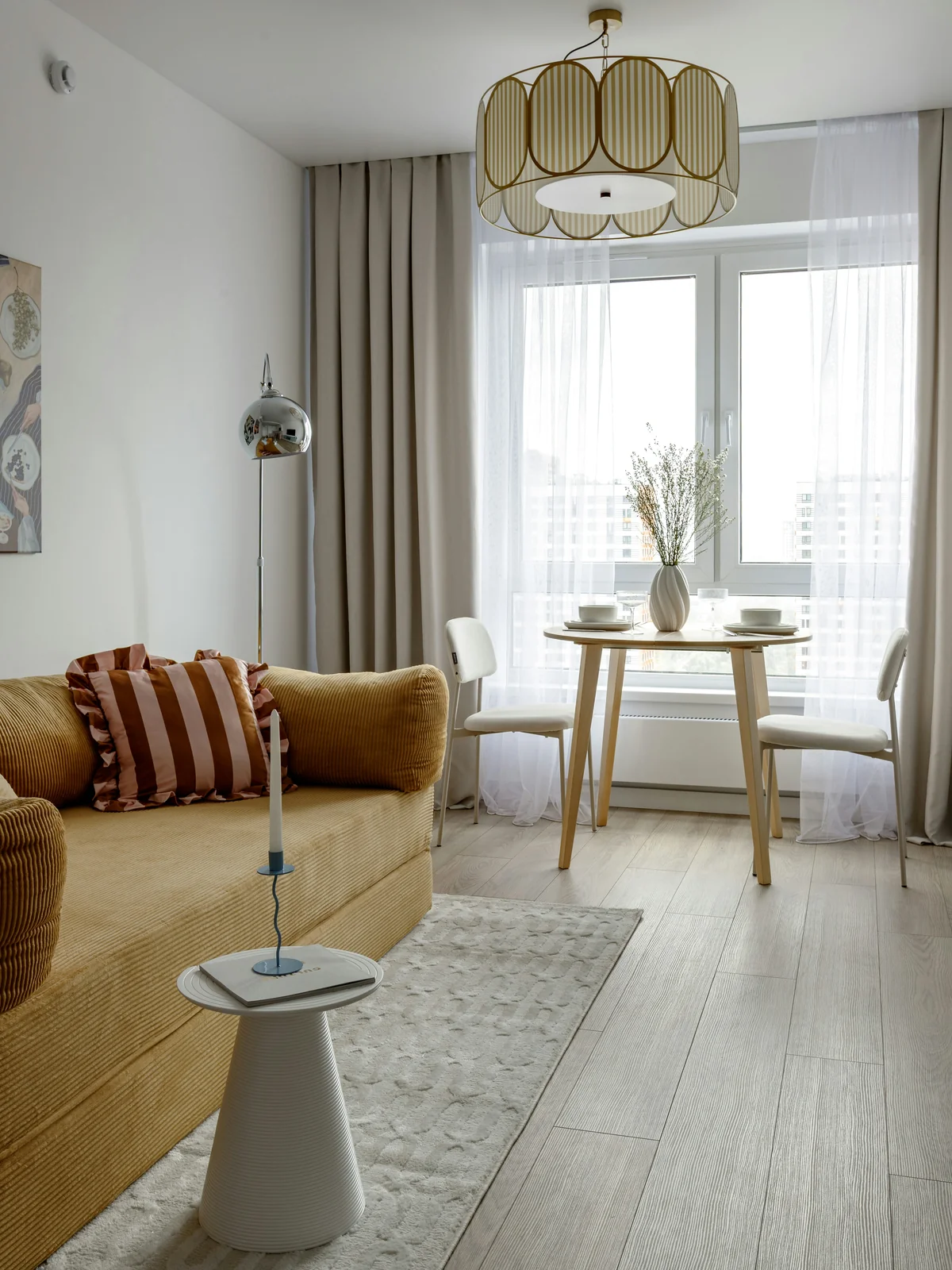
In this bright living space, the sofa takes the foreground while the little dining setup sits beside the far window. The two functions can coexist without a dividing screen or a bulky cabinet.
A table positioned near the window is especially sensible when the dining zone would otherwise steal the center of the room. Keep the route from kitchen to sofa comfortable and avoid treating the table as a permanent display shelf. If the living room changes from family time to dinner, lightweight chairs you can move are often more useful than a table that looks neat only when nobody is sitting at it.
Ask whether a high table is really worth it
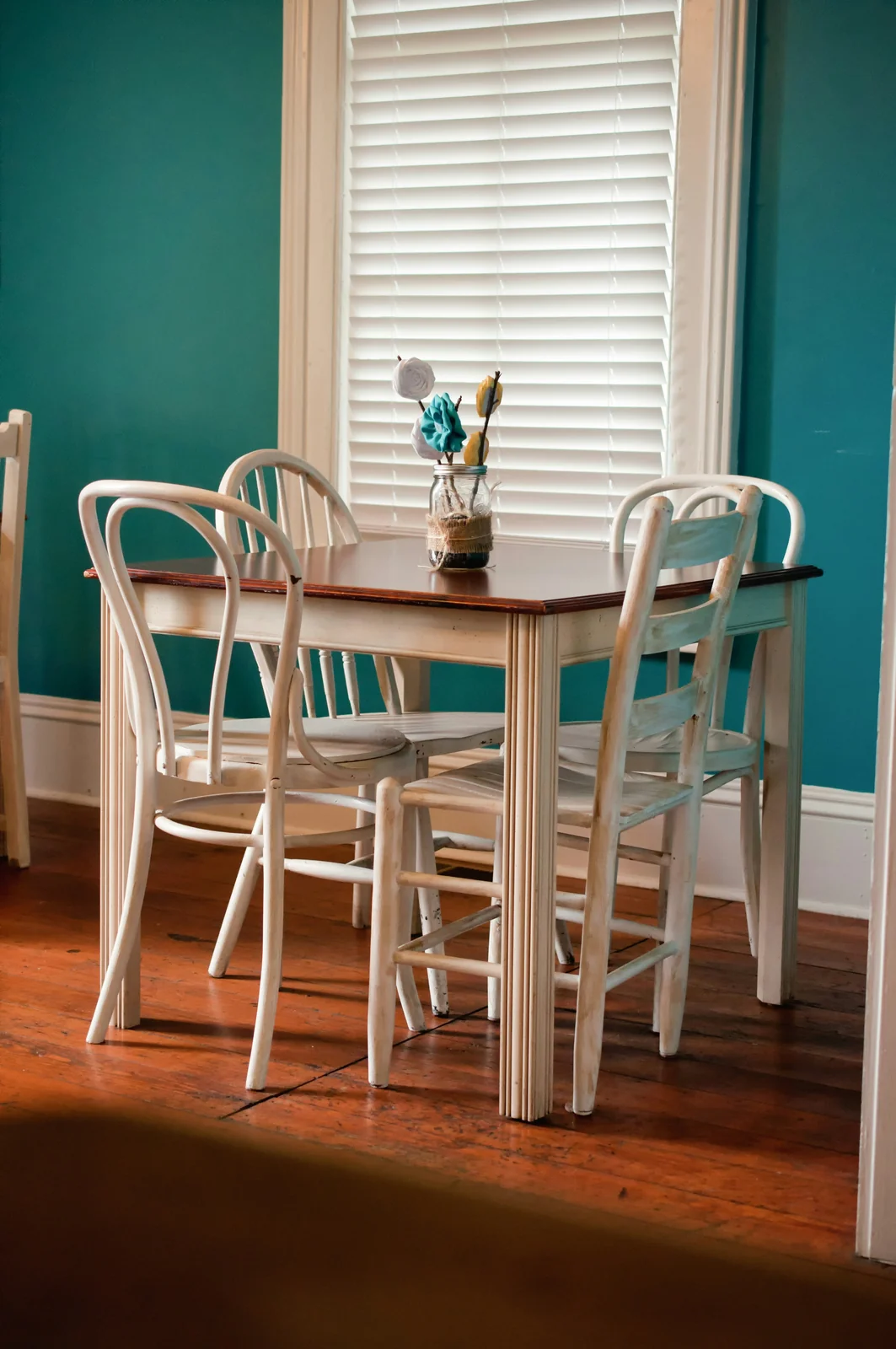
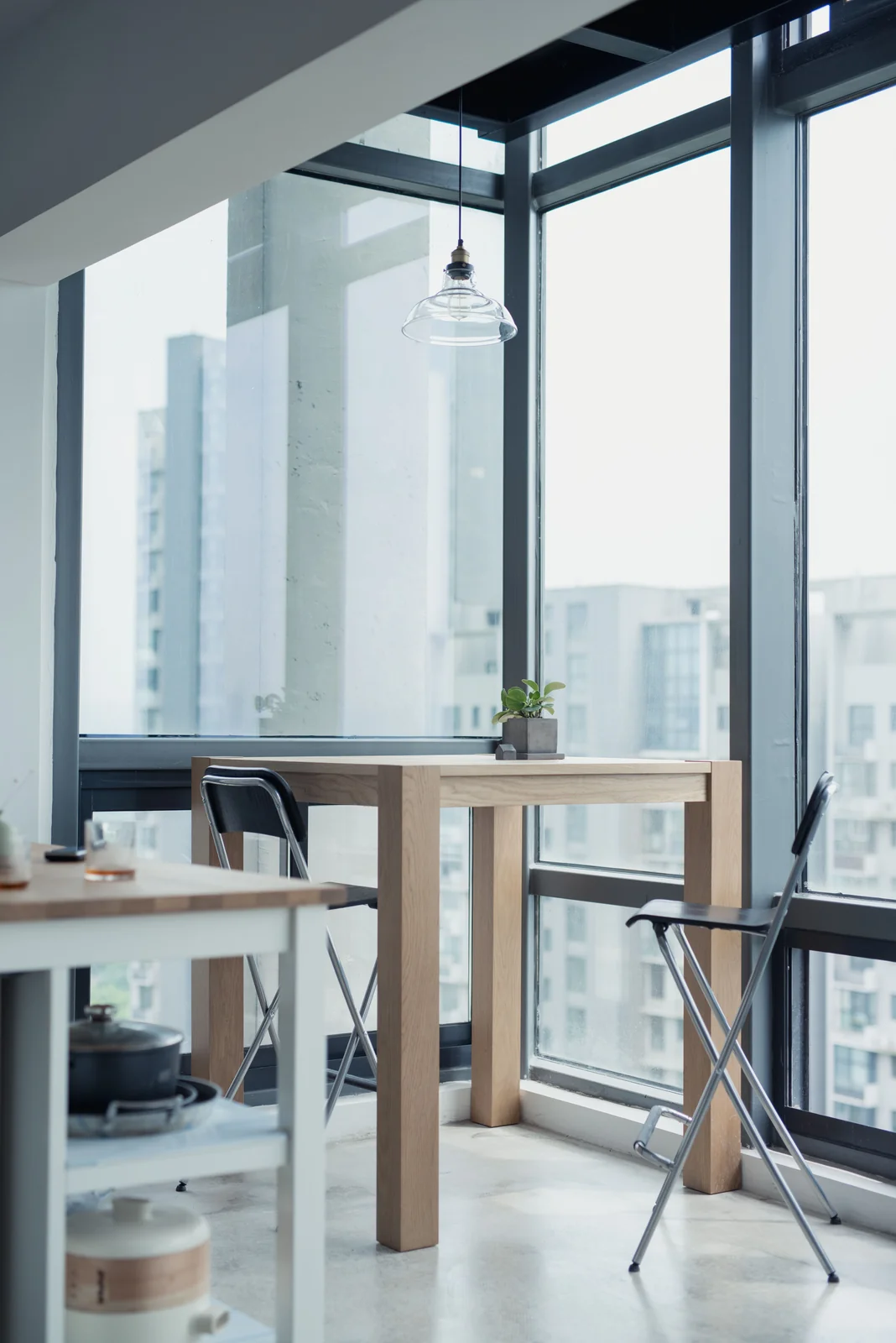
Height is a choice, not a shortcut to a smaller footprint. The first photo shows a standard-height table with bentwood chairs against a deep turquoise wall, included for contrast; the second shows a much slimmer elevated table beside tall windows. Comparing the two photographs, the difference in height is easy to judge.
A high top can follow a narrow window bay or create a counter-like eating ledge, but it requires matching taller chairs or stools and a comfortable footrest. Getting onto the seat, sitting through a long meal and moving around the table are different experiences from using regular dining chairs. Do not infer actual heights from the photographs. Check the tabletop height, the seat-to-top gap, leg support and the path around a pulled-out stool.
Use a movable bench instead of extra chairs
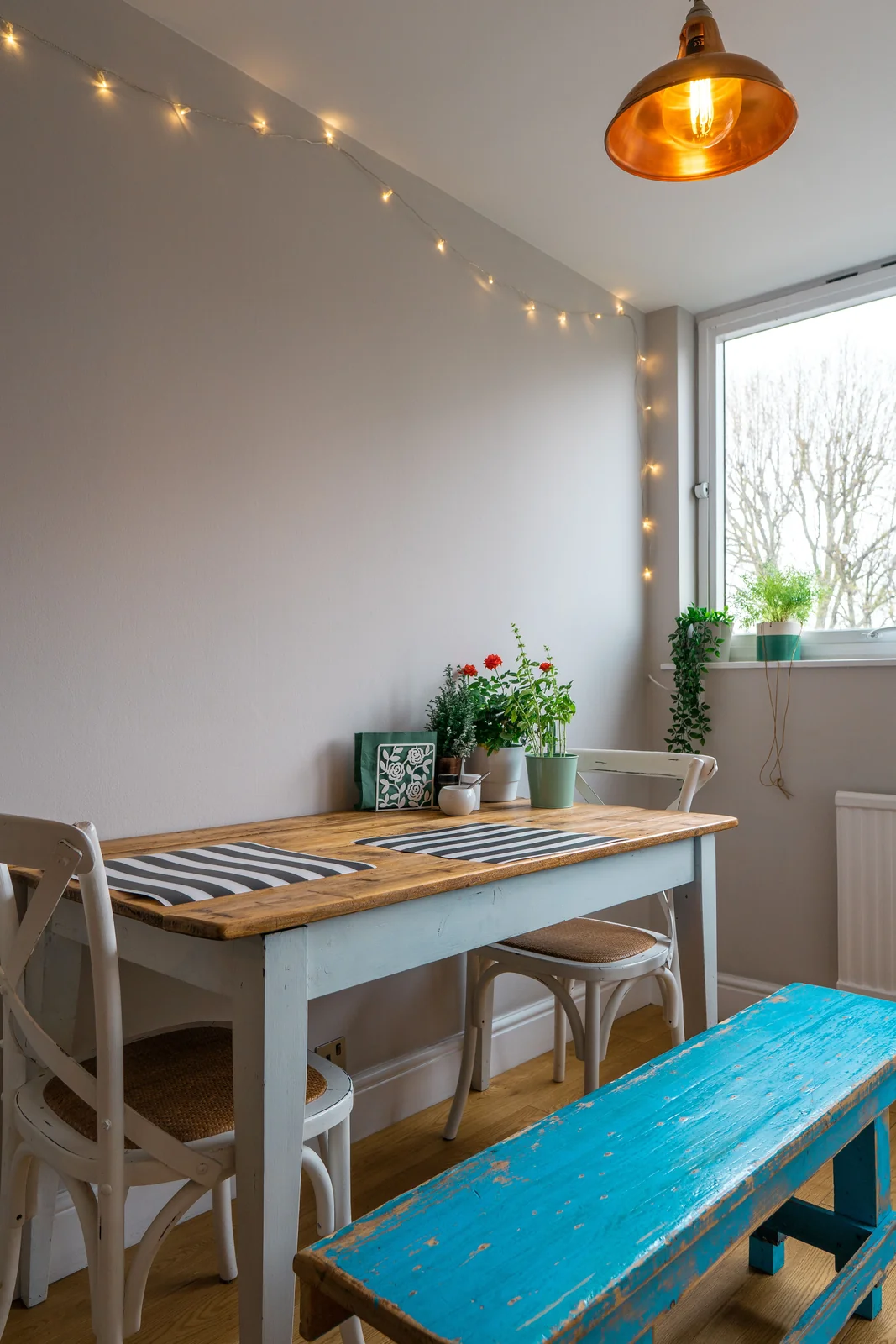
A long blue bench beside a compact wood table creates a distinct choice: one continuous seat instead of several chair backs. Because this bench is freestanding, it can move or be replaced when the room changes.
A loose bench may slide partly under a table, but not always; the frame, table legs and seat depth decide. It also needs enough space for people to move in and out, especially when one diner sits in the middle. Compare that with fixed wall seating only if the room really supports a permanent arrangement. For a broader discussion of chair dimensions, see our dining chair ideas guide.
Pair a fixed window bench with a pedestal table
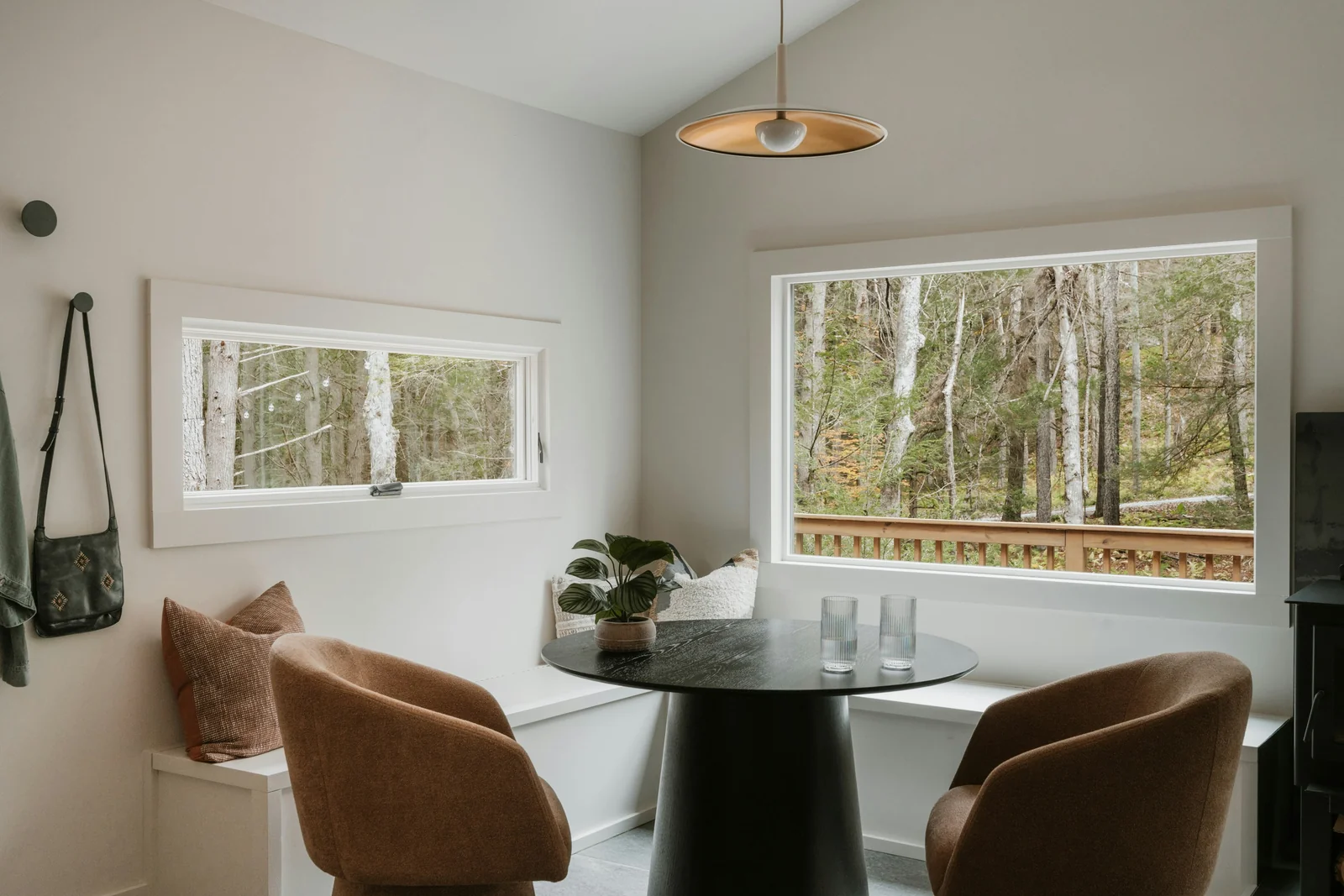
A slim white bench follows two walls beneath the windows, while a dark round pedestal table stands in front of it. Two brown upholstered chairs face the bench. This is a genuine fixed-seating example: the window-side places stay put, and the loose chairs can be pulled away.
The combination can give a window corner more use without placing four loose chairs around the table. But a fixed bench changes how diners enter and leave. Check the distance between the table edge and bench, the ability to slide in from the open side, and whether the pedestal base leaves a comfortable place for feet. Do not assume a glossy dark top is glass; the photograph does not establish the material.
Compare how you enter each seat: the fixed white bench needs a clear way in from the side, while the loose blue bench above can be pulled outward. The room’s access pattern makes the stronger case than the number of seats.
Find a table that changes from desk to dinner
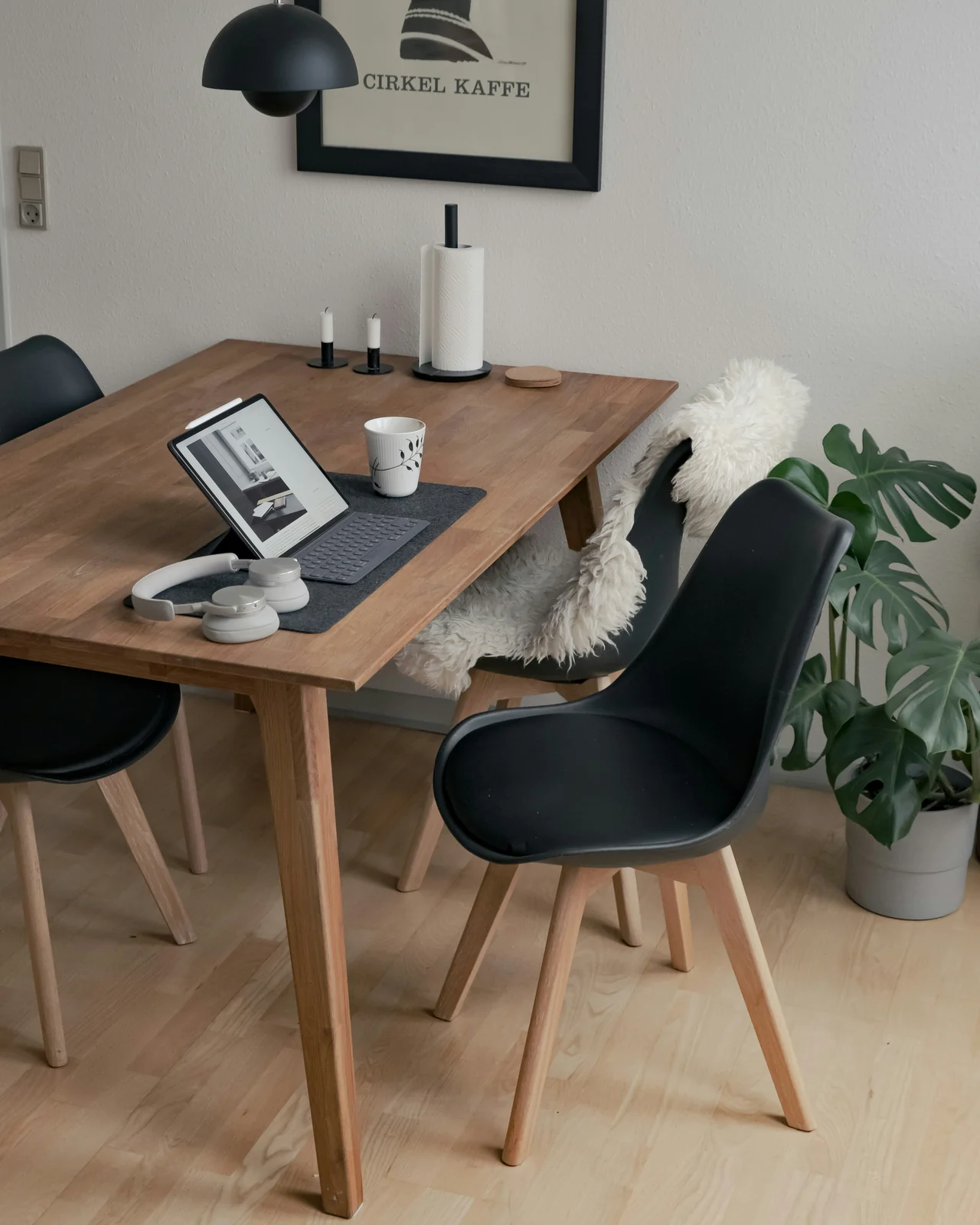
Here, a rectangular wooden table holds a laptop beside dark dining chairs. The surface is already doing two jobs; it needs a practical reset between them, not an extra room.
Leave a drawer, wall shelf or lidded box nearby for chargers, papers and the everyday work kit. Choose a tabletop that accommodates both a keyboard and dinnerware without having to keep everything on display. The working chair also has to be pleasant through a meal. A foldable design may help when the table is needed only intermittently, but first ask whether the surface truly needs to shrink; a well-positioned fixed table can be less awkward than opening and closing furniture several times a day.
Decide whether chair color should stand out or blend in
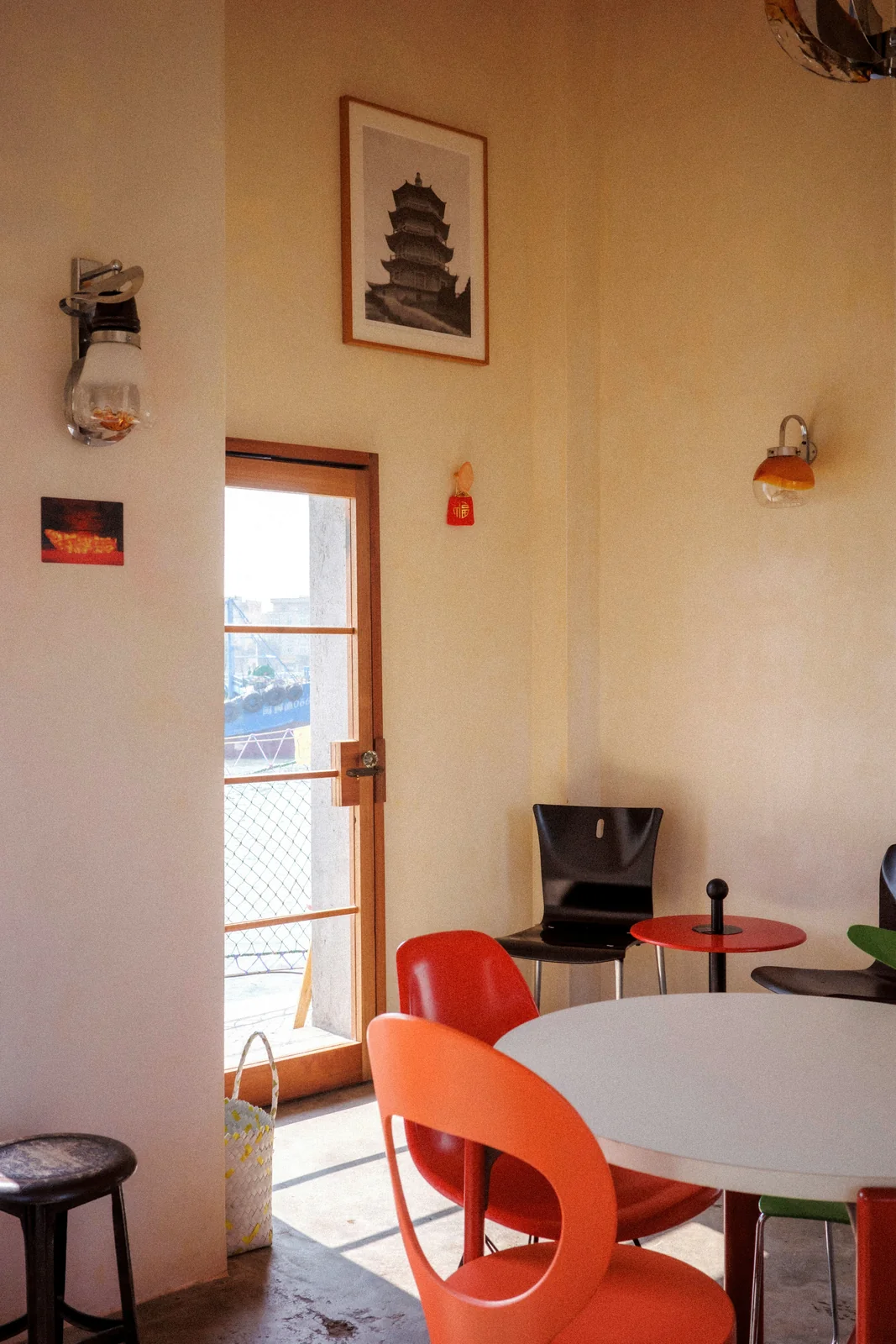
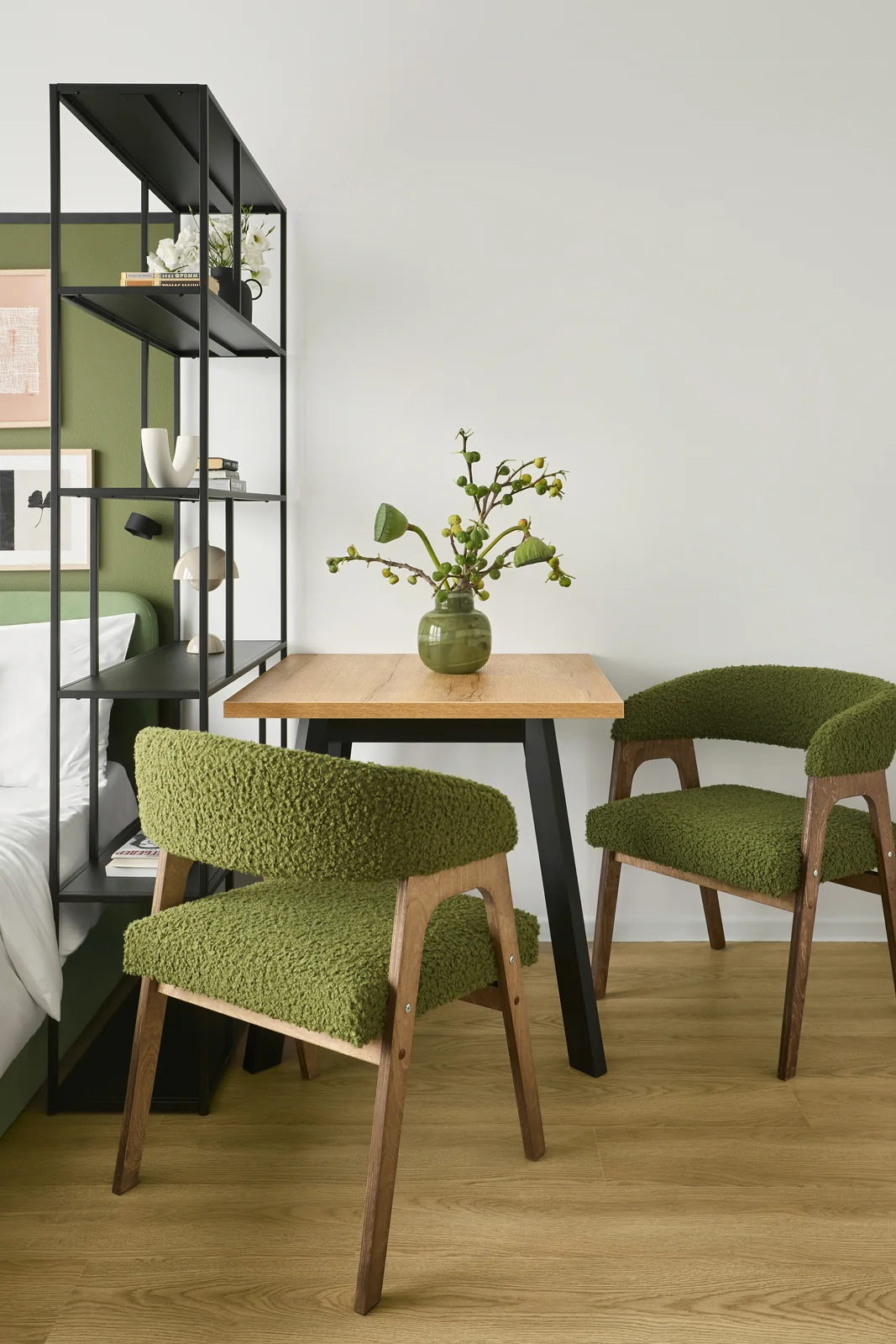
Chair color can change how a small dining spot reads. In a café with warm cream walls, vivid red-orange chairs turn the eating spot into a clear accent. In another, green upholstered chairs echo a green wall at the left edge of the frame; the wood top remains quiet and useful.
Neither color strategy gives you more physical floor space. The choice is whether the dining spot should stand out or settle into the room around it. For the vivid option, let the chairs carry the color while the tabletop stays straightforward. For the quieter option, compare swatches in your own daylight instead of guessing an exact shade from a photo.
Look at the dining spot from the sofa or kitchen counter. The red-orange chairs will register as an accent even when tucked in; the green pair echoes the color already on the wall. Choose the effect you want to notice from those everyday viewpoints.
Choose a compact table with character
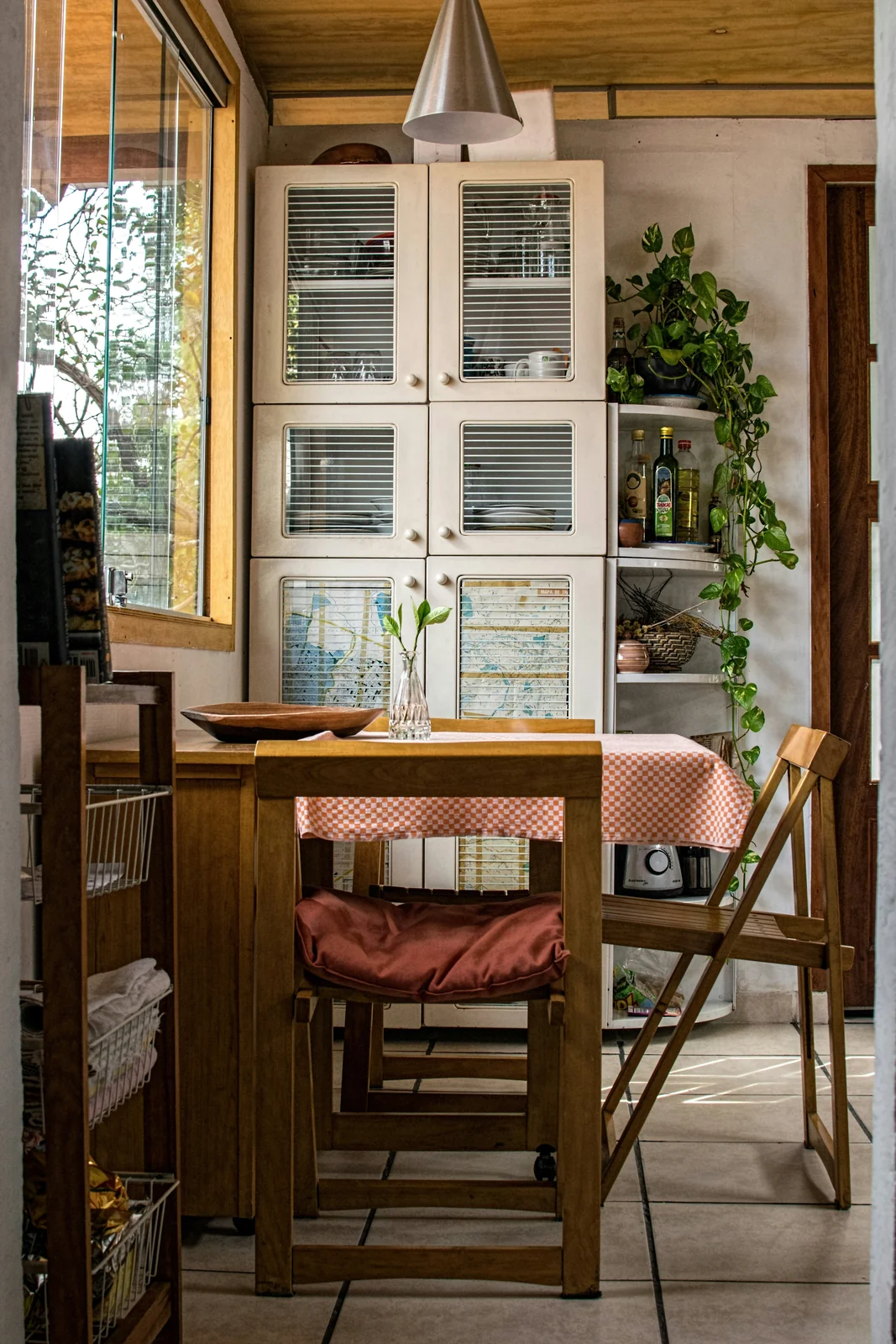
A checked tablecloth, a compact wood table and a folding chair give this corner character without demanding a large footprint. The folding chair adds a useful occasional seat that can be stored when it is not needed.
If you shop for a similarly compact table secondhand, bring the same tape measure you would use for a new piece. Check the top, wobble, joints, clearance beneath the apron and room needed to pull back the chairs. For an occasional folding chair, plan a storage spot before buying.
Make the chair tuck-in test decisive
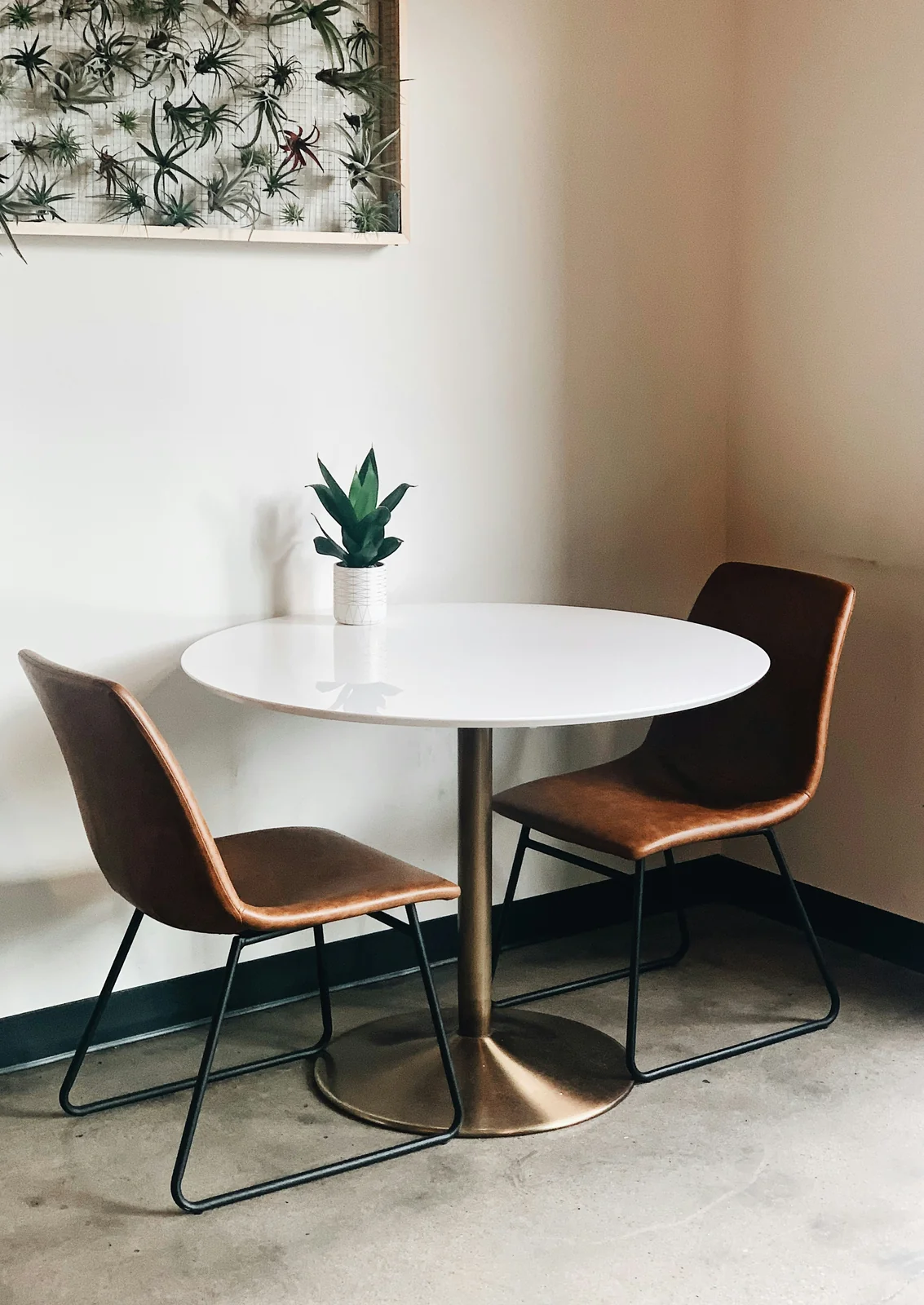
A clean white pedestal table and two brown chairs make it easy to see why a tiny tabletop can still take up an awkward amount of floor space. The chairs, not only the top, determine where the usable room ends.
Before buying, measure the underside of the table, the apron if there is one, the height and width of chair arms and the widest part of the chair back. Check whether the chair slides in at the angle you intend, without the pedestal foot catching shoes. Then pull it out far enough for a real person to sit. A base that looks elegant in a product photo is not a promise that every chair will fit underneath.
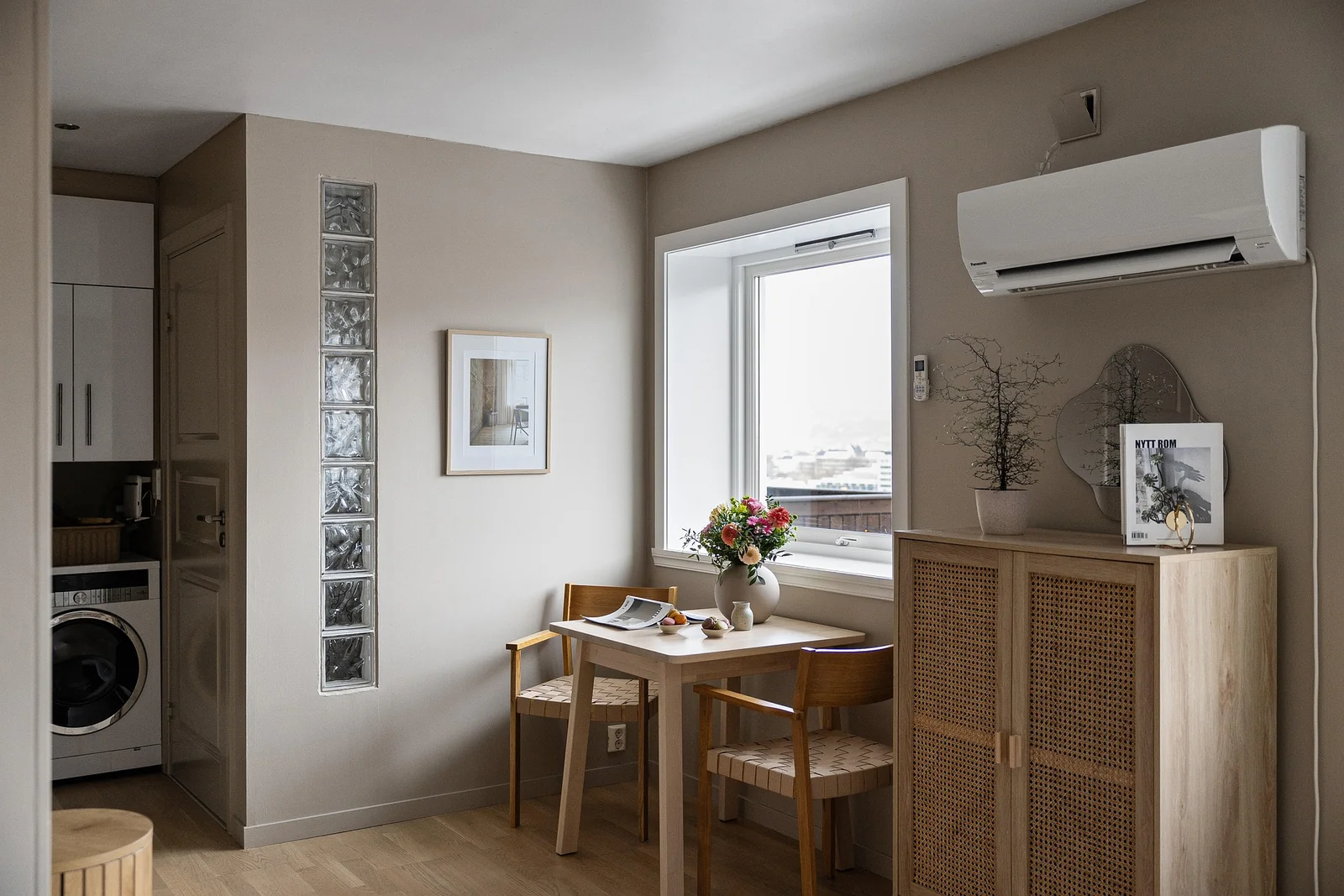
Make the kitchen-to-living transition useful
The compact table beside this kitchen and storage wall occupies the overlap between cooking and living. That can be the most logical dining position in an apartment: close to food preparation without pretending there is a formal room beyond.
Its success depends on small movements. Open the refrigerator, appliance doors and cabinet drawers while someone occupies the nearest chair. Walk from the counter to the rest of the room carrying a plate. If there is a clear sequence of movement, the table belongs here; if it blocks the route at every meal, shift it or choose a different form. A small table is useful only when the surrounding kitchen keeps functioning.
There is no need to buy a table that seats six just because six people visit twice a year. Start with the daily version and decide how much effort you are willing to put into occasional expansion. These mechanisms solve different problems; none is automatically best for every small home.
| Table type | What it solves | What to check |
|---|---|---|
| Fixed compact | Everyday eating for one or two without mechanisms. | The occupied footprint stays the same every day. |
| Drop-leaf / gateleg | A small parked table that opens for occasional guests. | Check leaves, supports, chairs and circulation in every position. |
| Center-leaf extendable | A modest daily table that lengthens for guests. | Confirm the full extension and storage of a removable leaf. |
| Wall fold-down | Floor space matters more than a permanent table. | Wall construction and fixings; room for chairs when open. |
| Portable folding | A spare surface is needed only occasionally. | Stability, deployment effort and folded storage. |