Choose Black by Reflectivity, Not Just Shade
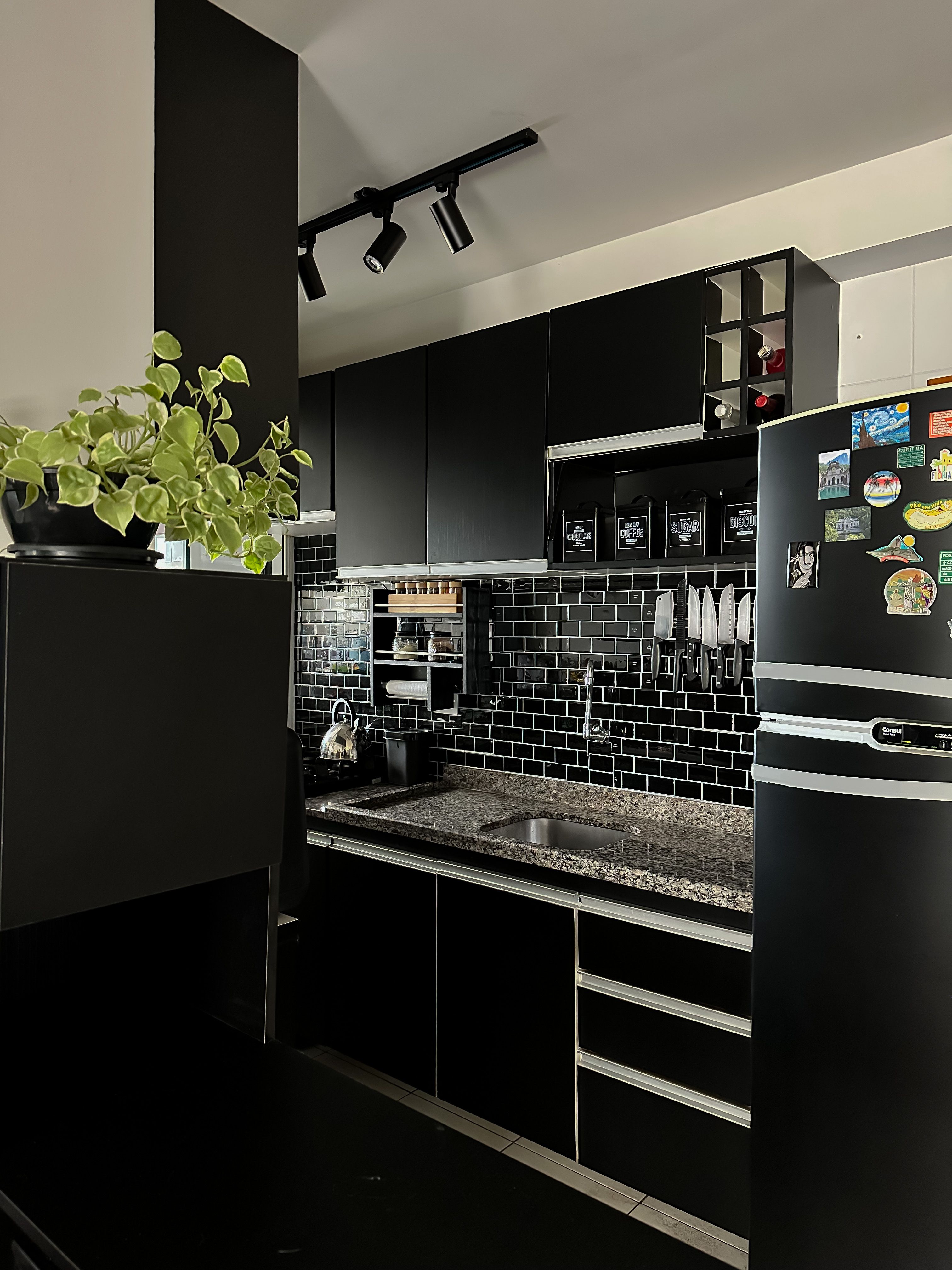
Two blacks with similar color can behave very differently once installed. Super-matte cabinetry absorbs highlights and can make a long run feel soft and monolithic, while satin paint reveals edges and reflections more clearly. Blackened timber, textured laminate and metal add their own grain or sheen. Choose the finish according to how much information the room needs the surface to reveal, especially in low light, rather than searching only for the darkest sample.
Map Where the Black Starts and Stops
Black is easiest to control when its boundary is explicit. One wall of tall units, one lower run or one cooking zone can read as a deliberate architectural field; scattered black cabinets, stools, pendants and trims can turn the room into a collection of unrelated dark marks. Draw the dark area on a simple plan or elevation and decide where it stops before choosing the smaller finishes. The boundary gives the rest of the palette somewhere to provide relief.

Protect a Bright Working Plane
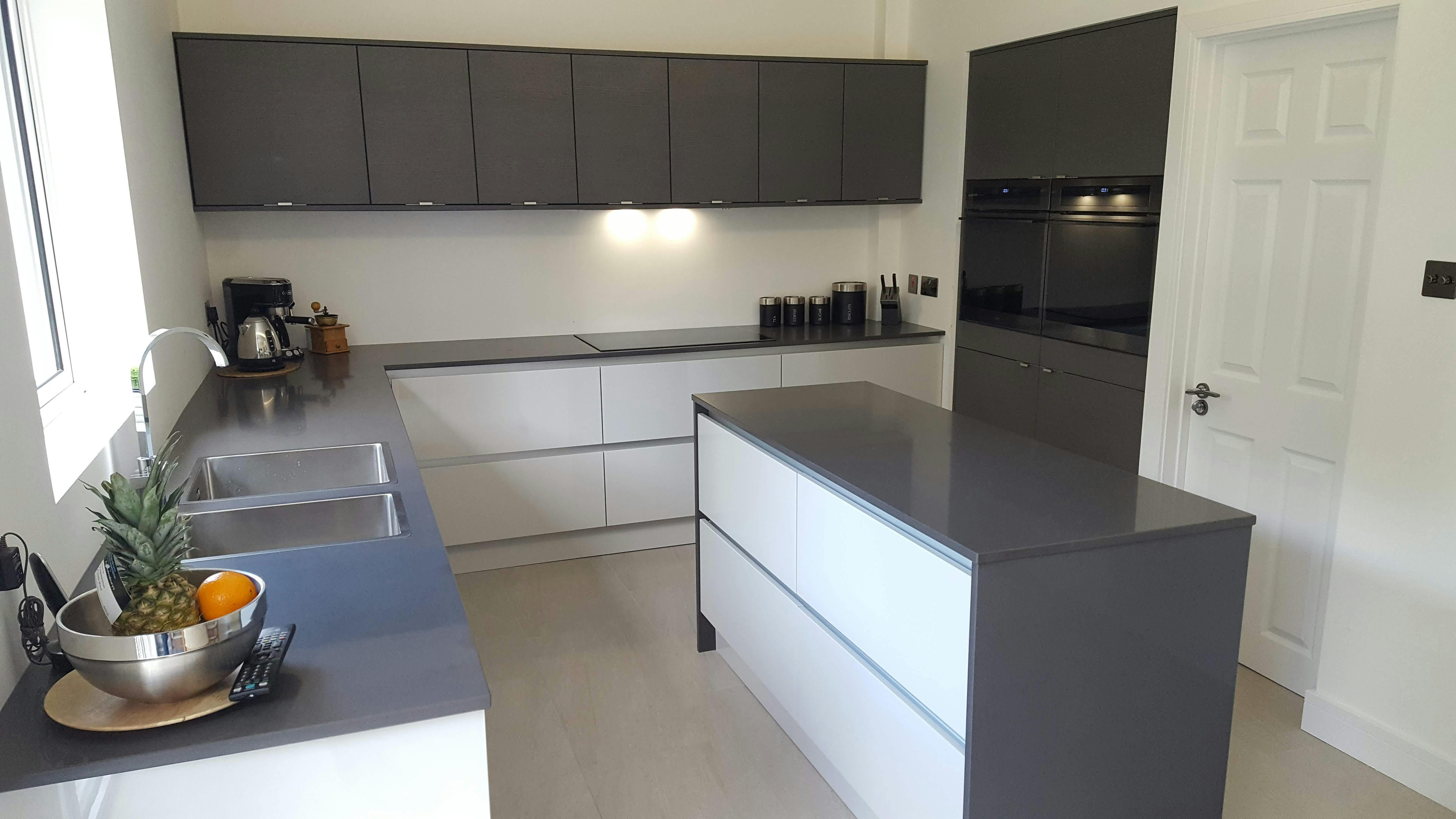
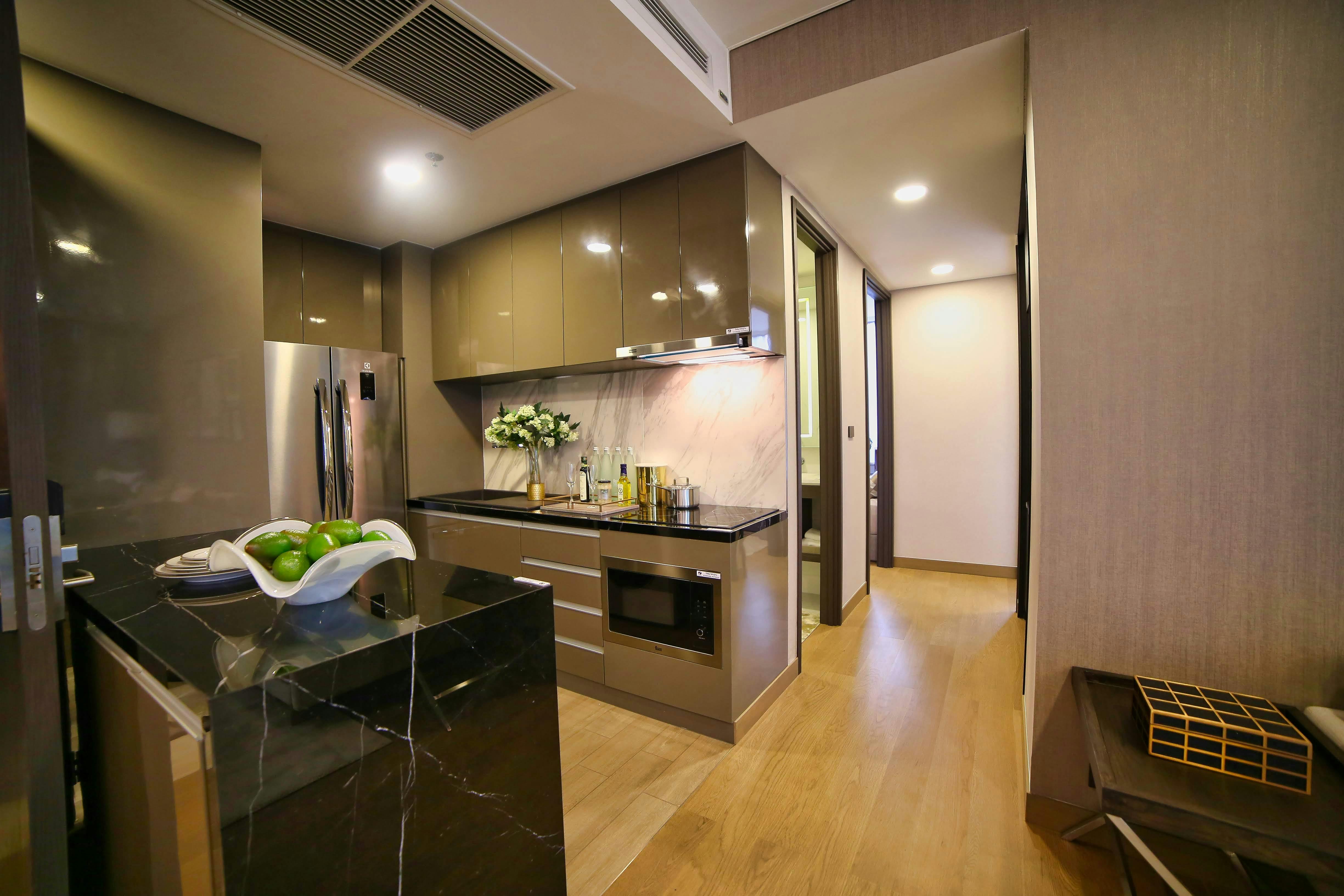
A pale worktop is useful in a black kitchen because it does more than create contrast: it keeps the main working surface visually readable between dark cabinet masses. Warm marble, pale quartzite or softly veined quartz can form a continuous light band that separates lower and upper elements. The exact stone matters less than whether the working plane remains clear under both daylight and task lighting. A darker worktop can still work, but then another layer must preserve that legibility.
Use Grain to Restore Depth, Not to Warm Everything
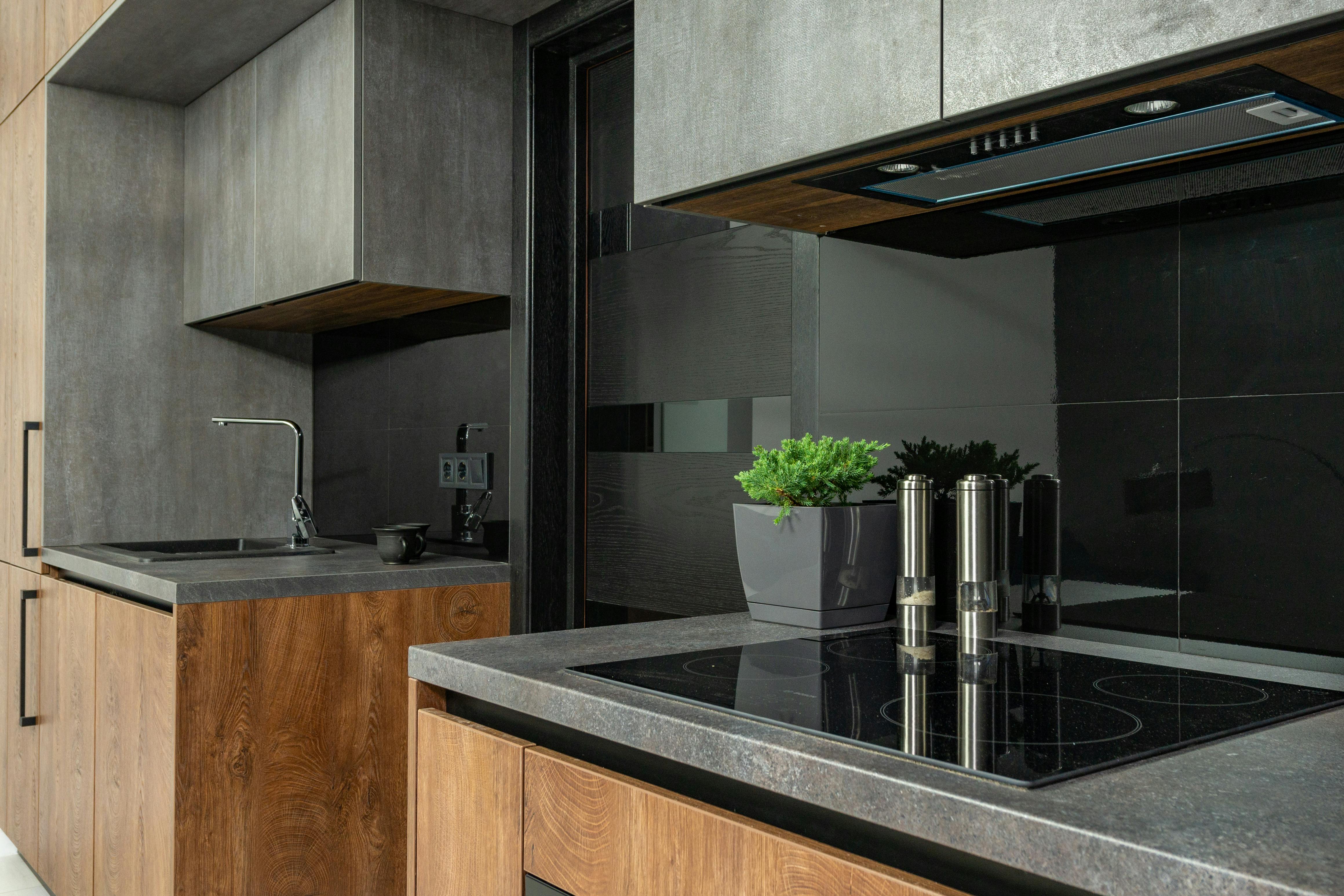
Timber earns its place in a black kitchen when the grain restores information that large matte dark surfaces remove. A pale oak island face can reveal form, while walnut cabinetry can create depth within a darker palette without turning the room light. Think in terms of grain, direction and value before using wood as a generic warming device. One meaningful timber plane is often stronger than many small wooden accessories.
Keep a Dark Palette Legible with Movement
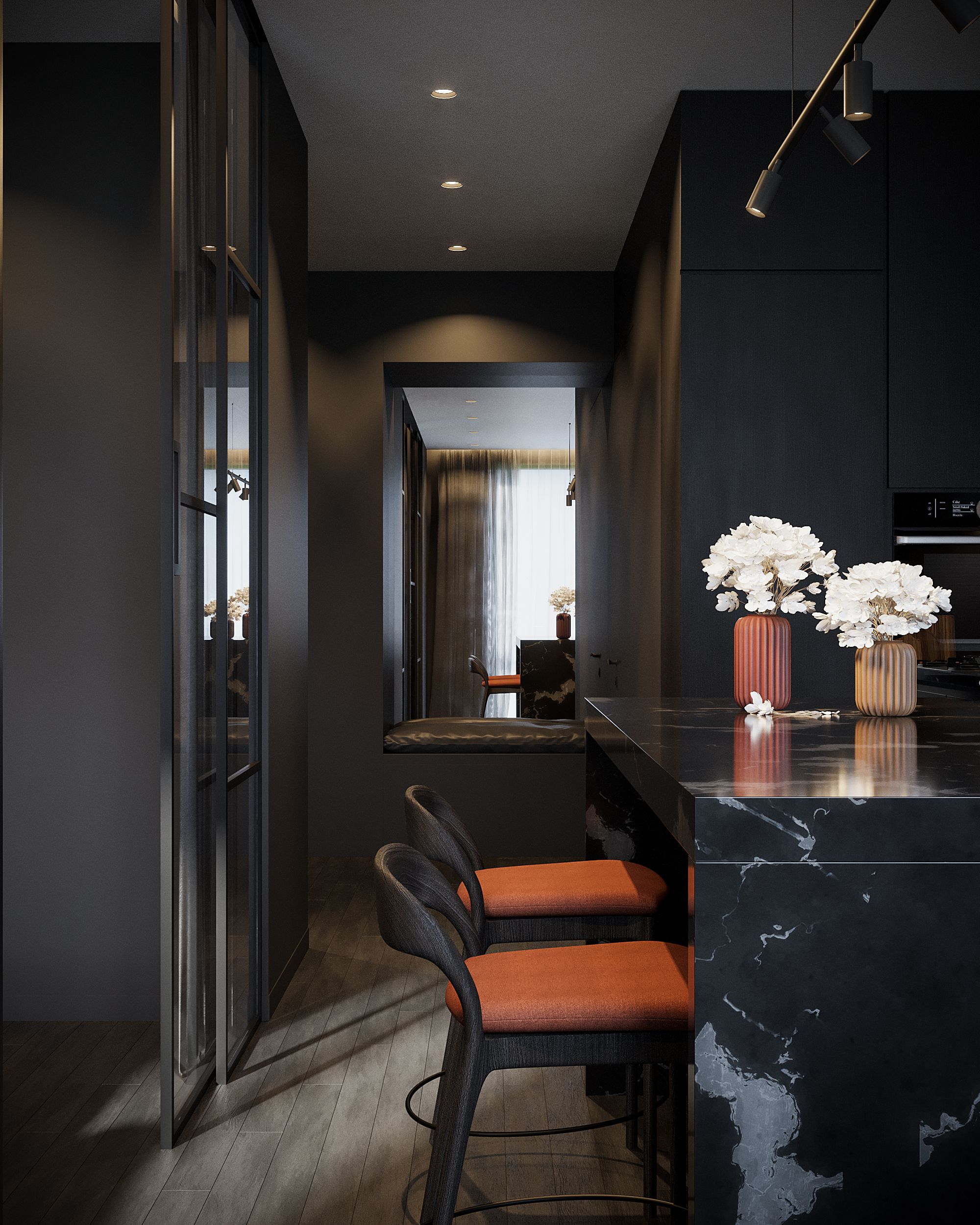
Dark stone allows the kitchen to stay tonal while introducing veins, mineral variation and changes in reflectivity that reveal the surface from across the room. This is useful when a pale worktop would break the intended envelope too strongly. The movement should be visible enough to separate stone from painted cabinetry, but not so busy that every dark plane competes. Full-slab viewing matters because the scale of the pattern controls the effect.

Make the Backsplash a Reflectivity Switch
A backsplash can separate dark planes without changing color family. Glossy black tile can catch points of light behind matte cabinetry, handmade surfaces can create small shadows and dark stone can contribute movement. Use the wall plane to switch reflectivity rather than automatically matching the worktop and cabinets. The change should help the eye understand where one surface ends and another begins.
Use One Dark Volume When the Perimeter Stays Light
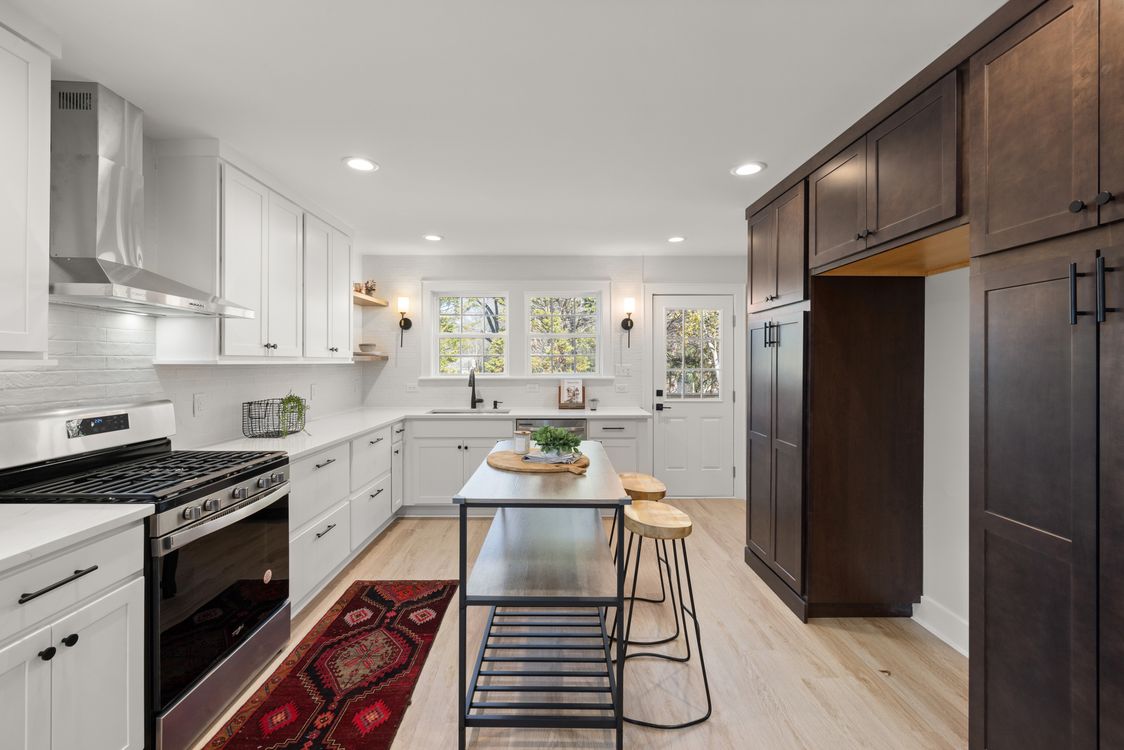
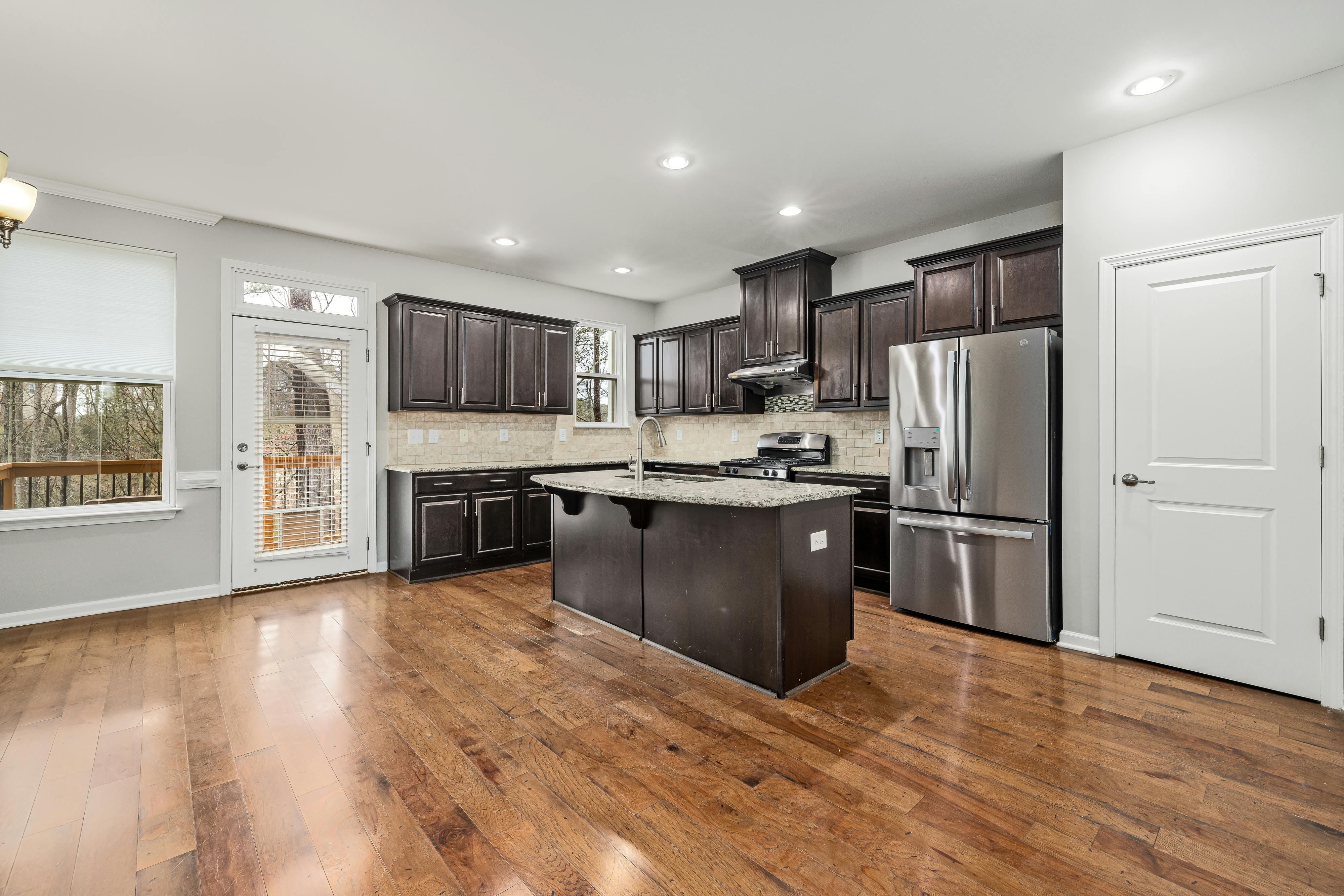
A black island is useful when the room needs a single dark object rather than a full dark envelope. Against a pale perimeter it can behave like furniture, organize a large open plan and establish one strong visual center. Keep the silhouette clear at the floor and worktop so the island reads as an intentional volume. Once it carries the black successfully, avoid repeating dark accents around the perimeter only for the sake of matching.
Decide Which Edges Should Disappear
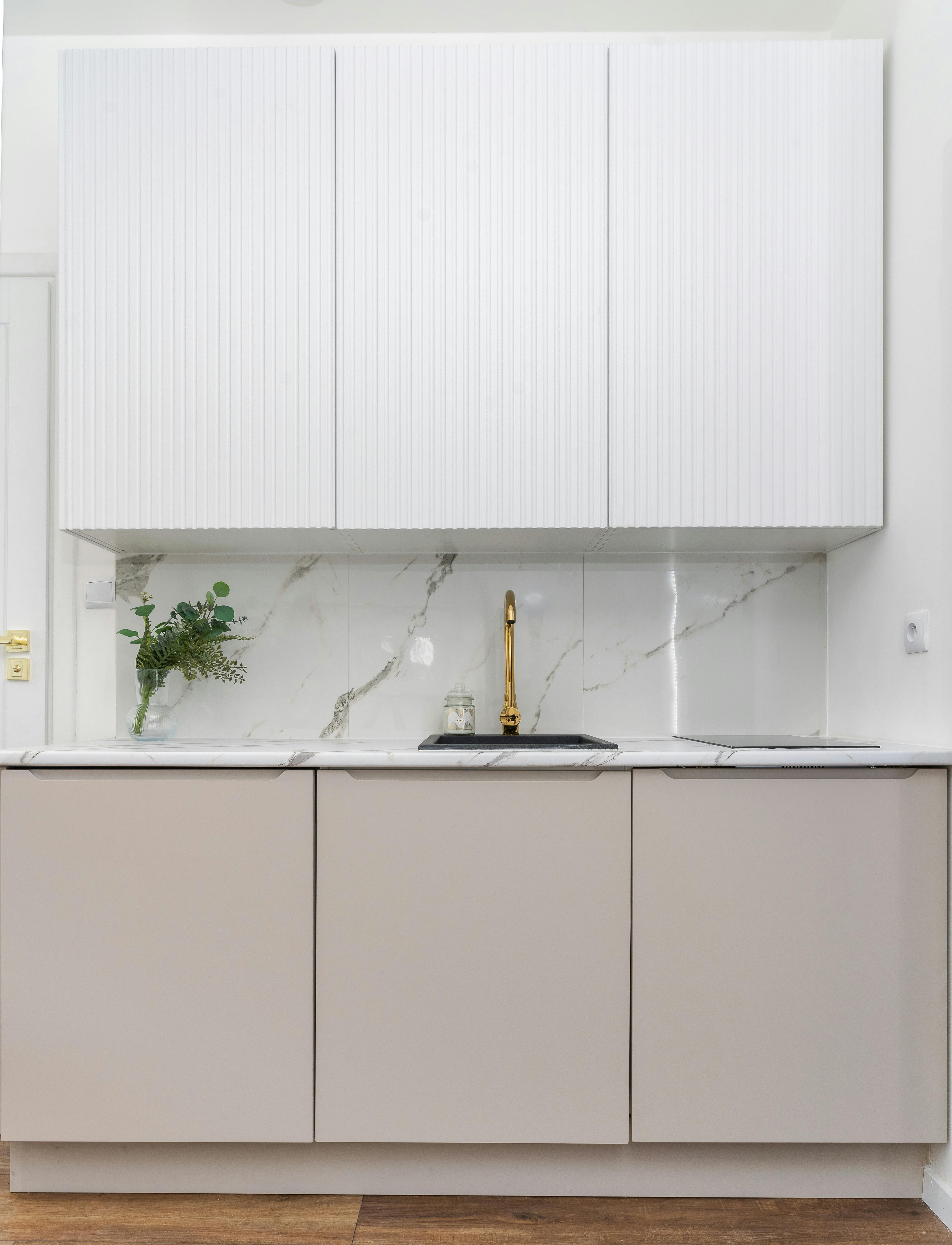
Black hardware can make handles, faucet and fittings disappear into the cabinetry, while brass, steel or chrome can turn those same edges into visible punctuation. Decide which boundaries the eye actually needs to see. Integrated pulls may suit a monolithic tall run, while a contrasting faucet or handle can clarify a busy working zone. The choice is less about matching metal families than about controlling which edges recede and which remain legible.
Design the Kitchen's Night Mode Before Adding Decor
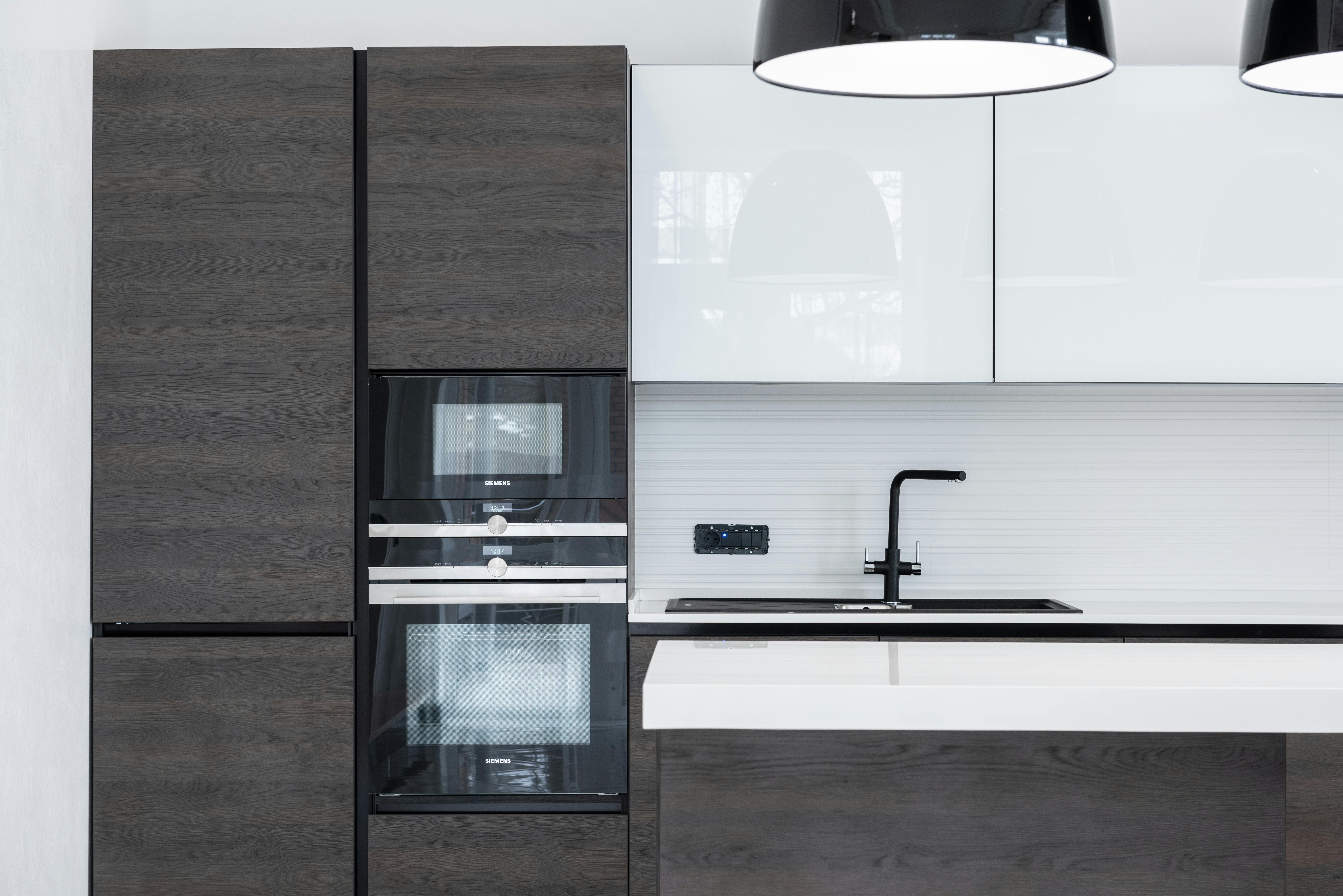
A black kitchen has a second design state after sunset. General ceiling light can leave dark cabinet fronts flat while worktops, handles and stone lose the highlights that made them legible by day. Build the evening scene with task light at the counters, ambient light that preserves cabinet edges and a limited number of focused decorative sources. Solve those relationships before using objects or metallic accessories to create sparkle.
Preserve Boundaries in a Small Black Kitchen
The risk in a compact black kitchen is not simply that dark color makes it feel smaller; it is that adjacent planes can become hard to distinguish. Keep the floor, worktop, wall and cabinet faces readable through value, finish or light, and concentrate the darkest mass where it can be understood as one continuous element. A small room can carry substantial black when its boundaries stay clear and the circulation is not visually erased.