Choose Joinery That Can Absorb Daily Wear
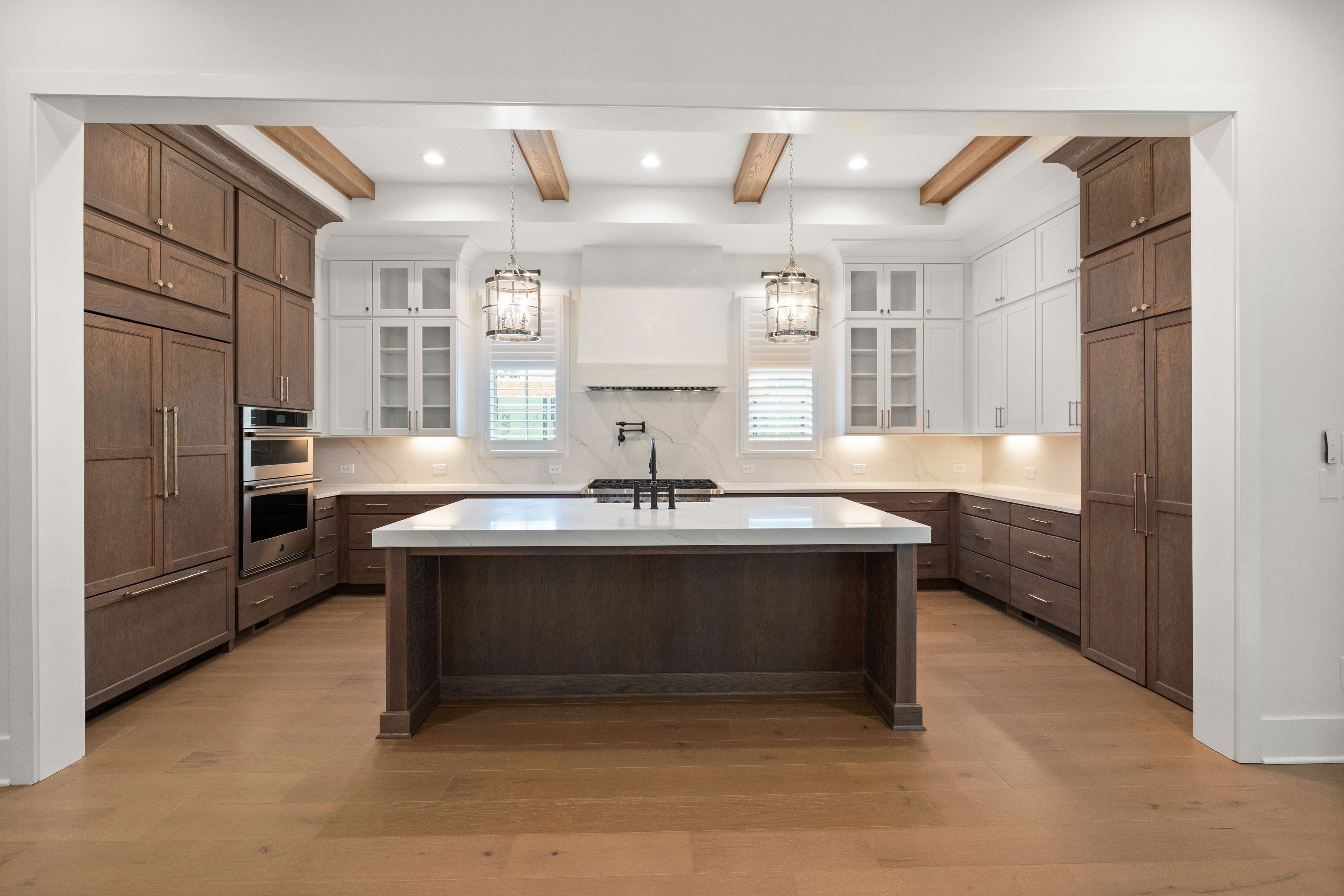
Farmhouse cabinetry should remain convincing after years of hands, cleaning and small marks. Simple framed doors, painted timber and selected natural wood work well because their construction and surface do not depend on flawless uniformity. Choose finishes that can be touched up, cleaned and lived with rather than finishes that make every scratch feel catastrophic. Real wear is more believable than factory distressing because it follows the places the household actually uses.
The Island as a Working Table
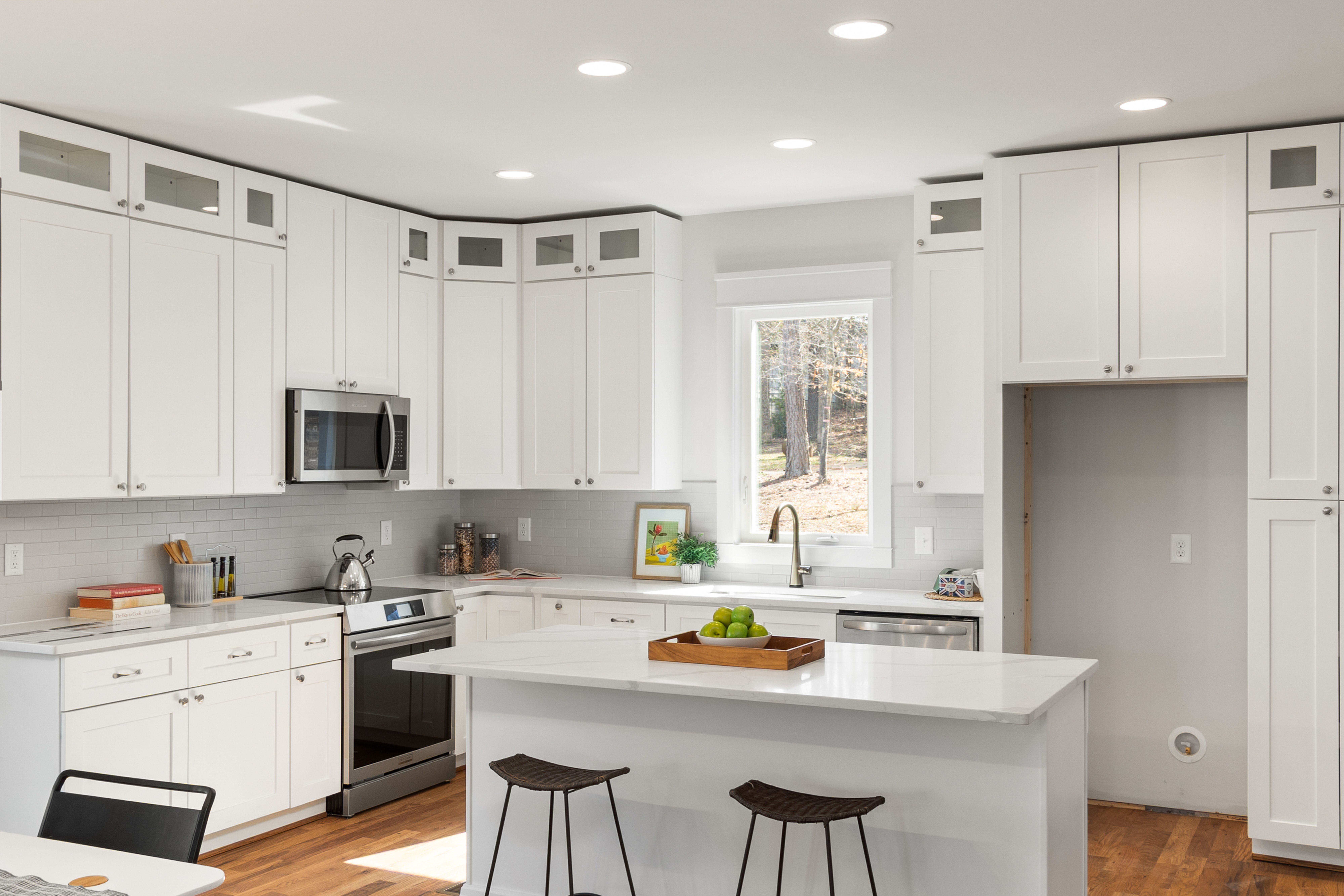
A farmhouse island earns its place by supporting preparation, serving, storage or casual gathering rather than by becoming the largest possible cabinet block. Legs, an overhang, a timber top or a contrasting finish can help it read as furniture, but the worktable logic matters more than the look. In smaller kitchens, a real table or narrower movable piece may serve the same functions while keeping the floor more open.


The Sink Zone as a Working Hearth
The sink is often one of the most-used places in a farmhouse kitchen, so character should grow from equipment that works well. An apron-front basin can create a strong familiar form, but depth, drainage, cabinet support and cleaning matter more than the label. A standard undermount sink can still belong when the surrounding window, faucet, worktop and cabinetry create a generous, practical washing zone.
Surfaces That Improve With Use
Timber, softly veined stone, handmade-look tile and tactile ceramics can give a farmhouse kitchen depth because small variations and signs of use do not immediately undermine them. The goal is not to make every surface rough or old-looking. Put more forgiving materials where touch and age can add character, then use smoother, easier-care surfaces where the work is wet, greasy or frequent.

Keep Open Storage Close to the Routine
Open shelves, plate racks and glazed cupboards work best when they shorten a daily routine. Cups near the kettle, bowls near serving or frequently used jars near preparation can remain visible without turning the room into a display. Packaging, rarely used equipment and purely decorative collections usually belong behind doors. Farmhouse openness should make the kitchen more usable, not create another surface to style.


Modern Equipment Does Not Need Disguise
Farmhouse style does not require appliances to pretend they are old. Stainless steel, induction, contemporary refrigeration and effective extraction can sit beside framed cabinetry, timber and familiar furniture forms when their placement is calm. The room feels more believable when history is carried by architecture, furniture and material rather than by disguising every current machine.
Color for Continuity, Not Manufactured Age
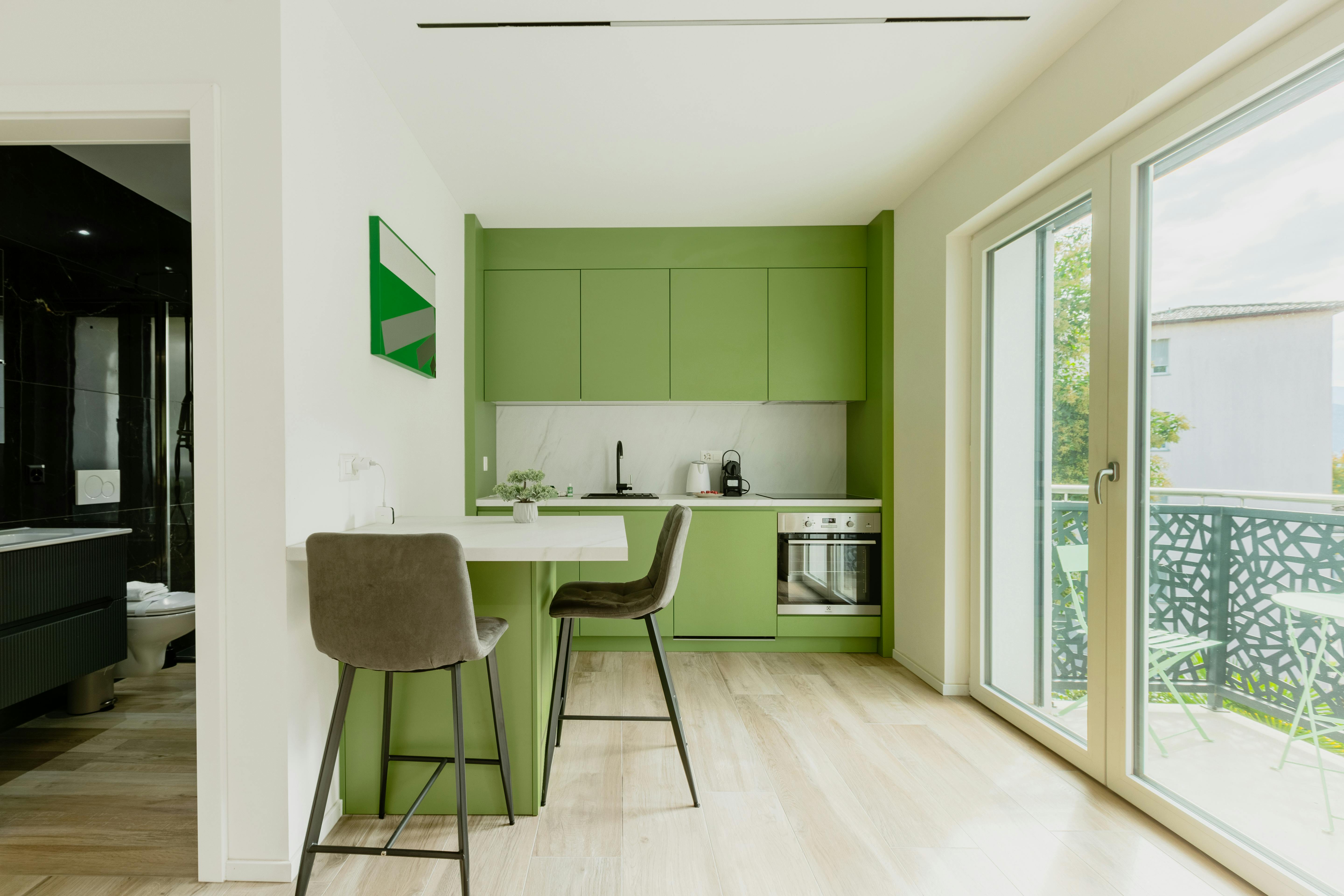
Muted green, dusty blue, cream and earthy neutrals can make simple joinery feel settled without chipped paint or manufactured patina. Color works particularly well when it relates to a fixed floor, older furniture or the landscape outside rather than arriving as a prepackaged farmhouse palette. One substantial painted zone is usually enough to establish that continuity.


The Table Inside the Working Day
A farmhouse table is valuable because it expands what the kitchen can do. Meals, homework, groceries, baking and conversation can all happen there without requiring the fitted cabinetry to solve every activity. Give the table enough clearance to work when chairs are occupied and let it differ slightly from the cabinet timber so it reads as furniture with its own life.
Timber Needs a Job Beyond Warmth
Wood is most persuasive when it is also doing something: forming a table, floor, shelf, work surface or cabinet run that receives real touch and wear. Instead of scattering small wooden accessories, choose one or two substantial places where grain and age can become part of the room's working character. The material should feel structural to the household, not added afterward to make the palette warmer.

The Final Layer Comes From the Household
The last layer should be things that naturally belong to cooking and eating: a bowl of fruit, cutting boards, linen, useful ceramics, flowers from outside or jars that are genuinely opened. These objects change with the household and season, which keeps the room from feeling staged. Themed signs, decorative crates and imitation farm equipment usually add a story the room does not need.