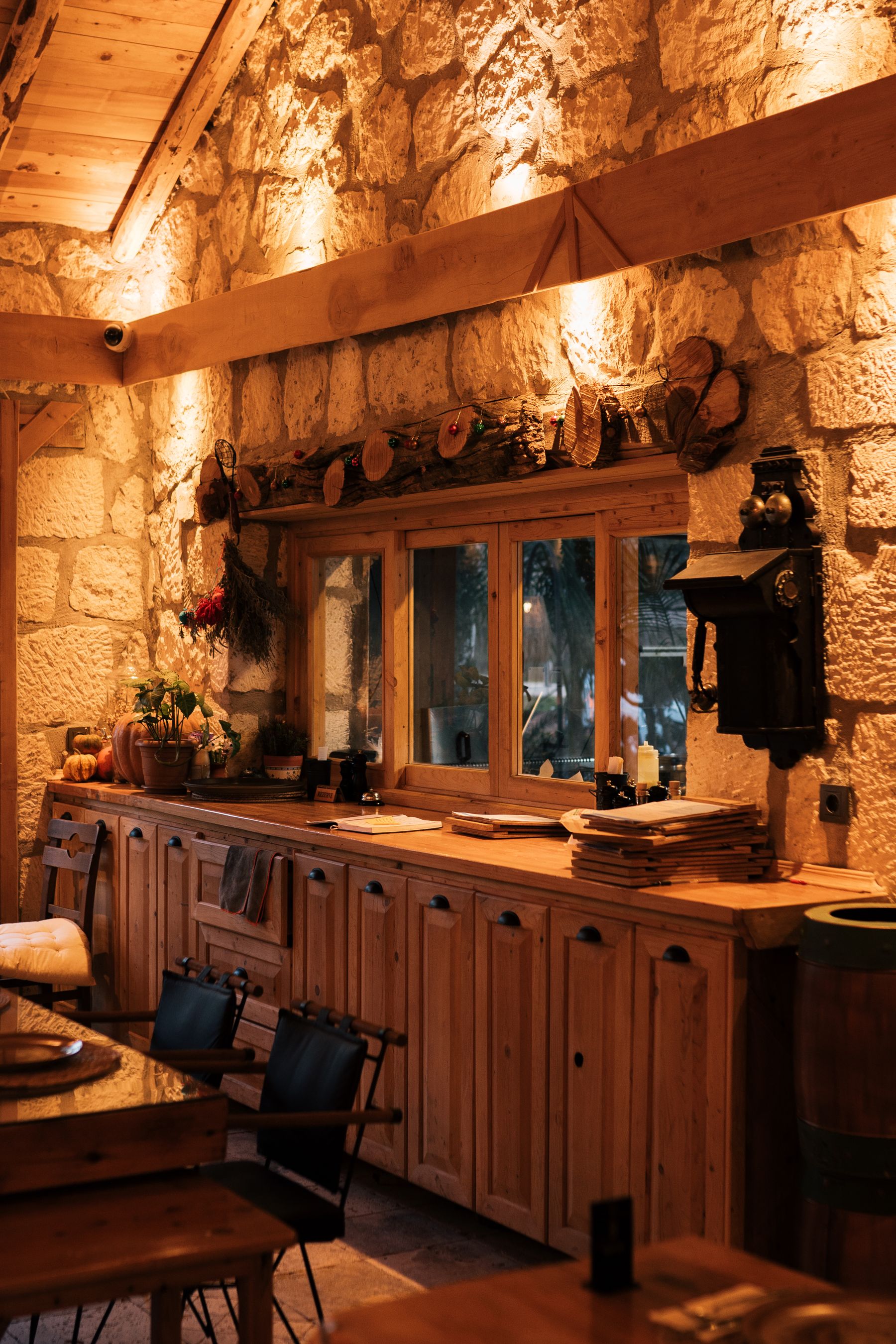
Choose the Material With the Most Physical Weight
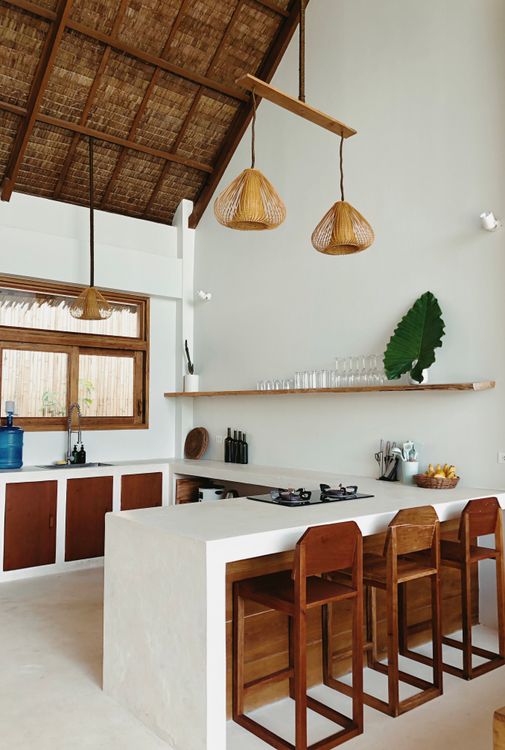
A rustic kitchen becomes clearer when one material establishes the room before the smaller details arrive. Existing stone, heavy timber cabinetry, exposed beams or mineral plaster can each become that lead surface. Choose the material with the strongest area, texture or architectural presence, then let the others support it rather than trying to create equal amounts of wood, stone and metal.
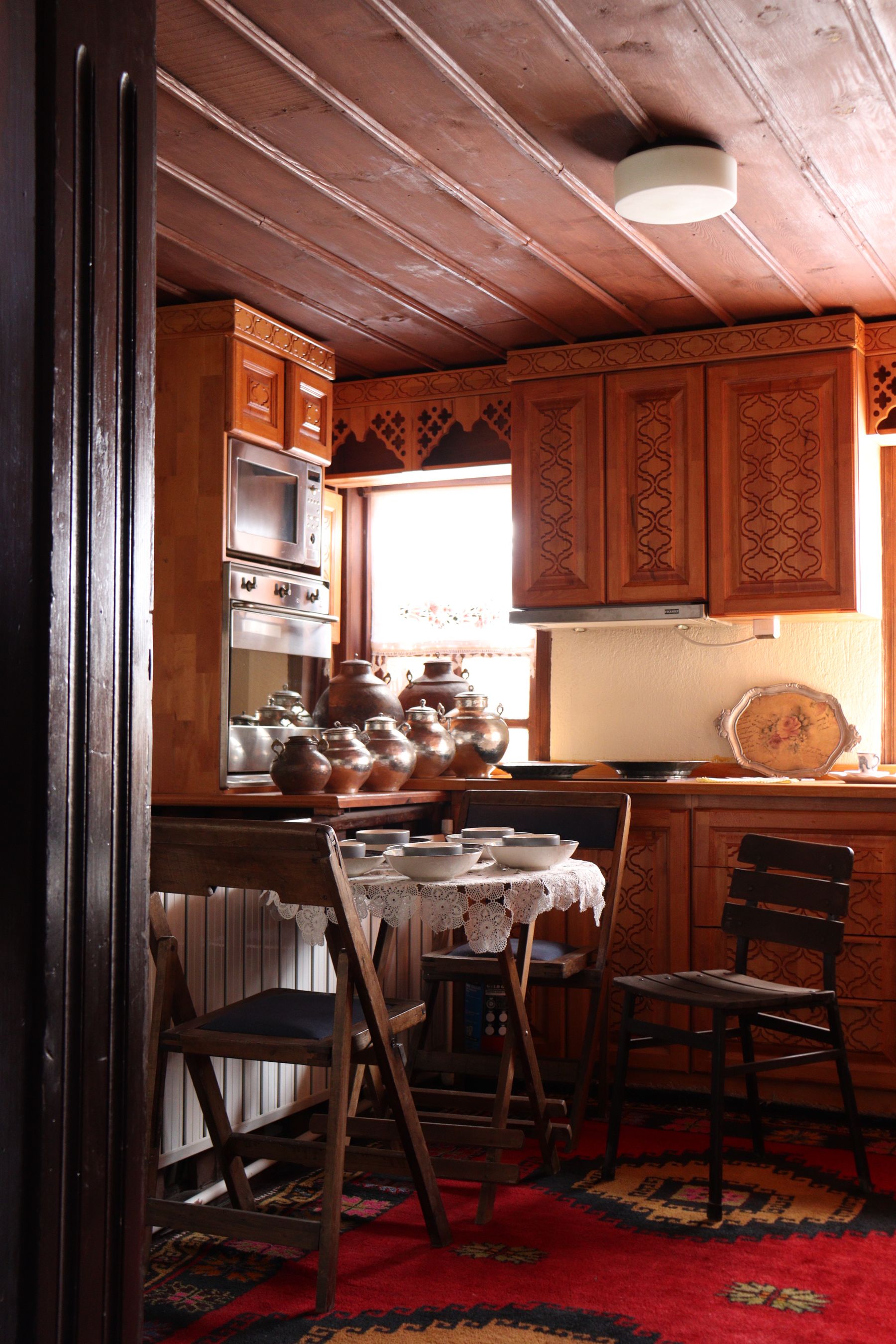
Give Cabinetry Texture Without Turning Every Door Into a Feature
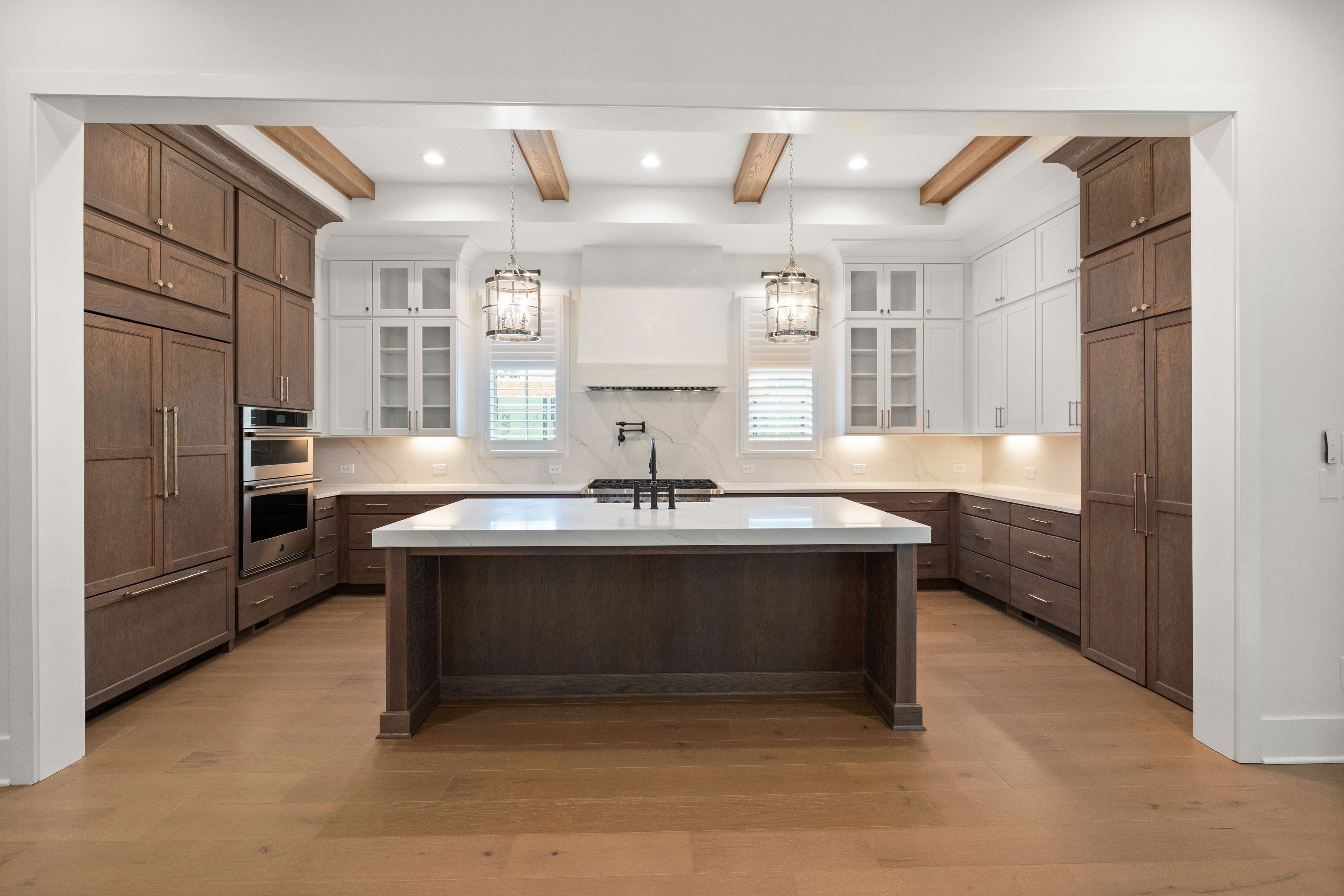
Cabinet depth can come from grain, shadow, framed construction or a limited amount of carving. The more active the timber, the simpler the surrounding pattern should become. A quieter stained front may work better beside stone walls than heavily ornate doors, while a plain architectural shell can tolerate richer cabinetry. Rustic character comes from material depth, not from maximizing detail on every cabinet.
Use Freestanding Mass Where the Plan Can Carry It
A solid worktable or island can introduce timber mass at the centre of the room, but it should not block circulation simply to create atmosphere. Decide whether the piece is for chopping, serving, storage or dining and choose its height and finish accordingly. In a narrow room, one strong wall or table may carry enough rustic weight without any central block at all.
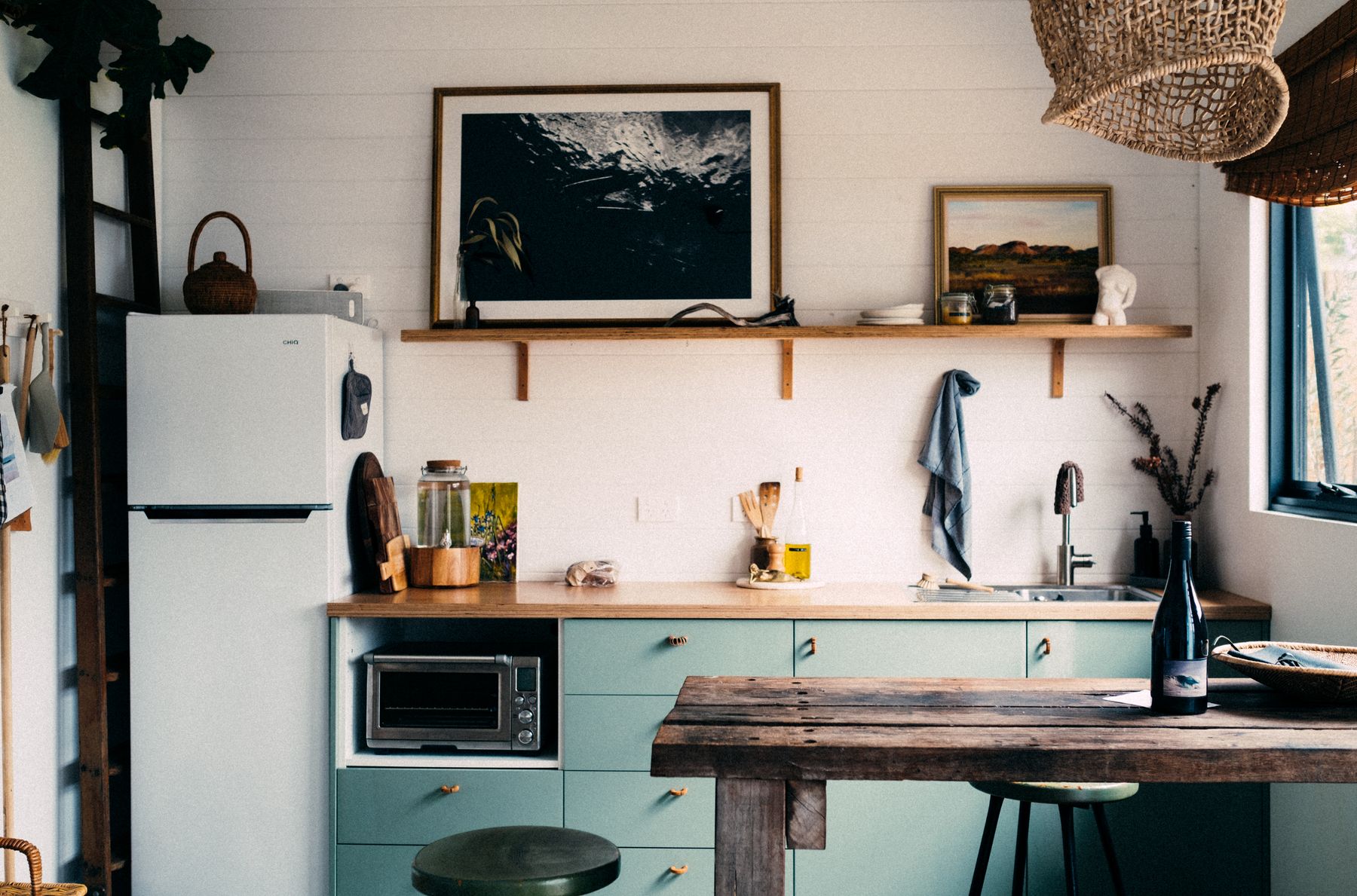
Light Across Texture, Not Only Down From the Ceiling
Rustic materials change dramatically when light grazes across grain, stone and plaster. Use practical task lighting for counters, then place ambient or directional light so it reveals rather than flattens the dominant surface. Heavy beams, dark metal fixtures and rough stone can all add visual weight overhead, so the lighting hardware itself often benefits from restraint.
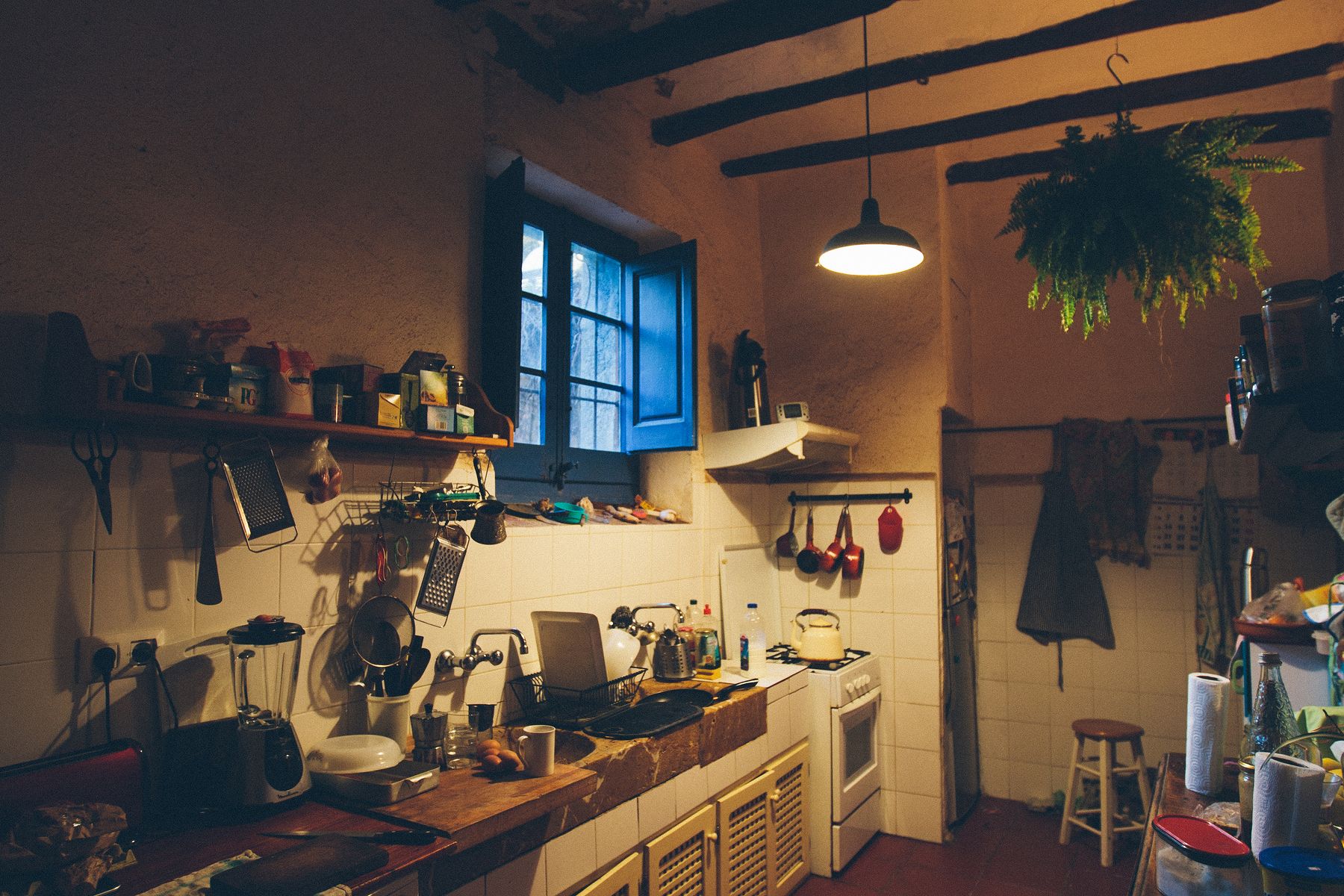
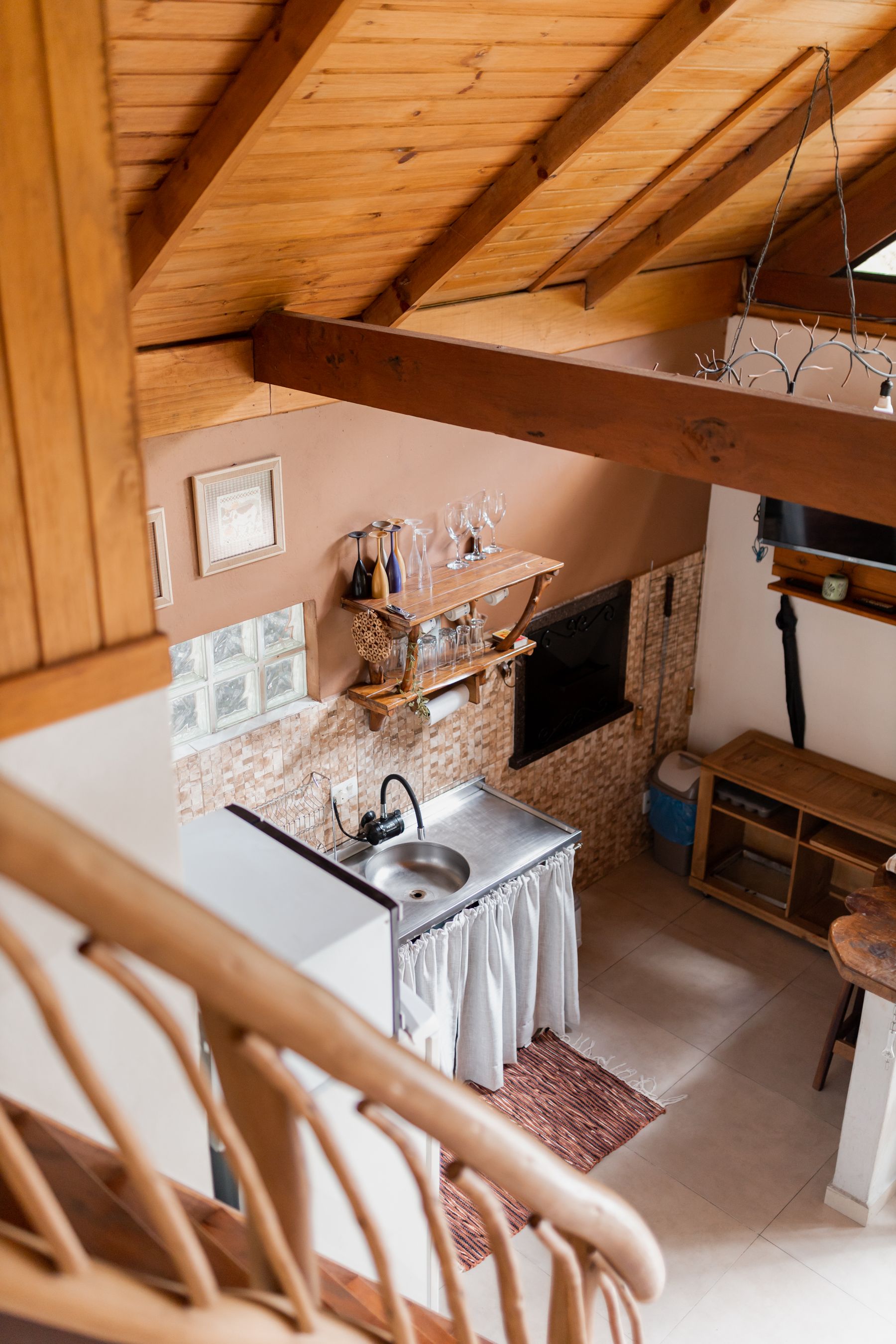
Use Soft Material Only Where It Solves Hardness
A washable curtain, textile shade or seat pad can provide useful softness against timber and stone, but fabric should solve a real need: access, comfort or light control. In wet or greasy zones, a cleanable cabinet front is often the better choice. Rustic does not require softening every hard surface; one functional textile can be enough.
Let Small Objects Echo the Main Material, Not Compete With It
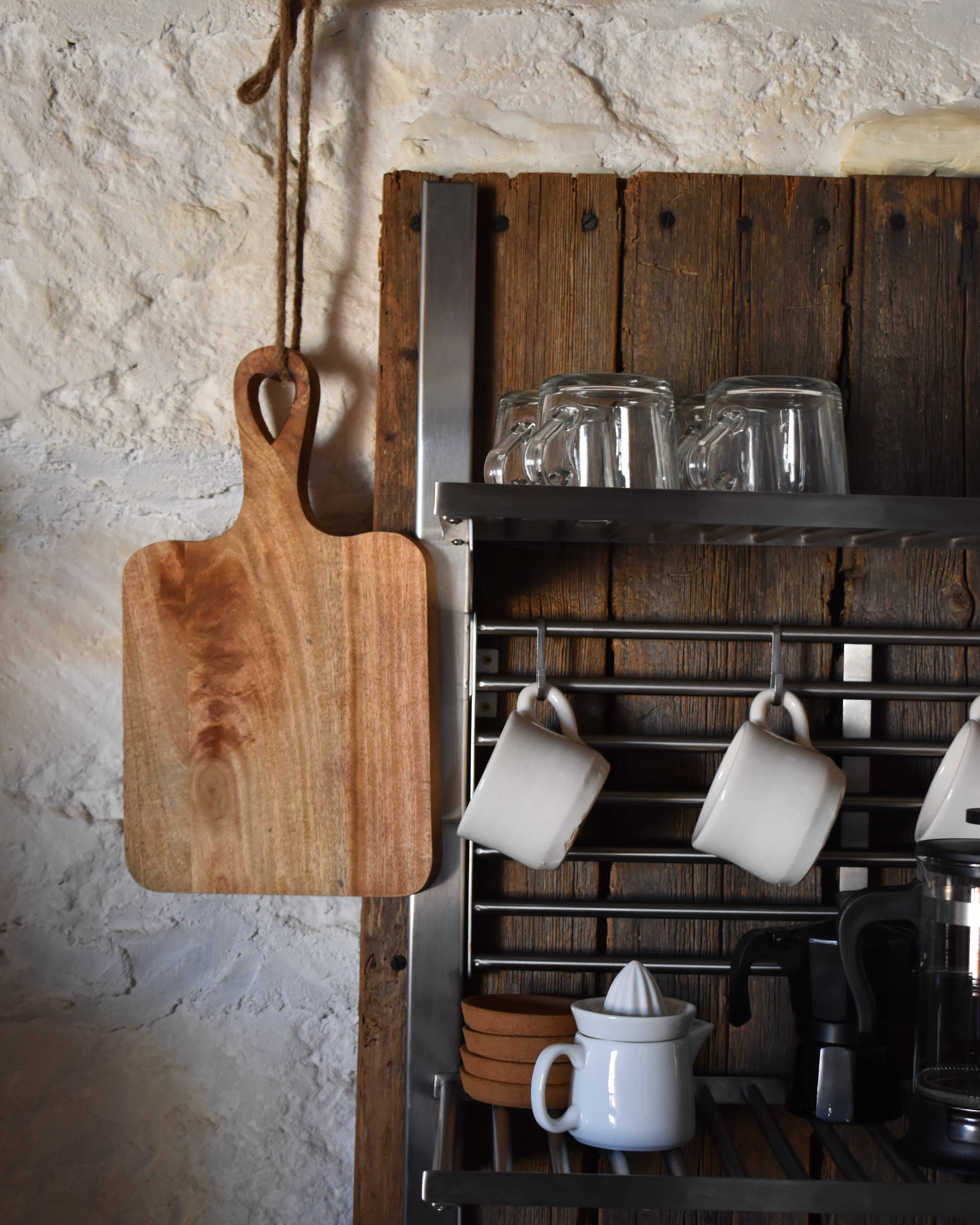
Pottery and wooden tools can reinforce mineral and timber tones, but the architecture should remain the main event. Keep a few useful pieces where they belong to a routine and leave visible space around them. When a strong stone wall or timber ceiling already carries texture, adding dense collections often weakens rather than enriches the rustic effect.

Use Furniture to Bring Material Down to Human Scale
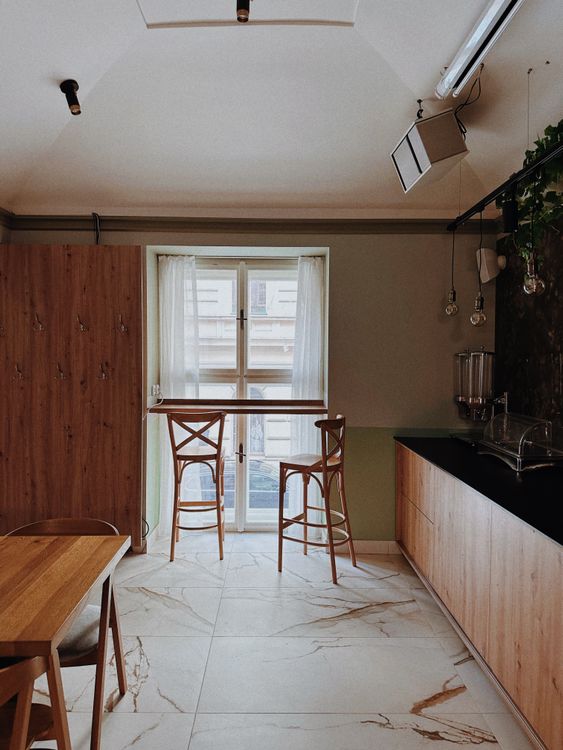
A table can translate the room's heavy materials into something touched every day. Its surface, edges and wear sit closer to the body than beams or masonry, which can make the kitchen feel grounded rather than monumental. Choose proportions for actual meals and movement, and let the table be simpler if the surrounding shell is already visually strong.
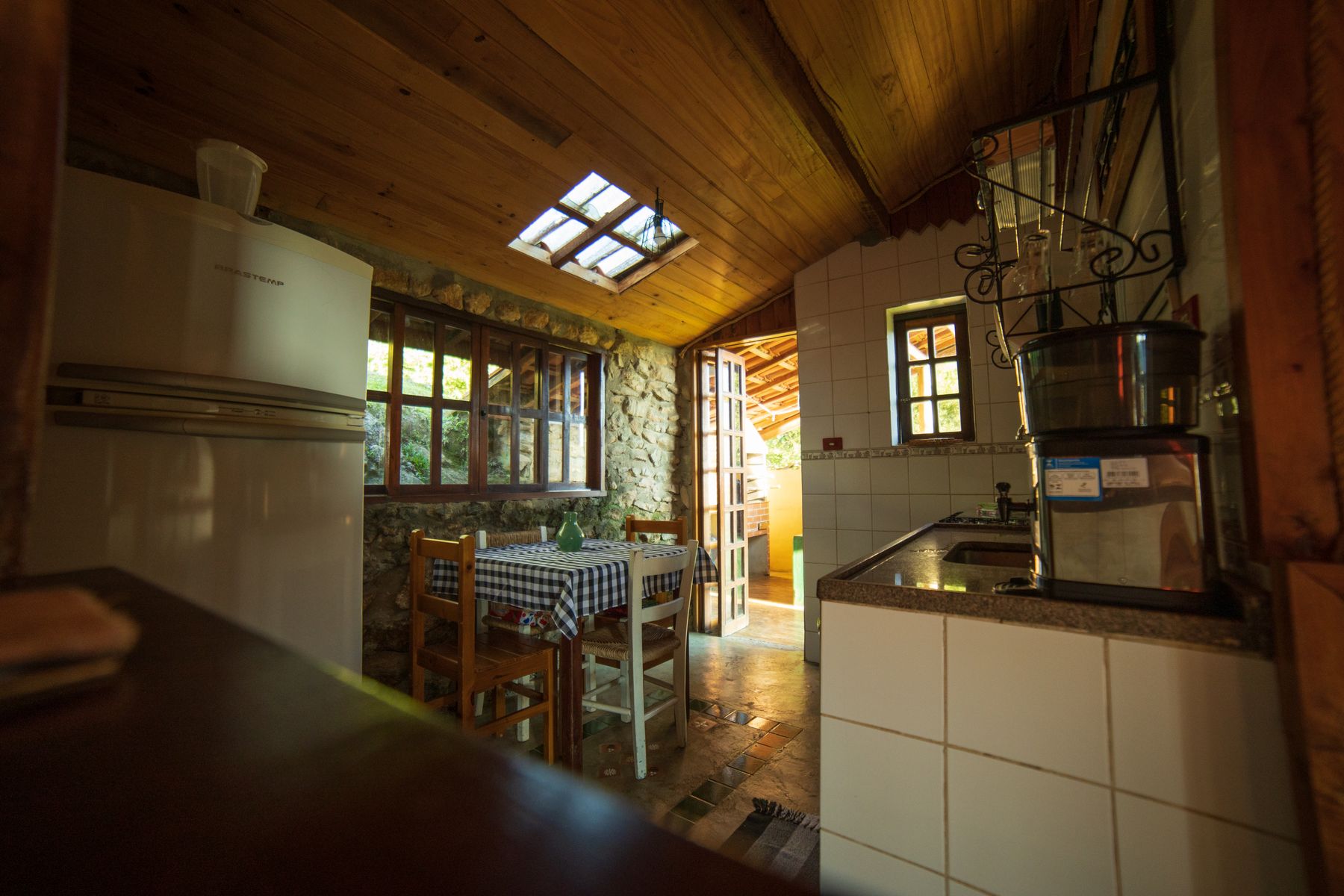
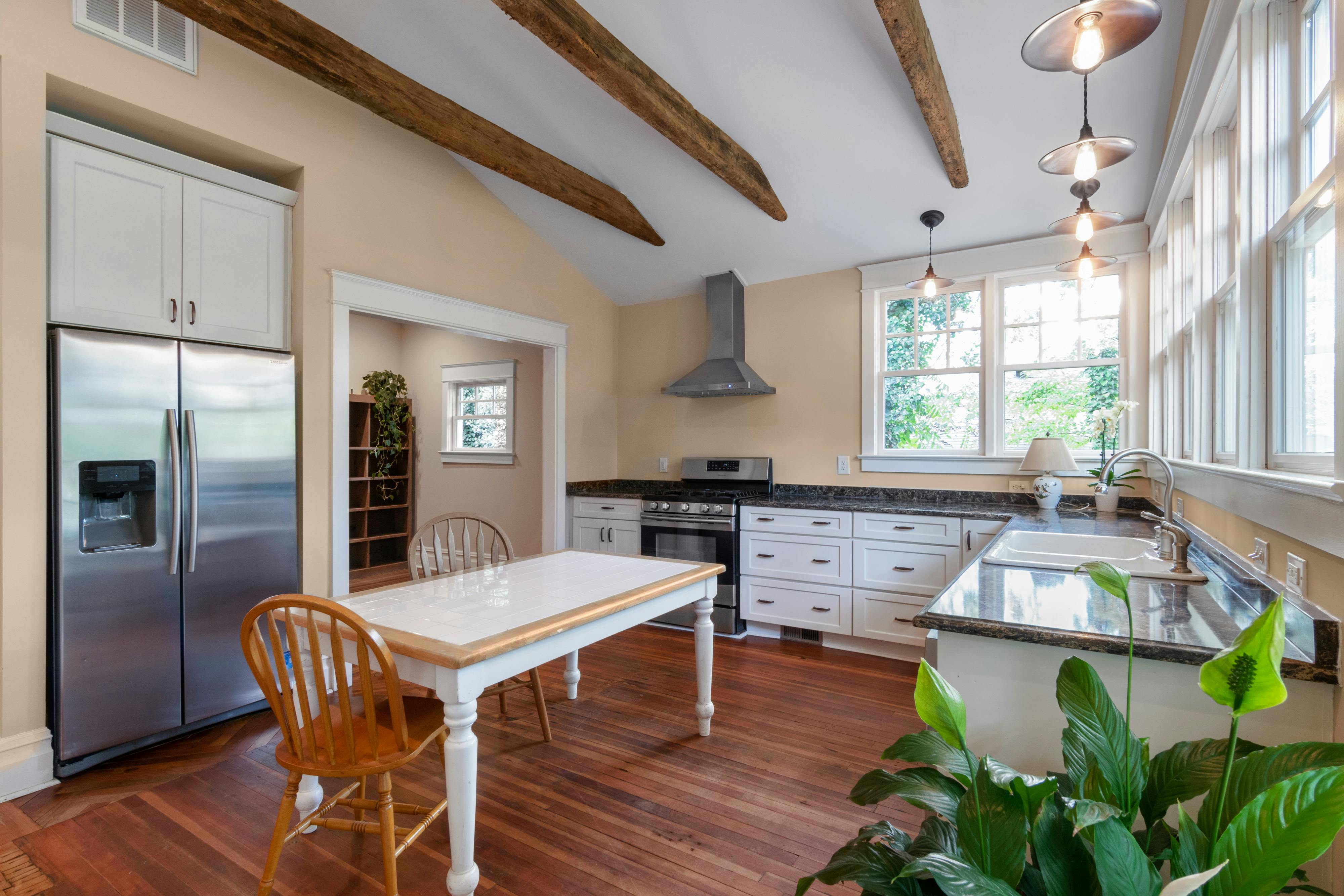
Keep Overhead Mass From Closing the Room
Beams have disproportionate visual weight because they sit above eye level and repeat across the ceiling. If the room already contains dark timber overhead, keep upper cabinetry, pendants and ceiling color comparatively quiet so the top half does not become a dark lid. In low-light kitchens, lighter walls and reflective work surfaces can restore balance without hiding the beams.
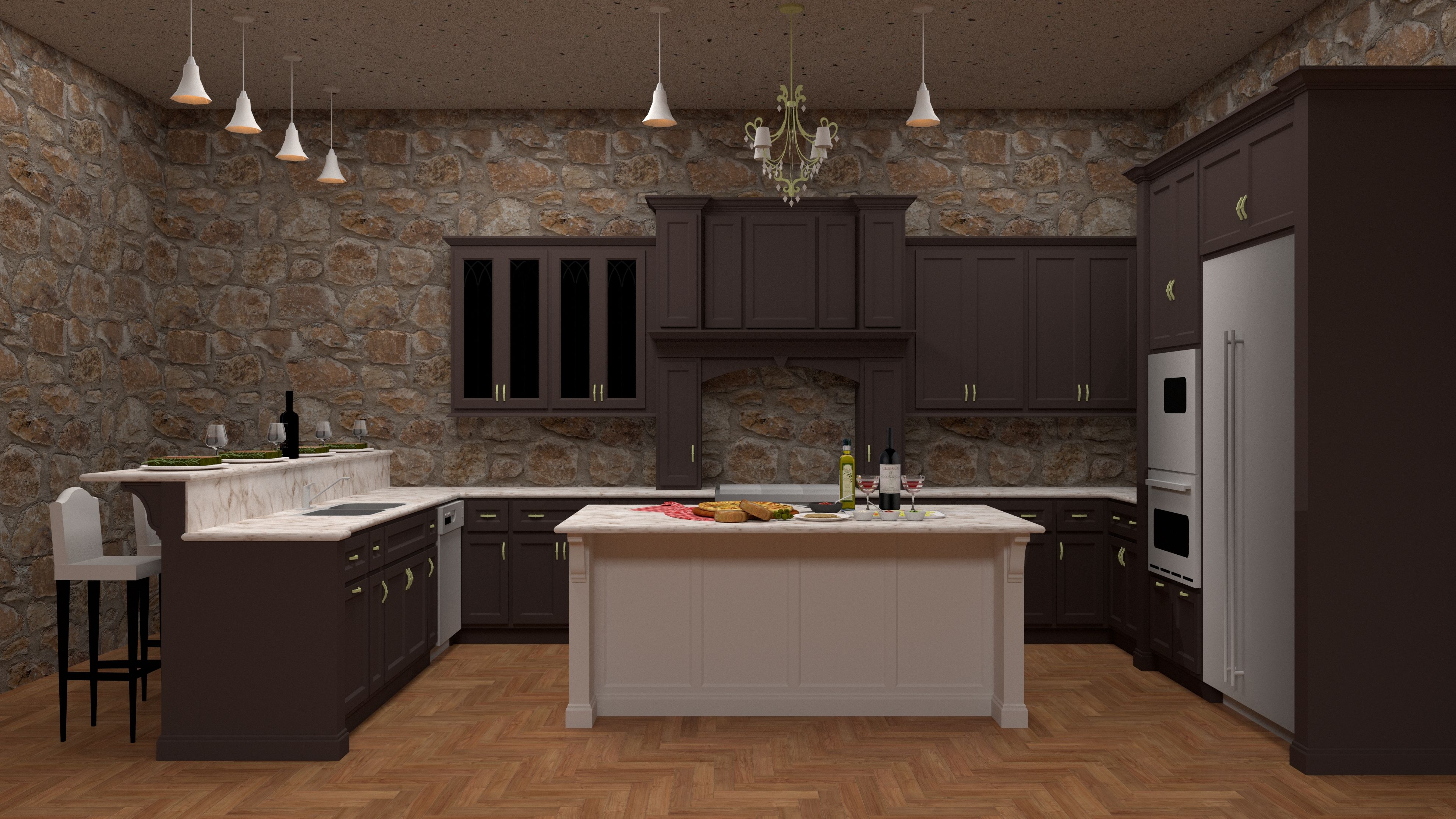
Build a Rough-to-Smooth Gradient Around the Work Zones
Rustic character becomes easier to live with when the busiest areas become progressively smoother. A rough stone wall may lead into a honed worktop, cleaner cabinet front and straightforward sink zone; textured plaster can remain on a dry wall while tile protects the cooking area. This gradient keeps the material story intact without forcing every surface to accept the same cleaning burden.
Give Open Storage One Material Boundary
A single shelf or rack against stone or plaster can be enough to connect useful objects to the rustic shell. Keep the shelf short, choose one material and give it a clear category such as mugs, pans or cutting boards. Multiple open-storage walls compete with the architecture and turn a material-led kitchen into a display system.