
Choose the Strength of the Yellow
Yellow covers a wide range of moods. Pale butter can feel soft and almost neutral, muted ochre reads warmer and more grounded, mustard creates a strong but sophisticated color block, and bright lemon yellow has much more visual energy. The stronger the yellow, the more restraint the surrounding surfaces usually need. Compare large samples beside the flooring, worktop and wall color, because even a slightly warmer or greener yellow can change dramatically once it is surrounded by real materials.
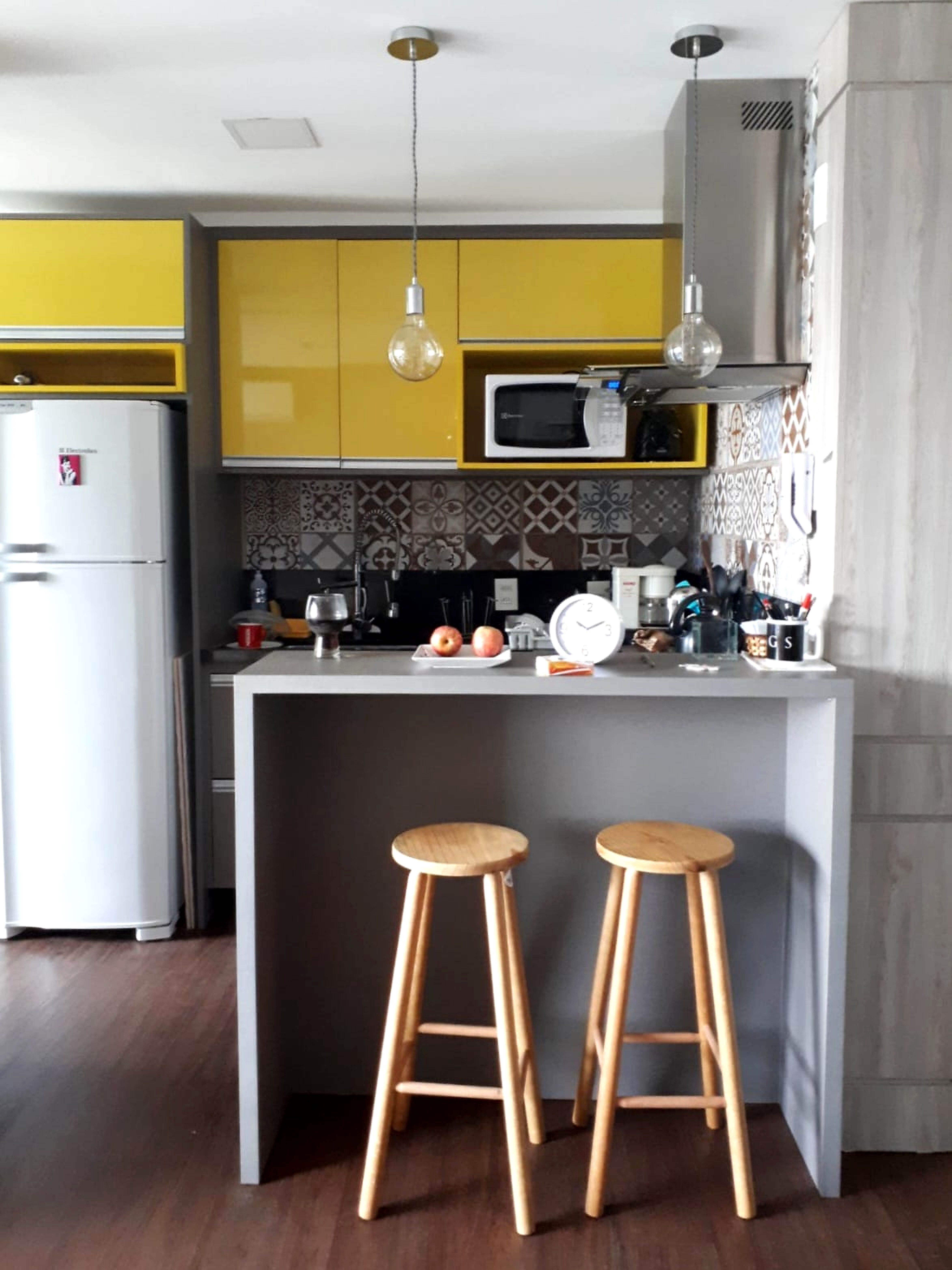
Use Yellow Cabinetry as the Main Move
When yellow covers the cabinetry, it should usually be allowed to lead the room. The surrounding worktop, floor and splashback can then act as quieter supporting surfaces. Wood stools, pale stone and restrained tile work especially well because they give the eye contrast without competing for attention. Long uninterrupted yellow cabinet runs feel more architectural than scattering the color across several disconnected areas.

Keep the Upper Half Lighter
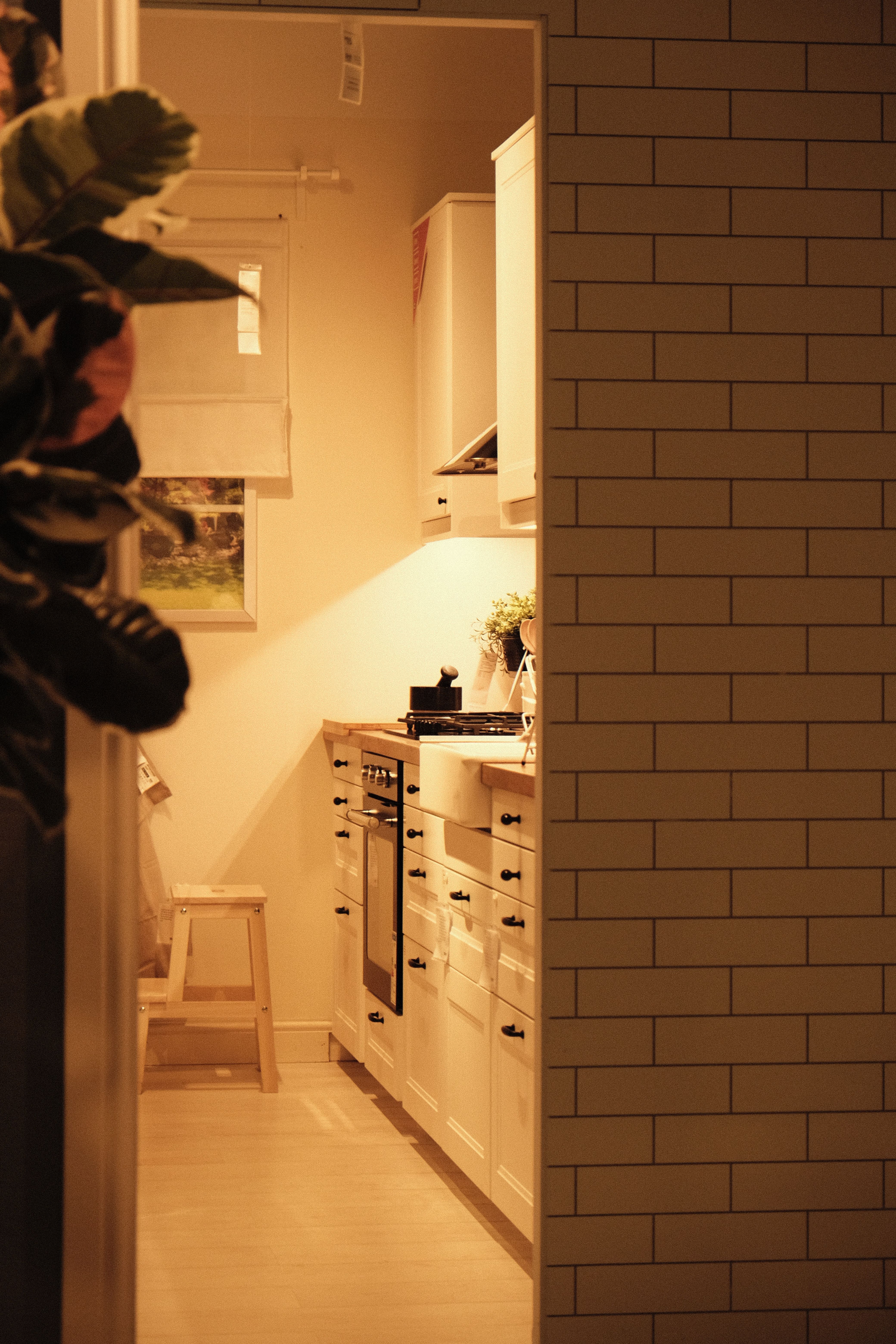
In a narrow or compact kitchen, yellow can feel much easier to live with when the upper half of the room stays lighter. White upper cabinets, pale walls or open shelving allow the stronger color to sit lower in the composition without closing in the space. This is especially useful with mustard and ochre, which can have substantial visual weight. The contrast also makes the lower cabinetry feel intentional rather than simply colorful.
Introduce Yellow at Worktop Height
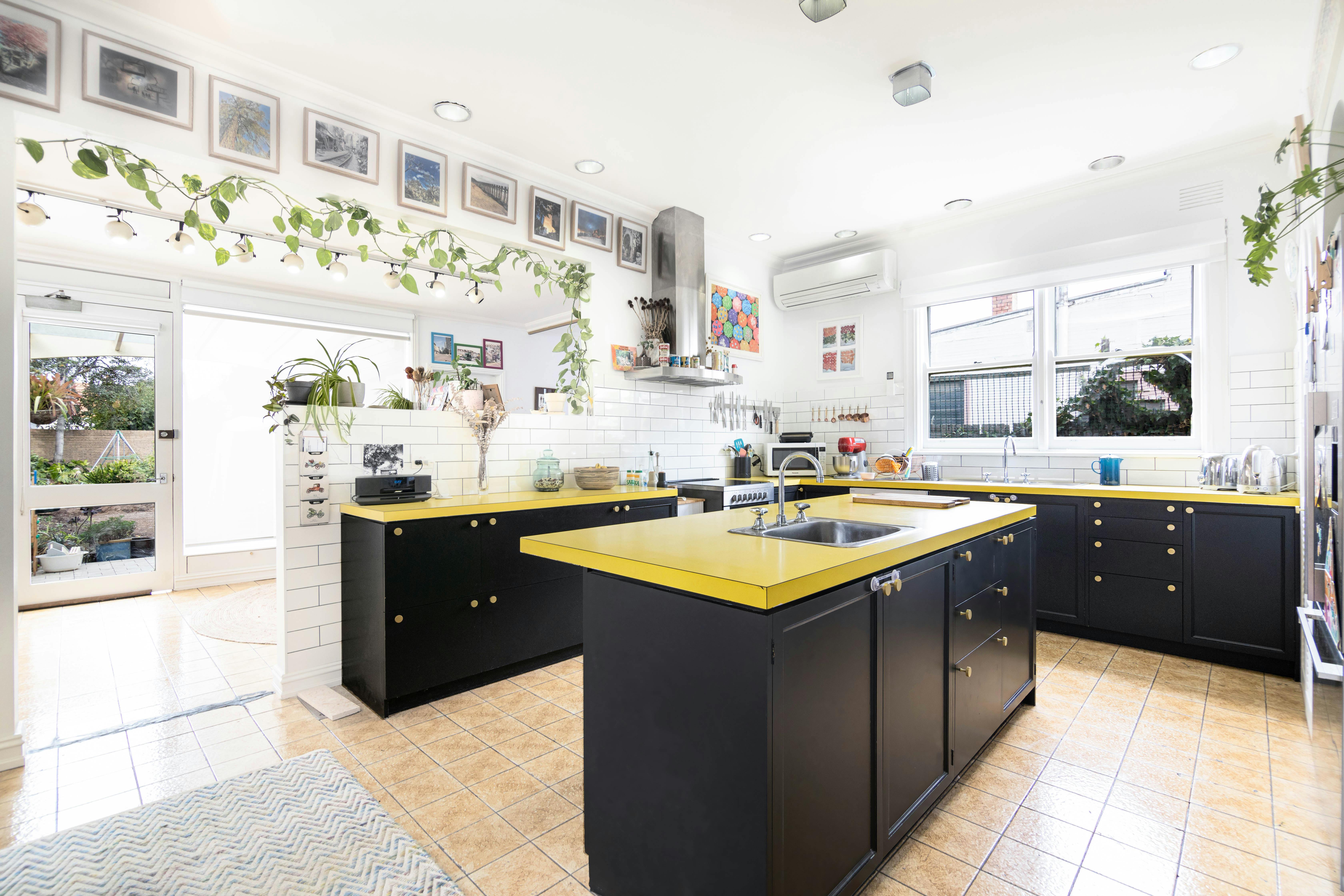
Yellow does not have to live on cabinet doors. A colored worktop, backsplash band or painted niche can create a clear horizontal accent while leaving most of the cabinetry neutral. This approach works well when you want warmth without committing to an entire fitted kitchen in yellow. The color becomes part of the room's architecture but remains visually contained.

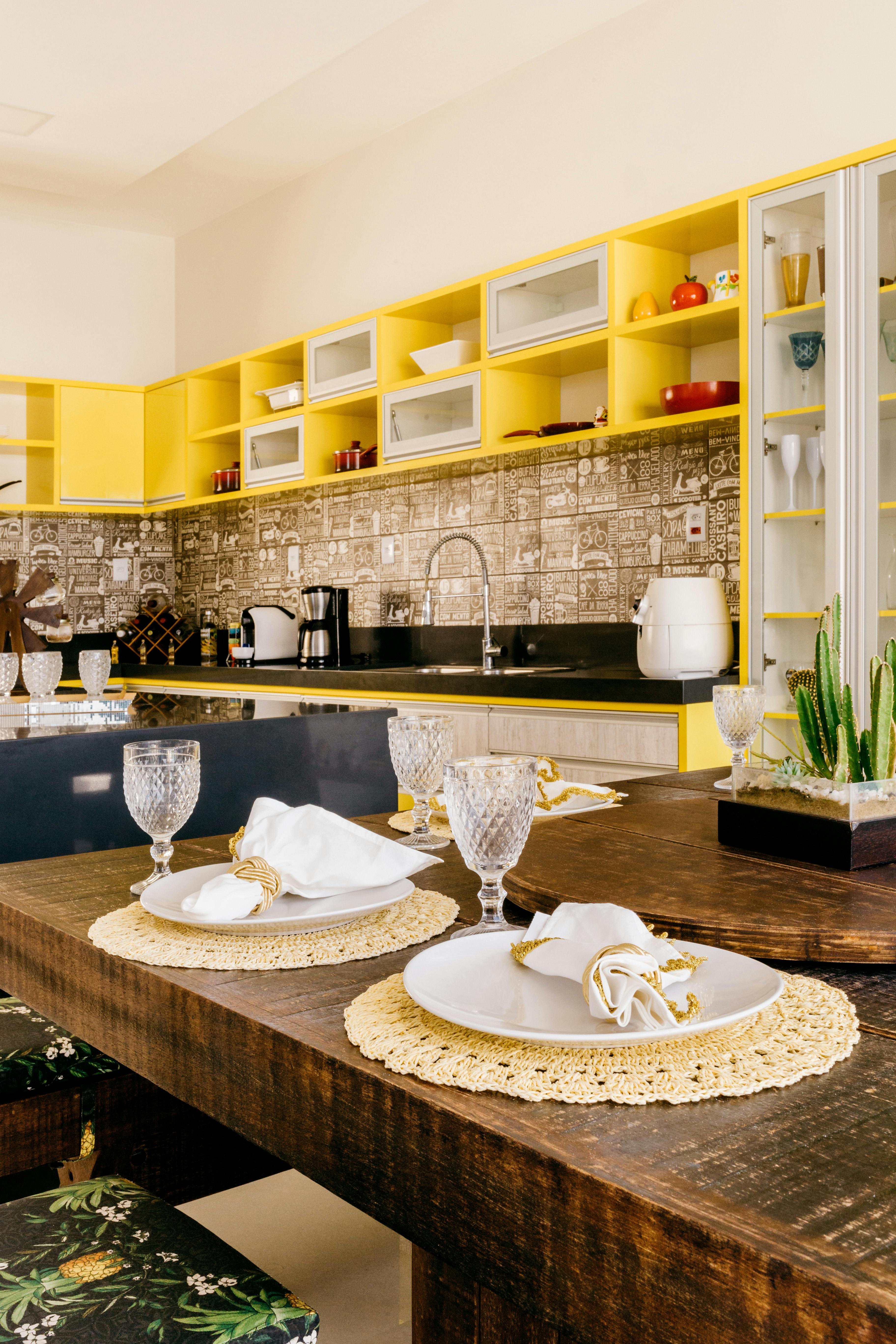
Use Yellow on Shelving or Smaller Joinery
Shelving, niches and smaller built-in elements are a useful middle ground between a fully neutral kitchen and all-yellow cabinetry. They introduce color at eye level while leaving the largest cabinet surfaces calm. This is particularly effective when the yellow shelf sits beside timber, tile or pottery, because the surrounding textures soften the color and make it feel integrated rather than isolated.
Add Yellow Through Seating
Bar stools and dining chairs are among the easiest ways to introduce a strong yellow because they can carry saturated color without affecting the permanent finishes. In a neutral kitchen, two or three yellow stools can establish a clear focal point around the island. The effect is especially useful when you want to test a brighter yellow before committing it to cabinetry or tile.

Carry Yellow into the Dining Area
In an open-plan kitchen, yellow can connect the cooking area to the dining zone without repeating the exact cabinet color. A yellow table, chair or pendant can echo the kitchen palette at a different scale. This creates continuity while allowing the dining area to retain its own identity. The strongest rooms repeat color selectively rather than matching every movable object.

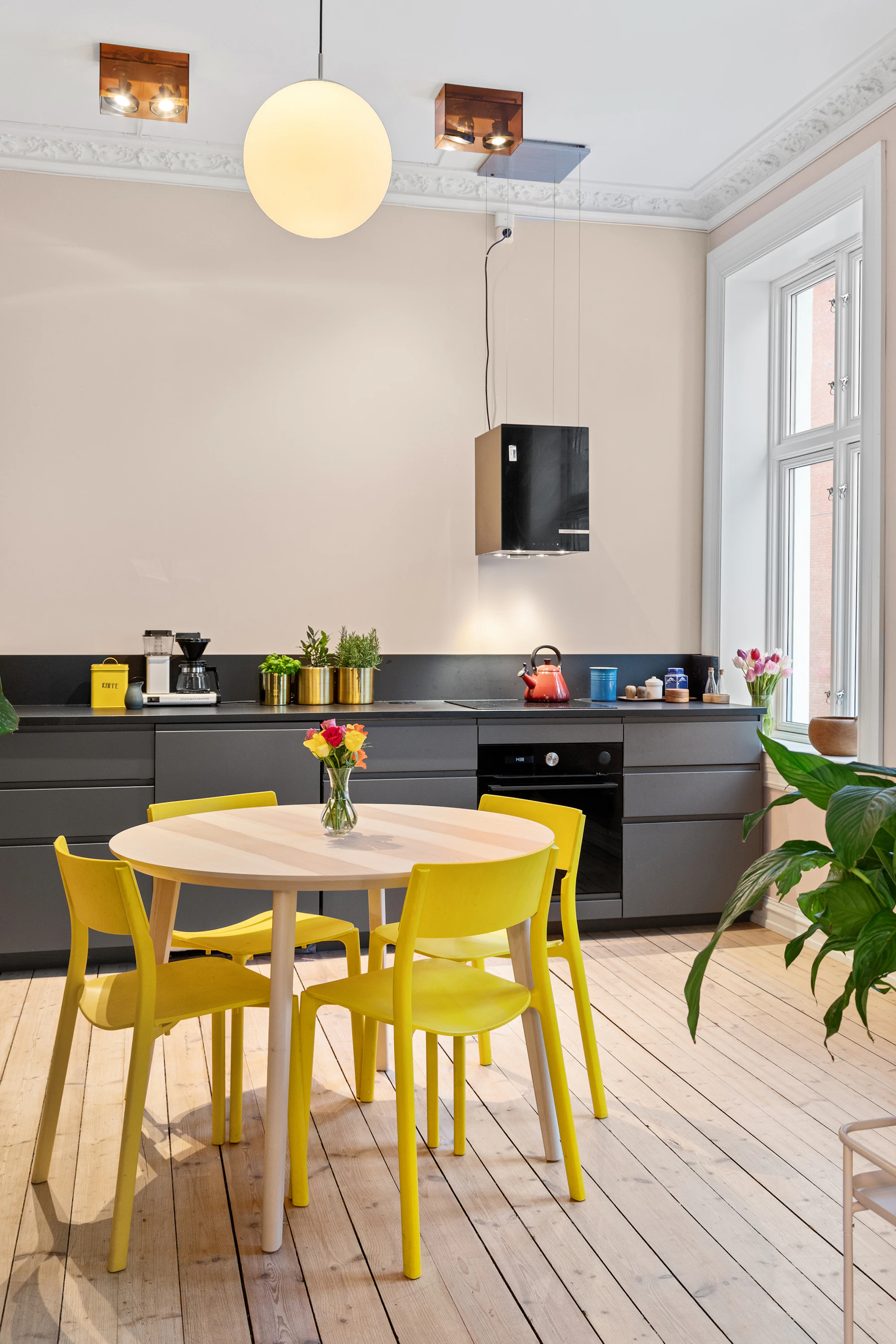
Balance Yellow with Grey and Black
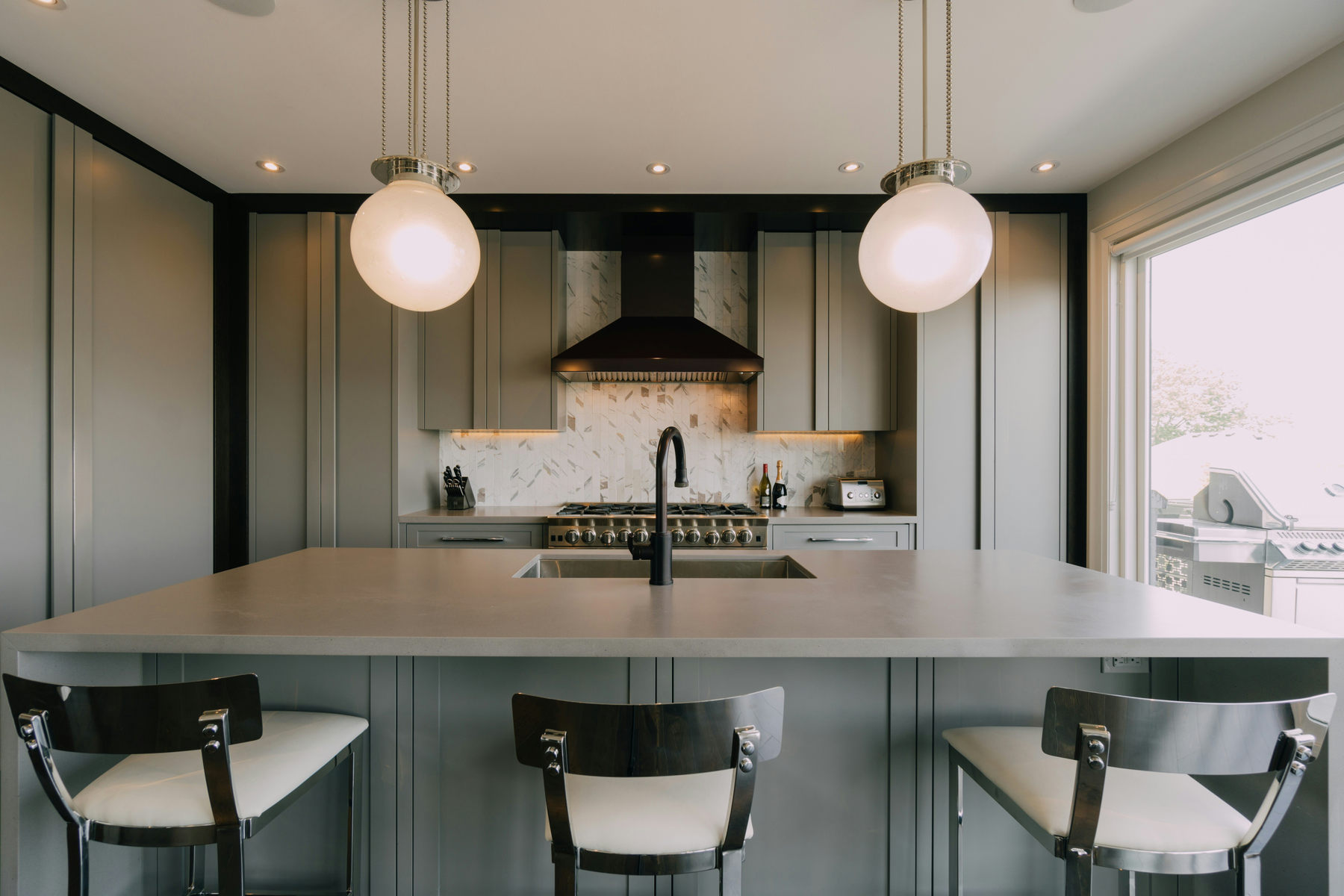
Grey and black can make yellow feel more architectural by giving it a cooler, sharper counterpoint. Mid grey softens bright yellow and works well for secondary cabinets or flooring, while black hardware or appliance fronts create a stronger graphic edge. The key is hierarchy: let yellow remain the main color, then use darker neutrals to frame it rather than fragmenting every surface.

Ground Yellow Below Dark Worktops
A dark worktop gives mustard or ochre cabinet fronts a clear horizontal boundary. Keep the upper cupboards and main wall surfaces quieter so the lower color block remains legible. This works as a balance of broad surfaces rather than a requirement to match chairs or accessories. Compare the yellow front, worktop and floor together: their undertones matter more than a coordinated furniture set.

Use Yellow Walls Around White Cabinetry
Painting the exposed walls yellow lets existing white cabinetry remain the calm part of the room. The color can appear between cupboard runs, above doors and around a window without requiring replacement joinery. Choose a washable finish suitable for its position and test a large sample beside the tiled splashback and timber floor. Warm artificial light can make a soft yellow feel richer after dark, so inspect it at both times of day.