Build the Room Around a Timber Hierarchy
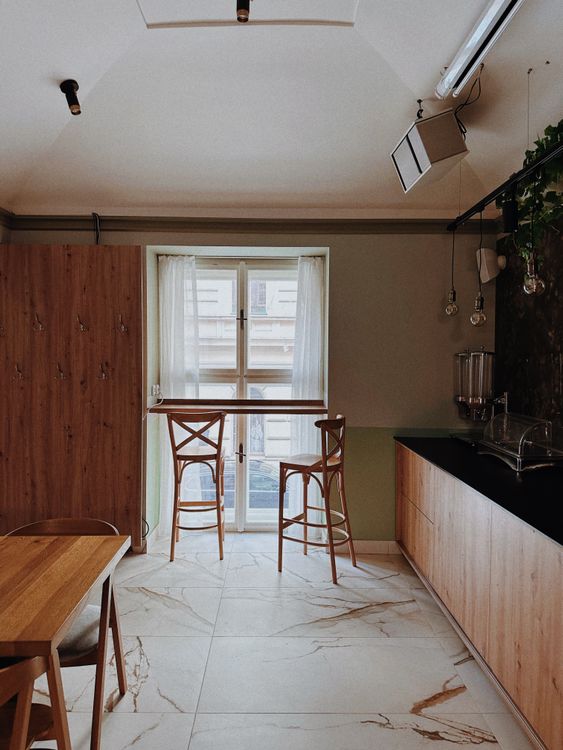
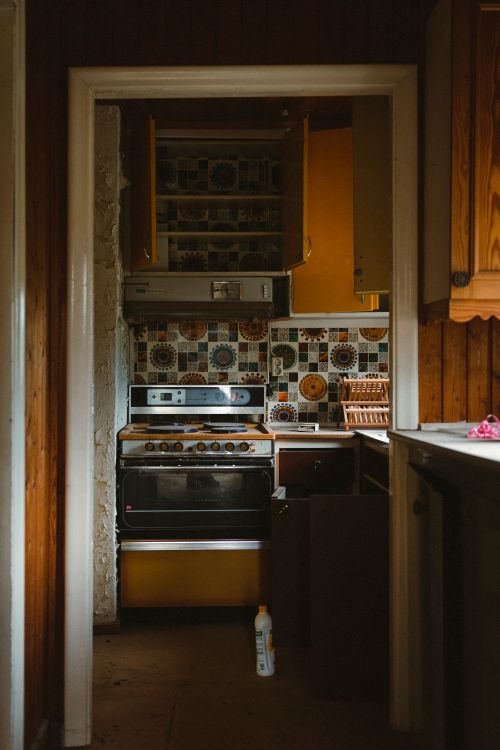
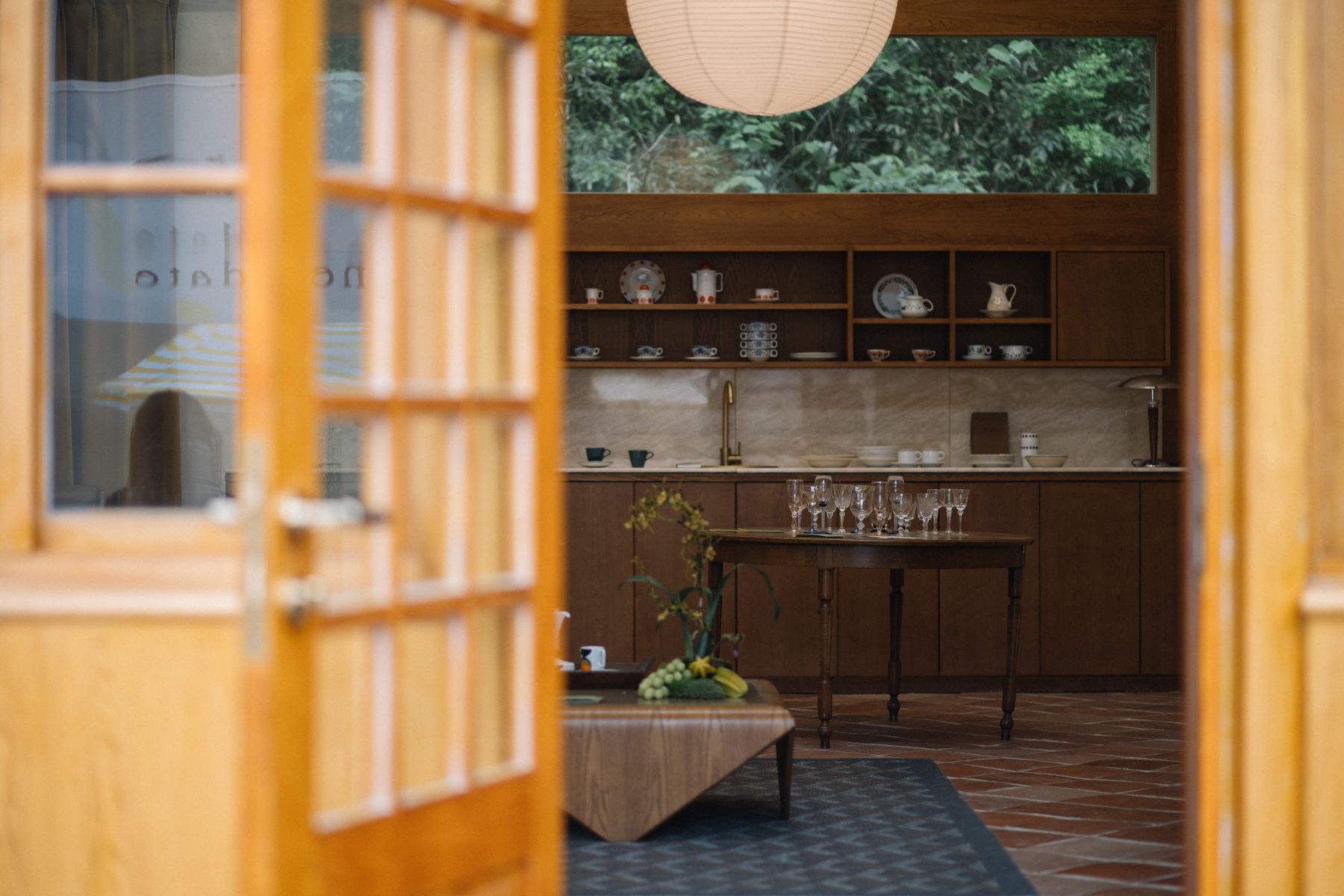
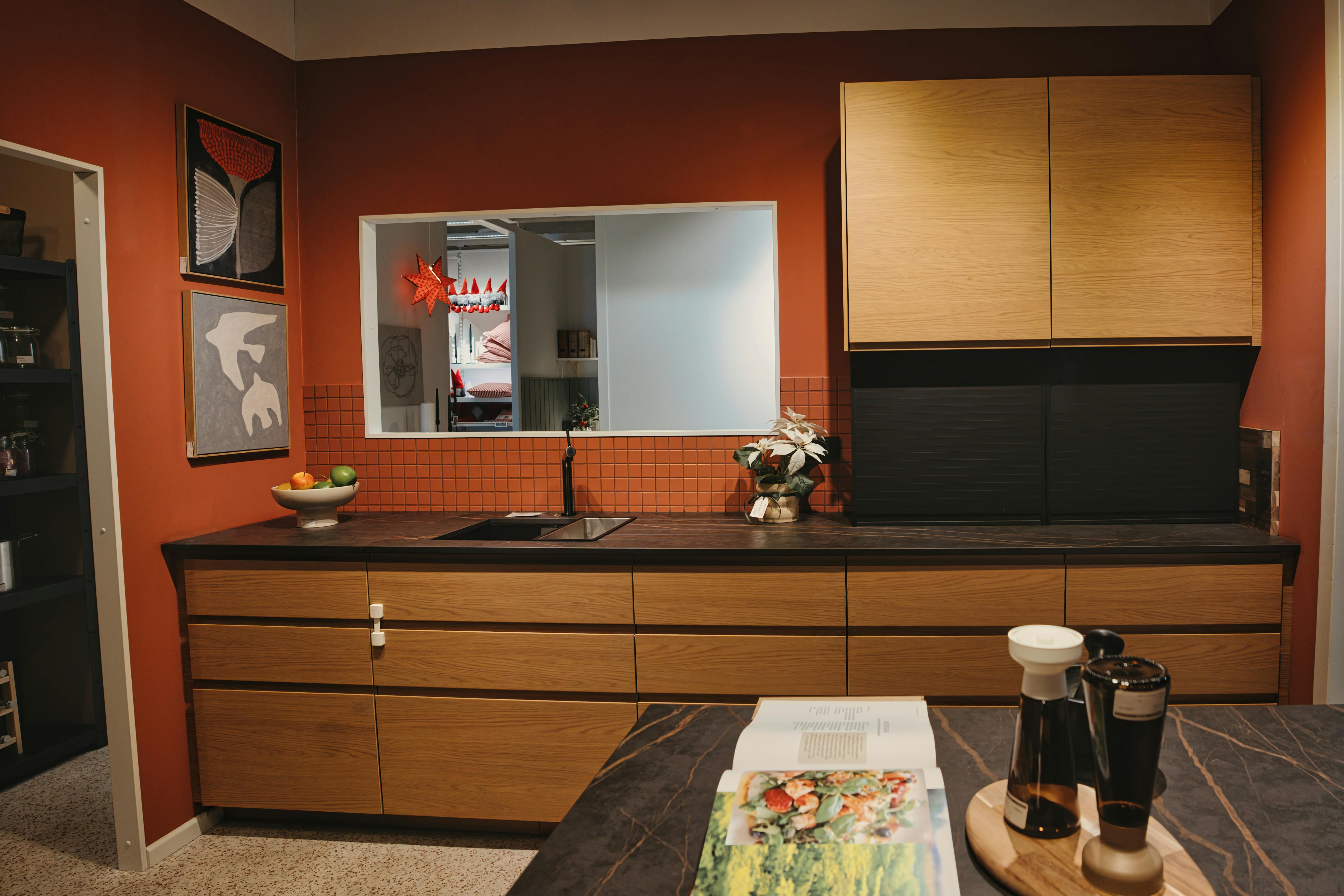
Walnut, teak and warm oak are familiar Mid-Century materials, but the important decision is hierarchy rather than species. Choose one dominant timber for cabinetry, a sideboard or dining furniture, then let secondary woods differ slightly in value or grain. The wood should read as crafted surface and structure, not as a generic warming layer. Pale stone, paint or flooring can give the grain enough contrast to remain legible.
Use Geometry to Reinforce an Axis
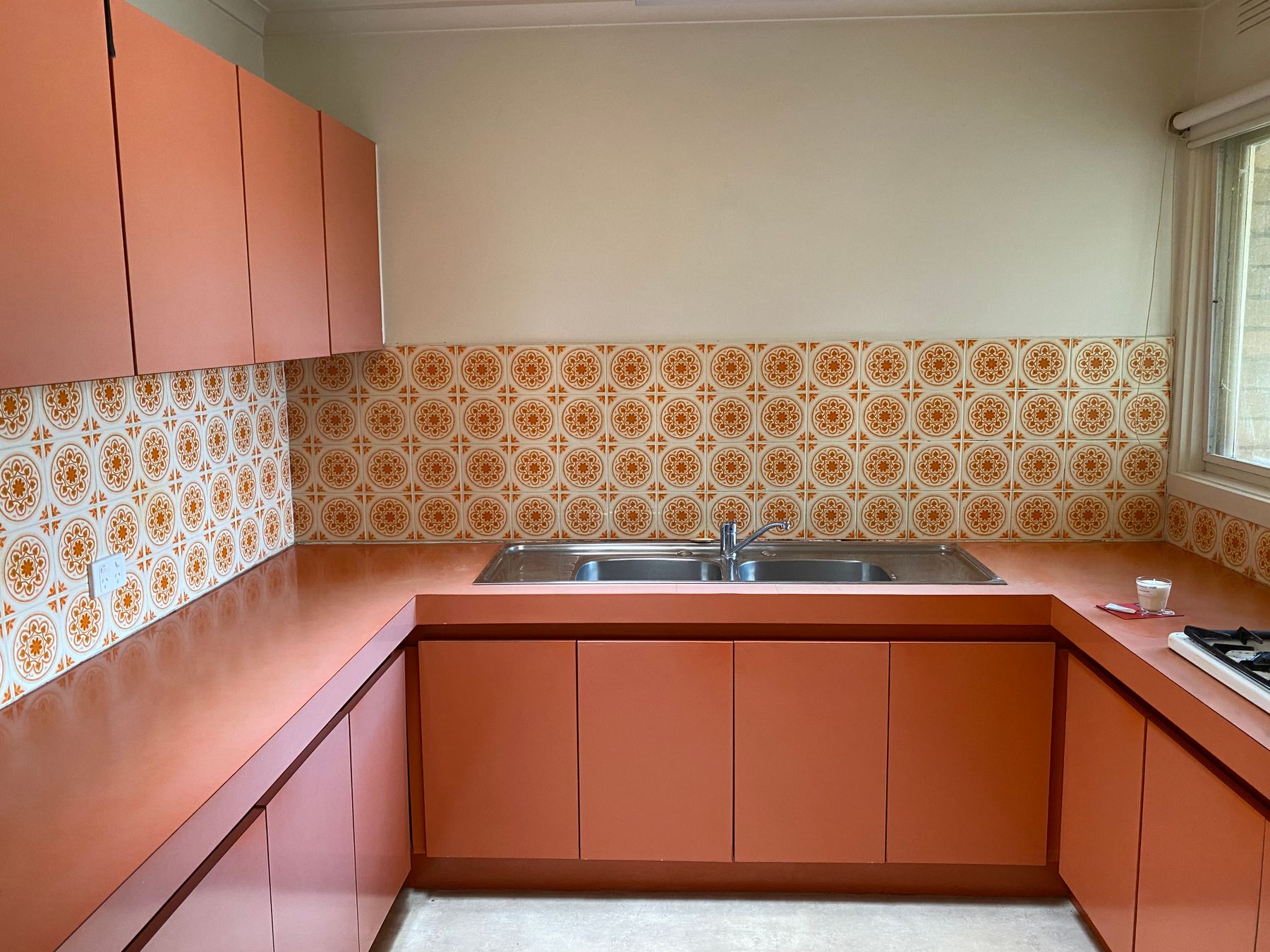
Mid-Century geometry is strongest when it supports the room's horizontal or vertical organization. A tile grid, panel rhythm or restrained pattern can reinforce a backsplash line, breakfast nook or cabinet bay without becoming a decorative theme. Choose one axis for the geometry to emphasize and let surrounding surfaces remain quieter.
Let One Light Behave Like Designed Furniture
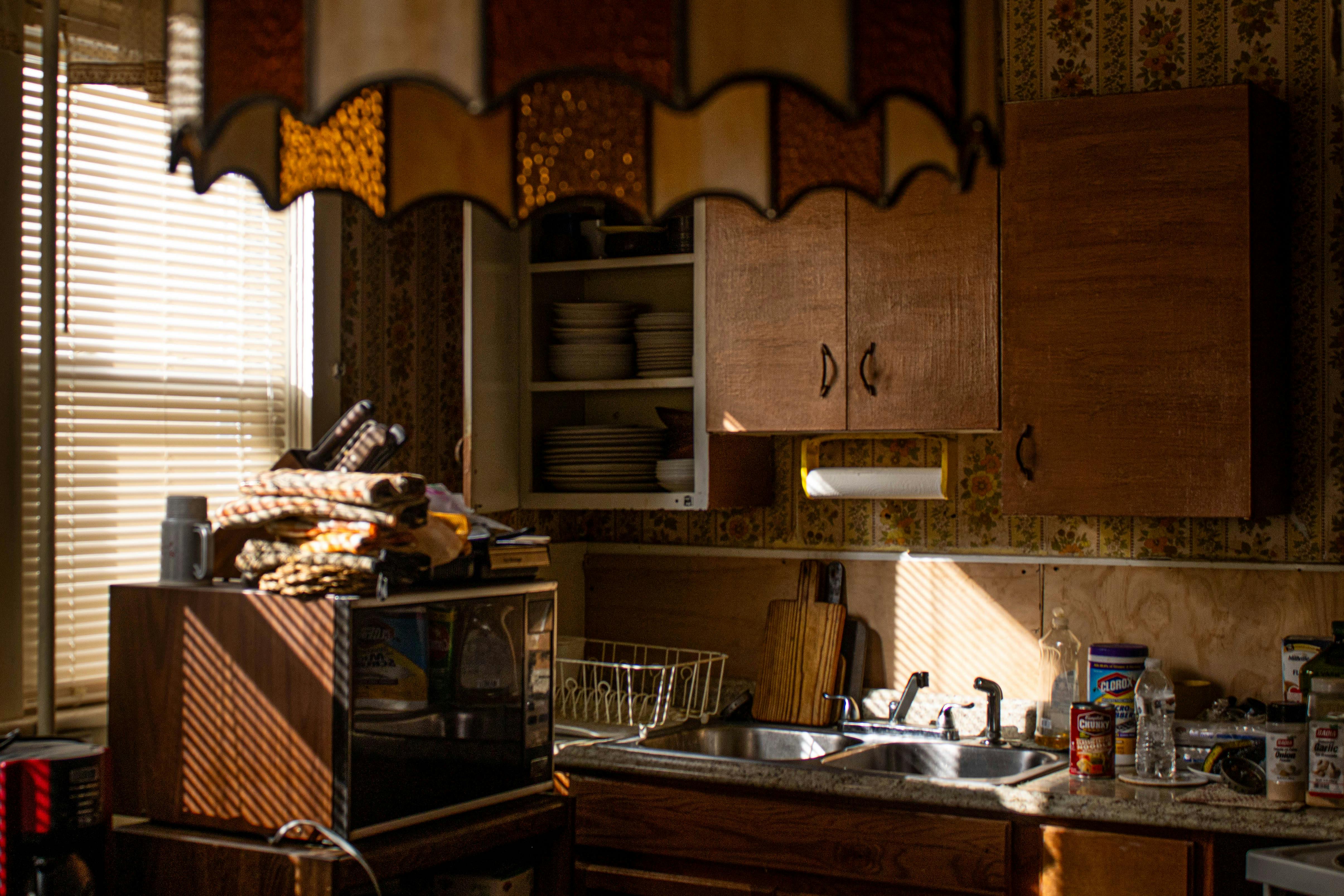
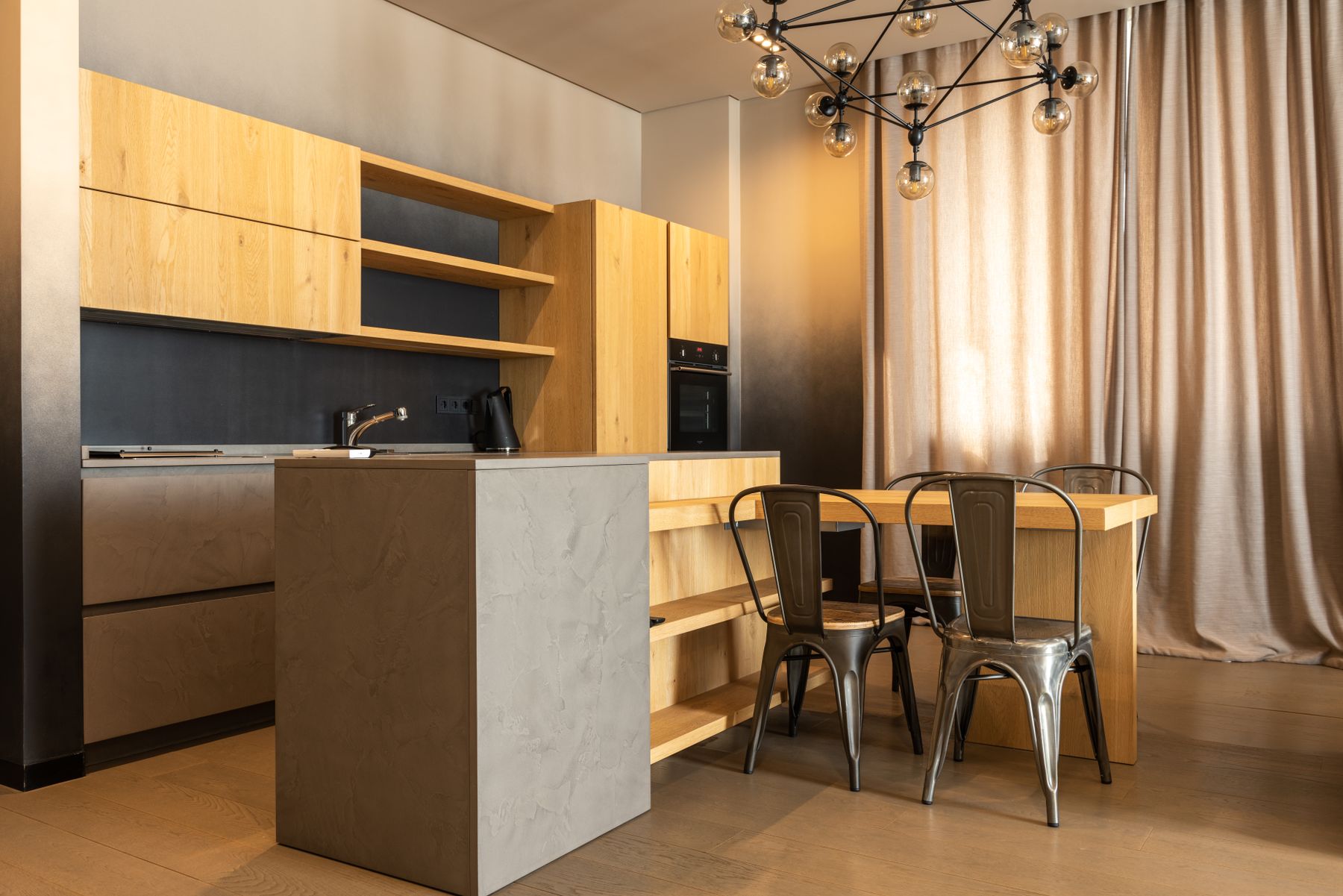
A globe, branching fixture or other sculptural light can carry the era because it sits between architecture and furniture. Give it enough space to be read as one designed object and size it to the table or island beneath it. Practical task lighting should remain separate so the statement fixture is free to contribute proportion and silhouette rather than solve every lighting need.
Make Informal Dining Part of the Postwar Logic
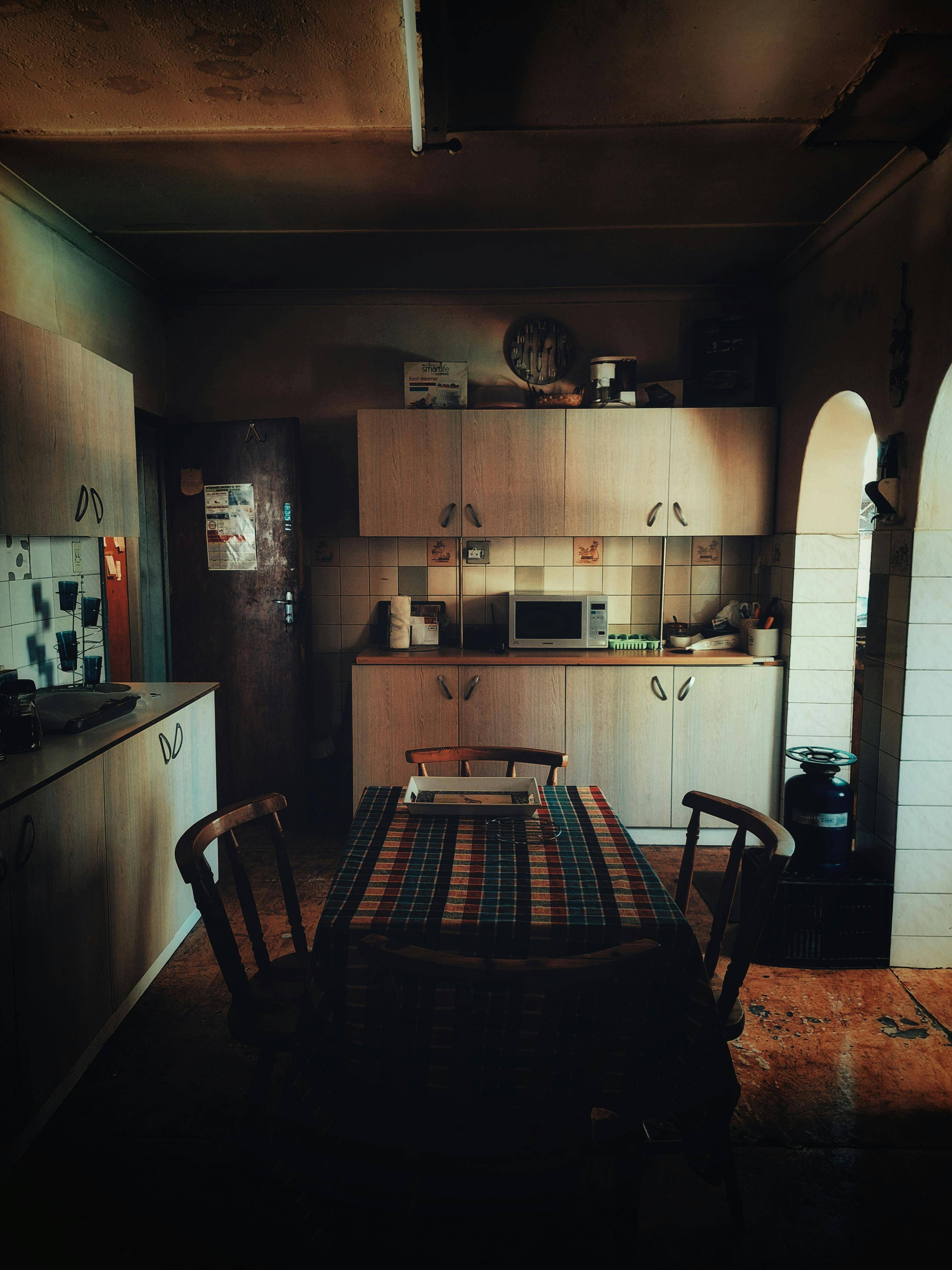
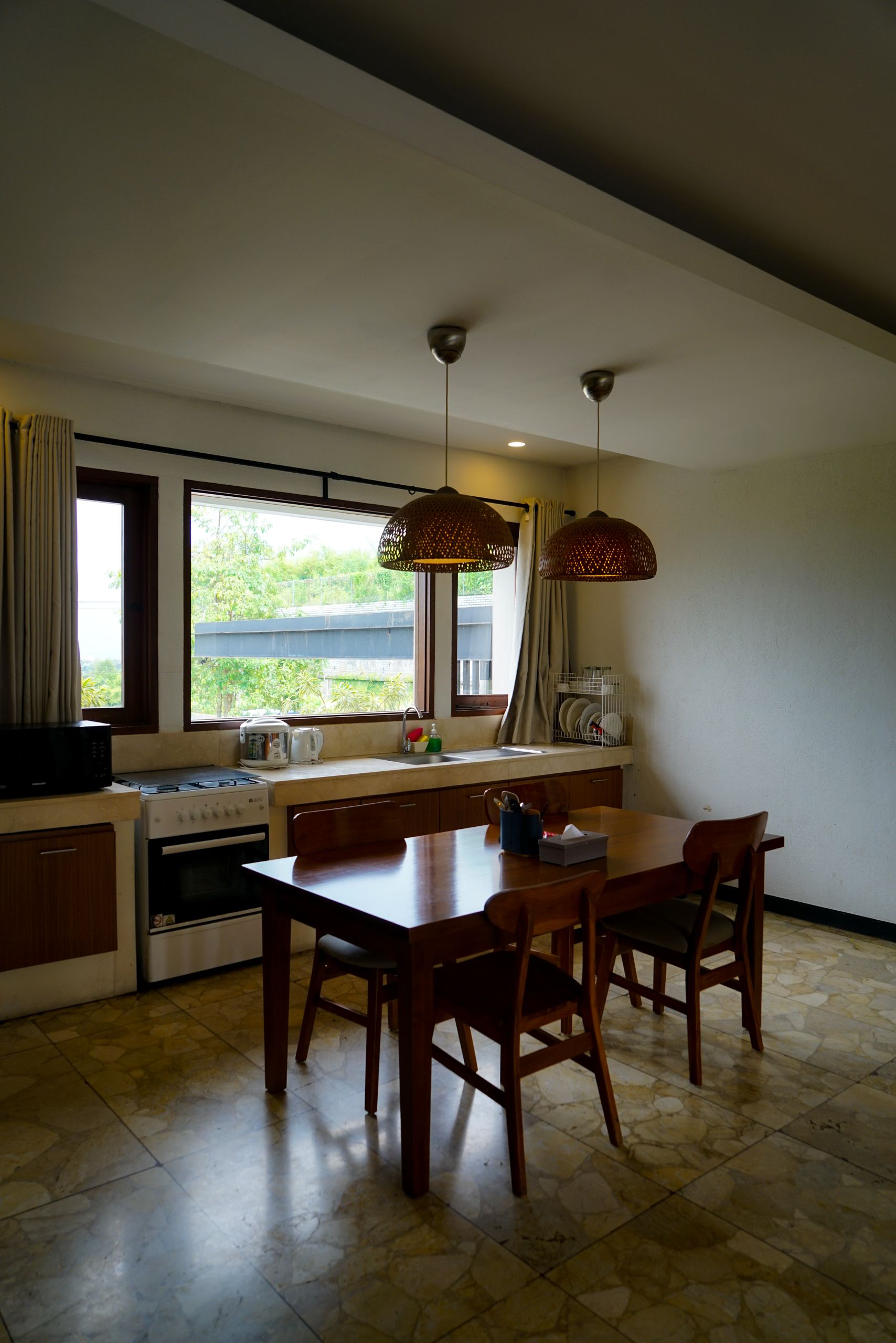
A breakfast nook can express Mid-Century thinking because it combines compact planning, sociability and furniture design in one zone. A built-in bench, round table or chairs with exposed legs can keep the floor visually open while giving the kitchen a genuine place to pause. The nook should solve a daily routine rather than exist only as a period vignette.
Use One Period Color at Architectural Scale
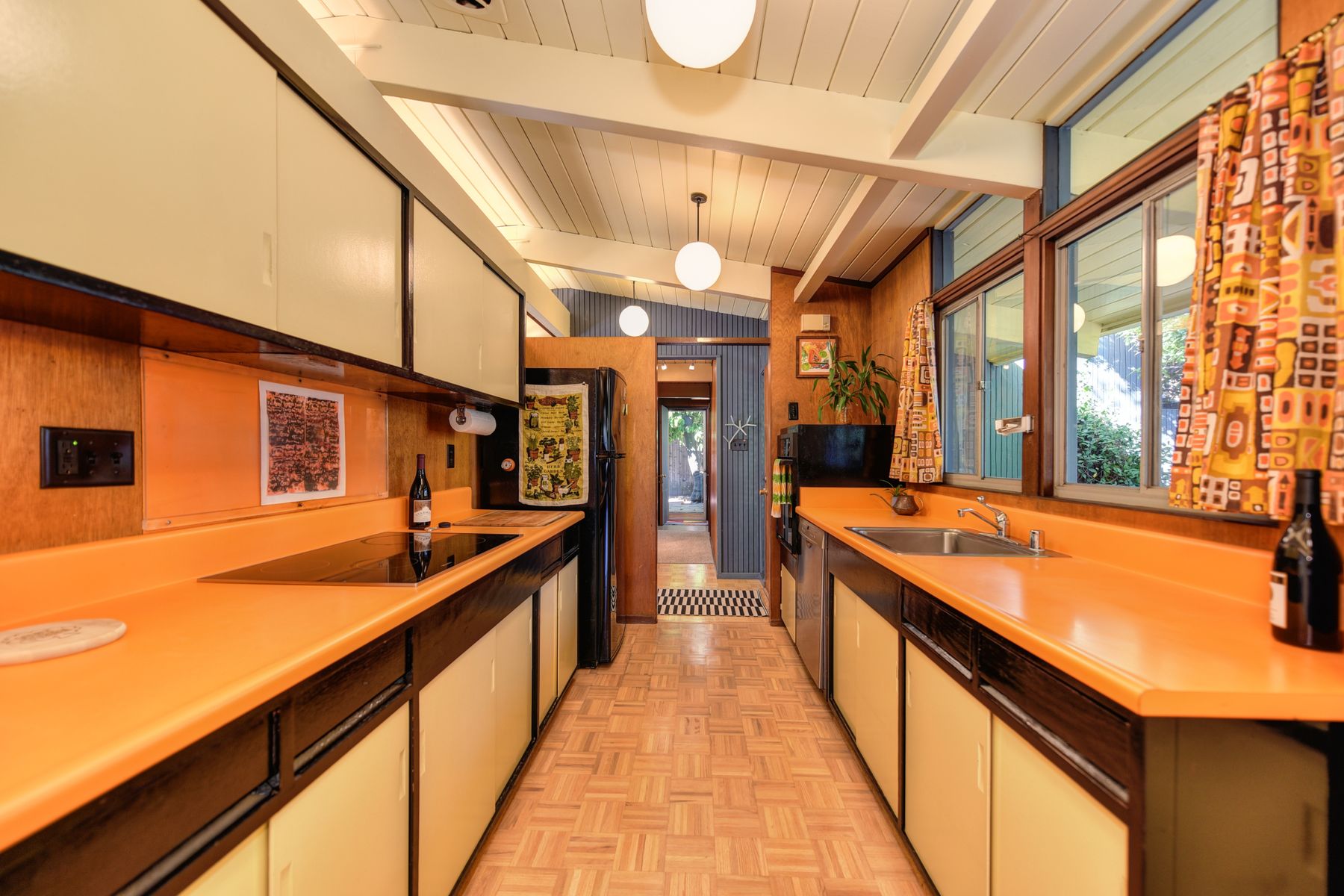
Ochre, olive, rust, terracotta or another period-associated color works best when it belongs to one meaningful field: a cabinet run, backsplash, banquette or wall. This is different from Retro color stacking. Mid-Century needs the color to support the timber and geometry rather than become a collection of nostalgic accents.
Lift Storage Off the Floor Where It Helps
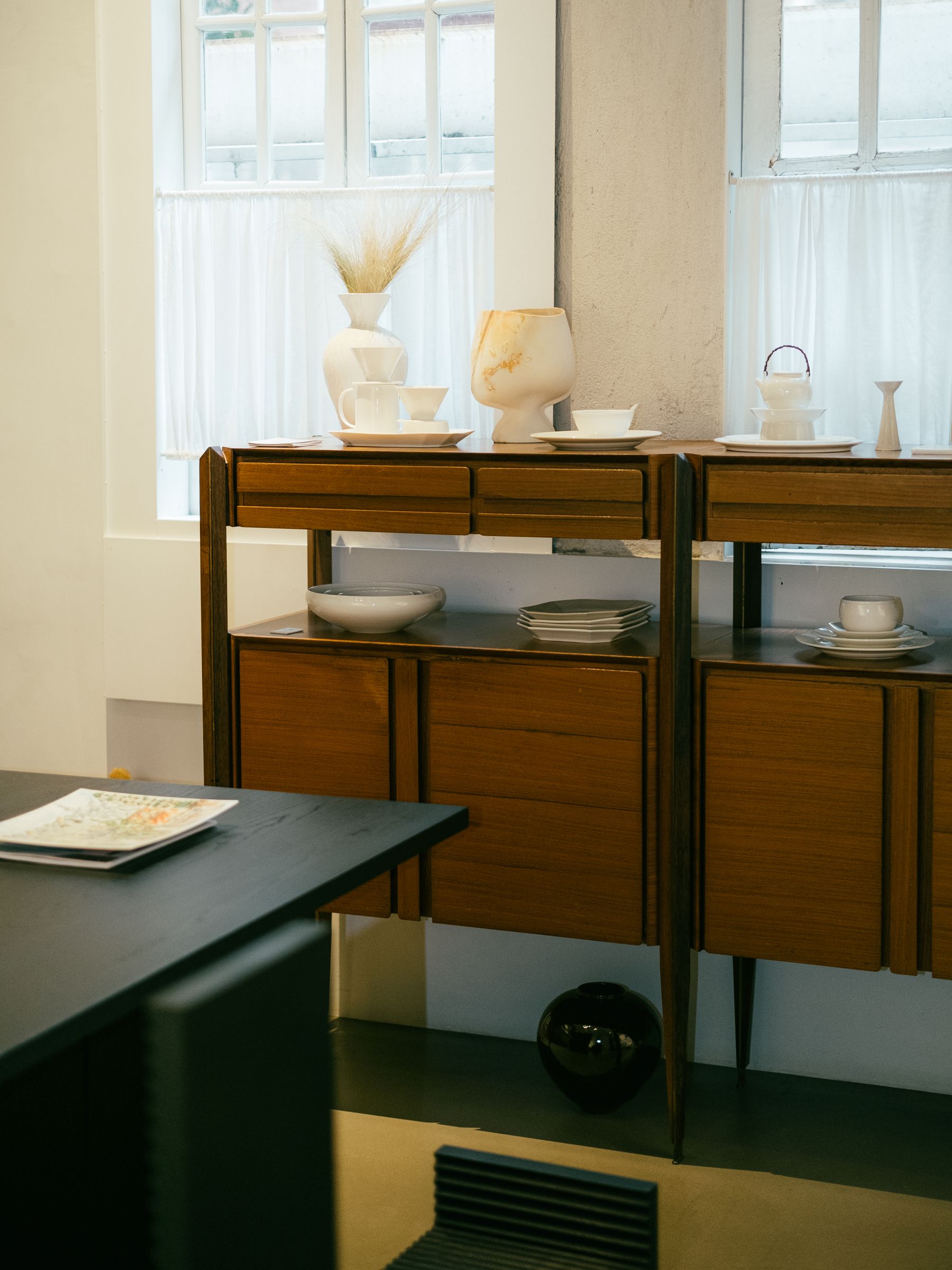
Sideboards, wall-hung cabinets and storage on visible legs introduce the lighter visual weight associated with Mid-Century furniture. Raised forms reveal more floor and make storage feel like an object rather than another wall of joinery. Use that move where cleaning, access and capacity still make sense; not every cabinet needs legs to communicate the idea.
Use Fewer, Better Proportioned Moves in a Small Kitchen
A compact Mid-Century kitchen does not need miniature versions of every period cue. One warm timber field, one raised or furniture-like element and one clear geometric or lighting gesture can be enough. Protect visible floor, avoid oversizing cabinet detail and keep the color hierarchy simple so the room retains the movement's sense of efficiency.

Choose Color From the Timber, Not From a Retro Checklist
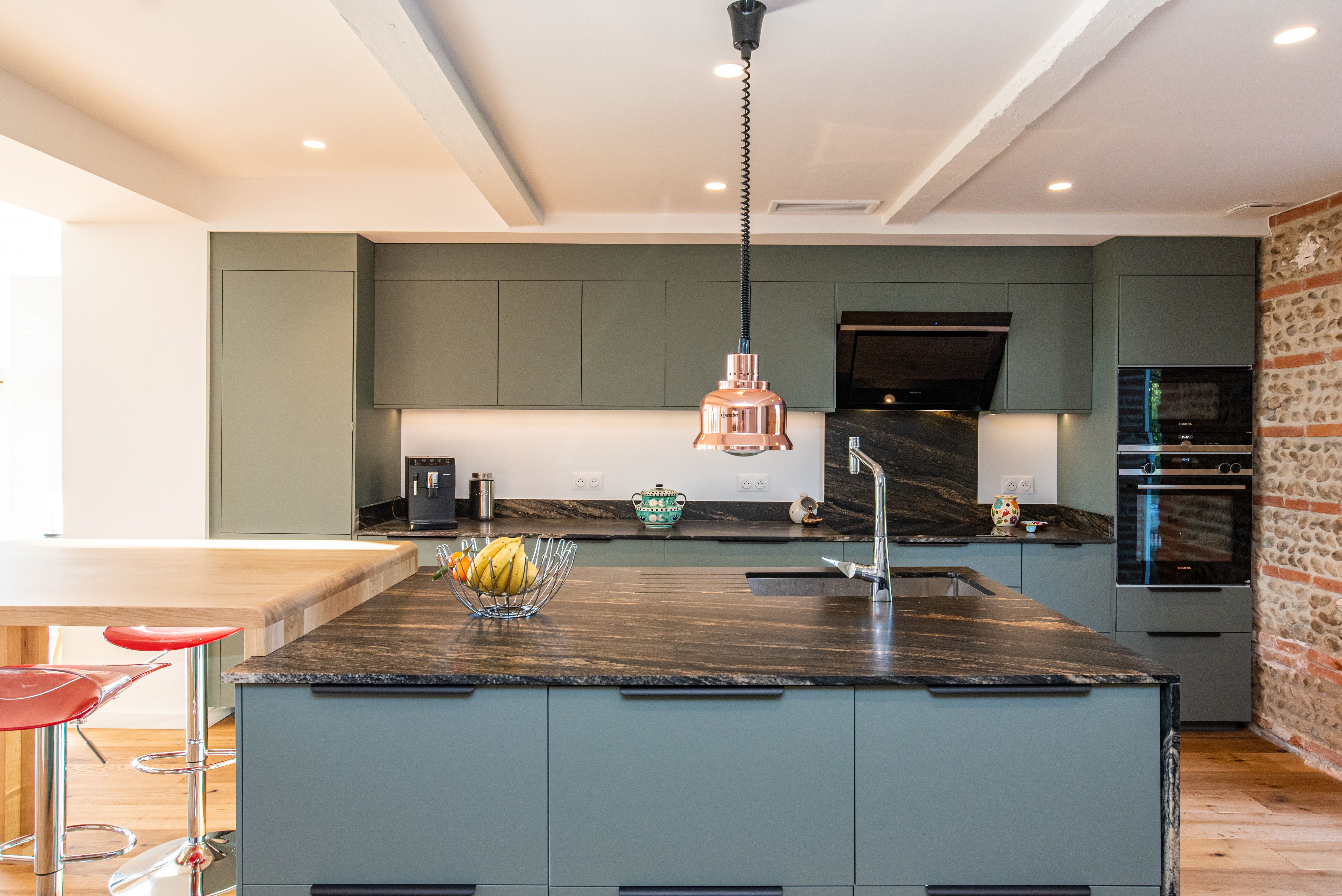
Olive, moss and grey-green often work because they relate naturally to warm timber without forcing a theatrical decade palette. Choose the green by what it does to the dominant wood: does it sharpen the grain, make the room too yellow or create enough separation? The relationship matters more than whether the shade appears on a period mood board.
Let Contemporary Technology Sit Inside the Period Framework
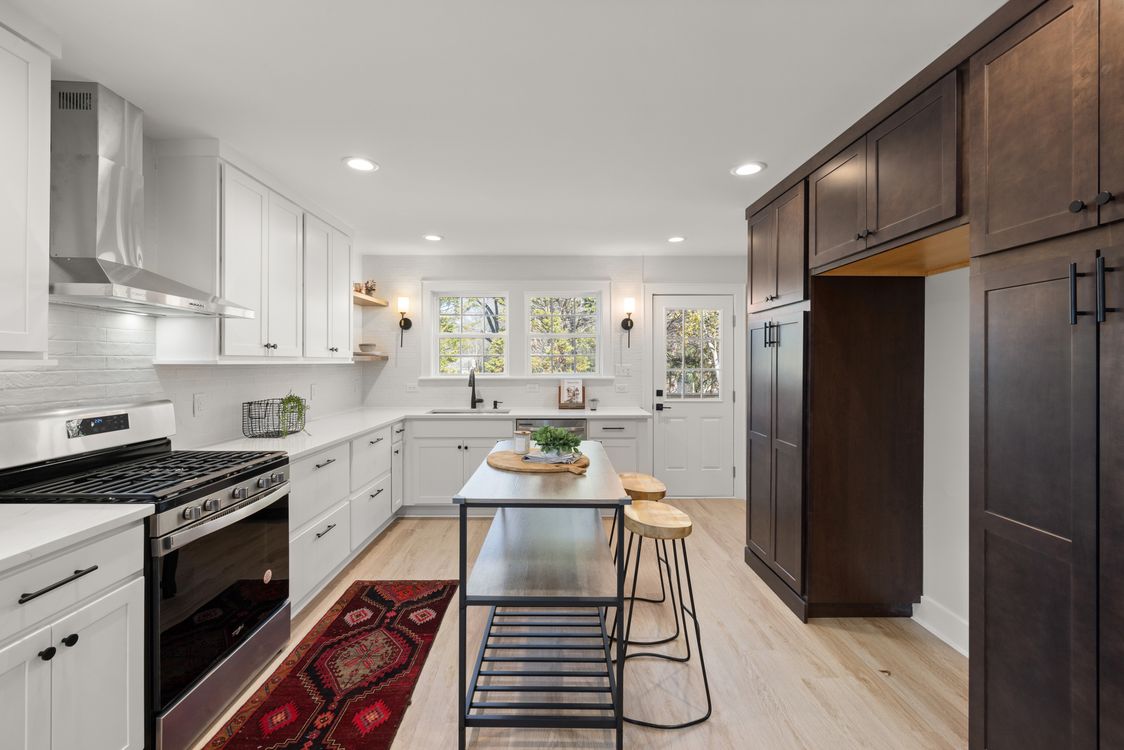
Mid-Century design was forward-looking, so the kitchen does not become more authentic by disguising current appliances. Stainless steel, black glass and integrated fronts can work when their placement respects the cabinet rhythm and does not overwhelm the timber. Let the period identity come from proportion, furniture and material rather than imitation vintage technology.
Use One Authentic Detail as Evidence, Not Costume
An original stool, sideboard, pendant or wall finish can add credibility because it has real construction, age and proportion. Let one such detail act as evidence of the design lineage while the rest of the kitchen stays current. If vintage sourcing begins to dominate the project, the room is moving toward Vintage rather than Mid-Century as a design system.