
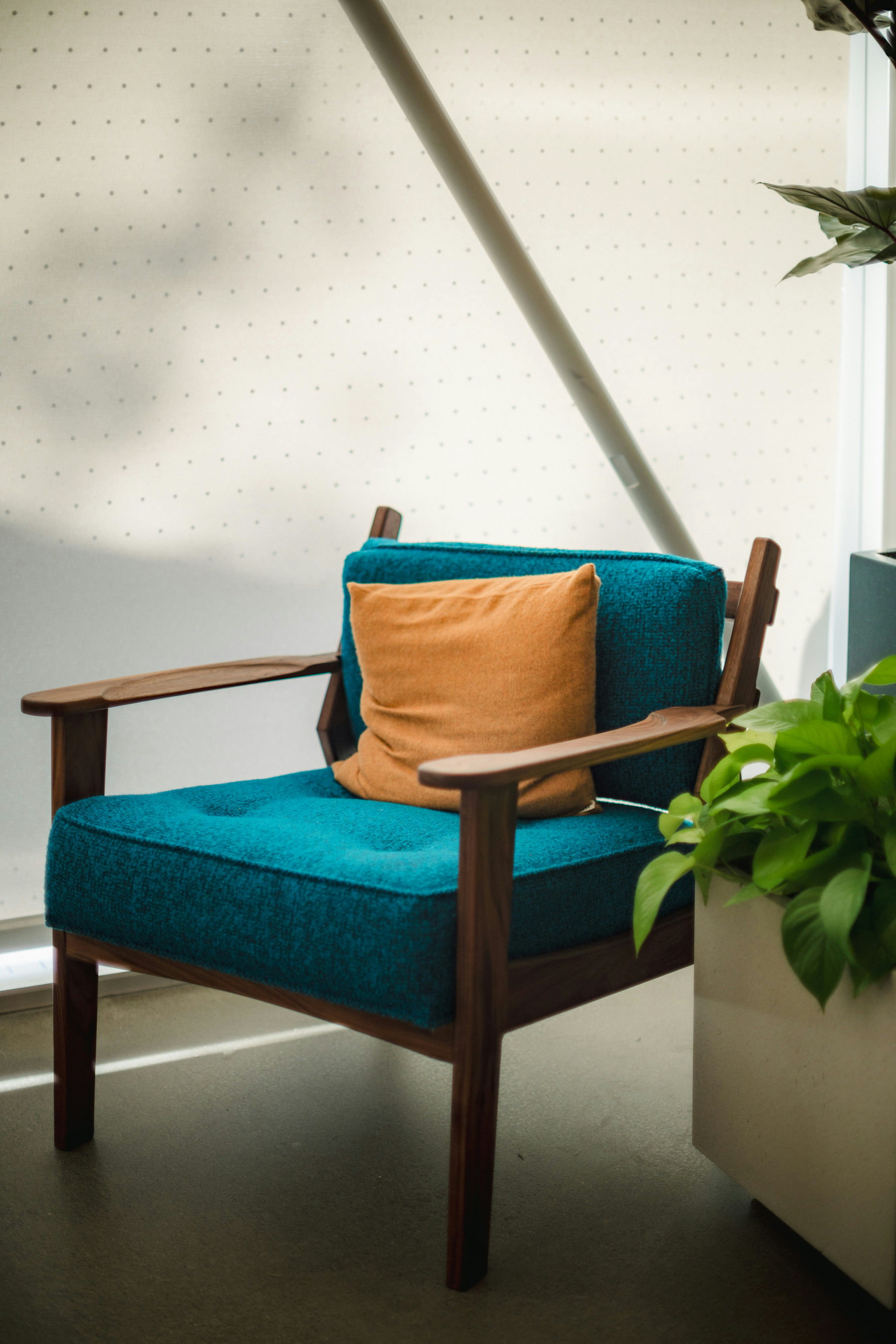
Invite the Chair Into the Seating Group
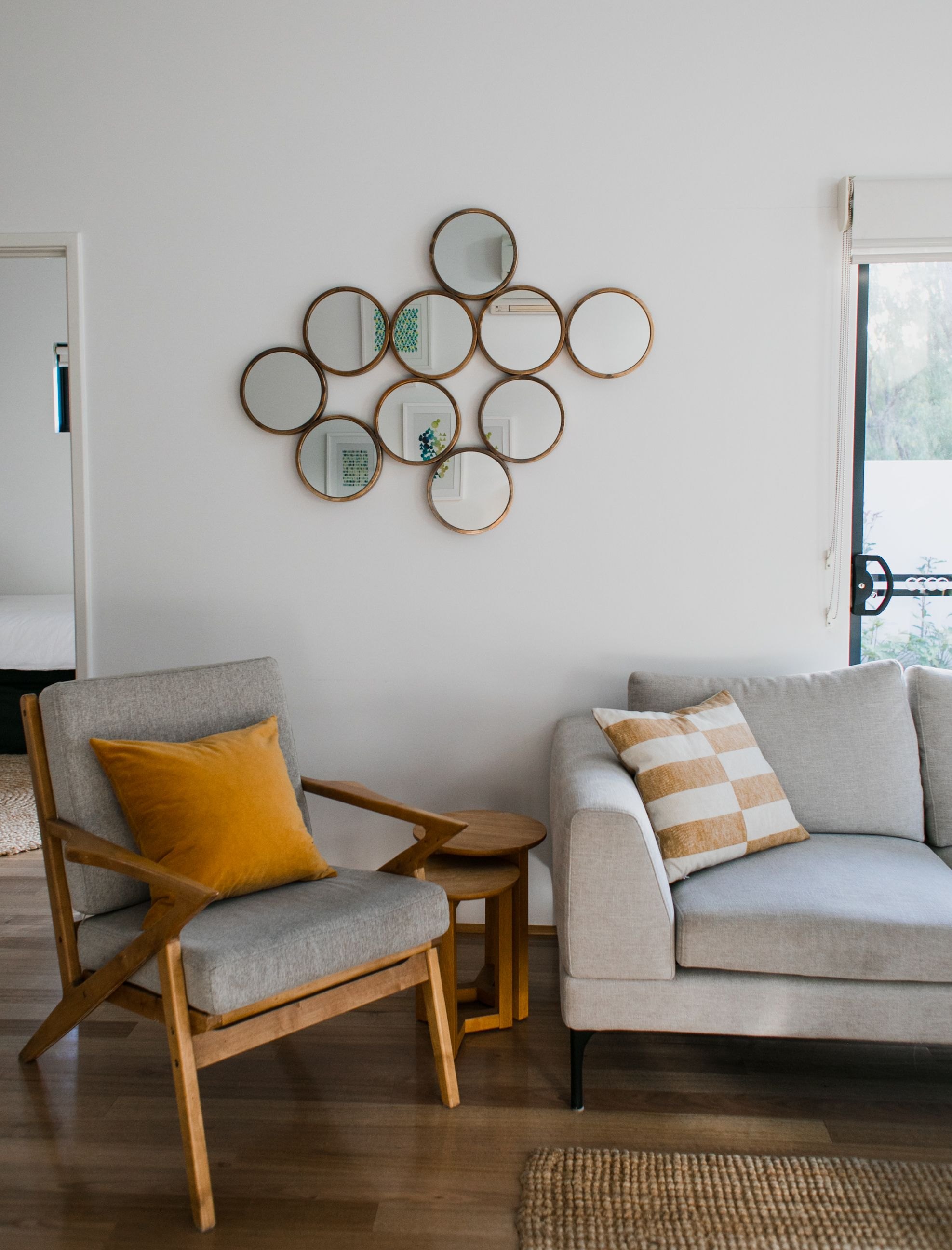
An accent chair is more convincing when it belongs to the conversation instead of waiting at the edge of the room. Here, a wood-framed chair angles in beside a sofa, with a small table within reach. It doesn’t show a complete floor plan, but it does make the right question obvious: what will a person sitting here face?
If your sofa is the main place people gather, try turning the chair toward it at a slight angle rather than lining every seat against a wall. You want two people to speak without constantly twisting their shoulders. In a TV-first room, leave the screen visible from the extra seat as well; a chair can participate in the group without copying the sofa’s exact direction.
Before settling on the angle, walk from the doorway to the sofa. The chair’s back, front legs and any nearby footrest should not turn that familiar route into an obstacle. For the bigger furniture plan, see Room & Matter’s living room layout guide.
Put a Useful Table Within Arm’s Reach
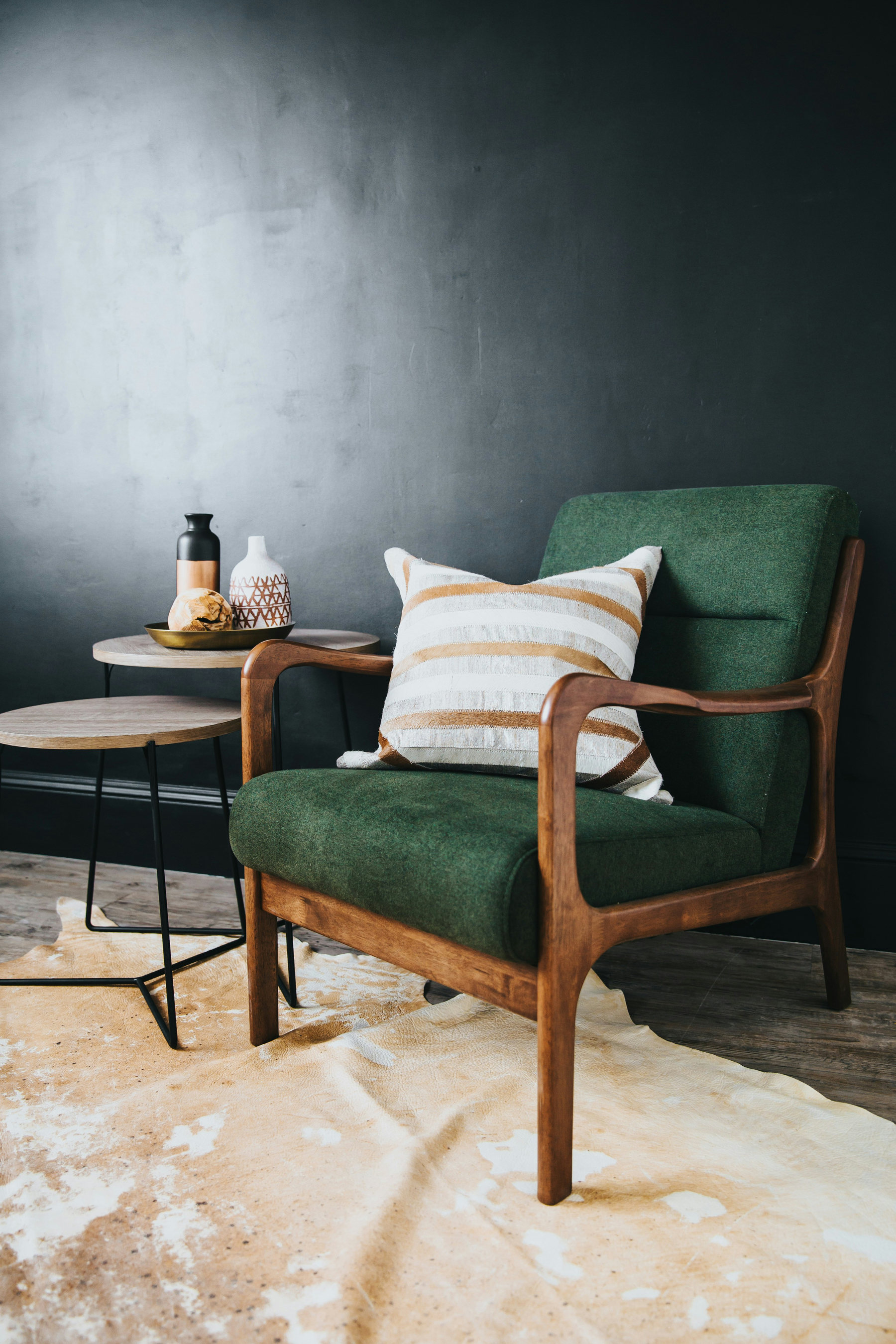
The deep-green armchair in this dark-walled corner sits beside two small round tables with pale tops and slim black legs. Their modest surfaces give the chair a useful landing place without hiding its curved wooden arms. The arrangement works because a book or glass has somewhere to go within reach.
You may need only one table. Choose the surface by what the chair will be used for: a cup and a book need less space than a lamp, stack of magazines and charging dock. If the coffee table is already easy to reach from the chair, another side table may add clutter rather than convenience.
Sit in the actual chair to test the distance. Can you set down a drink without leaning too far? Can you stand without catching your knee or elbow on a table edge? Check the route around the chair before choosing the table’s final position.
Give a Reading Chair Its Own Light
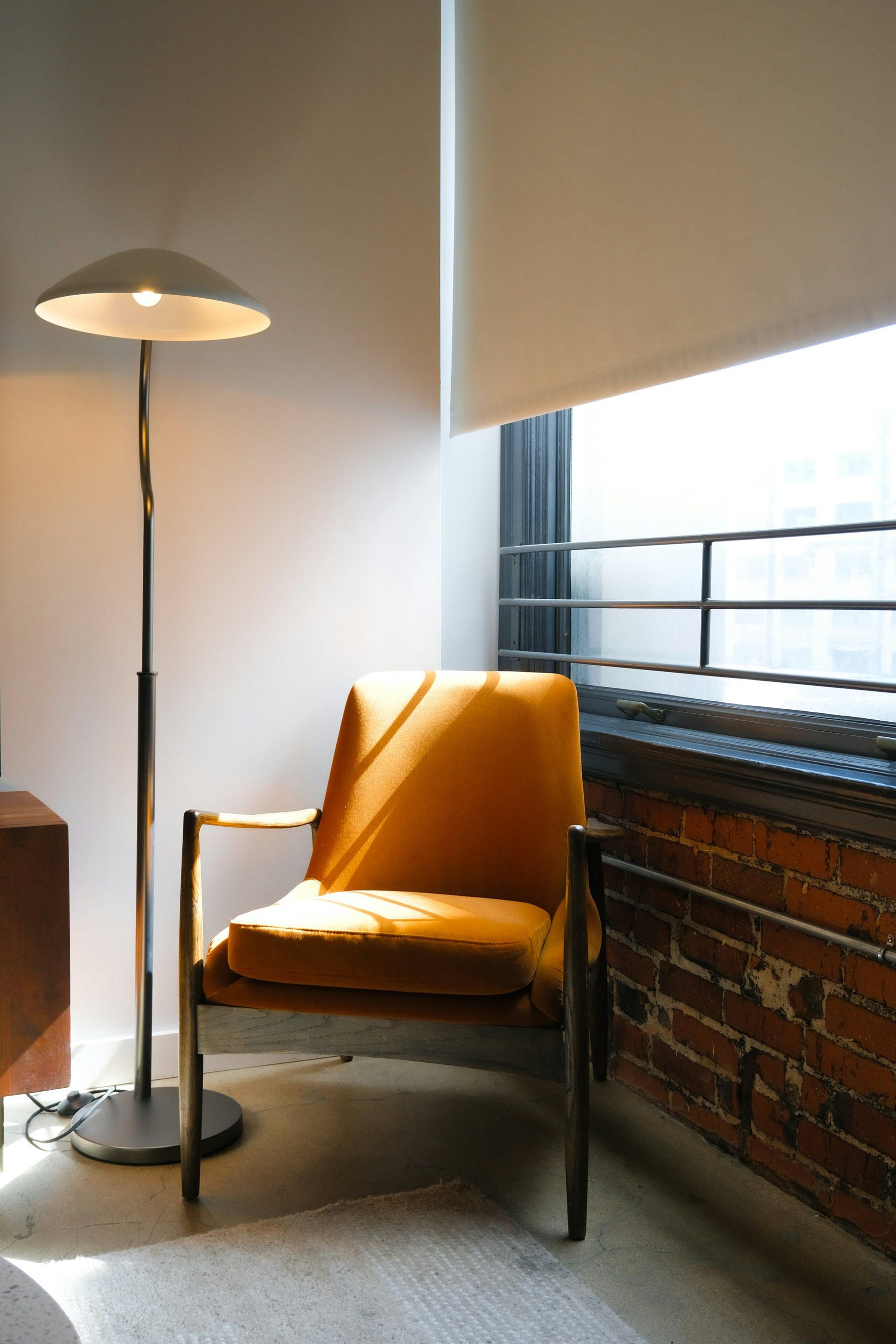
A mustard-colored chair sits beside a bright window and a slim floor lamp in this corner. The window makes the chair inviting by day; the lamp is what allows the same spot to keep working after sunset. It is a small change that gives one chair a purpose separate from the main sofa.
Choose a lamp position from the seat, not from the doorway. For reading, the light should reach an open book without shining directly into someone’s eyes across the room. A floor lamp is also the easier addition where there is no room for a side table at all.
The best position can change between morning and evening. Check window glare at the time you expect to sit there, then try the lamp after dark. Keep its cord out of the walking route; a beautifully arranged corner is not useful if someone has to step across a cable to reach it.
Let a Bright Green Chair Join a Colorful Room
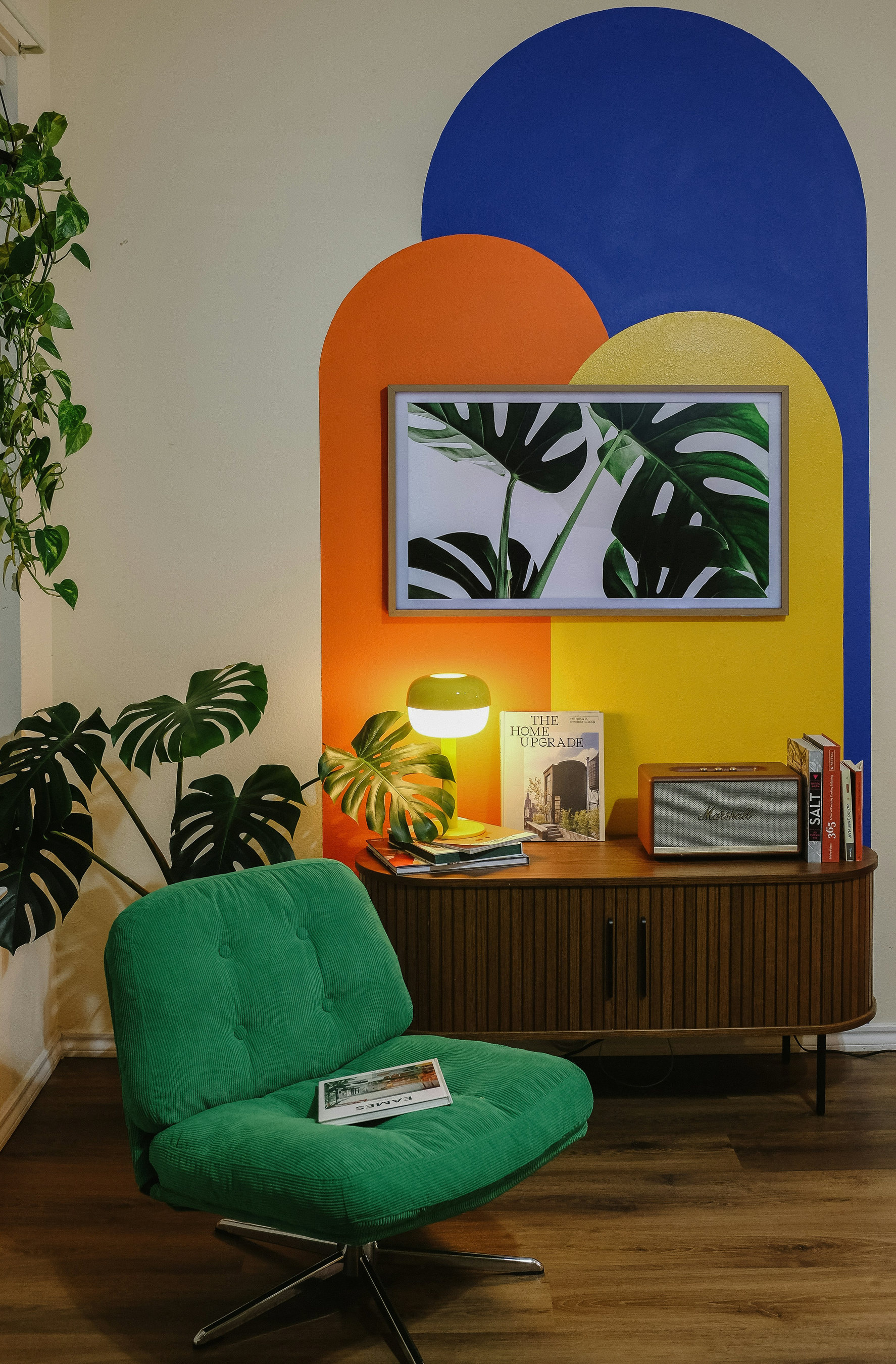
A lively green lounge chair stands against overlapping painted arches in blue, orange and yellow. The color is exuberant, but it does not feel isolated: the wall and nearby framed leaf artwork already use a deliberately strong palette. One chair has enough presence to hold its own without a matching sofa.
This is the route to take when you want a seat to become a focal point in a room that already has color confidence. Repeat a small amount of the green in artwork, a planter or a cushion, rather than adding a second large green object for symmetry. In a quieter room, the same saturated chair could command much more attention.
View upholstery samples against the wall during the day and after dark. The question is not simply whether you love green, but whether this exact level of contrast is the role you want the chair to play.
Let a Patterned Chair Carry the Room’s Main Print
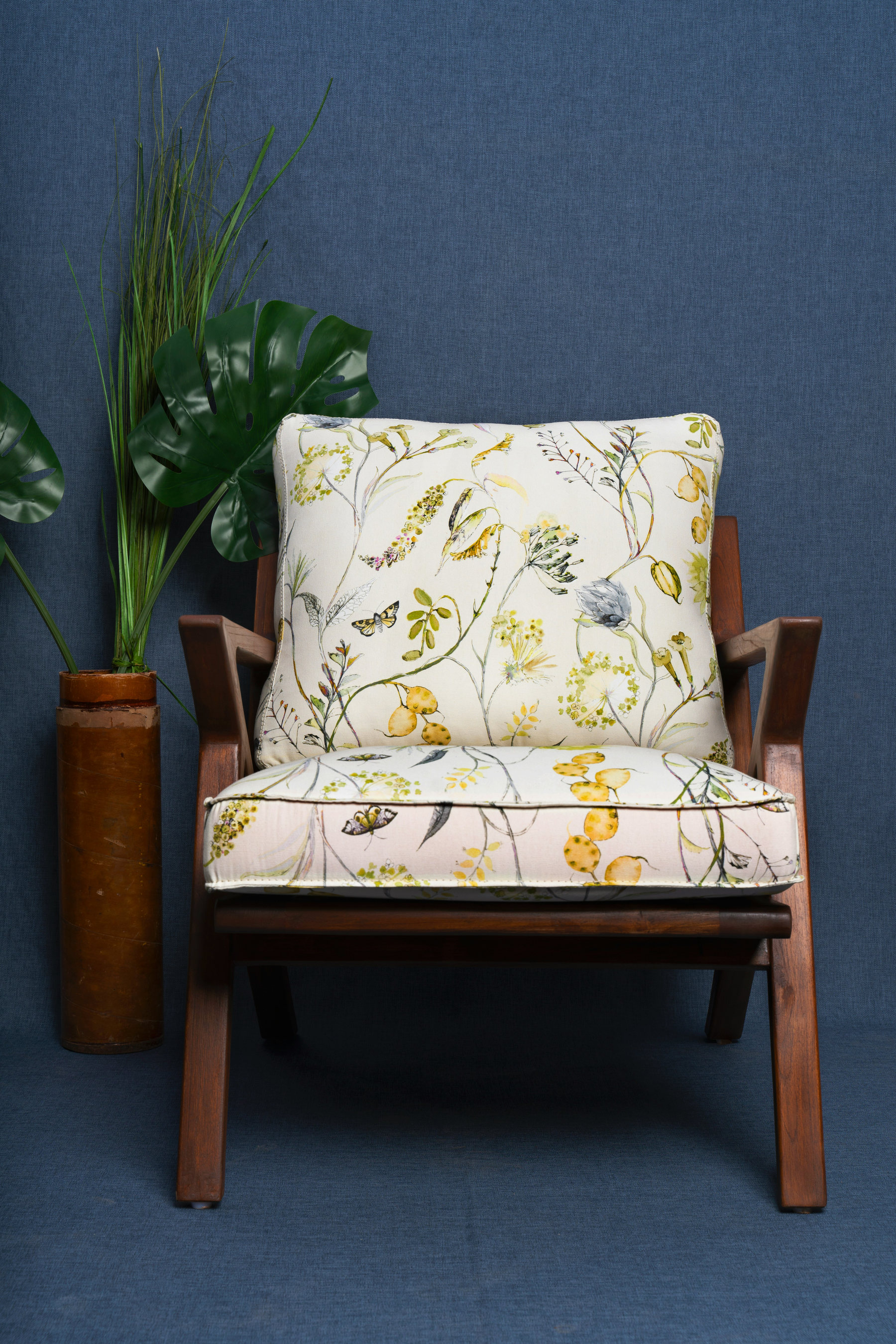
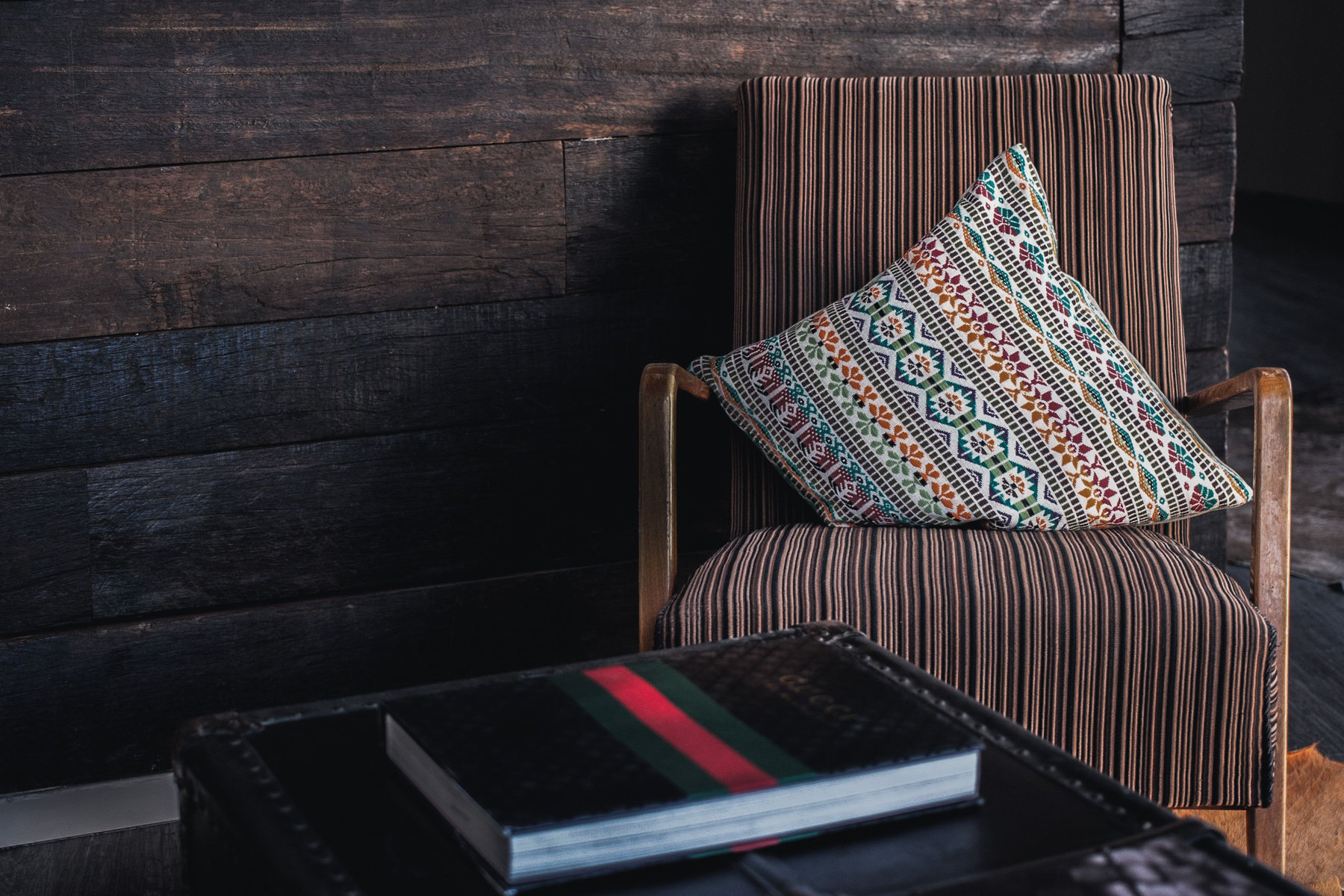
The scale of a pattern changes the way a chair behaves. One example has a generous, illustrated botanical print across the back cushion and seat, set against a simple blue wall. The print becomes the main event. The other chair uses narrow brown-and-cream stripes, with a lively patterned pillow leaning against the back; from a distance the upholstery reads almost like texture.
A broad floral works especially well when the sofa and major curtains are relatively quiet. It gives you a substantial amount of color and movement in one replaceable piece rather than across the room’s largest furniture item. Stripes and other tight repeats are easier to layer into a room that already has a rug, framed art or patterned accessories competing for attention.
If you already own a patterned rug, put its swatch beside the chair fabric before ordering. Compare the size of the motifs, not just their colors. Two prints can share a palette and still fight because both demand the same visual attention.
Bring Warmth In With a Cognac Leather-Look Finish
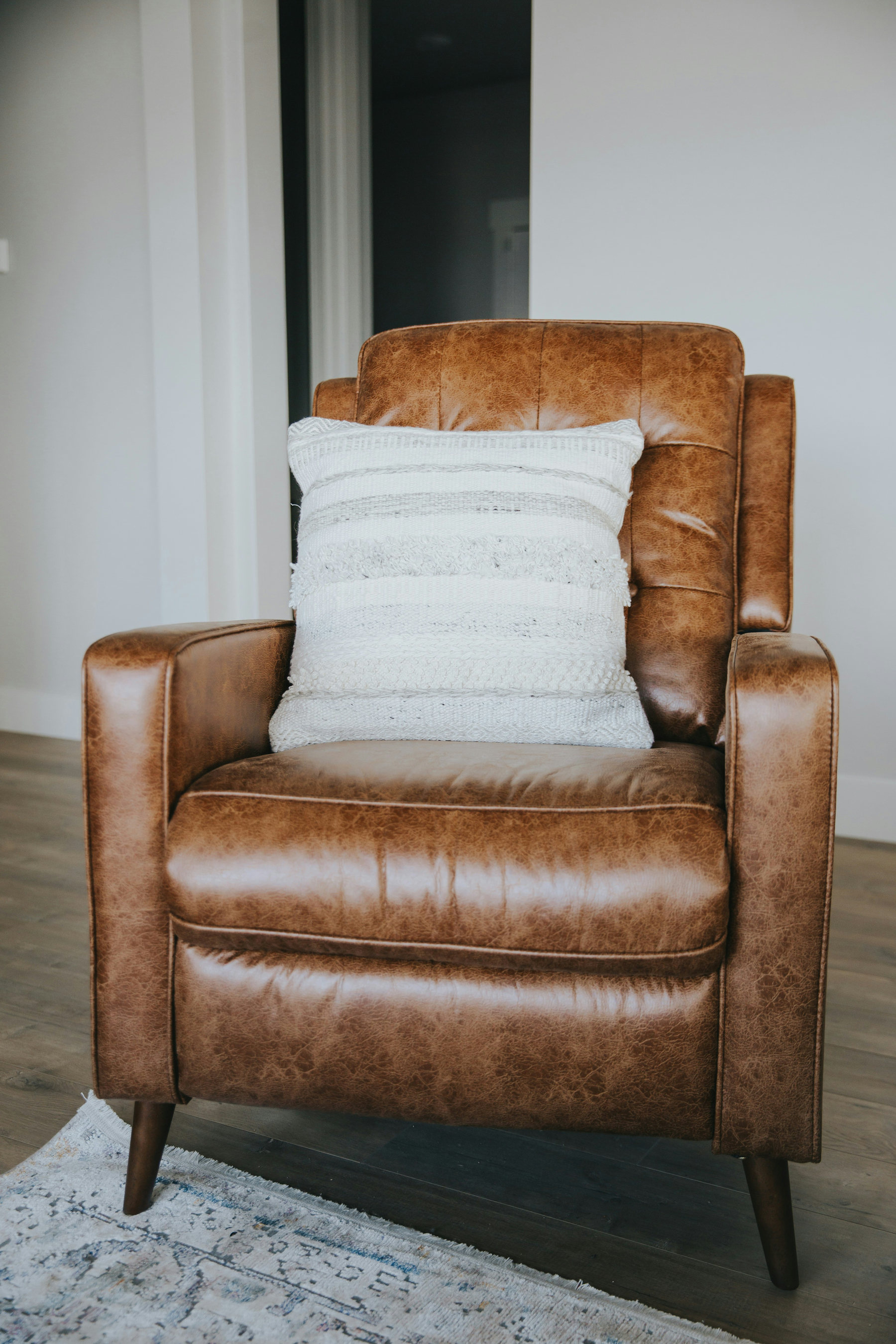
Against pale walls, the caramel-brown armchair in this image offers warmth through its smooth, leather-like surface. The rolled arms and deep, rounded back create an entirely different outline from a low, soft sofa, while a cream textured pillow lightens the whole piece.
This is a strong route when a room already has warm wood flooring, brown picture frames or darker furniture but the upholstery feels a little too uniform. You do not need to match each shade of brown. A related warm tone is enough to give the chair a visual connection to the rest of the room.
Treat the finish in a photo as an appearance only. Real leather and leather-look fabrics can look alike, so check the listed upholstery material and ask how that specific finish should be cleaned and how well it wears.
In a Small Room, Keep More Floor in View
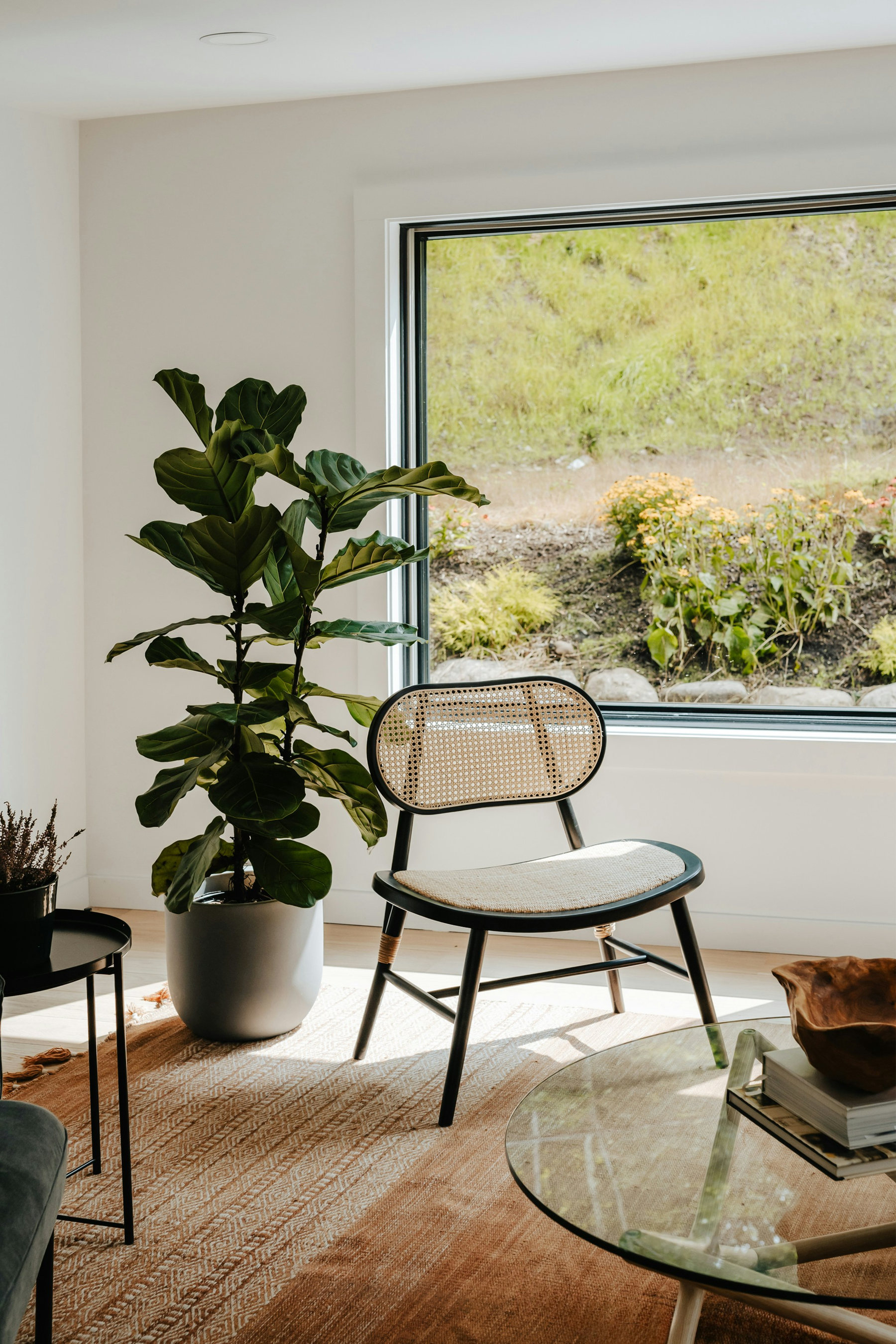
This black-framed chair by the window has a woven cane back, a pale woven seat and no armrests. The back lets you see through to the room behind it, and the slim legs leave the floor and rug in view, so it looks less solid than a fully upholstered tub chair might in the same position. The advantage is visual lightness, not a smaller footprint.
That makes open-frame chairs worth trying in narrow living rooms and beside windows you do not want to hide. Pair one with a modest table or a plant rather than a tall storage unit that closes off the same corner. If the room has a generous rug, the chair’s legs can also keep the rug visible instead of covering it completely.
An airy chair can still be wide or deep. Check the actual model’s width, depth, and the space needed to stand up, then mark those measurements on the floor. Measure the furniture you plan to buy; a photograph can suggest a lighter silhouette but cannot verify its footprint.
Choose a Lower Lounge Chair When You Want to Recline
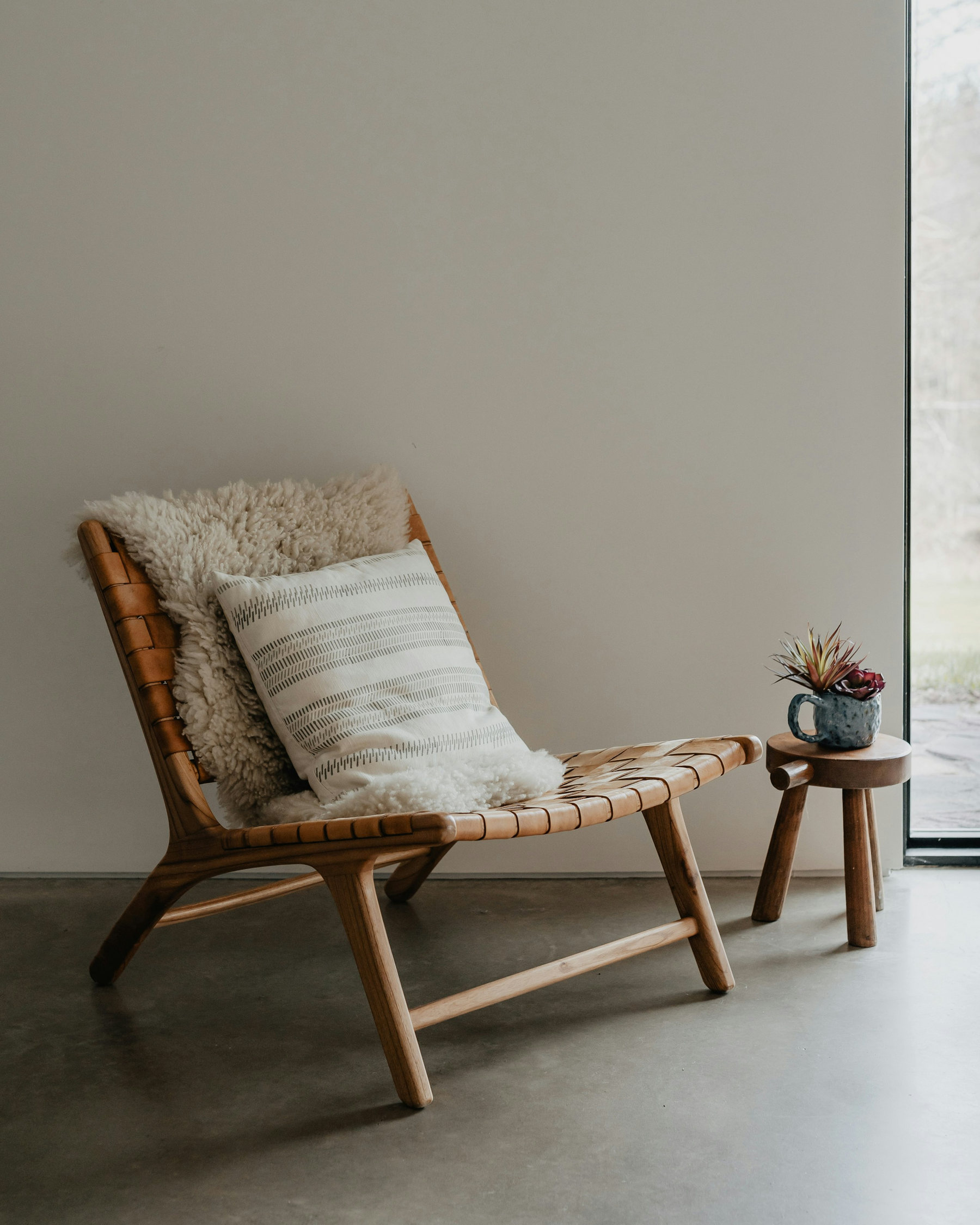
This wood-frame lounge chair has a low, woven-strap seat and a relaxed back angle, softened by a pale throw and a striped pillow. It invites a different kind of sitting from an upright armchair: stretching out with a magazine or taking a quiet break rather than perching through a lively conversation.
The difference matters when the room has a job for the extra seat. If the chair is mostly for reading or watching a movie, a more laid-back angle may feel natural. If it doubles as seating for visitors who prefer to sit upright, a taller back and firmer seat may be the better choice. The photograph cannot tell you which one will suit your body.
Test the actual chair if possible. Notice whether you can rise easily, whether your feet are supported, and whether the arms are helpful at the moment you stand. A low silhouette can look beautiful without being the most practical seat for every household member.
Count the Ottoman as Part of the Chair, Not an Afterthought
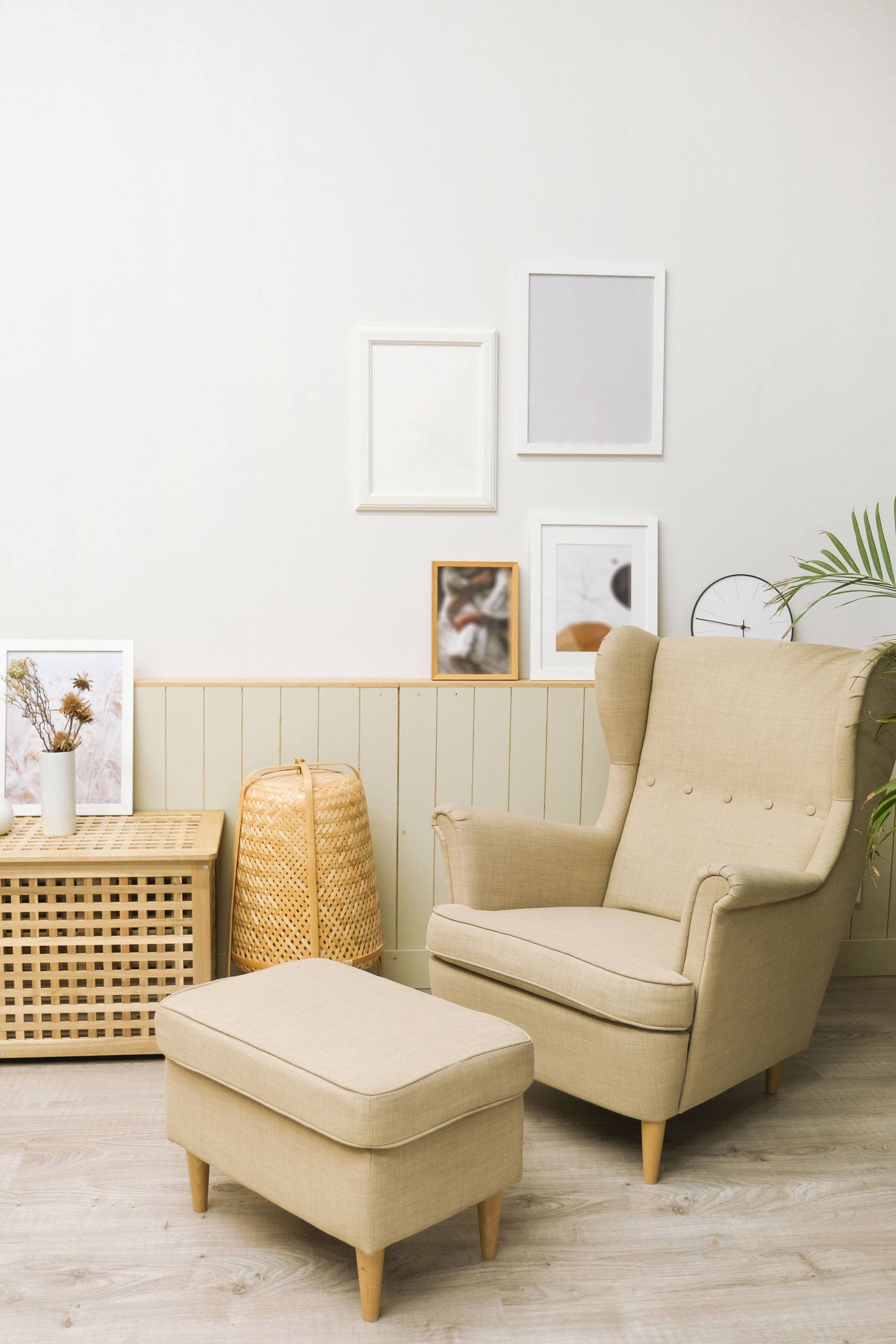
The pale upholstered chair and matching ottoman in this bright room form a little reclining station. Seen together, they show why a footrest is not a harmless last-minute accessory: it occupies a second patch of floor and changes how someone walks past the chair.
A chair-and-ottoman combination makes sense for a seat you will actually lounge in, especially if the room has enough depth to extend your legs without nudging the coffee table. It is less convincing in the only path between the sofa and the door. The ottoman also needs a place to go when someone stands up or when extra guests arrive.
Measure the chosen pieces as a pair, then outline both on the floor with painter’s tape. Try the footrest in its relaxed position and its pushed-aside position. If either version blocks the normal route, choose a simpler chair or a more compact footrest instead.
Use One Sculptural Chair Instead of a Matching Pair
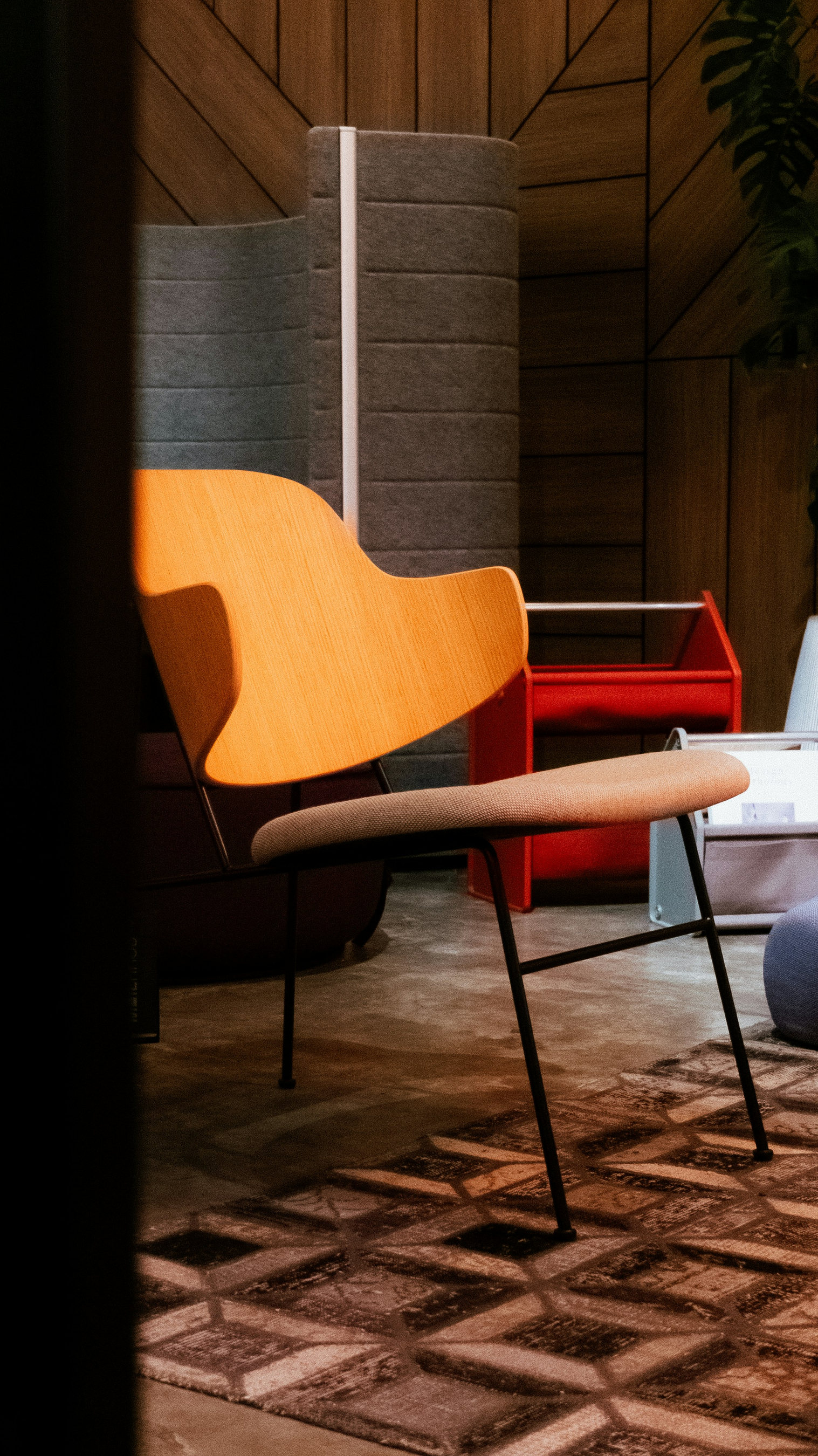
The orange-toned chair in this paneled room brings a distinct curved wooden back, a taupe cushioned seat and a strong profile to an otherwise dark, rectilinear setting. A single chair does the expressive work. Two matching versions would create a much more formal rhythm and could overwhelm the furniture already in place.
This approach is useful for eclectic and midcentury-influenced spaces where you want one characterful object among straightforward sofas, shelves and tables. Look for a silhouette that relates to something else in the room—a curved lamp, a rounded table, the warmth of a wood panel—but does not simply repeat the sofa’s shape.
Buy for the room you have, not for the era a chair resembles. A retro-leaning shape is not proof of a designer or a vintage date; if a listing claims either, ask the seller for documentation.
For a quieter palette, apply the same idea through silhouette rather than orange upholstery. A curving back, open frame or generous rounded arm can distinguish a pale chair from a plain sofa without introducing another strong color. Choose the variation that gives your room something it actually lacks.
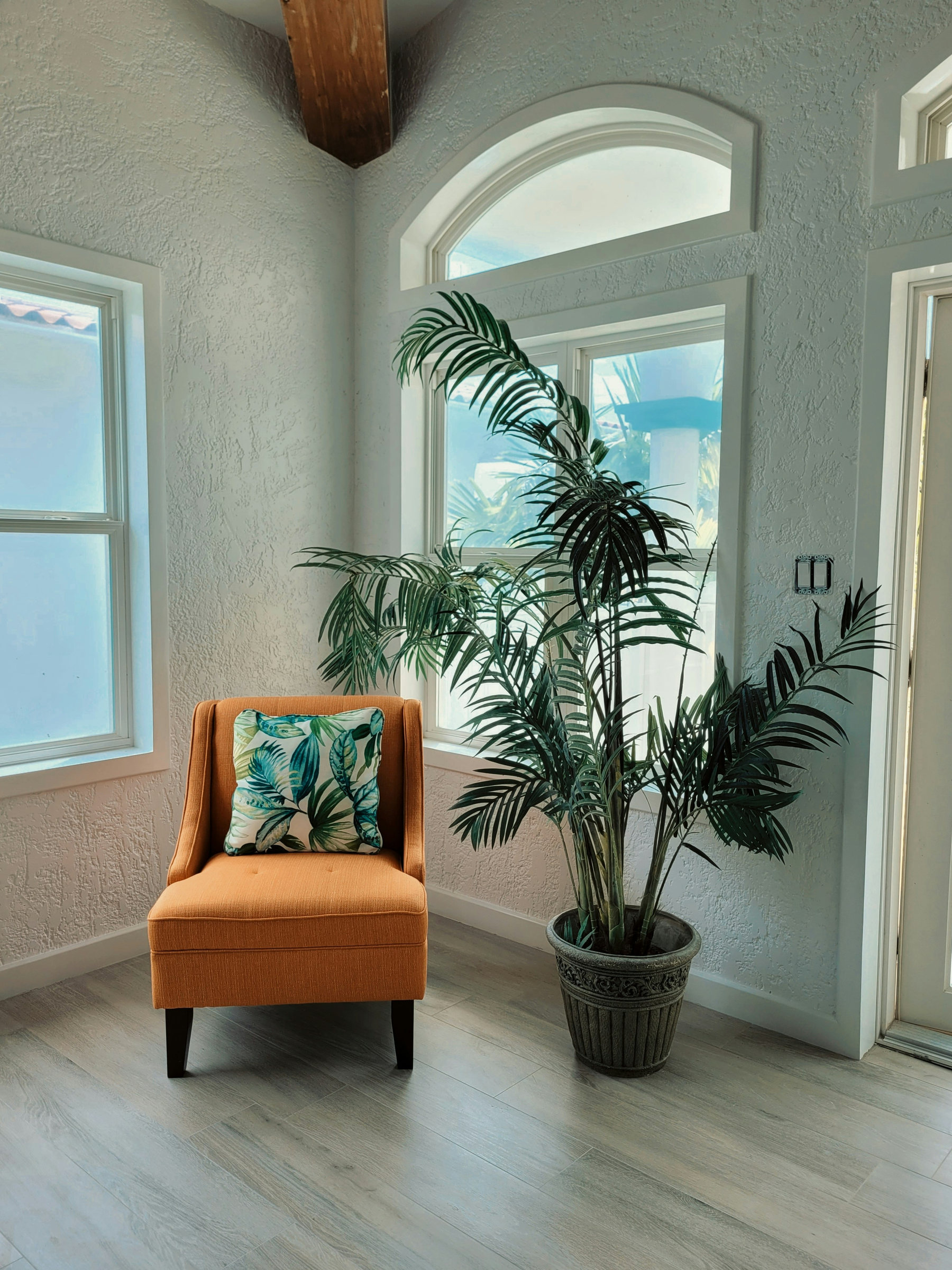
Repeat a Rust Accent Through Plants and Natural Finishes
A rust-orange armless chair sits beside a tall palm and pale walls in this airy corner. The contrast is immediate: warm upholstery against cool foliage, with a teal leaf-print pillow echoing the plant. It shows how a chair can give a neutral room its most memorable color without forcing that color onto the sofa or curtains.
If you already have plants, wood or woven accessories, a clay, terracotta or cinnamon-colored chair can bridge those warmer materials and the green around them. Repeat the chair’s warmth sparingly—in a pot, a small cushion or a picture frame—rather than ordering several new pieces in exactly the same shade.
Leave enough room to reach the plant and to enter the chair without brushing against leaves. The plant needs its own light and watering access; the chair needs an unblocked sitting space.

