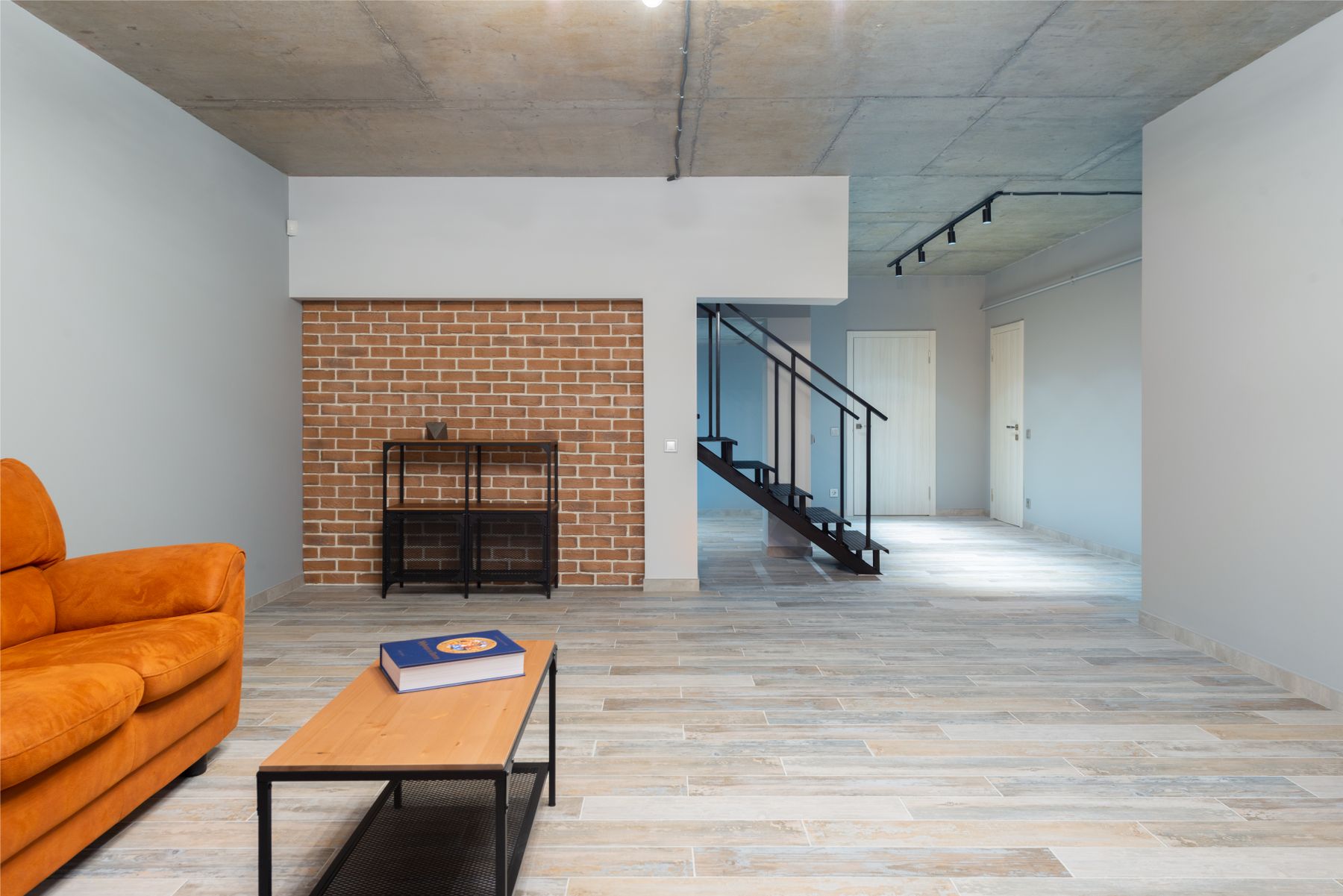


Dining Tables With Structural Weight
A timber or wood-look top above a dark frame gives the dining table a clear material contrast. The base decides how that contrast works in use. Angled legs can look light from the room entrance while occupying the exact spot where an end chair needs to sit. A central trestle may free the corners but introduce a crosspiece near feet. Mark the occupied seats around the proposed table and compare those positions with the actual support layout; counting chairs in a styled photograph is not a seating-capacity test. The isolated table image makes the leg arrangement easy to read, but it does not establish the model's dimensions, material specification or load rating. Ask for those separately. A visually thick top also does not prove solid construction: veneer, edging and the underlying board need their own specification. Let the table carry the strongest industrial note, then choose chairs that keep the seating area comfortable rather than repeating heavy metalwork everywhere. If this is part of a larger seating-and-dining room, resolve the route through both zones before adding an oversized top.

Coffee Tables With Storage
An open lower compartment can hold books or a tray without loading the top with small objects. It works best when you can reach it from the position where those objects are used. A shelf pushed deep beneath a wide top may suit occasional storage but be awkward for a remote control; a low drawer still needs room to open past a rug, pouf or the sofa edge. In the close-up, the metal-edged frame and lower opening remain visible beneath the textured top. Use that as a prompt to check reach and cleaning access rather than assuming every industrial table needs the same structure. If a different model has a lift top, inspect its mechanism and operating space with the surface fully raised; the pictured table is not shown as a lift-top model. Look at the treatment of corners, the finish around the edge and how an everyday cup or cleaning cloth meets the surface. A deliberately weathered appearance does not establish that the timber is reclaimed or that the finish is easy to maintain. Choose open storage for items that can remain visible and closed storage for the small objects you prefer to contain.

Consoles That Respect the Route
The word console can describe very different pieces. A tall, shallow table behind a sofa offers a landing surface; a low storage console can hold equipment, books or media. The pictured wood-and-metal unit belongs to the second group, with drawers and open compartments beneath one long top. It is not proof that the same piece would fit a narrow entrance. Start with depth at the intended wall or sofa, including handles and the objects that will sit above it. Then check the route with doors and drawers open. A surface that looks slim from the front can still project too far into a passage. Where equipment is involved, plan access for cables, plugs and whatever ventilation the manufacturer requires. Small wheels are also an operating detail, not automatically a benefit: verify how the actual unit is intended to be positioned and secured. You can obtain an industrial character from a simple dark frame and a quiet wood finish without adding decorative gears or oversized fake bolts. Let the depth and storage arrangement establish the useful form before choosing how visibly rugged it should look.
Side and C Tables That Reach the Seat
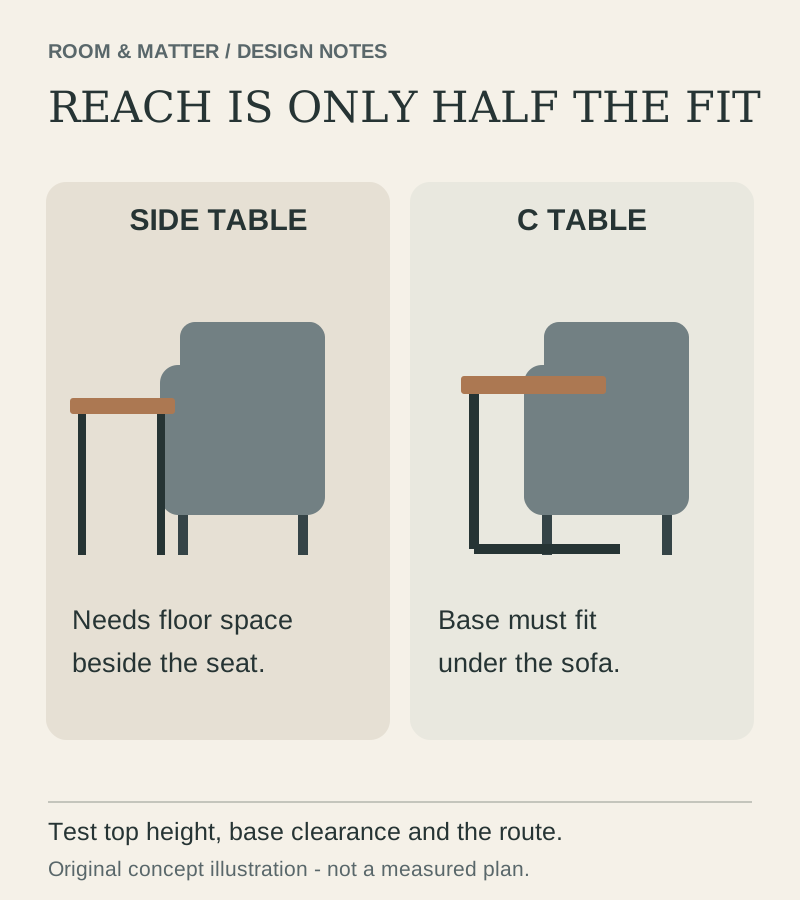
A small table can introduce the wood-and-metal relationship without requiring the room to accommodate another heavy central piece. The choice between a conventional side table and a C table is a question of fit. A side table needs floor space beside the sofa and a top you can reach comfortably. A C-shaped base can bring the top over the seat edge, but only if the lower frame clears the actual sofa base, rug and legs. The original illustration compares those relationships; it is not a measured drawing or a product recommendation. Check the top height with the seat compressed, the underside gap with the rug in place and the passing route with the table in its useful position. A shape that appears to slide neatly under furniture online can meet a deep plinth at home. If the model adjusts, check its stated adjustment range, stability and operating method. Do not treat a compact cantilevered surface as a seat or a support aid. A restrained frame that fits the room's routine will usually contribute more than an elaborate workshop-style mechanism chosen only for its appearance.