Measure Yellow by Surface Area, Not Swatch Brightness
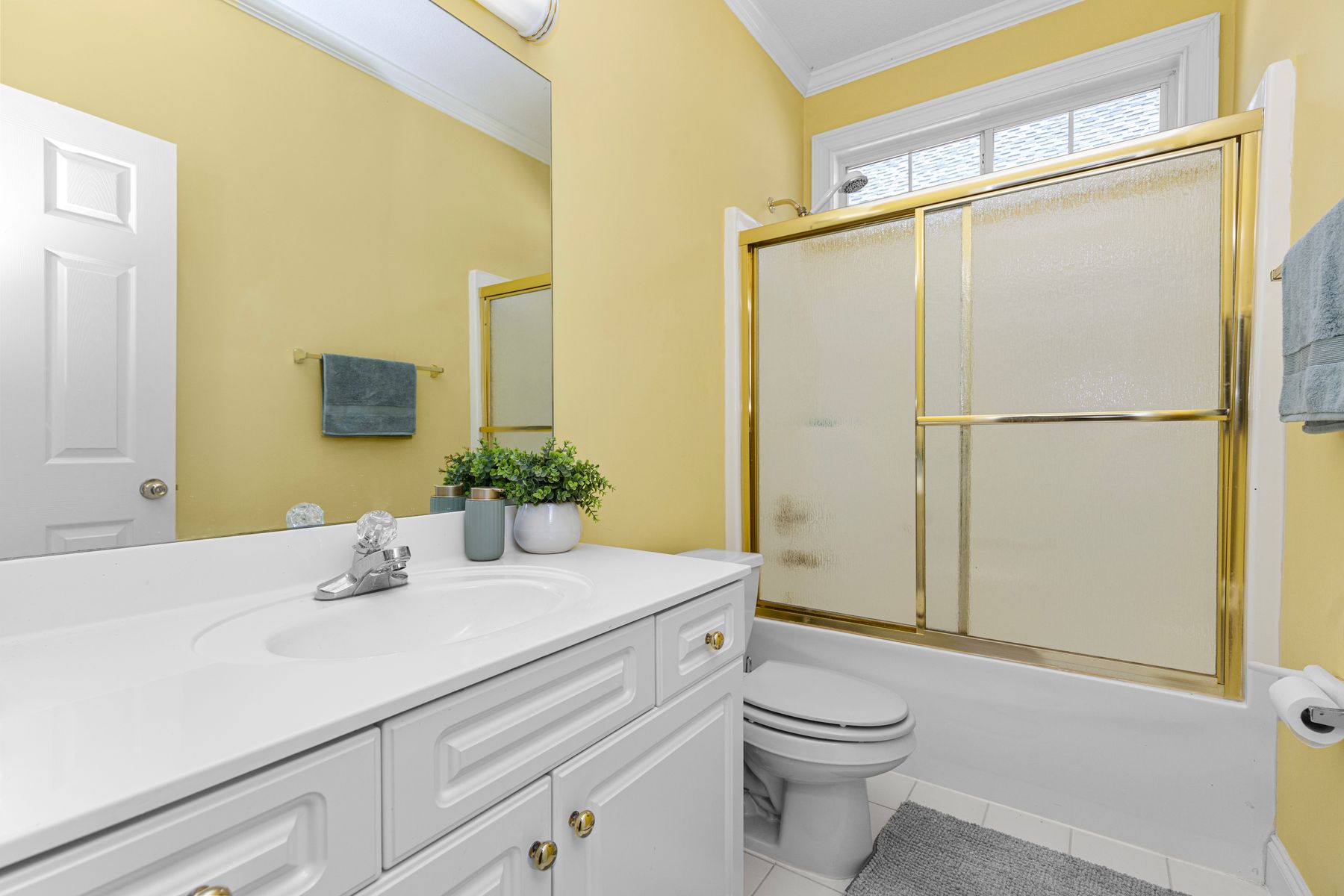
A yellow that feels pleasant on a small card can become intense across four walls or a full shower. Judge the hue together with the area it will occupy and the amount of daylight it receives. Pale butter can behave quietly across a larger field, while marigold may be more effective on a bounded plane or furniture piece. Dose is as important as undertone.
Choose Whether Yellow Acts as Neutral, Mineral or Focal Color
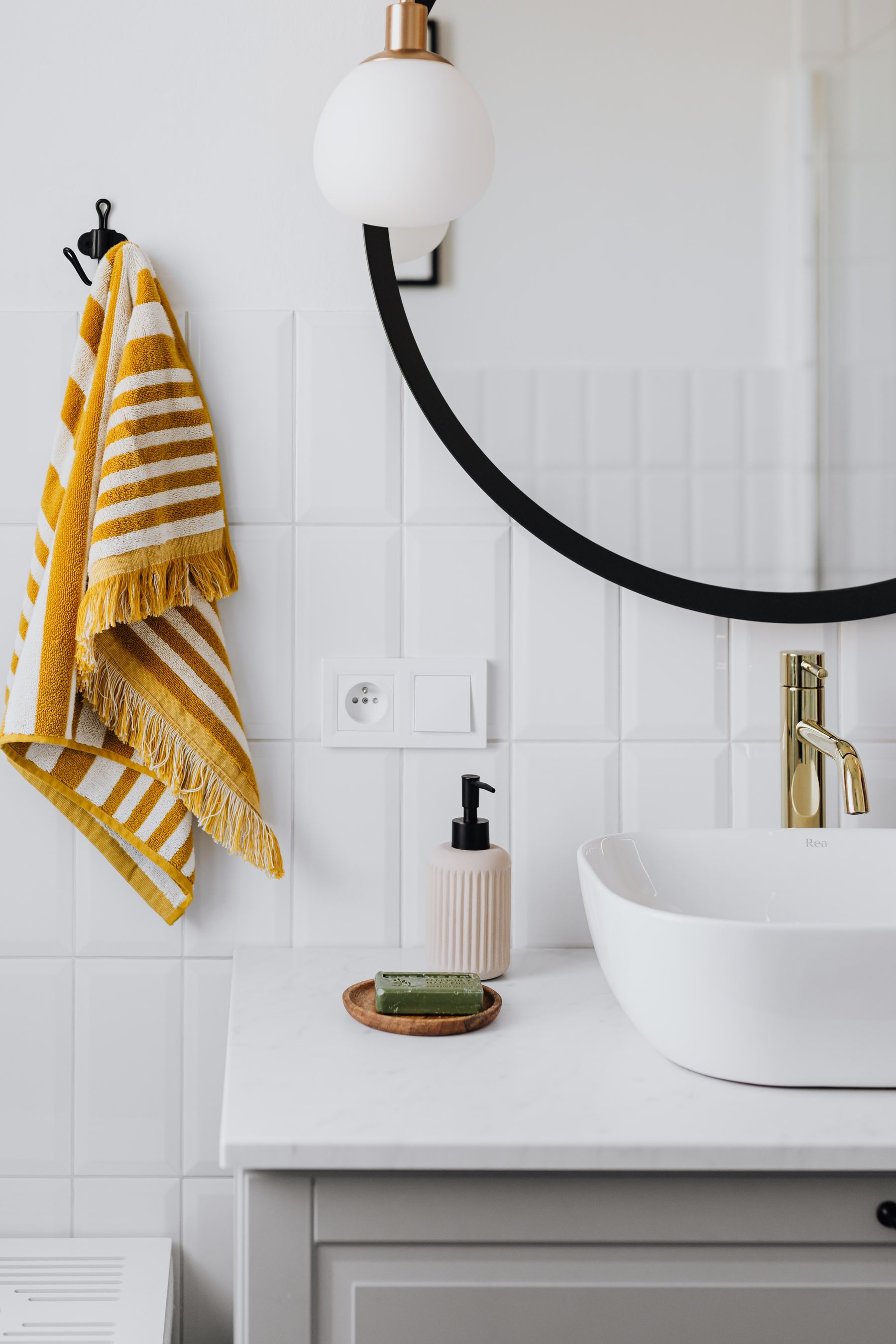
Buttercream and wheat can function like warm neutrals, ochre and mustard behave more like mineral earth colors, and clear yellow or marigold acts as a focal event. These are different jobs rather than steps on one ladder. Choose the category first, then adjust undertone within it.
Use Paint to Test the Dose Before Tile
Paint is useful not merely because it is lower commitment, but because it lets you experience yellow at real wall scale before specifying permanent tile or sanitaryware. Test a large field through several days and evenings, then decide whether the room needs the same amount of yellow in a harder, more reflective material.
Concentrate Strong Yellow Where the Room Can Carry It
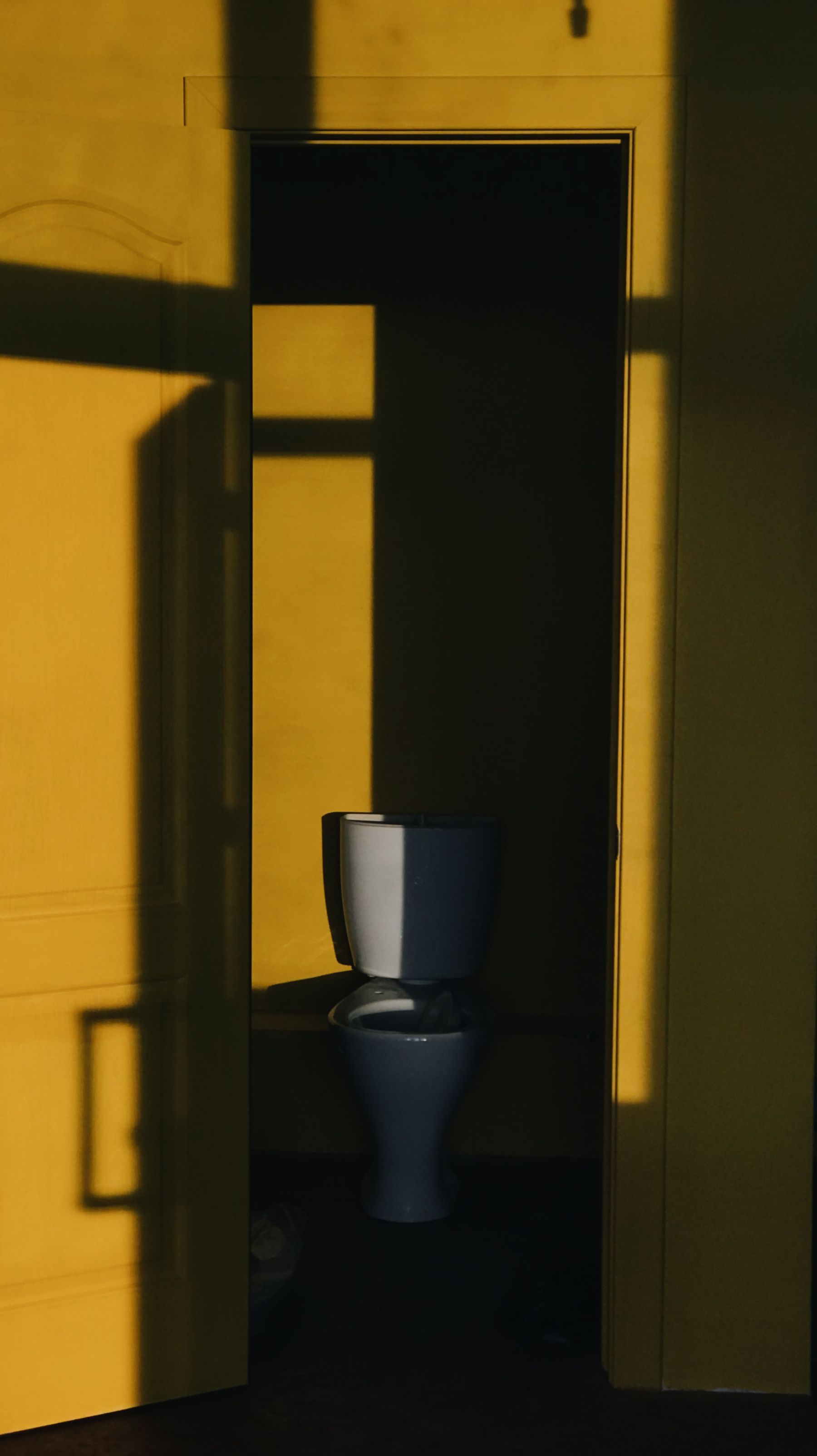
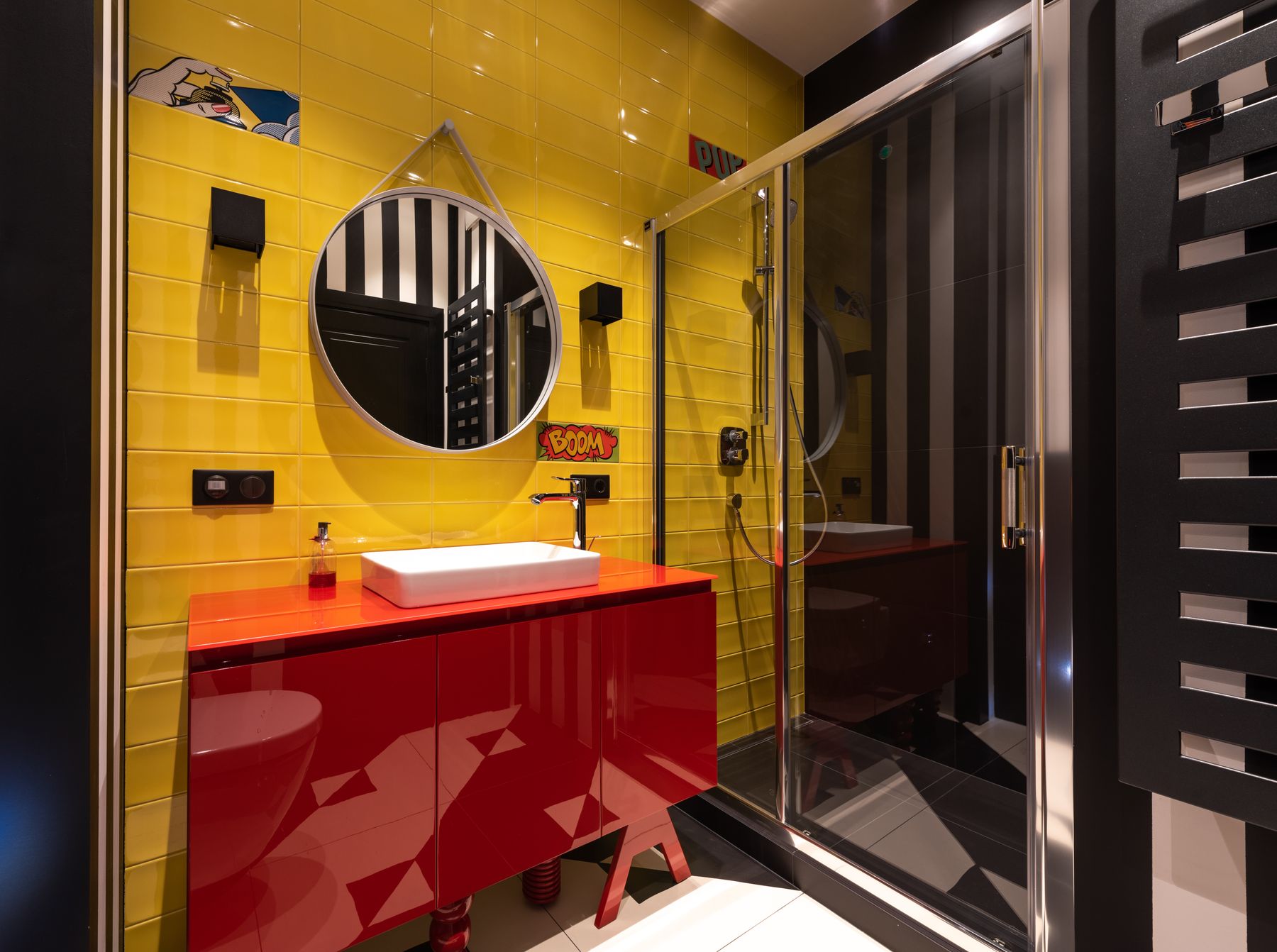
Saturated yellow tile is most convincing when the architecture gives it a clear stop: shower enclosure, backsplash, bath wall or one floor field. A bounded zone creates enough energy without asking every surface to compete. Let adjacent ceramic, stone or paint provide recovery for the eye.
Use Grout to Control the Energy of Yellow Tile
Low-contrast grout allows yellow tile to merge into a broader field, while dark or contrasting grout turns every joint into additional graphic energy. That difference is especially important with a high-chroma color. Decide whether the room needs a glowing surface or an explicit grid before treating grout as an installation detail.
Use Glaze to Break Saturation
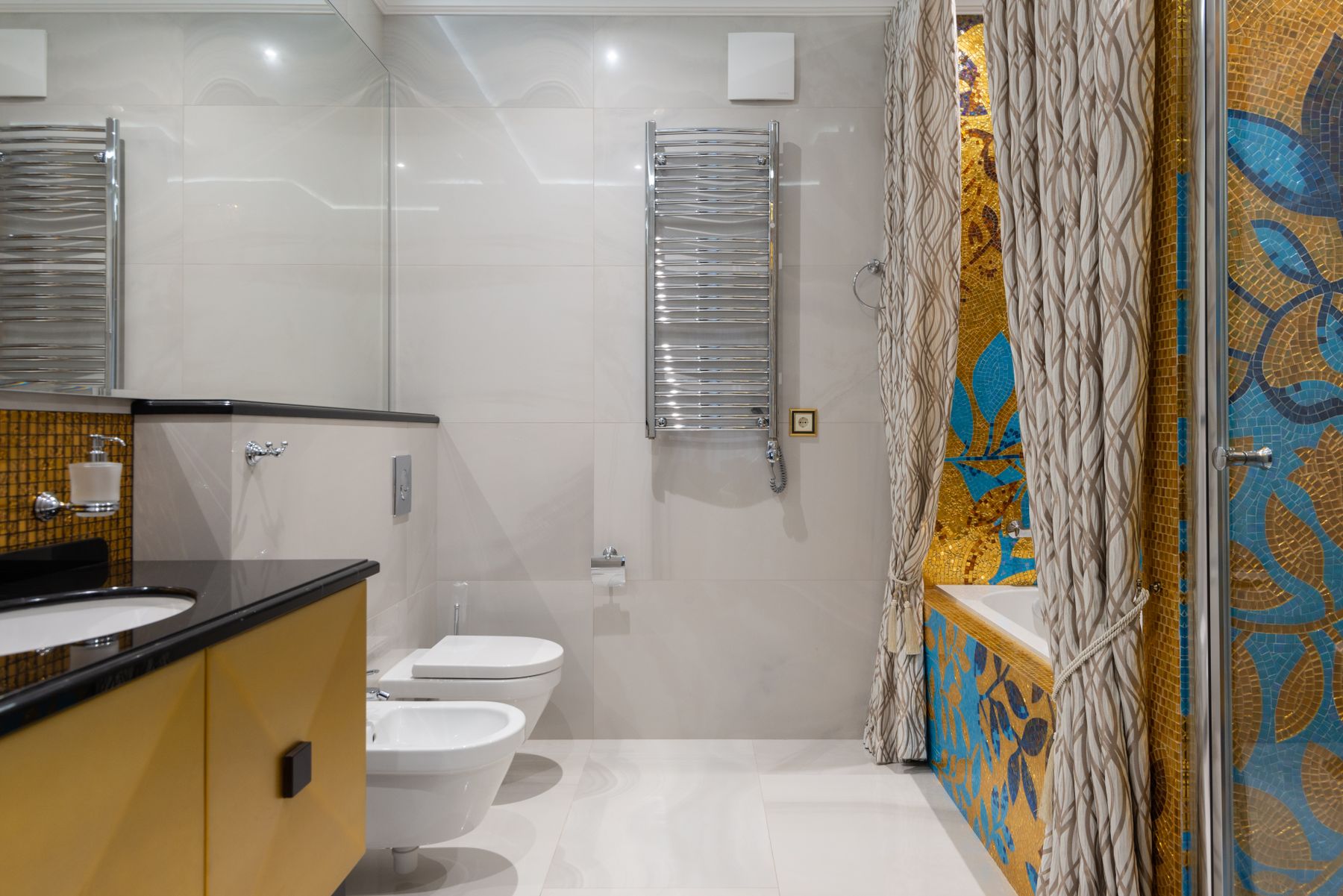
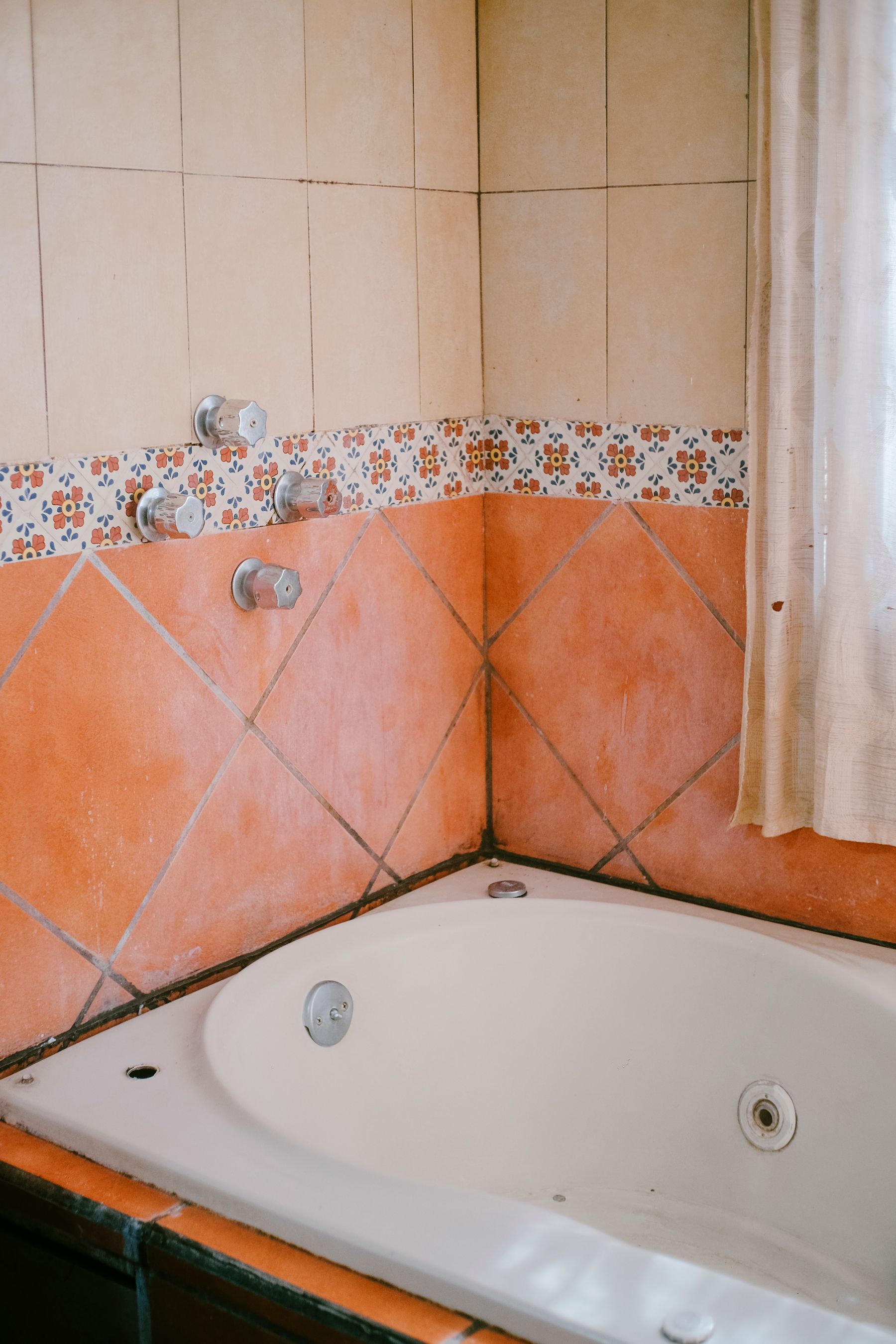
Handmade-looking or varied glaze can introduce lighter and deeper notes across a strong yellow field, reducing the sense of one flat saturated block. Let that surface variation provide complexity instead of adding a second pattern. In a smaller bathroom, a moving glaze can make a compact yellow zone feel richer without increasing the amount of color.
Use White Ceramic as a Stable Reference
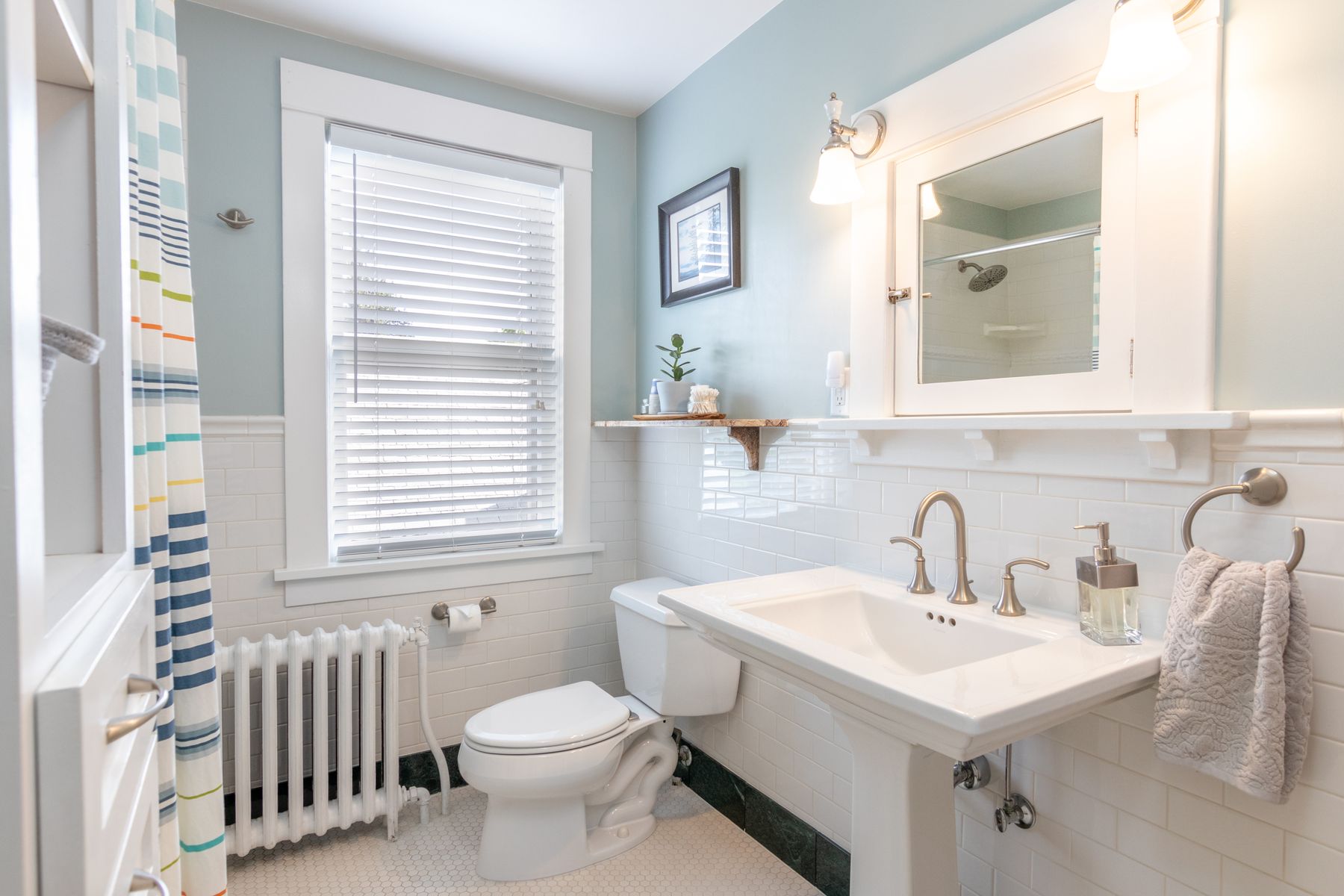
White basins, toilets and baths give yellow a consistent value reference. Warm white softens ochre and mustard; cooler white sharpens lemon and can expose green undertones. Compare ceramic, grout, tile and paint together because a yellow selected independently may make an off-white fixture look dull. The expanded [White Bathroom Ideas](/ideas/white-bathroom-ideas/) guide explains undertone and sheen in pale rooms.
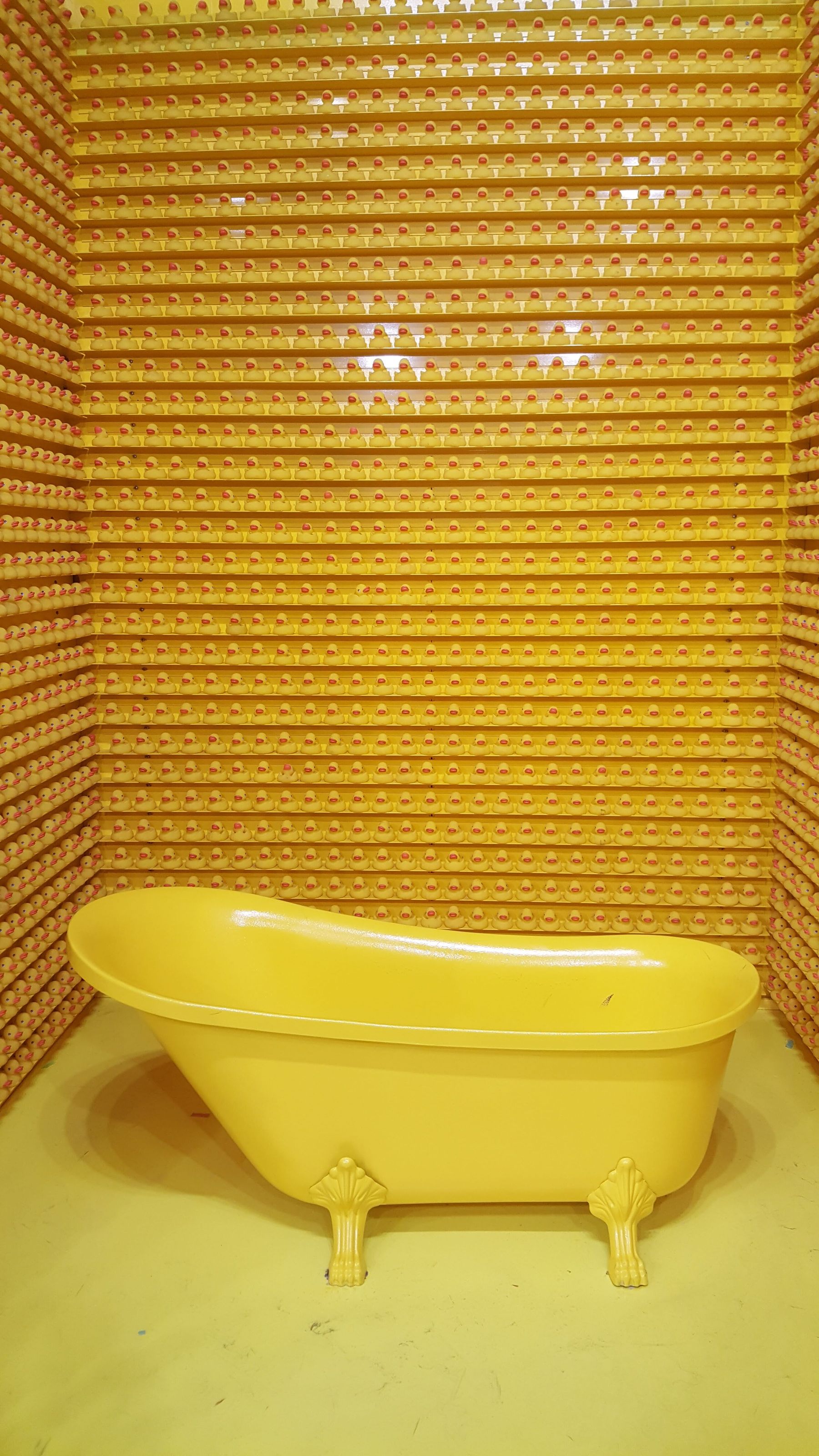
Use One Yellow Fixture as the Color Event
A yellow bath has enough silhouette and surface area to establish the entire palette. Frame it with quieter walls and floor, and resist repeating matching yellow towels, art and accessories simply to reinforce the idea. One confident fixture can feel more intentional than a room where every object participates.
Preserve Vintage Yellow Only When Condition Earns It
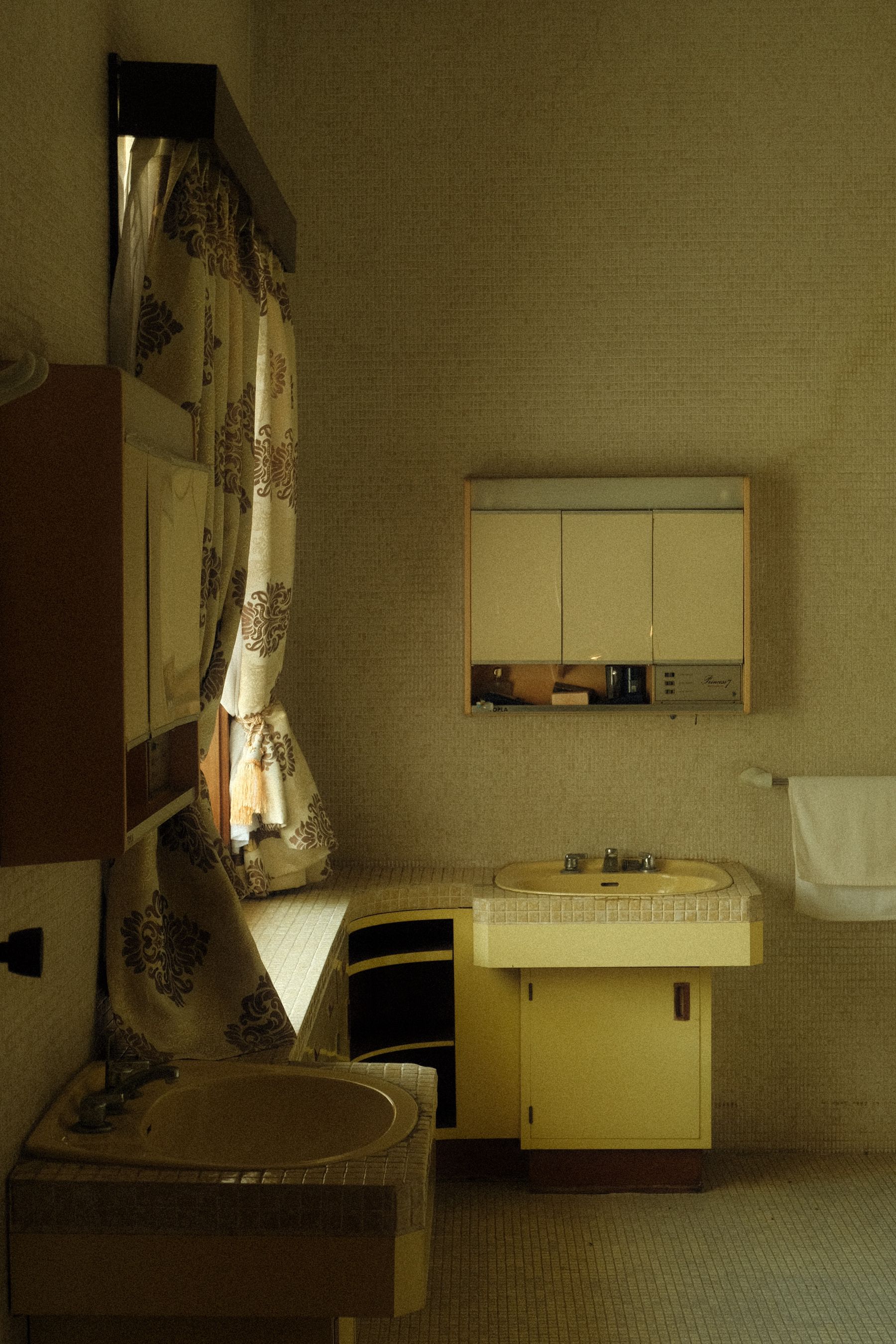
Existing yellow sanitaryware can provide authentic character, but age alone is not a reason to keep a damaged, inefficient or difficult-to-maintain fixture. Assess condition, compatibility, replacement parts and the surrounding plumbing first. If the piece performs well, build the palette around its exact yellow rather than trying to find several new surfaces that almost match it.
Keep Strong Yellow at Furniture Scale
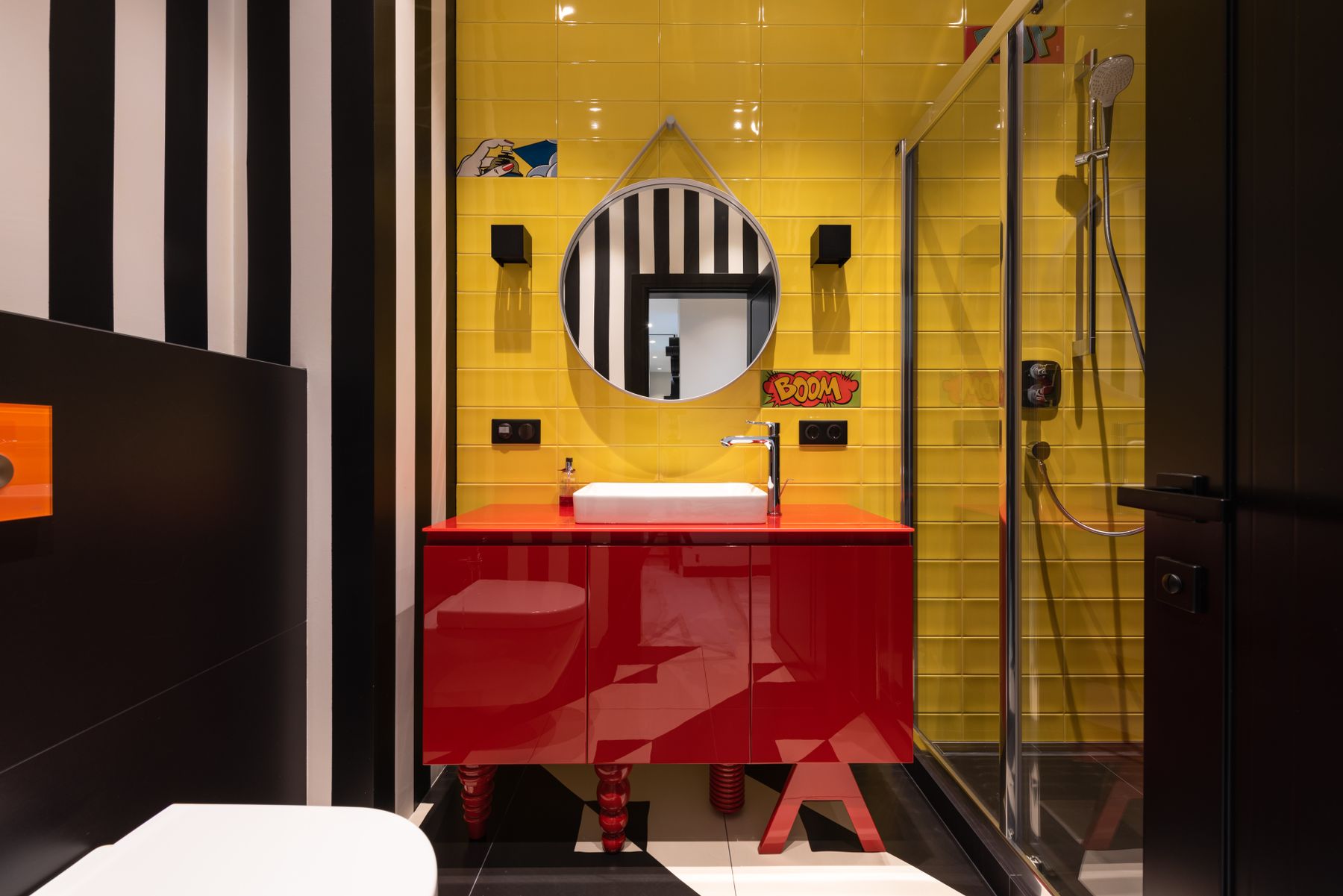
A vanity is a useful place for stronger yellow because it forms one bounded object outside the largest wet surfaces. Mustard, ochre or cleaner yellow can give the basin wall identity while white ceramic and quieter walls preserve balance. Let the vanity be the furniture-scale color statement instead of distributing many small yellow accents.
Keep the Shower Legible Around Saturated Yellow
Clear glass can preserve a yellow wall's continuity, but the enclosure still needs safe support, splash control and cleaning access. Keep controls, niches, thresholds and handles visible against tonal surfaces, especially under low evening light. Frameless is not automatically better when water escape or grip is compromised. [Walk-In Shower Ideas](/ideas/walk-in-shower-ideas/) covers drainage, openings and screen planning.
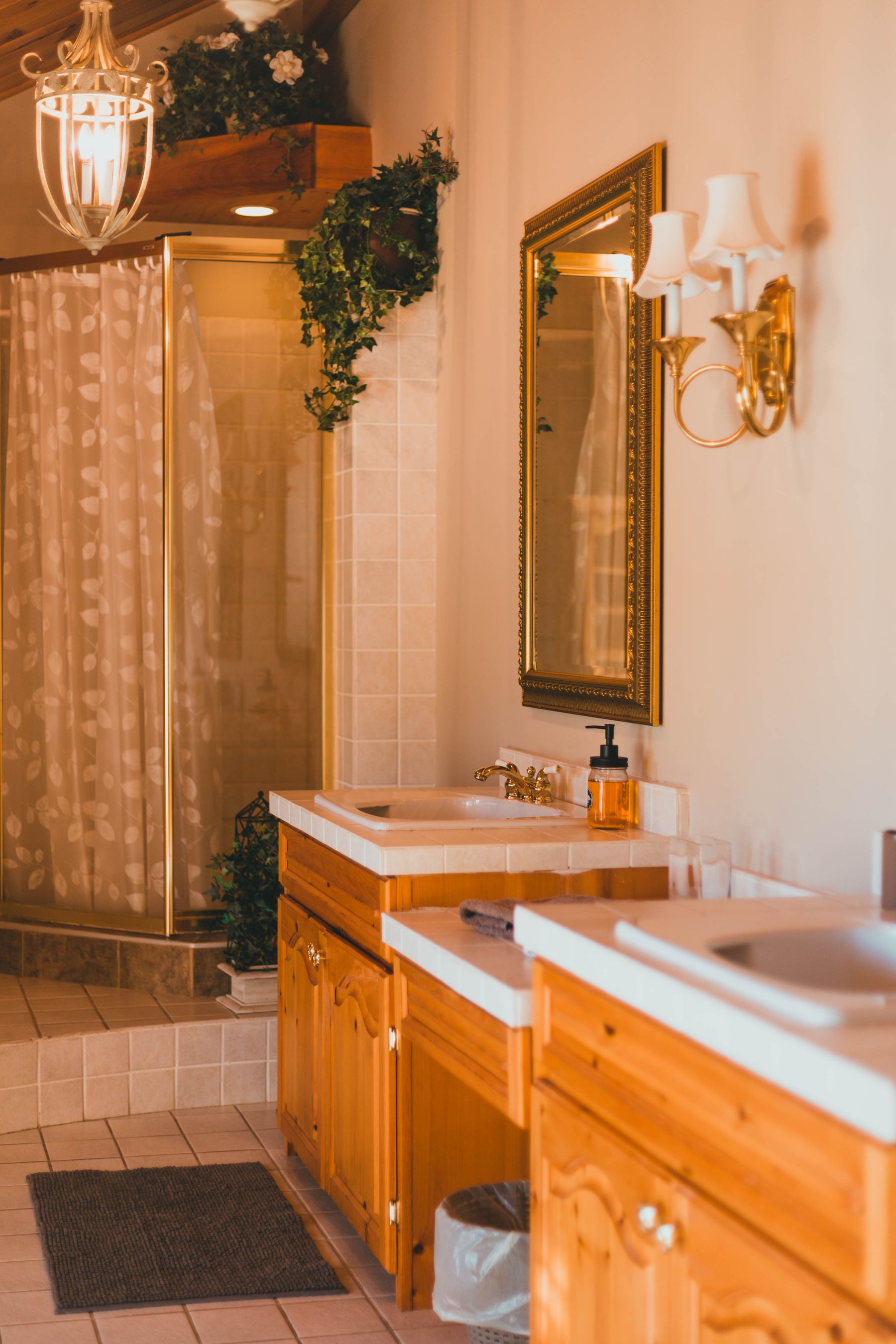
Add Timber at Meaningful Scale
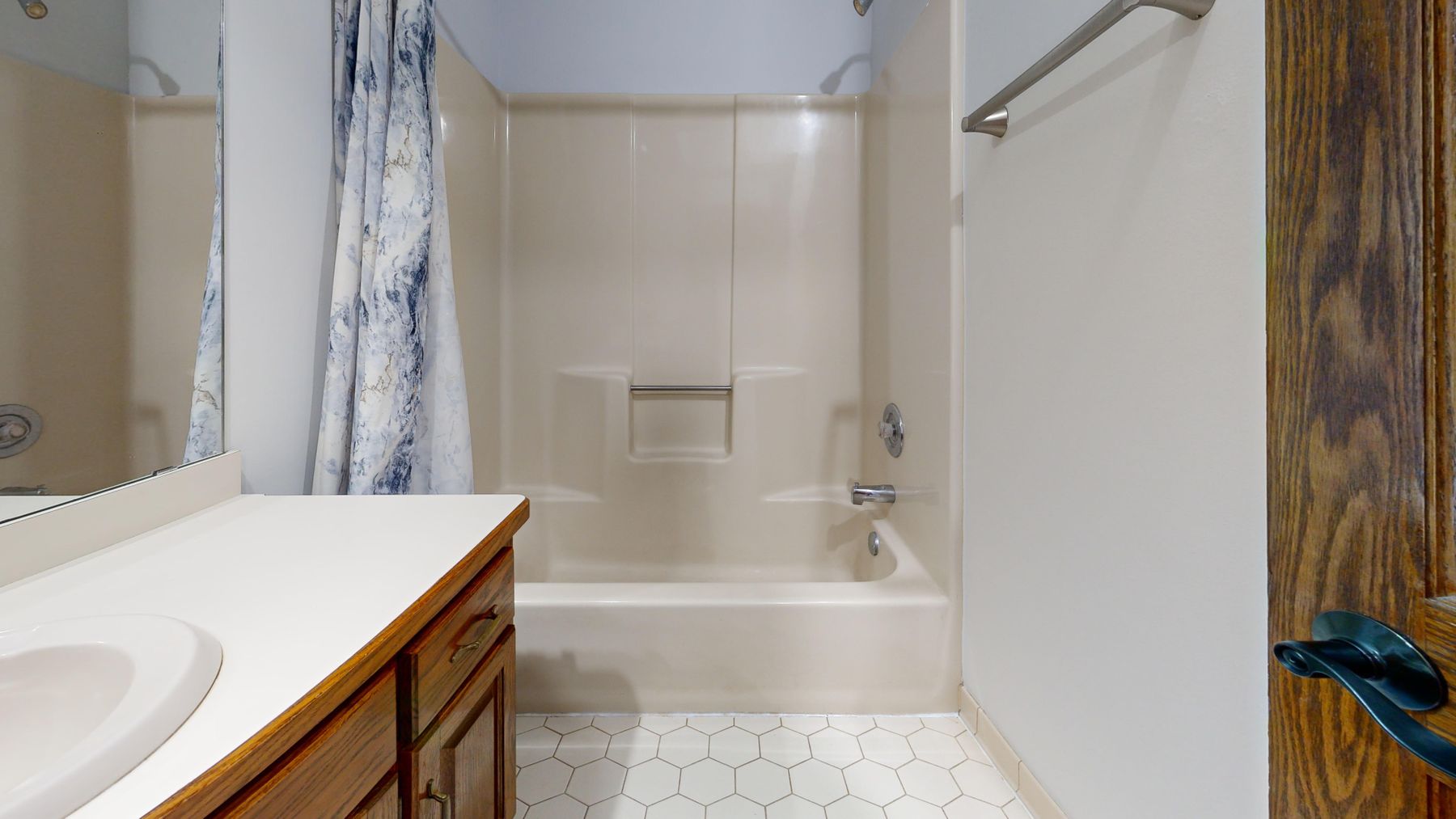
Oak, walnut and other warm timbers connect butter, ochre and mustard to skin tones and textiles. Use wood as a vanity, tall cabinet, mirror or ceiling rather than scattering small accessories. Confirm that the species, coating, edge treatment and ventilation suit humidity. [Warm Wood Bathroom Ideas](/ideas/warm-wood-bathroom-ideas/) covers moisture-conscious placement and material balance in greater depth.
Pair Yellow With Stone Instead of More Pattern
Limestone, travertine, pale marble and mineral-look porcelain can quiet yellow through texture and veining rather than another decorative motif. Decide whether stone or yellow carries the dominant movement, then keep the other comparatively calm. Porosity, sealing and suitability vary by material and location. Review the actual slab, tile batch or porcelain repeat before cutting around mirrors, basins and niches.

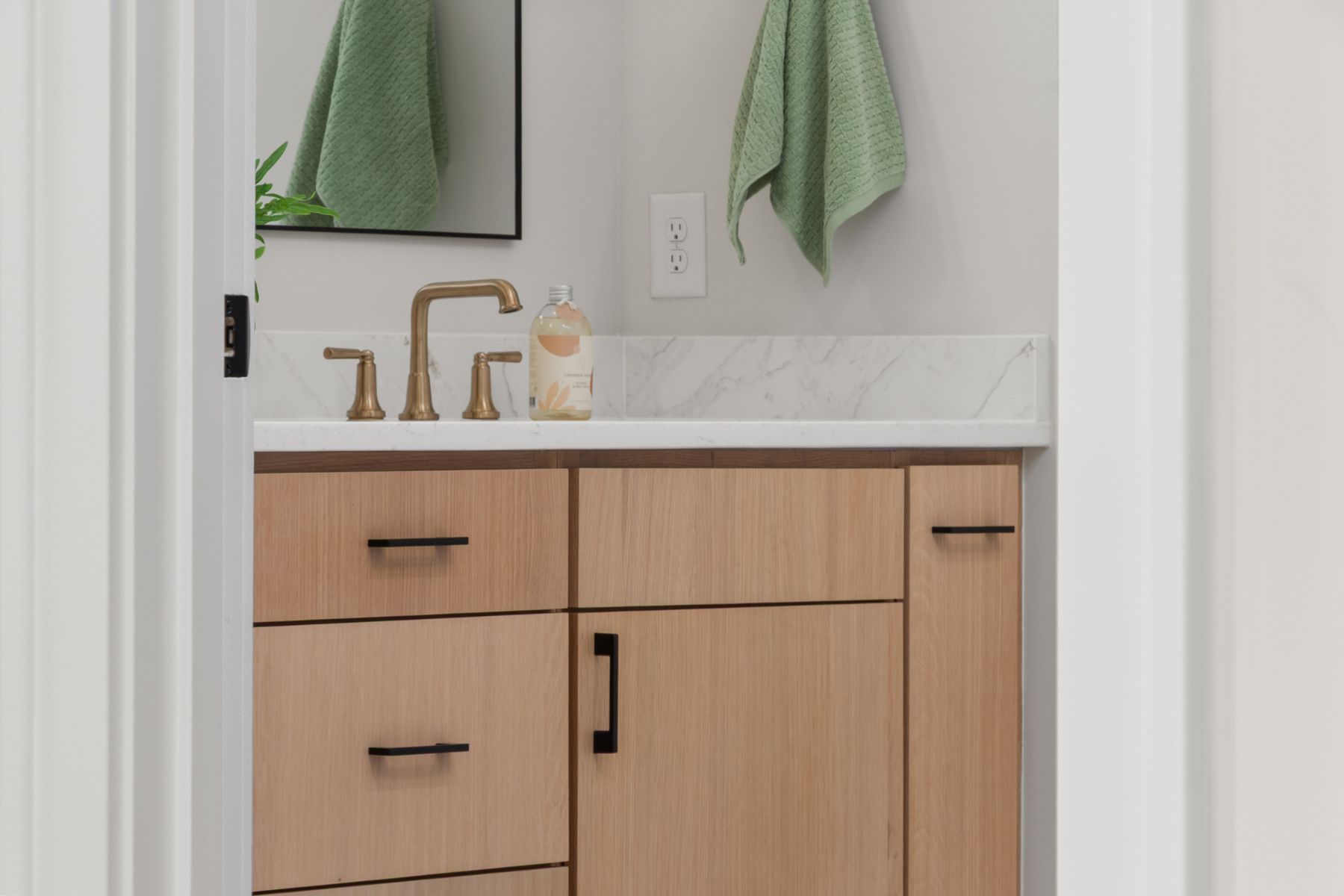
Use Metal to Cool, Warm or Neutralize Yellow
Warm brass can reinforce ochre and mustard, sometimes pushing them toward a richer earth palette; chrome or nickel can cool and sharpen clear yellow; black can give stronger definition. Choose the metal for what it does to the yellow rather than according to a trend or default warm-metal pairing.
Use Black as Definition, Not a Second Theme
A small amount of black can clarify mirror frames, controls or the boundary of a bright yellow zone. Repeating black around every fitting creates a second graphic theme and can make the room feel more aggressive than intended. Use dark contrast only where it improves an edge or functional point.
Separate Mustard and Terracotta Into Distinct Zones
Mustard and terracotta share warmth, so mixing them everywhere can turn the room into one undifferentiated orange-brown field. Give each a separate role—mustard vanity with terracotta floor, for example—and preserve a neutral surface between them where possible. Separation lets the relationship feel earthy instead of muddy.
Use One Cool Counterpoint to Control the Heat
A small field of blue, green or blue-grey can make yellow feel clearer and less relentless, but the counterpoint should have one job and one boundary. Avoid introducing both blue and green plus several warm materials simply because they all contrast well. One cool note is usually enough to rebalance a warm yellow room.
Protect Yellow From Orange Evening Light
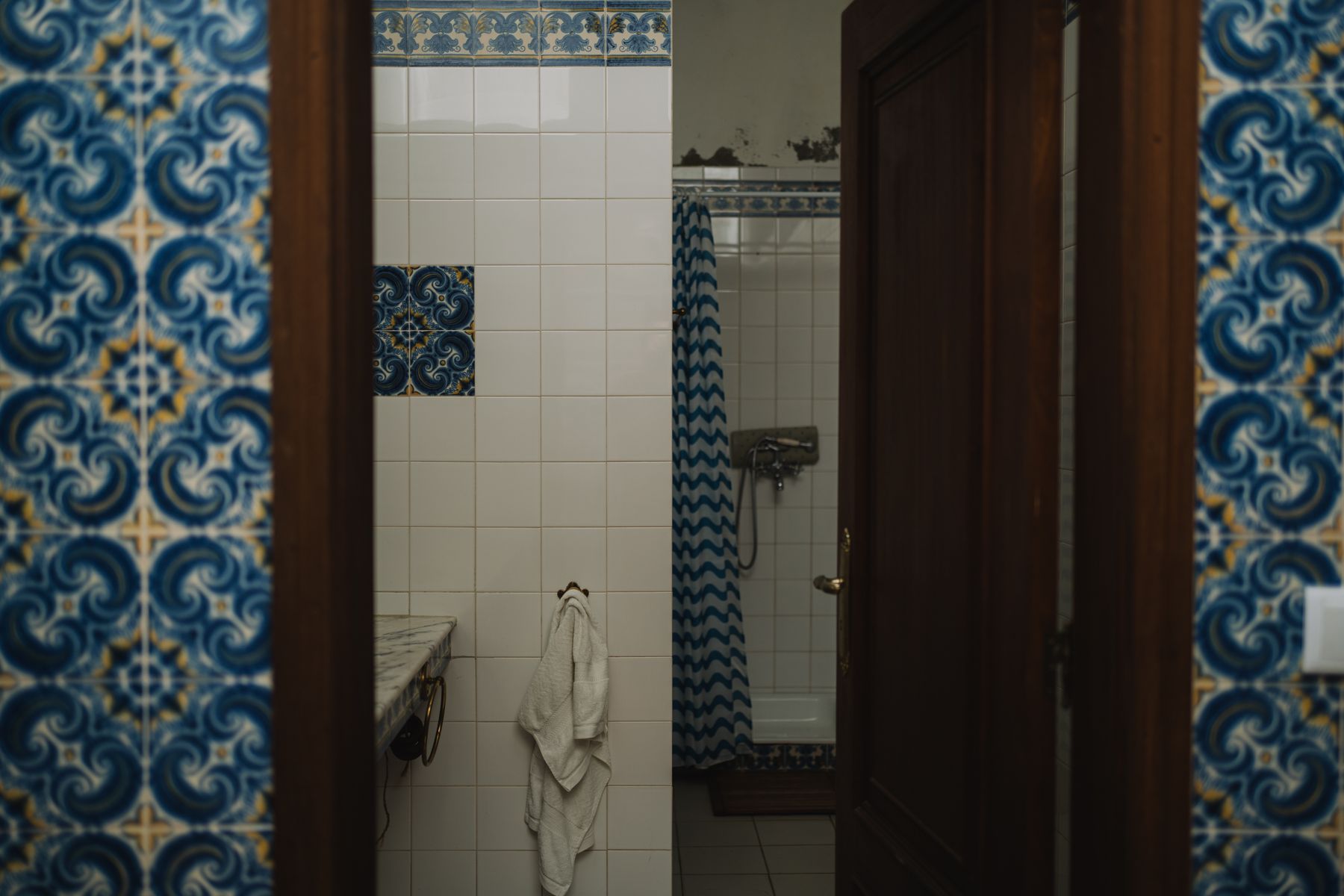
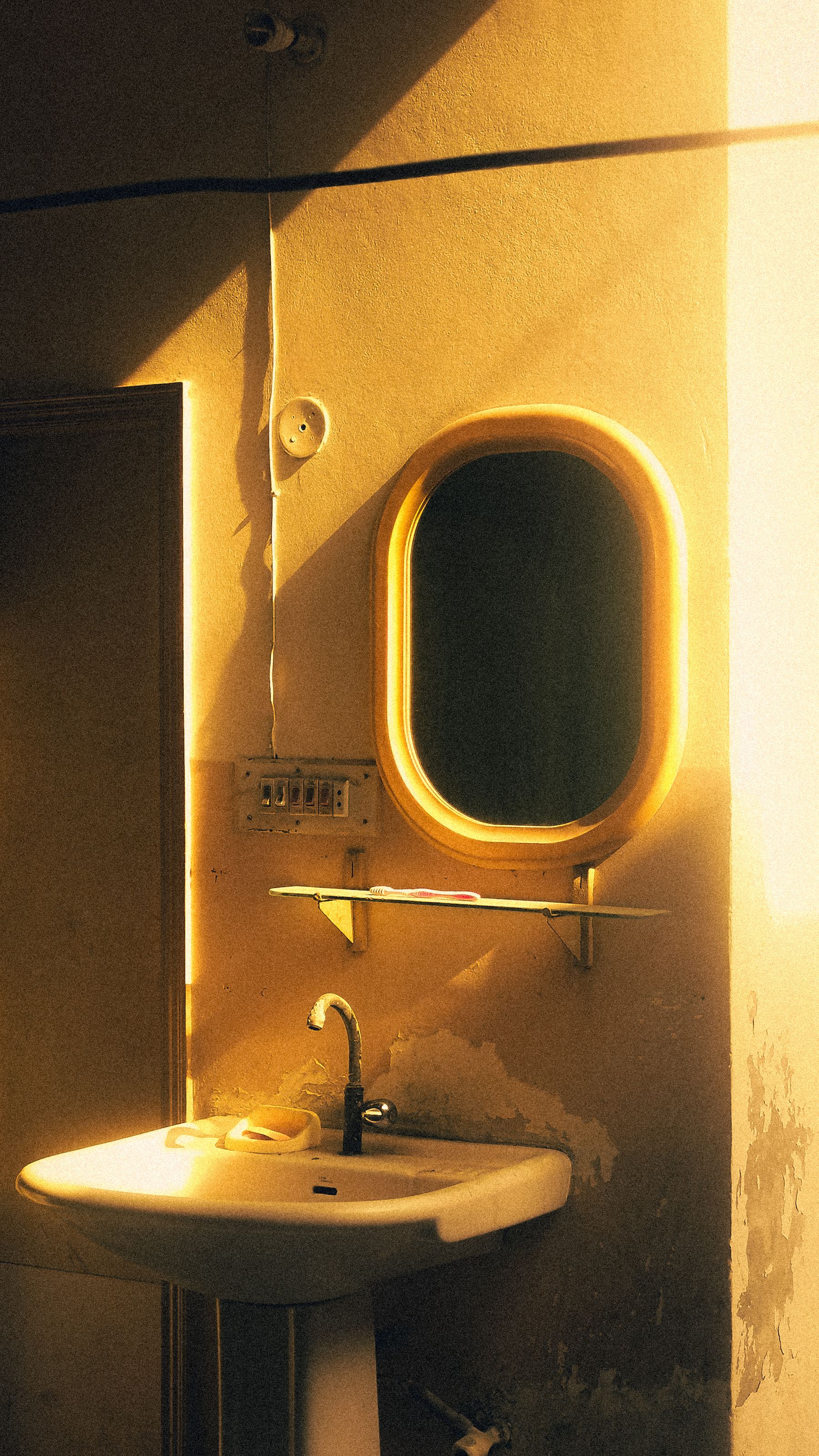
Very warm lamps can push butter, ochre and mustard toward orange and can distort the balance between wall color, skin tone and ceramic. Use accurate mirror lighting for faces, then let warmer ambient light create atmosphere separately if desired. Judge the yellow under every lighting scene rather than choosing it only in daylight.
Let a Small Bathroom Commit to Yellow
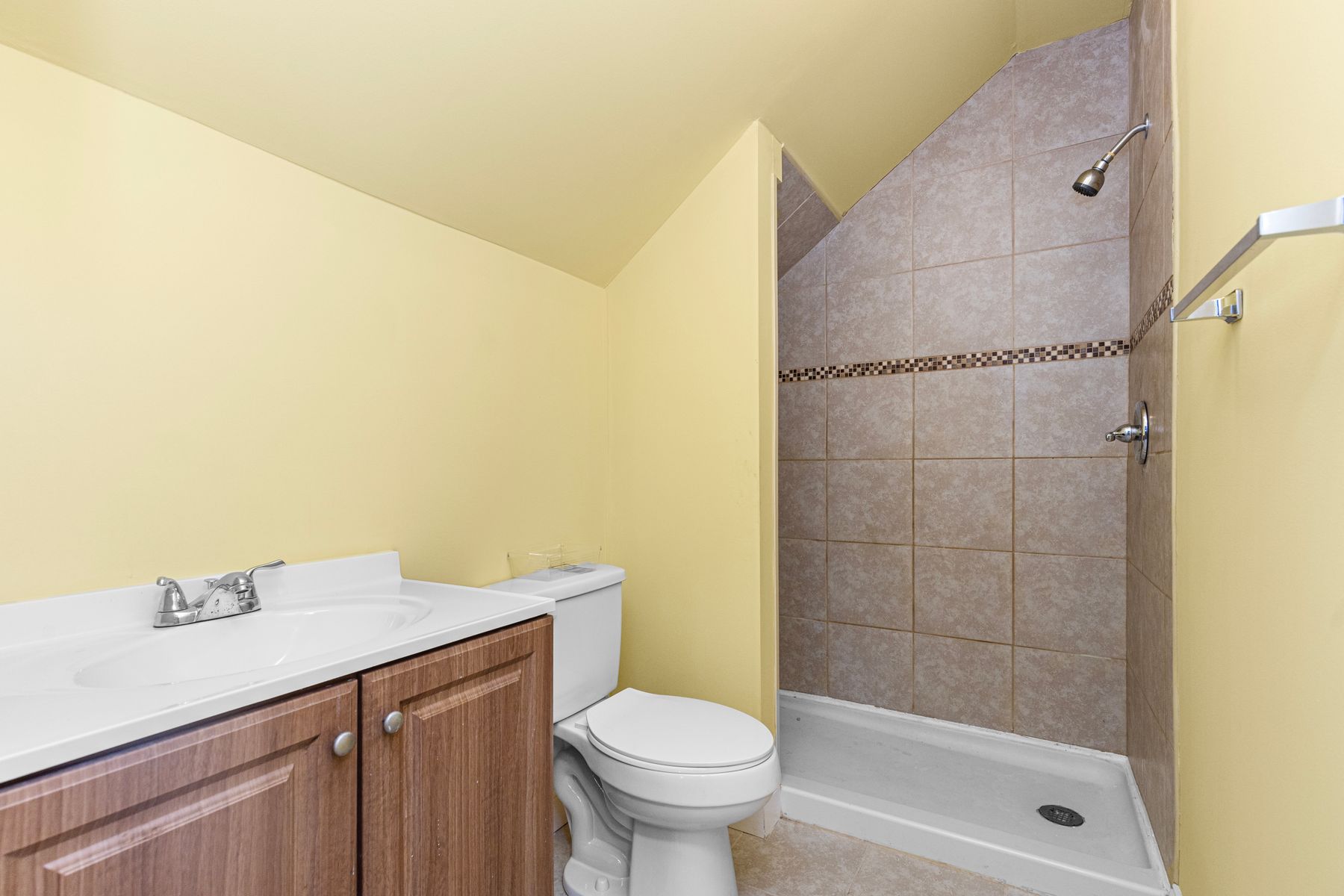
A compact bathroom can handle yellow when circulation, storage and controls remain clear. Use a pale tonal envelope for continuity or concentrate stronger yellow on the vanity or one wall; do not rely on white alone to make the room feel larger. Protect door swings, shower access and counter function first. [Small Bathroom Ideas](/ideas/small-bathroom-ideas/) provides the fuller layout framework.
Give Windowless Yellow Accurate Light
Without daylight, artificial light becomes the only color reference. Use good color rendering at the mirror and enough neutral task light to keep yellow, grout and white ceramic distinguishable before adding warmer ambience. A windowless yellow room should be designed around lighting accuracy first and mood second.
Keep Utility Functions From Diluting the Yellow Focal Point
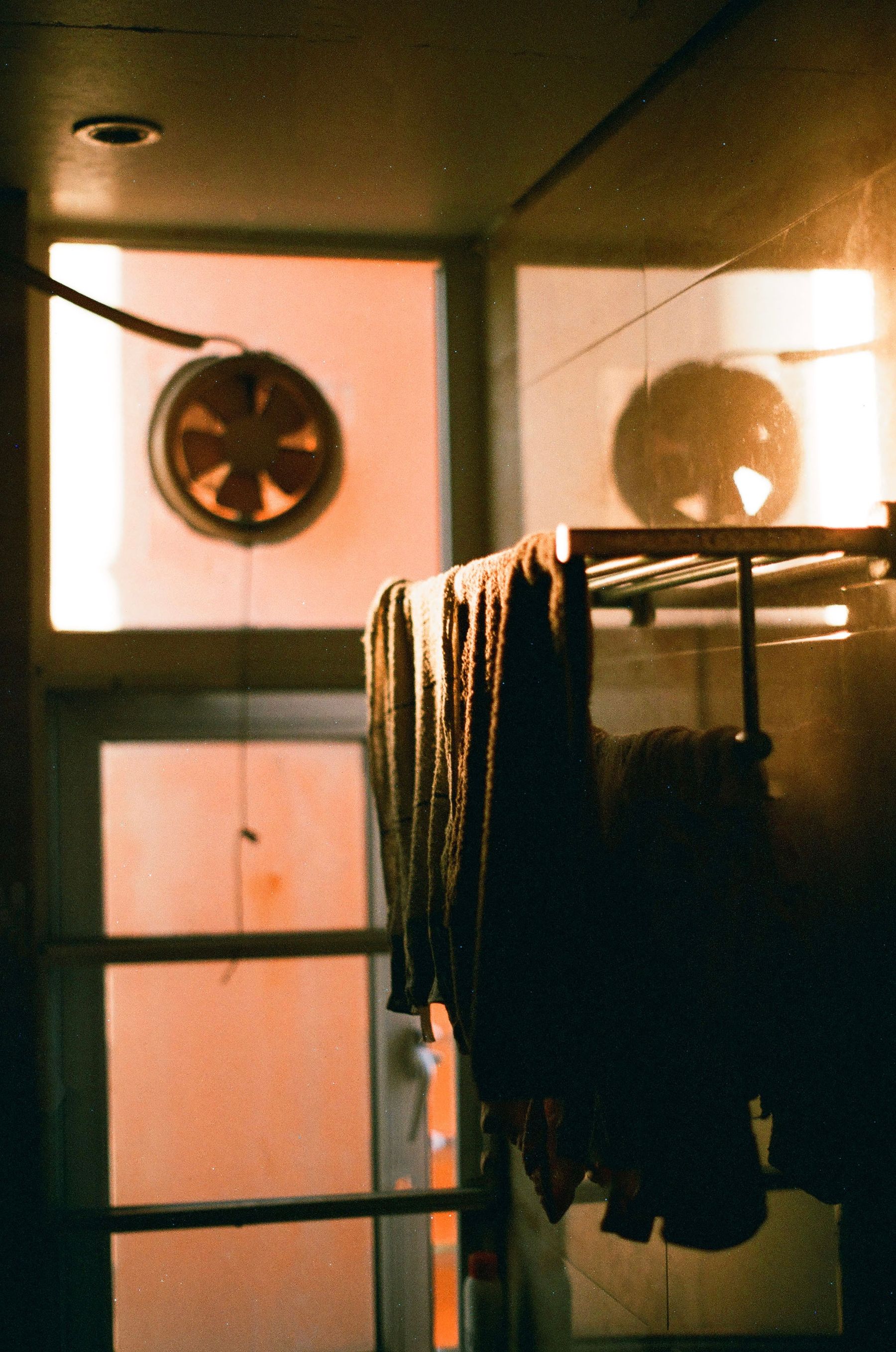
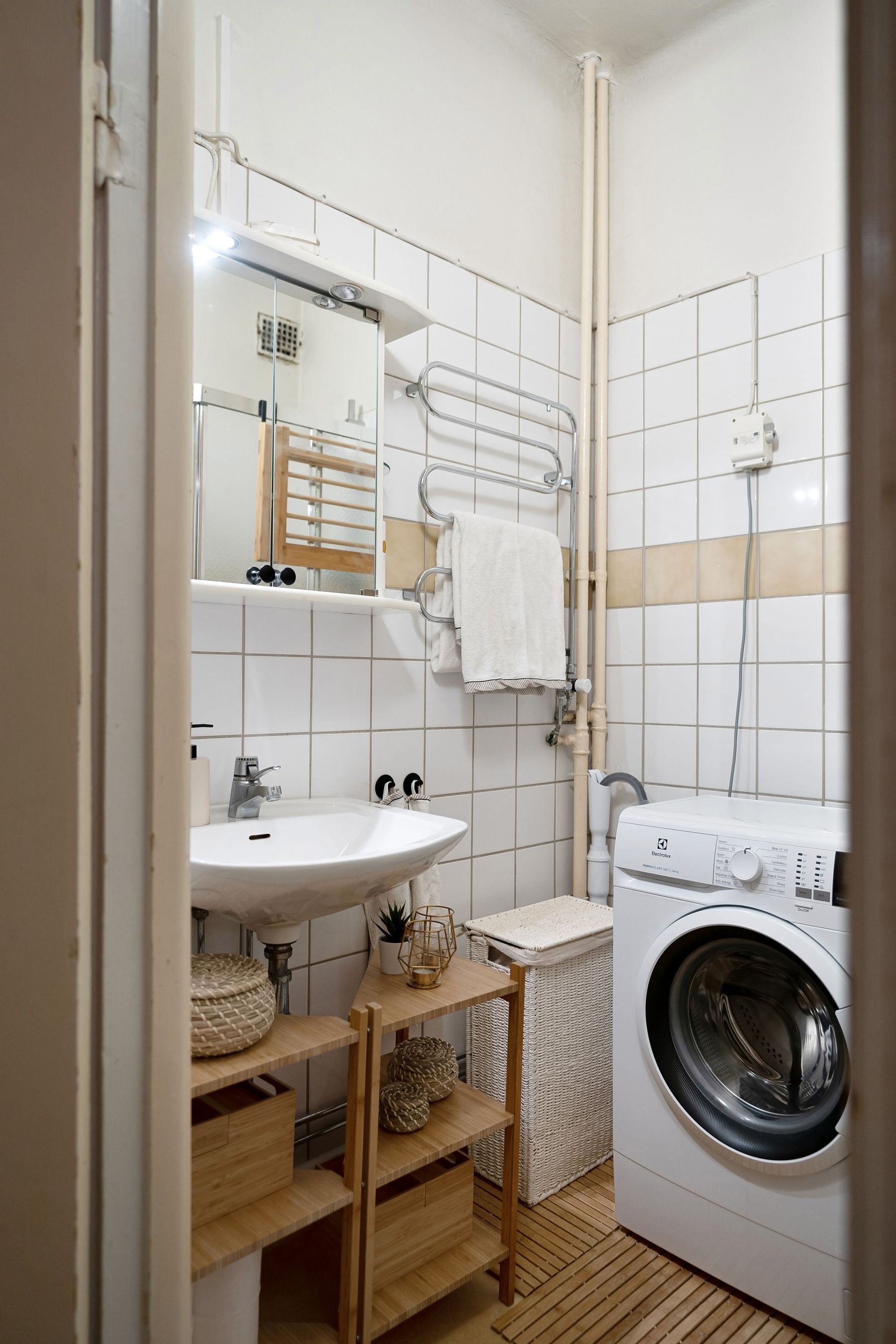
When a washer shares the bathroom, give detergent, hampers and folded linens defined storage before refining the yellow surfaces. A machine can sit within pale cabinetry or under a counter so the room still reads as a bathroom rather than an appliance alcove. Preserve service access, ventilation and clear routes. Yellow should organize the envelope, not disguise unresolved utility requirements.
Protect Yellow's Energy With Quieter Storage
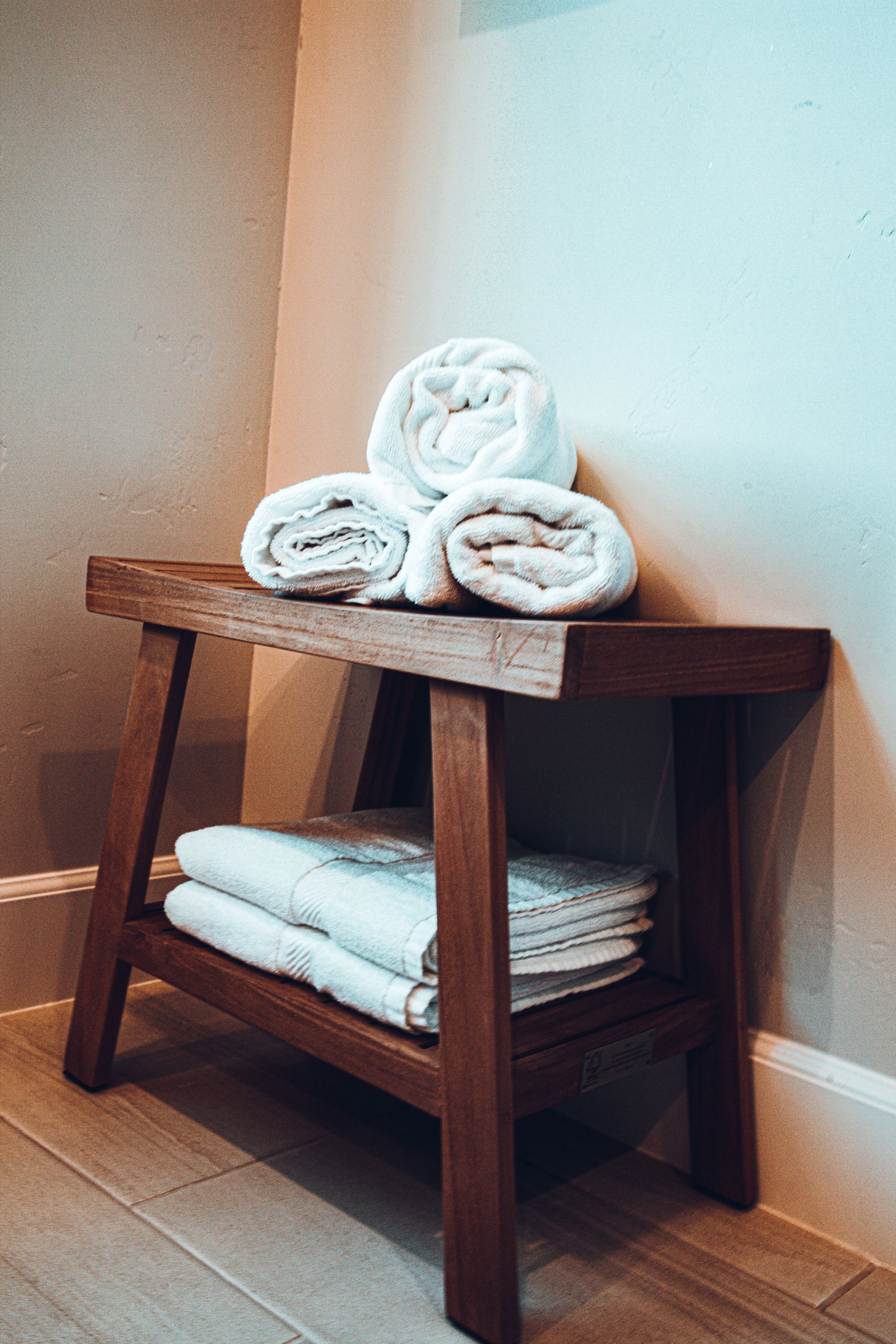
Bright packaging and cleaning bottles can compete with a clear yellow wall. Give daily items shallow storage near the basin and shower, keep backups elsewhere and combine open shelving with closed cabinetry according to the routine. Do not hide everything if that slows daily use. [Bathroom Storage Ideas](/ideas/bathroom-storage-ideas/) provides useful category, reach and capacity tests.
Make Functional Edges Clear Against Yellow
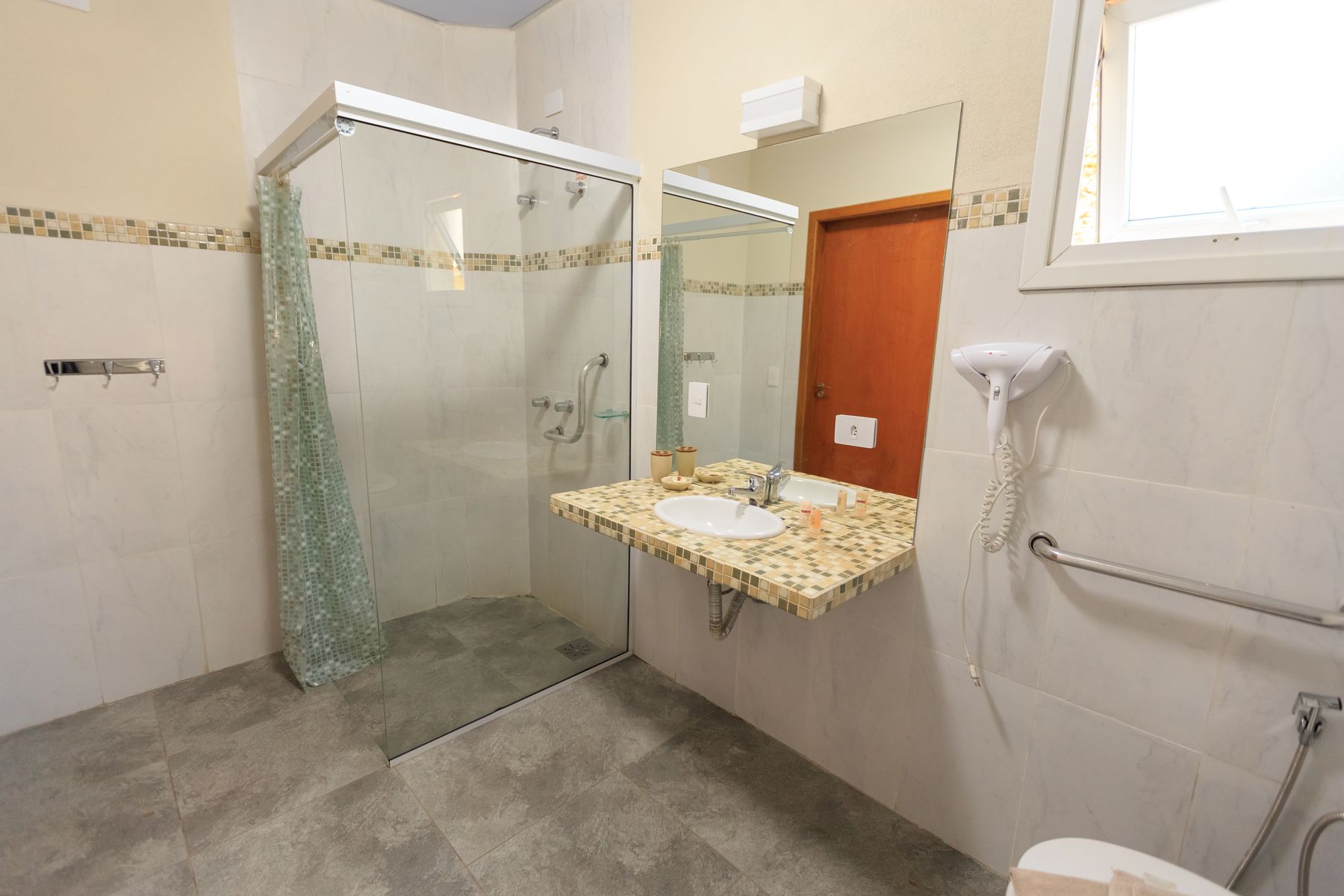
A tonal yellow scheme can hide a shower step, control or support rail when values are too similar. Use ceramic, metal, grout, directed light or a controlled color shift to distinguish important elements. Grab bars and seats require proper placement and anchoring for the user. [Aging-in-Place Bathroom Ideas](/ideas/aging-in-place-bathroom-ideas/) offers a fuller movement and reach framework.
Do Not Let Yellow Override Floor Performance
A yellow or ochre floor can ground pale walls, but grip, drainage, joint density and cleaning decide whether it succeeds. Gloss that looks luminous on a wall may be unsuitable under wet feet; heavy texture can hold residue. Test the exact product and assembly rather than its color chip. [Bathroom Flooring Ideas](/ideas/bathroom-flooring-ideas/) compares performance before decoration.
Preserve Clean Daylight Around Yellow
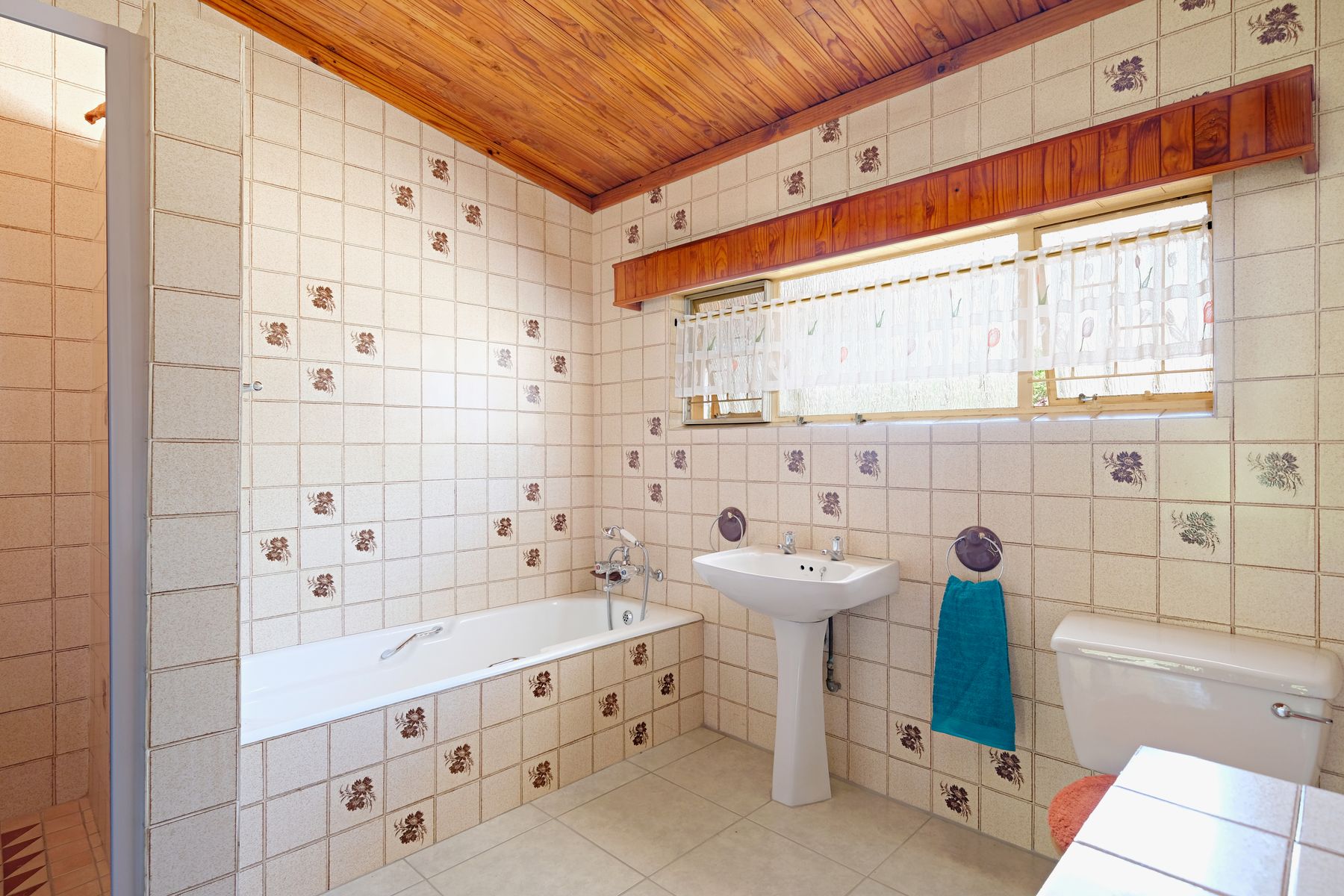
Yellow benefits from daylight, so solve privacy without automatically covering the window. Obscure glass, high glazing, shutters, blinds and exterior screening provide different balances of view, humidity resistance and maintenance. Check nighttime visibility from outside because bright interior light can silhouette a user. Keep tall storage away from the strongest daylight where the plan allows.
Keep Humidity From Aging Yellow Surfaces Early
Condensation, mildew and failing sealant disrupt a clean color field quickly. Choose paint, grout and sealant suited to their exposure, but do not expect a coating to replace extraction, make-up air and heat. Avoid inaccessible ledges that remain damp. Fan sizing, ducting and electrical work should respond to the actual room and local requirements, not to a generic color scheme.
Test Whether Yellow Finishes Forgive Daily Marks
Glossy saturated yellow may show mineral spots sharply, while pale or varied glaze can hide soap film until sheen changes. Let local water dry on tile, grout, glass and metal samples, then clean them with approved products. Confirm that matching sealant is available and replaceable. The most attractive yellow surface is a poor choice when joints or relief cannot be reached in the real room.
Use One Yellow Move to Reset an Existing Room
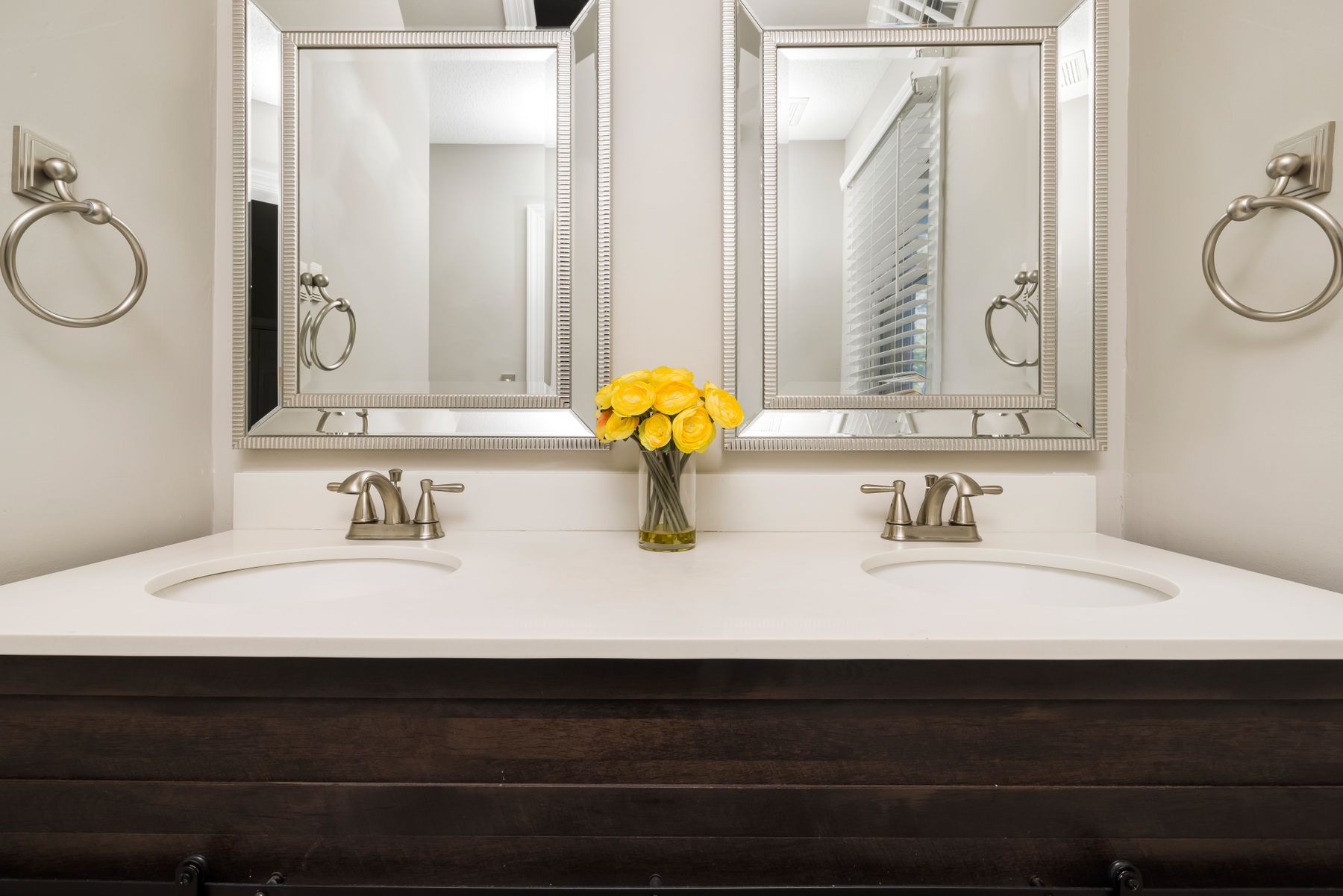
A technically sound neutral bathroom may need only a painted vanity, yellow upper wall, renewed grout, improved textiles and better mirror light. Flowers or towels can test the direction, but keep the permanent intervention large enough to feel intentional. Separate cosmetic work from waterproofing, plumbing and electrical problems. [Bathroom Remodel Ideas](/ideas/bathroom-remodel-ideas/) helps define scope before replacing useful materials.