First Decide: Doorstep, Gathering or Private Spooky Evening?
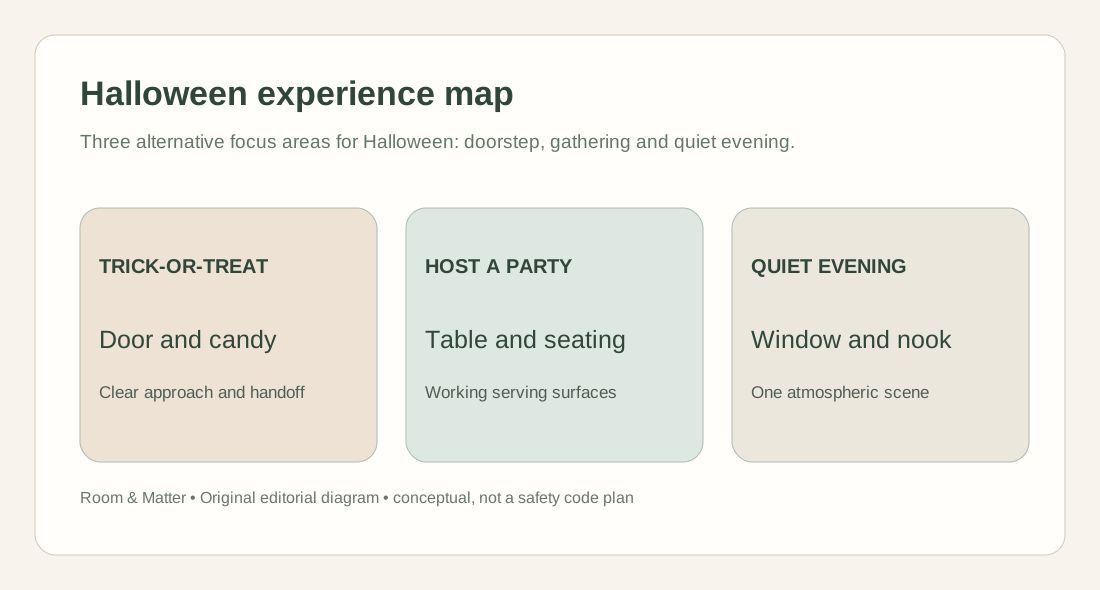
Halloween looks different depending on who will experience it. A household welcoming trick-or-treaters needs a visible, safe doorstep, clear approach and a convenient way to hand over treats. A Halloween gathering needs seating, a working table and a decorative focal point that can stand up to people moving around it. Someone celebrating quietly at home may need only a strong window silhouette or one eerie display in the room used after dark. Write down the actual plan before building a collection of bats, skeletons and pumpkins. Decor that supports one occasion can create problems for another: a dramatic floor display may block the front door, a table packed with props can prevent guests eating, and an elaborate hallway installation may be invisible to the people seated in the living room. The value of a whole-home Halloween guide lies in organizing the route and event, not in copying one decoration into every room. Decide where visitors stop, where they move, which doors need to open, and what stays dark versus illuminated. Let those decisions determine the visual intensity.

Make the Porch Spooky Without Making It Hard to Enter
A porch can carry the strongest seasonal message because people see it while approaching the house. Large pumpkins, a modest spider silhouette or a concentrated group of autumn flowers can give the doorstep theatrical character without filling every step. Start with the routes: the door must open fully, the address and entrance should remain legible, and guests need secure footing. Children or visitors may approach in costumes with restricted peripheral vision, and nighttime conditions can hide uneven ground. Keep cords, loose fabric, lightweight props and low objects away from walking surfaces. Test any outdoor light or hanging object for suitability in wind and rain, rather than assuming an indoor product will survive outside. The source photograph shows a real residential porch with pumpkins and Halloween references, not a universally safe layout blueprint. Design one readable focal area, then leave negative space around the approach. In a shared apartment entrance, rules and neighbors may limit what can be attached or displayed; a small removable cue can be more appropriate than an ambitious transformation.
Use the Doorbell Moment as a Design Test
A treat station is not a still life when the doorbell starts ringing. The person answering needs to reach candy, control the door, see the visitor and close the entrance without lifting a tray of decorations first. Give the treats a defined portable container that can be held or placed on a stable surface away from the main door swing. Do not leave food where weather, pets or unsupervised access create hygiene concerns. A single thematic accent beside the container can make the exchange feel festive; a crowded skull-and-candy tableau may be easier to photograph than to use. If the household does not participate in trick-or-treating, this part of the brief can be omitted entirely. Decorations for visiting children also differ from those in an adults-only party room: fragile, sharp or unexpectedly moving objects deserve more careful placement. The pictured commercial-use photograph illustrates a Halloween candy arrangement, not a recommended unattended outdoor candy setup. The successful doorstep feels clear and welcoming despite the spooky theme.
Nighttime Silhouettes Are Often Stronger Than Daytime Clutter
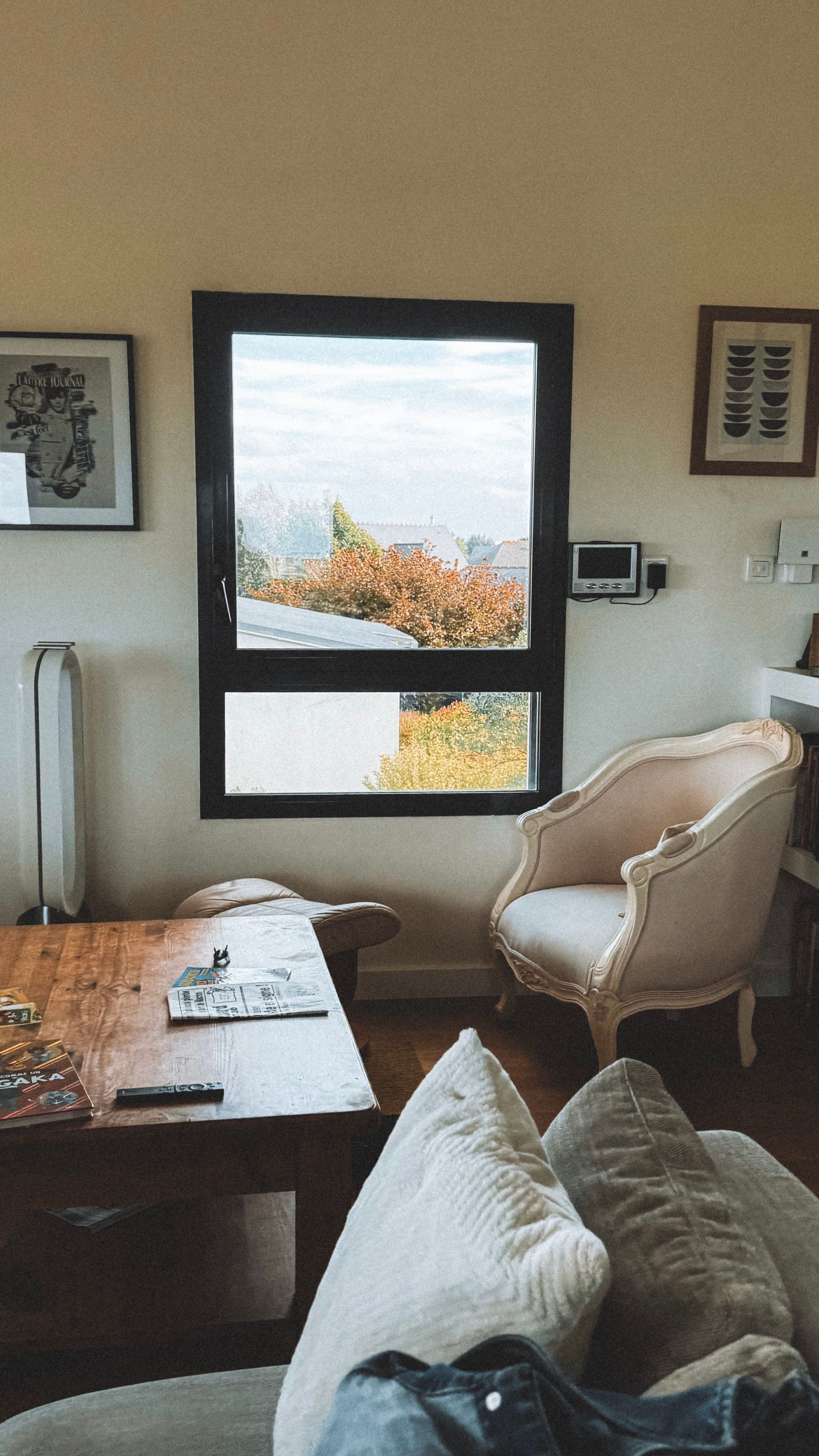
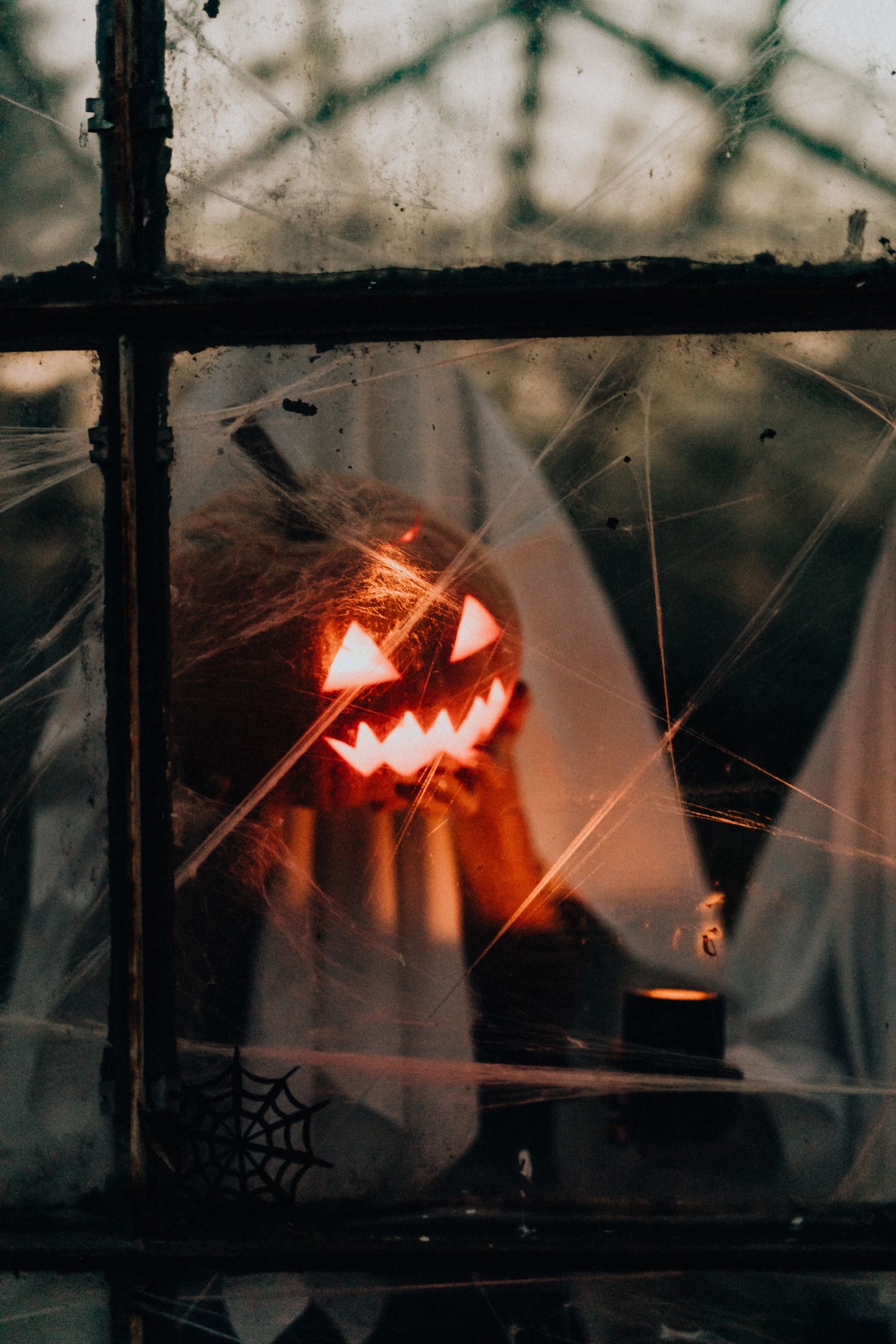
Halloween decoration benefits from being judged after sunset. A strong silhouette in a window can be visible from a greater distance than many small objects scattered through a room. Consider one paper cutout, lantern silhouette or suitable purpose-made window decoration that remains recognizable against the indoor light. Test it from outside the property where access is appropriate and safe, then check from inside whether it creates glare, blocks a useful view or catches on window hardware. Avoid products or attachments that compromise the window's operation, privacy, ventilation or cleaning. If using lighting, choose equipment appropriate to the location and keep leads away from wet surfaces and walking routes. A window that is already busy with blinds and objects may need less, not more. Halloween's distinctive advantage is the contrast between ordinary architecture and a temporary eerie figure, so negative space and controlled illumination matter as much as the object itself. This is a specific event technique, not a generic instruction to make every room darker.
Choose One Indoor Scene: Playful or Theatrical
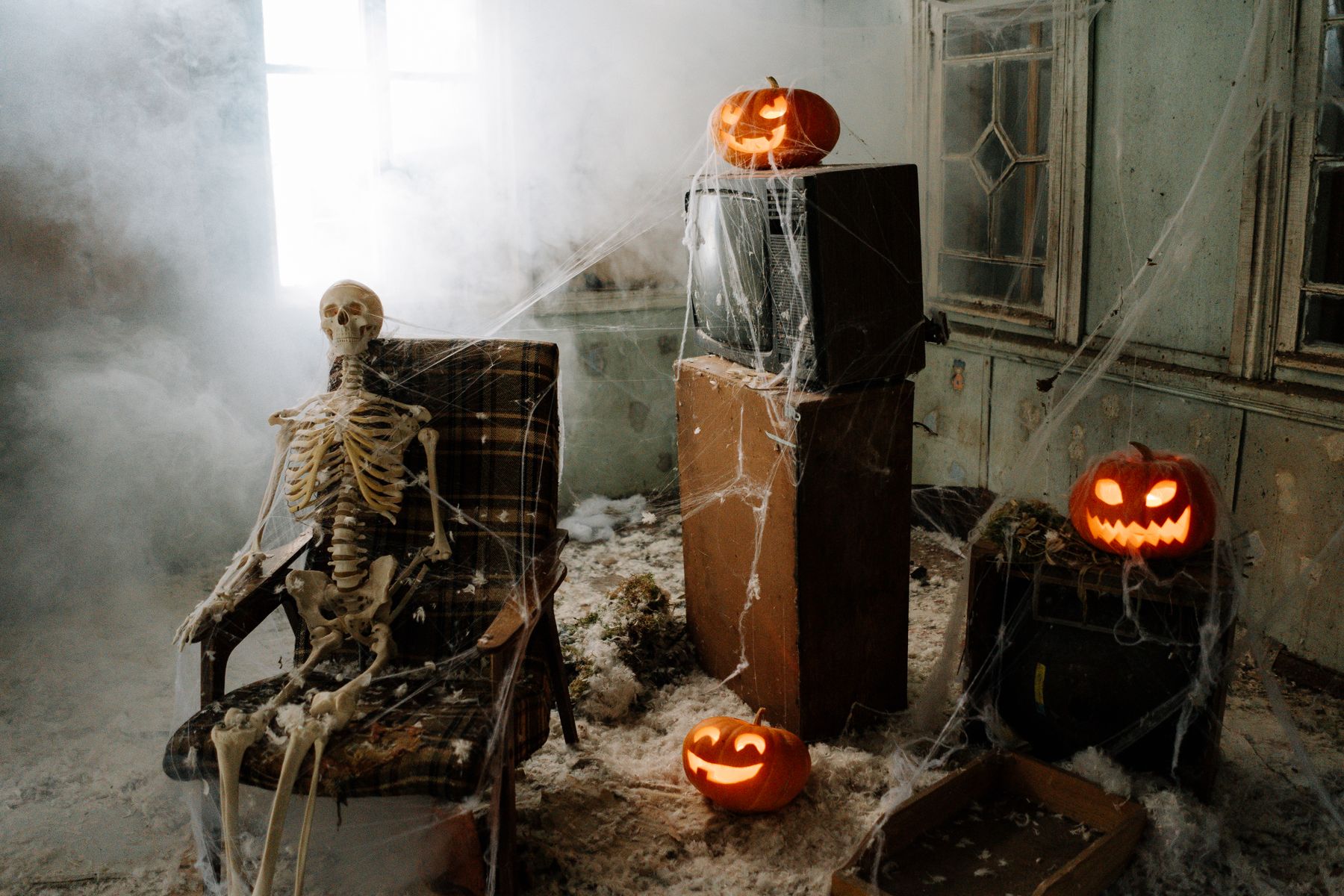
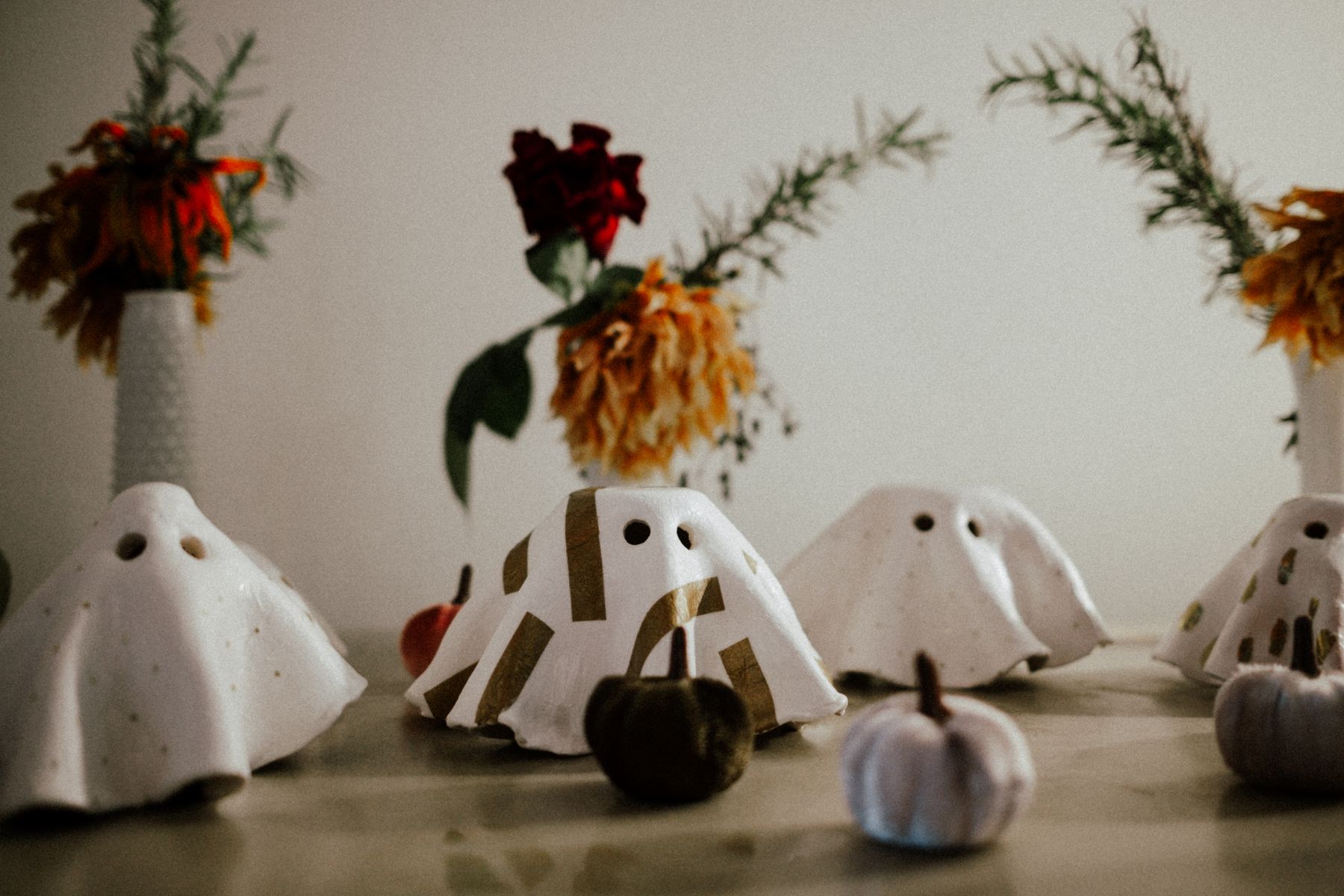
The indoor focal point should have a deliberate character. A playful home might group a few ghosts, small pumpkins and soft orange light on one stable shelf; an adults-only gathering may prefer one moody composition with dark branches or sculptural objects. Decide which mood belongs to the household and where it will be seen—usually a living-room wall, an entry console, or the table used during the evening. Do not place matching figures in every room simply to keep the theme consistent. Repeating one accent color or material elsewhere is enough to connect the house. The main scene should survive ordinary movement: can someone sit, open drawers, put a drink down and reach a switch? Keep breakable props away from children and pets and check the stability of elevated displays. The existing Halloween living-room guide explores details of this specific space; the whole-home decision is how much of the evening's attention the focal point should receive. One strongly defined scene can carry the celebration while the rest of the house remains usable.
Black, White and Red Can Be Halloween Without a Plastic Theme
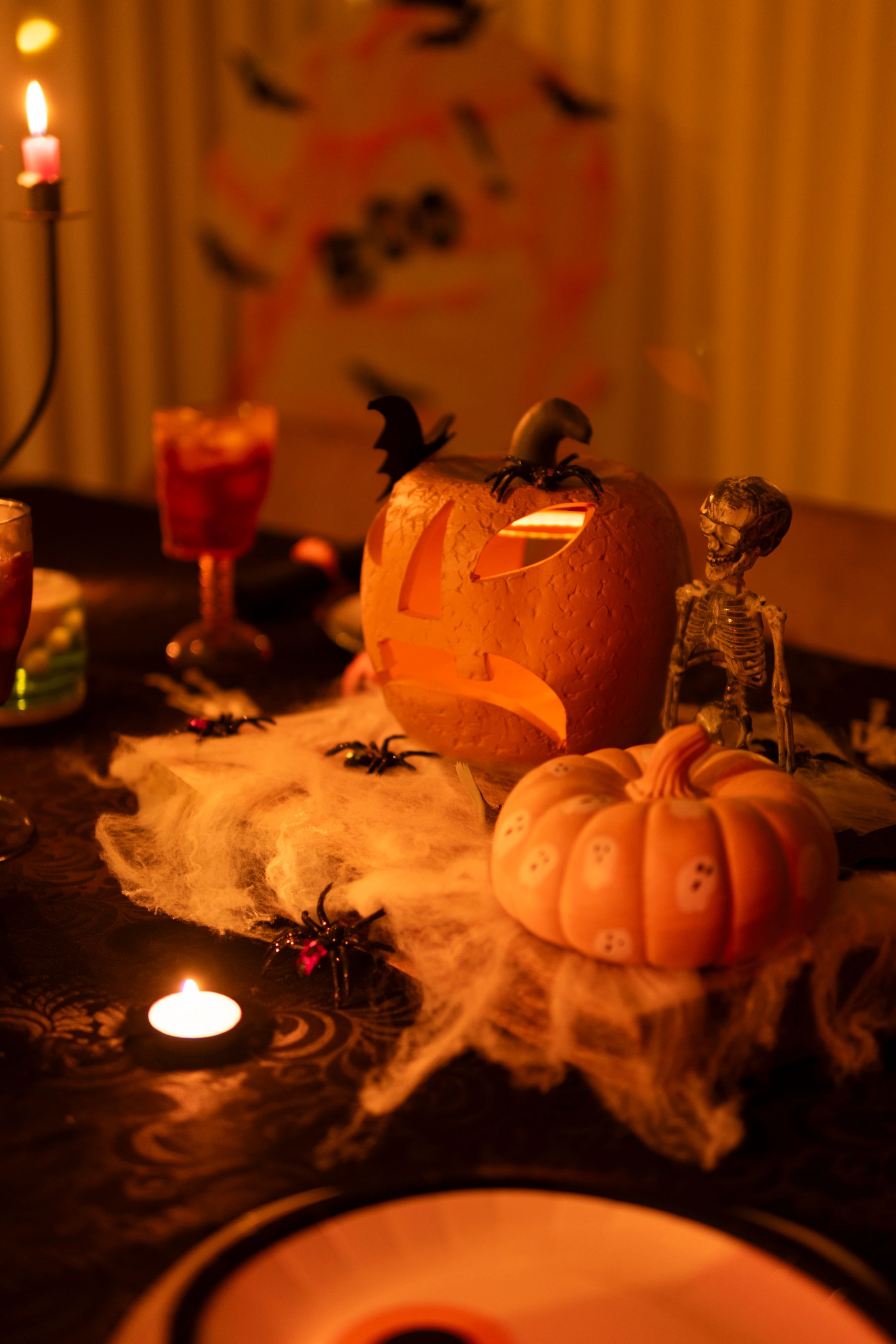
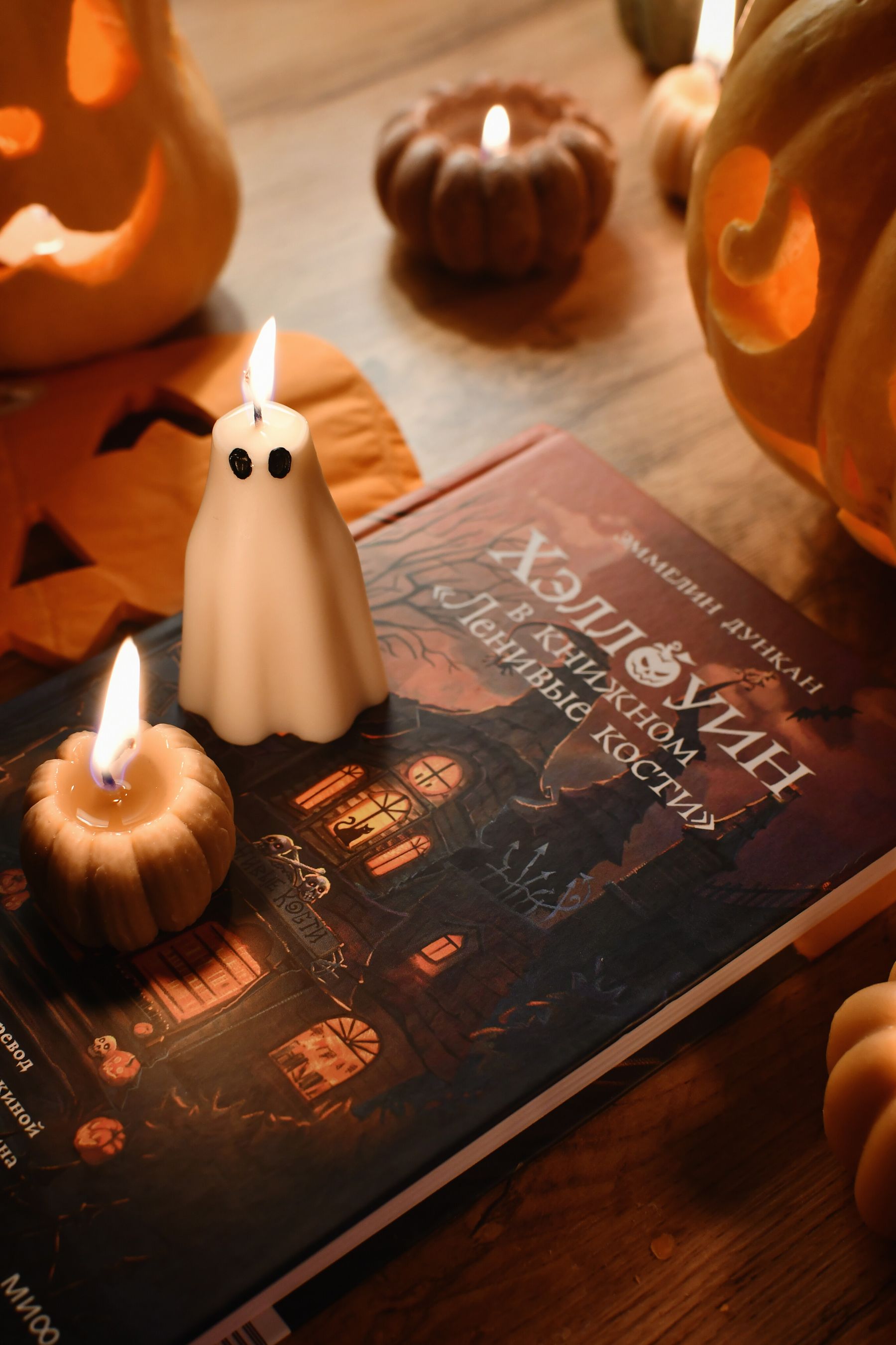
Halloween color does not have to mean orange and black repeated on every surface. A restrained combination such as black, ivory and a deep red accent can feel more theatrical when the permanent room is simple. Decide where each color does its work. Dark pieces create contrast against a pale surface, white forms remain readable in evening light and one red detail adds controlled intensity. Small decorative pumpkins or a single sculptural candle shape can carry that idea without needing a themed tablecloth and a matching banner. But design should not overrule safety: the photograph features a live flame as part of a styled arrangement, and it should not be copied without checking stable supports, clearance and supervision. Battery-operated or otherwise suitable electric alternatives can create a similar visual role in crowded spaces. Repeat this dark-light contrast in no more than one or two areas. If the living room already has deep upholstery or dim lighting, too much black may become visually illegible; let negative space and reflected light reveal the arrangement.
Give Guests a Table, Not a Museum of Halloween Objects
Hosting changes the role of tabletop decoration. A holiday buffet must let people put down plates, serve food, reach napkins and move without catching their sleeves on fragile props. Start with the working layout and build a small removable Halloween display in the space that remains. A tray can gather a few objects so they are easy to move when the serving area becomes crowded. Tall centerpieces or loose fabric around candles make less sense when guests stand, talk and reach repeatedly. Select a palette that relates to the main living-room scene without reproducing every prop. An adult dinner with an elegant arrangement asks for a different level of intensity from a children's sweets table. Keep food and decorations appropriately separated, and check plant materials, artificial webs, glitter and dust around edible items. The goal is a hospitality system decorated for Halloween rather than a prop collection that happens to sit where guests would eat. If the night is not a gathering, a very small end-table cue may be all that is required.
The Kitchen Can Stay Almost Entirely Halloween-Free
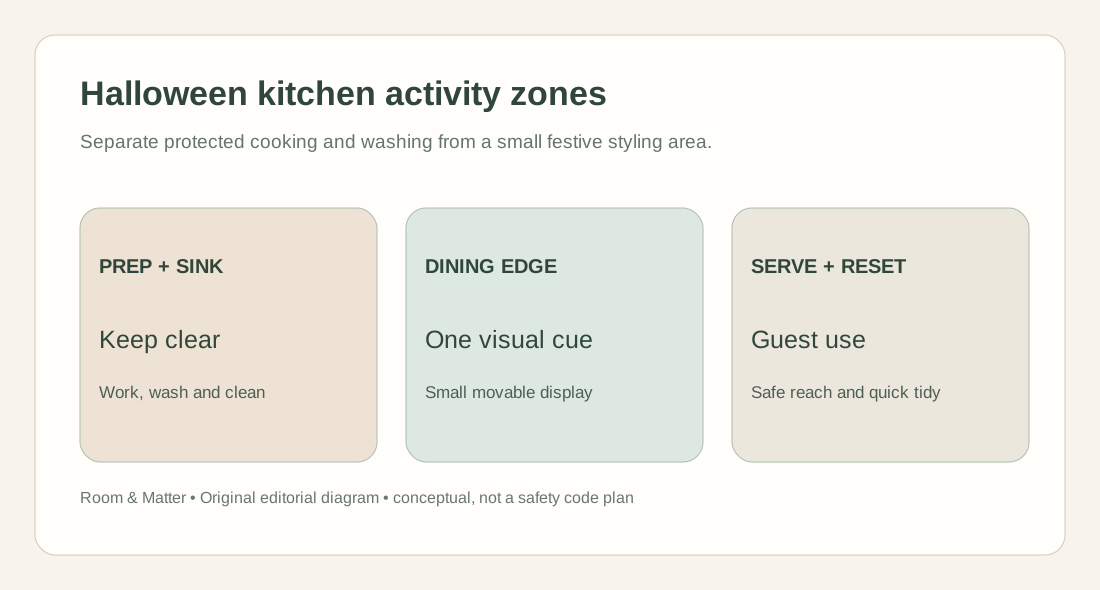
The kitchen is often busiest when a Halloween party is underway, and treating every counter as a display can make preparation and cleanup frustrating. Map the sink, main food-preparation stretch, cooking appliances and serving route first. Leave those spaces clear and place one seasonal cue at a dining edge or on a suitable non-working surface if you want to extend the theme. A small dark vessel, paper silhouette or carefully placed pumpkin can be enough to connect this functional room with the main celebration area. Avoid dried fabric or paper close to cooking heat, decorations that shed onto food, and decorative electrical cords near water. A specialty drink or a themed serving vessel can communicate Halloween through the gathering itself rather than through permanent kitchen staging. This section is deliberately a practical schematic, not a stock photograph claiming to show a compliant kitchen installation. The kitchen should support the event; its decorations should be simple to remove or bypass once cooking, serving and cleaning start.
An Eerie Bookshelf Needs Editing, Not More Objects
A bookshelf can become a memorable Halloween destination without repainting it or covering every spine with dark fabric. Begin with a small group of objects that relate to the books already on display: an unusual silhouette, a tiny ghost figure, a branch or a single dark vessel. Give the group breathing space and make sure the remaining books can still be removed easily. Scale matters because many tiny props become clutter, while one larger element can read as an intentional focal detail from the sofa. Avoid suspending heavy decorations from shelves not designed for them, hiding unstable objects behind paper or using candles too close to books. Real flames are particularly unsuitable where paper and loose decorations are abundant. If the rest of the room already contains a strong Halloween scene, the bookshelf may need only a subtle echo. This is a temporary narrative layer, not a universal instruction to make every book look antique or ominous. The effect should disappear cleanly when the celebration is over.
No, a Styled Flame Photograph Is Not a Safety Diagram
Halloween photographs often rely on candles because the small flame provides dramatic contrast, but the pictured arrangement may not be safe to recreate. An open flame near upholstery, books, dry foliage or unstable objects is a hazard even if the composition looks elegant. Begin with the practical result you want: a small pool of orange light, an eerie silhouette or a dark focal object. In many spaces a suitable LED candle, lamp or decorative light can create that impression without open fire. Follow the manufacturer's instructions, especially for extension cords, plug types, indoor or outdoor ratings and surface contact. Keep routes and exits visible after dark, not merely the decorative focal points. Never assume the glow of a Halloween display can replace basic task or pathway lighting. The recorded stock image is used to explain the visual phenomenon and its limitations, not to endorse a particular candle distance or unsafe setup. Trust and usefulness matter more than romanticizing a risky styling trick.

Small Spaces Benefit From Reversible Halloween Layers
Small apartments do not need miniature versions of every large porch, staircase and party-table idea. Choose one route and one focal view, then concentrate the decoration around an area that can remain functional. A handful of painted pumpkins, one window silhouette or a single tabletop group can create much more visual impact than objects scattered across all available shelves. Use surfaces that are stable and easy to clean, and choose installation methods that suit the property; labels claiming a product is removable do not guarantee that wallpaper, painted walls or glass will survive without marks. Keep door swings, rented fixtures and shared corridors clear. If guests arrive, a small portable candy bowl or food tray can do double duty as a seasonal cue and useful event equipment. The ability to reset in ten minutes is valuable, especially if the room also serves work, dining and sleep. The Halloween character should be strong enough for a photograph without reducing the household's everyday capacity.
November First Is the Final Design Test
Treat removal as part of the design brief. Halloween's ghosts, skeletons, spiderwebs and novelty signage usually have a short window of relevance; natural autumn color, sound textiles and seasonal lighting can remain longer if the household enjoys them. Separate the two groups before decorating rather than discovering on November 1 that everything has been attached together. Preserve a small box for fragile Halloween-only items and avoid large mixed storage that makes the next season difficult. Inspect anything that used adhesive, including wall finishes and glass, and clean up outdoor props affected by rain or wind. Remove carved produce or food promptly when it spoils. Then look at the home without the event layer: the entry should still welcome, the table should work and the living room should feel comfortable for ordinary fall days. This makes Halloween distinct from Fall Decor Ideas, which owns the entire September-to-November transition. Halloween is a designed interruption within that larger season, not its permanent visual identity.