Choose a Halloween Character Before Buying Props
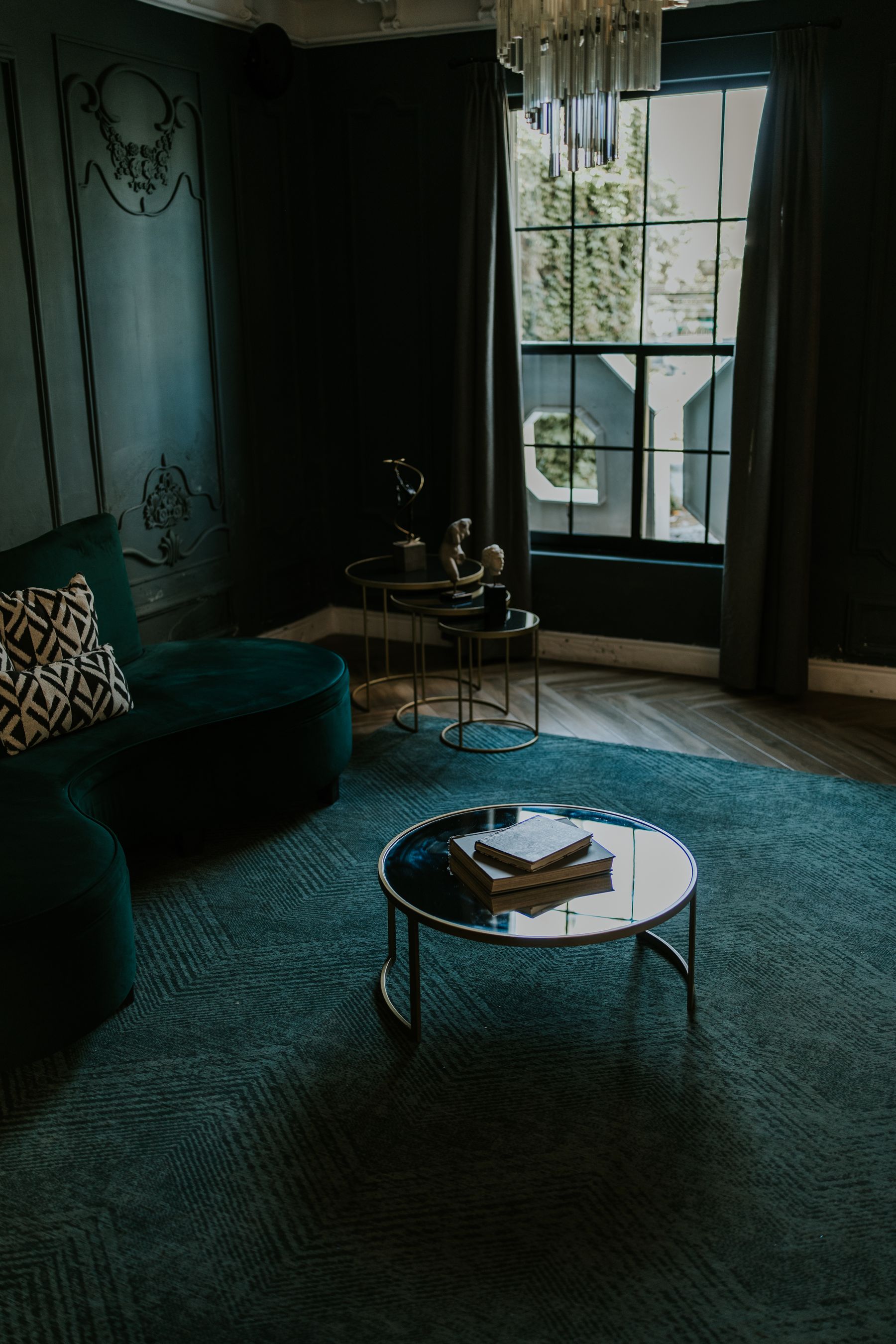
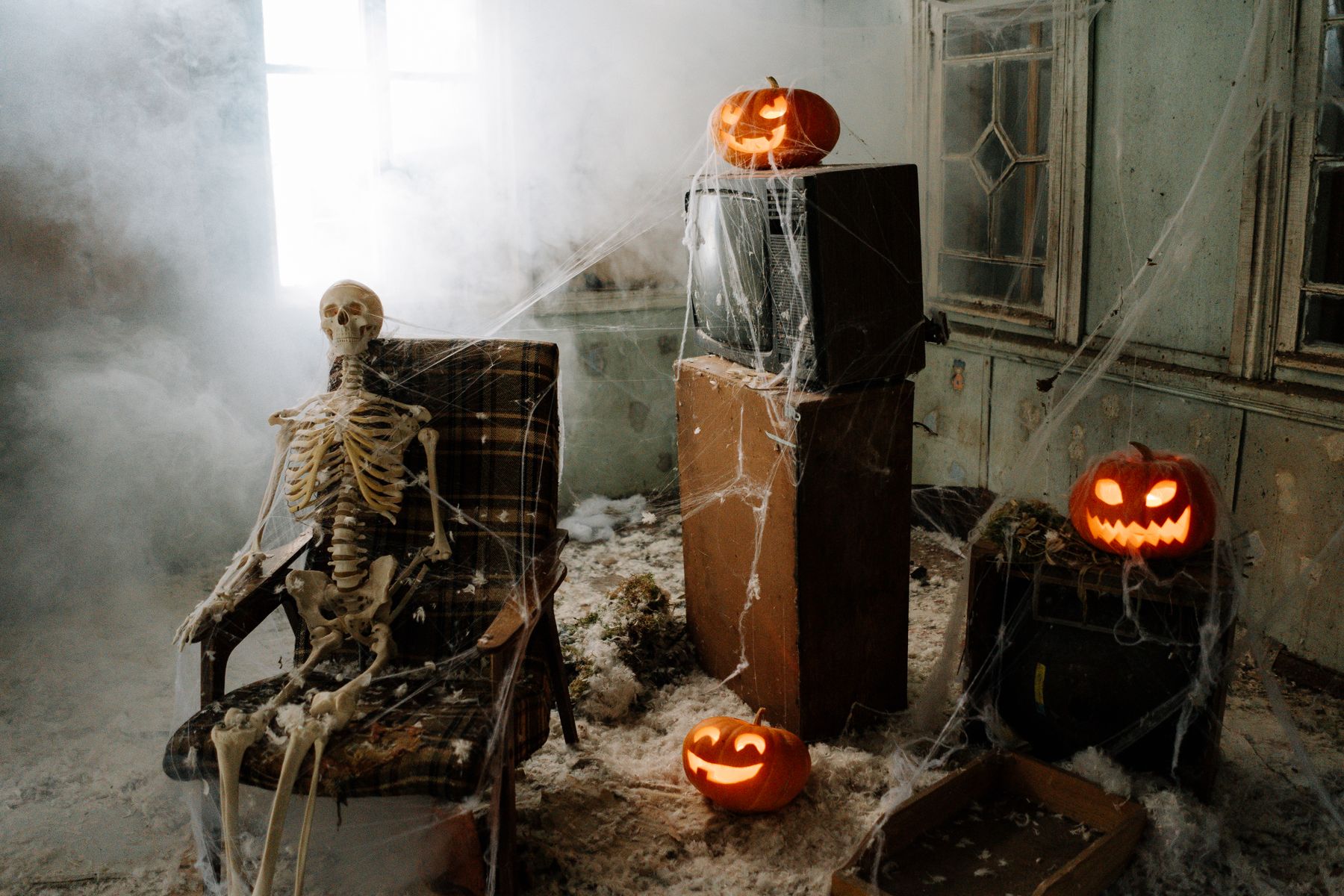
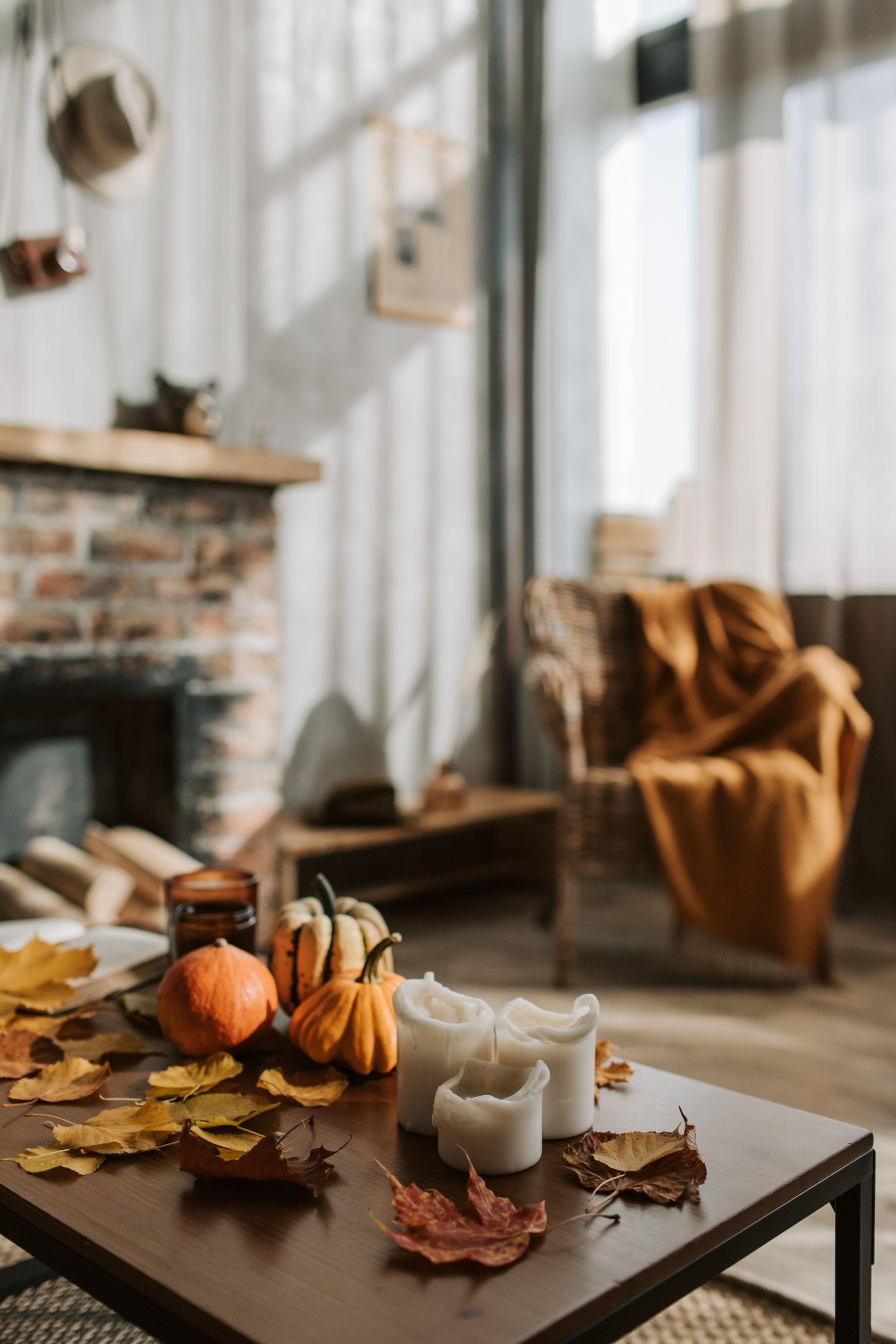
Decide first whether the room should feel atmospheric, playful, vintage, gothic or deliberately theatrical. That choice controls color, object scale and how much of the permanent interior remains visible. A warm neutral room may need only pumpkins, amber light and one dark accent; a [gothic living room](/living-room/gothic-living-room-ideas/) can absorb black candlesticks, aged frames and deeper shadow without looking costumed. A family room may suit humorous ghosts and painted pumpkins better than realistic horror props. Once the character is clear, reject decorations that belong to a different visual story even if they are individually appealing.
Build an Autumn Base That Can Survive November
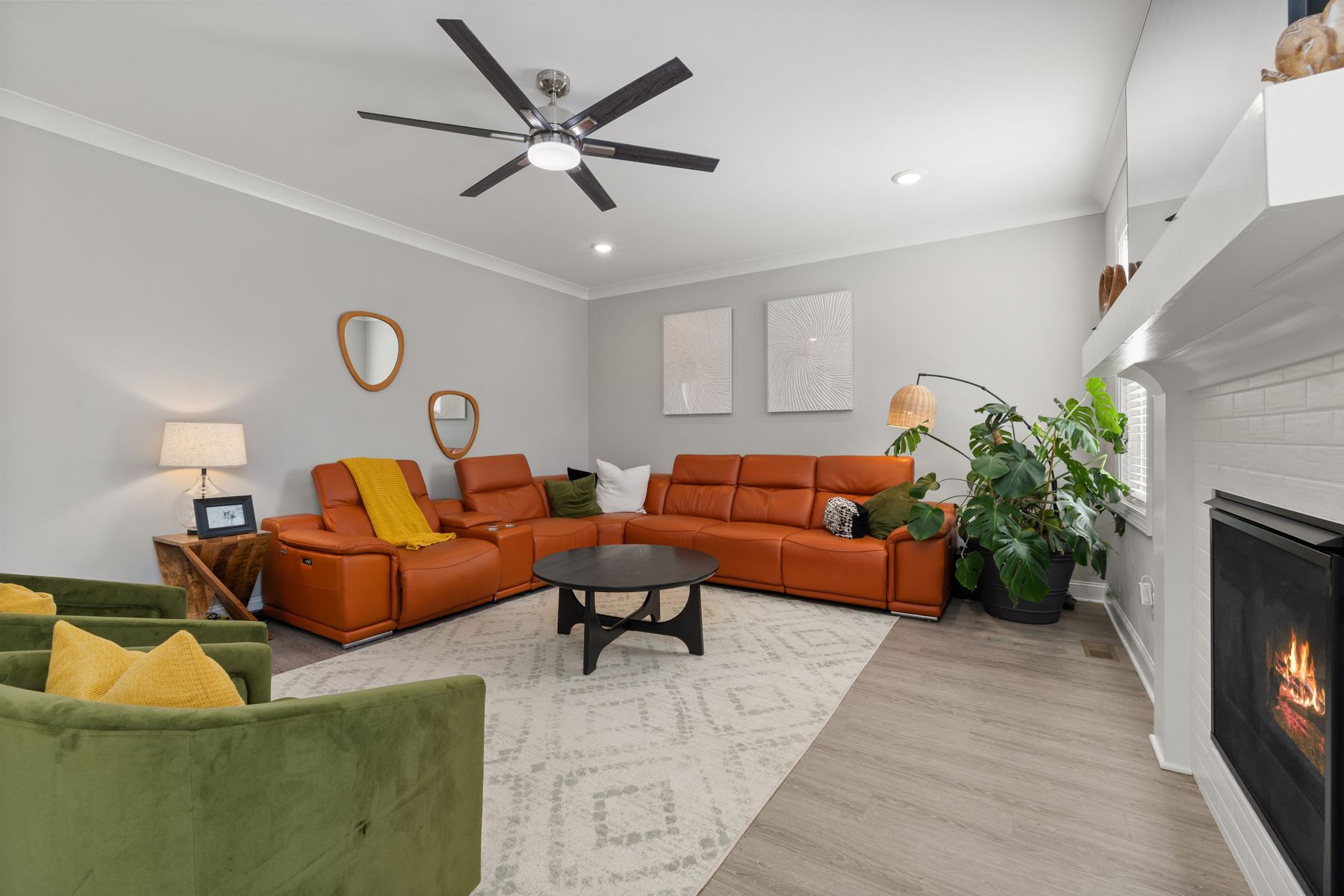
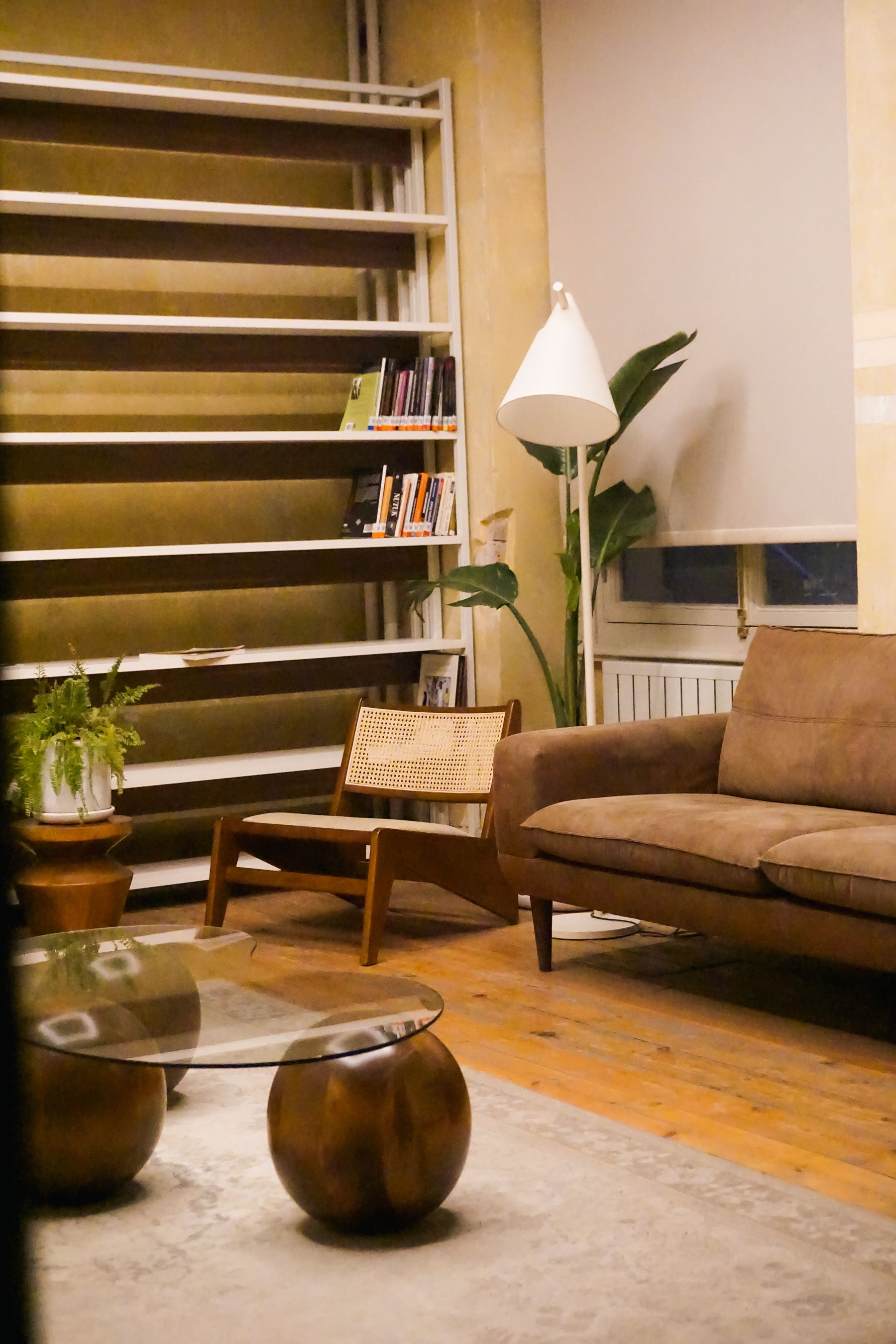
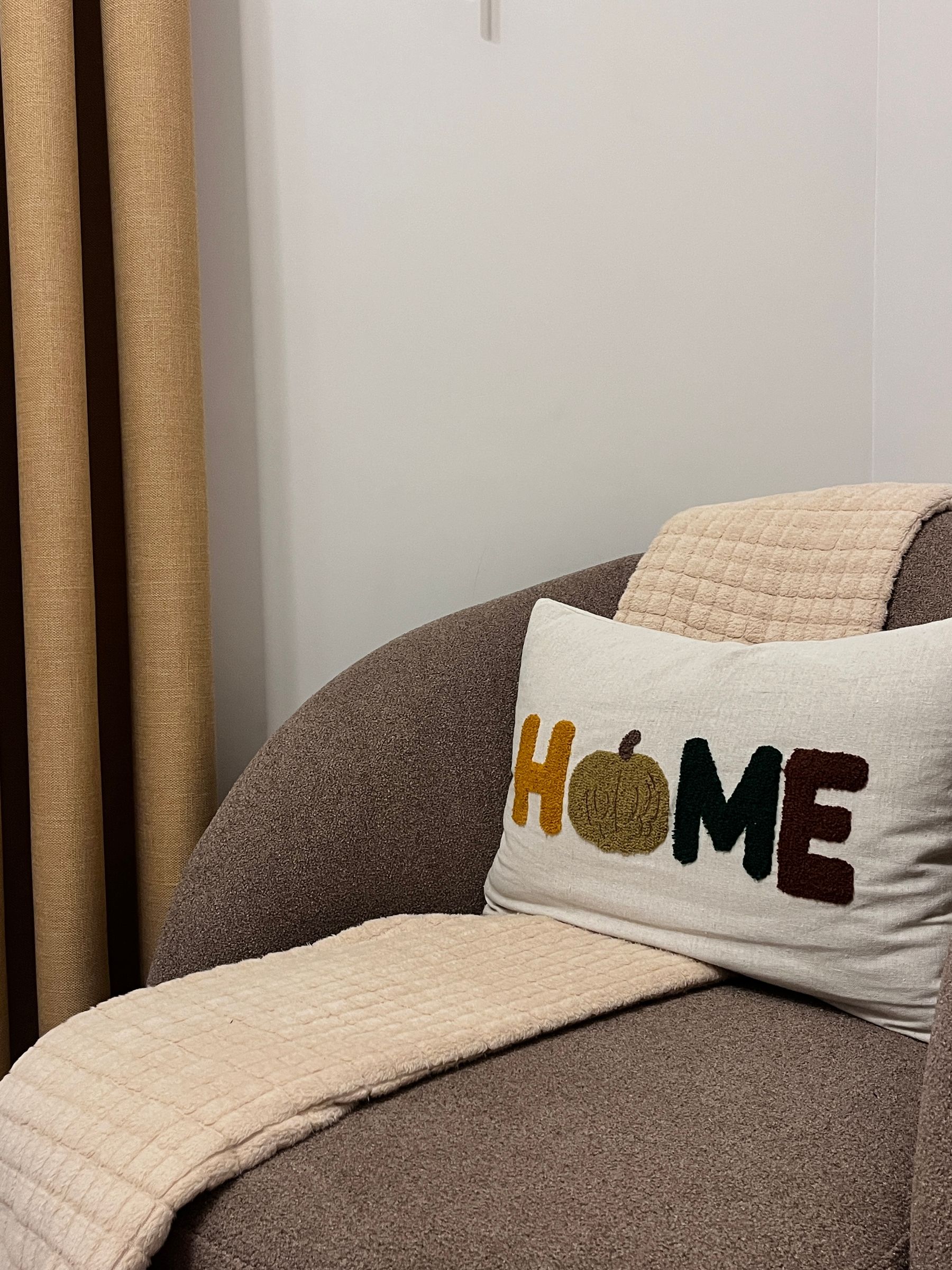
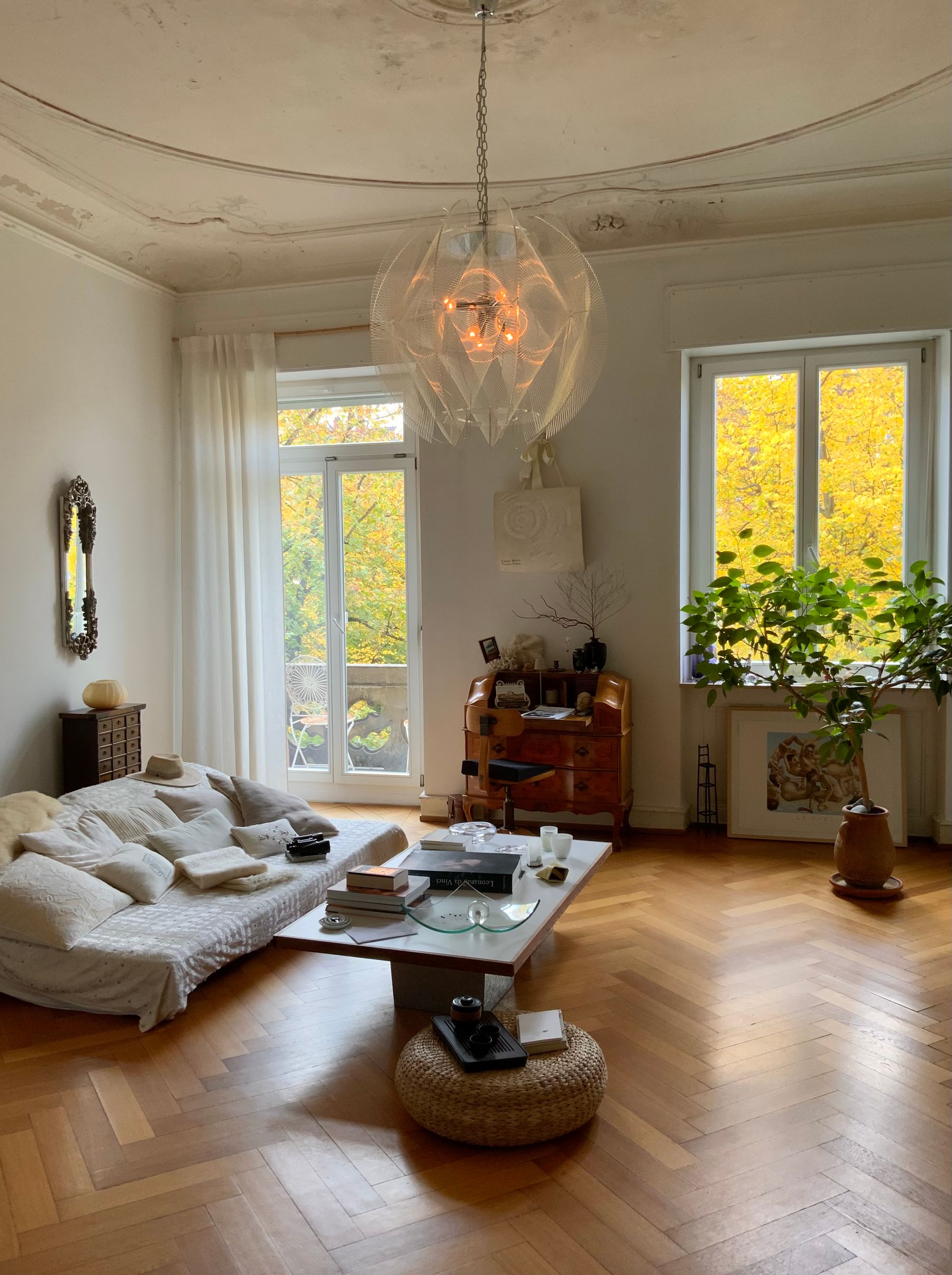
The easiest seasonal room to maintain separates fall atmosphere from Halloween symbols. Start with rust, brown, ochre, burgundy, aged wood, woven texture or a warmer throw, depending on the existing palette. Then add pumpkins, ghosts, bats or other Halloween-specific pieces as a removable top layer. This prevents the room from needing a complete reset on November 1 and gives the seasonal styling more depth than orange-and-black accessories alone. If the permanent palette already contains warm earth colors, [brown living room ideas](/living-room/brown-living-room-ideas/) and [orange living room ideas](/living-room/orange-living-room-ideas/) can help distinguish lasting color decisions from temporary decoration.
Create One Strong Spooky Focal Point
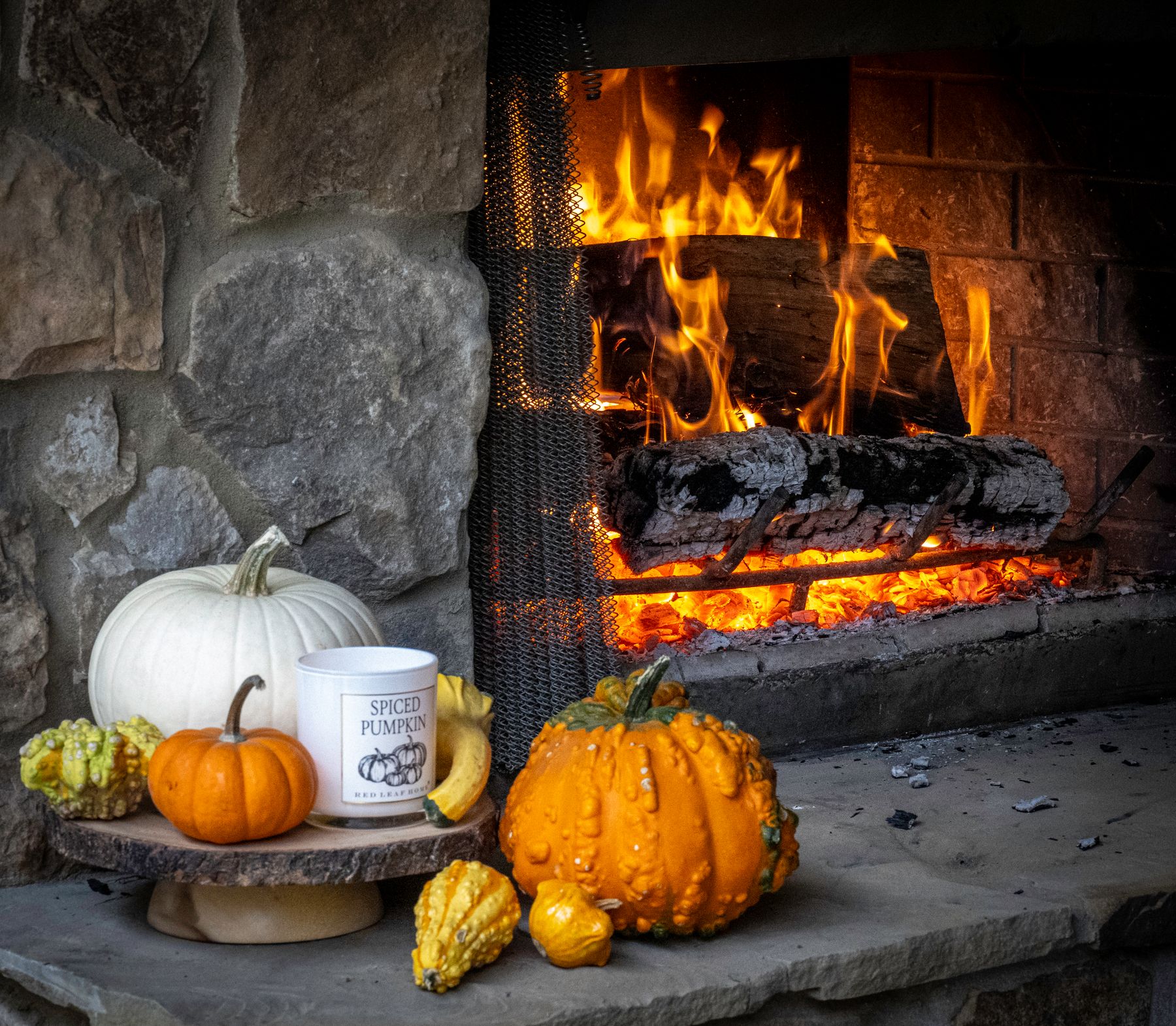
Choose the fireplace, console, bookcase, main window or one wall as the place where Halloween becomes unmistakable. Concentrate the largest pumpkins, branches, artwork or figurative decor there and let the rest of the room stay calmer. Grouping creates a readable composition and makes ordinary surfaces easier to use. Around a fireplace, keep all decorative material outside the appliance's required clearances and away from flame, hot glass and vents. If the living room already has competing focal points such as a television and hearth, resolve their hierarchy with the same principles used in [living room layout ideas](/living-room/living-room-layout-ideas/).
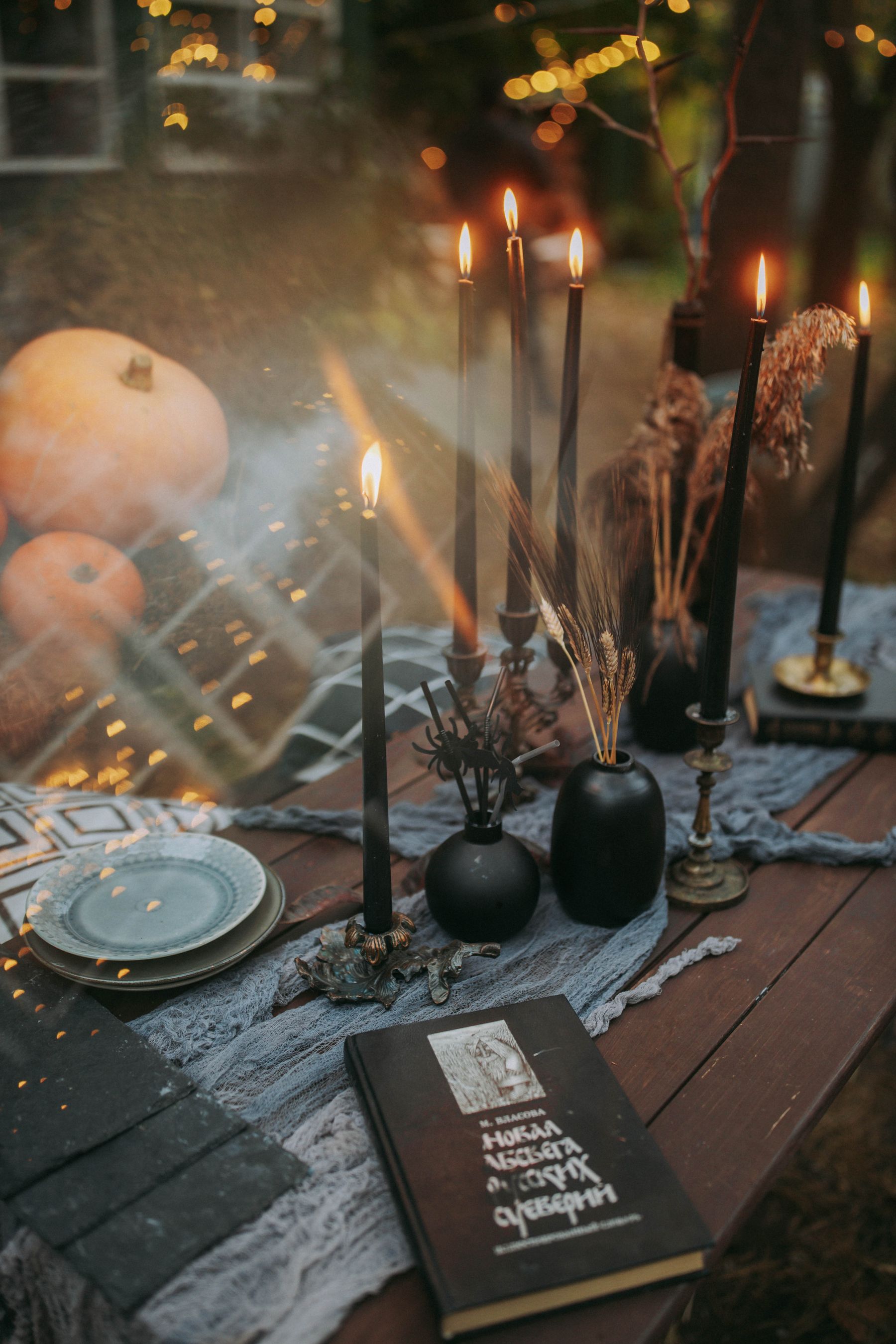
Use Black as Structure, Not as a Blanket
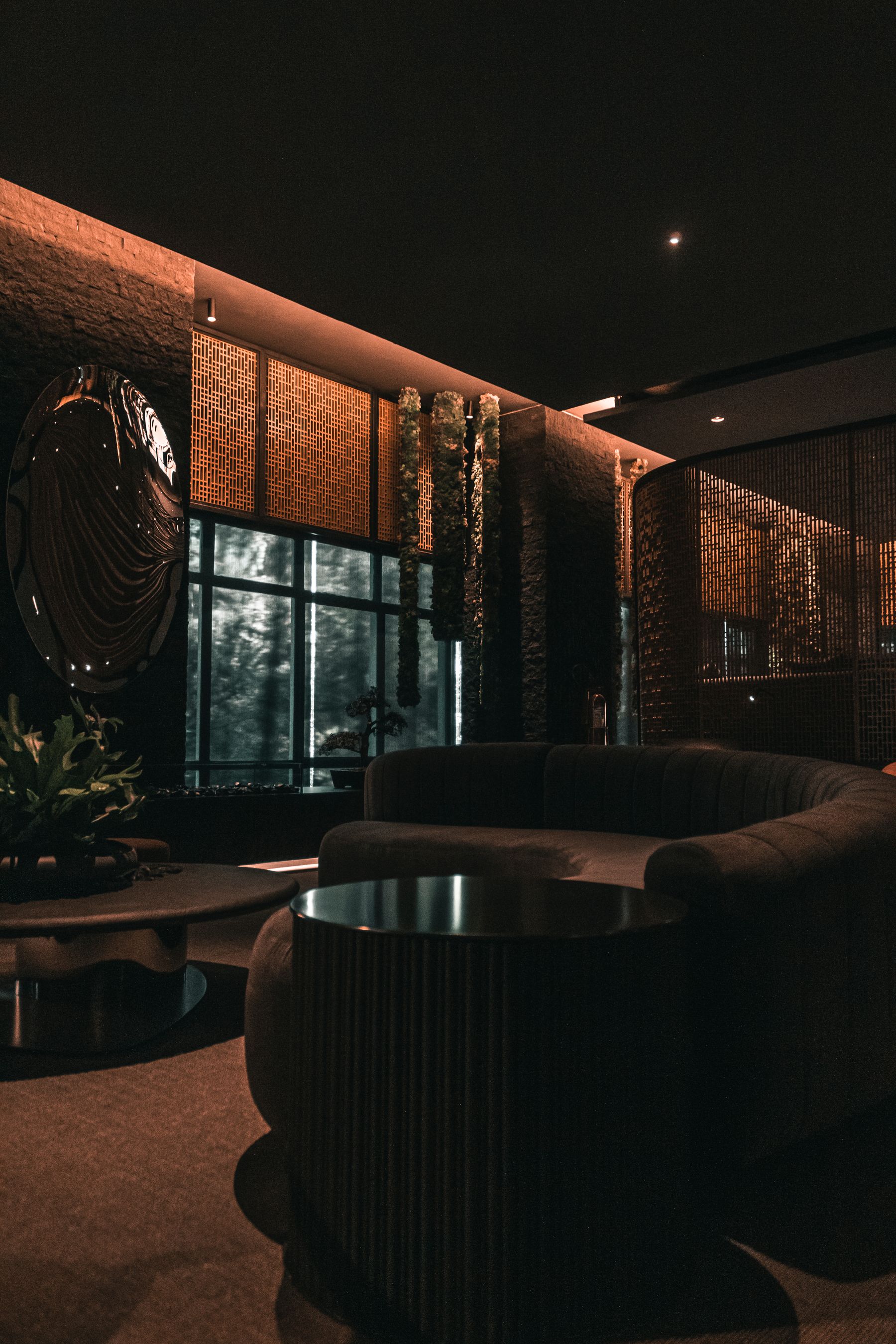
Black earns its impact from contrast. Repeat it in a few structural shapes—candlesticks, frames, taper holders, a bowl or one textile—rather than adding a black version of every accessory in the room. Matte black absorbs light and can make small displays disappear at night, so pair it with reflective glass, metal, pale pumpkins or warm wood where you need separation. Rooms that are already dark may need less black and more warm illumination. For a permanent approach to dark surfaces, compare [dark living room ideas](/living-room/dark-living-room-ideas/) rather than treating Halloween as a reason to darken the whole room.
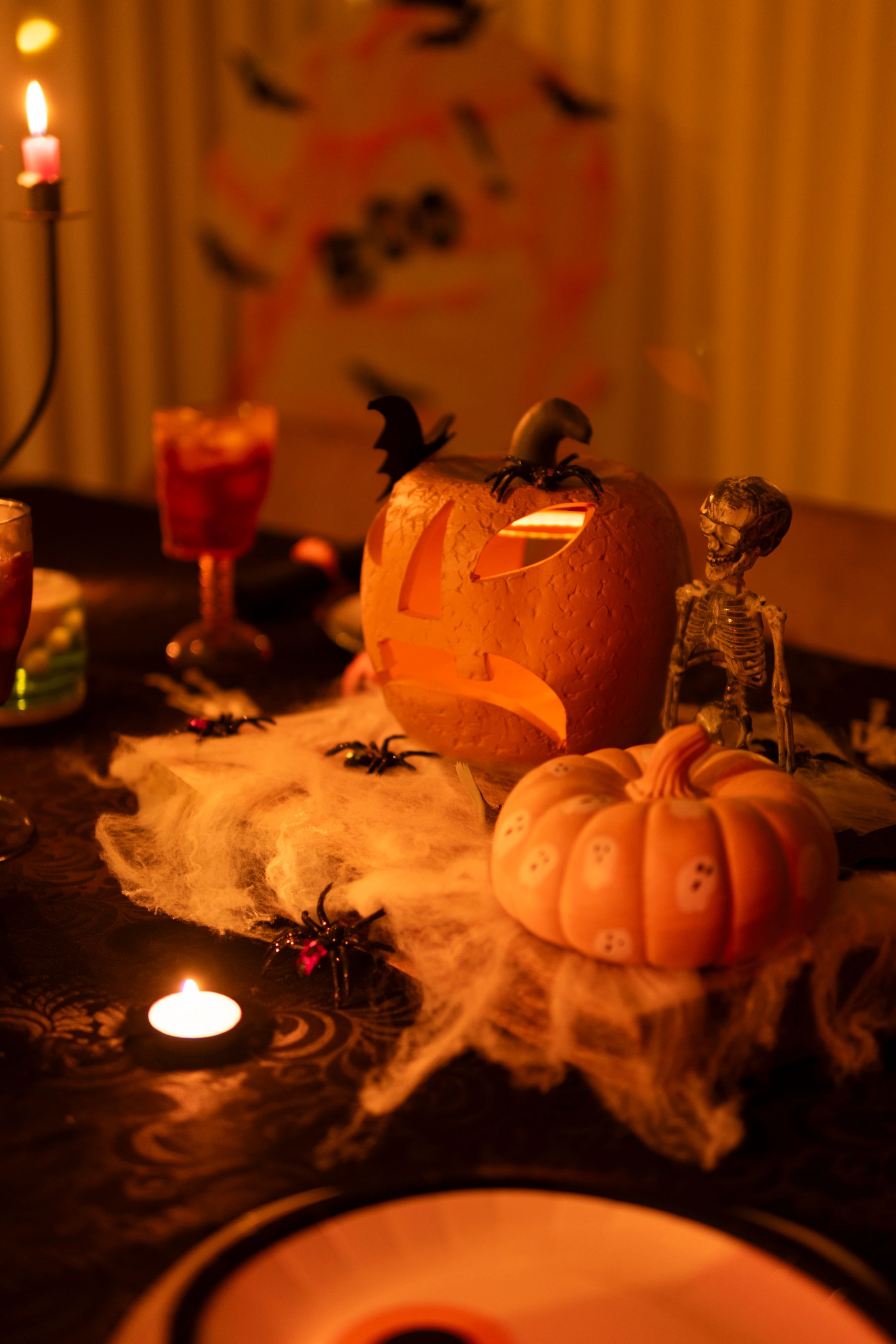
Make Candlelight a Layer, Not the Only Light
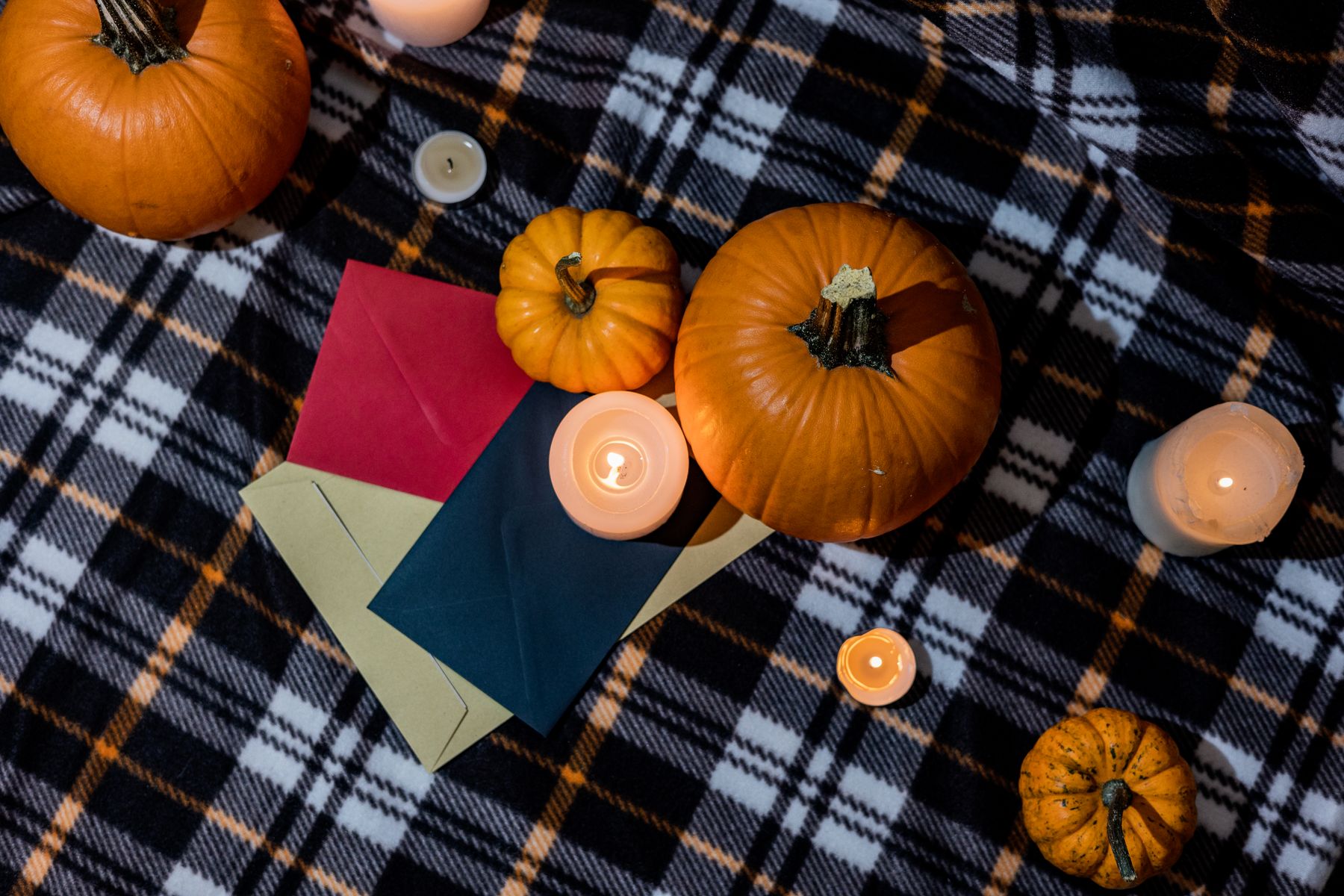
Halloween atmosphere depends on shadow, but a completely dark living room flattens objects and makes circulation harder. Keep a low ambient source, then add warm pools of light at different heights. Lamps, dimmable fixtures and suitable flameless candles can provide most of the effect without placing open flames among paper, fabric, dried leaves or synthetic cobwebs. If you use real candles, follow the candle manufacturer's guidance, keep them on stable non-combustible holders and never leave them unattended. The broader layering principles in [living room lighting ideas](/living-room/living-room-lighting-ideas/) are more useful than simply choosing the darkest bulb.

Style Pumpkins by Shape and Material, Not Just Color
A convincing pumpkin group varies scale and profile while keeping enough repetition to feel related. Combine a few larger anchors with smaller pieces instead of lining identical mini pumpkins along every shelf. Natural orange works well in warm rooms, but white, painted, ceramic, paper or textile versions may suit cooler or more contemporary interiors. Hand-painted motifs can introduce humor without adding more separate figurines. Real pumpkins need stable surfaces and should be checked as they age; reusable versions are better for shelves above upholstery or places where a deteriorating natural object would be difficult to notice.
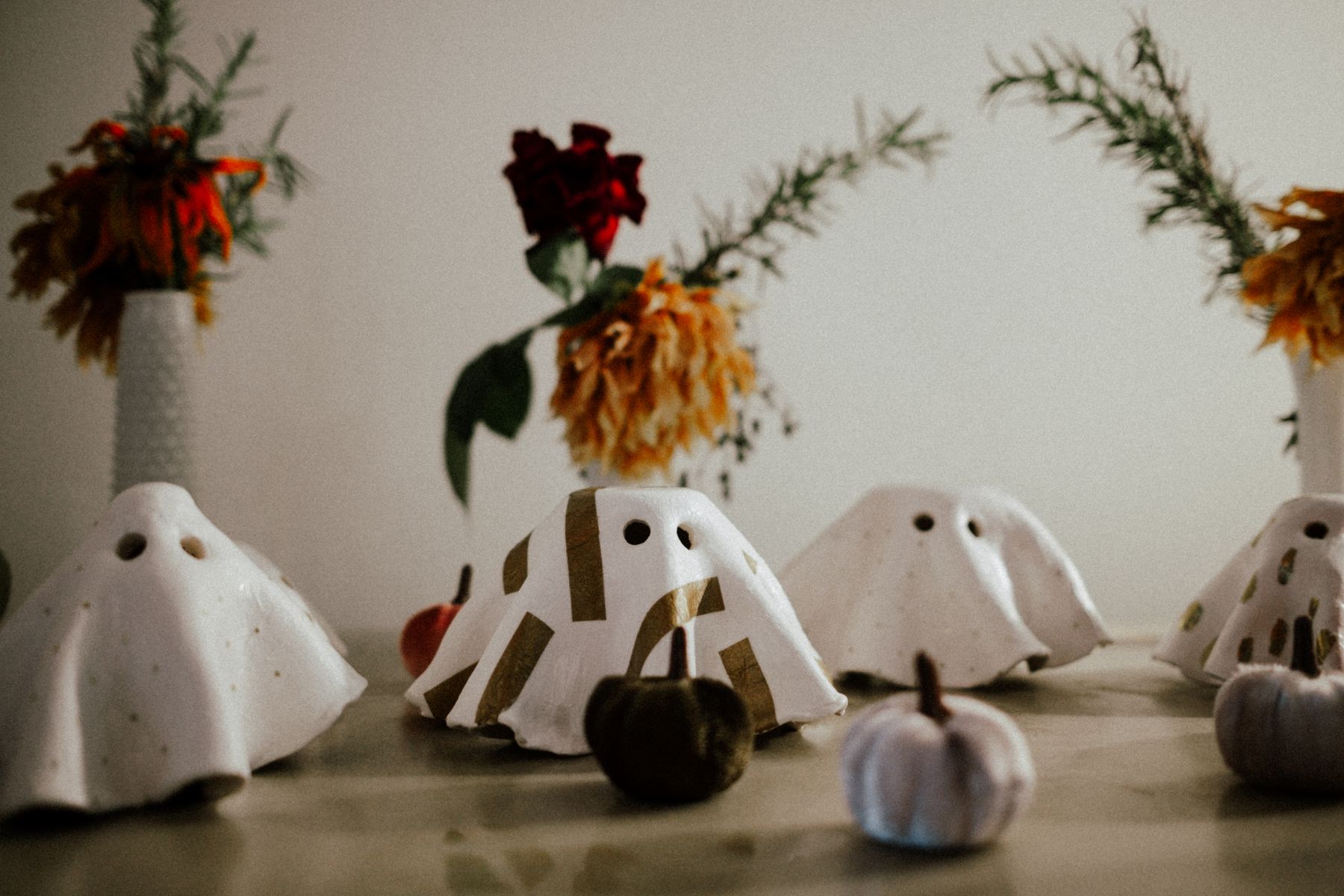
Use Ghosts, Skeletons and Figures at Deliberate Scale
Figurative Halloween decor is visually loud because the eye reads faces and bodies quickly. One overscale skeleton, a pair of ghosts or a small family of ceramic figures can establish the theme without needing dozens of characters. Keep the scale appropriate to the surface: tiny figures disappear on a large mantel, while a life-size prop can dominate a compact room. If children use the space, secure tall or top-heavy pieces and keep small detachable parts out of reach where relevant. The aim is a deliberate character moment, not a room in which every object appears to be looking back at you.

Turn Books and Collected Objects Into Part of the Story
Halloween suits rooms with narrative detail, so use objects already associated with reading, collecting and display. A stack of old books, dark ceramics, botanical prints, vintage frames or a curious object can make a small vignette more convincing than a coordinated set of new decorations. Avoid damaging valuable books with wax, moisture or staining natural materials, and do not use irreplaceable objects where guests, children or pets are likely to knock them. The best seasonal styling often changes the context of familiar objects rather than replacing them.
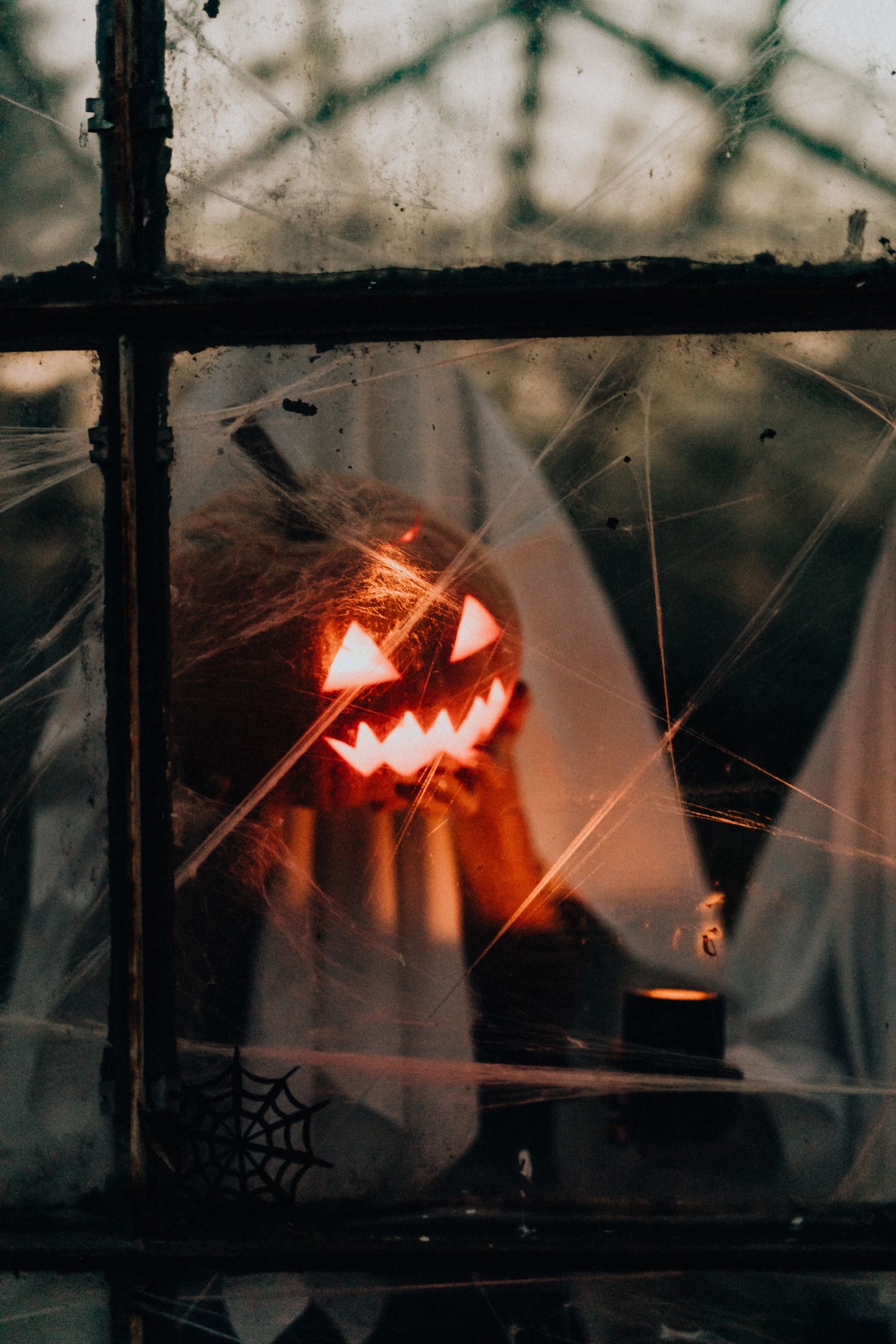
Use Windows for Silhouette and Nighttime Impact
Windows are naturally high-contrast after dark. A few backlit pumpkins, removable silhouettes or a restrained web texture can create more impact than adding another crowded tabletop. Keep coverings clear of opening hardware, vents, heaters and any route required for safe egress. Test the view from inside and outside: what looks detailed at arm's length may become a shapeless block from the pavement. If privacy matters, use the Halloween layer with the existing blind or curtain rather than replacing a functional treatment for the season.
Keep the Room Comfortable Enough to Use
Do not sacrifice the sofa, side tables or primary walkways to create a photograph. Keep throw pillows within a quantity people can actually sit around, preserve a stable place for drinks and remote controls, and make sure long fabrics, branches or suspended props do not brush against faces or catch on clothing. Faux webs can be especially intrusive when stretched across handles, vents or electronics. A successful Halloween room changes the mood more than the function. If comfort starts to disappear beneath the styling, the evergreen principles in [cozy living room ideas](/living-room/cozy-living-room-ideas/) provide a useful reset.
Design the November Edit While You Decorate
As you finish the room, decide what remains after October 31. Pumpkins without faces, plaid textiles, warm throws, branches, brown ceramics and amber lighting may continue into late fall; ghosts, bats, skeletons and web motifs can go back into storage. This staged transition reduces work and keeps the room seasonally appropriate without a sudden blank reset. Store fragile decor by category rather than by exact vignette so next year's arrangement can evolve. Photograph the strongest compositions before dismantling them, but treat those images as references rather than instructions to recreate the room identically.