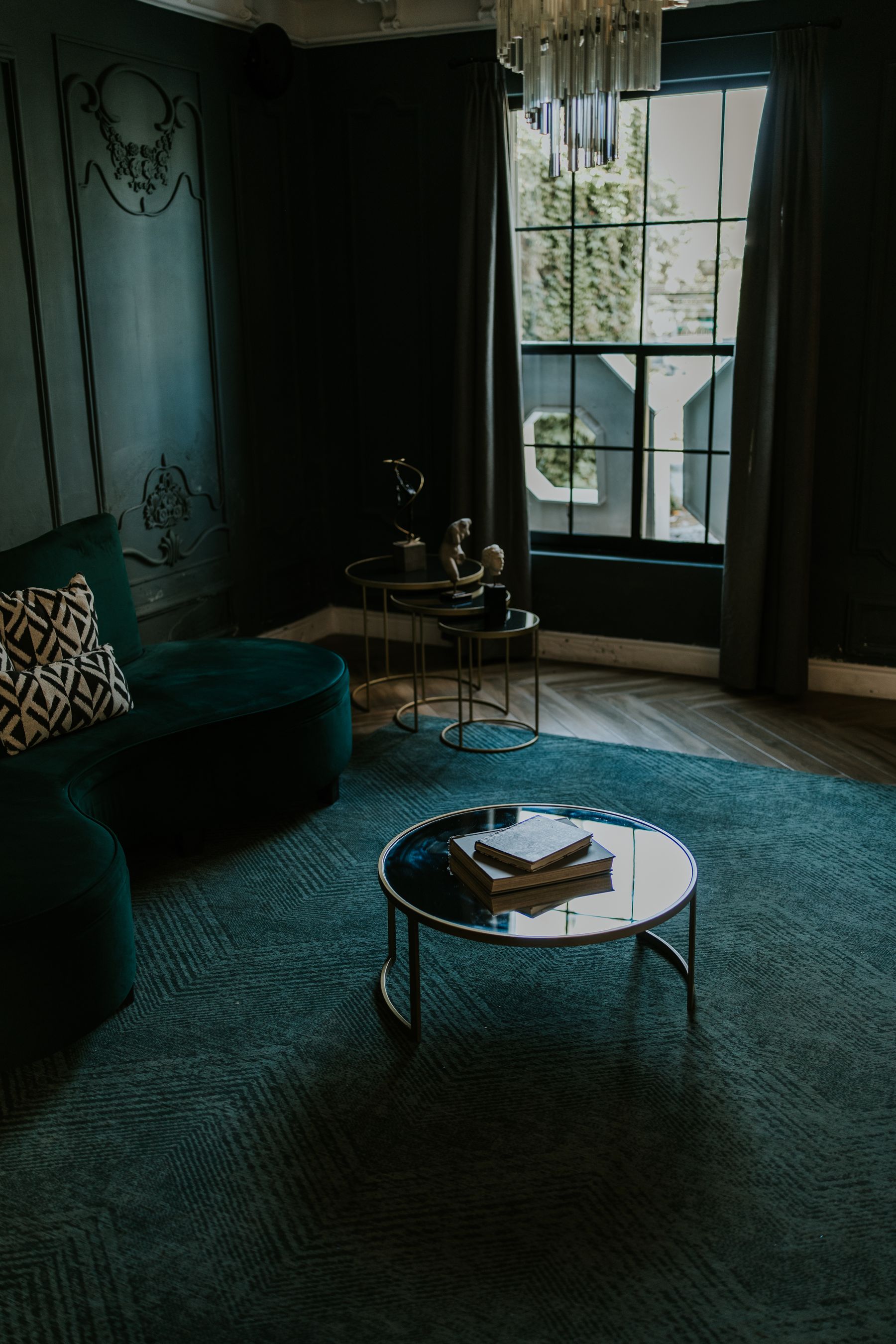
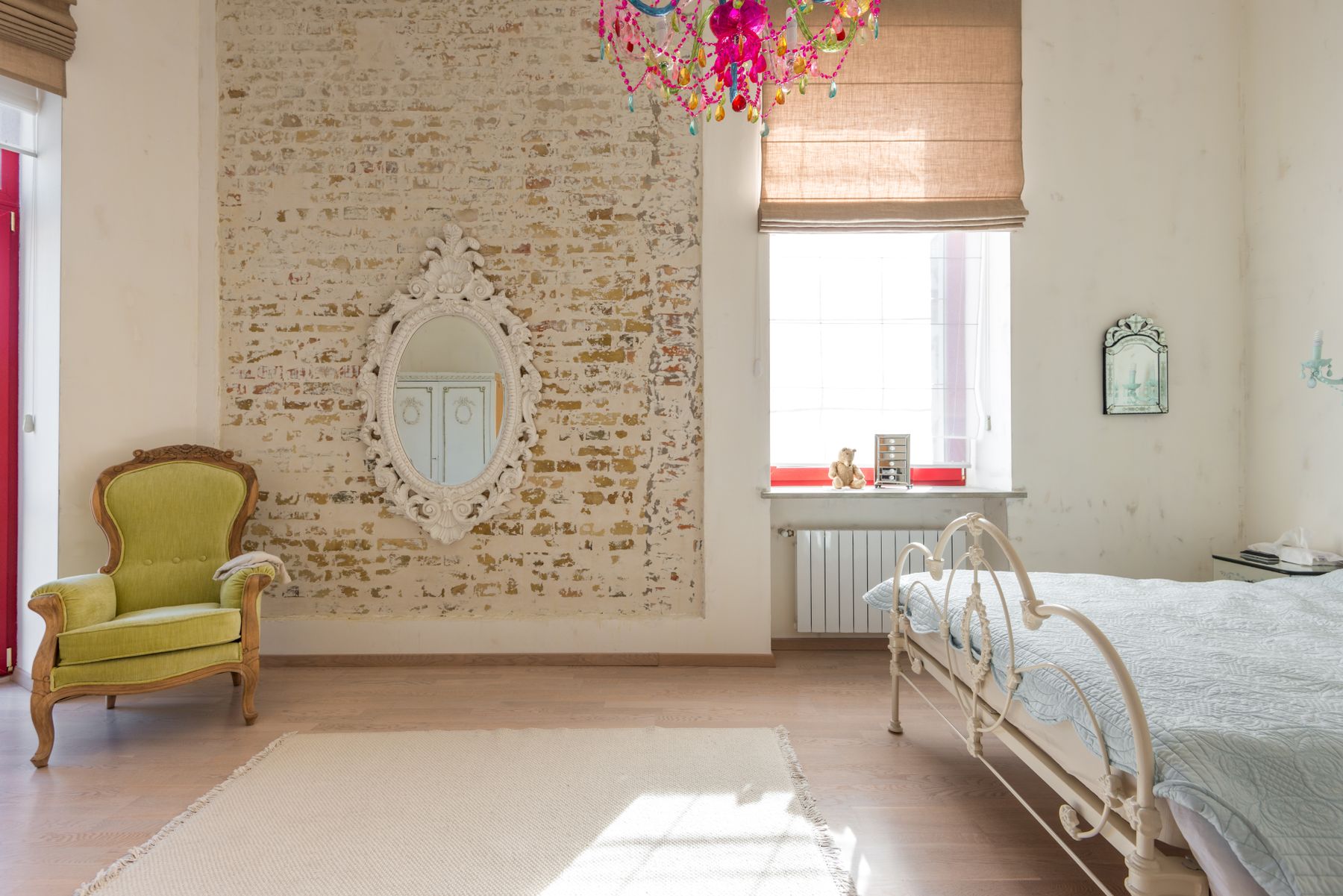
Define Gothic Beyond a Dark Color Scheme
Gothic design is architecture-led: vertical emphasis, pointed or trefoil shapes, deep reveals, expressive carving and a deliberate exchange between shadow and reflected light. [Victorian Living Room Ideas](/living-room/victorian-living-room-ideas/) covers a broader nineteenth-century domestic language of pattern, furniture and collecting; [Maximalist Living Room Ideas](/living-room/maximalist-living-room-ideas/) is about high visual volume; Dark Academia is organized around scholarship and books. Gothic may overlap with each, but a room deserves the name only when form and atmosphere remain convincing after obvious symbols are removed. A pale stone room with lancet-like windows can read more Gothic than a black box filled with themed objects.
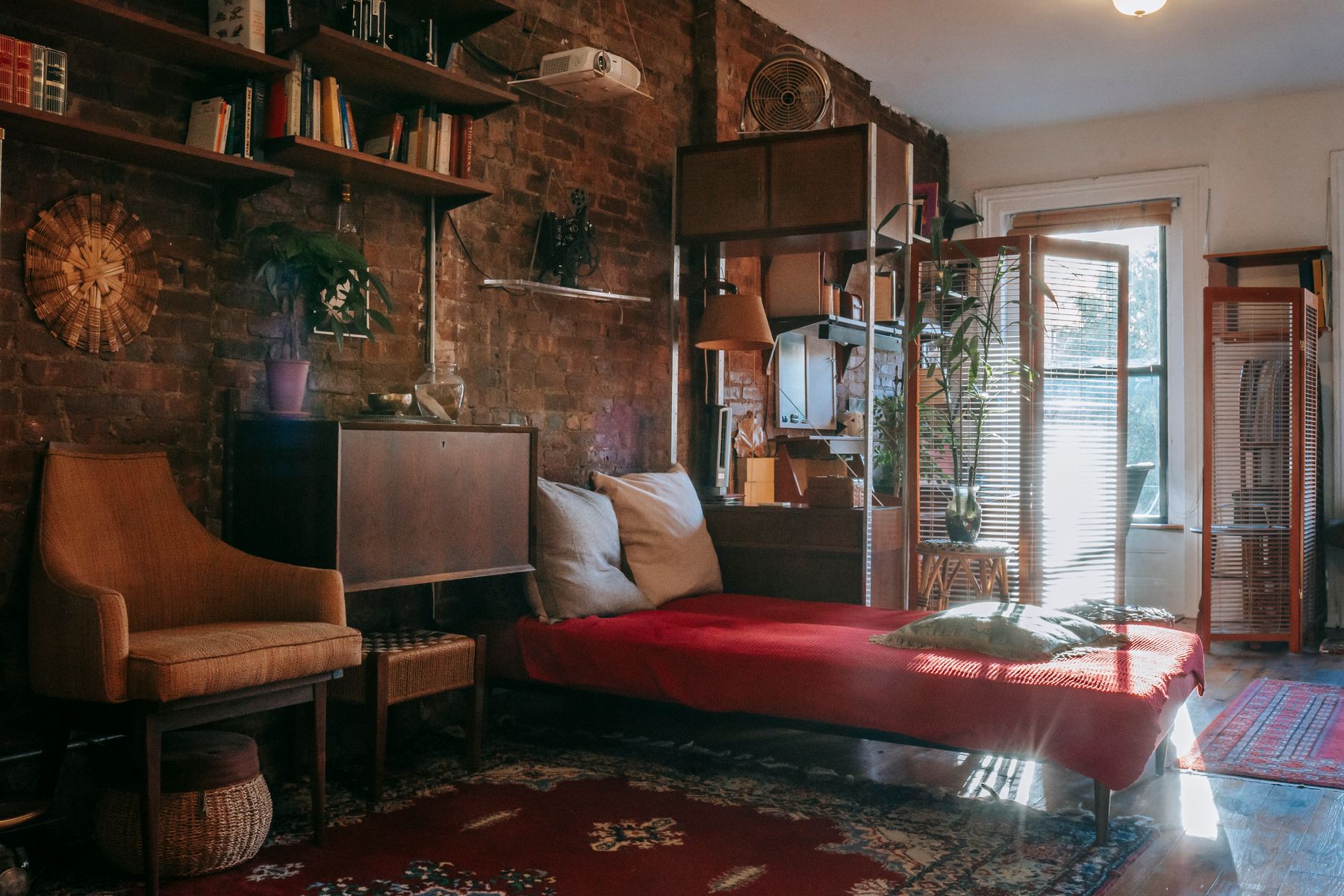
Choose Gothic Revival, Romantic or Modern Gothic
Gothic Revival emphasizes medieval-derived line, carved timber, stone, heraldic geometry and architectural presence. Romantic Gothic softens the structure with floral pattern, drapery, oxblood, plum and candle-like light. Modern Gothic reduces the vocabulary to a strong arch, deep mineral color, one sculptural light and generous negative space. Select one route as the lead and permit a second only as an accent. This prevents a room from becoming an indiscriminate mixture of baroque mirror, industrial cage lamp, Victorian floral, medieval replica and minimalist sofa. The route should answer how formal the room feels, how much ornament it can carry and which material is allowed to dominate.
Let One Silhouette Carry the Identity
Choose the room's lead shape before choosing motifs. It may be a pointed fireplace opening, tall arched mirror, carved bookcase, high-backed chair, lancet-shaped panel or chandelier with an emphatic downward point. Repeat the geometry quietly in two supporting places—perhaps a lamp base and the spacing of a gallery wall—rather than buying a matching set of visibly Gothic objects. A dominant silhouette gives the eye a hierarchy and allows ordinary contemporary pieces to coexist. In a low modern room, one tall, narrow element can create vertical pull; several undersized arches pasted around the walls will make the ceiling feel lower and the design less credible.
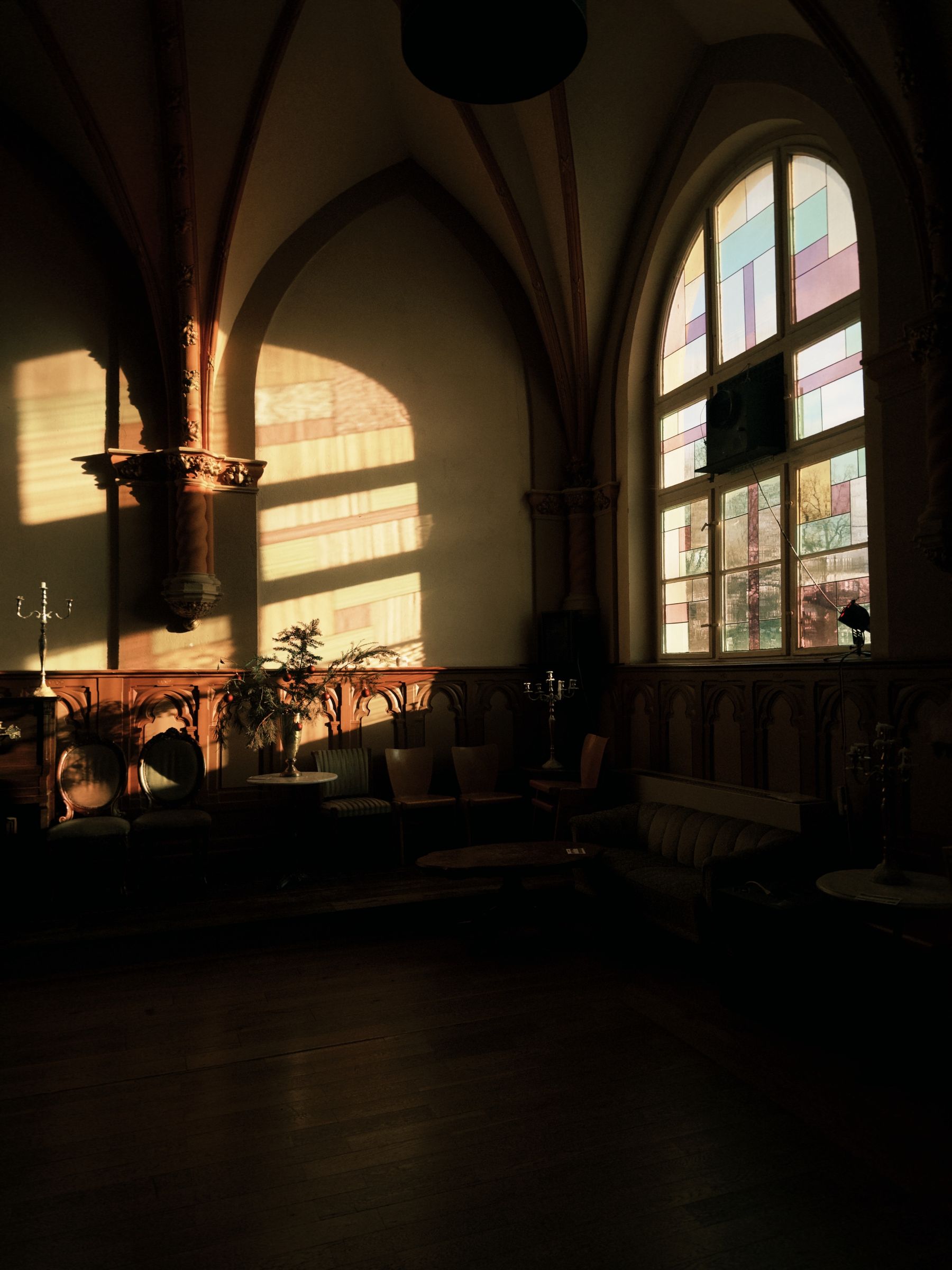
Work With the Architecture You Actually Have
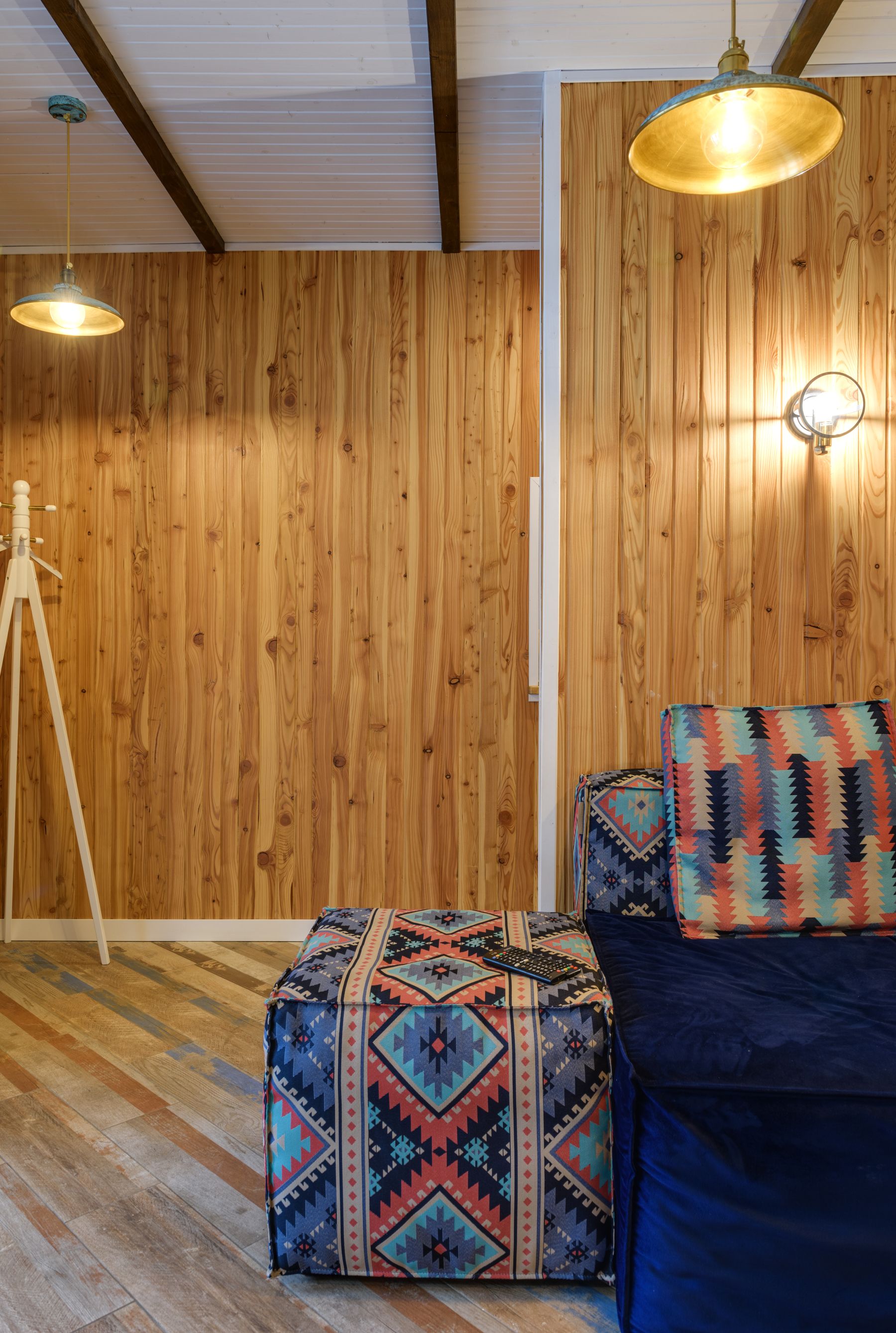
Survey ceiling height, window rhythm, door heads, fireplace, trim, radiators, vents and load-bearing changes before adding detail. Genuine Gothic rooms often gain power from vertical proportion and deep construction; thin foam arches and random faux-stone panels rarely reproduce that weight. In a plain shell, use paint, full-height curtains, a freestanding carved cabinet or one well-drawn panel composition to establish rhythm without pretending the building is medieval. Preserve original fabric only after checking condition and significance. [Living Room Wall Ideas](/living-room/living-room-wall-ideas/) helps coordinate paneling, art, storage and media as one elevation instead of separate decorative purchases.

Oxblood, Lichen and Aubergine Need a Middle Value
Black is useful as punctuation, but Gothic color has more range: soot, slate, lichen green, oxblood, aubergine, ink blue, aged plaster and bone can create depth without flattening the room. Begin with the fixed floor, stone, timber or retained sofa and map its undertone. Then assign a darkest value, a body color, a middle transition and a small reflective or pale note. Deep green with dark wood feels botanical and architectural; oxblood with smoke grey feels more Romantic; blue-black with chalky stone can feel severe and Modern Gothic. Sample every color beside the actual upholstery in morning light and in the lamps used at night.
Let Shadow Separate Forms Instead of Hiding Them
A Gothic room needs shadow, not visual confusion. Separate the sofa from the wall by value or sheen, reveal the floor edge along main routes, and keep switches, steps and hearth boundaries readable. North-facing daylight may make blue-black paint cold and green read grey; strong afternoon light can expose every surface inconsistency. Test large samples around the room, then photograph the space in grayscale at noon and during the normal evening scene. If furniture merges into the wall, add a mid-value textile, reflected ceiling light or a narrow highlight rather than scattering pale accessories everywhere. The room should feel enclosed while faces and pathways remain visible.
Why Carving Matters More Than a Black Finish
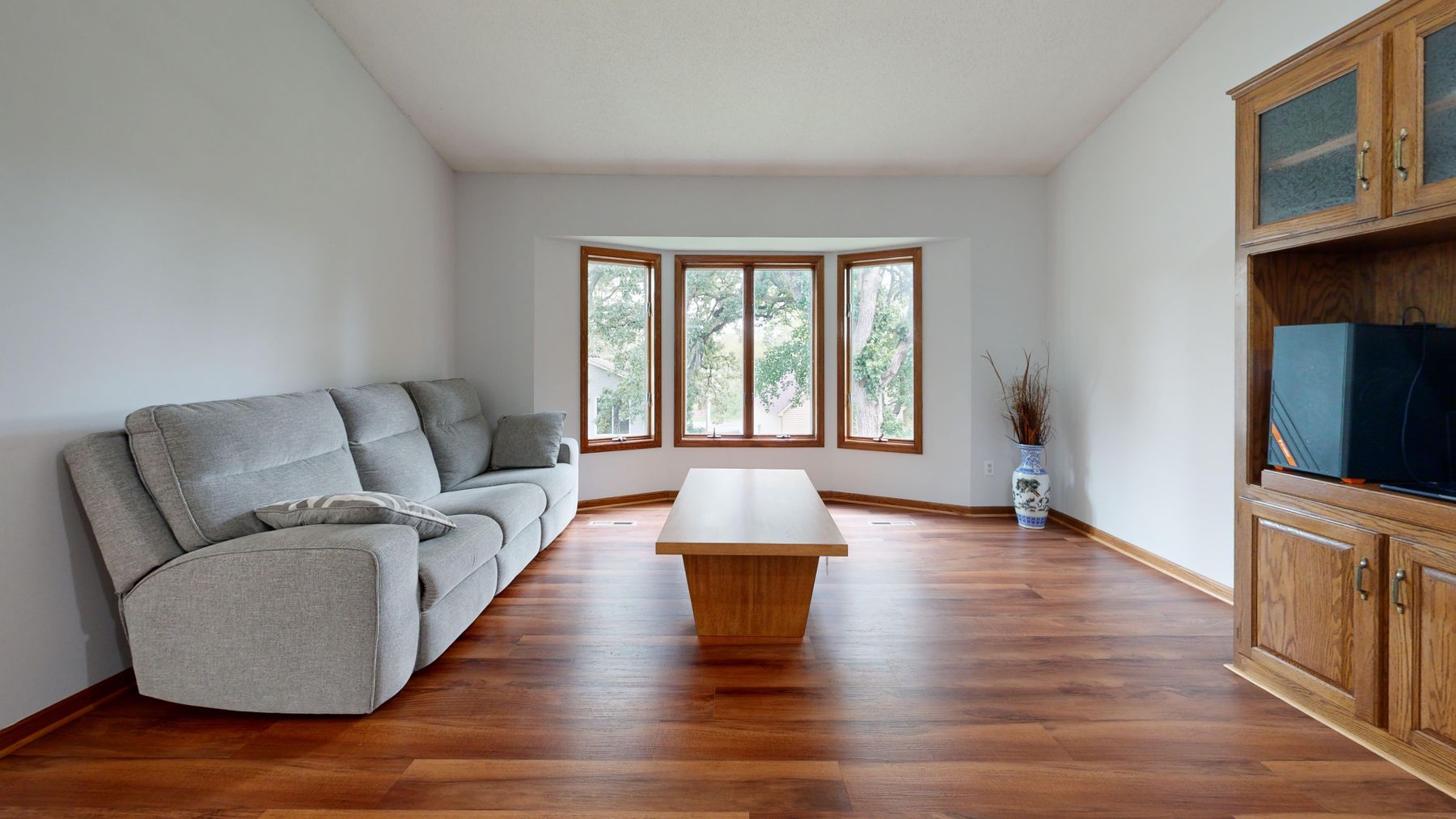
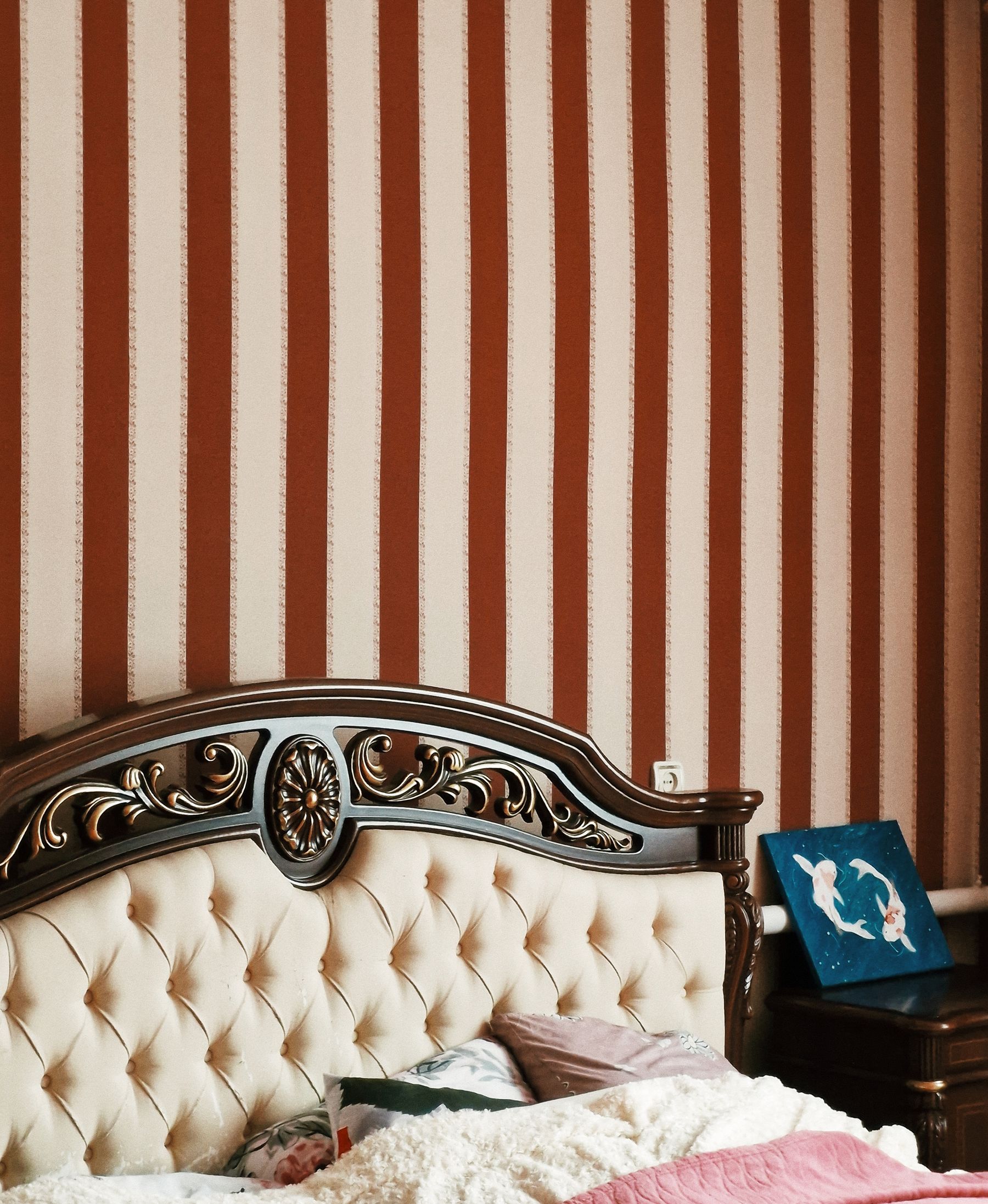
Dark oak, walnut, ebonized timber and stained softwood can establish weight through grain, joinery and relief. One substantial cabinet, table or high-backed chair is often enough; a room full of heavy reproductions can overwhelm standard ceiling heights and reduce circulation. Inspect old pieces for movement, pests, odors, unstable repairs and uncertain surface coatings before bringing them inside. Avoid painting sound antique timber black merely to make it look Gothic, and be wary of lightweight composite ornament marketed as carved. [Vintage Living Room Ideas](/living-room/vintage-living-room-ideas/) covers sourcing and repair in more depth, while the Gothic decision is whether the piece strengthens silhouette and shadow.
Turn the Hearth Into the Room's Point of Gravity
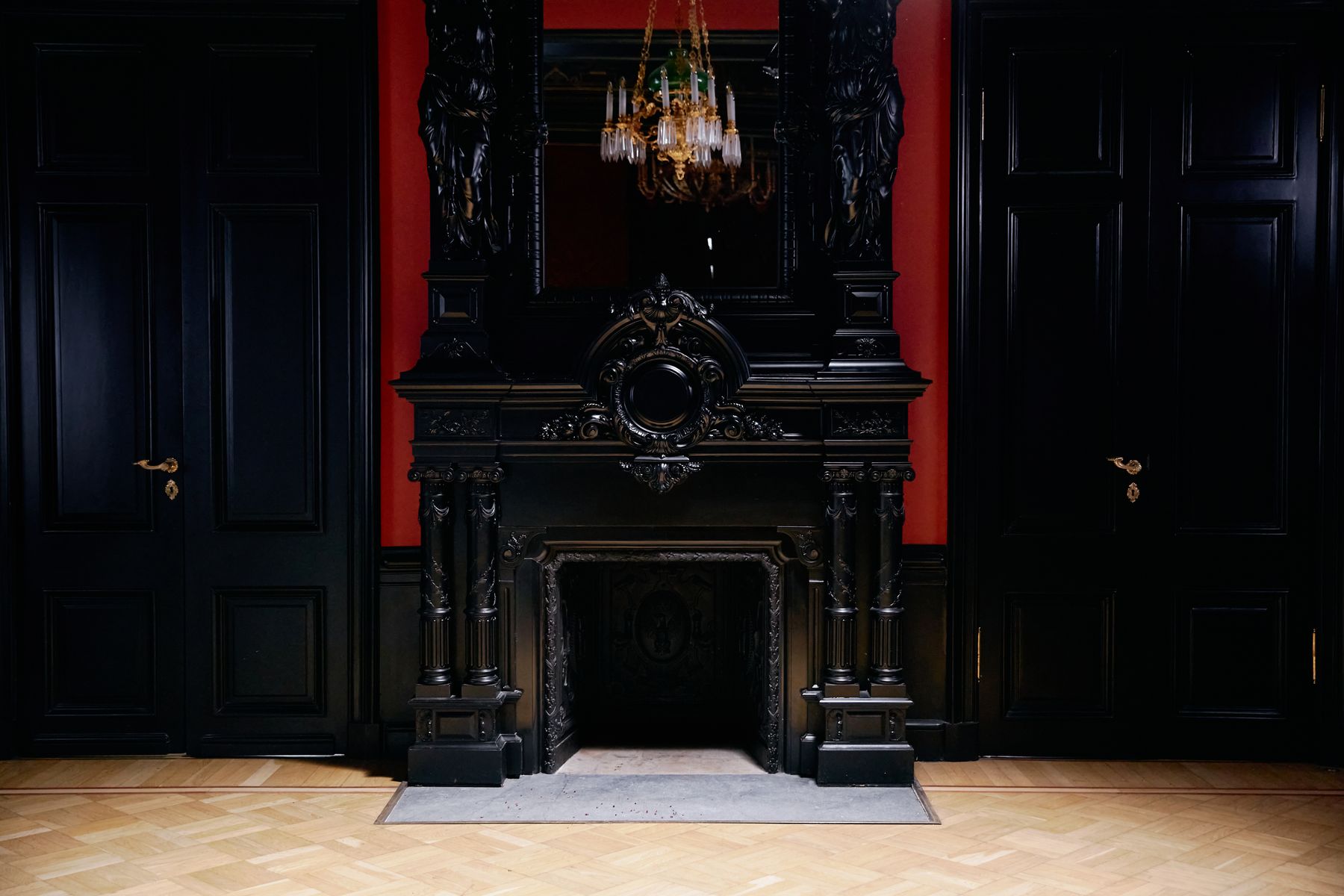
A deep firebox, carved surround, dark stone or tall overmantel can provide the mass that a Gothic room needs. If the fireplace works, verify the chimney, ventilation, fuel, guard, clearances and maintenance with appropriate local professionals before placing rugs or seating around it. If it is decorative, use the opening honestly—logs, a sculptural object or a dark recess—rather than unsafe candles or imitation flames. Keep the mantel composition strong and limited. One mirror, textile or sculptural group is more persuasive than a line of miniature curios. The seating should acknowledge the hearth without becoming a rigid audience that ignores conversation or the window.
Treat Velvet as Moving Shadow and Tapestry as Image
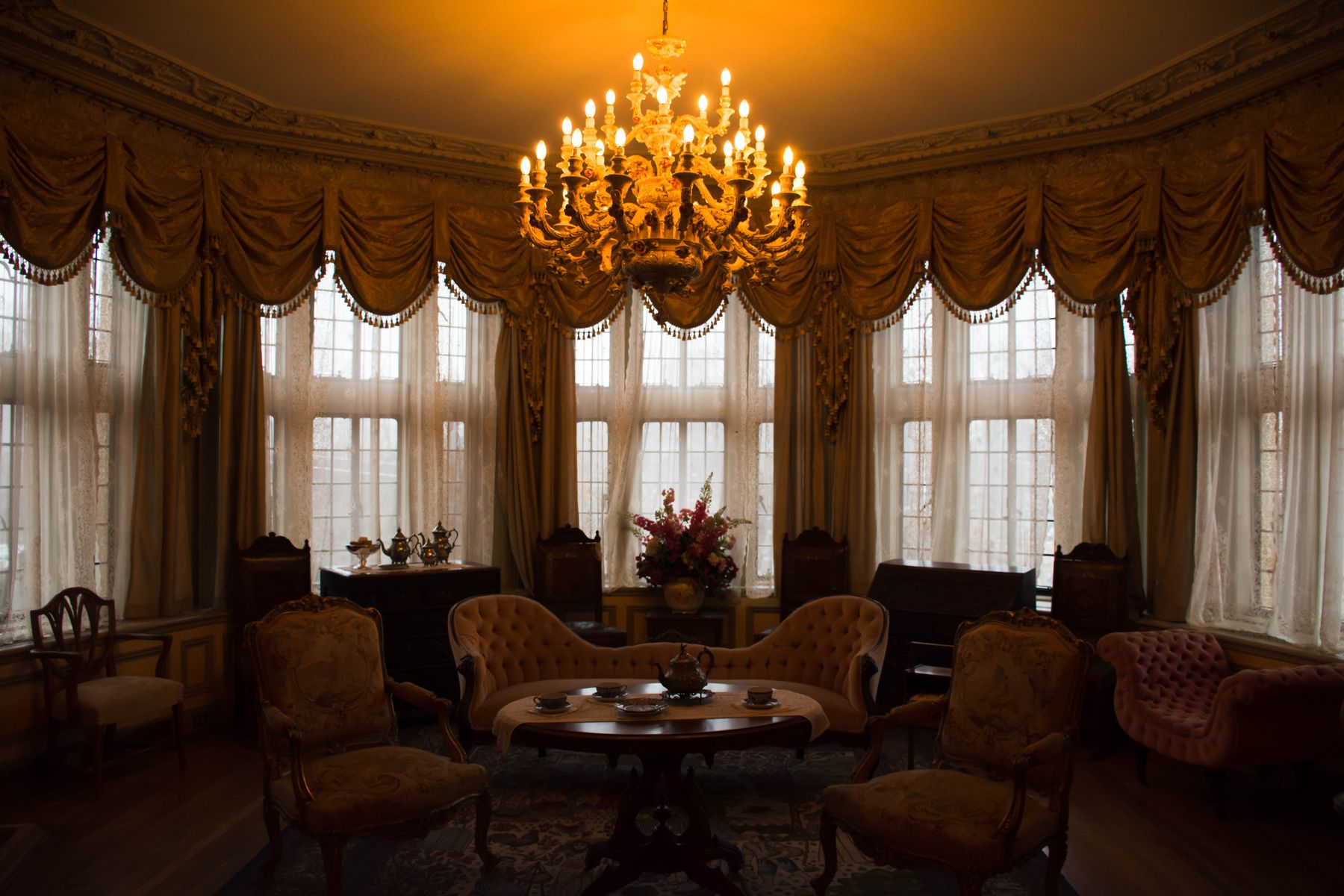
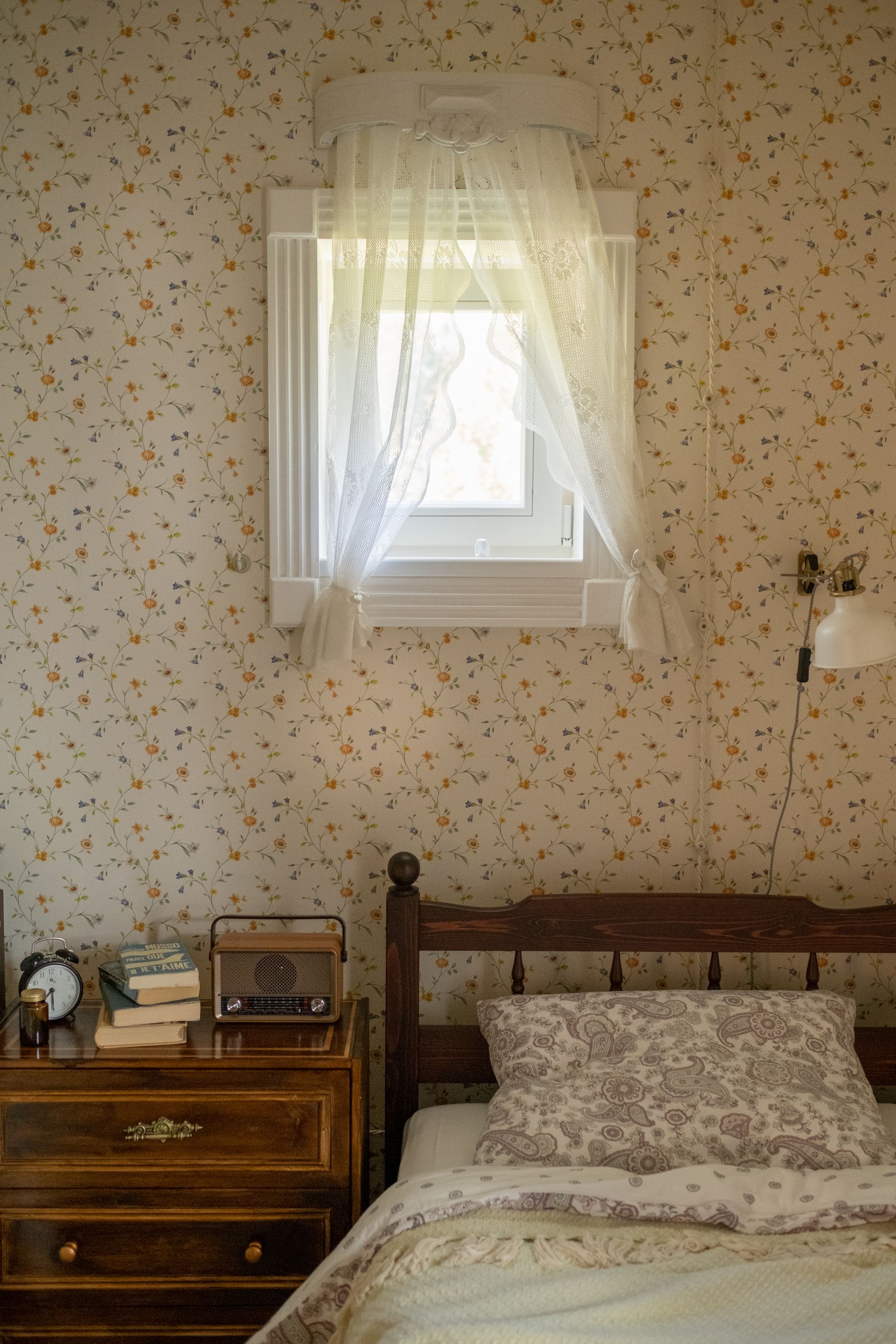
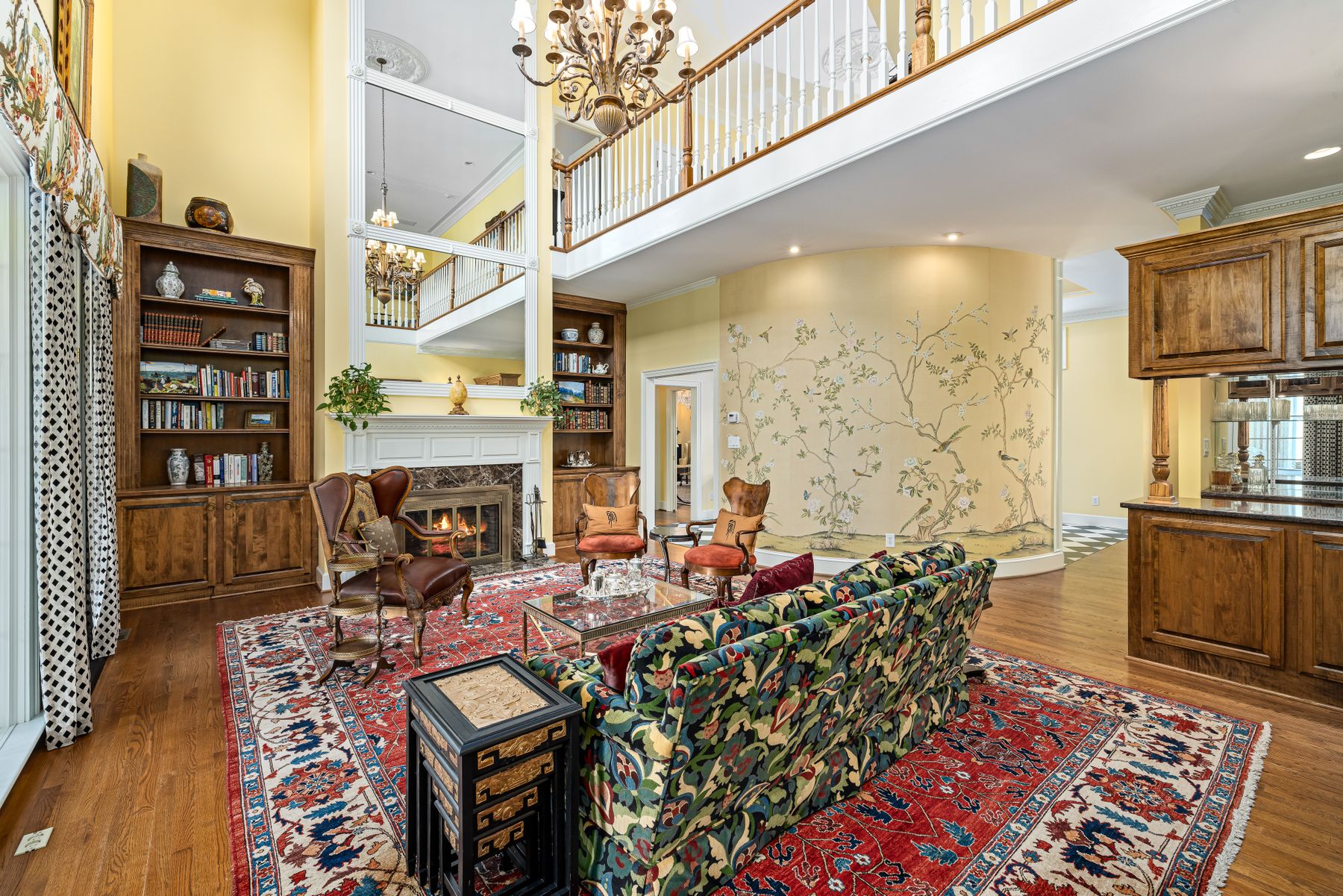
Velvet absorbs and reflects light as the pile changes direction, making it especially effective on one sofa, chair or curtain rather than every surface. Tapestry-like weaves and large dark florals can add narrative pattern without resorting to printed novelty motifs. Check abrasion, cleaning method, fading, pet claws, lint and pile pressure before specifying a large area. Place the richest textile where the body meets the room, then give the eye a rest with plain linen, leather, wool or painted timber. Romantic Gothic becomes costume when fringe, tassel, brocade, lace and floral all compete at the same scale.
Stage a Salon, Not a Throne Room
High backs, rolled arms and carved frames can create presence, but the room must still support normal speech and easy entry. Mix one commanding piece with quieter seating rather than arranging multiple throne-like chairs along the walls. Angle seats toward one another, give each a reachable surface and keep the main route outside the conversation group. An oversized carved coffee table may provide visual weight yet leave too little knee space; two smaller tables can be more flexible. Use the full-scale tests in [Living Room Layout Ideas](/living-room/living-room-layout-ideas/) before buying a piece whose drama depends on empty showroom space.
Use Colored Glass to Paint the Walls at Different Hours
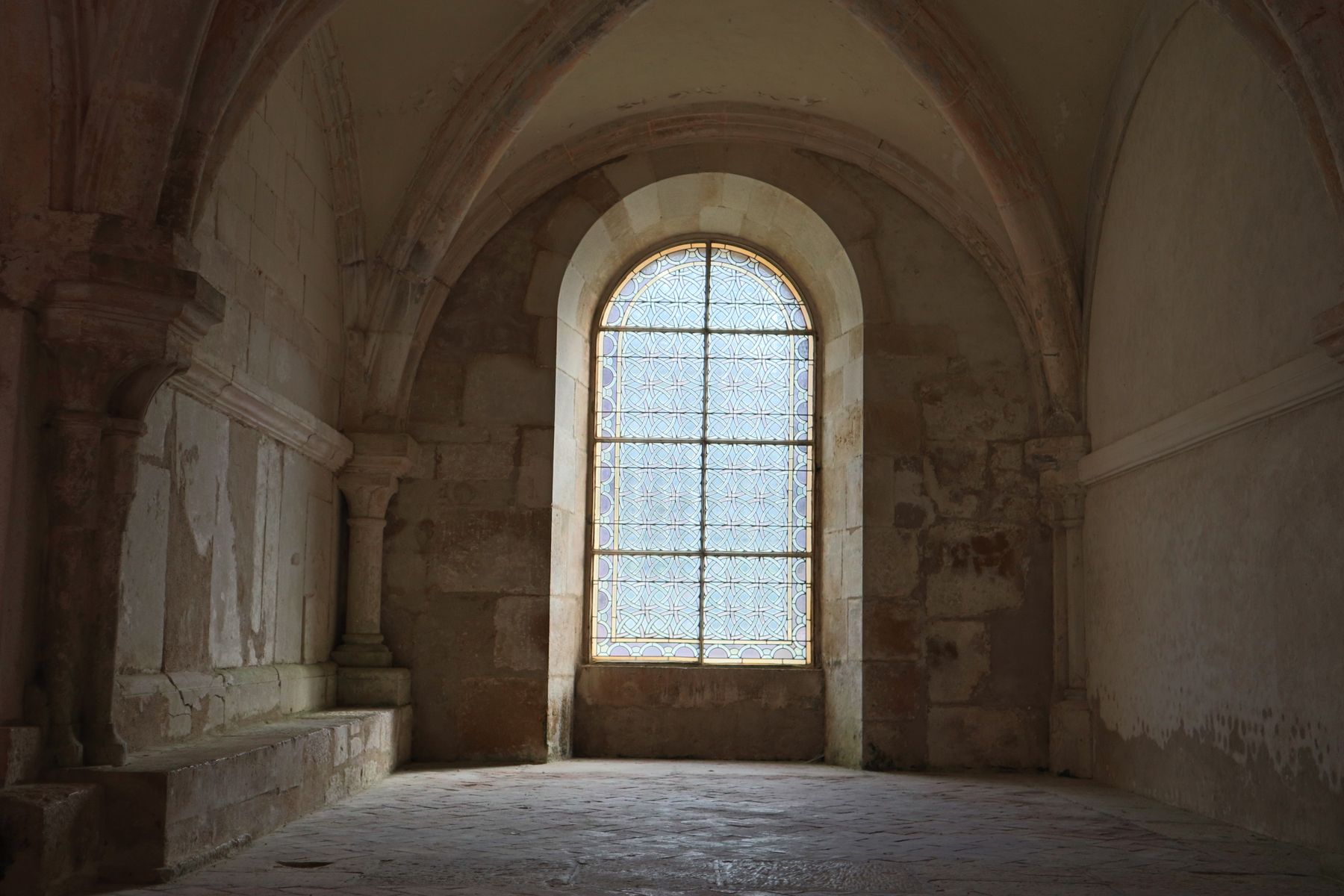
An arched mirror can repeat the lead silhouette, while colored or textured glass introduces the jewel-like light associated with Gothic architecture. Use these devices to redirect daylight or lamp glow rather than as disconnected motifs. A mirror opposite clutter multiplies clutter; one opposite a window may create glare or expose an unwanted view after dark. For fixed glazing, assess privacy, thermal performance and any heritage constraints before alteration. Removable colored film is not automatically harmless to glass or frames, so confirm compatibility. A small colored panel, cabinet insert or lamp shade may deliver enough chromatic shadow without turning the room into an imitation chapel.
Script the Room After Sunset
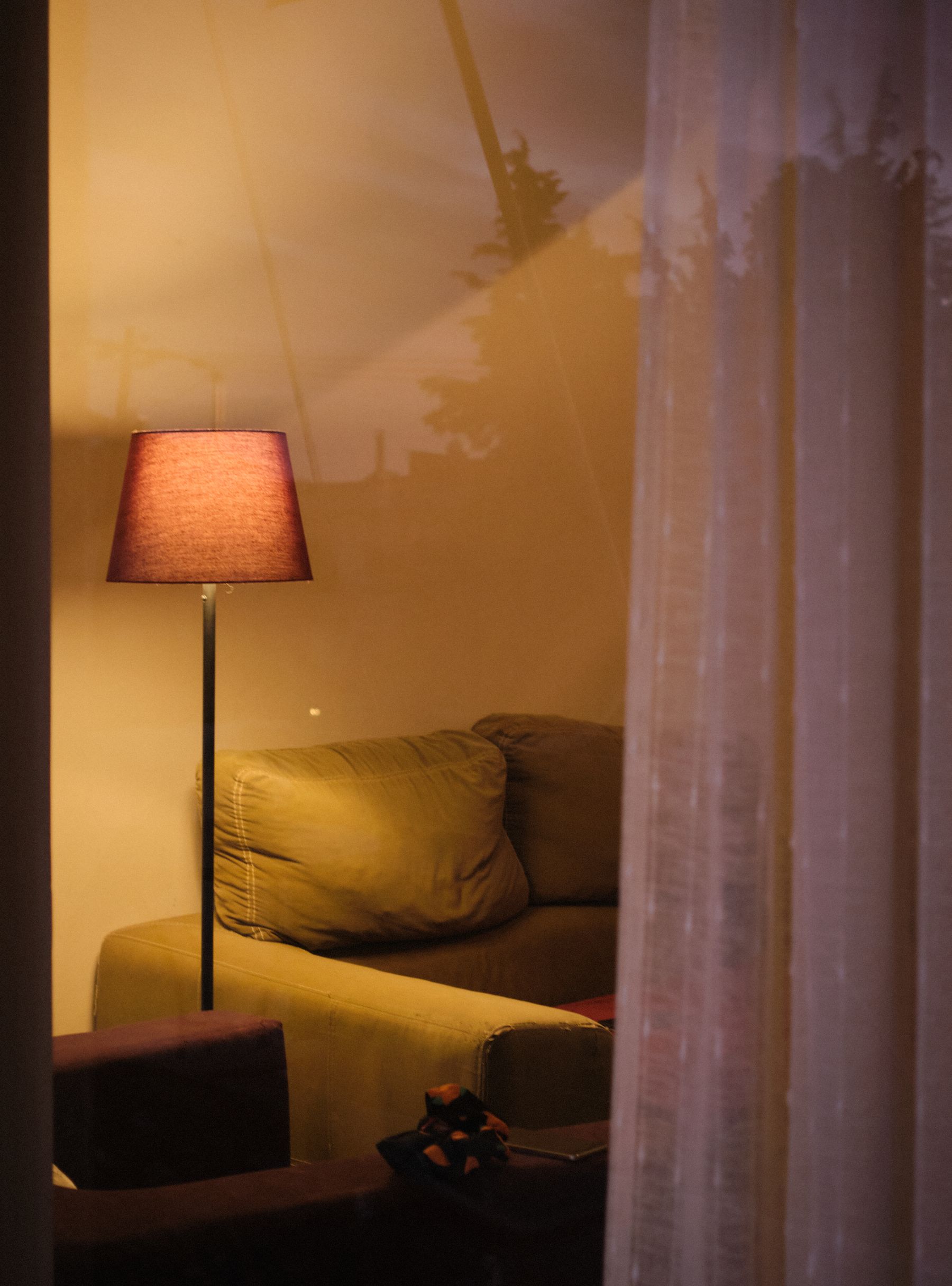
Plan distinct scenes for conversation, reading, television, display and cleaning. A chandelier may establish vertical drama, but it should not be the only source; shaded table lamps, directional reading light and concealed shelf or picture light create depth at human height. Keep bare bulbs out of seated sightlines and use dimming only with compatible lamps and controls. Battery candles can suggest flicker without open flame, yet they should not replace useful illumination. [Living Room Lighting Ideas](/living-room/living-room-lighting-ideas/) provides the circuit and glare framework; the Gothic task is to protect darkness between pools of light rather than washing every wall evenly.
Choose Art and Symbols Without Building a Set
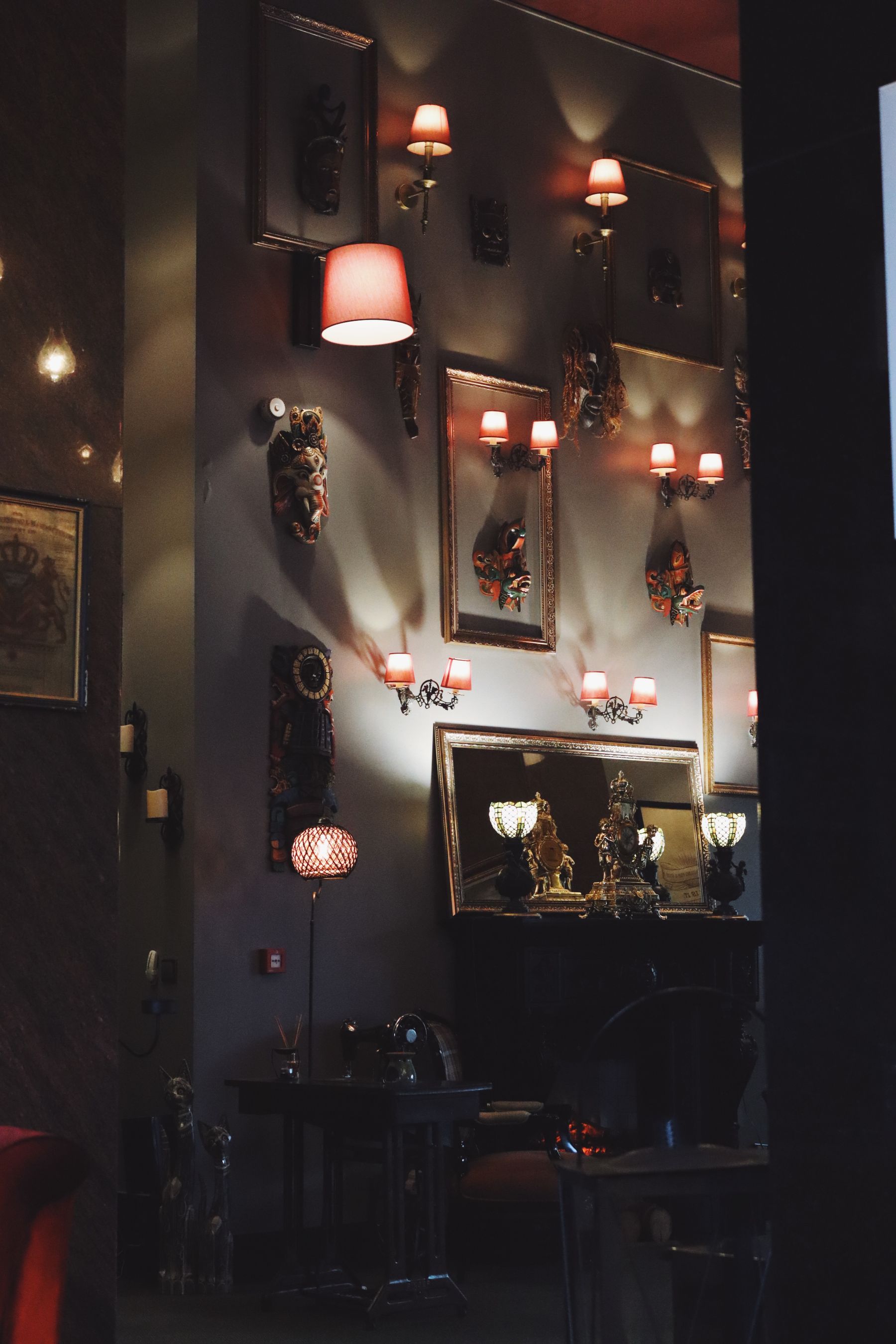
Portraiture, botanical studies, architectural drawings, textile fragments, photography and personal work can deepen the room when their scale and framing support the architecture. Do not use skulls, ravens, crosses, bats or occult-looking graphics as a shortcut unless they carry genuine personal meaning and can be displayed respectfully. Verify rights before reproducing artwork, and protect original works from direct sun, heat and damp. One large piece or a measured vertical group usually reinforces Gothic line better than many small frames. The substitution test is simple: remove the most obvious symbol. If the room stops reading Gothic, the underlying form, material and light need more work.
Make the Screen Recede Without Hiding Its Heat
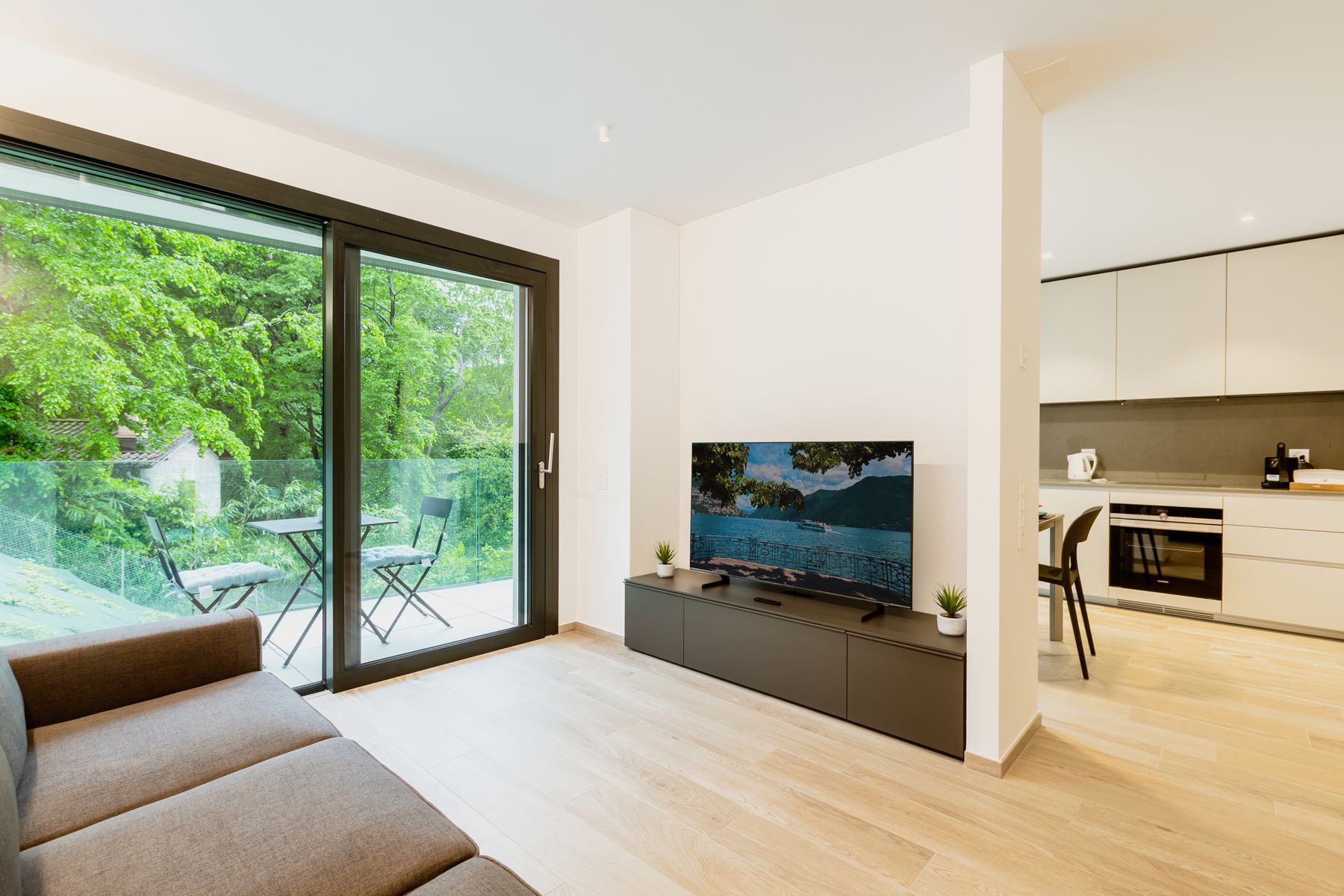
A dark wall can reduce the contrast of an idle screen, but the television still needs correct height, viewing distance, ventilation and cable access. Avoid hiding it behind heavy framed panels or inside an antique cabinet that traps heat. A low dark-stained console can connect the screen to the room, while an adjacent vertical cabinet or arched niche may carry the Gothic silhouette. Control window reflections and keep a low lamp behind or beside the viewer so the room is not watched in total darkness. Do not mount the screen above a working fireplace unless temperature, service access and viewing angle have been resolved.
Use Height When Floor Area Is Scarce
In a compact living room, concentrate Gothic identity in one tall gesture: full-height curtains, a narrow carved cabinet, elongated mirror or dark ceiling-to-wall transition. Choose one comfortable sofa, one mobile chair and tables that preserve the main route rather than shrinking every piece into decorative miniatures. A continuous deep color can reduce visual chopping, but maintain enough value contrast at the floor and seating edges. Use a correctly scaled rug to hold the group instead of several small patterned layers. [Small Living Room Ideas](/living-room/small-living-room-ideas/) covers the proportional tests; Gothic contributes height, enclosure and a controlled focal shadow.
Make the Gothic Evidence Portable
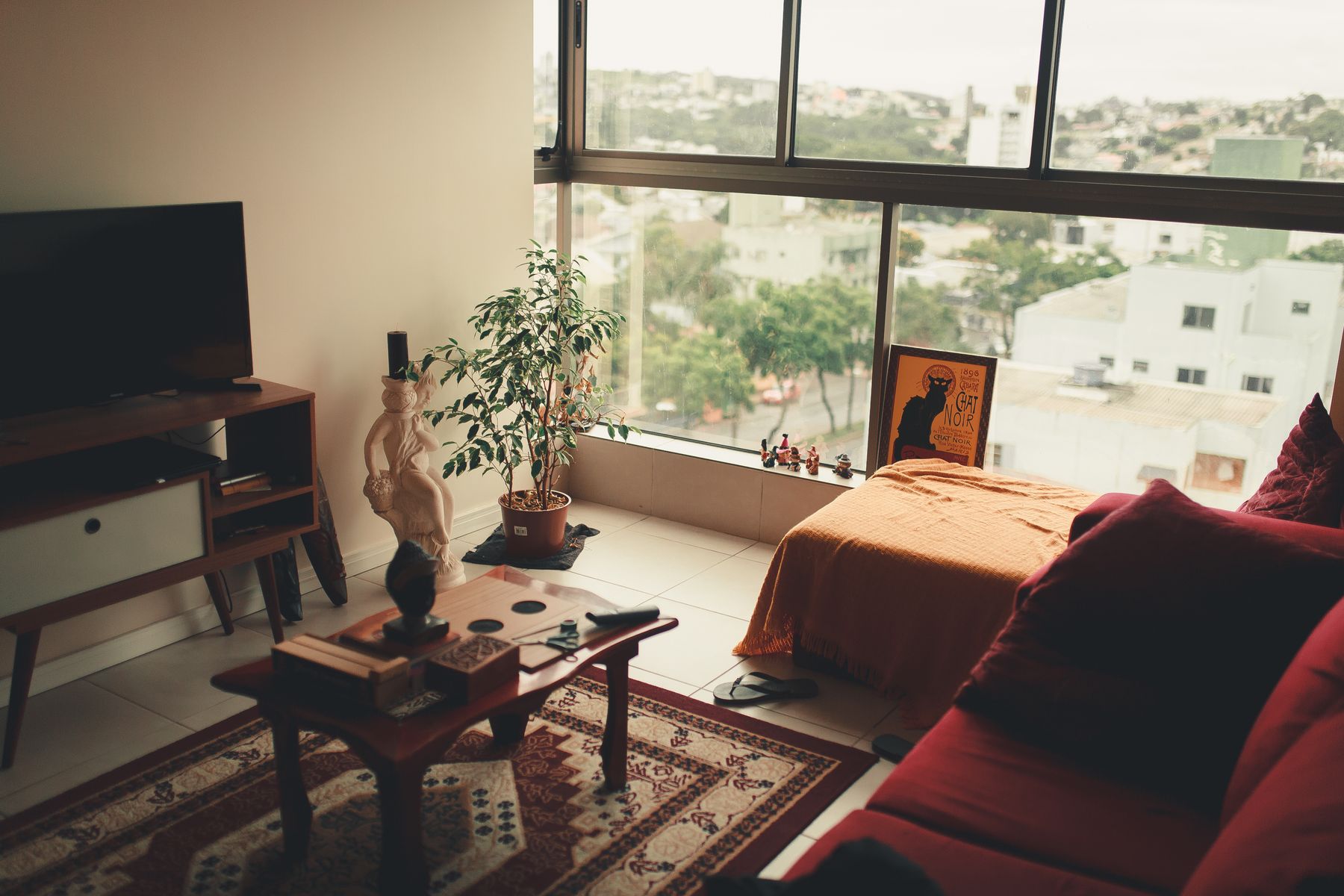
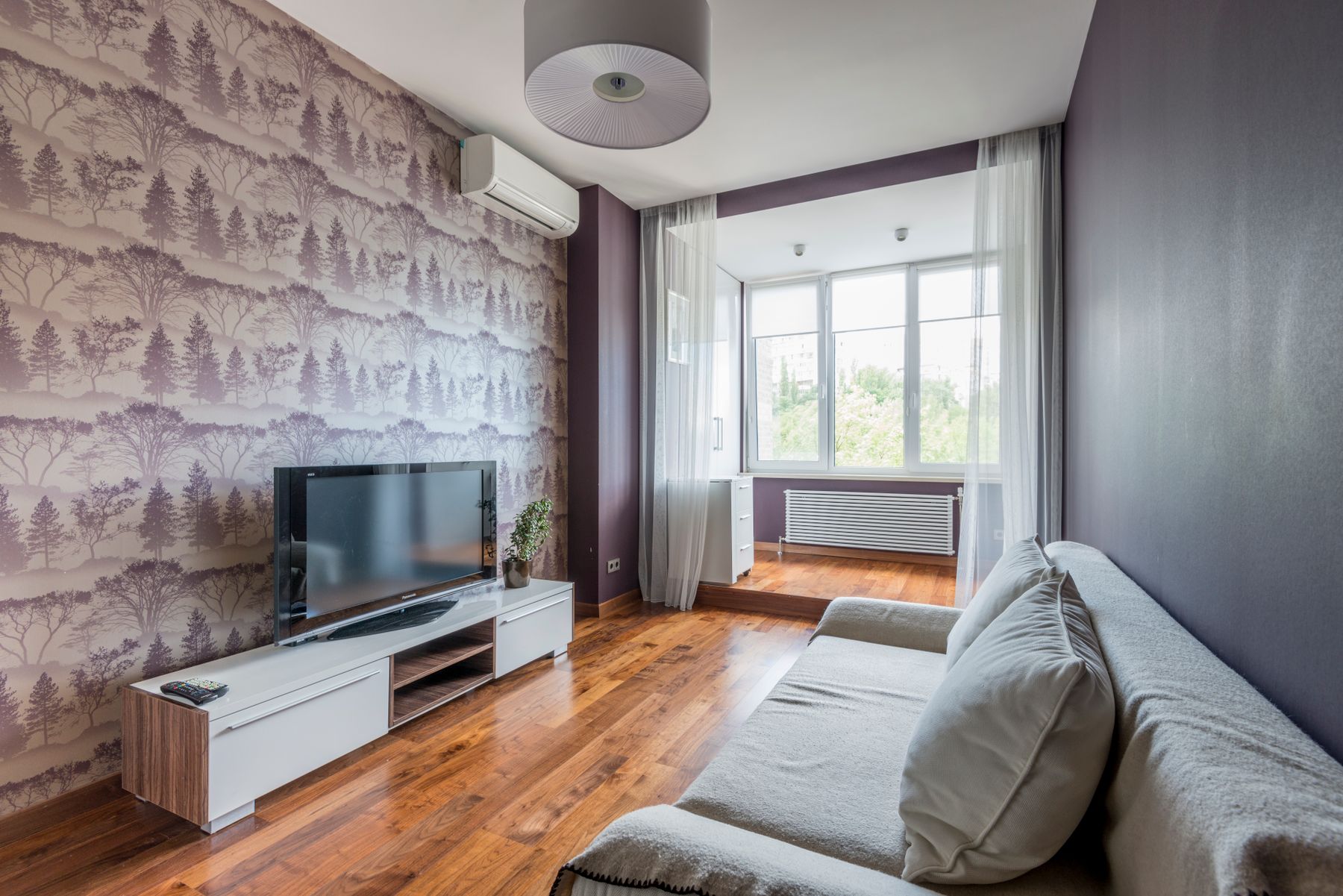
A renter can establish Gothic character through a dark rug, tall approved curtains, one high-backed chair, a freestanding cabinet, shaded lamps and framed textile or art. Confirm the lease before painting, drilling or applying film. Peel-and-stick products can damage aged paint or react to heat and humidity, so test them in an inconspicuous place and document the starting condition. Avoid temporary foam molding or faux-stone panels that are difficult to clean and costly to discard. Spend on portable pieces with real material presence and a future use rather than a disposable stage set. The room should return cleanly to neutral without having lived neutrally.
Make Every Dark Edge Read Before Decoration
Deep color and heavy furniture make edge contrast, route width and stable support especially important. Choose seat height, firmness and arms around the user's transfer needs rather than assuming a deep velvet sofa is comfortable for everyone. Contrast furniture from the floor, secure rug edges, keep low tables out of the direct route and place controls within reach. A carved walking aid stand or dark switch plate is not useful if it disappears against the wall. Decorative chains, floor candelabra and trailing cords create avoidable hazards. Ask the person who uses the room which shadows feel atmospheric and which make independent movement harder.
Know Stable Patina From Active Damage
Dark matte paint shows scuffs, velvet shows pressure and lint, carved wood traps dust, metal can corrode and old textiles may hold odor or pests. Record maker care instructions and conservation concerns before cleaning. Distinguish stable patina from active damage: a worn edge may be meaningful, while flaking finish, loose joinery, damp or insect activity needs attention. Use soft brushes and suitable vacuum attachments for carving, rotate textiles away from strong sun and keep air moving behind large cabinets on vulnerable exterior walls. More ornament means more maintenance surfaces, so every new layer should justify the labor it creates.
Run the No-Costume Subtraction Test
Finish by removing the bats, skulls, faux candles, miniature arches and any object bought only because it was labeled Gothic. Then review the room's silhouette, value structure, material depth, conversation plan, daylight, evening light, media, route and cleaning access. If the identity remains, the design has substance. If it disappears, strengthen one architectural or furnishing decision rather than restoring every prop. Compare the result with [Art Deco Living Room Ideas](/living-room/art-deco-living-room-ideas/) and [Traditional Living Room Ideas](/living-room/traditional-living-room-ideas/): Gothic should feel more vertical, shadow-led and emotionally charged than either, even when all three use dark wood and classic furniture.