Choose the Connective Thread Before Adding Variety
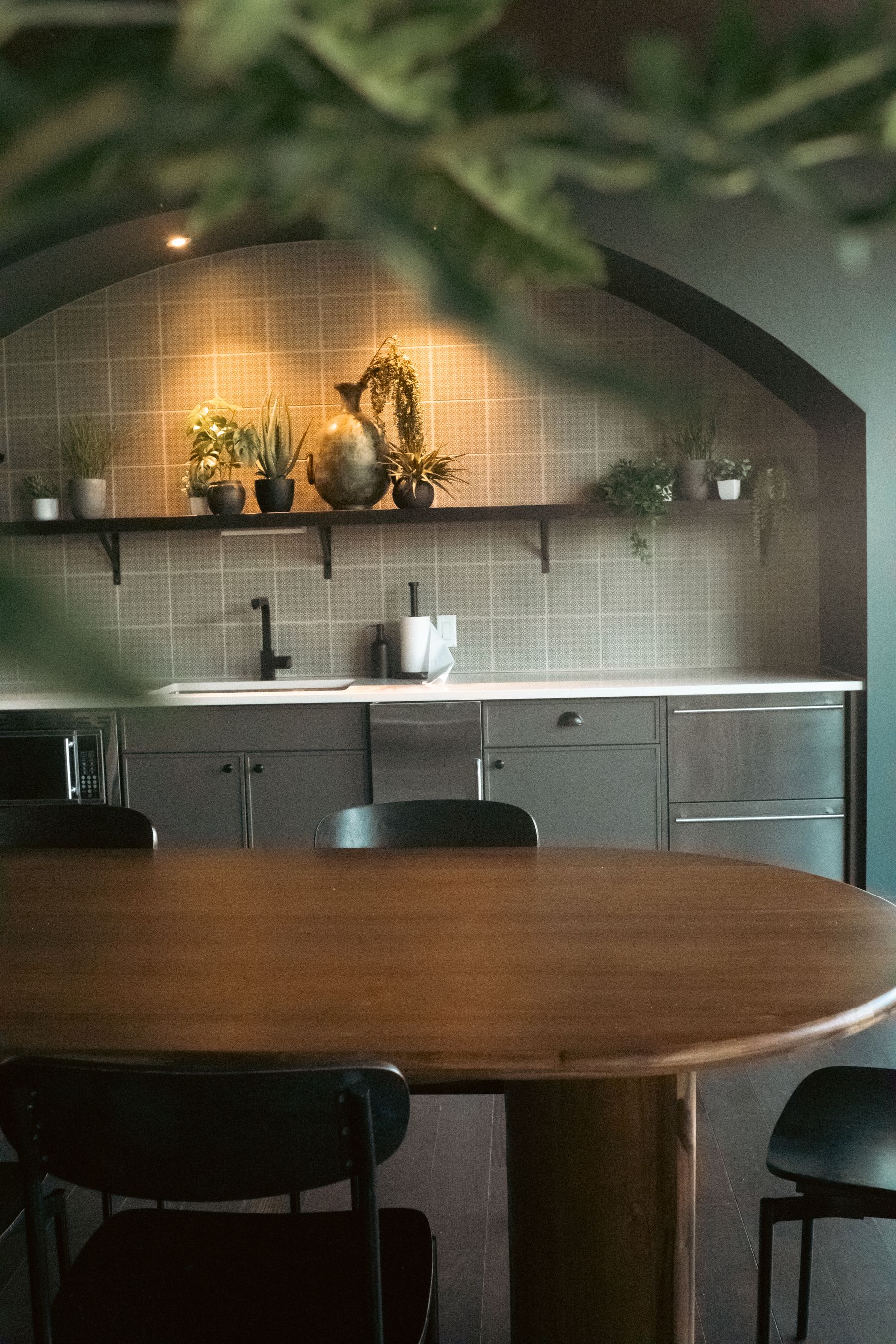
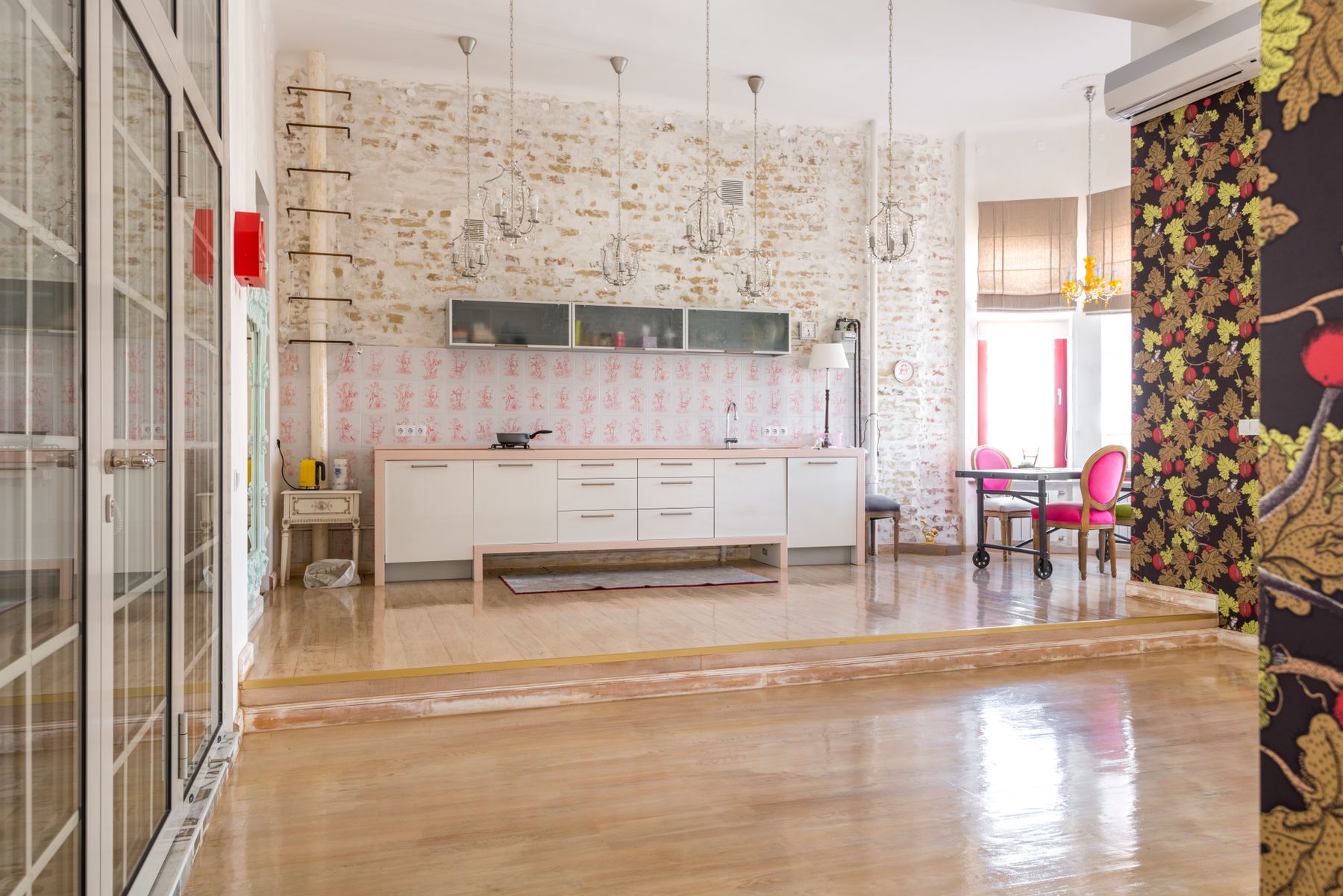
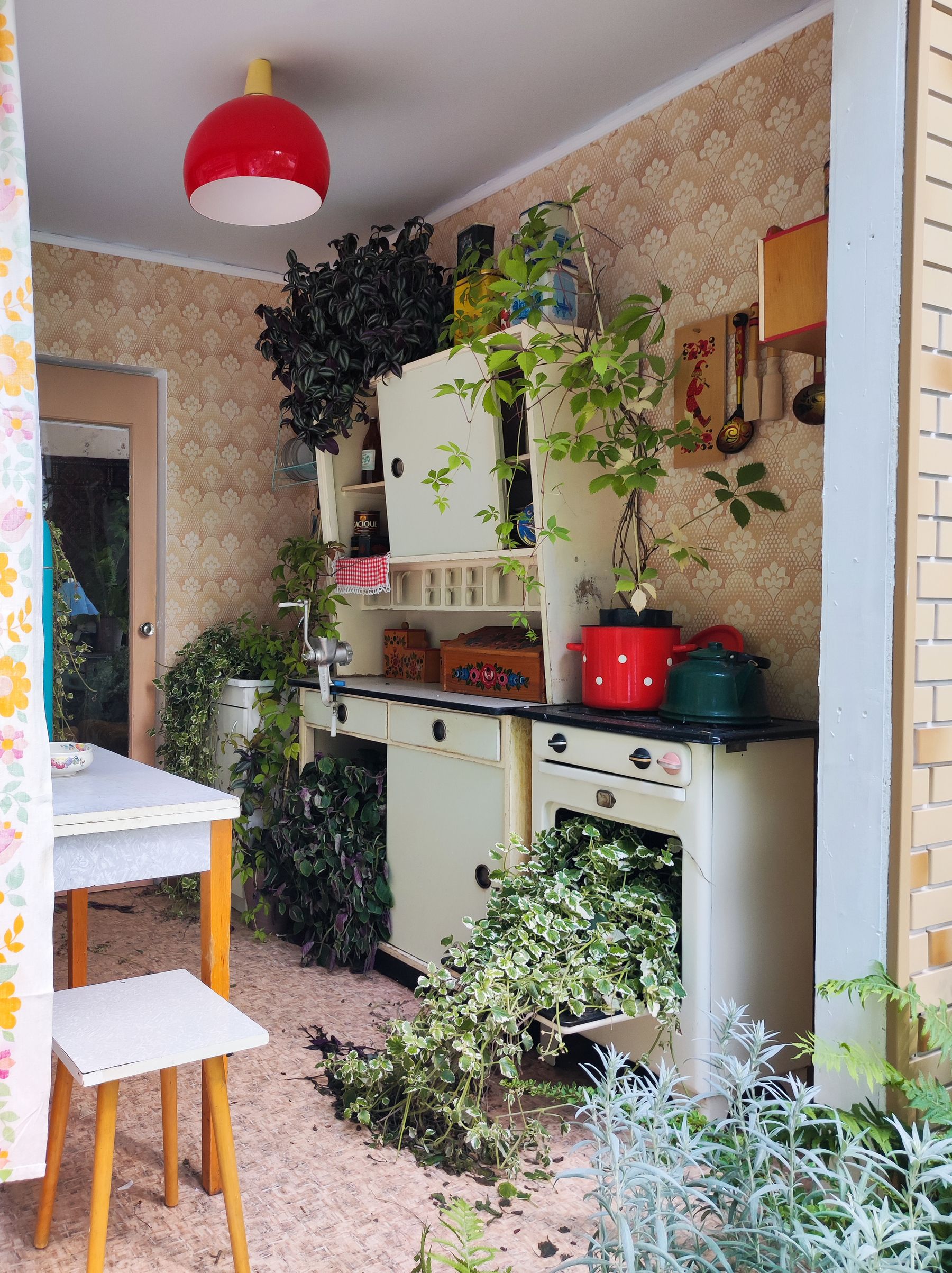
Color can be the connective thread, but it is only one option. A repeated curve, wood undertone, black line or warm metal can perform the same job. Decide what visual relationship will recur across unlike pieces before adding more difference. This gives the room a rule the eye can follow even when furniture, periods and materials vary.
Choose One Anchor Piece That the Room Must Resolve
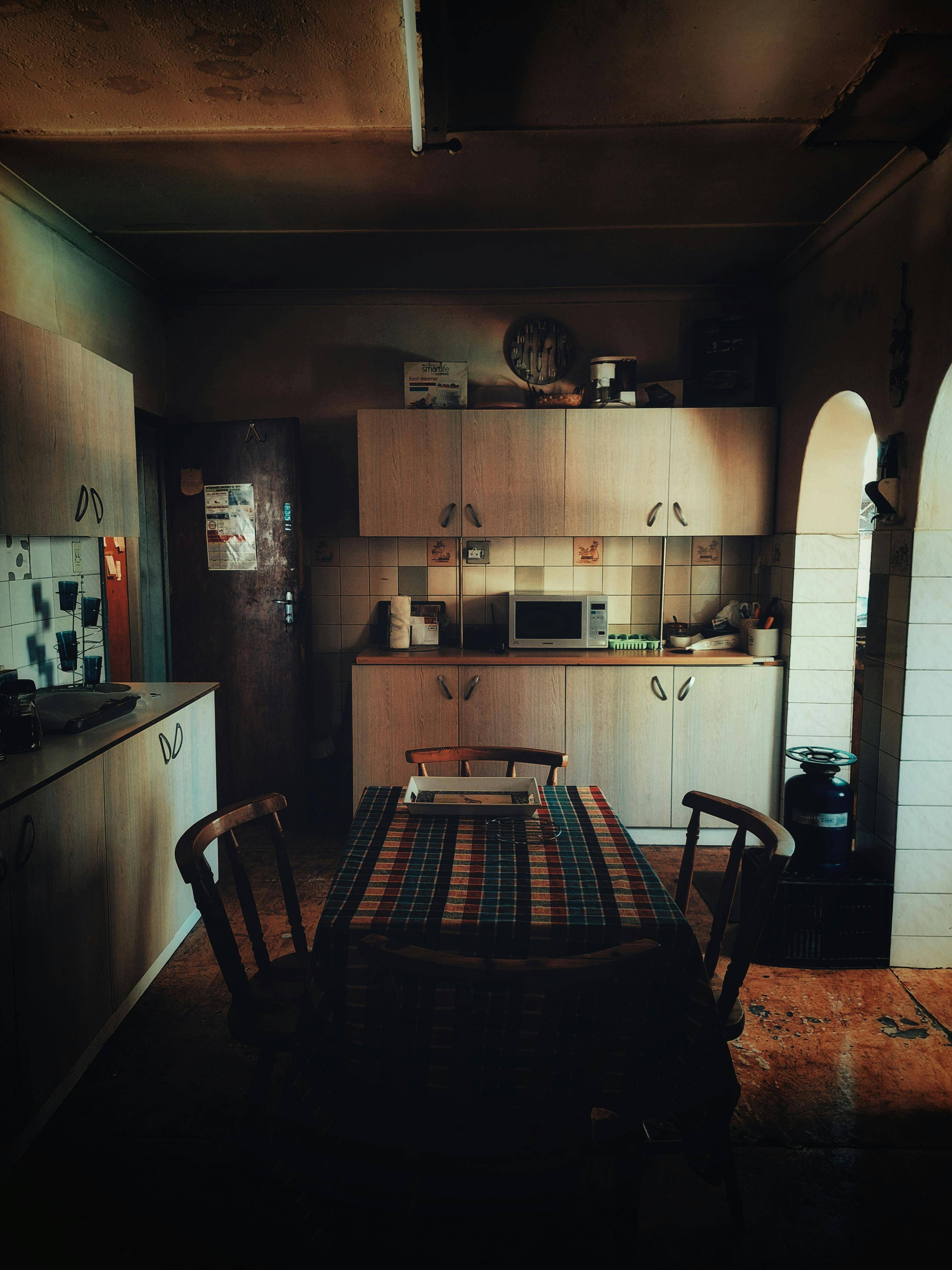
An older table, unusual light, strong tile or inherited cabinet can become the anchor around which newer decisions are made. The anchor should have enough function or visual weight to justify keeping it. Instead of trying to make everything match it, decide which qualities—scale, color, material or line—newer elements should echo and which contrasts should remain visible.
Build a Pattern Hierarchy, Not a Pattern Collection
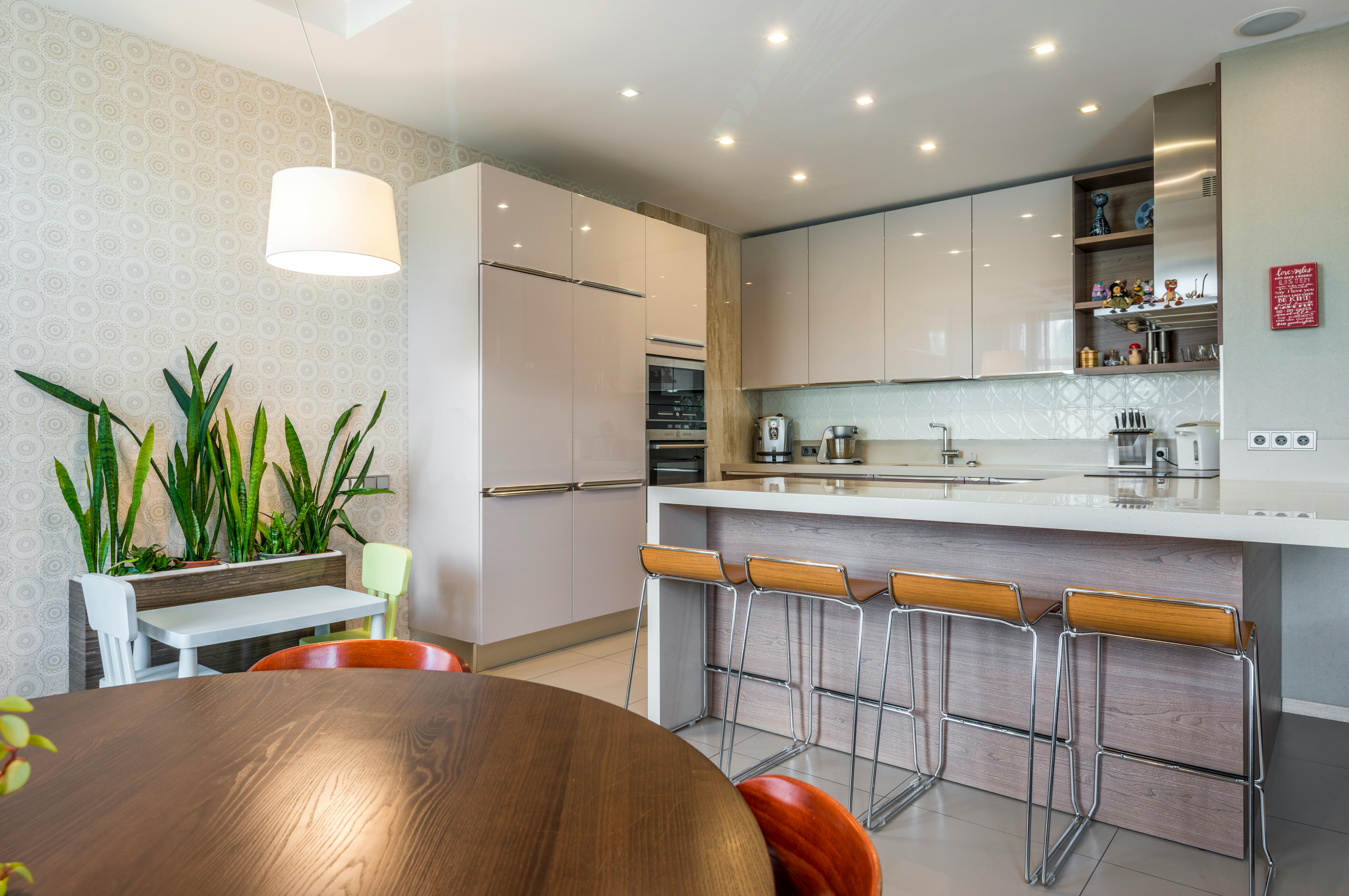
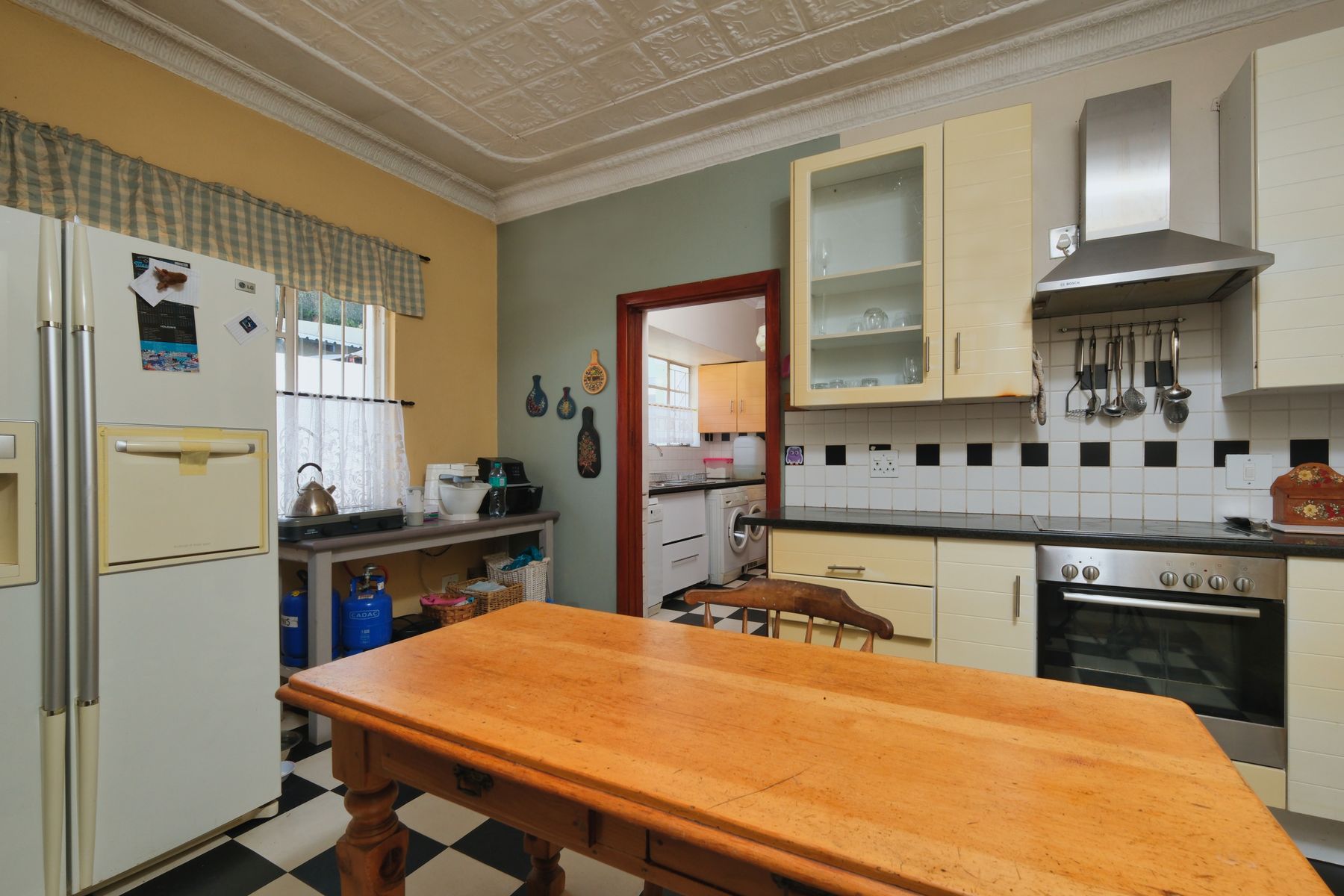
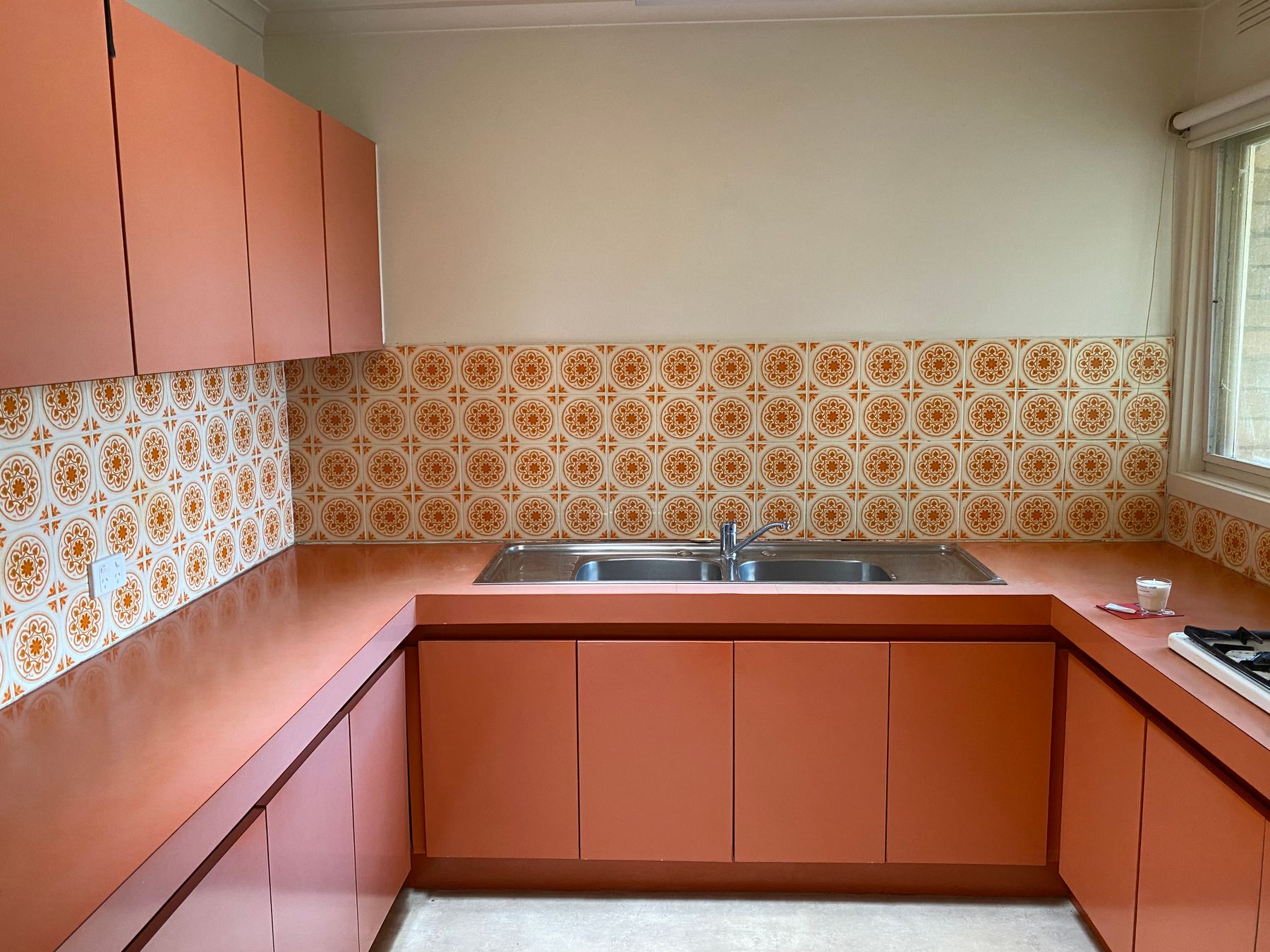
Eclectic rooms can hold more than one pattern when their scale and roles differ. Give one pattern the leading field, such as floor or backsplash, then let a second appear at a smaller or softer scale. Shared color can connect them, but they should not occupy equal area or contrast. Pattern hierarchy turns variety into composition.
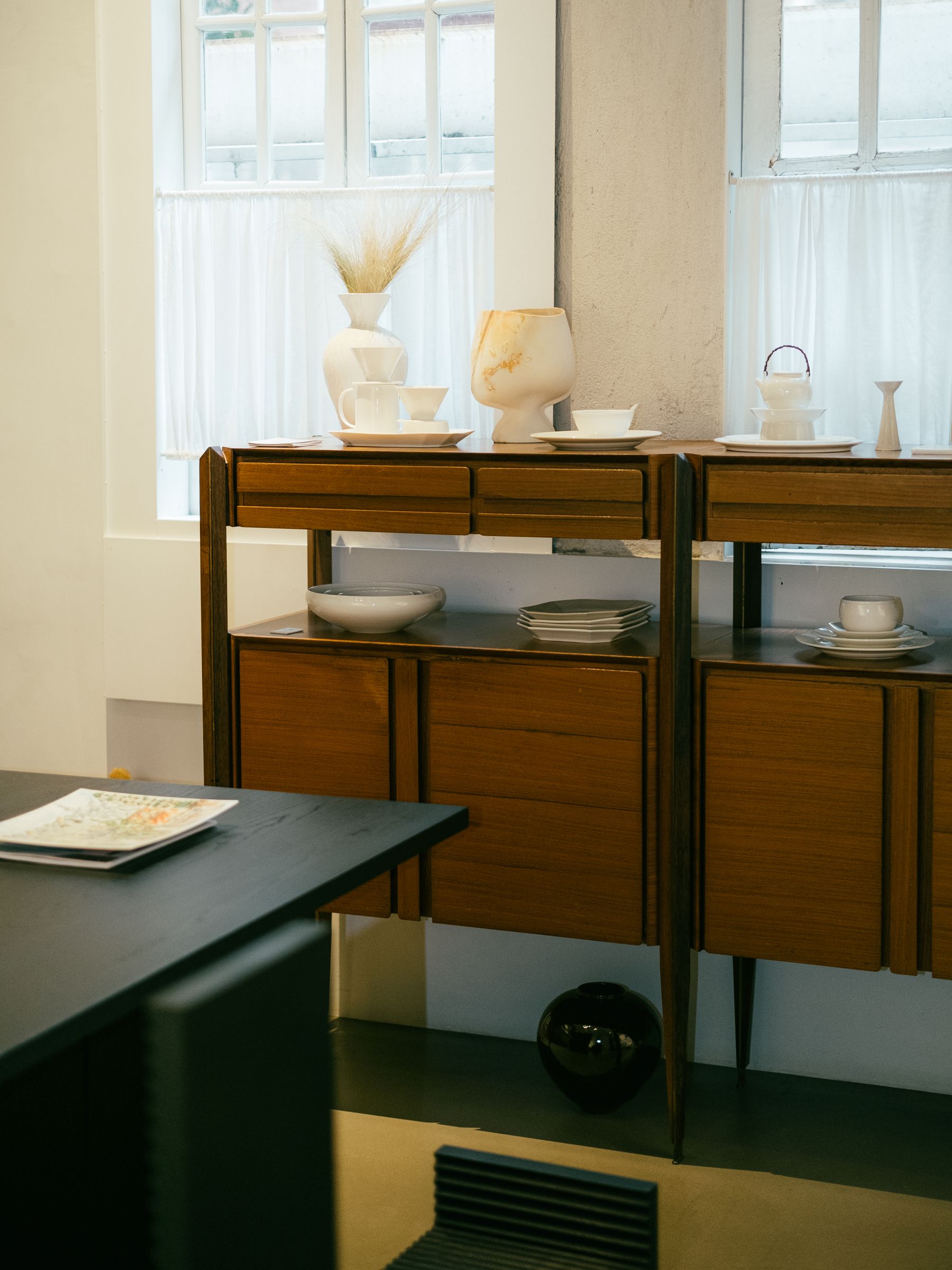
Bridge Different Silhouettes Through One Shared Property
A heavy vintage table and a slim modern chair can coexist if they share wood temperature, color, edge language or visual weight somewhere else in the room. The bridge does not need to be material alone. Look for one property that explains why the forms belong together while allowing their silhouettes to stay different.
Use Contrast in Pairs, Not Everywhere
A sculptural light becomes more effective when paired with a quiet ceiling and cabinet background. The same principle applies to ornate furniture beside simple joinery or colorful art against a restrained wall. Eclectic design needs contrast, but contrast becomes readable only when one side of the pair is calmer.
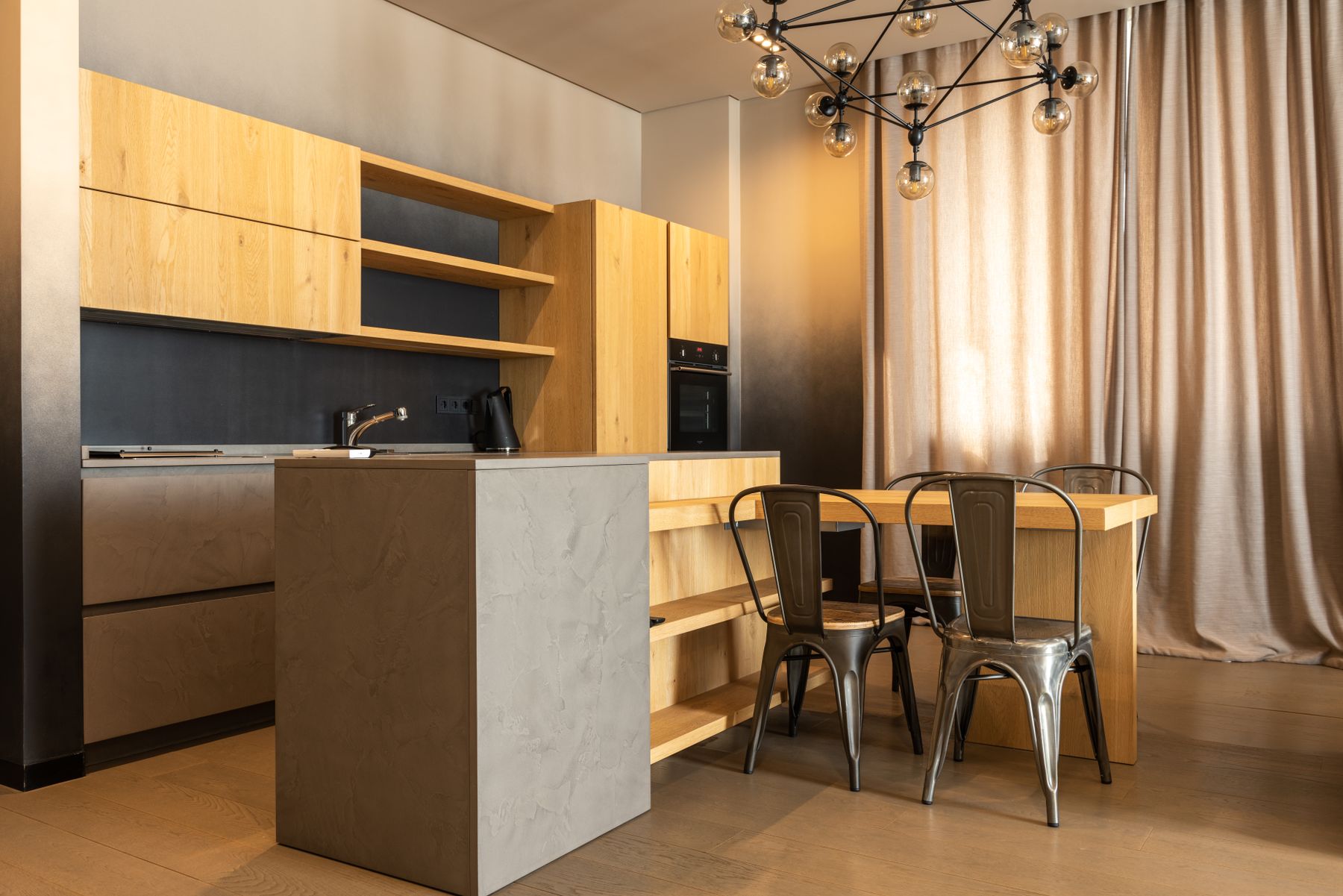
Let Function Decide Where Contrast Stops
Old timber, rough masonry or highly patterned tile can add character, but the main sink, cooking and preparation zones still need surfaces that are practical to clean. Use the working plane as a stable baseline and let more expressive texture gather outside the hardest-use areas. This functional boundary also prevents the mix from spreading without limit.
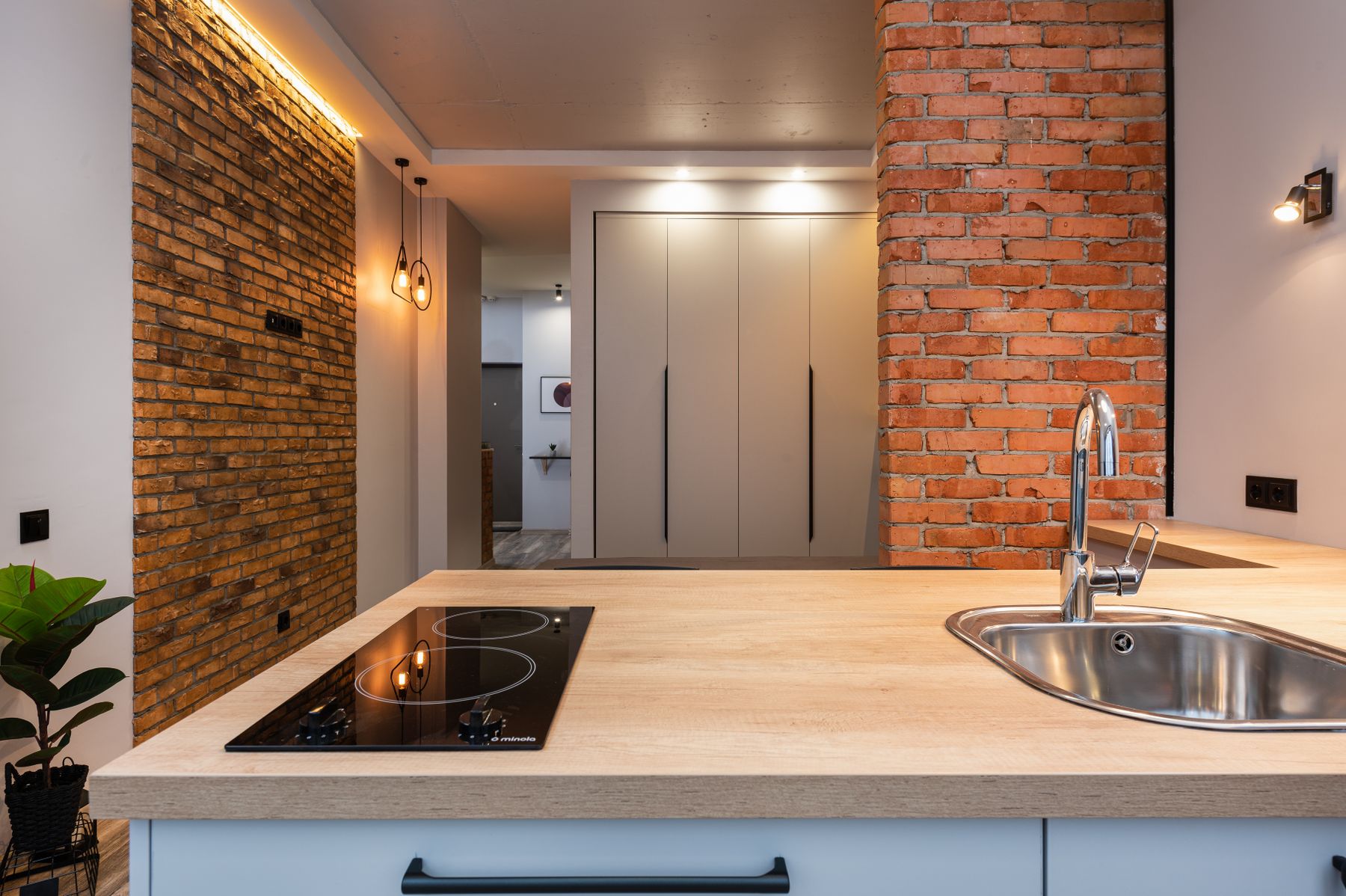

Concentrate the Highest Diversity in One Zone
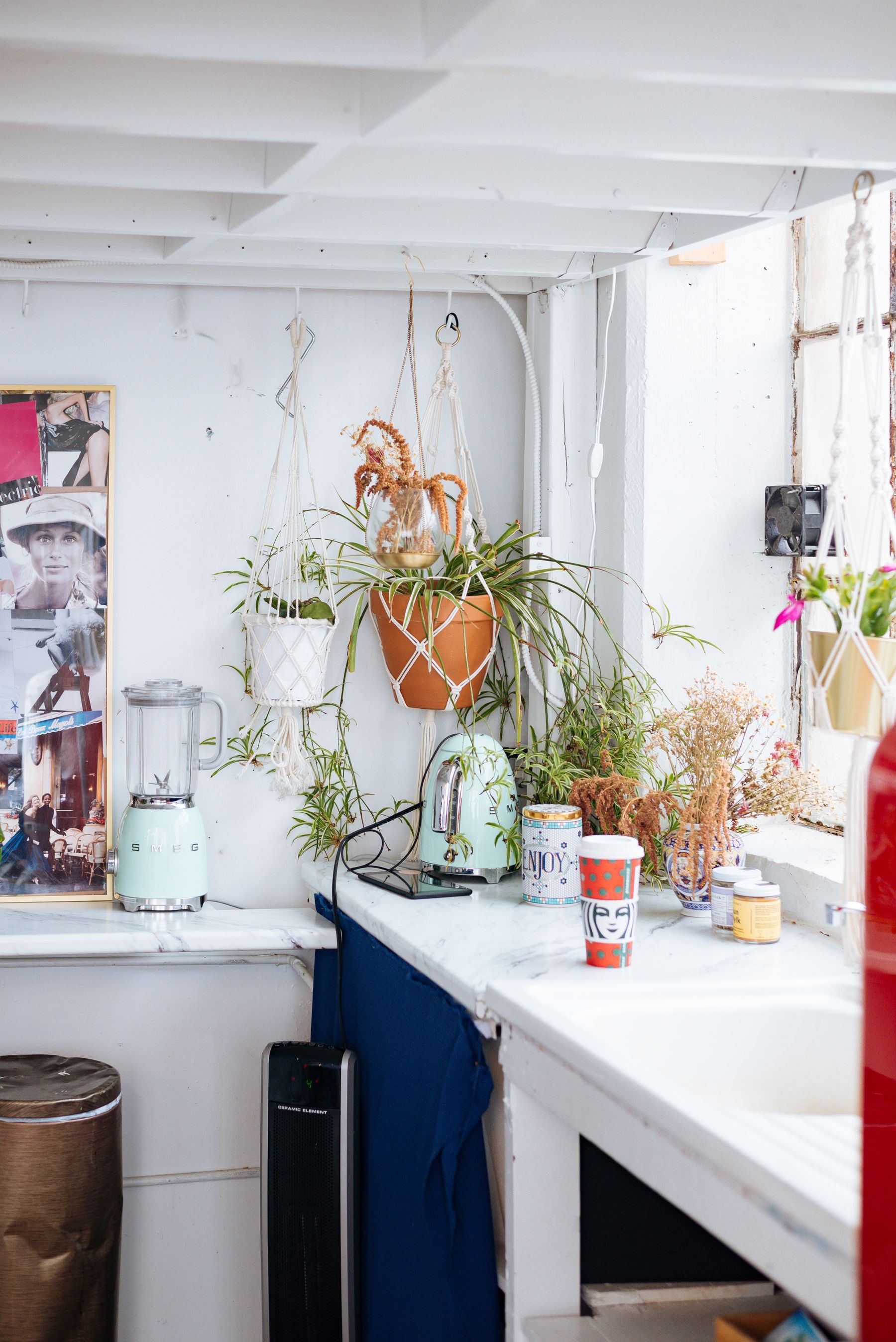
Gallery walls, magnets, plants, ceramics and small art can coexist when the densest collection has a clear boundary. A dining wall, refrigerator side or one open shelf can hold the highest diversity while the sink and preparation areas remain calmer. This gives the room a place for exuberance and a place for focus.
Use a Bridge Material Only Where It Actually Connects
A shared metal can connect an old table lamp, new faucet and cabinet hardware, but only if the repetition is visible enough to form a relationship. Do not force every fitting into the same finish. Use the bridge at points where old and new elements visually meet and allow other equipment to remain neutral.
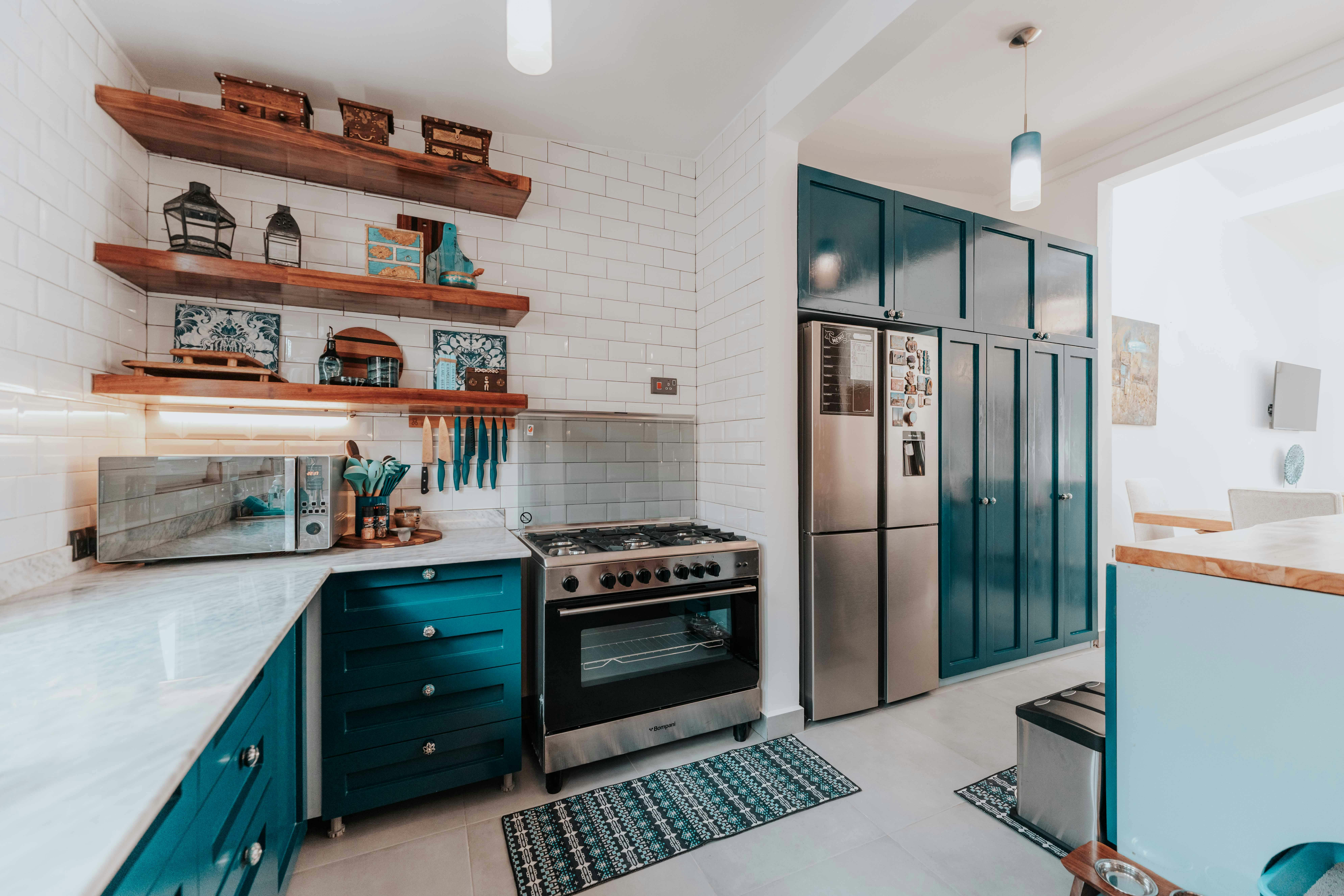
Design One Deliberate Pause
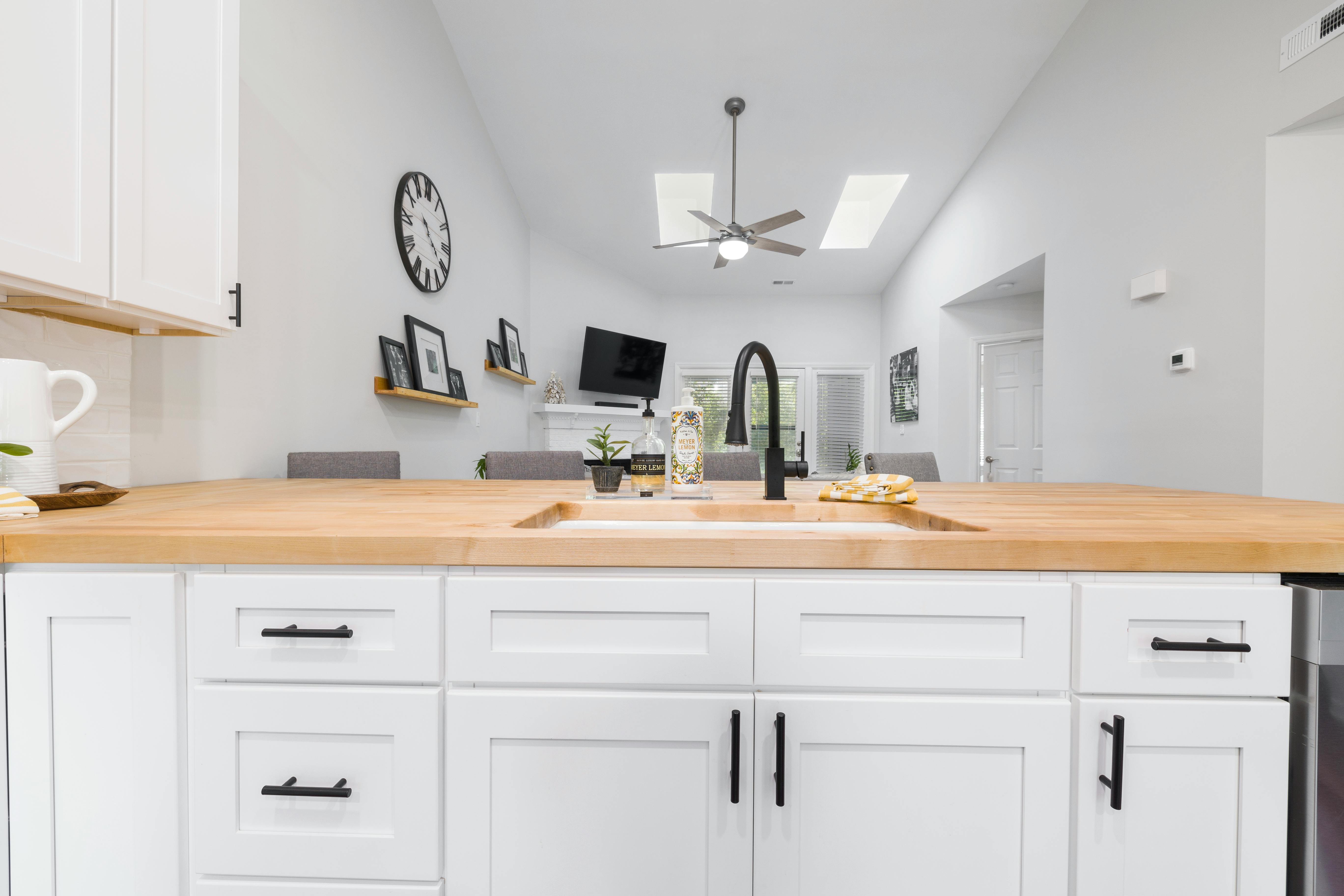
A calm cabinet run, plain wall or clear worktop gives the eye a place to reset between expressive pieces. Eclectic design needs this pause more than styles with a narrower vocabulary because every contrast consumes attention. Treat quietness as an active part of the composition rather than an unfinished area waiting for another object.
Test the Mix From Three Sightlines
The final edit should work from the kitchen entrance, the main work position and the dining area. In each view, identify the anchor, the connective thread and the pause. If every viewpoint introduces a new lead object or a different rule, the mix is becoming fragmented. The kitchen can be varied without changing its visual grammar from one step to the next.