The Silhouette That Defines the Room
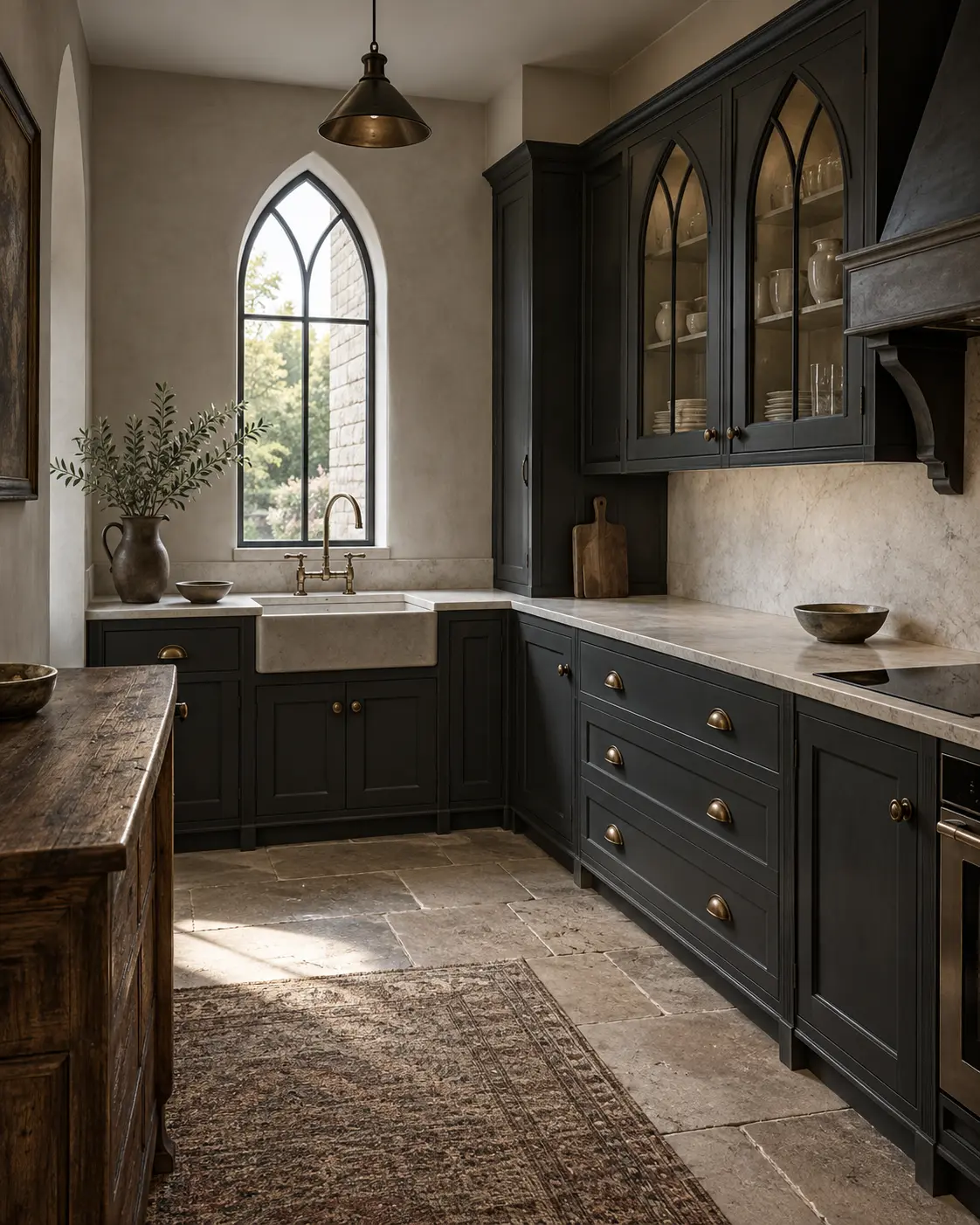
A pointed arch, lancet-like opening, tall framed cabinet or other strong vertical form can establish the Gothic language more convincingly than a collection of dark accessories. Give the silhouette enough space to be read and avoid repeating arches on every door, shelf and light. One clear form can organize the room while the rest stays contemporary and functional.
From Black to Mid-Tone: Build a Dark-Value Ladder
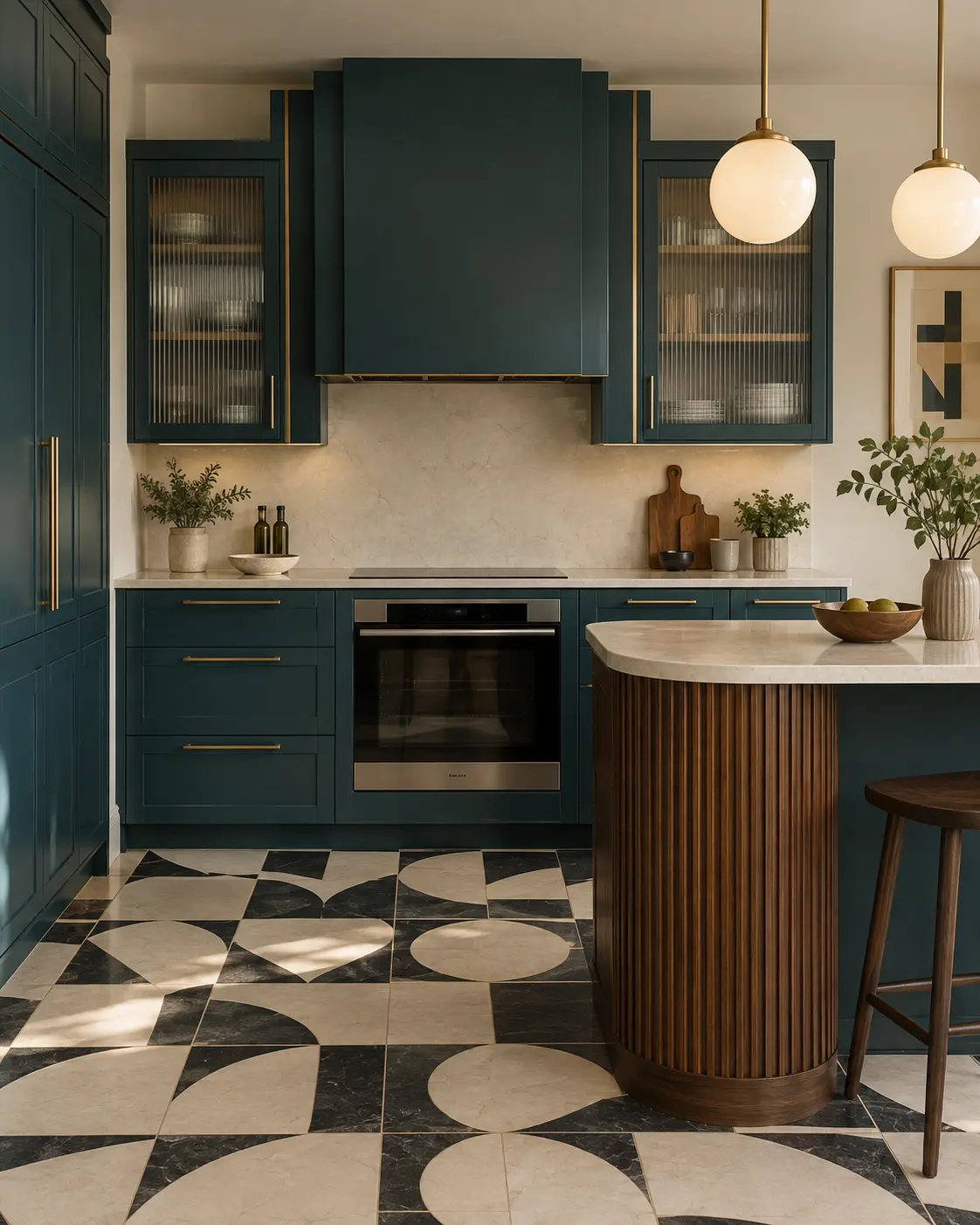
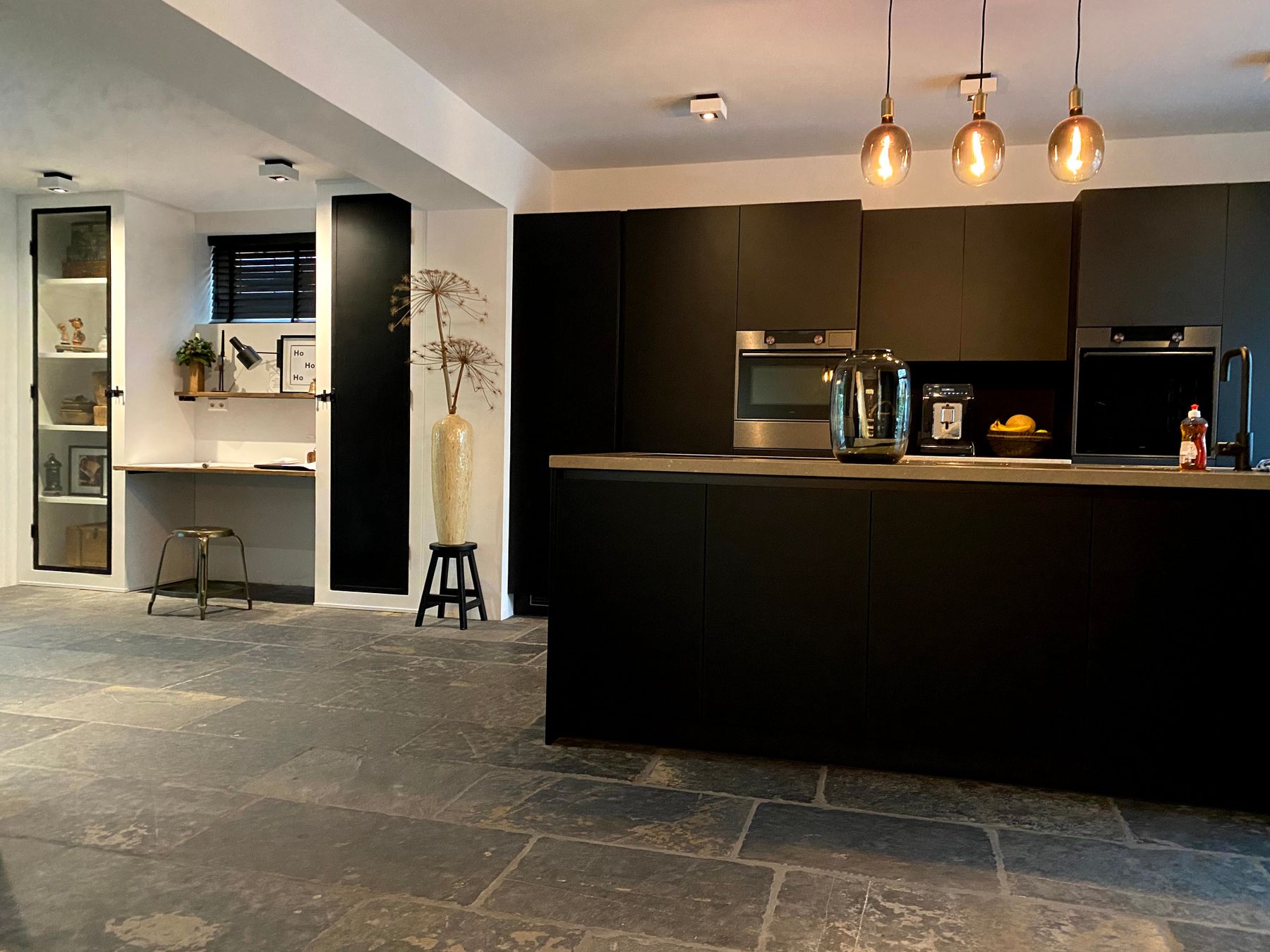
Black, charcoal, deep brown, oxblood, aubergine and forest green can create more depth than one uniform dark finish. Use value differences to separate cabinet faces, stone, timber and wall planes so the room remains legible. The goal is shadow with structure, not darkness without edges.
Where Carving Can Actually Read in Shadow
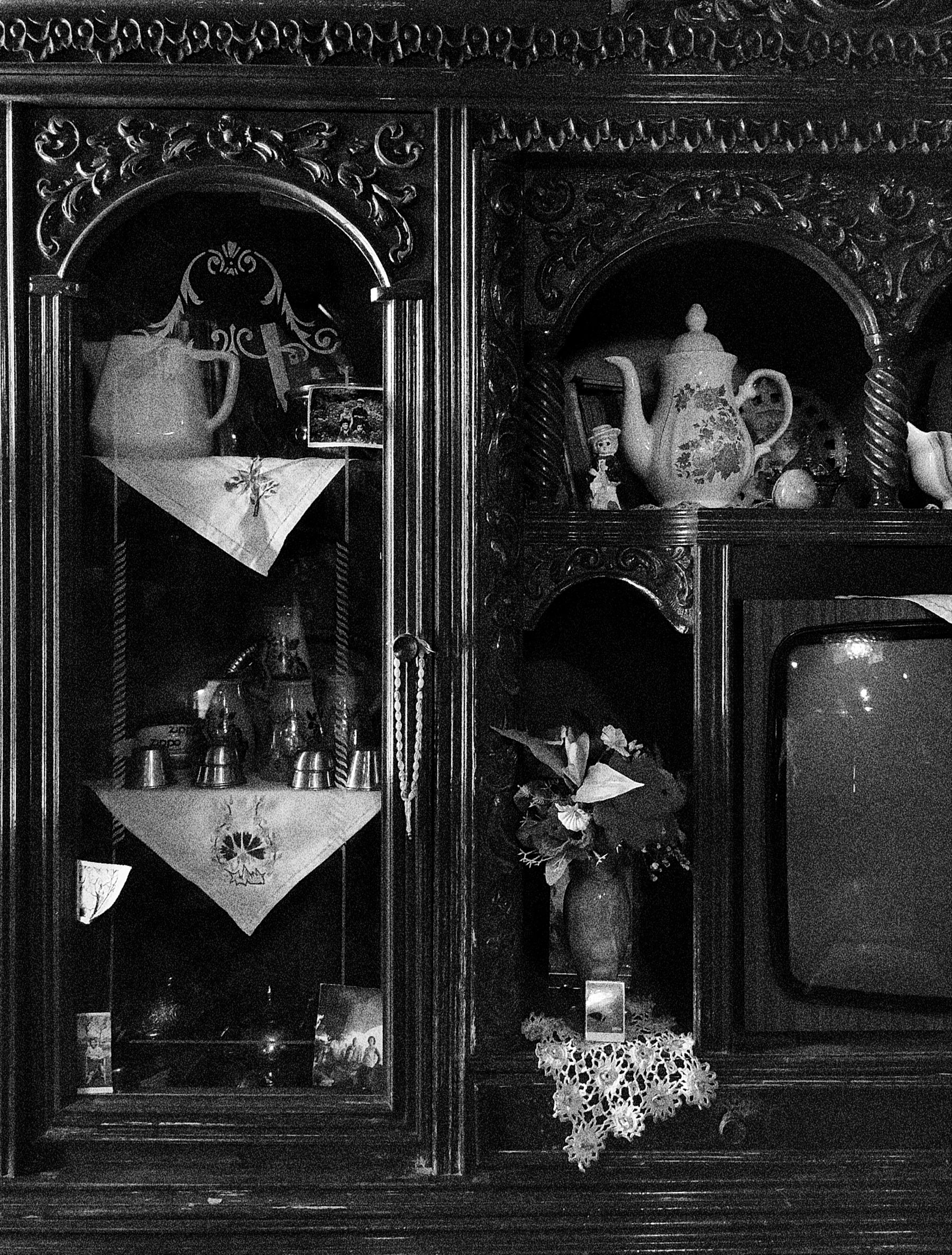
Carved doors, a dresser, corbels or a furniture-like island can bring Gothic depth through actual relief. The detail only works when light catches its edges, so give carved surfaces breathing room and avoid surrounding them with equally busy pattern. A small amount of real depth is stronger than decorative black motifs printed onto flat surfaces.
Why the Working Plane Needs Visual Relief
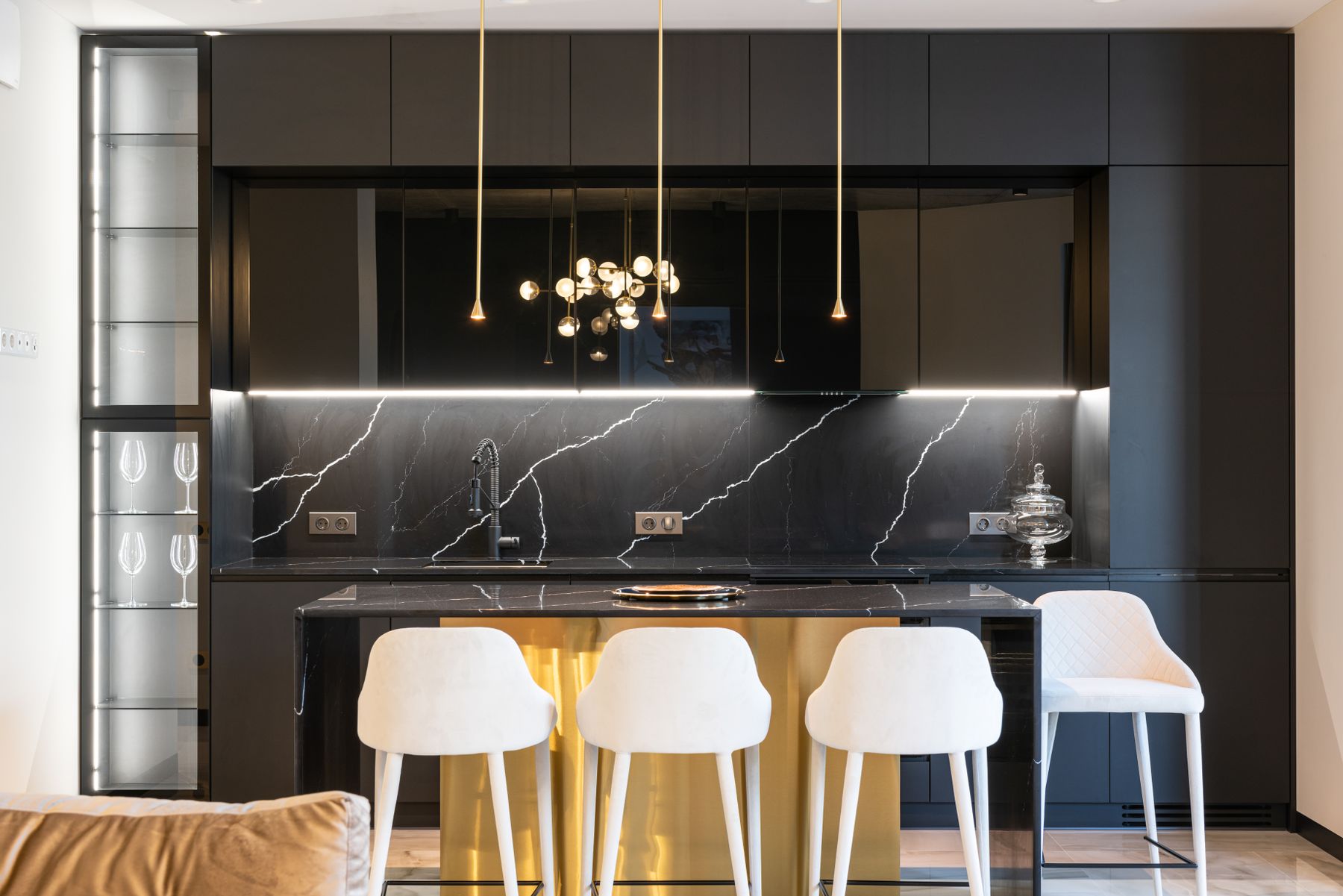
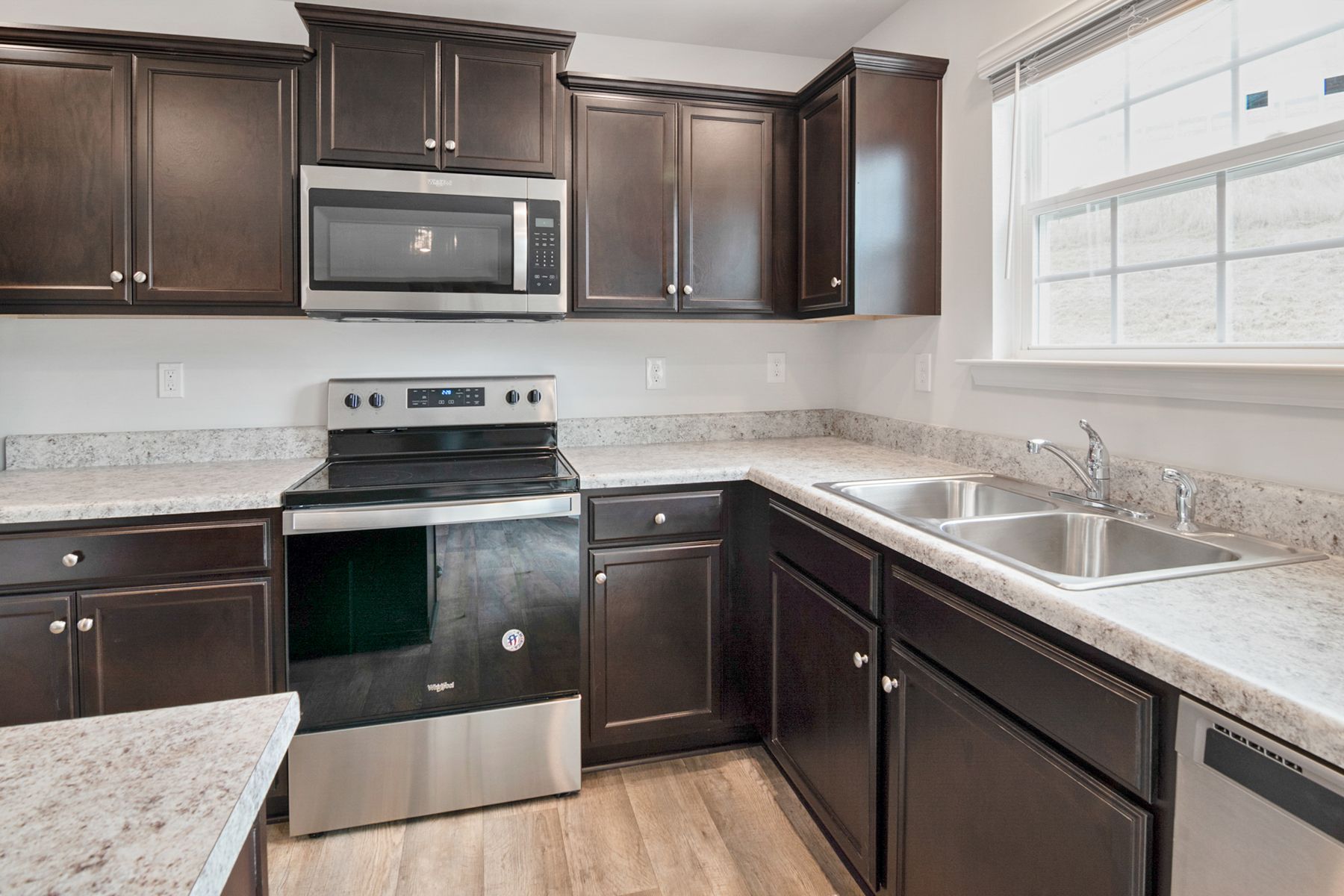
A Gothic kitchen can carry heavy wood, masonry or dark stone around the perimeter while the main preparation surface remains smoother and easier to read. Pale or mid-value stone, a cleaner backsplash or concentrated task light can provide the functional relief the room needs without weakening the atmosphere.
Lighting for Silhouette, Shadow and Task
Iron, aged brass or dark metal fixtures can contribute a strong outline, but the light they produce matters more than the metal alone. Choose one chandelier, pendant or sconce shape that supports the vertical or arched language, then use hidden task lighting where function requires it. Gothic atmosphere comes from layered pools and shadow, not from dimness everywhere.
Can You Trace a Mid-Value Route Through the Room?
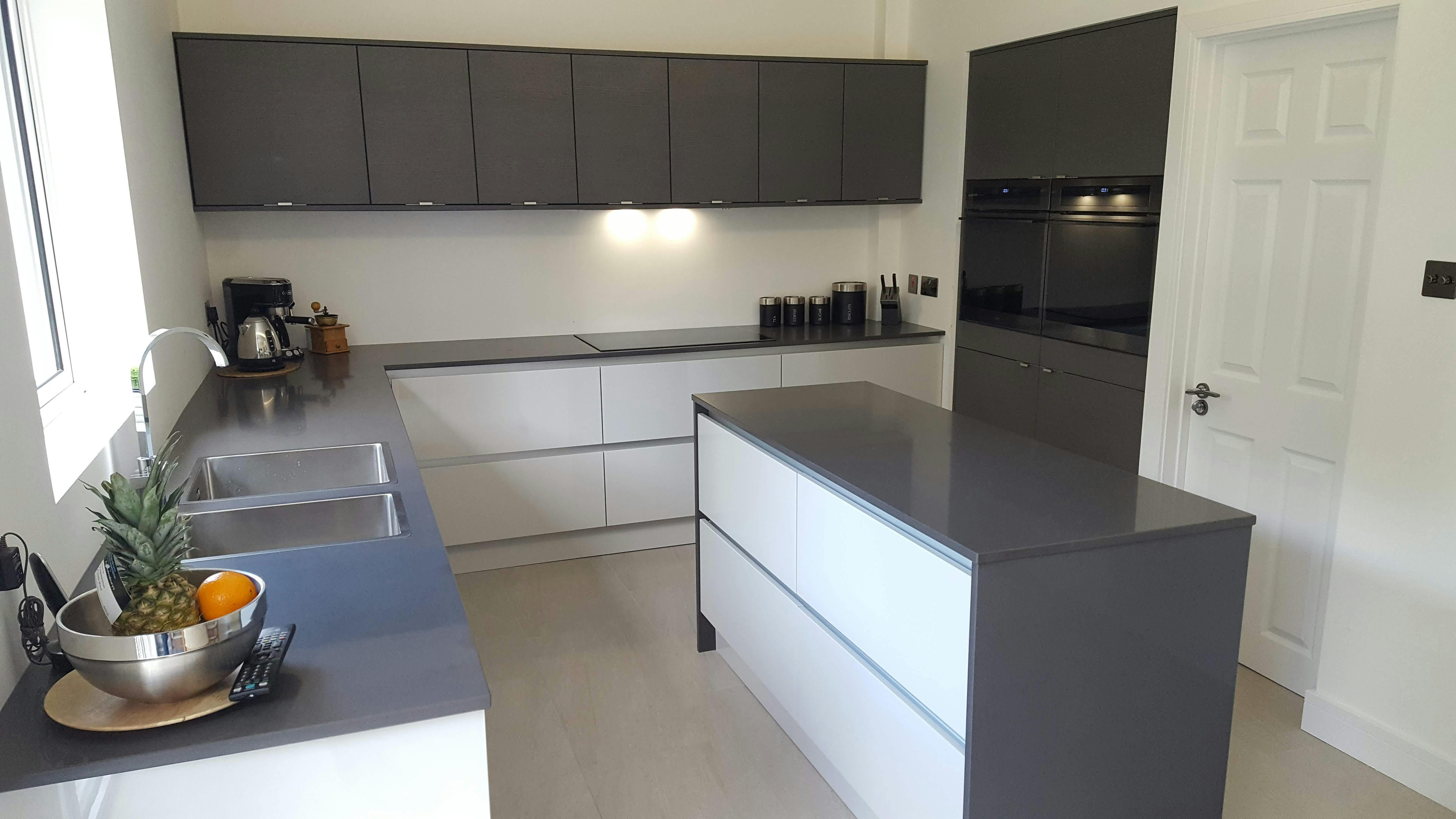
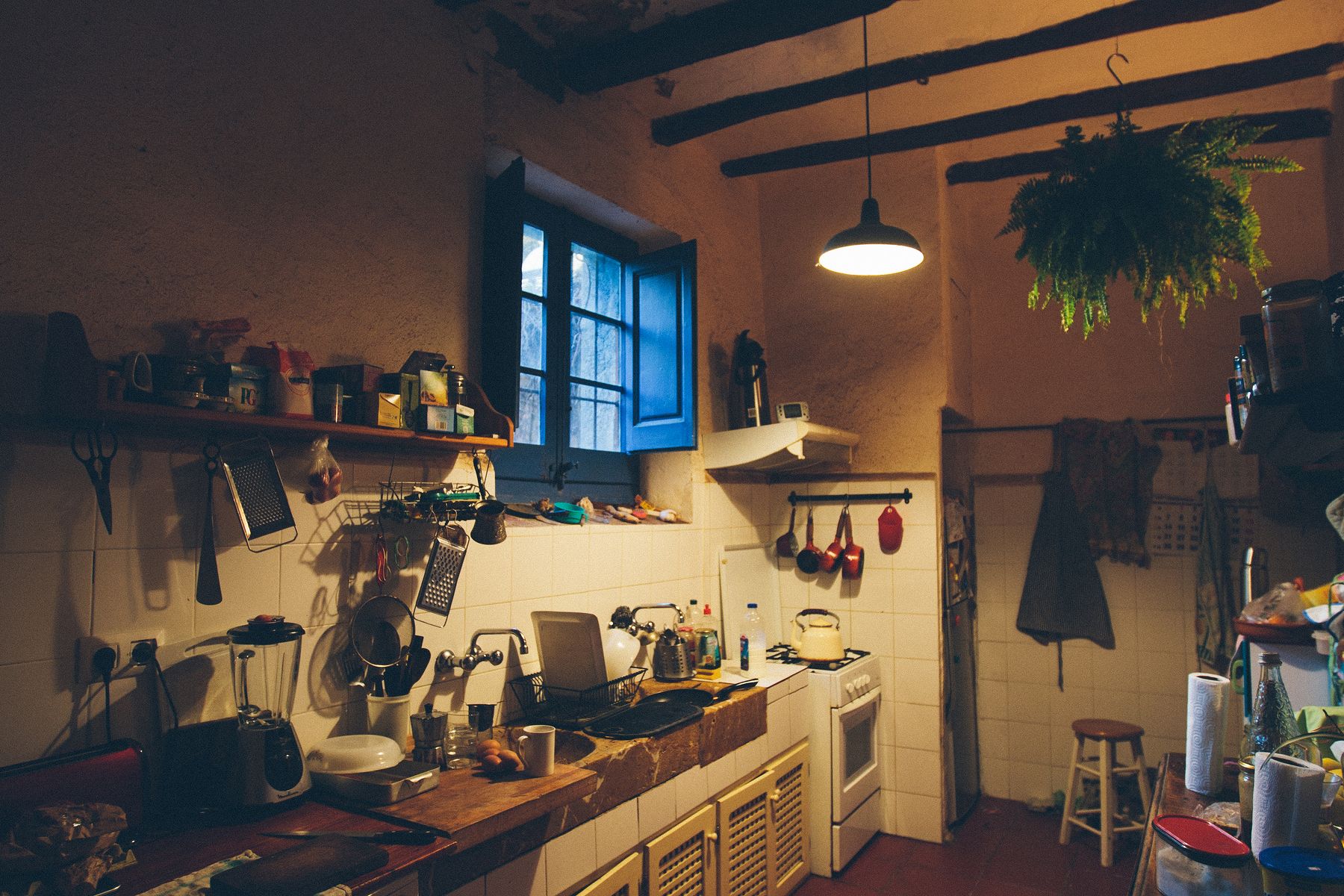
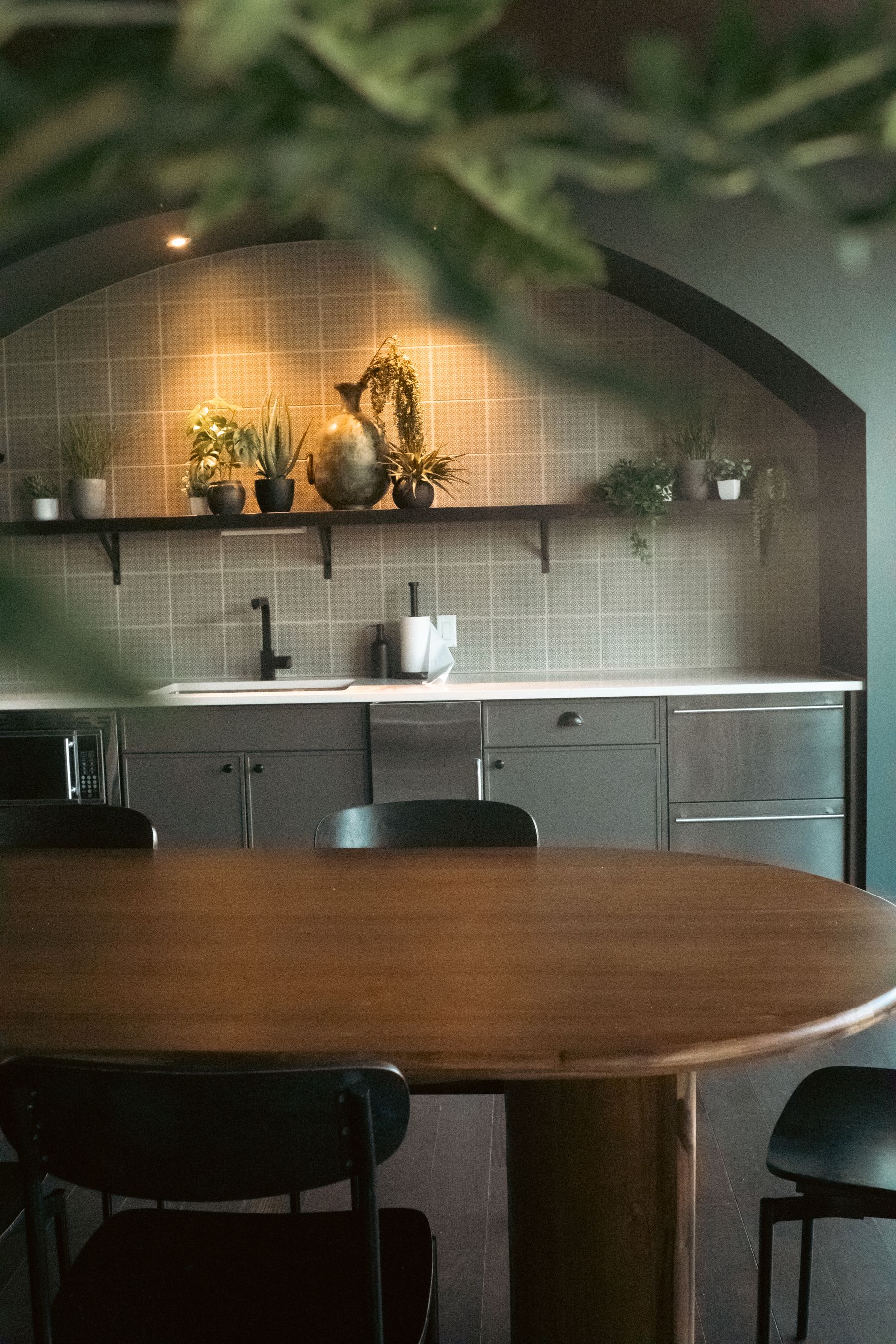
Dark rooms need somewhere for the eye to travel without losing every boundary. A mid-value floor, worktop, wall strip or backsplash can create a route through the space and prevent cabinet masses from merging. This is especially important in compact kitchens where the darkest surfaces are close together.
Pale Stone as a Clean Horizontal Cut
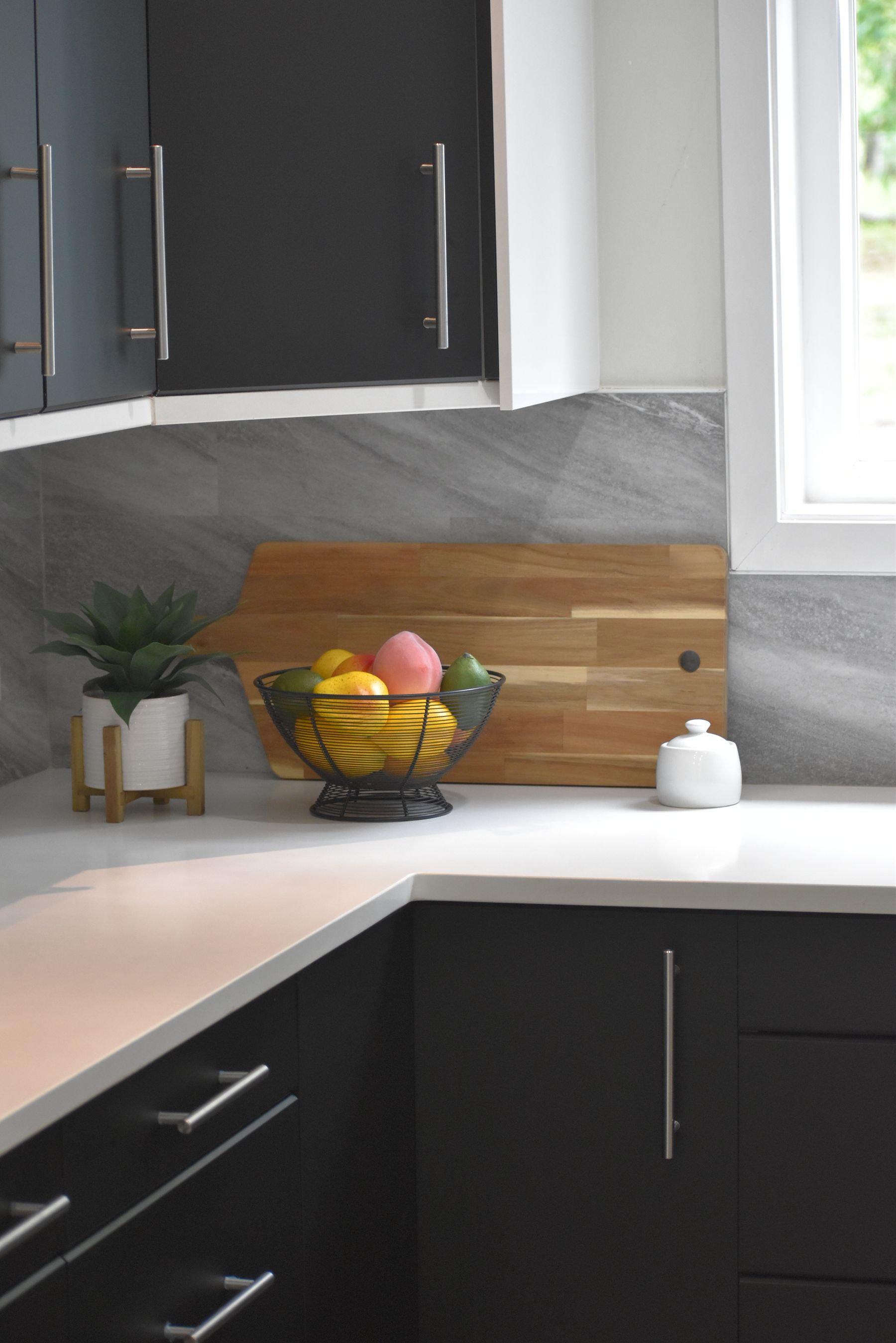
A pale worktop or stone band can slice through deep cabinetry and make the kitchen's horizontal structure immediately legible. The contrast is most effective when it remains continuous rather than appearing as scattered light accents. If the room should stay darker overall, use a mid-tone stone with reflective movement instead of pure white.
Timber Grain Inside a Dark Envelope
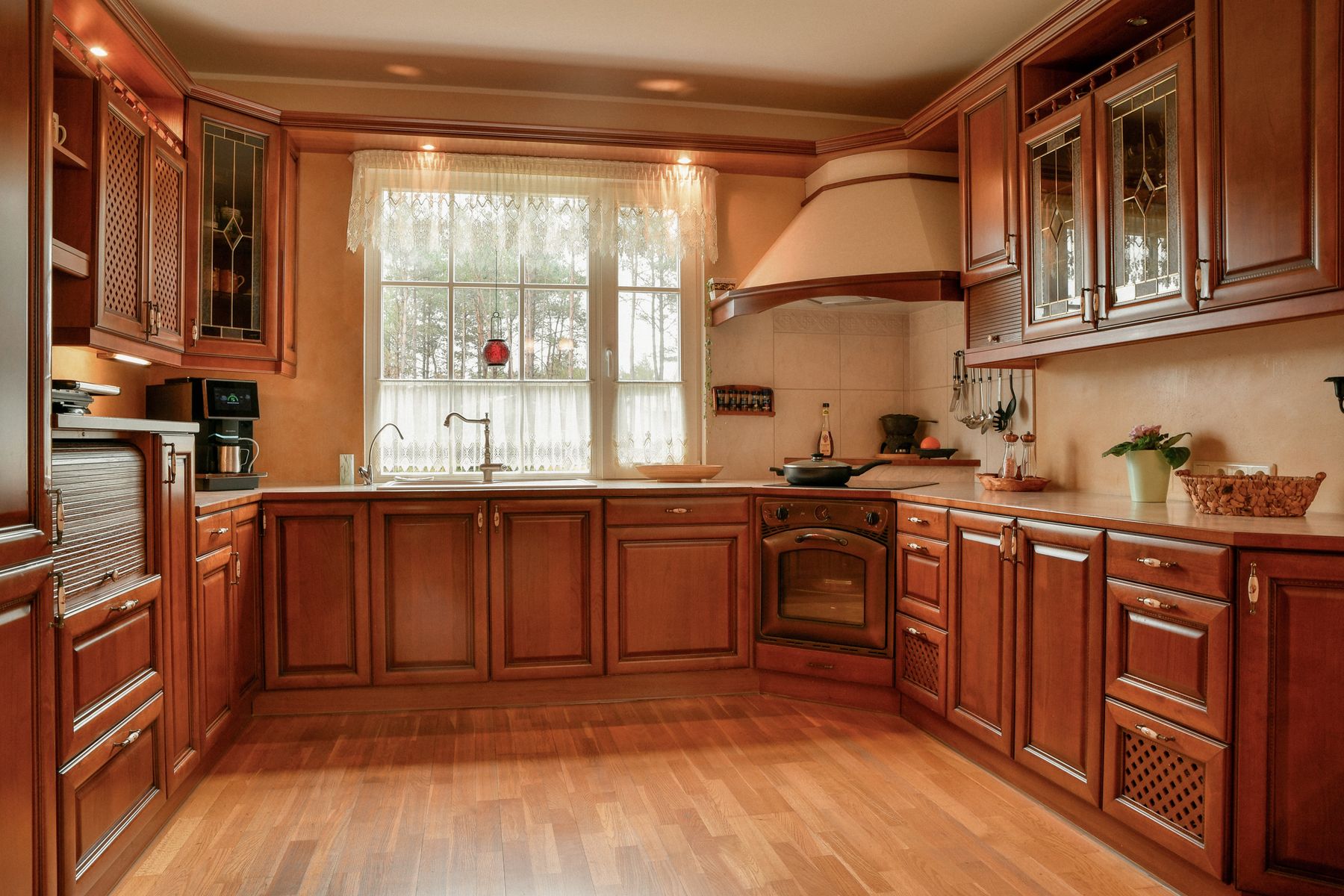
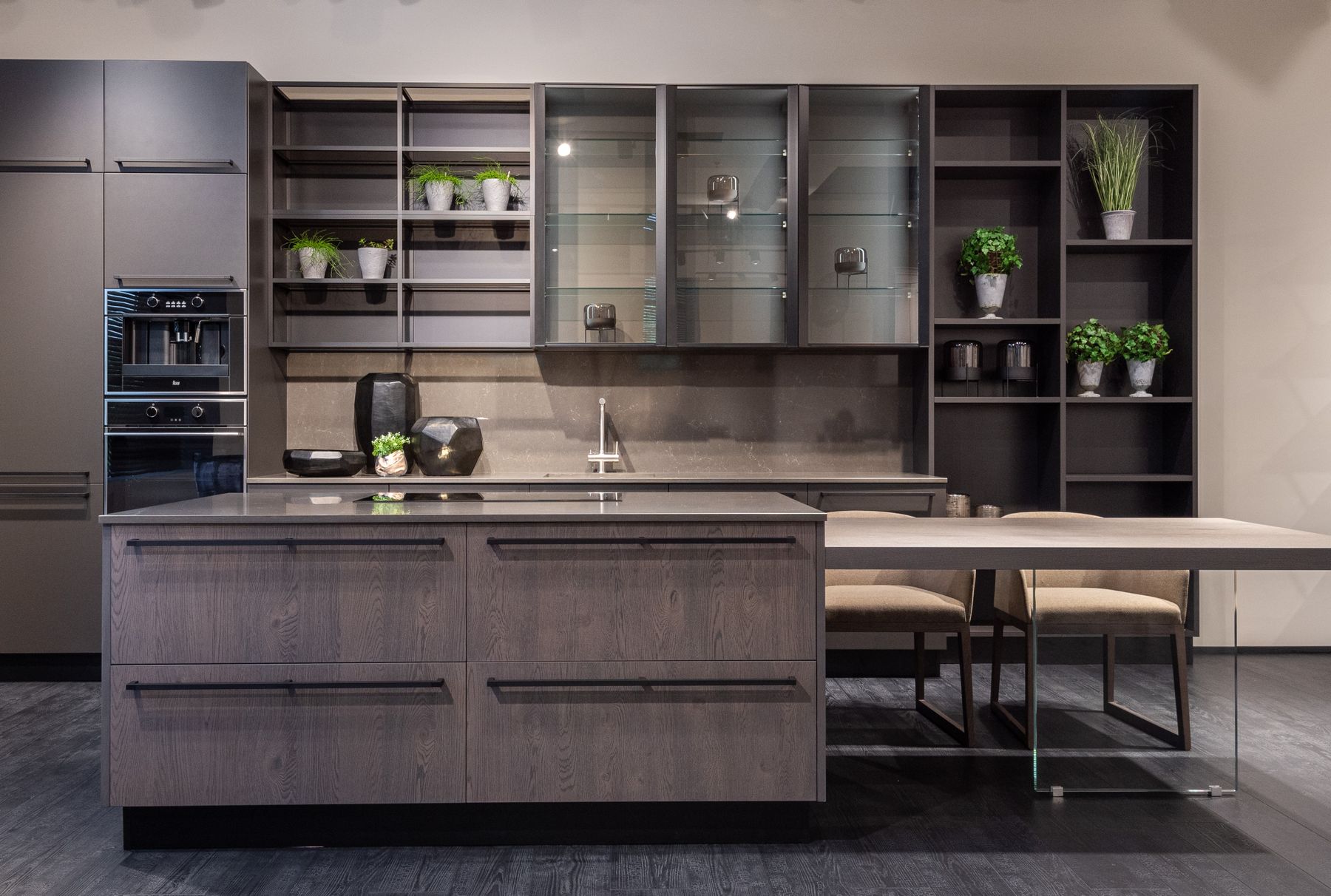
Dark oak, walnut or stained timber can give the palette warmth while preserving the Gothic weight. Grain is important because it prevents large dark planes from becoming flat. Use wood where the eye can read its direction—cabinet fronts, a table or island face—and avoid coating every timber surface until the grain disappears.
When Veining Becomes the Lightning Effect
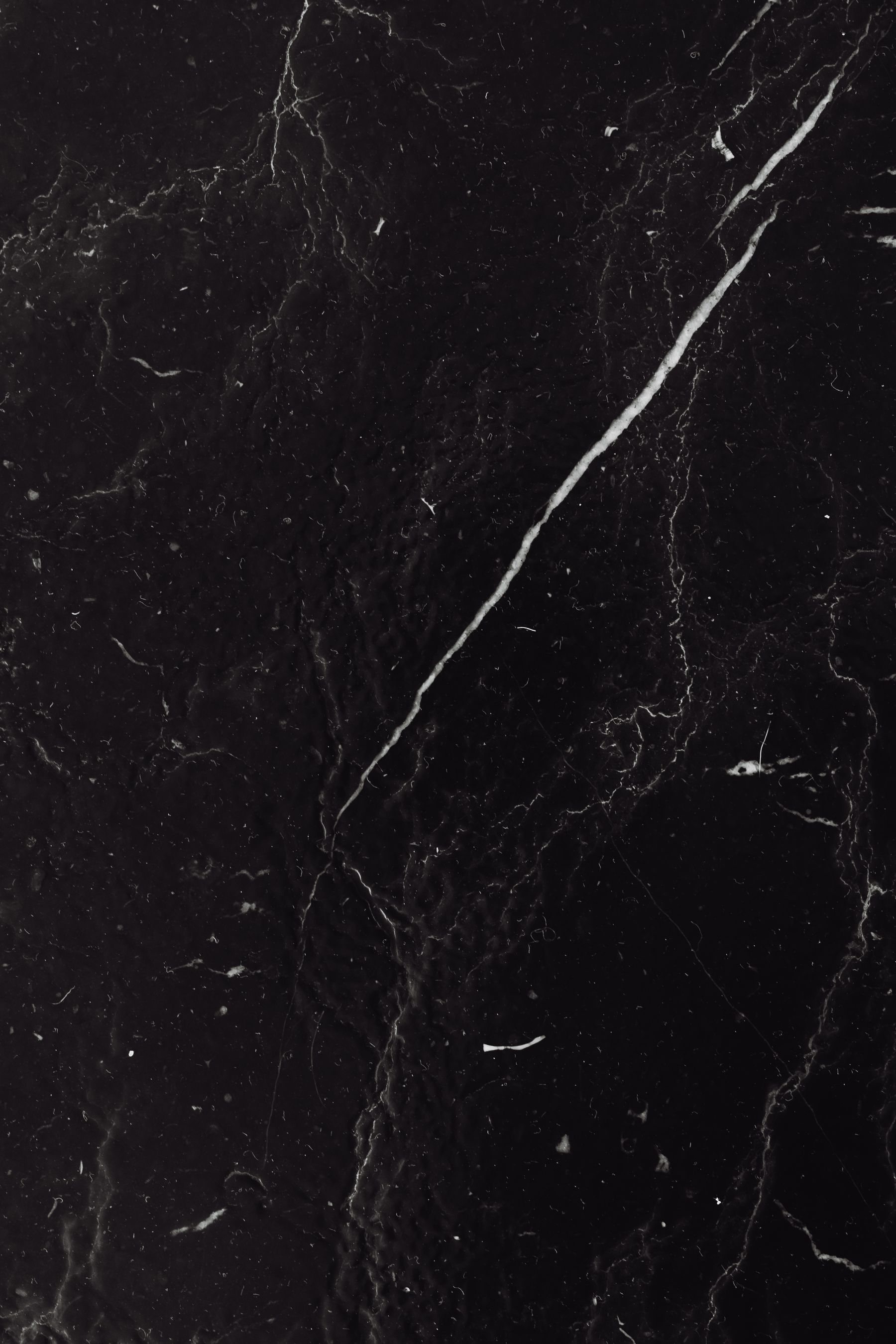
Pale or metallic veining across dark stone can create a natural line that feels almost illuminated against the surrounding mass. Use it on one major plane, such as an island or backsplash, and let the direction of the veins reinforce rather than fight the room's vertical and horizontal structure.
Metal Where Hands Actually Touch
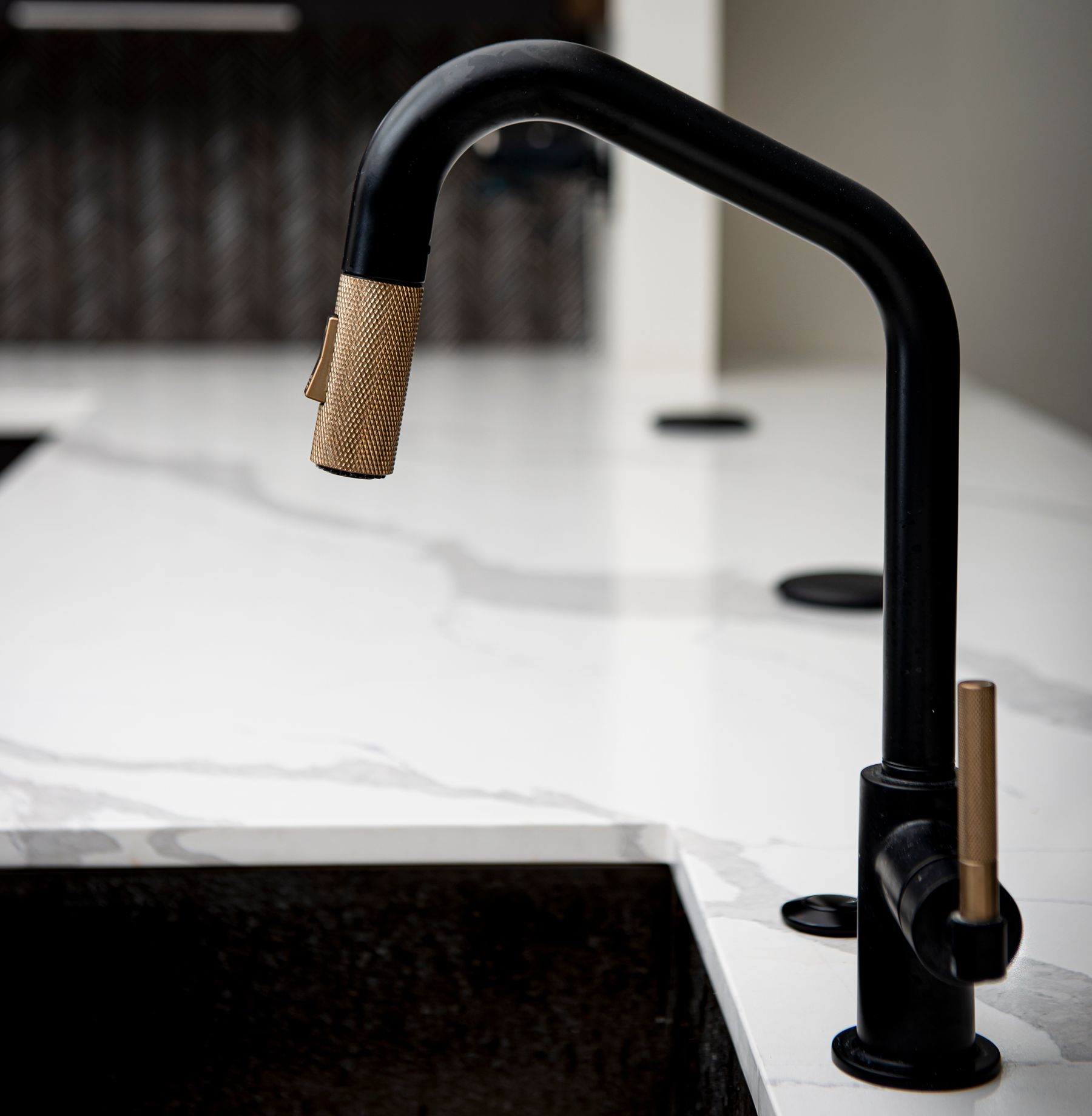
Handles, faucet, lighting and visible hinges are strongest when metal appears where the hand or eye naturally meets the architecture. Choose one dominant finish and let it define those contact points rather than scattering small metallic accents through decor. This keeps the room tactile and controlled instead of costume-like.