Which Plane Gets the Geometry?
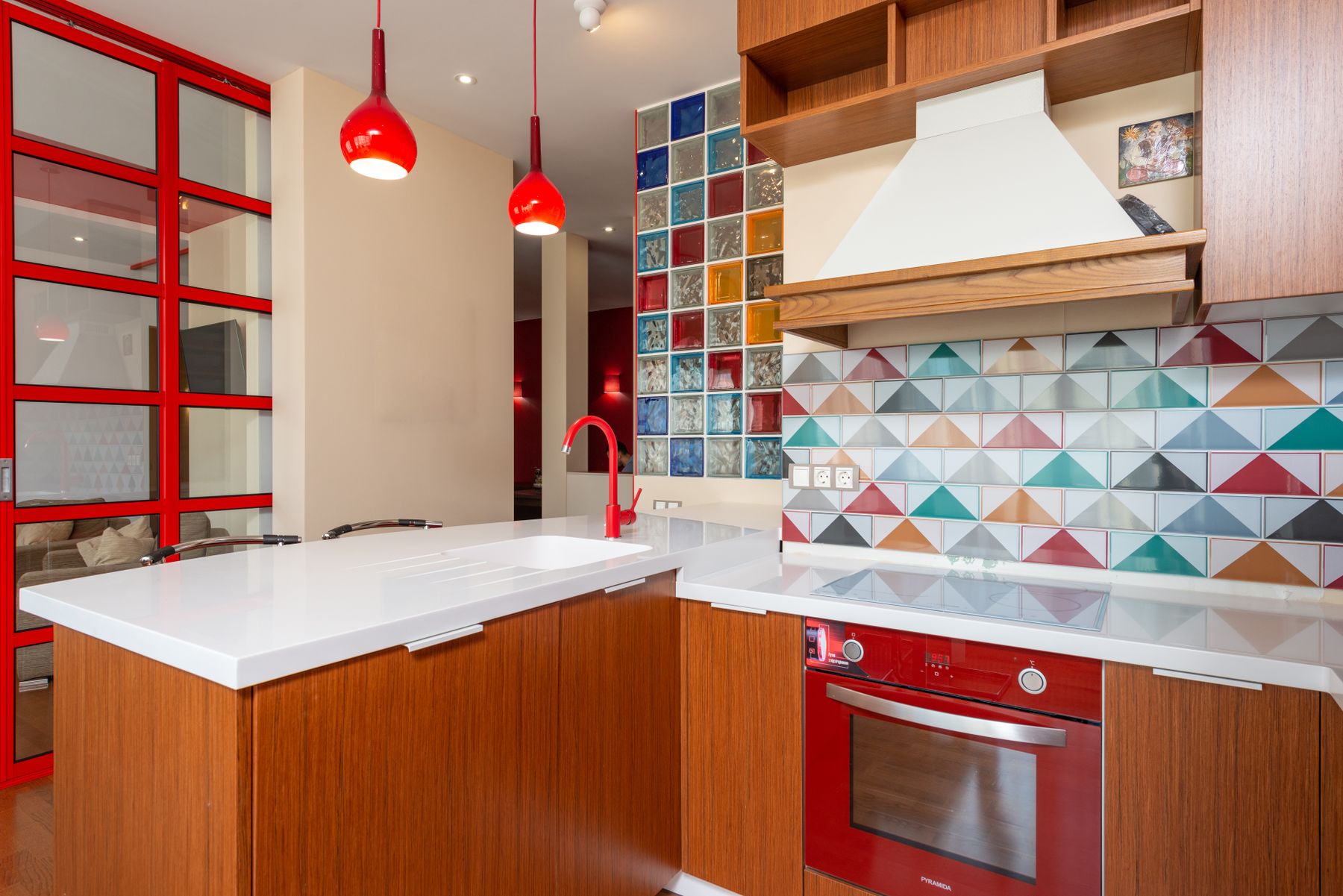
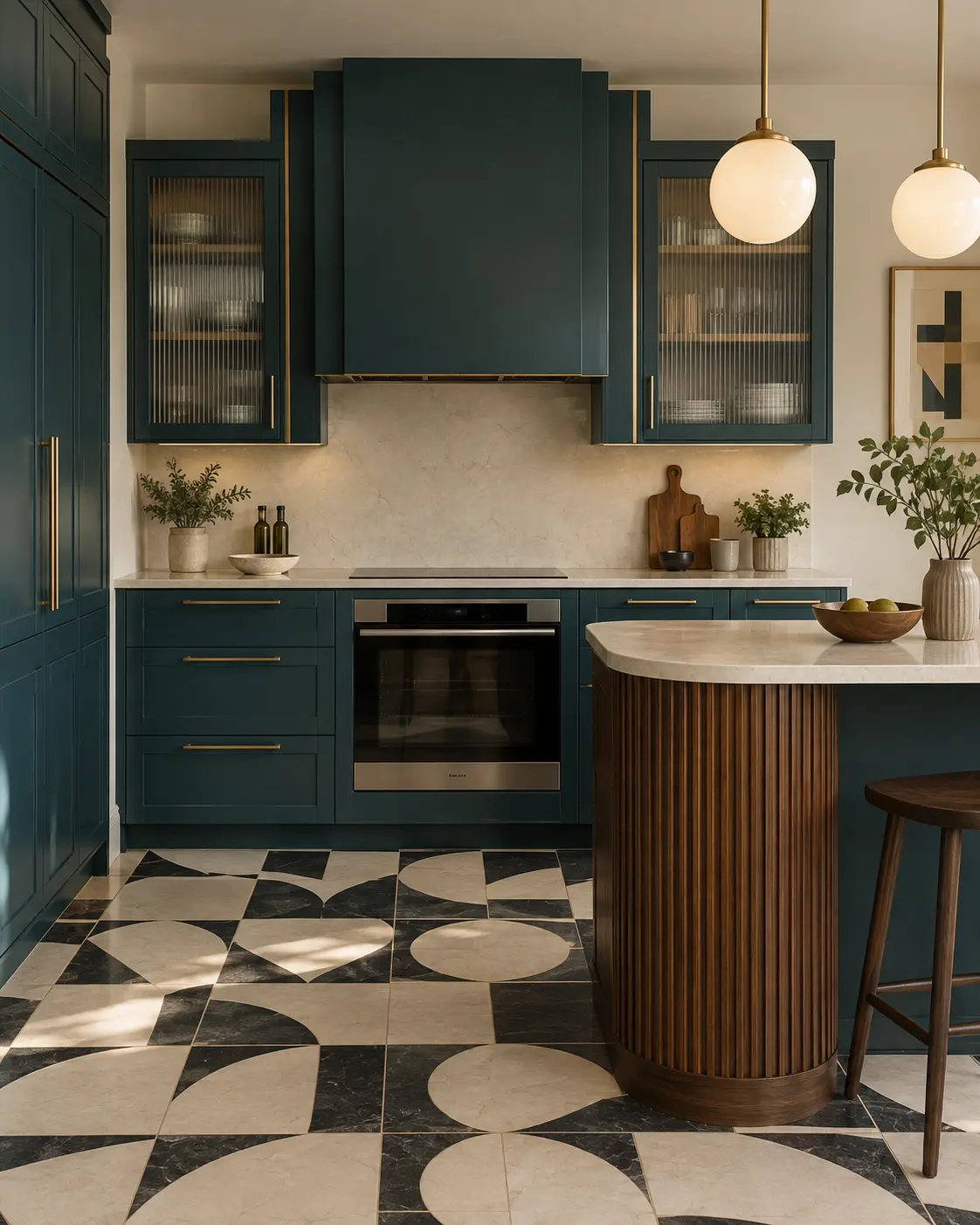
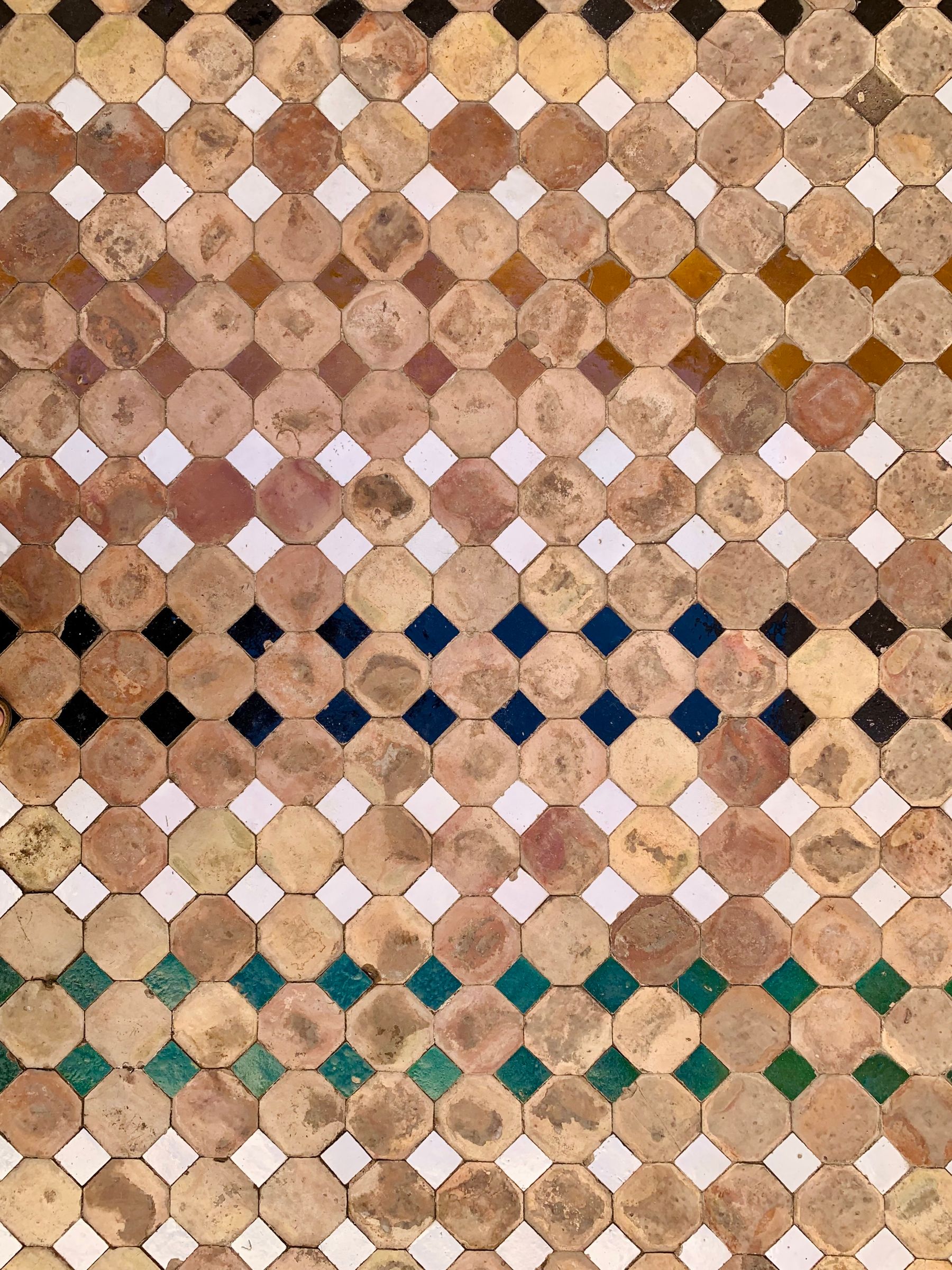
Art Deco works best when one large surface establishes the geometry: the cabinet elevation, island face, floor or backsplash. Stepped profiles, framed divisions or strong vertical rhythm can define the room without needing motifs on every object. Once that primary plane is clear, smaller elements should repeat or support it rather than introducing a second visual system.
Repeat Scale Is a Room-Scale Decision
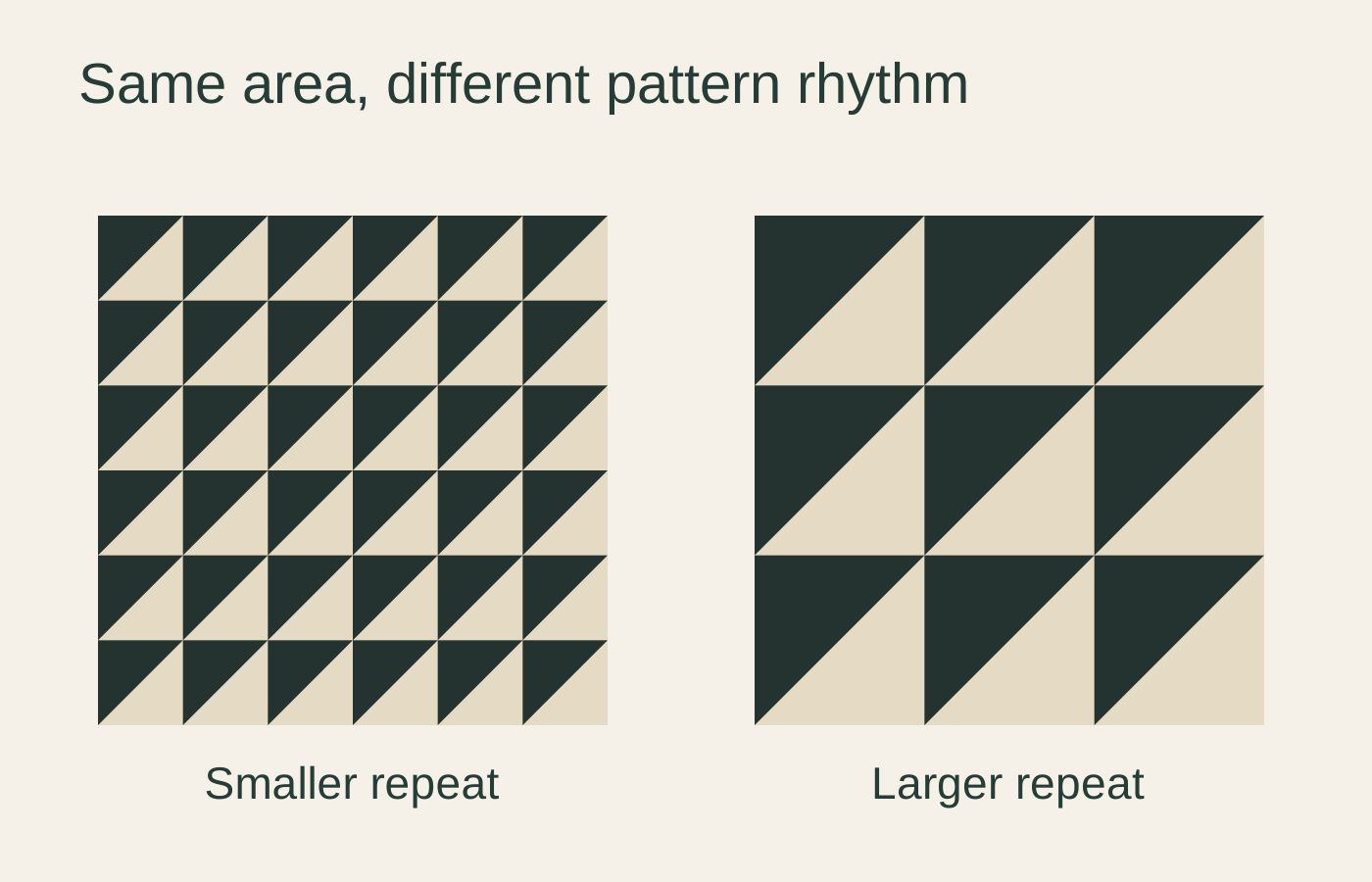
A fan, chevron, stepped line or vertical rib can feel elegant at one scale and fussy at another. Large rooms can carry broader repeats and stronger symmetry, while compact kitchens often need one tighter, bounded geometric gesture. Test the motif across the actual width or height it will occupy instead of judging a single sample.
Metal as Punctuation, Not Background
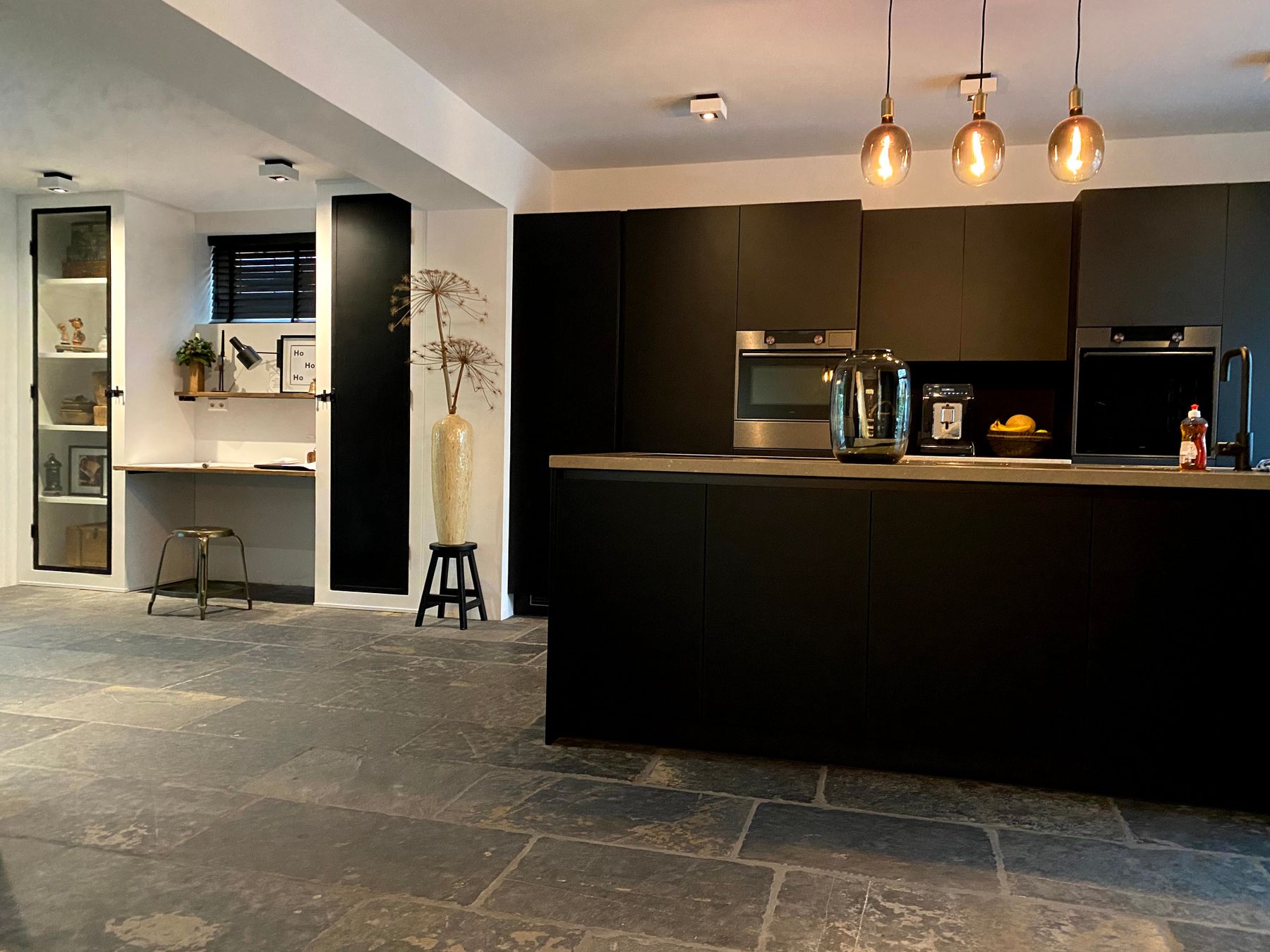
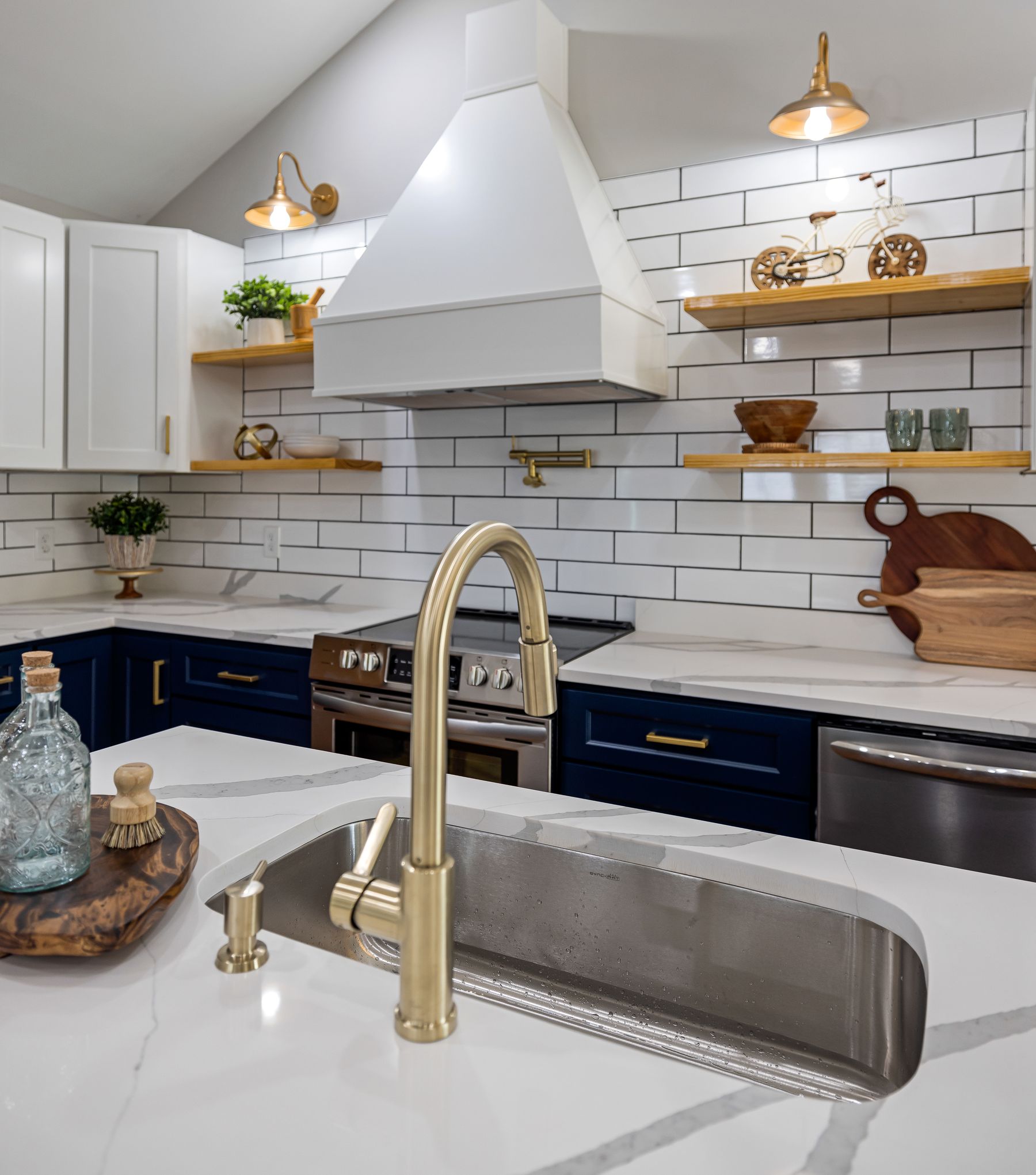
Brass, bronze and warm metal are effective because they catch light against darker color and stone. Their impact drops when every handle, edge, light and faucet competes equally. Decide where the metal should act as punctuation—hardware, one light, a frame or trim—then let larger surfaces carry the architecture.
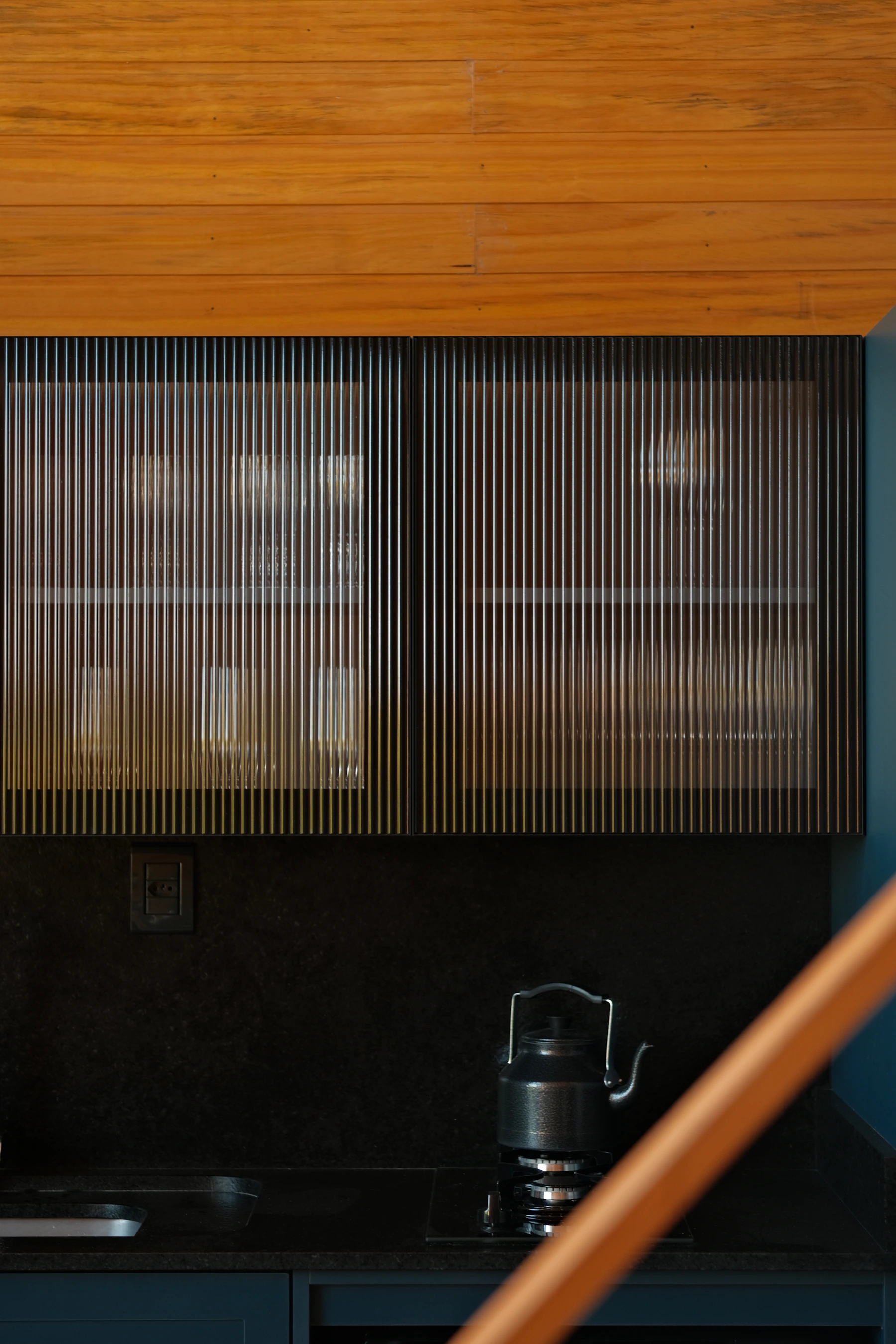
Reeded Glass for Filtering, Not Display
Glass can introduce vertical rhythm, reflection and depth without requiring every cupboard to become a display case. Reeded or fluted glass is especially useful when you want light and silhouette without exposing every object. Keep the contents edited and let the glass support the architectural pattern rather than adding another collection to manage.
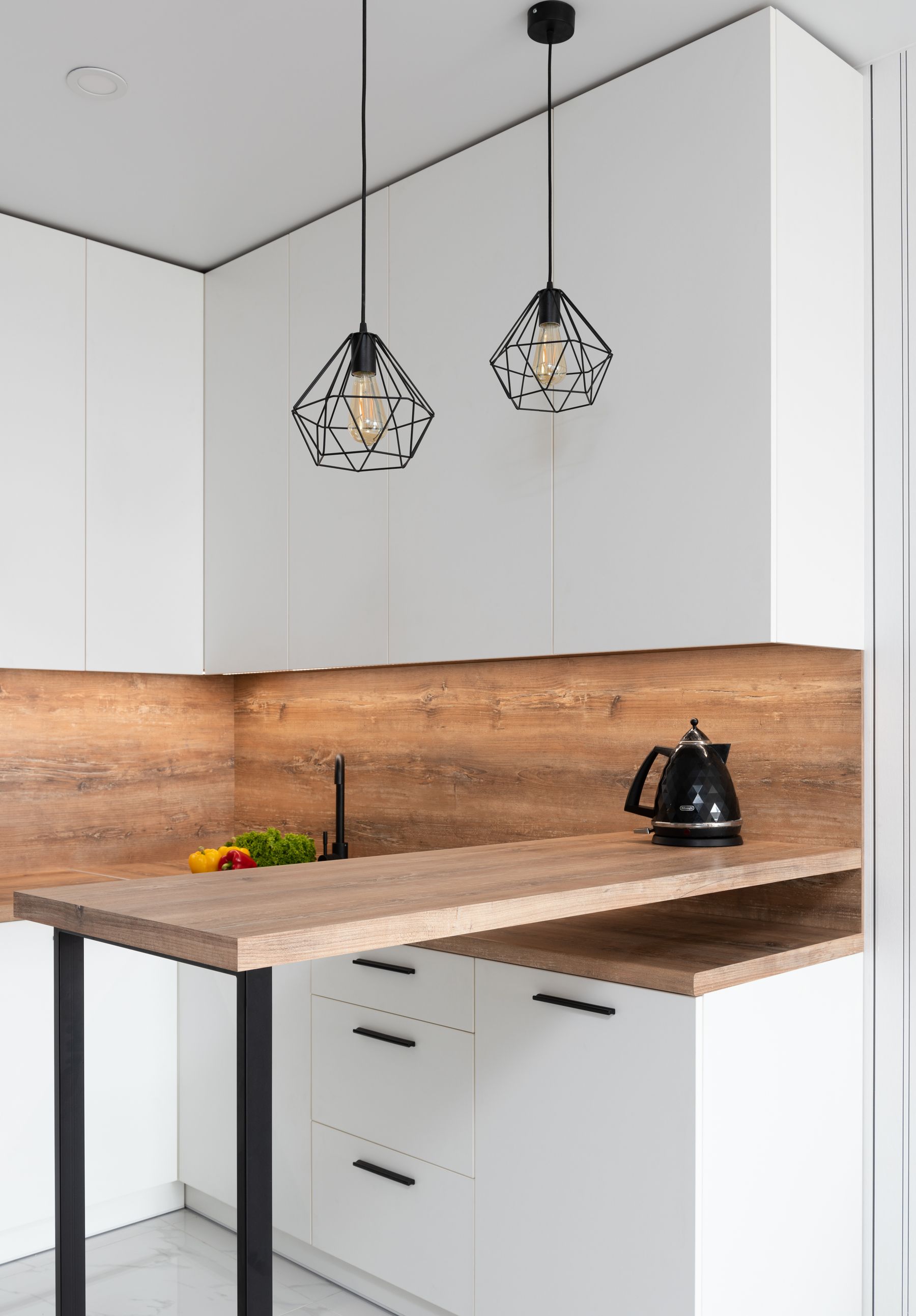
One Light, One Echoed Shape
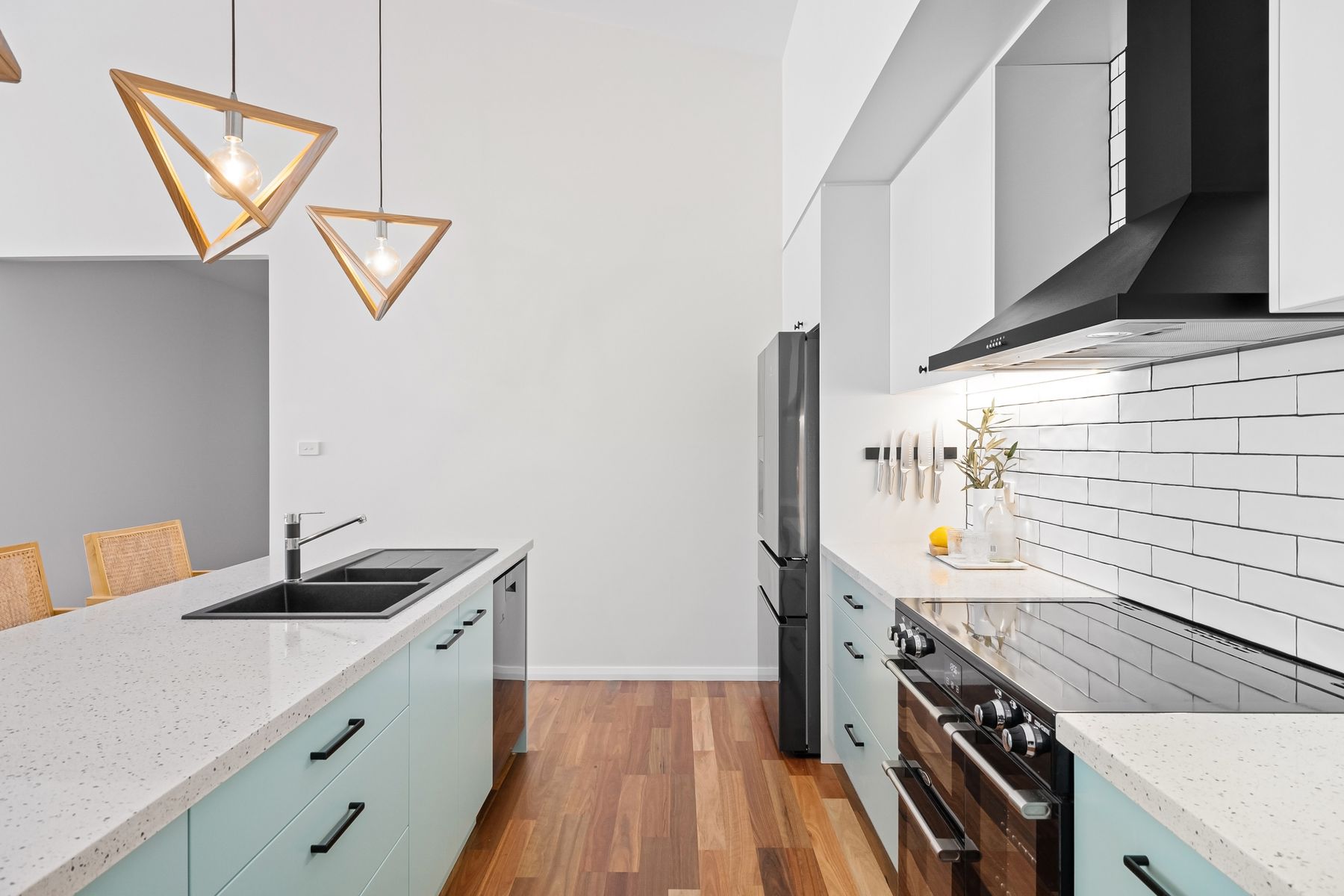
A sculptural pendant or ceiling light can repeat a curve, stepped form or vertical rhythm already present in the room. The relationship should be visible without becoming literal. One fixture with enough scale is usually more convincing than several small decorative lights, provided practical task lighting is already resolved.
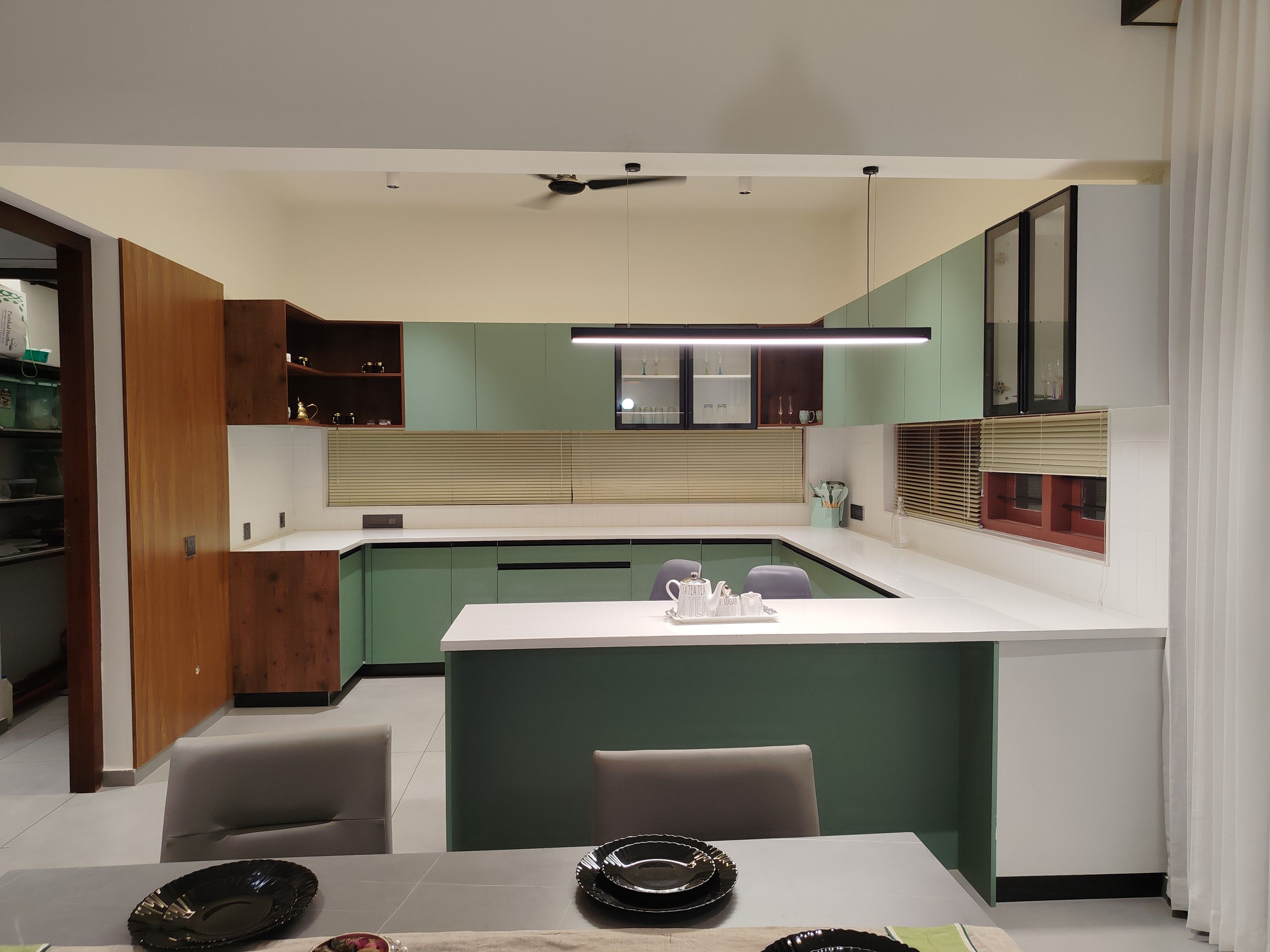
Jewel Color at Field Scale
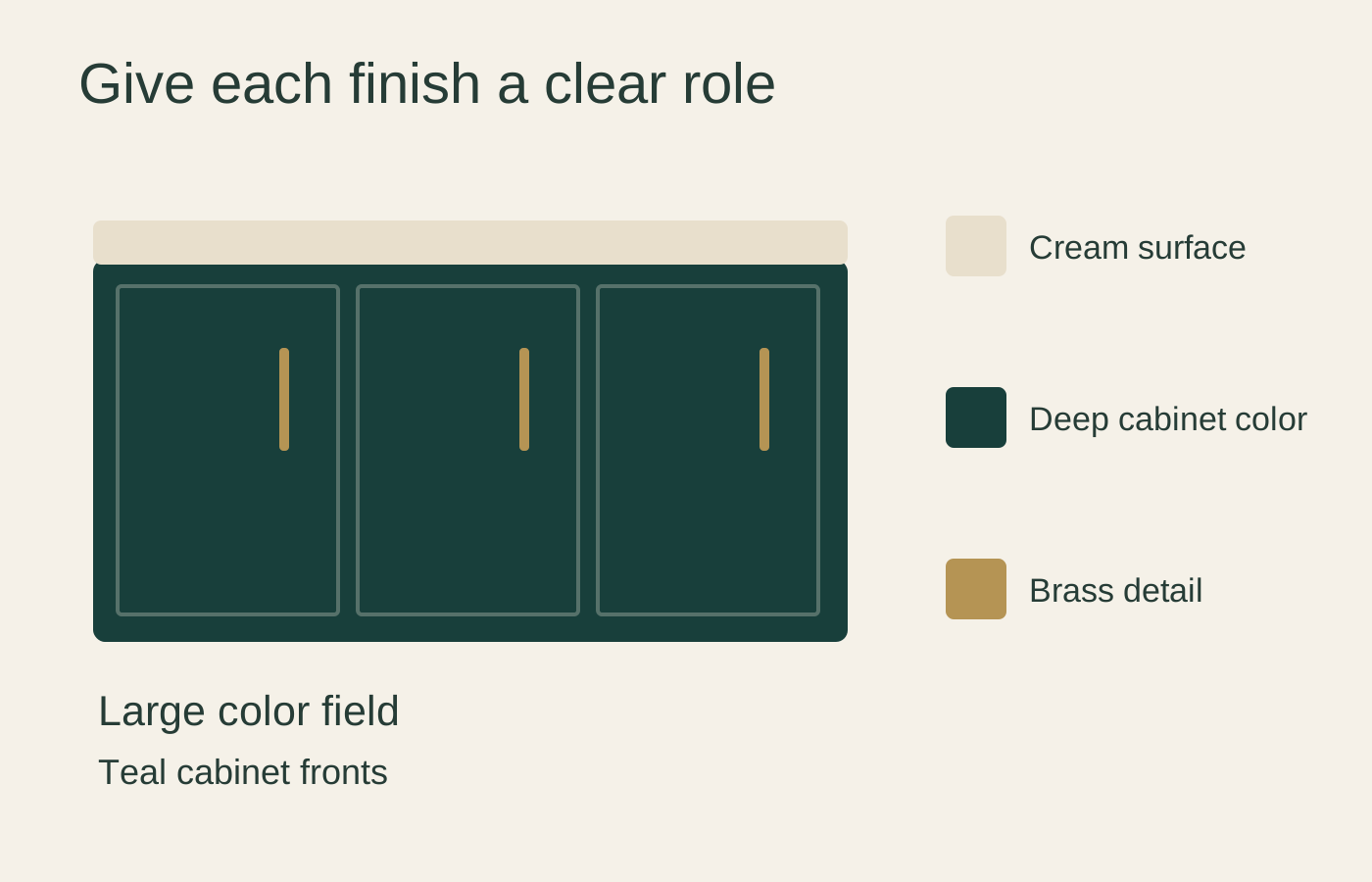
Emerald, navy, oxblood, aubergine or another rich color can make cabinetry feel architectural when it covers a coherent run or volume. The color should work as one field rather than being repeated in stools, accessories and small objects simply to match. Reflective or pale materials can then sharpen its edges.

When Repetition Creates Rhythm
Fluting and reeding are powerful because repeated vertical lines catch light and create movement. Use them on one substantial surface—an island face, glazed door set or panel—so the rhythm has enough scale to matter. Repeating the same texture on cabinets, glass, lights and furniture usually weakens the effect.
Pale Stone as the Counterpoint
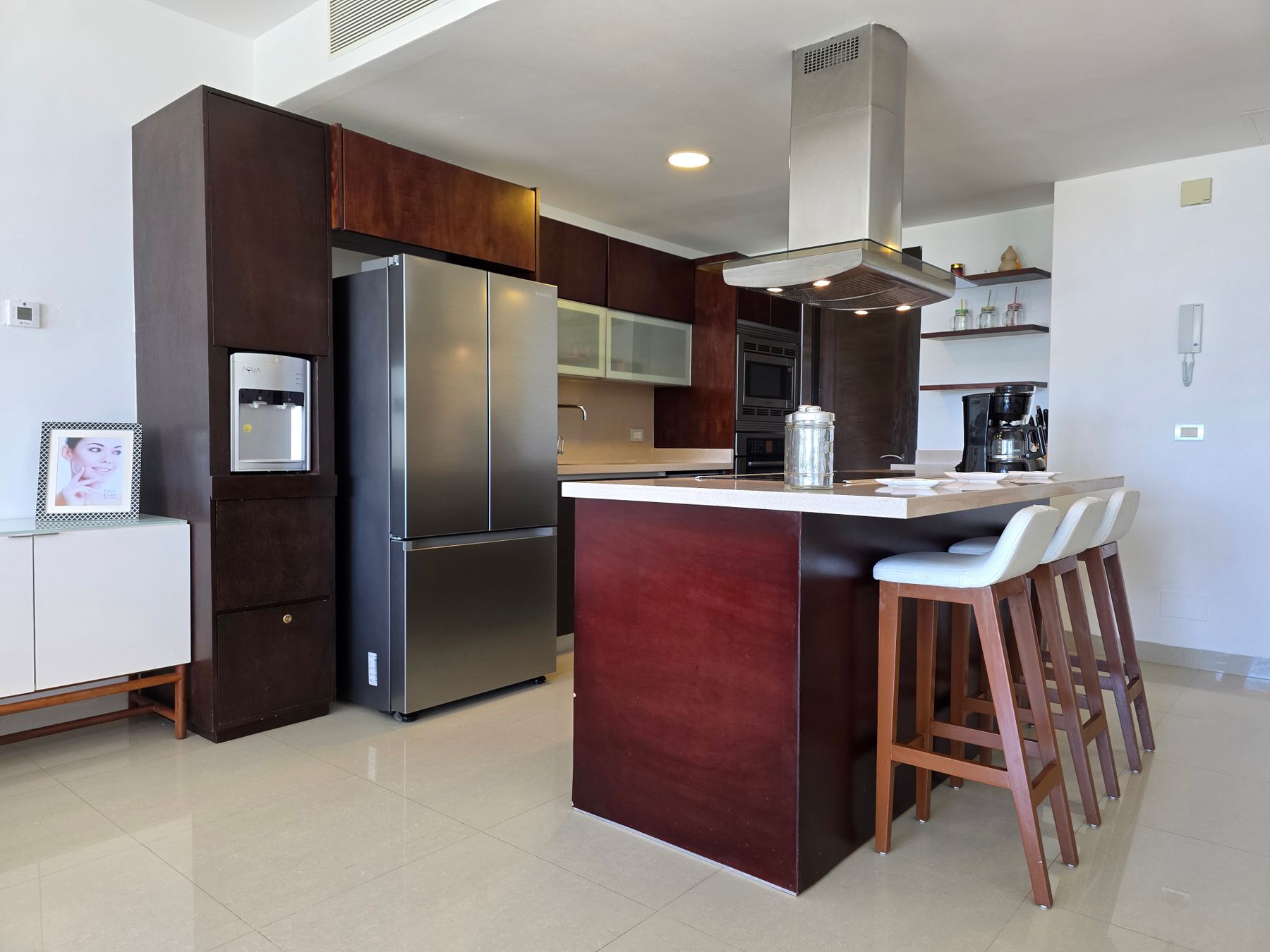
Pale marble, quartzite or another restrained stone can create the high-value counterpoint that keeps rich cabinetry and warm metal from becoming visually heavy. The role of the stone is clarity rather than neutrality: it defines horizontal work surfaces and reflects light back into the composition.

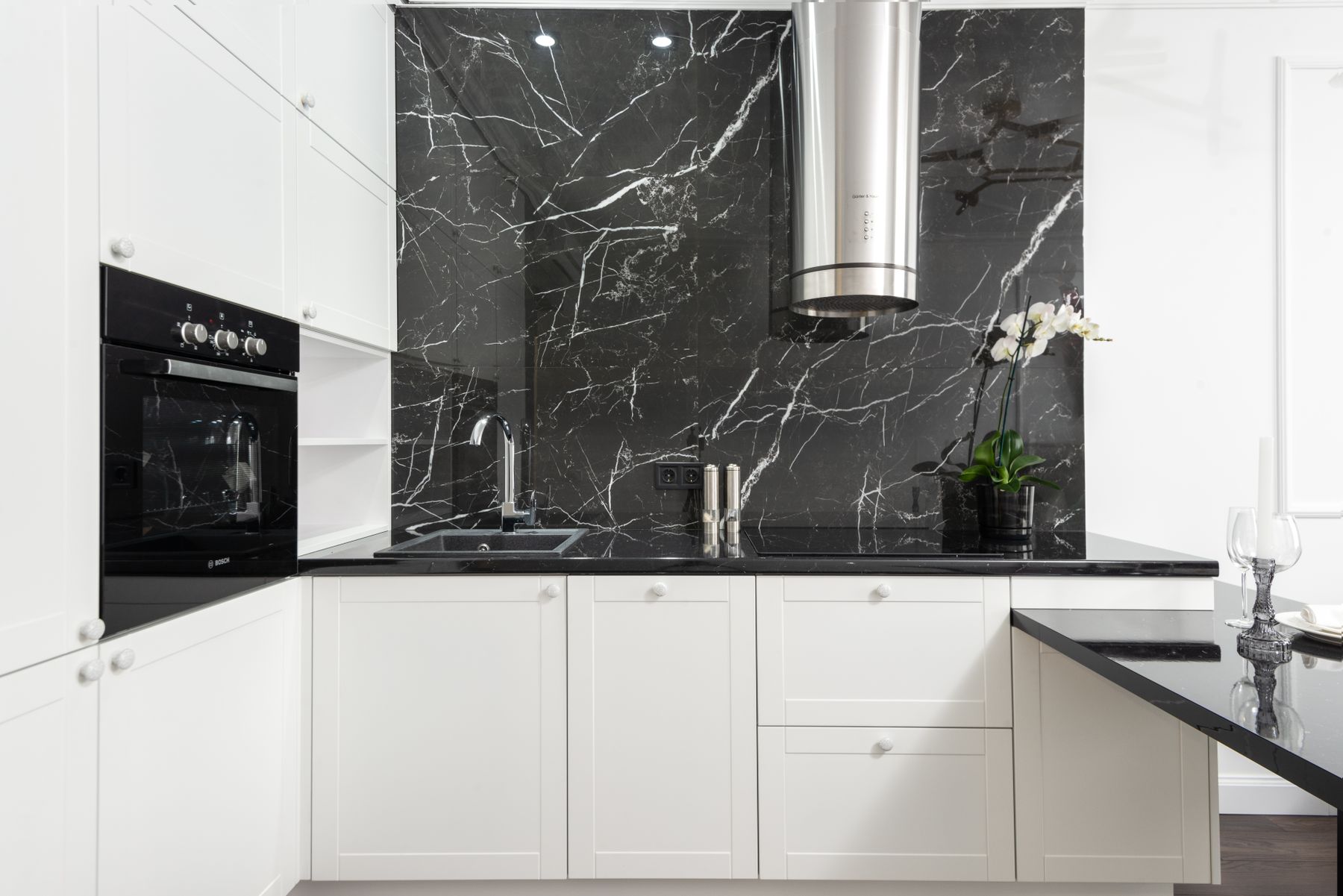
Stone Movement or Geometric Movement?
Veined stone can provide organic movement inside a highly geometric room, but it should not compete equally with patterned floors, fluting and decorative glass. Decide whether the stone is the expressive surface or the quieter counterpoint. If the slab is dramatic, reduce motif elsewhere; if geometry leads, choose more restrained veining.
The Final Geometry Hierarchy Audit
Art Deco needs visual rest because repetition, reflection and rich materials generate information quickly. Review the room and rank the geometric elements as primary, secondary and background. Leave at least one major plane—wall, cabinet run or worktop—comparatively quiet so the strongest motif remains legible.