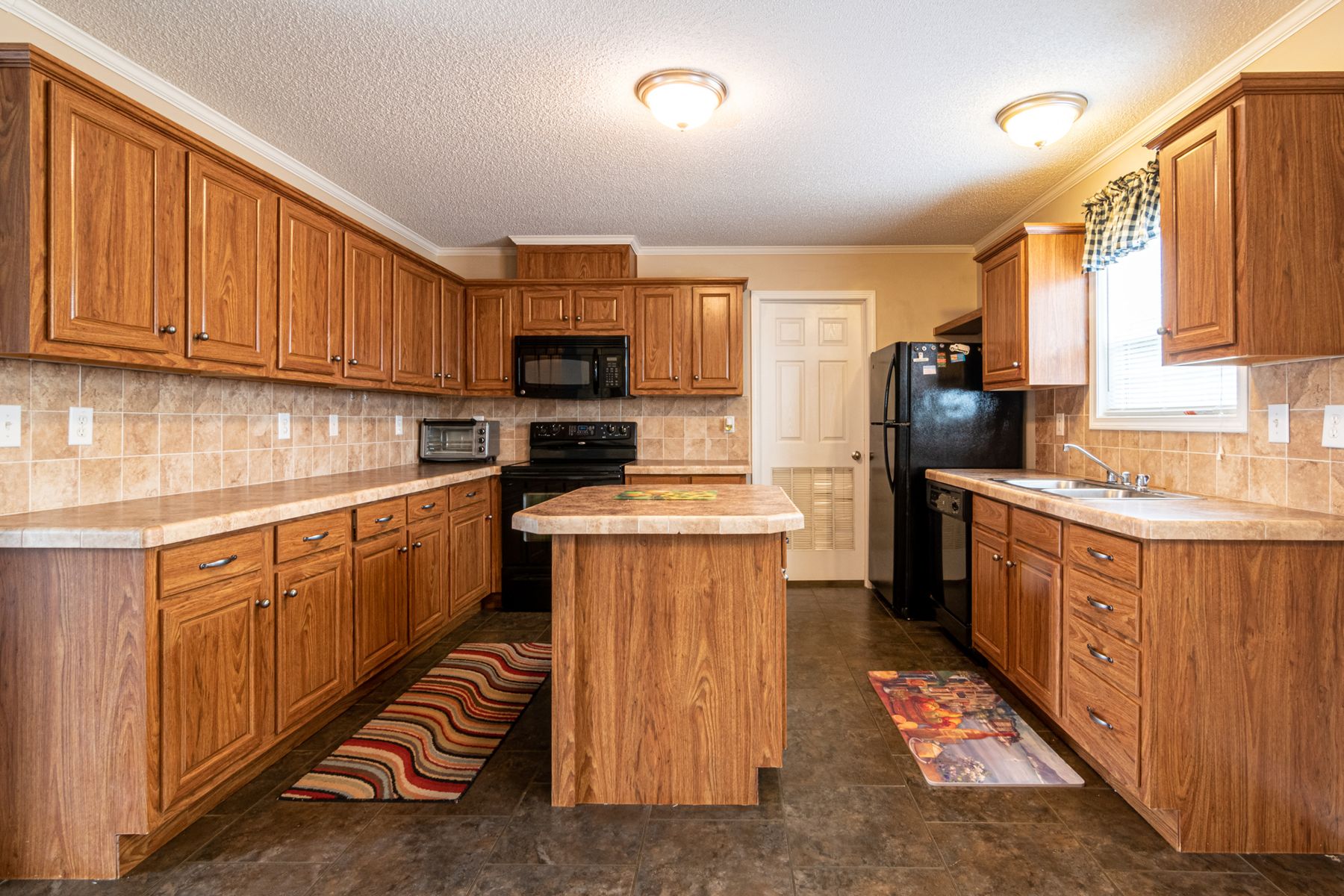
Set the Proportion With the Cabinet Frame
Framed doors create a repeated architectural rhythm, so the width of the frame, panel depth and door size should be judged as a system. Small doors with heavy rails can feel crowded, while very thin frames may lose the familiar traditional weight in a large room. Establish this proportion early because hardware, cornice, island detailing and even stone edge choices will be read against it.
Choose the Primary Ornamental Moment
Traditional kitchens can support molding, paneling, turned details and decorative lighting, but they become clearer when one feature leads. A paneled island, cooker surround, dresser or ceiling detail can carry the strongest ornament while surrounding cabinetry remains more disciplined. Hierarchy allows detail to feel intentional instead of cumulative.
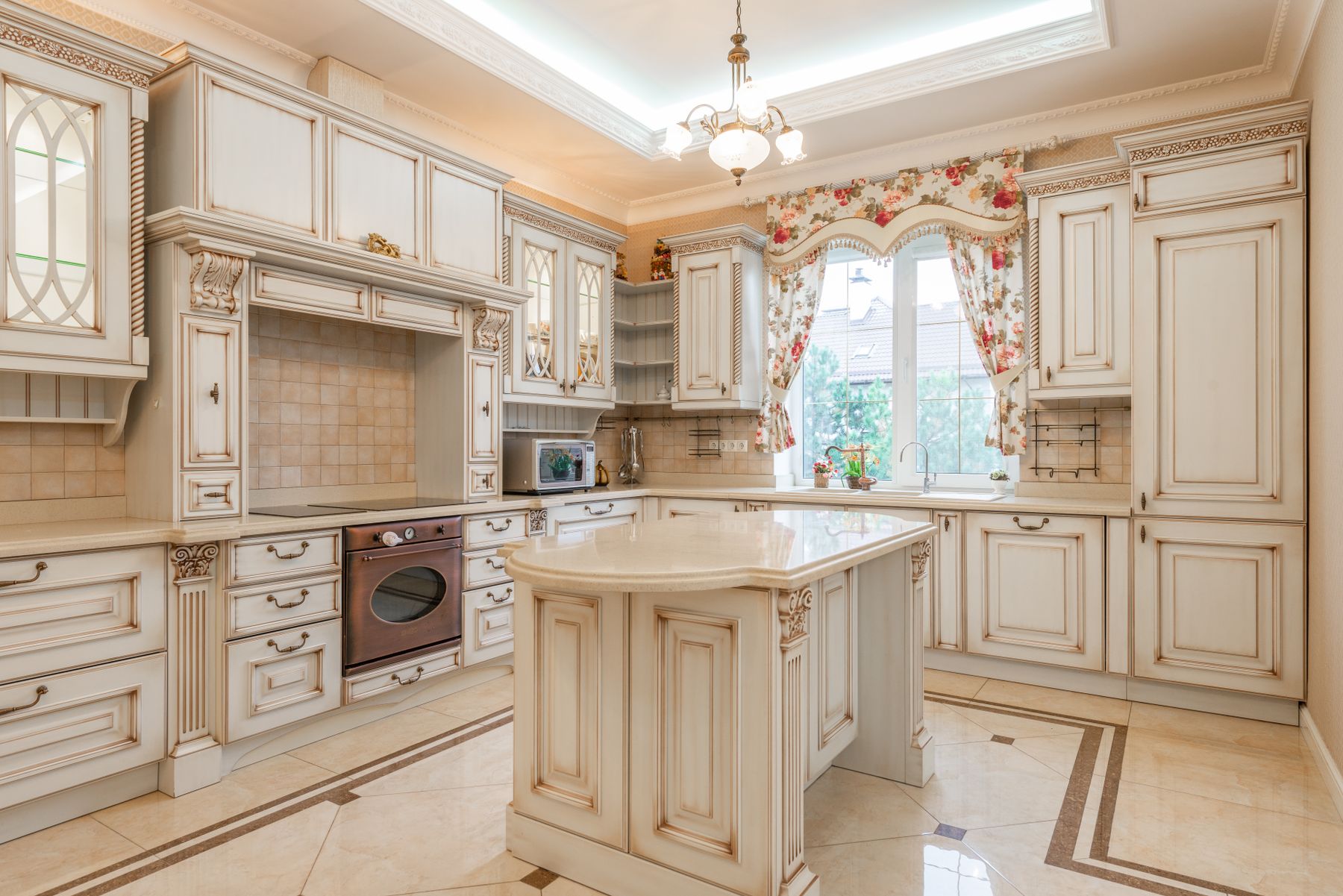
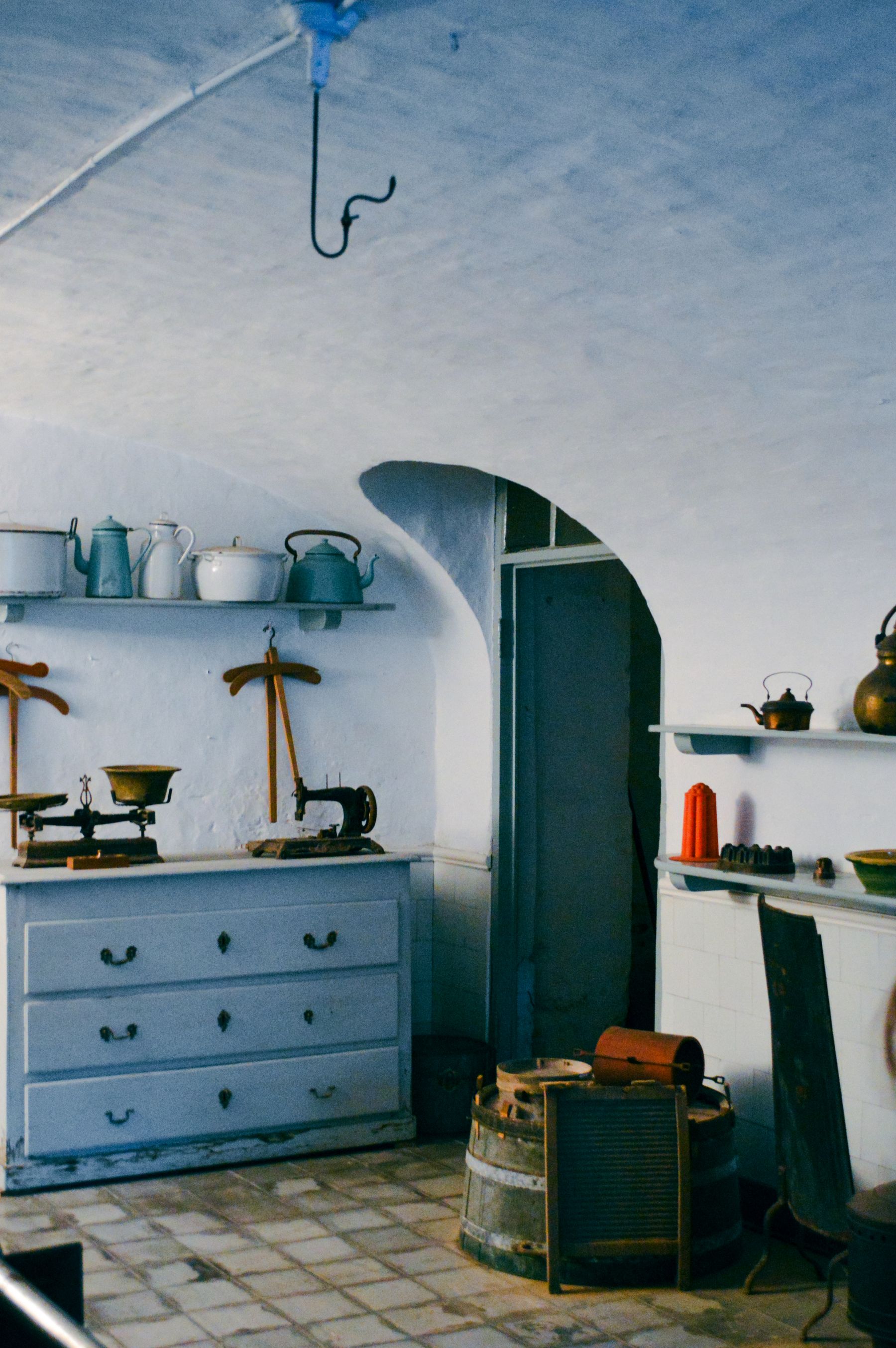
Use a Dresser to Break the Fitted Rhythm
A dresser works well because it introduces a furniture proportion inside a room dominated by fitted joinery. It can hold tableware near dining, create a display zone at a different depth and soften a long cabinet elevation. The piece should still earn its floor or wall area through real storage, and its cornice or framing should relate to rather than copy the main cabinetry.
Let the Table Add a Second Furniture Scale
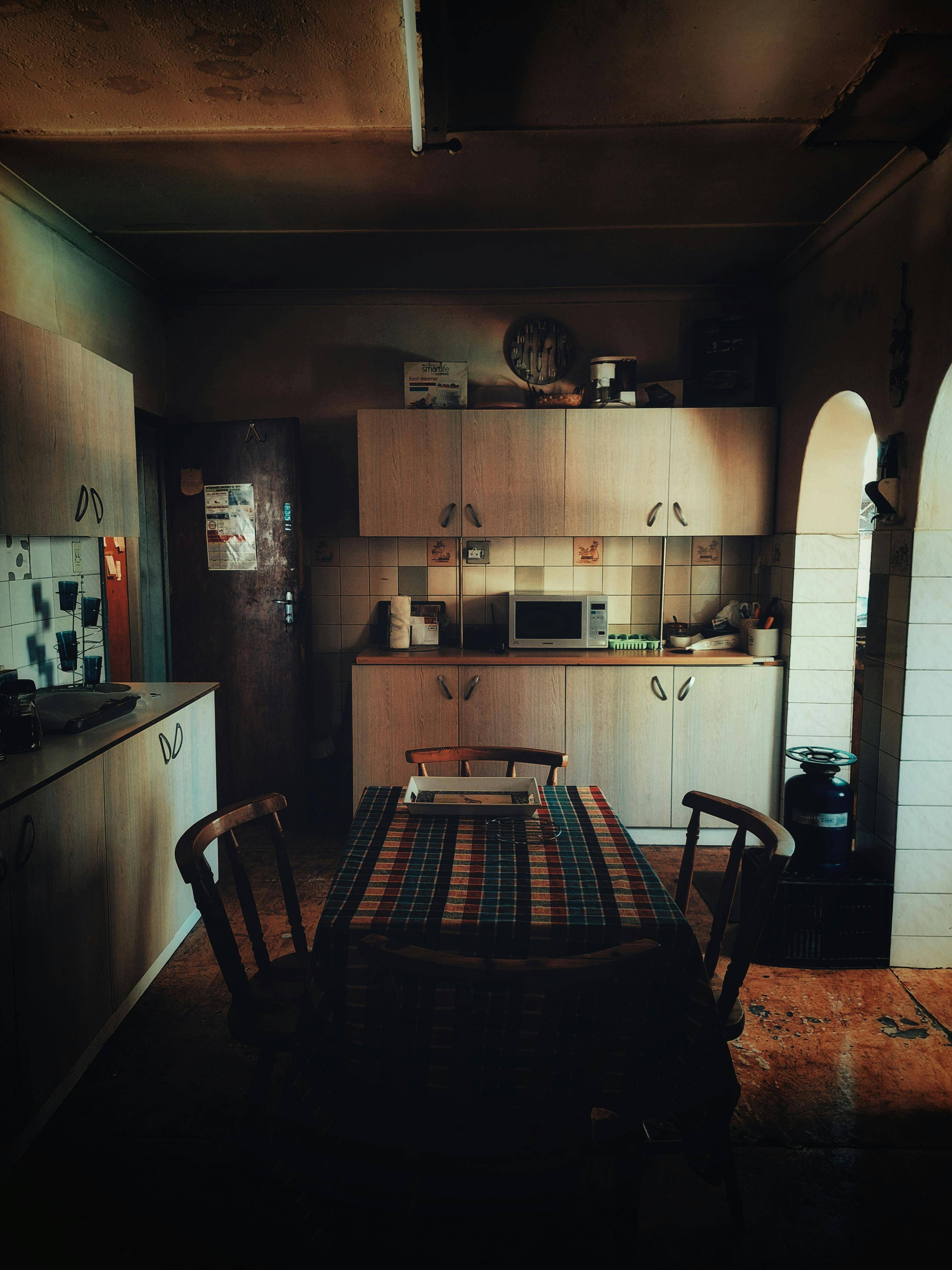
A dining table gives the room another scale beyond doors and cabinet modules. Its top thickness, leg form and distance from surrounding joinery can make a traditional kitchen feel furnished rather than completely built in. It does not need to match the cabinet timber exactly; proportion and visual weight matter more than an identical finish.

Use Soft Furnishings to Complete the Composition, Not Start It
Curtains, seat fabric and a dining pendant can reinforce a traditional room after the architectural hierarchy is established. Pattern and fabric should relate in scale to the cabinet detail rather than introducing a second competing ornament system. Keep task lighting separate from decorative atmosphere so the softer dining layer does not have to solve the entire room.
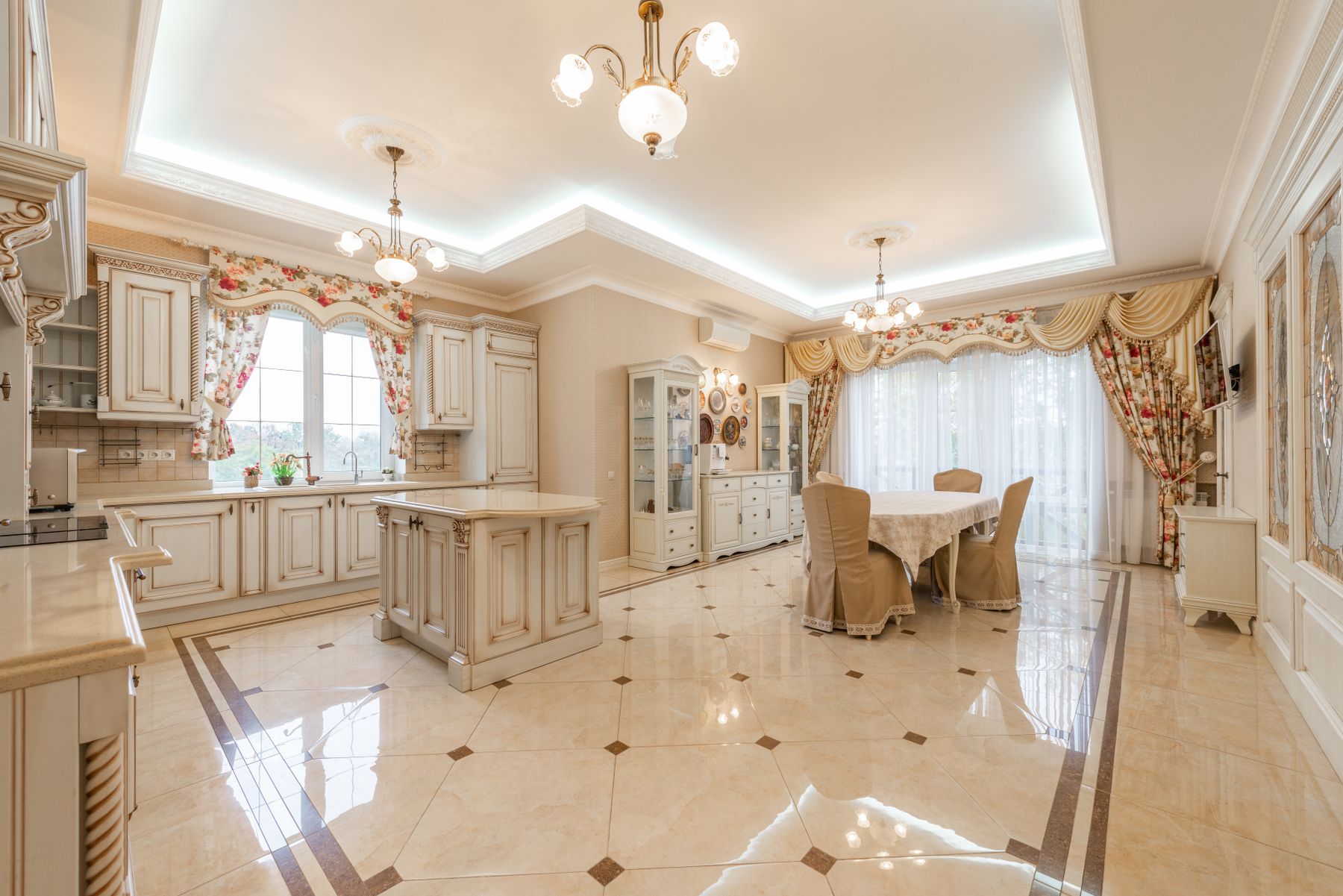
Repeat Hardware by Family and Function
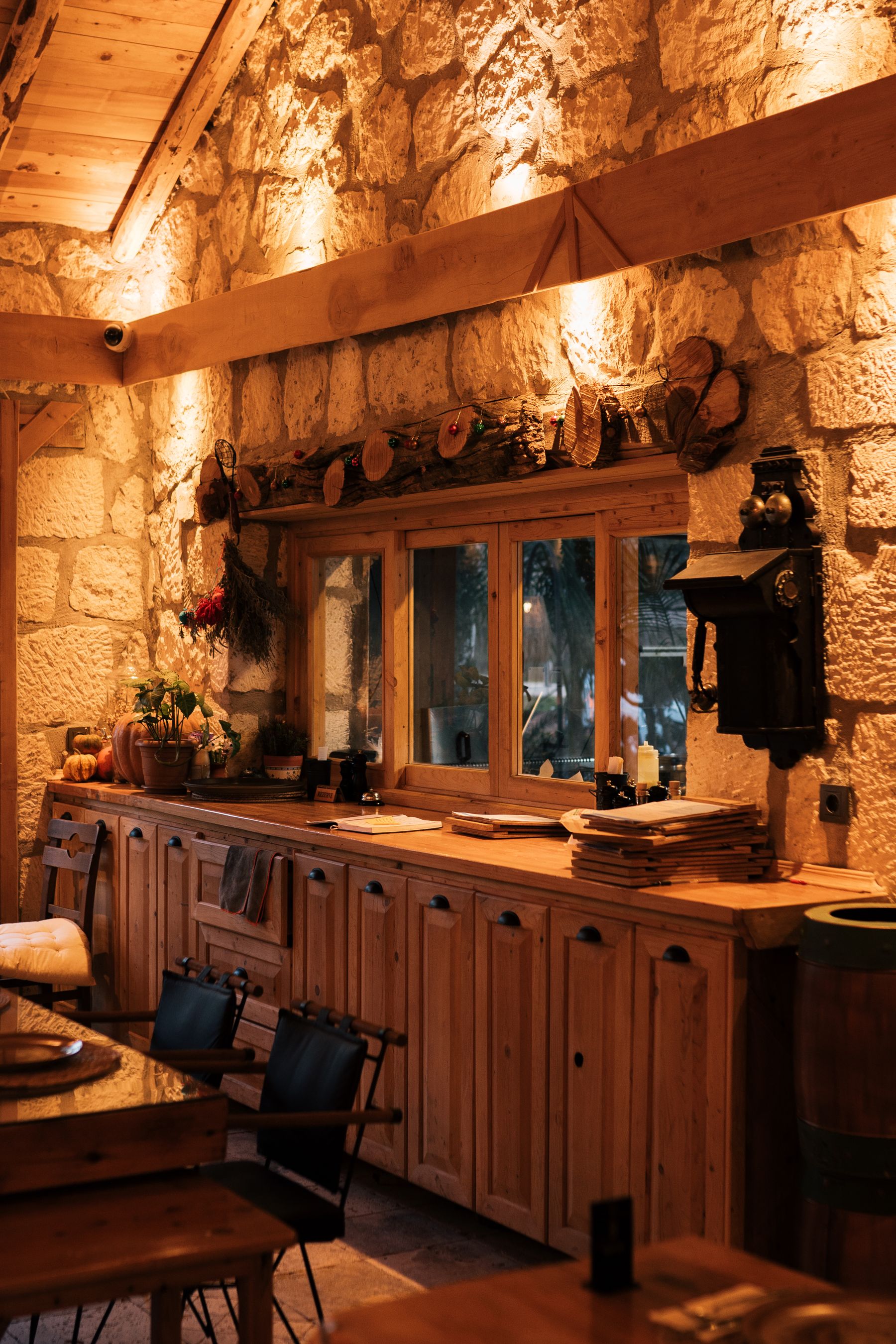
Traditional continuity often comes from recurrence, but every handle does not need to be identical. Knobs, cup pulls and latches can share a metal family and level of formality while responding to different doors and drawers. The result feels considered when function explains the variation and the finish ties the pieces together.
Let the Worktop Rest Between Detailed Verticals
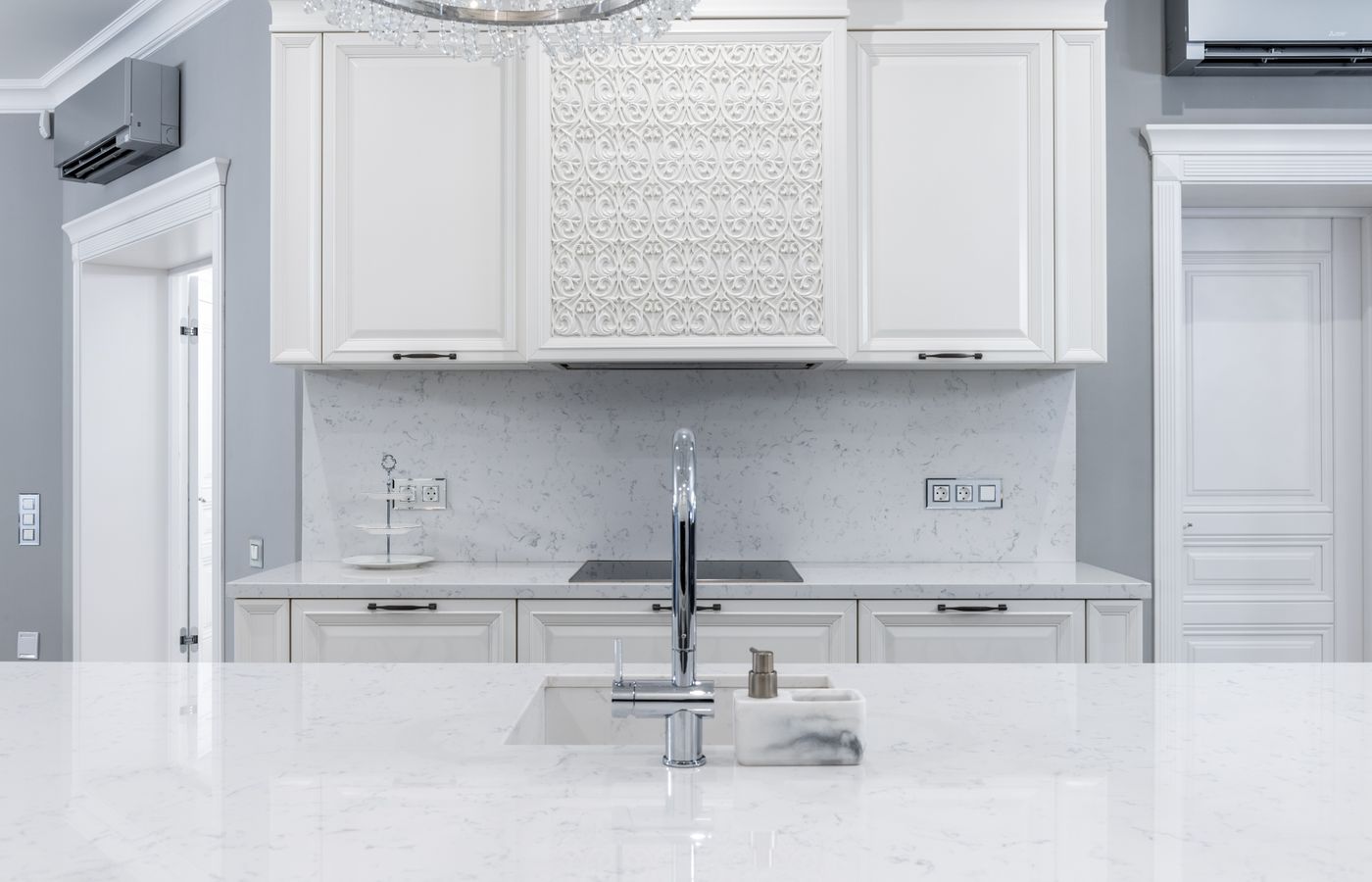
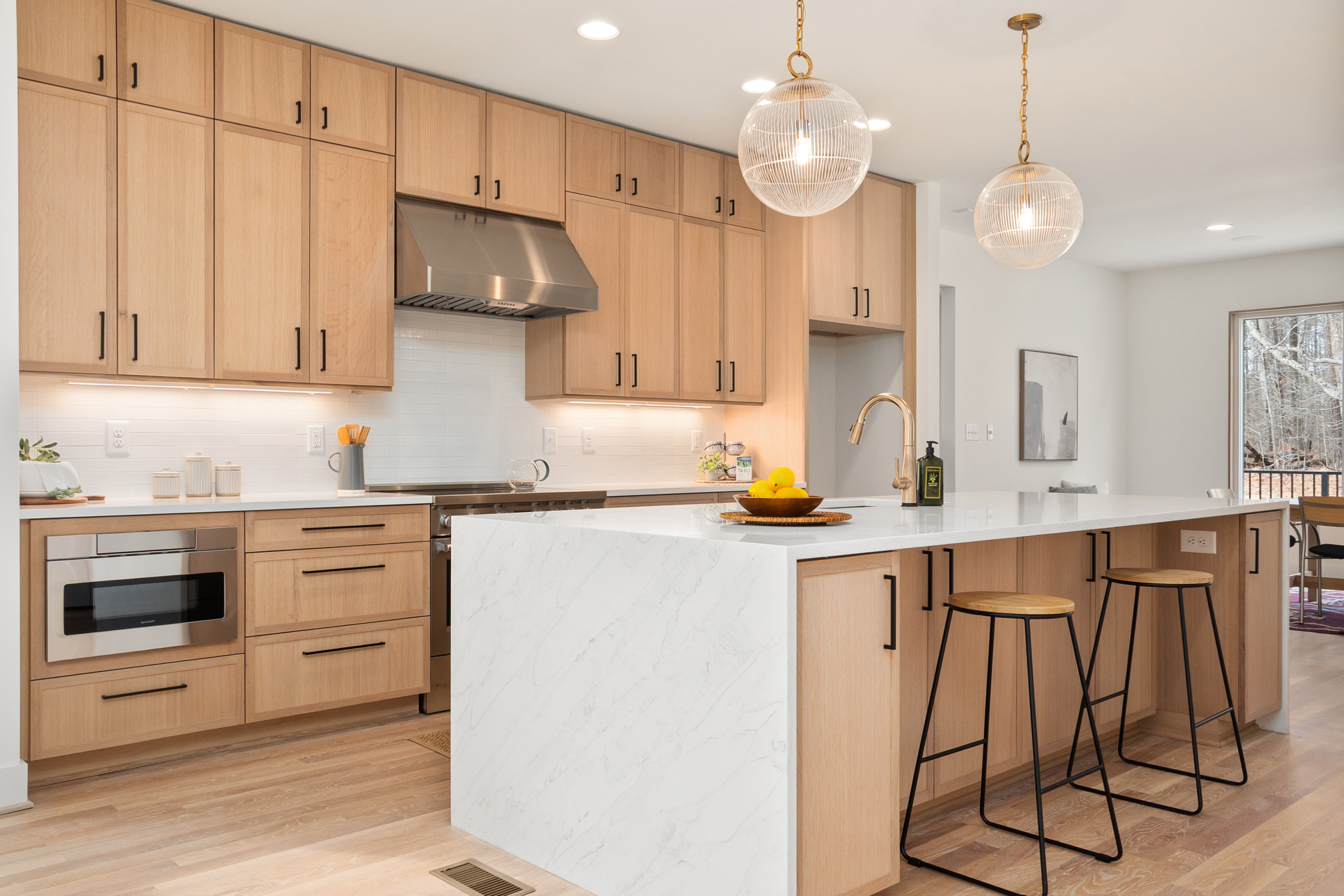
Framed cabinetry, hardware and furniture-like storage already create many vertical lines and shadows. A calmer worktop can provide the horizontal pause that keeps those details legible. Light veining or a restrained stone pattern often works because it supports rather than duplicates the ornament, while a very expressive slab needs the surrounding joinery to become correspondingly quieter.
Integrate Modern Equipment Through Proportion
Current appliances can belong comfortably in a traditional kitchen when their dimensions and placement respect the cabinet composition. Align oven banks, group tall equipment and use framing where it clarifies the elevation rather than disguising the machine as something historical. Traditional design can absorb modern technology when the proportion remains composed.
Use Color to Reinforce the Architectural Hierarchy
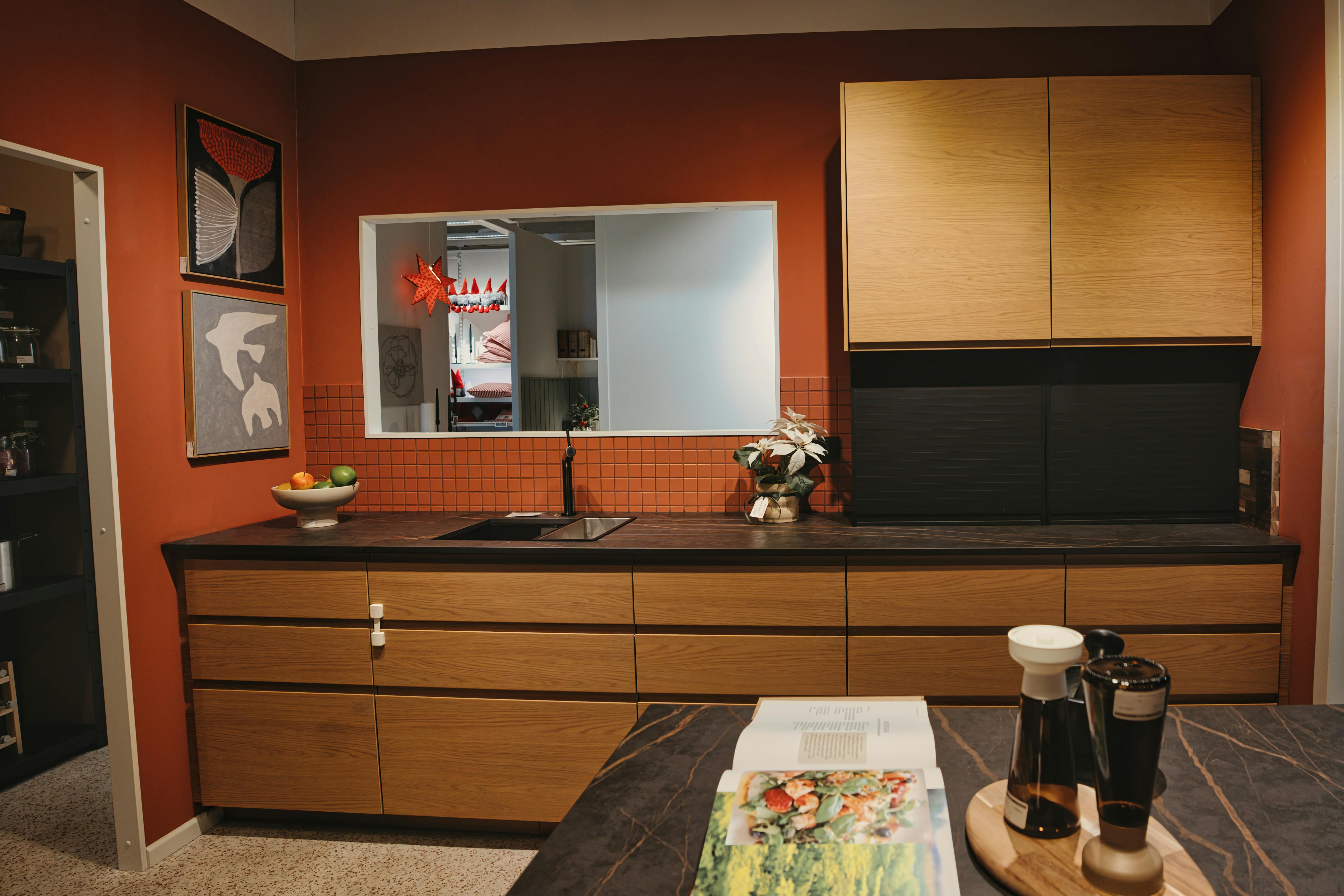
Muted green, blue, grey or earthy paint can make framed doors and furniture-like pieces more legible by separating major zones. Color is most useful when it clarifies the hierarchy—for example, a deeper island within a quieter perimeter—rather than when every cabinet section receives a different historical-looking shade.

Finish With a Detail Hierarchy Audit
A traditional kitchen needs somewhere for the eye to rest because every frame, pull, molding and pattern creates information. Review the room from the entrance and rank the details as primary, secondary or background. If too many elements demand equal attention, simplify a worktop, wall, light or cabinet treatment. Traditional richness comes from ordered detail, not maximum detail.