A Tree That Fits the Floor Plan
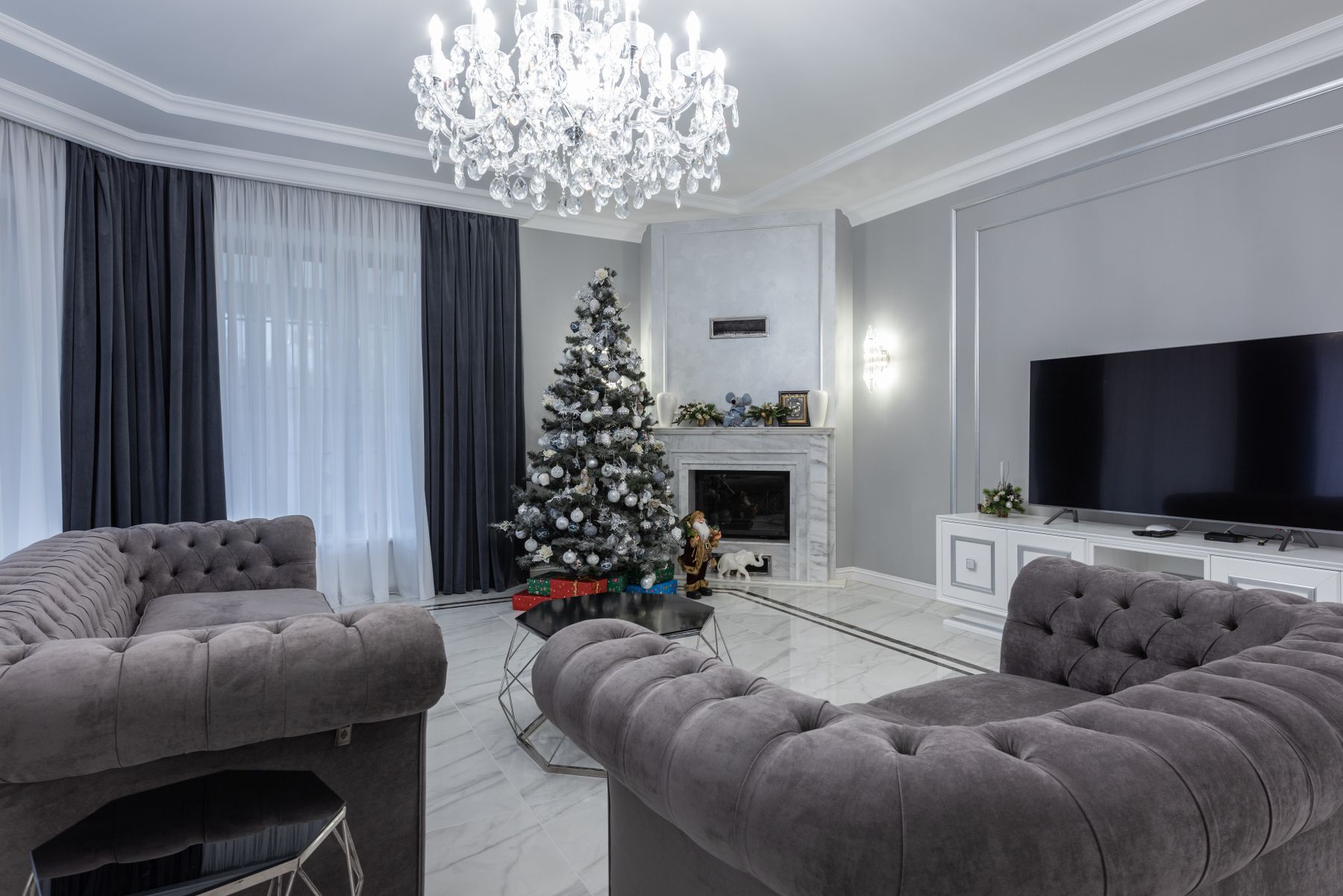
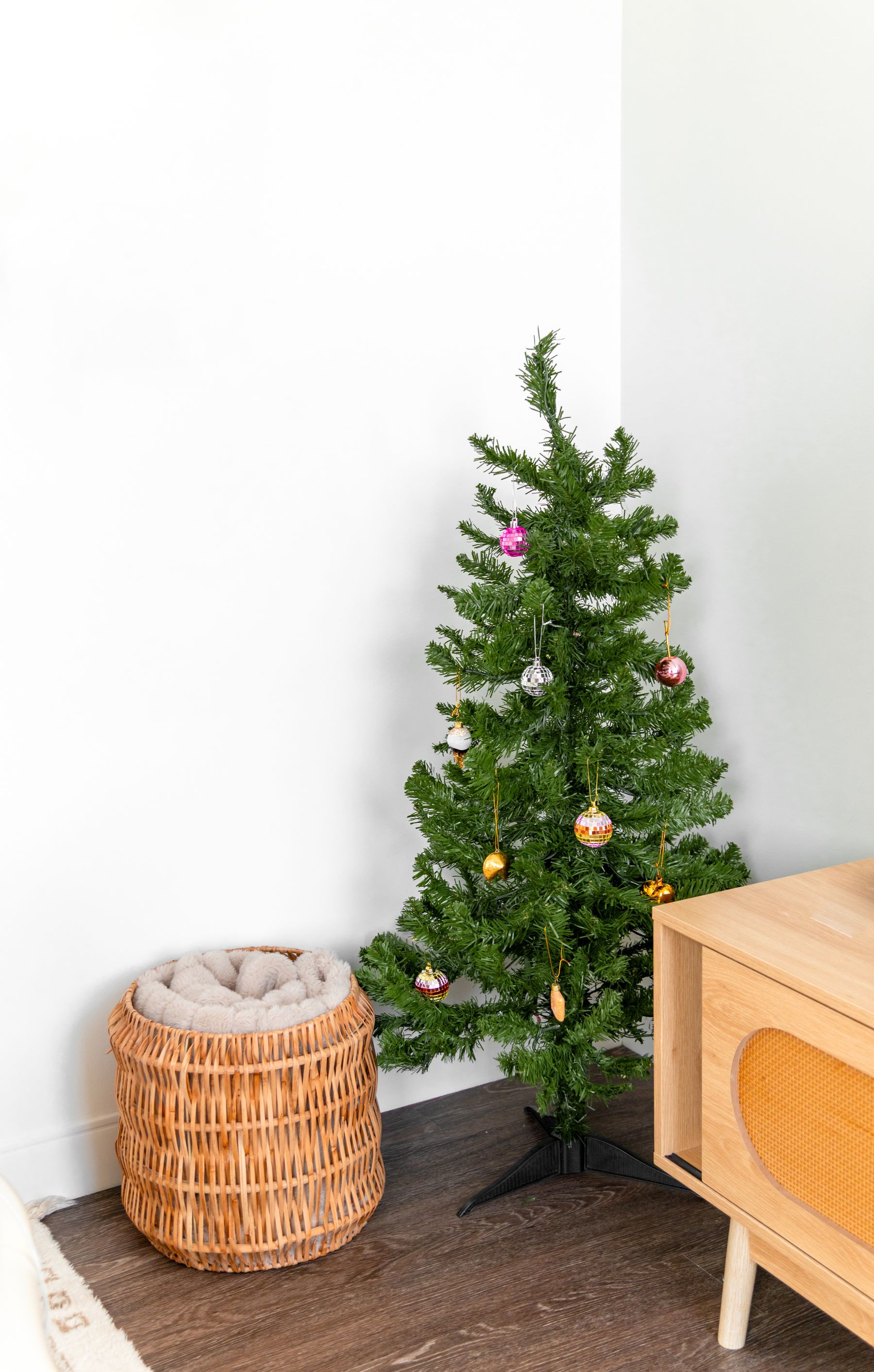
Measure usable floor diameter as carefully as ceiling height. A tree that technically fits can still pinch the route around a sofa, cover a radiator, crowd a television or force branches against curtains. Mark the expected footprint with tape and include the stand, basket or skirt. Then look from the doorway and primary seat: the tree should feel important without erasing the room's permanent focal points. In compact rooms, a narrower profile with visible breathing room often looks more generous than a broad tree compressed into a corner. For placement decisions beyond the tree itself, use [Christmas living room decor ideas](/living-room/christmas-living-room-decor-ideas/) as the room-scale companion.

Palette Before Ornament Boxes
Start with the permanent room rather than a trend image. Pull two or three tones from upholstery, art, timber or metal finishes, then decide whether the tree should harmonize with them or provide one controlled contrast. A blue room may support navy, white and glass; warm wood can carry burgundy, brass and natural materials; a colorful interior may need a quieter tree. Also choose a finish balance—matte, reflective, translucent, natural—because ten colors in the same glossy finish can feel flatter than three colors with material variation.
Lighting Comes Before Ornaments
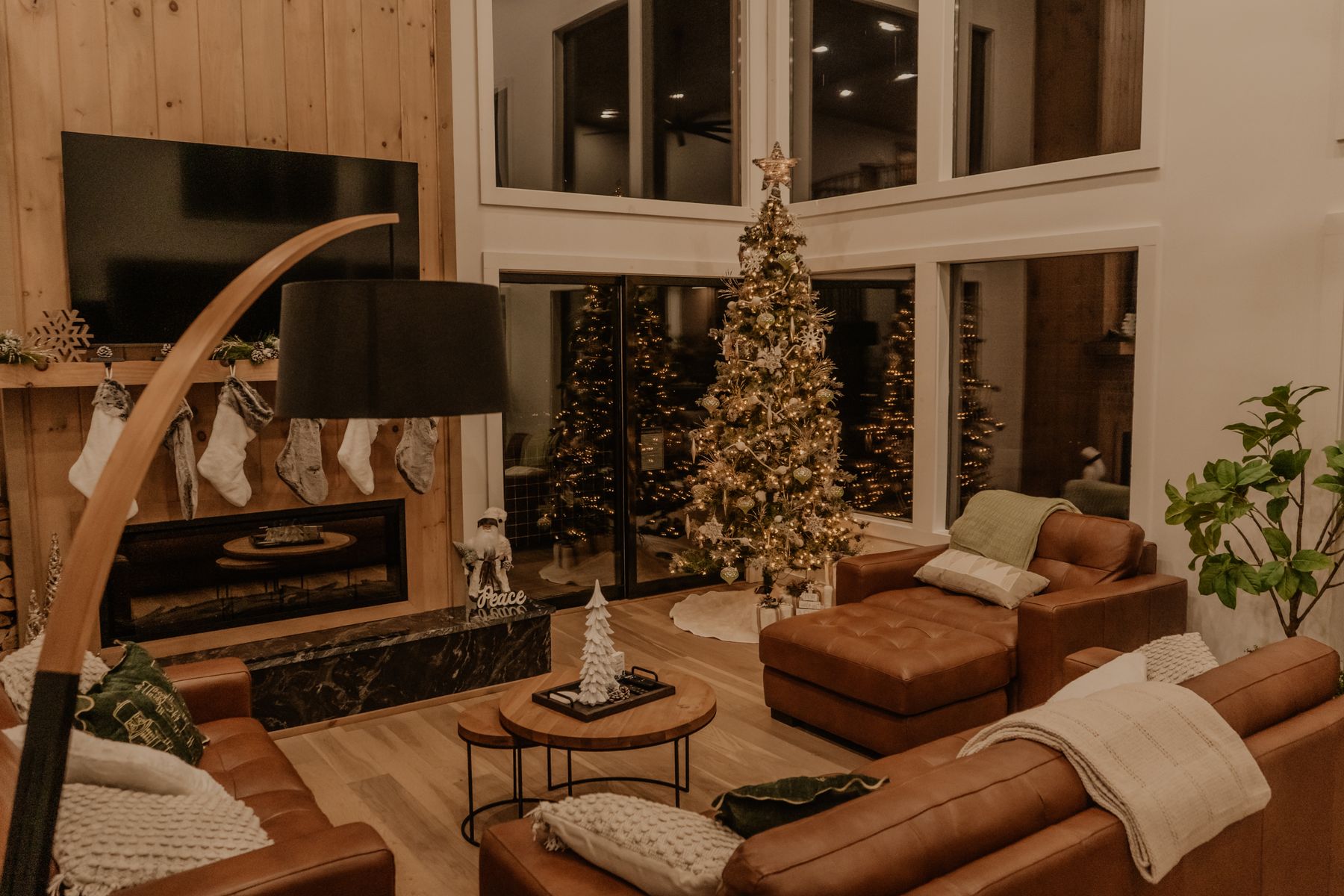
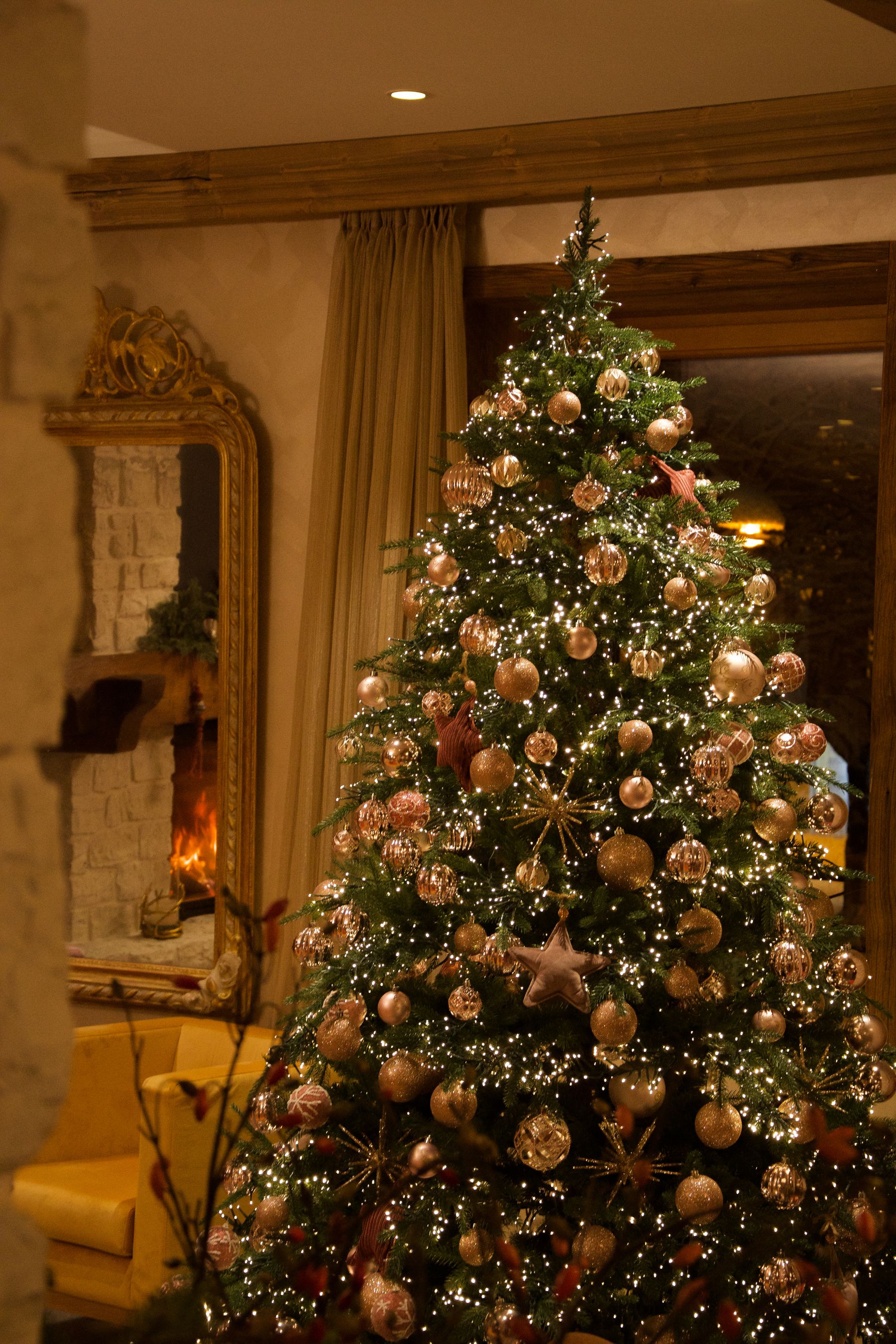
Install and test lights before ribbon or ornaments make branches harder to reach. Work around the tree rather than only across the visible front, and step back frequently to identify bright bands, dark holes and overly concentrated clusters. The goal is not maximum brightness but an even underlying glow that reveals branch depth. Follow the light manufacturer's instructions for indoor use, connection limits and power requirements, and keep cords out of walking routes. If the room itself becomes flat once the tree is switched on, rebalance the surrounding lamps using [living room lighting ideas](/living-room/living-room-lighting-ideas/).

The Large Pieces Set the Rhythm
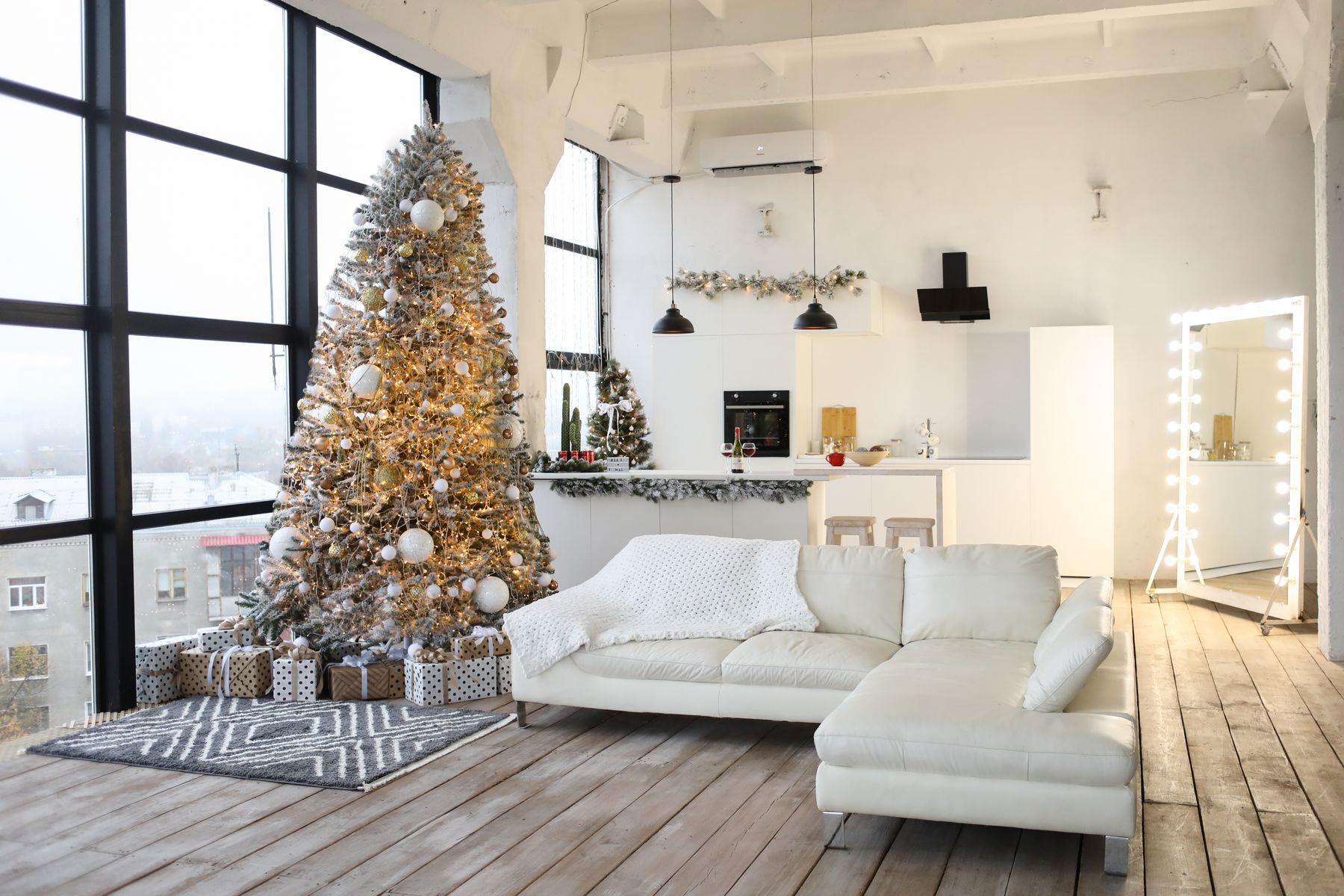
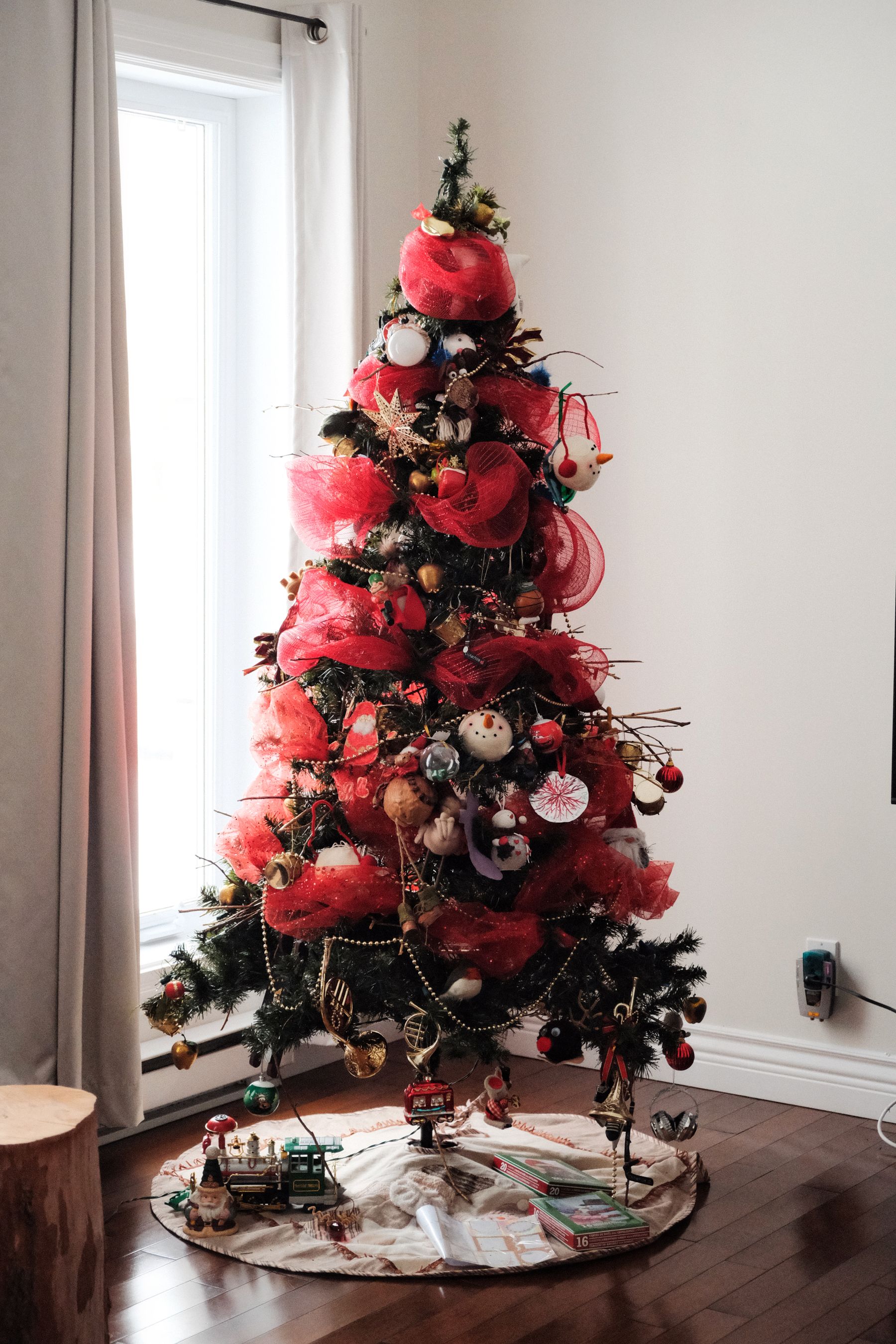
Oversized ornaments, substantial bows, ribbon runs or meaningful statement pieces should establish the main rhythm. Distribute them around the full tree and vary height rather than forming obvious horizontal rings. Large elements can also disguise sparse areas or awkward branch transitions, but avoid using them to fill every gap. From the main viewing angle, check whether one side has noticeably more visual weight. Correct that imbalance now; tiny ornaments added later will not solve a weak underlying composition.

Use Medium Ornaments to Connect, Not Carpet, the Tree
Medium ornaments do most of the connecting work. Repeat colors and shapes diagonally and around the sides so the eye can travel rather than encounter isolated patches. Push some pieces slightly deeper into the branches and keep others near the tips; a single front plane makes even expensive ornaments look flat. Do not interpret every patch of visible green as a hole. Foliage is the negative space of the composition, and it is what allows reflective glass, matte ceramics, ribbon and sentimental pieces to remain distinct.
Where Sentimental Ornaments Belong
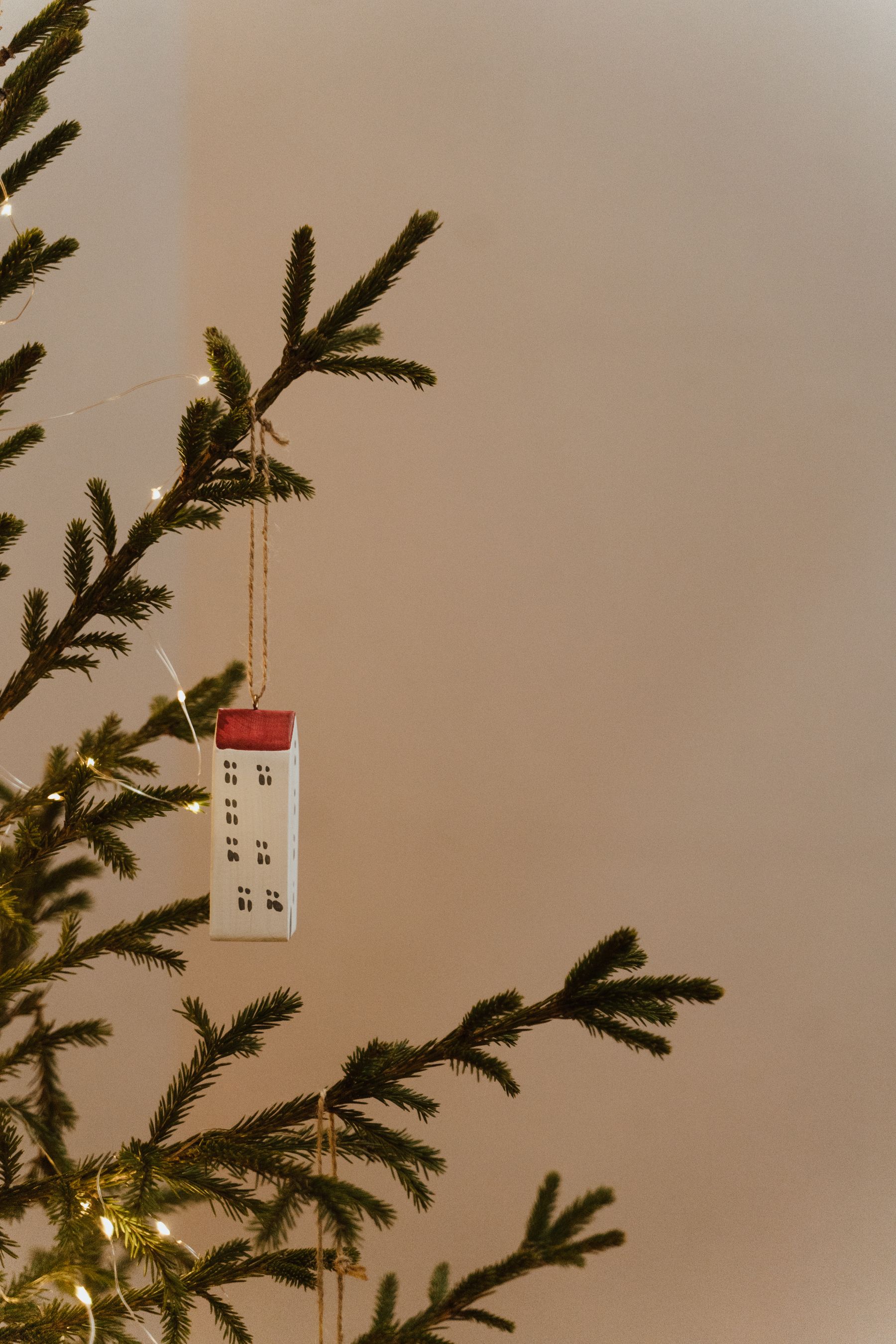
Small ornaments are punctuation, not filler. Put detailed or sentimental pieces near natural viewing height and on outer branches where they can be seen, rather than burying them high or deep simply to achieve even coverage. Grouping a few related keepsakes in one loose zone can be more readable than distributing them randomly across a highly coordinated tree. Fragile pieces should be placed with household realities in mind—away from low branches if children or pets can reach them and on branches strong enough to hold their weight.

Treat Ribbon as Structure, Not Gift Wrap
Ribbon can introduce broad color and movement, so it needs fewer repetitions than small ornaments. Tuck it into branches at intervals to create soft vertical or diagonal paths, or use controlled bows as repeated anchors. Avoid wrapping the tree in tight horizontal bands that flatten its conical depth. The ribbon width should make sense against the tree scale: very narrow ribbon disappears on a large tree, while broad ribbon can overwhelm a slim one. If the tree already contains many heirloom ornaments, ribbon may be unnecessary.
A Topper That Respects the Tree's Proportions
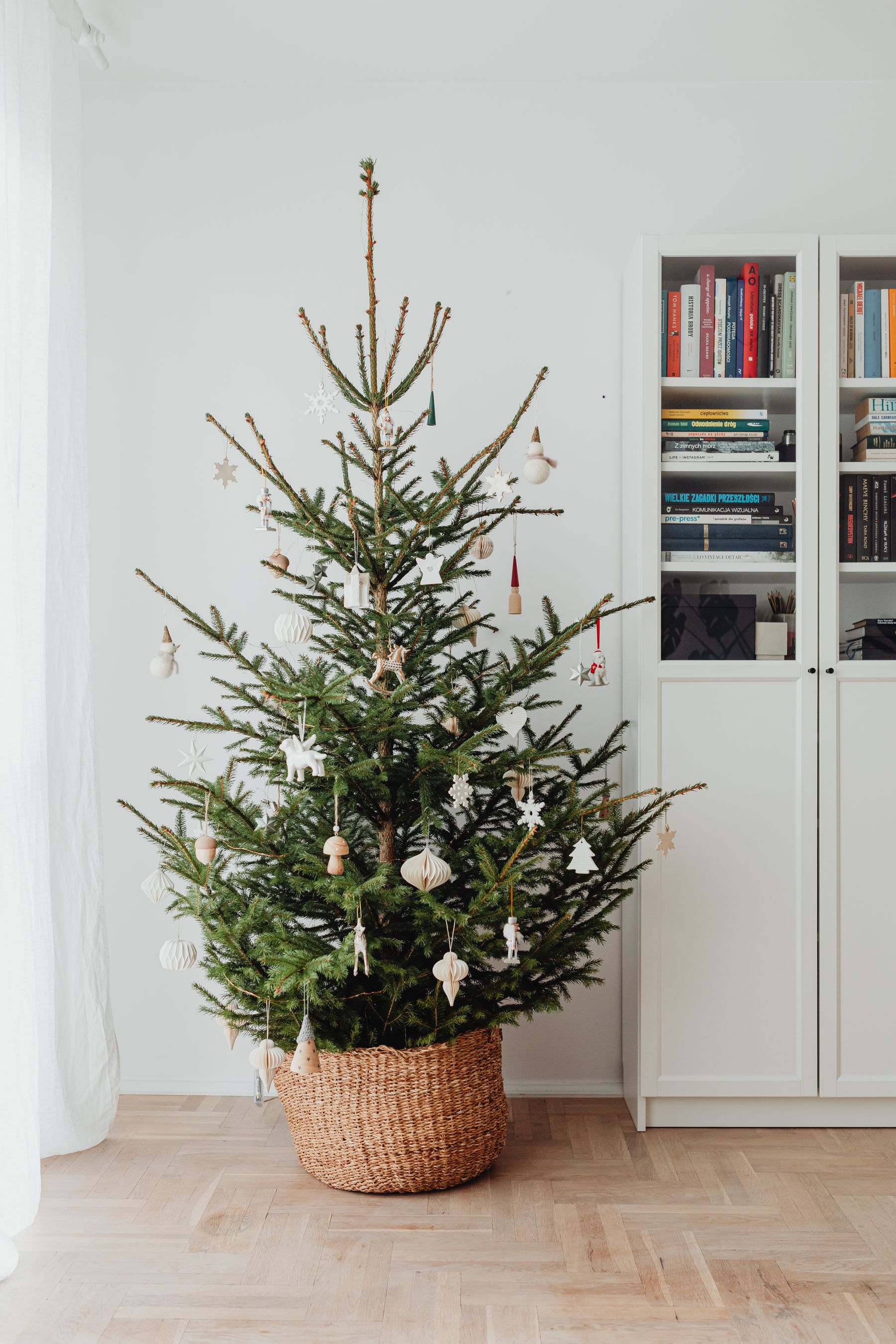
A star, bow, spray or deliberately bare top can all work if the scale matches the upper third of the tree. Check the distance to the ceiling and whether the topper leans from the main viewpoint. Large sprays need visual support lower in the tree; otherwise they look detached. In a low-ceiling room, a compact topper or a strong final ornament cluster can preserve height without appearing compressed. The best top is the one that completes the silhouette, not necessarily the largest object in the decoration box.
Make the Base Look Intentional
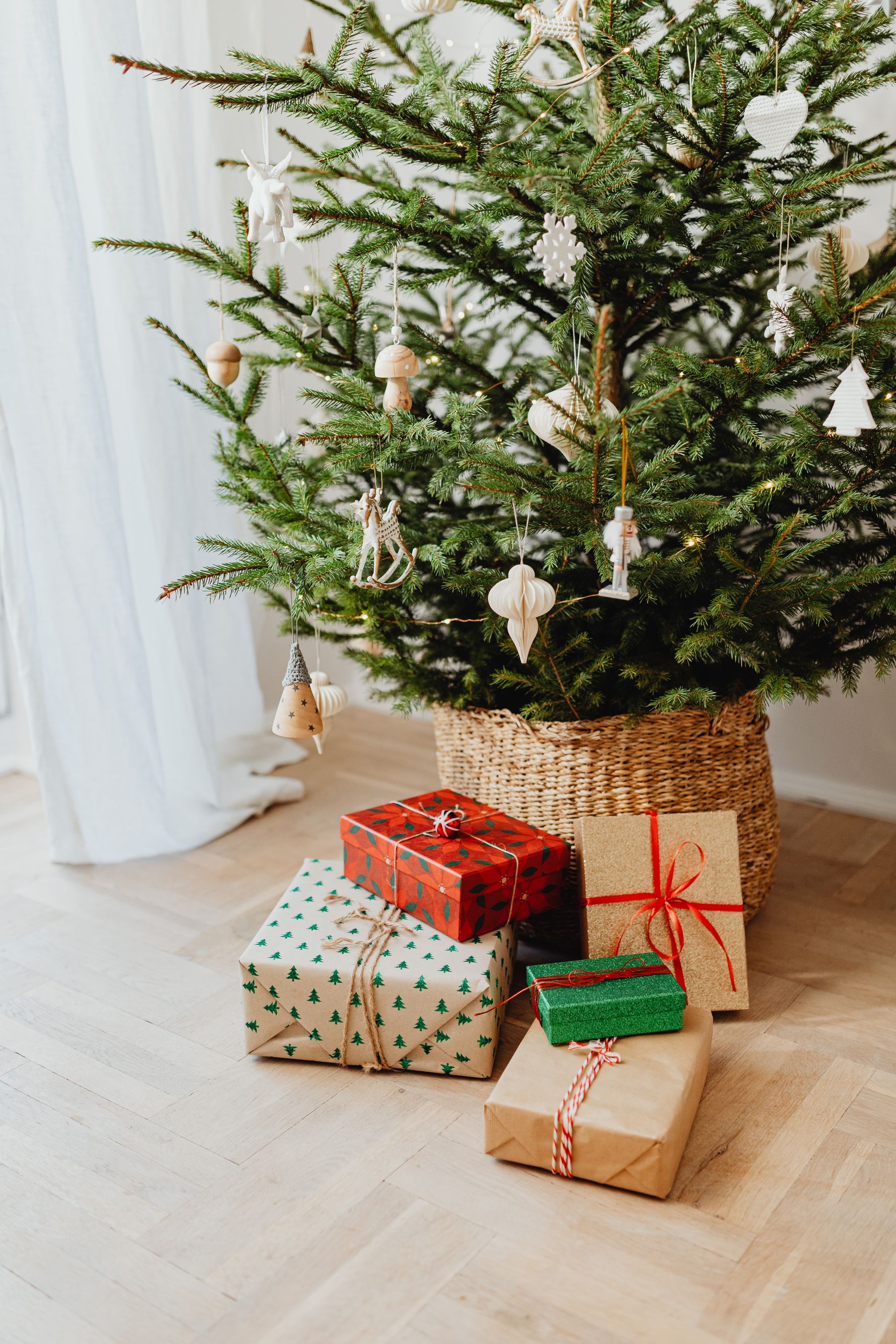
A skirt, collar or basket should conceal the mechanics without creating a bulky obstacle. Choose its diameter after the tree is standing, keep access to water available for a fresh tree and avoid trapping electrical connections beneath fabric. Wrapped gifts can eventually add visual weight, but the tree should look finished before presents arrive. In a small home, avoid an oversized collar that steals circulation simply because it photographs well. The base is also where pet access, robot vacuums and daily cleaning become practical considerations.
The Walk-Around and Daylight Test
Finish by walking the routes through the room and viewing the tree from every seat that matters. Rotate exposed ornament hooks inward, correct obvious dark patches and remove decorations that project into circulation. Then look again in daylight; evening glow can disguise excessive density and awkward color distribution. If the tree is beautiful from one photograph but lopsided from the dining area or blocks a route to the sofa, it is not finished for the home.