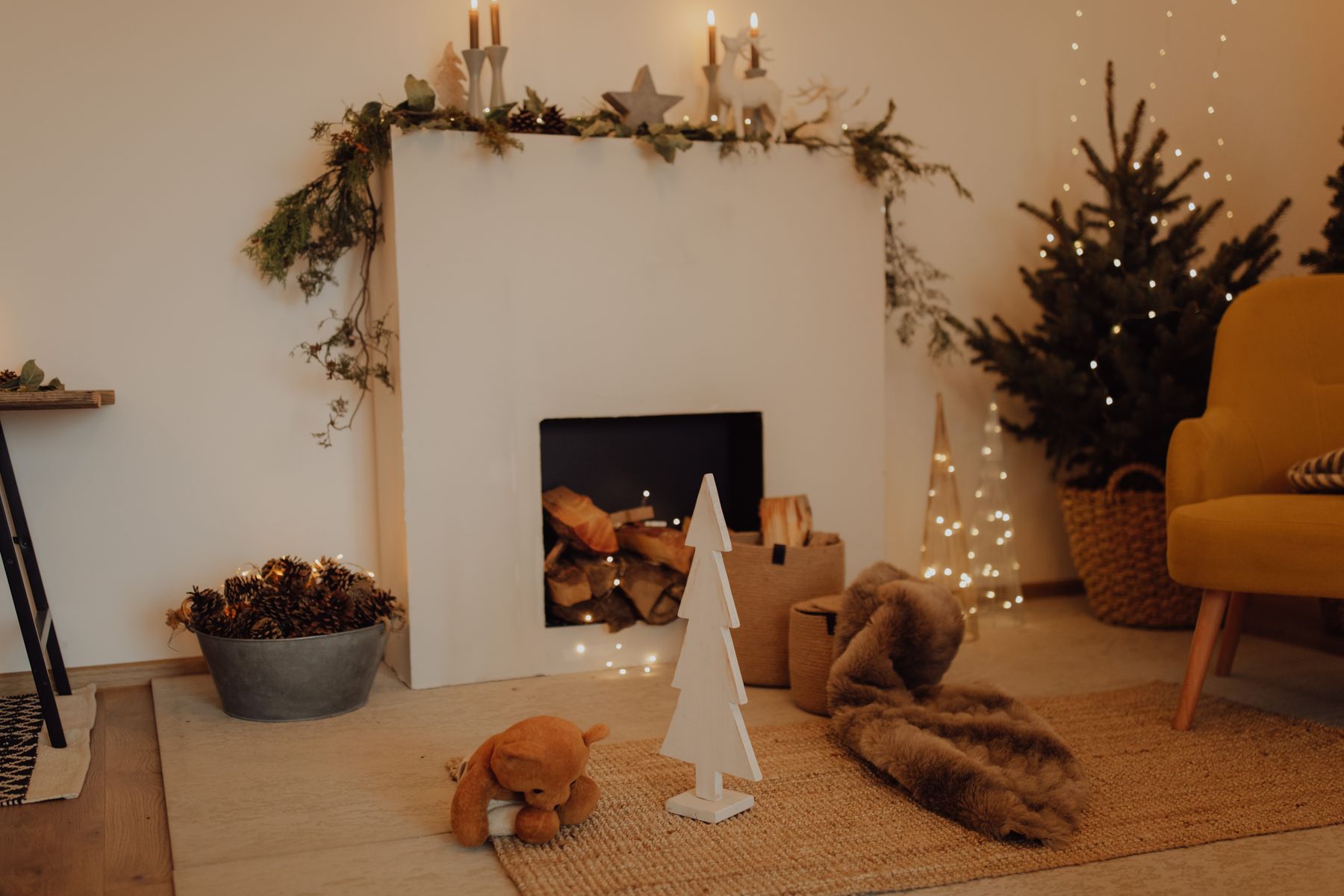
The Room Before the Ornament Boxes
Before opening storage boxes, photograph the room from the doorway and from the main seat. Mark the existing focal point, busiest route, darkest corner and surfaces that already carry visual weight. A living room with a fireplace may need the tree to support rather than compete with the hearth; a room organized around a television may need a lower or more lateral festive composition. Remove only enough everyday decor to create space for the seasonal layer. The goal is not to replace the room for six weeks but to make its strongest qualities feel warmer and more deliberate. If the underlying layout already feels unresolved, use the planning tests in [living room layout ideas](/living-room/living-room-layout-ideas/) before adding temporary volume.
Place the Tree Where It Belongs in the Plan
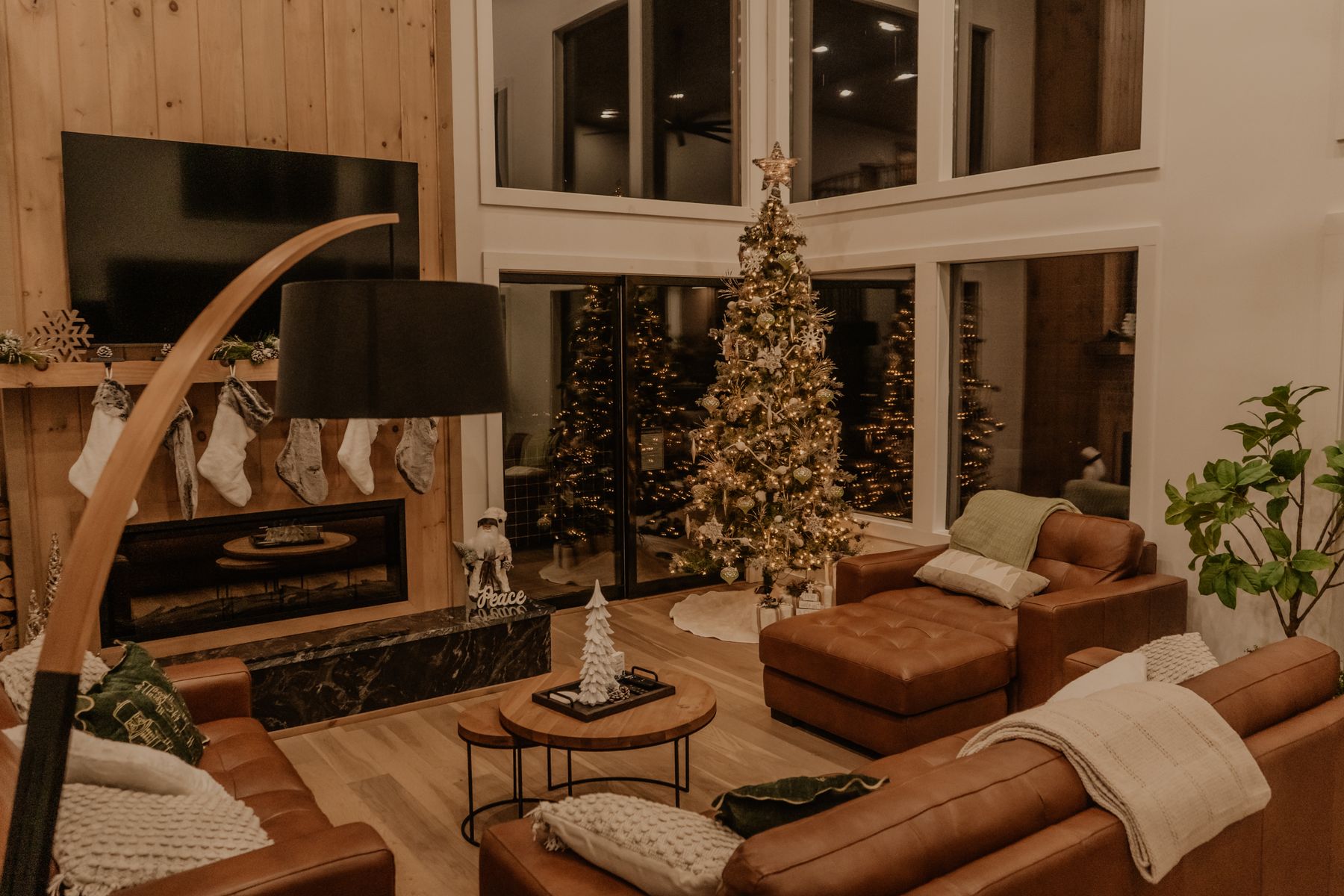
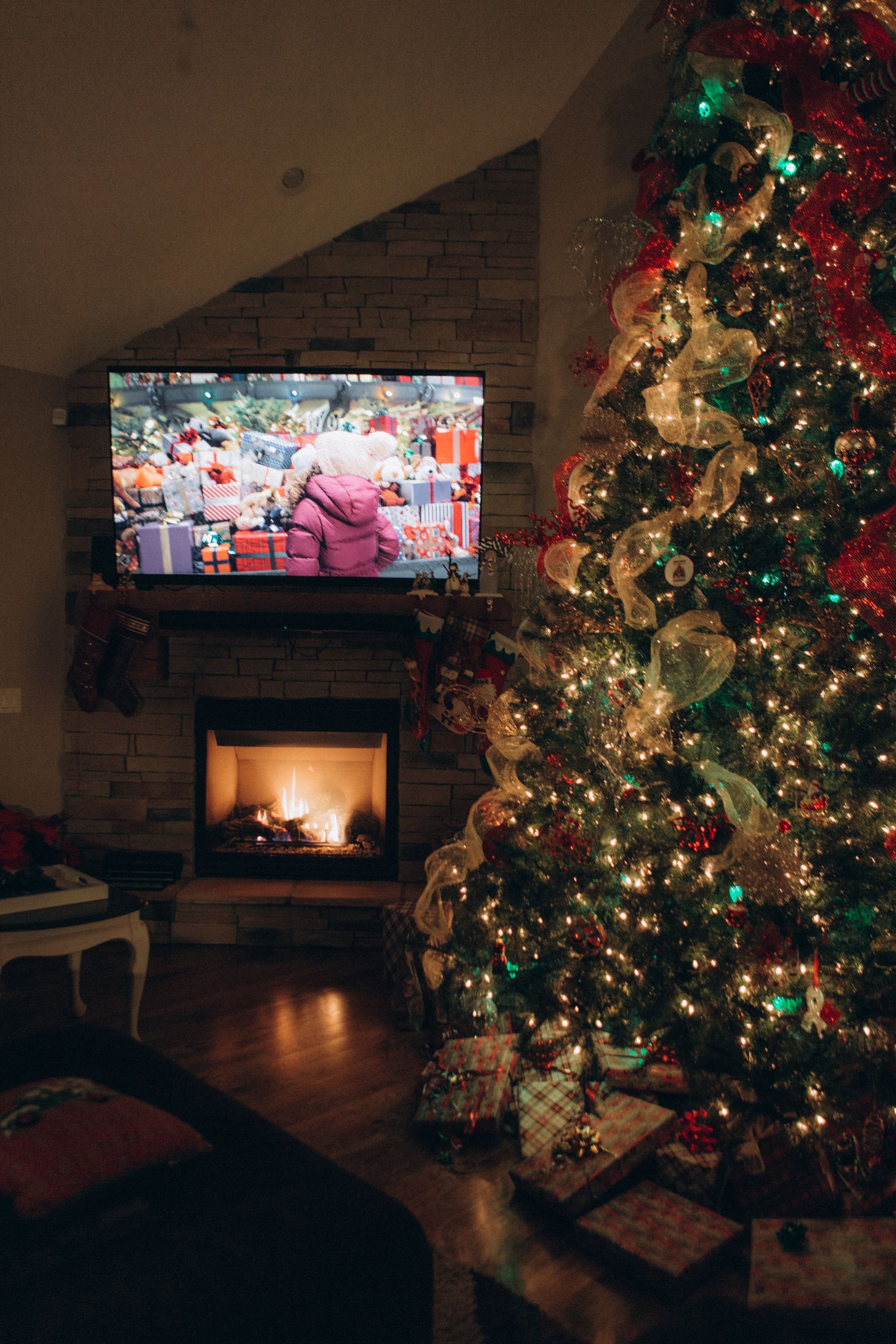
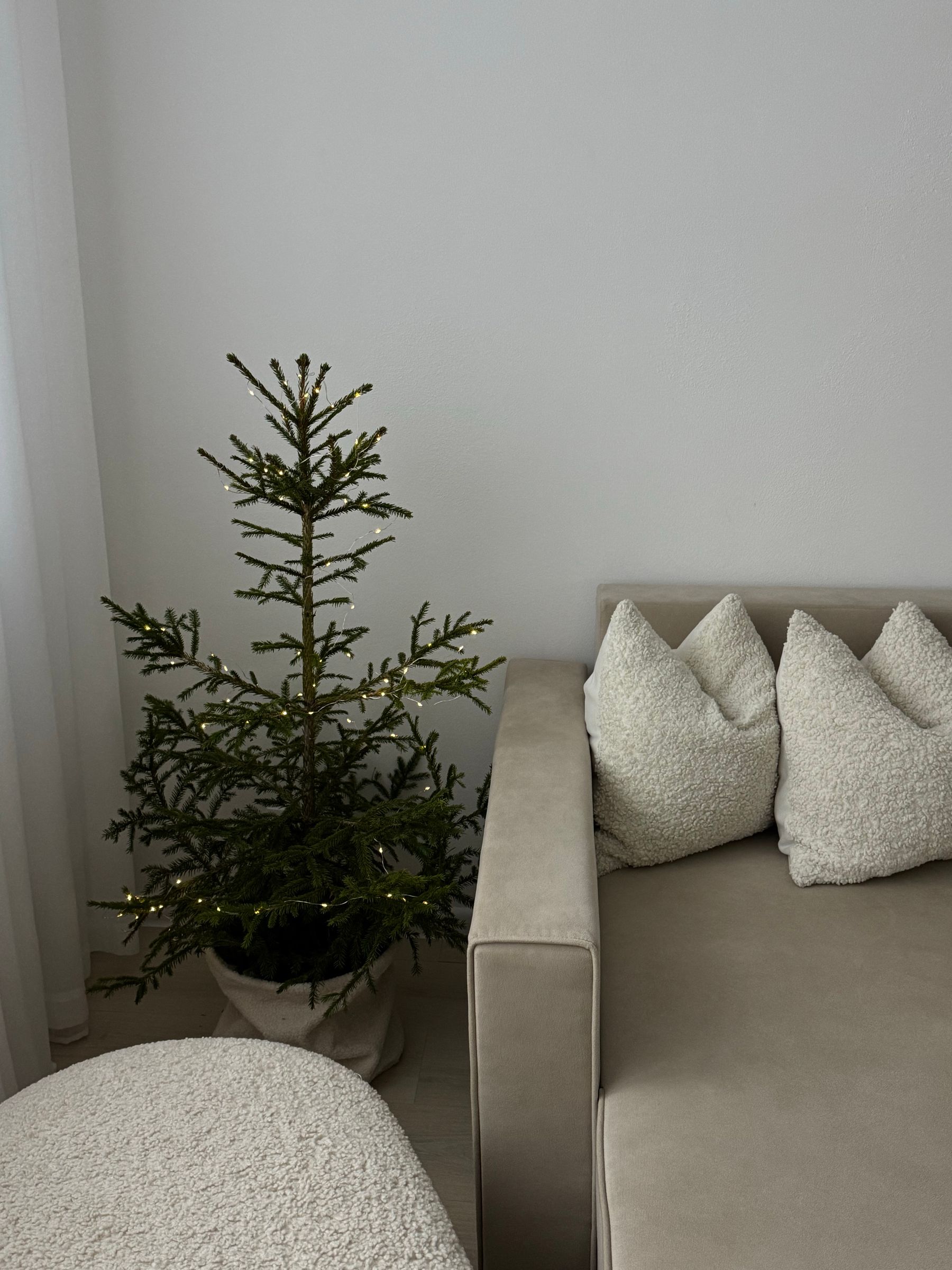
Treat the Christmas tree as a temporary piece of large furniture. Test its full diameter, not just the trunk position, and allow for branches, a stand, skirt or basket and gifts. Keep the primary route between the door, sofa and adjacent rooms open; avoid forcing people to brush past branches. From the main seating position, check whether the tree blocks the screen, window, fireplace or a useful lamp. In a small room, a narrower tree in a strong visual position is usually better than a full tree squeezed into the only remaining gap. Keep cords out of walkways and follow the tree, light and extension-lead manufacturers' safety instructions.

Build the Holiday Palette From Colors Already in the Room
Red and green are one option, not a rule. Start with the room's permanent undertones and repeat one or two of them in ribbon, ornaments, wrapping paper or textiles. A blue coastal room can use deep navy, glass, white and natural greenery; a warm neutral room may suit burgundy, brass and brown paper; a colorful room may need mostly greenery and light so the furniture remains the star. Limit the number of new finishes as carefully as the number of new colors. Matching everything exactly can feel retail-staged, but repeating a few tones creates enough connection to make varied ornaments look intentional. For a quieter base, compare the restraint in [neutral living room ideas](/living-room/neutral-living-room-ideas/) with the layered approach in [traditional living room ideas](/living-room/traditional-living-room-ideas/).

Decorate the Tree in Layers, Not as One Dense Surface
Work from structure to detail. Position the tree and lights first, then place the largest ornaments or ribbon where the silhouette needs weight. Add medium pieces to bridge gaps and use small ornaments as punctuation rather than filler. Step back repeatedly from the main viewing direction instead of decorating one branch at a time from arm's length. Leave visible foliage between clusters; negative space makes individual ornaments readable and prevents the tree from becoming a single glittering mass. If the room already contains patterned rugs, artwork or colorful upholstery, reduce the tree's contrast so it participates in the room instead of competing with every permanent surface.
Let the Mantel Be a Secondary Focal Point
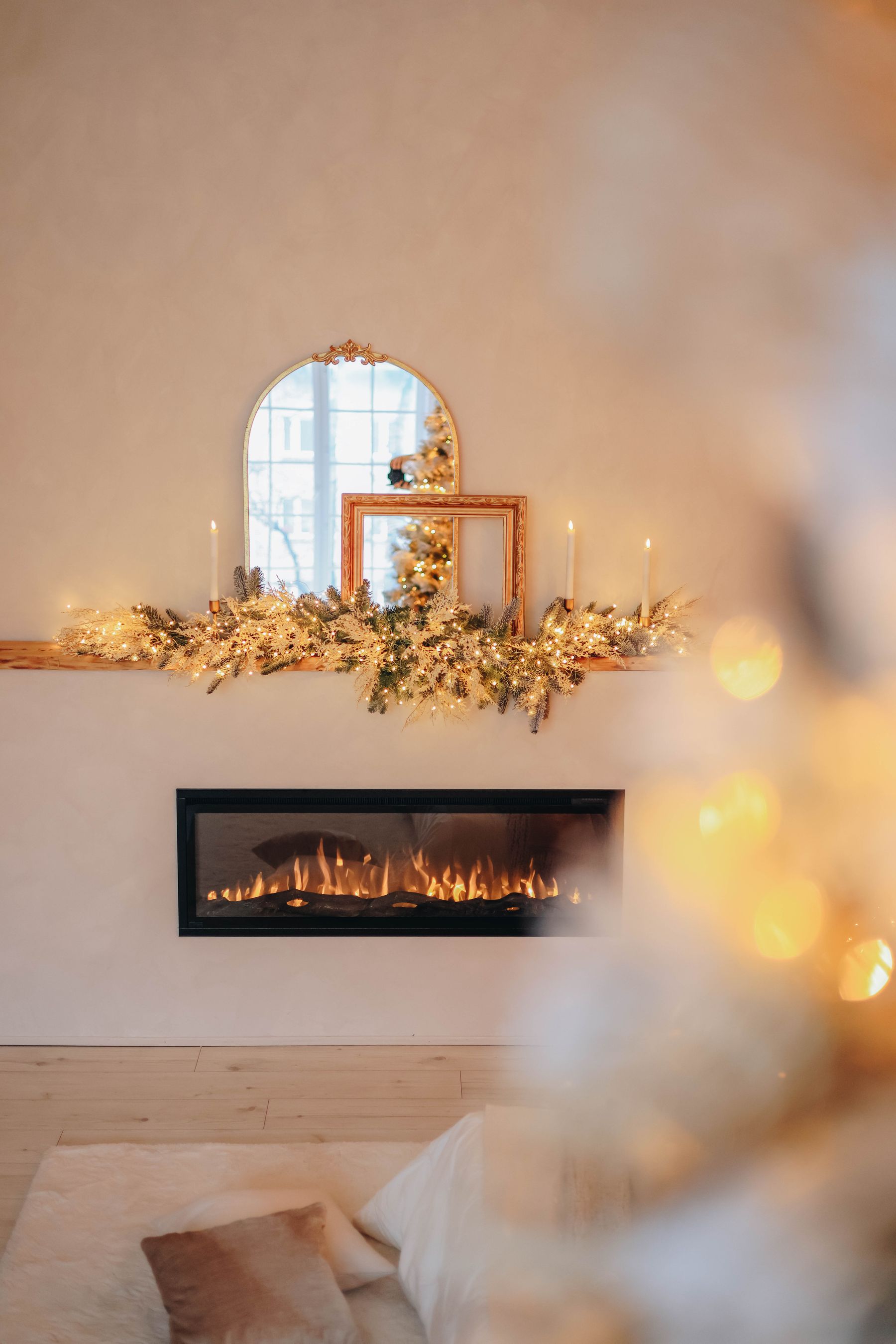
If the tree is the dominant vertical feature, use the mantel as a calmer horizontal counterpoint. A garland, a few candles or ornaments and one central element can be enough. Keep the mirror, artwork or architectural surround visible instead of burying it in foliage. Vary height but avoid a row of identical small objects, which reads as visual noise from across the room. On a working fireplace, decorations must respect the appliance and manufacturer's clearances; keep combustible materials, loose greenery and hanging textiles away from flame and hot surfaces. If you want the fireplace to remain visually important after the holidays, study how focal points are balanced in [cozy living room ideas](/living-room/cozy-living-room-ideas/).

Keep the Coffee Table Useful
The coffee table is part of daily life, not a display plinth. Reserve most of its area for drinks, books, remote controls and the movements people make from the sofa. One low tray can hold a small arrangement, candle or greenery and make the seasonal pieces easy to move when guests need the full table. Keep tall branches and large ornaments away from conversation sightlines. If children or pets use the room, favor stable, non-breakable objects and flameless lighting where appropriate. A coffee-table arrangement should read from seated height; decorative height that looks elegant in a standing photograph can become irritating in actual use.
Use Textiles to Change the Temperature of the Room
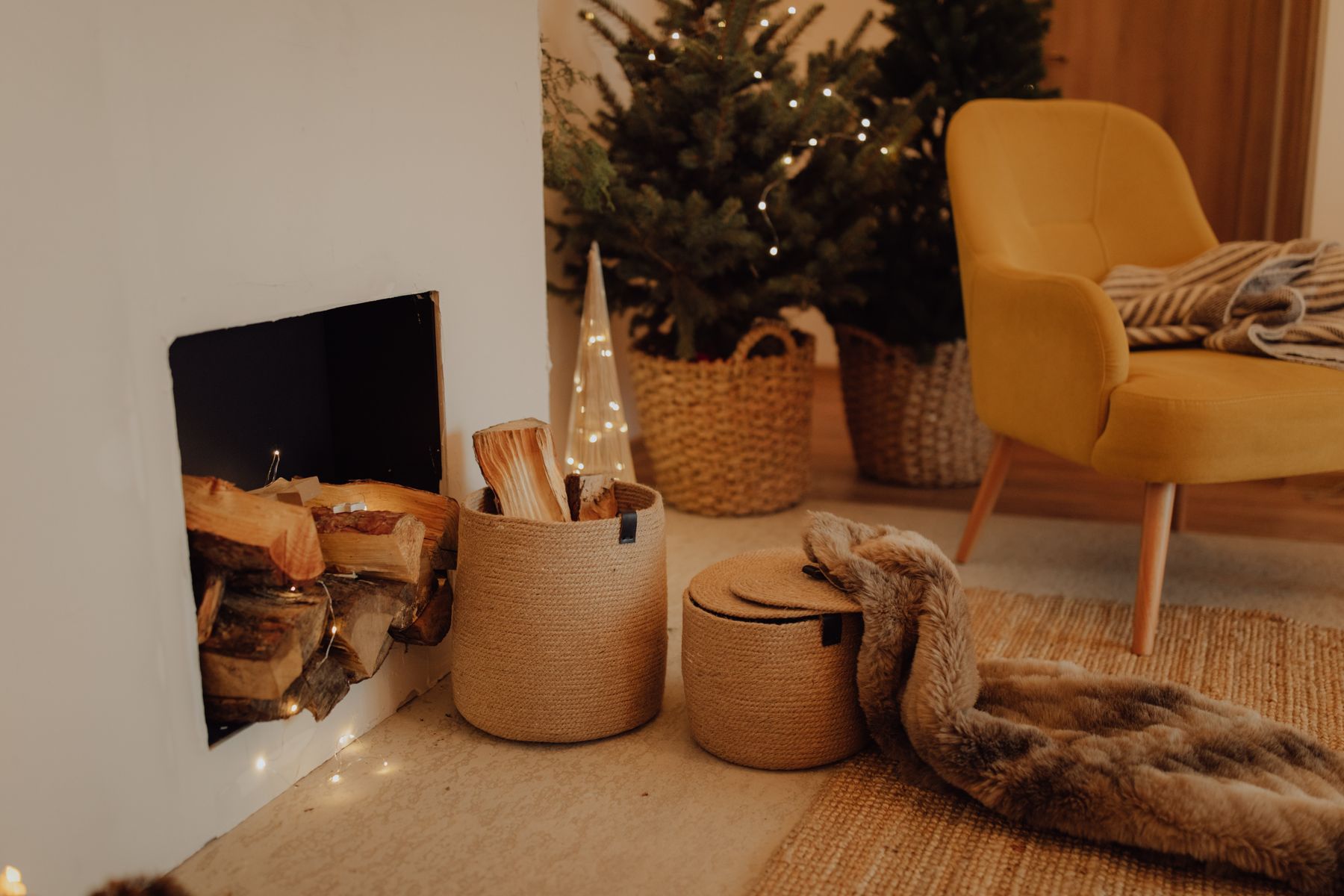
A heavier throw, one or two cushion covers and a warmer rug texture can shift the room toward winter without adding literal holiday motifs everywhere. Work with the upholstery already present: wool, brushed cotton, velvet, bouclé and knits each change how light is absorbed and how the seating feels. Avoid replacing every cushion with a slogan or novelty print; one patterned piece among quieter textures is usually stronger. If storage is limited, covers that fold flat are more practical than keeping a second set of bulky cushions. For a deeper look at warmth that survives beyond December, [cozy living room ideas](/living-room/cozy-living-room-ideas/) is the better evergreen companion.
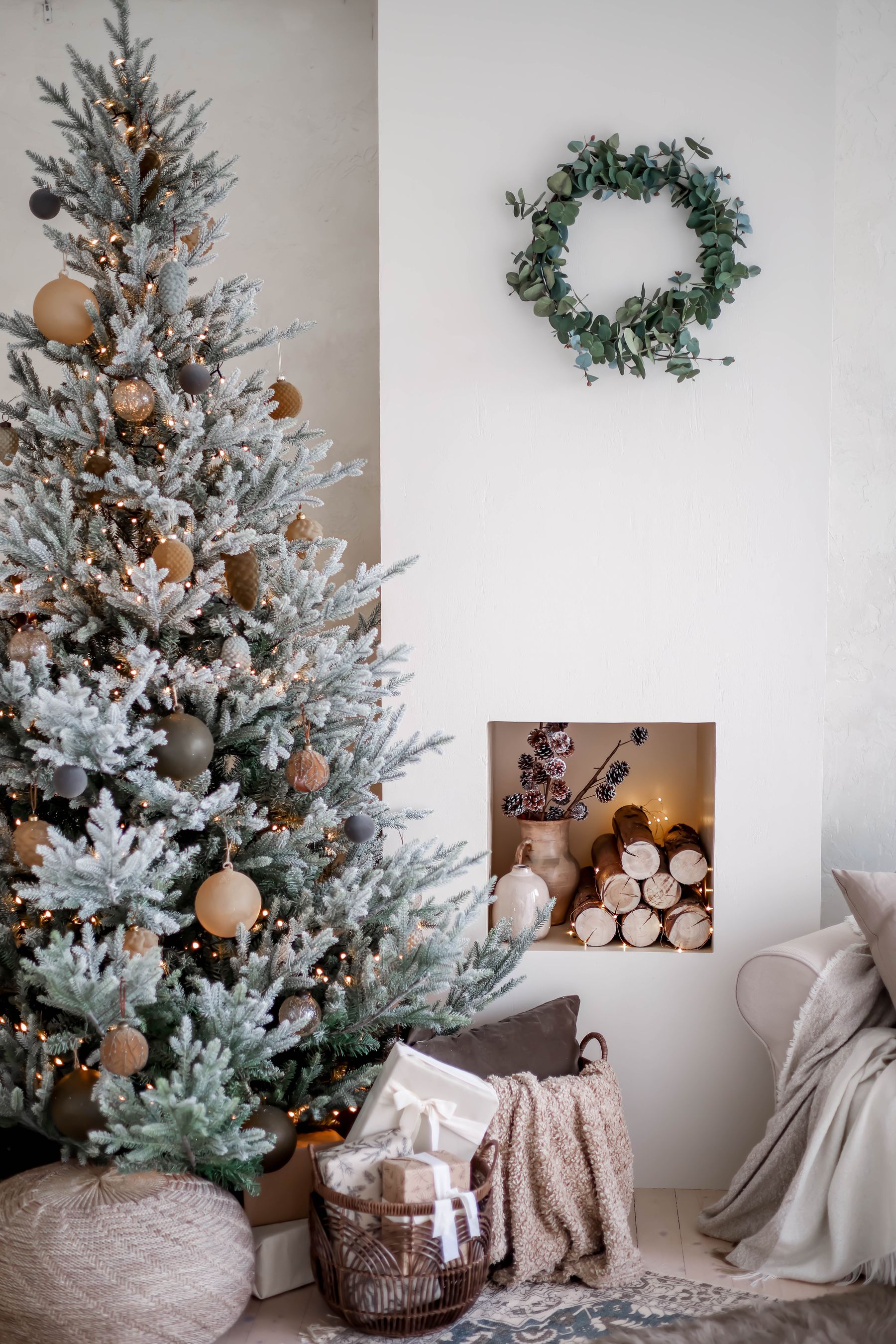
Repeat Greenery Instead of Repeating Every Ornament
The tree already provides a strong botanical shape, so use smaller echoes of greenery to connect it to the rest of the room: a wreath, a short garland, a few branches in a vessel or a simple clipping on a side table. Repeat the material or color rather than copying the same ornament in every location. Fresh greenery can dry, shed and become more combustible over time, especially near heat, so monitor its condition and keep it away from flames and hot fixtures. High-quality reusable foliage is often the more practical option for warm rooms, rentals and households that decorate early.
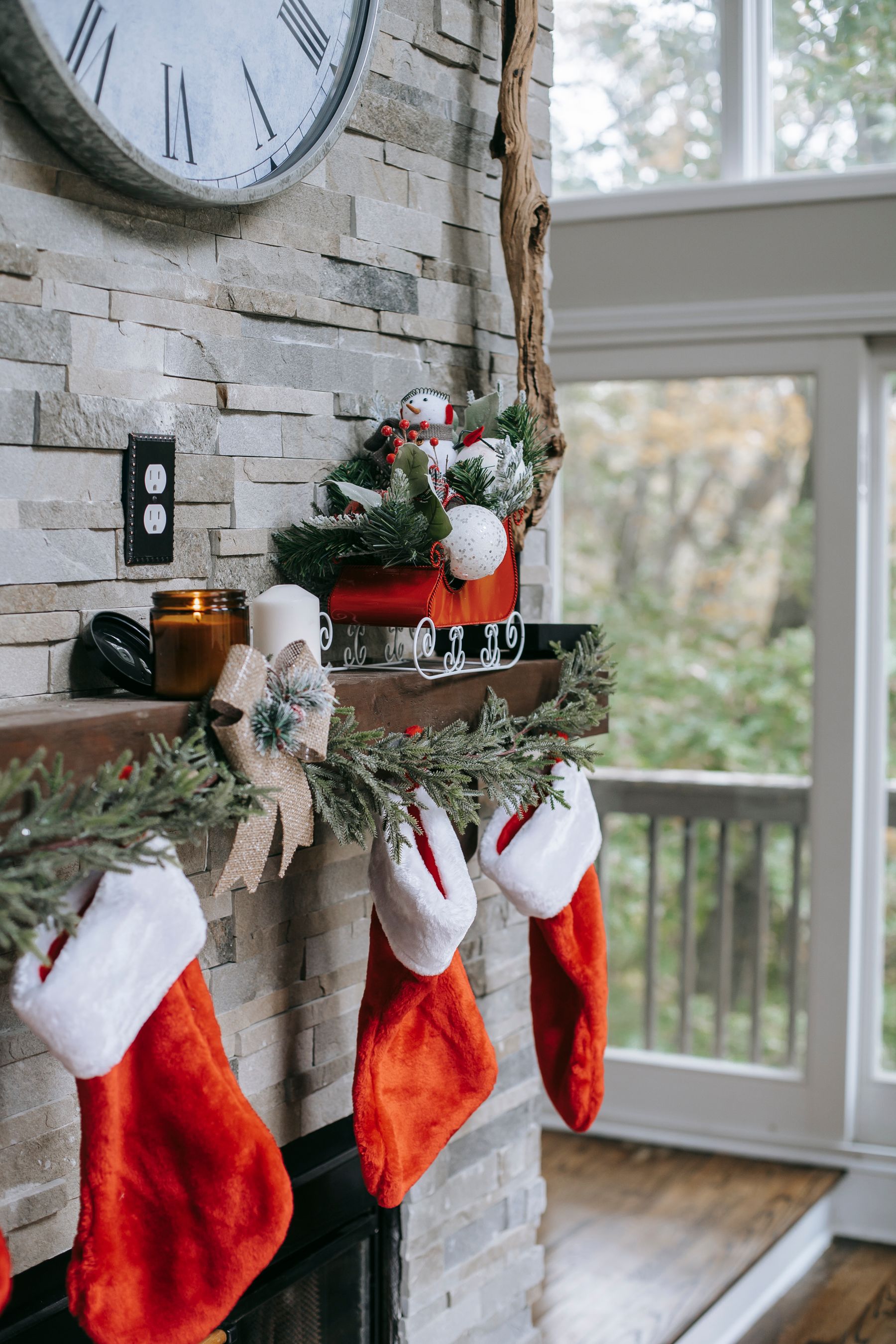
Hang Stockings and Garlands With the Fireplace in Mind
Stockings create a strong repeated rhythm, so spacing matters more than adding extra filler between them. Align them to the mantel or hearth rather than to the exact center of the wall, and adjust the count or hook positions so the arrangement looks deliberate even when the stockings differ. With any working fireplace or stove, decorative tradition comes second to the appliance instructions: do not allow stockings, ribbon, dried foliage or garland to hang into a hot or open-flame zone. Removable hooks can work on suitable surfaces, but check weight limits and finish compatibility before hanging valuable textiles or heavy greenery.
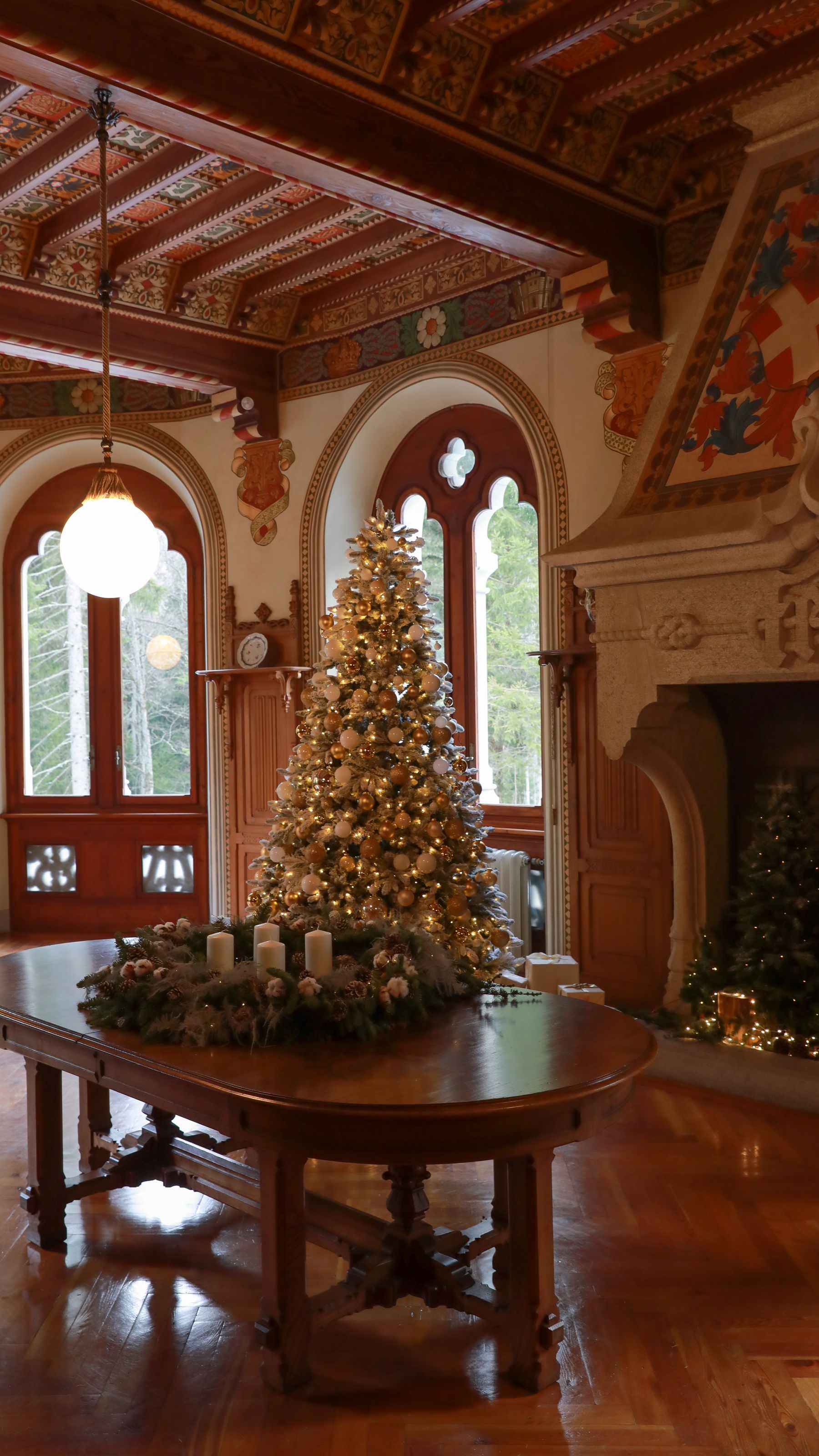
Match Decoration Density to the Architecture
A paneled or ornate traditional room can absorb more pattern, metallic finish and object density than a minimal room with broad blank walls. This does not mean traditional interiors need maximal decoration or minimalist interiors need bare trees; it means the seasonal layer should speak the same visual language as the architecture. In a quiet modern room, one sculptural tree and restrained garland may be enough. In a layered room, repeated ribbon, framed greenery and richer ornaments can feel proportionate. Use [minimalist living room ideas](/living-room/minimalist-living-room-ideas/) and [traditional living room ideas](/living-room/traditional-living-room-ideas/) as opposite reference points rather than forcing one Christmas aesthetic across both.
Technology Inside the Seasonal Composition
Many Christmas photographs crop out the screen, speakers, game consoles and cable routes that define real living rooms. Do not solve this by hiding vents or draping electronics in greenery. Instead, keep decoration lower or to one side of the screen, preserve ventilation and access, and use the tree or fireplace as a counterweight rather than a frame around the television. If reflections from tree lights make viewing uncomfortable, test the evening setup before finishing the tree. The broader principles in [living room wall ideas](/living-room/living-room-wall-ideas/) can help when the television sits on the room's main wall.
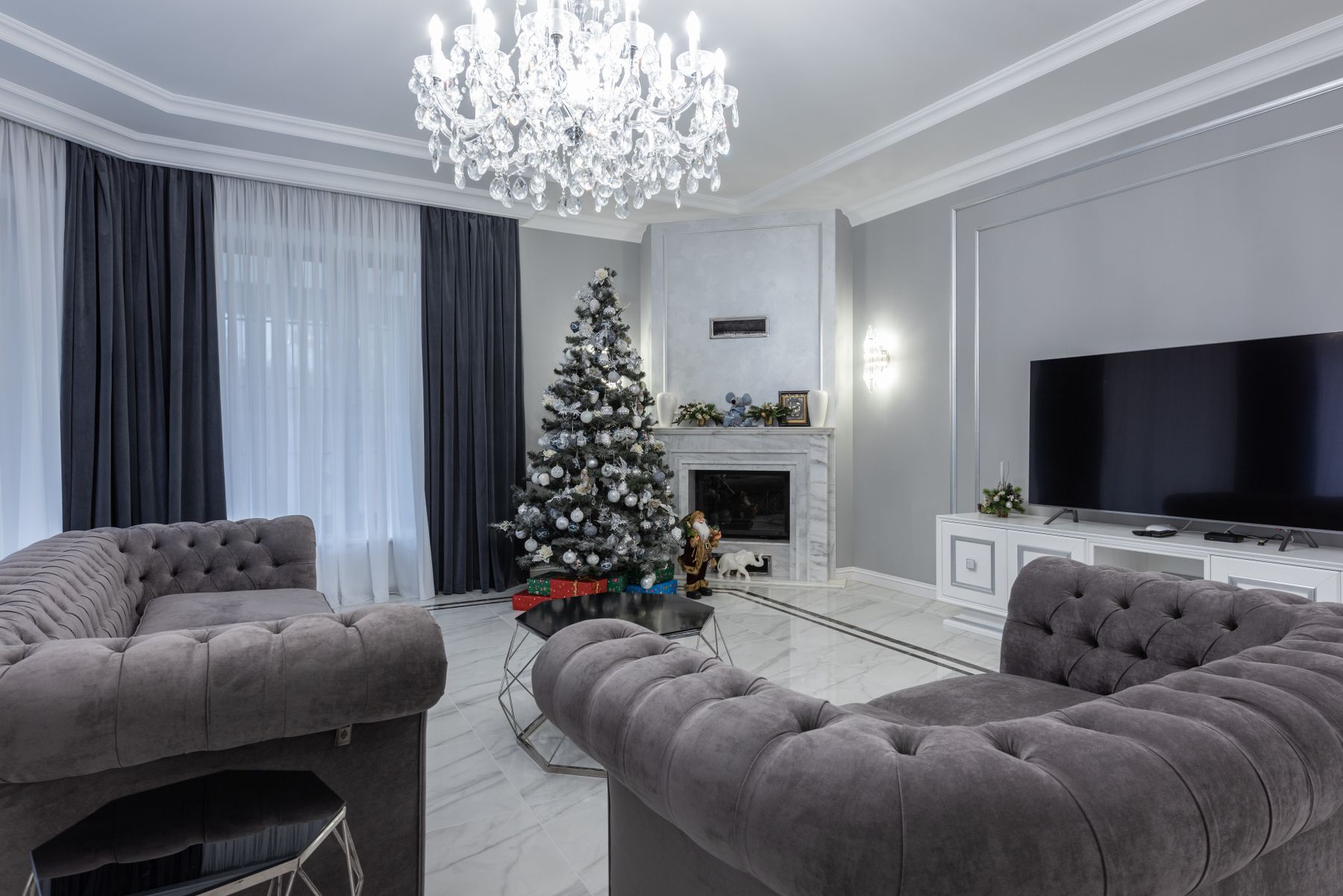
Stop Before Every Surface Becomes Seasonal
A Christmas room needs ordinary space around the festive moments. Leave at least some walls, shelves and tabletops close to their normal state. This gives the tree and mantel contrast, reduces setup and storage work, and makes the room easier to reset after the holidays. When you think the decorating is finished, remove one redundant motif from each zone and look again the next morning in daylight. The strongest final edit often comes from subtraction: fewer ribbons, fewer small figurines, fewer separate pools of light and a clearer relationship between tree, seating and architecture.