Vintage Is a Date Range, Not a Mood
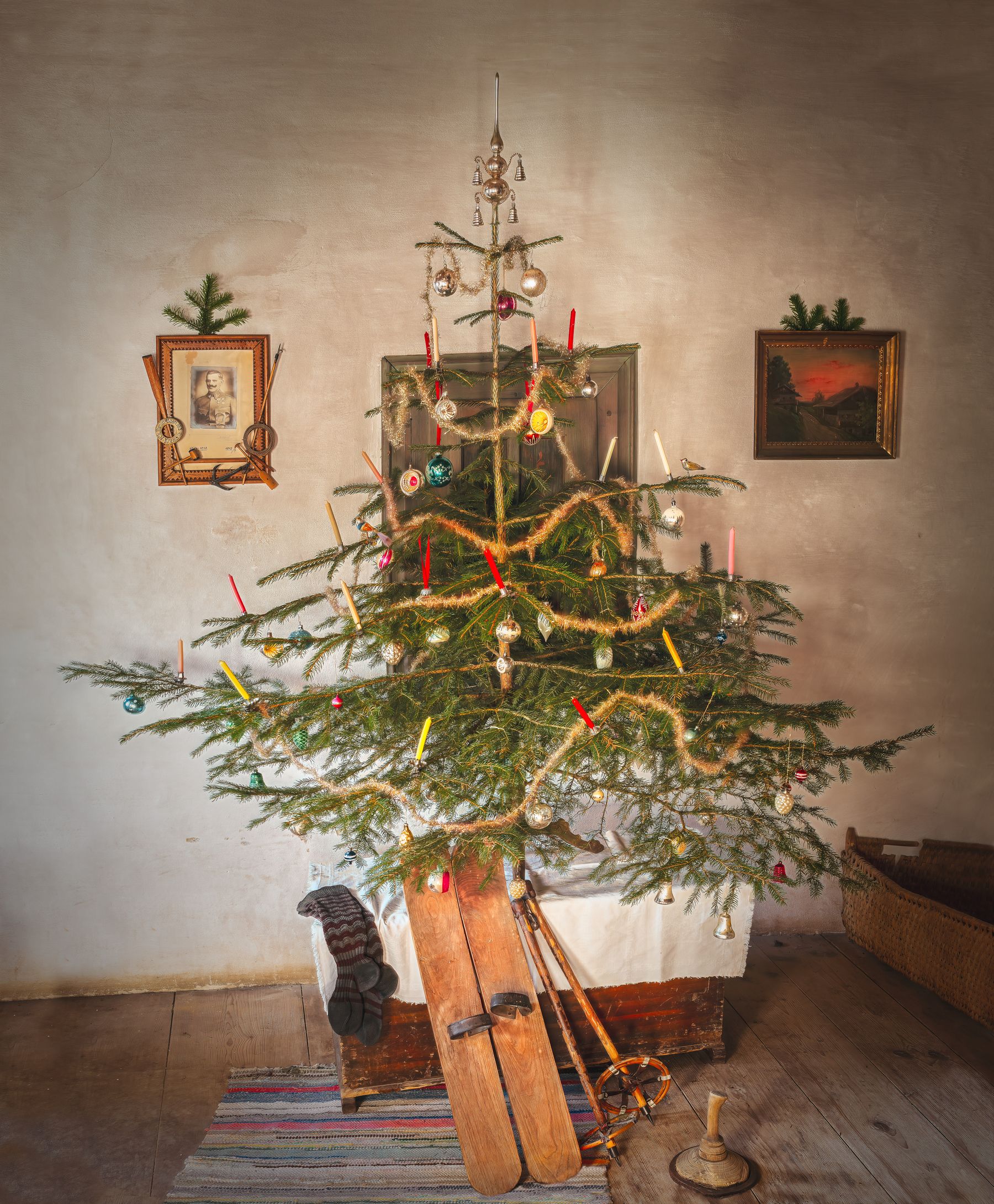
Start by naming the decades you actually want to reference. Late Victorian revival might emphasize paper, candles as imagery and natural forms; postwar Christmas can support saturated glass, molded figures and optimistic color; the 1970s can carry foil, amber, smoke glass and graphic pattern. These are design directions rather than strict reconstructions, but the distinction keeps the room from becoming a generic old-fashioned collage. If continuity and familiar ritual matter more than dating objects, [Traditional Christmas Decor Ideas](/living-room/traditional-christmas-decor-ideas/) is the clearer route. Photograph the permanent room first: its furniture, architecture and existing collections should help decide which period can live there without costume. The era-reading method in [Vintage Living Room Ideas](/living-room/vintage-living-room-ideas/) is useful when the base room, not only the holiday layer, is part of the project.
Original, Reproduction or Revival?
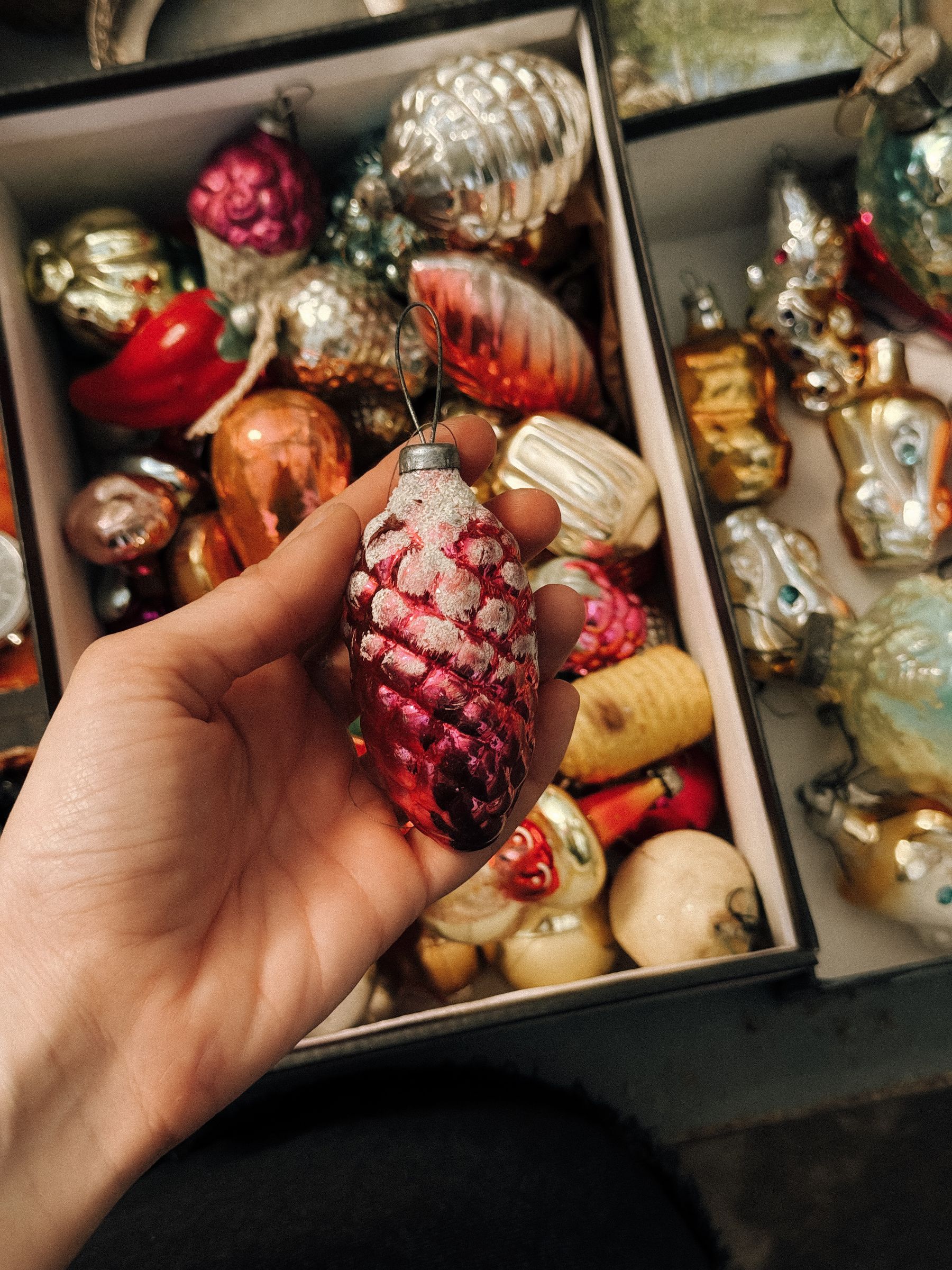
An original carries material evidence and sometimes family provenance; a reproduction gives the look with less worry; a revival piece borrows the language of an era without copying one object. Decide which role you need before buying. Put scarce or fragile originals where they can be seen without frequent handling, use sound reproductions to build rhythm on the tree, and let new revival pieces fill size or color gaps. Ask sellers what they know about age, maker, repairs and storage, but treat undocumented claims as clues rather than proof. Honest uncertainty is more interesting than false precision. A reproduction chosen for polish and repeated formal rhythm may also belong more naturally in [Elegant Christmas Decor Ideas](/living-room/elegant-christmas-decor-ideas/) than in a collection-led scheme.

Condition Comes Before Sentiment
Work over a padded table and inspect each ornament before hanging. Look for cracks at the neck, a loose cap, a corroded or sharp wire, lifting paint, unsecured glitter and old repairs that have opened. A beautiful piece can move to a bowl, compartmented tray or enclosed cabinet if its hanging point is doubtful. Do not polish away age automatically: first test whether the surface is stable and whether cleaning would remove an original finish. The goal is not to make every piece look new; it is to choose a display method the object can tolerate.

Connect Decades With One Bridge
Family collections rarely arrive from one decade. Instead of forcing them into a perfect set, choose one bridge: repeated silvered glass, a narrow red range, paper construction, similar ornament scale or one ribbon color. Let the remaining differences stay visible. A 1950s bauble can sit beside a later reproduction when their color relationship is clear; a delicate paper figure may need its own quieter branch. If every object has a different shape, color, material and scale, divide the collection into two zones rather than asking the tree to solve everything.
Old Electrical Pieces Are Display Objects Until Proven Otherwise
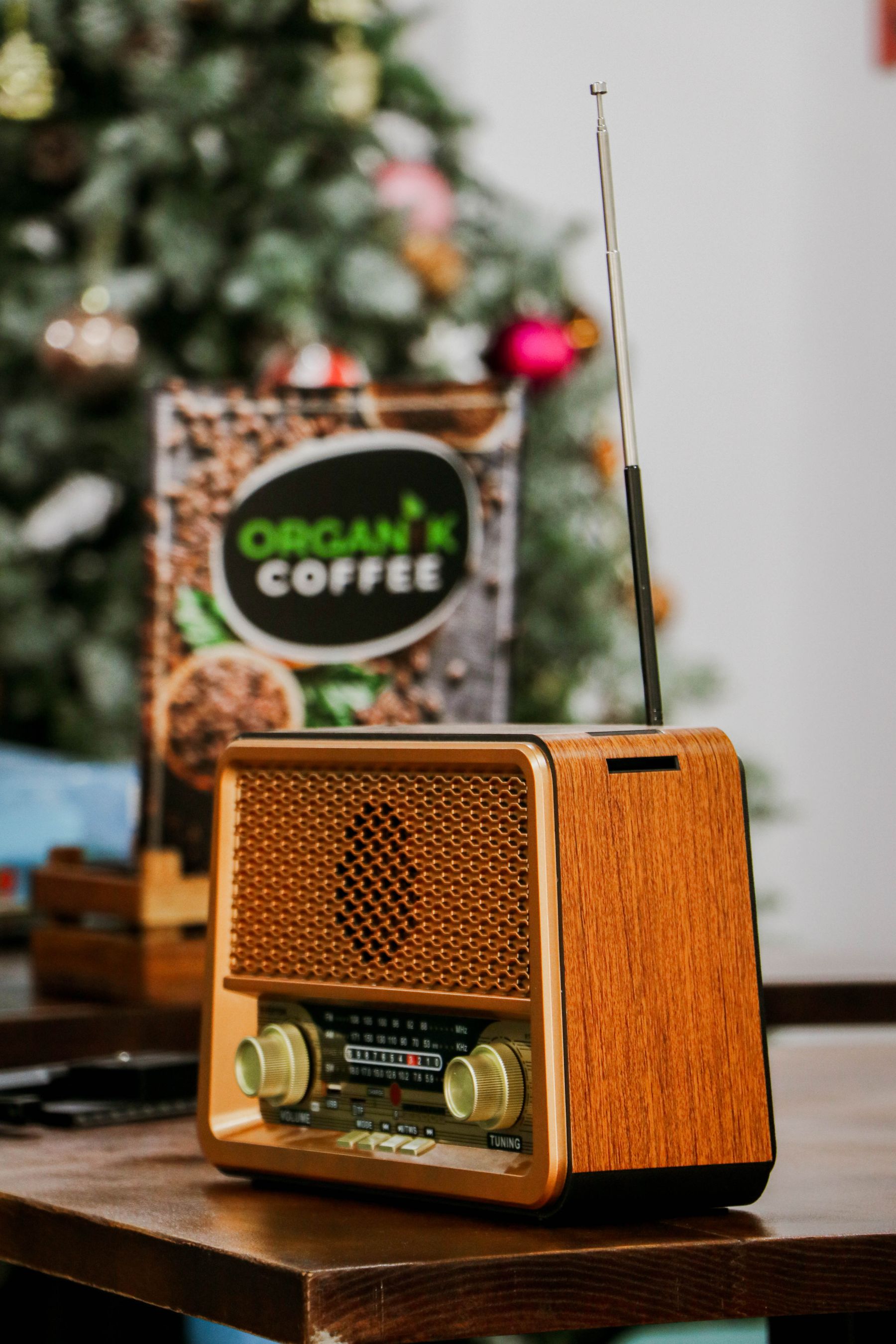
A vintage light string, illuminated topper, motorized display or ceramic tree may be important to the look, but age alone does not reveal electrical condition. If the cord, plug, lamp holders, repairs or approval history are unknown, do not energize the piece. Display it unlit and build the functioning glow with a modern product used according to its manufacturer instructions; consult a qualified repair professional when restoration matters. Keep this decision separate from style. The safest modern wire color is less noticeable than an electrical object being used beyond what you can verify.
Let the Tree Reveal the Chosen Era
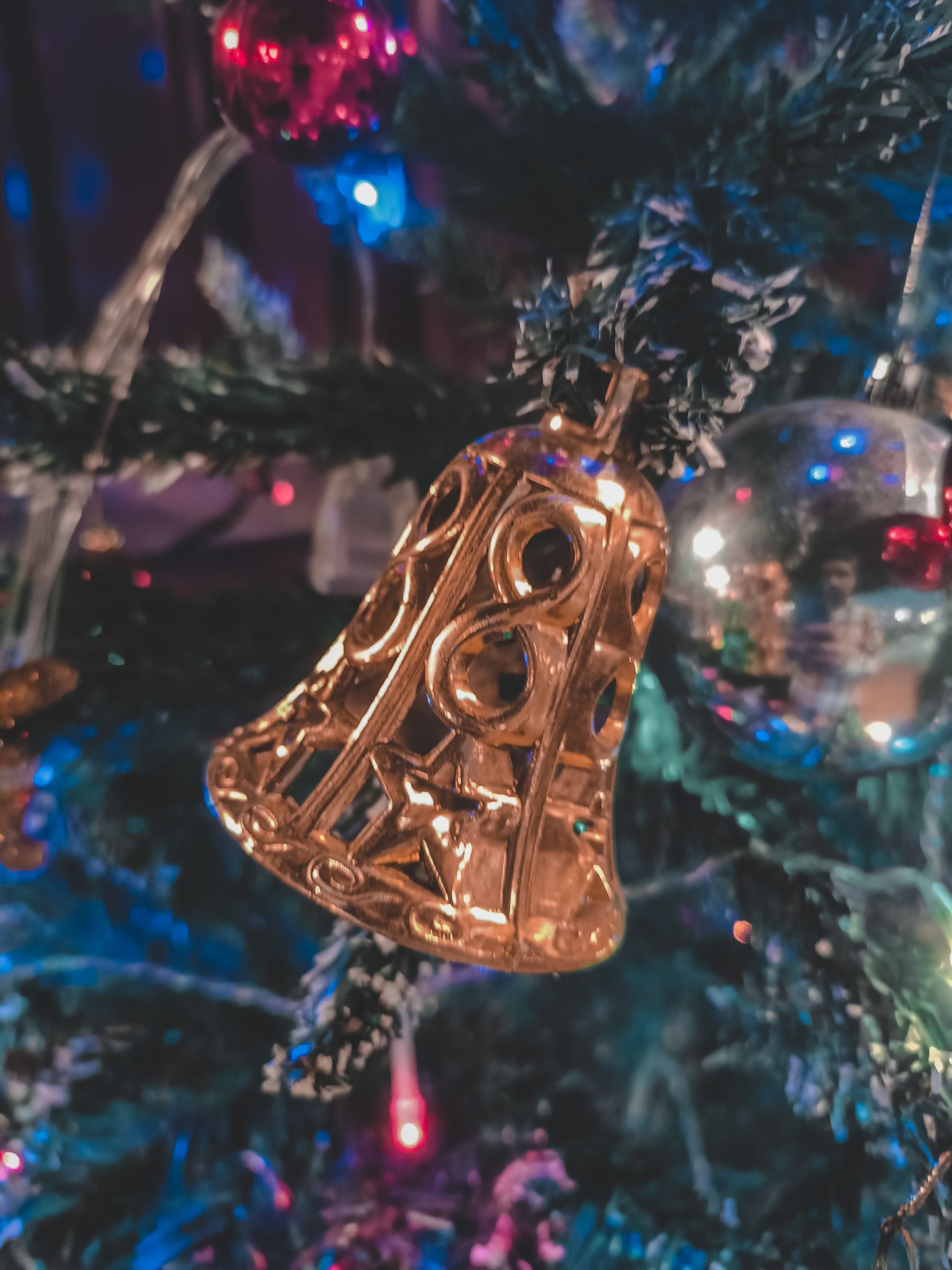
Tree composition should follow the collection. Fragile early paper and fine glass benefit from air around each piece; a buoyant postwar mix can support denser color; a 1970s reading may welcome repeated foil, molded forms or warm metallics. These are interpretive choices, not universal historical rules. Place the most vulnerable ornaments on stable inner branches or in supported displays, then distribute the sturdier rhythm pieces. [Christmas Tree Decorating Ideas](/living-room/christmas-tree-decorating-ideas/) covers weight, sightlines and branch spacing; here those tools serve a legible period story.
Paper, Foil and Tinsel Need Breathing Room
Paper, spun fibers, thin foil and tinsel create movement and reflected light that solid ornaments cannot. They also snag, crush and visually disappear when packed into a dense display. Give a paper ornament a plain background, keep loose metallic strands away from moving doors and busy routes, and stop before every branch carries sparkle. If an older material is shedding, sharp or structurally weak, move it to a contained display rather than improvising a repair while it hangs. This is one place where restraint protects both the object and the visual effect. The editing logic overlaps with [Minimalist Christmas Decor Ideas](/living-room/minimalist-christmas-decor-ideas/), but here fewer pieces are a form of protection rather than the style's main goal.

Build One Small Archive, Not Nostalgia Everywhere
Tiny houses, bells, candle clips, postcards and figurines are easier to appreciate as one edited archive than as a dusting across every shelf. Choose a cabinet, shallow ledge, tray or branch arrangement and group by type, maker, family story or decade. Leave adjacent surfaces simpler so the display reads as a collection rather than general clutter. Use the room-wide sightline plan in [Christmas Living Room Decor Ideas](/living-room/christmas-living-room-decor-ideas/) to decide where this archive can be seen without competing with the tree. In a small home, the concentrated approach also protects daily landing zones; [Vintage Apartment Ideas](/apartment/vintage-apartment-ideas/) develops the broader balance between collections and limited space.

Repair and Remake Without Erasing Age
Not every damaged object should be cosmetically restored. Sometimes the best response is a discreet stabilization by an appropriate specialist; sometimes it is retirement from the tree; sometimes it is making a new companion that repeats the old object's scale or palette. Keep repairs legible in your own records, especially if pieces may later be sold or passed on. A new paper fan, painted wood shape or ribbon hanger can carry the family story forward without sanding, repainting or over-cleaning the surviving original.

Secondhand Shopping Starts With Better Questions
Shop with a flashlight, tissue and a short list of gaps in the collection. Ask whether a box belongs to the ornaments inside, whether caps and hangers are original or replaced, whether there is odor or evidence of damp storage, and whether a set has been assembled from separate finds. Inspect from several angles and price the piece for what is visible, not for an unverified story. Reproductions are not failures when they are accurately described; they can be the sensible choice for high branches, households with children or a larger repeating pattern.

Pack by Fragility, Not by Color
Reverse the display plan before the season ends. Remove the most fragile ornaments first, support loose components, wrap pieces individually with clean non-abrasive material and use rigid dividers so weight does not transfer through a box. Keep paper and textile pieces dry and uncrushed, and store collection notes with photographs rather than relying on memory. Separate items that need repair so they do not disappear into another year. A small inventory can record provenance, condition changes and the correct packing sequence without turning a family collection into a museum database.