

Choose the View Before the Frame
A large mirror is not simply a decorative shape occupying empty wall space. It is an additional view into the room. Before selecting its frame, stand where you normally enter or sit and imagine what the proposed glass will reflect. A well-placed mirror might capture daylight, a considered console, a garden glimpse or a repeated material that makes the room feel connected. An equally expensive mirror could repeat an untidy corner, a television screen or a bright bare lamp. The photograph makes the second view visible: shelving, a bicycle and furnishings become part of the mirror composition. Decide which of your everyday objects you actually want repeated rather than judging the frame in isolation. Place a temporary reflective surface if possible or take photographs from the proposed height to map the view. Keep people who use the room in mind: a mirror intended for a last outfit check must be usable at standing distance, while one used purely as a visual wall element can be positioned differently. Decide what the reflection contributes before choosing the glass, frame and scale.

One Oversized Reflection Can Compete With the Window
The familiar claim that a mirror will make any room larger ignores the direction of light and the content of the reflection. In a bright bedroom, a broad mirrored wall can return the view of the window or the bed, but it also duplicates the furniture and create a second visually active plane. In the photographed bedroom, the mirror repeats the bed and creates another apparent opening beside it; the actual window remains a separate source of light. A mirror opposite direct sun may cause glare at times of day when the room is occupied; one catching a soft side view may make a darker corner more legible. An opaque wall can actually be calmer when the bed already faces a detailed view. Consider privacy and nighttime lighting as well: a mirror that looks gentle by day may repeat lit windows or bright fixtures after dark. Do not choose a large reflective surface solely to claim additional square footage. Look for a useful second view, controllable glare and an appropriate relationship to the window. Bedrooms also require darkness and rest, which remain more important than visual expansion.

The Frame Can Be the Largest Piece of Art on the Wall
A substantial framed mirror behaves much like an artwork: it has an outline, material, visual weight and relationship to the objects around it. The dark ornamental frame against a pale wall already supplies considerable detail. Its crest and curved sides give the glass a strong silhouette even without a surrounding gallery. Adding several small works or decorative shelves beside it could dilute the effect. In a simpler room, such a mirror might be enough to define the wall. In a heavily patterned room, a restrained frame may provide relief instead. Consider how the frame's finish responds to nearby hardware or timber: it need not match exactly, but its visual importance should be intentional. Mirrors can include historically styled frames without being authenticated antiques; describe the actual object rather than inventing provenance. For an oversized frame, weight and suitable mounting conditions are part of the decision and should be addressed through product guidance and competent installation. A picture of a large mirror tells you something about the room's composition, not how securely it is attached.
Match the Mirror's Shape to the Room's Strong Lines
Round, arched and rectangular mirrors produce different relationships with a room's major lines. A large rectangular mirror can reinforce the geometry of panels, doors or a console. A curved top may soften an elevation dominated by hard corners without introducing more ornament. The rounded woven frame above the pale sofa interrupts the straight sofa back and the wall edge. Its broad border also takes up more visual space than the reflective opening, so compare the overall outline and the usable glass separately. The same shape is not automatically suitable elsewhere: a strongly arched mirror against an already busy arched window may create repetition without clarity. Consider where the glass begins and ends relative to the furniture beneath it, and whether the frame's highest point competes with a sconce or architectural trim. Oversized does not have to mean the widest available model. Scale should be assessed from the room's normal viewing position and in relation to the objects it is visually paired with. Form is useful when it organizes a wall, not when it simply follows a trend.


A Mirror Behind the Bed Is a Deliberate Tradeoff
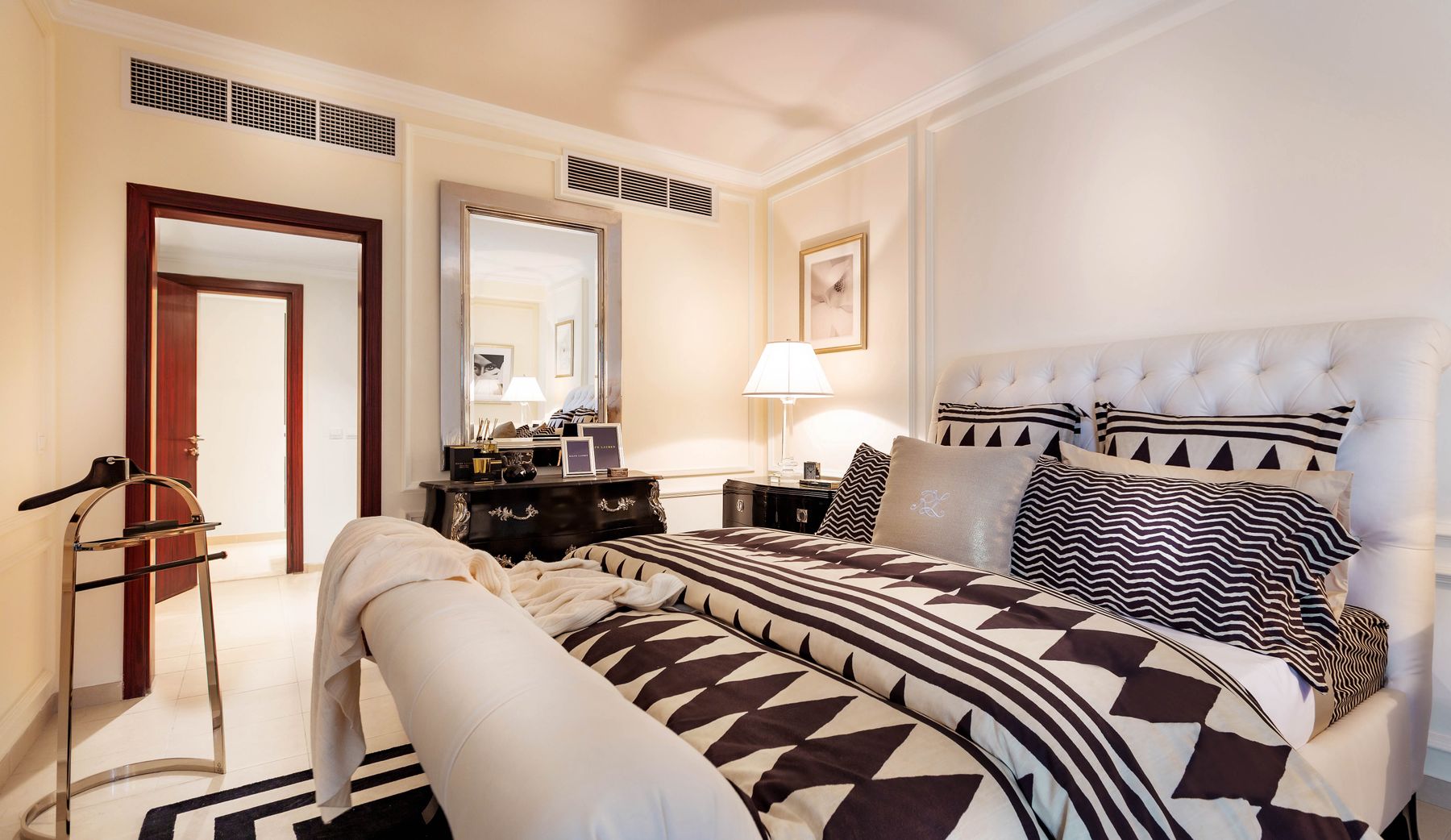
Bedroom mirrors are frequently positioned as dramatic companions to upholstered beds, but that can create a contest between the headboard and the reflection. If the bed is already the main visual feature, a secondary mirror may be better placed on a dressing wall rather than enlarging the composition above or beside the bed. The photograph shows a broad mirrored treatment behind an upholstered bed, surrounded by dark finishes. It reads as part of the bedroom architecture rather than a separate dressing mirror. The important question is whether that much reflection helps the bed remain a restful focal point. A reflective area beside a reading light may catch glare; a mirror facing the bed can double busy bedding or create an unwanted view for a person trying to sleep. At the same time, a practical dressing mirror can be invaluable when it has enough distance to view clothing comfortably. Let function determine where it belongs, then coordinate its height and frame with neighboring furniture. If positioning requires heavy wall fixing or the mirror is freestanding, follow its installation and anchoring requirements; a decorative glass panel must not introduce a hazard near the bed.

The Entry Mirror Is a Last Check, Not Just Decoration
A large mirror near the front door can support a useful final outfit check, but only if someone can stand far enough away and reach it without blocking the main route. Think about coats, bags, umbrellas and doors in their active positions. A mirror directly above a shallow console may look elegant while still offering only a partial view; a taller vertical piece elsewhere might better serve the routine. This entrance uses a tall wall mirror beside the route to the door, leaving the floor beneath it clear. Its position illustrates why you should test the standing view and the passing route together rather than starting with a console-and-mirror set. Consider the reflection from the doorway: a wall of hooks or open shoe storage may look messy when doubled, while a quiet passage or a lit window can create a welcoming second view. Choose a location that functions during rush periods and not only in staged photos. If the entrance is narrow, a freestanding leaning mirror may be less safe or convenient than suitable fixed installation.

Let a Mirror Take the Place of Several Small Accents
A room can become visually restless when a mirror, wall prints, sconces, shelves and decorative objects all compete at eye level. One convincing reflective element can simplify that composition. The carved round mirror above a cabinet supplies a clear outline, while a leafy plant provides one substantial companion. The small objects below it belong to this particular setting; the transferable idea is to avoid adding more competing wall shapes around an already intricate border. In a living room, the same principle may apply above a console or on a narrow wall between openings: choose either a substantial mirror or a busy display, rather than assuming both are necessary. Evaluate what the glass reflects, because an ornate frame already contributes one layer of complexity and a busy reflection adds another. Replacing a cluster of small frames with a single mirror can improve visual clarity, but it also changes how much light and movement the wall displays. Do not treat this as universally more stylish; meaningful art may be preferable when the reflection has no useful content. The editorial choice is about hierarchy, not a ban on gallery walls.

A Quiet Frame Can Be the Better Large-Mirror Finish
In material-rich rooms, a large mirror need not announce itself through metallic ornament. A restrained edge, quiet wood frame or almost frameless treatment may let the floor, vanity or cabinetry remain the dominant material. The white-framed mirror pictured here recedes into a pale wall while reflecting a sofa and artwork. Its broad, simple edge is an alternative to an ornate metallic border: the room inside the glass becomes the feature. A large wooden frame can also conflict with other wood tones if it almost—but not quite—matches them. Compare undertones in real light and consider whether a direct match, clear contrast or neutral narrow frame is the strongest resolution. Finishes in wet areas require appropriate care and product suitability, which cannot be inferred from appearance alone. In an entryway, a wood frame might bridge a console and floor; in a bedroom, it may repeat the headboard without adding another metal finish. The useful decision is whether the mirror should read as a statement object or disappear into the material language already present.
A Small Room May Not Want the Biggest Available Mirror
The instinct to fill a compact wall with mirror can miss the more important constraints. What will the mirror cover, how will its edges align with adjacent furniture, and which fixtures could produce glare? A broad mirror might return pleasant light while repeating clutter from the opposite wall; a narrower or shallower reflective area could preserve space for lights and give the wall a calmer reading. The pale entrance pictured pairs a horizontal mirror with a cabinet instead of covering the entire wall. In a small bathroom, the equivalent decision is to coordinate glass with the basin and lights, rather than maximizing the reflective area by default. In a bedroom with limited clear wall space, a slim vertical dressing mirror might offer more utility than a large horizontal one that only captures the bed. No single mirror size creates an objectively larger room. Evaluate usable sightlines, realistic clearance and the architectural reason for a particular proportion. If the wall is difficult to fix into, choose appropriate professional installation rather than improvising hardware based on the mirror's apparent size. Make the mirror as large as it needs to be, not as large as the catalog allows.


Let a Geometric Frame Replace Extra Wall Decoration
When a wall already has a sculptural piece of glass, the frame can do the work of several smaller objects. The geometric silver-tone mirror photographed above a curved console creates a decorative direction through its stepped outline. Straight border details contrast with the curves below. Adding a collection of framed prints, patterned trays and miscellaneous hanging ornaments close to it would likely compete with that geometry. The same principle can apply to a different console in an entrance or to a dresser in a bedroom: choose one mirror whose border creates a clear rhythm, then keep neighboring elements simple enough that the shape remains legible. A heavily stepped or faceted frame can feel architectural in a plain room but overloaded against complex tile or profiled cabinetry. This photograph shows a wall-mounted mirror, not a leaning model or an installation technique. If a different, freestanding large mirror is being considered, assess its product-specific restraint and stability needs separately instead of treating styling photographs as safety guidance. The editorial choice here is whether one reflective object can replace several minor wall accents, not whether more decoration makes a room more complete.