Thanksgiving Starts With the Guest Journey, Not a Centerpiece
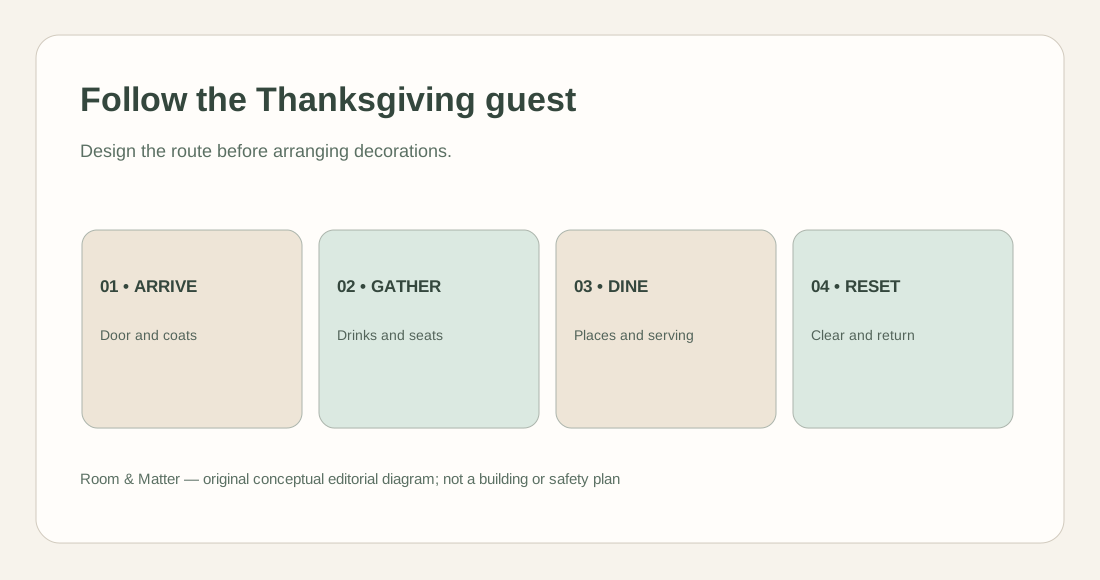
Before choosing flowers or a table runner, walk through the holiday as a guest. Where does someone place a damp coat, find a drink, wash their hands, sit while dinner finishes and return a plate afterward? Every answer describes a space that decoration must support. The main Thanksgiving problem is not filling rooms with autumn motifs; it is hosting one unusually demanding shared meal without losing the house's warmth. This makes the topic separate from both general fall decorating and a Christmas table article. In a small apartment the entry, kitchen and dining space may overlap, so one chair pulled out at the wrong moment can block all three activities. In a larger home, guests may gather far from the kitchen until a serving route needs to open. Sketch the movement from entrance to dining table, mark the places people pause and choose one or two scenes that deserve a Thanksgiving accent. Leave the working routes deliberately quiet. A home that feels welcoming when dishes are moving, not only when the table is empty, has the stronger decorative plan.
Let One Dining Room Carry the Harvest Mood
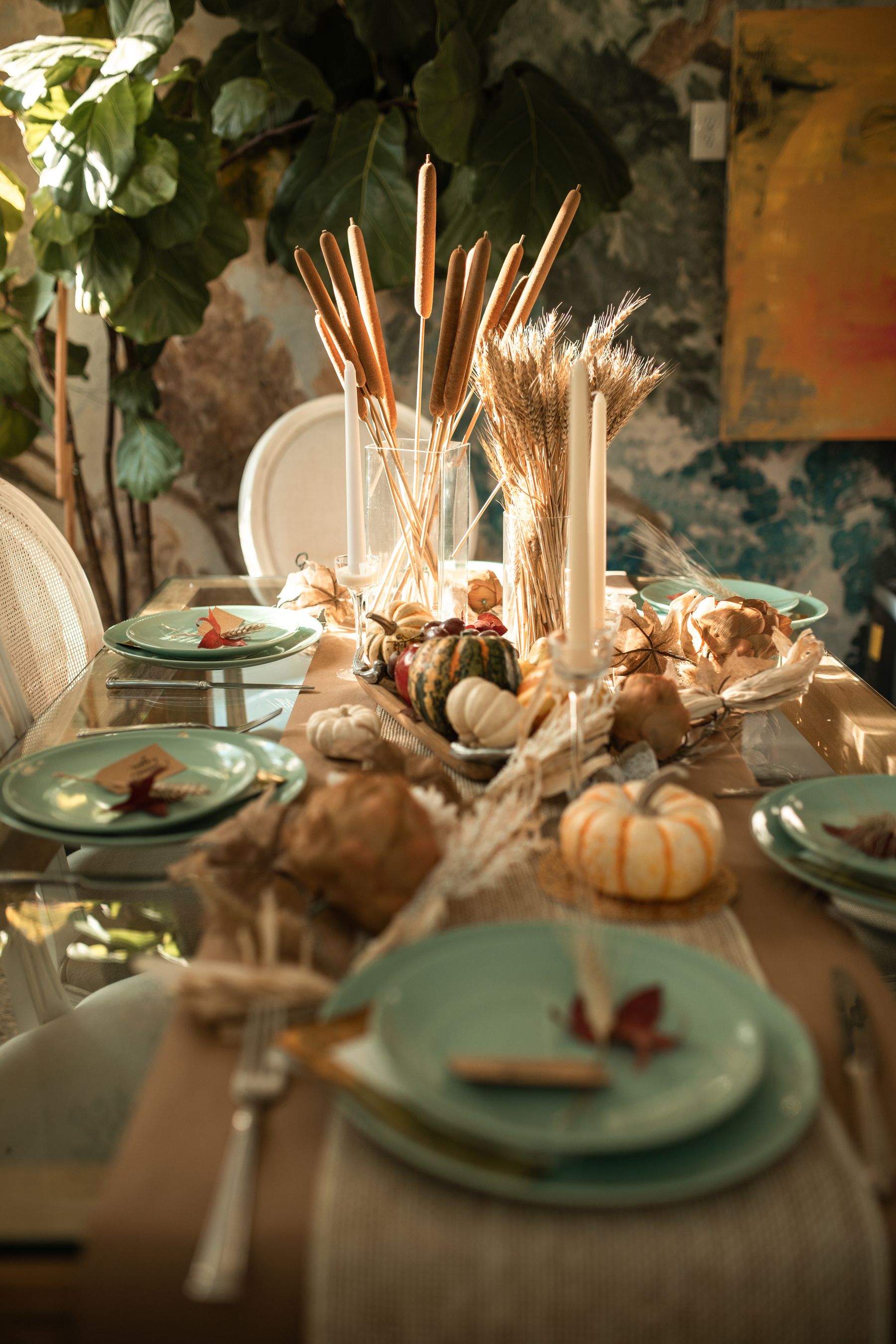
A Thanksgiving dining room has permission to feel more ceremonial than an ordinary weekday setup, but richness should be concentrated where the gathering actually happens. Start with the permanent furniture and the dinner service: the table shape, chair fabric, plate colors, visible wall finishes and any art already in the room. Then choose a recognizable harvest note—small gourds, a dark floral cluster, linen or autumn branches. You do not need all of them. Pale plates against a warm wood table can suggest an earthy harvest scene just as successfully as orange pumpkins. Keep supporting rooms calmer so the table reads as the occasion's heart rather than one vignette among twenty. The photographed tabletop includes vertical stems, candles and gourds. Those details create a vivid image, but tall decorations can interrupt sightlines once people sit. Set your composition at seated eye level and be prepared to reduce or remove its height. Make Thanksgiving unmistakable through the shared meal and gathering, not through an obligation to purchase a matching assortment of themed accessories.
How Much Space Does Dinner Really Need?
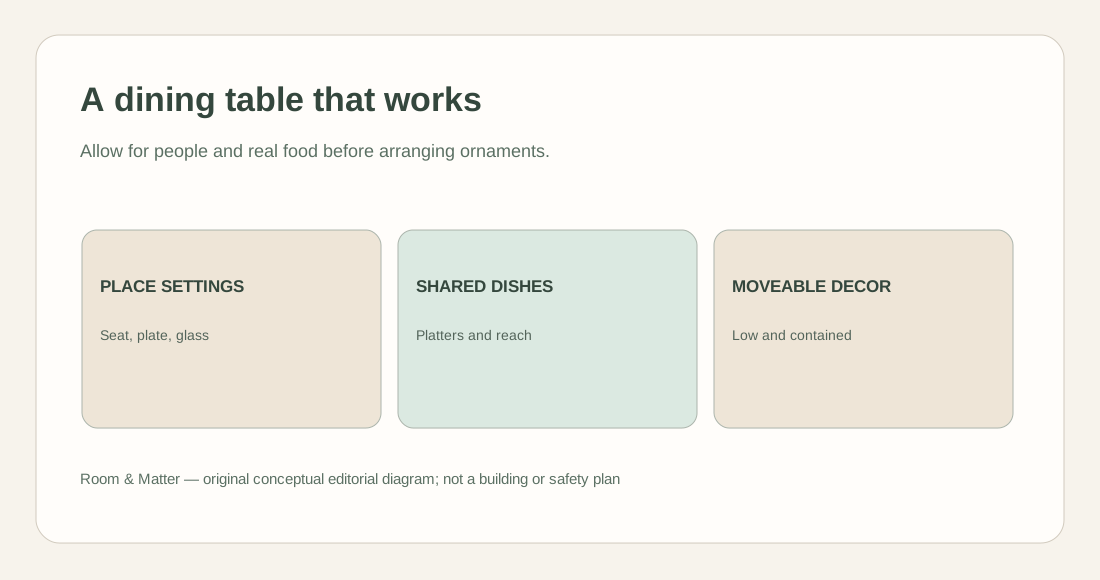
The practical table is easiest to design from the outside inward. First set full places with dinner plates, glasses and cutlery, giving each guest enough usable elbow room according to the real chair and table dimensions. Next map the serving method. If large shared dishes will pass across the center, that center cannot also hold a wide, fragile arrangement; a buffet or sideboard may free room but needs its own circulation route. Only after those choices should a runner, low greenery or candles be considered. Do not rely on a decorative 'table size calculator' that ignores the shapes of dishes and guests' reach. A round table concentrates contact in the middle; a narrow rectangular table may have almost no space between opposing settings. For a meal with multiple courses, leave a reachable place to collect used plates and put down serving bowls. The most beautiful Thanksgiving tables keep a little breathing room once the guests arrive. Seasonal linen and restrained detail often create the desired visual effect without competing with food.

The Tablecloth Should Work With Your Plates, Not a Color Trend
A tablecloth or runner occupies enough surface to establish a mood without requiring many small decorations. Test natural linen, subdued ochre, olive or warm neutral fabric beside the plates and glasses you already own. If your china contains blue or green, it does not have to be replaced simply because Pinterest mood boards lean orange in November. A single warmer napkin or stem can create the seasonal connection. Think about the practical hazards: spills, drips and hot serving bowls. Choose materials that can be cleaned and tolerate ordinary meal use, and avoid expensive delicate finishes you would be anxious to protect for the duration of dinner. A full cloth can visually soften a large dining table; a runner preserves more wood or stone if that surface contributes to the room. Small repeated napkins may be enough in a compact setting. Place the textile flat before purchasing any centerpiece, because its color and texture may already give the table all the warmth it needs. Thanksgiving style should be grounded in hospitality rather than shopping for one manufacturer's coordinated set.

Make the Arrival Feel Like Thanksgiving, Not Another Halloween Porch
The entrance provides the first note of the gathering, but its decorative role should remain quieter than the dining table. A wreath made of suitable seasonal materials, one sturdy planter or a simple natural branch may be enough. Thanksgiving does not require jack-o'-lanterns, spooky signage or an overwhelming stack of decorative pumpkins left over from Halloween. Use a color or texture that will reappear indoors, such as a muted amber ribbon or a leafy silhouette. Check that door handles, locks and lighting remain usable and that any entry decoration is secure for the surface and weather. Once several guests arrive, coats, shoes and bags create their own busy visual field. Keep the landing and route clear; do not build a floor arrangement that makes everyone sidestep wet boots or squeeze past the front door. In apartment buildings, shared corridor and property rules matter more than the appeal of a dramatic entry photo. This is a welcoming moment rather than a second stage set, and it works best when guests can enter naturally.
Prepare a Landing Place for Drinks Before Guests Appear
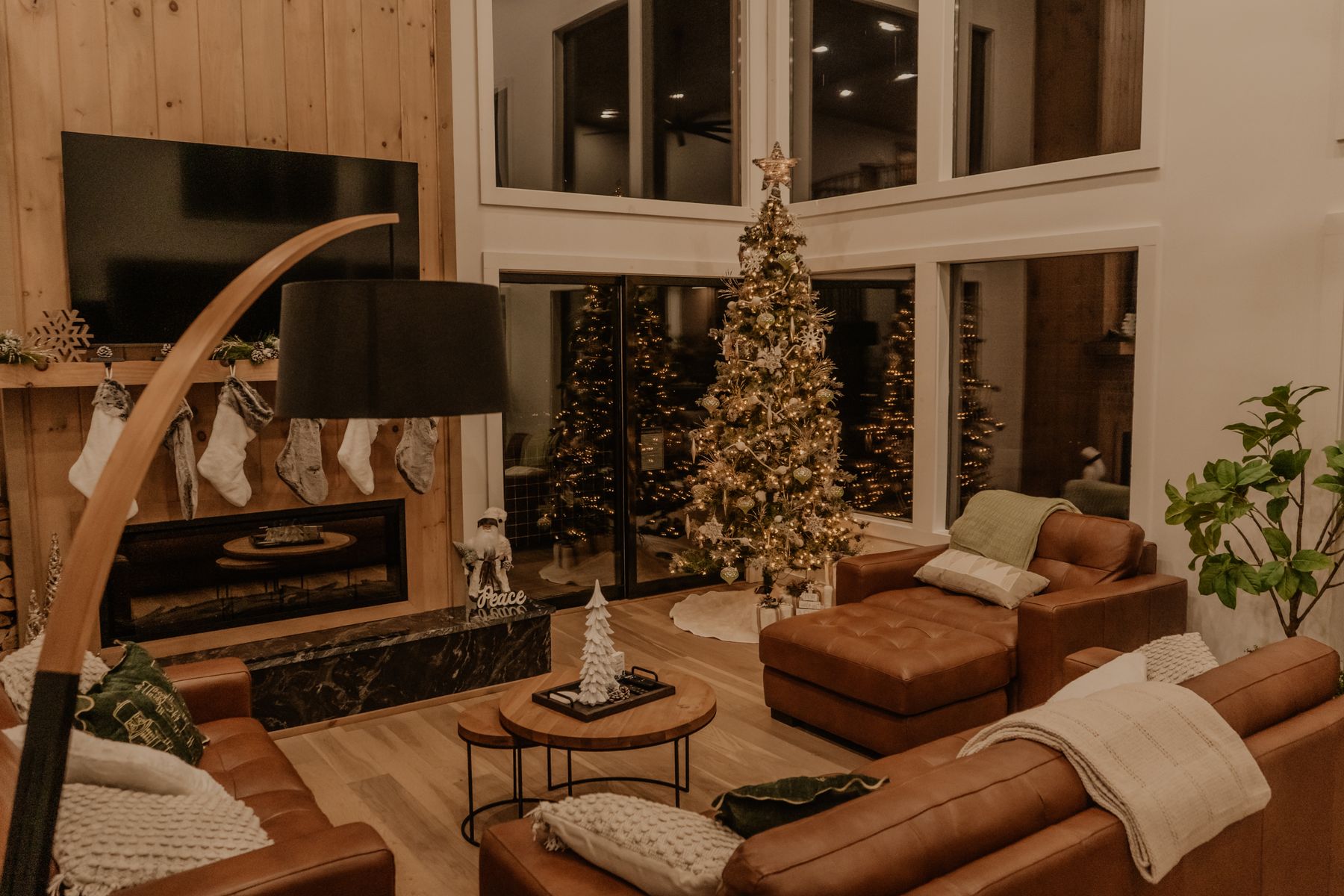
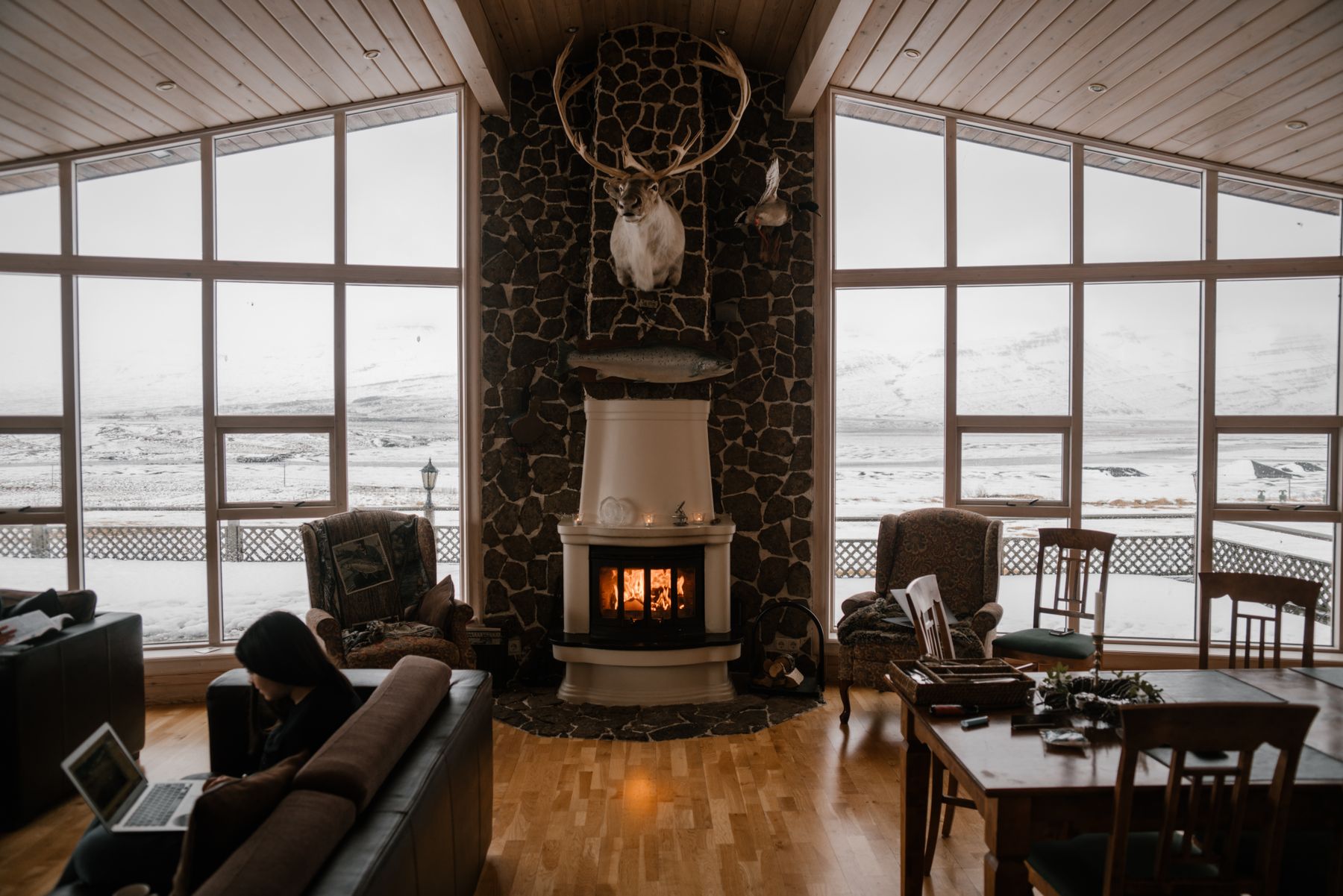
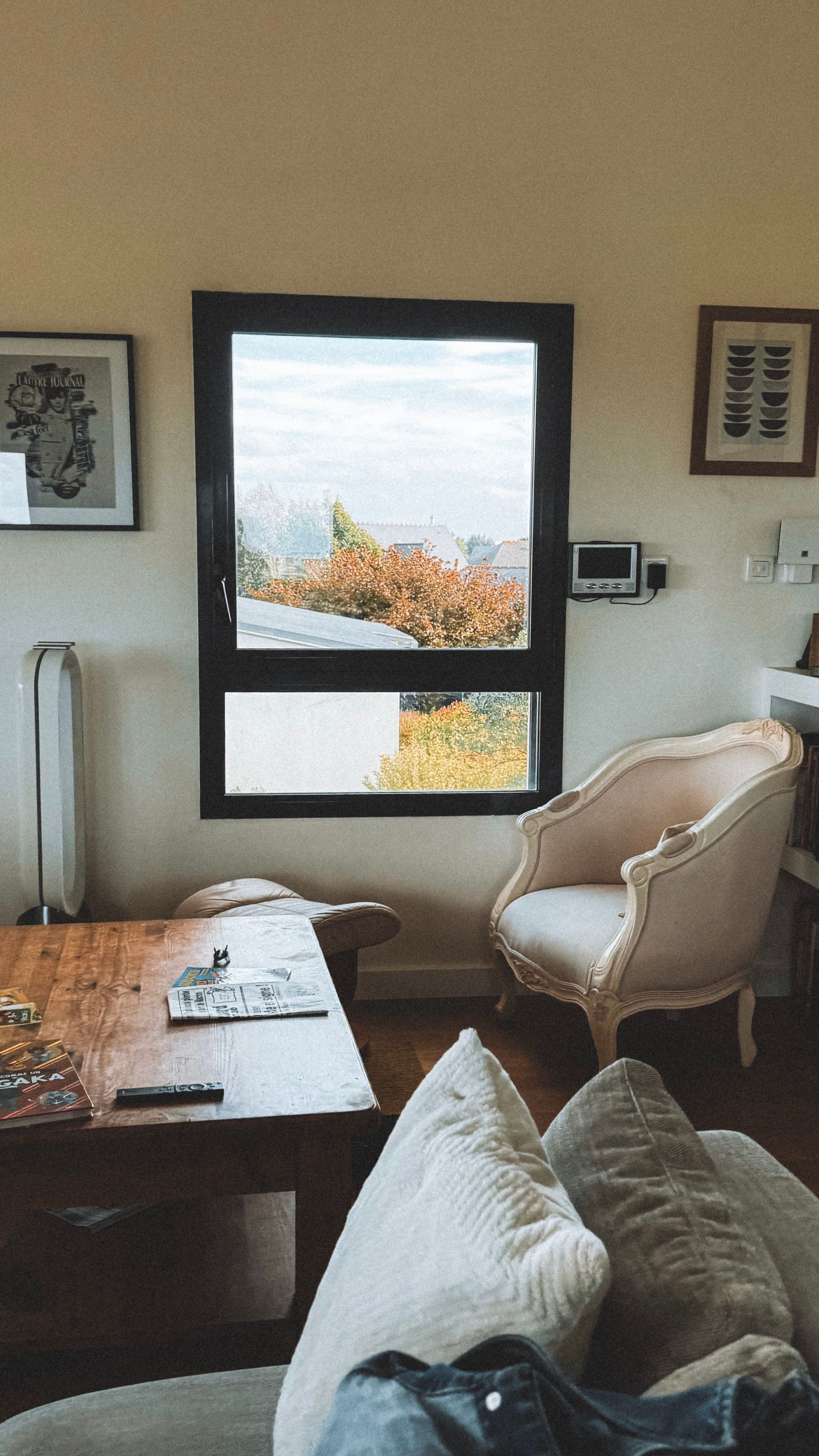
The space where people wait for dinner may become the day's busiest room, yet it does not need a separate Thanksgiving installation. Start with the number of seats, the route between them and a stable reachable place for drinks. Clear at least one existing table or sideboard rather than covering every surface with pumpkins and flowers. A warm textile on a frequently used chair can make a stronger seasonal impression than several miniature objects. Look at traffic once people stand up: does a tray interfere with access to the kitchen, does a low basket obstruct a walkway, or can guests circulate without passing directly through a cooking zone? If children will visit, leave a flexible area rather than filling the floor with breakable autumn decor. The pictured living room provides a seasonal atmosphere largely through the view, demonstrating that Thanksgiving need not have recognizable symbols in every room. The focus of this section is pre-dinner comfort and circulation, not duplicating the established fall living-room decorating guide.

Use a Floral Arrangement That Can Move in One Lift
The best Thanksgiving centerpiece may be the one you can lift off the table without dismantling it. A stable vase of flowers or a shallow bowl of seasonal stems offers color and shape in a compact footprint. Judge its weight and the surface that will receive it when serving begins; a heavy wet vase requires a secure place, while loose branches can snag sleeves and interfere with plates. Fresh flowers need appropriate water, and cut material should not shed into food. If the table is very small, choose a floral arrangement for a nearby sideboard and allow the place settings themselves to carry the seasonal palette. This differs from everyday autumn flower styling because the decoration is asked to adapt during a specific meal: it may be present for the welcome, relocated during dinner and returned when guests leave. Keep fragile objects away from chair edges and children who may reach across the table. A considered arrangement lets people see one another, serve and converse; it should not demand special attention throughout the evening.
Food Is an Event, Not Background for the Photograph
At Thanksgiving the meal itself becomes the table's strongest visual element. A browned roast, bowls of vegetables, bread and a dish of cranberry sauce bring more meaningful color than a pile of permanent ornaments. That color arrives late, often on hot or heavy serving vessels that need stable landing places. Plan the route from kitchen to table before arranging decorative objects; protect heat-sensitive surfaces and follow appropriate food-handling practices independently of the styling. The source photograph captures a person bringing roast poultry to the table, not a demonstration that every pictured plate or candle position meets safety requirements. Never present a close-up feast image as proof that a large family can sit around that particular table comfortably. If the kitchen is small, organize a specific receiving spot and keep the route free of cords, extra chairs and temporary storage. After the food arrives, it may be perfectly right for the centerpiece to leave. In this setting, hospitality is not a disruption to the design—it is the reason the decorative plan exists.

A Small-Apartment Thanksgiving Is a Furniture Choreography
In a small apartment, Thanksgiving is less a question of miniature pumpkins than of furniture timing. Decide which room hosts drinks, which surface serves food and whether a coffee table, folding leaf or kitchen island has to change roles during the day. An extra chair may be useful for dinner but obstruct the passage to the sink while everyone is arriving. Test the table with the full number of places before any seasonal objects are introduced. Instead of distributing decor around the entire room, choose a contained display that can move from table to shelf in one motion. Portable cushions, washable napkins and one vase are often easier to integrate than large decorative branches or fragile bowls. If the dining table doubles as a desk, plan where laptops and papers go before guests arrive. A beautifully styled small tabletop photograph may only show an attractive detail; it does not demonstrate functional capacity. The layout succeeds when people can arrive, sit, eat and help clear without requiring the apartment to be rearranged repeatedly.
Use Harvest Objects for a Purpose, Not as a Shopping Theme
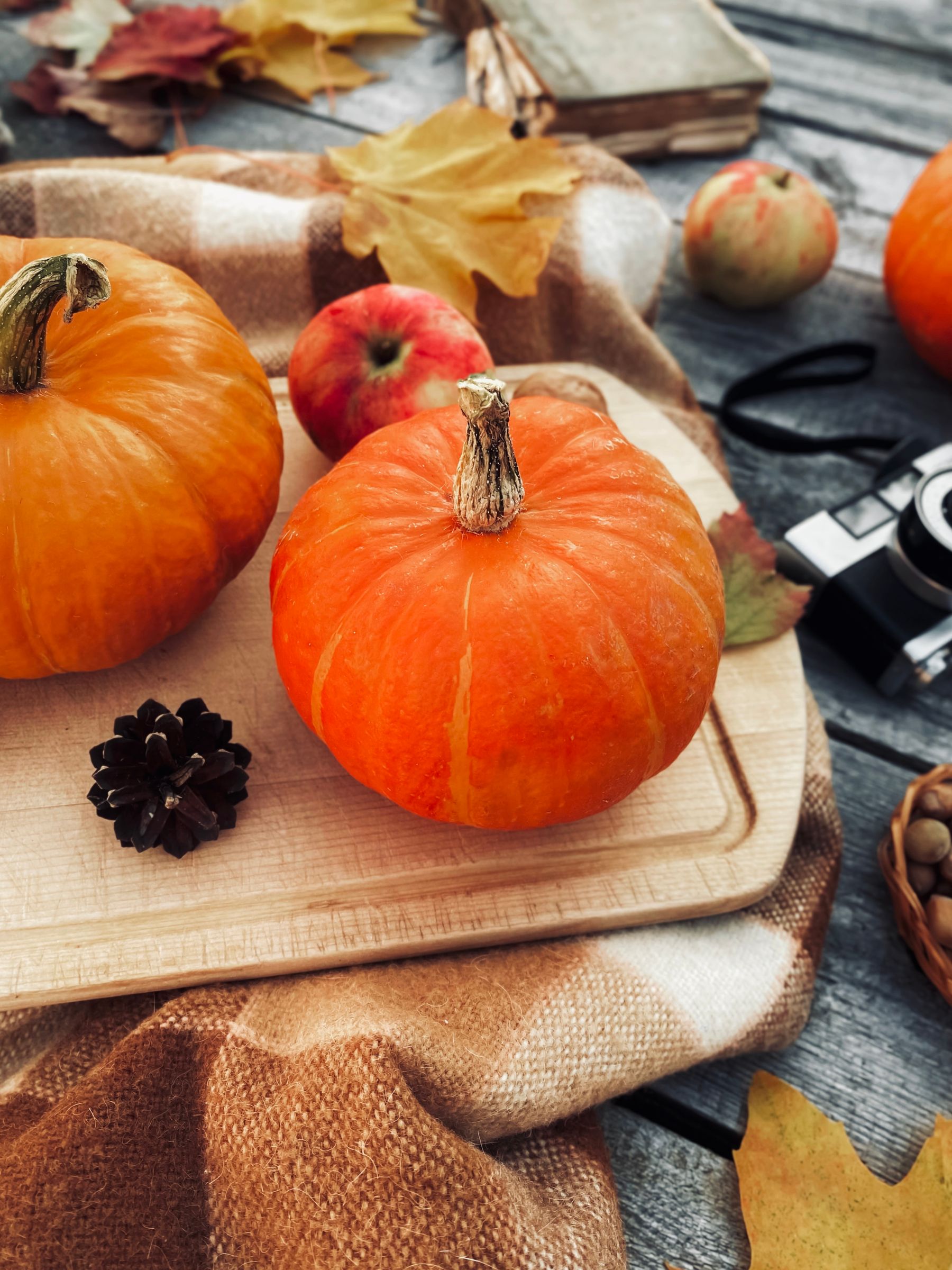
Pumpkins, squash, pears, nuts and dried leaves are familiar Thanksgiving motifs, but their effectiveness depends on context. If a few small gourds support the table's colors, keep them grouped rather than placing one beside every plate. A bowl of edible fruit can contribute to both decoration and hospitality, provided the produce is handled hygienically and remains suitable for eating. Protect porous furniture from moisture, marks and spoiled fruit, especially when a display remains in place for several days. Loose dried leaves should be kept away from food and open flames. Avoid assuming any plant material is safe for children or pets without checking its identity and accessibility. The most interesting seasonal arrangement may combine one well-shaped branch, ordinary dinnerware and a restrained textile, letting familiar materials look different in the context of the meal. This is not a reason to buy bags of decorative harvest objects that will be stored for the rest of the year. A purposeful arrangement can be cleared quickly when dining begins.
Don't Confuse a Thanksgiving Table With a Christmas Tablescape
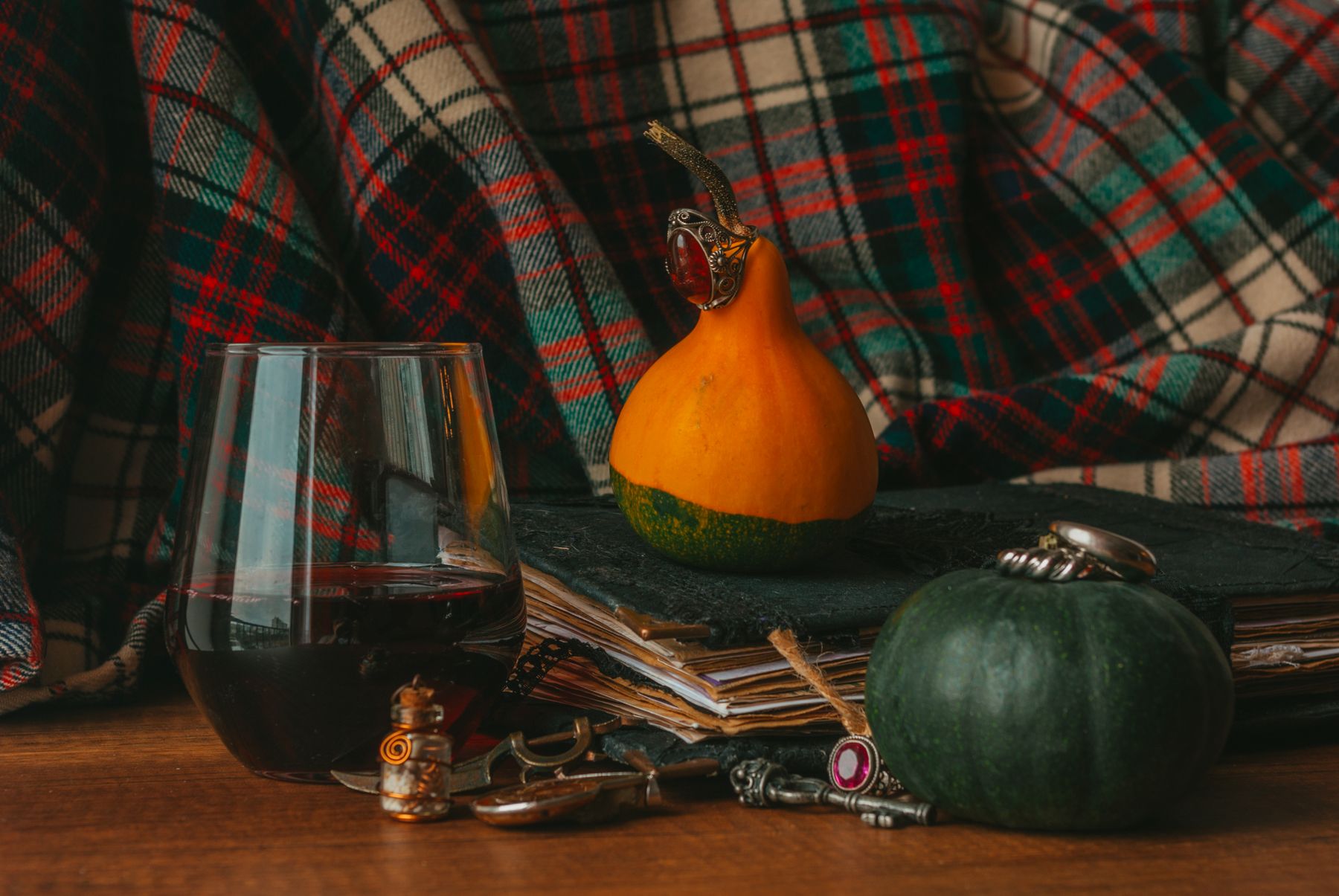
Thanksgiving often arrives near the start of Christmas decorating, but the two occasions can keep their own visual identity. Thanksgiving is grounded in harvest texture, a shared meal and the late-autumn house; Christmas may use more evergreen, ornaments, dedicated lights and larger festive focal points. If storage is limited, select neutral reusable materials that can transition between them—linen, clear glass, timber or a well-made candleholder—rather than mixing the most literal motifs of both holidays at once. An orange pumpkin centerpiece beside a newly installed Christmas tree can work for a household that enjoys both, but it should be a conscious mixed-season choice rather than a default marketing image. Keep a small container for event-only objects, then remove those pieces after guests leave. The warm textiles and functional lamps can remain if they still make the home comfortable. This keeps the Thanksgiving experience focused without requiring another full shopping trip for the following season. The best distinction is conceptual: Thanksgiving's table is the central gathering, while a Christmas scheme often gives the whole house a different decorative rhythm.
The After-Dinner Reset Should Be Part of the Plan
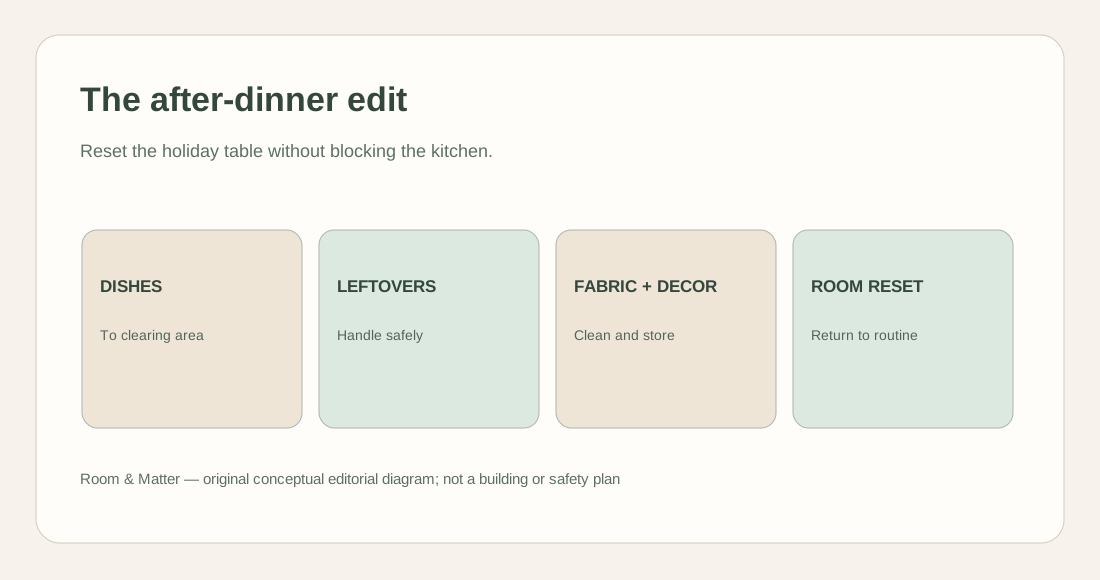
A home rarely looks like the finished mood board by the time dessert is served. Tablecloths are stained, plates have moved and extra chairs occupy unexpected corners. A thoughtful Thanksgiving setup anticipates that ordinary transformation. Assign a clear destination for dishes, linens, decorative objects and furniture after the meal. Protect the kitchen's cleaning and food-storage zones rather than filling them with vases removed from the table. Handle leftovers according to appropriate food safety guidance, separately from decoration. If the floral centerpiece can move as one piece and the seasonal props are limited to a small group, the room is quicker to reset without damage. Evaluate which items earned their storage footprint: a good runner, napkin set and vase may return every year; an oversized arrangement requiring elaborate packing may not. This practical ending is a distinctive part of Thanksgiving design because hosting is concentrated into one meal, while longer fall decoration may remain in place for weeks. When the house is clear again, allow the winter or Christmas transition to happen deliberately, not as another pile layered over dinner debris.