Map the Christmas Experiences Before Mapping the Decorations
Christmas decor becomes far easier to edit when the household knows what the decorations are for. Write down the seasonal moments that matter: walking in after work, waking up on a dark December morning, gathering beside a tree, cooking for guests or sitting around a table. Then map the spaces actually used for those moments. This approach is not the same as decorating every room with the same kit. A front entrance has to accommodate coats and bags; a kitchen needs free work surfaces; a sitting room can take a richer display because people linger there. Photograph the main views before adding anything. Look through the doorway from the entry, across the sofa toward the tree location and from the dining seat toward the kitchen. Identify two or three sightlines where Christmas should register clearly. A small home may need just one main display and a few echoes. A larger home can carry several decorative moments, but their relationship should be planned rather than accidental. The brief can be as simple as 'welcoming entry, expressive tree, practical festive table.' If a proposed purchase supports none of those experiences, it can probably be skipped.

One Focal Point Can Carry the Whole House
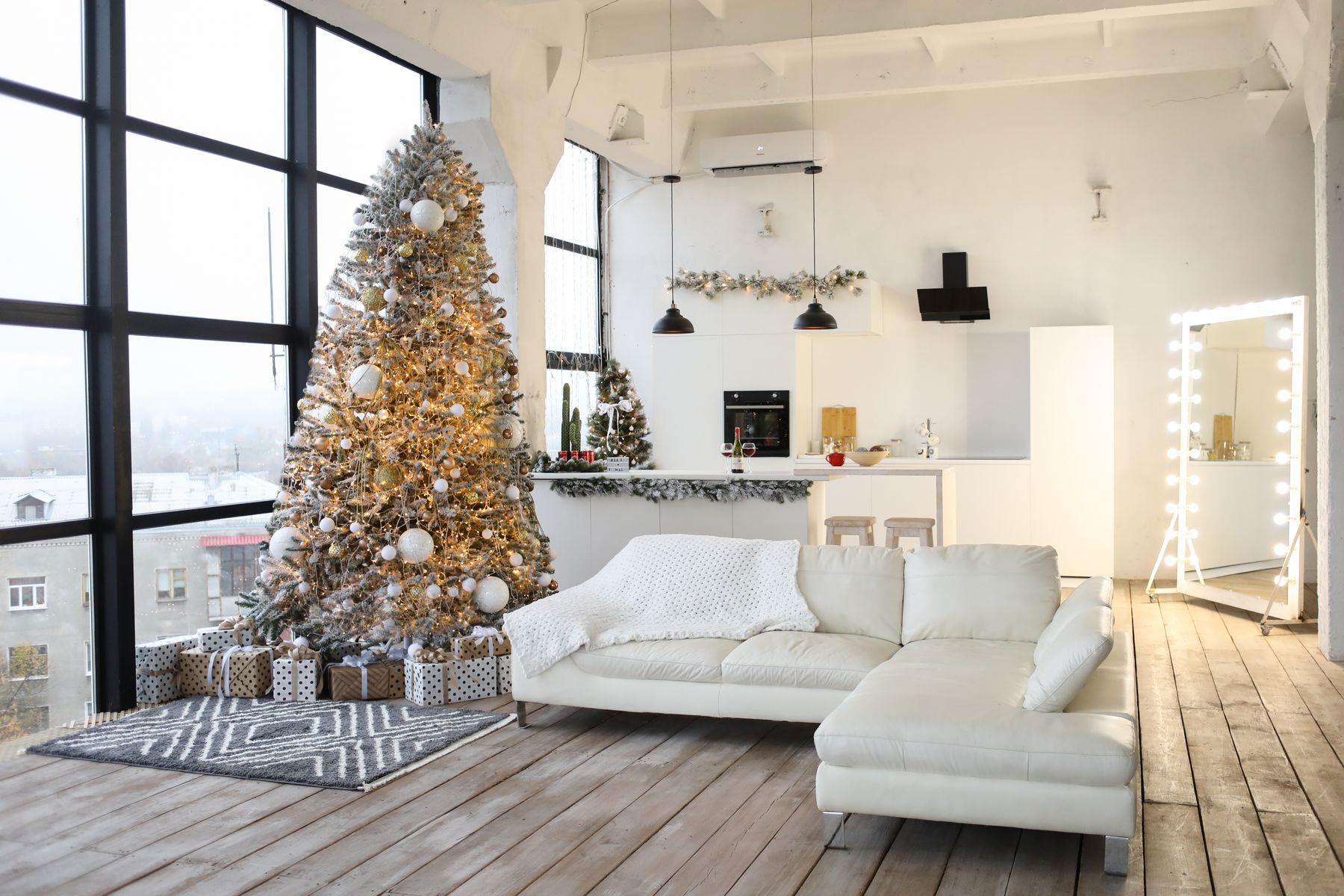
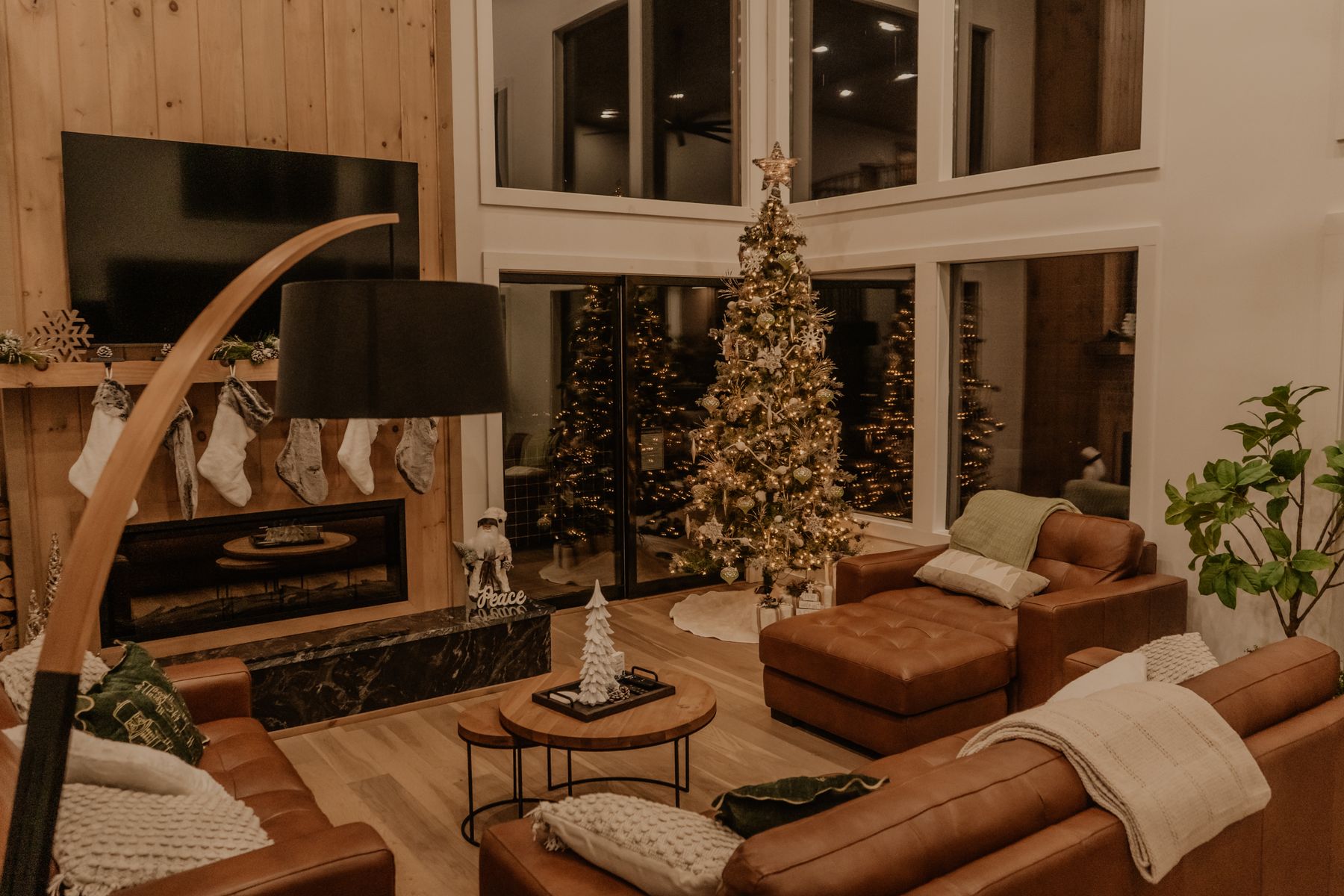
Most coherent Christmas schemes have one place where the visual volume rises. It might be a full tree, a decorated mantel, a staircase garland or the table for a major holiday meal. Choose that location based on where people spend time and what can be seen from the adjacent spaces, rather than defaulting to the largest empty corner. A traditional room with detailed moldings and rich upholstery may carry deep color and numerous ornaments, while a spare apartment may look best with a single expressive tree and plenty of unadorned space around it. The quieter areas are not incomplete; they let the principal display look intentional. Carry one motif outward: evergreen at the entrance, an echo of red in dining linen or the tree's ribbon tone repeated on a small kitchen branch. Avoid adding three equally strong holiday installations in one uninterrupted view. If every surface is the focal point, none can hold attention. A connected house has a rhythm of stronger and calmer moments that survives everyday occupation, even when coats, toys and books return to the scene.
A Connected Palette Is Not an Identical Palette
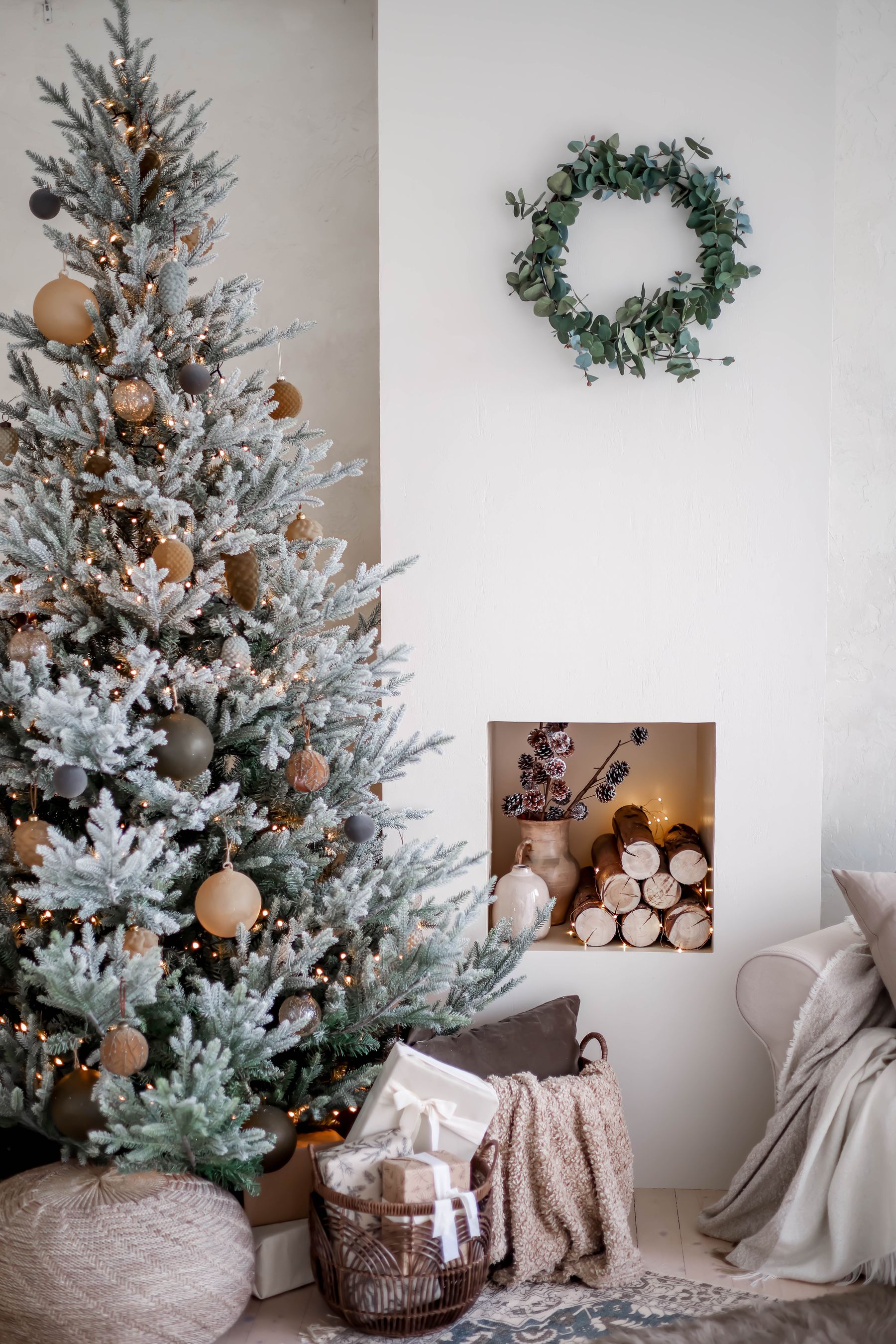
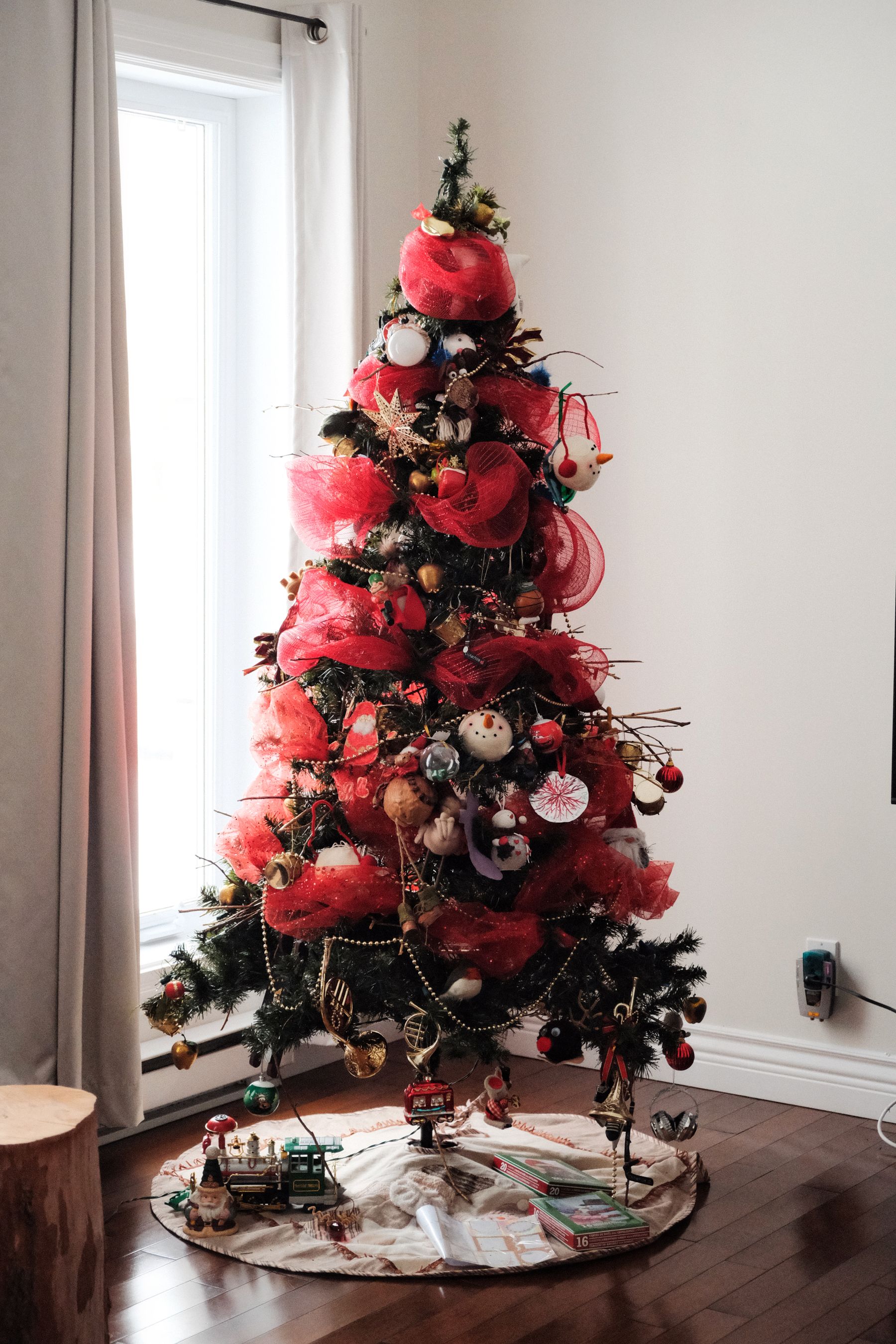
Select two dominant Christmas colors and a material that the home already understands, such as evergreen, warm cream and aged brass or burgundy, oak and clear glass. Test the grouping against immovable finishes: sofa fabric, flooring, kitchen cabinet color and dining tabletop. The same deep red that reads beautifully beside pale timber may overwhelm a small dark entry. The principle is continuity through variation, not uniform saturation. Let the tree carry a generous amount of the deepest color; bring a smaller accent into the table napkins; give a bedroom only a paper ornament or warm textile. Some houses connect more convincingly through material than through color, especially when the permanent rooms are very different. Greenery, linen or handmade paper can appear in several places without forcing a matching commercial set. If you mix vintage finds with new pieces, repeat their approximate finish or scale rather than disguising the differences that give them character. When a palette becomes an editing tool rather than a shopping instruction, it also protects the project from repeated impulse purchases.

Plan the Tree's Footprint Before the Ornament Pattern
A Christmas tree affects the whole room's circulation and evening light. Before discussing ornament spacing, mark the fullest branch width and the base in the proposed location. Check door swings, the route between sofa and dining area, access to water for a real tree and the place where gifts might collect. Judge it from the seated position as well as the entrance. A tree positioned for the photograph can still block a television sightline, make a chair unreachable or interrupt cleaning. Use ornaments appropriate to branch strength and put fragile pieces away from accidental knocks. For a natural tree, follow the seller's watering instructions and keep it away from heat; for an artificial tree, inspect its assembly and lighting systems. Check that the base supports the actual tree safely rather than assuming a decorative basket is structural. A compact tree can anchor Christmas more effectively than a tall one squeezed into the only walkway. Detailed ribbon, ornament and lighting methods belong in the dedicated tree guide; at whole-home level, the first question is whether the installation improves or interferes with the way the space works.

The Entryway Is a Greeting, Not Another Showroom
At the front door, Christmas has a few seconds to register before the practical work of arriving begins. This makes a wreath, a carefully placed branch or one warm table lamp more useful than a dense collection of ornaments. Open the door all the way. Check handles, hooks, shoe space, the width left for coats and shopping bags and the surface where keys normally land. Heavy door decorations require appropriate hardware and must not strike glass or interfere with locking. Floor-level objects should not narrow the walking route or invite trips when guests come in with wet shoes. A console can hold a small seasonal arrangement if enough of its top remains free for arrivals and deliveries. If the hallway flows directly into the room with the tree, the entry only needs to preview one color or texture. If it is separate, repeat a ribbon or greenery form rather than installing a new competing theme. The stronger the everyday constraints, the more precisely the decoration should be edited. A welcome that makes the home harder to enter is not a successful welcome.

A Christmas Kitchen Still Has to Cook
The kitchen often gets more use during Christmas, just when decorating begins to consume its counters. Identify the main prep run, the sink splash area, appliance doors and the route to the table before adding objects. The safest and most persuasive seasonal cues usually belong at the edge of those tasks: a suitable window detail, an unobtrusive shelf accent, a wreath on a door or a restrained dining-side arrangement. Avoid loose fabric or greenery near burners, hot appliances and open flames; do not route festive light cords across wet or heated surfaces. Items that shed onto food-prep areas create more work than atmosphere. Match the Christmas materials to the kitchen's permanent finishes without forcing a second tree palette. A room with busy open shelving may need a single significant arrangement rather than many tiny decorations. A calm kitchen counter can also act as visual relief from a richly dressed living room. The dedicated kitchen article explores placement and styling in detail; a whole-home plan should make sure the room's functional role remains unmistakable.

Decorate a Table for a Meal, Not an Empty-Room Photograph
A holiday table earns its beauty by making a gathering feel considered, but it must also have room for people and food. Start by laying the plates, glassware, cutlery and the largest dishes you expect to serve. Only then add seasonal decoration. This reverses the common picture-first approach in which a tall centerpiece must be dismantled as soon as anyone sits down. Linen can do much of the decorative work because a tablecloth, runner or repeated napkin pattern already creates a substantial field of color. A short branch, low bowl or one restrained ornament at each place may be enough. Check sightlines across the table, where guests put water pitchers and how sleeves move over a centerpiece. Use only suitable foliage and keep shedding material away from food. Open-flame candles should be stable, supervised and separate from decorations and passing sleeves; electric alternatives can be preferable in crowded settings. One shared material from the tree or mantel connects the table to the rest of the home without making it a duplicate display.
Give Bedrooms a Quieter Christmas Voice
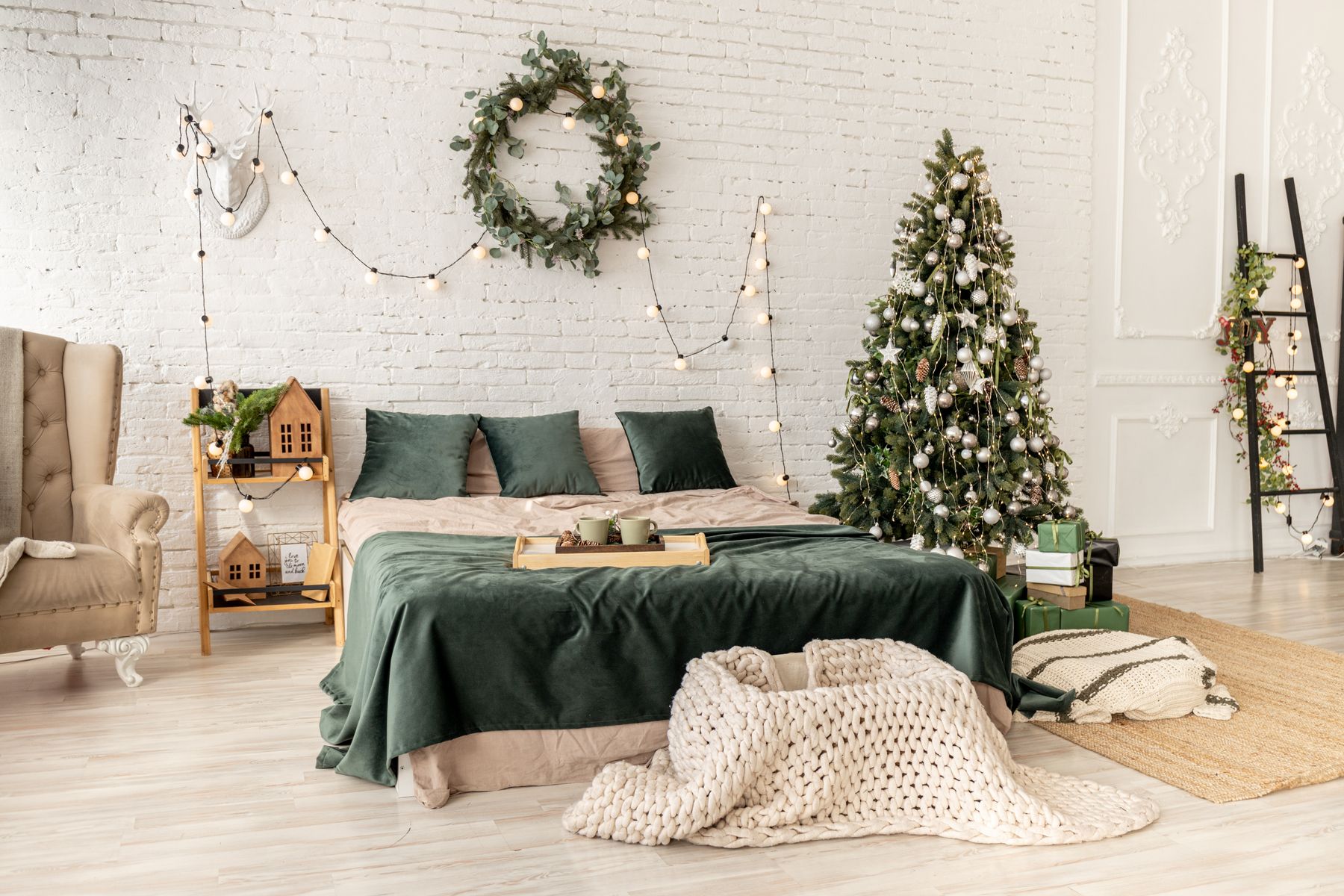
A bedroom usually benefits from an echo rather than the full volume of the living room's Christmas display. Decide whether the aim is a festive view upon waking, a gentle atmosphere before sleep or a warm welcome for guests. A small window ornament, a suitable piece on the dresser or a textile that repeats one seasonal color can be sufficient. Avoid a display that crowds the bedside light, blocks a wardrobe or requires a pile of decorative pillows to be removed every night. Decorations need to coexist with dressing and sleeping. If a string light is used, follow its product instructions and do not tuck electrical lighting among bedding, cover it with fabric or route a cord where someone could trip at night. Carefully edited bedrooms make the more expressive public rooms feel even more special. They also simplify the January reset because only a few items need to be removed. A good holiday bedroom still looks and functions like the household's actual bedroom after a long day.
Keep the Human Story: Handmade, Old and Imperfect
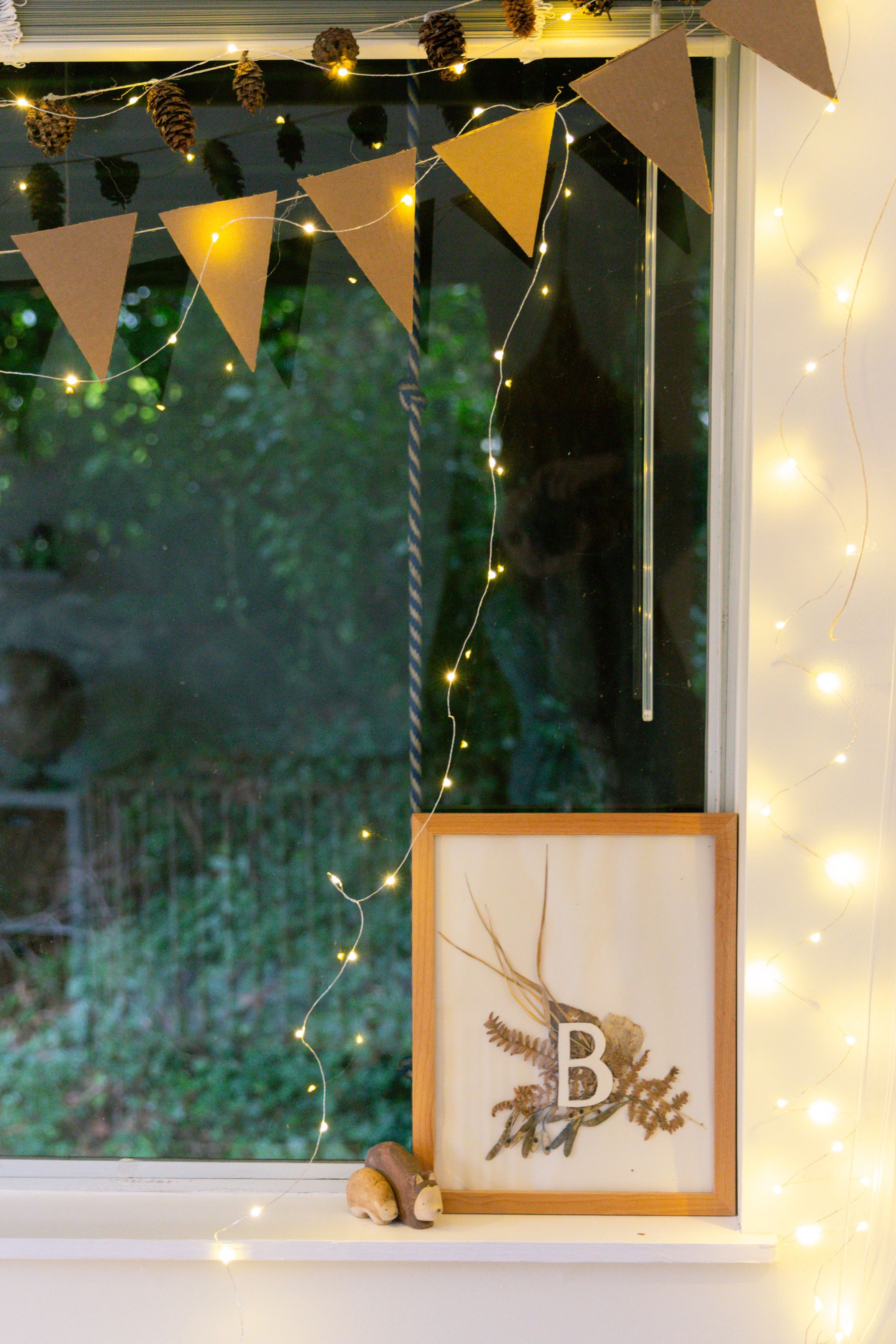
An entirely new matching collection can be attractive but anonymous. Create at least one deliberate place for the household's accumulated Christmas history: paper stars, children's yearly pieces, an inherited bauble, a homemade garland or a slightly mismatched group of vintage ornaments. Their value is not that they imitate the main palette perfectly, but that they make the celebration recognizable from one year to the next. Decide how to display them without exposing fragile paper to condensation, glass to accidental knocks or vintage surfaces to inappropriate cleaning methods. One valued object with space around it often reads more strongly than a crowded shelf. Let the supporting materials do the unifying work. A repeated branch, ribbon or timber tone can carry dissimilar objects into one visual sentence. If children participate, plan a zone that can change without breaking the rest of the composition. Personal tradition does not have to compete with design discipline; in a considered home, the personal objects often become the strongest design element.

Use Light for Welcome, Atmosphere and Actual Tasks
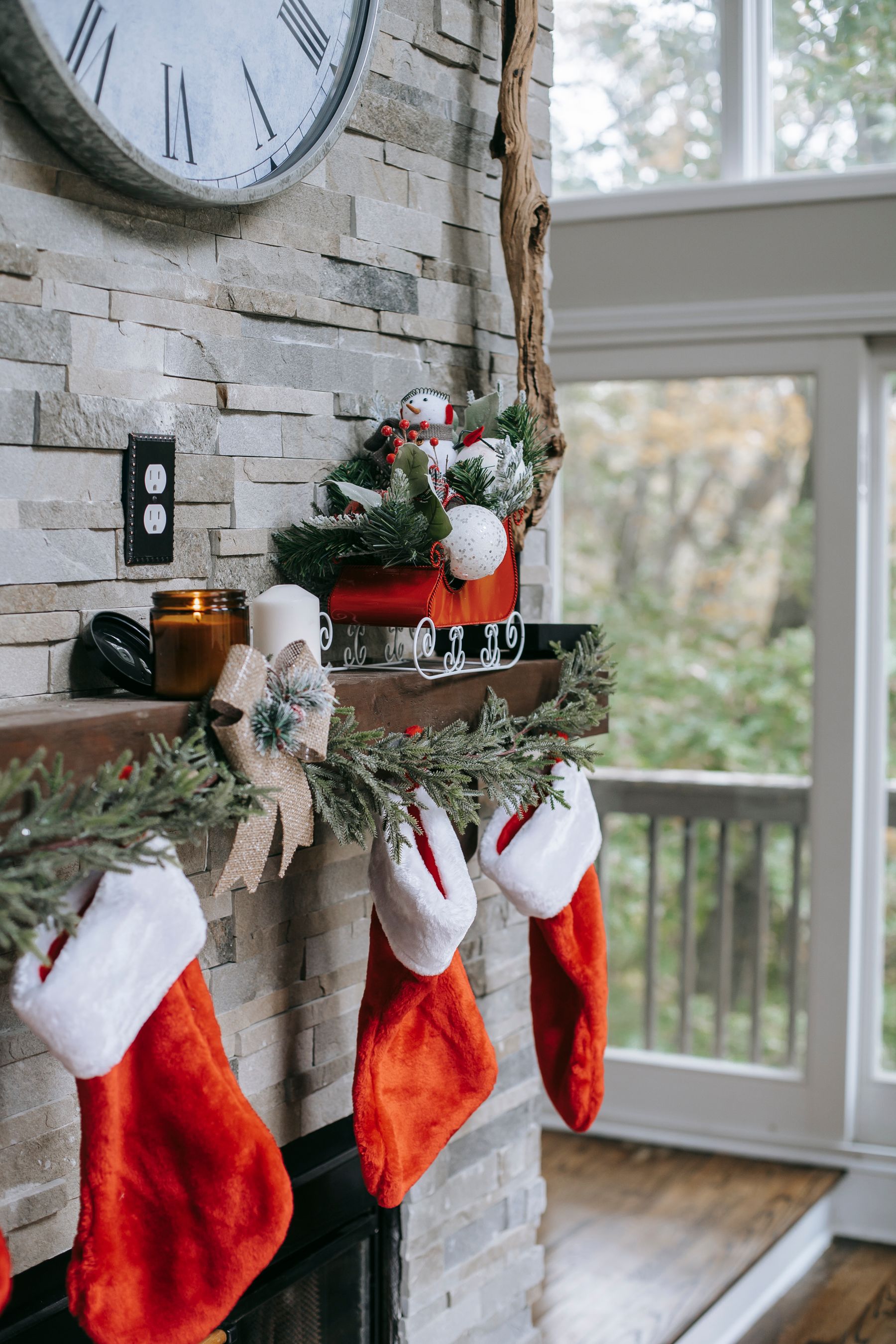
Holiday lighting must solve three different problems. First, people need to move and work safely in the evening. Second, they need comfortable light for reading, eating and talking. Third, the tree and decorative elements can provide the distinctive seasonal sparkle. Treat these layers separately rather than turning off all useful lamps to give string lights more apparent drama. Use festive lights only where their rating permits and follow manufacturer instructions for installation, connection limits and weather exposure. Inspect cords and plugs, keep them out of walking routes and away from water, heat or tightly covered fabric. A fire or candle display requires appropriate clearances, stable placement and active supervision; no image of stockings and garlands beside a fireplace should be mistaken for a safety specification. A few well-placed pools of light often convey more atmosphere than many small flashing strands. Assess the room from a normal sofa seat and from the entry after sunset, then bring back any functional light that the decorative scene has displaced.
Greenery Is Beautiful, but It Changes During the Season
Green branches, wreaths and garlands are powerful connectors between rooms, yet they do not remain unchanged from early December through January. Consider where cut foliage will dry, shed needles or require frequent handling, and keep it away from fireplaces, heaters, hot lamps and other ignition sources. Do not assume every decorative berry or plant is safe around children or animals; verify each species where exposure is possible. A mantel photographed with abundant greenery close to a fire does not establish safe real-world placement. Artificial branches can work where maintenance or water access would be difficult, but they still need inspection, dusting and appropriate separation from heat. Keep kitchen greenery away from food and cooking routes. Where a few natural stems look good, do not multiply them just to make every room match. The shared Christmas effect may come from a consistent silhouette at the doorway and tree rather than from an elaborate garland in every space. Plan when you'll inspect or remove tired materials, because a decorative scheme should age gracefully through the season.
In a Small Home, Concentrate the Celebration
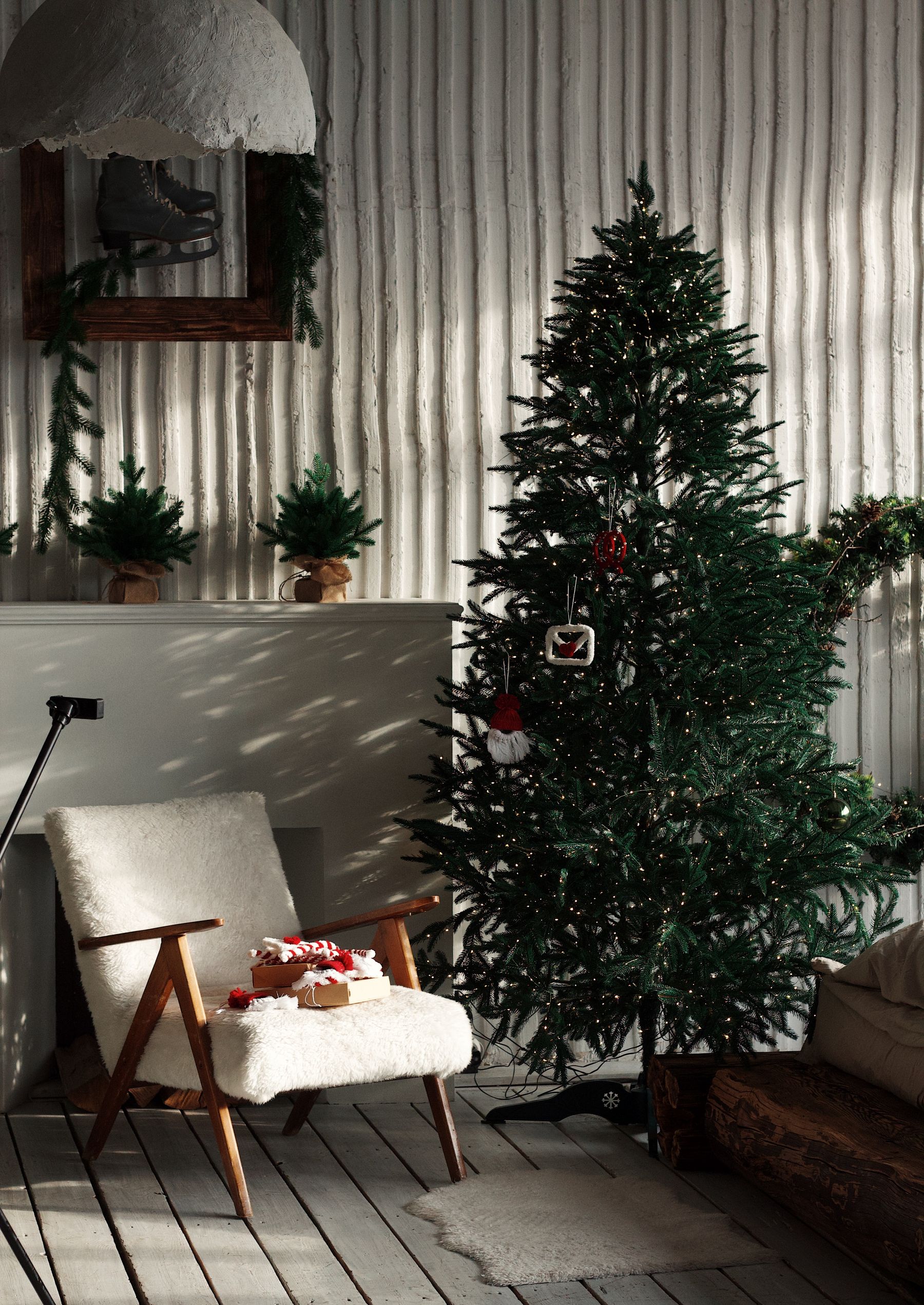
Small rooms make every festive decision more visible. A tree, a gift pile and a few new floor decorations can quickly absorb the same patch of space needed for circulation and seating. Resist scaling down a large-house plan into many miniature vignettes. Instead, choose one strong zone, perhaps a modest tree and a related window ornament, then leave calmer background around it. Repetition can happen on the dining table through linen or in the hallway through one ribbon rather than through additional freestanding pieces. For rentals, prefer truly portable decoration where possible and verify any hanging method against the specific surface. Nothing called 'removable' is automatically damage-free after weeks near moisture, heat or delicate finishes. Be careful with decorations beside doors, heaters and soft furnishings. A restrained scheme has room to breathe when presents accumulate and guests arrive. A smaller home need not look like a reduced version of somebody else's large one; it can create its own generous sense of occasion through focus and thoughtful sightlines.
The January Reset Begins With December Decisions
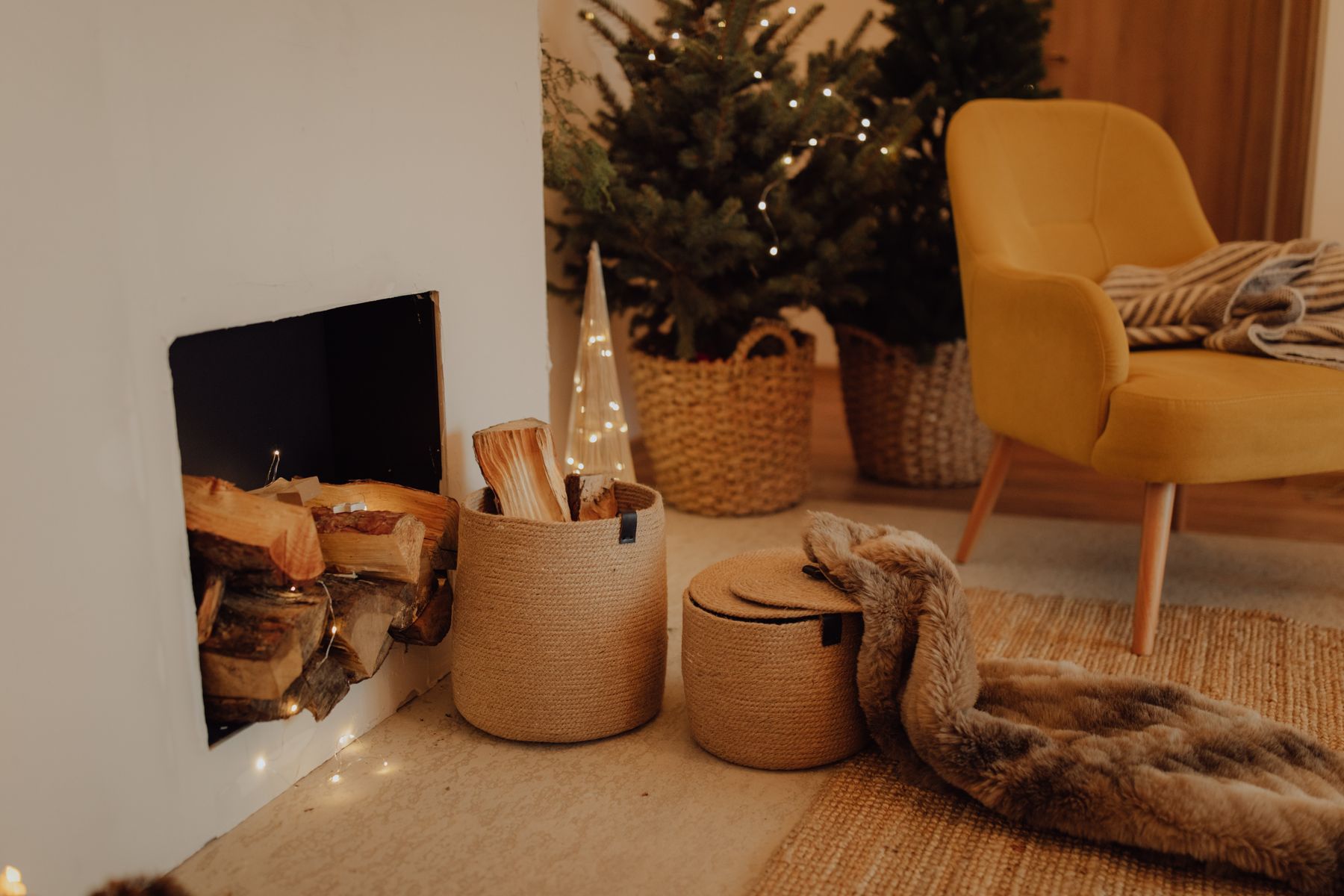
Before adding another ornament, imagine the same home when the tree comes down. Which items are obviously Christmas—the stockings, themed baubles, specialized ribbons and perhaps a particular garland? Which are useful winter elements in their own right, such as a comfortable throw, neutral textured cushion or a practical reading lamp? Separate those groups during decorating and the January transition will feel deliberate rather than like the disappearance of all atmosphere. Prepare enough appropriate storage for fragile items instead of assuming that one big box will work. Label by place and function: tree, entry, dining, handmade pieces. Check how delicate decorations and light strands can be packed without crushing or twisting them. Items that are awkward to store every year may not deserve a permanent place in the collection. A quiet winter scheme can then emerge naturally without pretending that Christmas lasts indefinitely. This is where the main winter guides take over, shifting attention from holiday symbols to comfort, light and texture during shorter days.
Walk the Decorated Home as a Guest Would
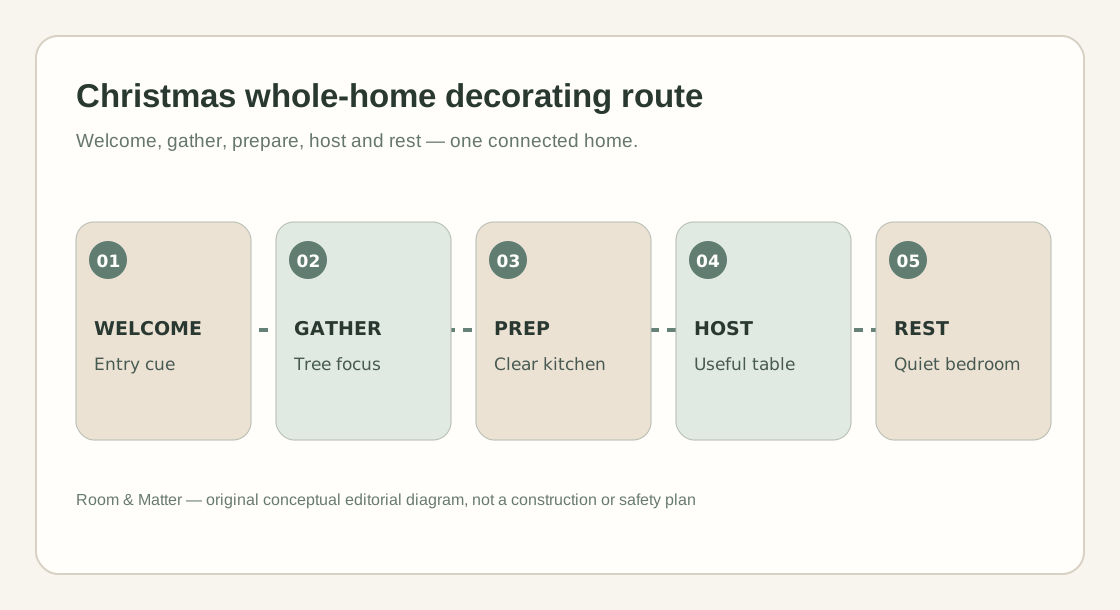
The final review should take place along the route someone actually follows, not as fourteen separate photographs. Enter with a bag, hang a coat, find a seat, go to the kitchen, set the table and return to the living room after dark. Pay attention to the visual transitions. Does a strong tree view receive a quieter supporting moment at the entrance? Is there enough unadorned surface for everyday life? Has a beautiful garland made a cabinet hard to open or a string of lights turned a simple route into a cable maze? Check the different lighting conditions and sightlines rather than evaluating everything at noon. Remove any object that interferes with repeated actions and any repeated motif that no longer improves the whole. Photograph the main views again and compare them to the undecorated references. The outcome should not be the largest amount of Christmas decor the house can physically hold; it should be a clear, warm celebration that still feels like the household's real home. When the room-specific questions arise, follow the dedicated guides rather than forcing every solution into one general checklist.