The Fireplace Sets the Safety Boundary
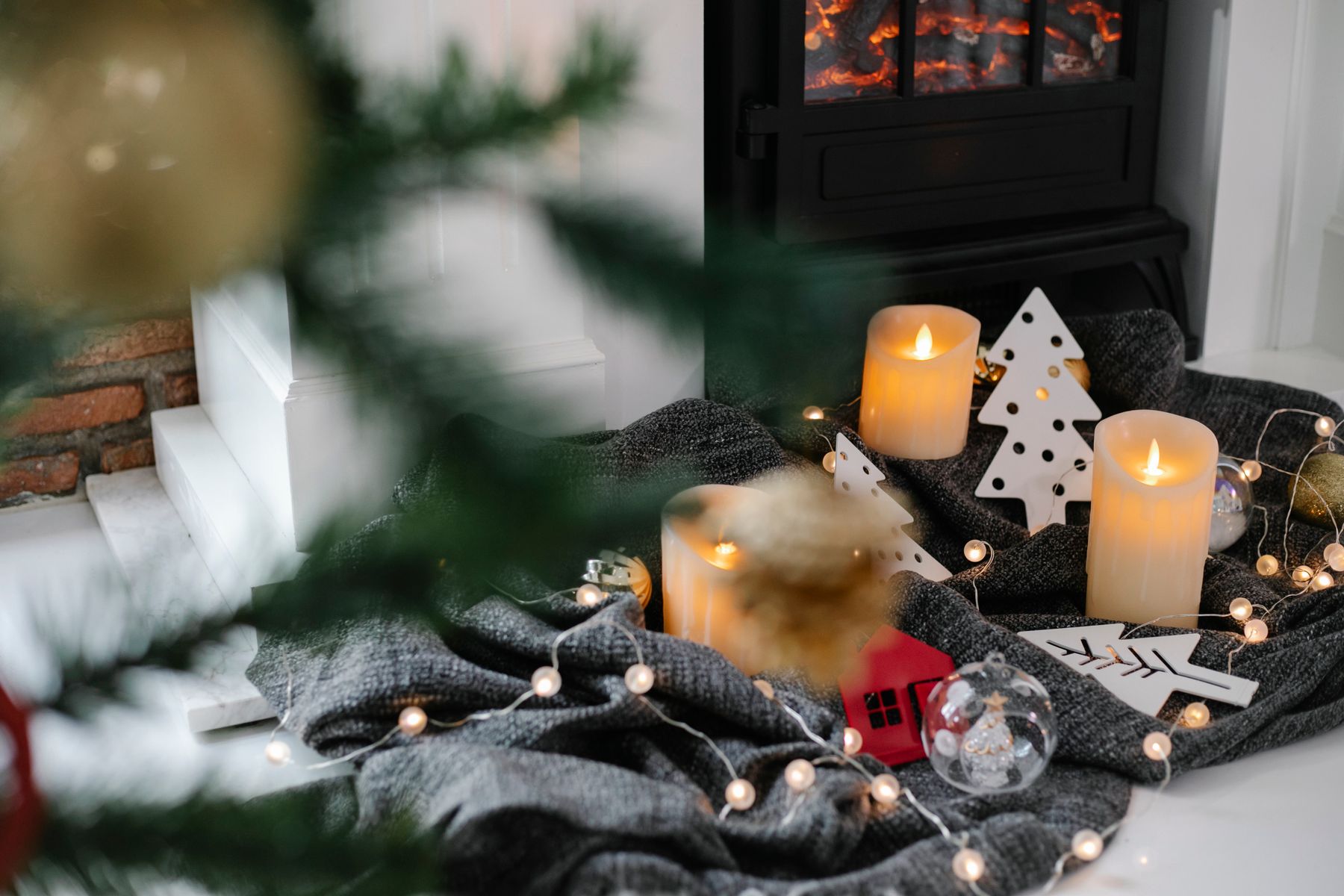
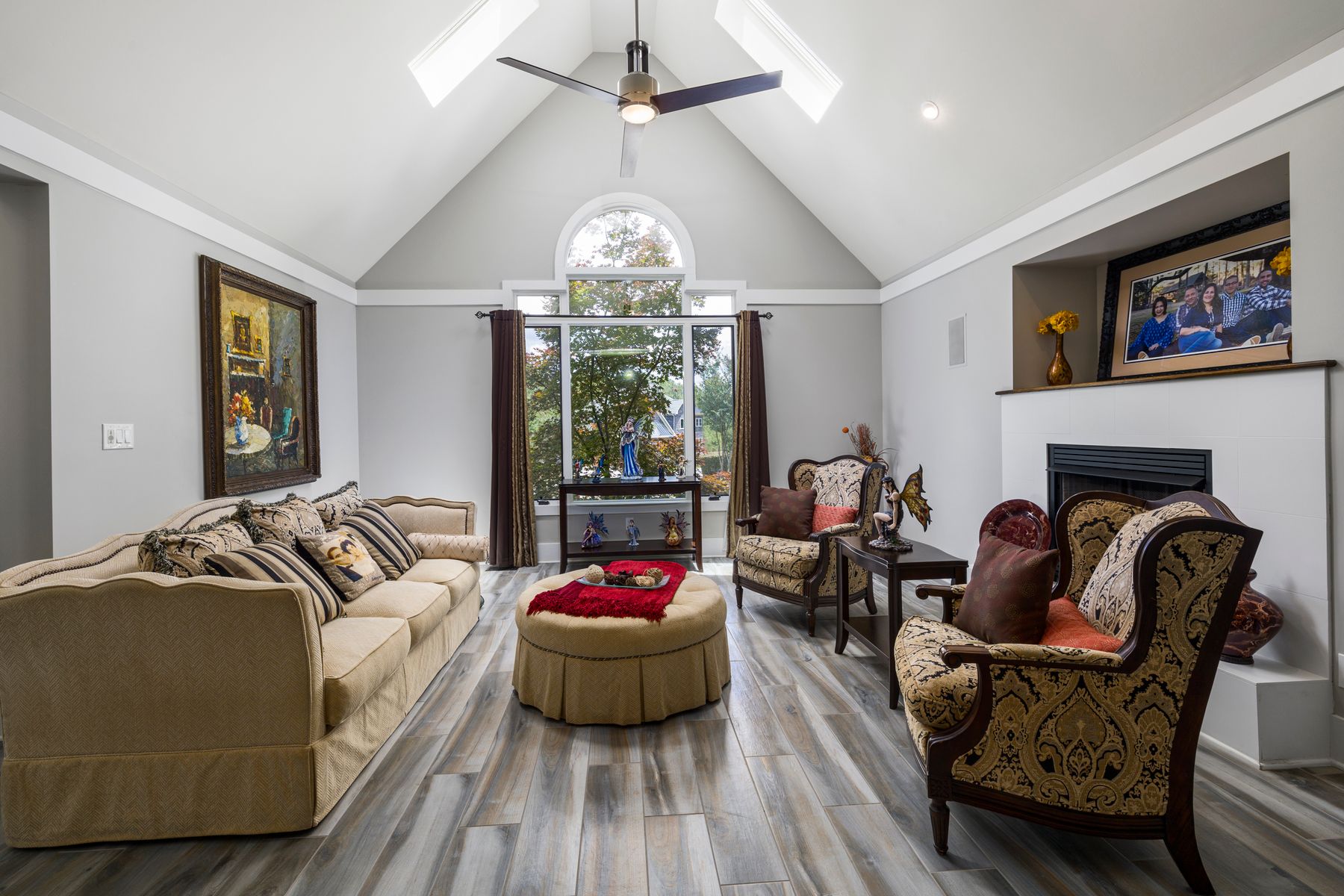
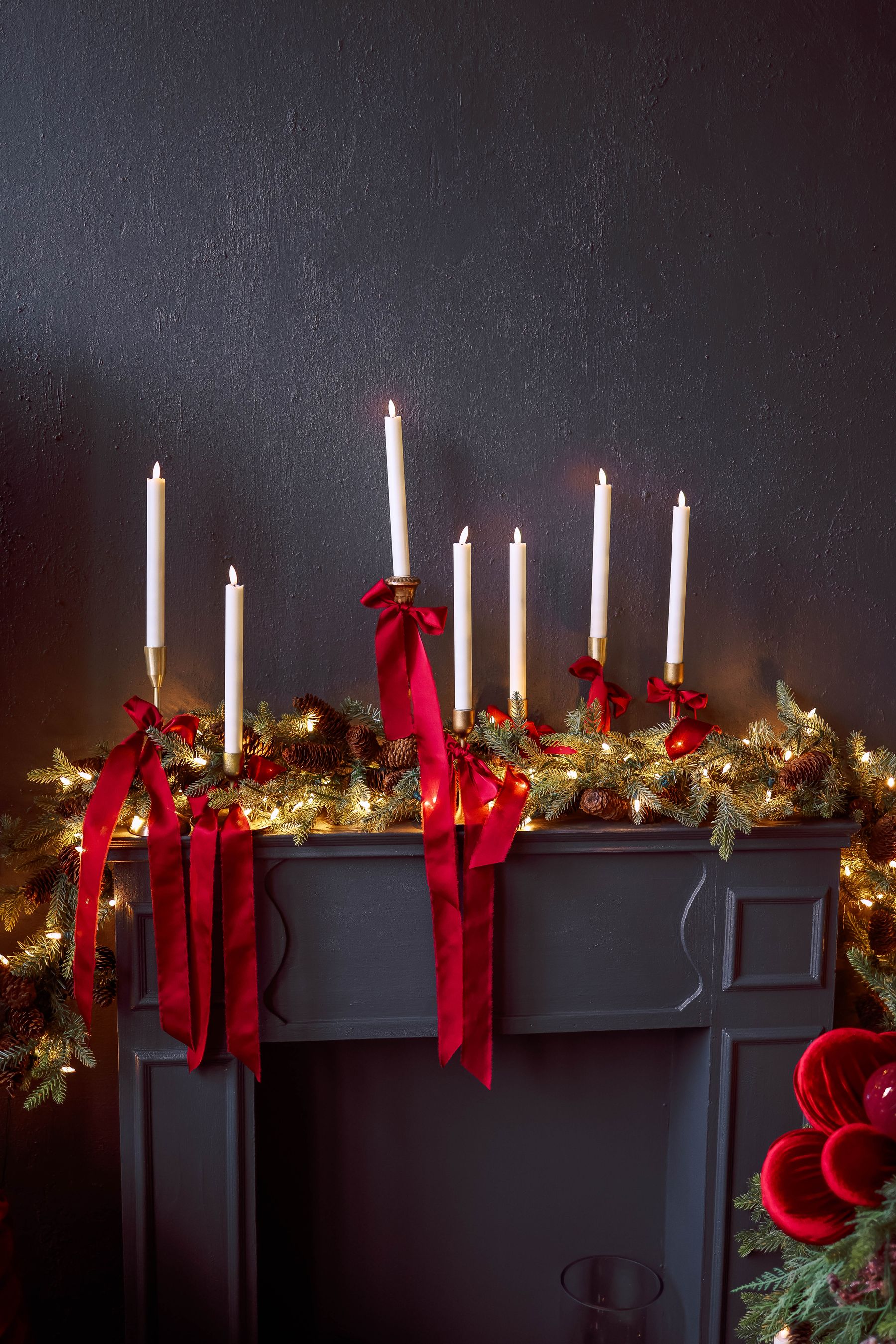
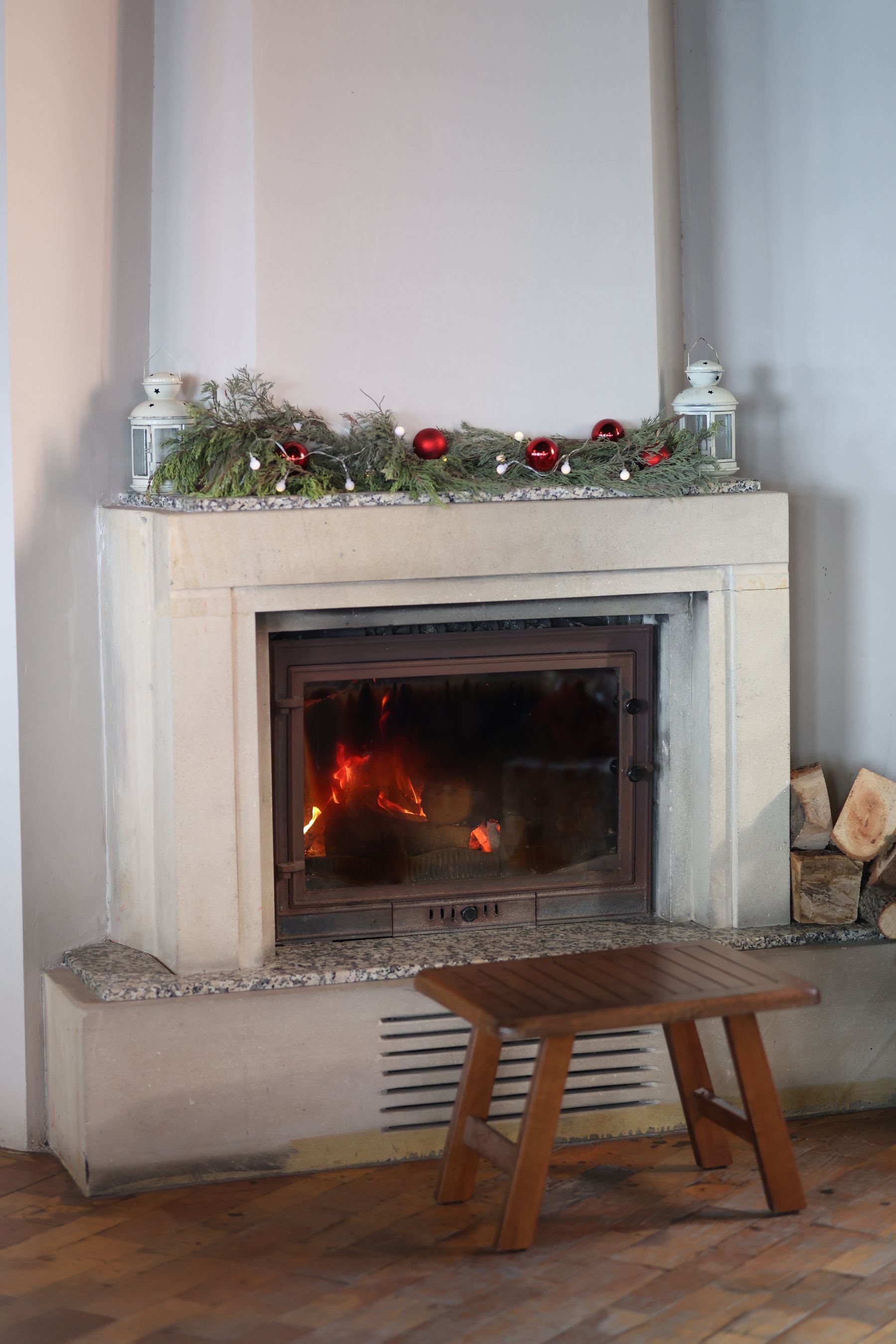
If the fireplace or stove is used, read the appliance and surround requirements before placing greenery, stockings, ribbon, candles or other combustible materials. Do not assume a photograph provides a safe model: heat output, mantel depth and required clearances differ by installation. Keep hanging textiles out of the heat and flame zone and avoid loose dried foliage where it can shift or shed toward the opening. For a decorative or unused fireplace, you have more freedom, but the mantel should still preserve access to vents, controls and doors where relevant.
Tree or Mantel: Which Leads?
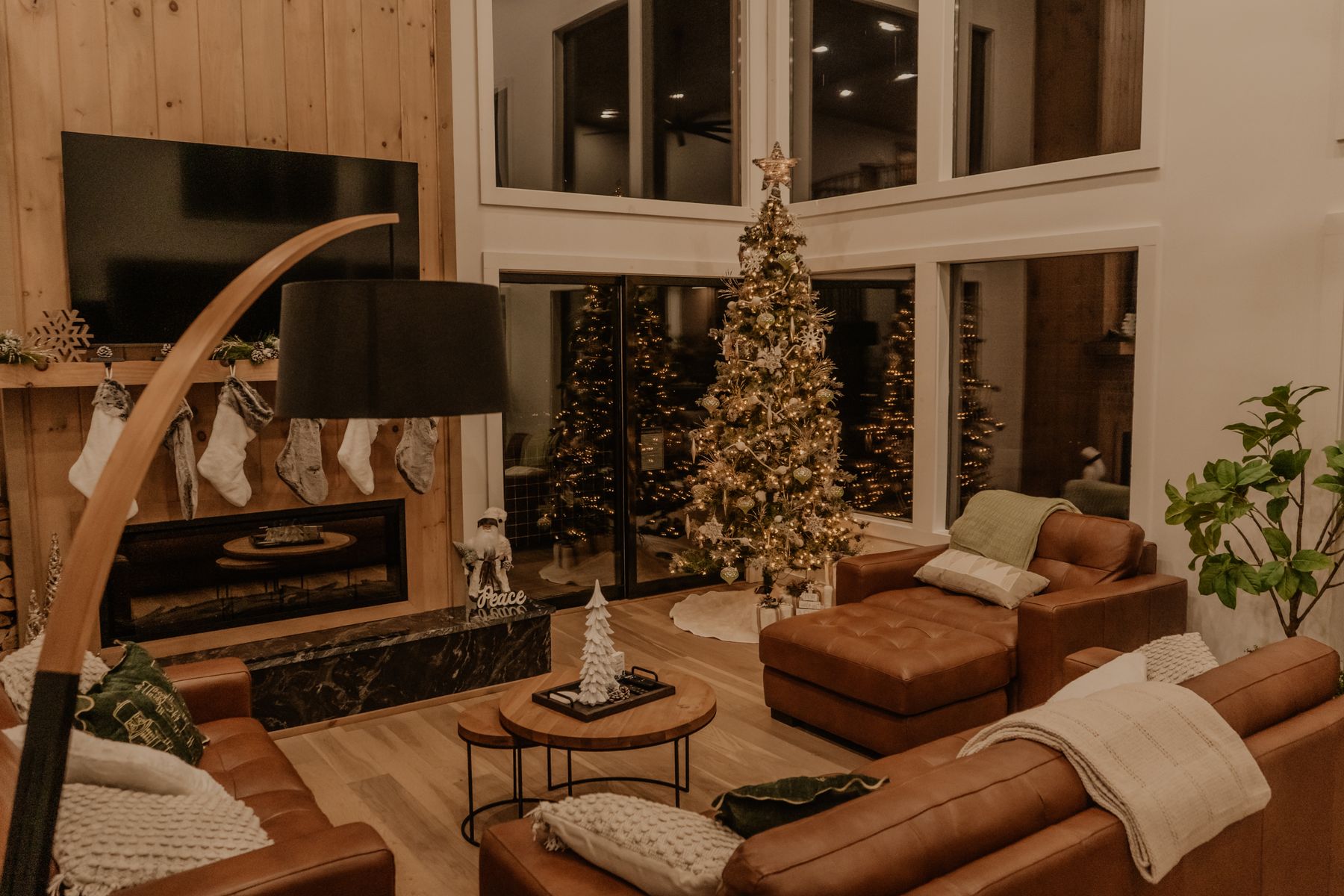
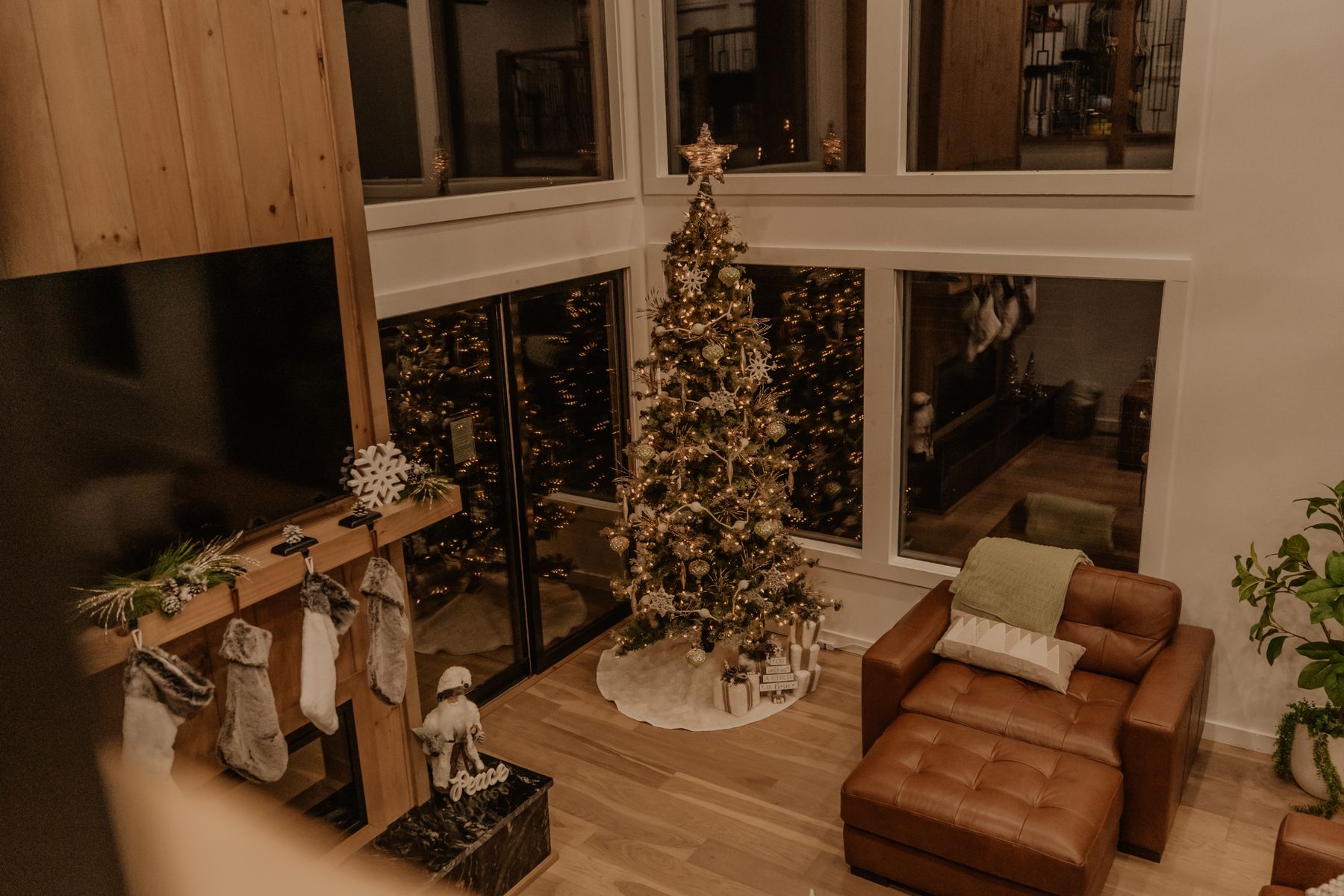
In a room with a large tree, the mantel usually works better as the secondary focal point. Repeat one color, material or type of greenery from the tree, but reduce ornament density and brightness. If the fireplace is the room's dominant architecture and the tree sits elsewhere, the mantel can take more visual weight. Judge the relationship from the doorway rather than styling the shelf at arm's length. The whole-room hierarchy in [Christmas living room decor ideas](/living-room/christmas-living-room-decor-ideas/) is the useful reference when both elements are visible together.
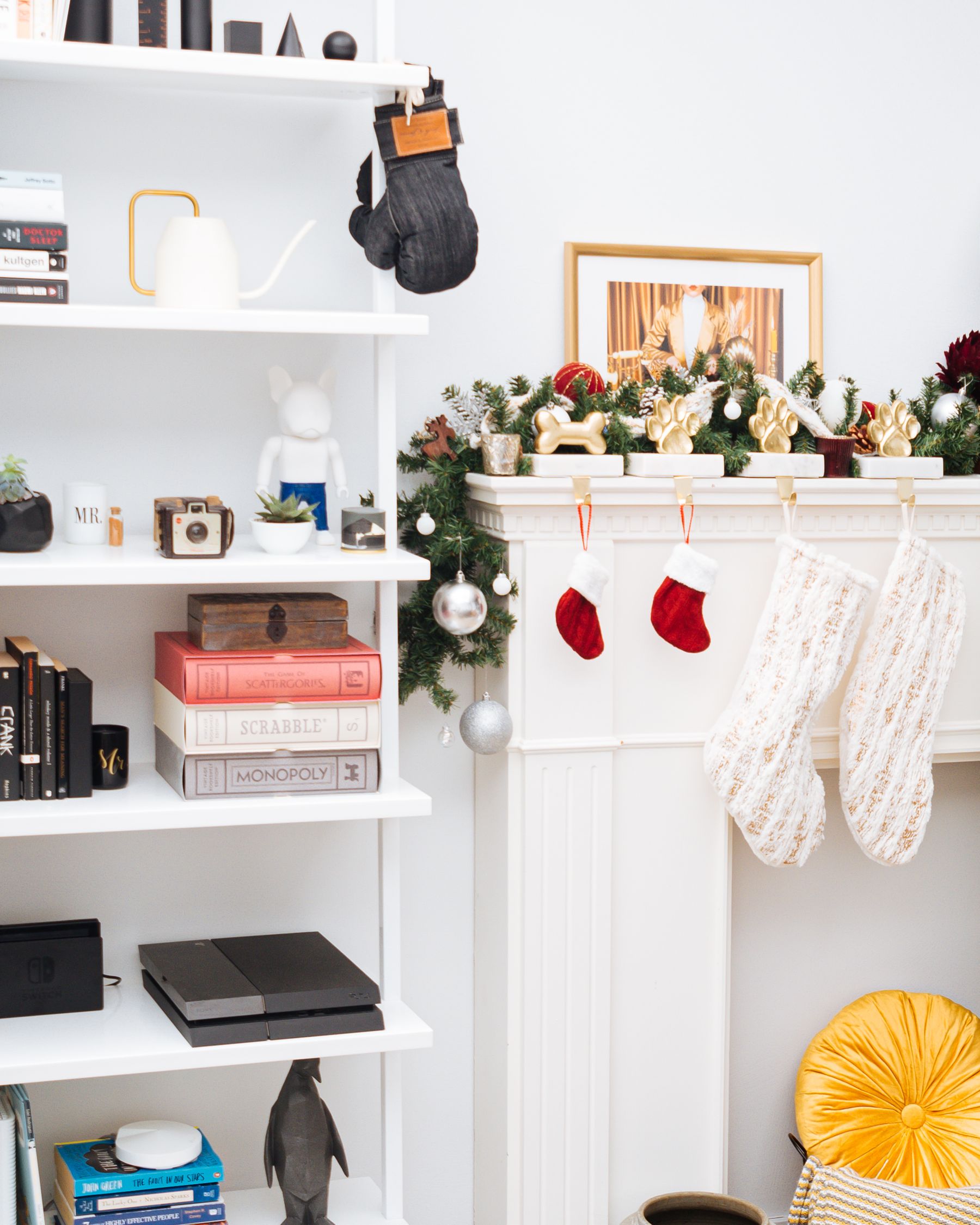
Choose Symmetry When the Architecture Wants Calm
A centered mirror, artwork or strongly symmetrical surround often benefits from a balanced mantel. Use matching or visually equivalent weights at the ends and allow the center to remain anchored by the permanent feature above. Symmetry does not require identical figurines marching across the shelf; two candles of similar mass, greenery that falls comparably at each side or a pair of substantial objects can be enough. Keep small filler pieces to a minimum so the architectural geometry remains legible.
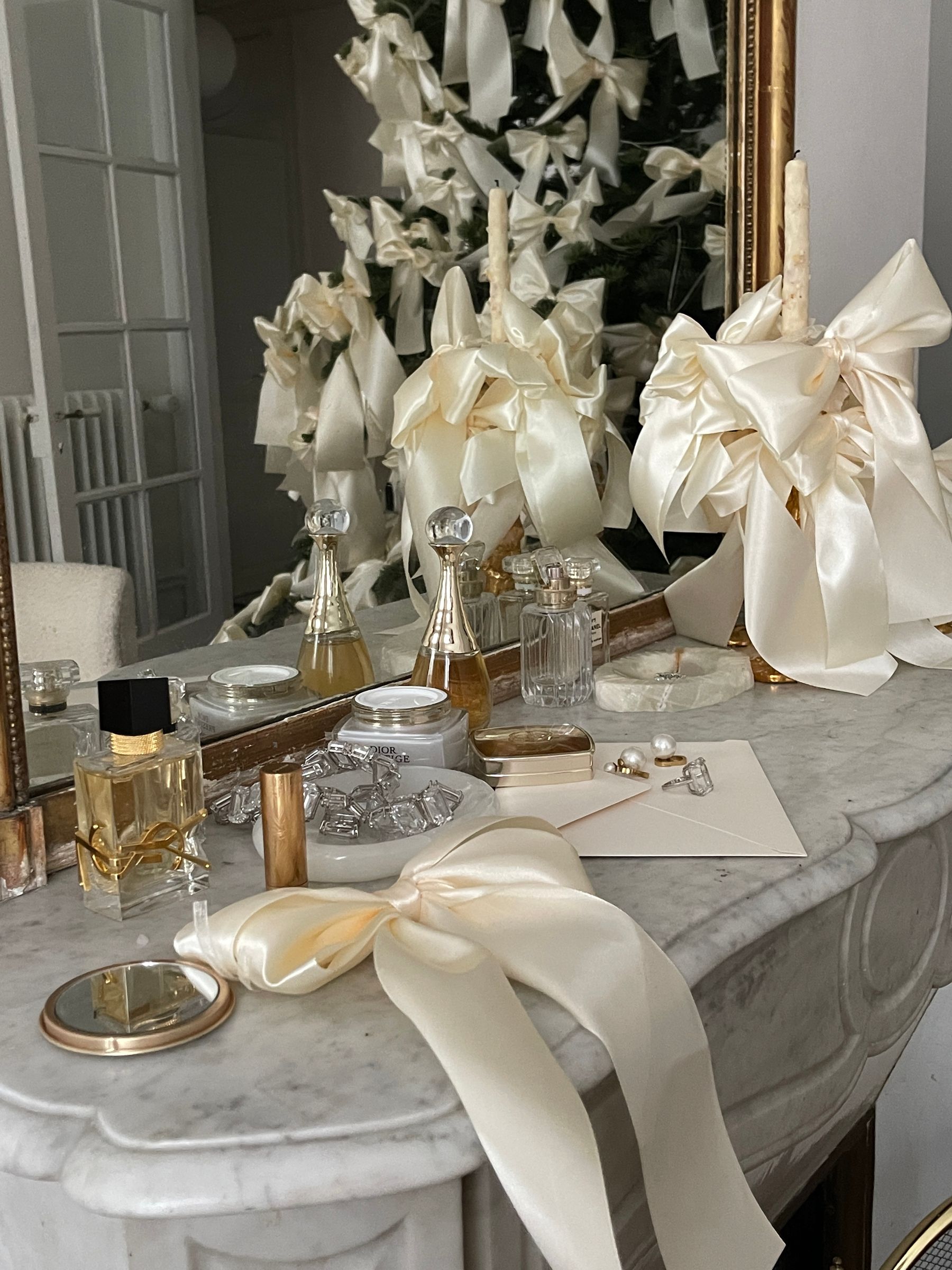
Asymmetry Without the Scatter
An asymmetrical mantel can feel looser and more contemporary, but it still needs balance. Concentrate greenery, candles or ornaments toward one side and counter them with a smaller object, the edge of a mirror or deliberate negative space. Avoid scattering objects randomly across the full shelf; that creates irregularity rather than composition. Asymmetry is especially useful when the fireplace sits off-center in the room or another nearby feature already pulls visual weight.

Let Greenery Establish the Main Line
Garland is effective because it traces the architecture, but it should not automatically cover every centimeter of the mantel. A loose line across the shelf, a concentrated swag or short sections around anchor objects can preserve more of the surround. Mix foliage types only when their scale and color relate; too many leaf shapes quickly become visual noise. Fresh greenery needs monitoring as it dries and must be kept away from heat and flame. Reusable foliage can be more predictable in warm rooms or for early decorating.
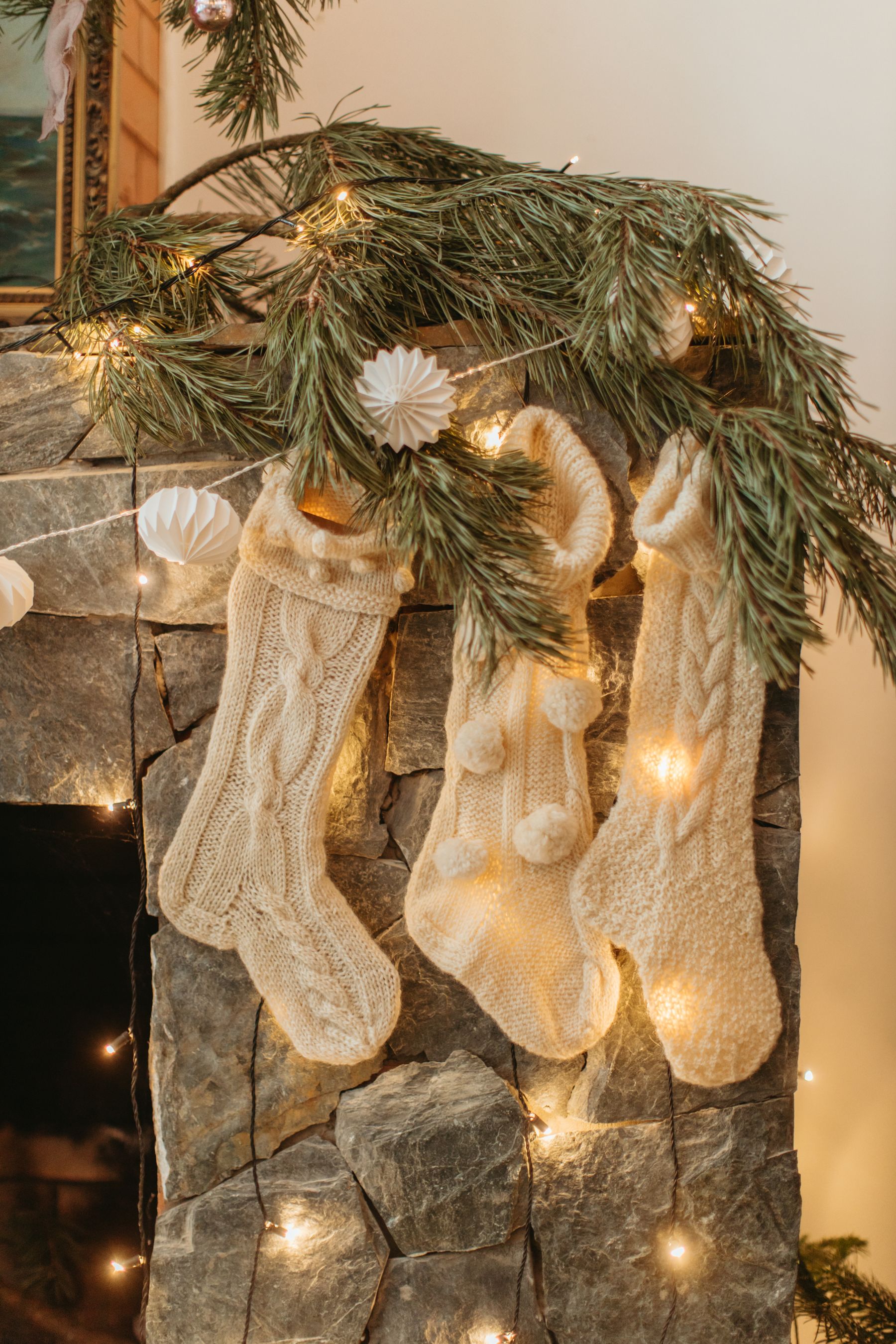
One Tall Anchor, Then Step Down
Use the mirror, artwork, wreath or one substantial object as the dominant vertical anchor, then step down with medium and low elements. Avoid creating several equal peaks that compete with each other. Candlesticks, vessels and branches can supply height, but their silhouettes need breathing room against the wall or mirror. If a television sits above the fireplace, keep decorations from obscuring ventilation, sensors or the screen and resist framing it with a dense ring of combustible foliage.
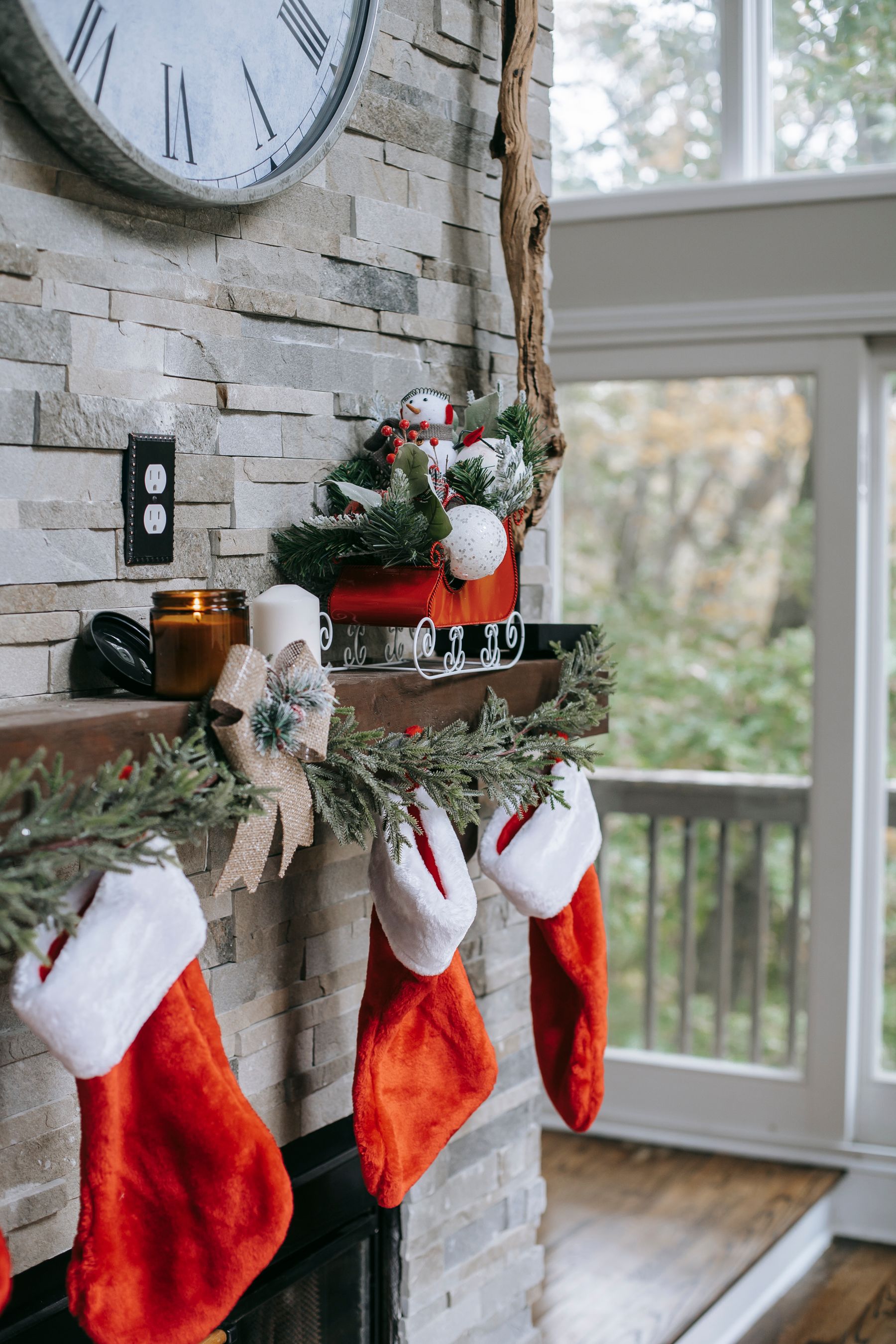
Stockings Are Part of the Composition
Stockings are large textile shapes, so count them as part of the composition rather than adding them after the mantel is finished. Space hooks according to the visible width and stocking size, not simply at mathematically equal intervals if that conflicts with the fireplace architecture. Mixed stockings can look coherent when they share one material, color family or scale. On a working fireplace, remove or reposition hanging stockings whenever required by the appliance instructions and safe operating clearances.

Use Light as an Accent, Not a Continuous Glow Strip
If lights are part of the mantel, distribute them so greenery and objects still create shadow and depth. A uniformly bright garland can flatten the entire composition and compete with the tree. Battery packs and cords should remain accessible and away from heat, and lighting should be approved for its intended indoor use. Candles add a different quality of light but require appropriate holders, supervision and safe distance from foliage and textiles; flameless alternatives are often more practical in dense seasonal displays.
The Permanent Art or Mirror Still Matters
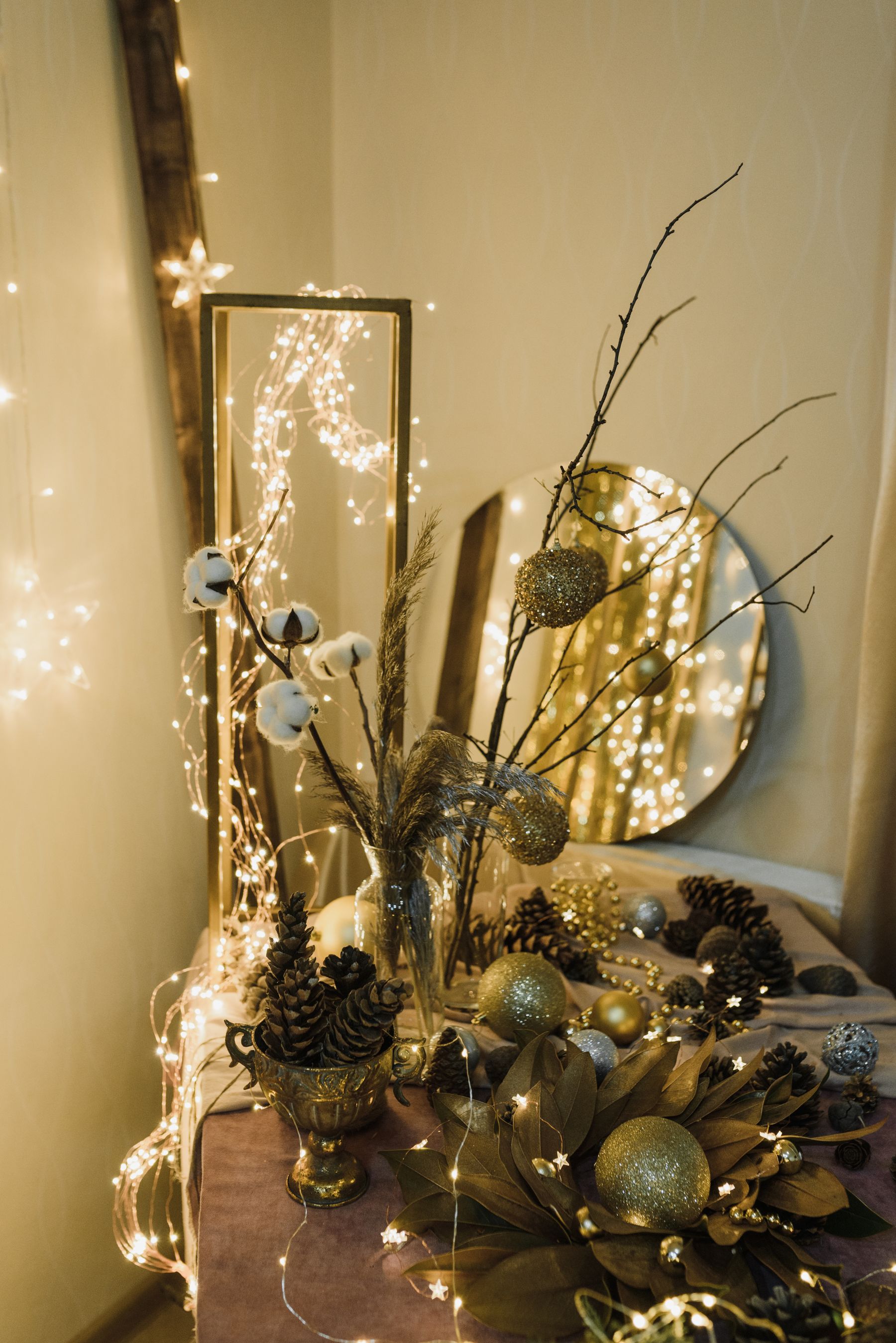
Do not automatically cover the existing mirror or artwork with a wreath. If the permanent piece already has enough scale, let greenery and objects frame it loosely. A wreath can work when it adds a needed circular form or replaces a smaller everyday piece, but stacking seasonal decor over every permanent element often makes the wall feel congested. The Christmas layer should reveal that the fireplace belongs to this particular room, not make every mantel interchangeable.
Edit the Shelf From Sofa Distance
Mantels invite close-up styling because every small gap is visible while you stand beside them. Move back to the sofa or doorway before deciding the arrangement needs more. At normal viewing distance, tiny houses, figurines, bells and ornaments often merge into one busy band. Remove pieces until the main greenery line, anchor and a few secondary shapes remain readable. The quieter result usually photographs better too because the architecture creates natural negative space.