Name the Handoff Before Styling the Surface
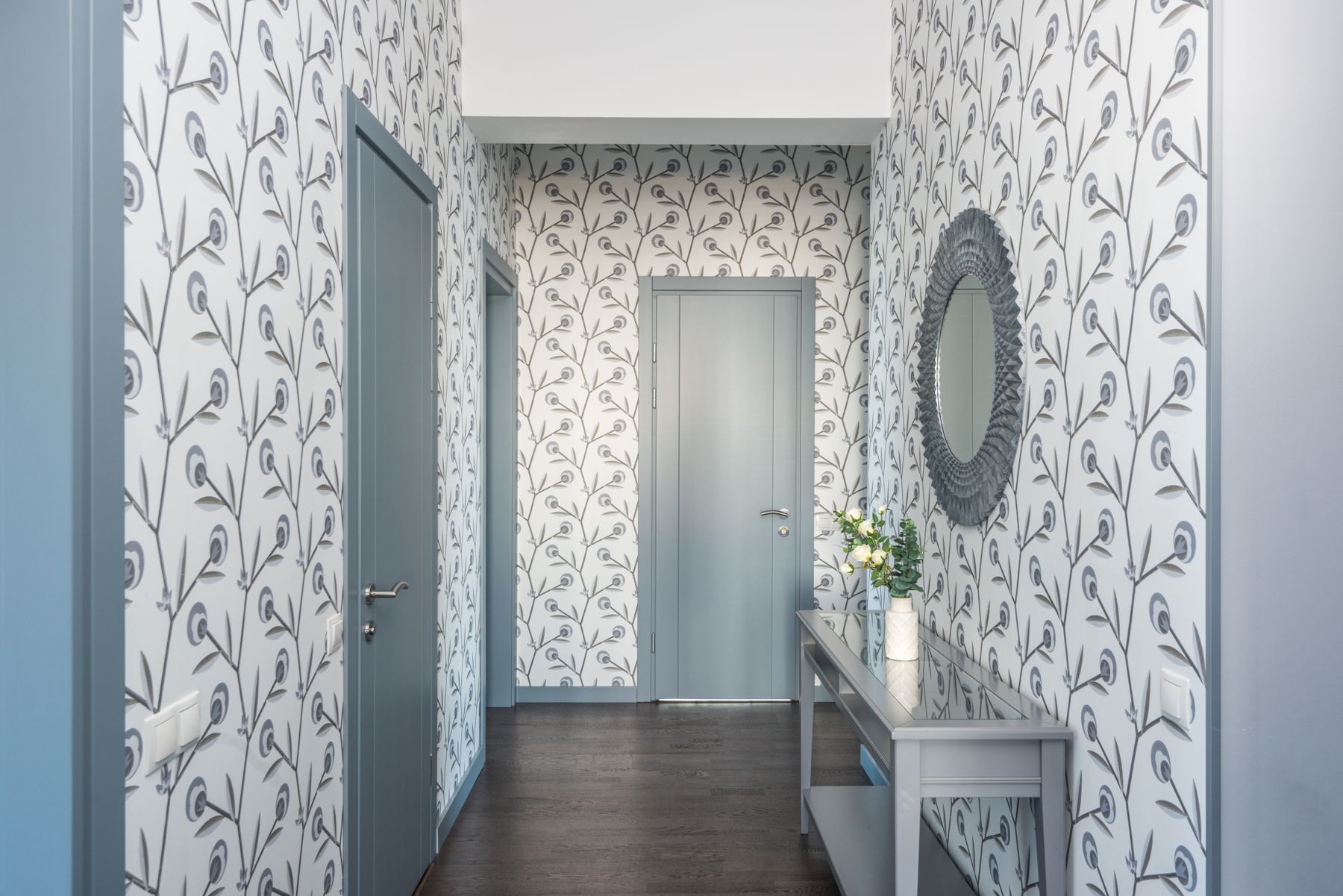
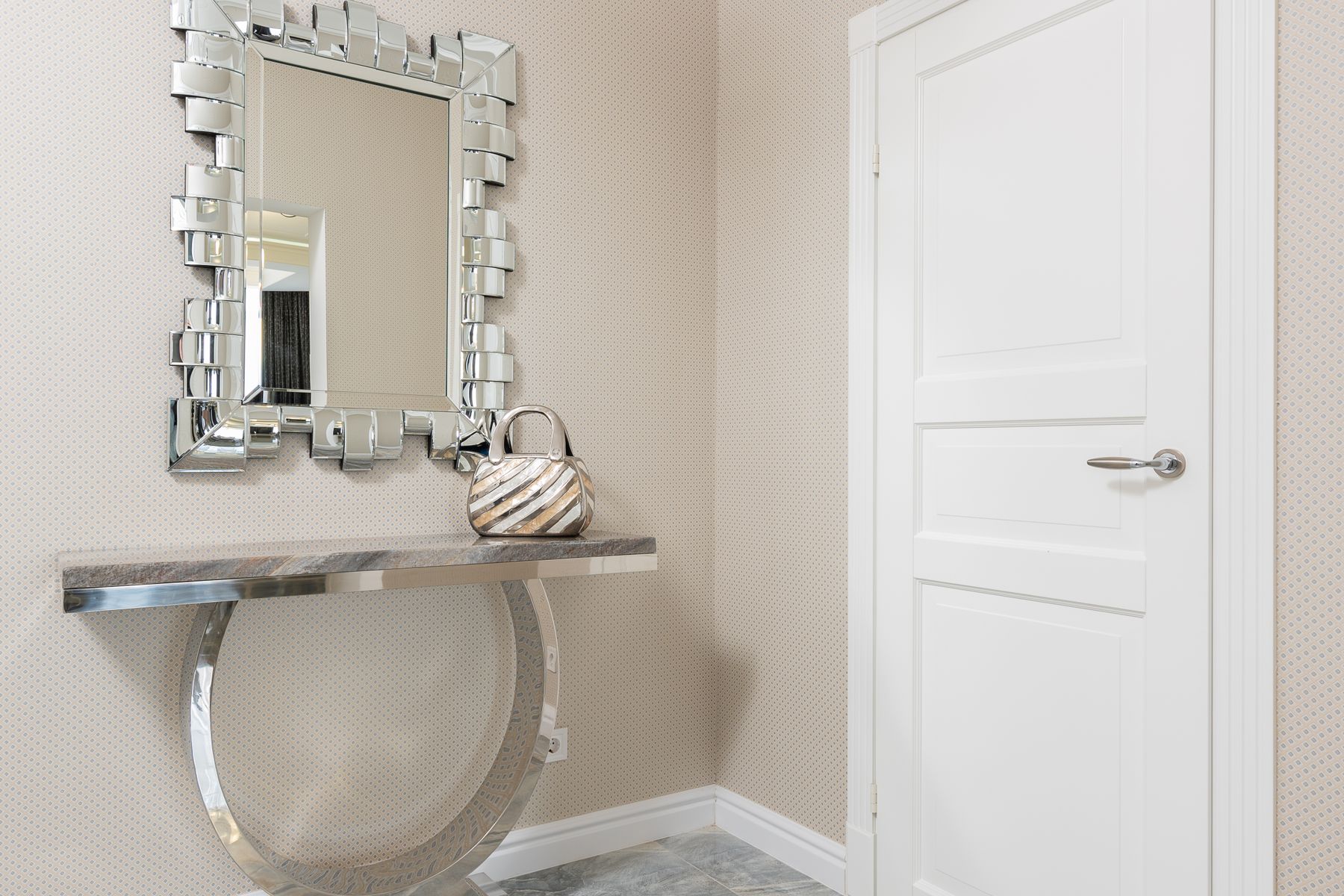
Observe what crosses this point during one ordinary day. At an entrance that may be keys, post, a bag and items waiting to leave; behind a sofa it may be a drink, reading glasses, a charger or a lamp switch. Decide which of those objects the console should receive and which need another destination. A handoff surface is different from long-term storage: it holds an item while the next action happens. Give that transition a visible, bounded place rather than allowing the entire top to become a waiting room. If the household repeatedly leaves shoes, coats or toys here, the console is being asked to solve a storage problem beyond its capacity; continue with [living room storage ideas](/living-room/living-room-storage-ideas/) instead of disguising the overflow with baskets.
The Active Envelope Matters More Than the Furniture Outline
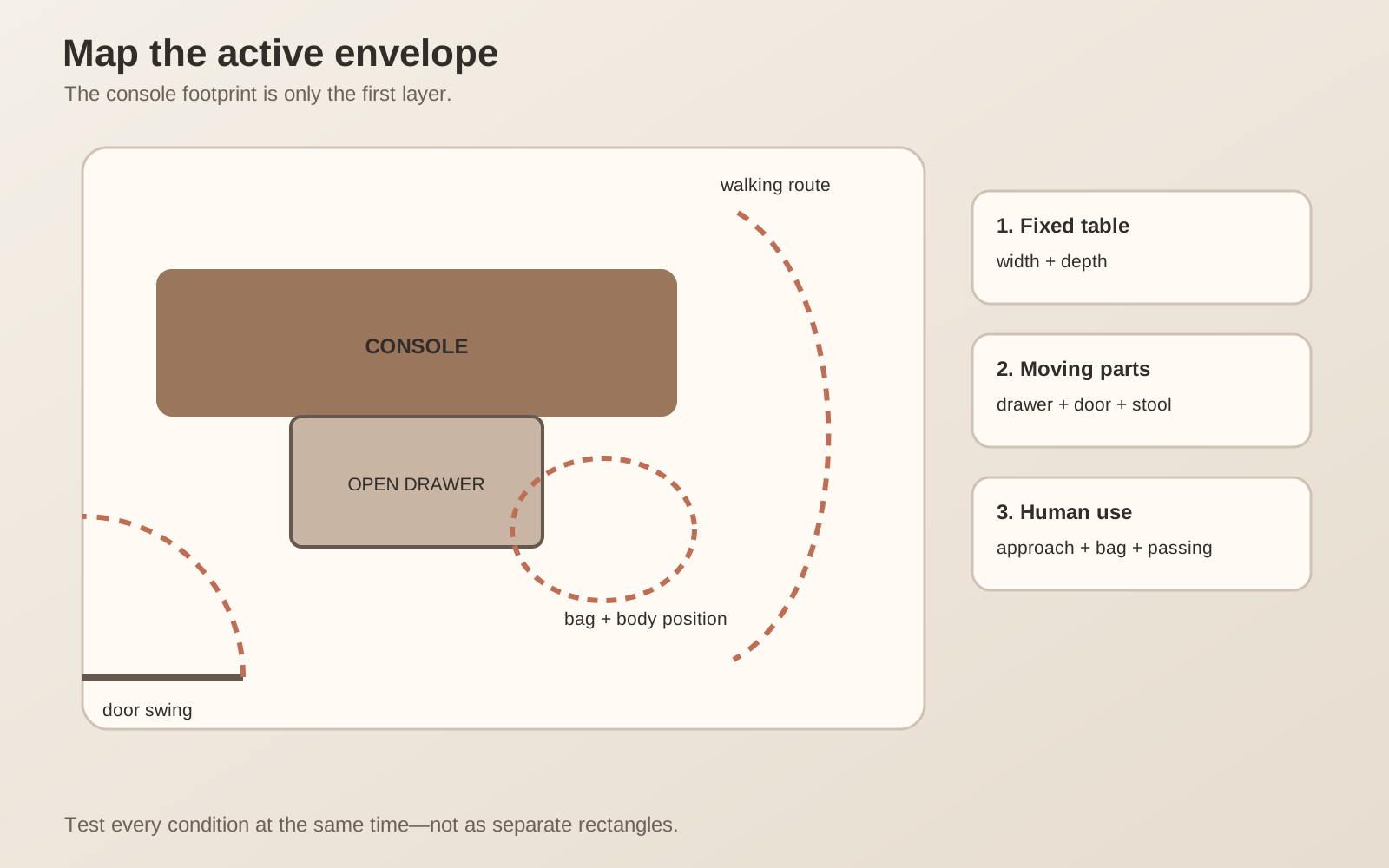
A slim table can still make a narrow passage awkward when the drawer projects, a cabinet door opens or a bag hangs from the nearest corner. Draw the fixed footprint, then add every moving condition: door swing, drawer pull, stool, lamp base, charging lead and the body position needed to use them. Test the route while another person is standing at the console. Depth is not merely a product dimension; it includes what happens in front of and above the piece. In a tight room, a shallower top with one useful drawer may outperform a deeper cabinet that cannot open comfortably. The conflict-first method in [living room layout ideas](/living-room/living-room-layout-ideas/) helps when the console competes with a main route.
At the Entry, Build a Landing Zone With a Limit
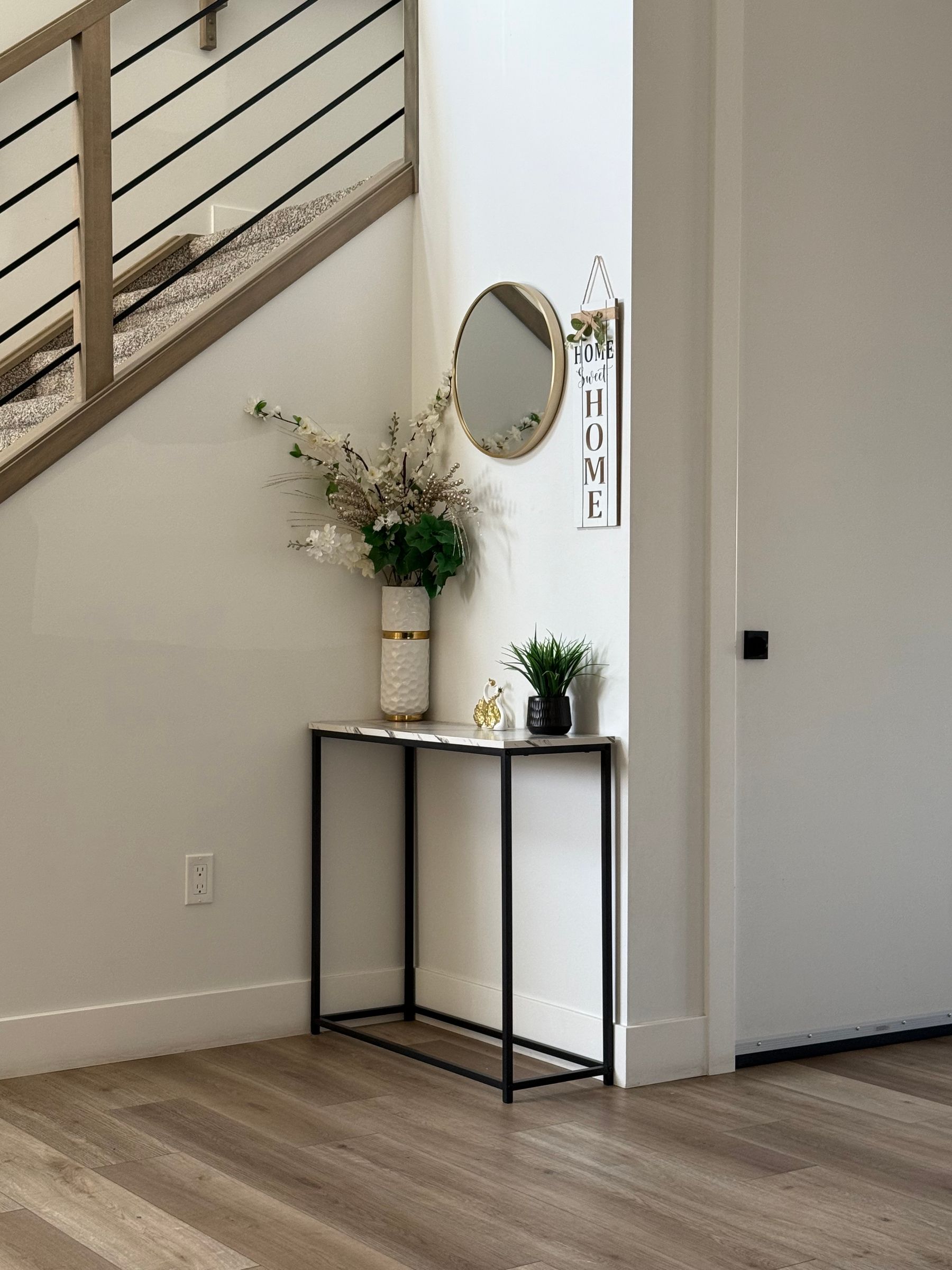
Choose one tray, shallow bowl or defined patch for the few objects that need same-day access. Its boundary is also a capacity rule: when the tray is full, something must move to its permanent home. Keep the remainder of the top available for placing a parcel, sorting post or setting down a bag while the door closes. Decorative objects should not force the handoff to the floor or a nearby chair. If the console includes drawers, assign categories rather than treating them as invisible mixed storage. A single drawer for keys, dog leads and outgoing items can work; three drawers filled with unrelated backups will make the surface harder to reset, not easier.
Tray, Drawer or Basket? Follow the Next Action
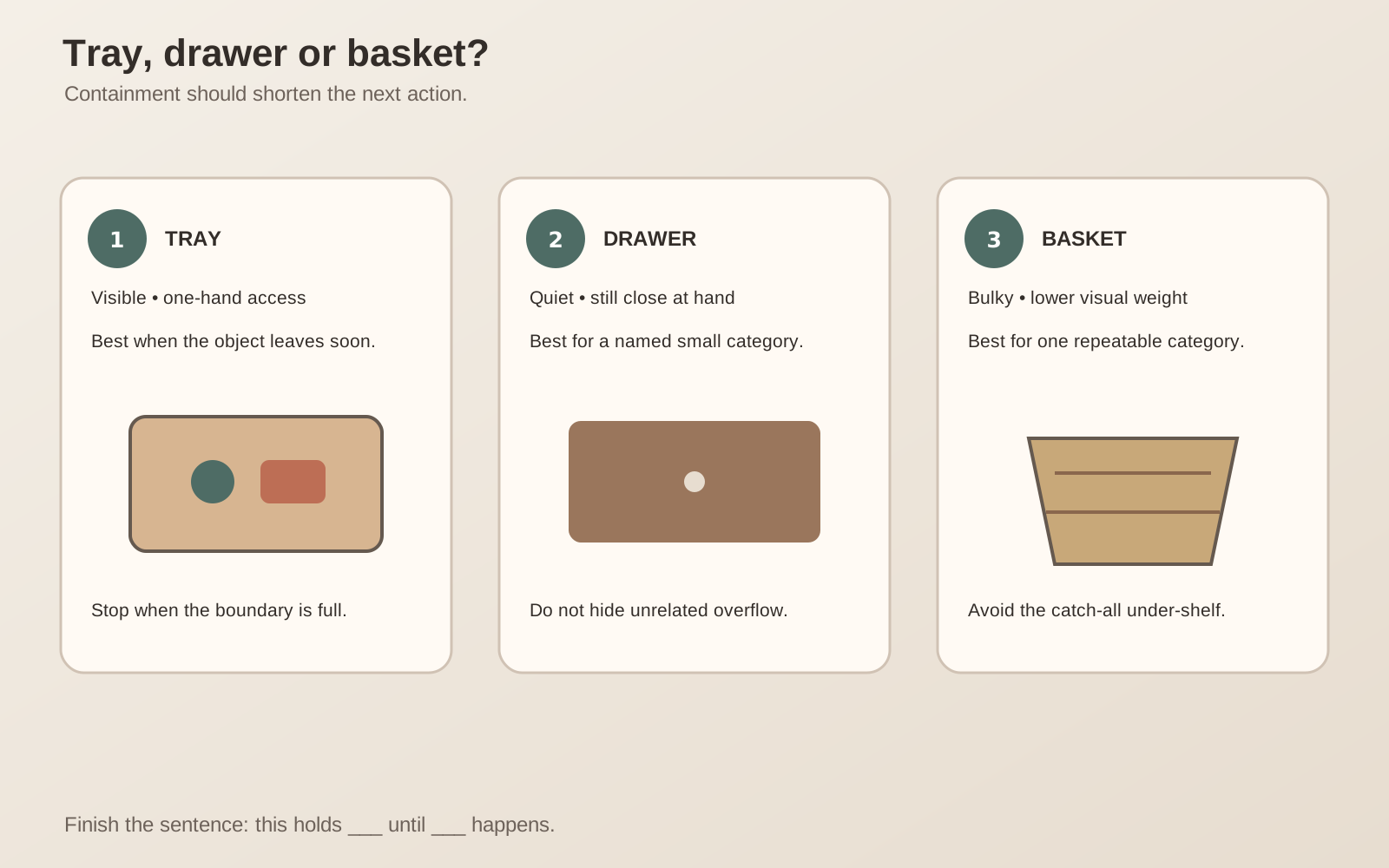
A tray suits objects that are placed and retrieved in one quick movement. A drawer is stronger for small categories that need visual quiet but remain close at hand. A lower basket earns its footprint when it holds one bulky, repeatable category such as throws or equipment used near the door; it should not become a catch-all below a decorative top. Start with the next action. If keys must leave with the next person, keep them visible. If post needs sorting, provide a short queue and a routine, not a deep box. If a charger serves the console lamp or a device, route it so the drawer and door remain usable. Containment is successful when it shortens the reset.
Mirror or Art? Judge the View Before the Shape
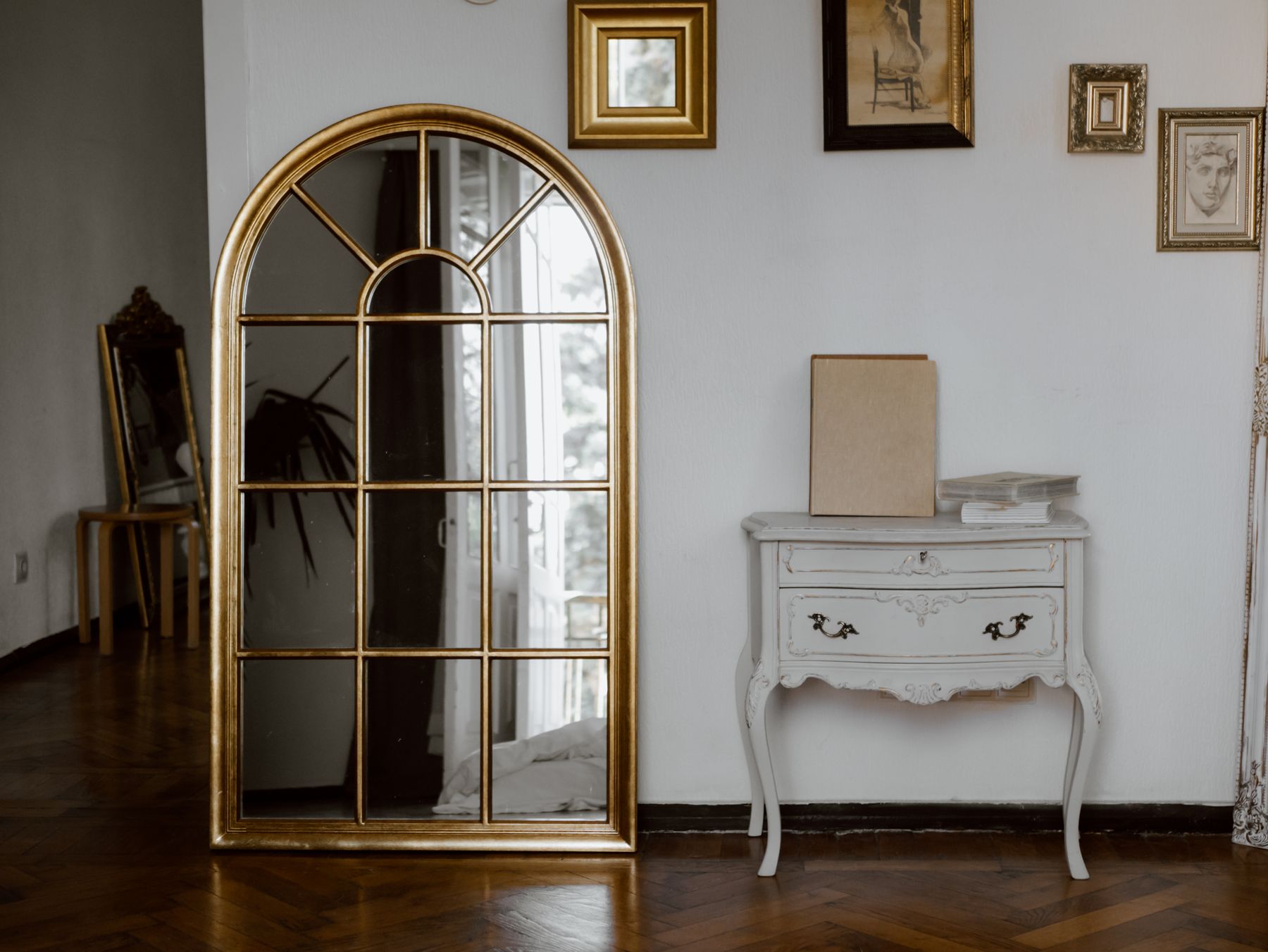
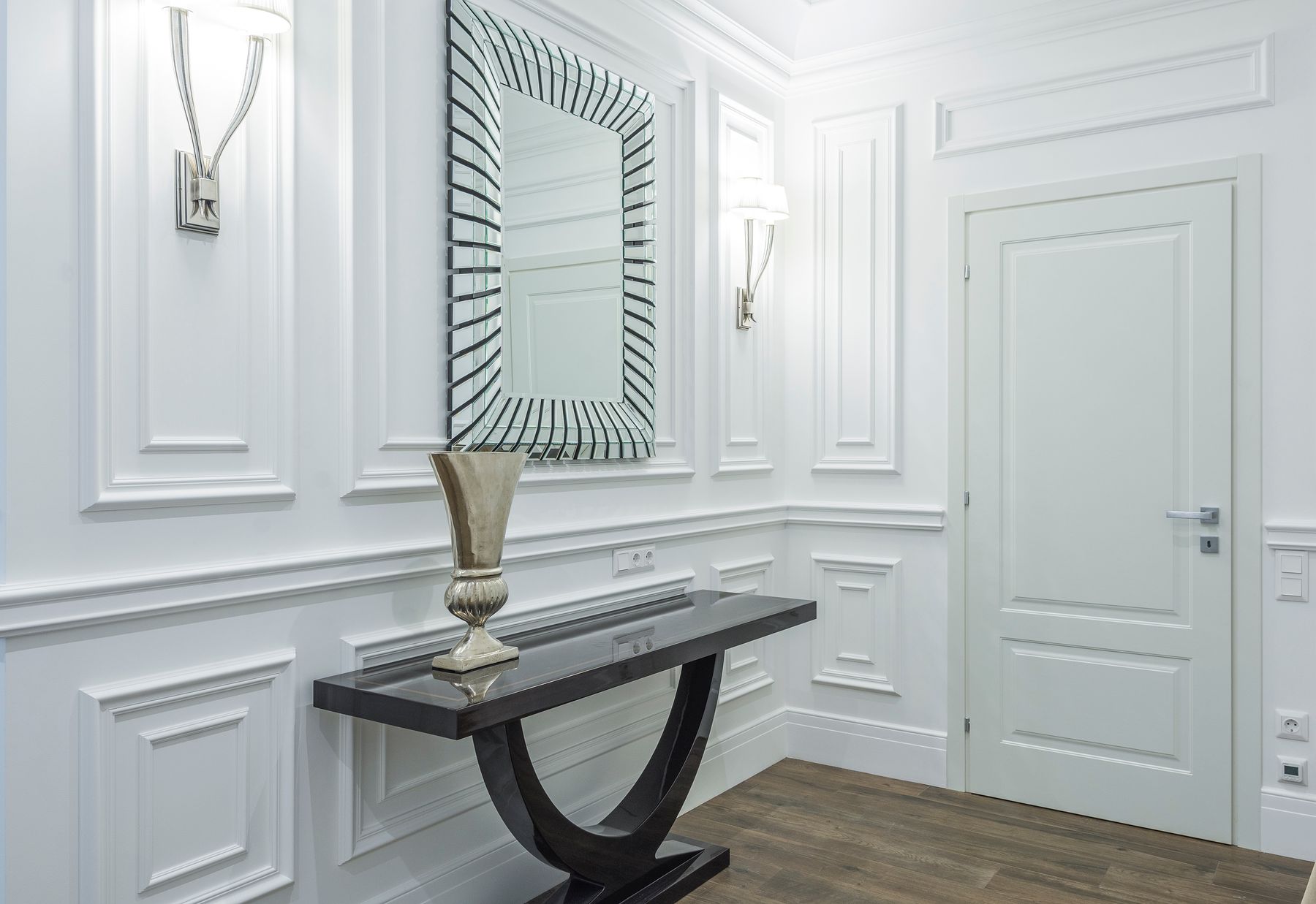
A mirror is not automatically the right vertical anchor. Stand at the entrance, regular approach and nearby seat to see what it reflects: daylight, an adjacent room and a composed wall may be useful; a crowded coat rack, bright screen or private doorway may not be. Check whether people can actually use the mirror without stepping into circulation. Art can be stronger when the wall needs identity rather than reflection, while a small arrangement of works can support a wider console only if it reads as one boundary. The [gallery wall guide](/living-room/gallery-wall-ideas/) explains how to build that outer shape. Let the wall element relate to the console width without forcing exact symmetry or filling every available centimeter.
One Vertical Anchor, One Bridge, One Clear Landing Strip
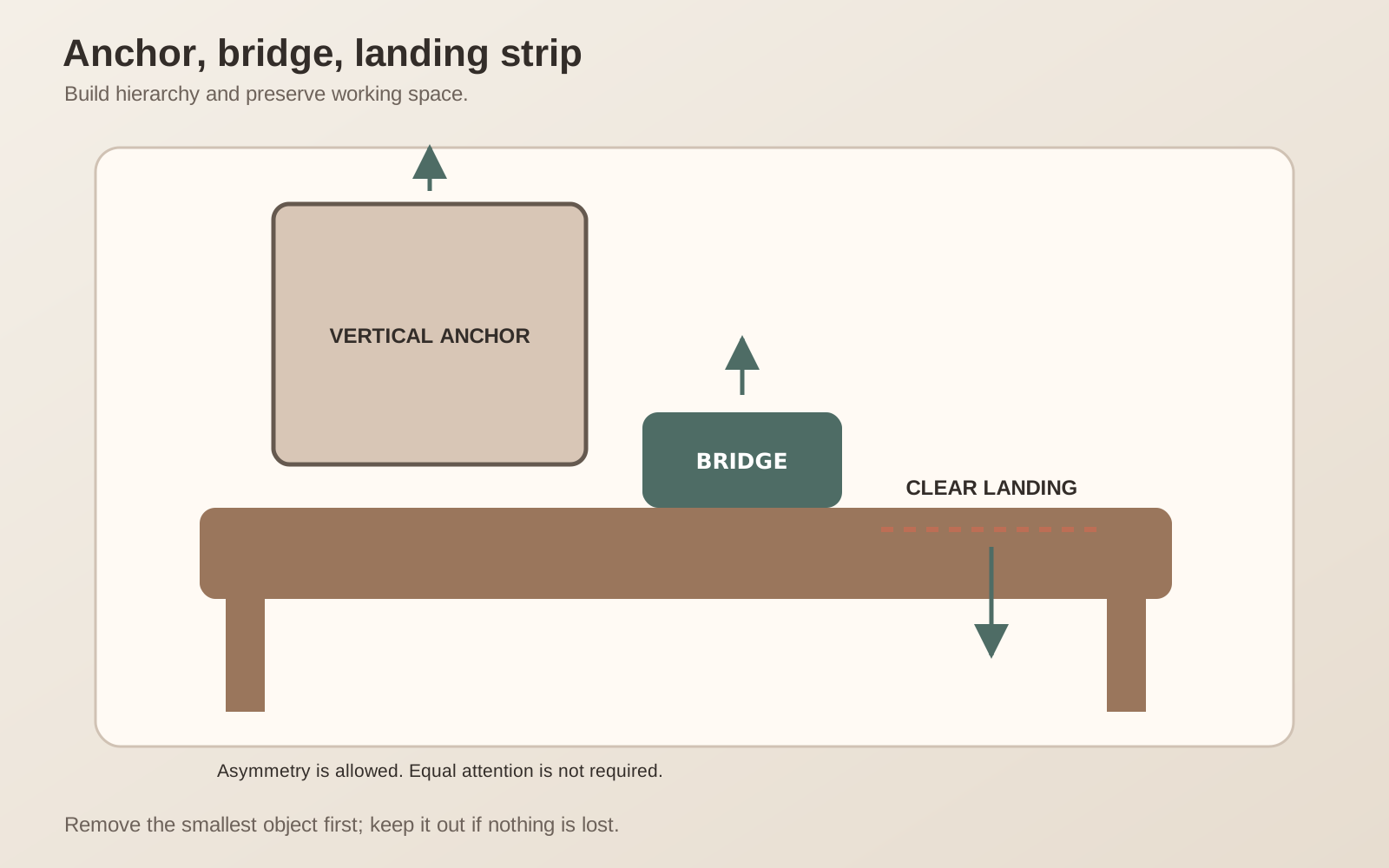
Think in roles rather than object counts. The vertical anchor may be art, a mirror or a lamp with real presence. A lower bridge—books, a vessel or one sculptural object—connects that height to the tabletop. The remaining strip stays intentionally clear for the console's working job. This structure can be asymmetrical: visual weight can balance across different heights and materials without matching pairs. Avoid building several unrelated miniature vignettes. When every object claims equal attention, the wall and furniture separate into visual fragments. Photograph the complete elevation, including nearby door trim, sofa back or stair line, because the console never exists as a cropped square.
A Lamp Must Light a Task and Reach Power Cleanly
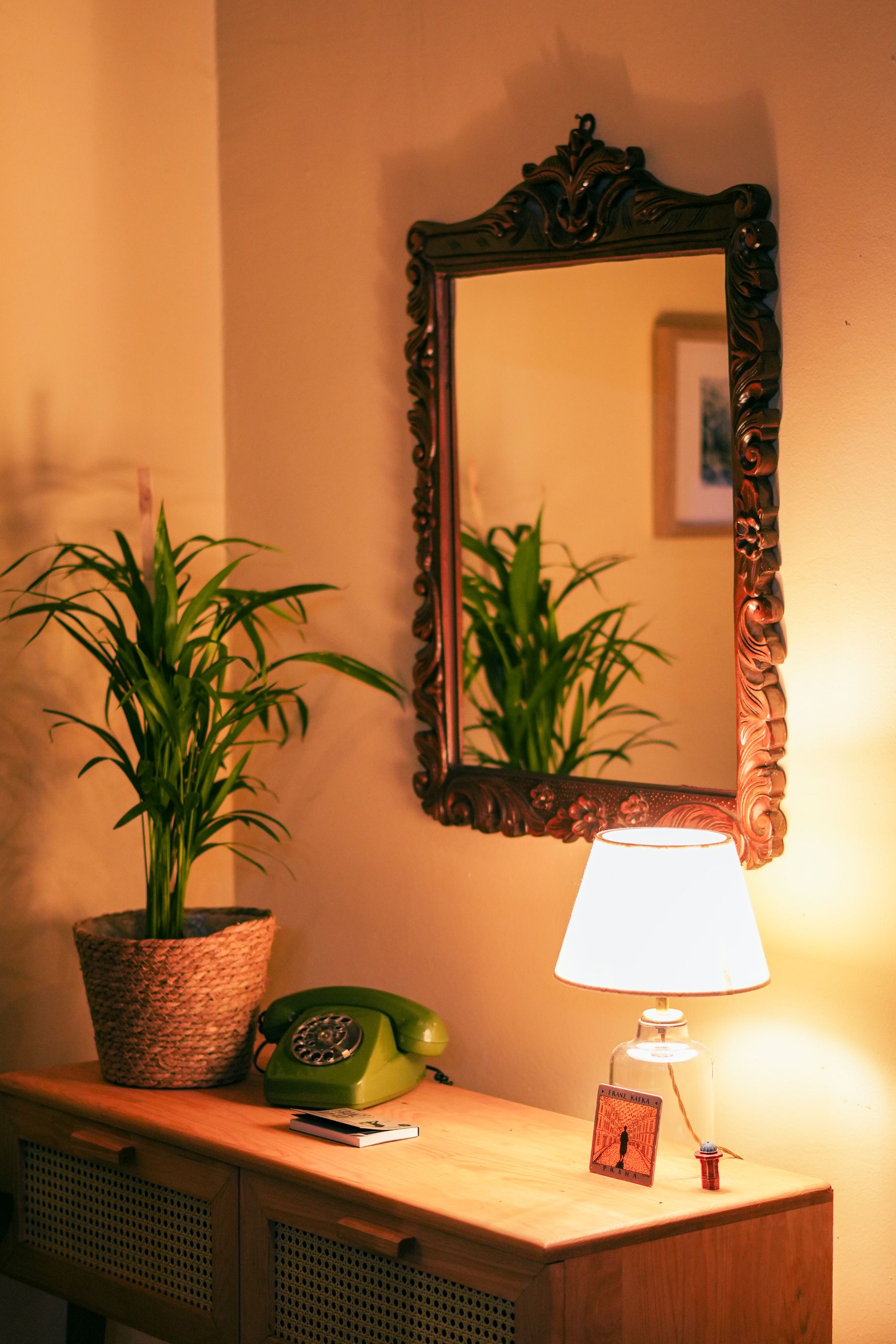
Decide whether the lamp helps someone enter, find keys, read post, navigate a dark passage or support the adjacent seating area. Its shade should shield the source from common sightlines, and the switch should be reachable without moving objects. Check the cord from lamp to outlet before styling; a cable that crosses a doorway or hangs visibly through the landing zone is evidence that the position is wrong. If the console sits behind a sofa, make sure the lamp does not glare into seated eyes or create a top-heavy silhouette. The broader [living room lighting guide](/living-room/living-room-lighting-ideas/) can help assign the source a real scene rather than treating it as a decorative pair.
Closed Storage Changes the Styling Equation
A console with drawers or doors can carry more operational responsibility than a leggy table, so the top does not need to advertise every category. Use internal storage for small necessary objects and let the exterior show fewer, stronger forms. Open lower shelves behave differently: baskets, books and objects remain part of the elevation and collect visual weight close to the floor. Check that doors and drawers can open with the route occupied and that hardware is easy to grasp. Do not choose closed storage merely to hide an unlimited quantity of clutter; the cabinet's useful capacity should match the named handoff categories.
Behind the Sofa, Work From Seated Reach and Back Height
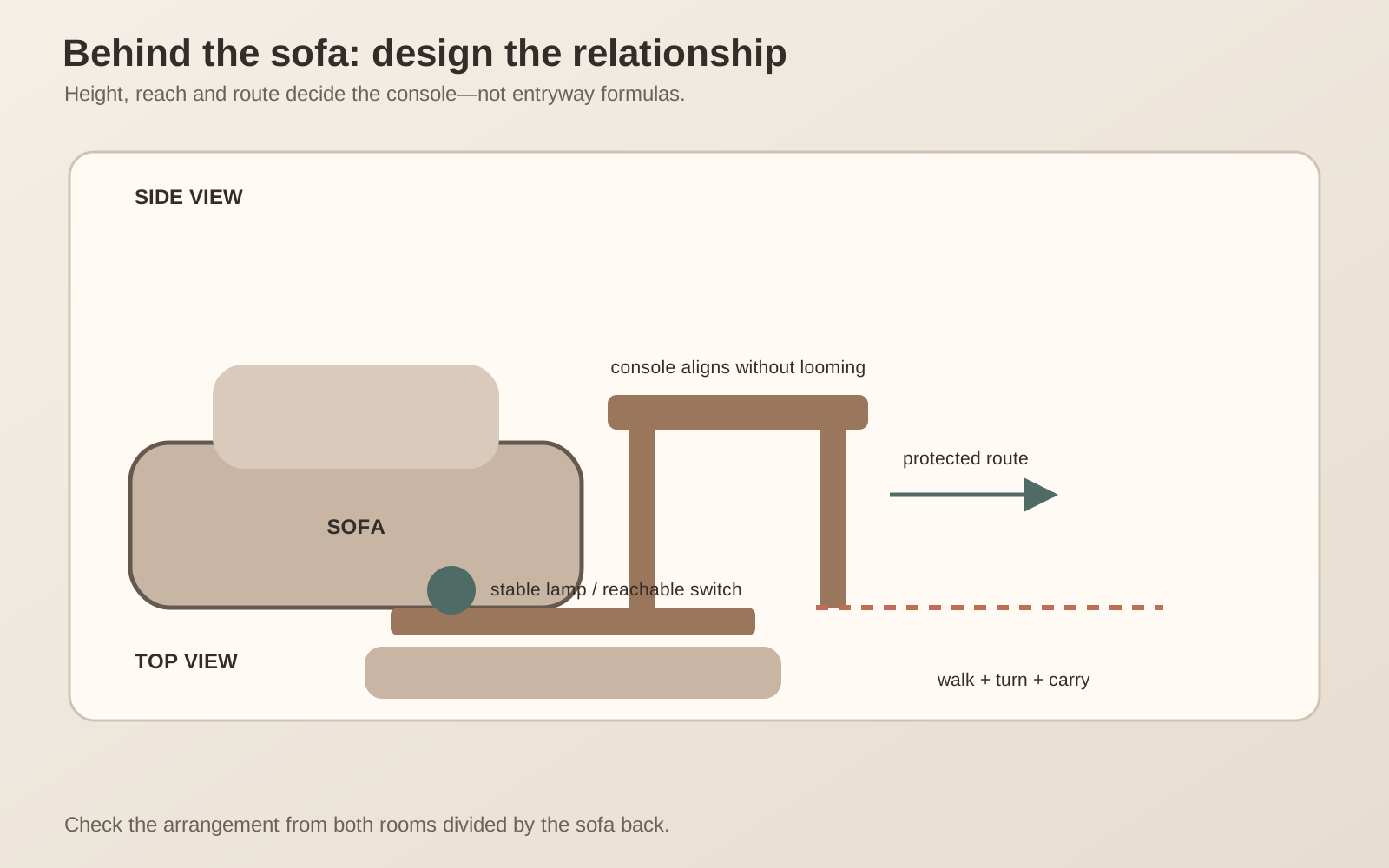
Begin with the sofa back, not the wall. The console should feel connected in length and height without projecting into the route or placing fragile objects where shoulders, cushions or pets can strike them. Decide whether the surface serves seated reach, lighting, open-plan zoning or simply the rear view of a floating sofa. Those jobs lead to different depths and object choices. A narrow table may carry lamps and a few stable items; drinks need secure, reachable surfaces and should not sit above upholstery where spills are difficult to manage. Check the composition from the room behind the sofa as well as from the seating side.
The Seven-Day Reset Is the Final Styling Test
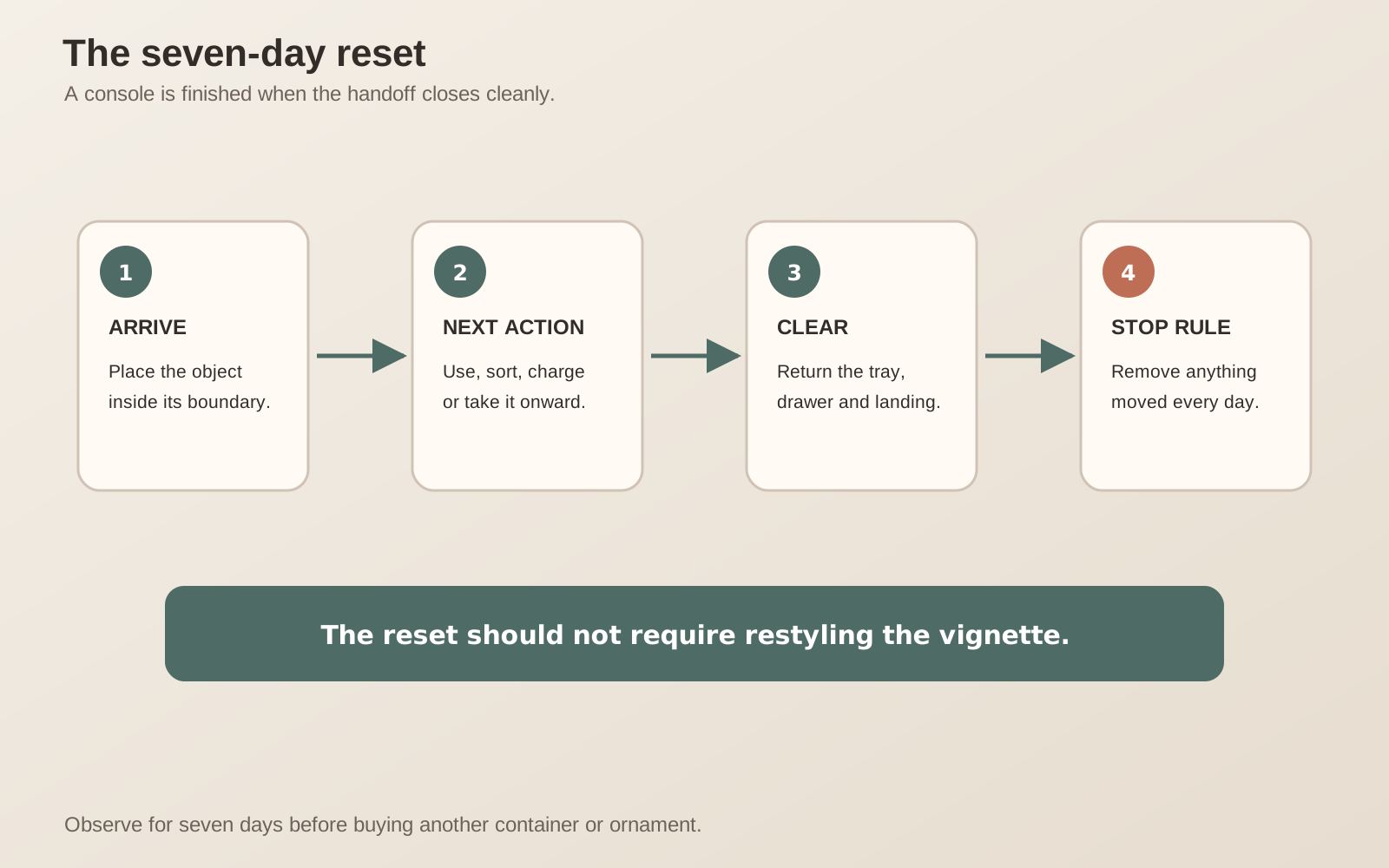
Use the console normally for a week without protecting the photograph. Note which objects repeatedly displace the decor, which container overfills and which surface remains untouched. The evidence may justify a larger tray, a hook elsewhere, one fewer ornament or a different piece of furniture. Resetting should take one short sequence: return keys, sort post, move the bag and clear the landing strip. If styling must be dismantled to complete that sequence, the composition is too elaborate. Stop when the console supports its transition, the wall reads clearly and no object exists solely because an empty patch felt unfinished. The same stop-rule discipline used in [bookshelf decor ideas](/living-room/bookshelf-decor-ideas/) applies here, but the test is handoff rather than retrieval.