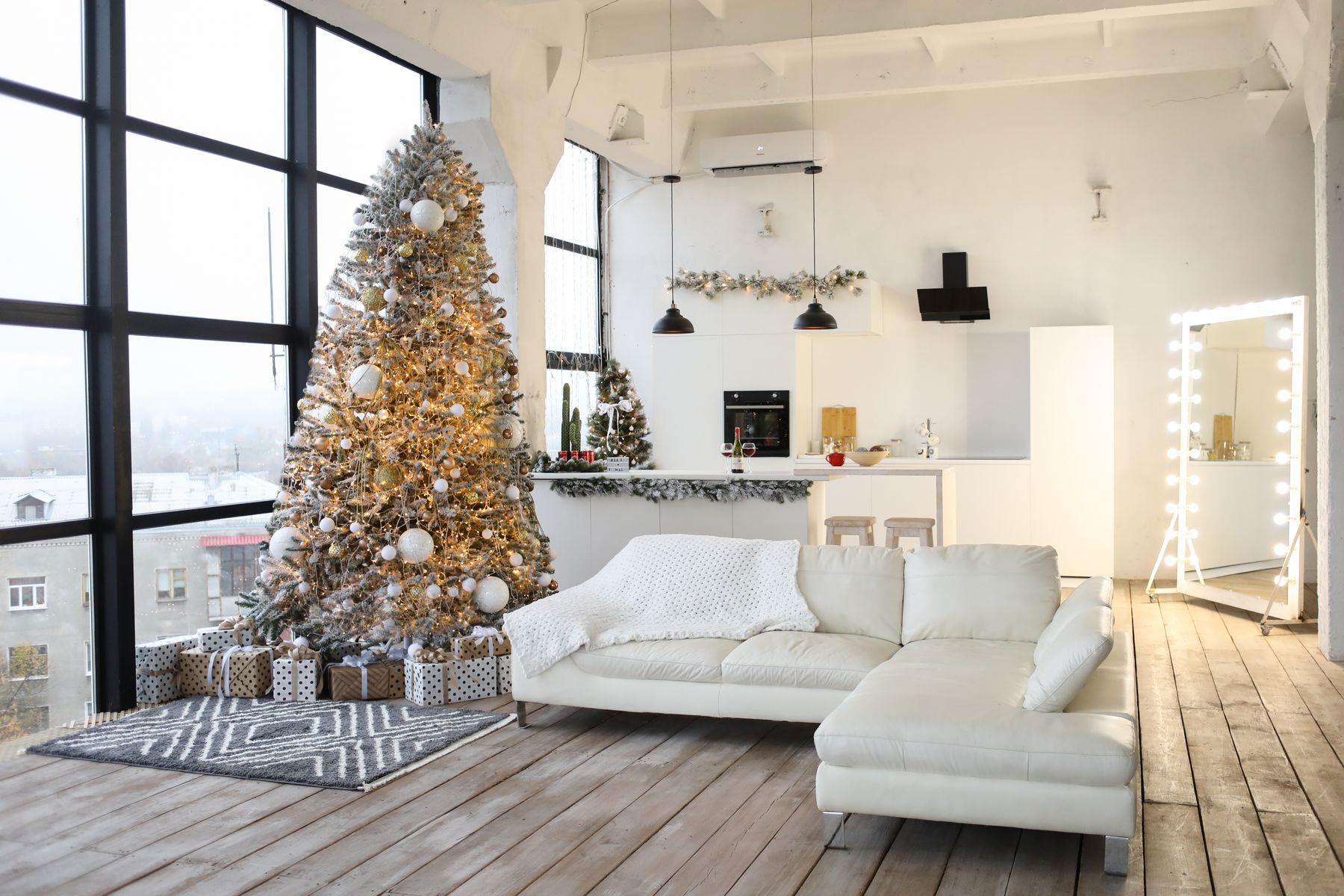

Christmas Starts at the Working Threshold
Farmhouse character begins before the living room. The entrance has to absorb coats, damp shoes, parcels and extra guests, so decorate around that work rather than over it. Give one wreath, branch arrangement or small tree the role of welcome; keep locks, handles, hooks, benches and the landing zone usable. A basket earns its place if it collects scarves or slippers, not if it merely holds decorative logs. The arrival tests in [Christmas entryway decor ideas](/living-room/christmas-entryway-decor-ideas/) help protect circulation while this article carries the practical logic through the rest of the home.

The Kitchen Still Has to Produce Christmas
December usually increases the kitchen's workload. Protect the main preparation run, the area beside the sink, the appliance landing points and the route between storage and table. Put seasonal character on a window ledge, backsplash edge, wall hook or tray that can move in one lift. Cutting boards, bowls and linens can remain visible when they are genuinely used. This extends the worktable logic of [Farmhouse Kitchen Ideas](/kitchen/farmhouse-kitchen-ideas/) while [Christmas kitchen decor ideas](/kitchen/christmas-kitchen-decor-ideas/) covers the full map of protected zones.
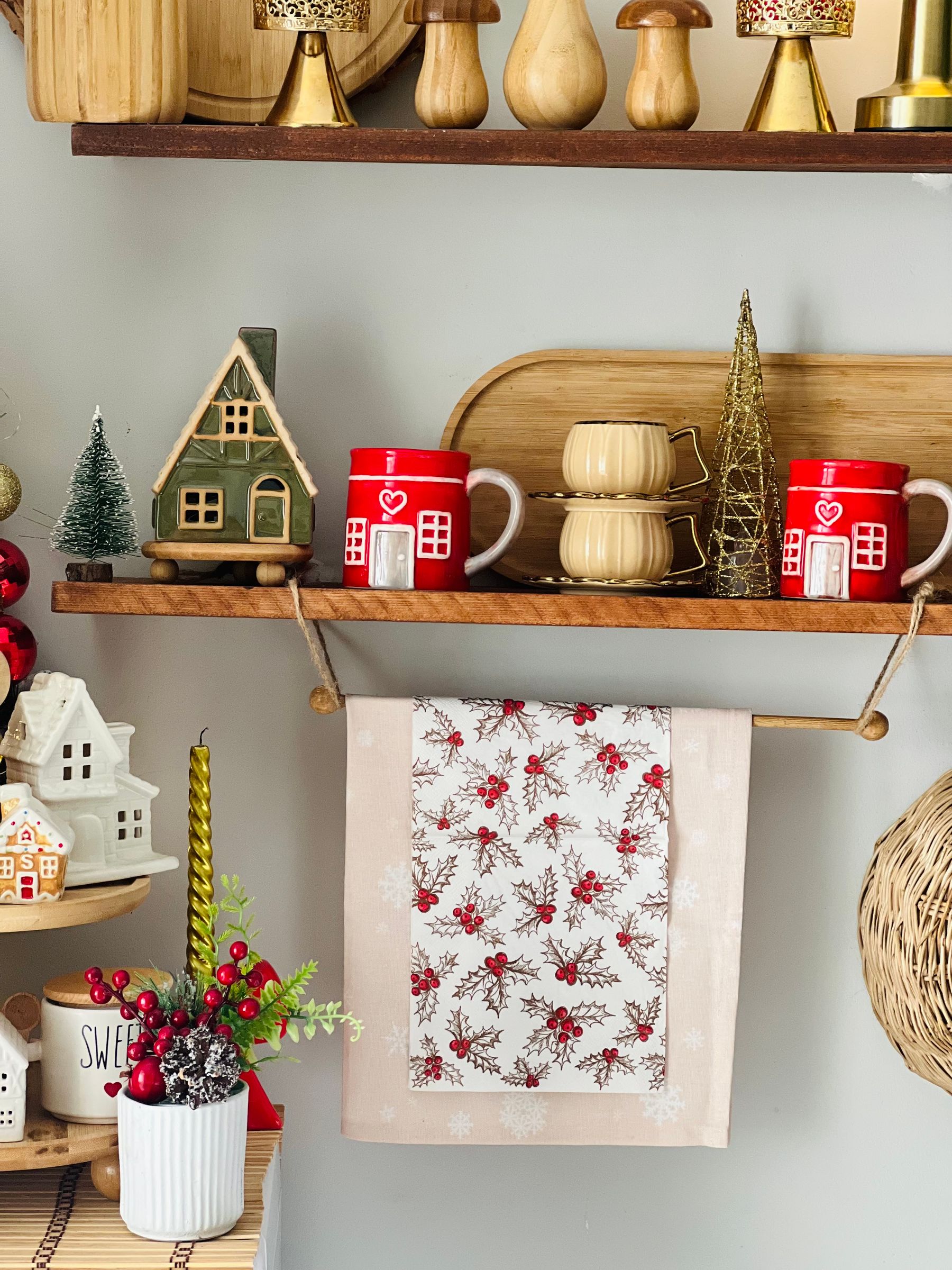
Open Shelves: Ware First, Season Second
A farmhouse shelf should shorten a routine: cups near drinks, bowls near serving, plates near the table. Keep those objects in their normal zones, then add Christmas in the gaps—a short evergreen line, one red cup family, a paper ornament or a small group of cones. Do not remove useful ware to build a display that must be dismantled each morning. Leave enough front-edge clearance to lift a mug or plate one-handed, and avoid loose glitter or shedding material above food and work surfaces.

Painted Furniture and Timber Need Different Jobs
Farmhouse is often lighter and more domestic than rustic because painted furniture can sit beside one meaningful timber family. Let a painted cabinet, wall or dresser provide breathing space, then give wood a job as table, bench, shelf or tray. At Christmas, repeat the contrast rather than adding more brown objects: evergreen against paint, a linen runner across timber, clear glass beside a wooden bowl. [Rustic Christmas decor](/living-room/rustic-christmas-decor-ideas/) makes material weight the main story; here the point is the working exchange between lighter painted surfaces and useful wood.

A Farmhouse Table Changes Through the Day
The same table may hold breakfast, baking, wrapping, homework and a holiday meal. Build the centerpiece as one or two low modules that can move to a sideboard rather than treating the empty tabletop as a permanent stage. Leave the central handoff route open and test the table after plates, bottles and the largest serving dish arrive. A runner can define the seasonal lane without claiming the entire surface. The meal-first planning in [Christmas table decor ideas](/dining-room/christmas-table-decor-ideas/) is the deeper guide when hosting is the main project.

Utility Textiles, Not a Houseful of Buffalo Check
Checks, ticking stripes, grain-sack lines and plain linen belong most naturally where fabric already works: hand towels, seat cushions, a table runner or a washable throw. Choose one pattern family and let solids do the rest. Repeating the same buffalo check across curtains, cushions, stockings, ribbon and bedding turns a useful textile language into branding. Scale matters too: a large check competes with cabinet frames and wood grain, while a narrow stripe can quietly connect painted furniture and timber.

Containers Must Store, Carry or Serve
Crocks, jars, baskets and metal trays are credible farmhouse objects because they can organize utensils, dry goods, linens, gifts or kindling. Assign the job first, then decide whether the object also deserves to be visible. An empty enamel pitcher, decorative crate and unused wire basket grouped together create a rural still life but add no domestic value. Seasonalize existing containers with useful contents, a tied branch or one color repetition instead of buying a parallel set labeled for Christmas.

The Tree Can Be Informal Without Becoming Themed
A farmhouse tree can mix paper, simple glass, wood, metal, dried citrus and inherited ornaments, but it should not become a display of tiny trucks, barns and farm animals. Repeat one material at several scales and leave enough branch structure visible to keep the result relaxed. Use ribbon only if it helps connect the room's working textile, and finish the base with a basket or plain fabric that fits the stand rather than a pile of props. For ornament spacing and weight hierarchy, continue to [Christmas tree decorating ideas](/living-room/christmas-tree-decorating-ideas/).

Outdoor Farmhouse Is a Weather Problem
A porch, gate or outbuilding can carry the strongest rural cue, but exposure changes the decision. Use one readable wreath, lantern group or evergreen arrangement sized for the approach, then secure it for local wind and precipitation. Keep steps, rails, locks, house numbers and exterior lighting clear. Check electrical products for their intended location and follow manufacturer instructions rather than assuming a covered porch is dry. Natural material will weather; decide whether that change is acceptable before choosing it.
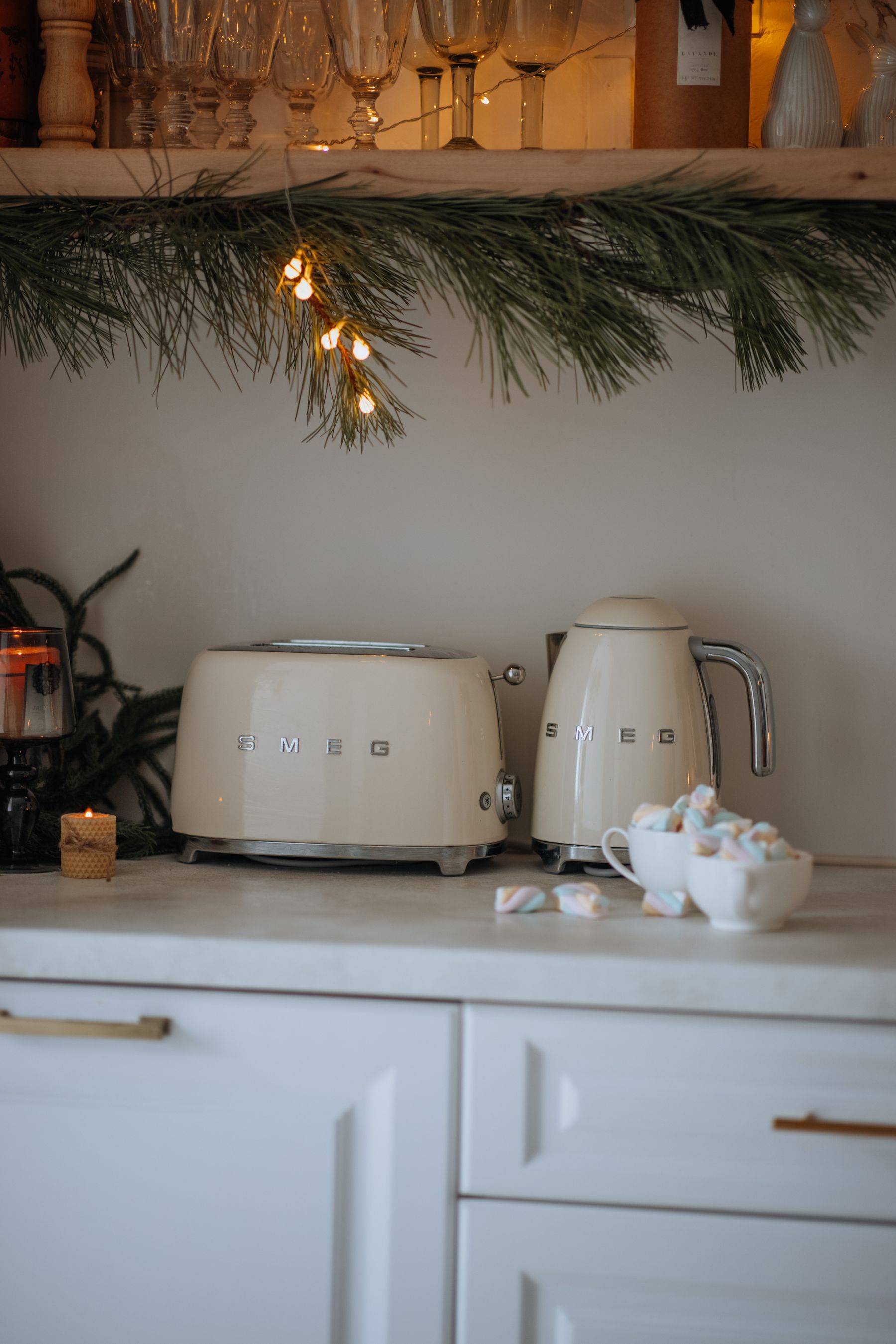
Modern Farmhouse Needs One Controlled Tension
Modern farmhouse works through a deliberate exchange between clean current elements and a smaller number of softer domestic forms. Black hardware, simple cabinetry or contemporary appliances can stay honest; balance them with a worn table, woven shade, painted dresser or handmade ceramic rather than disguising technology. At Christmas, use one traditional counterpoint—perhaps evergreen, red ribbon or collected ornaments—instead of adding faux-vintage surfaces. Too many black outlines and matching signs turn the home into a retail template.
What Remains After the Seasonal Reset?
The strongest farmhouse layer leaves useful winter objects behind when explicit Christmas decor is packed away: a basket still holds blankets, a crock still organizes utensils and the table still works. Separate items into everyday winter use, clean and store, and safely discard or compost where appropriate. Fully dry paper, textile and organic pieces before packing, and discard anything with mold, pests or structural failure. This final test exposes decorative containers and props that never earned their storage volume.