Observe the Animal's Route Before Moving Furniture
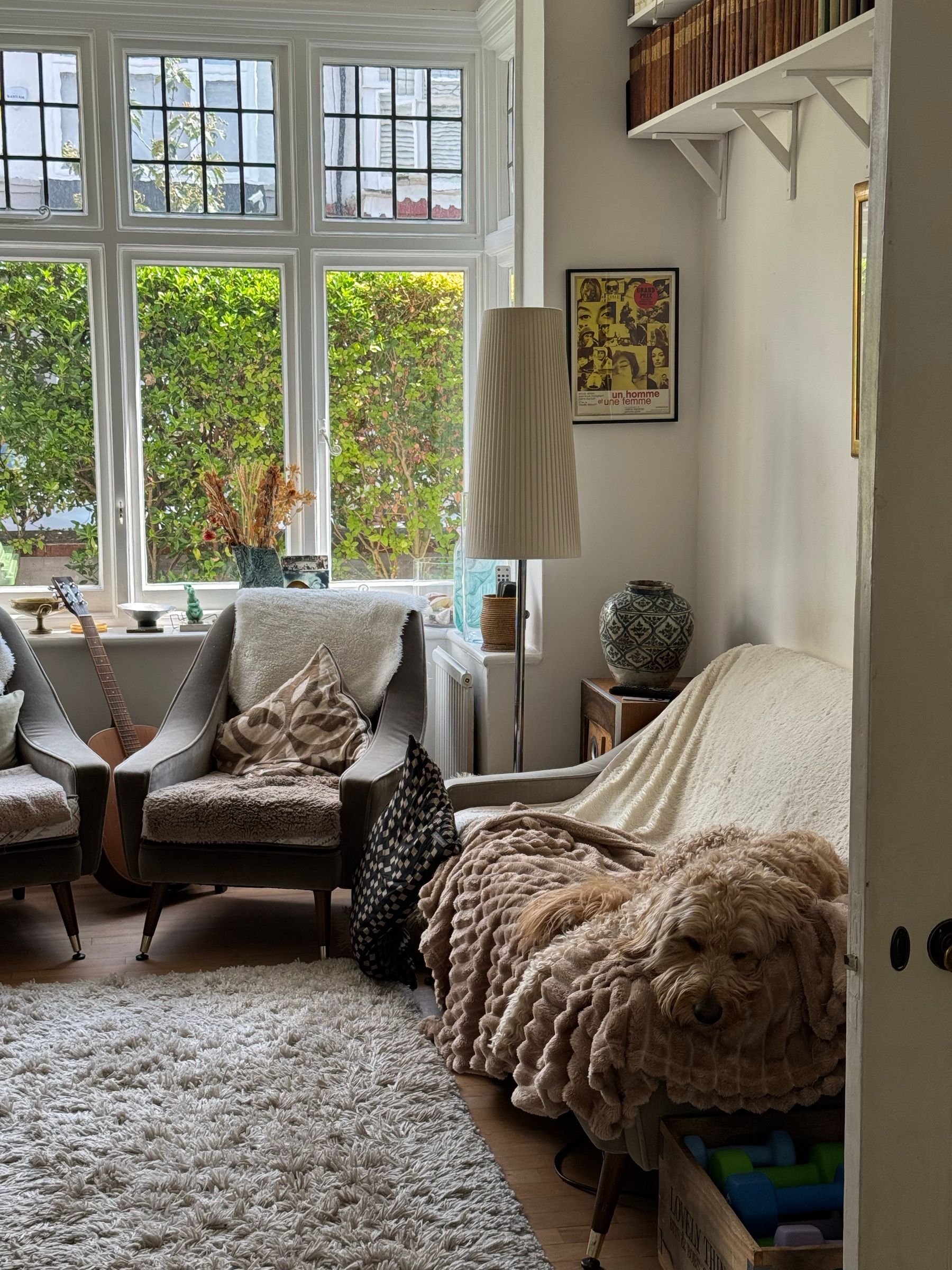
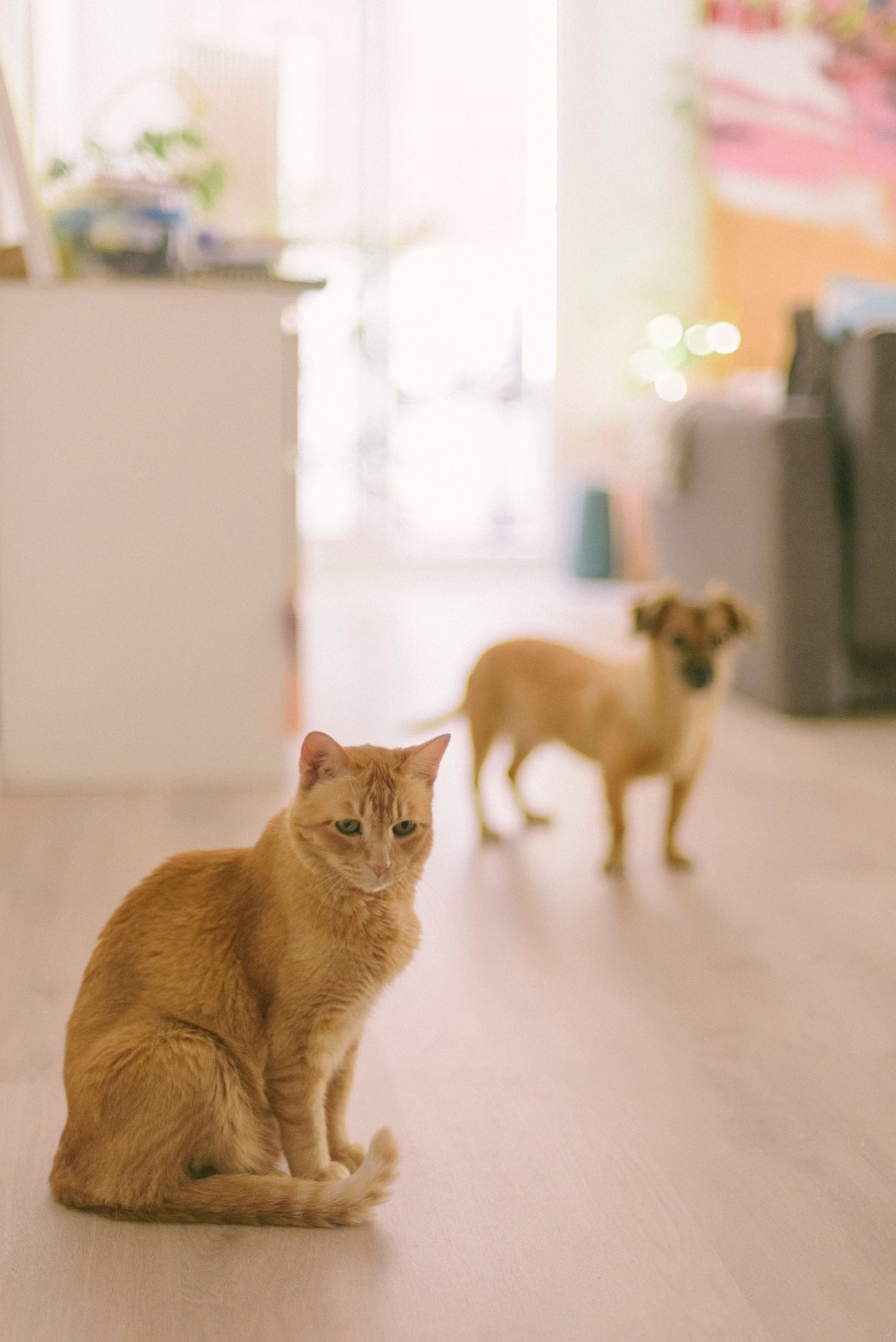
Before buying a new sofa or scratching post, notice the paths the animal repeats. A dog might cross the living room directly to the garden door; a cat might move from a low chair to the window and then to a bookshelf. Those routes have more influence on successful decorating than a generic pet-bed photo. Keep unstable side tables, breakable objects and loose cables away from obvious paths, and consider which furnishings are most likely to be brushed, jumped onto or rubbed against. This is not an invitation to turn the floor plan over to the pet. Shared circulation matters. Protect human movement between seats, exits and storage while giving the animal a sensible way around those routes. The broader principles in [Living Room Layout Ideas](/living-room/living-room-layout-ideas/) still apply, but here the question is how the animal moves when no one is staging the room for a photograph. *Observe before editing:* Spend several ordinary days noting where the animal rests, enters and leaves. One well-placed resting spot can solve more than multiple decorative baskets.
A Sofa Cover Is Not a Fabric Specification
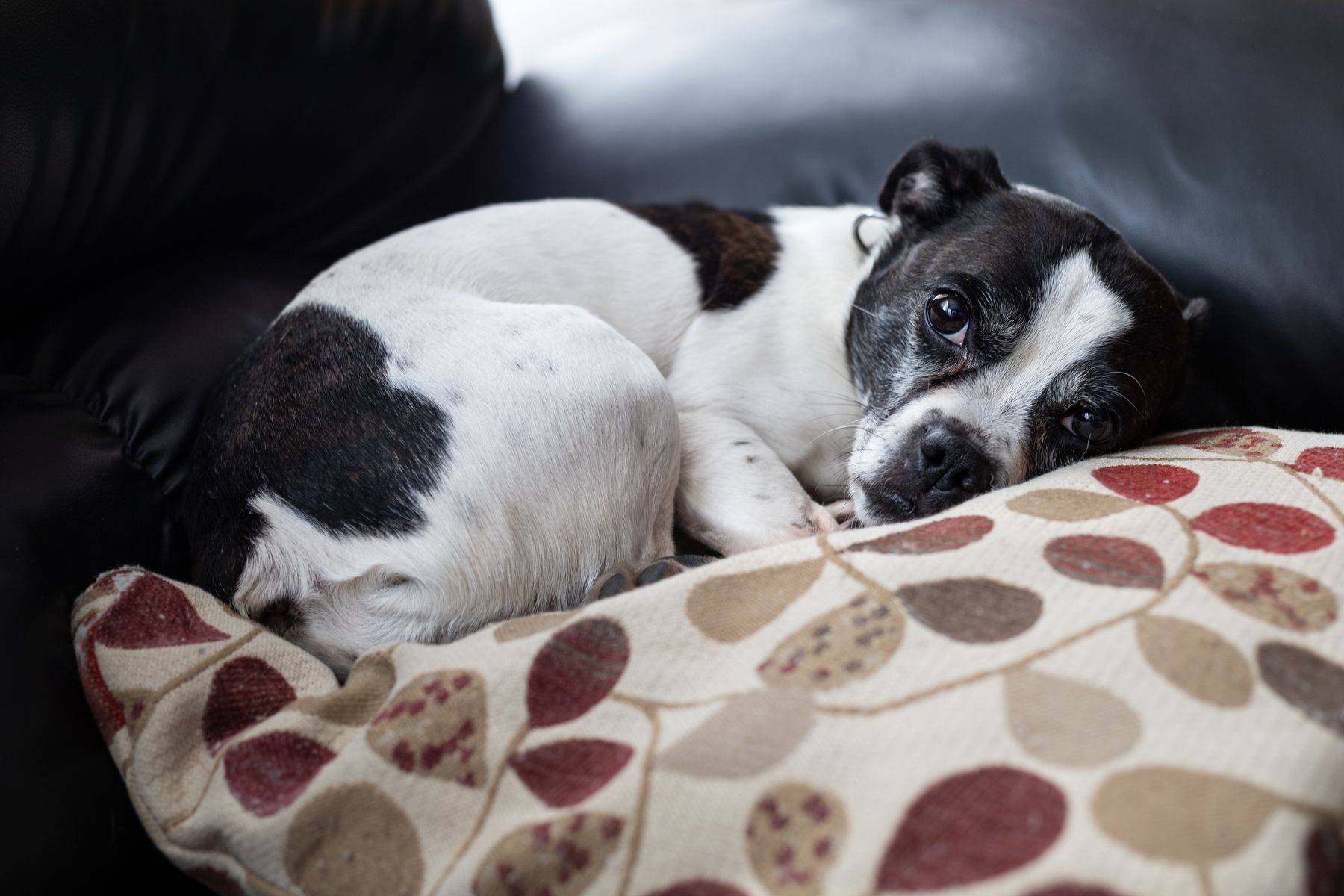
A throw over the seat may catch some hair and make laundering easier, but it does not change the durability or cleaning instructions of the fabric beneath it. Start by checking the actual upholstery: weave or surface, manufacturer care guidance, whether covers can be removed or replaced, and how the material behaves with the pet's ordinary use. Two sofas described as *performance fabric* can still have different maintenance requirements. No textile deserves a universal scratch-proof or stain-proof label without credible product-specific evidence. A pet who sheds but rarely scratches may create a different challenge from a cat who catches loose loops with claws or a dog who comes indoors wet. Swatches help you judge color and hand feel, but they cannot replace material specifications. Choose furniture for both comfort and a cleaning routine you can sustain. [Living Room Storage Ideas](/living-room/living-room-storage-ideas/) can help keep replacement covers and throws conveniently close without building a wall of pet accessories.
Fur Visibility Is a Color-and-Texture Decision
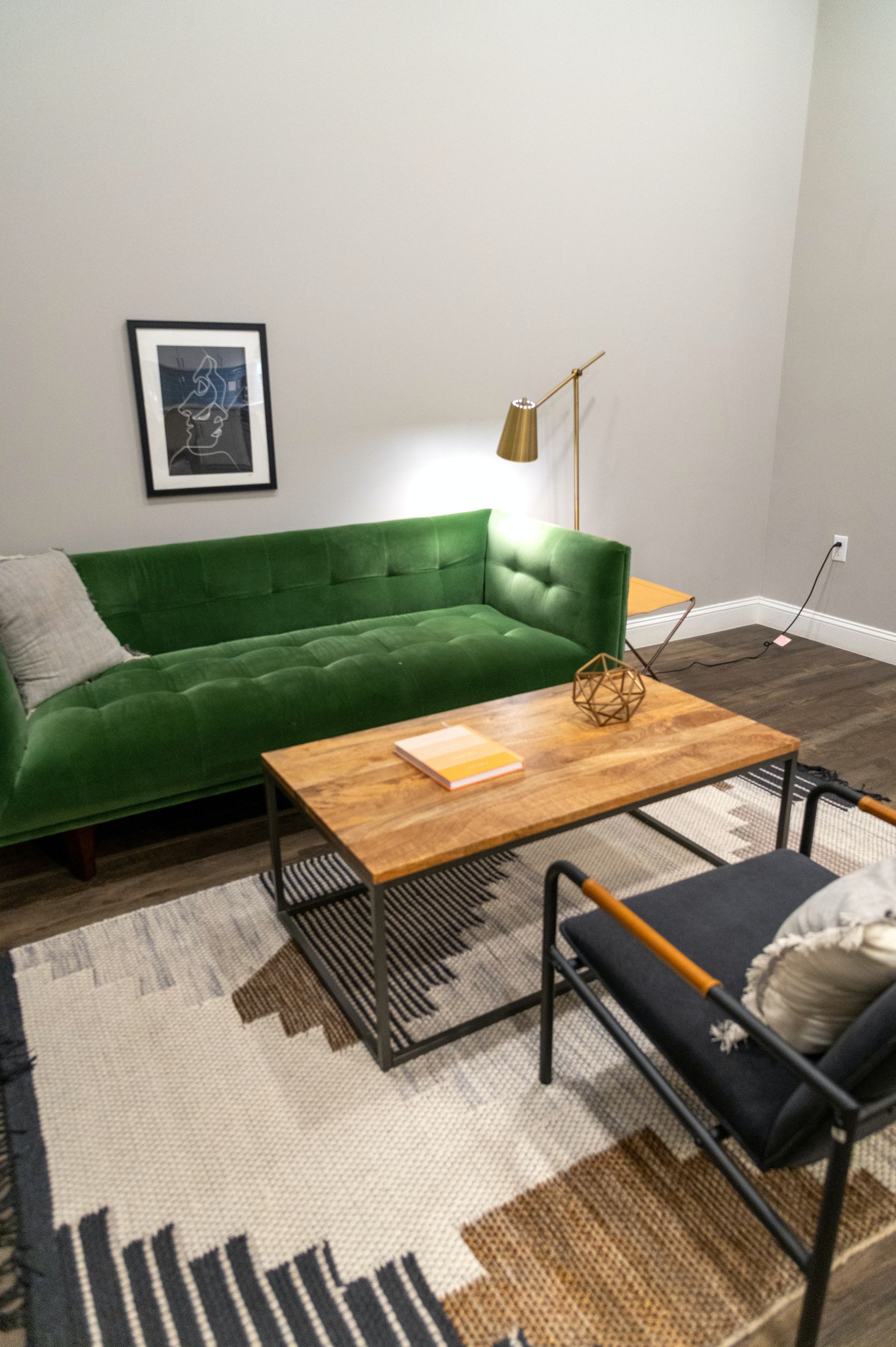
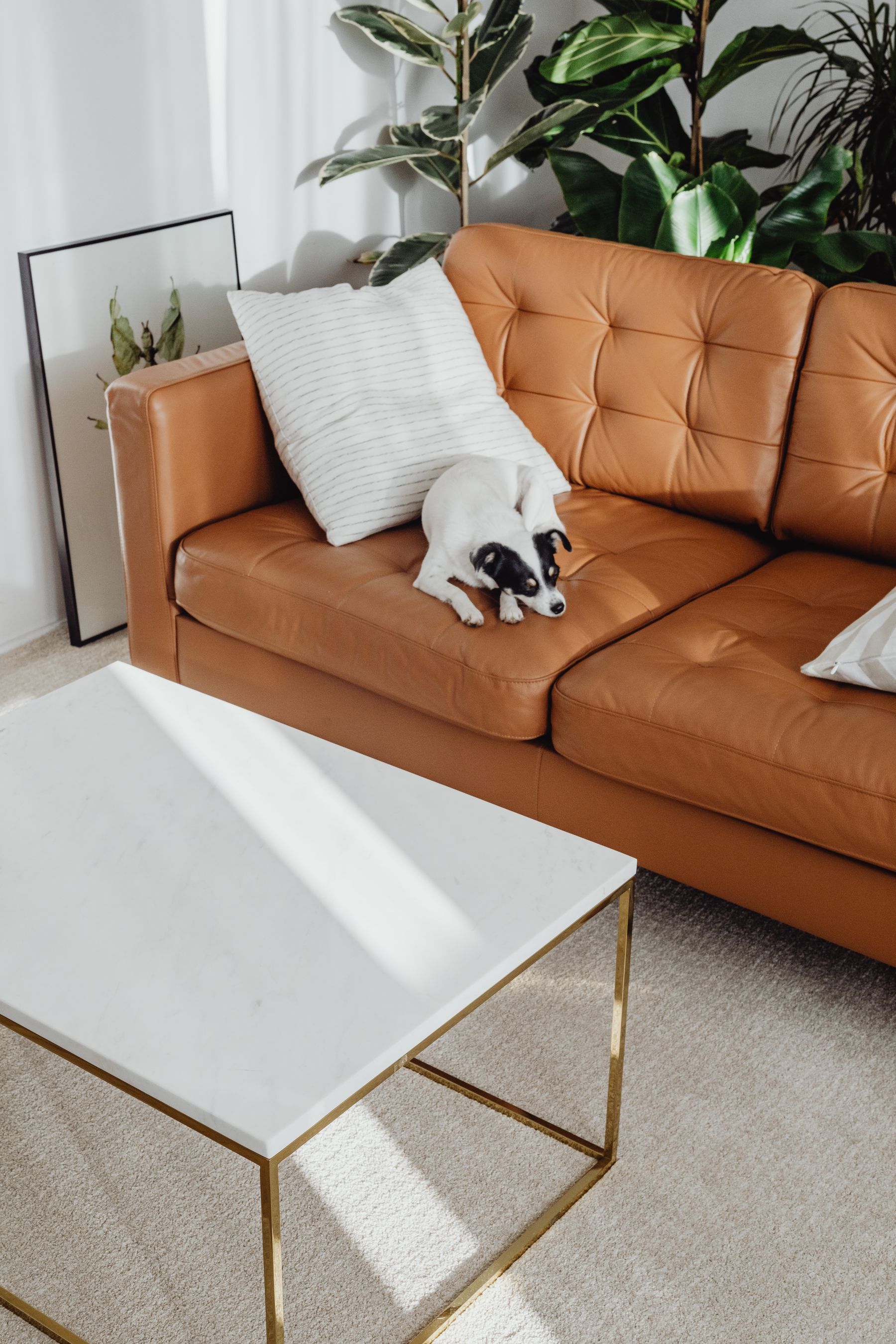
A pure black sofa may reveal pale fur more clearly than a middle-toned textured fabric; a bright white seat may emphasize dark hair or everyday grime. That does not mean every pet home should be beige. Look at contrast between the animal's coat and the actual surface. A subtle weave, fleck or pattern can make stray strands less visually prominent, while a smooth finish may be easier to wipe according to its care instructions. The question is whether you prefer less visible shedding, easier removal or a particular tactile feel. A patterned rug can also absorb visual noise, but it should not become an excuse to postpone cleaning. Test samples in the room's daylight and evening lighting, and compare how lint or hair sits on the surface during normal care. A rich color is perfectly possible in a pet home when maintenance expectations are realistic. Design should work with the animal you have, not an imagined perfectly tidy one.

Give a Rest Spot a Place in the Seating Group
A pet bed placed in an isolated corner may look tidy but be ignored if the animal prefers to stay near people. Start from its real rest pattern. Is there a quiet edge of the sofa group that receives moderate daylight without crowding a walking route? Could an existing low table or a stable gap near seating accommodate a washable bed? For some households the sofa itself is the preferred rest spot, in which case an easily cleaned throw may be more useful than introducing another large accessory. Avoid selecting a tiny bed purely because it matches the palette. Comfort, access and the animal's particular needs are more important than visual symmetry. Then let the fabric or basket color connect subtly to the room's rug, timber or upholstery. An integrated rest area should feel considered without pretending it is invisible. One useful bed that gets used is better than three styled beds that obstruct the floor.
Cats Need Vertical Options, Not Only Floor Area
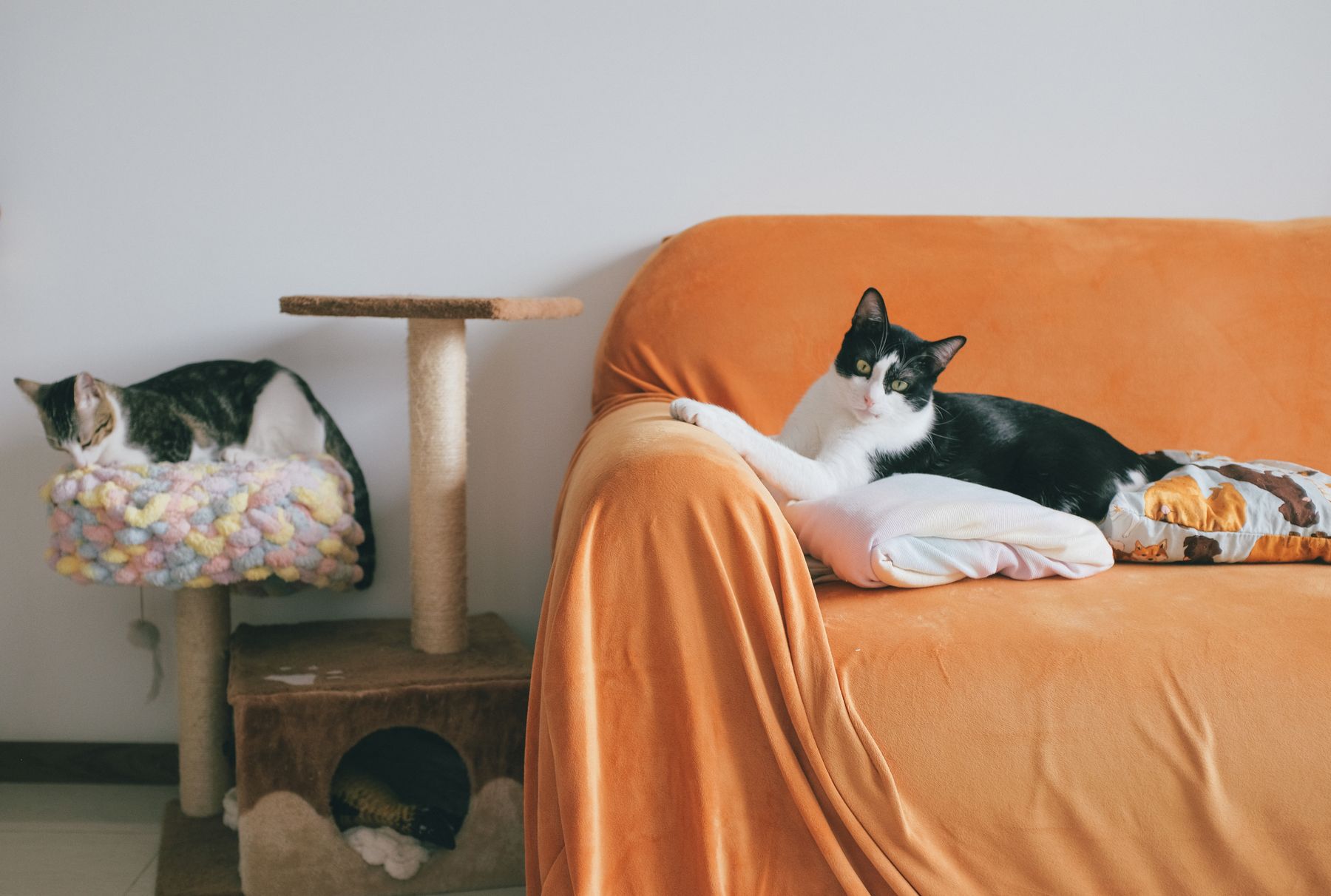
Some cats gravitate to higher places to survey a room or rest undisturbed. That can make a stable perch, window platform or appropriately secured piece of furniture more useful than another floor-level basket. It should suit the cat's mobility, the room's circulation and the manufacturer's installation requirements. A heavy shelf or precarious stack of furniture is not made safe by covering it in tasteful material. Think about the route *to* the perch and the way down. If the animal regularly jumps across a display shelf, fragile ceramics and unsecured artwork do not belong there. A neutral, visually restrained cat structure can fit a designed room, but it does not have to imitate standard furniture. Where there are multiple animals, avoid blocking their usual movement or escape options. Animal behavior differs, and a particularly unusual setup is best reviewed with an appropriate professional rather than assumed safe from a photograph.
Protect Rug Edges and the Floor Beneath
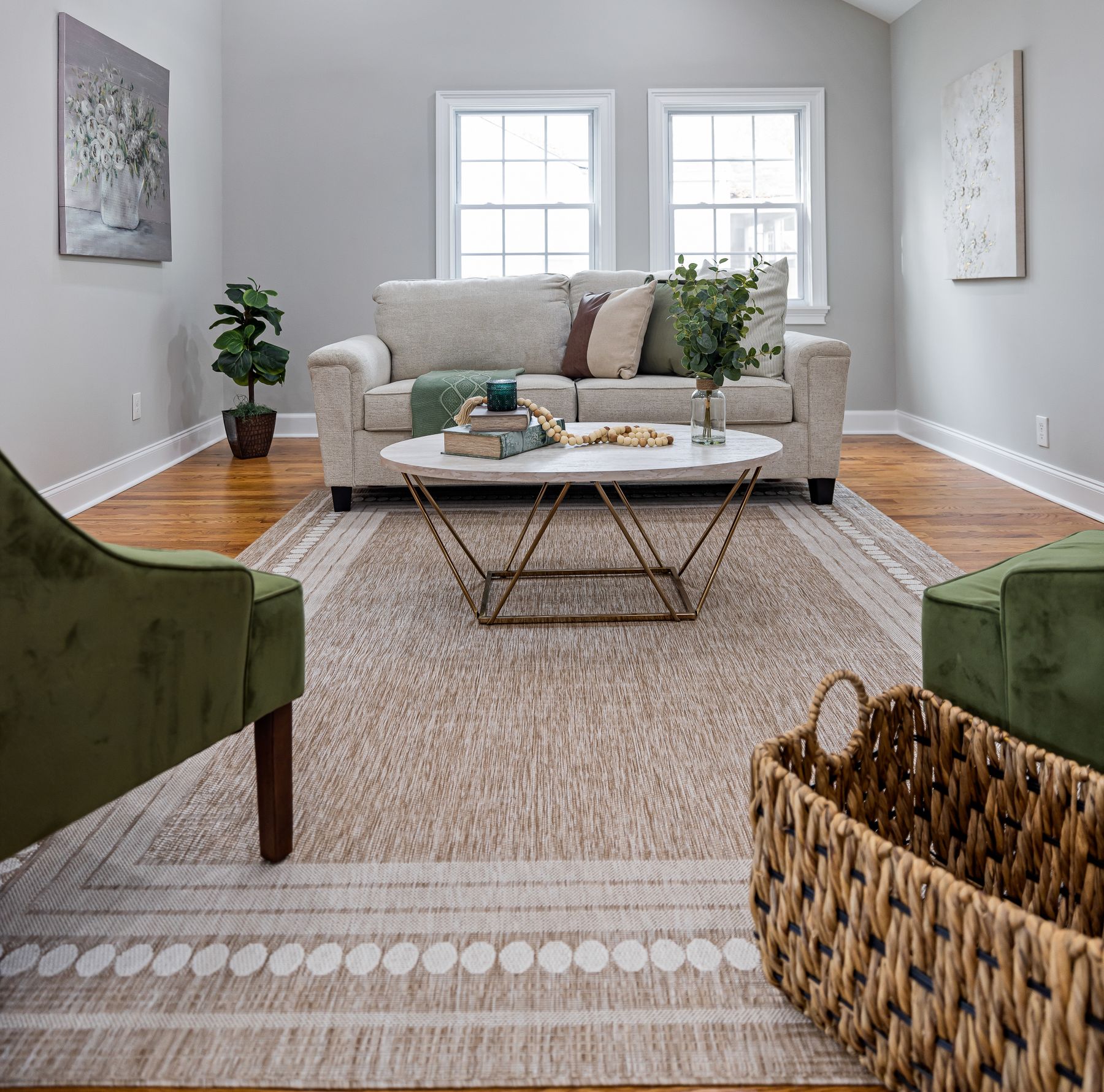
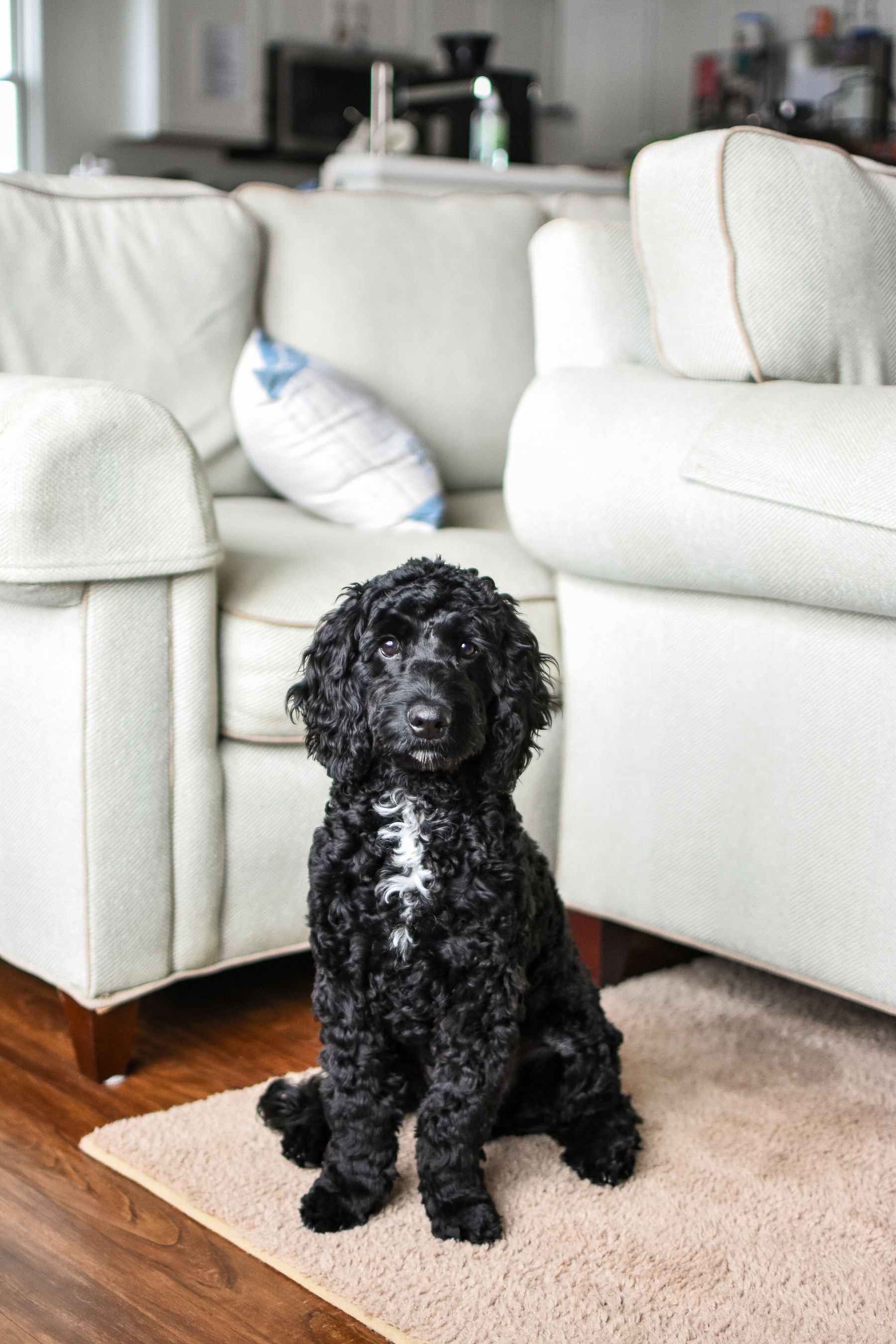
Rugs can define seating and soften sound, but they also become part of the pet's daily route. Look for edges that catch paws or vacuum heads, consider whether the backing is compatible with the floor finish and check the rug's actual care instructions before treating it as washable. A textile sold as easy-care may still be unsuitable for frequent machine washing or heavy moisture. Low piles and tight constructions can be convenient in some households, but there is no single pet-proof surface. Make sure the rug sits correctly under the furniture and does not introduce a trip edge where people or animals cross. An appropriate pad may improve stability, but test compatibility with the underlying floor and with any warranty restrictions. If you need help with proportion, [Living Room Rug Ideas](/living-room/living-room-rug-ideas/) covers the visual and spatial sizing decisions; the added pet question is how the rug performs after a normal month of use.
Windows, Plants and Curious Animals
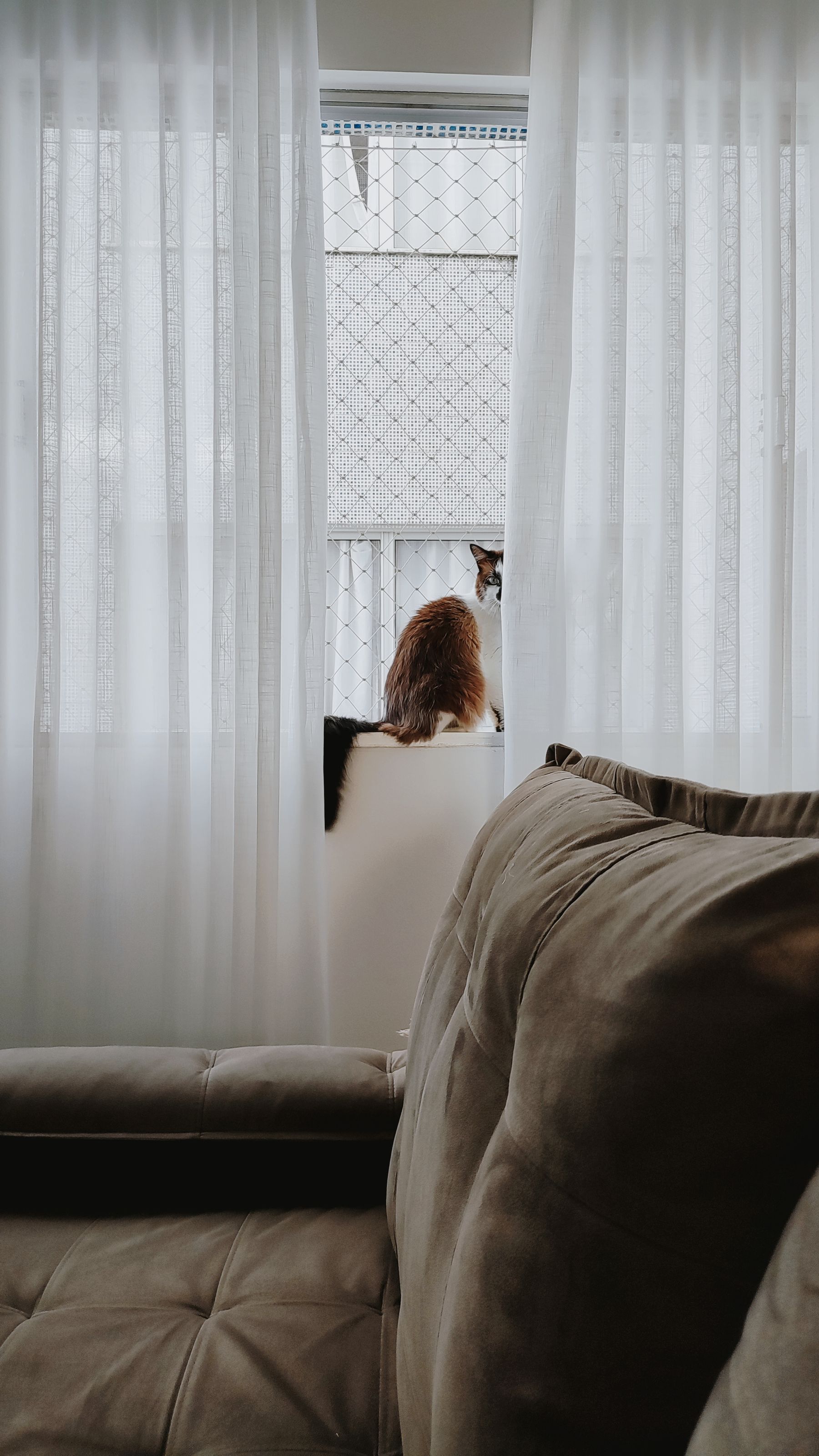
A sunny window may be the animal's favorite destination. Preserve that useful place without putting the pet into conflict with blinds, unstable tables or a line of delicate plant pots. Keep loose blind cords and fragile objects out of reach, and consider how curtains move when a cat climbs toward a sill or a dog pushes past them. Secure any dedicated perch or platform as instructed; not every window frame can support added weight. Plants deserve separate verification. An attractive houseplant is not automatically safe for every species, and common plant names can be imprecise. Check specific plants through reliable veterinary or animal-welfare guidance before buying, and consider whether leaves, soil or containers will be accessible. Even non-toxic decorative items can be knocked over. A living room with less plant clutter at the animal's favorite window may feel both calmer and more functional.
Cables, Lamps and Candles Share the Floor Plan
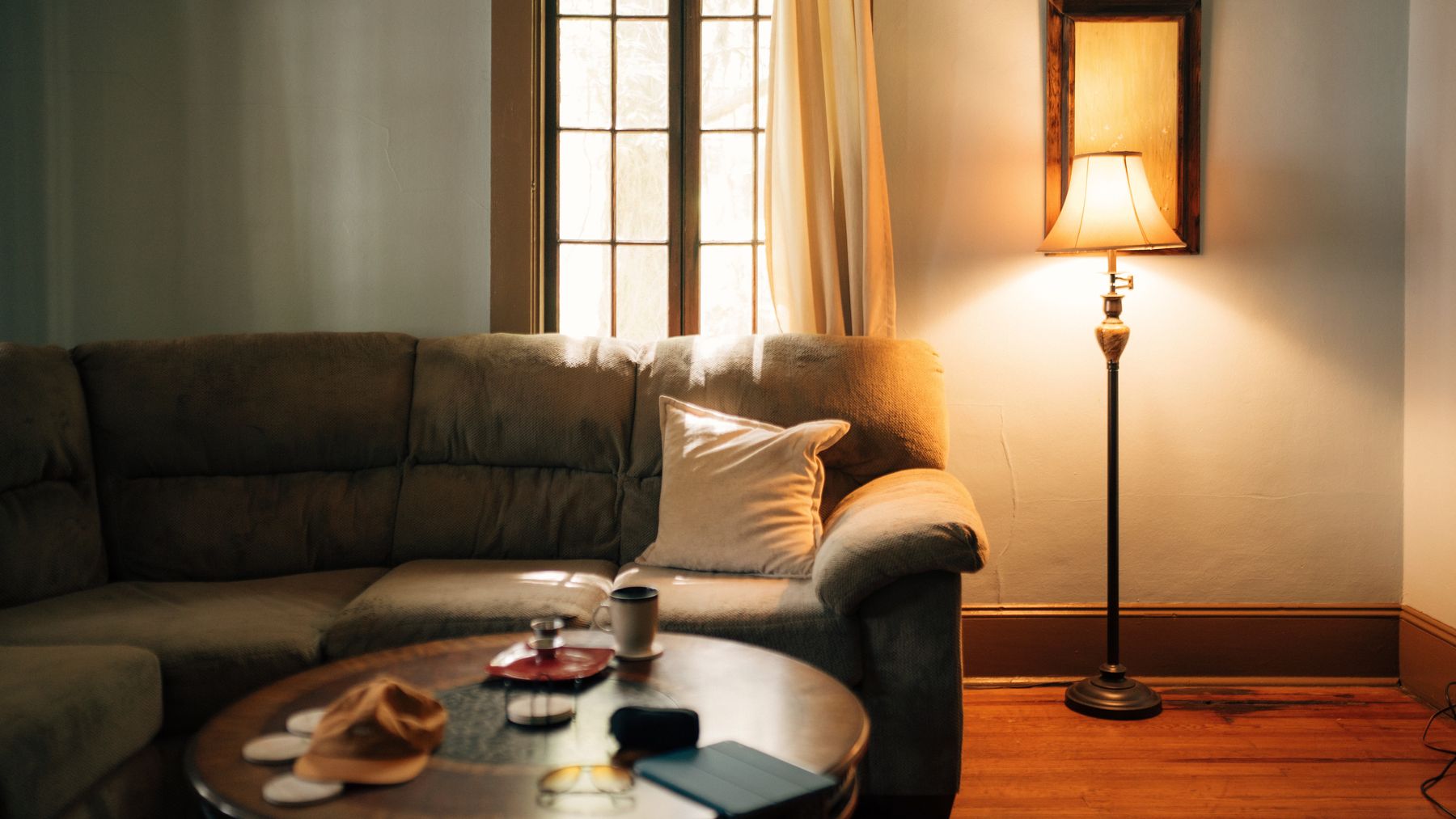
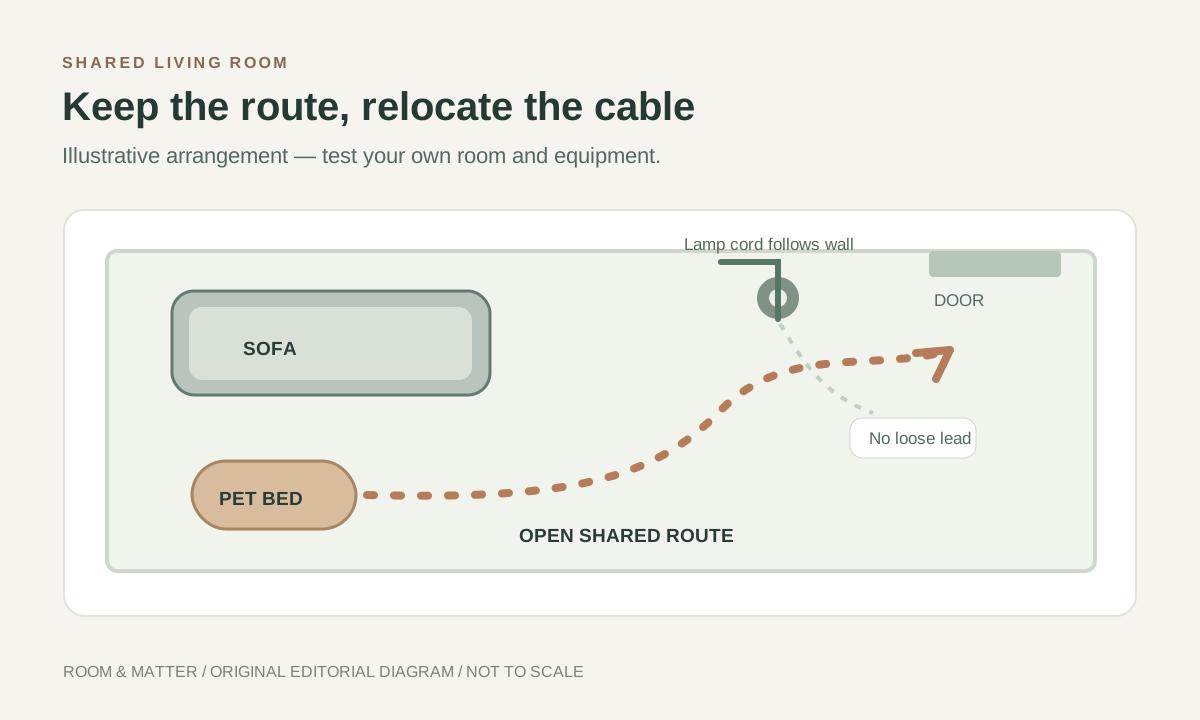
A floor lamp with a wide stable base can be an excellent reading light, but its position should account for both people and pets moving past it. Route cables where they cannot be tugged, chewed or tripped over, and follow product guidance for securing and powering electrical items. A lamp that is regularly knocked during play may need a different location or mounting solution. Do not tuck an unsuitable extension lead beneath a rug just to hide it. Open flames, loose garlands and glass ornaments require similar judgment. If a table is used by a curious pet, a battery-operated light may provide the atmosphere without introducing the same open-flame hazard. This is not an argument for stripping a room of character. It is a reminder that the prettiest lighting arrangement is the one people can use comfortably without watching it anxiously. The broader lighting principles are in [Living Room Lighting Ideas](/living-room/living-room-lighting-ideas/).
Toy Storage That Resets in One Movement
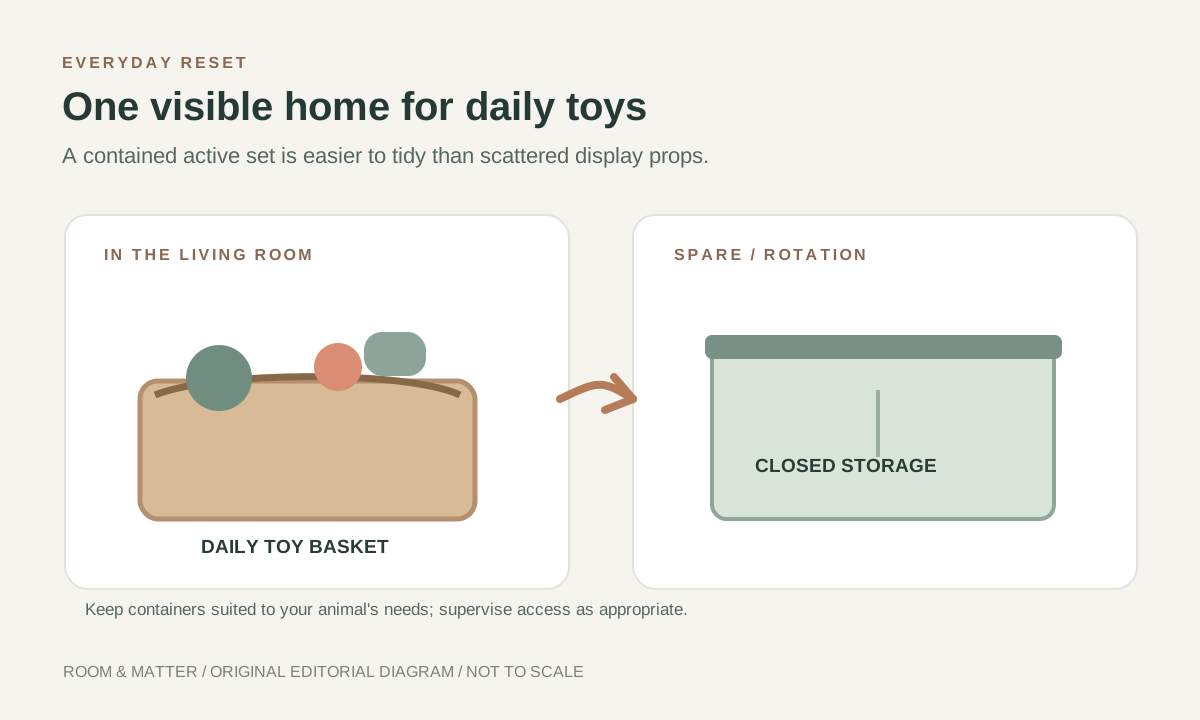
An overflowing pile of pet toys can make an otherwise composed room feel permanently unfinished. The solution is not necessarily a larger basket. First sort what is actively used from replacements or occasional toys. Then choose a home that allows the daily set to be gathered quickly without covering a floor vent, doorway or low table. An open container may be practical for some dogs; for others, items should be stored out of reach when unsupervised. The appropriate storage arrangement depends on the pet. Coordinate the container with the seating group instead of buying a novelty box that becomes a second visual theme. A sturdy low basket might echo the room's natural fibers, while a closed cupboard can keep extra supplies away from the main living area. Give the room a simple end-of-day reset: clear the walkways, return the active toys and leave the pet's actual resting place undisturbed.
In a Small Living Room, Share Space
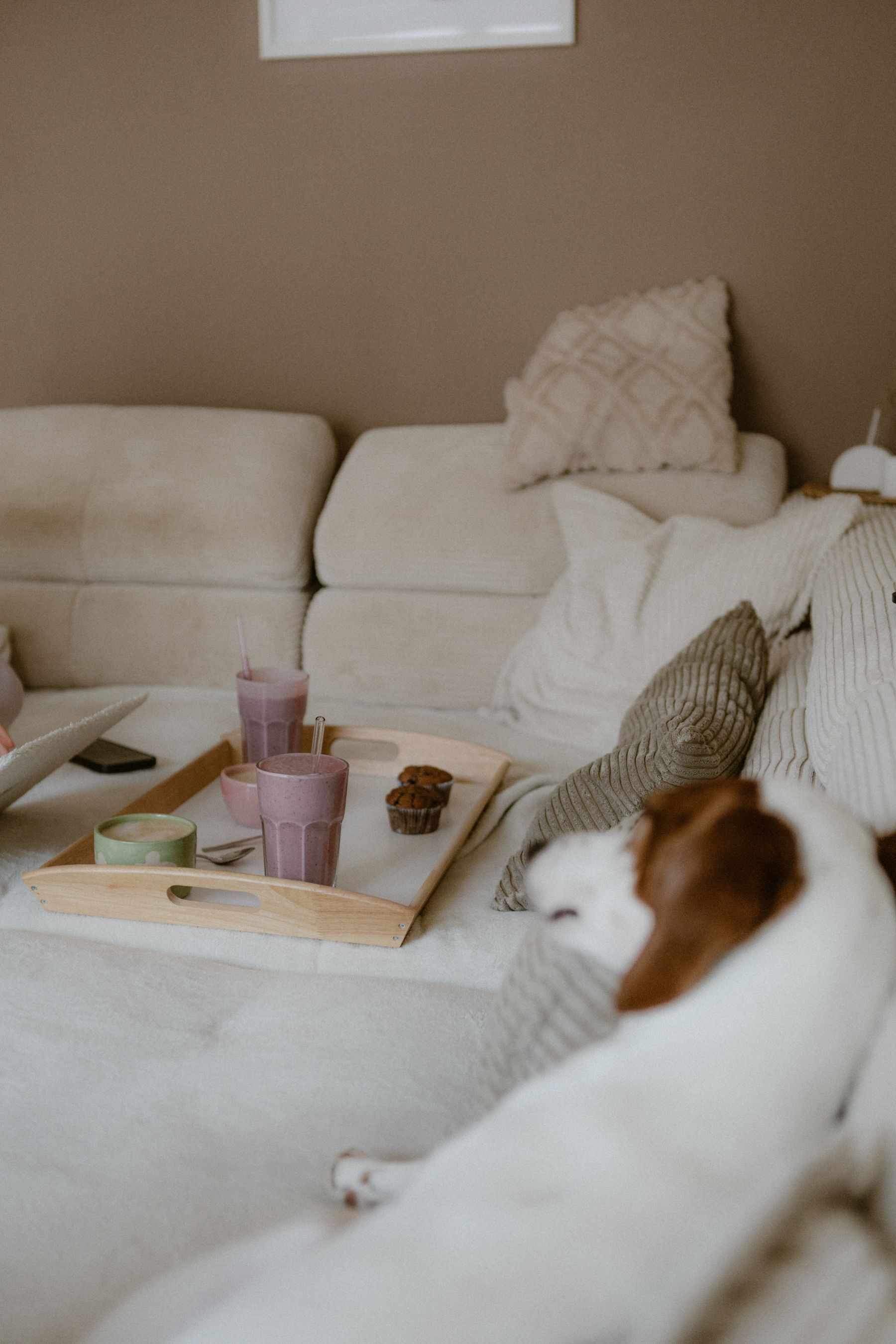
The smaller the room, the less sense it makes to assign every pet activity a separate freestanding item. A compact bed can sometimes sit near an existing chair; a storage bench may hold supplies without replacing seating; a stable perch may use a location the animal already prefers. The design should preserve the room's essential functions and make them compatible rather than multiply objects. Start with circulation, then evaluate seating and the pet's rest needs. Avoid blocking exits and frequently opened cabinet doors with large cushions or elaborate climbing systems. A pet-friendly home does not need a dedicated decorative corner if the animal is happiest alongside people. [Small Living Room Ideas](/living-room/small-living-room-ideas/) develops the more general furniture choices. Here the additional test is whether the animal can reach its usual resting place while people can still use the room naturally.
Choose Finishes You Can Maintain, Not Just Admire
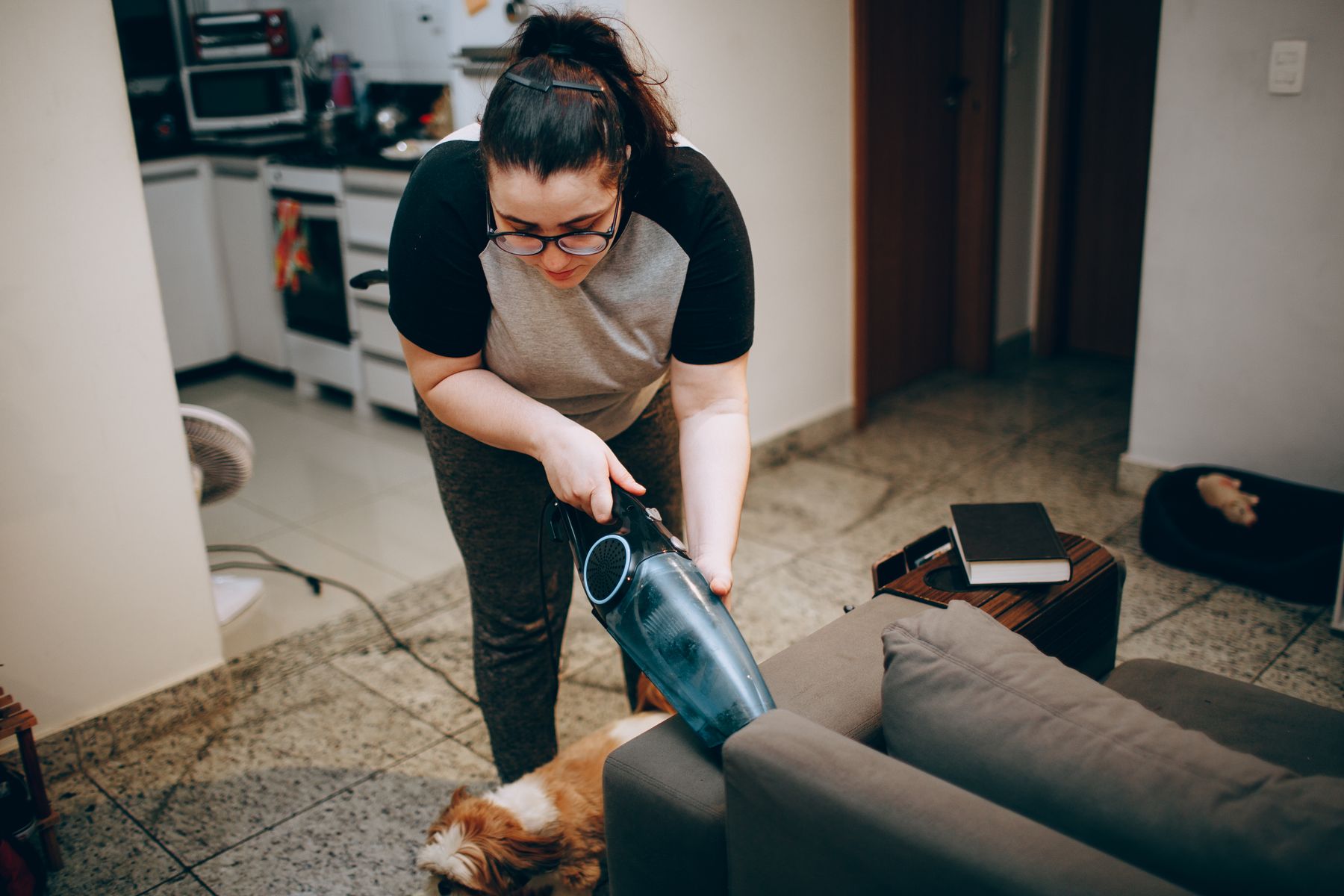
A living room may look flawless on installation day and struggle after months of hair, muddy paws or repeated cleaning. Before buying a rug, cover or side table, ask what normal maintenance actually involves. Can the surface be vacuumed without damage? Do replacement cushion covers exist? Is the finish vulnerable to the cleaning products you would ordinarily use? Does a textured weave trap more hair than you are willing to remove? Treat patina and wear as different questions. Some materials acquire character with use, while stains, loose finishes and damaged components require attention. Follow the relevant maker's instructions rather than assuming home remedies are harmless. If a cleaning product will be used where animals have access, verify its safe use and drying guidance, and consult a veterinarian for individual exposure concerns. A pet-friendly material is one whose real maintenance fits your household, not a promise that nothing will ever mark it.
The One-Week Pet-Friendly Edit
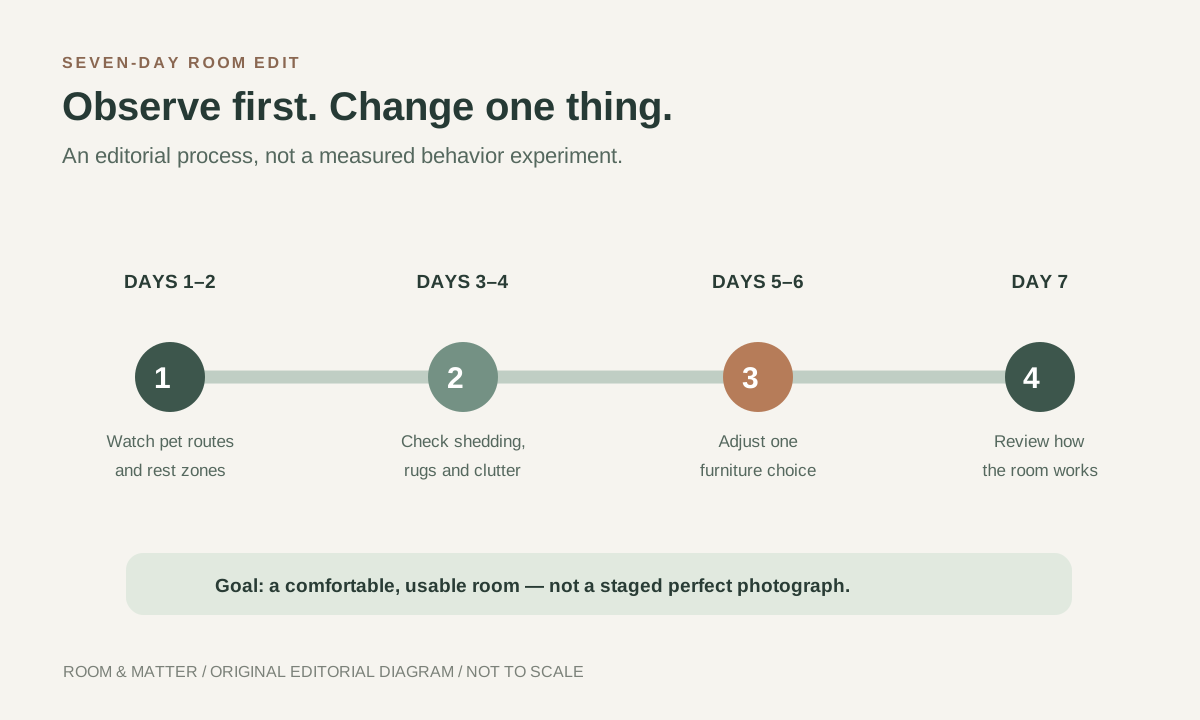
Instead of replacing everything in a single shopping session, make a short observation plan. On the first few days, notice where hair accumulates, which rug edge lifts, where toys migrate and which chair becomes the favored perch. Take a photograph from the same doorway each evening. It will show whether the visual problem is a material issue or simply an arrangement that does not match the household. Make one change at a time: reposition a resting bed, move a fragile lamp, adjust toy storage or test a washable cover according to its care label. Then observe how people and pets use the room. It is possible that a simple furniture shift will solve the problem that seemed to demand a new sofa. The goal is a room that welcomes daily life with the animal, rather than an immaculate but fragile interior that survives only while everyone is standing still.