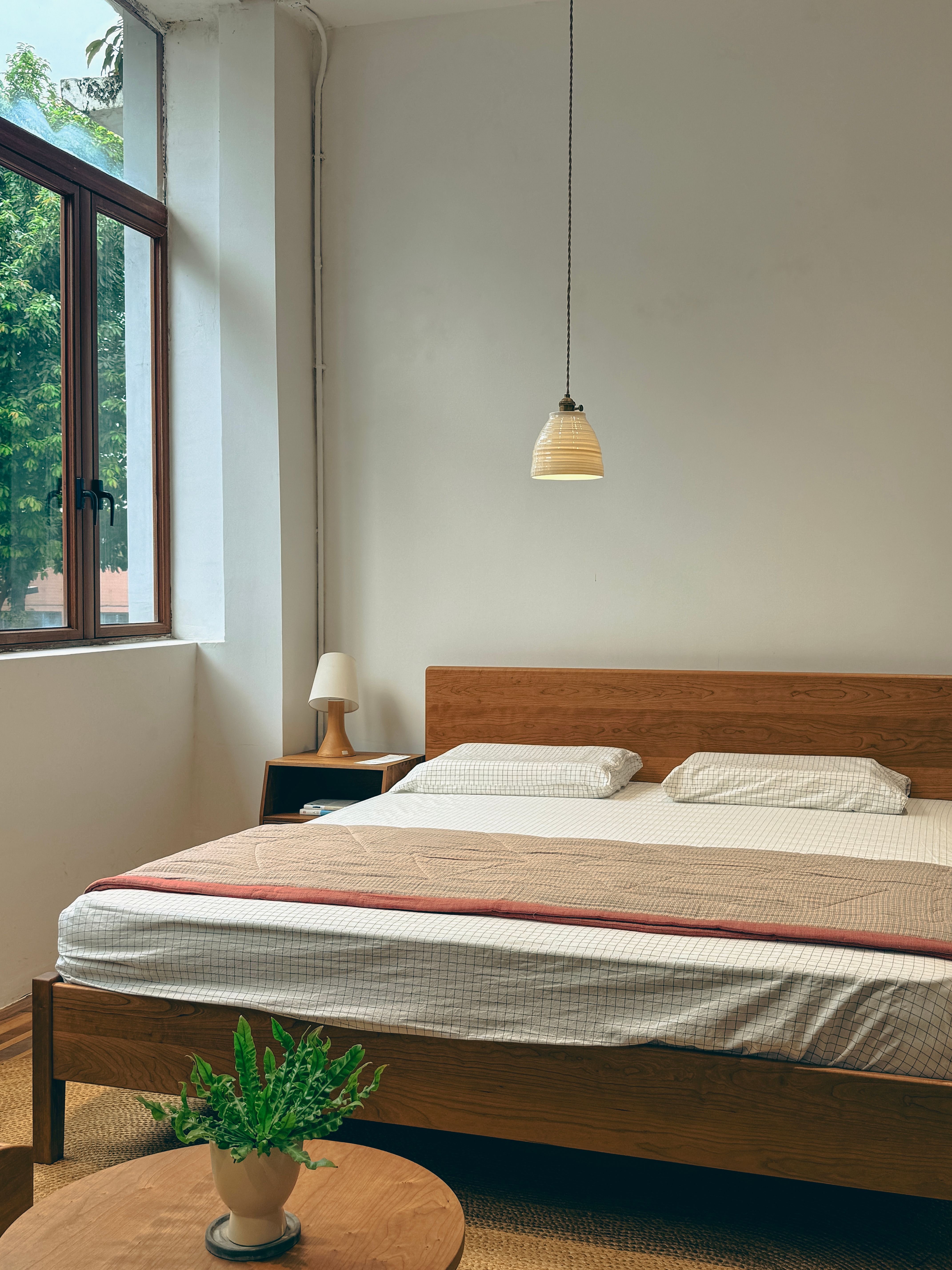
Define Minimalism as Deliberate Use
Minimalism is a decision framework: keep what supports sleep, dressing and restoration, then remove repetition and visual competition. It differs from [modern bedroom ideas](/bedroom/modern-bedroom-ideas/), which can hold more objects and decorative gestures within a clean contemporary structure. It is not automatically monochrome, small or inexpensive. A good minimalist bedroom may include art, color and substantial furniture, but each element has a defined role and enough surrounding space to be read clearly.
Audit Routines Before Decluttering
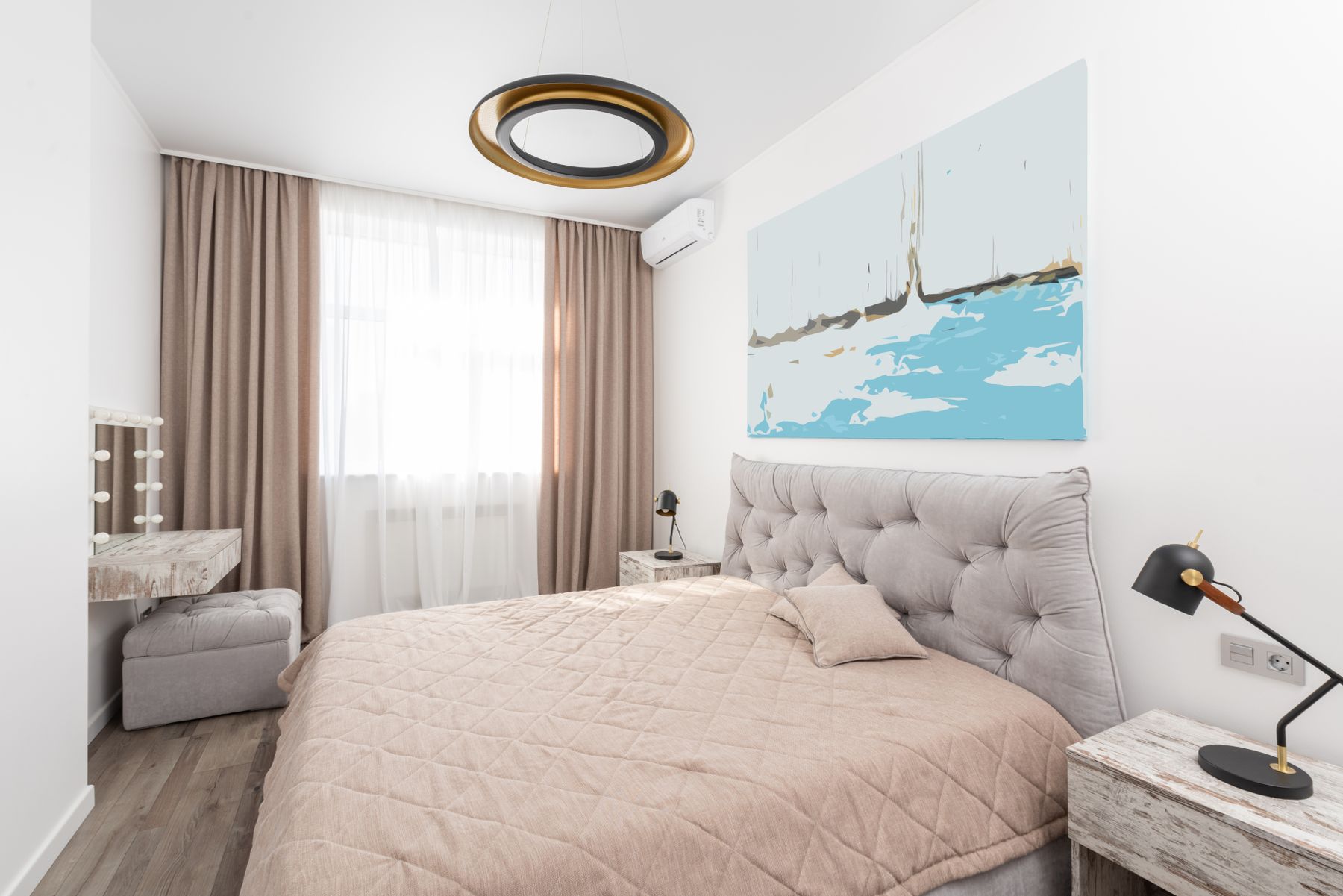
Observe one ordinary week: where clothes land, what is reached from bed, which devices charge, what needs darkness and which objects migrate into the room. Group belongings by current use rather than beginning with an arbitrary item count. Minimalism fails when necessary things are merely pushed into another room or hidden in inaccessible boxes. The whole-home routine audit in [minimalist apartment ideas](/apartment/minimalist-apartment-ideas/) is useful, while this bedroom version prioritizes sleep, dressing and the morning reset.
Protect Clear Routes Around the Bed
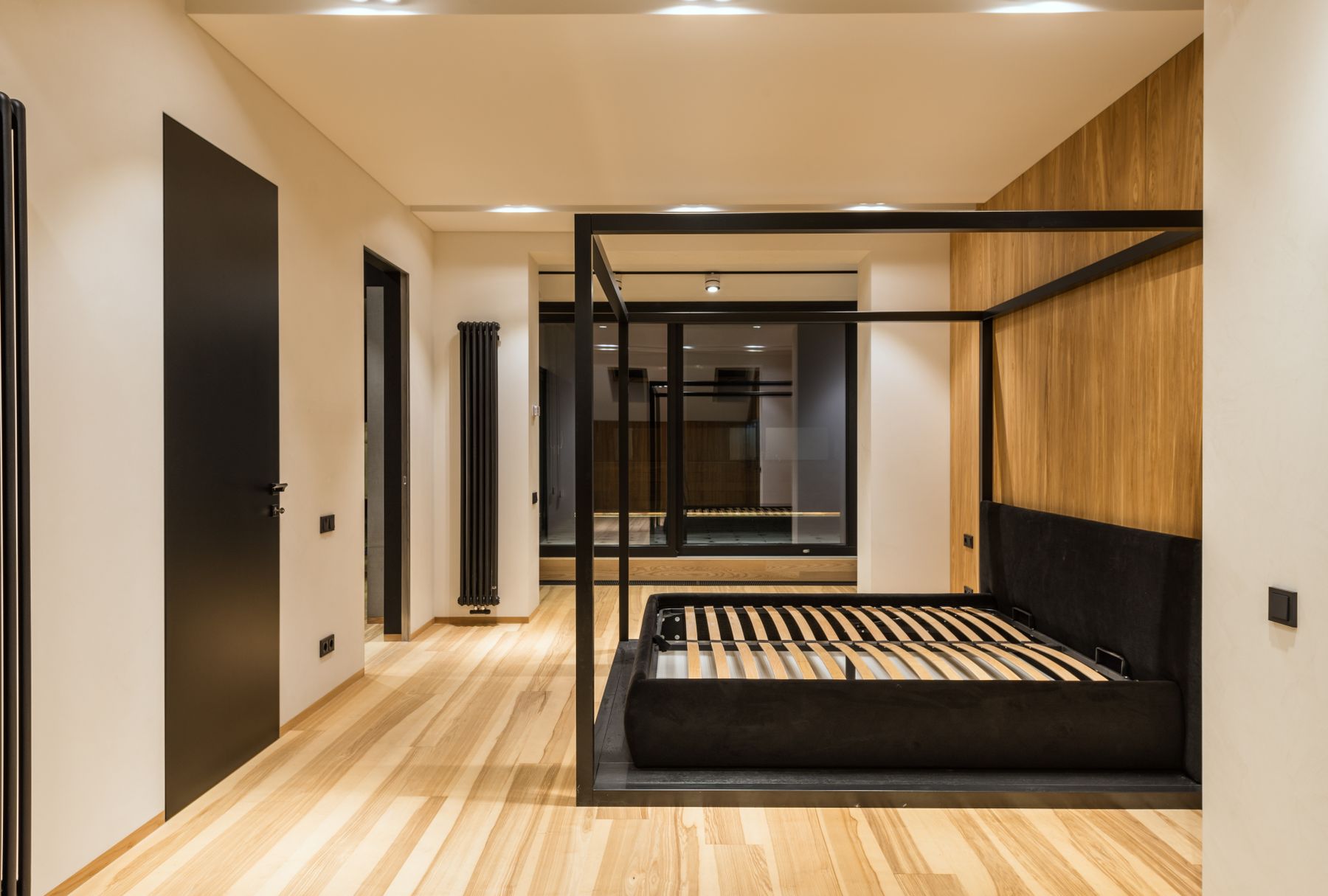
Measure the mattress and complete frame, then add door swings, wardrobe fronts, radiators and the narrowest route used at night. Empty floor is not decorative waste; it allows bed making, shared access and easier cleaning. Do not center the bed automatically if that compresses a doorway or leaves one side unusable. Tape every footprint at full size and walk the plan in dim light. The minimalist result should make movement obvious rather than simply making the furniture look isolated.
One Bed With the Right Outside Dimensions
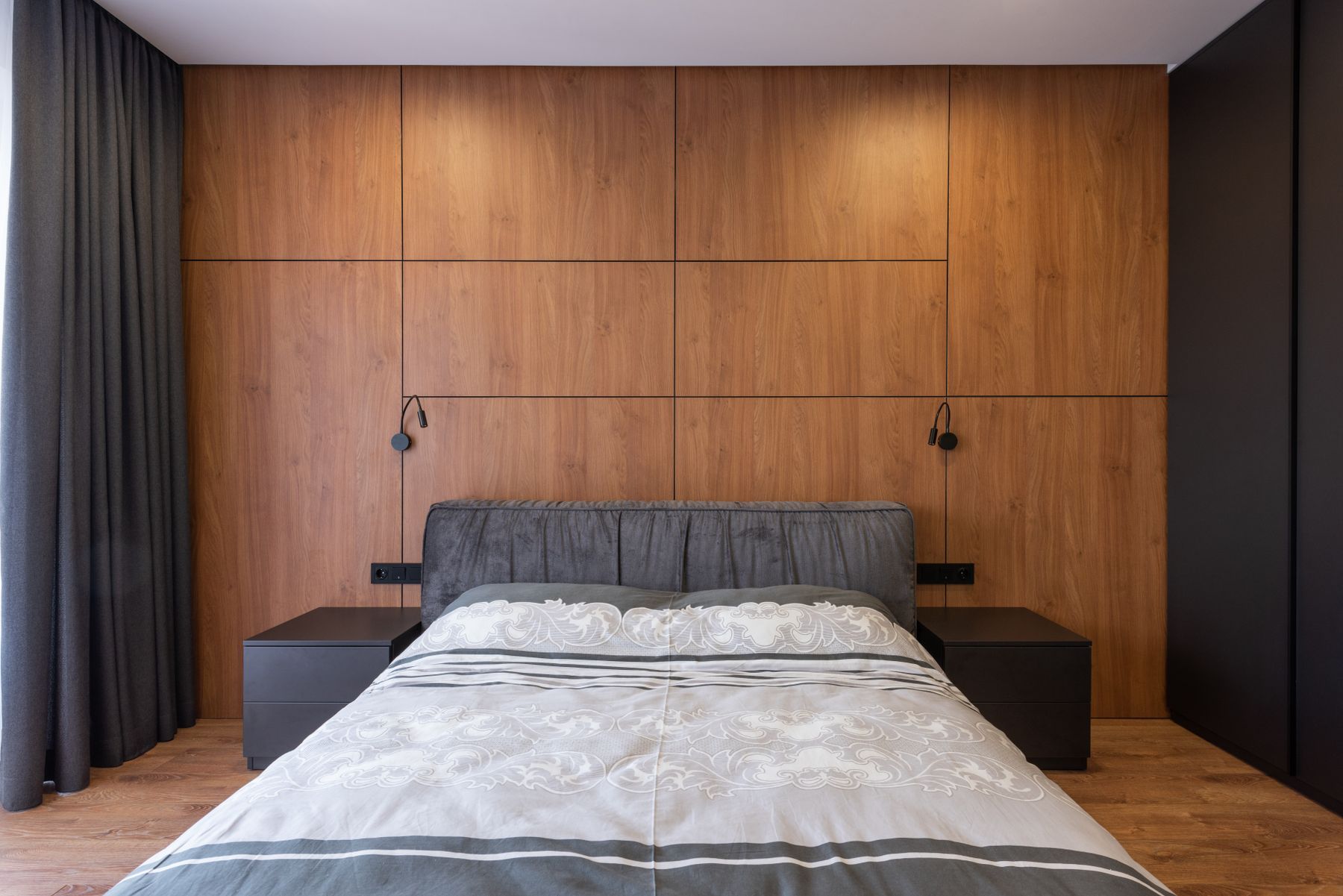
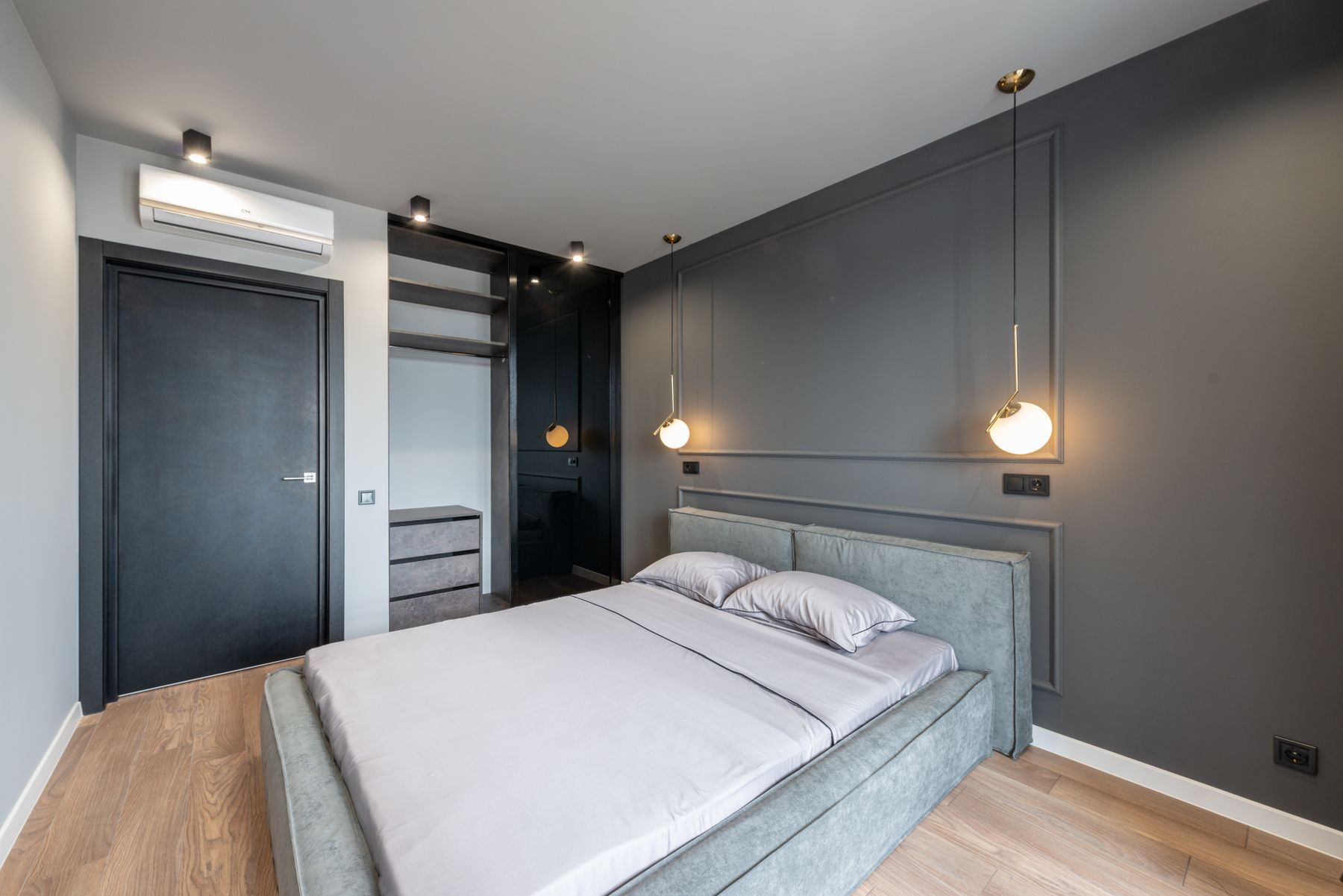
Platform, timber and upholstered beds can all be minimalist when their proportions, support and maintenance suit the user. Compare total width, rail depth, headboard height, under-frame access and delivery constraints—not only mattress size. A visually low platform may be difficult for some bodies, while a deep upholstered surround can consume valuable circulation. Check mattress support requirements and long-term stability. Choose one confident form, then let bedside furniture and lighting respond instead of buying an automatically coordinated set.
A Low Profile Only When It Helps
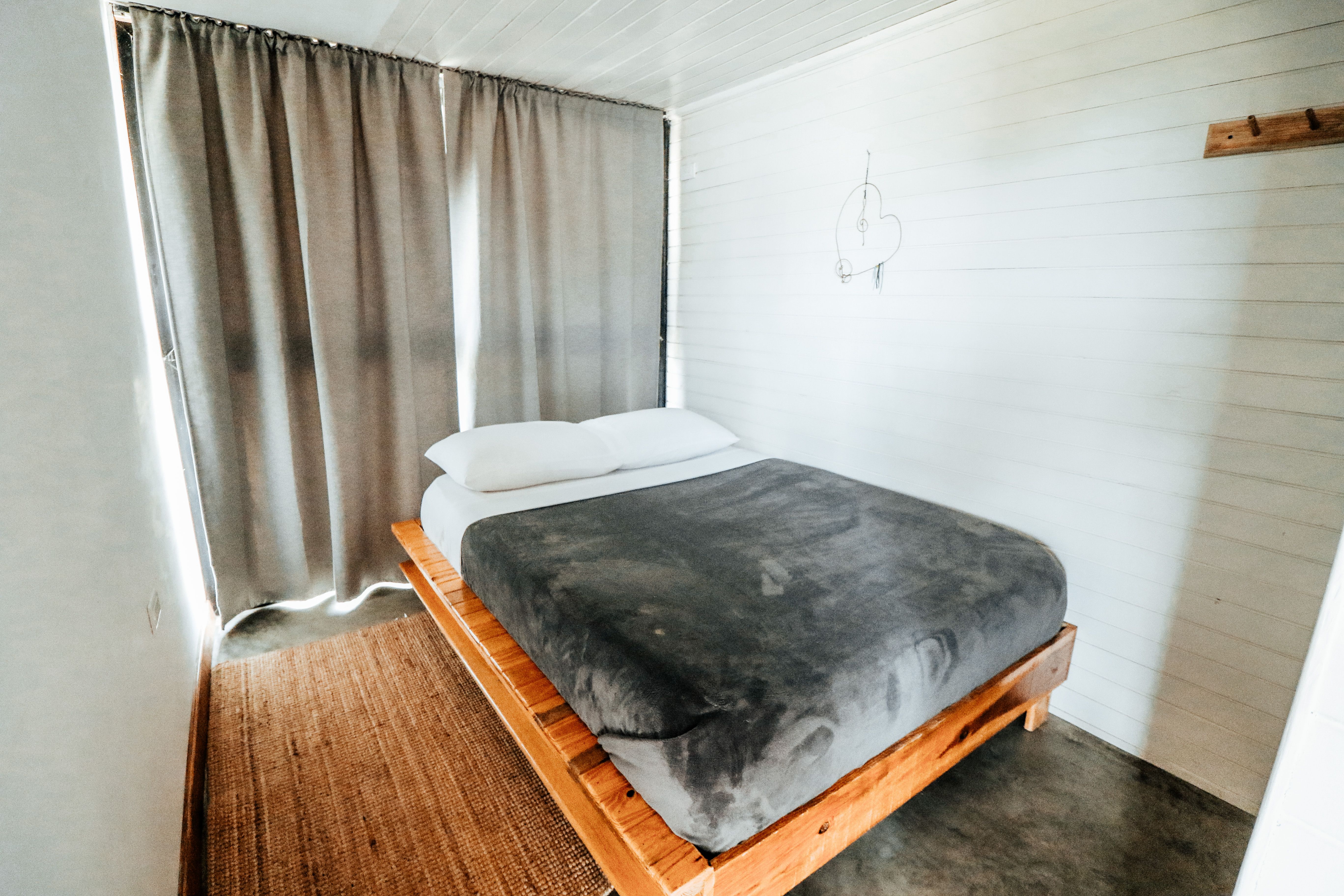
Low beds can make ceiling height and wall space feel generous, especially in a compact room. They are not universally comfortable: knee, hip and balance needs may require a higher seat-to-stand position. Very low frames also change airflow, cleaning access and under-bed storage. Keep bedding clear of the floor and confirm that curtains, outlets and bedside surfaces align with the final mattress height. Minimalist design should reduce effort, not demand an uncomfortable daily movement for the sake of a photograph.
Let the Headboard Simplify the Bed Wall
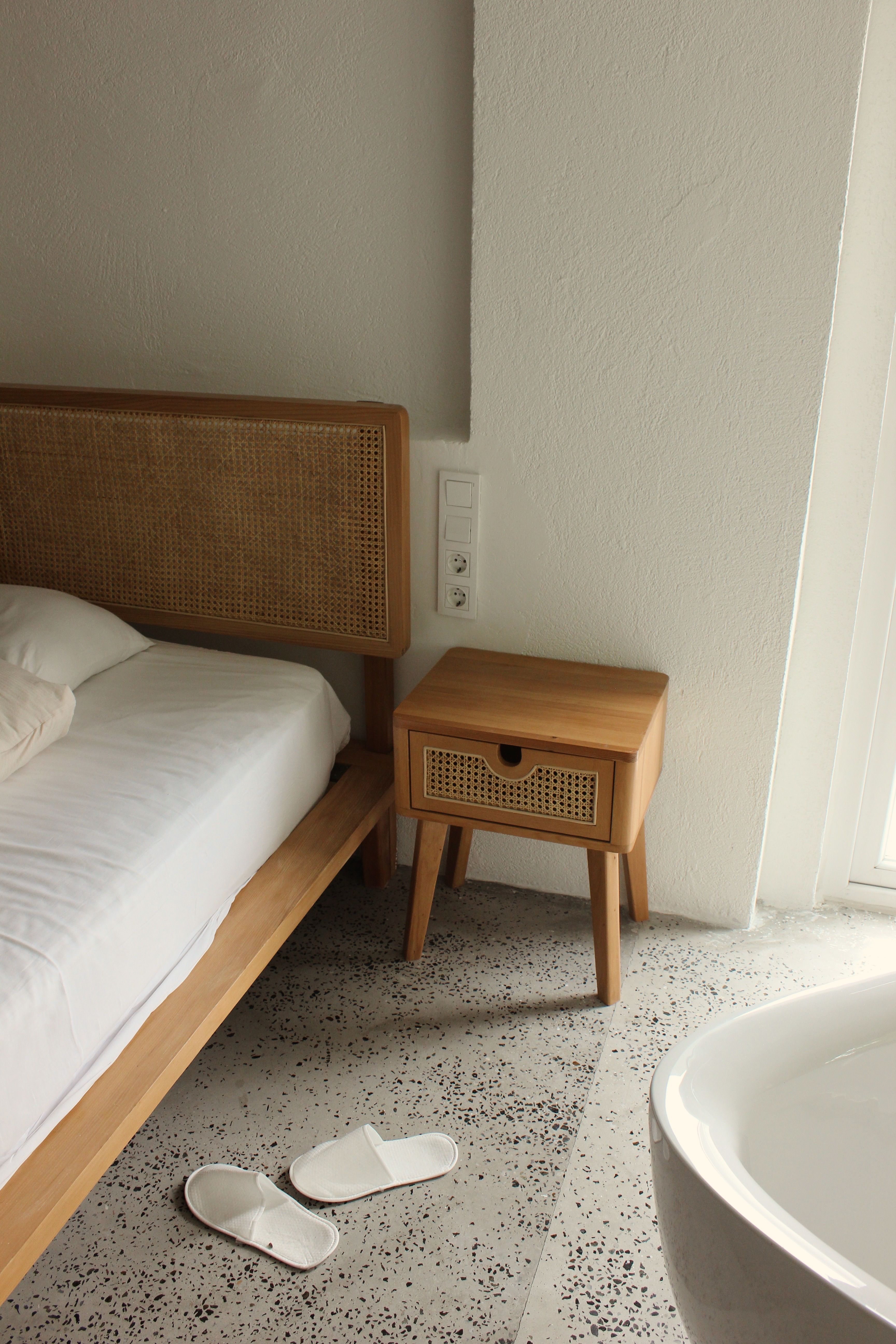
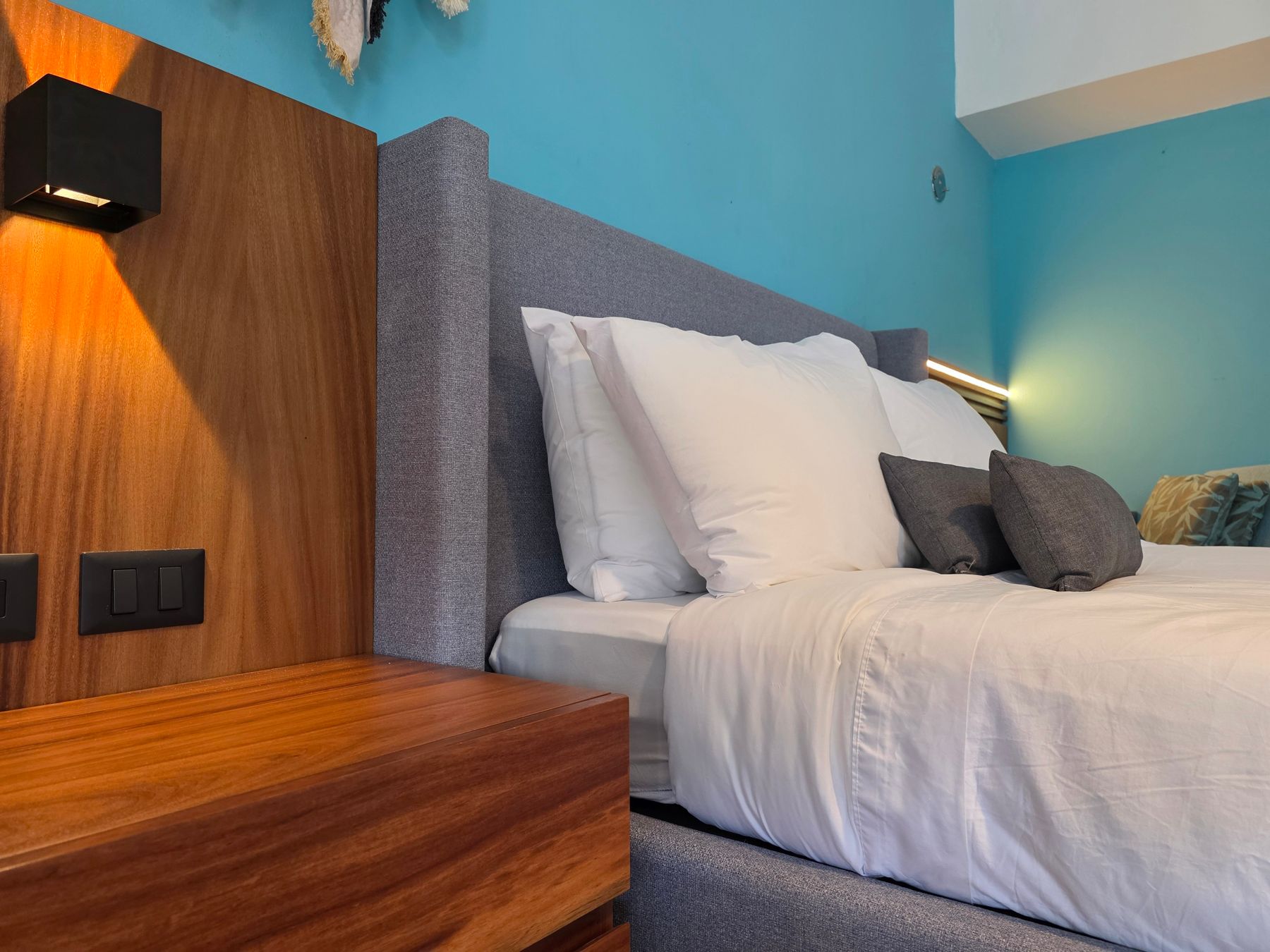
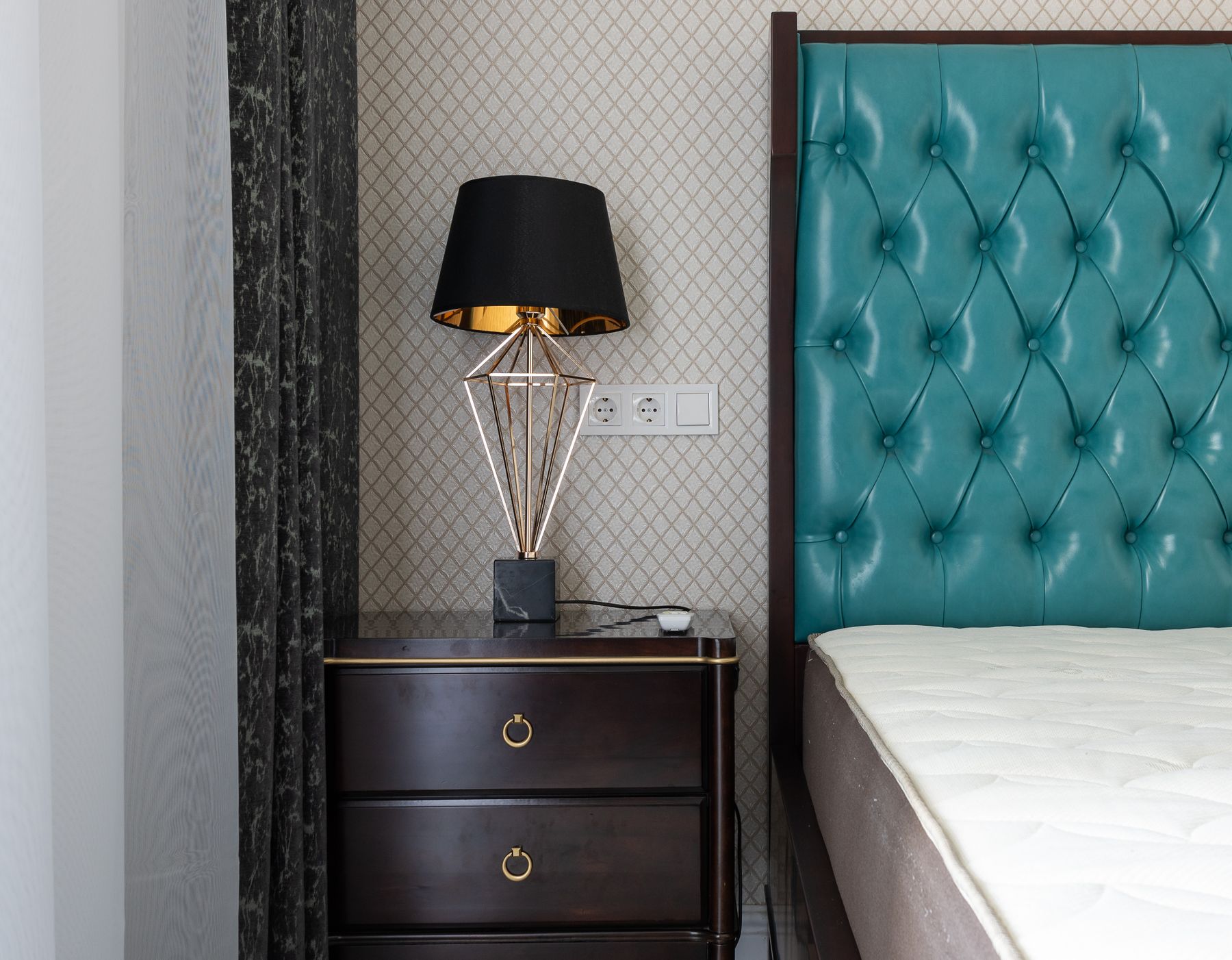
A broad upholstered panel, simple timber board or shallow ledge can organize the bed, lights and tables into one legible elevation. Integration is useful only when outlets, switches and service access remain reachable. Upholstery adds softness and some local absorption, while timber provides warmth and durability; both need cleanable details and separation from damp walls. Avoid adding panels solely to make an empty wall look finished. A plain wall and well-proportioned bed may already be the stronger minimalist decision.
Warm Neutrals Built From Undertone
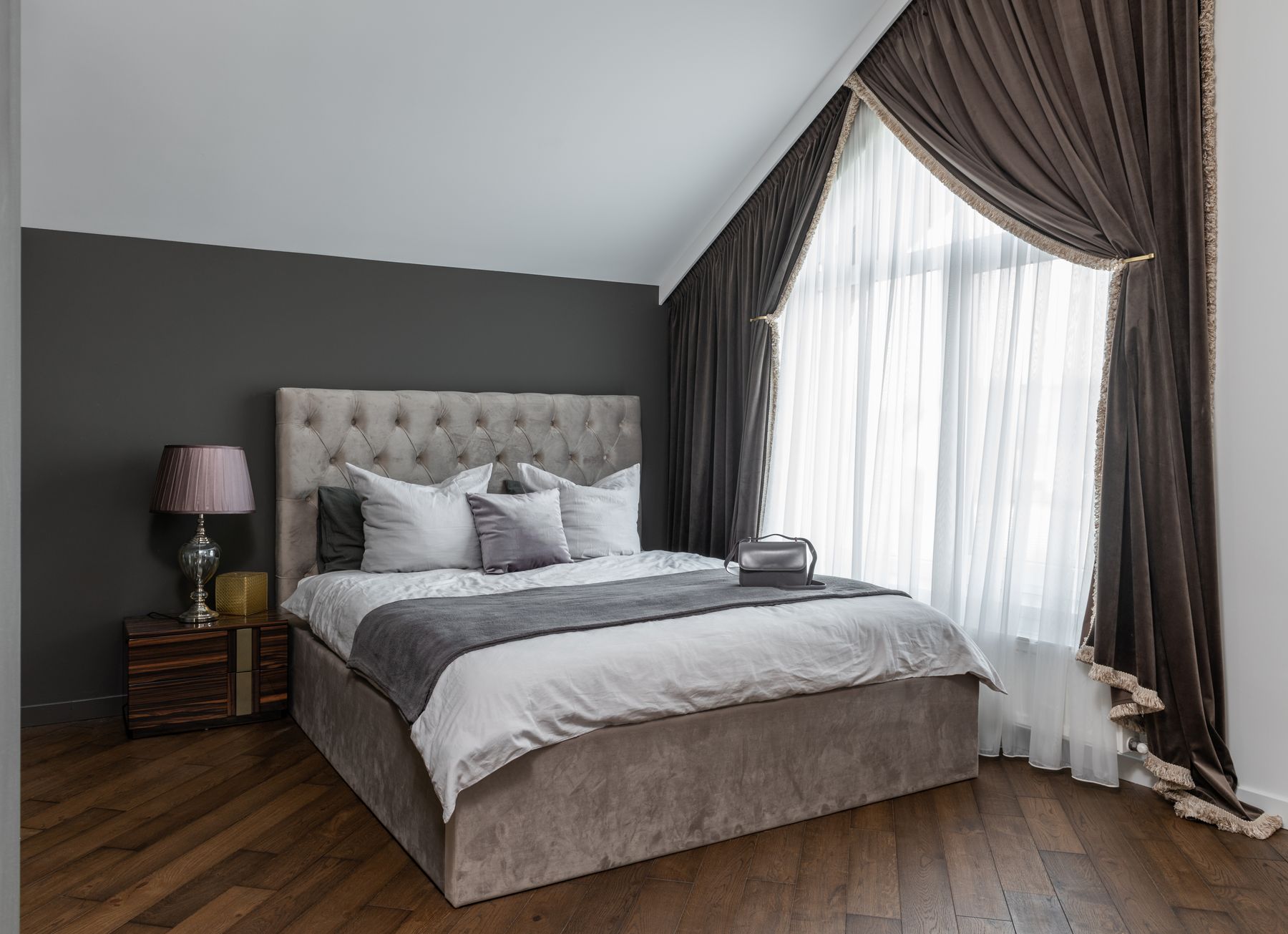
Warm white, oat, mushroom, clay, taupe and soft gray can create quiet without flattening the room. Compare undertones beside the floor, curtains and bedding through a complete day; a beige that looks calm in the shop may turn pink or green at home. Use material changes—matte paint, linen, wool and timber—before adding many slightly different decorative objects. Cool neutrals can work in warm daylight, but a shaded room usually benefits from a warmer base or deeper wood.
Wood Carries Visual Warmth
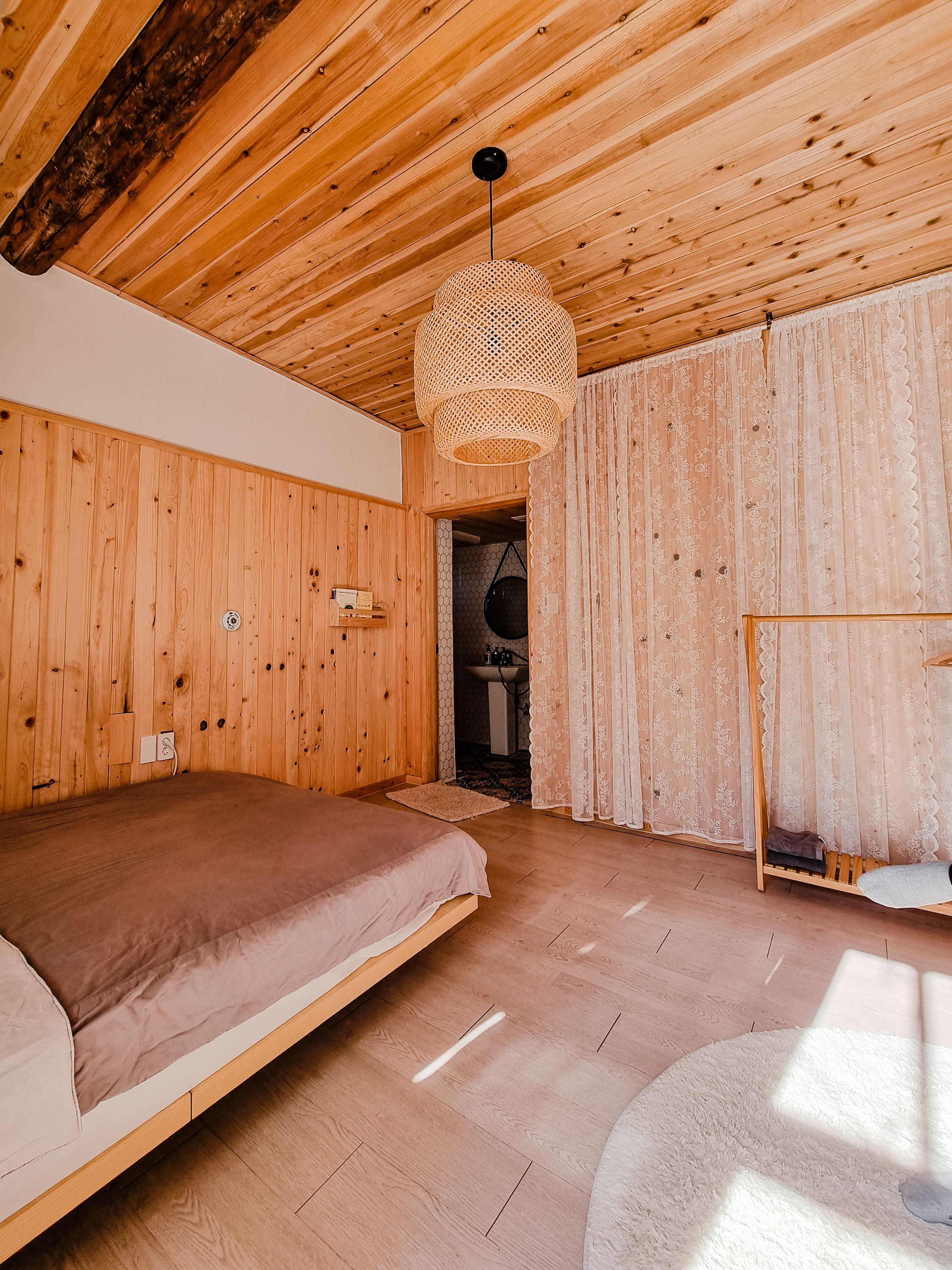
Timber can give a restrained room grain, warmth and continuity. Use it where touch and durability matter—bed, floor, wardrobe or one architectural plane—rather than repeating unrelated wood tones on every object. Compare veneer and solid wood honestly, inspect edge details and choose finishes that can be maintained. A wood-lined room needs especially careful lighting and ventilation so it does not become visually heavy. The goal is material presence, not a cabin effect imposed on an unsuitable shell.

Bedding for Temperature and Touch
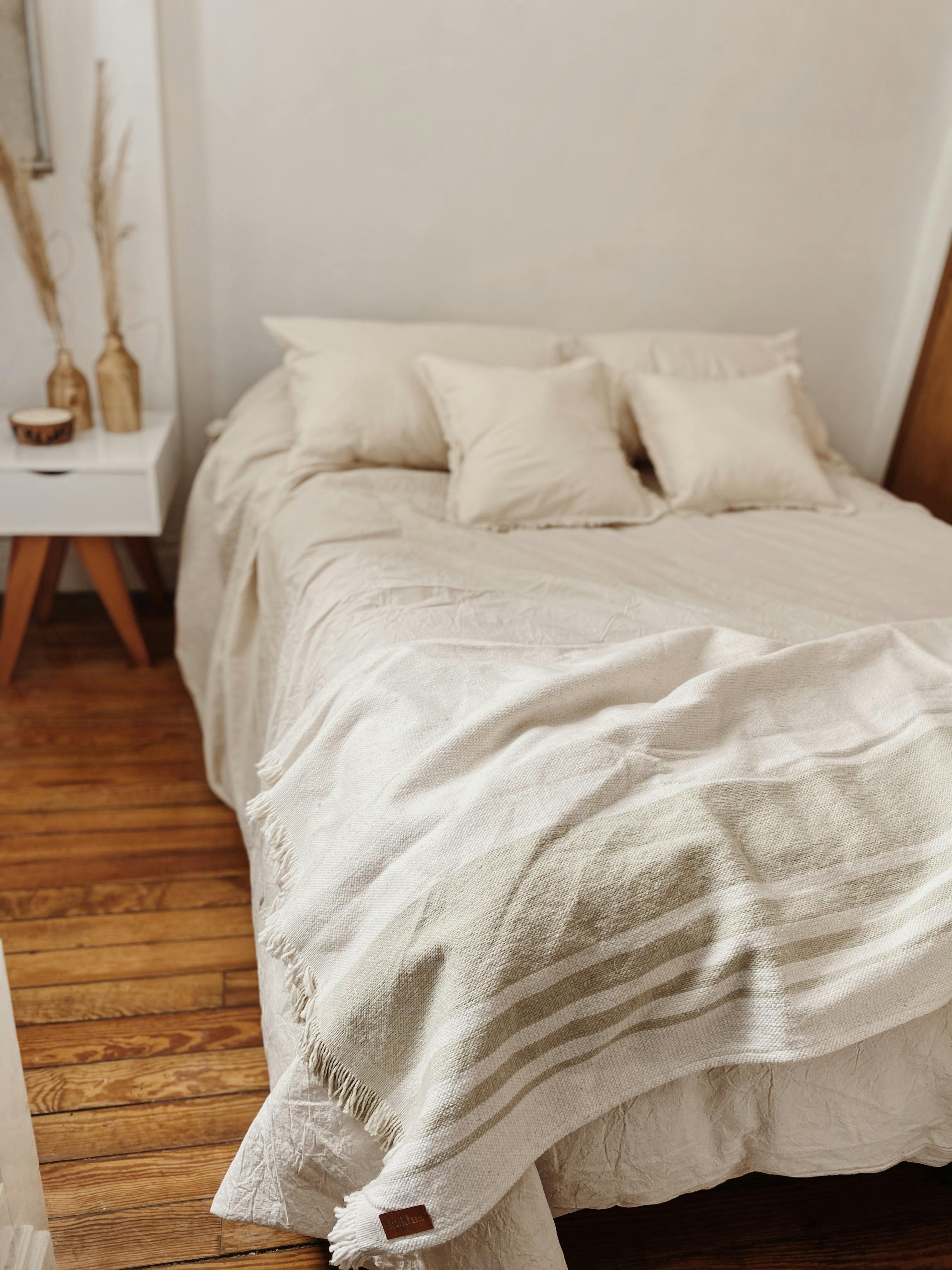
Begin with sheets and insulation appropriate to the sleeper and season, then add only layers that improve warmth or tactile comfort. Washed linen, cotton, wool and a restrained quilt create variation without a pile of decorative cushions. A minimalist bed need not be perfectly tight; natural folds keep pale textiles from feeling clinical. Every layer needs realistic laundering and somewhere to go when removed. The final composition should make nightly use easier, not require a styling routine before sleep.
Size the Rug as a Functional Landing
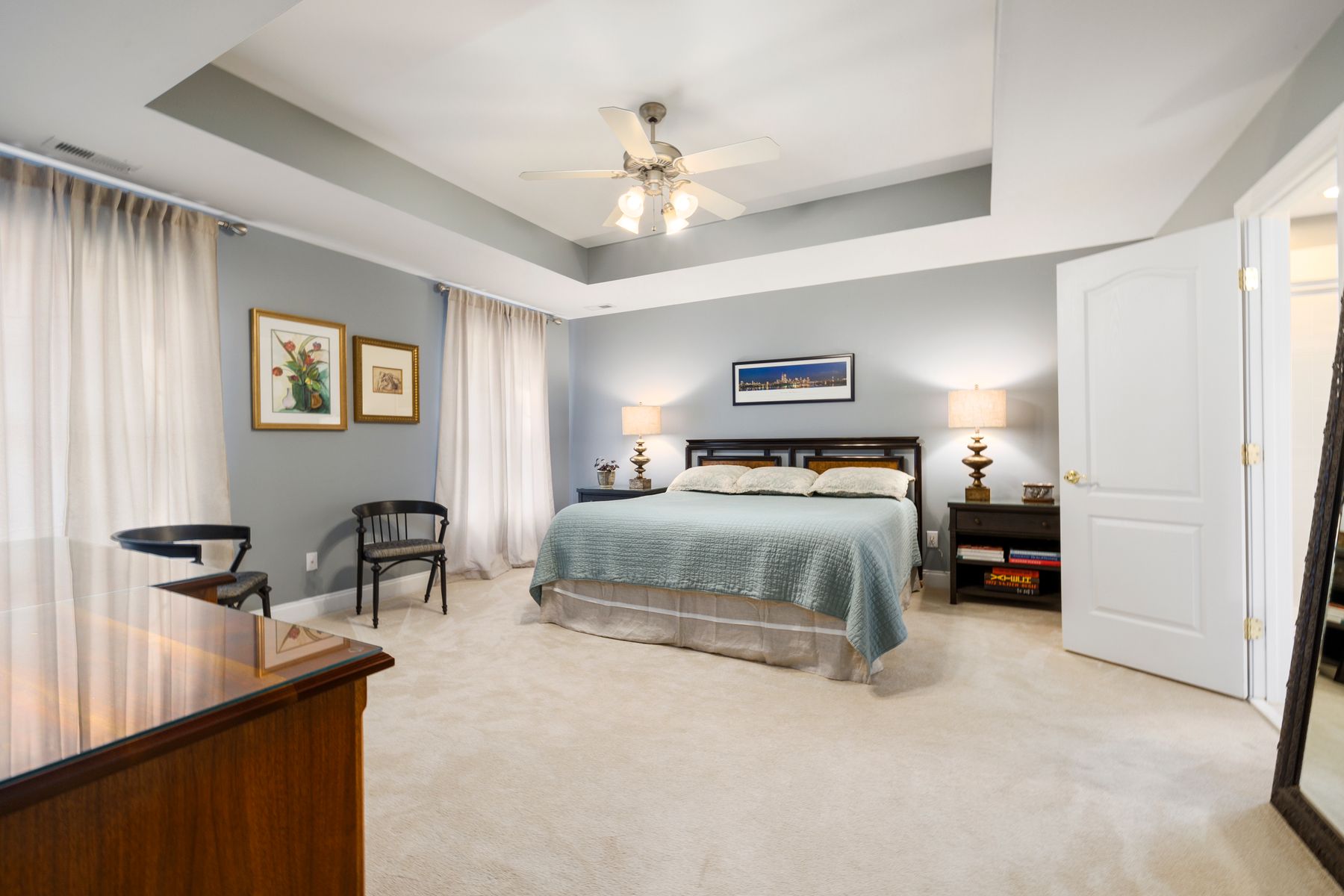
A rug should support the first step from bed and visually connect the frame to the room. Narrow strips often add more edges and maintenance than comfort; one larger rug or two deliberate runners may be clearer. Check door movement, pad compatibility, allergies, pile height and vacuum access. Material and care guidance from [living room rug ideas](/living-room/living-room-rug-ideas/) transfers well to bedrooms. Minimalism means choosing the right textile once, not automatically leaving every floor bare.
Daylight Without Losing Rest
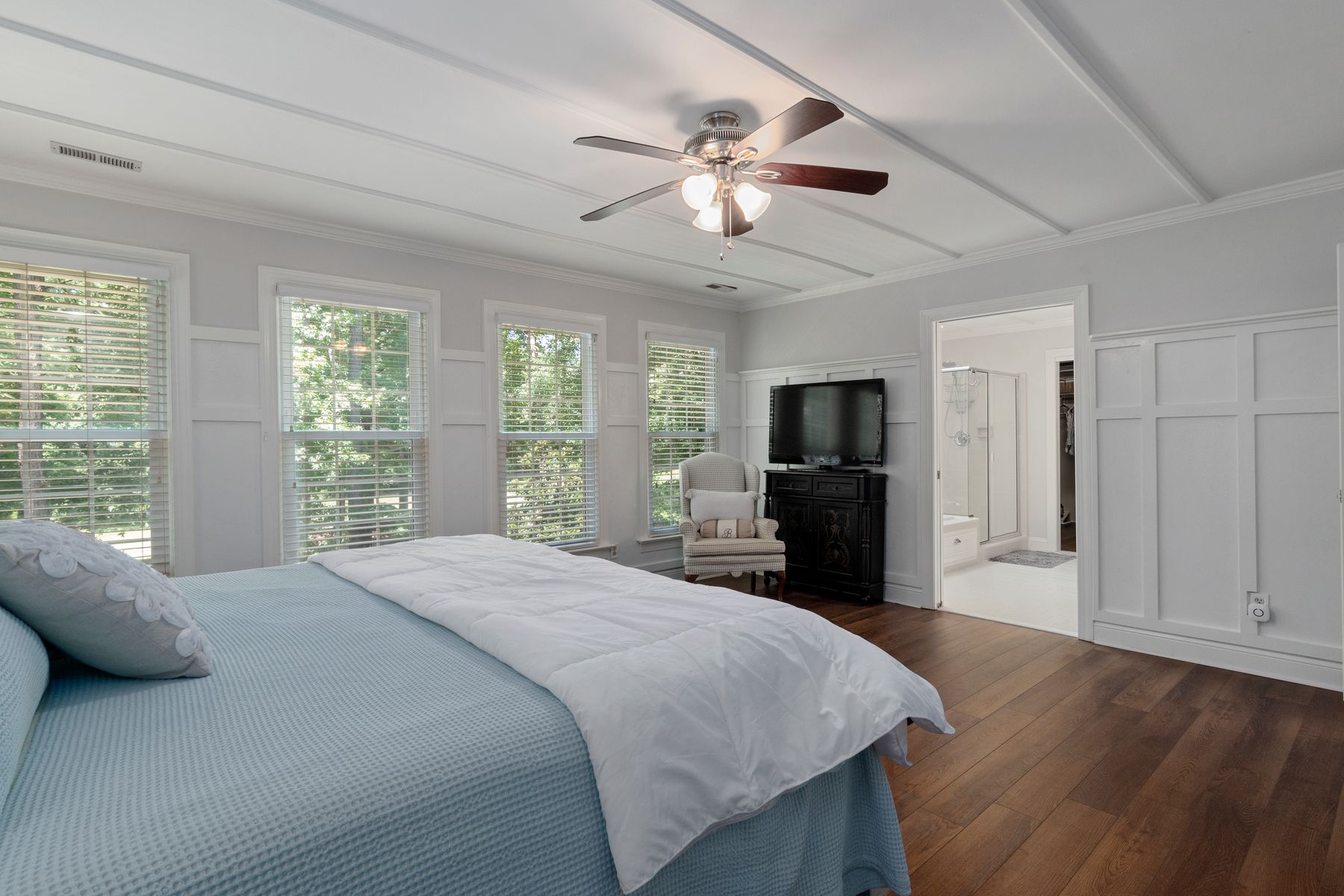
Map direct sun, reflected glare and privacy from pillow height. Keep the bed clear of operable windows, required ventilation and strong downdraughts. A single unobstructed window can be the room’s main visual feature, reducing the need for wall decor, but daytime clarity must not compromise darkness. Position mirrors to distribute useful light without creating a bright reflection at night. In a minimalist room, window treatments should solve several conditions cleanly rather than disappearing at the expense of performance.
Privacy and Real Blackout as Separate Layers
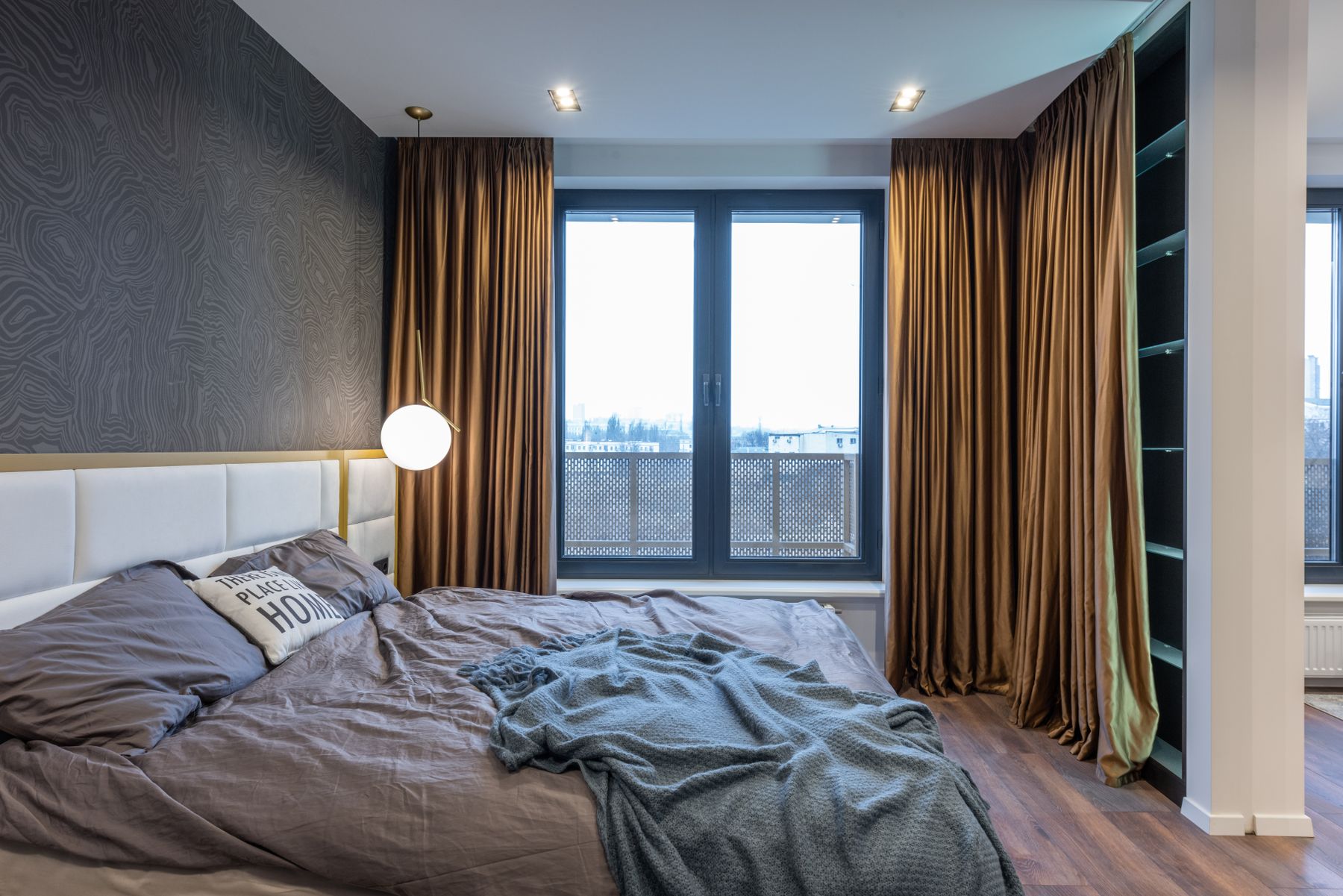
Use a sheer or privacy layer by day and a lined blind, curtain or shutter for sleep. Test light gaps at the head and sides from the pillow; a fabric sold as blackout can still leak substantially around its edges. Full-height curtains simplify the elevation and soften acoustics, but keep them clear of heaters, damp walls and vents. Motorization may help inaccessible glazing, though manual override and service access should be resolved before a pelmet hides the mechanism.
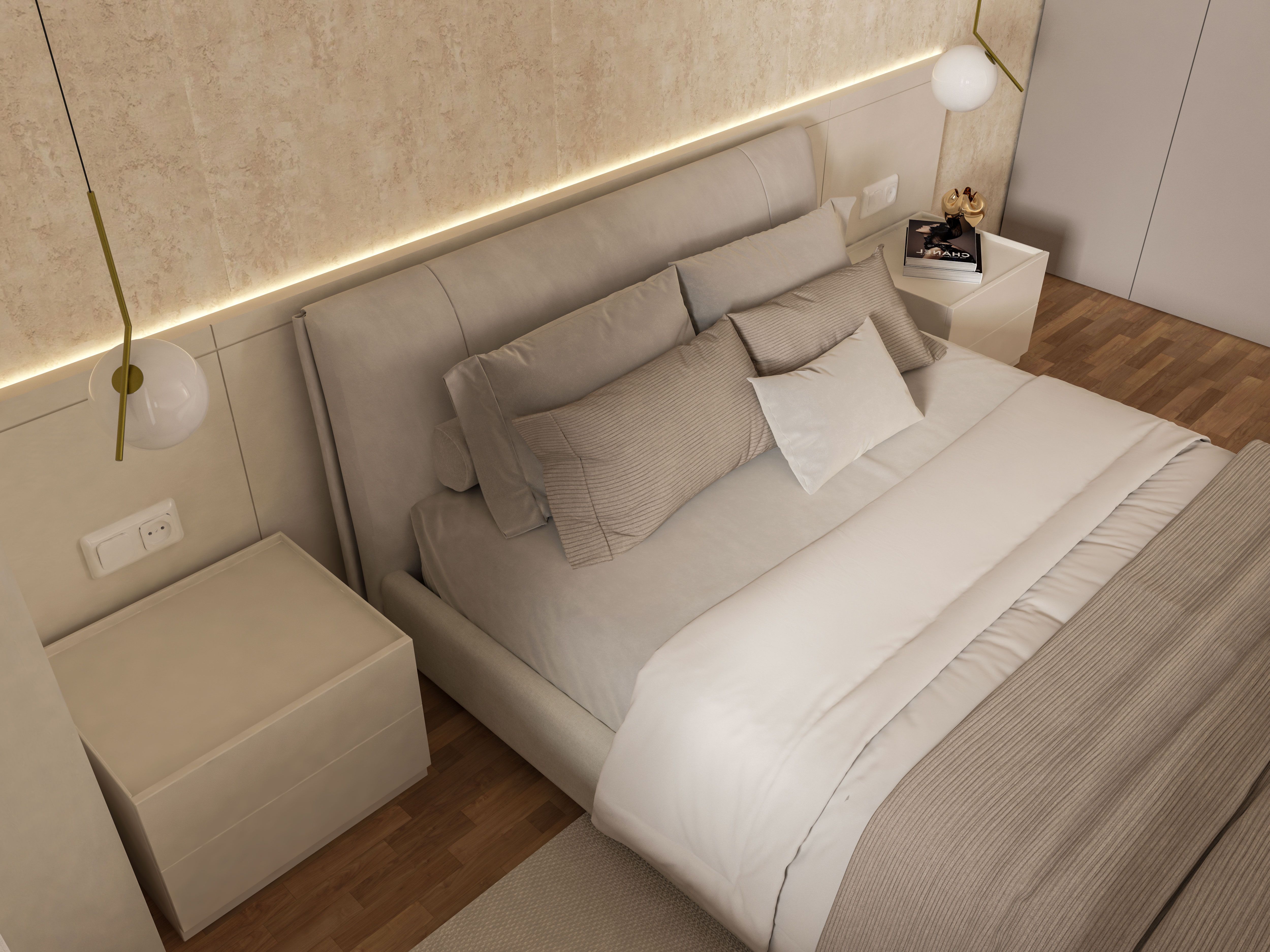
Fewer but Better Lighting Layers
Minimal visual clutter does not mean one harsh ceiling fixture. Combine gentle ambient light, focused reading light and a low orientation source for nighttime movement, with independent controls. Shield visible lamps from the pillow and use integrated light only where components remain replaceable. Warm evening light supports a quieter atmosphere; brighter dressing light can be temporary. [Living room lighting ideas](/living-room/living-room-lighting-ideas/) explains beam control, dimming and color quality in more detail.
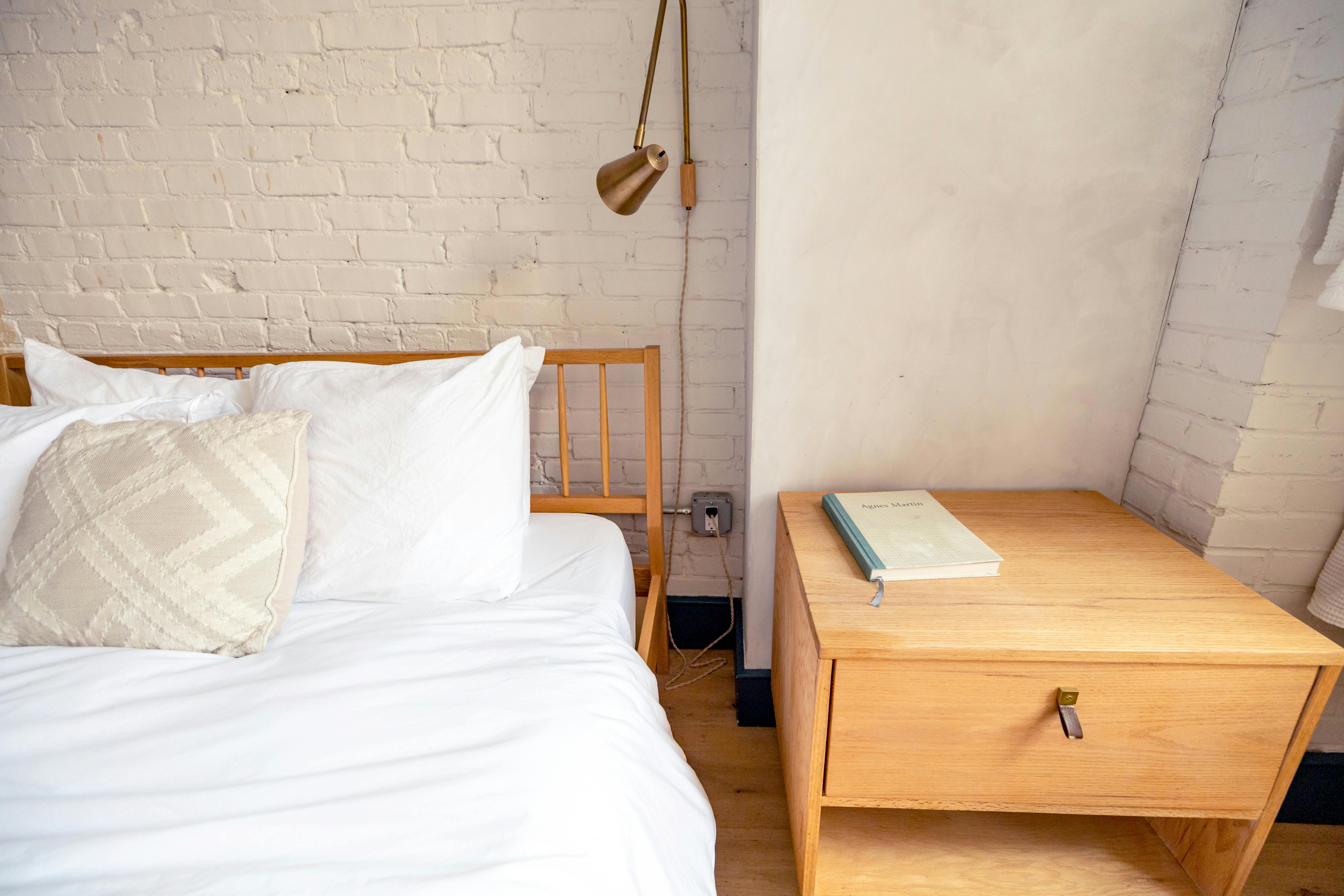
Design the Bedside Around Natural Reach
Set the tabletop near mattress height and allow enough room for water, glasses, medication or a book without turning it into a display. Put switches and charging within natural reach, route cords away from the floor and avoid permanently embedding technology that will be difficult to replace. Two sleepers may need different tables or storage. A single drawer can contain visually noisy essentials, while an open shelf suits only objects that genuinely return there every day.

Make Wardrobes Quiet Outside and Specific Inside
Inventory long hanging, short hanging, folded items, shoes, luggage and laundry before dividing the wardrobe. Full-height fronts reduce visual interruption, but handles, hinges, ventilation and service access must remain practical. Inside, use adjustable shelves and drawers that match actual categories rather than equal compartments. Closed storage is not a license to keep unlimited belongings; it is containment for what supports current life. Review capacity before the room is finished so overflow does not immediately return to chairs and floors.
Under-Bed Storage Without a Trap
Drawers or lift-up bases can add meaningful capacity in a small room, but confirm clearances, weight, ventilation and ease of operation. Store bounded categories such as spare bedding or seasonal clothing, not miscellaneous objects that disappear indefinitely. Containers should protect contents without blocking airflow required by the mattress system. If access requires moving another piece of furniture, the storage is unlikely to stay useful. [Small apartment ideas](/apartment/small-apartment-ideas/) offers related strategies for high-value hidden capacity.
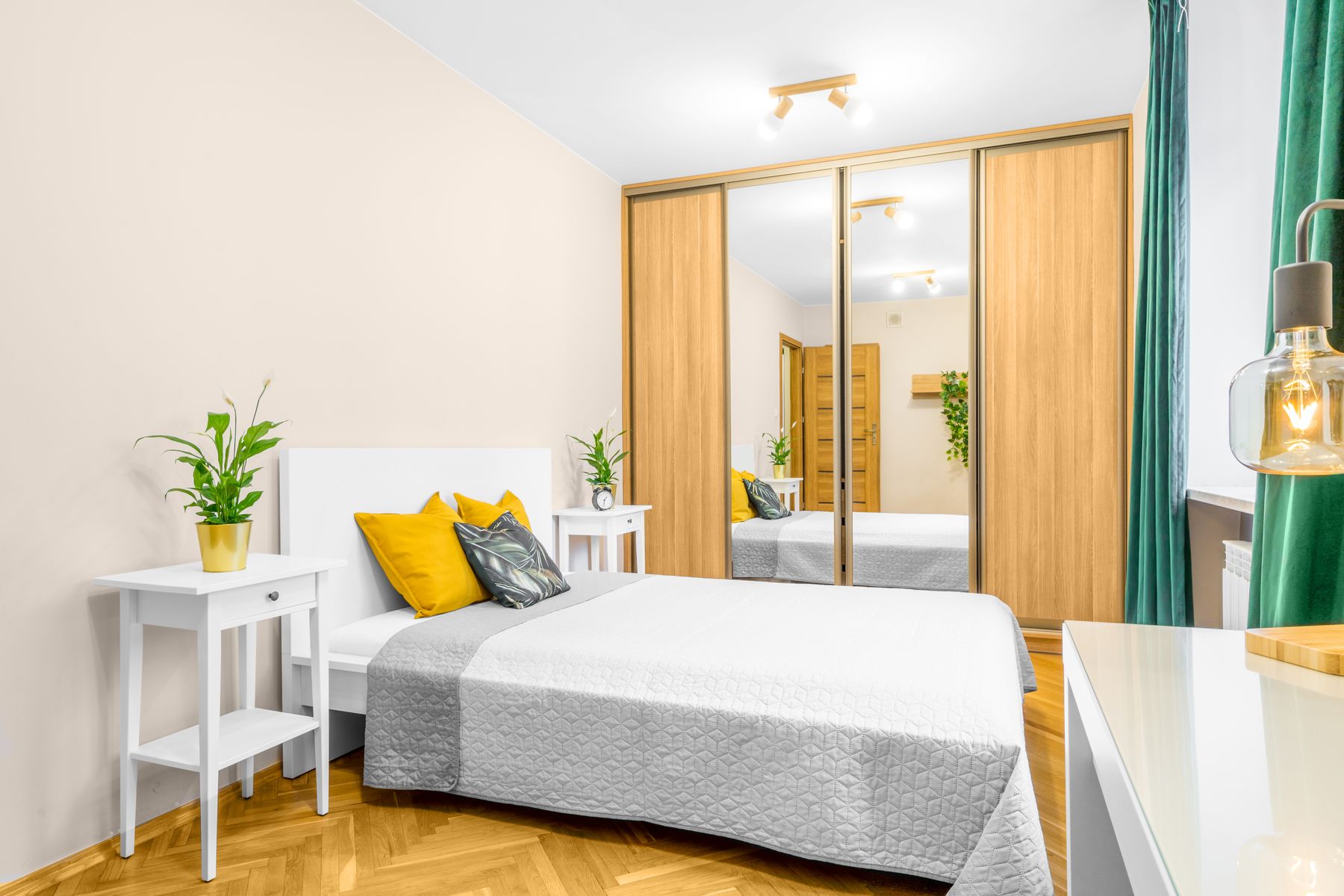
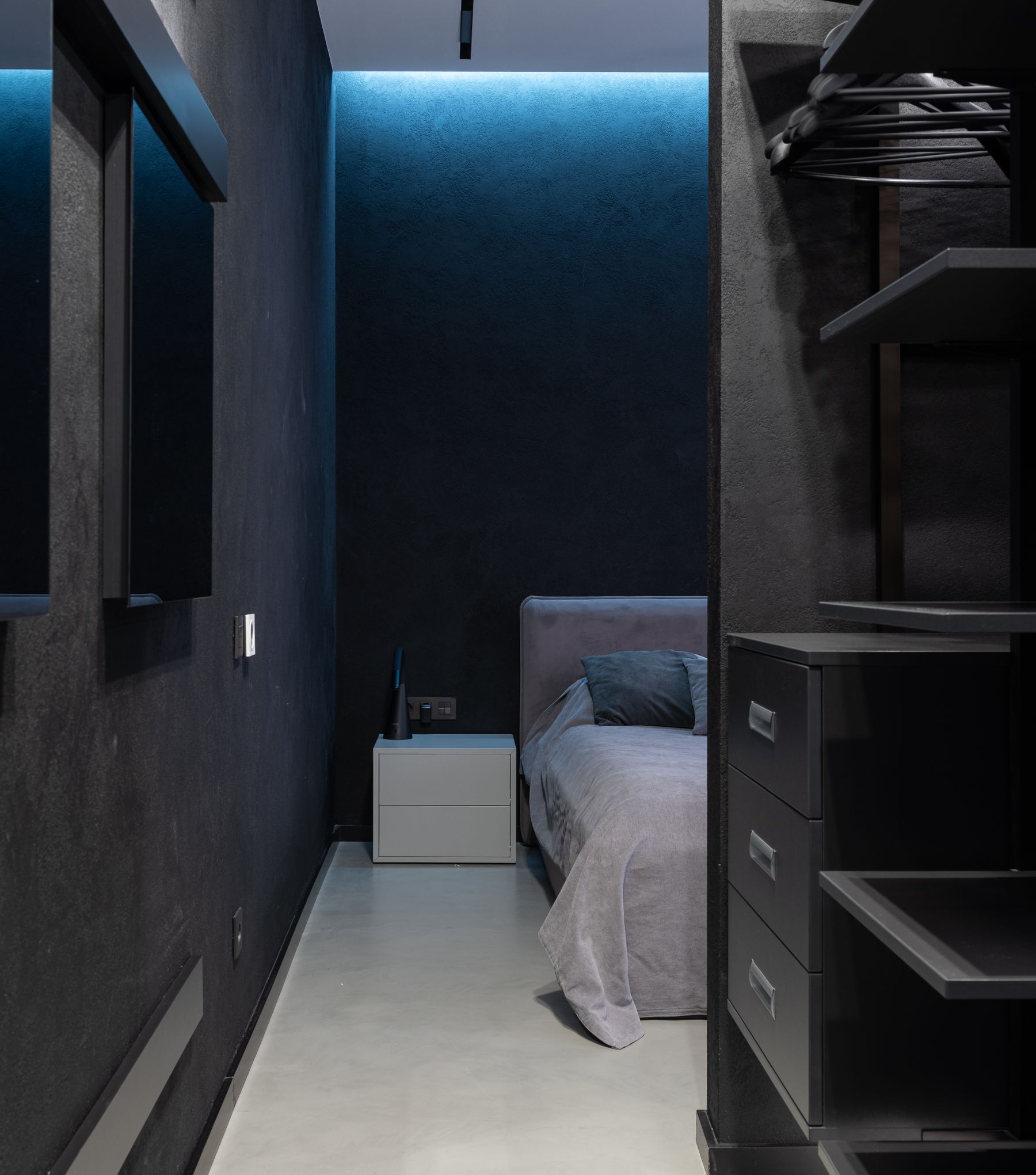
Limit Open Storage to Active Objects
Open rails and shelves can make dressing direct, but they expose dust, color variation and every excess item. Use them for a small current wardrobe or a few books, not as the default answer to insufficient containment. Leave breathing room because tightly packed open storage reads as visual noise even when technically organized. If maintaining the display creates daily labor, choose doors. Minimalism should lower the maintenance burden and decision load, not convert possessions into a permanent exhibition.
Keep Surfaces Clear Through Assigned Homes
A bare nightstand is not a system. Create specific nearby homes for jewelry, cables, skincare, laundry, books and tomorrow’s clothes, then make those homes easier to use than the surface. A shallow drawer, tray, hook or divided wardrobe zone may be enough. Avoid buying organizers before categories are measured. Leave a small landing area for temporary use; demanding permanent emptiness usually creates frustration or concealed disorder elsewhere. Clear surfaces should be the result of good access, not constant correction.
One Art Gesture With Personal Meaning
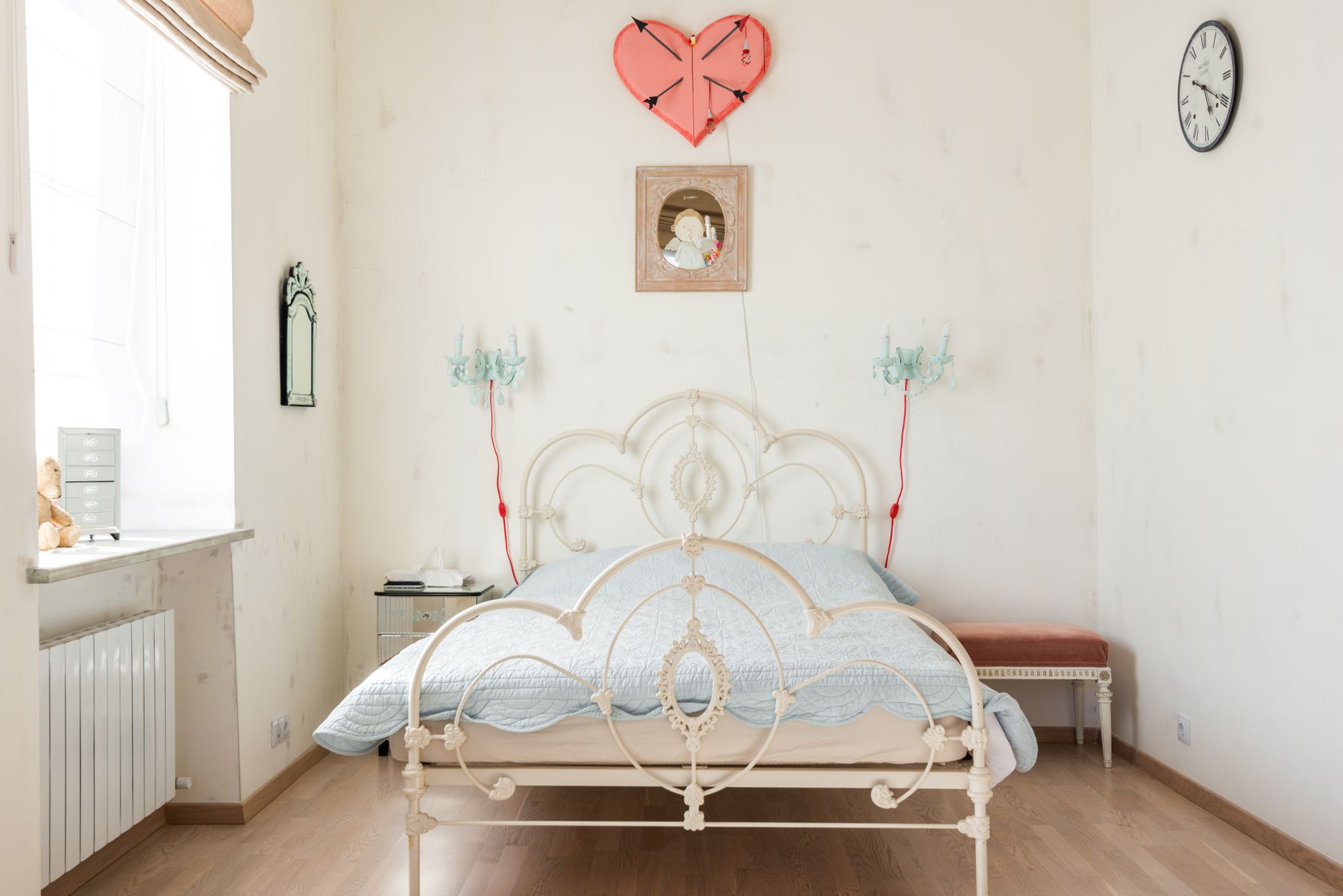
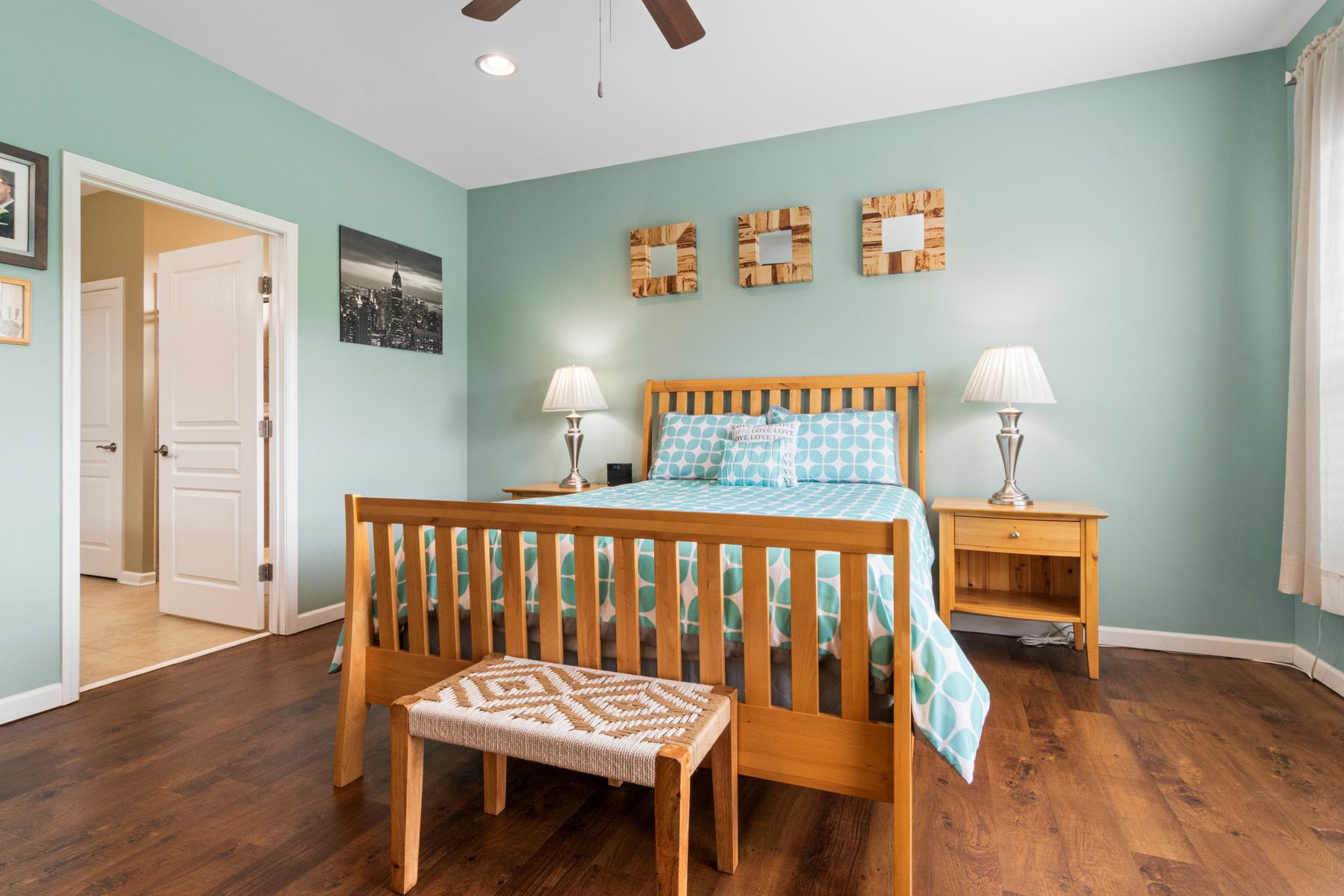
Minimalist does not mean anonymous. A single large work, a small deliberate pair or one object on a ledge can hold more presence than many unrelated accents. Choose personal significance, suitable scale and safe mounting before matching the palette. Protect light-sensitive material from direct sun and avoid placing heavy frames where failure could reach the sleeper. Blank wall is allowed, but it should feel intentional rather than unfinished. [Vintage bedroom ideas](/bedroom/vintage-bedroom-ideas/) offers another route to meaningful objects without generic styling.
A Chair Only When It Has a Job
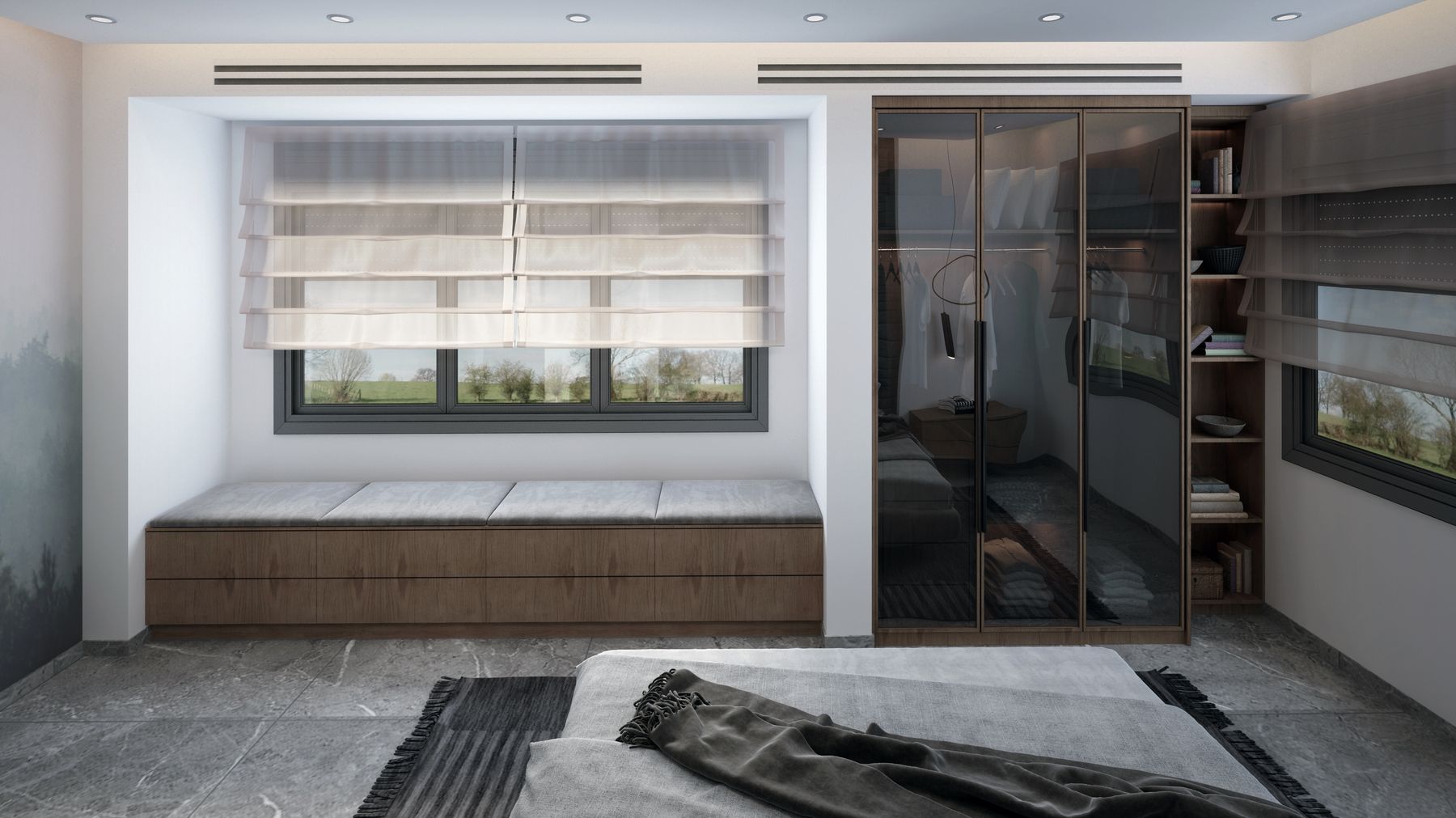
A bedroom chair can support reading, dressing, feeding or mobility, but an unused one often becomes clothing storage. Confirm the activity, light, side surface and clear approach before adding it. A bench at the bed foot may compress circulation more than a compact chair near the window; neither is required for a finished room. If the purpose occurs only occasionally, a movable stool may be enough. Minimalism favors useful flexibility over completing a conventional bedroom furniture list.
Contain Work and Screens After Hours
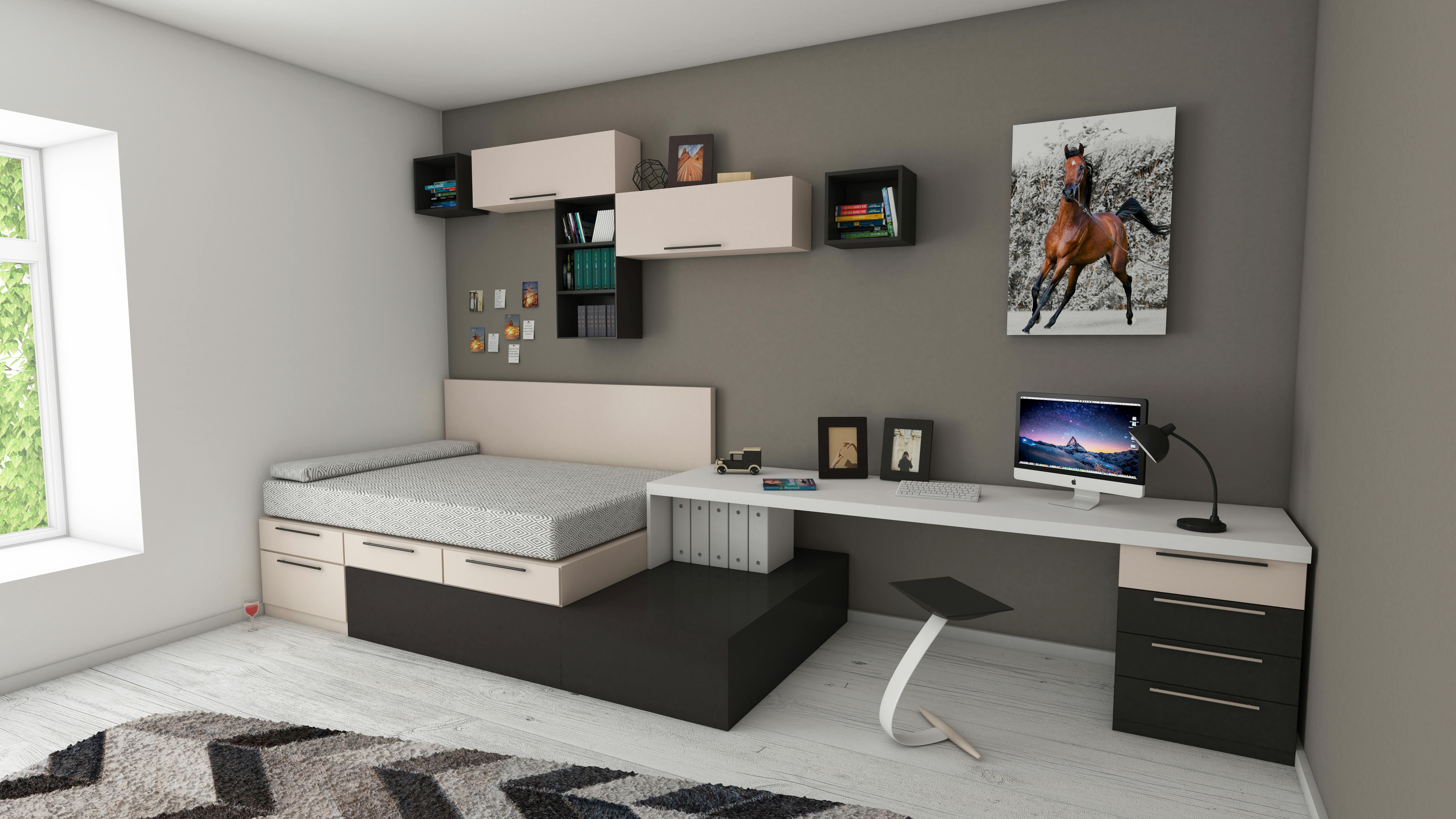
If work must share the bedroom, place the desk outside the direct pillow sightline where possible, manage screen glare and route cables into one serviceable path. Give paperwork and equipment closed storage and create a repeatable shutdown: clear the surface, close the laptop and change the lighting scene. A curtain or orientation change may separate work without building a wall. The zoning principles in [small apartment ideas](/apartment/small-apartment-ideas/) help when one room must carry several routines.
Scale Minimalism for a Small Bedroom
Small rooms need disciplined scale, not necessarily fewer functions. Choose the mattress first, preserve one clear route and use wall-mounted lighting or shallow bedside surfaces where floor width is limited. Storage may need to extend vertically, but keep frequently used items within comfortable reach. Light colors can help, though contrast and darker tones are not forbidden. The key distinction from [small apartment ideas](/apartment/small-apartment-ideas/) is that every decision here protects sleep and dressing within one room.
Adapt the Approach for a Rental
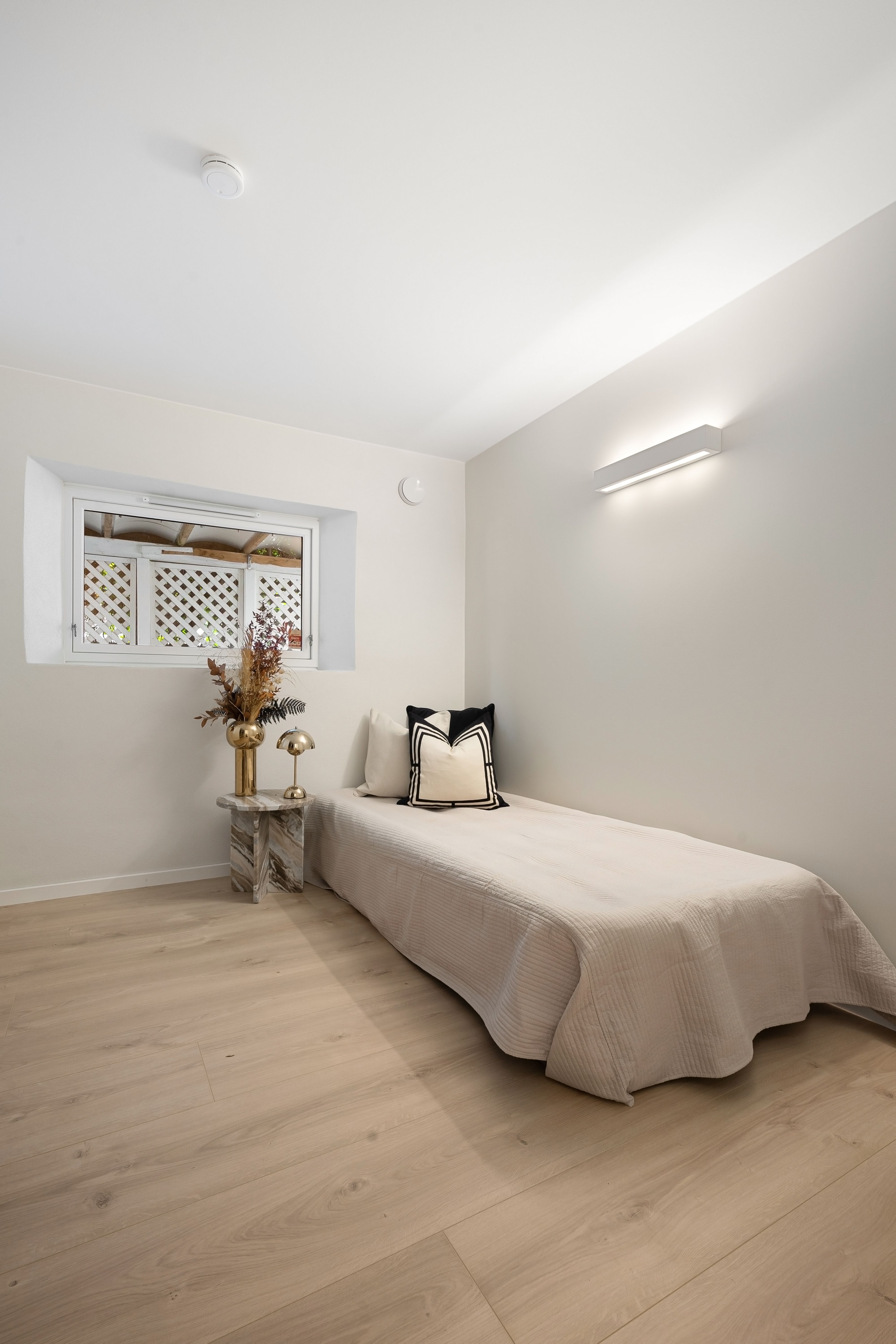
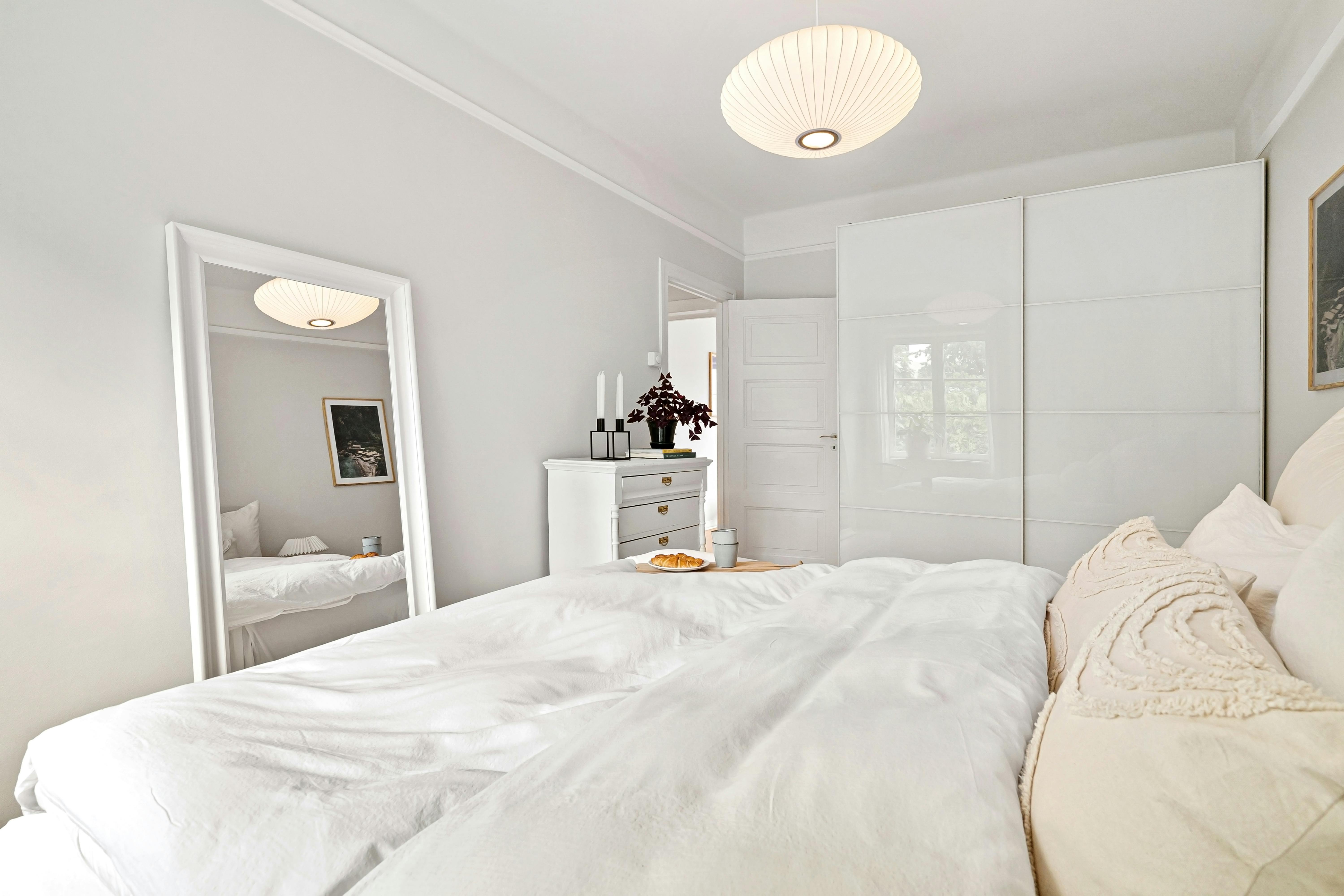
Begin with editing, furniture placement, lamps, bedding and removable containment before changing the shell. Use freestanding wardrobes or drawers that fit the inventory, and obtain permission before painting, drilling or replacing fixtures. Avoid buying temporary organizers that will not move to the next home. Photograph existing conditions and keep landlord-provided elements accessible. A rental minimalist bedroom succeeds when the portable system is coherent; it does not need built-in panels or perfectly concealed architecture.
Design Shared Minimalism Around Two People
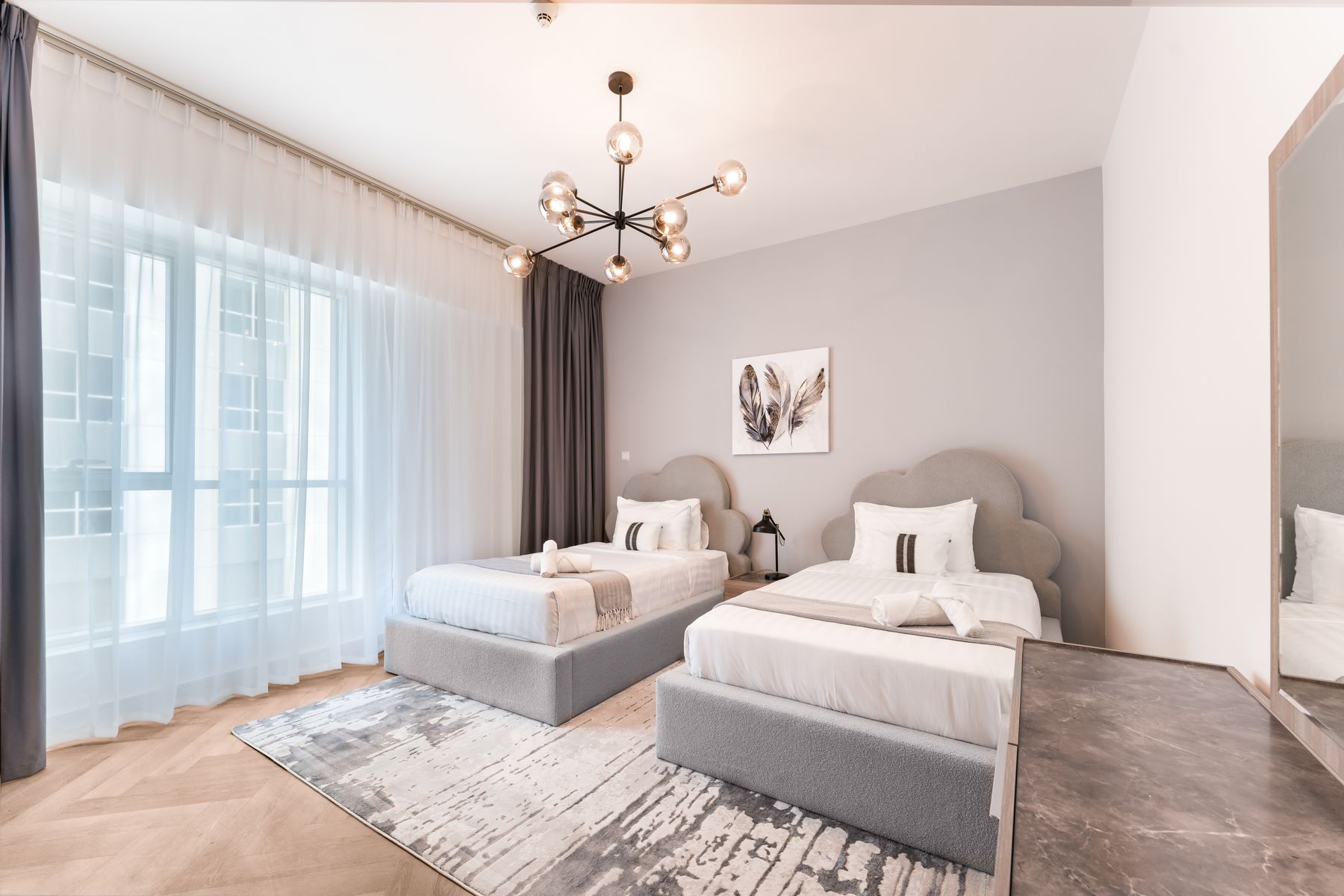
Shared bedrooms need equitable access without forcing identical habits. Map each person’s bedside reach, charging, clothing, temperature and wake schedule. Matching tables can look calm, but asymmetrical storage may work better. Use separate reading lights and allow independent control of bedding where preferences differ. Discuss what may remain visible rather than imposing one person’s threshold for clutter. [Modern bedroom ideas](/bedroom/modern-bedroom-ideas/) expands the functional planning questions when reduction is not the main goal.
A Minimalist Guest Room Must Stay Genuinely Usable
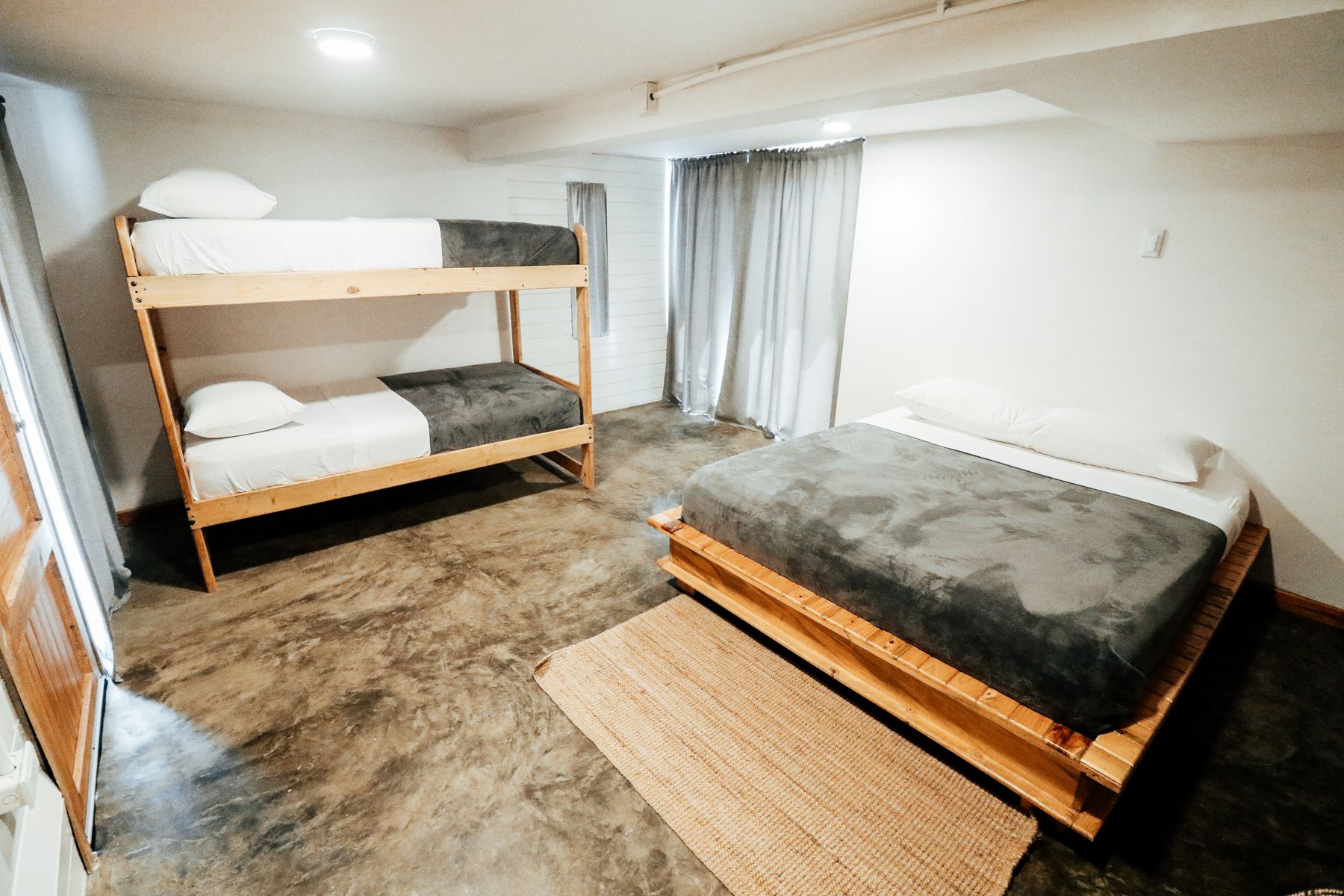
Do not confuse an empty guest room with hospitality. Provide a supportive bed, darkness, a reachable lamp and outlet, a surface for water, hooks or hanging space and a clear place for luggage. Keep personal overflow out of guest storage so visitors do not have to rearrange the room. If the space has another daily use, choose a transformation that can be completed quickly and explain it honestly. Reduction should make arrival intuitive rather than leave guests without basic functions.
Maintain Quiet Through a Simple Reset
Create a short evening or morning reset: return clothes, clear the bedside landing, close storage and prepare the light scene. Schedule deeper reviews seasonally rather than policing every object daily. Keep cable routes, filters, curtain tracks and under-bed areas accessible for cleaning. If a system repeatedly fails, change the storage or furniture instead of blaming the user. The strongest minimalist bedroom looks quiet because the practical work is easy and visible categories remain bounded—not because it is constantly staged.
Edit for Sleep, Comfort and Longevity
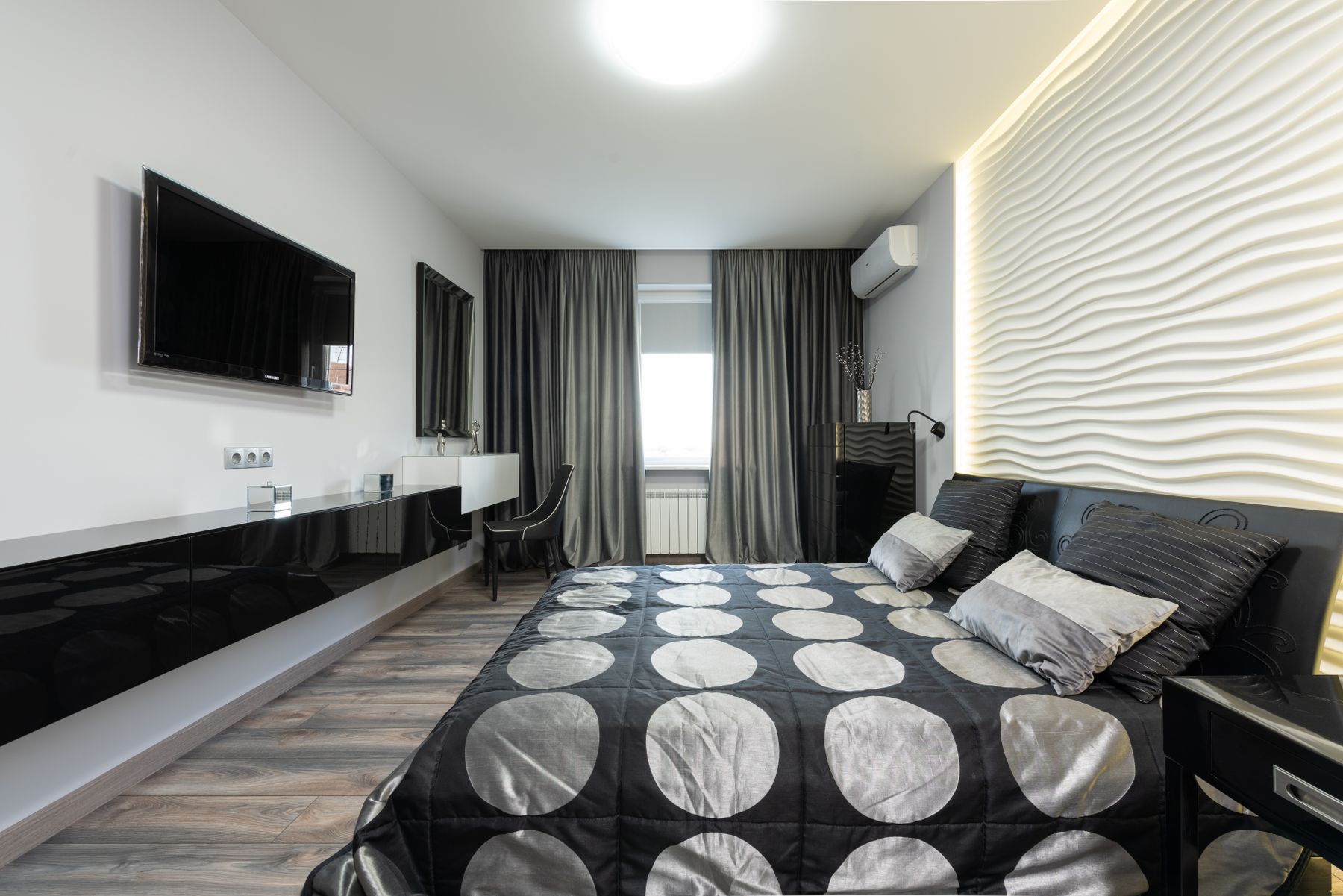
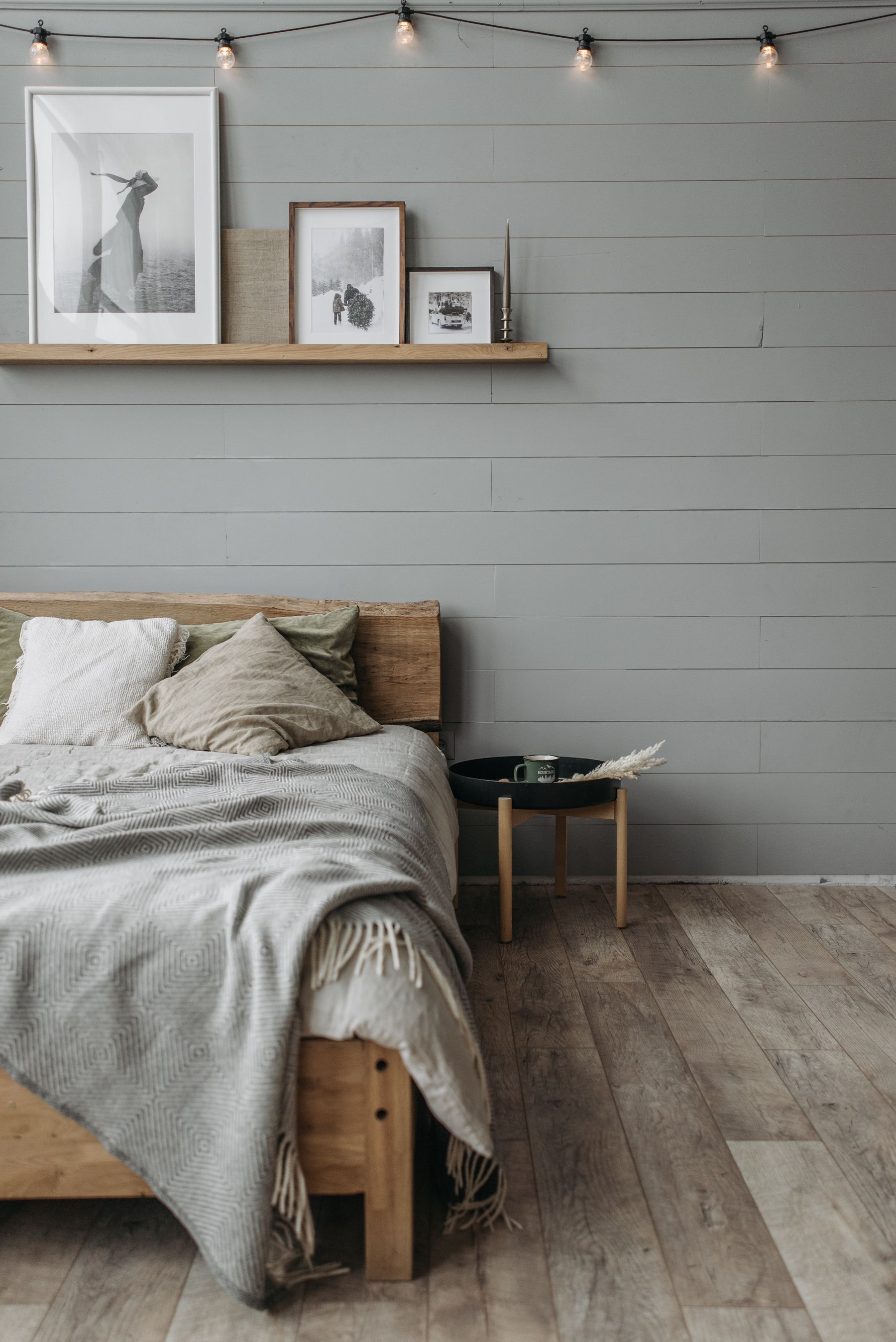
Review the room from the doorway, from bed and during dressing. Remove duplicated furniture, decorative storage and objects that complicate cleaning, but keep the art, books or color that make the space personally restorative. Check mattress support, darkness, temperature, acoustics and accessible controls before evaluating visual purity. Buy replacements slowly and repair durable pieces where sensible. A minimalist bedroom is complete when further removal would reduce comfort or identity, and further addition would create weaker value than the calm already achieved.