Define Modern Without Making It Sterile
Modern bedroom design is a current, function-led approach built from clear forms, useful furniture and controlled visual rhythm. It is broader than Minimalist, which makes reduction a principle; less trend-responsive than Contemporary; and less dependent on premium finishes than Luxury. A modern room can hold color, art and older pieces when they support a coherent layout. For whole-home circulation and shared materials, continue with [modern apartment ideas](/apartment/modern-apartment-ideas/); this guide concentrates on sleep and bedroom routines.
Plan the Bed and Routes Before the Furniture Set
Measure the mattress, complete frame, door swings, wardrobe fronts, heating equipment and the narrowest delivery point. Preserve a clear path from the entrance to both the bed and frequently used storage; do not fill leftover space with a matching bench simply because a collection includes one. Test whether the bed can be made, drawers can open and another person can pass. The cleanest modern room is still badly planned if the frame pinches the daily route or hides an outlet needed every night.
A Bed With a Clear Silhouette
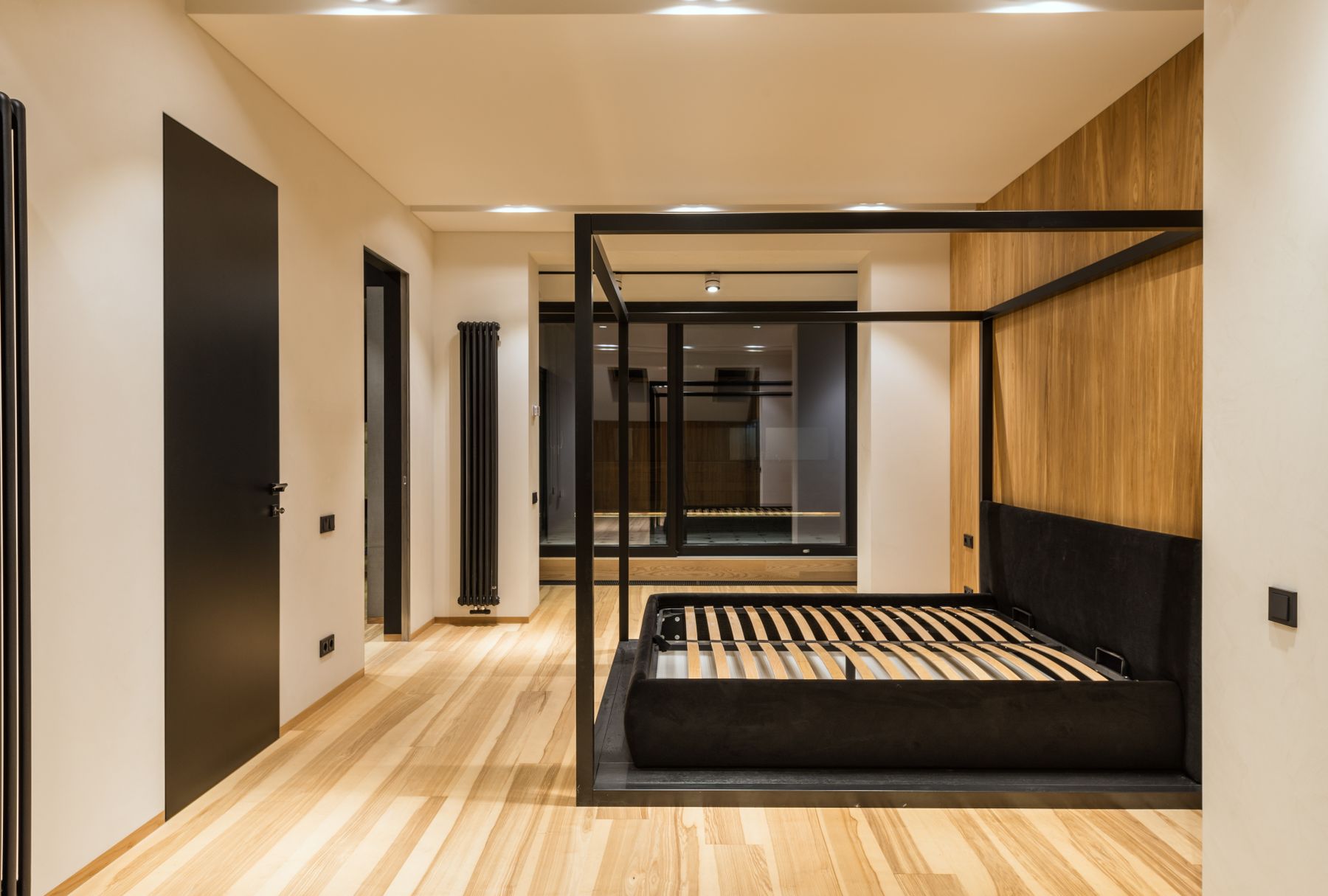
Platform, upholstered and slim timber beds all suit a modern room when their proportions fit the mattress and architecture. Compare overall width, headboard height, side-rail depth and clearance beneath the frame—not only mattress size. Low beds can emphasize horizontal space but may be difficult for some bodies; deep upholstered frames consume valuable circulation. Check slat spacing, center support and manufacturer requirements for the mattress. A strong silhouette should reduce the need for decorative furniture competing around it.
Let the Headboard Organize the Bed Wall
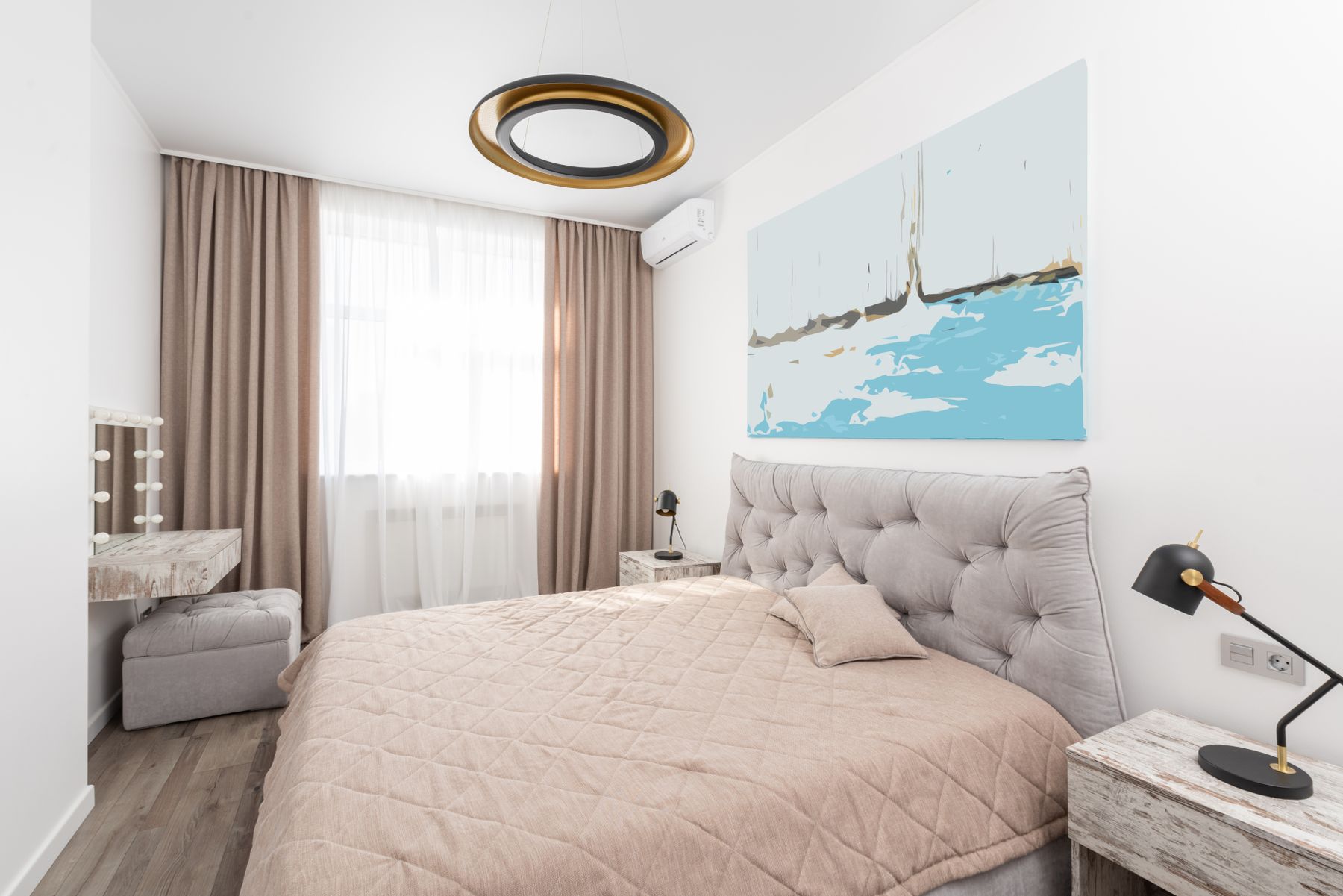
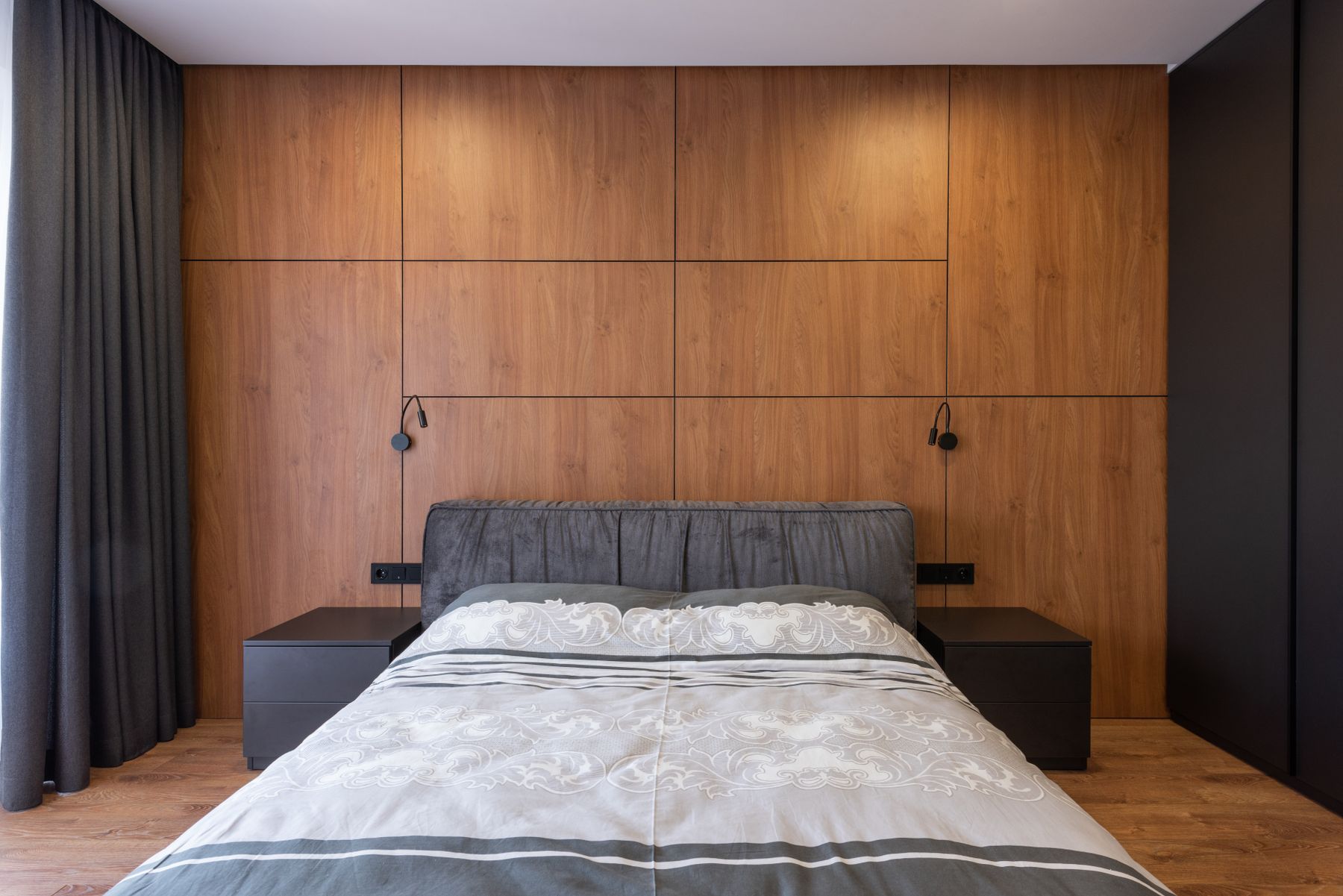
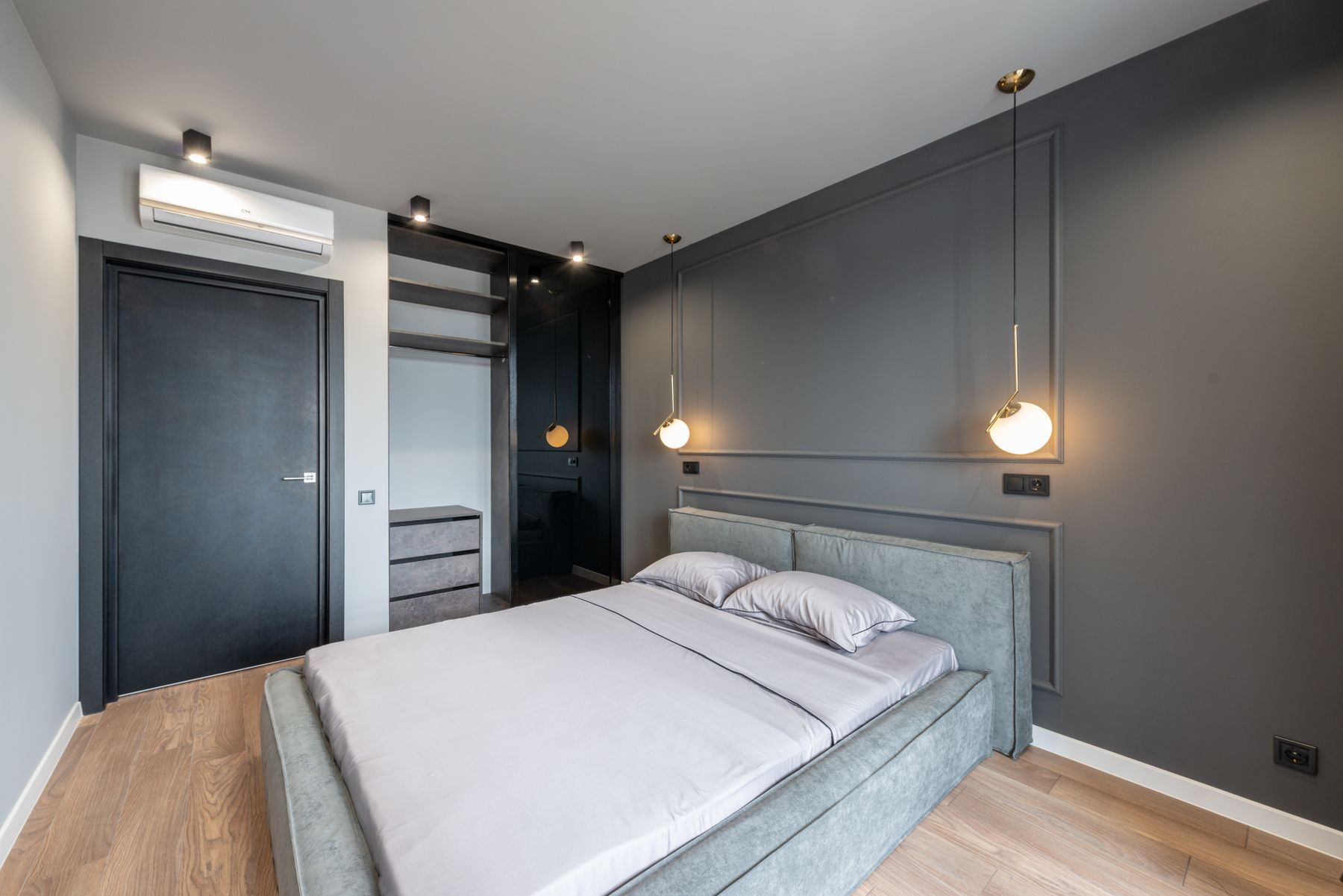
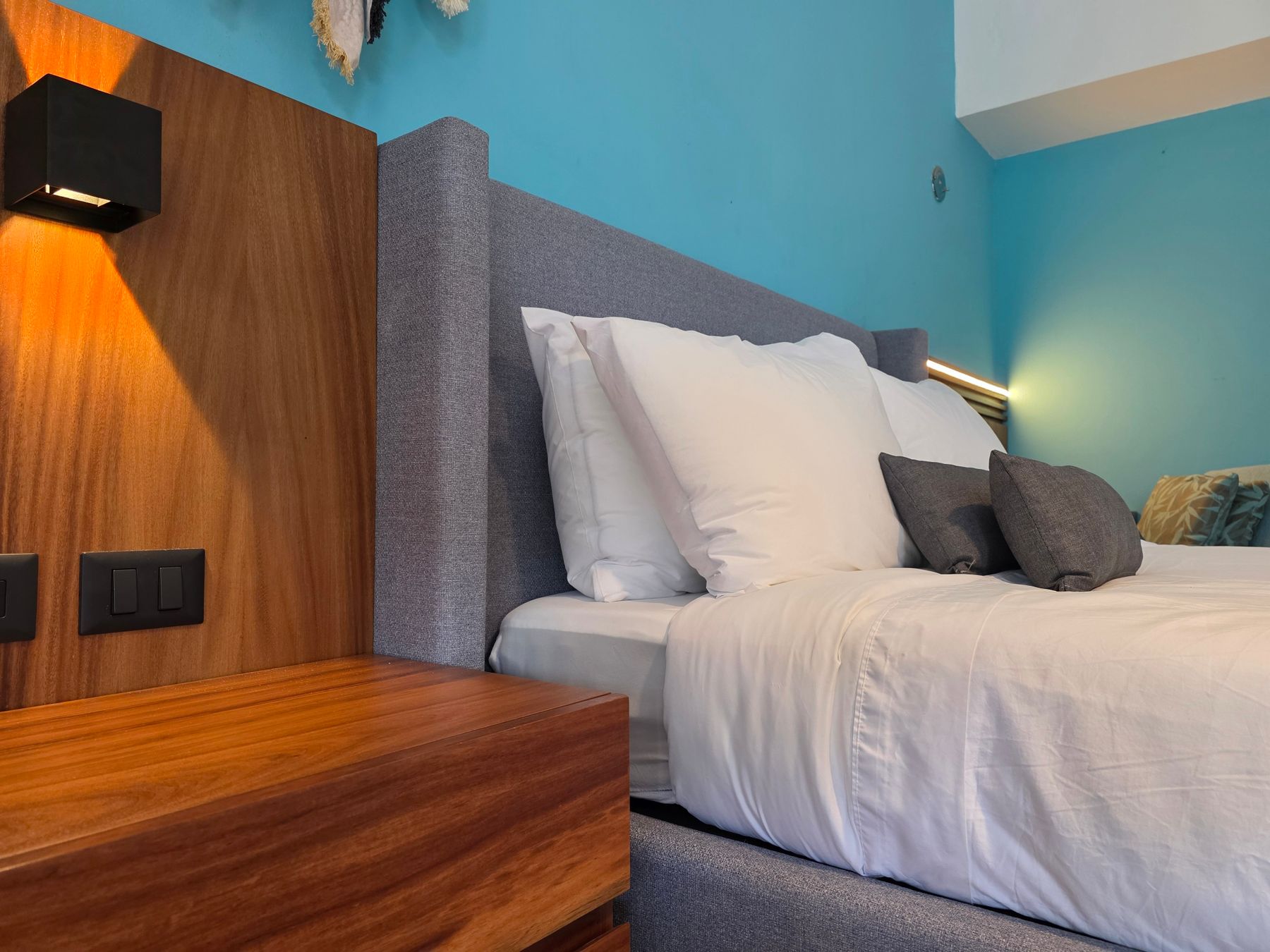
An extended headboard, timber panel or shallow architectural surround can connect the bed, nightstands and lighting into one composition. It works best when outlets, switch positions and future access are designed before panels are fixed. Upholstery adds softness and acoustic absorption but needs a cleanable fabric and enough separation from damp exterior walls. A full-width treatment should still leave the bed visually identifiable; if every surface uses the same heavy material, the wall can feel like hotel fit-out rather than a personal room.
Neutrals Built From Undertone and Texture
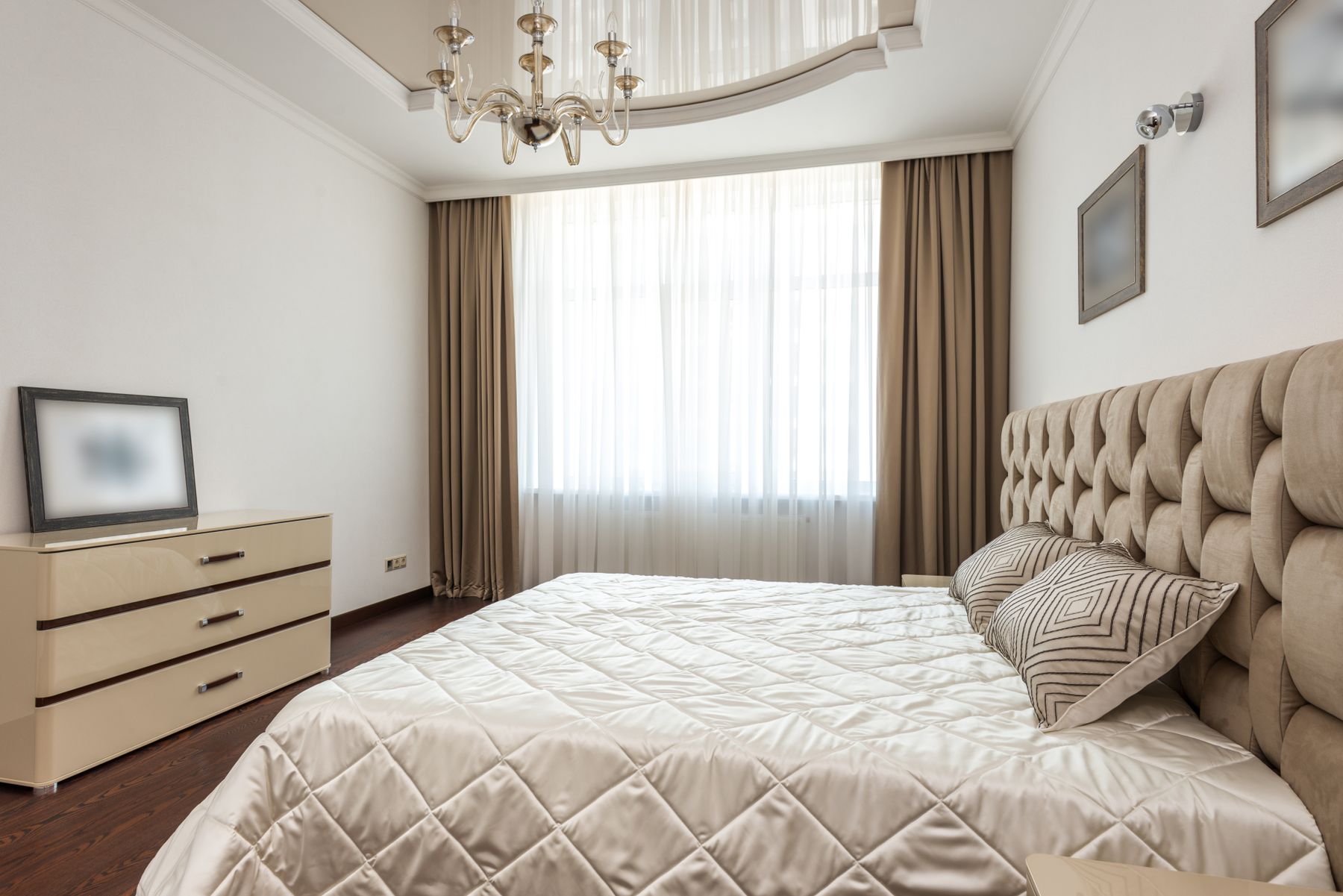
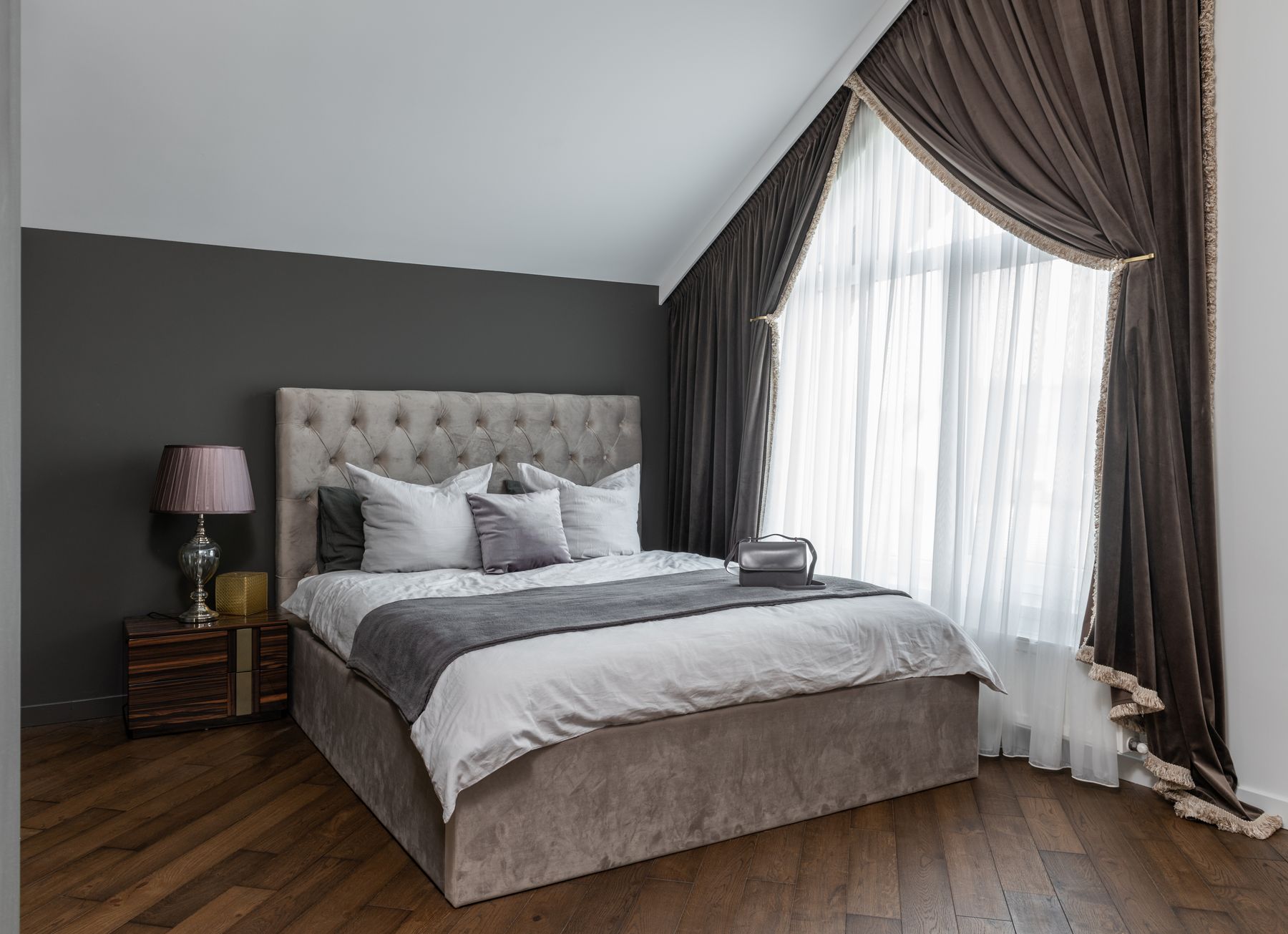
Cream, mushroom, taupe, stone and gray can form a calm modern base, but they are not interchangeable. Compare their red, yellow, green or blue undertones beside flooring and curtains through the full day. Vary material and sheen—washed linen, matte paint, wool, timber and a restrained reflective accent—rather than buying many near-identical beige objects. Cool gray can work in bright, warm light; in a shaded room it may need honeyed wood or a muted warmer wall to avoid feeling institutional.
Use Color as Structure, Not Scatter
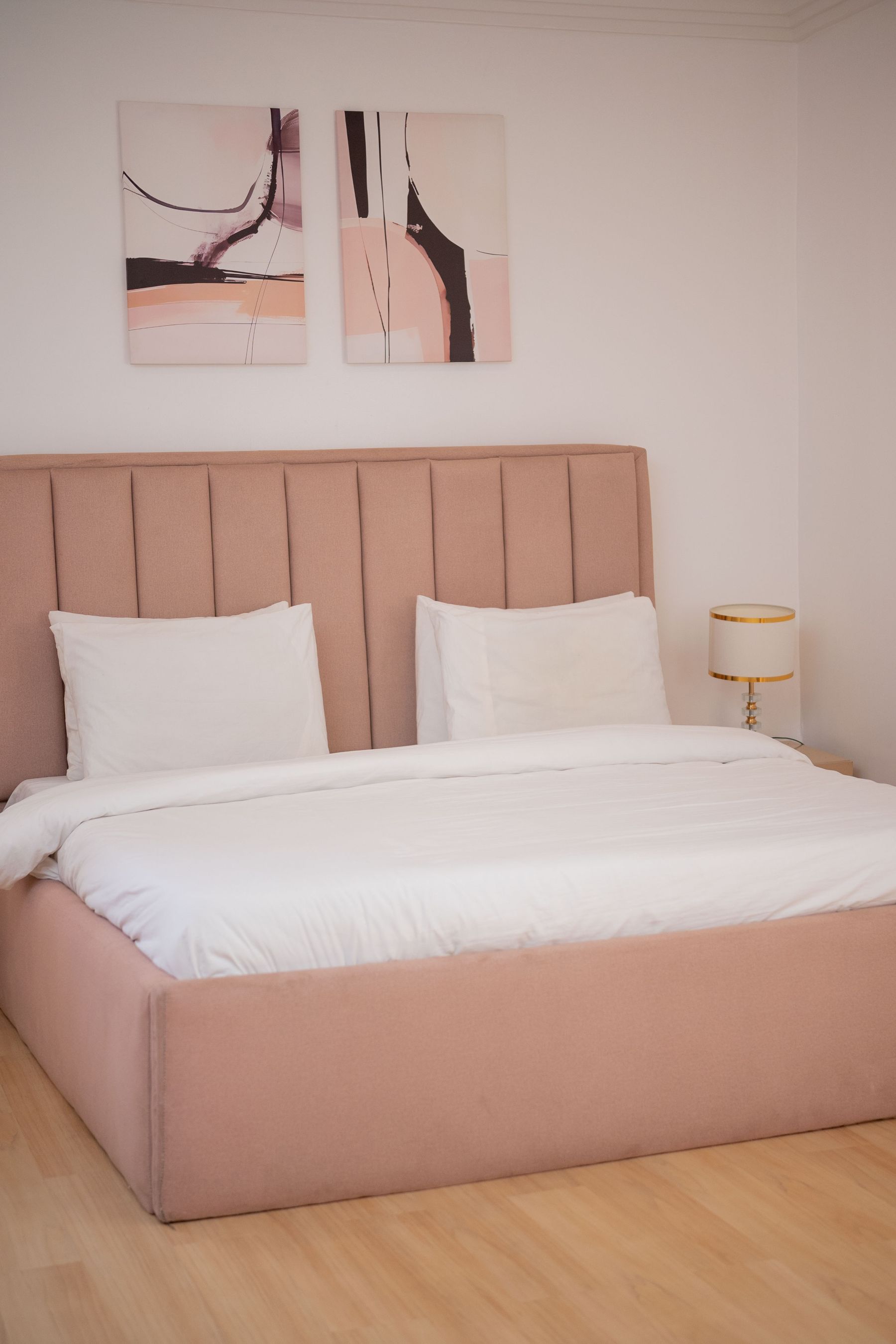
A modern bedroom need not be neutral. Give color a defined role: a bed, complete wall, curtain plane or large textile has more conviction than unrelated cushions and ornaments. Dusty rose, ochre, olive, clay, muted blue and burgundy can feel calm when their saturation suits the light. Repeat the chosen hue once or twice at different scales, then let timber, white and dark details provide relief. Future color-specific Bedroom guides can go deeper; this page keeps color subordinate to the functional modern framework.
Warm Clean Lines With Real Material
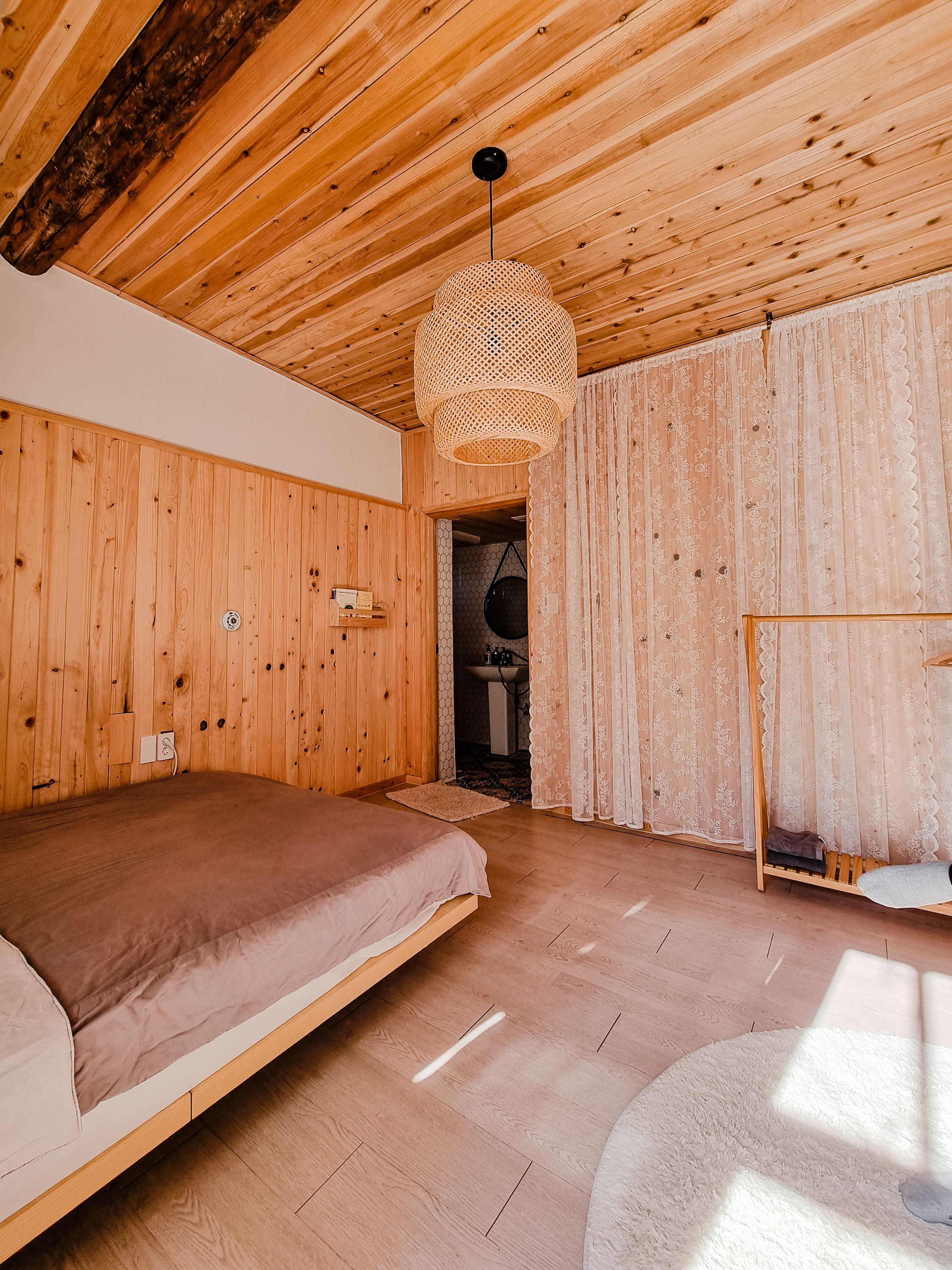
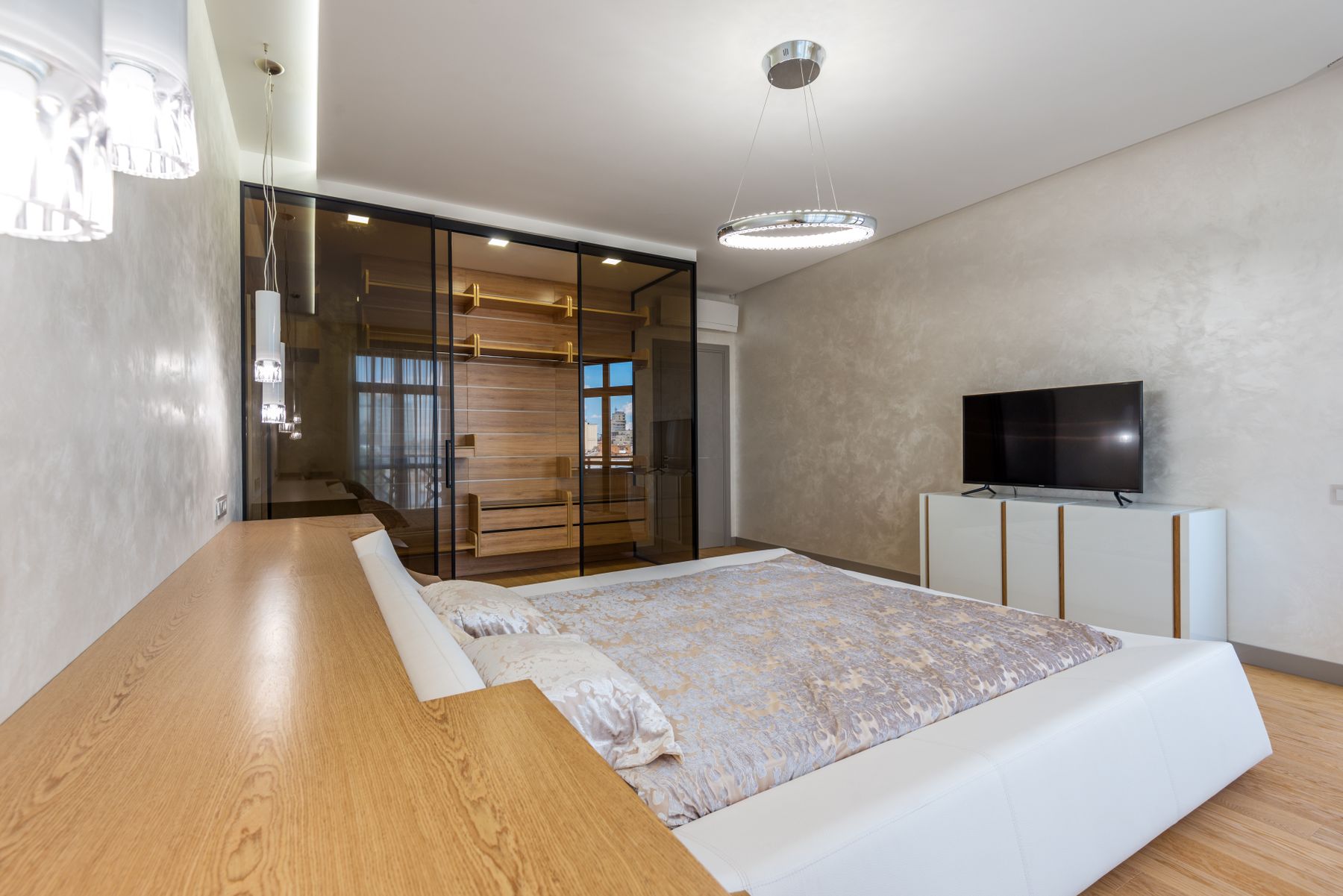
Timber veneer, solid wood, woven fabric, wool and mineral finishes prevent clean-lined furniture from feeling disposable or cold. Use each material where its properties help: wood at touch points, textile near the body, durable finish around storage and easily cleaned surfaces near circulation. Repeat a timber undertone rather than forcing an exact species match. Avoid faux texture on every plane; one well-detailed wood wall or cabinet has more presence than several printed laminates competing for attention.
Layer Bedding for Sleep, Not Display
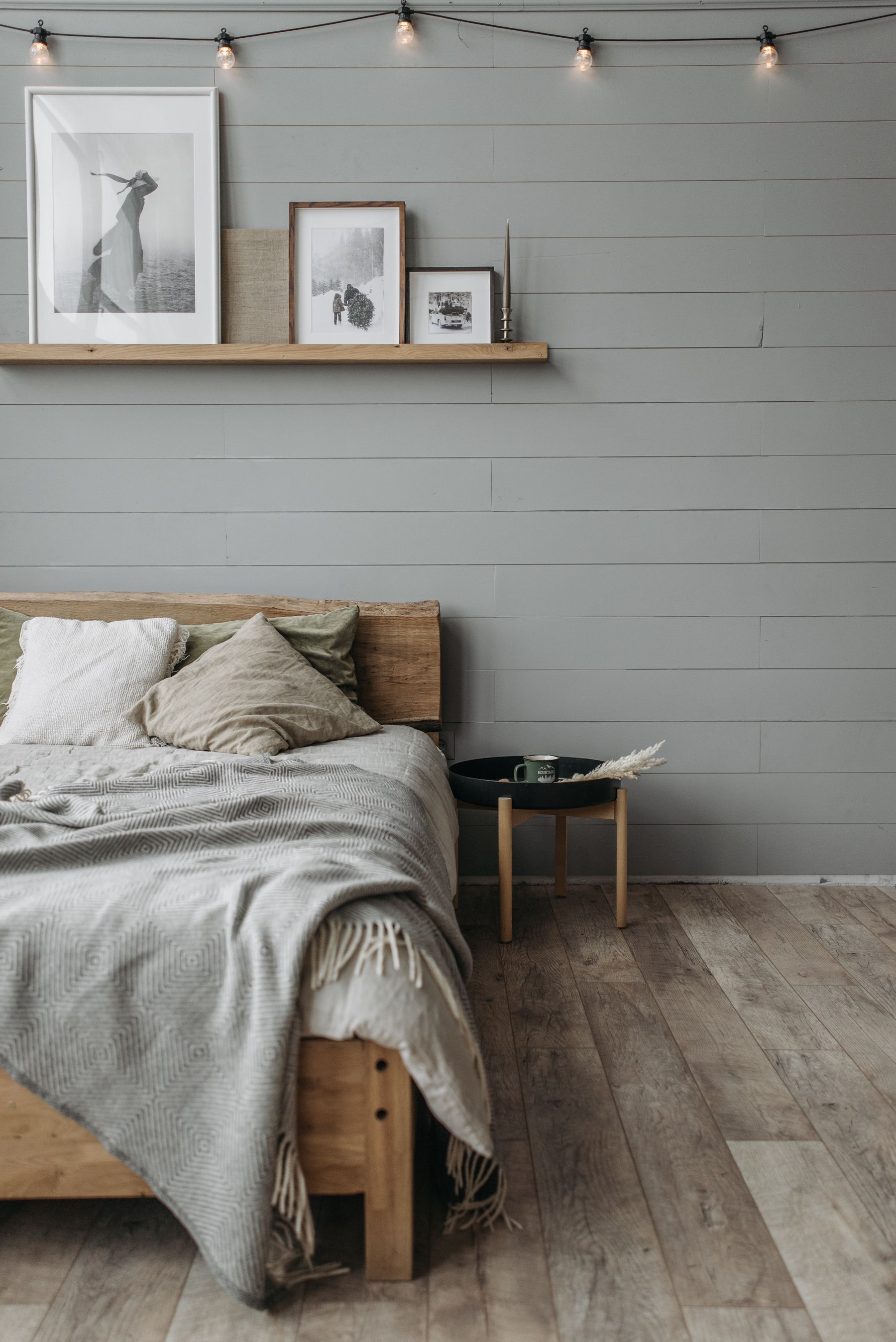
Begin with breathable sheets and a duvet or blanket appropriate to the sleeper and season, then add only the layers that improve warmth or touch. A quilt, coverlet and one lumbar cushion can give depth without creating a nightly pile on the floor. Mix texture and weave before pattern, and confirm that every removable layer has realistic laundering and storage. A modern bed looks considered because the proportions and materials are calm—not because ten decorative pillows have been aligned with showroom precision.
Size the Rug to the Bed and First Step
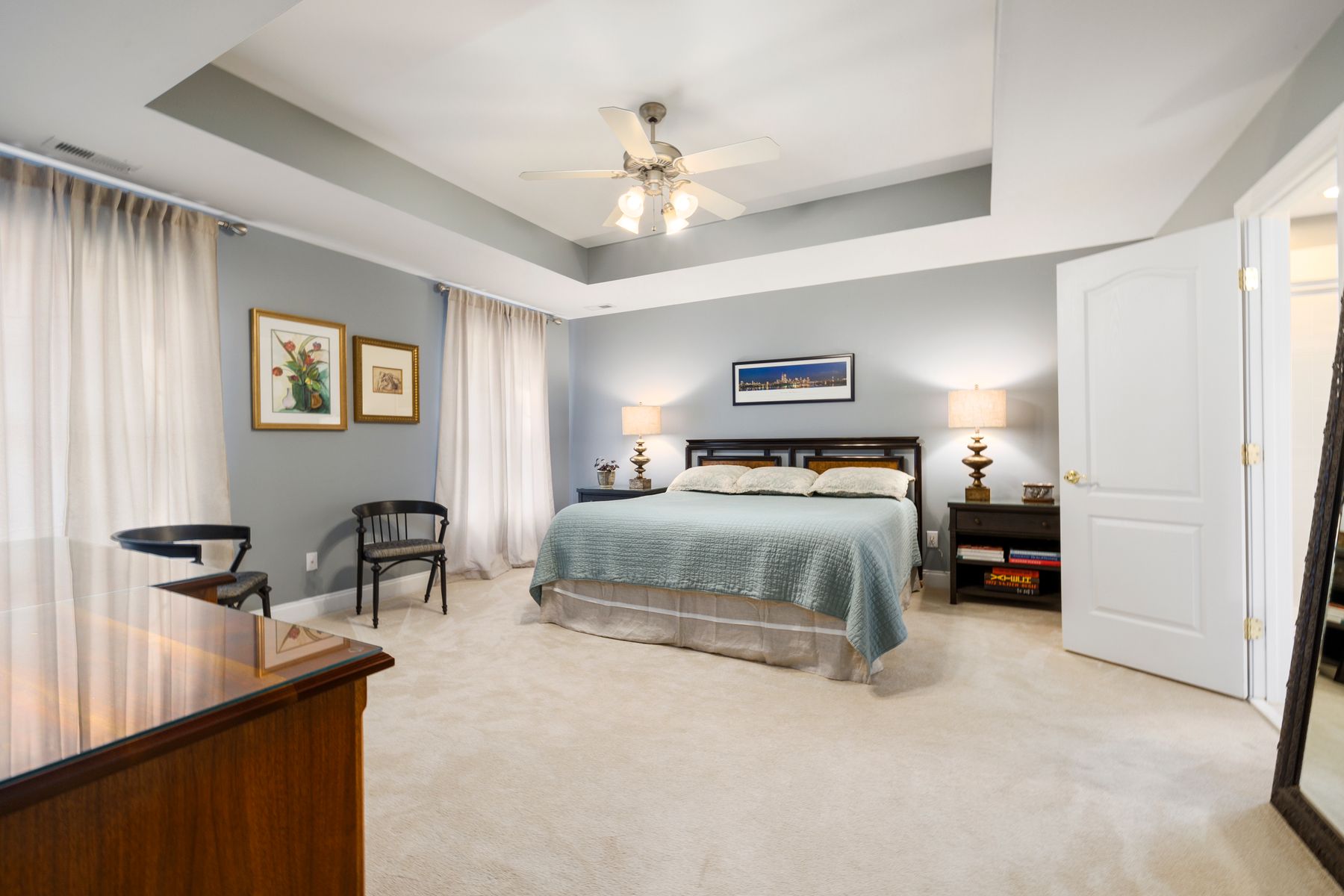
A rug should extend far enough beyond the used sides and foot of the bed to create a comfortable landing, not appear as a narrow decorative strip. Runners can suit tight rooms, while one larger rug reduces visual fragmentation. Use an appropriate pad, keep edges clear of door swings and avoid thick transitions in a nighttime route. Consider fiber, vacuum clearance, allergies and cleaning access alongside color. The material tests in [living room rug ideas](/living-room/living-room-rug-ideas/) transfer well to bedrooms.
Daylight Without Losing Control of Sleep
Map direct sun, reflected glare and privacy at the hours the room is used. Keep delicate textiles and artwork away from intense exposure, and position mirrors so they distribute useful light without reflecting the bed or bright window uncomfortably. A desk or dressing surface may benefit from side daylight, while the pillow needs control. Do not block operable windows or required ventilation with a tall headboard. The goal is a bright daytime room that can still become dark, private and visually quiet on demand.
Sheers, Curtains and Real Blackout as Separate Layers
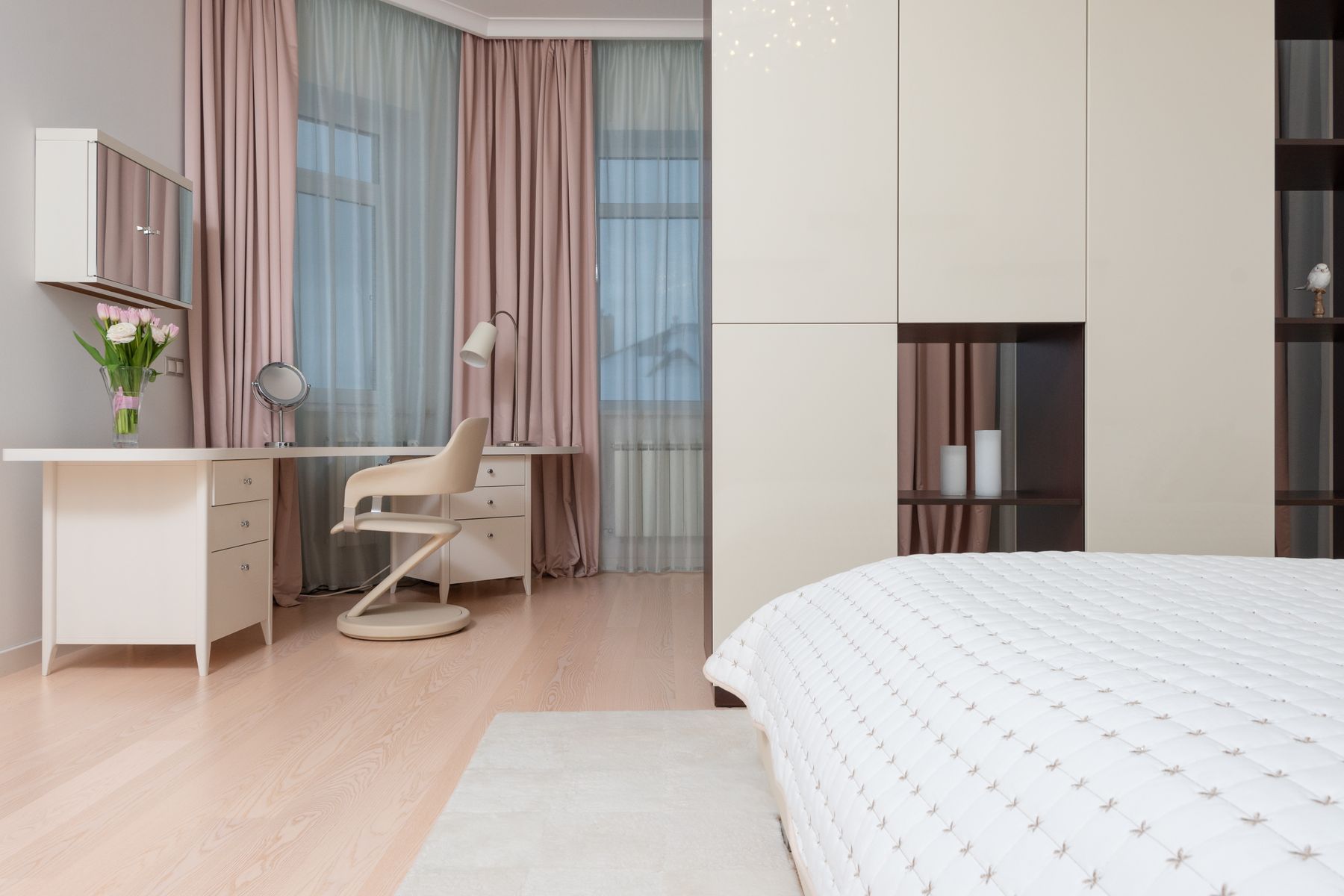
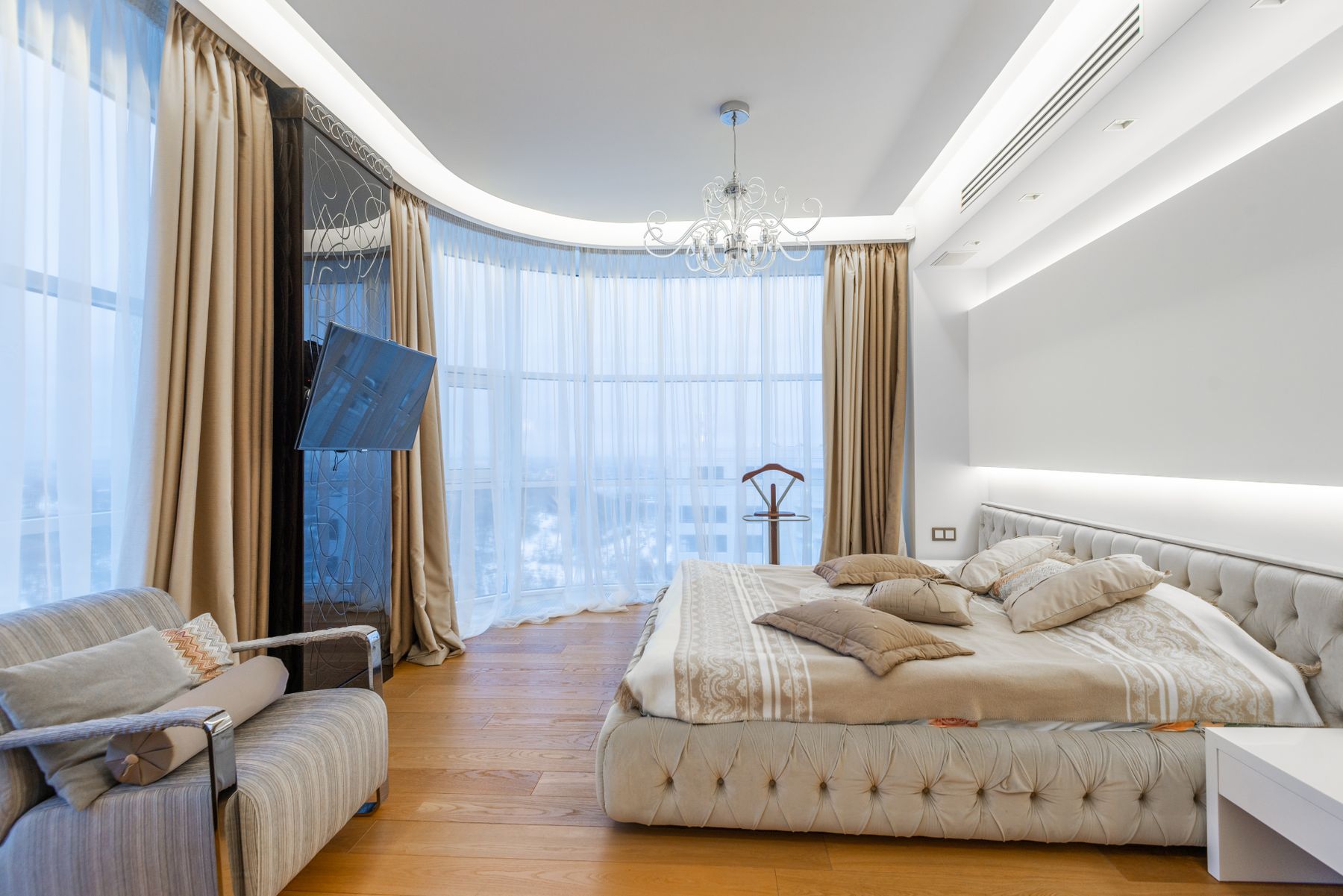
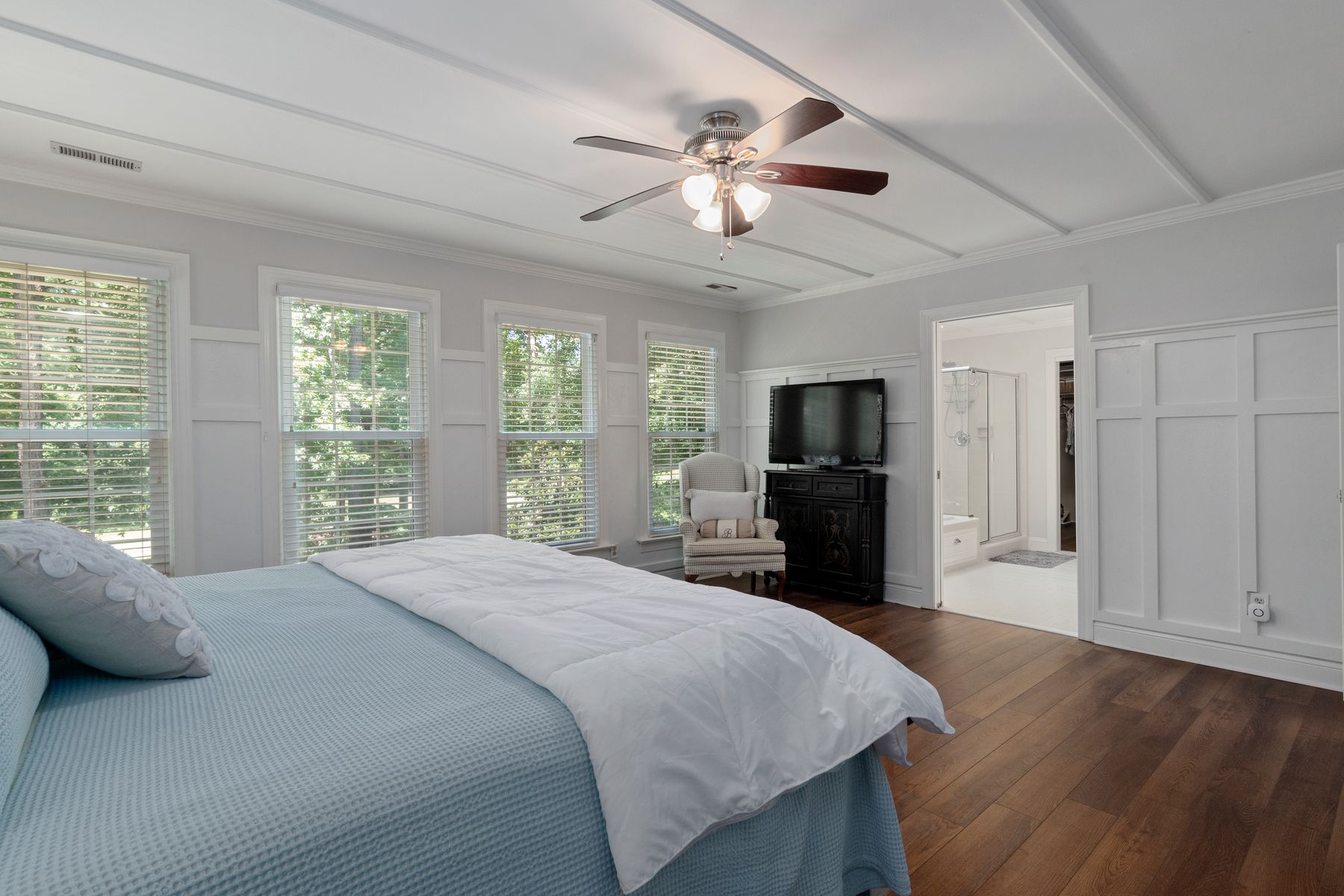
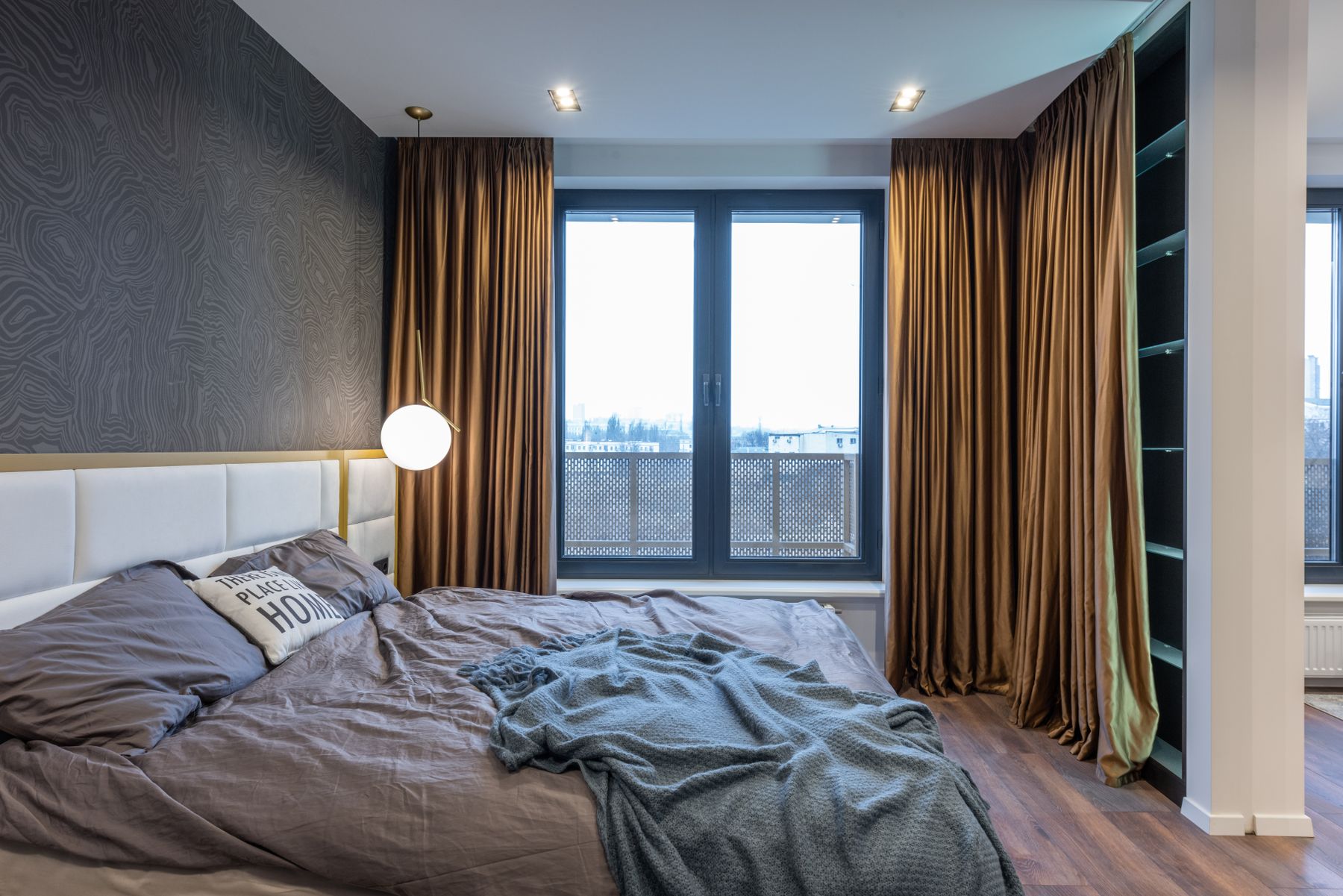
Use a sheer or privacy layer for daytime and a lined curtain, blind or shutter for darkness. Test side gaps and the top edge from the pillow, because a product labeled blackout can still leak enough light to disturb sleep. Full-height fabric softens hard modern surfaces and can improve acoustics, but keep it clear of radiators, floor moisture and vents. Motorization can help inaccessible windows, though manual override, service access and cable planning should be resolved before the pelmet is closed.
Three Useful Layers of Light
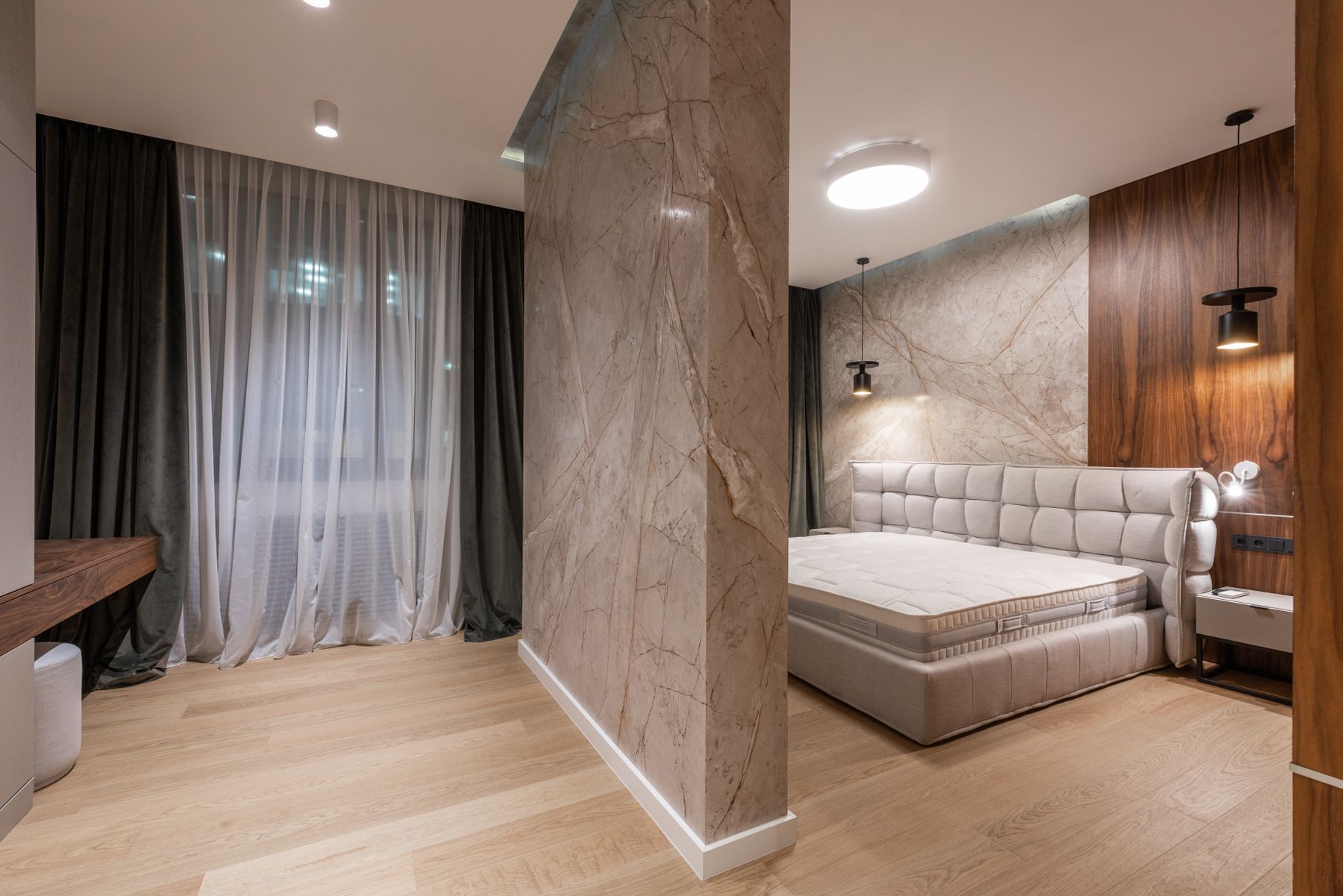
Combine gentle ambient light, focused bedside or dressing light and a low orientation source for nighttime movement. Put them on separate controls and avoid a grid of bright downlights over the pillow. Dimming helps only when lamps and controls are compatible; color quality, glare and flicker still matter. Warm evening light supports a quieter atmosphere, while a brighter dressing scene can be temporary. [Living room lighting ideas](/living-room/living-room-lighting-ideas/) explains layering, beam control and color rendering in more depth.
Design the Bedside Around Reach and Charging
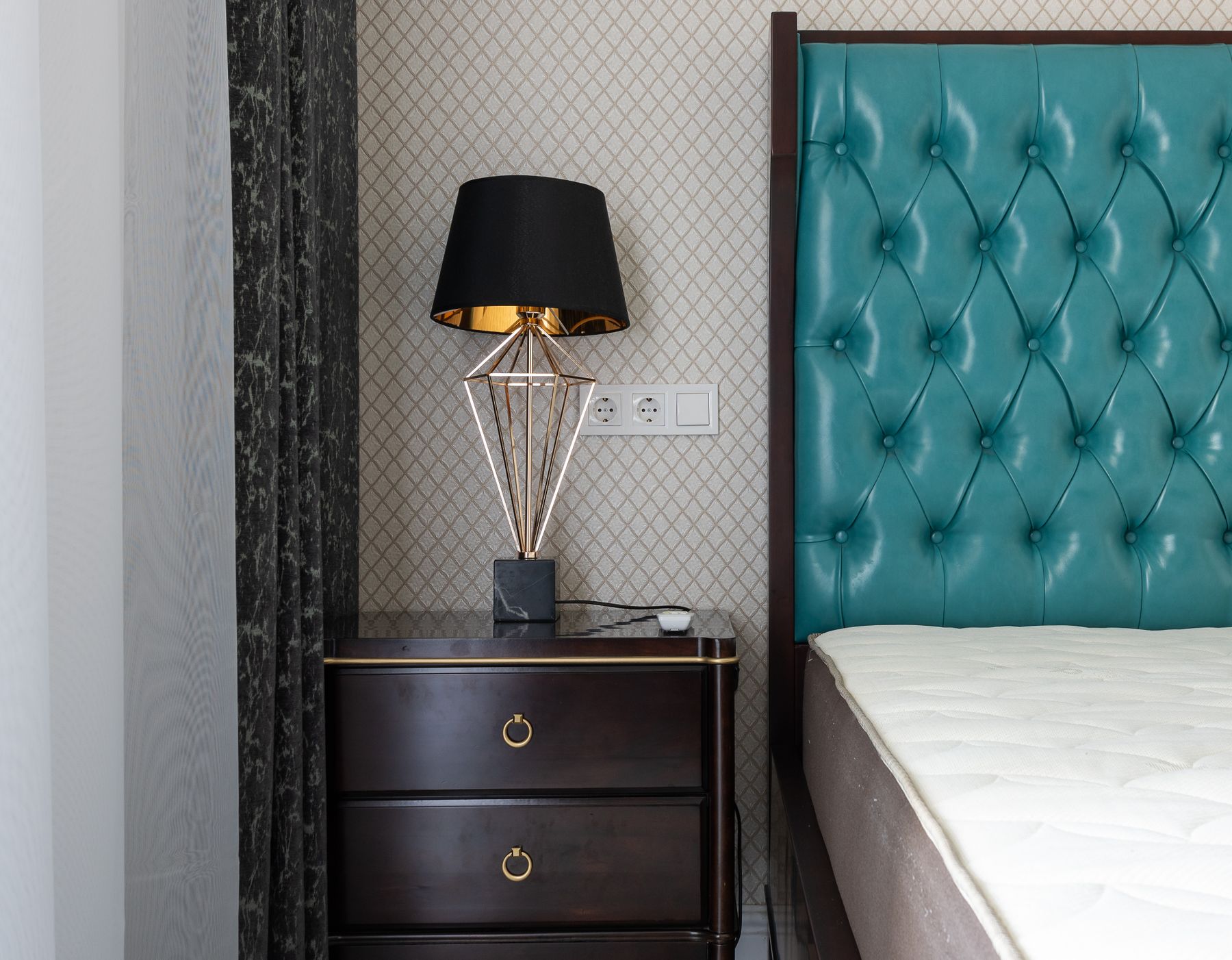
Set the tabletop near mattress height, allow drawers to clear curtains and provide enough surface for water, glasses and a book. Put switches and charging where they can be reached without stretching behind furniture; route cables so they are not trapped by the frame or left across the floor. Matching nightstands can create calm, but each side may need a different solution. Wireless charging can reduce connectors, though heat, case compatibility and future replacement should be considered before building it permanently into joinery.
Quiet, Serviceable Wardrobes
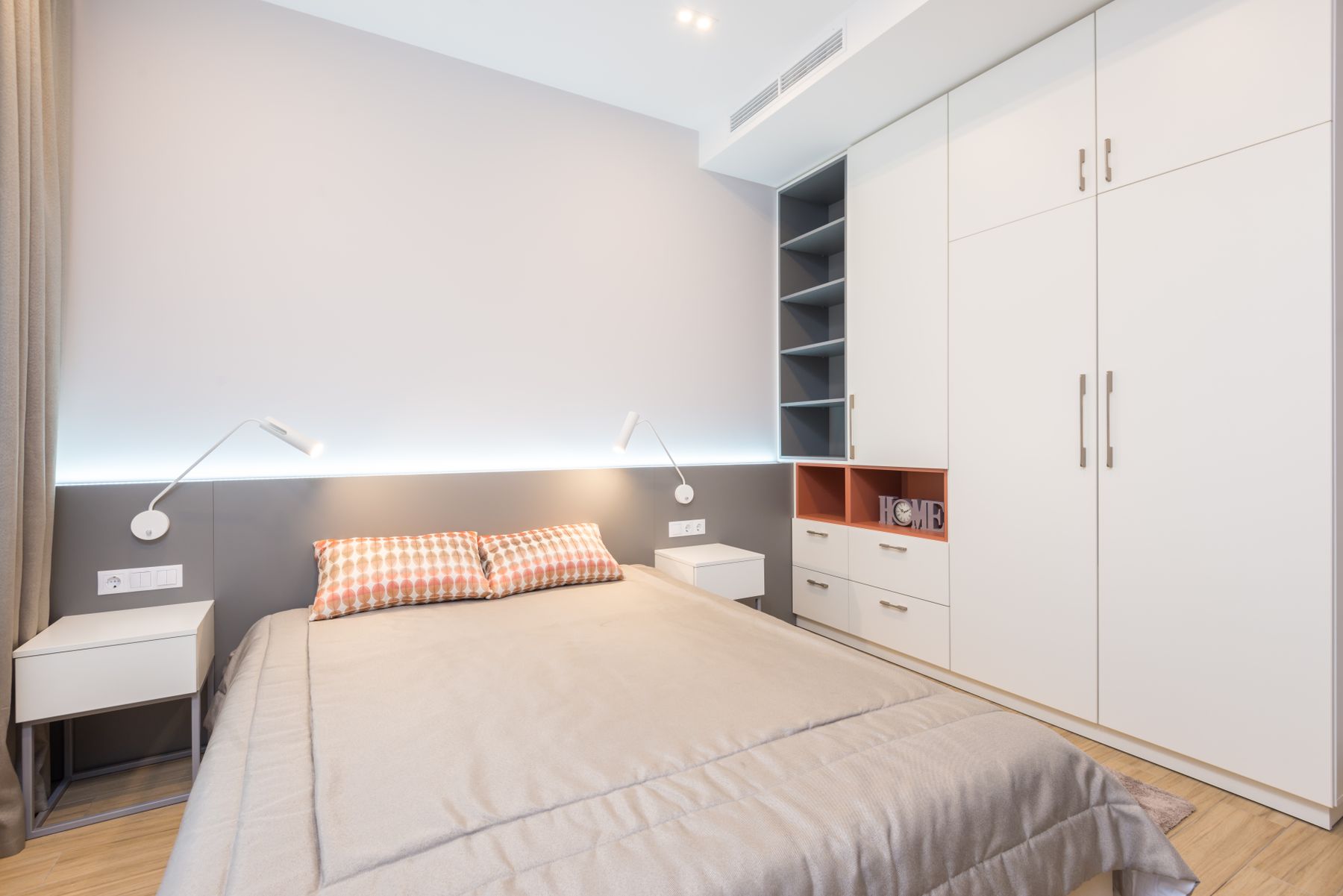
Plan wardrobe interiors from an inventory of hanging lengths, folded items, shoes, luggage and laundry rather than dividing the wall into equal doors. Full-height fronts reduce visual interruption, but handles, tracks, hinges and ventilation still need comfortable access. Leave service routes to outlets and mechanical equipment. Open niches can hold the few items used daily; the rest should close away. Use durable, cleanable interiors and lighting that switches safely without overheating clothing or requiring an exposed extension lead.
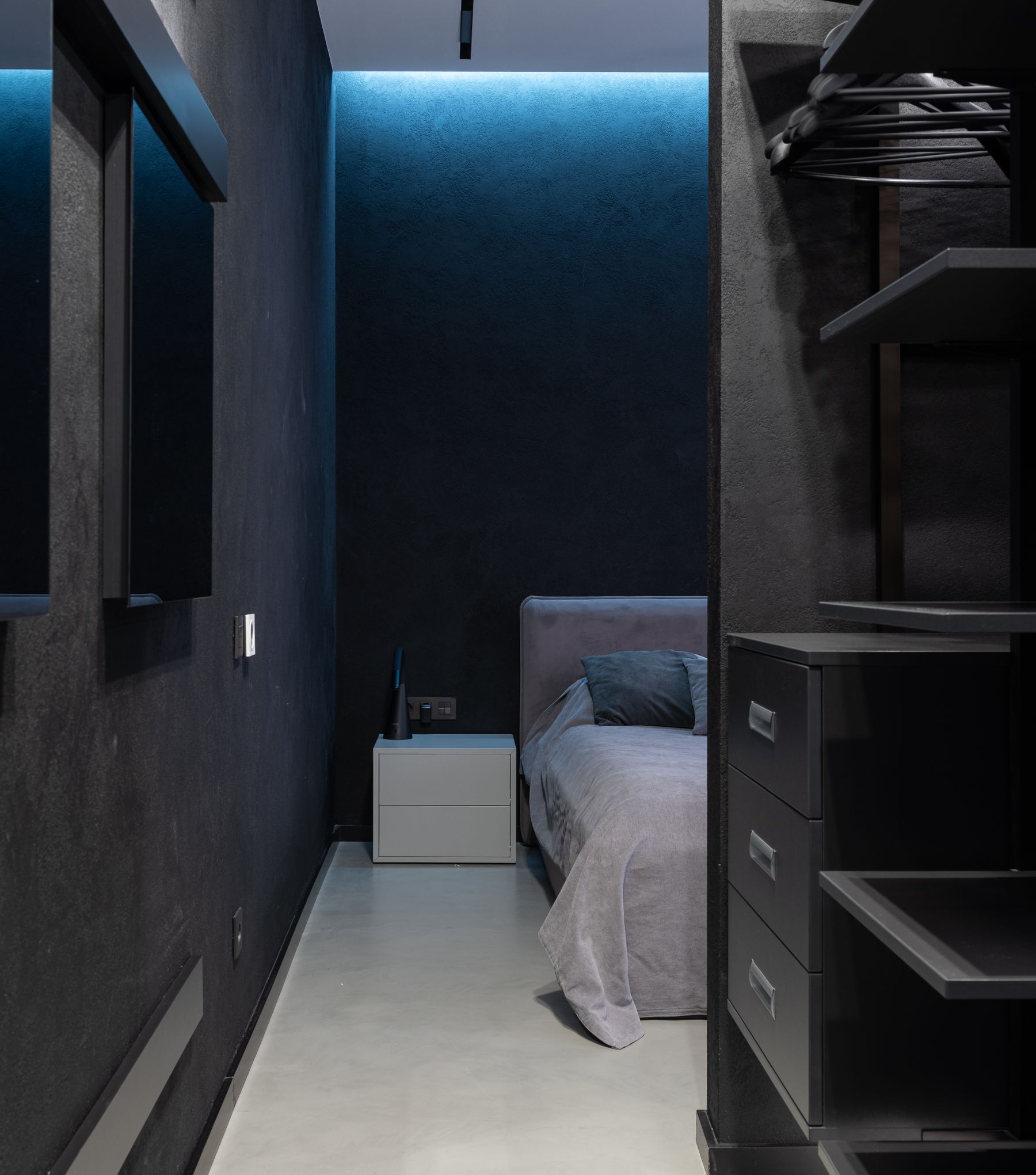
Open Storage Only for Active Categories
Open rails and shelves can make a compact room easier to use, but they expose dust, visual noise and every overflow. Reserve them for a capsule wardrobe, frequently worn pieces or a clearly bounded dressing zone. Provide closed space elsewhere for luggage, off-season clothing and miscellaneous items. Check that shelves do not narrow the route and that a mirror does not produce distracting reflections from the pillow. If maintaining the display becomes daily work, doors or a curtain are the more modern solution.
A Seat or Window Zone With a Real Purpose
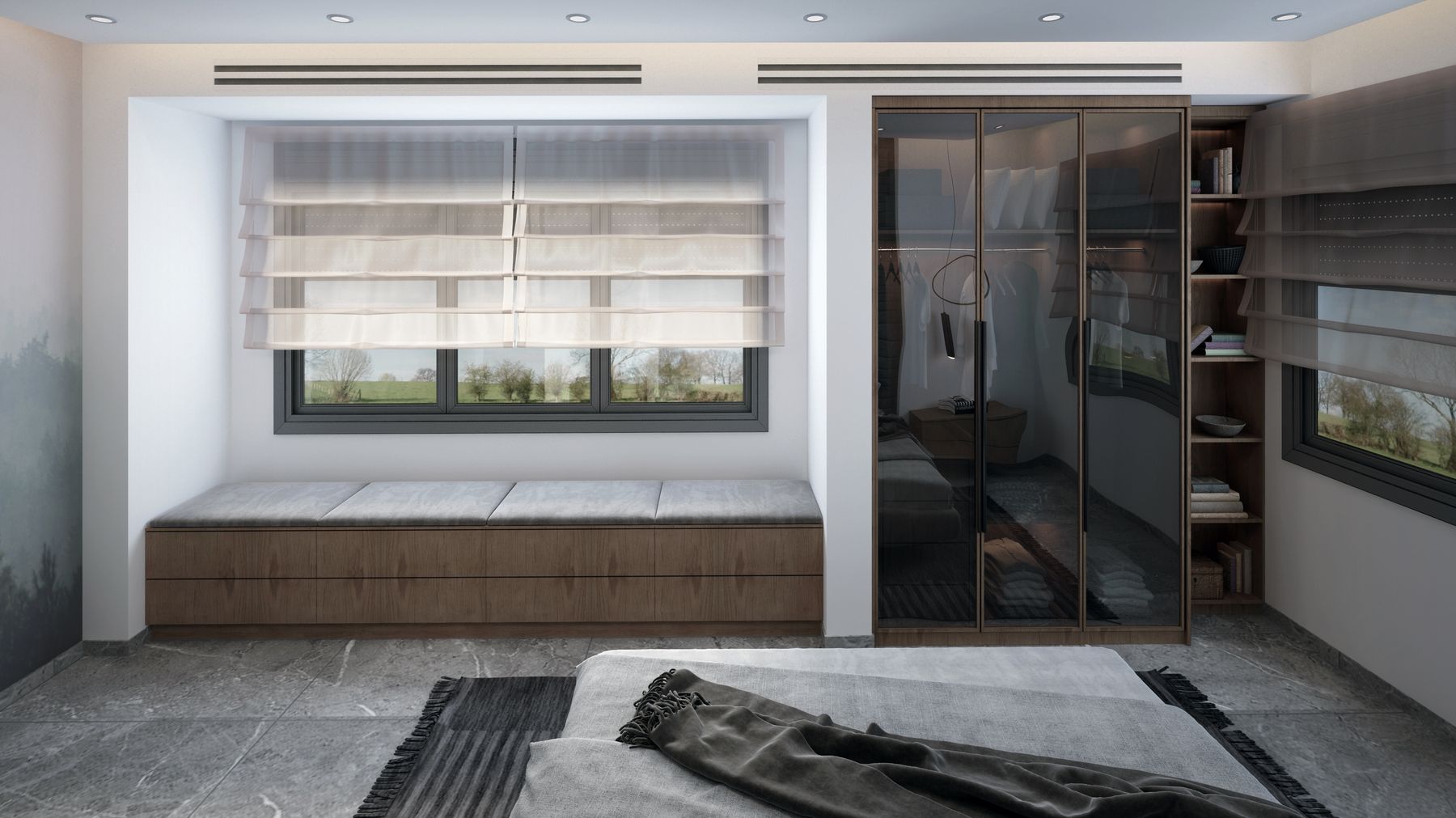
A chair, bench or window seat should support a defined activity—shoes, reading, conversation or a place to set a bedcover. Match seat height and support to the user, add a table and task light if reading is genuine, and keep the piece out of the primary route. Built-in benches can hide storage, but lids, hinges and ventilation must be safe. If the seat becomes a permanent clothes pile, the room needs hooks, a valet or better laundry containment rather than more upholstery.
Personal Art Within a Controlled Composition
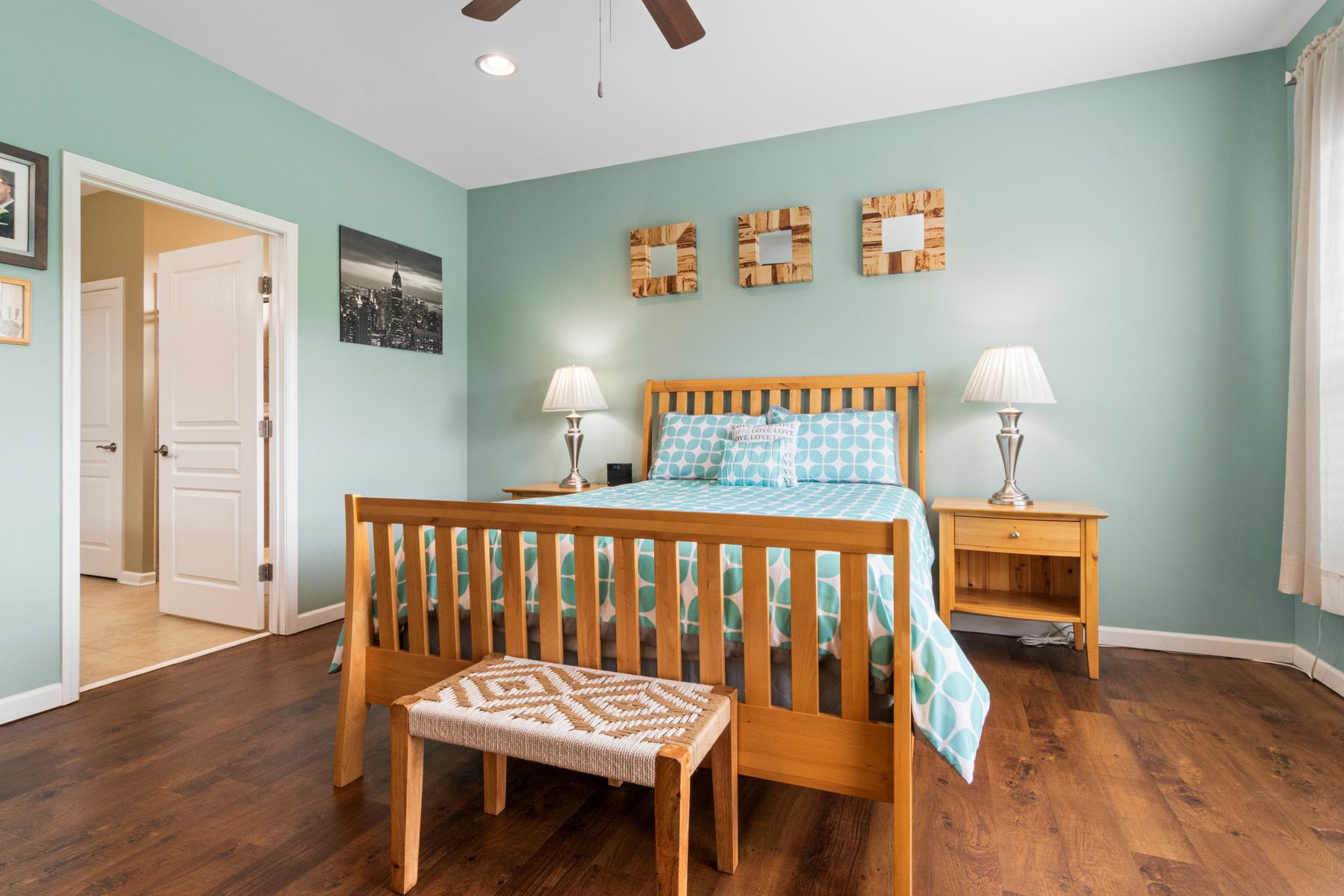
Modern does not require generic abstract prints or an empty wall. Use photographs, textiles, paintings and objects with personal meaning, then create order through spacing, a repeated frame tone or a clear outer boundary. Keep the view from the pillow calmer if detailed imagery affects rest. Heavy pieces above a bed need appropriate fixings, and valuable works need light and humidity protection. One strong composition can bring more identity than decorative objects scattered across every horizontal surface.
Integrate the Television Without Building the Room Around It
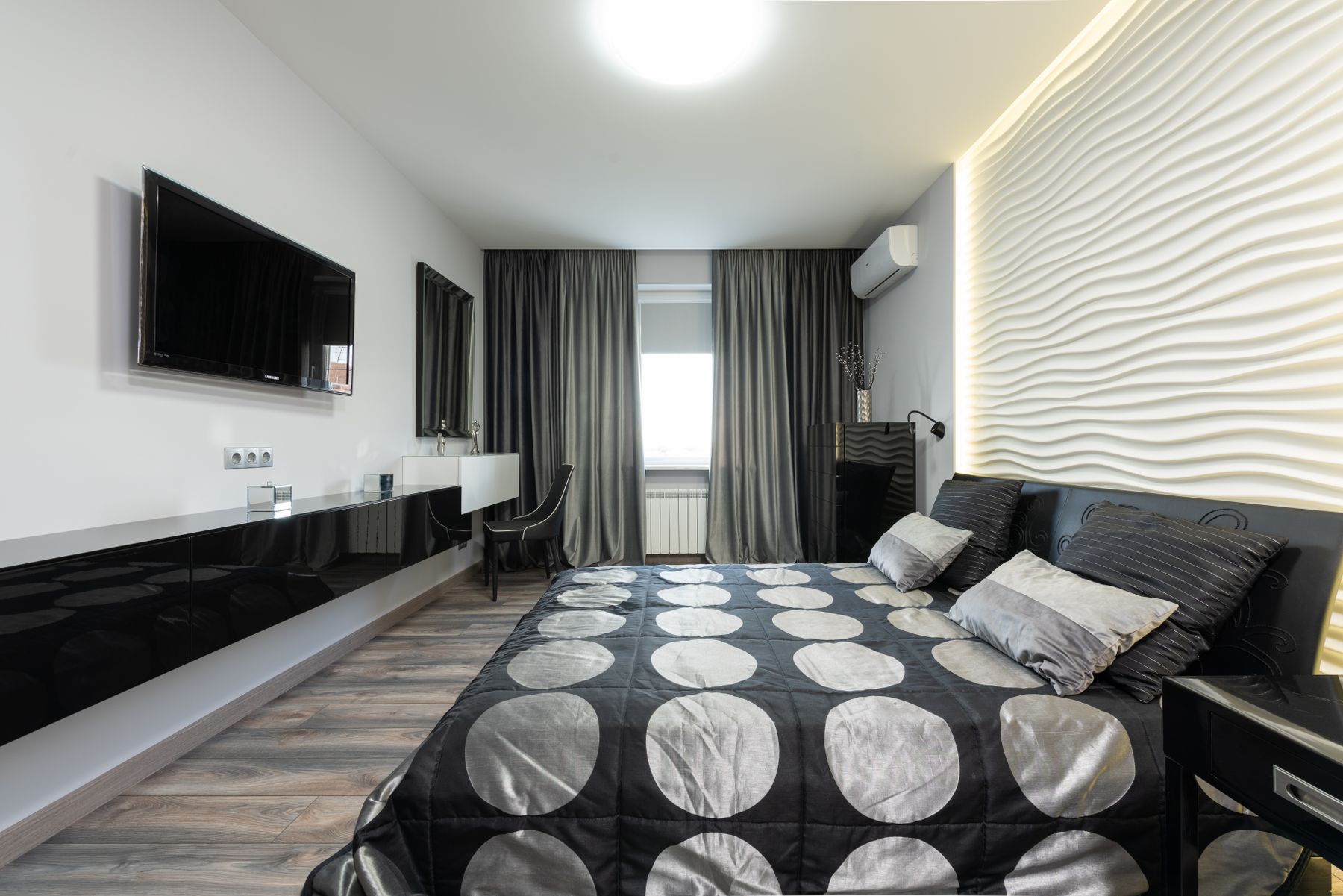
First decide whether a screen supports or conflicts with the household's sleep routine. If it stays, set a comfortable viewing height from the bed, control window glare and keep ventilation and service access. Route power and signal cables safely rather than hiding extension leads behind upholstery. A darker wall or low console can reduce contrast without fake frames or complicated concealment. Charging hubs, speakers and routers should not add indicator glare or fan noise beside the pillow.
Scale Modern Ideas for a Small Bedroom
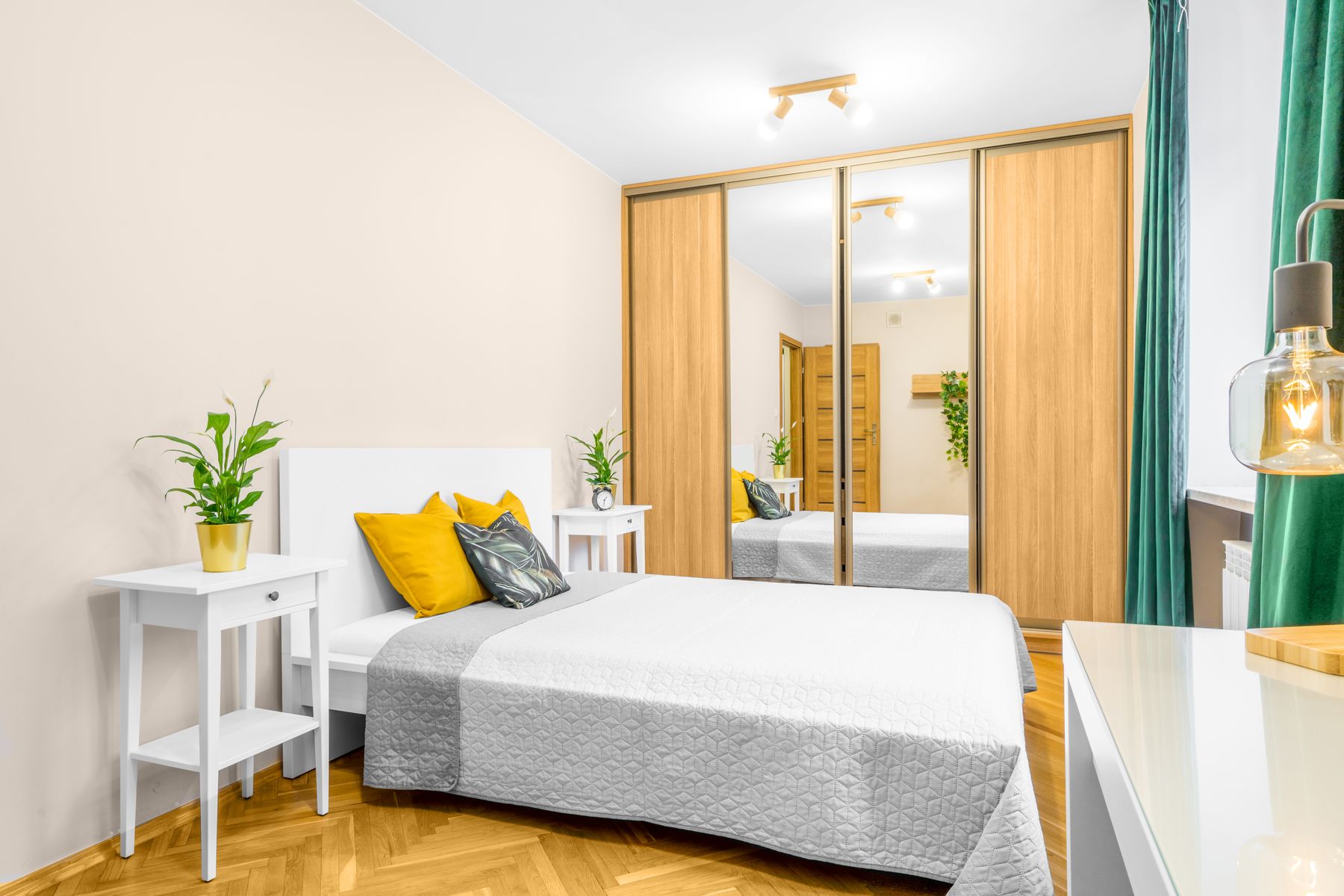
Choose a frame with modest depth, bedside solutions that match available width and storage that uses height without looming over the pillow. Mirrored doors can share light, but position them to avoid disorienting bed reflections and keep tracks easy to clean. One concentrated color accent gives identity without fragmenting the room. If the bedroom also includes a desk, preserve a clear visual and physical boundary. [Small apartment ideas](/apartment/small-apartment-ideas/) adds broader multifunction and circulation tests.
Design a Twin Guest Room for Different Bodies
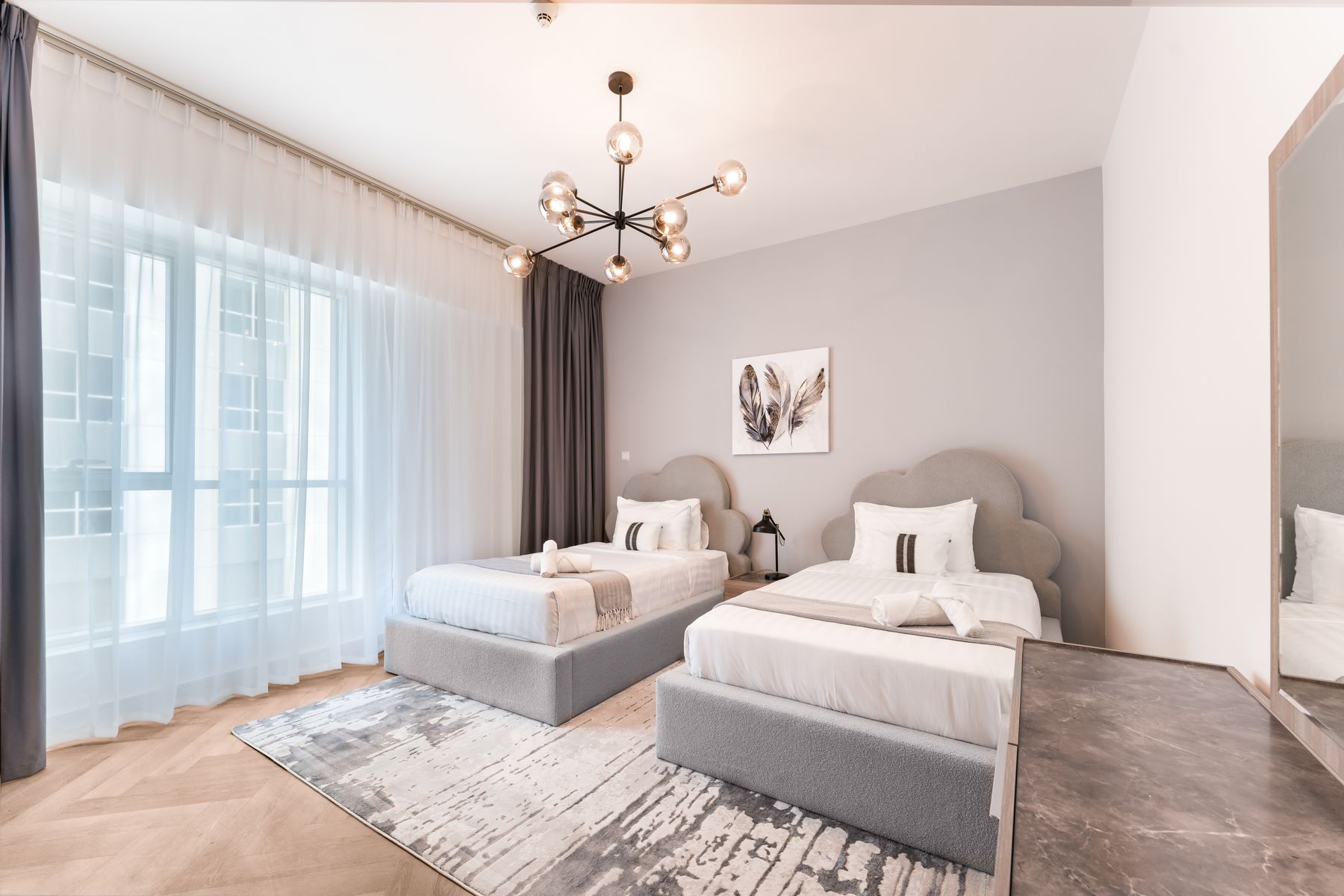
A twin room can serve siblings, friends or guests more flexibly than one large bed. Give each sleeper reachable light, charging and a place for personal items, and keep the main route wide enough for luggage and different mobility needs. Beds may match for visual calm, but mattress firmness and pillow choice need not. A shared rug and curtain plane can unite the room without forcing identical accessories. Confirm door, wardrobe and drawer clearances with both beds occupied.
Bunks and Flexible Beds Only When They Solve the Plan
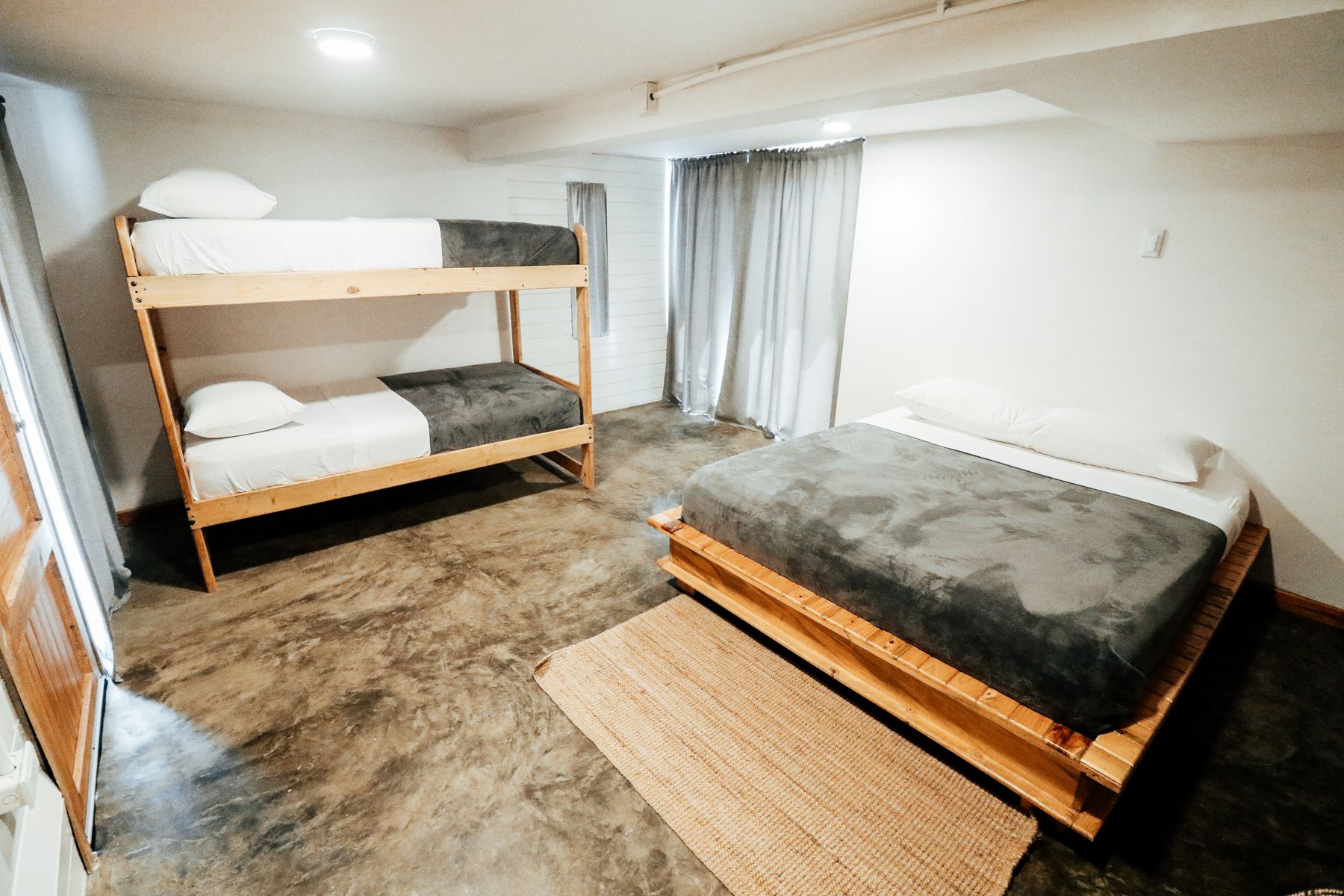
Bunks, trundles and wall beds can make a guest or shared room adaptable, but mechanisms and clearances are safety decisions. Follow the manufacturer's age, mattress-thickness, guardrail, ladder and anchoring requirements, and preserve headroom around ceiling fans and lights. A trundle needs unobstructed pull-out space; a wall bed needs a suitable wall and service access. Do not add a flexible bed merely to advertise capacity that the room cannot support with storage, ventilation and a usable nighttime route.
Edit for Temperature, Quiet and Daily Reset
Review the room at bedtime, overnight and morning. Check temperature variation, fan or equipment noise, drafts, outside sound, indicator lights, dust traps, cable access and whether the bed can be reset without moving objects. Curtains, rugs, upholstered surfaces and a sound door can reduce harsh reflection, while ventilation and heating should remain unobstructed. Remove furniture that does not support sleep, dressing or another real routine. The goal is not emptiness; it is a room whose useful parts remain easy to understand and maintain.